Police administration

Police Commissions at the National and State levels have made several suggestions ‘
to make the police efficient, responsive and responsible. But unfortunately on one
consideration or the other they have not been seriously considered. This indicates
that police reform is a low priority area in the country. Whatever reforms were
implemented they were done half-heartedly without understanding the socio￾political milieu within which the police has to operate. Because of the adhoc and
piecemeal nature of the reforms they did not have the intended effect. The reforms
are required not only in organisation, personnel. procedures but also in the attitudes
of the people and the police officials. Still colonial attitude pervades the minds of the
police personnel. Reform should be continuous because no adhoc approach will give
the intended results.
The police behaviour like rudeness, non-registration of FIR, maltreatment in lock￾ups and so on, are forbidden in the Police Regulations. Mohit Bhattacharya
explained the problem areas in the field of human rights. In his words “(a) General
feeling that the ground realities – how crime and criminals have actually to be dealt
with – are not appreciated by “human rights” protagonists, (b) the balance seems to
be tilting towards criminals, leading to police discomfiture; (c) human rights are, no
doubt, of great value; at the same time, police discretion is necessary to deal with
the ground situation”. The major problems faced by police functionaries and Police
Stations are intra-organisational issues related to human resource like insufficient
manpower, low motivation, lack of promotion opportunities, lack of proper training
etc. Infrastructure related problems such as shortage of vehicles and fuel, poor

Function of upsc

Union Public Service Commission is one of the most important institutions of democratic
governance and has been instrumental in ensuring the constitutional provision of Equality of
Opportunity to all the citizens by adhering to the standards of fairness and honesty in the
administration of its competitive exams. It is abundantly obvious by looking at the back ground of
the candidates who succeed at this exam. It has always given hope to millions of aspirants who come
from poorest to richest of the backgrounds. It wont be wrong to say that UPSC has been a beacon of
bright light in the dark sea of failing institutions of governance in India.
The functions of the UPSC as described in the Constitution are :
(i) To advise the government on all matters relating to the methods of recruitment
and norms to be followed in making apointments to civil services either directly or by
promotion.
(ii) To advise on the suitability of candidates for appointment, promotion and transfer.
(iii) To conduct examinations for appointment to All India services.
(iv) To advise on disciplinary matters affecting government servants.
(v) To advise on claims of legal proceedings instituted against a government servant and on
the claims in respect of injuries sustained by a government servant while on duty.
(vi) To advise on any other matter specifically referred by the President.

Role of PMO

The most significant change is probably the way Prime Ministers have become more
interventionist in the running of Departments and their individual policies. Rather than intervening
only on major issues of policy or strategy, or where Departments were in disagreement, the Prime
Minister (or those acting in his or her name) routinely comment on or change policies that are
solely matters for a single Department. Several units have been set up over the years to carry out
intervention and scrutiny ion different forms (Policy Unit, Delivery Unit, Strategic
Communications Unit, and so on) but these remain unaccountable, overlap with the Cabinet Office
and Treasury and collectively risk undermining the effectiveness of individual Departments.
Another significant change has been the growing willingness under successive Prime Ministers to use
a majority in the House of Commons to over-ride checks and balances established by constitutional
convention; for example, successive moves to curtail the independence of local government since the
1980s, or changes to civil liberties such as detention without trial. This links to the UK’s lack of a
written constitution: such fundamental changes can be carried by a simple majority in the Commons,
while countries with a written constitution would usually require a higher threshold for
‘constitutional’ changes. Combined with the extreme concentration of power in the hands of the
Prime Minister, this creates the risk – and in some cases the reality – of a dictatorship of the majority.
A further change has been the role of the Prime Minister in party fund-raising, particularly from major
donors, as elections have become more expensive and income from ‘rank and file’ members has
become a smaller proportion of the total. Though hard to measure (for obvious reasons), it appears
that this role has become more significant since the 1980s and could perhaps be compared to the
situation prior to the Honours (Prevention of Abuses) Act 1925. The risk of this development is that
the decisions of the Prime Minister are, or are seen to be, influenced by donors.

Role of planning Commission

An organizational structure consists of activities such as task allocation, coordination and
supervision, which are directed towards the achievement of organizational aims. It can also be
considered as the viewing glass or perspective through which individuals see their organization and its
environment. Organizations are a variant of clustered entities. An organization can be structured in
many different ways, depending on their objectives. The structure of an organization will determine
the modes in which it operates and performs. Organizational structure allows the expressed allocation
of responsibilities for different functions and processes to different entities such as the branch,
department, workgroup and individual. Organizational structure affects organizational action in two
big ways. First, it provides the foundation on which standard operating procedures and routines rest.
Second, it determines which individuals get to participate in which decision-making processes, and
thus to what extent their views shape the organization’s action
Role of Planning Commission in Planning Process:
The vision of the Planning Commission is to focus on socio-economic policy formulation and analysis
as well as on strategic planning. The Planning Commission is expected to be a center of excellence
and chief advisor to Government in matters of day to day economic management as well as medium
and long term socio-economic development.The role of the Planning Commission is basically
facilitation and stimulation of economic activities through analysis and articulation of policies to
promote and guide the participation of economic agents.The mission of the Planning Commission is
to promote sustainable and equitable economic growth and improve social welfare through proper
management and guidance of the national economy.
Role of Planning Commission:
Analysis and design of overall macro-economic policy.
Analysis and formulation of external sector policies.
Identification and planning of strategic public investments.
Articulation of policies and strategies for sectoral development.
Designing and carrying out studies and research focusing on aspects of economic
development deemed to need special attention – particularly on a long-term perspective.
Initiation and design of policies for human resources development.
Formulation/articulation of strategies for employment creation.
Facilitation and promotion of the involvement of private economic agents in the
economy. Formulation of policies and strategies for rural development.
Collection, processing, storage and dissemination of statistics.

China wants to launch asteroid-deflecting rockets to save Earth from Armageddon

A Long March 5B rocket launches Tianhe, the core module of China's new space station, on April 28, 2021.

Chinese scientists are planning to fire more than 20 rockets into space to divert an asteroid impact that has a small chance of one day ending life on Earth.

Their target is an asteroid named Bennu, a 85.5-million-ton (77.5 million metric ton) space rock that is on track to swoop within 4.6 million miles (7.5 million kilometers) of Earth’s orbit between 2175 and 2199. Although Bennu’s chances of striking Earth are slim — at just 1 in 2,700 — the asteroid is as wide as the Empire State Building is tall, meaning that any collision with the Earth would be cataclysmic.

The estimated kinetic energy of Bennu’s impact with Earth is 1,200 megatons, which is roughly 80,000 times greater than the energy of the bomb dropped on Hiroshima. For comparison, the space rock that wiped out the dinosaurs delivered about 100 million megatons of energy.

Scientists at China’s National Space Science Center calculated that 23 Long March 5 rockets, each weighing 992 tons (900 metric tons), pushing against the rock simultaneously would be necessary to divert the asteroid away from a fatal course by nearly 6,000 miles (9,000 km) — 1.4 times the Earth’s radius. Their calculations are detailed in a new study published in the forthcoming Nov. 1 issue of the journal Icarus.

This is a mosaic image of asteroid Bennu, from NASA’s OSIRIS-REx spacecraft.
A mosaic image of the asteroid Bennu, taken by NASA’s OSIRIS-REX spacecraft.  (Image credit: NASA/Goddard/University of Arizona)

“Asteroid impacts pose a major threat to all life on Earth,” Mingtao Li, space science engineer of the National Space Science Center in Beijing and lead author of the new study, wrote in the paper. “Deflecting an asteroid on an impact trajectory is critical to mitigating this threat.”

The Chinese scientists’ plan would sidestep the need to stop the asteroid by more direct, yet riskier, means — like the atomic bomb method popularized by Bruce Willis in the film “Armageddon.” In reality, nuking the incoming space rock would break it into multiple smaller chunks that could still collide with Earth, leading to devastating consequences.

The Chinese plan follows a similar, yet slightly more costly, past proposal made by the United States. The NASA plan, called Hypervelocity Asteroid Mitigation Mission for Emergency Response (HAMMER), would send a fleet of 30-foot-tall (9 meters) spacecraft with battering rams to bump the asteroid off course. NASA simulations suggest that 34-53 blows from HAMMER spacecraft, launched 10 years before Bennu collides with Earth, would be needed to shift the asteroid.

NASA and the ESA (European Space Agency) will be the first to test a novel asteroid nudging method in two joint missions launching November 24 of this year. The DART mission (Double Asteroid Redirection) will send a spacecraft to arrive a year later at the 7 million mile (11 million kilometer) distant Didymos asteroid system. Once there, the NASA spacecraft will slam into Didymos’s moonlet — a rock in orbit around the asteroid. The ESA’s mission, Hera, will then monitor how DART has budged the moonlet off-course.

Bennu is a B-type asteroid, which means that it contains high amounts of carbon and, potentially, many of the primordial molecules present when life emerged on Earth. NASA already sent a spacecraft, called Osiris-Rex, in pursuit of samples from the asteroid. Osiris-Rex arrived above Bennu in October 2020, floating above it for long enough to collect loose pieces from its surface with its 10-foot (3 m) arm. Osiris-Rex is expected to return to Earth with its spoils in 2023.

Long March 5 rockets are the workhorses of China’s space program, completing most of the deliveries to China’s space station and launching Chinese probes to Mars and the moon. The rockets have caused concern in the past due to their uncontrolled reentry to Earth. In May, the 22-ton (20 metric ton) section of a Long March 5 rocket fell to Earth, either burning up or landing in the sea near the Arabian peninsula. In May 2020, fragments from a previous March 5 rocket were believed to have crashed into two villages in the Ivory Coast.

Long March 5 rockets are the workhorses of China’s space program, completing most of the deliveries to China’s space station and launching Chinese probes to Mars and the moon. The rockets have caused concern in the past due to their uncontrolled reentry to Earth. In May, the 22-ton (20 metric ton) section of a Long March 5 rocket fell to Earth, either burning up or landing in the sea near the Arabian peninsula. In May 2020, fragments from a previous March 5 rocket were believed to have crashed into two villages in the Ivory Coast.

Land settlement

The Indian National Army (INA) or Azad Hind Fauj was an armed force formed by
Indian nationalists in 1942 in Southeast Asia during World War II.
The aim of the army was to overthrow the British Raj in colonial India, with Japanese
assistance. Initially composed of Indian prisoners of war captured by Japan in her
Malayan campaign and at Singapore, it later drew large numbers of volunteers from
Indian expatriate population in Malaya and Burma.
Initially formed in 1942 immediately after the fall of Singapore under Mohan Singh, the
first INA collapsed in December that year before it was revived under the leadership of
Subhas Chandra Bose in 1943 and proclaimed the army of Bose’s Arzi Hukumat-e- Azad
Hind (The Provisional Government of Free India). This second INA fought along with
the Imperial Japanese Army against the British and Commonwealth forces in the
campaigns in Burma, Imphal and Kohima, and later, against the successful Burma
Campaign of the Allies. The end of the war saw a large number of the troops repatriated
to India where some faced trial for treason and became a galvanising point of the Indian
Independence movement.
After Indian independence, the ex-INA members, with some exceptions, were refused
service in the Indian Army. However, a number of notable members later became
involved in public life in India and in Southeast Asia.
The legacy of the INA is controversial given its associations with Imperial Japan, the
course of Japanese occupations in Burma, Indonesia and other parts of Southeast Asia,
her alliance with Nazi Germany and Fascist Italy, as well as Japanese war crimes and the
alleged complicity of the troops of the INA in these. Also, its relative insignificance in
military terms, its obvious propaganda value to the Japanese, as well as wartime British
Intelligence propaganda of cowardice and stories that associated INA soldiers in
mistreatment of captured Allied troops, to some extent mires the history of the army.
However, after the war, the Red Fort trials of captured INA officers in India provoked
massive public outcries in support of their efforts to fight the Raj, eventually triggering
the Bombay mutiny in the British Indian forces. These events in the twilight of the Raj
are accepted to have played a crucial role in its hasty end.

Dilip Kumar.

Mohammed Yusuf Khan (11 December 1922 – 7 July 2021), known professionally by his stage name Dilip Kumar, was an Indian actor and film producer who worked in Hindi cinema. Referred to as the “Tragedy King” for his portrayal of serious roles and retrospectively as “The First Khan” of Bollywood, he has been described as one of the most successful film stars in the industry and is credited with bringing a distinct form of method acting to cinema. Kumar holds the record for most wins for the Filmfare Award for Best Actor (eight, which was later equalled by Shah Rukh Khan), and was also the inaugural recipient of the award.

In a career spanning over five decades, Kumar worked in over 65 films. He debuted as an actor in the film Jwar Bhata (1944), produced by Bombay Talkies. Following a series of unsuccessful ventures, he had his first box office hit in Jugnu (1947). Kumar found further success with the romantic Andaz (1949), the swashbuckling Aan (1952), the social drama Daag (1952), the dramatic Devdas (1955), the comical Azaad (1955), the epic historical Mughal-e-Azam (1960), the social dacoit crime drama Gunga Jamuna (1961), and the comedy Ram Aur Shyam (1967). Both Andaz and Aan briefly became the highest-grossing Indian film upto that point, a feat later achieved by Mughal-e-Azam, which sustained the record for 11 years. As of 2021, the latter remains the highest-grossing film in India when adjusted for inflation.

The 1970s saw Kumar’s career take a downturn, marked by a string of commercial failures. In 1976, he went on a five-year hiatus from film performances and returned with the revolutionary drama Kranti, which was the highest-grossing Indian film of the year. He continued to play leading roles in films such as Shakti (1982), Karma (1986), and Saudagar (1991). His last on-screen appearance was in the commercially unsuccessful Qila (1998), which saw him in a dual role. Kumar later served as a member of the Rajya Sabha, the upper house of India’s parliament, from 2000 to 2006.

Kumar’s personal life was the subject of much media attention. He was in a long-term relationship with actress and frequent co-star Madhubala that ended after the Naya Daur court case in 1957. He married actress Saira Banu in 1966 and resided in Bandra, a suburb of Mumbai, until his death in 2021. For his contributions to film, the Government of India awarded him with the Padma Bhushan in 1991 and the Padma Vibhushan in 2015, the country’s third and second-highest civilian awards respectively. He was also awarded India’s highest accolade in the field of cinema, the Dadasaheb Phalke Award in 1994. In 1998, the Government of Pakistan conferred Kumar with Nishan-e-Imtiaz, the highest civilian decoration, making him the only Indian to have received the honor.

Copa America Final : Argentina wins major International trophy after 19 years

Argentina’s  victory was sealed courtesy a goal by Angel Di Maria in the 22nd minute of the match. The PSG forward beat the off side trap to receive a long floater from the mid-field on the right flank and then chipped the ball into the net to perfection over the Brazilian goal-keeper Ederson.

Lionel Messi and the whole of Argentina can breathe a sigh of relief as their long wait for a major football trophy is over. La Albiceleste, the Argentine national football team, on Sunday beat arch rivals Brazil by a solitary goal in the final of Copa America 2021 to win the continental title for the first time since 1993.
The victory was sealed courtesy a goal by Angel Di Maria in the 22nd minute of the match. The PSG forward beat the off side trap to receive a long floater from the mid-field on the right flank from De Paul and then chipped the ball into the net over the Brazilian goal-keeper Ederson. From that moment onwards, Brazil kept chasing the match but the much needed equaliser never came. It was a match which was tipped to be a battle between Brazil’s Neymar and Argentina’s Mess but both men failed to have a major impact on the game. Messi showed glimpses of brilliance and came very close to scoring in the later stages of the second half, but failed to get on to the score sheet.
Neymar  tried his best but he was constantly fouled and tackled by the Argentine midfielders and defenders. It was a tough physical battle in the midfield.
Brazil tried hard to secure the equaliser in the second half and Richarlison put the ball in the back of the net, but it was ruled out as the Everton star was caught off side.
Roberto Firmino’s introduction in the second half gave depth to Brazil’s attack and they created a lot of chances. Gabi had a couple of shots saved as Argentine goal-keeper Martinez was in fine form.
Messi and De Paul, both, had a chance to seal the match late in the second half but Brazil survived and kept fighting.
The final whistle saw Messi fall down on his knees with tears in his eyes as his teammates rushed to him to celebrate a much awaited win.
The match started with an intense battle in the mid-field with both teams looking to dominate possession. Brazil played a high line and looked to press from the start while Argentina were looking counter attack with the speed of Angel Di Maria and Lionel Messi.
The win gave Argentina their 15th Copa America title and they are now joint record holders along with Uruguay for the most number of titles won.
Lionel Messi had lost three Copa America finals before this along with the 2014 FIFA World Cup final and the victory finally gives the talismanic footballer his first major trophy with the senior team.
Messi, arguably the best footballer of this generation alongside Cristiano Ronaldo, now has a continental title under his belt just like the Portuguese, who had lifted the Euro 2016 trophy.
 

Rasagulla : The “Sweet” battle of it’s origin

Sweets from the Indian subcontinent are the confectionery and desserts of the world.If tomorrow ,India has to choose a national sweet dish, the most likely contender should be the Rasagulla.

Rasagulla is an Indian syrupy dessert popular in the Indian subcontinent . It is made up of ball-shaped dumplings of chhena (an Indian cottage cheese) and semolina dough, cooked in light syrup made from sugar(chashni). This is done until the syrup permeates the dumplings.

From the bypaths of Kolkata and the temples of Puri to the powerful corridors of Rashtrapati Bhawan, Rasogollla remains one of India’s preffered  succulent inventions. The Bengalis stake their claim on it. The Odias believe it’s their invention.

History tracks down the origin of Rasagulla to Puri in Odisha, where this 700-year-old sweet dish was part of a ritual,known as Khira mohana due to its almost white appearance back in the 11th century, it was customary to offer this chenna sweet dish to Goddess Mahalakshmi as prasad, especially on the last day of the Rath Yatra, also called Niladri Vijay.According to mythology, Lord Jagannath, an avatar of Vishnu, to appease Lakshmi, his accompaniment on returning from Gundicha temple after a nine-day vacation (Rath Yatra) had offered her rasagulla as a gift to urge entry into his home. Since then, it’s a ritual that’s followed annually.

The spongy white rasagulla is believed to have been originated in present-day West Bengal in 1868 by a Kolkata-based confectioner named Nobin Chandra Das. Das started making rasagulla by processing the mixture of chhena and semolina in boiling sugar syrup in contrast to the mixture sans semolina in the original rasagulla in his sweet shop located at Sutanuti (present-day Baghbazar). His descendants claim that his recipe was an original, but according to another theory, he modified the traditional Odisha rasagulla recipe to produce this less perishable variant.

A year after West Bengal walked away with geographical indication (GI) tag recognition for rasagulla, the Odisha government reopened the battle for ownership of the delicacy and won the rights over ‘Odisha rasagulla’.The bitter war over the rasagulla appears to have ended in a draw—the geographical indicator (GI) was granted to Odisha On 29th July 2019 for the ‘Odisha rasagulla’, less than two years after West Bengal won its own GI tag for the delectable eastern sweet.

12YEAR -OLD BOY WALKING ACROSS NOVA SCOTIA TO RAISE AWARENESS ABOUT RESIDENTIAL SCHOOL.

The first residential school opened in 1828 and the last one closed in 1997. Residential schools were government sponsored religious schools established to assimilate indigenous children into Canadian culture.

An estimated 150,000 first nation, Inuit and Metis children were taken from their families and forced to attend residential schools for over 100 years , children were forbidden to speak their native language or practise their traditional faiths. At least 3,200 died from disease and nourishment, but many believe that number is closer to 6,000. The last residential school closed inn1996. The truth and reconciliation commission concluded in 2015.

The 12-year old boy “landyn toney” journey of awareness and it’s a long one. The boy along a nova Scotia highway, he walk across province .he walking 200 kilometers over six days toward his first nation community who were taken from theirs. Landyn toney said, that it was frustrating and it was sad at the same time, emotional for a lot of people because the survivors they had to go through all that and they had to see their brothers and sisters die in front of them.

The boy said, that I’m not the type of person that wants to just let my anger go. I wanted to show my anger by doing something good with it.

He raised more than 15 thousand dollars. He said that he going to try to donate the money to different schools to make good classes and stuff so they can teach more about the residential school.

Delicacies of Banaras!!

9 Varanasi (Benaras) Street Foods that You Shouldn't Miss

Street food is an essential part of the Indian culture and cuisine. There are a number of street foods from across the country that are famous, but nothing can beat the hot and crispy kachoris and samosas from Banaras or Varanasi. The holy city is situated on the banks of the river Ganges in the state of Uttar Pradesh and its food is defined by its culture and tradition. The food of Benaras or Varanasi is influenced by its people. You will find Marwari traders and people from nearby states including Bihar and West Bengal in the city have added their own regional touch to the local cuisine. The vegetarian delicacies are majorly prepared in desi ghee and mustard oil, be it spicy, sweet or sour. Most Varanasi sweets have a milk and ghee base like the Magdal, Sankat Mochan ke Laddoo, Parval Mithai, Kheer Mohan and Launglata among others.

1. Kachori Sabzi

Kachori sabji makes for the most popular Kaleva (breakfast) option in Benaras. There are two different types of kachoris- badi and choti kachoriBadi kachori is stuffed with masala made of lentils called dal ki pithi and choti kachori is stuffed with a spicy potato mixture. Both of these kachoris are savoured with garam masala wali aloo ki sazi and desi ghee jalebi. What a way to start your day!

kachori

2. Chena Dahi Vada

All the curd lovers raise your hands! Chena is similar to Rasmalai in terms of shape and is dipped in sweet yogurt and a hint of masala made of jeera and black salt. It makes for a perfect mix of sweet and sour. The coriander garnishing makes it more refreshing. A perfect dish to enjoy with your freinds and family.

3. Malaiyyo

Makhan Malaiyyo or Nimish is a popular winter street dessert that is influenced by Persian way of cooking. Milk froth is flavoured with saffron and cardamoms and garnished with pistachios and almonds. Served in purva or kulhads, this creamy froth will literally melt in your mouth.

4. Thandai And Lassi

Varanasi is a city that produces lots of milk and curd and therefore, you’ll find them in most of their preparations. Benarasi Thandai is made from seasonal fruit puree. Along with that, lassi is available at almost every other street shop from morning till wee hours of the night. It is served in a kulhad topped with Rabri and flavoured with rose essence.

lassi

reference-https://www.outlookindia.com/outlooktraveller/explore/story/71087/best-places-to-eat-in-varanasi

ARGENTINA wins COPA AMERICA 2021

Argentina claim the Copa America crown for the first time since 1993, defeating Brazil 1-0 in the final at the Maracana. Angel Di Maria’s strike in the 22nd minute was enough for the Albiceleste to overcome Tite’s men and end their run of failures in in major finals. Although Lionel Messi was not at his best tonight, he ends his drought without an international title. It was far from a classic, but Lionel Scaloni and his men will be elated to end Argentina’s 28-year wait for the Copa America trophy.

Both teams return to action in September for their World Cup qualifying campaigns. The newly-crowned Copa America champions Argentina are away against Venezuela, while Brazil are on the road to Chile.

Scope in Interior Design


Interior designing
Gone are the days where people don’t pay attention to visual things .Now people are quite serious about visuality of things.The designing industry is growing at the rate 23-25% annually.India currently need more than 1 lakh interior designers .In coming future , interior designing is one of the most popular designing profession in india.The interior designing market said to be increased by 8.3% by the end of the year 2025.With increase in standard of living in both urban and rural areas ,a good living styles became the inseparable part people.

SCOPE IN INTERIOR DESIGNING
With the rapid growth of commercialation ,the living standard of people changed .To live in the most beautiful house is been a dream of both urban and rural people. The experts says there is surely the positive growth in interior designing sector in india.It is surely the best career for creative people.
CAREER OPTION IN INTERIOR DESIGNING
Interior designing is generally consists of a lot of career options like :
*Lighting designer
*Kitchen designer
*Model designer
*Portfolio designer
*Product designer
*Furniture designer
*Set designer
*Interior designer
*Exhibition designer
*Stage designer
*Healthcare designer
*Bathroom designer
*Tiles designer
SKILLS REQUIRED FOR BEING A INTERIOR DESIGNER
There are some basic skills which required for being a interior designer .These skills are:
*Creative mind
*Basic computer knowledge
*Creative eye
*Attentive: pay attention to minute details
*Manage budget
*Time management
*Basic knowledge of designing software
*Sales marketing

SALARY OF DESIGNER IN INDIA
An interior designer can earn upto 4-5 lakh per annum at the beginning but with great experience and your skill ,you can easily earn upto 30-40 lakhs per annum.
BEST COLLEGE FOR INTERIOR DESIGNER IN INDIA
The top most college for interior designing in india are as follows:
*Institute of indian interior designers,New delhi
*National institute of Fashion technology,New delhi
*National institute of designing , Ahmedabad
*Pearl Academy , Jaipur
*Chandigarh university , chandigarh
*Mumbai university , Mumbai
*Calicut university,kerala

World Population Day

World population day was recommended by the governing council of UN development programme in 1989.11 July 1990 was day when first world population day was observed in over 90 countries. Tokyo is the world largest populated city Whereas Vitican city has the lowest population.More than three -quarters of the world population lives in Africa and Asia. China and India are two most populated contries in the world.

Looking for self improvement? Here it is.

SELF HELP

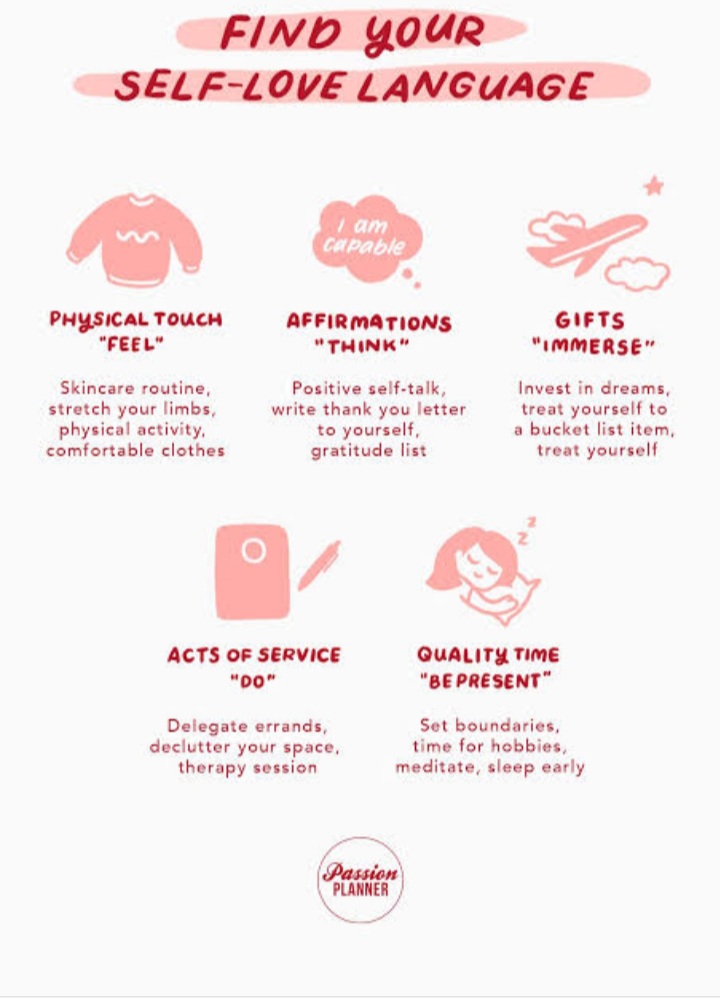
Are you aware of the phrase “change starts with you”? Here are some ways which can help you better your day to day activities and broaden your horizon. Don’t wait any further and let that positive change start from you.

1) CONCENTRATION.
• To do:
~ Meditate.
~ try playing games which requires a lot of concentration e.g. chess, puzzles and memory games.
~ get enough sleep
~ Exercise.
~ listen to music
• To avoid:
~ Loud background noise
~ avoid being around anything that can distract you
~ try not to multitask
~ avoid heavy foods
~ avoid zoning out

2) THINKING ANALYSIS.
• To do:
~ observe
~ think practically
~ ask questions
~ reasoning plays an important part in analytical thinking.
~ make sure to consider every aspect of the topic.
• To avoid:
~ don’t let emotions play a role.
~ don’t let personal conflicts cloud your judgement
~ don’t overthink it
~ don’t rush to make a decision
~ don’t stick to a single method

3) REASONING POWER:
• To do:
~ keep an open mind
~ to consider all options
~ learn more about the topic
~ frequent questioning
~ make notes
• To avoid:
~ try not to avoid others Point of view
~ don’t be quiet
~ don’t just focus on one topic but cover every topic possible
~ don’t neglect options
~ avoid being idle

4) MENTAL MATURITY.
• To do:
~ learn from experiences
~ be positive
~ accept criticism
~ be responsible
~ learn from the past
• To avoid:
~ blaming others for ones own failure.
~ don’t avoid something just because it’s difficult
~ avoid childish behavioural patterns
~ Don’t always expect positive results
~ don’t try to complete every task in a single day

5) ADJUSTMENT THINKING.
• To do:
~ empathize
~ an open mind is the key
~ consider others opinions
~ choose the best option
~ take your time
• To avoid:
~ Don’t be obsessed with just one solution
~ don’t be too headstrong
~ don’t be overconfident
~ avoid being too stressed about a situation
~ don’t be too anxious about change

6) INSIGHT
• To do:
~ ask questions like ‘why’ and ‘how’
~ take notes
~ think rationally
~ pay attention to details
~ take your time to analyze a topic.
• To avoid:
~ avoid being satisfied with the first solution
~ avoid drifting from the topic
~ Don’t be in a hurry to form a conclusion or form an analysis
~ try to avoid being a know-it-all
~ avoid being ignorant

7) MENTAL RESPONSIBILITIES.
• To do:
~ imagination
~ be creative
~ expand your horizons
~ get enough sleep
~ do something outside your comfort zone
• To avoid:
~ Don’t try to pressurize yourself.
~ don’t try to block out your thoughts
~ try not to be too invested in just one thing
~ avoid procrastination
~ avoid a negative mentality

8) ORIGINAL THINKING.
• To do:
~ find inspiration
~ read articles
~ research
~ be insightful
~ try to focus on quality rather than quality
• To avoid:
~ plagiarism
~ don’t be predicable
~ Don’t be dependent
~ don’t rely on others
~ don’t always think from your perspective

9) THOUGHT EXCHANGE.
• To do:
~ be open to opinions
~ try to listen
~ give and receive feedback
~ learn more about the topic
~ try to work with like minded people
• To avoid:
~ don’t be ignorant
~ don’t dismiss trust
~ don’t be unwilling to involve the other person
~ avoid thought stopping
~ Don’t always think from your thinking style

10) THE UNCONSCIOUS.
• To do:
~ try to remember your dreams
~ try to make sense of your dreams
~ try to understand what they’re trying to convey
~ be organised
~ be realistic
• To avoid:
~ avoid unpleasant thoughts
~ day dreaming
~ avoid not being a keen listener
~ avoid not being attentive
~ have compulsive behaviour

11) CLEAR THINKING.
• To do:
~ Go take a look at nature.
~ breathing exercise
~ get good sleep
~ listen to music
~ one thing at a time
• To avoid:
~ avoid noisy environment
~ try not to have a lot on your mind
~ avoid overlapping thoughts
~ avoid staying up for too long
~ don’t be too invested in a single problem

12) EMOTIONAL MATURITY.
• To do:
~ accept criticism
~ positive thoughts
~ always aim to reach a goal
~ take a pause and reflect
~ make wise decisions
• To avoid:
~ avoid not being straightforward
~ Don’t avoid difficult situations
~ try not to be too selfish
~ avoid thinking others have it easy
~ avoid negativity

13) LEARNING ABILITIES.
• To do:
~ read books
~ visit places
~ try to imagine yourself in a different situation
~ research
~ experience something new
• To avoid:
~ don’t try to stop learning just because you’re not immediately good at it
~ don’t move forward without a plan
~ don’t always stick to one kind of thought process
~ avoid doing all the tasks at once
~ Don’t always expect something in return

14) MIND ANIMATION.
• To do:
~ be original
~ create new things
~ have a clear mind
~ work towards a goal
~ find inspiration
• To avoid:
~ having a closed mind
~ being unprepared
~ stuck with one perspective
~ minimum understanding of the subject
~ being content with minimal information