HAVE YOU EVER THOUGHT WHAT MAKES A COMPANY SUCCESSFUL? HERE IS THE ANSWER

What makes a company Successful

i) Dedicated and Committed Employees having a feeling of belongingness towards the organisation

ii) Clear Vision and well designed plans and strategies for an efficient and effective working.

iii) Managers possessing Leadership skills who works for his/her employees.

iv) Fulfilling the commitments and promises made to customers, shareholders, employees and other users.

v) Assuring that the quality standards match the expectations of its customers

Are you an effective leader? Here's how to tell | HRD America

How it helps in making a company Successful

i) Enriches faith and belief on decisions that acts fruitful in improving performance and output of an individual and organisation.

ii) Employees act as a precious asset that plays tremendous role in growth of organisation.

iii) Makes everything possible

iv) Challenges look like opportunities.

Customer Organisation | Le Blog Customer Success

Khadi Prakritik Paint, India's Only Paint Made From Cow Dung

Khadi Prakritik Paint, India’s Only Paint Made From Cow Dung 

Union minister Nitin Gadkari announced that he will be the brand ambassador of Khadi Prakritik Paint, which was launched on 12 Jan this year. The paint would be promoted throughout the country to urge young entrepreneurs to set up manufacturing units, said Gadkari.
He rejoiced “Even inaugurating infrastructure projects worth lakhs of crores of rupees is not as pleasing and satisfying as inaugurating this manufacturing unit”. 
Why This Innovation Is A Big Deal
Interior pollution in India has not been debated much. People are unaware of the dangers associated with paints. The paint generally used to decorate homes is made of toxic chemicals such as volatile organic compounds( VOCs), Pb(lead), toluene, xylene, ethyl acetate and glycol.
These toxic chemicals may cause both short term and long term health issues. Dizziness, headache and itchiness are the immediate effects of being exposed to these chemicals. Furthermore, some symptoms could be the same as virals or colds which could be difficult to differentiate.
As far as immediate sickness is concerned it could be treatable at the earliest. But years of exposure to these hazardous chemicals may lead to severe ailments like Cancer, respiratory disease and heart disease. According to reports, Painters or individuals who are exposed to VOCs (Volatile organic compounds) are more likely to suffer kidney damage.
Children are the most vulnerable to the pollutants as they have a higher metabolic rate(~ rate of oxygen consumption is higher than adults). As a result, they are more likely to get harmed by breathing in polluting air. 
Why it should be promoted
To aware citizens of indoor pollution and looking after their health. This paint is free from hefty metals like lead, mercury and chromium. Apart from this, the paint is cost-effective, antifungal and antibacterial

Undoubtedly, It will support the rural economy. Dairy farmers will make the most of farming. From selling milk to cow dung they can make more money. By promotion, more manufacturing units can be set up in rural areas, which would create sustainable local employment.
People should be aware of the quality or Hazards linked with any product out in the market.
Its far sensible to read the quality of the product than reading hospital bills 
-arorajnish

EMI: HOW TO CALCULATE EMI

An Equated Monthly Installment (EMI) is a fixed payment amount made by a borrower to a lender at a specified date each calendar month. EMI depends upon the tenure for which a loan is taken. EMI is high for a tenure of short period of time as compared to long period.

Equated monthly Installments are used to pay off both interest and Principal each month so that over a specified number of years, the loan is paid off in full. If a person pays only the interest component each month, then it is not the EMI amount as the Principal amount stands unpaid.

EMI Moratorium: Opting for it now means paying more later

Want to understand using a hypothetical situation?

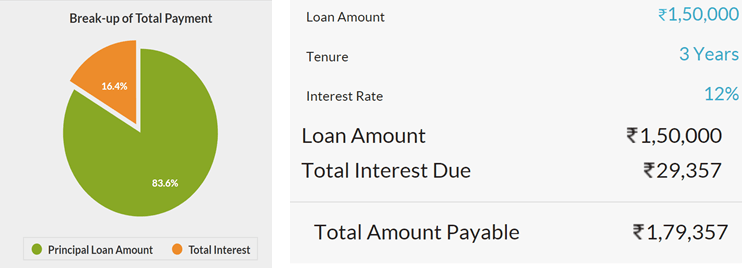
A person was planning to buy a new motorcycle and has managed to save Rupees 75,000 for the cause and decides to take a loan for the balance amount. He approached a showroom and decides to buy a latest motorcycle worth Rupees 2,50,000. He visits a bank on the next day and was able to fetch a motor loan of  Rupees 1,50,000 only. He agreed to pay back the amount with an interest of 12% within a tenure of 3 years. He worked overtime and was able to manage the balance of rupees 25,000 rupees.

The person on taking a loan of Rupees 1,50,000 has to pay a sum of Rupees 1,79,357 including an interest of Rupees 29,357 i.e. 16.4% of total payable amount  within a tenure of 3 years at an interest rate of 12% Per Annum

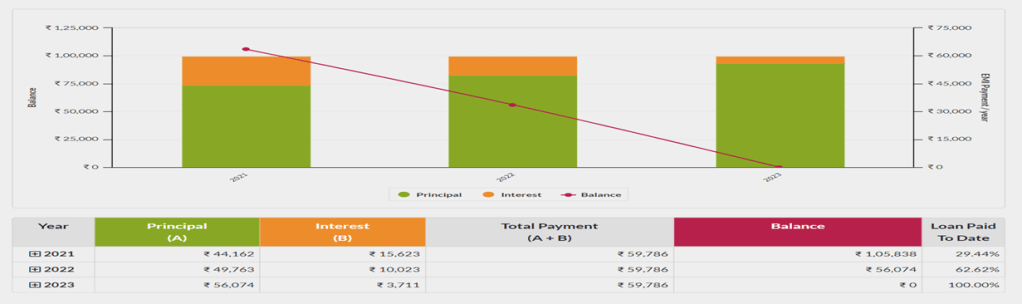
In first year, he needs to clear a debt of 29.44% of total debt of rupees 1,79,357 i.e. 59,786 including a Principal Amount of Rupees 44,162 and an Interest of Rupees 15,623

In Second year, he needs to pays rupees 59,786 clearing 62.62% of the total debt including a Principal Amount of Rupees 49,763 and an Interest of Rupees 10,023

In third year he needs to make a final installment of rupees 59,786 to clear all his debts. The installment includes a Principal Amount of Rupees 56,074 and an Interest of Rupees 3,711.

Indian scientists discover novel plant species in Antarctica named after the Hindu goddess, Bharati.

Polar biologists found a species of moss during their search to the ice-covered continent in 2017. It took scientists five years to confirm that the species had been discovered for the first time.

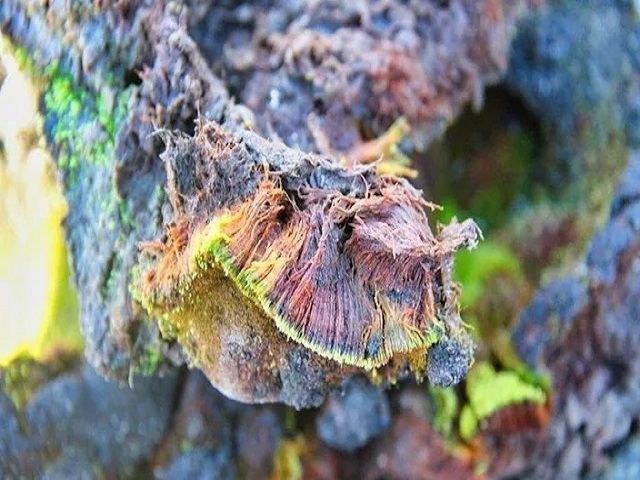
The Indian biologists, from the Central University of Punjab, have named the specie Bryum Bharatiensis(Bharati which means learning) . This arduous process of identification involved the collection of samples, and then five years of sequencing DNA and comparing its forms with other plants.

Prof Felix Bast, one of the six-month-long expedition scientists to the continent discovered the dark green specie at Larsemann Hills, in January 2017, while inspecting the Southern Ocean, located near Bharati, one of the remotest research stations in the world.

 “The big question was that how does moss survive in this landscape of rock and ice landscape,” Prof Bast said as per the fact that plants needs nitrogen, along with potassium, phosphorus, sunlight and water to survive. Which here works with the fact that only 1% of Antarctica is ice free.

Later, scientists figured out that this moss mainly grew in areas where penguins bred in large numbers. Penguin poop contains nitrogen. “Basically, the plants here survive on penguin poop. It helps that the manure doesn’t decompose in this climate,” said Prof Bast.

Now comes the sunlight. Scientists say they still fully don’t understand and is unsure with fact that how the plants survive under thick snow during the six winter months with no sunlight and temperatures dropping to as low as -76°C.

They claim that the moss “dries up to a dormant stage, almost to a seed” at this time, further they germinate again during summer in September when they start getting sunlight again.  And then the dried up moss absorbs water from the melting snow.

Later after collecting the required samples, Indian scientists spent five years sequencing the plant DNA and comparing its form with other plants.

“Antarctica is getting greenified. Many temperate species of plants that previously could not survive in this frozen continent are now seen everywhere because of the warming up of the continent,” said Prof Bast.

The scientists were highly worried about the “alarming evidence” of climate change that they saw during the inspection. They say they came across melting glaciers, crevasse-infested ice sheets and glacial melt-water lakes on top of ice sheets.

Bharati is located between Thala Fjord and Quilty Bay, in Antarctica. The specie has been named after the Indian research station called Bharati.

“The finding that Antarctica was greenifying was disturbing,” said Prof Raghavendra Prasad Tiwari, a leading biologist and the vice chancellor of the Central University of Punjab.

This is the first time India has discovered a plant species in the four decades since it first set up a research station in the continent. A proud moment for Indians.


LOAN: TYPES OF PERSONAL LOAN

Personal Loan are the loans that are given for personal use. They are usually secured loans as the commodity purchased using the loan act as a collateral.

7 Tips to Avail a Personal Loan at a Lower Interest Rate - Oneindia News

Types of Personal Loan

Motor Loan– A secured loan granted for the purpose of purchasing a vehicle like car, motor cycle is called a motor loan.

Gold Loan– A secured loan granted for the purpose of purchasing Gold is called a gold loan.

Education Loan– A loan granted for educational purpose is called Education Loan. It can be either Secured or Insecure depending upon the educational Institution for which the loan is granted.

What Are The Challenges With Traditional Education Loans? - EarlySalary

Home Loan– A loan granted for house is called a Home loan.

Types of Home Loan

1.Basic Home Loan

2.Home Construction Loan

3.Home Extension/ Improvement Loan

4.Home Loan Balance Transfer

Tips to get another home loan if you already have one - News Chant

Financial Inclusion by Indian Public sector banks

In today’s world, where the main focus of private banks is to earn profits, it is important to understand the role and need for public-sector banks especially in a heavily populated country like India.

What are Public-sector banks?
Public sector banks are those banks in which the government has majority shareholding at least 51 percent.
In other words, we can say that the government controls such banks to protect the interests of the people and regulate the supply of money in the economy.

This article is based on one such role or function of Public-sector banks, i.e., financial inclusion. Financial inclusion is an effort to make every day financial services available to more of the world’s population at a reasonable cost. The objective is to make financial services or products accessible and affordable for all citizens irrespective of their professions, level of income, location etc.

Here are some strategies and initiatives taken by Indian public sector banks for Financial Inclusion:

  • SMALL ACCOUNTS: Those persons who do not have any of the ‘officially valid documents can open “Small Accounts” with banks. A “Small Account” can be opened on the basis of a self-attested photograph and putting his/her signatures or thumb print in the presence of an officials of the bank. 
  • BUSINESS CORRESPONDENT AGENTS (BANK MITRAS) are retail agents engaged by banks for providing banking services at locations where opening of a brick-and-mortar branch / ATM is not viable. Scope of activities of Business Correspondents / Bank Mitra are as under:
    a) Creating Awareness about savings and other products and
    education and advice on managing money and debt counselling.
    b) Identification of potential customers.
    c) Collection and preliminary processing of various forms for
    deposits including verification of primary information /data.
  • LOANS AND ADVANCES TO WEAKER SECTIONS: It offers advances to weaker sections, consisting of beneficiaries belonging to scheduled castes/scheduled tribes, small and marginal farmers, landless labourers, rural artisans, beneficiaries under Govt. Sponsored schemes.
  • CREDIT FLOW TO WOMEN BENEFICIARIES
    Women are assuming greater responsibilities and playing an active role in the economic growth of the nation but remain under-represented while receiving the credit delivery from the financial institutions of the
    country. So, for strengthening of credit flow to women, OBC has implemented 14-points action plan as advised by the government of India. Banks have designated 10 branches as specialized branches for women entrepreneurs. Credit schemes like Oriental Mahila Vikar Yojana, Loan scheme for Professional & Self-employed women, Loan scheme for Beauty parlour/Boutiques/Saloons/Tailoring, Oriental Swaran Yojana etc. are designed by the bank especially for women.
  • SWARN JYANTI GRAM SWAROJGAR YOJANA
    The scheme is operative in rural areas of the country and covers the aspects of self-employment such as organisation of rural poor into Self- Help Groups (SHGs) training, Credit technology, infrastructure and marketing.
  • PRADHAN MANTRI JAN DHAN YOJANA: The Pradhan Mantri Jan Dhan Yojana under the National Mission Mode envisages provision of affordable financial services to all citizens within a reasonable distance. It comprises of the following six pillars: –

1.1 Universal access to banking facilities: – Mapping of each district into Sub Service Area (SSA) catering to 1000-1500
households in a manner that every habitation has access to banking services within 5 km.

1.2 Providing Basic Banking Accounts with overdraft facility and RuPay debit card to all households: – To all households, efforts should be made to first cover all uncovered household with banking facilities. Facility of an overdraft of Rs.10,000/- through RuPay debit card.

1.3 Financial Literacy Program: Financial literacy would be an integral part of the Mission in order to let the beneficiaries make best use of the financial services being made available to them.

1.4 Creation of Credit Guarantee Fund: Creation of Credit Guarantee Fund would be to cover the defaults in overdraft accounts.


1.5 Micro Insurance: To provide micro-insurance to all willing and eligible persons by 14th August, 2018, and then on an ongoing basis.

1.6 Unorganized sector Pension schemes like Swavlamban: By 14th August, 2018 and then on an ongoing basis.

Conclusion

We can say that Public-sector banks are playing an active role in making financial services and products available and
affordable for various groups/categories of people. These schemes and their implementation help in bridging economic
opportunities with outcomes in the following ways-

  • Access to credit enables businesses to expand, creating jobs and reducing inequality.
  • Providing access to financial services opens doors for families, allowing them to smooth out consumption and invest in their futures.
  • By increasing consumption level of households and investment level of private sector, it leads to increase in opportunities for economic growth.
  • Direct cash transfers to beneficiary bank accounts, instead of physical cash payments against subsidies will become possible.
  • This also ensures that the funds actually reach the intended recipients instead of being siphoned off along the way.
  • It also helps in bridging the wage gap between the rich and the poor and reducing poverty rates.

To conclude, these schemes and efforts by Public-sector banks and the government of India have led to a substantial increase in availability of various financial services for various people divided into categories like- farmers, small rural organisations and businesses, self-employed and working women (rural and urban areas), SCs, STs and the general public.

LOAN: TYPES OF LOAN

Loan

A loan is a form of debt incurred by an individual or other entity.

The lender, usually a corporation, financial institution, or government advances a sum of money to the borrower.

In return, the borrower agrees to a certain set of terms including any finance charges, interest, repayment date, and other conditions.

How to Avail Tax Benefits On a Personal Loan (3 Possible Ways)

Types of Loan

i) Collateral Loans

These are  secured loans as the commodity kept as a security can be sold by bank to recover the debt, if the borrower fails to pay back the loan.

A guarantor can also act as a Collateral for a loan if he/she promises to pay the loan with interest if the borrower fails to do so.

ii) Non- Collateral Loans

These loans are not secured as nothing is kept as a security that can be sold by the bank to recover the debt, if the borrower fails to pay back the loan.

Money Making Ideas for Students

  • Starting a YouTube Channel: YouTubers like Prajakta Koli, Ashish Chanchlani, Bhuvan Bam all started their careers through YouTube. They utilized their talent to make their friends laugh as well as get internet followers. As their fan base increased, more businesses approached them about using their celebrity to sell their products.
  • Becoming Instagram Influencer: Instagram is a platform that is rapidly growing to become the greatest option for students to make money online. If you love keeping an online presence, you might use it to debate a certain topic. These might be make-up suggestions, workout advice, vacation advice, and so on. As your following grows, you’ll be prepared to arrange more partnerships with companies.
  • Online Tutoring: Many people search for answers to their homework questions on the internet. As a consequence, you may help these people by replying to their questions on the spot.
  • Sell Online Courses: If you are not able to make enough progress with online tutoring, selling online courses is the next best option for students who want to earn money online. Platforms nowadays allow aspiring instructors to join their platforms and sell their own lessons online. You may create a course on whatever talent you have and sell it, from dancing to art to cooking. As the popularity of your course increases, more will be the money you get.
  • Content Writing: If you are a student who is proud of your writing talents and can generate compelling works that elicit admiration from others, becoming a content writer is an excellent way to put your skills to use while also earning money online. There are several websites where you may find article writing work like Internshala, Freelancer, iWriter, UpWork, HireWriters, etc.
  • Online Blogger: Blogging is rapidly becoming one of the most popular ways for students to earn money online. As more students realize the value of blogging, they are writing down their opinions on a range of subjects and topics on popular blogging platforms such as Blogger, Tumblr, WordPress, Weebly, and others.
  • Graphic Designer: If you’re excellent at editing photographs online or utilizing Adobe tools like Photoshop, being a graphic designer is the greatest option for students to make money online. Graphic designers are in high demand right now, as everyone from businesses to individuals wants cool-looking digital art to use on their websites, social media accounts, brochures, and other materials.
  • Selling Photos Online: If you own a camera and enjoy going on picture walks to capture the natural wonders of the globe, you can put your photography abilities to work and earn money. Photography is one of the greatest methods for students to make money online.
  • Digital Marketing: Digital marketing is rapidly becoming a popular way to earn money online for students. As more businesses want to establish a digital presence, they are increasingly providing students opportunities to make money by assisting them with activities such as establishing and maintaining minor marketing campaigns for businesses, mostly on social media or through other websites.
  • Social Media Manager: A social media manager’s job description is quite the same as that of an Instagram influencer, and both contribute significantly to the company’s recognition. They are supposed to build large followings and distribute information about a company’s products or services. They must engage their followers in discussions about the benefits of using the product through likes and comments. 
  • Virtual Assistant: A virtual assistant is someone who performs all of the functions of an assistant but does it through the internet. Another to earn money online is to work as an online or virtual assistant. As many firms choose there are many firms that choose to hire such an assistant who works remotely and for a lower salary. This may be an excellent choice for you if you have good organizational and communication abilities. Whether you are a student, a housewife, or a working person, this job will help you earn extra money. Each virtual assistant position is distinct from the others. Data input, social media administration, and research are some of the common qualities that may be expected. Some professions may need you to transcribe notes and make reminders.
  • Becoming Translator: Many international corporations now employ a low-paid translator. You can also seek these jobs if you are bilingual or studying a new language. Because this kind of employment not only pays well but also broadens your horizons. You might be hired to translate documents, subtitles, messages, emails, or papers for companies. It will expose you to a wide range of business options.

Agusto Boal and Aristotle’s Coercive System of Tragedy

Photo by Ibolya Toldi on Pexels.com

Agusto Boal was a Brazilian activist who brought revolutionary changes to theatre as an artform. In his work Theatre of the Oppressed, Boal extensively discusses about the theatrical form that he developed of the same name. He also explains the politics involved behind various dramatic techniques and criticisms from across the world like Aristotle, Hegel and Brecht. In the first chapter, Boal argues that the Greek tragedies, as defined by Aristotle, is actually a coercive system that enforces state ideologies onto the citizens.

Tragedy, then, is an imitation of an action that is serious, complete, and of a certain magnitude; in language embellished with each kind of artistic ornament, the several kinds being found in separate parts of the play; in the form of action, not of narrative; through pity and fear effecting the proper purgation of these emotions.

-Aristotle

According to Aristotle, Tragedy is an imitation of an action that, through its several characteristics, evokes catharsis or ‘proper purgation of soul’. Every tragedy has a tragic hero who is defined as “a man who is not eminently good and just, yet whose misfortune is brought about not by vice or depravity, but by some error or frailty”. This error in the hero is referred to as his tragic flaw or hamartia. The spectator establishes an empathic relationship with the protagonist and lives vicariously through him as he enjoys a state of happiness brought upon by the same hamartia. Then suddenly, the hero falls from happiness to misfortune. This is referred to as ‘peripeteia’. The spectator along with the hero suffers this but is unable to disassociate with the character due to ‘anagnorisis’, i.e, recognition of the flaw. Furthermore, the tragedy ends with a ‘catastrophe’ wherein, the hero suffers the consequences of his action through death or a fate worse than death. 

Boal sums up this process in three stages. Stage 1, where the protagonist and the spectator take a path towards happiness which then moves towards misfortune. Stage 2, the character and the spectator realise their own hamartia which Boal refers to as an ‘anti-constitutional flaw’; where the state reinforces certain unsaid social set-ups. Stage 3, where after the horror of the catastrophe, the terrified spectator undergoes catharsis through which they are purified of their hamartia. As explained by Arnold Hauser, the tragedians were paid by the state to produce the plays and thus, they naturally denied any plays that went against the state. Through the tragedies, the spectator is emotionally manipulated into thinking that having this hamartia would lead to a terrible fate, thus maintaining the status-quo in the society. This can also be analysed with reference to Althuser’s Ideological State Apparatus. In this context, the values of the state are propagated through theatre which acts as an institution.

Tragedy effectively coerces people into believing that any desire to go against the state will prove disastrous. This reinforces Boal’s statement that, theatre is the most perfect artistic form of coercion. Though Aristotle claims that poetry, theatre and tragedy are not associated to politics, Boal points out that reality states otherwise. And so, it can be argued that artforms, including theatre or its modern variants such as television and film – are all political.

Demand and Supply

What is Demand?

Demand refers to the quantity of goods that consumers are willing to buy at given level of income during a given period of time. In order to understand the relationship of demand with different variables, let’s take a look at the factors that can influence demand.

Factors affecting demand

  1. Price of the Given Commodity: One of the most important factors affecting the demand of the commodity is its price. An inverse relationship exists between price and demand of a commodity. This means that as the price of a good increases its demand falls due to fall in the level of satisfaction of the consumer.
  2. Price of Related Goods: Demand of a product is also determined by the prices of other related products. Related products include Complementary and Substitute goods. Complementary good refers to goods that are usually bought together by consumers. For example, pencil and erasers. If the price of pencils goes up, the demand for erasers also decreases because they are used together (direct relationship). Substitute goods refer to goods that can replace each other. For example, Coke and Pepsi. If the price of Coke increases, the demand for Pepsi would increase. (inverse relationship)
  3. Income of the Consumer: Income of a consumer plays a major role in determining the demand of the product. Higher level income groups generally have higher demand than lower level income groups. If the income of a consumer increases, his demand and purchasing capacity also increases (direct relationship).
  4. Tastes and Preferences: Tastes and preferences of the consumer directly influence the demand for a commodity. They include changes in fashion, customs, habits, etc. An individual who prefers rice over bajra might not get affected by the increase in the price of rice where as a small increase in price of bajra will discourage them to buy bajra.
  5. Expectation of Change in the Price in Future: If the price of a certain commodity is expected to rise in future, then consumers will demand more of that product in the future than they normally would. There exists a direct relation between expectations of change in prices in future and its demand in current period of time.

What is Supply?

In economics, supply is the amount of a resource that firms, producers, laborers, providers of financial assets, or economic agents are willing and able to provide to the marketplace or directly to another agent in the marketplace.

Factors affecting Supply

  1. Price of the given Commodity:
    Price of a commodity is one of the most important factors which determine the supply of a commodity. Generally, price of the commodity and its supply are directly related, that is as the price of product increases, its supply will also increase and vice-versa. The price rise in the market promotes the producers to produce more, in order to earn more in the market.
  2. Prices of Other Goods:
    The quantity supplied of a commodity depends not only on its price, but also on the prices of other commodities. Increase in the prices of other goods makes them more profitable in comparison to the given commodity. As a result, the firm shifts its limited resources from production of the given commodity to production of other goods, reducing its supply (Inverse relationship).
  3. Prices of Factors of Production (inputs):
    If there is a rise in price of factors of production like:- land, labour, capital etc. the cost of production also increases as a result of which the product becomes less profitable and suppliers might reduce the production of that commodity and vice-versa (inverse relationship).

4. State of Technology: Advancements in technology plays a major role in determining the supply of the product. Introduction of new technology in the market reduces the cost of the product which increases the profit margin and induces the supplier to increase production of the product.

  1. Government Policy (Taxation/ Subsidy Policy):
    Increase in government taxes reduces the profit margin of product due to increase in the cost. This demotivates the supplier as a result of which he will reduce the production of that particular commodity (inverse relationship).

Ghost Villages of Uttarakhand

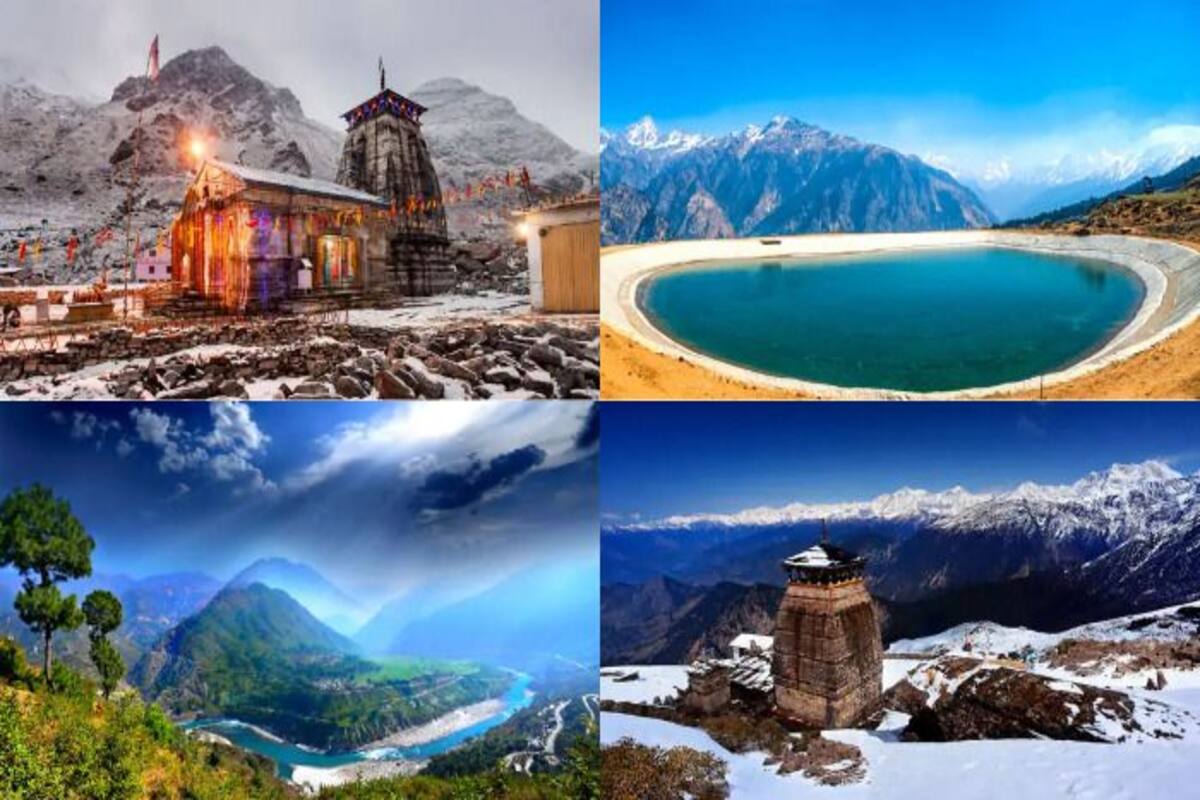
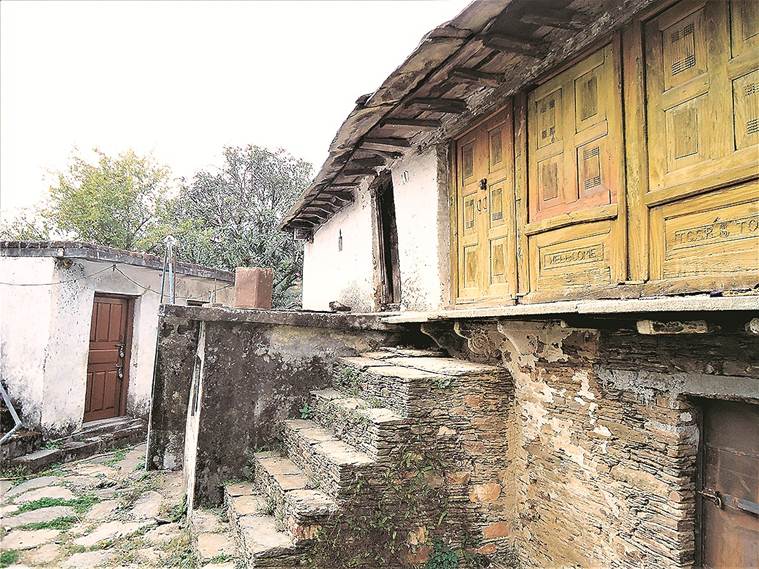
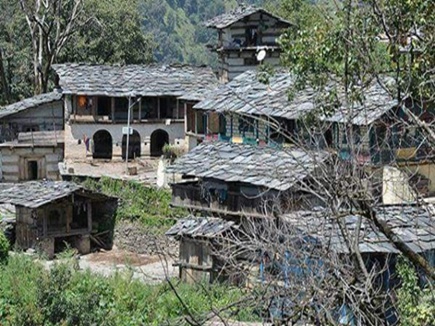
Uttarakhand fondly known as the Abode of God due to its rich cultural and religious history which is still stored in many temples sprawled across the state is also the origin of river Ganga and Yamuna , two of the most sacred rivers of India. The shrine of Baba Amarnath and Kedarnath in the state makes it a famous destination for pilgrims from all over the world not to mention the large number of tourists it attracts every year due to the picturesque scenery which the state offers . Despite such rich heritage of the state, in the last two decades it has faced a major issue where out of 16.739 villages in the state, 1702 villages were declared “Ghost villages” as they have no inhabitants. Whereas about 405 villages have less than 10 people as its residents( The data is based on the Census of 2011). The question is that why the area which was separated from Uttar Pradesh to form a separate state of UTTARAKHAND so that the people here may have better growth opportunities, has seen such a drastic decline in population over the last decade. Is there really some ghost as the title “ghost village” suggests that has occupied the place of the human beings? What is the reason that despite such a large number of tourists and pilgrims visiting the state every year, the villages here which act as a treasure chest preserving the culture, the heritage and the history of the place, are empty? This blog will answer all these questions.

Why are the villages devoid of any human habitant?

People from the villages have migrated to other states and other cities of Uttarakhand such as Rishikesh , Haridwar , Dehradun etc. in search of employment with an aim to have better lives. Initially, it was just the youngsters who would migrate to other places for earning but eventually as the time passed and the villages remained remote, elders also started to shift simultaneously as the cities offer better healthcare facilities. Imagine the emotional turmoil which people go through when they have to leave their homeland, their birthplace just to feed themselves.

The reasons for migration

  • The villages in Uttarakhand are least developed with many villages still having a narrow risky trek which connects them to the main road. Electricity till a decade ago was foreign to these places. Authorities pay absolutely no attention in catering to the needs of the people living there. Though the state is blessed with two of the most sacred rivers, yet the residents specially in the villages have to struggle even for water. Urbanisation in the hills brought with it such affects that many villages which were blessed with the streams full of water almost the entire year many decades back are now witnessing dried streams and barren land . Though the famous tourist places of the state, such as Almora, Nainital, Rishikesh, Haridwar, the capital city Dehradun etc. are provided with the facilities which ensures the safety and well being of humans, villages are still untouched.
  • Safety is another big issue which the residents have to face. The villages which are located amidst the dense jungles of the Himalayas are home to many wild animals many of which are man eaters. Even if the animal is not a man eater, wild animals such as wild boar , wild pig destroys the crops leaving no source of living for the people.
  • Since the entire state is situated in the mountains, the paths there are steep which leaves scope only for terrace farming and does not allows the growth of many crops. The crops which are grown are either destroyed by wild animals or by the famous mountain rains with very little left to fill the stomach with. Owing to these reasons, people have gradually stopped farming. Also, the extremely effective implementation of welfare schemes like the Mahatma Gandhi National Rural Employment Guarantee Act (MGNREGA) which allows the people working as laborers under the MGNREGA projects give them enough amount for sustenance and the enforcement of the food Security Act gives them enough ration to survive with . The reasons mentioned under this bullet point can be considered as the reasons for the decline of farming which was the sustenance profession of the state since years and validates the moving of people in search of better life opportunities.
  • Also, the people in the villages feel that City life is a heaven with all sorts of opportunities something which is rarely visible to them in the naturistic villages. Litle did they realize , that the reason for a large number of tourists coming to the state every year is their want to escape from the monstrous daily problems of the city life. How ironic it is , that geography has created such a vast opinion between two sets of human beings each one thinking that the other set resides in heaven! Well, this is how life is full of oxymorons and ironies!

Is the presence of ghost villages good for the state?

The answer is a big NO. Experts say that migration leads to abandonment of villages which causes degradation of land, makes villages unlivable, and further fuels migration. In fact, the migration to cities has been in such great numbers that Uttarakhand has recorded the highest increase in the share of urban population in any of the Himalayan states of the country while its rural decadal growth rate is the lowest. The inter state migration which was at its peek during the early 2000s when the state was newly formed was transformed into an intra-state migration after the devastating floods which destroyed Uttarakhand in 2013. The consequences being that the cities are overpopulated as they had no proper arrangements made to accommodate such a large number with the standards of living deteriorating for everyone. Whereas the villages have lost their mark.

The empty village homes are now covered with the wild shrubs and has increased the area of exploration to the wild animals such as tigers and leopards many of which are man eaters. The increase encroachment of animalsin the human settlements may prove fatal to the villages which are still lively though in less numbers.

Owing to the nationwide lockdown in 2020, many of the migrants have come back home to resettle in their roots and are now trying farming which is more difficult now owing to the covering of the farming areas by the wild shrubs which are difficult to remove. The resettling phase will again be a difficult one as these villages are still the same with no better facilities.

Environmentalist Anil Joshi, who in 2015 undertook a 20-day march across Uttarakhand as part of the Gaon Bachao Andolan (“save village movement”) to address the issue of migration from villages says ” we should ask the government why there is still a need to migrate”. His words hits a deep chord forcing us to think, why is it this difficult to fulfill the basic needs of the simple villagers so that they can stay close to their roots saving our culture and our future.

ANGER

Anger is an emotion which is a little more dangerous than the rest of them. Anger can be triggered due to financial problems, family problems, being surrounded by people you dislike, personal issues, etc. No one likes being angry nor do we like being surrounded by people who have a bad temper.

Everyone releases anger differently. Some like to shout at people, some like to break things, some tend to self-harm. Well, these methods do help release the anger, but they aren’t healthy ways of dealing with a situation.
Let’s have a look at how anger affects our relationships.
Some people take their anger out on the family. Sometimes when parents do not have control over things at their work, they come home and try to control the lives of their families.
Many parents often fight regularly at home and make the environment of the house hard to live in. Did you know that children who grow up in an abusive environment are usually too sensitive or completely numb? These children also show a sign of aggression or anger. They also suffer from anxiety and depression.
Some people also tend to substance abuse when they are angry. Using drugs, alcohol, tobacco, in large quantities. Some of these substances also cause more anger. Substance abuse is bad for a person’s mental, or physical health. It is also bad for the people around them.
Anger makes us do things we regret. It messes our relationships with people around us because we say things that we don’t mean to and do things we don’t want to.
I am not asking you to never take your anger out. Anger is an emotion that needs to be taken out. Taking anger out does not have to be destructive. We need to find constructive or healthy ways to take out our anger.
We are angry for a reason. So, the first step to calm the anger is to ask ourselves why we are angry. Once we find out why we are angry we can start working on it. Anger is our brain’s way of telling us to find a solution to an issue.
So, if it is a person that makes you angry, you might want to break ties with them.
If you feel angry with a job, maybe it is time to quit the job.

If we don’t listen to what our anger wants. Chances are the anger will keep sticking around until we make significant changes in our life. So, next time before you lash your anger out make sure to ask yourself what got you angry.
Some other healthy ways of dealing with anger are by doing physical activity like playing sports or working out. This will allow you to be constructive with it. In my boarding days when I would get angry, I would play squash. I would imagine the ball as my problem and hit the racket with full force. To tell you the truth it did help and make me feel good.

This way our anger is coming out in constructive ways. We need to learn to channel our anger to improve our lives instead of destroying it.

ALL THAT GLITTERS IS NOT GOLD

The line “all that glitters is not gold” occurs in William Shakespeare’s well-known play The Merchant of Venice”. It comes as a shock to Prince of Morocco when he, led by the exterior glitter of gold, chooses the gold casket and loses the lottery of caskets. The line has since then become a proverb. It means, in simple words, that appearances are deceptive. The seemingly beautiful and valuable object may turn out to be something most ugly and worthless.

Therefore, like all proverbs, ‘all that glitters is not gold contains the time-tested truth. It enjoins upon us to be cautious in our approach while judging the worth of a person or object. We should not be led by external appearance. A seemingly good apple may be rotten at the centre. A person may smile and smile, and yet prove to be a villain. An extremely beautiful face of a woman may hide her ugly, vicious character. A charming Cleopatra often proves to be a siren.

It is, of course, human to be attracted by good and beautiful persons and things. When a young man falls in love or goes to select a life partner, he is first tempted or repulsed by the outward appearance of the girl. If he does not pause and judge the real character of the girl, he is destined to rue and suffer for his choice throughout his life. So, it is equally true in the case of a girl in the choice of her would- be husband.

There is a beautiful story in the Bible which warns us against falling in to the seemingly attractive exterior. Eve gets attracted to the beautiful and yet forbidden fruit of knowledge (an apple). She fails to resist the temptation of tasting it. The moment she and Adam eat the forbidden fruit, they are thrown out of the Paradise forever. They bring upon them and their progeny (the whole mankind) endless sufferings in many forms.

In our modern world of glitter and glamour, there are many temptations around us. Most of us get attracted to glittering cars and bikes, gadgets and products of several kinds. Youngsters force their parents to buy them, which land their parents in vicious debt circles. The young men and women realise quite late how some of these attractive gadgets tell upon their health and ruin their careers.

Advertisements on the screen and in newspapers often coax people to buy things which are neither worth their money nor as useful as claimed. Most of us are misled by the utility of some products as they are advertised by some beautiful actresses, popular actors or other celebrities.

Know what happens during period!

Menstruation is the actual time when women bleed. And the entire time between 2 menstruation is called Menstrual cycle.

The excessive pain in menstruation is not normal and this condition is called Dysmenorrhea.

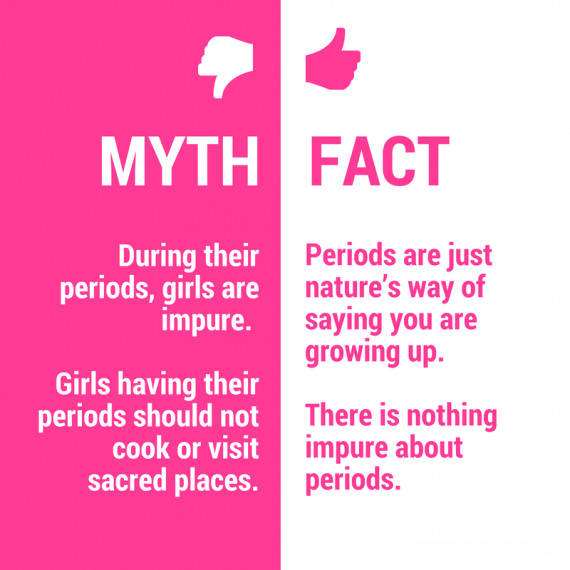
As everyone says period blood is dirty blood but in reality it is not the rejected blood of the body. It is less concentrated than normal blood and it has less blood cells.

“Smuggling pads to the bathroom like it’s some sort of illegal thing gotta be the worst adaptation to patriarchy”

Transgender men may still get their periods, just as transgender women might not have periods.

Girls miss their school 1-2 days every month and it affect their studies and education.

We bleed 5 days in a month and it really sucks

I am a girl
Yes, I am a girl
And like every other girl, I also go through those painful days
The day which comes and goes every month.
When the day comes, I feel like I’m in hell
I don’t have to touch stuff
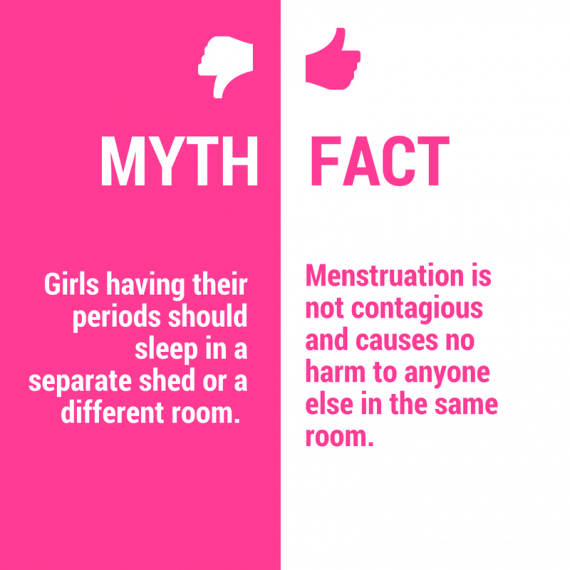
I am not allowed to go to bed
I am not allowed to go to the place of worship.
I am not allowed to say anything
I am not allowed to cry because of this cycle
I feel like thousands of hammers are breaking my bones.
I go through all these things like – mood swings, cramps, frustration, anger, and much more.
But I am not allowed to cry
I am not allowed to cry even when I feel the worst.
The reason behind this is that I am a girl
I am a girl
And I always taught to hide this
I always have to do that
I always have to be away from everyone
I have to hide this just because I am a girl And I am on my periods

How it feels when I am on my periods and no one understands the pain I am going through…

Superstitions

INDIA

  • Yoan’t enter a kitchen or cook food for anyone else.
  • Can’t enter a place of worship.
  • only enter a place of prayer once we’ve washed our hair on or after the fourth day.
  • Must wash our hair on the first day of our period to clean ourself completely. Buttt on the contrary…
  • If we wash our hair, our flow will be less and it will affect our fertility later in life.

Italy

  • Can’t touch plants.
  • Everything we cook will be a disaster.

UK

  • Tampons will break our hymen and make us impure.
  • Can’t take a bath.

Bolivia

  • can’t cradle babies or we’ll cause them to get sick.

As we know it is just because improper balance of estrogen and progesterone leads to the breakdown of endometrium lining that ultimately causes Menstruation every month.


we were taught to hide this.
Why, why do we have to hide this if it is natural.


This menstrual cycle is a natural thing and this is the reason why only women carry babies.But despite this, we all try to hide this.Everyone knows that this menstrual cycle always comes during it’s duration but everyone tries to hide it.When it is natural then why do we feel shame for this. Why??

Descriptive Writing-How to write, improve English.. creative writing..

Descriptive writing is a tool to make the audience imagine the event or place through your words. Below is a fictional description of visit to a café, mentioning details observed at the place:

A Visit to ” The Blue Café “

It was a regular Sunday afternoon but the discount coupons of The Blue Café on the occasion of their fresh opening, made it special. The café was only at a walking distance from home. The decoration on the entrance of that single-storey building turned out to be a strategy to attract people in the marketplace. Wonder how expensive it would have been to get a shelter on the main road of the city! There used to be a sweet shop before, which the owner sold for being unprofitable. Now it has been reconstructed to cater the demands of a wide range of consumers by offering a variety of food at one place. The café is making way for a large customer base since day one by bringing out luxurious offers for residents nearby.

Sunday was obviously attracting more customers. The guard at the entrance was well dressed and welcoming. The air conditioned hall and sitting arrangements were the most satisfactory. There was plenty of space to dine even on a busy day. The blue lights reflecting from the green walls had a soothing effect on the mind. They were neither too flashy nor too dark. The walls were holding fun and interesting posters compelling visitors to click several photos after lunch.

The tables were made of glass having beautifully prepared menu cards on them which offered a variety of dishes native to different places. The prices were on the peak but the discount coupons had our back for now. The service was fast enough since they had a good number of employees at work. Their uniforms had it written- ‘a day here gives a memory forever’. The kitchen was visible to an extent from the washbasin area. It was well equipped with modern cooking machines arranged in an order; leaving ample space to work. Proper sanitation facilities were provided for the customers which is a key point at public places. The management was really good and the food was delicious. There were free chocolate candies at the table for first hundred customers. The café was new and so was the crockery design. It was majorly a family dine-out at night and attracted young generations the most, during the day. The music at the background was pleasant and refreshing. The place is best suited for the working population since it calms down the mind, helps release stress and energises the body with its tasty food. The seats are arranged in a manner that no other gets disturbed.

Besides the blue lights, the name of the café also matches to the special dish called ‘Blue Bucket’ which is available only during the day at a high rate and unfortunately, the discount coupons doesn’t work on that. As the manager briefed, it is a dish having a basket of fruit salad, a cup of blue-berry ice cream and a special Thali. The veggies offered in the Thali are costly which is why this dish is unaffordable for many. Youngsters come here in groups just to have a taste of the famous Blue Bucket. Surely it is not a dish a single person can finish.

The place is really cherishing, especially for the youngsters. It is operative from nine to three during the day and seven to eleven at night. The café building adores the street with beautiful green lights hung upon the adjoining trees at night.