Factors used in this face wash are Caffeine, Neem, Argan Painting and Vitamin E. These all factor are skin-friendly. They not only clean your skin but also secure your skin. It’s extremely delicate to the skin, makes the skin smoother and vigour.
Health education is a profession of educating people about health. Areas within this profession encompass environmental health, physical health, social health, emotional health, intellectual health, and spiritual health, as well as sexual and reproductive health education.
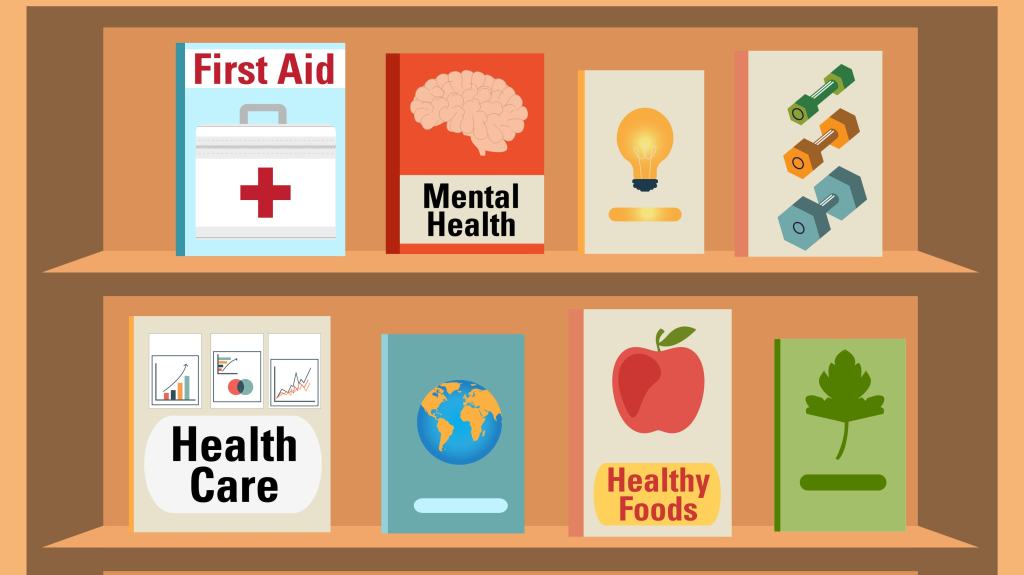
Health education teaches about physical, mental, emotional and social health. It motivates students to improve and maintain their health, prevent disease, and reduce risky behaviours. It also focuses on emotional, mental and social health too. Educating students on the importance of health builds their motivation.
Health education is one strategy for implementing health promotion and disease prevention programs. Health education provides learning experiences on health topics. Health education strategies are tailored for their target population. Health education presents information to target populations on particular health topics, including the health benefits/threats they face, and provides tools to build capacity and support behavior change in an appropriate setting.
History
From the late nineteenth to the mid-twentieth century, the aim of public health was controlling the harm from infectious diseases, which were largely under control by the 1950s. By the mid 1970s it was clear that reducing illness, death, and rising health care costs could best be achieved through a focus on health promotion and disease prevention. At the heart of the new approach was the role of a health educator.
Code of ethics
The Health Education Code of Ethics has been a work in progress since approximately 1976, begun by the Society for Public Health Education (SOPHE).
“The Code of Ethics that has evolved from this long and arduous process is not seen as a completed project. Rather, it is envisioned as a living document that will continue to evolve as the practice of Health Education changes to meet the challenges of the new millennium.”
Importance of Health Education .
Health education builds student’s knowledge, skills, and positive attitudes about health. Health education teaches about physical, mental, emotional and social health. It motivates students to improve and maintain their health, prevent disease, and reduce risky behaviours.
Health education curricula and instruction help students to learn skills so that they will use to make healthy choices throughout their lifetime.
Health education teaches people of all ages about how diet and exercise contribute to a healthy lifestyle. It also encourages positive changes in behaviour and lowers the risk of addiction to drugs, alcohol and unsafe sexual practices. The majority of schools around the country have courses aimed at teaching health education to students. These courses often revolve around the body, healthy eating, sex and exercising. Some students are taught basic health and physical fitness early on. More in-depth courses are designed for middle and high school students.
Health education encourages a person to make healthy choices. They are instructed to avoid unhealthy habits. ‘A sound mind lives in a sound body’. Rabindranath Tagore and C.V. Raman, if they were confined to sick bed, could not have won the Nobel Prize. In fact, a sickly student with all his talents and abilities lags behind in the race of life.
Health education also teaches about the emotional and mental health of the student. A healthy person is the happiest person in the world.
“The unthinkable is that we’re distorting this atmospheric balance. We’re shifting the chemical balance so that we have more poisons in the atmosphere – ozones and acid rain on ground level – while we’re also changing the thermal climate of the earth through the greenhouse effect and – get this – simultaneously causing destruction of our primary filter of ultraviolet light. It’s incredible. Talk about the national-debt crisis – we’re piling up debts in the atmosphere, and the piper will want to be paid.”
~ Michael Oppenheimer
Introduction
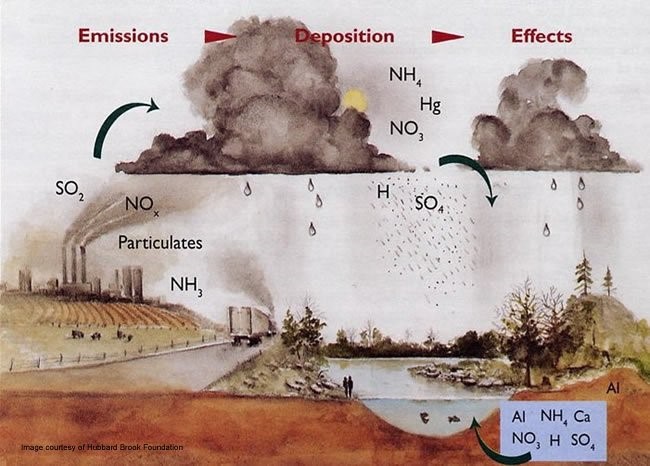
Acid rain, or acid deposition, is a broad term that includes any form of precipitation with acidic components, such as sulfuric or nitric acid that fall to the ground from the atmosphere in wet or dry forms. This can include rain, snow, fog, hail or even dust that is acidic.
Acid rain is caused by a chemical reaction that begins when compounds like sulfur dioxide and nitrogen oxides are released into the air. These substances can rise very high into the atmosphere, where they mix and react with water, oxygen, and other chemicals to form more acidic pollutants, known as acid rain.
It can have harmful effects on plants, aquatic animals, and infrastructure.
Effects of Acid Rain
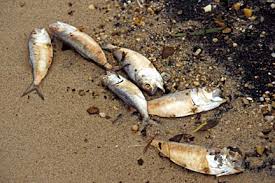
The ecological effects of acid rain are most clearly seen in aquatic environments, such as streams, lakes, and marshes where it can be harmful to fish and other wildlife. As it flows through the soil, acidic rain water can leach aluminum from soil clay particles and then flow into streams and lakes.
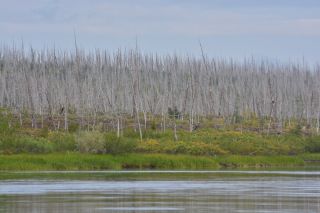
Acid rain has been shown to have adverse impacts on forests, freshwaters, and soils, killing insect and aquatic life-forms, causing paint to peel, corrosion of steel structures such as bridges, and weathering of stone buildings and statues as well as having impacts on human health.
Acid rain also causes the corrosion of water pipes. Which further results in leaching of heavy metals such as iron, lead and copper into drinking water.
Prevention
1. The only precaution that we can take against acid rain is having a check at the emission of oxides of nitrogen and sulphur. 2. We have so far seen the details of acid rain and its harmful effect on animals, plants and the monuments. 3. Being responsible citizens, one should be aware of the harmful effects they cause and of the industries which give out nitrogen and sulphur compound wastes unethically. 4.A great way to reduce acid rain is to produce energy without using fossil fuels. Instead, people can use renewable energy sources, such as solar and wind power. Renewable energy sources help reduce acid rain because they produce much less pollution.
Acid Rain in India
Analysis of rainwater samples from Nagpur, Mohanbari (in Assam), Allahabad, Visakhapatnam and Kodaikanal in the decade 2001-2012 showed a pH level varying from 4.77 to 5.32, indicating that these places have actually been receiving ‘acid rain’. Rainwater with pH below 5.65 is considered acidic.
As energy requirements in India will grow rapidly in tune with the economy, coal dependence is expected to increase threefold over the current level of consumption, making the clouds of acid rain heavier over many highly sensitive areas in the country – the northeast, parts of Bihar, Orissa, West Bengal ,etc ,.
The rains in the Indian Ocean and the Arabian Sea and the Bay of Bengal have become acidic. Studies show the importance to regularly monitor more places for acid rains. But the mechanism to study acid rains is at present inadequate in India. imd stations are not located in the most polluted areas in the country.
The forest is a peculiar organism of unlimited kindness and benevolence that makes no demands for its sustenance and extends generously the products of its life activity; it affords protection to all beings, offering shade even to the axe-man who destroys it.
– Gautama Buddha
Today , let’s feel the presence of fresh air , waterfall , trees , flora and fauna . Being a citizen of a country , which is well known for its resources , different species, mixed economy and different cultures. It is important for us to see the world of flora and fauna.
Well you get to know by the heading , today we are gonna talk about THE AMAZON’S which is well known for its vast species .
Introduction .
The Amazon jungle or Amazonia, is a moist broadleaf tropical rainforest in the Amazon biome that covers most of the Amazon basin of South America. This basin encompasses 7,000,000 km2 (2,700,000 sq mi), of which 5,500,000 km2 (2,100,000 sq mi) are covered by the rainforest. This region includes territory belonging to nine nations and 3,344 formally acknowledged indigenous territories.
The majority of the forest is contained within Brazil, with 60% of the rainforest, followed by Peru with 13%, Colombia with 10%, and with minor amounts in Bolivia, Ecuador, French Guiana, Guyana, Suriname, and Venezuela. Four nations have “Amazonas” as the name of one of their first-level administrative regions, and France uses the name “Guiana Amazonian Park” for its rainforest protected area. The Amazon represents over half of the planet’s remaining rainforests, and comprises the largest and most biodiverse tract of tropical rainforest in the world, with an estimated 390 billion individual trees divided into 16,000 species.
The name Amazon is said to arise from a war Francisco de Orellana fought with the Tapuyas and other tribes. The women of the tribe fought alongside the men, as was their custom. Orellana derived the name Amazonas from the Amazons of Greek mythology, described by Herodotus and Diodorus.
Flora and Fauna.
Wet tropical forests are the most species-rich biome, and tropical forests in the Americas are consistently more species rich than the wet forests in Africa and Asia.
This constitutes the largest collection of living plants and animal species in the world.
The region is home to about 2.5 million insect species, tens of thousands of plants, and some 2,000 birds and mammals. To date, at least 40,000 plant species, 2,200 fishes, 1,294 birds, 427 mammals, 428 amphibians, and 378 reptiles have been scientifically classified in the region.
The biodiversity of plant species is the highest on Earth with one 2001 study finding a quarter square kilometer (62 acres) of Ecuadorian rainforest supports more than 1,100 tree species.
Human impact on Amazon jungle.
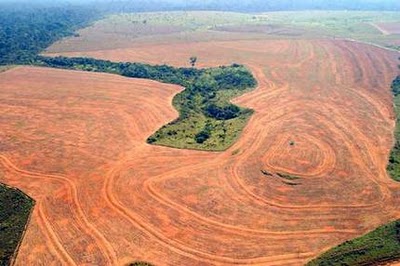
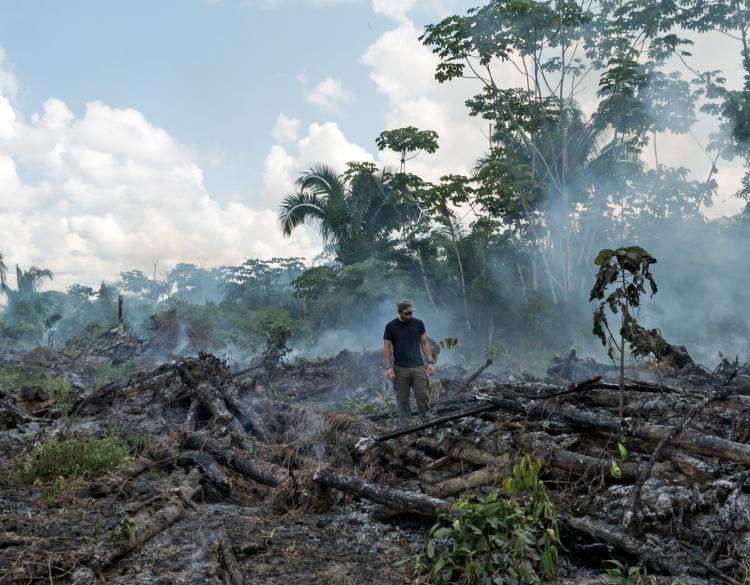
The human impact on the Amazon rainforest has been grossly underestimated according to an international team of researchers. … They found that selective logging and surface wildfires can result in an annual loss of 54 billion tonnes of carbon from the Brazilian Amazon, increasing greenhouse gas emissions.
Lead researcher Dr Erika Berenguer from Lancaster University said: “The impacts of fire and logging in tropical forests have always been largely overlooked by both the scientific community and policy makers who are primarily concerned with deforestation. Yet our results show how these disturbances can severely degrade the forest, with huge amounts of carbon being transferred from plant matter straight into the atmosphere.”
The second author, Dr Joice Ferreira from Embrapa in Brazil, said: “Our findings also draw attention to the necessity for Brazil to implement more effective policies for reducing the use of fire in agriculture, as fires can both devastate private property, and escape into surrounding forests causing widespread degradation. Bringing fire and illegal logging under control is key to reaching our national commitment to reducing carbon emissions.”
The forest is not a resource for us, it is life itself. It is the only place for us to live.
A chemical hazard is a (non-biological) substance that has the potential to cause harm to life or health. Chemicals are widely used in the home and in many other places. Exposure to chemicals can cause acute or long-term detrimental health effects. There are many types of hazardous chemicals, including neurotoxins, immune agents, dermatologic agents, carcinogens, reproductive toxins, systemic toxins, asthmagens, pneumoconiotic agents, and sensitizers. In the workplace, exposure to chemical hazards is a type of occupational hazard. The use of protective personal equipment(PPE) may substantially reduce the risk of damage from contact with hazardous materialsLong-term exposure to chemical hazards such as silica dust, engine exhausts, tobacco smoke, and lead (among others) have been shown to increase risk of heart disease, stroke, and high blood pressure.
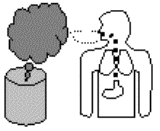
The decisions you make concerning the use of chemicals in the laboratory should be based on an objective analysis of the hazards, rather than merely the perception of the risks involved. Once this has been accomplished, a reasonable means of controlling the hazards through experimental protocol, work practices, ventilation, use of protective clothing, etc., can be determined. In order to assess the hazards of a particular chemical, both the physical and health hazards of the chemical must be considered. Before using any chemical, the safety data sheet (SDS) or other appropriate resource should be reviewed to determine what conditions of use might pose a hazard. Accidents with hazardous chemicals can happen quickly and may be quite severe. The key to prevention of these accidents is awareness. Once the hazards are known, the risk of an accident may be reduced significantly by using safe work practices. The most common exposure route to chemicals in the work environment is through inhalation. Gas, vapour, mist, dust, fumes, and smoke can all be inhaled. Those with occupations involving physical work may inhale higher levels of chemicals if working in an area with contaminated air. This is because workers who do physical work will exchange over 10,000 litres of air over a 8-hour day, while workers who do not do physical work will exchange only 2,800 litres. If the air is contaminated in the workplace, more air exchange will lead to the inhalation of higher amounts of chemicals. Chemicals may be ingested when food or drink is contaminated by unwashed hands or from clothing or poor handling practices. Chemical exposure to the skin is a common workplace injury and may also occur in domestic situations with chemicals such as bleach or drain-cleaners.. The exposure of chemicals to the skin most often results in local irritation to the exposed area. In some exposures, the chemical will be absorbed through the skin and will result in poisoning. The eyes have a strong sensitivity to chemicals, and are consequently an area of high concern for chemical exposure. Chemical exposure to the eyes results in irritation and may result in burns and vision loss. Injection is an uncommon method of chemical exposure in the workplace. Chemicals can be injected into the skin when a worker is punctured by a sharp object, such as a needle. Chemical exposure through injection may result in the chemical entering directly into the bloodstream.
Types of Health Effects :-
A chronic health effect is an adverse health effect resulting from long-term exposure to a substance. Symptoms do not usually subside when the exposure stops. Examples of chronic health effects include asthma and cancer. Acute health effects can be observed immediately or soon after an exposure; often a large, brief exposure. Many times the symptoms will subside after the cause is removed, however, depending on the amount/dose, permanent damage or even death can occur from a single exposure. Examples of acute health effects include dizziness, skin irritation, and throat irritation. Keep in mind that a chemical may cause both acute and chronic effects. Health effects can vary depending on the organ, the dose level, frequency, duration, and route of exposure (inhalation, skin contact, etc.). Ethanol is an excellent example of a compound that causes varied health effects based on the parameters mentioned above. A small amount of ethanol (from alcoholic beverages) over several hours results in loss of coordination and impaired judgement; large one-time consumption leads to vomiting, unconsciousness, or even death; consumption over several days by a pregnant person can lead to birth defects; and chr:onic consumption over many years can lead to cirrhosis of the liver.
Signs and symptoms of chemical exposure:-
Signs of an exposure are external and can often be seen by you or others in the laboratory. They are objective and can sometimes be measurable. Signs of exposure sometimes include hives, puffiness, sneezing, etc. They are often temporary and can go away when the source of the exposure is removed. Symptoms are internal and are not visible to the naked eye. They are only felt by the person feeling them and examples include pain, dizziness, numbness, etc. Sometimes a sign can indicate a symptom. For example vomiting is a sign than indicates someone is feeling nauseated (symptom). There are different signs/symptoms of exposure to chemicals based on their hazards, reactivity, and the route of exposure. Many of the signs and symptoms of exposure to chemicals are similar, but there are some specific signs which are indicative of particular compounds. For example, osmium tetroxide vapors damage the cornea of the eye, can make your eyes feel gritty, and even turn them black. It is important to know the signs and symptoms of the chemicals with which you work and other chemicals in the laboratory to which you could potentially be exposed.
Symbols of chemical hazards:-
Hazard pictographs are a type of labeling system that alerts people at a glance that there are hazardous chemicals present. The symbols help identify whether the chemicals that are going to be in use may potentially cause physical harm, or harm to the environment. The symbols are distinctive, as they are shaped like diamonds with red borders. These signs can be divided into: 1. Explosive (exploding bomb) 2. Flammable (flame) 3. Oxidizing (flame above a circle) 4. Corrosive (corrosion of table and hand) 5. Acute toxicity (skull and crossbones) Hazardous to environment (dead tree and fish) 6. Health hazard/hazardous to the ozone layer (exclamation mark) 7. Serious health hazard (cross on a human silhouette) 8. Gas under pressure (gas cylinder)
These pictographs are also subdivided into class and categories for each classification. The assignments for each chemical depends on their type and their severity.
First aid :-
In case of emergency, it is recommended to understand first aid procedures in order to minimize any damage. Different types of chemicals can cause a variety of damage. Most sources agree that it is best to rinse any contacted skin or eye with water immediately. Currently, there is insufficient evidence of how long the rinsing should be done, as the degree of impacts will vary for substances such as corrosive chemicals. However, the recommended flush time is as follows: 1. 5 minutes – non- to mild irritants 2. 15 minutes – moderate to severe irritants and chemicals that cause acute toxicity 3. 30 minutes – most corrosives 4. 60minutes – strong alkalis such as sodium, potassium or calcium hydroxide.
Transporting the affected person to a health care facility may be important, depending on condition. In the case that the victim needs to be transported before the recommended flush time, then flushing should be done during the transportation process. Some chemical manufacturers may state the specific type of cleansing agent that is recommended.
MORE DIFFERENT KIND OF HAZARD :-
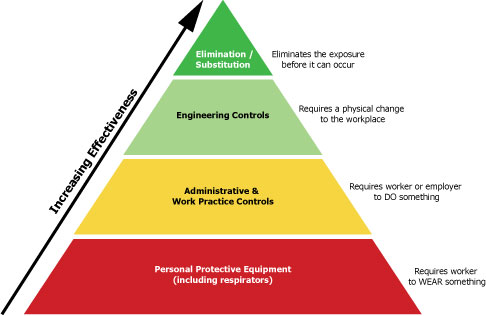
1. Anthropogenic hazard – Hazard caused by human action or inaction 2. Biocontainment – Physical containment of pathogenic organisms or agents in microbiology laboratories 3. Biological agent – Pathogen that can be weaponized 4. Biological hazard – Biological material that poses serious risks to the health of living organisms 5. Biosafety level – Level of the biocontainment precautions required to isolate dangerous biological agents 6. Chemical safety – means of ensuring that chemicals are safe 7. Hazard – Substance or situation which has the potential to cause harm to health, life, the environment, property, or any other value 8. Health hazard – Hazards that would affect the health of exposed persons.Hierarchy of hazard controls – System used in industry to eliminate or minimize exposure to hazards 9. Mechanical hazard – Hazard with a mechanical energy source 10. Occupational exposure banding – Process to assign chemicals into categories corresponding to permissible exposure concentrations 11. Occupational hazard – Hazard experienced in the workplace 12. Physical hazard – Hazard due to a physical agent 13.Planetary protection – Guiding principle in the design of an interplanetary mission, aiming to prevent biological contamination of both the target celestial body and the Earth 14. Psychosocial hazard – Occupational hazard to one’s psychological well-being Public health – Preventing disease, prolonging life and promoting health through organized efforts and informed choices of society and individuals .

















 Eduindex
You must be logged in to post a comment.