Should commercial surrogacy be banned in India?

Commercial surrogacy is the process by which an individual or couple pays a fee to a woman in exchange for her carrying and delivering a baby. At birth the child, homo-sexual couples, and single people who wish to be parents are the most common types of people who seek surrogate mothers.

Commercial surrogacy has been legal in India from 2002 onwards but due to unethical practices, a bill has been approved by the Union Cabinet in August 2016. This one lapsed when Parliament adjourned without taking the measure for a vote.

The new proposal came in 2019 that is to ban commercial surrogacy. The Indian minister of health has called the 2019 bill a “need of the hour” citing a rough estimate that between 2000 to 3000 unregulated clinics currently operate in the country. Under the new law anyone who performs or promotes this would be punished with up to 10 year of imprisonment and a fine up to one million rupees. The surrogacy bill’s provision restricting surrogacy to married heterosexual couples within strict age ranges also discriminates against members of L G B T community, older couples and unmarried people who might seek to have a child. The bill goes against the principles of equality provided under Article 14 of the Indian constitution.

Regulation, not ban, is needed. The commercial surrogacy in India needs a regulation and stricter rules that could ensure good care and pay to the woman alone and not agents or others. Good clinical facilities for the surrogate mother and a healthy environment where she could stay safely before and after delivery could lessen exploitation. There is no provision in the law about the custody of the child if the couple later refuse to accept it if the child is mentally challenged or born with a defect. People who hire surrogates have a need to do so due to medical reasons. It is not their choice. Regulation on this practice is very much needed and must be done to close loopholes due to which exploitation of surrogate mothers is taking place.

Indian society is yet to progress so much as to accept surrogate motherhood. The woman who rents her womb even if for the cause of humanity towards an unfortunate couple will never be accepted in society when she goes back to her normal life. People will look down on her and she may probably not be able to find a husband, if she was unmarried at the time of surrogacy. We need to be broad-minded and accept these women and respect their choice of renting their wombs.

Giving women a safe and free environment for surrogacy can help in curbing the evils attached and the industry could do well along with giving good money to such poor women so that they can make their lives better as well as give prosperity to their families.

Thank you for reading. Have a nice day!

Online classes results in Eyesight and Ear problems

Most of the students are now undertaking online classes due to the ongoing Coronavirus pandemic. This is indeed a cause of worry for many parents because children spend extra hours on mobile phones and laptops. Experts also speak of the hazardous effects that digital classes can have on eyes of young children. Parents must take precautions and measures to ensure safety of the child’s eyes.

Needless to say, excessive usage of mobile phones, laptops or any other gadgets can affect children in many ways. This can be mental and physical. Eye strain is one amongst the most common problems. Some of its symptoms include excessive blinking, tearing, frequent rubbing of the eyes, dry eyes, headaches from eye strain and even tiredness. Parents must be extremely watchful and careful on how the child spends time online.Most of the classes, especially for children above class 8, goes on for long hours. Parents must cut short their time spent on video games, TV and other gadgets. Only a strict no works with most children!

During the last two weeks, a few school children in the age group of 8-10 came to my clinic with complaints of dryness in their eyes and frequent blinking of eyes. Prolonged reading on the mobile screen and watching it from close range may result in this type of problems,” says G. Hanumantha Rao, an ophthalmologist, who runs his clinic on MVP Double Road. He suggests that a laptop or a desktop with a large screen should be preferred. It also ensures that proper viewing distance is maintained, at least to some extent.

“Prolonged use of earphones can result in noise-induced deafness. It can also cause tinnitus and the child may experience ringing sounds in the ear. Severe exposure may cause inability to hear certain frequencies. The problems depend on the duration and intensity of the sound,” says B. Ramachandra Rao, an ENT surgeon at the Government ENT Hospital in the city.

Can mid day meals solve the school education crisis in rural India ?

The roots of the mid day meal program can be traced back to the pre-independence era, when the British administration decided to come up with ways to help disadvantaged children. Today, this scheme seeks to address the following issues – food security, lack of nutritional food in rural areas, and access to education. It is hoped that by providing hot meals to children in lower primary and upper primary classes, more children will be encouraged to attend school regularly.    

Today, in India, 4 percent of the children do not attend school, and 58 percent of the children have not completed primary school. In fact, only 10 percent of the children in India make it to college. This is the education crisis that India is facing today. According to the government, the mid may meal program reaches out to more than 120 million children in over 1 million schools nationwide. However, has the number of children attending school increased over the past few years because of this scheme ?   

In fact, according to a government report, in Bihar, the attendance of children dropped by 9 percent in the last five years and in Madhya Pradesh, the attendance of children dropped from 67 percent to 54.5 percent between 2008 and 2011. And in other states such as Andhra Pradesh, Kerala and Uttar Pradesh, there is an increase in private school enrollment in rural areas over the past five years. This proves that the mid day meal program has not been effective in solving the school education crisis. Despite providing healthy meals for children, there is a significant decline in the enrollment of students in schools in rural areas. On paper, the government has urged schools to provide meals with a minimum of 300 calories for those studying in lower primary classes and meals with a minimum of 700 calories for those studying in upper primary classes.   

The Mid Day Meal is a significant part of the diet of Indian children. The meal is available to all primary and upper primary children (classes 1 to 8) in government schools, government-aided schools and Education Guarantee Scheme (EGS) schools. Two out of three Indian children go to government schools alone (according to the 2011-12 India Human Development Survey). Not every child entitled to the mid-day meal receives it; the survey shows that 82% of children in government schools reported getting a mid-day meal. In all, at least half of all children in classes 1-8 in India get a mid-day meal.

How many children get a mid-day meal ?

For many, the mid-day meal is invaluable. The 2011-12 National Sample Survey (NSS) data shows, 10% of the meals that all primary school-age children (5-9) in rural India receive in a month are from school. The Mid Day Meal’s self-selection works; the poorest children in both rural and urban India get more meals per head from school than richer children, the NSS data shows.

There is evidence that the Mid Day Meal has contributed to the gradual improvement in child malnutrition indicators. The Mid Day Meal scheme explained at least one-tenth of the total reduction in stunting in India in between 206 and 2016, researchers at the International Food Policy Research Institute found. Adolescent girls, now 12-17, who got meals under the Mid Day Meal Scheme in 2004 were taller, they found. The effects on health were multi-generational; children born to young women who had received school meals in 2004 were less likely to be stunted.

Yet, the nutritional value of the meal is far from perfect. On paper, each hot cooked meal is meant to provide a primary school child with 450 calories and 12 grams of protein, and an upper primary child with at least 700 calories and 20 grams of protein. This is often not the case; earlier this year, journalist Pawan Jaisal recorded a government school in Uttar Pradesh’s Mirzapur serving the children rotis and salt only. In 2012-13, 90% of school lunches served to primary school students in Delhi did not meet the energy and protein norms.

This becomes important in the context of general under-nourishment among school-going children. The CNNS shows that the diets of school-age children are highly deficient, and they consume lower than recommended amounts of most healthy foods.

School-age children have deficient diets

The outcomes are evident. 22% of children 5-9 were stunted (low height for age), and 23% were thin (low Body Mass Index for age). 24% of adolescents (age 10-14) were thin. The prevalence of stunting was higher among children who were out of school.

School-going children have significant rates of malnutrition and micronutrient deficiency

For those from richer families, availability of healthy foods is a lesser problem (though it exists) compared to obesity and related non-communicable diseases, which stem from poor nutritional awareness.

However, there is no government body to monitor these schools and ensure that nutritious meals are reaching the students. A survey conducted by the Department of Economic and Statistical Analysis shows that 72 percent of schools do not have kitchens and facilities to cook. So, food would be cooked miles away and transported to the schools. By the time the food reaches these poor children, it would have turned cold. Also, 69 percent of the schools that were surveyed did not have proper eating utensils.     

So, the mid day meal scheme is not a solution to the school education crisis in India. Steps have to be taken by the government to ensure that schools have the proper facilities for cooking. In the last few weeks, there have been incidents of a dead lizard and insecticide being detected in mid day meals. This shows that the government has no mechanism in place to check the quality of food before it is consumed by children. Government schools lack the proper infrastructure for teaching, which is why students prefer to study in private schools. Those who are unable to afford an education in private schools prefer to work because of the horrific conditions of government schools. So, it is time for the government to take responsibility of the education system and provide proper facilities for the welfare of the children in India.  

How television is affecting kids…

Now a days television become an important part of every child’s life. Children spend a lot of time sitting in front of TV. They see a number of programmes on the television and enjoy and learn a lot of things from it and sometimes this learning become a cause of concern, which depends on the types of shows being watched.

Television builds personality and character of the child and even has the power to changes attitude and perspective towards life but it has some ill-effects too. So we should know both positive and negative effects so that we can ensure that your child enjoy TV without exposed to its ill-effects.

POSITIVE EFFECTS OF TELEVISION ON KIDS

  • There are some shows like Dora the Explorer which stimulate their imagination through interactive quizzes and thinking patterns. These kind of shows keeps them engaged, teached them new skills, and let them have fun too.
  • Some shows teach kids problem-solving and provide them with strong foundation of mental maths and analytical thinking.
  • Watching sports encourage them to go for outdoor activities which help them to be active and healthy. This leads to their emotional and physical well being.
  • Informative and education shows also improve their performance in school.
  • TV shows also acts as a stress buster wguch can do wonders for the children’s mood and emotional problem and protect him/her from emotional stress which can impact them negatively.
  • Through TV shows children also learn a lot of vocabulary and social skills.
  • TV keeps them engaged without harming their cognitive development.
  • TV shows encourage independent thinking skills and teach children to think out of the box. These skills help them to think in different perspectives.

NEGATIVE EFFECTS OF TELEVISION ON KIDS

  • If children is spending lot of time in watching television and he/she may miss other opportunity and lose time for other precious tasks like playing with friends, doing homework etc.
  • If child is spend lot of time in watching TV instead of going out and exploring real world then he/she will not be able to develop strong imagination. As ideas are present in TV, so children who watch a lot of TV cannot stimulate their minds and not able to come up with their own fresh ideas.
  • Children who spend more than 2-3 hours infront of the screen on daily basis often suffer from lack of focus in classroom environment. There are greater chances of this children to get diagnosed with ADHD (Attention Deficit Hyper Activity Disorder)
  • Too much watching TV also leads to developing obesity and other health disorder.
  • It also leads to eye problems. Children experience blurring and reduced vision which cannot be corrected through glasses.
  • Agressive programmes or even one scene of agressive can alter the brain structure and promote negative behaviour like agressiveness and violence.
  • Spending a lot of time may result in lack of participation in other activity which adversely affect their academic performance.

So, it is necessary to limit the number of hours children spend on watching TV. Also ensure that your child is watching quality programme. Also keep the TV set away from the bedroom. Try to develop a healthy relationship between TV time and complete tasks.

A SLAP TO HUMANITY -13 years old raped by police officer

Sexual assault has become a flashpoint in a much deeper political dispute over the ways in which Indian culture is changing as the country becomes more urban and less traditional. A sort of culture war has emerged. One aspect of that war: sexual assault has at times become a weapon used to police Indian women’s adherence to traditional social rules and, by extension, society’s adherence to traditional values. That has come with disturbingly institutionalized victim-blaming that, along with impunity for perpetrators, allows a culture of sexual assault to flourish.

When we talk about rape culture, we’re discussing something more implicit than that. We’re talking about cultural practices (that, yes, we commonly engage in together as a society) that excuse or otherwise tolerate sexual violence.

Rape is one of the India’s most common crimes against women. It is reported that at every 20 min, a woman is raped in India. The majority of reports reveal that female youth are vulnerable group for rape victimization. According to experts, only 10% of rapes are reported, and the conviction rate for rape cases is 24.2%

In the recent past, gruesome cases of sexual assault have surfaced from all corners of the country, including the abduction, gang rape, and murder of a young lawyer in Jharkhand; the rape and murder of a 55-year-old cloth seller in Delhi’s Gulabi Bagh neighborhood; and a teenager in the state of Bihar who was gang raped and killed before being set ablaze.

Recently ,a teenager was raped by a police officer in Odisha’s Sundargarh district. A police inspector in Odisha’s tribal-dominated Sundargarh district was suspended on Friday over his alleged involvement in the gang rape and subsequent abortion of a 13-year-old girl over a period of two months.

Anand Chandra Majhi, the inspector-in-charge of Biramitrapur police station in Sundargarh district, was suspended a day after a case was lodged against him and five other people, including a doctor, for the alleged gang-rape and abortion attempt.

The girl had come to witness a fair at Biramitrapur area on March 25 but it was cancelled at the last moment due to the lockdown. The girl failed to return home and was roaming near the bus stand when a police patrolling team saw her and brought her to the police station.

Inspector Majhi allegedly raped her at the police station. She was dropped at her home the next day.

However, she was called to the police station regularly and raped by the inspector and other police officials. The girl later got pregnant following which Majhi tried to abort her foetus.

The matter came to light after the child, who was seen crying outside the police station last week, was rescued by a local NGO and handed over to the district child protection officer who lodged a complaint with Raiboga police station and Six persons, including the inspector, doctor and the girl’s stepfather, have been named as accused 

Humans by nature are not violent. They are social animals. It is the society that shapes their attitudes and beliefs that give rise to their aspirations. Centuries of patriarchy have conditioned men to believe in their superiority and to look down upon women as inferior beings. The cosmetic industry, media, entertainment even sports thrive on the objectification of women

A system that ensures that no accused can manipulate or manage to wriggle out of the clutches of law. A system that deals with rape cases expeditiously from arrest till the execution of sentence and no one is spared. The message should go out loud and clear that ‘no one is above the law’.  We need to prevent rapes from happening. Prevention and not punishment is the solution and that requires concerted efforts on part of all the stakeholders.

What Should Parents Know About COVID-19-Related Anxiety in Kids?

The coronavirus pandemic has disrupted the lives of everyone, including children. Vermont’s mental health professionals have seen higher-than-normal numbers of kids experiencing anxiety brought on by the “Stay Home, Stay Safe” order, school closures, canceled extracurricular activities, and curtailed visits with family and friends.

Thankfully, parents can play an active role in reducing their kids’ anxiety, beginning by reassuring them that they live in a very safe place. According to the Vermont Department of Health, the number of youth under the age of 20 who have contracted COVID-19 remains low, and no Vermont children or teens have died from the virus.

Still, if children seem unusually anxious for a prolonged period, there are things parents can do to help. Dr. Lewis First, chief of pediatrics at the University of Vermont Children’s Hospital, shares his expert advice for managing anxiety in kids.

KIDS VT: What is anxiety?

DR. LEWIS FIRST: Anxiety is a normal emotion we all experience at one point or another as part of our natural fight-or-flight response. Having a little stress or anxiety about something new, different or challenging is normal and prepares us to be sharper and more alert to respond. For a child, it may be a big test or athletic competition. But anxiety can become a problem when a child faces a sudden, prolonged crisis — which makes COVID-19 the perfect scenario for causing stress and anxiety. While their stress may not indicate a classic anxiety disorder, it can reach the upper limits of what a child is emotionally able to handle.

KVT: What signs should parents watch for?

LF: Anxiety becomes a concern when a child experiences a persistence of symptoms associated with this condition. Kids may have physiological complaints such as headaches, stomachaches or loss of appetite. Some kids become irritable or agitated. They may become restless, easily fatigued, have trouble concentrating or difficulty sleeping. Some become disruptive or even withdraw from their parents as a way to cope.

KVT: Does anxiety look different depending upon the child’s age?

LF: Kids of all ages, even babies, can show signs of stress or anxiety, which they can sense from their parents’ unease or experience when they’re around people they don’t know. Babies, toddlers and preschoolers may seem clingier, cry more, get upset easily and not want to do things that they previously enjoyed. Older schoolchildren and early adolescents may exhibit more negativity. They may complain of shortness of breath, shakiness, clamminess, a racing heart and feelings of doom, which are all classic signs of a panic attack.

KVT: When should parents be concerned about a child’s anxiety?

LF: First, parents should realize that the vast majority of children who are showing signs of stress right now are not having classic anxiety disorders. To make such a diagnosis, we need to see at least one sign of excessive anxiety occurring more days than not for at least six months, and we haven’t been dealing with COVID-19 for that long yet.

KVT: What can parents do to help?

LF: Kids tend to stress when they sense that their parents are worried. I know it’s hard right now, but parents need to remain calm and manage their own stress as best they can. This is a great opportunity for families to recognize that, even while isolated or as we slowly get out in public more often, this is a special time together. Parents should build in time to be with their child where it’s not about talking at them but really listening to them. With an older child or teenager, sometimes a parent expressing their own concerns will open the door to them feeling it’s OK to vent their own feelings. Parents can ask a child if there’s something they saw or heard about the coronavirus that worries them, then educate them about what is fact versus fiction. Parents can also reassure their children that scientists and medical professionals around the world are working every day to find new medicines and vaccines that will make this virus go away.

KVT: What can kids do themselves?

LF: Children can be made to feel like they’re part of the solution by practicing physical distancing, good handwashing hygiene and staying home when necessary. Parents should focus on all the positive things their kids are doing. Limit children’s exposure to the news or, with an older child, watch it together as a family so that you can discuss what’s going on. One of the most important things you can do to reduce anxiety is create predictability. Uncertainty breeds anxiety and fear, so parents should create a schedule that is predictable yet flexible and includes plenty of group playtime. Communicate with family, friends, teachers and coaches by phone or videoconference. And parents should not loosen the rules too much on healthy behaviors such as consistent bedtimes, good diet and daily exercise.

KVT: What if kids are still struggling with daily anxiety?

LF: If children just aren’t sleeping well most or all nights, are anxious most of the time, or continue to show the signs and symptoms we’ve discussed, then it’s time to talk to a health care professional. They can recommend treatments such as cognitive-behavioral therapy and even medication. A counselor or therapist can be very helpful in teaching a child coping mechanisms such as taking slow, deep breaths; counting backward from 100; and having a safe space to go to in their minds and/or in their homes. Increased anxiety in adults can lead to physical or emotional abuse, so parents need to manage their own stress levels, too.

© 2020 Kids VT

Mental Health: Children, Young People, and Families

Mental health is a widely overlooked aspect of a person’s health. People don’t consider it as important as their physical health, mostly because the injuries are not visible. However, they often forget that the signs are always there. Mental health problems are often directly proportional to the day-to-day happenings in our lives. Most mental health problems start developing at a very young age, but parents often ignore the warning signs. At such an impressionable age, children need to be taught about their mental well being too. It is imperative that we address the issue of mental health among children, young people, and families.

Children and Young People

It is seen many-a-times that the physical needs of a child are obvious, but his or her mental needs may be neglected. Even when the red flags are identified, there is a stigma associated with mental illness.

Some problems that children suffer from are ADHD, autism, anxiety, anorexia (eating disorder), depression, and bipolar disorder. Warning signs include intense mood swings, self-harm, substance abuse, sudden appetite loss, fidgeting, and continuous nightmares.

health

A few suggestions to nurture a child or adolescent’s mental health could include talking to them about their day; asking them if they are facing any problems at school. This strengthens your bond with them and they start trusting you more. As a parent, make sure that your ward eats a healthy and balanced diet, is physically fit, and takes part in outdoor activities.

Provide children with a healthy environment at home; a child should feel secure in his surroundings. Help them build their self-esteem and confidence while talking to them. Encourage their first steps towards new interests. This would enable them to open up more and express their feelings and doubts. And most importantly, don’t condemn them when they do something wrong. Instead, let them know their mistake and work together to improve it.

Families

It is obvious that an individual’s mental health problems will have consequences for others within his social networks and most importantly his family. When it comes to mental illness, the emotional and behavioral consequences for family members go largely ignored along with having a huge impact on their financial component.

menheal

Family life often becomes unsettled and unpredictable as the needs of the ill become paramount day by day. The afflicted often feels that he’s isolating those close to him. Children may find it difficult to understand why their parent is not his/her usual self. Therefore, many tend to blame themselves and grow up feeling abandoned, lonely, and isolated.

In case a family member suffers from a mental health problem, you should not let him feel dismissed and disregarded. Instead, you could try to understand what he is going through, his inner turmoil, and try to help him cope with that. Children need special care at this time as they are perplexed by the happenings in their lives.

You should try to mend the broken relations, leave the toxic people in your lives behind, and create a positive impact on others’ lives.

Image Courtesy: Google

State of CHILD LABOUR in the world!

On the rising population there is also rise in demand of  family members related to commodities. Many of the family don’t even get 2 meals per day! there is lack of only one thing and that is money. It is said that

“Empty stomach can make you to do anything”

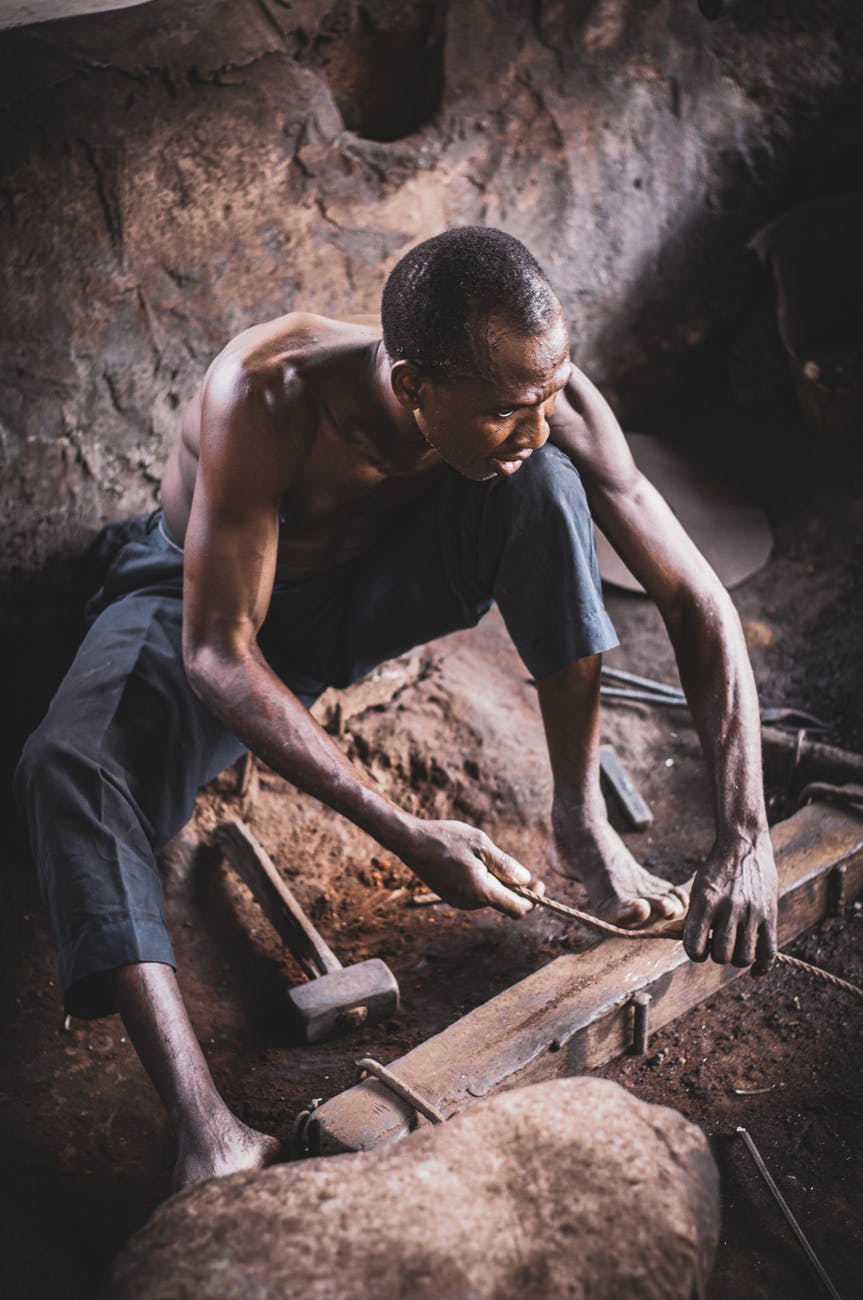
To fill the stomach people can do anything especially when they have family to feed. Now-a-days the crises and cruelty has increased drastically that alone 1 man cannot feed the all 4 members in the lower labour section. So, unwillingly all the family members had to work at the field and contribute some money towards family to sleep without an empty stomach at night.

a photo of a hardworking man
Photo by Tope A. Asokere on Pexels.com

There are many schemes released by government to stop the child labour like making primary education almost free for poor children along with mid-day meal to them so that they do not have to crave for the meals and keep focus on the study, they are also regularly checked by medical if there is any weakness in any of the student. National Child Labour Project (NCPL) is a central government branch which takes strict actions against child labour and works at the best to resist this act. According to UNICEF, India with the highest amount of population has also high number of child labour cases under the age of 14 and 1% of it i.e. approx 1,20,000 are forced to engage in hazardous jobs.

images

Image source: Jatinverma.org

Every year on the day of 12 June it is marked as Anti-Child labour day to draw the attention on the issue of child labour. Every year there is different themes on this day:

  • In 2020 the theme was “Protect children from child labour, now more than ever”.
  • In 2019 the theme was  “Children shouldn’t work in fields, but on dreams”.
  • In 2018 the theme was Generation safe and Healthy”.
  • IN 2017 the theme was “In conflicts and disasters, protect children from child labour”.
  • In 2016 the theme was “End child labour in supply chains – It’s everyone’s business!”.
  • In 2015 the theme was NO to child labour – YES to quality education!”.

Now the matter is not just to put it to one day and on a piece of paper, it’s a world wide conflict and has to be somehow resolved. Every year various types of acts and event are performed by students of schools, college and NGOs too, but this year digitally the message was forwarded as due to lockdown and pandemic situation rallies, etc cannot be held.

“Why had his mother gone to the trouble of bringing him into the world if the most exciting moment in his life was having been made lame by a bayonet?” -Félix J. Palma

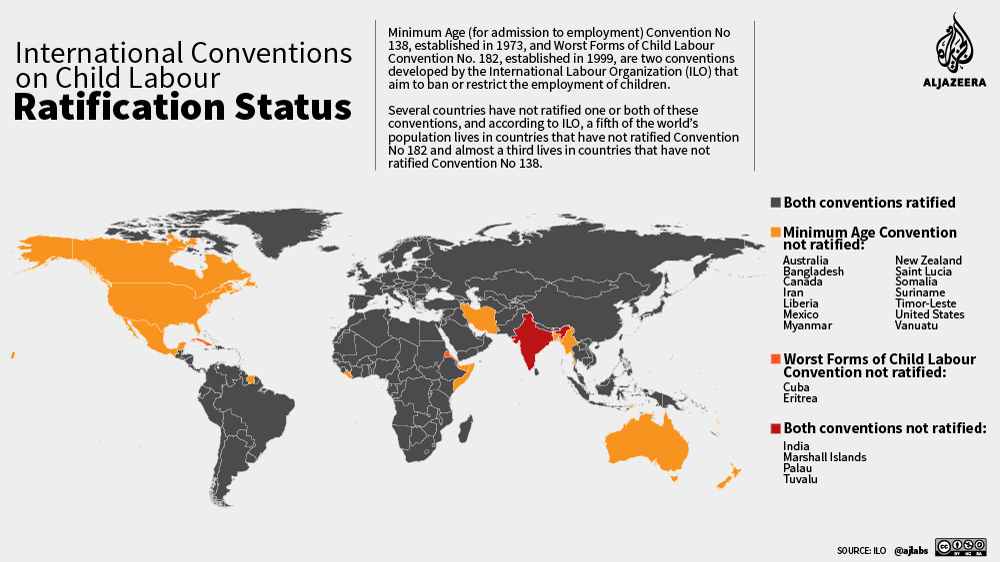
Let us have some stats:

2cc325d1413d4c61aabb17eb63fcd1d6_18

Image source: Al Jazeera

World Day against Child labour

If we see around us, we regularly see children on street selling balloons, small girls are working as maid in homes with their mother, in village children are working in field, some are working in factories which is very dangerous for them. So we can see there are many children who are in child labour.

So World Day against Child labour is standard holiday first launched in 2002 by International labour organization aiming to raise awareness and activism to prevent child labour.

According to ILO’s data, “hundreds of millions of boys and girls in this world are involved in work that deprives them to receive an adequate education, health, leisure and basic freedom, voilating this way their rights. Of these children, more than half children are exposed in worst form of child labour like working in hazardous environment, slavery and other form of forced labour, illicit activities such as drug trafficking and prostitution, as well as involvement in armed conflict.

Child labour affect children’s physical, cognitive and social development. Children who are working in factories are very dangerous for their health. While working they are at high risk for illness such as respiratory illness, and they exposed to harmful chemicals which also affect their physical development. These children oftee suffer from malnutrition which leads to serious health and mental conditions in later life.

According to researchers, teenagers who spend more than 20hrs per week working at a higher risk to problematic social behaviour like drug abuse and aggression. This also affect their education development, most children dropout from school and if they remain in school, they perform very poorly.

It also social development, as in this age it is very necessary to spend time with peers and family members which help them to built positive relationships but long working hours do not led to properly from these relations which lead to insecurities and improper identity development in later stage. It also leads to a feeling isolation and depression and prevent formation of healthy emotion and relation with others.

So, it is important to takeout children from the darkness. It is necessary to aware people about the ill-effects of child labour and how it is dangerous for the children. Strict action should be taken against the people who are involved in this.

Childhood is a very period of one’s life. It is the age of seeing dreams, playing, troubling elders through their naughtiness, not of going to factories or streets or working. So it’s not just about one day, it is our responsibility to spread awareness about child labour and take actions against it everyday and don’t let any of the child being trapped in this darkness.

Protect Children Labor, Now More Than Ever .

Children around the world are regularly engaged in hazardous activities that affect their mental, physical, social or educational development. Every year World Day Against Child Labor Day is celebrated on 12 June to provide a growing and developing environment for children to live a dignified life. In 1919, the International Labor Organisation (ILO) was founded and in 2002″World Day against Child Labour” was established to abolish child labor.

Impact of COVID-19 on Children

World Day against Child Labor 2020 focuses on the impact of COVID-19 on child labor. The COVID-19 pandemic has a huge impact on Livelihoods of the labor market and children are often the first to suffer. The economic slowdown has forced millions of children to left their school and opt for minimal jobs to support their parents for the livelihood. This year, the World Day Against Child labor is being conducted as a virtual campaign and organized jointly with the Global March Against child labor and the International Partnership for Cooperation on Child labor in Agriculture.  

If children are provided with a suitable environment to enjoy their life, surely they will contribute to the economic and social growth of the countrySo stop child labor, protect the right of children, and support them.

Impact of technology on children

In modern day, children are surrounded by technology since childhood. Now children don’t play with toys but they play games in mobile phone. Parents also leave their children with mobile so that children don’t trouble them and parents can live their life peacefully.

This increasing trend of technology lead to a greater impact on children’s life. Technology also has some positive effects but negative effects are also not less.

Today, children are so busy in playing with phone and computer due to which they don’t spend anytime in playing outdoors with peers. Due to this they don’t exercise also which leads to their poor health. The cases of obesity in children increases a lot in this decade. As they always remain inside on their home and do not go outside so it leads to the lack of vitamin D because they don’t spend time in sunlight which leads to weakening of their bones. As they are busy with mobiles, children don’t able to exposed to activities like cycling and playing other games with their peers which leads to lowering of frequency of children to interact with their peers.

Using mobiles or laptops for the long time causes headache and eye irritation. According to research sleep is also disturb by blue light when children is exposed to screen time in the evening due to the suppression of hormone melatonin which regulates the sleepwake cycle.

If the child see a lot of TV or play game, it leads to a decrease of attention span time if children as they want something new everytime, due to which children are not able to pay attention in classroom, textbooks and any other work. Overuse of technology by children also lead to frustation and self doubt.

We know use of technology has many negative effects but it doesn’t mean that we totally exclude this from the life of thr children. Apart from many negative effects there are some positive effects too but there is a need to make some rules while using technology so that your child can take full benefit of it.

It is necessary to set limit of screen time for children and avoid using mobile and laptop before sleeping. Encourage your child to go outside and play with their friends. If they want to watch TV or play video games, encourage them to play games through which they can learn something meaningful. Always keep a check on what the child is watching. Never let the child to watch program which is more agressive, this leads to frustation and anger in child. Encourage them to watch TV shows related to dance or any other physical activity and ask thr children to perform by seeing the artist. This lead to the good physical activity and child also learn something new. Keep a watch that the distance between the screen and the child’s eye is not too less, it may cause weakening of the child’s eye.

Everything has some positive and some negative aspects, so technology has. So instead of isolating the child from all these in the fear of negative effects,it is necessary to keep a check on what the child is doing, together make rules so that your child get benefit with these technology and not have to bear negative effects.

INDIAN EDUCATION SYSTEM

Although we are developing in the other sectors but our education system is still not developing. And if we talk about the future of education system, it totally depends on how we are developing our education system at present. If we see our way of teaching and our institution both are lacking in fulfilling student’s needs.

As we know and many psychologists had also proven that good learning depends on how much the child is satisfied with their basic needs and their surrounding environment. But if we look at the facilities present in government and public school, the facility is very poor. Schools don’t have proper drinking water, toilets which lead to droupout of many students especially girls when they start menstruating. Some schools even don’t have proper desks and fans in school. We can sit for even an hour without fan, cooler or AC so, how can we expect these children to study in these conditions.

Apart from that if we talk about the teaching style and the curriculum, there are many things which are lacking in these. In our schools, education means making our children learn or we can se memorize theories and facts so that they can clear exams. Teacher teach them by giving stimulus and the children only have to respond. They condition students to behave in a certain way, where there is no use of mind. So in our schools, children (humans) are taught to memorize and write exams and taught in the same way as animals are taught to do stunts in circus i.e., they just have to imitate. In our schools, the whole focus is on result, teacher don’t even thought about what the child learned and how much he/she improved. There are no spaces where the child can explore, think in his/her own way of responding, doing experimentation, finding reasons and so on.

There is no inclusion in our education system and curriculum. Our education system is very much class or society centred i.e., working for a particular class or society. The languages we use in our classes i.e., Hindi and English are the standardized language which is very difficult for children coming from other background. There is no space for mother tongues in schools. The homework in small classes are usually those in which children need parent’s help or sometime the major or full work is done by parents only. So it creates a lot of difficulty for first generation learner.

Our education system is just like the race in which you have to complete this in a given period of time and there is no space for mistakes.

In this kind of education system, the children who can afford other facilities such as tutors, you tube videos, and whose parents are educated doesn’t find any problem but what about the child who is the first generation learner, who can’t afford other ways of learning, who can’t get exposure to our so called standard language i.e., English or Hindi, since childhood. These differences present in the school lead to droupout of these children from school.

So if our present education system continue to be like this, we never able to ‘educate’ our children. We will only able to make machines who can receive stimulus and give response. These are also only some children, because other children do not even included in our education system.

If we really want to educate our students and make our education system better in future we should try to improve our education i.e.,both our education institutions and our way to teaching. It is necessary that education should be provided in the sake of building a knowledgeable and better future leaders, not in the sake of making money. The real focus should be on what the students are learning not on the results. It is necessary to critically and honestly think about our education system and the problems present. Essential steps should be taken to improve our technique and infrastructure so that we are able to make our education system better in future, otherwise without a good education we are not able to develop in any sector.

Wake up, your child is going to do suicide

“If my parents understood my dreams than today I won’t be stealthy sitting on roof and writing this blog.”

So, you are a parent, if not than at one stage of life you’ll be ( but for now just read and share it with a parent). Every parent has great GREAT expectations from their offspring and sometimes that desire becomes so pressurizing that it takes the toll of the life of that little angel.

How many of you asked your child what he or she wants to become well many of you haven’t and in a rare case if you have, I am sorry to say that you didn’t took that seriously.

A child of 21st century is none less than the most busiest person on Earth, schooling, coaching, homework and much more trouble some tasks are a part of their life and after all that when they get the night time to rest, they wander in the land of dreams; the world that’s their own, they make ambitions and set goals for their life.

But do you even know the amount of grief and misery that your child feels when you say a crisp clear NO to them when they beg you to let them achieve what they want ?

Let me talk in statistics. Globally Around 65000 kids committed suicide in 2019 just because their parents didn’t allowed them to study in the field of their choice.

Just imagine the condition of a student who passed school working hard so that he could take admission in his dream college. But guess what, his CARING parents deny him that because the college is in another city . WTF, like seriously, we kids work our ass whole childhood to satisfy your marks hungry taste buds and what we get in return, a big rejection on our dreams.


As a parent your worries and thinking of well being of ur kid is justified. But you have to understand that the dreams and choice of your child also matters, afterall it’s them who would be studying and if they want to pursue a field of their choice then why deny it to them and become the reason of them going into depression or at worse, commuting suicide.


Parents, you have to understand this, your child knows his interests more than you or anyone else. Please, you just can’t put an end on their life by making them give up on their dreams.

Just go and talk to them, understand what ur child wants. Otherwise the day is not far when your child will cry silently in night and will fear to meet eye with people and will curse his very existence like I do. Please parents, wake up .


Alarming disappearance of play from Children’s life

Play is the important part of child’s life. Play enhances the child’s physical, social and cognitive skills. Through play children learn many skills like cooperation, language etc. It also helps to clear the egocentric stage in early ages. In childhood the major learning happens through play only.

But in present time, play is somewhere disappearing from the children’s life. There are many reasons for that. Some parents don’t send their children to play due to security reasons as today parents don’t have time to sit in the park where the child is playing so that they can take care of the child. In some places there are not proper spaces where the child can play. Some parents think that by playing they are wasting their time. And they should utilise their time by studying apart from going outside and play. Due to advent of technology too, children nowadays prefer to play video games and use mobile rather that going outside and play.

All these things have a greater impact on children’s mental and physical health. Playing outside keeps them healthy and also help in their mental growth. While playing children use many concepts which they learn in theories like counting, conservation, usage of language and so on. While playing children learn how to cooperate with peers, how to understand others perspective, they learn to solve problems of their own. They acquire confidence to talk to so many people. It is the platform where they can, not only make mistakes but can also learn from their mistakes. But our parents and teachers didn’t understand this. According to them bookish knowledge is the knowledge child should have and this only help them to become a successful human being. According to Leo F. Buscaglia “It is paradoxical that many educators and parents still differentiate between a time for learning and a time for play without seeing the vital connect between them.”

Parents and teachers should understand that play is equally important for child as the study. If they don’t play they lack many abilities or develop it later. So it is necessary that we encourage children to play with their peer group. Parents and teachers should include play time in the child’s schedule like all other activities through which they can enjoy as well as learn and properly live their childhood.