Adani Group

Adani Group is a diversified organisation in India comprising 7 publicly traded companies. It has created a world class transport and utility infrastructure portfolio that has a pan-India presence. Adani Group is headquartered in Ahmedabad, in the state of Gujarat, India. Over the years, Adani Group has positioned itself to be the market leader in its transport logistics and energy utility portfolio businesses focusing on large scale infrastructure development in India with O & M practices benchmarked to global standards. With four IG rated businesses, it is the only Infrastructure Investment Grade issuer in India.

The Adani Group is one of India’s largest and most influential conglomerates, with a diversified presence in a wide range of industries, including energy, infrastructure, resources, logistics, agribusiness, and more. Founded by Gautam Adani in 1988, the group has grown rapidly over the years, becoming a global player in various sectors. Here are some key aspects of the Adani Group:
Founding and Leadership: The Adani Group was founded by Gautam Adani, who started with a small trading business in India. Under his leadership, the group has expanded significantly and is now a prominent name in the Indian business landscape.
Diversified Business Interests:
Energy: The Adani Group has a strong presence in the energy sector, with interests in power generation, transmission, and distribution. It operates thermal power plants and has ventured into renewable energy sources like solar and wind power.
Infrastructure: The group is involved in infrastructure development, including the construction of ports, airports, and highways. Adani Ports and Special Economic Zone (APSEZ) is one of India’s largest port operators.
Resources: The group has interests in mining and resources, particularly in coal mining and trading. It also has substantial holdings in natural gas exploration and distribution.
Logistics: Adani Group is involved in logistics and transportation services, with a focus on providing end-to-end supply chain solutions.
Agribusiness: The group is involved in the agribusiness sector, with activities such as the handling, storage, and trading of agricultural commodities.
Global Reach: The Adani Group has expanded its footprint beyond India and has undertaken projects in various countries, including Australia, Indonesia, and the United States. This global expansion is particularly evident in their energy and resources businesses.
Major Projects: Some of the major projects associated with the Adani Group include the development of Mundra Port in Gujarat, the expansion of the Tiroda and Kawai thermal power plants, and the creation of the world’s largest solar power project in Rajasthan.
Sustainability and Renewable Energy: In recent years, the Adani Group has shown a commitment to sustainability and renewable energy. It has made substantial investments in solar and wind energy projects and aims to become the largest renewable energy player in India.
Controversies and Challenges: The Adani Group has faced its share of controversies, including environmental concerns related to its coal mining projects, allegations of land acquisition issues, and disputes over infrastructure projects. These issues have sparked public debate and legal actions in some cases.
Financial Success: The group’s rapid expansion and diversification have contributed to its significant financial success. It is listed on the Indian stock exchanges, and several of its subsidiary companies are among the top players in their respective industries.
Adani Group is a conglomerate with a significant presence in multiple sectors of the Indian economy. Under the leadership of Gautam Adani, the group has achieved substantial growth and aims to continue its expansion, particularly in the renewable energy sector, as it navigates the challenges and opportunities presented by India’s evolving business landscape.

Top 8 richest people in the world.

 Top 8 richest people in the world

What do you think who are the richest person and how they become rich that they earn billions or trillions of dollar well let me tell you they all are investors and business from there they benefited and now they are the richest people in the world.
Here are the 10 richest people in the world , as listed on Forbes Real – Time Billionaire list .

1. Elon Musk

  1. Age : 50 
  2. Nationality : South Africa
  3. Companies : Tesla, SpaceX, The Boring Company, Neuralink, Twitter, PayPal
  4. Net worth : $232.8 billion 
  5.  Industry : Automotive Technology 

Elon Musk is the richest man on the planet and accumulated much of his wealth having founded Tesla.

Elon Musk has Tesla and several other revolutionary businesses including SpaceX , Neuralink, and The Boring Company.
Twitter in an all cash transaction expected to be worth $ 44 billion.

2. Bernard Arnault 

  1. Age : 73
  2. Nationality : France
  3. Company : LVMH 
  4. Net worth : $148.1 billion
  5. Industry: Fashion and Hospitality
Bernard Arnault amasses his fortune in the luxury goods industry with the ownership of world renowned brands such as Louis Vuitton and Christian Dior.

Arnault ‘s luxury fashion empire spans more than 70 brands , which he manages along with his siblings. Arnault also owns several luxury hotels and cruise lines that have only added to his wealth over the years.

3. Jeff Bezos 

  1. Age : 58
  2. Nationality : USA 
  3. Company: Amazon
  4. Net worth: $139.4 billion 
  5. Industry: E-commerce and Technology 

Bezos is credited for pioneering the e – commerce landscape, which has become one of the largest industries in the world.

He transformed Amazon into a platform where shoppers can buy and sell almost everything and developed one of the most sophisticated logistics companies in the world.

4. Bill Gates 

  1. Age : 66 
  2. Nationality: USA 
  3. Company: Microsoft
  4. Net worth : $124.6 billion 
  5. Industry: Technology 

Bill Gates was a tech whiz kid growing up , having designed his first software program at age 13. Microsoft was first founded in 1975, but Gates decided to step down as CEO in 2000.

Gates relinquished his duties at Microsoft to focus on philanthropy through the Bill and Melinda Gates foundation.

5. Larry Page

  1. Age : 49
  2. Nationality: USA 
  3. Company: Google 
  4. Net worth: $99.7 billion
  5. Industry: Technology and Advertising

Larry Page co – founded Google in 1908 and was CEO until 2001 . He returned as CEO from 2011 to 2015 and remains a board member and majority shareholder.

Nowadays, Google has moved under the umbrella of Alphabet, the tech conglomerate holding company that owns you tube , google play, android, fitbit, mandiant, looker and nest.

6. Gautam Adani 

  1. Age : 60
  2. Nationality: India
  3. Company: Adani Group
  4. Net worth: $99.2 billion 
  5. Industry: Energy and Transportation

Gautam Adani is the richest person in India, and his enterpreneurial DNA comes directly from his father , who owned a textile business. 

Adani had no interest in the business and decided to follow his own ambitions to achieve great wealth. Soon after leaving home, Adani entered the diamond industry, which saw him quickly rise to millionaire status .

7. Larry Ellison 

  1. Age : 77 
  2. Nationality: USA 
  3. Company: Oracle
  4. Net worth: $97.1 billion 
  5. Industry: Software

Larry Ellison attribute his great fortune to the rise of technology. Having founded Oracle in 1977 after dropping out of college, he grew the company from its start- up phase to one of the largest software and database companies in the world. Oracle now has a market capitalisation of 187.7 billion and Ellison has retained a stake of more than 40 percentage to date.

8. Warren Buffett

  1. Age : 91
  2. Nationality: USA
  3. Company: Berkshire Hathaway
  4. Net worth: $97 billion 
  5. Industry: Investing and Finance

Nicknamed the ” Oracle of Omaha ” , Warren Buffett is regarded as the greatest investor of all time . His holding company, Berkshire Hathaway, manages a portfolio of investments thar include large positions in Apple stock as well as several bank stocks .

Importance of Cybersecurity.

Cyber security is the protection of Internet-connected systems such as hardware, software, and data from cyber threats. This technique is used by individuals and businesses to protect against unauthorized access to data centers and other computerized systems.

Cyber security is important because it protects all categories of data from theft and damage. This includes sensitive data, intellectual property data, government and industry information data and systems information,personally identifiable information , protected health information and personal identified information . Without cybersecurity programs, organizations cannot protect themselves from data breaches campaigns and are attractive targets for cybercriminals.
Global connectivity and the use of cloud services such as Amazon Web Services to store sensitive and personal information increase both inherent and residual risks. Along with increasingly sophisticated cybercriminals, widespread misconfiguration of cloud services means an increased risk for businesses suffering from successful cyberattacks and data breaches. Executives can no longer rely solely on off-the-shelf cybersecurity solutions such as antivirus software and firewalls, cybercriminals are smarter, and their tactics are more resilient to traditional cyber defense. It is important to cover all areas of cybersecurity to remain fully protected.
Cyber threats can come from all levels of an organization. Organization should educate employees about common cyber threats such as social engineering fraud, phishing, ransomware attacks and other malware designed to steal intellectual property and personal information. Should include cybersecurity awareness training for.

Types of Cyber Threats :
Malware-This is a type of malicious software that can use arbitrary files or programs to harm computer users. This includes worms, viruses, Trojan horses, and spyware. Ransomware-This is another type of malware. This involves an attacker locking the victim’s computer system files and requesting payment to unlock them.
Social Engineering-This is an attack that relies on human interaction to trick users into breaking security procedures and gaining sensitive information that is normally protected.
Phishing-This is a form of social engineering that involves sending deceptive emails or text messages similar to those from trusted or known sources. Often in random attacks, the purpose of these messages is to steal sensitive information such as credit cards and login information.
Spear phishing – This is a type of phishing attack aimed at targeted users, organizations, or businesses.

Cyber security is very important today. Our society is more dependent on technology than ever before and in today’s digital time data breaches that could lead to the theft of personal information which are easily disclosed to social media accounts. Sensitive information such as social security numbers, credit card information, and bank account details are now stored in cloud storage services such as Dropbox and Google Drive. In fact, whether you are an individual, a small business, or a large multinational company, in today’s time everyone rely on computer systems every day .

Shortage in Indias Power Supply.

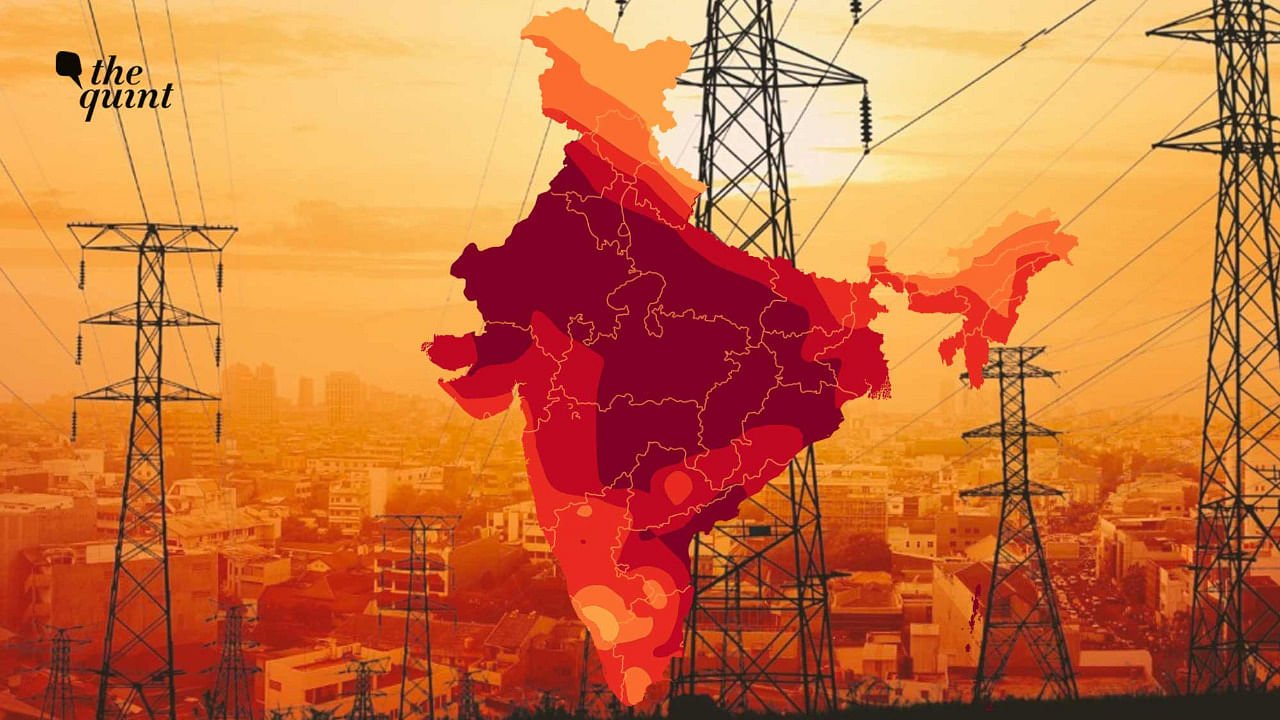
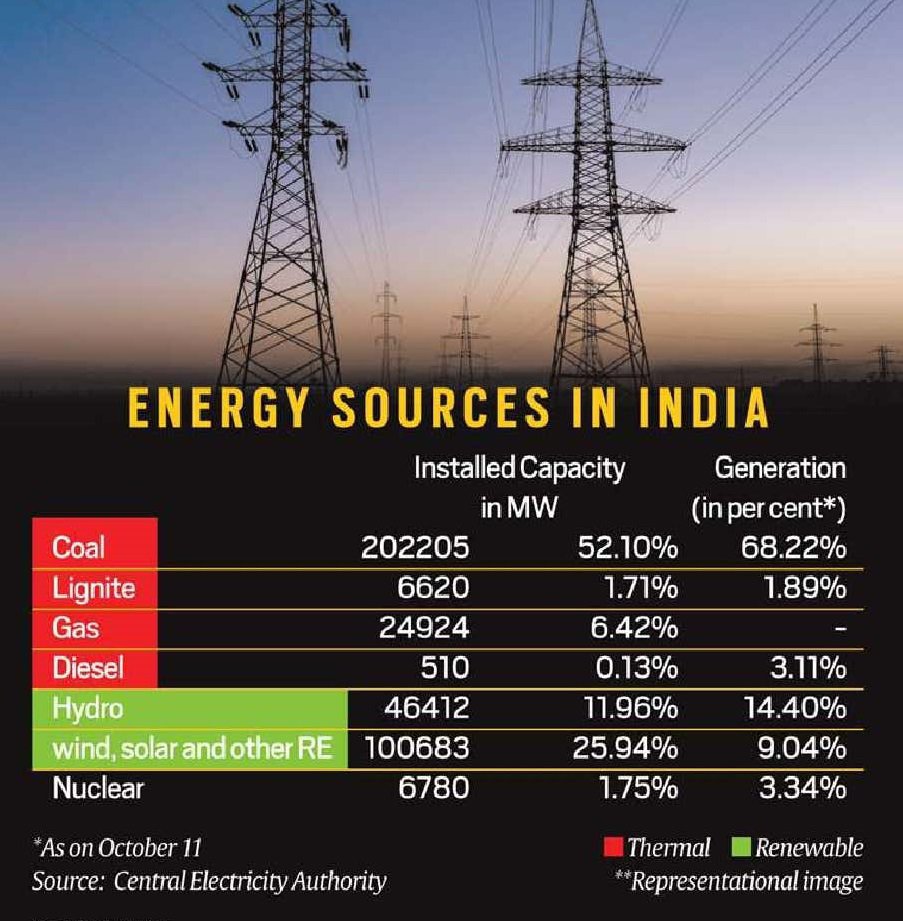
India has the fourth largest coal deposit in the world. It is the second largest fossil fuel producer after China and is home to Coal India, the world’s largest coal mining mine, which accounts for 80% of domestic production. Already allocated coal block mining capacity exceeds expected demand in 2030 by approximately 15% to 20%.


So why are India’s power plants facing coal shortages each year, leading to widespread power outages, exposing parts of the country to darkness and endangering industry?
There are several factors. India has a long time policy of minimizing coal imports. In February 2020, Coal Minister Pralhad Joshi announced that the country would stop importing steam coal from 2023 to 2024.
Mr Joshi said the Ministry of Coal will work with the Ministry of Railways and the Ministry of Shipping to allow Coal India, prisoners and commercial miners to discharge more coal from their supply by 2030. And the coal supply at power plants is running out at an alarming rate. The Department of Energy is currently blaming the decline in coal imports due to the current crisis. In 2018-19, 21.4 million tonnes of coal were imported for mixing, down to 23.8 million tonnes in 2019-20 and 8.3 million tonnes in 2021-22.


Power plant coal inventories have fallen by about 13% since April, reaching pre-summer lows. And for the first time since 2015, Coal India will import fuels used by state-owned and private power companies. The Ministry of Energy said almost all states showed that multiple state bids for coal imports would cause confusion and that the decision was made after calling for centralized procurement by Coal India.
Imported coal costs five times as much as domestic mining, so the center is being pushed back by the state.
Recently, the government has also pressured utilities to increase imports to mix with local coal. Last year, after a two-year break, three tranches of coal auctions were held and nine blocks were successfully awarded.

In September 2021, the Ministry of Coal issued a strict warning to owners of confined coal blocks, stating that their mines should increase production or face restrictions on coal supply by the CIL.
The ministry has discovered that these mines are producing below target.

Of the 43 coal mines outsourced to private companies in the energy, steel and metals sectors, none have met their annual production targets.
On May 6, Coal India announced that it would provide the private sector with 20 closed and abandoned underground coal mines and reopen and operate its revenue sharing model.

According to journalist Shreya Jai the current power supply chain does not seem ready to handle periods of high growth and state discos cannot pay gencos, but the power supply chain starts with state discos and needs repairs. Railroads, on the other hand, are struggling to align the thermal power industry’s demands for faster coal supply with those from other industries. Rakes must be prepared to meet the growing demand for almost all other bulk commodities, from cement and steel to sand and edible grains. By strengthening the value chain of the electric power sector, it is possible to resolve the coal supply-demand mismatch in the long run.

History of Television in India.

Television was founded by John Baird. The first television service was started in 1936 by British Broadcasting Corporation (BBC) of Britain . In 1939, television broadcasts began in the United States. In 1953 the first successful programme in colour was transmitted by Columbia Broadcasting System (CBS) in USA. In today՚s world, television has become one of the most powerful means of mass communication . It can impart education, information and entertainment . Television has end up becoming an necessary a part of our lives.


HISTORY
India’s first television station was established on October 24, 1951, in the Department of Electronics and telecommunications at Government Engineering College in Jabalpur. Television began in India as an experiment on September 15, 1959. It was first started as two hours programmes a week under the authority of AIR. Early programs of these experimental broadcasts were generally educational programs for children and farmers. By 1975, only seven Indian cities were using television services. The Satellite Instructional Television Experiment (SITE) was an important step by India for the use of television for the development of people and the country. Initially, the show was mainly produced by Doordarshan (DD), who was part of AIR at the time. Transmissions were made twice a day, morning and evening. In addition to information on agriculture, health and family planning, other important topics covered in these programs were audience education and awareness raising. Entertainment was also included in the form of dance, music and cinema. In 1976 Television services were separated from radio . Color television was introduced to the Indian market in 1982.

In the late 1980s, more and more people began to own televisions. There was only one channel, but the TV show was saturated. Therefore, the government opened another channel, partly broadcasting nationally and locally. This channel was called DD2 and was later renamed to DD Metro. Both channels were broadcast on the ground. In 1997, Prasar Bharati, was established.Doordarshan, along with AIR, was incorporated into a state-owned enterprise under Prasar Bharati. Transponders of the American satellites PAS-1 and PAS-4 assisted in the transmission and broadcasting of shows on DD. An international channel called DD International was launched in 1995 and broadcasts programs abroad 19 hours a day to Europe, Asia and Africa via PAS-4 and to North America via PAS-1.The 1980s were the prime time for DD, with shows like comedies such as Hum Log (1984-1985), Wagle Ki Duniya (1988), Buniyaad (1986-1987). Epics like Ramayan (1987–1988) and Mahabharat (1989–1990) brought millions to Doordarshan and later on Chandrakanta (1994–1996). Song-based programs for Hindi movies such as Chitrahaar and Rangoli, and crime thrillers such as Karamchand and Byomkesh Bakshi. Children’s shows such as Tenali Rama ,Vikram Betal and Malgudi Days .


Private Channels influence:
The introduction of communication channels was a revolutionary move to reach so many people. It became an opening for Private and Commercial broadcasters in our country. The emergence of private channels began in India in the 1990s after CNN aired the Gulf War. Hong Kong-based STAR (Satellite Telivision Asia Region ) enterned in a contract between an Indian company and Zee TV. It became the first Private Indian Hindi satellite channel. During this time, several local stations have emerged. Apart from local ones various international channels such as Channel, CNN, BBC, Discovery, etc were also available for Indian TV viewers. Their were various categories of channels available for viewers,such as the 24-hour news channel, Religious channels, cartoon channels, movie channels, something for everyone .


Changes and Evolution:
A significant change that has occurred is the use of different methods of delivering television programming. Just a while ago their were satellite-based antennas, but now the mode has converted to dishes. Other shipping methods are are delivery via cable network and direct satellite transmission. Now you can watch TV shows on your mobile phone , the technology behind it is called Internet Protocol Television. The emergence and spread of televisions and computers and the access to content anytime, anywhere, everyone has brought revolutionary change and access to the world of entertainment.

“I always say film is art, theater is life and television is furniture .”

Kenny Leon

Korean wave in India.

The  Korean wave has certainly seen a significant  rise in India during the pandemic, and K-Drama and K-Pop are seeing massive demand from fans and new followers as well. In response to the growing popularity of the Korean wave in the country, many  online and offline events are held to show people  what they are consuming online. And these extend not only  to K-Drama and K-Pop, but also  to food, beauty and culture in general.
Korean singer PSY’s 2012 viral hit “Gangnam Style” may have started the Korean wave in India, but it certainly wasn’t the origin. The existence of K-POP in India dates back to the late 90’s when in Northeastern part  in Manipur Bollywood films were not allowed to watch because law imposed by the Separatist group Revolutionary Peoples Front to make Manipur independent.Not so much offered, the locals turned to Korean content and it got it’s popularity from their on.

Increasing demand for Korean content is fueling competition between India’s Amazon Prime Video and Netflix. Amazon Prime Video is the first company to launch Parasite and Minari in the country. Hotstar, MX Player, Viki and Viu are also involved in the Korean wave effect. Discovery + launched the “Star vs Food” series featuring the Korea Tourism Organization (KTO) and K-POP idols to introduce Korean food to India. Some prominent dramas are: Crash Landing on You, Squid Games, Descendants of the Sun and many more more , the reason of these Korean content popularity is that as an audiance, Indian’s  find Korean content relatable to them.

According to Hyun Woo, Kross Komix co-founder, president and CEO Thomas Kim predicts that South Korea’s webtoon, or digital comics, will be the next big thing.Kross Komics is India’s only webtoon platform  launched in December 2019. In just about 1.5 years of operation, the app has been downloaded more than 4.5 million times, about half of which are women. “With the numerous webtoons in the romance / romantic comedy category and the world’s best-selling stories, this new format of content has become a very interesting alternative to the dramas and movies”.

“In 2020, the blockade caused by Covid-19 is said to be one of the reason to the popularity and acceptance of Korean culture in India through dramas available on multiple video streaming platforms and the different Korean music band whose craze is extraordinary. South Korea’s food exports hit a record high,  boosted by social media posts from Asian celebrities and the popularity of the movie like “Parasite” and drama like”Crash Landing on You”. The widespread  of k-pop, k-movies, and k-drama has evolved into a  fan culture, especially among the  urban youth of the country. Following k-pop music and movies, K-Food and cooking have undergone a major makeover to reach the larger Indian market. K-cuisine is all the rage, especially on social media, in the form of food challenges like Mukbang, “said Hwang Il-young, director of the Korean Culture Center India .

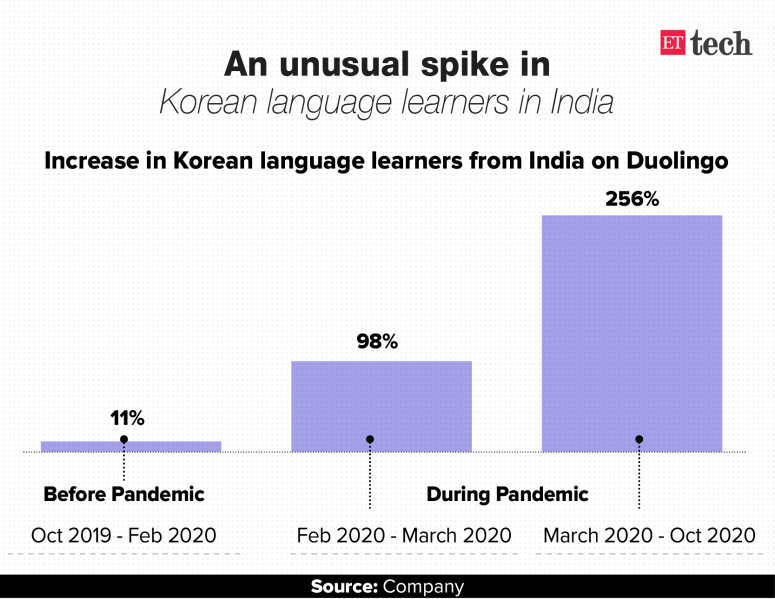
The Korean wave,  the growing global popularity of  Korean culture, swept India a few years ago, but  exploded during a pandemic. Supported by the OTT platform, which has a large investment in Korean programs, the number of people who started watching K-Drama and listening to K-Pop has skyrocketed. Recently, the language learning app Duolingo surveyed 1,013 people in 10  cities in India and found that Korean is  the fastest growing language in India. It was the 7th most popular language for Indians in 2020, but it has risen to the 5th in 2021 and will  continue to rise. Duolingo’s 2021 audio report attributed this primarily to the release of Squid Game in 2021.

The utterly butterly delicious story of Amul

Over the years, Amul, one of the most beloved brands of our country, has become the taste of India, just as its tagline claims. Every Indian millennial has grown up listening to the jingles of its many dairy products, and the Amul girl, the brand’s mascot in the polka-dotted dress, has become a nostalgia-evoking symbol. Amul has truly come a long way since its founding in 1946.

The beginning

Amul was formed as a part of a cooperative movement against Polson Dairy in Anand, Gujarat, which procured milk from local farmers of Kaira District at very low rates and sold it to the then Bombay government. Everyone except the farmers benefited from this trade. The farmers took their plea to Sardar Patel, who had advocated farmers’ cooperatives since 1942. The result was the formation of the Kaira District Co-operative Milk Producers’ Union Limited in Anand.

The union started pasteurising milk produced by a handful of farmers for the Bombay Milk Scheme and grew to 432 farmers by the end of 1948. The rapid growth led to problems including excess production that the Bombay Milk Scheme couldn’t accommodate. To solve this issue, a plant was set up to process all that extra milk into products such as milk powder and butter.

Amul is born

The late Dr. Verghese Kurien, rightly called the Milkman of India, was Amul’s true architect. His journey at Amul began in 1949 when he arrived in Anand to manage a dairy as a government employee. He went from helping farmers repair machinery to revolutionising India’s dairy industry with the White Revolution (or Operation Flood), the largest dairy development programme in the world.

The new dairy with the milk processing plant was ready for operation in October 1955, the year that also saw a breakthrough in dairy technology —buffalo milk was processed to make products for the first time in the world. The word ‘Amul’, derived from ‘Amulya’, which means ‘precious’ or ‘priceless’ in Sanskrit, was used to market the range of milk products developed by the Kaira Union. It is also an acronym for Anand Milk Union Ltd.

Dr Kurien had a vision. He wanted to offer small-scale dairy farmers quality-control units and centralised marketing, which were missing at the time in the dairy economy. Thus, the Gujarat Cooperative Milk Marketing Federation (GCMMF) was created in 1973 to market milk and all milk products produced by six district cooperative unions in Gujarat. GCMMF is the largest exporter of dairy products in India and Amul is the umbrella for all of its products.

Awards, accolades, and a global presence

Over the years, Amul, together with GCMMF, has won numerous awards. Some of these include the Rajiv Gandhi National Quality Award, 1999; the Golden Trophy for Outstanding Export Performance, 2009-10; Best Marketing Campaign, 2014; and World Dairy Innovation Award, among many others. Amul earned recognition all over the world when GCMMF  introduced it on the Global Dairy Trade (GDT) platform, where only the six top dairy players across the world sell their products.

More than a mere slogan

Amul’s famous slogan, which is now a part of its logo, was created in 1994 by Shri Kanon Krishna of a Mumbai-based advertising agency called Advertising and Sales Promotion (ASP). According to Amul, the Taste of India slogan is more than just corporate positioning or advertising jargon. This slogan lends meaning to the brand’s never-ending commitment to taking quality food and products to the rural man, which he otherwise couldn’t have afforded.

The Butter Girl

Amul did not always have the round-eyed moppet as its mascot. The Butter Girl was born in 1966 when Sylvester daCunha, the then MD of the advertising agency handling Amul butter’s account, created her for its campaign. It was a pleasant change from the dull, corporate ads that the previous agency had come up with. Being a seasoned marketer himself, Dr Kurien gave daCunha complete creative freedom to create and release the ads without taking the company’s permission. 30 years later, the Utterly Butterly Girl still wins hearts wherever she is, whether on a billboard or on the packet of butter.

Amul is not just a brand; it is also a movement that represents farmers’ economic freedom. The name is now a household term that is here to stay, and the chubby-cheeked Amul girl will continue to cast a spell on the public.

WHY PUBLIC ENTERPRISES ARE IMPORTANT

Public Enterprise is an autonomous or semi-autonomous corporation that is controlled by the State or National Government. These enterprises came into existence to help people of the state in their commercial and industrial activities and usually focuses on areas of development and areas of public interest demanding a huge amount of capital.

Objectives of Establishing a Public Enterprise

i) Development of backward Areas

ii) Employment Generation

iii) Economic Surplus

iv) Consumer Welfare

v) Public utilities

Forms of Public Enterprise

Private Public And Global Enterprises, Revision Notes: Karnataka Class  11-commerce BUSINESS STUDIES, Business Studies Puc I - Meritnation

Departmental Undertaking

This is the oldest form of Public Sector Enterprises. The Departmental Undertaking is considered as one of the departments of government. It has no separate existence than the Government. It functions under the overall control of one Ministry or Department of Government.

Statutory Corporation

A Statutory Corporation is a body corporate formed by a special Act of Parliament or by the Central or State Legislature. It is fully financed by the Government. Its powers, objects, limitations etc. are also decided by the Act of the Legislature.

Government Company

The company in which a majority of Paid-up Share Capital is held by the Central or State Government or partly by Central or State Government is called Government Company. The public may or may not be allowed to invest in these companies.

Implementation of Nanotechnology with DNA

Abstract:

DNA (Deoxyribonucleic acid) is the molecule that stores and transmits genetic information for the development, functioning, growth and reproduction of all living organisms and many viruses. It possesses remarkable binding specificity, thermodynamic stability and can be created with infinite choice of sequences that bind to their complementary nitrogenous bases (namely adenine (A), cytosine (C), guanine (G) or thymine (T)). It is structurally well defined on the nanometre scale and has a persistence length of 50 nanometres under conventional conditions. It can be rapidly synthesized and modified using automated methods. The field of DNA nanotechnology uses its information to assemble structural motifs and connects them together. This field has a significant impact on nanoscience and nanotechnology, and controls molecular self-assembly. Here, we summarize the approaches that are used to assemble DNA nanostructures and examine their emerging applications in areas such as biophysics, diagnostics, nanoparticle and protein assembly.

Introduction:

Nanotechnology is the purist’s approach to biomolecular engineering. This field aims to create molecular structures and devices through the exclusive use of DNA as an engineering material1. The well-characterized nature of DNA base pairing provides an easy means to control DNA interactions. The success of DNA nanotechnology comes from three key ingredients: 1) our quantitative understanding of DNA thermodynamics, which makes it possible to predict how single-stranded DNA molecules fold and interact with one another, 2) the rapidly falling cost and increasing quality of DNA synthesis, and 3) the focus on cell-free settings, where designed reaction pathways can proceed without interference from DNA and RNA processing enzymes that might be encountered in cells. DNA nanotechnology has long been motivated by the goal of building ‘smart therapeutics’, drug delivery systems, tools for molecular biology and other devices that could interact with or operate within living cells. Such applications play to the obvious strengths of nucleic acid nanostructures and devices, particularly their small size, biocompatibility and straightforward manner in which they could be programmed to interact with cellular nucleic acids through hybridization.

Cell-free DNA nanotechnology

To operate reliably in complex, wet environments, living organisms use sensory receptors to detect changes in that environment, motors and actuators to adapt to the environment, computational control circuits to convert sensor information into motor activity, and structural elements that protect and organize these components. Intriguingly, cell-free DNA nanotechnology has made progress towards the construction of most of the functional components — both structures and dynamic devices — required for creating molecular ‘robots’ that can emulate some of the behavioural complexity observed in biology.

DNA nanotechnology in lysates and fixed cells

Cellular conditions are considerably different from that of cell-free experiments. The presence of nucleic-acid-binding proteins, including DNases and RNases, may interfere with device performance, and cellular environments are highly structured, which inhibits the free diffusion of exogenously delivered nucleic acids. Cell lysates, serum and fixed cells provide reaction environments that each capture some of the complexity of live cells and enable testing and optimization of nucleic acid devices in well-controlled conditions.3

CONCLUSION:

DNA-based therapeutics and diagnostics are set apart from more established approaches because of their capacity to respond to the surrounding environment. Molecular logic and conditional (un)hiding of drug moieties could decrease side effects and increase specificity. Even the relatively simple one- or two-input systems built so far have resulted in increased specificity and performance, and could be further improved with more complex multi-input logic. Diagnostic and therapeutic decisions are routinely based on the analysis of panels of multiple molecular markers, be they proteins, RNA, DNA, lipids, sugars or metabolites. For example, immunologists must often consider large numbers of cell surface proteins to delineate all of the various cell types in a blood sample. Gene expression classifiers that reliably distinguish different tissues and disease states are typically built on measurements of tens or hundreds of different RNA species. Given the success of dynamic DNA nanotechnology in scaling up the size and reliability of molecular circuits in cell-free settings, it is intriguing to think that DNA ‘biocomputers’ could eventually perform complex diagnostic tasks based on the analysis of tens of molecular markers directly in living organisms.

REFERENCES:

Seeman, N. C. & Belcher, A. M. Emulating biology: building nanostructures from the bottom up. Proc. Natl Acad. Sci. USA 99, 6451–6455 (2002).
Chen, J. H. & Seeman, N. C. Synthesis from DNA of a molecule with the connectivity of a cube. Nature 350, 631–633 (1991).
Fu, T. J. & Seeman, N. C. DNA double-crossover molecules. Biochemistry 32, 3211–3220 (1993).

Koo App – An Indian Alternative to Twitter

Koo , an Indian alternative of twitter is gaining a lot of attention from the netizens as the government ministers & ministries are switching to the app.

Koo’s rise comes as Twitter is currently engaged in a standoff with the Indian government over the blocking and unblocking of accounts linked to the farmer protests. The Koo a made-in-India app is now seen as a prospective competitor to Twitter in the backdrop of the government’s disagreement with Twitter.

Union minister Piyush Goyal, who is quite active on Twitter,announced on Tuesday that he has also opened an account on Koo. Electronics and IT minister Ravi Shankar Prasad has already joined the platform and has a verified handle. Several government departments, including the ministry of Electronics and IT , India Post have verified handles on this platform. Former cricketer Anil Kumble & Sadhguru are among the personalities who have joined the Koo.

Koo is a microblogging app just like Twitter where you can post opinions publicly & follow others. The character limit for a ‘Koo post’ is 400 while it’s 280 on twitter.Users can share audio, video & can create the post polls just like twitter.Users also have option of linking their Facebook , LinkedIn , Youtube & Twitter feed to their Koo profile. It is available as a website and on ios and Google Play Store.

Koo , a Swadeshi app was launched in March 2020. It had also won the Aatmanirbhar App Innovation Challenge along with other Indian apps like Zoho and Chingari. The Koo app was created by Bombinate Technologies Private Limited which is a Bangalore-based private company incorporated in 2015. Aparameya Radhakrishna and Mayank Bidawatka are the co-founders.

Prime Minister Narendra Modi had, in one of his Mann Ki Baat encouraged Indians to use the app.

The app is available in several languages, including Hindi, Telugu, Kannada, Bengali, Tamil, Malayalam, Gujarati, Marathi, Punjabi, Odiya and Assamese.

The Koo website notes that only 10 per cent of India speaks English and “almost 1 billion people in India don’t know English.Instead they speak one of India’s 100s of languages.” The website adds that the “majority of the internet has been in English. Koo is an attempt to make the voice of these Indians heard. They can now participate on the internet in their mother tongue by listening to the views of some of the sharpest Indian minds and also speak their mind by sharing their thoughts.”

Impact of Insurance Bill

Insurance is a means of protection from financial loss. It is a form of risk management, primarily used to hedge against the risk of a contingent or uncertain loss.

An entity which provides insurance is known as an insurer, insurance company, insurance carrier or underwriter. A person or entity who buys insurance is known as an insured or as a policyholder. The insurance transaction involves the insured assuming a guaranteed and known relatively small loss in the form of payment to the insurer in exchange for the insurer’s promise to compensate the insured in the event of a covered loss. The loss may or may not be financial, but it must be reducible to financial terms, and usually involves something in which the insured has an insurable interest established by ownership, possession, or pre-existing relationship.

The insured receives a contract, called the insurance policy, which details the conditions and circumstances under which the insurer will compensate the insured. The amount of money charged by the insurer to the policyholder for the coverage set forth in the insurance policy is called the premium. If the insured experiences a loss which is potentially covered by the insurance policy, the insured submits a claim to the insurer for processing by a claims adjuster. The insurer may hegde its own risk by taking out reinsurance, whereby another insurance company agrees to carry some of the risks, especially if the primary insurer deems the risk too large for it to carry.

Insurance sector in India has seen instrumental change since the last two decades when there was only one player namely Life Insurance Cooperation (LIC) before it was opened up for the private and foreign players. Currently, there are 28 players in the non life insurance business and 24 players in life insurance thus infusing the competition in the sector. The Insurance Regulatory and Development Authority (IRDA), headquartered at Hyderabad, being the regulatory authority of the insurance sector in India is the sole authority which frames regulations for the sector, ranging from registration of insurance players to protection of policy holders’ interest, thus aiming to regulate and promote the growth of the insurance sector. 

The Insurance Laws (Amendment) Bill, 2015, which intended to increase the FDI limit in the insurance sector from 26% to 49% apart from introducing several other changes, got the nod of the parliament on March 12, 2015 after much deliberations. The bill is expected to provide a major fillip to growth of the sector. Some major changes introduced by the bill are as under –

Capital Infusion


Apart from increasing the foreign holding, the bill also provided various other avenues and flexibility in raising the capital for the cash strapped sector. The current insurance penetration is just 3.9% in India. The capital infusion would not only increase the penetration of insurance which is need of hour, but would also augment the product diversification.


Consumer Interests


In order to curb the miss-selling, heavy penalties have been imposed on intermediaries and insurance companies for misconduct. The penalty is increased to up to INR1.0 crore for the insurance companies and up to INR10,000 for agents depending upon the nature of violation. This would work as a deterrent to the companies and agents for any miss-selling. Further, if the policy is older than three years, no life insurance policy can now be rejected by the insurer on any ground. This will motivate insurers to strengthen their underwriting standards and increase faith amongst consumers and protect the policyholder’s interest. Ban is also imposed on multilevel marketing schemes.  

Commission and Pay Outs

The bill confers the power to determine the quantum of commission, pay outs and other expenses to the IRDA. From now onwards, IRDA would try to bring more transparency in the sector for the benefit of the end consumers. Meanwhile, agents and intermediaries have been banned from more than one company. 

Empowering IRDA

Empowering IRDA to frame operations related rules and regulations would provide it with the opportunity to adapt quickly with the changing environment while securing best interest of the policyholders. IRDAI is now empowered to regulate key aspects of operations including solvency, investments, expenses and commissions etc. It also empowers the Authority to regulate the functions, code of conduct, etc., of surveyors and loss assessors.

Changes in Health Insurance Sector

Under the revised regulations, minimum capital investment in health insurance sector has been increased to Rs 100 crore, to ensure that only serious players are present in the sector. The amendment Act has also expanded the definition of health insurance business by including travel and personal accident cover. This would result in further growth of the health sector, which is one of the most under-insured segments in India.

Thus the new amendments in the Insurance sector aims to bring a holistic improvement in the sector by augmenting competition, infusing capital, introducing product diversification as well as safeguarding the interests of the final consumer. In this way, insurance business can increase its depth and penetration in conformity to the developed world.

REGISTRATION OF A COMPANY

Incorporation of a Company-

Section 3 provides that a company may be formed for any lawful purpose by:

  1. Seven or more individuals, if the corporation to be established is a public company;
  2. Two or more individuals, where the company to be established is a private company;
  3. Only one individual, there where the company to be established is a one-person company, that is somehow, a private company,

By subscribing to a document of their name or name and by following the registration requirements of this Act. The Memorandum of One Person Company shall signify the name of the other person, with his previous written consent, who shall become a member of the pay Company in the event of the death of the subscriber or his inability to contract. The written consent of such other person shall also be filed with along with its memorandum and articles.

Procedural Aspects:

(a) Application for availability of name of company.

According to Section 4, the name stated in the memorandum of association-

  1. shall not be identical with or resemble too nearly to the name of an existing company registered under this Act or any previous company law; or
  2. shall not be such that its use by the company will constitute an offence under any law for the time being in force; or
  3. shall not be such that its use by the company is undesirable in the opinion of the Central Government.

Therefore, Section 4 further provides that a person may select six names in order of preference and make an application in the prescribed form accompanied by the prescribed fee to the Registrar for the reservation of name set out in the application as the name of the proposed company. On receipt of the application, the Registrar may reserve the name for a period of 60 days from the date of the application. If the Registrar finds the name undesirable, it shall inform the applicant within three days of receipt of application. He may ask for any other information in this matter or ask for resubmission of the application with new name.

(b) Preparation of memorandum and articles.

Memorandum of Association is charter of a company. It, inter alia, defines the area with which the company can operate. According to Section 4(1), memorandum shall state the name, registered notice, objects, liability of members, share capital in case of a company having share capital. In case of One Person Company, the name of the person who, in the event of death of the subscriber, shall become the member of the company be stated.

Section 5(1) provides that the articles of a company shall contain regulations for management of the company.

According to Section 7(1) (a) read with Rule 13 of the Companies (Incorporation) Rules, 2014, memorandum and articles must be-signed at least seven subscribers in case of public company, two in case of private company and one in case of One Person Company. Each subscriber should give his address, description and occupation, etc., and number of shares subscribed by them. The subscribers must sign these documents in the presence of at least one witness who shall verify the signature of the subscribers.

(c) Filing of documents with the Registrar of Companies.

The following documents, as per Section 7(1), shall be filed with the Registrar within whose jurisdiction the registered office of a company is proposed to be situated.

(i)Memorandum and articles of the company duly signed by all the subscribers to the memorandum in the prescribed manner. [Section 7(1(a)]

(ii) A declaration that all the requirements of the Companies Act and the rules thereunder have been complied with. Such a declaration has to be signed by an advocate, or any proposed director manager/secretary of the company or by a company secretary or cost accountant or chartered accountant who is in whole-time practice in India.

(iii) An affidavit from the subscribers to the memorandum and from the first directors (if any) to the effect that they are not convicted of any offence in connection with promoting, forming or managing a company or have not been found guilty of any fraud or misfeasance, etc., under the 2013 Act or any previous company law during the last five years along with the complete details of name, address of the company, particulars of every subscriber and the persons named as first directors (including nationality, director identification number, proof of identity).[Section 7(1) (c)]

(iv) The address for communication till the registered office is established. As per Section 12, a company is required to have a registered office within 15 days of incorporation. [Section 7(1) (d)]

(v) The particulars of name, including surname or family name, residential address, etc. [Section 7(1) (e)]

(vi) The particulars of the persons named in the articles as the first directors of the company, their names, including surnames or family names, the Director Identification Number, residential address and other identity proofs. [Section 7(1) (f)]

(vii) The particulars of the interests of the persons mentioned in the articles as the first directors of the company in other firms or bodies corporate along with their consent to act as directors of the company in such form and manner as may be prescribed. [Section 7(1) (g)]

Issue of Certificate of Incorporation by Registrar-

Section 7(2) states that the Registrar on the basis of the documents information filed under Section 7(1) shall register all the documents information referred to in Section 7(1) in the register and issue a certificate of incorporation in the recommended form to the effect that the projected company is incorporated under this Act.

Allotment of corporate identity member: Section 7(3) states that on and from the date mentioned in the certificate of incorporation issued und Section 7(2), the Registrar shall allot to the company a corporate ident number, which shall be distinct identity for the company and which shall also be included in the certificate.

The incorporation records to be preserved: Section 7(4) provides that the corporation shall retain and preserve at its registered office copies of all records and information as originally filed pursuant to Section 7(1) until such time the company is dissolved pursuant to this Act.

Registration and its effect (Section 9): Since the date of registration attributed to in the certificate of registration, all subscribers to the memorandum as well as all other individuals who may, since time to time, become members of the organization shall be the corporate body in the name set out in the memorandum.

It is capable of exercising all the functions of an incorporated company under this Act.

It has perpetual succession and a common seal.

It has power to acquire, hold and dispose of property, both movable and immovable, tangible and intangible.

It is capable of entering into contracts. It can sue and be sued, by the said name.

Conclusive evidence-

Section 35 of the Companies Act, 1956 provided that a certificate of incorporation issued by the Registrar in respect of any association shall provide definite proof that all the provisions of the Act have been satisfied with in respect of registration and the matters preceding and incidental thereto, and that the association is a company authorized to be incorporated and legally registered under the Act.

It means that once the certificate has been issued the existence of the company is not allowed to be questioned on the ground that either certain requirements of the Act have not been complied there was any other discrepancy in the process of formation of the company. For example, in Moosa v. Ibrahim1, the validity of the incorporation was not allowed to be questioned. In this case the memorandum of association was signed by two adult persons and by a guardian of the other five members, who were minors at that time, the guardian making separate signatures for each of the minors. The Registrar, then registered the Company and issued a certificate of incorporation. Likewise in Peel’s Case (1867) it was held that once the incorporation is given nothing is to be inquired into as to the regularity of the prior proceedings. In this case after signature and before registration a proposed memorandum of association had been materially altered without the authority of the subscribers.

In T.V. Krishna v. Andra Prabha (P) Ltd.2, the position was summarised by Chandra Reddy, C.J., as follows: “Thus the position is firmly established that if a company is born, the only method to get it extinguished is not by assailing its incorporation, but by resorting to the provisions of enactments, which provide for the winding up of the companies.” It was held in this case that even if some of the objects were illegal, the legal persona of the company could not have been extinguished by cancelling the certificate. Also in such a situation, the certificate is definitive and the solution will be to terminate the company. In Bowman v. Secular Society Ltd.3, it was held that if a company having illegal objects has been registered, the illegal objects do not become legal by the issue of the certificate of incorporation.

It may be noted that there is no section in the Companies Act, 2013 pertaining to conclusiveness of the certificate of incorporation. Section 7(7) of The Companies Act, 2013 provides that any person may challenge the validity of certificate of incorporation before the Tribunal, if the company is formed by furnishing false or incorrect information or suppressing any material fact. Punishment for furnishing false or incorrect information or suppressing any material fact.

Punishment for furnishing false or incorrect information at time of incorporation-

The Companies Act, 2013 prescribes severe punishment for furnishing false or incorrect information at the time of incorporation. These are as follows:

If a person provides any inaccurate or misleading information or suppresses any material information that he or she is aware of in any of the documents submitted with the Registrar in connection with the registration of a company, he or she shall be liable for action under Section 447. [Section 7(5) of the Rules].

Where a company has been incorporated by offering misleading or inaccurate representation or by suppressing any material fact or data in any of the documents or records submitted or rendered for the incorporation of that company or by malicious action, the promoters shall each be liable for the acts referred to in Section 447 as the first directors. [Section 7(6)].

Conclusion:

After incorporation a company:

It enjoys advantages such as; independent corporate existence, limited liability, separate property (owning, enjoying and disposing property in its own name), perpetual succession (no allotted span of life), capable of enforcing its legal rights or be sued for breach of legal duties, enabling transferability of shares, separation of management and ownership and lastly, allowance for raising capital from public.

It suffers disadvantages such as; formality and complications (incorporation is time consuming, expensive and formal process), loss of privacy, corporate governance, and lifting the corporate veil.

1 ILR (1930) 40 Cal. 1 PC

2 AIR (1960) AP 123

3 AIR (1917) AC 406

Benchmarking

What is Benchmarking ?

Benchmarking is a process of measuring the performance of a company’s products, services, or processes against those of another business considered to be the best in the industry, aka “best in class.” The point of benchmarking is to identify internal opportunities for improvement. By studying companies with superior performance, breaking down what makes such superior performance possible, and then comparing those processes to how your business operates, you can implement changes that will yield significant improvements.

That might mean tweaking a product’s features to more closely match a competitor’s offering, or changing the scope of services you offer, or installing a new customer relationship management (CRM) system to enable more personalized communications with customers.

There are two basic kinds of improvement opportunities: continuous and dramatic. Continuous improvement is incremental, involving only small adjustments to reap sizeable advances. Dramatic improvement can only come about through re engineering the whole internal work process.

Liberalization and globalization have made the global market very competitive. Every Company of this global market needs to maintain its competitive advantage for long term survival. The cut-throat external competition makes it absolutely necessary for the companies to benchmark with similar organizations or organizations of different industry. 

Benchmarking is the measurement against defined standards, i.e., benchmark. It is essentially the setting up of principals of the best practices in relation to both products and the processes by which these products are created and delivered. It is applied by the senior management of a company, keeping in view :  

• The detailed existing business processes •Business processes of similar or different organizations.

• The analysis of comparison of the business performance with that of own past records and other organizations

• And finally, taking the necessary action to fill the performance gap, if any

Benchmarking should be an on-going process in any industry or organization. There are many types of benchmarking process that senior management applies in various departments depending upon the various scenarios. They could be Strategic Benchmarking which is used as a tool by the senior management to re-align those business strategies which have become inapt or obsolete. Or it could be the Performance or Competitive Benchmarking, Process Benchmarking, Functional Benchmarking, Internal Benchmarking, External Benchmarking, International Benchmarking etc.   

Almost every activity can be benchmarked. For example a banking company can benchmark on loan processing time from the competitor’s practices. A call center can benchmark on the reduction of number of dropped calls from one of its competitor. Or an auto ancillary industry can benchmark on reducing the number of defects from the quality practices adopted from the competitor. Be it any industry or any organization, benchmark is not only possible but also ‘need of the hour’.   

It is also important as it helps the senior management to chart the organizations performance. If you want to determine the effectiveness of your company, you will have to put together the in-house metrics that show the organization’s capabilities and improvements. If you want to prove your organization’s worth to the overall industry, you will have to use benchmarking to show how you are measuring up your efforts and effectiveness vis-à-vis similar efforts at other companies.  

The Indian organizations are becoming world class, both in terms of size and performance. Therefore, there is a greater need to become superior in performance consistently. Quality is becoming the hallmark for both products and services. Indian and multinational organizations are increasingly becoming quality conscious and try to deliver high quality products and services to customers.  

Quality delivery which was considered as the property of foreign companies like General Electric, Ford, General Motors, Xerox and AT & T had become the buzzword in many corporate circles in India as well. From Software major Infosys to Automobile giant Mahindra, from educational institutes like IIM’s and IIT’s to Steel manufacturing giants like TATA, everyone is adopting best in class technology, borrows and adopt best ideas, incubate and implement them as part of their corporate strategy.  

Even Indian Government considers Benchmarking as an important mechanism for introducing accountability in service delivery. Recognizing its importance, the Ministry of Urban Development, Government of India constituted a Core Group on Benchmarking under the chairmanship of Joint Secretary. This group has finalized a Handbook of Service Level Benchmarks, which provides –

(i) a common minimum framework for monitoring and reporting on service level indicators, and

(ii) guidelines on how to operationalize this framework in a phased manner.

Government of India has extended implementation support for the SLB framework in about 26 pilot cities so that they can serve as role models for other cities across the country. The Ministry of Urban Development, Government of India has formulated benchmarks for key performance indicators for water supply, waste water/sanitation, solid waste management and drainage to enable cities to measure and improve their own performance vis-à-vis the benchmarks. It is now well recognized that a sustained process of benchmarking comprising –

(i) developing comprehensive and dis aggregated baseline data on service levels

(ii) information system improvement to enhance quality of planning and

(iii) performance improvement plans to attain new standards , is critical  to ensure optimal use of investment and to sustain outcomes in service delivery.

Benchmarking enables urban local bodies to identify strengths and weaknesses in their own practices and to reach out and learn from the practices of others to achieve excellence in service delivery. It also increases accountability and transparency to citizens. Thus, the process of benchmarking, although very important, is very complex as well. It does require a great degree of systematic process review and constant control apart from flexible planning, detailed analysis, qualitative implementation, constant review and progressive change management.

Initial Public Offers in India

Initial Public Offer (IPO) is a process through which an unlisted Company can be listed on the stock exchange by offering its securities to the public in the primary market. The objective of an IPO may be relating to expansion of existing activities of the Company or setting up of new projects or any other object as may be specified by the Company in its offer document or just to get its existing equity shares listed by diluting the stake of existing equity shareholders through offer for sale.   

The companies going public raises funds through IPO’s for working capital, debt repayment, acquisitions, and a host of other uses. When a firm proposes a public issue or IPO, it offers forms for submission to be filled by the shareholders. Public shares can be bought for a limited period only and as per the law, any IPO should be traded openly only for minimum 3 days and maximum 21 days.   

Some major benefits accruing to the firms going for an IPO are as under :  

• Public placement of shares on a stock exchange allows the company to attract capital to fund both organic growth (modernization and upgrade of production facilities, implementation of capital-intensive projects) and acquisitive expansion. If retained earnings and debt funding are insufficient, IPO becomes one of the most realistic and convenient ways to secure the continuing growth of the business. It provides access to a massive, timeless pool of capital and boosts the investment credibility of the business.

• Formation of a public market for the company’s shares at fair price creates liquidity and provides an opportunity to sell the shares promptly with minimal transactional costs. The private owners of the company can dispose of their stakes in the business both during an IPO (this route is often taken by the minority financial investors such as venture or private capital funds) and at a later stage (this is often preferred by the majority shareholders).

• Normally, an IPO is an offer to a large number of institutional and retail investors to become shareholders of the company. The very multitude of large investors and their confidence in the liquidity of their investment in a public entity assure the current owners of a private company about achieving the maximum possible valuation of the business at the time of an IPO or afterwards.

• Listing on a recognized stock exchange means that the business will receive wide media coverage, usually a very favorable one, thus increasing the company’s visibility and recognition of its products and services. The company’s activities will also be reflected in the reports by professional financial analysts. Such public profile supports liquidity of the shares and contributes to the expansion of the business contacts. It also helps to increase confidence among the company’s business partners.

• A company having low-transparency businesses with an inadequate financial reporting after listing on a recognized stock exchange becomes a desirable and reliable partner. Banks are often ready to extend loans to public companies in larger amounts, under smaller collateral, for longer maturities and with lower interest rates. Even the largest and most prestigious banking institutions are keen to work with public companies – whose transparency and corporate governance serve as additional factors of confidence for banks and other suppliers of credit. Partners and contractors of a public company feel more confident about its financial state and organizational capabilities as compared to those of a non-transparent private business.

• Publicly available information about the share price of a public company allows development of employee motivation schemes based on partial remuneration of staff in the form of participation in the equity capital (for example, ESOP –Employee Stock Option Plan). Equity-based incentive schemes stimulate the key personnel to become more efficient in their work in order to support the company’s growth rates and profitable development, which in turn increase the operational and financial efficiency of the company and its market value.

• Conduct of various due diligences during the IPO process requires a thorough and comprehensive analysis of the company’s business model. During the IPO implementation process, certain internal changes take place, including modification of the organizational structure; selection of the key personnel and delegation of responsibilities; improvement of internal reporting and controls; as well as critical evaluation of the efficiency of the entire business. Normally, such extensive internal efforts result in significant improvements of the communication system, management and controls; they also help eliminate any previously hidden shortcomings in the internal functioning of the business.  

However, before launching its IPOs, a company must disclose all the relevant information to the public and its prospective investors. For that matter, company making a public issue of securities has to file a Draft Red Herring Prospectus (DRHP) with capital market regulator Securities and Exchange Board of India, or SEBI through an eligible merchant banker prior to the filing of prospectus with the Registrar of Companies (RoCs). The issuer company engages a Sebi registered merchant banker to prepare the offer document. Besides due diligence in preparing the offer document, the merchant banker is also responsible for ensuring legal compliance. The merchant banker facilitates the issue in reaching the prospective investors by marketing the same. The Indian regulatory framework is based on a disclosure regime. SEBI reviews the draft offer document and may issue observations with a view to ensure that adequate disclosures are made by the issuer company/merchant bankers in the offer document to enable investors to make an informed investment decision in the issue.   

DRHP provides all the necessary information an investor ought to know about the company in order to make an informed decision. It contains details about the company, its promoters, the project, financial details, objects of raising the money, terms of the issue, risks involved with investing, use of proceeds from the offering, among others. However, the document does not provide information about the price or size of the offering.  

Generally, the stock of any fundamentally sound company would go up after being listed in an exchange. Hence, as far as investors particularly retail ones are concerned, the IPO is the only place where they can get the stock at the lowest possible price. Hence if they buy stocks in an IPO, they can sell it off at a higher price and make a profit.

However, there are certain factors which need to be taken into consideration before applying for Initial Public Offerings in India. They are :  

• Promoters, their reliability and past records

• Firm producing or facilitating services

• Product offered by the firm and its potential

• Whether the firm has entered into a collaboration with technological firm

• Status of the associates

• Historical record of the firm providing the Initial Public Offerings

• Project value and various techniques of sponsoring the plan

• Productivity estimates of the project

• Risk aspects engaged in the execution of the plan

• Authority that has reviewed the plan  

Thus, IPO is an opportunity for the company as well as the investors looking for long term capital and investments. But, less than 5% of India’s household savings of around $ 300 billion are invested in stocks and mutual funds, according to India’s central bank, depriving companies of a huge pool of potential funding for investments. Indians have typically preferred to put their money in gold jewelry and real estate. Some investors moved into stocks after markets began to boom in 2005, but a collapse in prices after 2008, allegations of wrongdoing and a number of IPOs that fell sharply after listing have turned many investors off. Moreover, Individual investors remain wary of equities. India’s benchmark Sensex gained 26% in 2012, but remains near where it traded at the end of 2007, leaving many investors without gains. Indian Capital Market had traded a long way but it needs more extended participation by the investors to make stock exchange a investment trading platform rather than a speculation platform.

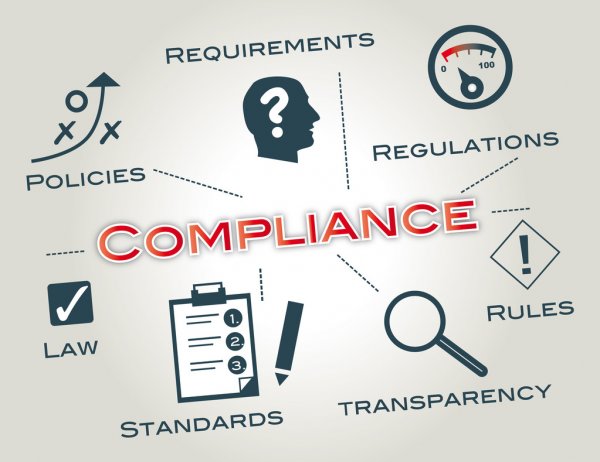
The Implications of COVID-19 effect on the Compliances under The Companies Act, 2013:- The Indian Context

COMPANY COMPLIANCES DURING THE COVID-19 ERA: AN INTRODUCTION

The global outbreak of the novel coronavirus has taken the world by storm. While the issue pertaining to the public health is the talk of the town, the impact of COVID-19 on businesses and corporates seems to be least talked about.

Day to day business of the corporates is being affected due to decreased inflow of the human resource and a decrease in the workflow. While technologies have provided a relief to the human resource for physical attendances and conferences, there seemed to be unsettled trouble regarding legal compliances that required various filings and physical meetings.

Pursuant to the ongoing global COVID-19 pandemic and the Finance Minister, Ms. Nirmala Sitharaman’s announcements on March 24, 2020, the Ministry of Corporate Affairs (“MCA”) has issued various circulars to provide relief to companies from certain compliances under the Companies Act, 2013 (“Act”) and associated rules. This has been done as a measure to reduce the compliance burden on entities during the unprecedented health and economic situation caused by COVID-19. Following are the measures:-

1. Company Affirmation of Readiness towards COVID-19

Social distancing has gained its importance as a way to contain the spread, morbidity, and mortality of COVID-19. Government of India (“GOI”), responsible for the public welfare at large, has realised that social distancing can be achieved in its true sense only if the employers of the Indian public make the same application in their respective premises.

Considering that major employers of the nation belong to the companies or limited liability partnership (“LLP”) type entity, GOI as part of disaster management have advised all companies/LLPs to put in place an immediate plan to implement the “work from home” policy as a temporary measure up till March 31, 2020.

Further, in case of a requirement of physical visits of the essential staff to such offices by the employers, staggered timings may be followed in order to minimize physical interactions of all kinds.

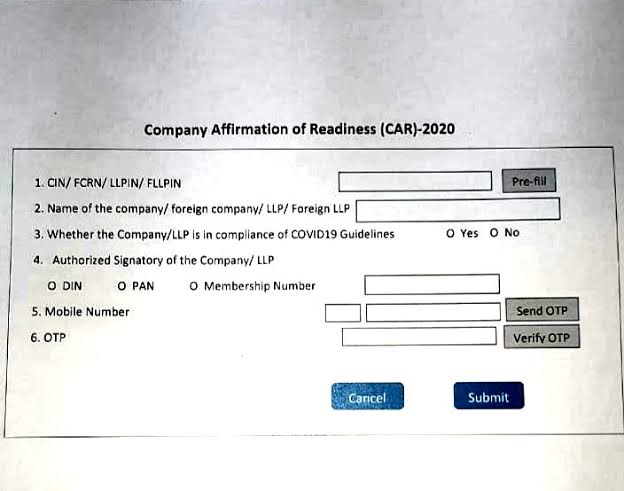
A simple webform for companies/LLP shall be deployed by MCA on March 23, 2020, in order to confirm the readiness of the employers to deal with COVID-19 threat. The webform shall be called CAR (Company Affirmation of Readiness towards COVID-19) and would be required to be signed and submitted by the authorised signatory of the company/LLP.

Therefore, it shall be expected by each company/LLP to ensure reporting of the compliance through CAR instantly from the date of its deployment.

2. Companies Fresh Start Scheme 2020

The MCA issued a circular on March 30, 2020, introducing the Companies Fresh Start Scheme, 2020 which, inter alia, grants a one-time opportunity to defaulting companies to complete all belated filings, including, without limitation, annual filings and filings required under IEPFA (Accounting, Audit, Transfer and Refund) Rules, 2016 in relation to transfer of money remaining unpaid or unclaimed for a period of seven years under Section 124(5) of the Act and transfer of relevant shares in the name of the ‘Investor Education and Protection Fund’ under Section 124(6) of the Act, with the MCA21 registry, without incurring additional fees on account of any delay.

This scheme came into force on April 1, 2020, and is valid till September 30, 2020. The application for seeking immunity for belated filings under this scheme should be made within a period of six months from September 30, 2020, through Form CFSS-2020. Thereafter, an immunity certificate will be provided by the designated authority on the basis of the declarations made in such form.

However, no immunity shall be provided under the scheme in a matter where (i) an appeal or management dispute is pending before any court or tribunal, or (ii) a court has ordered a conviction, or the adjudicating authority under the Act has imposed a penalty, and in respect of such orders, no appeal has been filed prior to the scheme coming into force.

Further, the scheme shall not apply: (i) where an application has been filed or an action for final notice for striking off the name of the company has already been initiated; (ii) where the company has been amalgamated; (iii) when application of obtaining dormant status has been filed; (iv) to vanishing companies; and/or (v) where charge related documents or an increase in authorised capital is involved.

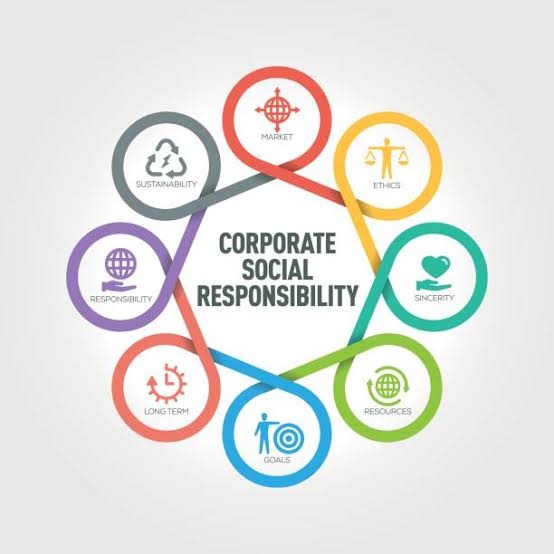
3. CSR Spending

The MCA has by way of circular dated March 23, 2020 and the office memorandum dated March 28, 2020, clarified that the spending of CSR funds by companies in relation to COVID-19, including by way of contribution to the PM CARES Fund, is an eligible CSR expenditure under the Act.

The MCA has further clarified by way of FAQs dated April 10, 2020 that contributions made to the State Disaster Management Authority will also be eligible CSR activity, but contributions towards (a) ‘Chief Minister’s Relief Fund’ or ‘State Relief Fund for COVID-19’; and (b) payment of salary/ wages to employees and workers (including contract labour/ temporary/ casual/ daily wage workers) during the lockdown period will not be considered as eligible CSR expenditure.

However, ex-gratia payment over and above the disbursement of wages to temporary/ casual workers/ daily wage workers, specifically for the purpose of fighting COVID-19, will be admissible towards CSR expenditure, provided there is an explicit declaration to that effect by the board of the company, which is duly certified by the statutory auditor.

4. Meetings of Board and the Shareholders

  • The Companies (Meetings of Board and its Powers) Rules, 2014 were amended by a notification dated March 19, 2020, to enable companies to hold board meetings on the following matters (which earlier had to be necessarily held at a physical meeting) through video-conferencing or other audio-visual means (collectively “VCC”) till June 30, 2020: (i) approval of annual financial statements and board’s report; (ii) approval of prospectus; (iii) audit committee meetings for consideration of financial statements; and (iv) approval of amalgamation, merger, demerger, acquisition and takeover.
  • MCA has, by way of a general circular dated April 8, 2020, requested companies to pass all decisions of an urgent nature requiring shareholder approval, other than those of ordinary business or business where any person has right to be heard, through postal ballot/ e-voting in accordance with the relevant statutory provisions without holding a physical general meeting. However, in cases where holding an extraordinary general meeting (“EEGM”) is unavoidable, these have now been permitted to be held through VC until June 30, 2020. The circular further lays down certain conditions to be met for conducting an EGM through VC and the key conditions, inter alia, include: (i) attendance of at least one independent director (where a company is required to appoint one) and auditor (or his authorised representative who is qualified to be the auditor); (ii) maintenance of recorded transcripts of the EGM and, in case of a public company, such transcripts to be uploaded on the company website (if any); and (iii) e-voting facility being available. All other provisions relating to general meetings under the Act (and relevant rules) will continue to apply.
  • Due to difficulties faced by various stakeholders in serving and receiving notices/responses by post on account of COVID-19, the MCA, on April 13, 2020, provided that notice of EGMs to be held through VC (and for passing shareholder resolutions through postal ballot/ e-voting) may now be given to shareholders only through email addresses of the shareholders registered with the company or with the depository participant/ depository. This circular also specifies various conditions which companies must comply with while sending email notices to shareholders.

CONCLUSION

Business entities in India are requested and expected to keep an eye on the major government websites to ensure timely compliance with all such immediate requirements and mandates issued by GOI as need of the hour from time to time.

WEBSITES REFERRED:-

1)  MCA General Circular No. 10/20 dated March 23, 2020 on Clarification on spending of CSR for COVID-19.

2) MCA General Circular No. 12/20 dated March 30, 2020 on Companies Fresh Start Scheme, 2020

3) MCA Notification dated March 19, 2020 on Companies (Meetings of Board and its Powers) Amendment Rules, 2020

4) MCA General Circular No. 14/2020 dated April 8, 2020 on Clarification on passing of ordinary or special resolutions by companies under the Companies Act, 2013 and rules made thereunder on account of threat posed by Covid-19.

5) MCA General Circular No. 17/20 dated April 13, 2020 on clarification on passing ordinary and special resolutions by companies under the Companies Act, 2013 and rules made thereunder on account of threat posed by COVID-19.

6)http://www.conventuslaw.com/report/india-implications-of-covid-19-on-compliances/

7)https://www.lexology.com/library/detail.aspx?g=7862d71f-35ae-443c-964b-a381d11102bc

8)https://www.google.com/search?q=COMPANY+COMPLIANCE+India+Images+Copyright+Free+and+Royalty+Free&tbm=isch&ved=2ahUKEwjK6fe59tvqAhVZOCsKHTZKCh0Q2-cCegQIABAC&oq=COMPANY+COMPLIANCE+India+Images+Copyright+Free+and+Royalty+Free&gs_lcp=ChJtb2JpbGUtZ3dzLXdpei1pbWcQAzoECB4QCjoECCEQClCMPljJiQFgoIwBaARwAHgAgAHIAYgB4x2SAQYwLjI3LjGYAQCgAQHAAQE&sclient=mobile-gws-wiz-img&ei=qpoVX8rsBdnwrAG2lKnoAQ&bih=682&biw=393&client=ms-android-xiaomi-rev1&prmd=insv#imgrc=UEkUjY7KpsptxM

9)https://studycafe.in/2020/04/companies-fresh-start-scheme-2020-or-cfss-2020.html

10)https://www.a2ztaxcorp.com/mca-introduces-companies-fresh-start-scheme-2020-for-non-compliant-companies/

11)https://www.istockphoto.com/illustrations/corporate-social-responsibility?mediatype=illustration&phrase=corporate%20social%20responsibility&sort=mostpopular

12)https://www.istockphoto.com/illustrations/shareholders-meeting?mediatype=illustration&phrase=shareholder%27s%20meeting&sort=mostpopular