The discovery of Uranus is an important milestone in the history of astronomy. Uranus is the seventh planet from the sun and is the third-largest planet in our solar system. It was discovered by Sir William Herschel on March 13, 1781. Herschel was a German-born British astronomer who had a keen interest in studying the stars and planets. He had built his own telescopes and was known for his expertise in optics.
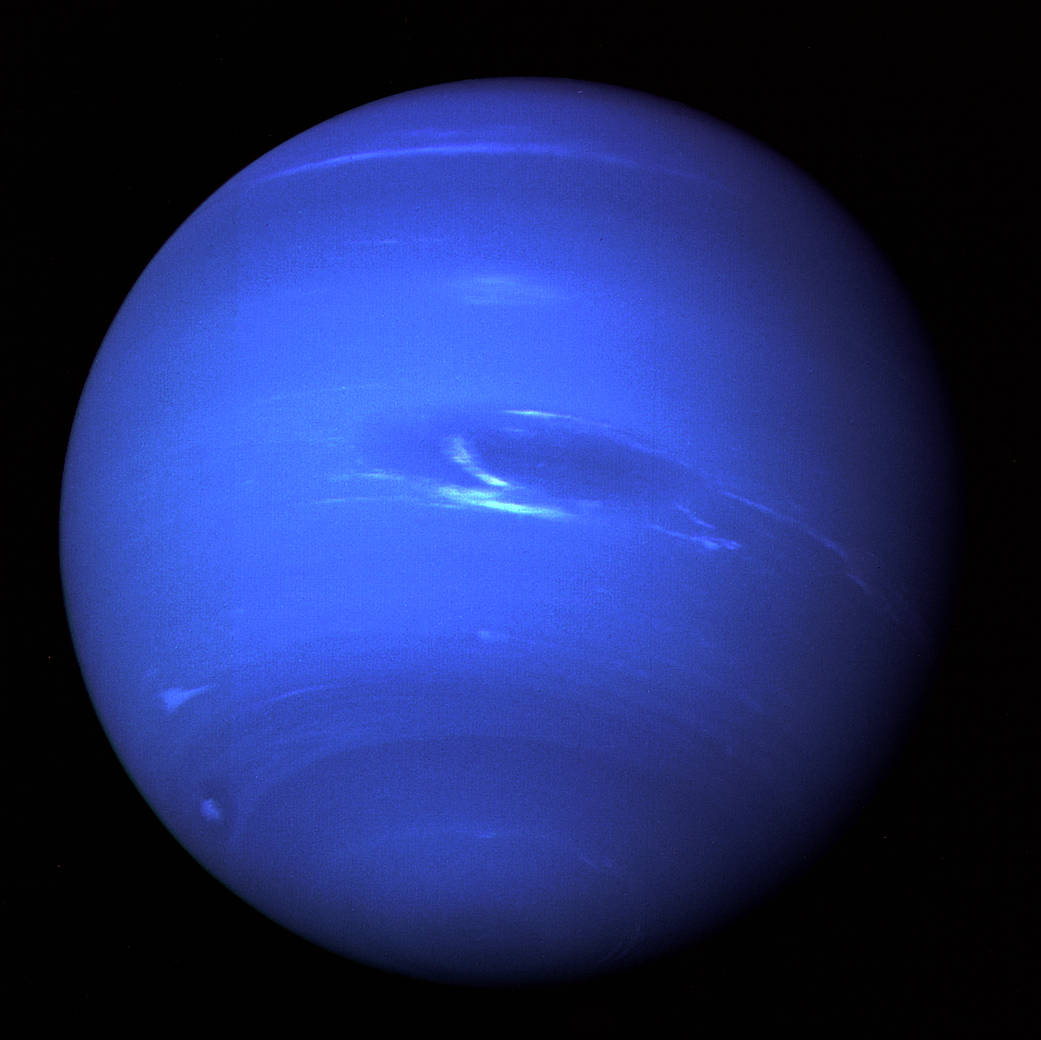
Source – NASA
In 1781, while observing the night sky from his garden in Bath, England, Herschel noticed an object that he initially thought was a comet. However, as he continued to observe it over the course of several nights, he realized that it was something much larger and farther away than a comet. Herschel’s discovery of Uranus was significant for several reasons. First, it was the first planet to be discovered since ancient times. The other planets, including Mercury, Venus, Mars, Jupiter, and Saturn, had been known since ancient times, and Uranus was the first new planet to be added to the list. Second, it provided evidence that there were other planets in our solar system beyond the orbit of Saturn. Prior to Herschel’s discovery, it was believed that Saturn marked the edge of our solar system.
The discovery of Uranus was also significant because it challenged existing beliefs about the nature of the universe. At the time, it was believed that the planets orbited the sun in a predictable pattern based on their distances from the sun. However, Uranus did not follow this pattern, and its orbit was difficult to explain using the existing models of the solar system. This led astronomers to question their understanding of the laws of physics and the nature of the universe.
After Herschel’s discovery, astronomers around the world began studying Uranus in more detail. They found that it was a gas giant planet with a distinctive blue-green color. They also discovered that it had a system of moons and a ring system, similar to those of Saturn. Over the years, astronomers have continued to study Uranus using telescopes and space probes, providing new insights into the planet’s composition, atmosphere, and history.
To conclude, the discovery of Uranus by Sir William Herschel in 1781 was a significant event in the history of astronomy. It was the first new planet to be discovered since ancient times and challenged existing beliefs about the nature of the universe. Herschel’s discovery opened up new avenues for scientific inquiry and inspired generations of astronomers to study the planets and the stars. Today, Uranus remains an important object of study for astronomers, providing insights into the workings of our solar system and the universe beyond.
Marie Curie was a Polish-born physicist and chemist who is best known for her pioneering work in the field of radioactivity. She was the first woman to be awarded a Nobel Prize, and the first person to win two Nobel Prizes in different scientific fields. Curie was born in Warsaw, Poland in 1867, and grew up in a family of educators. She was a highly intelligent and curious child, and had a passion for learning from a young age.
In 1891, Curie moved to Paris to pursue further studies in physics and chemistry. It was there that she met her future husband, Pierre Curie, who was also a physicist. Together, the couple began to study the properties of radioactive materials, a field that was still in its infancy at the time. They discovered two new elements, polonium and radium, and Marie coined the term “radioactivity” to describe the phenomena they were observing.
Their work on radioactivity earned them the Nobel Prize in Physics in 1903, making Marie the first woman to receive this prestigious award. However, their research also had significant consequences for their health, as they were exposed to high levels of radiation in their laboratory work. Pierre died in 1906 from a tragic accident involving a horse-drawn carriage, leaving Marie to continue their research alone.
In 1911, Marie was awarded her second Nobel Prize, this time in Chemistry, for her discovery and isolation of pure radium. She was the first person ever to win two Nobel Prizes, and remains the only person to have won them in two different scientific fields. Despite her success, Marie faced significant discrimination as a woman in the male-dominated scientific community of her time. She was not allowed to join the French Academy of Sciences until 1962, more than 30 years after her death.
Marie Curie’s contributions to science and medicine have had a lasting impact on our understanding of the world. Her work on radioactivity helped pave the way for modern cancer treatments, and her discoveries of new elements and their properties expanded our knowledge of the basic building blocks of matter. Her legacy also serves as an inspiration to generations of women and girls who aspire to pursue careers in science and technology.
In addition to her scientific achievements, Marie was also a dedicated humanitarian. During World War I, she used her knowledge of radiology to develop mobile X-ray units that could be used to diagnose and treat wounded soldiers on the front lines. She also served as a role model and mentor to other women in science, including her daughter, Irène Joliot-Curie, who also won a Nobel Prize in Chemistry.
Marie Curie died in 1934 at the age of 66, from complications related to her exposure to radiation. She was buried in the Panthéon in Paris, alongside other French national heroes, becoming the first woman to be interred there on her own merits. Today, she is remembered as one of the most influential scientists of the 20th century, whose groundbreaking discoveries continue to inspire and inform our understanding of the natural world.
I’m all for the pursuit of information, but there are some things that seem best left alone. I’m talking about old Egyptian tombs, black holes, and massive, ominous caverns descending into the ocean’s depths.
Consider this: is whatever possibly horrific thing we discover really worth the lessons we learn from it?
My usual response would be no, but an exploration of Belize’s Great Blue Hole has shown that sometimes disturbing findings are worthwhile.
The massive hole in the ocean is about 60 miles off the shore of Belize and descends more than 400 feet into the water. Divers were unable to investigate much of the hole for a long time because they lacked the necessary equipment to reach its depths. But that altered as technology advanced, and when billionaire Richard Branson became interested in the hole.
When diver Fabien Cousteau traveled there to capture high-quality photographs and videos of the mysteries hidden beneath the surface, the Virgin founder went on an expedition to the hole. Unfortunately, what lay at the bottom of the beautiful, mysterious ocean formation sums up mankind as we know it in part.
The crew discovered a two-liter plastic bottle as well as a long-lost GoPro with photos from someone’s vacation on it. But that wasn’t the end of it. The crew also found two bodies in the hole; divers who had gone missing in the great cavern. Though the sight certainly would have been unnerving, the team chose to leave the bodies where they were, determining the hole to be a good final resting place. However, they did let the Belize government know the divers had been found.
When the team dove into the depths of the hole in a submersible vehicle, they discovered a large series of caves that were home to hanging stalactites – but scientists didn’t believe stalactites could develop beneath the surface of the water.
The discovery revealed that the caves, which are hundreds of feet beneath the ocean’s surface, were once on dry ground.
“The Blue Hole is made of a complex system of caves that once formed on dry land,” Branson wrote in a post on Virgin.com, emphasizing how disturbing this finding is for the state of the planet. It demonstrates how rapidly and catastrophically the oceans can rise.
“Once upon a time, sea levels were hundreds of feet lower. When a lot of ice melted around the globe 10,000 years ago, the sea level rose by about 300 feet. At 300 feet down, you could see the change in the rock where land had become water.”
‘One of the starkest reminders of the dangers of climate change [he’s] ever seen,’ Branson said of the sight.
Many modern-day scientists see themselves as the first to create all the technological advancements we use today. Yet many of the so-called discoveries are nothing more than re-inventions created by examining the knowledge of the ancients. Many things related to science and invention have their origins in the thoughts and imagination of the sages of Ancient India. Indian culture has evolved over the ages by India’s ancient Rishis, who at the banks of its holy rivers had ‘discovered’ the Vedic literature – the very foundation of Indian civilization. The term ‘Rishi’ originally denoted the composers and singers of Vedic hymns. However, the Rishi is also a ‘sage’ to whom the Gods revealed the Vedas (knowledge of the eternal truths about the Creator, His creation and means to preserve it).Some lost works of science by Indian sages are-
Acharya Sushruta – Father of Surgery
Acharya Sushruta was a great Indian Physician and was known to be as the Father of Surgery or Father of Plastic Surgery. The Sushruta Samhita is one of the most important survived ancient texts on medicine and it is considered a foundational text of Ayurveda. He was the world’s first surgeon who performed complicated surgeries 2600 years ago.The Sushruta Samhita has 184 chapters containing descriptions of 1,120 illnesses, 700 medicinal plants, 64 preparations from mineral sources and 57 preparation based on animal sources. It describes thoroughly the surgical techniques of making incisions, extractions of foreign body or particles, how to probe, excisions, tooth extraction, how to remove prostate gland, dilation of Urethral stricture, vesicolithotomy, hernia surgery, how to do C-section (Caesarian for baby delivery), laparotomy, management of intestinal obstruction, perforated intestines and accidental perforation of the abdomen with protrusion of omentum and the principle of fracture management. He also classified the eye diseases including cataract surgery.It is interesting to note that when surgery was not even heard and performed by the other parts of the world, here Sushruta was performing Rhinoplasty and many other challenging operations.
Panini – Father of Linguistics
Panini was an ancient Sanskrit philologist, grammarian and a received scholar in ancient India. He is considered as First Descriptive Linguist and is known as the Father of Linguistics. He is well known for his text Astadhyayi, a Sutra on Sanskrit grammar. He analyzed the noun compounds which is still been followed in the theories of the Indian language. Panini’s comprehensive and scientific theory on grammar is conventionally taken to mark the start of Classical Sanskrit.The Astadhyayi is the oldest linguistic and grammar text of any language and of Sanskrit surviving in its entity. His rules have a reputation for perfection – he described the Sanskrit morphology completely. Panini made use of technical metalanguage consisting of syntax, morphology and Lexicon. This metalanguage is organized according to a series of Meta – rules, some of which are explicitly stated while others can be deduced.The Astadhyayi consists of 3,959 sutras in eight chapters. This text attracted many of the ancient authors to upgrade their text in terms of Language.
Acharya Nagarjuna – Master of Chemical Science
Nagarjuna was a great Indian metallurgist and alchemistHe did his research for around 12 years in the field of chemistry and metallurgy. Textual masterpieces like “Ras Ratnakar”, “Rashrudaya” and “Rasebdramangal” are his renowned contributions to the science of chemistry. He also discovered the alchemy of transmuting base metals into gold. He did his experiments especially on mercury. He distinguished between the metals and the sub metals and also between solvents and soluble. He stated that Mercury could dissolve all metals. He also invented the processes of “Distillation” and “Calcinations”. He was the first person in the planet to use a Mercury as medicine. He found five types of mercury: red and grey were good; yellow, white or multi colored had so much of bad qualities and this should use as a medicine after several treatments.Alchemist or today what we called as Chemist was the Gifts for Nagarjuna. He made several discoveries which was the path to the other discovers to lead in this field.
Baudhayana – Discovered Pythagoras Theorem
Baudhayana was a great Mathematician, who was also called a priest. He is the author of the Sulba Sutra which contained several important mathematical results. He discovered the several concepts in mathematics which was later rediscovered by the other scientist in the western world. The value of the pie was discovered by him. Today all know how to use the pie and where to use (calculating the area and the circumference of a circle). He also discovered Pythagoras Theorem in Sulba Sutra. He provided how to find a circle whose area is the same as that of a square. The other theorems includes the diagonals of rectangle bisect with each other, diagonals of rhombus bisect at right angles, area of square formed by joining the mid points of a square is half of original.The mathematics given in the Sulba Sutras is there to enable the accurate construction of altars needed for sacrifices. It is clear from the writing that Baudhayana must have been a skilled craftsman. He was a great Practitioner.
Acharya Aryabhata – Motions of the Solar System
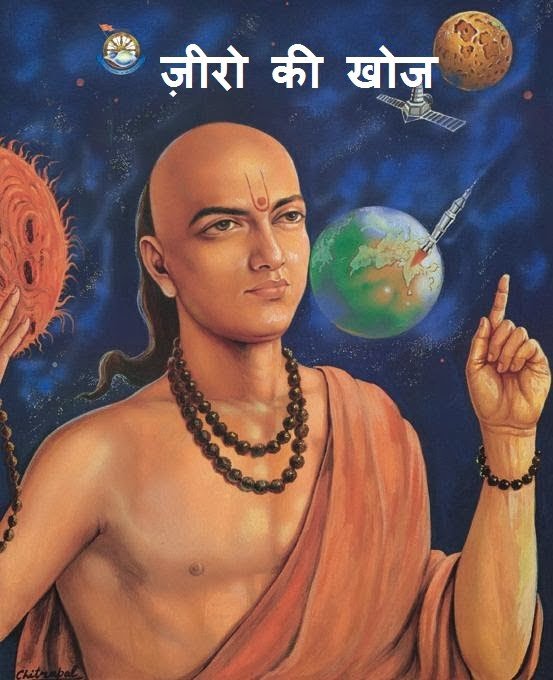
Acharya Aryabhata was the first mathematician astronomer from the classical age of Indian mathematics and Indian astronomy and is not an unknown name. His major work on Aryabhatiya was very successful. It is extensively referred in the Indian mathematical literature and has been survived to modern times.
Acharya Aryabhata correctly stated that the earth rotates about its axis dailyr. He also stated that the motion of the stars are being observed just because the earth is rotating. He was also succeeded in explaining the geocentric model of the Solar System. The positions and periods of the planet was calculated relative to uniformly moving points. He stated that the Mercury and Venus move around the earth at the same speed as of the sun. He was also succeeded in explaining eclipses in terms of shadows cast by and falling on earth. He also mentioned Units of Time or the Sidereal rotation that earth takes 23 hours, 56 minutes and 4.1 second to complete one revolution and the sidereal year has 365 days, 6 hours, 12 minutes and 30 seconds which in turn adds an extra one day every after four years which is called a leap year.Calendric calculation which was devised by him is still being used in India for Practical purposes for fixing the Hindu calendar. India’s first satellite Aryabhata and the lunar crater Aryabhata are both named in his honor.
Maharishi Bharadwaj –Invention of the First Airplane of Earth
In 1875, the Vymaanika Shaastra, a 4th Century BC text written by Sage Bharadwaj was discovered in a temple in India. The book greatly deals with the operation of ancient vimanas and included information on steering, precautions for long flights, protection of the airships from storms and lightning and how to switch the drive of solar energy or some other form of energy.
One of the chapter will reveal the secrets of constructing aeroplanes that cannot be broken or cut, that is indestructible, that is fire resistant. It also deals with the secret of making planes motionless and invisible. It also describes how to defeat the enemy planes etc. as per the Sage Bharadwaj the vimanas were classifies as per the Yugas. During the period of Krita Yuga, Dharma was establishes firmly. The pushpak Vimana which was used by Ravan was an Aerial vehicle. He used this vehicle to kidnap Sita from jungle and took him to his Kingdom Srilanka. Ramayana was during the Treta Yug in which the Vimanas were highly discovered. During this period “Laghima” gave them the power to lighten their vehicle do they can travel freely in the air.In present Kaliyuga both Mantra and Tantra Shakti are almost vanished from the earth and so the ability to control vehicle has also been gone. Today the artificial vehicles are built which is called as Kritaka Vimanas.
Many modern-day scientists see themselves as the first to create all the technological advancements we use today. Yet many of the so-called discoveries are nothing more than re-inventions created by examining the knowledge of the ancients. Many things related to science and invention have their origins in the thoughts and imagination of the sages of Ancient India. Indian culture has evolved over the ages by India’s ancient Rishis, who at the banks of its holy rivers had ‘discovered’ the Vedic literature – the very foundation of Indian civilization. The term ‘Rishi’ originally denoted the composers and singers of Vedic hymns. However, the Rishi is also a ‘sage’ to whom the Gods revealed the Vedas (knowledge of the eternal truths about the Creator, His creation and means to preserve it).Some lost works of science by Indian sages are-
Acharya Sushruta – Father of Surgery
Acharya Sushruta was a great Indian Physician and was known to be as the Father of Surgery or Father of Plastic Surgery. The Sushruta Samhita is one of the most important survived ancient texts on medicine and it is considered a foundational text of Ayurveda. He was the world’s first surgeon who performed complicated surgeries 2600 years ago.The Sushruta Samhita has 184 chapters containing descriptions of 1,120 illnesses, 700 medicinal plants, 64 preparations from mineral sources and 57 preparation based on animal sources. It describes thoroughly the surgical techniques of making incisions, extractions of foreign body or particles, how to probe, excisions, tooth extraction, how to remove prostate gland, dilation of Urethral stricture, vesicolithotomy, hernia surgery, how to do C-section (Caesarian for baby delivery), laparotomy, management of intestinal obstruction, perforated intestines and accidental perforation of the abdomen with protrusion of omentum and the principle of fracture management. He also classified the eye diseases including cataract surgery.It is interesting to note that when surgery was not even heard and performed by the other parts of the world, here Sushruta was performing Rhinoplasty and many other challenging operations.
Panini – Father of Linguistics
Panini was an ancient Sanskrit philologist, grammarian and a received scholar in ancient India. He is considered as First Descriptive Linguist and is known as the Father of Linguistics. He is well known for his text Astadhyayi, a Sutra on Sanskrit grammar. He analyzed the noun compounds which is still been followed in the theories of the Indian language. Panini’s comprehensive and scientific theory on grammar is conventionally taken to mark the start of Classical Sanskrit.The Astadhyayi is the oldest linguistic and grammar text of any language and of Sanskrit surviving in its entity. His rules have a reputation for perfection – he described the Sanskrit morphology completely. Panini made use of technical metalanguage consisting of syntax, morphology and Lexicon. This metalanguage is organized according to a series of Meta – rules, some of which are explicitly stated while others can be deduced.The Astadhyayi consists of 3,959 sutras in eight chapters. This text attracted many of the ancient authors to upgrade their text in terms of Language.
Acharya Nagarjuna – Master of Chemical Science
Nagarjuna was a great Indian metallurgist and alchemistHe did his research for around 12 years in the field of chemistry and metallurgy. Textual masterpieces like “Ras Ratnakar”, “Rashrudaya” and “Rasebdramangal” are his renowned contributions to the science of chemistry. He also discovered the alchemy of transmuting base metals into gold. He did his experiments especially on mercury. He distinguished between the metals and the sub metals and also between solvents and soluble. He stated that Mercury could dissolve all metals. He also invented the processes of “Distillation” and “Calcinations”. He was the first person in the planet to use a Mercury as medicine. He found five types of mercury: red and grey were good; yellow, white or multi colored had so much of bad qualities and this should use as a medicine after several treatments.Alchemist or today what we called as Chemist was the Gifts for Nagarjuna. He made several discoveries which was the path to the other discovers to lead in this field.
Baudhayana – Discovered Pythagoras Theorem
Baudhayana was a great Mathematician, who was also called a priest. He is the author of the Sulba Sutra which contained several important mathematical results. He discovered the several concepts in mathematics which was later rediscovered by the other scientist in the western world. The value of the pie was discovered by him. Today all know how to use the pie and where to use (calculating the area and the circumference of a circle). He also discovered Pythagoras Theorem in Sulba Sutra. He provided how to find a circle whose area is the same as that of a square. The other theorems includes the diagonals of rectangle bisect with each other, diagonals of rhombus bisect at right angles, area of square formed by joining the mid points of a square is half of original.The mathematics given in the Sulba Sutras is there to enable the accurate construction of altars needed for sacrifices. It is clear from the writing that Baudhayana must have been a skilled craftsman. He was a great Practitioner.
Acharya Aryabhata – Motions of the Solar System
Acharya Aryabhata was the first mathematician astronomer from the classical age of Indian mathematics and Indian astronomy and is not an unknown name. His major work on Aryabhatiya was very successful. It is extensively referred in the Indian mathematical literature and has been survived to modern times.
Acharya Aryabhata correctly stated that the earth rotates about its axis dailyr. He also stated that the motion of the stars are being observed just because the earth is rotating. He was also succeeded in explaining the geocentric model of the Solar System. The positions and periods of the planet was calculated relative to uniformly moving points. He stated that the Mercury and Venus move around the earth at the same speed as of the sun. He was also succeeded in explaining eclipses in terms of shadows cast by and falling on earth. He also mentioned Units of Time or the Sidereal rotation that earth takes 23 hours, 56 minutes and 4.1 second to complete one revolution and the sidereal year has 365 days, 6 hours, 12 minutes and 30 seconds which in turn adds an extra one day every after four years which is called a leap year.Calendric calculation which was devised by him is still being used in India for Practical purposes for fixing the Hindu calendar. India’s first satellite Aryabhata and the lunar crater Aryabhata are both named in his honor.
Maharishi Bharadwaj –Invention of the First Airplane of Earth
In 1875, the Vymaanika Shaastra, a 4th Century BC text written by Sage Bharadwaj was discovered in a temple in India. The book greatly deals with the operation of ancient vimanas and included information on steering, precautions for long flights, protection of the airships from storms and lightning and how to switch the drive of solar energy or some other form of energy.
One of the chapter will reveal the secrets of constructing aeroplanes that cannot be broken or cut, that is indestructible, that is fire resistant. It also deals with the secret of making planes motionless and invisible. It also describes how to defeat the enemy planes etc. as per the Sage Bharadwaj the vimanas were classifies as per the Yugas. During the period of Krita Yuga, Dharma was establishes firmly. The pushpak Vimana which was used by Ravan was an Aerial vehicle. He used this vehicle to kidnap Sita from jungle and took him to his Kingdom Srilanka. Ramayana was during the Treta Yug in which the Vimanas were highly discovered. During this period “Laghima” gave them the power to lighten their vehicle do they can travel freely in the air.In present Kaliyuga both Mantra and Tantra Shakti are almost vanished from the earth and so the ability to control vehicle has also been gone. Today the artificial vehicles are built which is called as Kritaka Vimanas.
The space rock that wiped out dinosaurs hit the Soil close Mexico. Named Chicxulub impactor, the huge rough question had an assessed width of generally 6 miles (10km). It delivered a hole that covers an zone of around 90 miles (145km) and the affect is credited with not fair the termination of dinosaurs, but moreover around 75 percent of add up to creature species at the time.
This mass termination occasion happened 66 million a long time back and has come to be broadly acknowledged as the conclusion of the Mesozoic time. Presently, analysts have figured out where the pillaging space rock originated. Using computer models, analysts considered 130,000 demonstrate space rocks to conclude that this one circled the Sun with others within the fundamental space rock belt some time recently slamming into Earth. Researchers at the Texas-based Southwest Inquire about Founded (SwRI) said the impactor likely came from the outer half of the most space rock belt. The space rock belt is between Defaces and Jupiter.
The analysts moreover say that the forms that convey expansive space rocks to Soil from that locale happen at slightest 10 times more as often as possible than already thought. The SwRI group, counting lead analyst Dr. David Nesvorný and colleagues Dr. William Bottke and Dr. Simone Marchi, said a few considers have been conducted over the past decade on the mass termination that finished the rule of dinosaurs but each of them has driven to modern questions. Two basic questions remained unanswered, Bottke said. One of them was almost the source of the impactor and the other one almost the recurrence of these Earth-crashing occasions. So, the analysts begun with knowing more almost the space rock, that driven them to recognize the Chicxulub impactor as carbonaceous chondrite. Numerous objects encompassing Soil share comparative compositions to the impactor but these are much littler in measure. “We chosen to hunt for where the kin of the Chicxulub impactor could be hiding,” said Nesvorný.
The analysts at that point utilized NASA’s Pleaides Supercomputer. To their shock, they found that 6-mile-wide space rocks from the external half of the space rock belt strike the Soil at slightest 10 times more as often as possible than already found.
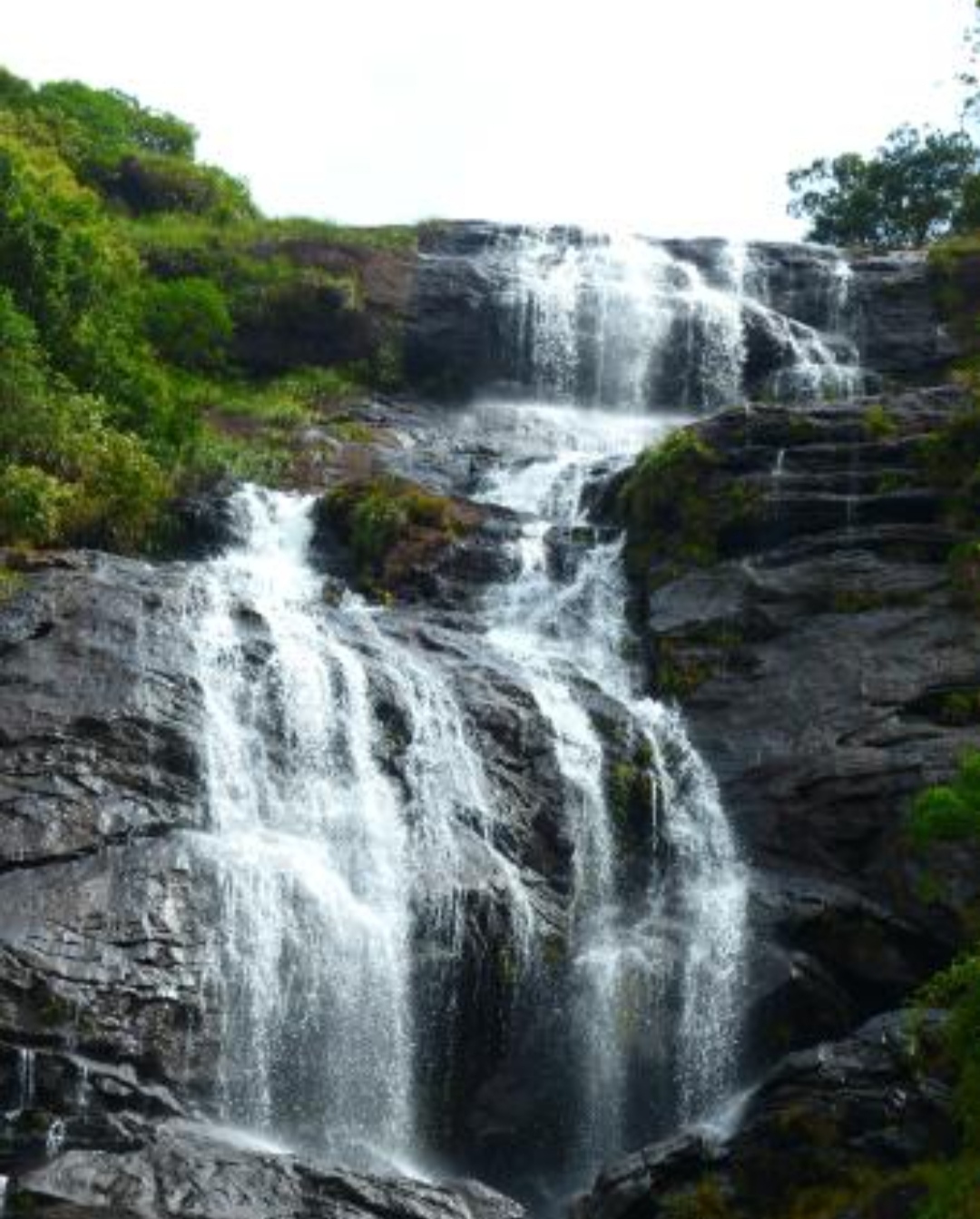
A new waterfall plunging about 60 meters has come to light in the forests of Tiryani mandal, a remote area in Kumaram Bheem Asifabad forest division, Telangana after a forester on foot patrol on a new route made the chance discovery.
The waterfall, which is now named Bison Waterfall, was discovered in Ginnedhari forest range by the forester a few days ago and is about 2km from the popular Gundala waterfalls.
Ginnedhari forest range officer (FRO) Thodishetty Pranay said he spotted the waterfall while perambulating in the forest. “While I was patrolling the area I happened to take a new route to see what lies ahead. After trekking for about 5km, I was surprised to discover this natural wonder that cascades down from around 60 meters.”
The FRO said even the tribal population in the area said they were unaware of the spot when he enquired with them.
“We decided to name it Bison Waterfall after noticing a huge rock adjacent to it resembling the head of a bison. There is also a deep gorge suitable for adventure tourism and can be added to the adventure tourism circuit of Asifabad forest division by taking some precautions to ensure there is no negative impact on local environment,” said Pranay.
The forest areas of Kumaram Bheem Asifabad district are primarily known for the presence of tiger population, some rare species of birds among other flora and fauna.
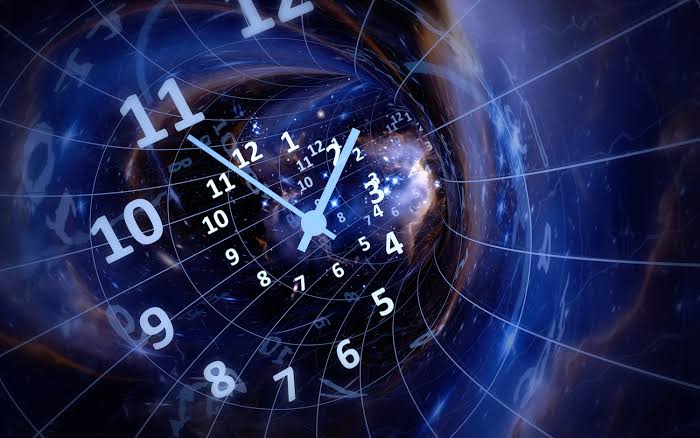
Time travel is the concept of movement between certain points in time, analogous to movement between different points in space by an object or a person, typically with the use of a hypothetical device known as a time machine. Time travel is a widely recognized concept in philosophy and fiction, particularly science fiction. According to scientists time travel can be possible in recent years due to certain theories based on famous scientists.
Time travel.
HISTORY OF TIME TRAVEL
Some ancient myths depict a character skipping forward in time. In Hindu Mythology a king named kakudmi traveled to Time to meet Brahma and he was surprised when he saw time has passed when he returned to earth. The concept of universal time sphere was shown in the stories ages ago. In Jewish tradition, the 1st-century BC scholar Honi ha-M’agel is said to have fallen asleep and slept for seventy years. When waking up he returned home but found none of the people he knew, and no one believed his claims of who he was.
Time travel used to be thought of as just science fiction, but Einstein's general theory of relativity allows for the possibility that we could warp space-time so much that you could go off in a rocket and return before you set out.
      Stephen Hawking
SCIENCE FICTION IN TIME TRAVEL
Christmas Carol by Charles Dickens has early depictions of mystical time travel in both directions, as the protagonist, Ebenezer Scrooge, is transported to Christmases past and future. Other stories employ the same template, where a character naturally goes to sleep, and upon waking up finds themself in a different time. A clearer example of backward time travel is found in the popular 1861 book Paris avant les hommes (Paris before Men) by the French botanist and geologist Pierre Boitard, published posthumously.
TIME TRAVEL IN PHYSICS
Some theories, most notably special and general relativity, suggest that suitable geometries of spacetime or specific types of motion in space might allow time travel into the past and future if these geometries or motions were possible. Many in the scientific community believe that backward time travel is highly unlikely. Any theory that would allow time travel would introduce potential problems of causality. The classic example of a problem involving causality is the “grandfatherparadox“: what if one were to go back in time and kill one’s own grandfather before one’s father was conceived? Some physicists, such as Novikov and Deutsch, suggested that these sorts of temporal paradoxes can be avoided through the Novikov self-consistency principle or a variation of the many-worlds interpretation with interacting worlds.
The art of time
GENERAL RELATIVITY
Time travel to the past is theoretically possible in certain general relativity spacetime geometries that permit traveling faster than the speed of light, such as cosmic strings, traversable wormholes, and Alcubierre drives.:33–130 The theory of general relativity does suggest a scientific basis for the possibility of backward time travel in certain unusual scenarios, although arguments from semiclassical gravity suggest that when quantum effects are incorporated into general relativity, these loopholes may be closed.These semiclassical arguments led Stephen Hawking to formulate the chronology protection conjecture, suggesting that the fundamental laws of nature prevent time travel,but physicists cannot come to a definite judgment on the issue without a theory of quantum gravity to join quantum mechanics and general relativity into a completely unified theory
QUANTUM PHYSICS
The Quantam Physics
THEORIES OF QUANTAM PHYSICS IN TIME TRAVEL
Coming up with a quantum version of time travel requires physicists to figure out the time evolution equations for density states in the presence of closed timelike curves (CTC). Two main routes has been taken in the application of self consistency in Quantam Physics.
Quantum physics theories
LLOYD’s PRESCRIPTION
Based on path Integral and post selection Seth Lloyds proposed a new Alternative. In particular, the path integral is over single-valued fields, leading to self-consistent histories. He assumed it is ill-defined to speak of the actual density state of the CTC itself, and we should only focus upon the density state outside the CTC. His proposal for the time evolution of the external density state
“People like us, who believe in physics, know that the distinction between past, present and future is only a stubbornly persistent illusion.” – Albert Einstein.
One 27th MARCH 2020, a long periodic comet with near parabolicorbit was discovered by a group of astronomer during the NEOWISE Mission the Wide-field Infrared Survey Explorer (WISE) space telescope. At that time, it was an 18th-magnitude object, located 2 AU (300 million km; 190 million mi) away from the Sun and 1.7 AU (250 million km; 160 million mi) away from Earth.
C/2020 F3(NEOWISE)
Discovered by NEOWISE Discovery date March 27, 2020 Orbital characteristics A Epoch 2458953.5 (April 14, 2020) Observation arc 113 days Number of observations 376 Orbit type Long period comet Aphelion 538 AU (inbound) 710 AU (outbound) Perihelion 0.29478 AU Semi-major axis 270 AU (inbound) 355 AU (outbound) Eccentricity 0.99921 Orbital period ~4400 yrs (inbound) ~6700 yrs (outbound) Inclination 128.93° Node 61.01° Argument of periapsis 37.28° TJupiter −0.408 Earth MOID 0.36 AU (54 million km; 140 LD) Jupiter MOID 0.81 AU (121 million km) Dimensions ~5 km (3 mi) Last perihelion July 3, 2020 Next perihelion unknown
HISTORY AND OBSERVATION
The object was discovered by a team using the WISE space telescope under the NEOWISE program on March 27, 2020.It was classified as a comet on March 31 and named after NEOWISE on April 1. It has the systematic designation C/2020 F3, indicating a non-periodic comet which was the third discovered in the second half of March 2020.
Comet NEOWISE made its closest approach to the Sun (perihelion) on July 3, 2020, at a distance of 0.29 AU (43 million km; 27 million mi). This passage through the planetary region increases the comet’s orbital period from about 4400 years to about 6700 years.Its closest approach to Earth occurred on July 23, 2020, 01:09 UT, at a distance of 0.69 AU (103 million km; 64 million mi) while located in the constellation of Ursa Major.
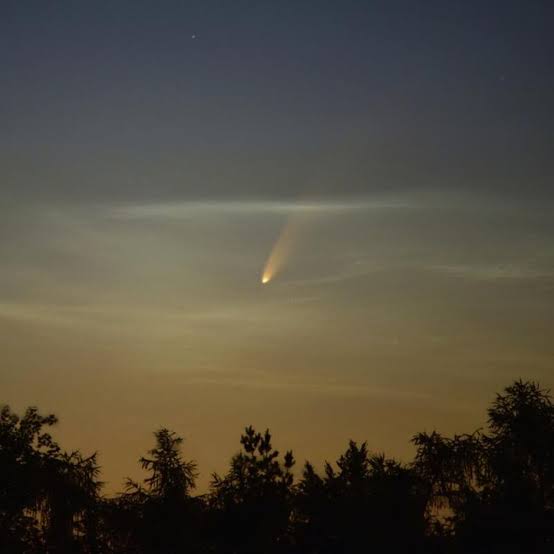
In early July, the comet could be seen in the morning sky just above the north-eastern horizon and below Capella. Seen from Earth, the comet was less than 20 degrees from the Sun between June 11 and July 9, 2020. By June 10, 2020, as the comet was being lost to the glare of the Sun, it was apparent magnitude 7,when it was 0.7 AU (100 million km; 65 million mi) away from Sun and 1.6 AU (240 million km; 150 million mi) away from Earth. When the comet entered the field of view of the SOHO spacecraft’s LASCO C3 instrument on June 22, 2020, the comet had brightened to about magnitude 3, when it was 0.4 AU (60 million km; 37 million mi) away from the Sun and 1.4 AU (210 million km; 130 million mi) away from Earth.
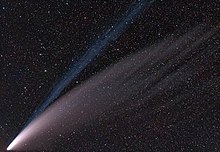
By early July, Comet NEOWISE had brightened to magnitude 1, far exceeding the brightness attained by previous comets, C/2020 F8 (SWAN), and C/2019 Y4 (ATLAS). By July, it also had developed a second tail. The first tail is blue and made of gas and ions stretching almost 70° from its nucleus. There is also a red separation in the tail caused by high amounts of sodium which is nearly stretched 1°. The second twin tail is a golden color and is made of dust stretched almost 50°, like the tail of Comet Hale–Bopp. This combination resembles comet C/2011 L4 (PANSTARRS). The comet is brighter than C/2011 L4 (PANSTARRS), but not as bright as Hale–Bopp was in 1997. According to the British AstronomicalAssociation, the comet brightened from a magnitude of about 8 at the beginning of June to −2 in early July.This would make it brighter than Hale–Bopp. However, as it was very near to the Sun, it was reported as 0 or +1 magnitude and remained that bright for only a few days. After perihelion, the comet began to fade, dropping to magnitude 2. Its nucleus activity subdued after mid-July, and its green coma was clearly visible after that.
On July 13, 2020, a sodium tail was confirmed by the Planetary Science Institute’s Input/Output facility. Sodium tails have only been observed in very bright comets such as Hale–Bopp and C/2012 S1 (ISON).
From the infrared signature, the diameter of the comet nucleus is estimated to be approximately 5 km (3 mi). The nucleus is similar in size to Comet Hyakutake and many short-period comets such as 2P/Encke, 7P/Pons-Winnecke, 8P/Tuttle, 14P/Wolf, and 19P/Borrelly. NASA’s Parker Solar Probe had captured an image of the comet, from which astronomers also estimated the diameter of the comet nucleus at approximately 5 km (3 mi). Later in July 2020, other observations were also reported, including those related to coma morphology and spectrographic emissions. On 31 July 2020, strong detection of OH 18-cm emission was observed in radio spectroscopic studies at the Arecibo Observatory. On August 14, 2020, the rotation period of the comet was reported to be “7.58 +/- 0.03 hr”.
A glimpse
TRAJECTORY
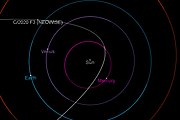
Comet NEOWISE retrograde orbit crossed to the north of the plane of the ecliptic, to which it is inclined at approximately 129 degrees, on June 29, 2020, 01:47 UT. It made its closest approach to the Sun (perihelion) on July 3, 2020, at a distance of 0.29 AU (43 million km; 27 million mi). This passage increases the comet’s orbital period from about 4400 years to about 6700 years.On July 18 the comet peaked at a northern declination of +48 and was circumpolar down to latitude 42N. Its closest approach to Earth occurred on July 23, 2020, 01:09 UT, at a distance of 0.69 AU (103 million km; 64 million mi) while located in the constellation of Ursa Major.
ELON MUSK, the famous and most successful person in the tech world, who played many roles and faced many struggles to become what he is today. Elon Musk was born and raised in South Africa.
We all know him as an entrepreneur, businessman, CEO of Tesla and spacex, but he is also a skilled investor, software developer, designer, inventor, rocket scientist, actor, film producer, one of the richest man in the world.
During his school days, he was a victim of severe bullying. At the age of 12, he created a video game(blaster) and sold it to a computer magazine. Elon Musk is the founder of X.com (later it became paypal), spacex, Tesla motors.
Recently Elon Musk turned 50, over the past decades Musk managed to become CEO of Tesla and spacex, founder of the boring company, co-founder of OpenAI, Neuralink. He also played a vital role in space rockets, electric cars, solar batteries.
“”Failure is a option here, if things are not failing then you are not innovative enough.””. – Elon Musk
“” I think it’s possible for ordinary people to choose to be extraordinary.”” –Elon Musk
“This study highlights how the spirit of scientific discovery brings people together, even in times of hardship.”
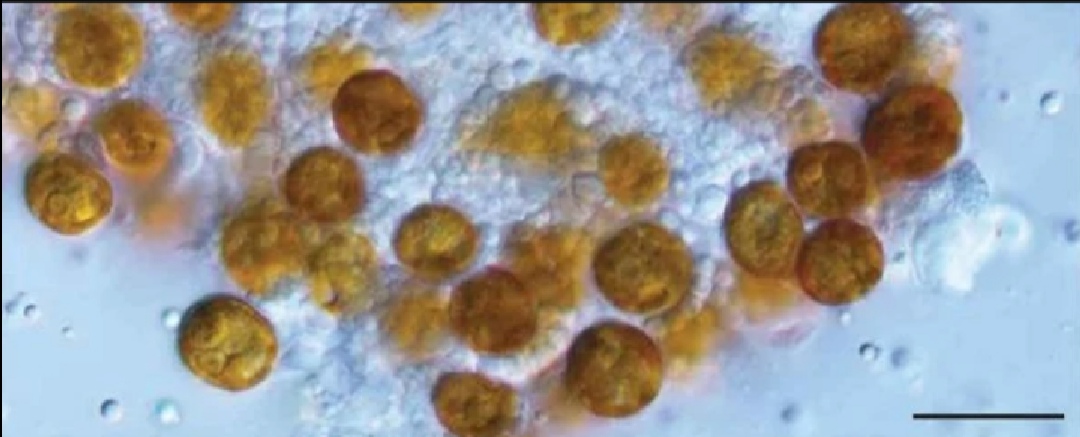
First described in 1881, the yellow things were originally classified under the genus Zooxanthella by scientist Karl Brandt. Brandt also coined the term zooxanthellae, which is used colloquially to this day.
However, another scientist – a Scotsman called Patrick Geddes – was investigating these yellow cells at the same time. In 1882, without having seen Brandt’s work, Geddes discovered that not only were the cells separate from the animals they were within (something Brandt had also established), but that they were beneficial, acting as mutualistic symbiotes.
The genus Geddes established to categorize these cells was Philozoon, from the Greek words for ‘to love as a friend’ and ‘animal’. Unfortunately, Brandt came first, so the Philozoon genus was never used; Geddes switched to work in urban planning, and the newly named genus was largely forgotten.null
We are now well aware that these odd microorganisms Geddes and Brandt worked on back in the day are photosynthetic dinoflagellates – single-celled algae found in symbiosis with other marine life, such as corals – under the family Symbiodiniaceae.
In the new study, researchers took a closer look at these yellow cells, using genetic data, geographical data and morphology to analyze where exactly they should sit in the genetic tree.
And after determining that these creatures need to be put into a new genus, the team pulled the genus Philozoonout of retirement for two old species and six new ones.
“Each symbiont species exhibits high host fidelity for particular species of sea anemone, soft coral, stony coral and a rhizostome jellyfish.”
The team wrote that Philozoon are found in shallow, temperate marine habitats around the world, including the Mediterranean Sea, eastern Australia, New Zealand, and Chile.
“Since most of the algae in the family Symbiodiniaceae have been thought to be mostly tropical where they are critical to the formation of coral reefs, finding and describing these new species in cold waters highlights the capacity of these symbioses to evolve and live under a broad range of environmental conditions,” explains LaJeunesse.








 Eduindex
You must be logged in to post a comment.