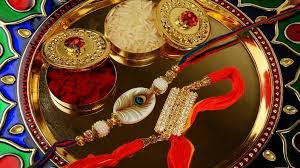
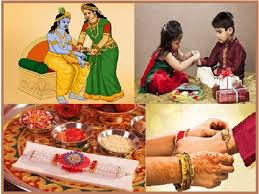
DHAMS OF UTTARAKHAND

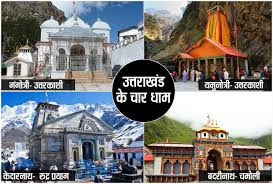
 The Chardham Yatar- Chardham Yatra is India’s most devoted and featured part of India’s spiritual tour. Chardham is the most renowned and holy expendition in India that includes visting to four glorious shrines including Yamunotri, Gangotri, Kedarnath and lastly the Badrinath Dham. A visit to theseholy shrines together forms the Chota Chardham yatra in India all these famous sacred destinations are located in the astonishing Himalayan foothills of Uttarakhand districts.

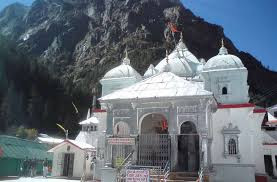
Gangotri Temple: One of the char dhams (the most sacred pilgrimage circuits in northern India with four holy destinations), Gangotri, in Uttarkashi, is a small town with the temple of Goddess Ganga at its heart. A 12-hour drive from Rishikesh, Gangotri is nestled among lofty Garhwal Himalayan peaks, glaciers and dense forests, and is one of highest pilgrimages in India (approx 3,415 m). Other than its divine atmosphere, Gangotri offers stunning vistas all around. According to Hindu legends, the most sacred of all rivers, Ganges (or Ganga), descended from heaven to earth at Gangotri, when Lord Shiva released the mighty river from his locks. The actual origin of the river is at Gaumukh in the Gangotri glacier, 19 km away from Gangotri and is accessible by trekking. After it originates from Gaumukh, the river is known as Bhagirathi and it acquires the name ‘Ganga’ after the river Alaknanda merges into it near the town of Devaprayag.

Yamunotri Temple: The source of River Yamuna, Yamunotri is also one of the four sites of Char Dham pilgrimage. Yamunotri is located at a height of 3293 mts above sea level and located in Uttarkashi District . It is surrounded by mountains on all sides and lies in close proximity of the Indo-China border. It is known for offering peace and tranquillity to its visitors. 

The Bandarpunch Mountain is at a height of 6315 mts and lies north of Yamunotri. Yamunotri is at a distance of 236 km from Rishikesh , 21 km from Sanya Chatti 278 km from Dehradun , and 176 km from Chamba. 

Shri Kedarnath Temple: Kedarnath temple is one of the sacred pilgrimage centre in Northern India, located on the bank of Mandakini river at an altitude of 3584 meters above sea level. The historical name of this region is “Kedar Khand”. Kedarnath temple is a part of Char Dhams and Panch Kedar in Uttarakhand and one of the 12 Jyotirlingas of Lord Shiva in India. 

Shri Badrinath Temple: The famed town of Badrinath is among the four dominant Char Dham pilgrimage sites of India as well as the Chota Chardham. It is perched at an average elevation of 3,300 metres (10827 feet) above sea level on the banks of Alaknanda River.

This holy town is named after the Badrinath temple dedicated to the preserver, Lord Vishnu. Many Hindu devotees are smitten by the charm of this holy shrine as it showcases the traditional Garhwali wooden architecture.

<

p style=”background-color: white;color: #535252;font-family: Roboto, Arial, Helvetica, sans-serif;font-size: 16px;line-height: 24px;margin: 0px 0px 20px”>Thank you!

Partition-A challenge to the Nation

Photo by Still Pixels on Pexels.com

It happened years ago when India faced partition be it with Pakistan or within Andhra Pradesh(making of Telangana). These involved change of boundaries and beliefs but moving ahead we all adapted to them and welcomed new beginnings.

Our Independent Nation was believed to be achieving great heights in the coming years of Independence. The hopes were high and so was the joy and enthusiasm among the citizens. They dreamt of a nation where everyone would be his own master; where they will earn their living their own way and where, there would be innumerable possibilities for growth and development. Of course, the excitement was over their mind and the feeling of freedom was another level of peace and serenity. But, did that happened likewise ? Yes we have come far enough and are still moving ahead. Our past position and present scenario are way different in terms of growth which we have had been able to achieve through years of struggle as a nation. Being labelled as a developing country shows the mark we have reached through collective efforts in the areas of infrastructure, economy and livelihood. The focus is now on sustainable development which aims at development at a pace which does not harm the future goals or requirements of the future generations. This appears a fantastic model but the present needs too need attention to the same level now.

The increasing rate of unemployment, poverty and discrimination are amongst the major issues need to be resolved in order to build a strong force serving the nation at its best.

Each human is a resource and can be utilised in a way that contributes not only to the growth of the nation but the world as a whole. There is a lot that is still unexplored or which requires actions to be taken globally. Individual growth is complimentary to this.

Employment opportunities need to be developed creatively. It simply implies there are already many opportunities, what lacks is creativity and innovation. Though we are constantly innovating ideas but they are technology oriented and not human focused. Innovation is required so that there are ample opportunities for all of us to explore and learn. Technology makes us sick when it is used to make even basic tasks of our life, automatic. Hard work should always be encouraged. Technology feels good when it is used to make complex things simple. The boundaries we see between the rich and the poor, the educated and the illiterate, the working and the unemployed, the women and the men; all these make up for the partition India is facing.

As it is said a lot, “rich are becoming richer, poor are getting poorer”, similarly, the distances are widening between the other above stated partitions as well. The discrimination on the basis of colour, caste, religion, region, gender, etc. are parting the country as we go on. It seems they are left behind on the journey towards development. Still there are many places where women are treated lower to men, having no freedom to live their own way. The ‘minority groups’ still don’t have their rights as a citizen. The “untouchables” continue to be unacceptable and what to say about discrimination faced by the transgender. It is not always the government to blame upon. In fact they launch various schemes to help and support all the classes and sections of the society. The dust remains in the mind of the people who are not ready to accept everyone as their equals, the ones who believe in superiority of one over the other even after living in a democratic country. It may also happen due to the past relations. “What we learn being grown up is what we follow”, this can be a reason why people have a fixed mindset which is hard to change. But as we keep moving there arises a need to take up all, together. The nation is one as a whole and these partition need to be erased for the sake of all. There are more issues that need attention by us, therefore the previous ones need to be sorted to focus on the upcoming. If we can bring the whole nation together, not only by words but behaviour as well, we would soon be able to solve our global matters of concern as well; which include pollution, over-population, ozone layer depletion, water management, etc.

Project Pegasus: Unfolding The Cyber Spy

Project Pegasus has been in news for quite some time. Project Pegasus is an investigation about the Software Pegasus, in which 16 Media Institutes participated to expose the truth behind Pegasus. India is also one of the country whose name came out during the investigation. So What is Pegasus?

Pegasus is a spying software developed by an Israeli Technology Firm, NSO. According to NSO, the software is used to hack into the phones of their target and keep an eye on their every step. The data collected through this process can be sold to the government of a country and not to any individual or firm.

Pegasus recently became a hot topic not only in India but all around the world. It is not the first time Pegasus has came in news. But why is it highlighted now in India along with the whole world?  

Pegasus came in news after an investigation was done by 16 Media institutions from all around the world. This was initiated by a Not Profit Organisation from Paris along with Amnesty International. The project is called Project Pegasus.

Pegasus is known to infect the phone and can capture every single thing around the subject. It takes control over the phone and collects data about every single thing done by the subject. This software can be really useful to track down criminals and can be helpful to stop them. But is it really used for that?

The investigation in Project Pegasus revealed something else. The investigation revealed OVER 50,000 names that were either being tracked or were people of interest for any future assignment. In India, a list of 300 people was released. The list contains names of more than 40 journalists, 3 opposition Leaders, and two serving ministers. Former and Current Head of Security Organisation is also on this list. It is also said that the phone that was registered in the name of a serving Judge of the Supreme Court is also on the list.

 There has been no statement by the Indian Government on the issue and this can problematic. It is yet not clear if all the numbers in the list are hacked or not. It is concerning regarding privacy and the fundamentals of democracy.

It can be clearly termed as misuse of power and can have a bad effect on citizens. it is really important to take strict actions against it.

B+ TREES

The B+ tree is almost identical to the binary search tree. It is a balanced tree where the search is directed through internal nodes. The data entries are present in the leaf nodes of the B+ tree. B+ trees support both random and sequential access since the leaf nodes are interconnected with each other through links.

STRUCTURE OF B+ TREE

The general node structure of B+ node is as follows 

  • It contains up to n – 1 search-key values K1, K2, . . ., Kn-1, and n pointers P1, P2, . . ., Pn.
  • The search-key values within a node are kept in sorted order; thus, if i < j, then Ki < Kj.
  • To retrieve all the leaf pages efficiently we have to link them using page pointers. 
  • The sequence of leaf pages is also called a sequence set.
  • In a B+ tree, the tree structure tends to grow on the insertion of new records and shrinks on the deletion of existing records. Hence it is called a dynamic tree.

CHARACTERISTICS OF B+ TREE

The following are the characteristics of the B+ tree:

  • The B+ tree is a balanced tree and the operations such as insertion and deletion keep the tree balanced.
  • Each node, except for the root node, must be compulsorily occupied with at least 50%.
  • Searching becomes so simple because traversing from the root to the relevant leaf nodes results in the record.

INSERTION OPERATION

Algorithm for Insertion:

Step 1: Find correct leaf L.

Step 2: Put data entry onto L.

  • If L has enough space, done!
  • If there is no space, split L (into L and a new node L2)
  • Allocate a new node
  • Redistribute entries evenly
  • Copy up the middle key.
  • Insert index entry such that it points to L2 into the parent of L.

Step 3: This can happen recursively. To split the index node, redistribute entries evenly, but push up the middle key. (Contrast with leaf splits).

Step 4: Splits “grow” tree; splitting the root increases the height. The tree grows either wider or one level taller at the top.

DELETION OPERATION

Algorithm for deletion:

Step 1: Start from the root to find the leaf node L with the entry.

Step 2: Remove the entry,

  • If L is at least half-full, done!
  • If L has only d-1 entries,
  • Try the redistribution technique by borrowing keys from the adjacent node (sibling) with the same parent node as L.
  • If a failure occurs when tried to re-distribute, merge L and sibling.

Step 3: Whenever a merge occurs, entry (pointing to L or sibling) must be deleted from the parent of L.

Step 4: Merge could pass the entries to the root, reducing the height of the tree.

MERITS OF B+ INDEX TREE STRUCTURE

1. In the B+ tree the data is stored in the leaf node so searching of any data requires scanning only of leaf node alone.

2. Data is ordered in the linked list.

3. Any record can be fetched in an equal number of disk accesses.

4. Since the leaf nodes are linked, performing range queries is easy.

5. Since keys are used for indexing, the height of the tree is less.

6. Supports both random and sequential access.

DEMERITS OF B+ INDEX TREE STRUCTURE

1. Extra insertion of non-leaf nodes.

2. There is space overhead.

IMMUNOLOGY SERIES-PART 5- INTRODUCTION TO THE IMMUNE CELLS

The previous article was about the acquired immunity. This article is all about the immune cells, the warriors of the human body.

These cells play a major role in protecting the body from infections. Some of them contribute directly and some contribute indirectly. Despite the methods, all of them are required in optimum amounts so as to live a healthy life.

All of these cells are derived from a specific type of cell found in the blood. The blood is a freely flowing interstitial fluid that transports oxygen, nutrients, etc. to the cells of the body. There are two components in the blood in which the first one is called plasma. The plasma is the liquid carrying water, salts, enzymes, and proteins. There are three specialized proteins in the plasma-

Albumin- to maintain water balance

Globulin- for immunity (it is a part of immunoglobulin)

Fibrinogen- for clotting

Hence the plasma also contributes to immunity. This plasma constitutes about 55% of the blood. The rest 45% of the blood is constituted by the formed elements or corpuscles. There are three elements in it namely-

Erythrocyte or Red Blood Corpuscle- transport of oxygen

Leucocyte or White Blood Corpuscle- fight infections

Thrombocyte or platelets- for clotting

Out of these, the WBC is the one primarily contributing to immunity. A healthy person must have a WBC count from 4000-11000. Count less than 4000 means leukopenia meaning that the immune system is weak. If the count is more than 11000 then it means the condition of autoimmunity known as leucocytosis. There are some further classifications in the WBC which are displayed through the flowchart below.

There are two types of cells in the WBC namely the granulocytes and agranulocytes.

The granulocytes, as the name specifies have granules in their cytoplasm. There are three different cells in this.

The neutrophil constitutes to about 55-70% of the total WBC and they are ones involved in most of the fights against the infections. These defend against bacterial and fungal infections. These cells are mostly found in the epidermal regions and are in the first line of defense.  These cells engulf the pathogens by the process of phagocytosis. These cells have multiple nuclei hence these are also known as PMN (Poly Morpho Neutrophils). Neutrophils help prevent infections by blocking, disabling, and digesting off invading particles and microorganisms. They also communicate with other cells to help them repair cells and mount a proper immune response. The death of these cells often results in the formation of pus (suppuration).

neutrophil

The eosinophil constitutes about 2-4% of the total WBC. These cells are very little in the body but can increase in the case of allergic reactions, parasite infection, and so on. The functions of the eosinophil include movement to inflamed areas, trapping substances, killing cells, anti-parasitic and bactericidal activity, participating in immediate allergic reactions, and modulating inflammatory responses.

eosinophil

The basophil is present in the least concentration of all (0.2%) in total WBC. These cells play an important role in allergic reactions in which their count can increase. The basophil contains inflammatory mediators like histamine and heparin. The release of the compounds results in dilation of the blood vessels. Hence these cells regulate the inflammation process.

The agranulocytes are those which lack granules in their cytoplasm. There are two types in this. The lymphocyte can be called as the memory of the immune system. There are two types of lymphocytes namely T and B lymphocytes. These lymphocytes recognize the incoming pathogens and based on their memory it produces a suitable response in a short amount of time. These cells are involved in the secondary response in the acquired immunity.

B cells make antibodies that can bind to pathogens, block pathogen invasion, activate the complement system, and enhance pathogen destruction. The T cells mostly known as CD4+ T helper cells produce the cytokines (proteins in cell signaling) and coordinate with the immune system. There is another form called CD8+ cytotoxic T cells which is opposite to the previous type, they help in the destruction of tumors and pathogens.

The monocyte is the largest of all the cells in WBC. They function similarly to that of the neutrophils (phagocytosis of the pathogens). These cells present the pathogen to the memory cells upon which a response is generated. Once they leave the blood, they turn into macrophages which help in clearing cell debris and killing pathogens. These are known as the vacuum cleaners of immunity.

Hence all these cells work in different mechanisms and they coordinate together to make sure that we do not fall prey to the disease-causing microorganisms.

HAPPY LEARNING!!

Contract of Bailment and Pledge

Bailment and Pledge are two distinct types of contracts that are frequently misunderstood. Every bailment is a pledge, but not every pledge is a bailment. Bailment refers to the transfer of goods from one person to another for a specific purpose. Pledge, on the other hand, refers to the delivery of goods as security for the payment of a debt or the fulfilment of a promise. As a result, bailment and pledge are two distinct contracts. A pledge is a type of bailment.

Bailment

What Is Contract Of Bailment And Who Are Bailee And Bailor ?

A bailment is a type of special contract defined in Section 148 of the Indian Contract Act of 1872. It derives from the French word “bailer,” which means “to deliver”. Bailment’s etymological meaning is “handing over” or “change of possession of goods.” By bailment, we mean the delivery of goods from one person to another for a specific purpose with the agreement that they will reimburse the goods upon completion of the purpose or dispose of them as directed by the bailor. The person who delivers the goods is referred to as the bailor. And the person to whom the goods are given is referred to as the Bailee. And the property that has been bailed is known as Bailed Property.

Essentials of Bailment

  • There shall be a contract between the parties for the delivery of goods,
  • The goods shall be delivered for a special purpose only,
  • Bailment can only be done for movable goods and not for immovable goods or money,
  • There shall be a transfer of possession of goods,
  • Ownership is not transferred to Bailee, therefore Bailor remains the owner,
  • Bailee is duty bound to deliver the same goods back and not any other goods.
  • Exception: The money deposited in the bank shall not account to bailment as the money returned by the bank would not be the same identical notes. And it is one of the essentials of the bailment that same goods are to be delivered back.

Rights of a Bailor

As such Indian Contract Act, 1872 does not provide for Rights of a Bailor. But Rights of a Bailor is same as Duties of the Bailee i.e. Rights of Bailor = Duties of Bailee. So the rights of bailor are:

  • Enforcement of Bailee’s Duty:Since Right of the bailor is same as the right of the Bailee, therefore on the fulfilment of all duties of Bailee the bailor’s right is accomplished. For example, it is the duty of the Bailee to give the accretions and it is the right of bailor to demand the same.
  • Right to claim damages: If the Bailee fails to take care of the goods, the bailor has the right to claim damages for such loss. (Section 151)
  • Right to Termination the Contract: If the Bailee does not comply with the terms of the contract and acts in a negligent manner in such case the bailor has the right to rescind the contract. (Section 153)
  • Right to claim compensation: If the Bailee uses the goods for an unauthorized purpose or mixes the goods which cause loss of goods in such case bailor has the right to claim compensation.
  • Right to demand the return of goods: It is the duty of the Bailee to return the goods and the bailor has the right to demand the same.

Rights of a Bailee

  • Right to recover expenses: In the contract of Bailment, the Bailee incurs expenses to ensure the safety of goods. The Bailee has the right to recover such expenses from the bailor. (Section 158)
  • Right to remuneration: When the goods are bailed to the Bailee he is entitled to receive certain remuneration for services that he has rendered. But in case of gratuitous bailment, the Bailee is not awarded any remuneration.
  • Right to recover compensation: At times a situation arises wherein bailor did not have the capacity to contract for bailment. Such a contract causing loss to the Bailee, therefore the Bailee has the right to recover such compensation from the bailor. (Section 168)
  • Right to Lien: Bailee has the right over Lien. By this, we mean that if the bailor fails to make payment of remuneration or does not pay the amount due, the Bailee has the right to keep the goods bailed in his possession till the time debtor dues are cleared. Lien is of two types: particular lien and general lien. (Section 170-171)
  • Right to suit against a wrongdoer: After the goods have been bailed and any third party deprives the Bailee of use of such goods, then the Bailee or bailor can bring an action against the third party. (Section 180)

Pledge

What is Contract Management? | EcoSys

Pledges are a type of bailment. Pledge, also known as pawn, is defined in Section 172 of the Indian Contract Act of 1892. By pledge, we mean the bailment of goods as security for the repayment of a debt or advance loan, or the performance of an obligation or promise. Pledger or Pawnor is the person who pledges the goods as security, and Pledgee or Pawnee is the person in whose favour the goods are pledged.

Essentials of Pledge

Because a pledge is a subset of a bailment, all of the essentials of a bailment are also essentials of a pledge. Aside from that, the pledge’s other requirements are as follows:

  • There shall be a bailment for security against payment or performance of the promise,
  • The subject matter of pledge is goods,
  • Goods pledged for shall be in existence,
  • There shall be the delivery of goods from pledger to pledgee,
  • There is no transfer of ownership in case of the pledge.
  • Exception: In exception circumstances pledgee has the right to sell the movable goods or property that are been pledged.

Rights of Pawnor

The Pawnor has the Right to Redeem under Section 177 of the Indian Contract Act of 1872. This means that the Pawnor can redeem the goods or property pledged from the Pawnee before the Pawnee makes the actual sale upon repayment of the debt or performance of the promise. The right to redemption is lost once the Pawnee sells the property in accordance with his rights under Section 176 of the Indian Contract Act of 1872.

Rights of a Pawnee

The rights of the Pawnee as per Indian Contract Act, 1872 are:

  • Right to keep the items: If the Pawnor fails to pay a debt or fails to perform as promised, the Pawnee has the right to keep the goods given as security. Furthermore, Pawnee can keep items for non-payment of debt interest or non-payment of expenditures incurred. However, Pawnee cannot keep things for any other debt or commitment than the one specified in the contract. (Sections 173–174)
  • Right to recover extraordinary expenses: The expenses incurred by Pawnee on the preservation of goods pledged can be recovered from Pawnor. (Section 175)
  • The right of suit to procure debt and sale of pledged goods: On the failure to make repayment to Pawnee of the debt, the Pawnee has two right: either to initiate suit proceedings against him or sell the goods. In the former case, the Pawnee retains the goods with himself as collateral security and initiate the court proceedings. He need not provide any notice of such proceedings to the Pawnor. And in the latter case, the Pawnee can sell the goods after giving due notice of sale to the Pawnor. If the amount received from the sale of goods is less than the amount due then the rest amount can be recovered from Pawnor. And if the Pawnee gets more amount than the due amount then such surplus is to be given back to Pawnor. (Section 176)

Difference between Bailment and Pledge

BasisBailmentPledge
MeaningTransfer of goods from one person to another for a specific purpose is known as the bailment.Transfer of goods from one person to another as security for repayment of debt is known as the pledge.
Defined InIt is defined under section 148 of the Indian Contract Act, 1872.It is defined under section 172 of the Indian Contract Act, 1872.
PartiesThe person who delivers the bailed goods is known as Bailor and the person receiving such goods is known as Bailee.The person who delivers the pledged goods is known as Pledger or Pawnor and the person receiving such goods is known as Pledgee or Pawnee.
ConsiderationThe consideration may or may not be present.Consideration is always there.
Right to SellBailee has no right to sell the goods bailed.Pledgee or Pawnee has the right to sell the goods.
Use of GoodsBailee can use the goods only for a specific purpose only and not otherwise.Pledgee or Pawnee cannot use the goods pledged.
PurposeThe purpose of bailed goods is for safekeeping or repairs etc.The purpose of pledged goods is to act as security for repayment of debt or performance of the promise.

Illustrations

Illustration 1: Mr. A delivers his watch to Mr. B for repair. In this situation, Mr. A is the bailor, Mr. B is the bailee, and the commodities bailed are the watch.

Illustration 2: Harry bailed his bike to David so he could ride to college by himself. David put it to use for racing. David is now responsible for illegal usage of the bailed bike.

Illustration 3: Mr. X entrusted his cat to Mr. Y for a few days. During that time, the cat gave birth to kittens. Mr. Y is now likely to return the cat with the accretions.

How To Become A YouTuber

Photo by Terje Sollie on Pexels.com

YouTube’s popularity continues to grow, the reputation of its content creators grows with it. In August 2018, the status of its top stars reached a new high when KSI and Logan Paul faced off in a boxing match that generated around $13 million in pay-per-view revenue. Starting your own channel from scratch and growing it into something special isn’t just a pipe dream. Many YouTubers have done it and more will do it again in the future. One of those YouTubers could be you.

Make A Plan: How often do I want to upload videos? This is also very important because the more videos you want to upload, the harder it will be to create fresh content and keep up with your schedule. As a kid, you probably have school to take into consideration and other after school activities.]

Follow your passion: It is almost impossible to create a really engaging video without having a genuine passion for what you’re doing. If you pretend to be interested, it won’t be long before you get called out in the comments section! Passion is infectious. That’s why even potentially boring topics can prove to be extremely successful on YouTube.

Make Your Content: Once you’ve decided what you want to create videos about, start thinking of how you can develop personal branding around that. Look for a unique selling point that’s related to the niche you’ve chosen and start owning it.

Choose your target audience: Just like you would if you were running an ad campaign, consider which demographic group your content would be most suited to. Think about factors like age, gender, and occupation when making your decision. It’s often best to target an audience that’s the same age and gender as you, as it’s easier to relate to them. Ask your friends what they’d be interested in watching and their answers could give you an insight into what your peers would like.

A ‘YouTube Influencer’ makes their money through sponsorships and ad revenue from other companies and brands as well as YouTube itself (if you become a ‘big’ YouTube influencer).

To monetize off of your YouTube channel you have to have at least 1,000 genuine (not bought or spam) subscribers and 4,000 watch hours in a year.

SEO: SEO is something that not everyone on YouTube will be doing, so it could be the secret weapon in your quest to become a top YouTuber. If you’re not familiar with it, it stands for search engine optimization and refers to the methods by which content is optimized to rank higher when someone searches for it. If you optimize your channels, videos, and playlists correctly, you’ll have a much better chance of being found on YouTube. The search ranking algorithm on YouTube will take into account how well your content, titles and video description matches the search intent of a viewer. If your content isn’t relevant, it won’t rank.

Once you’ve made it in, you can start making money from ads. The types of ads are: display ads, overlay ads, sponsored cards, skippable video ads and non-skippable video ads. Display ads appear to the right of your video, above suggestions, while overlay ads are semi-transparent and appear on the lower part of your video. The other ads appear at various points before, during, and after your video.

IMPORTANCE OF MENTAL HEATH

Health is important for development of the country. Heath is defined as “ a state of physical, mental, social and spiritual well-being and not merely the absence of disease or infirmity”. However, a few group neglect to make reference to “mental heath” while discussing wellbeing.

Why good mental health is important for study | Charles Darwin University

Mental health has impact on:

1.Educational out come

2.Productivity at work

3.Development of Positive individual connections

4.Crime rate

5.Alcohol and illicit drug use

Mental problems additionally influence people wellbeing conduct like eating reasonably, customary exercise, sufficient rest, participating in safe sexual practices, liquor and tobacco use, holding fast to clinical treatments accordingly expanding the danger of actual sickness. Mental infirmity additionally prompts social issues like joblessness, broken families, neediness, illicit drug use and related wrongdoing.

My Take: The Importance of Mental Health in Schools | Zedua.com

Poor mental heath assumes a huge part in reduced insusceptible working. Restoratively sick patients with sorrow have more terrible result than those without. Constant sicknesses like diabetes, malignant growth, coronary illness builds the danger of discouragement

WHAT CAUSE MENTAL ILLNESS ?

Biological factors
1.Neuro transmitters
2.Genetics
3.Infections
4.Brain defects or injury

Many individuals will in general cover up in case they are confronting any psychological problem/ mental issue in light of the fact that our general public acts diverse with individuals who has any psychological issue. They simply consider that individual as a distraught individual who has a feeble mind which isn’t accurate.

Mental Illness Affects the Whole Family | Pine Rest Blog

Everybody can confront mental issues in their day to day existence. Anybody can be stressed in their life. It doesn’t imply that their mind isn’t sufficient or strong enough. They simply need some time, perhaps someone’s solid counsel, someone’s assistance.

The Importance of Mental Health Services | PhysicianOne Urgent Care

RESOURCES:

1.https://vikaspedia.in/health/mental-health/awareness-of-mental-health

2.https://www.mentalhealth.gov/basics/what-is-mental-health

What is Consumer Protection and Why it is Important?

Consumer Protection

All buyers of goods are consumers. The general public are all consumers of each other. Protecting the interests of consumers is paramount. We will see about consumer protection in this article.

Consumer Welfare

Human life is about living interdependently. Just as a tree does not become a forest, so it is natural for everyone to seek the help of others. The main need to survive is the food we eat. As for the food, its excellent quality, reasonable price and quantity are essential.

It is important to protect the interests of consumers, from ordinary small items to the most expensive luxury items. There is no place for discrimination between low-priced goods, high-priced goods, small goods, large goods, ordinary people and the rich people. Equal price, quality and quantity are one and the same because everyone buys and sells. There is no chance for discrimination. Just as the state has a duty to protect the interests of the consumer, so do traders have a moral duty to uphold it. 

Consumer Awareness

An thought has developed among the rural people, especially the illiterate. The habit of wanting to buy goods is spreading in a sales system where one item is bought and another item is free. This is not the right way. Because no trader does business without profit. That being said it is not acceptable to say it is free.

Is the quality of a product good? Is it good for our health? Is it reasonably priced? Is proper weight followed? Such doubts should come to the mind of a consumer. The welfare of the consumer is properly maintained only when there is awareness among the consumers.

To Prevent Cheating

While taking various creative steps on behalf of the state, it should be fully followed. Must give full cooperation.

When consumers are affected in any way, they need the courage to immediately oppose it. Consumers need to create an organization within themselves and assert their rights. Raising consumer awareness about adulteration and the affordable prices of substandard products can help prevent cheating.  

The protests of the people are increasing day by day. Demand is growing accordingly. At the same time as meeting the needs, it is important to consider that the interests of the consumer are protected.

VALUE EDUCATION- A REMEDY FOR SOCIAL EVILS

Education is provided everywhere in today’s world but the concept of value education is not provided. No one feels the need of providing value education to the students, no one teaches that. The institutions and schools only provide education to their students, how to learn and write, but no one gives the knowledge of values to them. There is no stress in the educational institutions to uplift the students morally, spiritually and physically. The need of the hour is to impart value based education. Morals, ethical values, performance of duty, regard and consideration for fellow human beings, sympathy and compassion seem to have gone with the wind in this modern, complex and fast competitive era. We should realise the real aim of education, which is to provide moral values, to follow the concept of value education in every small and large educational institution.

Modern education simply prepare students to acquire degrees or diplomas in general or specialized fields but value education helps for the all round development, inculcate moral values. It teaches a person to handle their responsibilities well, be compassionate and a decent human being. It makes a person sacrificing and empathetic in nature which can decrease the crime rate and all the social evils happening in our society. The students must be learned to keep values as top priority.

WHAT IS SOCIAL EVIL?

Social evil is any pain or suffering brought by the evil intentions or actions of many individuals. It harms a person and even toxics their life to death. Common social evils include- caste system, poverty, dowry system, domestic violence, no education for girls, illiteracy etc. These are happening from a very long time and if no value education is provided within a right time, these evils continue to happen.

ROLE OF EDUCATION IN PREVENTING SOCIAL EVILS-

Education enables people to distinguish good and bad and become a good person in the society. Value education provides the overall learning to the people. It makes them go through the various areas of knowledge, the individual becomes able to distinguish good from the evil and right from the wrong. It helps the students to become more sensible and responsible towards their work. It generates a feeling of compassion to other human beings and develop a sense of belongingness in them. It makes a person helping in nature and they try to help people and not to harm them in any way. It helps them to understand the perspective of life in a better way and lead a successful life. They become a responsible citizen of the country and make their country secure from any social evil. It also help students to develop a strong relationship with family and friends. Education also empowers women to fight for their rights and challenge inequality. It gives them learning about their various rights and duties and how should they exercise it. Value education can cure economic inequality and poverty, racism and sexism. It can make the life and future of a person better and act as backbone in society. It develops the character of a person and improves the inner personality. If it is rightly exercised in every institution, then the social evils will come to an end.

CONCLUSION-

Our education should lay stress on cultivating human values. A really educated person has the capacity of self-sacrifice. A dedicated individual is a boon to the society and the nation. In fact value education can help in removing all social and cultural evils. We need vigilant men and women to help India march forward. Thus, it is very important to include the concept of value education to remove all the social evils happening in our country.

” The aim of education is the knowledge not of facts but of values.”- William Ralph Inge

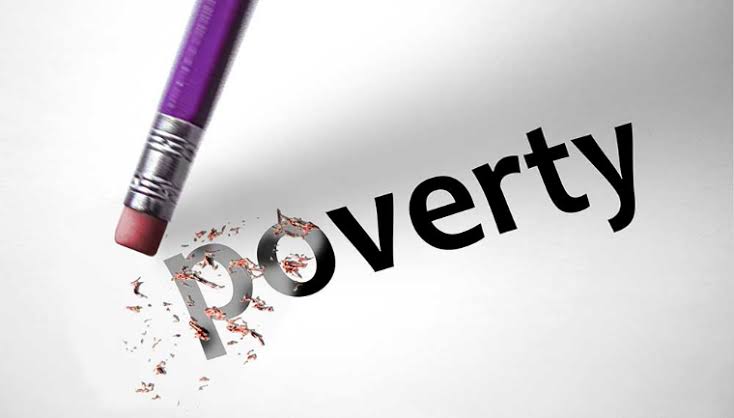
“Poverty is the worst form of violence”. – Mahatma Gandhi.

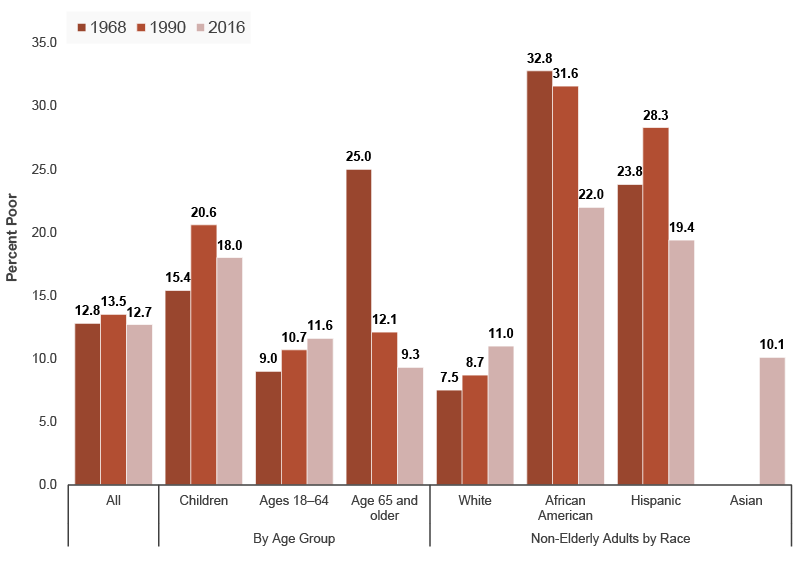
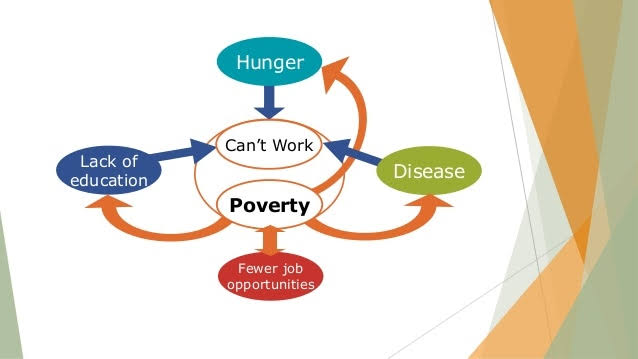
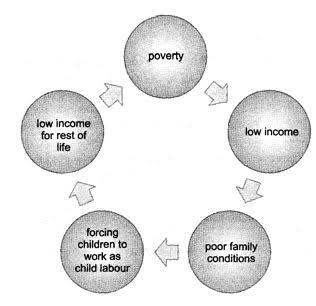
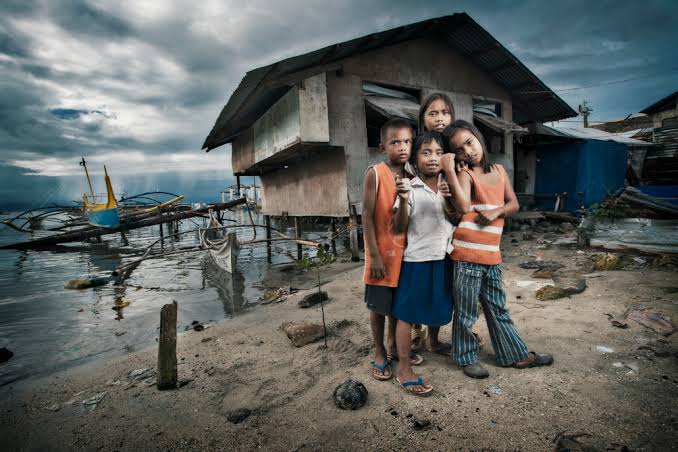
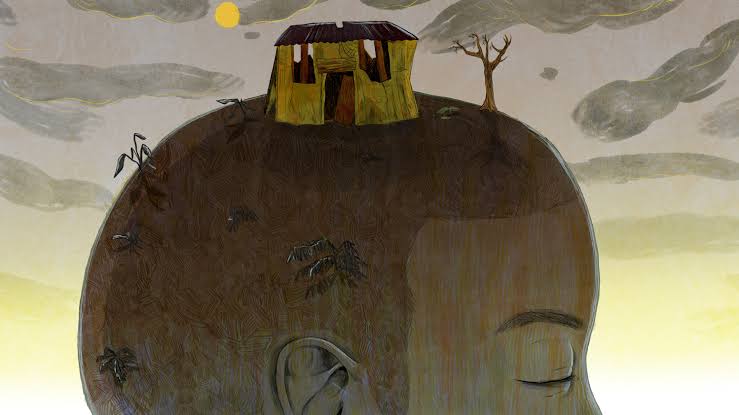
We can define poverty as the condition where the basic needs of a family, like food, shelter, clothing, and education are not fulfilled. It can lead to other problems like poor literacy, unemployment, malnutrition, etc. A poor person is not able to get education due to lack of money and therefore remains unemployed. An unemployed person is not able to buy enough & nutritious food for his family and their health decline. A weak person lacks the energy required for the job. A jobless person remains poor only. Thus we can say that poverty is the root cause of other problems.

How Poverty is Measured?

For measuring poverty United nations have devised two measures of poverty – Absolute & relative poverty. Absolute poverty is used to measure poverty in developing countries like India. Relative poverty is used to measure poverty in developed countries like the USA. In absolute poverty, a line based on the minimum level of income has been created & is called a poverty line. If per day income of a family is below this level, then it is poor or below the poverty line. If per day income of a family is above this level, then it is non-poor or above the poverty line. In India, the new poverty line is Rs 32 in rural areas and Rs 47 in urban areas.

Causes of Poverty

According to the Noble prize winner South African leader, Nelson Mandela – “Poverty is not natural, it is manmade”. The above statement is true as the causes of poverty are generally man-made. There are various causes of poverty but the most important is population. Rising population is putting the burden on the resources & budget of countries. Governments are finding difficult to provide food, shelter & employment to the rising population.

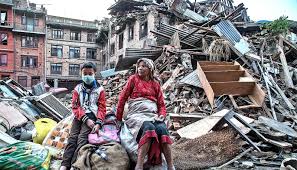
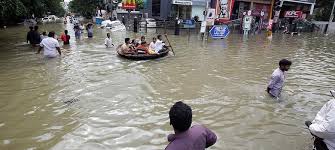
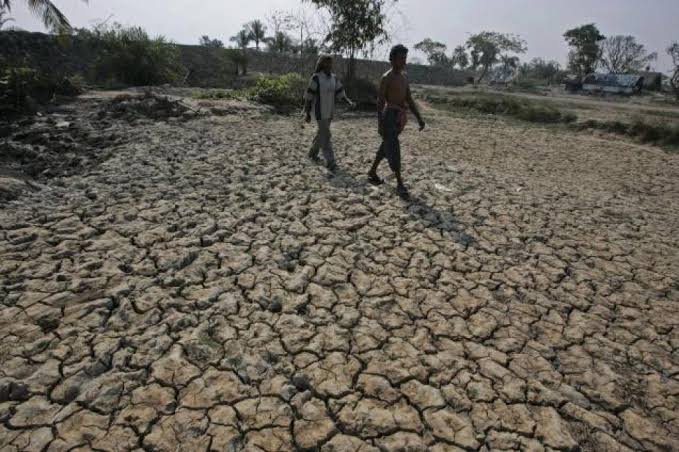
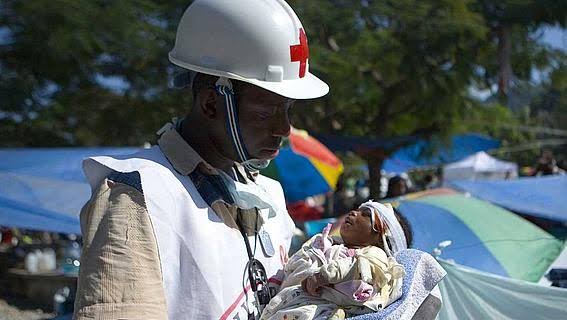
The other causes are- lack of education, war, natural disaster, lack of employment, lack of infrastructure, political instability, etc. For instance- lack of employment opportunities makes a person jobless & he is not able to earn enough to fulfill the basic necessities of his family & becomes poor. Lack of education compels a person for less paying jobs & it makes him poorer. Lack of infrastructure means there are no industries, banks, etc. in a country resulting in lack of employment opportunities. Natural disasters like flood, earthquake also contribute to poverty.

In some countries, especially African countries like Somalia, a long period of civil war has made poverty widespread. This is because all the resources & money is being spent in war instead of public welfare. Countries like India, Pakistan, Bangladesh, etc. are prone to natural disasters like cyclone, etc. These disasters occur every year causing poverty to rise.

Ill Effects of Poverty

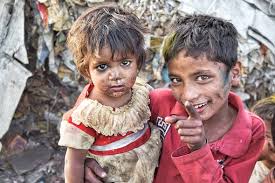
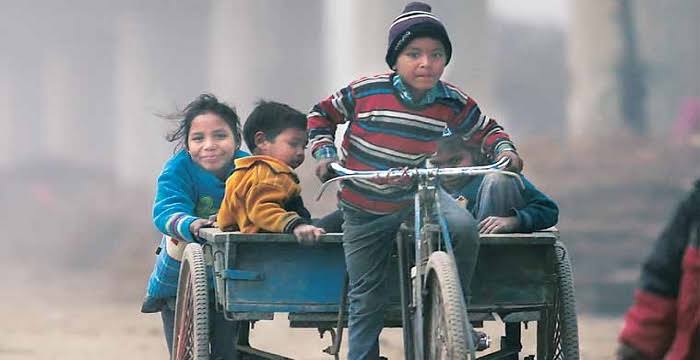
Poverty affects the life of a poor family. A poor person is not able to take proper food & nutrition &his capacity to work reduces. Reduced capacity to work further reduces his income, making him poorer. Children from poor family never get proper schooling & proper nutrition. They have to work to support their family & this destroys their childhood. Some of them may also involve in crimes like theft, murder, robbery, etc. A poor person remains uneducated & is forced to live under unhygienic conditions in slums. There are no proper sanitation & drinking water facility in slums & he falls ill often & his health deteriorates. A poor person generally dies an early death. So, all social evils are related to poverty.

Government Schemes to Remove Poverty

The government of India also took several measures to eradicate poverty from India. Some of them are – creating employment opportunities, controlling population, etc. In India, about 60% of the population is still dependent on agriculture for its livelihood. Government has taken certain measures to promote agriculture in India. The government constructed certain dams & canals in our country to provide easy availability of water for irrigation. Government has also taken steps for the cheap availability of seeds & farming equipment to promote agriculture. Government is also promoting farming of cash crops like cotton, instead of food crops. In cities, the government is promoting industrialization to create more jobs. Government has also opened ‘Ration shops’. Other measures include providing free & compulsory education for children up to 14 years of age, scholarship to deserving students from a poor background, providing subsidized houses to poor people, etc.

Poverty is a social evil, we can also contribute to control it. For example- we can simply donate old clothes to poor people, we can also sponsor the education of a poor child or we can utilize our free time by teaching poor students. Remember before wasting food, somebody is still sleeping hungry.

Overcoming poverty is not a gesture of charity. It is an act of justice.

—nelsen mandela

Difference Between Fundamental Rights And Directive Principles Of State Policy

Introduction

With 448 Articles, 25 Parts, and 12 Schedules, the Indian Constitution is the world’s longest. It is the ultimate law of the land and controls a variety of sectors, some of which are essential and necessary for the nation’s functioning. The various portions of the Constitution have a specific title under which various legislation pertaining to that subject are listed. Parts III and IV, the Fundamental Rights and the Directive Principles of State Policy, are the most visible and discussed sections of the Indian Constitution. Whereas the Fundamental Rights are the rights that all citizens have, the Directive Principles are the mandates that the State must bear in mind when making laws and regulations. Each has a specific function to play, and each is fully described.

However, there may be times when both of these elements are at odds with one another. A circumstance may call for one to be picked over the other, i.e. one to take precedence over the other. In such a scenario, not only is it difficult to select between the two, but the worth of the one not chosen is reduced. It is sometimes stated that Basic Rights, since they are essential, will take precedence over Directive Principles; nevertheless, it is also contended that Directive Principles are fundamental in the sense that they provide the foundation for the operation of the State. To determine their real nature and activities, it is necessary to thoroughly analyse both components and comprehend the points of distinction between the two.

The Fundamental Rights

Fundamental Rights - Nature, Scope and importance

Individuals’ rights are extremely essential. Rights aid in the formation of personality by providing a person with plausible claims that may be enforced against the State if any of his basic convictions are infringed. The Fundamental Rights envisioned in Part III of the Indian Constitution are the fundamental rights guaranteed to every citizen of the nation, regardless of caste, creed, gender, religion, place of birth, and so on. Articles 12 to 35 of the constitution mention six essential rights:

  1. The Right to Equality, which promotes citizen equality and forbids discrimination on certain grounds.
  2. The Right to Freedom, which enumerates numerous liberties like as freedom of expression, freedom of profession, and so on.
  3. The Right to Religious Freedom, because India is a melting pot of religious groupings, it is critical to protect the interests of religious minorities.
  4. The prohibition against forced labour, child labour, and other kinds of human exploitation is known as the Right Against Exploitation.
  5. Cultural and Educational Rights, because India is a diverse nation with so many cultures and beliefs, so it is essential to preserve the culture of every group.
  6. The Rights to Constitutional Remedies, under which a person can approach the courts of the country if he/she feels that his/her Fundamental Rights have been violated.

These rights further branch out and give us various other fundamental rights, such as the Right to Privacy, the Right to Education, the Right to Life and Personal Liberty etc.

Although the rights are fundamental in nature, they can be taken away in certain situations, for example, if there is a situation of emergency under Articles 358 and 359 of the Constitution. Even then, the Right to Life and Personal Liberty cannot be taken away by the State.

The Directive Principles of State Policy

Articles 36 through 51 of the Constitution include the Directive Principles of State Policy. They were derived from the Irish Constitution, which was derived from the Spanish Constitution. The Directive Principles are rules that the government must follow while developing legislation for the country. They fulfil the notion of a Welfare State, which can only be realised if these Principles are followed in the manner that they are stated. Article 37 of Part IV indicates that, while these principles are not enforceable in any court of law, they are important to the country’s governance and the government has a duty to adopt them when drafting legislation.

Directive Principles of State Policy - (Articles 36-51) - DPSP

In contrast to Fundamental Rights, the Directive Principles are not classified in the Indian Constitution. However, for a better understanding, they are typically divided into three categories: socialist principles, Gandhian principles, and liberal-intellectual ideas.

  1. Articles 38 to 39A, Articles 41 to 43A, and Article 47 are composed of socialistic principles, and they lay down the framework for the development of a democratic socialist state.
  2. Articles 40, 43, 43B, and 46 to 48 include Gandhian principles, which promote the ideology of Mahatma Gandhi during the movement for Independence.
  3. Articles 44, 45, and 48 to 51 are inclined towards the ideas of liberalism and intellectualism. The Uniform Civil Code is also covered under these Articles.

The Directive Principles do advocate for the protection of certain rights, such as the right to equal compensation for equal labour, as well as equality and justice, but they are more rules than rights. They may be classified as the responsibilities of those in charge of governing the country.

Points of Difference Between Fundamental Rights And Directive Principles Of State Policy

Apart from the fact that the Fundamental Rights and the Directive Principles of State Policy represent distinct things and are found in various portions and articles of the Constitution, they are fundamentally different in terms of their aims and execution. The following are the relationships between fundamental rights and state policy directive principles:

  1. The Fundamental Rights are open to all Indian people, they represent an individualised attitude. They are the fundamental rights of every individual citizen in the country, and if violated, they can be enforced against another individual or the State. The Directive Principles have a more social stance. They exist for the benefit of the country’s whole population rather than for the benefit of individuals. They have a group mentality.
  2. The scope of Fundamental Rights is essentially limited, because granting limitless rights to the citizens may result in anarchy. They are to be read strictly. But the scope of Directive Principles is limitless. They can be read and interpreted extensively and can give birth to more principles.
  3. Fundamental Rights are negative in nature, which means that they are prohibitions on the State. The State is required from doing certain things that would lead to the violation of an individual’s Fundamental Rights. They are legally enforceable in a court of law of the country. This also implies that Fundamental Rights are of such a nature that they can be violated. Directive Principles, on the other hand, do not possess the characteristic of being violated. They exist as a basis for the laws that are formulated for the country and this implies that they cannot be legally enforced in a court of law of the country. This renders the Directive Principles positive in nature, i.e. the State is obliged to do certain things for the welfare of the country.
  4. Because India is a democratic country, democratic features may be seen in its laws. Both the Fundamental Rights and the Directive Principles promote the concept of democracy, although they do it in distinct ways. Fundamental Rights spread political democracy, whereas Directive Principles spread social and economic democracy. It is simply due to the fact that the goals of both parties are dissimilar. Furthermore, Fundamental Rights represent individual wellbeing, whereas Directive Principles represent societal and economic benefit.
  5. Adequate legislation is necessary for the execution of Directive Principles. The Directive Principles can only be realised via law. They cannot be implemented automatically and in the language in which they are enshrined in the Constitution. Fundamental Rights, on the other hand, are already enforceable. They do not require any legislation to be enacted. However, this does not mean that there are no consequences for violations of Fundamental Rights. Directive Principles are subject to legal and political sanctions, but Fundamental Rights are also subject to legal consequences.
  6. If a legislation violates the Fundamental Rights, a court might declare that law illegal and void. However, the courts lack the authority to declare any statute that violates a Directive Principle illegal or void. A legislation, on the other hand, can be supported by a court if it gives effect to a Directive Principle.
  7. The Fundamental Rights were given a place of honour by the drafters of the Constitution. They are the fundamental rights granted to all citizens. The Directive Principles are granted permanent status in the Constitution since they serve as the foundation for the country’s legislative activities.
  8. Violation of the Fundamental Rights results in punishment, as per the Indian Penal Code, 1860. These rights can be enforced against the State or against any individual(s). There is no punishment for the violation of Directive Principles.
  9. Fundamental Rights can be suspended during a period of emergency, except the Fundamental Right to Life and Personal Liberty, which cannot be suspended even in an emergency. Directive Principles can never be suspended or restricted, under any circumstance.
  10. The Constitution of India was formulated at a time when a lot of countries had their own constitutions. Thus, many parts of our Constitution have been borrowed from other constitutions. While the Directive Principles have been borrowed from the Irish Constitution, the Fundamental Rights have been borrowed from the Constitution of the United States of America.

Conclusion

The differences between the Fundamental Rights and the Directive Principles of State Policy suggest that the aims and objectives of both are different but somewhat similar. Each part of the Constitution compliments another, and so do they. It is necessary to understand the importance of each and apply/use them accordingly. Fundamental Rights are rights in the sense that they are available to the people, and Directive Principles act as duties upon the State, which the State is required to fulfil, even though the Directive Principles incorporate some elements of social and economic rights. Together, they aim at promoting the principles of democracy and welfarism, which can be achieved only when both the parts go hand in hand, without any conflict.


RAKSHA BHANDAN


By:Astha Raghav 

Raksha Bandhan, also Rakshabandhan, is a popular, traditionally Hindu annual rite, or ceremony, which is central to a festival of the same name, celebrated in South Asia, and among people around the world influenced by Hindu culture. On this day, sisters of all ages tie a talisman, or amulet, called the Rakhi, around the wrists of their brothers, symbolically protecting them, receiving a gift in return, and traditionally investing the brothers with a share of the responsibility of their potential care.

An occasion like Raksha Bandhan rings the bell once in a year, and it’s a moment which means a lot to a sister, so adore your loving sister with some super fantastic gift items which can make her delighted on this special day. You will never go wrong with offering a package of dark chocolate, personalized mug, favorite teddy, etc. So, dedicate a meaningful gift that can bring a big smile of happiness on her face on this special day.

Thank you!

He would have always surprised you with lots of gifts on various occasions. Now, it’s time to return the favor by giving your brother a little token of love. With blessings and loads of love, offer some heart-touching gifts to naughty brother on the special occasion of Raksha Bandhan. Delight him with cute and adorable gifts such as personalized pen stands, personalized photo frame, God idol, etc. and let him know how much he means to you.

Why Vocational Education is Essential?

Vocational Education

Education is the guide to live as a human being. Because education is the sharpening of human rationality. This education can be of two types. One is Notebook Education and the other is Vocational Education.

” Learn an industry. Admit it you have no worries ” said a poet. It is an empirical fact that the home and country of those who receive vocational education based on notebook education will rise economically and professionally. 
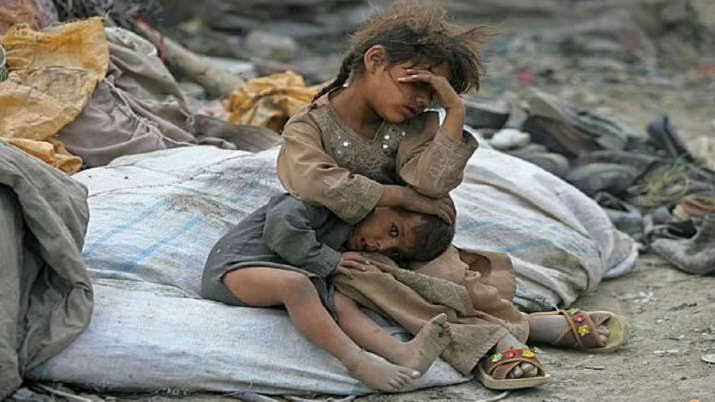
The Essentiality of Vocational Education

It is man’s economy to provide for man’s basic needs such as food, cloths and shelter. Creating the economy is work. Vocational education is essential for work. Those who have learned a profession work hard and improve their lives. 

There are many lakhs of young people in our country who have just learned the notebook education and left to register with the employment office and are waiting for a job. If they had learned a profession like the young people of Japan, they would not have had to wait for work. So it turns out that vocational education is essential.

Methods of Providing Vocational Education

The government offers more than 50 types of vocational education to students. Although medical, engineering and computer related courses are at the forefront, today due to the development of science, tens of thousands of students are dropping out in various disciplines in their respective fields. Not only this, with the advent of  automotive, home appliances, clothing, and jewelry, we can see that cooking has become a vocational education today. So low fees for vocational trainees, many incentives, accommodation for expatriate students, scholarships, food can all motivate them on many levels. Along with these, vocational trainees will be given direct training in good factories and training workshops and after completing their training, they will be able to work in good jobs or develop their own vocational education through various incentives such as business start-up assistance and the profits from vocational education will grow in the country. 

Benefits of Vocational Education

Our country with a population of over three hundred crores. These people need a wide variety of items such as food, cosmetics, sporting goods, stationery and vehicles. To provide all this, cottage industries, medium industries and heavy industries are being started. In all these, preference is given to those who have got vocational education. 

Vocational learning is the only way to produce world-class products. Vocational learners can stand on their own two feet and live with dignity without expecting anyone’s favor for the job.

There is no ups and downs in the industry. Therefore, the youth should come forward to learn and choose the profession that is suitable for them.

Digital Detox in 10 Steps

Digital Detoxification is a practice to limit the use of technology.  Digital Detox helps us to enhance the quality of our lives. It is a way to stop the constant urge to use social media. 

Do we really need Digital detox?

Our lives are filled with technology. According to a study we give about 2.5 hours daily on social media. But some take it too further than this.

Here is the list to check if you need a Digital Detox.

Do you:

  • Use social media late night instead of sleeping;
  • Get stressed, anxious, and irritated without social media;
  • Think about social media even after using cell phone;
  • Check likes, shares, comments constantly.

If yes, then you need Digital Detox.

Benefits of Digital Detox 

1. Keep your life balanced. 

According to Ayurveda a balanced mind, body, and life is key to all round health. 

2. Sleep benefits

The health of a person can be judged by his sleeping pattern. If you have irregular sleep and insomnia then your body might have some underlying problems. Using digital detox helps you sleep peacefully.

3. Time for Family and friends

Time spent with family and friends boost your Psychological health. Digital detox helps you to focus on your life. This gives you emotional wellbeing.

4. Embracing reality

The contemporary world is virtually oriented. People spend time getting perfect selfies, try to maintain a hectic online presence, and feel insecure about themselves. Same cycle again and again. 

Digital detox will give you inspiration, boost your creativity, and give you true values of life.

5. Look younger

A study shows that people who spend more time on screen age faster than others. Looking at the screen gives your skin wrinkles and lines. Digital detox helps you look fresh and young.

Check out this infographics for quick ways to detox:

How to Digital Detox

Here are 10 useful tips that you can do to Detox digitally:

1. Keep away from your cell phone for a minimum of 5 hours. You can increase as you like.

2. Keep away from distractions such as Netflix, gaming, other digital products.

3. Read a book during disconnection. Write a journal about how you feel during this time. You will be amazed that in a month your health has progressed.

4. Go out. Embrace nature. Do some activity that connects you to nature such as gardening, walking on beaches, swimming, or cycling in the morning. 

5. Play with your pets. This is the best time to bond with your pets.

6. Do volunteering. Give your hand to a person in need. Everything that goes around comes around.

7. Spend time with your family. 

8. Declutter your house.

9. Use cell phones ONLY when necessary. If you really need your cell phone, you may use it. Make sure you don’t exceed your time limit.

10. Practice your hobby and master it. Remove negative self with Digital Detox. 

Do these 10 simple Digital Detox techniques every week. You will be surprised with the productivity and efficiency you see in your life and work.

Here are 5 famous motivational quotes to inspire you while you Digitally Detox.

The body achieves what the mind believes.

Be patient with yourself. Nothing in nature blooms all year.

Your life only gets better when you do. Work on yourself and the rest will follow.

Nurturing yourself is not selfish—it’s essential to your survival and your well–being.

It is health that is real wealth and not pieces of gold and silver.