IMPORTANT TERMS OF STOCK MARKET

  • Agent:

An agent is a brokerage firm which does buying/selling of shares on behalf of the investor in the stock market.

  • Ask/Offer:

It refers to the lowest price at which the owner of the equity shares is ready to sell the shares in the stock market.

Broker

A person who purchases or sells an investment on behalf of the investor/trader in return for a commission.

Bear Market It refers to a period in which the prices of equity shares fall consistently. You may look at it like beginning of a downward trend in the stock market.

Bull Market: An opposite of bear market, a bull market situation in which the prices of the stocks are increasing over a prolonged period of time. A single stock and a sector can be bullish at one time and bearish at another time.

Bid:

It is the highest price that the buyer of a stock is ready to pay for a particular stock.

Face value:

It relates to the amount of money or the value in cash that the holder of a security will obtain from the issuer of the security when the security matures at the specific date.

Limit Order –

A limit order is a type of order which executes at the price placed for buy or sell.

Market Order –

A market order is a type of order which executes as quickly as possible at the market price.

Day Order –

A day order is a direction to a broker to execute a trade at a specific price that expires at the end of the trading day if it is not complicated.

Authorized Shares –

This is the total number of shares that a company can trade.IPO – It is an Initial Public Offering that happens when the private company becomes a publicly traded company.

Secondary Offering –

This is another offering in order to sell more stocks and to raise more money form the public

Portfolio –

A collection of investments owned by you.

Margin –

Margin account lets a person to borrow money from the broker to buy shares.

Online mode of Education: Is it really advantageous to the Indian youth or there are any limitations too?

Article by – Shishir Tripathi

Intern at Hariyali Foundation
In collaboration with
Educational News

After the arrival of Corona Virus into the country after the months of February and March, educational institutions including schools and colleges were shut down and the normal teaching learning process was hampered. After, a certain time, the Teaching process again started through online mode and till now the same process is being followed.

Now, the question arises that the available mode of teaching is accessible to all the students across India or there are other students left who still are not connected with their respective educational institutions through the new mode of learning?

The normal classroom learning is not possible at present because of transmission of virus amongst the students and that will make the situation even worse than before. Therefore, lectures and notes to the students are given via the online mode with help of apps like Zoom, Google meet, Jio meet, Google Classroom and many more. These apps can only be accessed with the help of a Smartphone. Now, being a developing country, unequal distribution of wealth and resources is genuine in a country like India.

According to a survey by Central Board of Secondary Education (CBSE), at least 27% students do not have access to Smart phones, tablets or laptops for online classes. Such college and school students are facing a lot of problems in their studies

According to a real time progress tracker, 83% of households in India had electricity connection till 2018, and after some tome Modi government claimed that they have electrified India to 100% but everyone knows that laying wire lines, and transformers doesn’t mean that electricity reaches to the place.

Though the data is unavailable, there are villages still left waiting for electricity and hence in such remote areas it is so difficult for a student having a phone or any other electronic device and charging it properly for uninterrupted attendance in the online classes.

Now, there are sudden prolonged power cuts too which occur and can obstruct the power supply to electronic devices which can hamper the delivery of education through online mode from teachers and professors to the students and scholars. The all India average duration of power cuts was 5 hours and 28 minutes on May 2, 2019. And also, in villages sometimes the reason is all unknown to the people behind the sudden power cuts.

There is also a problem of slow speed in congested localities, small towns, villages and remote areas of the country. According to the Akamai Q1 2017 State of the Internet Report, the average internet connection speed in India is 6.5 Mbit/s and the average peak connection speed is 41.4 Mbit/s. Globally, India was ranked 89th out of 149 countries/regions by average internet connection speed and 97th by average peak connection speed. According to telecom industry experts, the slow bandwidth speed in India is due to the high cost of spectrum leading to Internet Service Providers (ISPs) not investing much into the spectrum. The growing number of telecom users and Smartphone users are also cited as one of the reasons for slow speed in the country.

Therefore, taking into consideration the present situation, the online mode of education is the best way possible to deliver knowledge to the students in these tough times of Corona. Also, the problems of unavailability of electronic devices and slow internet speed and proper supply of electricity to each and every household must be ensured so that the youth which is the future of the nation gets uninterrupted education and training through online mode.

Let’s Promote Child Education


“Education begins the moment we see children as innately wise and capable beings. Only then can we play along in their world.”
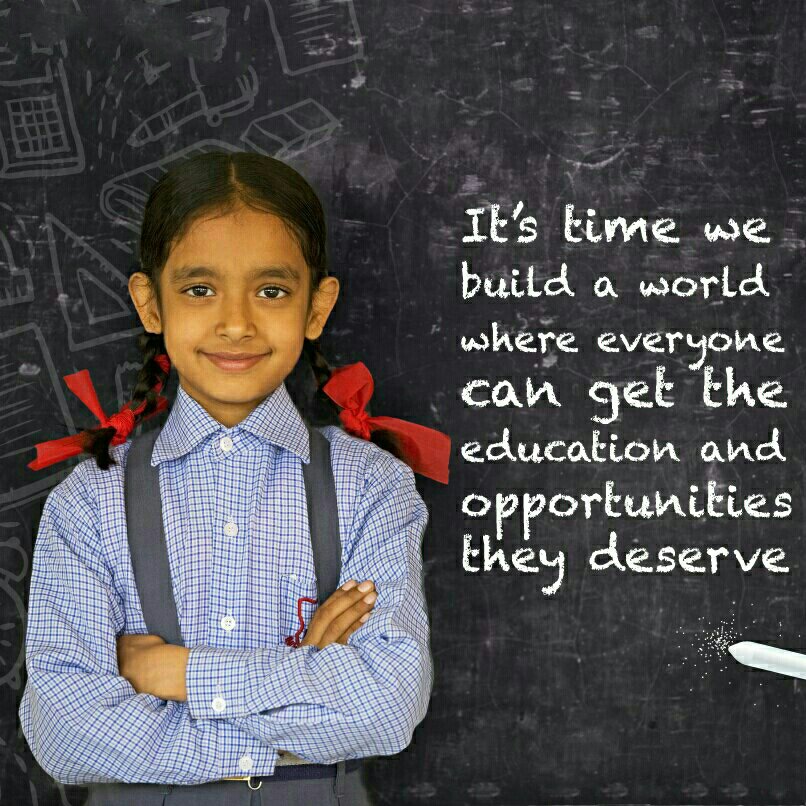
But unfortunately, there are many children in our country who are yet far away from education. Yes, I am talking about those little buds that must be withering somewhere today. There are still 72 million children in India who are far away from education which is the most important and basic right of a child. And the main reason for which they are deprived of education is their economic circumstances. Because of which they have come so far from education. For this reason, they have to do work like begging, stealing, and what we do later is that we badly abuse them. Friends, we all must have seen the children spreading their hands on the road for the sake of some money. But have you ever thought that why they want to do this or they have some compulsions?

So let me tell you today what their compulsion is – society today stands at a level where education is called a mirror. And this thing is a great example in itself to explain the importance of education. A survey by Child Welfare found that most of the children are deprived of education because the condition or situation in their houses are not good due to which their parents send them to earn wages for living. Their father’s one-day earnings could not even complete the ration. In a poor family, a girl child is assigned household chores and the boy child is sent to work outside. Government’s Sarva Shiksha Abhiyan runs but may not reach the children who need it. “A human becomes a demon without education” and in today’s era, we are well aware of this. Those little hands simply dry up in someone’s house washing dishes and cleaning the dirt.

There are many noble people who are giving free education to poor children by spreading and sharing their knowledge to serve society. There are many great people who are sharing knowledge with poor children and giving free education to them so that those children can grow up and serve for the welfare of the country. So, why can’t we take a step from our side to promote the education of poor children, to motivate them and to make them aware of their rights? so that the lives of those innocent children can be improved and filled with happiness. Even if you start with one child then he or she can improve many lives.

Philosophical Readings

 01

of 10

Reading for Understanding 

Woman reading a book on sofa.
Tim Robberts / Getty Images

First of all, a bit of context. Bear in mind that when you are reading philosophy what you are actually doing is trying to understand a piece of writing. This is remarkably different from other forms of reading, like — say — going through a newspaper page to collect information or reading a novel to enjoy a good story. Philosophical reading is an exercise in understanding and should be treated as such. 

02
of 10

Philosophy Is About Arguing 

Philosophical writing is persuasive writing. When you read a philosophical piece you are reading the opinion of an author who is trying to persuade you of the plausibility or implausibility of a position. Will you buy the author\’s position? To decide you\’ll need to fully understand the ideas being presented and the rhetorical strategies employed.

03
of 10

Take Your Time 

Philosophical writings are dense and difficult. When reading, set realistic goals. While reading a page of a novel can take as little as thirty seconds, some pages in philosophy require at least ten minutes or even more. 

04
of 10

What Is the Main Point? 

Before actually starting to read, skim the paper to get a sense of the main point the author is trying to make and the structure of the piece. If it\’s an essay, read the first and last paragraphs in their entirety. If it\’s a book, look at the table of contents and go through the opening remarks. Once you\’ve skimmed the piece, you\’ll be better equipped to dive in and read the entire text intelligently.

05
of 10

Annotate 

Keep a pencil and highlighter with you and mark down what seems to you the crucial passages: where the main thesis is stated; where key concepts are introduced; where key arguments or reasons are provided. Try also to get a sense also of the weakest points in the overall piece. 

06
of 10

Think Critically 

Your task as a philosophy reader is not just to take in information, as you would do with a biology textbook: you are engaging with an argument. You may agree or disagree — but either way, you need to know why you\’ve formed a particular opinion. As you\’re reading, look for flaws in the writer\’s argument, and mark them. If you\’re reading for a class, you\’ll almost certainly be asked to write or speak about your response to the writer\’s argument.

07
of 10

… But Don\’t Think on Your Feet 

Philosophical criticism does not typically go well with speed-thinking. Philosophy is reflective: while it\’s perfectly OK to think while you are reading, you should go through your responses at least three times to be sure they really hold up. Your brilliant insights and criticisms may turn out to be poorly constructed. So, remember: be humble, patient, and meticulous. 

08
of 10

Cultivate Philosophical Empathy and Self-Criticism 

To build great philosophical reading skills you\’ll need to cultivate some philosophical empathy and self-criticism. Writing philosophy is challenging. Be empathetic: after you come up with some possible criticism, imagine taking the role of your opponent and try to answer your criticisms. This exercise can improve your understanding of a philosophical text dramatically, showing you viewpoints that were not clear to you before.

09
of 10

Keep Re-Reading 

As you are sorting and fine-tuning your critical remarks, double-check the text to refresh your memory, sharpen your thoughts, and make sure you properly interpreted the author.

10
of 10

Engage in Philosophical Discussion 

One of the best ways to understand and analyze a philosophical piece is to discuss it with others. It isn\’t always easy to find friends interesting in discussing philosophy at length — but often other members of your class will be willing to talk about the content of assignments. Together, you may come to conclusions you wouldn\’t have thought of on your own.

POVERTY LEADS TO INEQUALITY.

Even though money won’t buy happiness in today’s era most people are willing to sacrifice their happiness for money and we cannot blame them because everyone judges you based on how much money you earn and spend. If you earn a lot then you hold a special place in society.Inequality has been surging sharply since the last three decades. The wealthiest have cornered an enormous portion of the assets built through cohort capitalism and legacy. They are becoming richer at a very faster speed while the underprivileged are still trying to earn a minimum wage and access standard education and healthcare services, which continue to suffer. People in poverty are those who are considerably worse-off than the majority of society. Their level of need means they are powerless to obtain gains and aids that most people hold necessary to an adequate measure of existing.The best example is inequality in healthcare facilities which has taken a serious.


Inequality, by distinction, is always a comparative term that relates to the disparity within levels of living standards, wages, etc. across the entire financial division. Poverty and inequality oftentimes up rise and befall collectively though this need not surely be the fact. Inequality can be high in a society without great levels of poverty due to a huge distinction within the top and the middle of the revenue spectrum. An important part of inequality is apparent because of the high numbers of labor organizations work in sectors with low productivity for example agriculture. To overcome inequality, low- productivity workers should be incentive to shift to more fecund sectors. Concurrently, structural improvements require to be fulfilled to improve the fecundity of these divisions.


Technology should not be made a substitute or deemed a rival. It should be seen as a means to address inadequacy and inequality. Enhanced technology can create more prominent demands. These next can enable more inclusive hiring of the low and the medium-skilled. Technology can enhance the potency of the agrarian sector. It can further promote versatility to sectors with tremendous productivity, as is apparent from the vast numbers of people foregoing farming for jobs in the help sector.


Education is the foundation for a fulfilling and leading a satisfactory life. For a nation to be packed with the understanding it has to adopt education as it is the solitary guarantee for a stable economy and a secure domain. Education shapes people into efficient and hardworking individuals. The importance of such an accomplished and knowledgeable society would help nurture a community that is operating as one for the economic advancement of the entire nation. The proficient workforce would be formed by education. Also of vital importance is the contribution of education towards the development of best economic policies. The government should break the cruel progress of poverty which makes inequality, which does not only negatively harms sustainable financial growth but also creates various socio-economic problems. The government should create job opportunities and employment that will be the key strategy to eradicate poverty and inequality.

Indian Education System

This is one of the highly debated questions among the youth of our nation. As time as passed on and we got more exposed to different cultures, practices, people of different nations through globalization. That was the point of realization for us, was our education system worth existing for? and wasn’t there a need for change too.

Indian Education system need a lot of fixations, it should start within the core itself. The way the education system works, affects the mental health of the students too and it is important to have a healthy student both mentally and physically for a better nation.

Here are a few problems that needed to be fixed.

Indian Education system focuses more on marks than what is actually learned. We live in a society where marks matter and not what has been learned by the student.  Students are forced by their parents and teachers to score marks, while not worrying how it affects their mental health. When we focus on marks, we always tend to forget one thing that is whether the knowledge was actually imparted to the child.

Rote learning should not be practiced, learning with experience is what matters. When people practice rote learning, it never stays in the memory of the child. Teachers at school now tell students to memorize everything and come, while it might be easy for some it will not be the same for all. There are students who cannot study too much theory, while some cannot understand a lot of mathematical problems.

The way the human brain works is different from one to another, in some people, the left side of the brain works and right side for the rest.

And so we cannot expect everyone to memorize what is learned, instead if learning by experience is done then we could get better results. When students experience and learn something, there are higher chances of not forgetting it.  Mahatma Gandhi, the father of our nation was the one who suggested the idea of learning by experimenting/ experiencing.  Learning in a four walled room would never help a child grow fully. Rabindranath Tagore in 1901 build Shanthi Niketan in order to emphasize the need to learn with the nature. Classes in this school wasn’t held in four walled classrooms instead on the ground next to trees.

In India, there is a wide disparity between a science and arts student. Students who take arts are often stereotyped to be less intelligent. Arts subject is not given the same subject value as those of science and commerce does. Parents force their children to take science, leaving them with no option than learning it. One important thing while studying is, loving the subject. We should always make sure to love our books, then only they will love us back.

 Not every student wants to study the routine subjects, some likes extracurricular activities more.  Some students are very much talented in music, dance, instrumental music, sports and lots more, but with a busy schedule at school they are forced to throw away their talents and study. This kind of system harms the young minds.

India should learn from countries like Finland, which focuses on the overall development of a child rather than academic performances. We need a youth fully capable of their strengths and weaknesses.

Impact of COVID-19 on the Education Sector


The lockdown following the global outbreak of the novel Coronavirus has led to drastic changes in the education sector. The country-wide shutdown of schools, colleges and other educational institutions leaves the sector with no choice other than commencing e-learning for the continuation of studies. E-learning means learning over the internet. Different forums such as Zoom, Google Meet, Microsoft Team, et cetera are being used to conduct classes for all school and college-going students. In a country like India, which has such high poverty rates, this new system of e-learning seems quite elitist. For attending these classes, all teachers and students must have a smartphone, a proper internet connection as the classes go on for hours and a suitable place where they can teach and learn without disturbances. However, all of this seems difficult if not impossible for students of poor families, residents of remote areas, and those who have crowded homes. Neither students nor teachers were prepared to face such issues, thus, due to the lack of preparation and proper infrastructure, the education sector has become inefficient. 

With the onset of the unexpected global pandemic and subsequent switch to e-learning, teachers had to face many problems. They were expected to learn and adapt to new technology and use it effectively to teach. Doing household chores along with teaching online proved tough for many teachers. Everything they did in school while being face-to-face with students, from taking attendance to conducting exams, they now have to do it digitally. They are also facing harassment in their online classrooms as students feel free to abuse them by sending inappropriate texts and disrupting the class in many other ways while hiding behind their computers. Teachers of the elementary section have problems in teaching, engaging and disciplining the young kids. In these tough times, their income has either been reduced or delayed while their work has only increased. All these factors clubbed together have negatively affected the mental health of teachers. 

Students are missing precious classes which will affect their curriculum in the long run. E-learning cannot replace the traditional way of schooling. Many students do not have their own smartphones or laptops so that they can join online classes on a daily basis as well as a proper internet connection. Those who do, face other problems such as lack of motivation to study, inability to properly engage in the classroom, feeling uncertain about the future and many more. They feel isolated as their routine of attending school regularly has been disrupted and they have been unable to meet their friends for a long time. With the blade of all these pressures hanging on their necks, students are battling many mental health problems. 

Due to all the issues of e-learning, the quality of education is worsening. The sudden changes are more than what the education sector can cope with at such times. It would be highly irresponsible and life-threatening to open educational institutions amid the coronavirus outbreak. Thus, all we can do is try to help the people around us and hope that the world successfully finds a cure for COVID-19 at the earliest. 

Why, TEACHERS??

“Shut up! Jao jaake class ke bahar khade ho jao”. I still think, was it a punishment or just a way of giving freedom to go washroom or bunk the class.

Hey friends, today is a special day. Today is Teacher’s day, and it’s not only for school teachers but to every single person who came in our life, because everyone teach something. But, school teacher is important because, they only taught us that whosoever is teaching you is to be respected.

Sir/ma’am, your selfless acts are still helping us in our life. Thank you for teaching us everything from the book and those discipline, which you made us to learn for life.
But, today I’m writing this for you and the company you gave us, not about those things which you taught us even though we all are thankful for that.

Rightnow, we adults are happy that we didn’t had to attend online classes. Man! That’s really Scarry. Means you can’t meet your friends, you can’t see your crush, you can’t live the most precious life, your school life. At that time the most hateable person was our teachers, and we are sorry for that, But, because you always stoped us from enjoying. Which at a certain age we only do it by our own, and you all grown up peoples were knowing that, still you stoped us from doing, why?.

Still, when you leave your school and move forward in your life, you are going back to them like, a boomerang. The way you hate your teachers back then, yeah!, you are gonna wish for having them as your teacher, back in your life again.

What you will never understand is there  punishment. Those punishment which were meaning less back then and even now. Go outside, write this 20 times on blackboard, murga bano, and keep your hands up. Why?? And there dialogues, Khana khaana to nhi bhule? Like you all wanted to answer that particular question, right? Yeah, because my body wants food for energy not your homework.

Even though with all that difference, one thing was for sure that they really treated us like there own child and forgot about that while giving marks, huh!. Thankyou teachers and HAPPY TEACHER’S DAY.

Now, what you think about your school day’s and about your teacher? Let me guess, same like me, huh! Until you attended online classes.

P.S:- A special thanks to all those teachers who use to tell us story rather then teaching us from those boring books. You all have great a part in making our school days memorable. Thankyou

❤️

See yaa.

NIGHT ROUTINE

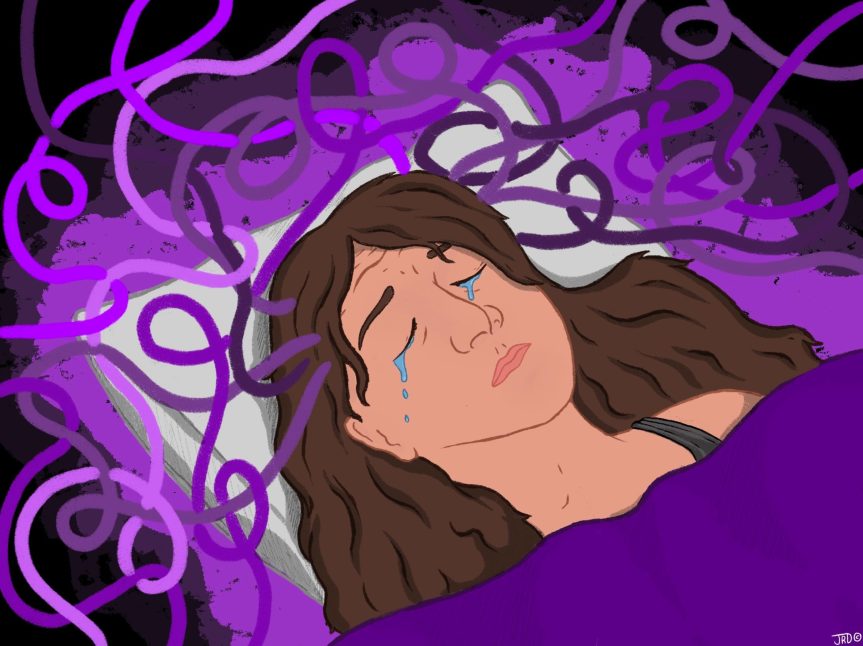
We all have been taught to know some basics of a morning schedule and do prepare one for us. Do you ever had a thought of having a night routine? Basically, there are very few people how ever had a night routine. As nights are that part of a day where all of us very little amount of energy left in us to follow any kind of schedule. And basically people want to relax and have a free time. For many people nights are the time when they get some time with family,but for many others this is the time when people get some privacy and can do whatever they like without any bounds and limits. But when you would have a deep thought on the topic you will come to know that night routines are more significant than the morning routines. As much sorted the night would lead to a more productive day. When someone knows what to be done the next day ,automatically the next day becomes more productive. So it’s better to plan the whole day beforehand and have a productive and perfect day rather to be dejected in the morning. Sometimes it’s well possible that the plan made by you don’t works the way it should but then also you would know what are the mistakes done by you that lead to such failures to the plan.

A night routine unknowingly would lead to relax you more than you had ever thought . Because the calmness of the night can be enjoyed much more when tried something new to feel it. So what basically are the night routines? What is that great secret to have a perfectly planned day? Can everyone of us owe the power to make and follow such cruel and evil sounding routines? What is the major step that is to be taken to create such routines?

Basically the answers to all the above question is a little time and a pen paper or any digital platform where you could plan things. Firstly in the night time the body has its major shutdown so for that it had to plan and start this routine from late evening time. Its know that having dinner by 8 pm (IST) is a healthy and body friendly habit. But there a few how follow this habit. Truly this habit is one of those habits which is not to be missed at any cost. This habit would lead to a good stomach health or more specifically a good gut health. A good gut health leads to a healthy individual and a healthy individual leads to a productive mind. This habit could be considered as the first step for night schedule. All of us have a different circadian rhythm cycle and our body works according to that only. Many researches have found that may people have a habit of being night owl and staying awake late night till am sometimes or evening more time . Some people sleep in the early morning when they should actually get up and start their new day. With the modernisation we are changing but there remains things which are good if not changed otherwise our body and its functioning is hampered enormously with our knowing. So it’s better to go to bed by 12am (maximum) and get up by 6 or 7 in the morning. Although it’s said that the best time to go to bed is by 9-9:30 pm and get up by 4-4:30am. As It’s good to inhale the morning breeze because it enhances the memory power.

Now moving on to the next step it could be having a no screen time 1 hour before going to the bed. Because the white light from the screen hampers the melatonin(sleep inducing hormone) and delays our sleep time. Before an hour of going to the bed it’s good to some work which don’t include you to face the screen. So it’s the ideal time to plan the next day and even write down what you did that day or what are those shortcomings which if not done would have made your day even better or write about what are the experiences and lessons you gained that day. After that you could also have a me time by doing a little self care activities like hair care,skin care etc. Just before the bedtime you could do some of the things you feel could relax you. It may be book reading, sketching,colouring,quote writing etc. It could be anything but it should surely relax and soothe your soul deeply. So this leads you to the final step of you night routine. And that is the moon milk if you have any kind of allergy with dairy product or you are a vegan then you can use plant based milk in place of animal product. But surely this moon milk helps your body to rejuvenate and produce a sense of calmness. Do check the recipe of moon milk and give it a try as this induces sleeps,helps to heal the inner injuries,decrease stress and there are tons of benefits of moon milk which if written would lead to another big article.

So with all these basic night time practices one could achieve a great bedtime as well as it would lead to a productive and perfect day. So surely try it out.

ENJOY and surely don’t forget to put an alarm to wake up at perfect time the next morning!!!!!!

EXISTENCE OR EXAMINATION

Amidst this deadly Covid-19 pandemic India is gearing up for conducting competitive examinations (JEE/NEET and final year examination) The commission has announced the dates for several competitive exams to be conducted in September and October. The real question is not if the students are prepared, but is India prepared for this? Despite imposing complete lock-down, especially in Maharashtra, the Covid-19 cases are increasing day by day and now the supreme court has given a verdict that exams should be conducted.This is totally unfair.There are lakhs of students who will appear for writing exams. It is not only putting students and teachers under risk but also their families. Is this worth taking the risk? Putting life under jeopardy to write exams.

The health minister is talking about taking precautions, but before that, what about people who have already been tested COVID positive? Many people are dying not because of the virus but because of a lack of proper health care facilities and treatment. No one can blame the people for raising their suspicion. With a public health care system is in a hodgepodge, many people are looking with doubt at the country’s attempts to battle with the pandemic. The lack of these stocks has decreased the Indian health care base, also, leading to an accelerated rise in COVID-19 crises in the country. At this time when even very advanced countries are striving to deal with this pandemic and due to a dense population, India’s incapacitated health care foundation is in many ways disadvantaged to deal with this pandemic. Today the record surged to 83,883 fresh corona-virus cases in the last 24 hours taking India’s COVID tally past the 38-lakh mark and Maharashtra continues to be the state hit hardest by the pandemic and followed by Delhi, Karnataka, Andhra Pradesh, and Tamil Nadu making India top 3rd Country affected and just some numbers behind Brazil.

The government should look for another solution or option other than making students appear for the examination in centers. What is the technology for then? Competitive exams should be conducted online with certain protocols. In that way, students will not lose their one year and they will be safe, and yes even though there can be certain technical problems in conducting exams online, but this is the better option rather than going to colleges. Offline exams may act as a great threat to health since the crowd of students in huge numbers at the examination center will make them prone to getting in contact with a corona positive person. The thermal screening of all persons entering the examination hall is no remedy. Another option is to cancel the final term exams while using the average of the marks secured in earlier terms as a substitute for the final semester examination scores. The government should realize that the situation can go out of control anytime, which is evident with the day to day spike in COVID cases despite lock down and on top of that now lakhs of students have to go and write exams. The government should reconsider this decision of giving priority to examination over life.

Why are students from International Boards being welcomed by Indian Universities

The world is facing a learning crisis. While countries have significantly increased access to education, being in school isn’t the same. Crisis will affect generations of students without action to boost teaching. Global learning crisis is costing $129 billion a year 10% of global spending on primary education is being lost on poor quality education that is falling to ensure that students learn. This situation leaves one in for young people in poor countries unable to read a single sentence. International students applying to foreign universities have hit a wall due to this global crisis. The dilemma to continuing with their education in India on waiting for universities abroad is faced by many students who are studying in international board. Many studies explored the challenges and hurdles experienced by international students attending institutions of higher education abroad.

Universities and college campuses are places where students live and study in close proximity to each other. They are also a buzzing cultural hubs where students are brought together from Nations around the world. Recently, the foundations of this unique ecosystem have been impacted significantly by the rapid spread of the coronavirus (COVID-19) outbreak, creating uncertainty regarding the implications for higher education.

One of the biggest concerns for the sector at large is the percentage of international students that make up the domestic higher education markets. This pandemic has resulted in an economic slump globally and parents are becoming conscious of the cost of sending the children abroad. As a result, international school students who would have ideally chosen to apply to universities abroad are now evaluating higher education prospects in their home country.

The question we often ask parents is : if their ward is planning to apply to an Indian university, should they opt for a school that offers curriculum from international boards, or stick to conventional Indian boards.

It is believed that it is highly advisable for parents to enroll their child in an international board as the curriculum is global and the skills amasses will ensure that every student becomes an active learner for life. These programs are brilliantly designed to help students become adaptable, thereby helping students to perform with ease in the Indian education system as well as Internationally.

It is important to understand that a rigorous curriculum ensures that students are challenged effectively to think critically and creatively. These skills along with many others these programmes inculcate, are learning for a lifetime. They are also highly sought after by universities and employers both abroad and within India.

International board follows application based teaching – It is also important at this stage to understand that while many curricula focus on teacher-led methodology, the international curriculum is more about an involved facilitation process, in order to allow the student to develop essential independent thinking skills.

Cambridge international AS and A Level is an in-depth program which helps students develop many core higher-order thinking skills that universities are looking for, such as analysis, evaluation, and synthesis. The program also focuses on building research, innovation, reflection, and communication skills in each student. These I believe are essential for the 21st-century learning and a global citizen.

Students adapting to international curriculum – Let us focus on India for the moment. Many parents were often worried if the process of transferring a child from an international curriculum to our national one is easy. Let me reassure you here that there is a smooth progression for the learners who choose to study at universities in India. These learners from international boards acquire knowledge, skills, and adaptability that enable them to enter, or re-enter the Indian education system, without difficulty as they are well prepared for independent study. All reputed indian universities accept and value international qualifications.
The subject knowledge along with the critical thinking and reasoning skills that the Cambridge International AS and A Level programme grants its students is unparalleled. And this has been of immense help to our students who have moved on to various Indian and international universities to study science, technology, law, design, medicine, management, finance, history, math, psychology, literature, research etc.

The international outcomes allow them to apply to all universities including esteemed organisations such as All India Institute of Medical Sciences (AIIMS), Indian Institute of Technology, National Institute of Design etc.

Many students from Podar International School have over the years successfully found placements in renowned universities. I strongly believe that the skills and knowledge that they amass during their years of international education are significant contributors to them being successful in the field of their choice.

Final Year Exams 2020: Maharashtra University exams not to be held in September- Uday Samant

Maharashtra Final Year Exams 2020

Photo credit: Google

Uday Samant has recently tweeted that the Maharashtra University Final Year exams 2020 would not be held till September 30, 2020. He said, “the universities are trying to ensure that the final year exams can be conducted to the students from home. The exams will not be held until September 30. ‍ The Vice-Chancellor suggested that the government should request the UGC to extend the term till October 2020”.

Maharashtra government is all set to announce the decision on the conduct of Final Year Exams 2020 in the state. The announcement would be made for both graduation and post-graduation courses.

The team or committee formed by the state government comprises of six-members headed by Dr. Suhas Pednekar, Vice-Chancellors from Mumbai, Pune, Aurangabad, Nagpur, Nanded, and SNDT universities along with two former Mumbai University Vice-Chancellors and directors of Higher and Technical education. The committee will decide on the conduct of final year exams in the state and would also give recommendations on how to conduct the exams in the state.

The state government will also disclose uniform guidelines for the conduct of exams and also that the committee will ask the universities to check the feasibility of the online exam from college

The committee was formed by the state after Uday Samant, state higher and technical education minister raised concerns over the conduct of exams followed by the Supreme Court’s verdict to conduct the final year exams. In his tweet he has asked the center to clarify as to how the exams will be held by September 30, if schools and colleges are closed and what exactly should the state governments and students do.

Meanwhile, the students’ body of Maharashtra has written to the state government, suggesting ways to conduct final year exams. This comes after the Supreme Court ruled in favour of the University Grants Commission (UGC) to conduct exams for final year students in India. Reportedly, 16 bodies of student organization

Should E-learning continue even after lock-down?

Nowadays the online classes become a customary part of a student’s life in this lockdown. As schools are shut the online studies have become the new normal in today’s life and everyone become become used to it. The parents also feel comfortable with this course of action as it assures them the good amount of knowledge along with safety of their child. And the students also learn whatever they want in the cozy ambience of their home.

One of the best virtues of online classes is that it make students more tech-savvy and enhance their knowledge in the technical field furthermore. They’ve heard more of different applications and services. Apart from formal study, there is so much technical development going on in students throughout the lockout. Their understanding of machines, laptops, cell phones, radios and television is being expanded.

Competency-based learning allows a student to attain transferable skills and competencies.  Such teaching is learner-focused and not dependent on any other factor. The important aspect that every student has a different learning style and level of engagement usually go unaddressed in regular offline classes where many students hesitate in interacting with the teacher due to peer competition or domineering students in the class. The online classes offer flexibility and the ability for students to drive the learning of a competency. The major focus is on skills, knowledge, and/or behaviour, tied with strategic objectives.

Students’ success and cognitive abilities can be conveniently monitored in online courses. In online mode, each student’s data is processed independently and digitally trackable. Although digital platforms allow teachers to accurately monitor students through online learning, face-to – face learning can not be the same. Analytical instruments offer comprehensive information on the success and development of each pupil. This lets teachers build online courses according to student learning habits.

Online courses have made it easier for instructors to easily evaluate students ‘ learning when and as they instruct. Unlike conventional classrooms, tech-enabled classes encourage teachers to post a 2-3 question quiz every 10 minutes or after each idea, or to perform a fact-finding survey. Shy students will take an active role in addressing these questions while they talk with the uncertainty of ‘What if I’m wrong?.

Now, provided the sense of online schooling, some parents want their children to pursue their e-learning even after schools are established in the world. Most parents are not ready to send their homes to kindergarten, even though coronavirus is going down in the region. According to a survey conducted by the ed-tech website, Byju’s has shown that most parents remain involved in online classes for their children even after the pandemic has stopped, as their children profit. In this online style of schooling, children are under the simultaneous guidance of their parents and teachers. That’s why they want their children to pursue their online education.

Online learning, which has been a panacea for the recession, is gradually viewed as a modern trend of schooling. Significant world-changing developments are also a tipping point for technological disruption, such as the emergence of e-commerce post-SARS. Although it could be too early to say, it is very possible that e-learning would have a significant effect on schooling and signal the advent of a new trend.

Steps colleges need to take before they open after Covid-19

This pandemic has brought us all into a dilemma regarding the position of academics of students. Online classes are already being carried on by schools and colleges. Yet, this cannot be continued for long as the effectiveness of classroom education lacks in online classes. No one actually knows when the pandemic will be flattened and students flock to campuses.

The only thing that is known is that a large number of students and teachers would come together at their colleges. Students are already mentally fatigue and dying to be back to the campus.

The Government had earlier instructed a gradual opening of colleges with caution and precautionary measures from September 1st. But with more than 3.6 million Coronavirus cases in India, the date was shifted and the next plausible one may go for the dawn of the new year, with one semester going online.

Colleges have to be opened someday. When the day comes, there are many chances of arising this pandemic again. We can avoid this situation to an extent by following certain steps and safety measures.

Here are the steps colleges need to take before the reopen after Covid-19 :

1) To start with, all educational institutes need to quickly migrate to the digital mode through the use of existing massive online courses (MOOCs) and create their own MOOCs for the domains they deal in, provided they can muster the courage and the resources. Going ahead, it will by PhyGital or blended learning, with physical being the base and digital being the larger engagement period. Even virtual labs and studios will do half the practical work as well. This is a big call and for digital content creation and aggregation along with engaging delivery need to be ensured.

2) It goes without saying, that no campus can ensure a batch coming in for all 5 days or 6 days to the campuses physically for a long time ahead. It will be two to a maximum of three days a week, and that too, with temperature checking, gloves and masks, ideally with full sleeves and legs covered, and a head cover might be ordered also.

3) Many campuses will and should have a sanitising tunnel to walk through, will have to walk with a minimum 4 feet distance from the nearest peer and sit at a distance from the next buddy.
This will make it necessary for half the batch to sit in a classroom, and half the team working in studios at a point of time, which stretches the infrastructure to a hilt and doubles the workload of mentors, who anyways shall be rarer and lesser paid in these Corona times.

4) The lunch-time will be staggered to reduce crowding at eating places, while session timings will be changed to reduce commotion on corridors. Lunch-time is a weaker time period during which the students tend to form groups for informal talks.

5) Campuses will call for creating a digital persona for all learners thus making it compulsory for all to have networked smartphones, specific apps to be downloaded for regular use, a good laptop, WiFi-driven high-speed digital access at homes, and cameras, to assist tech-driven learning. Though many schools banned mobiles sometime earlier, today, schools need mobile handsets more than ever. The tool of wasting time is the harbinger of besting time today.

6) While an individual student may need to come to campuses for two to three days a week, most staff and faculty members may in fact need to be on campus for five to six days to cater to the staggered and smaller batches, while continuing to guide those online at homes. That’s a double whammy for the staff in times of fewer colleagues and insecure salaries.

7) Another major need is to revolutionise the assessment system with loads of formative assessments online through quiz and open book tests. Instead of conducting exams offline, online exams would give a way to reduce the chances of another pandemic.

8) Libraries need to go digital, and mentors need to be thoroughly trained to create and deliver an engaging learning content and aggregated learning resources, apart from management becoming flexible on fees and add-ons.

9) Hostels may be hit hard for a while, and learners may choose to have home food and water. This will harm economic interests of the related service providers.

10) We are in for a plethora of surprises. But college campuses with a quick migration to a robust yet easy-to-use learning management systems, and with a sanitised environment are expected to do better.


Are Online Classes Being Able To Replace Traditional Classrooms?

With the rise of the pandemic and the extended lockdown, educational institutions have been prompted to shift towards online teaching. While initially digital classrooms seem to be a great alternative, whether it can successfully replace traditional classroom teaching is a question yet to be answered. Online teaching has also posed a threat to students belonging to the economically backward sections of the society. In a country like India, a great percentage of students do not have the access to such means or find it difficult to avail those options.

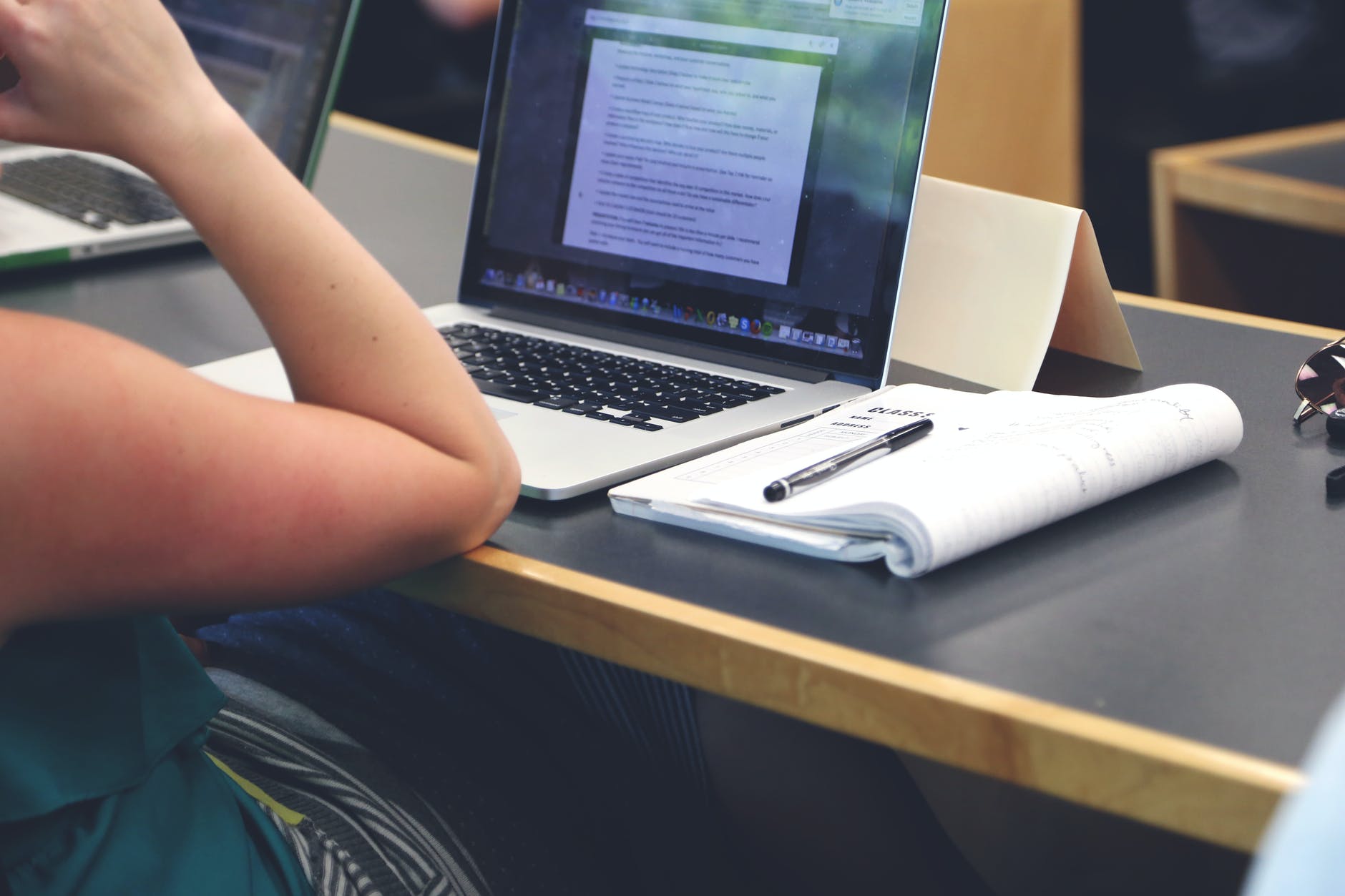
Photo by Startup Stock Photos on Pexels.com

According to survey findings there is a noticeable change in behavior and habits following the forced lockdown among the school goers. The sleep cycle and sleeping pattern of nearly 50 per cent children have been disturbed. It also indicates that 13 per cent of children have no regular pattern of sleeping. As a result, 67 per cent of parents think that their child’s screen time has gone up by at least 50 per cent during the lockdown. Increased screen time is known to severely affect concentration levels and leading to insomnia and other sleep disorders. The fear of pandemic has affected children in the worst way, nearly 40 per cent of the children who were surveyed, have been known to have mental health and unaddressed anxiety issues.

Schools and Colleges have set timetable in such a way so that there are breaks in between classes but because of network connectivity issues, students have started logging in earlier, which have lessened the break times. A teacher said in an interview, “In the first month, things were fine but with time students are losing interest and a kind of boredom is setting in even for the bright kids. For students in senior classes or those who will appear for board exams there is pressure from teachers and parents which is taxing.” After attending classes online, many students are also sitting for online tuition or extracurricular activity classes.

Teachers of many schools have reported that students have become “more subdued” in class and their energy levels have decreased than before. According to psychiatrists and teachers, months of being inside and attending classes from within the screen has made students “fatigued” and “demotivated.” Even students who are academically strong have not been responding in class like before, teachers said. They have observed that the “naughty and mischievous” ones who would always be up to some mischief in classrooms have become “quiet and subdued” during online classes.

Photo by Yan on Pexels.com

Psychiatrist Jai Ranjan Ram said to a newspaper, “Teachers are trying but online classes are not the same as what school was for children. No wonder they are feeling demotivated and fatigued. They have to attend continuous classes on the screen, at times not on laptops but on phones. All this while there is monotony of the same environment. It’s difficult to maintain a sense of well-being. In an online class the nuances of non-verbal communication are completely lost.”

Sneha Priya S, Co-Founder & CEO of SP Robotic Works, has said, “Covid has proven to be the turnstile for education in India. The current situation has unearthed the immense potential of platforms with experiential and interactive learning which engage children in practical tasks and logical reasoning.”

In a physical classroom, students and teachers would even discuss things not related to academics and eagerly share their experiences. While there are downsides, there are also some positive aspects to it. Educational institutions have been closed for months at a stretch. With online classes there is the possibility to catch up with studies. Many students feel that at least in an online mode there is some form of interaction which helps them in these trying times. Online classes have made possible for students and teachers to get back to their routines within safe conditions. They also provide students with something to look forward to everyday. But amidst the current social conditions, students long to go back to their campuses. As we adjust to the ‘new normal’ many young people who are at the beginning of their career are also uncertain of what challenges they might face in the future.