Bull Market

What is a Bull Market?

A bull market is the condition of a financial market in which prices are rising or are expected to rise. The term “bull market” is most often used to refer to the stock market but can be applied to anything that is traded, such as bonds, real estate, currencies, and commodities.

Because prices of securities rise and fall essentially continuously during trading, the term “bull market” is typically reserved for extended periods in which a large portion of security prices are rising. Bull markets tend to last for months or even years.

Understanding Bull Markets

Bull markets are characterized by optimism, investor confidence, and expectations that strong results should continue for an extended period of time. It is difficult to predict consistently when the trends in the market might change. Part of the difficulty is that psychological effects and speculation may sometimes play a large role in the markets.

There is no specific and universal metric used to identify a bull market. Nonetheless, perhaps the most common definition of a bull market is a situation in which stock prices rise by 20%, usually after a drop of 20% and before a second 20% decline. Since bull markets are difficult to predict, analysts can typically only recognize this phenomenon after it has happened. A notable bull market in recent history was the period between 2003 and 2007. During this time, the S&P 500 increased by a significant margin after a previous decline; as the 2008 financial crisis took effect, major declines occurred again after the bull market run.

Characteristics of a Bull Market

Bull markets generally take place when the economy is strengthening or when it is already strong. They tend to happen in line with strong Gross Domestic Product (GDP),and a drop in unemployment and will often coincide with a rise in corporate profits. Investor confidence will also tend to climb throughout a bull market period. The overall demand for stocks will be positive, along with the overall tone of the market. In addition, there will be a general increase in the amount of IPO activity during bull markets.

Notably, some of the factors above are more easily quantifiable than others. While corporate profits and unemployment are quantifiable, it can be more difficult to gauge the general tone of market commentary, for instance. Supply and demand for securities will seesaw: supply will be weak while demand will be strong. Investors will be eager to buy securities, while few will be willing to sell. In a bull market, investors are more willing to take part in the (stock) market in order to gain profits.

Bull vs. Bear Markets

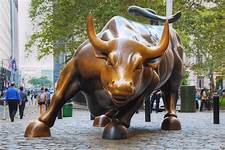
The opposite of a bull market is a bear market, which is characterized by falling prices and typically shrouded in pessimism. The commonly held belief about the origin of these terms suggests that the use of “bull” and “bear” to describe markets comes from the way the animals attack their opponents. A bull thrusts its horns up into the air, while a bear swipes its paws downward. These actions are metaphors for the movement of a market. If the trend is up, it’s a bull market. If the trend is down, it’s a bear market.

Bull and bear markets often coincide with the economic cycle, which consists of four phases: expansion, peak, contraction, and trough. he onset of a bull market is often a leading indicator of economic expansion. Because public sentiment about future economic conditions drives stock prices, the market frequently rises even before broader economic measures, such as gross domestic product (GDP) growth, begin to tick up. Likewise, bear markets usually set in before economic contraction takes hold. A look back at a typical U.S. recession reveals a falling stock market several months ahead of GDP decline.

How to Take Advantage of a Bull Market

Investors who want to benefit from a bull market should buy early in order to take advantage of rising prices and sell them when they’ve reached their peak. Although it is hard to determine when the bottom and peak will take place, most losses will be minimal and are usually temporary. Below, we’ll explore several prominent strategies investors utilize during bull market periods. However, because it is difficult to assess the state of the market as it exists currently, these strategies involve at least some degree of risk as well.

Buy and Hold

One of the most basic strategies in investing is the process of buying a particular security and holding onto it, potentially to sell it at a later date. This strategy necessarily involves confidence on the part of the investor: why hold onto a security unless you expect its price to rise? For this reason, the optimism that comes along with bull markets helps to fuel the buy and hold approach.

Increased Buy and Hold

Increased buy and hold is a variation on the straightforward buy and hold strategy, and it involves additional risk. The premise behind the increased buy and hold approach is that an investor will continue to add to his or her holdings in a particular security so long as it continues to increase in price. One common method for increasing holdings suggests that an investor will buy an additional fixed quantity of shares for every increase in stock price of a pre-set amount.

Retracement Additions

A retracement is a brief period in which the general trend in a security’s price is reversed. Even during a bull market, it’s unlikely that stock prices will only ascend. Rather, there are likely to be shorter periods of time in which small dips occur as well, even as the general trend continues upward. Some investors watch for retracements within a bull market and move to buy during these periods. The thinking behind this strategy is that, presuming that the bull market continues, the price of the security in question will quickly move back up, retroactively providing the investor with a discounted purchase price.

Full Swing Trading

Perhaps the most aggressive way of attempting to capitalize on a bull market is the process known as full swing trading. Investors utilizing this strategy will take very active roles, using short-selling and other techniques to attempt to squeeze out maximum gains as shifts occur within the context of a larger bull market.
Lifestyle.

Lifestyle often refers to:

Lifestyle (sociology), the way a person lives
Otium, ancient Roman concept of a lifestyle
Style of life, dealing with the dynamics of personality.

Lifestyle is the interests, opinions, behaviours, and behavioural orientations of an individual, group, or culture. The term was introduced by Austrian psychologist Alfred Adler in his 1929 book, The Case of Miss R., with the meaning of “a person’s basic character as established early in childhood”. The broader sense of lifestyle as a “way or style of living” has been documented since 1961. Lifestyle is a combination of determining intangible or tangible factors. Tangible factors relate specifically to demographic variables, i.e. an individual’s demographic profile, whereas intangible factors concern the psychological aspects of an individual such as personal values, preferences, and outlooks.

But why does everyone wants a good standard of living life. As in this is a mental tandancy human wants are unlimited. And the resources are scarce but that doesn’t matter the thing is lifestyle as all of us want to live a good life eat what we want Live where we want and spend the whole money where we want to the best.

Lifestyle may also refer to:

*Lifestyle business, a business that is set up and run with the aim of sustaining a particular level of income.
*Lifestyle center, a shopping center or mixed-used commercial development that combines the traditional retail functions of a shopping mall with leisure amenities.
*Lifestyle (department store), a retail fashion brand which is part of the Dubai-based Landmark Group.

And many more, but all this centers, businesses offers the best for an individual’s lifestyle.

INSURANCE VS INVESTMENT

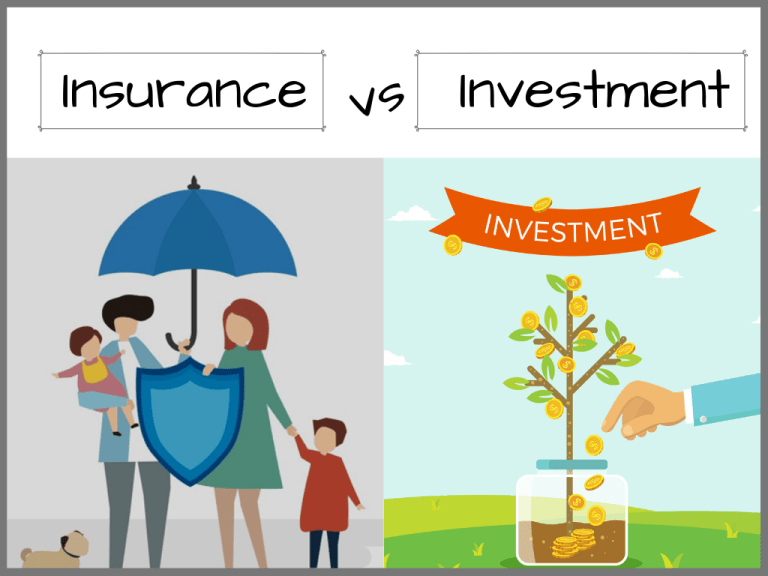
In today’s world, it is very easy to confuse Insurance with Investment. One might feel that he/she is investing in their future and decreasing their future financial burden because he/she purchased an insurance policy. Let’s take a look at the definition of insurance and investment.

Insurance refers to a contract or policy in which an individual or entity receives financial protection or reimbursement against losses. It protects the insured against risk of losses or damage.

Investment, on the other hand, refers to an asset or item acquired with the goal of generating income or appreciation. For example, real estate, mutual funds, shares etc.

With the increase in types of insurance policies and persuasive insurance sales representatives, people tend to think of insurance as investments. However, Insurance merely provides protection in the event of loss, which may or may not arise. In case of no loss or damage, sum total of all the insurance premium paid is profit for the insurance company.

On the other hand, the main purpose of an investment is to generate income by providing returns (dividends and interest) and/or capital gains (value appreciation; increase in price). Insurance does not provide any substantial returns. It merely provides reimbursement in the event of loss/damage and therefore, it is not an investment.

Do you need Insurance? If yes, what kind?

Insurance planning is essential to protect against different kinds of risks and to be financially prepared in case of loss or damage to life or property. However, it should not be used a means to invest.

There are different types of insurance which can be broadly classified into Personal, Property and Liability. There are three types of insurance that you must have to protect against risk, not as an investment: Health insurance, Term life insurance and Automobile insurance.

Health insurance is a must to ensure that in case of an accident or injury, hospital and medical bills don’t eat away your savings.

Term life insurance ensures that in case of death of the earning member of the family, the family has enough to survive for a substantial period of time. Term life insurance has a fixed period and hence, has a very low monthly premium with a decent coverage. However, if the policy expires and the insured is still alive, the insured does not get any amount back. So, this policy should only be taken by the earning member at the right life stage in case he/she does not own enough assets to leave behind for his/her family.

Automobile Insurance (third party) is mandated by the Government of India on the purchase of a vehicle and hence, every vehicle owner should have one.

Other types of insurances sold and bought in the name of ‘investment’ like Endowment plans, Money back policy and the new policy called Unit-linked insurance plans (ULIP) which allows you to invest in the stock market should be avoided at all costs.

It is much more profitable to invest in the market through mutual funds or investor’s Demat account than to do the same through insurance companies. The rate of return in the market is much higher and it doesn’t cost as much as Insurance.

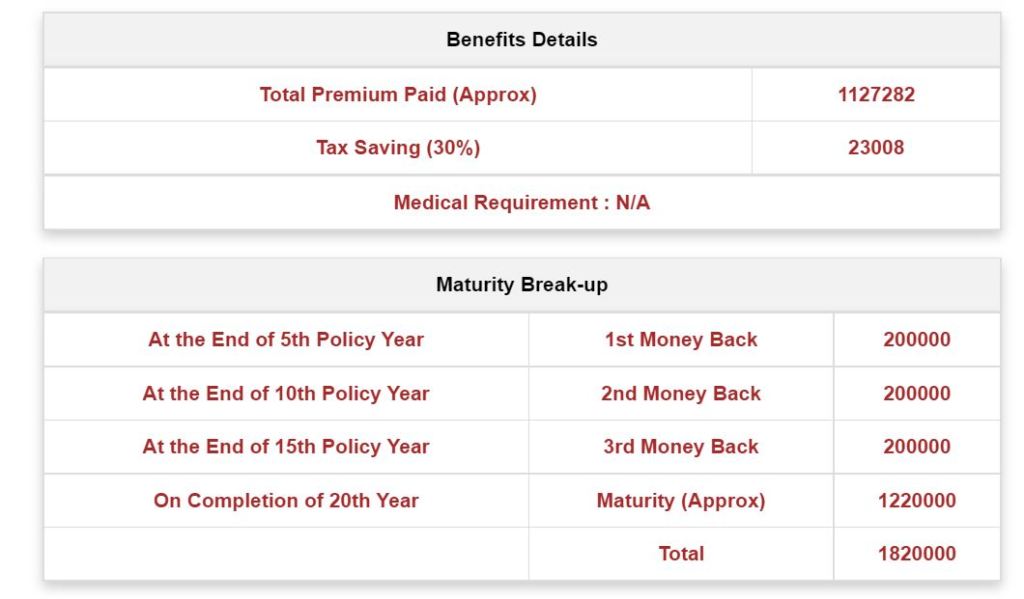
For example, if you buy Money Back insurance plan with a policy term of 20 years with ₹10,00,000 assured cover, the monthly premium calculated on LIC premium calculator comes out to be around ₹6300-6500 per month.

As calculated above, the total premium paid is ₹11,27,282 and the total amount received is ₹18,20,000. The total profit/return (approx.) is only ₹6,90,000 in 20 years. The return on investment (Return/Total Amount paid x 100) is only 61%.

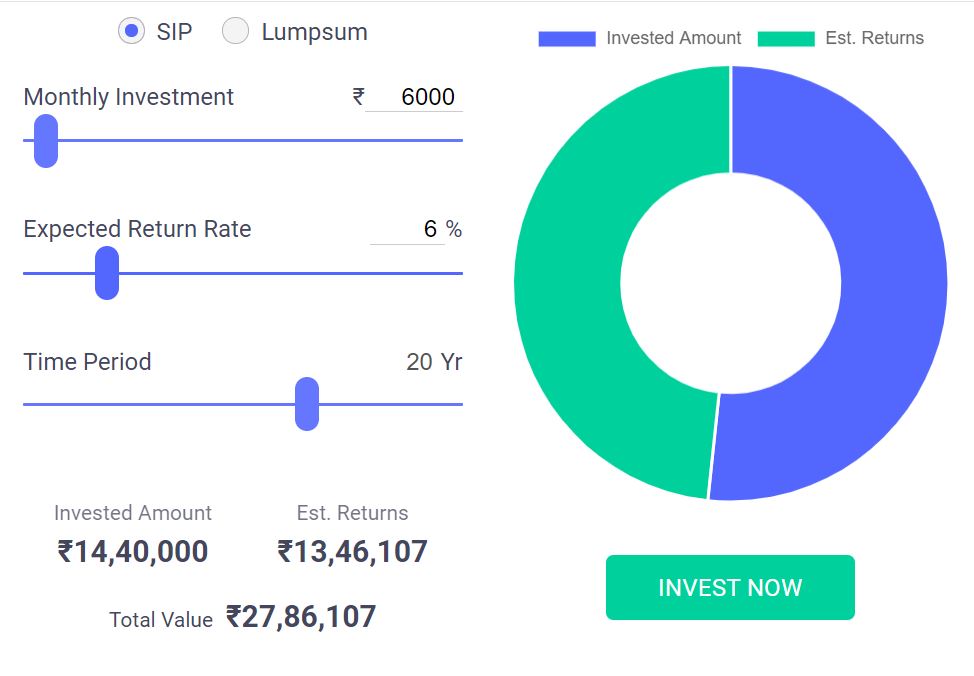
However, if the same amount is invested in SIP of any instrument with a return rate of just 6% for the same time period (20 years), the returns (calculated on Groww SIP calculator) are much higher.

₹6000 rupees invested monthly in any instrument with a return rate of only 6% for 20 years gives a return of ₹13,46,000 making the total value of the investment ₹27,86,000. The ROI (Return/Total Amount paid x 100) in this scenario is 93%.

Conclusion

Although Insurance is an essential part of Financial Planning to protect against different kinds of risks which varies from person to person, it should not be mixed with Investment. For greater returns and growth, investors should directly invest in the market or in any other instrument which suits their risk appetite and capacity.

Stories of Start ups and business

One day your goal is better than your Dream….

Stories of Start ups and business

In the life of every human being have  thire dreams .

Every ones wants to become to thire dreams , many of students inspired  start up to a success business

Every successful business have passion to do  of startup and have good idea an planings

There were have many Stories of Start ups and business

Let some them are:

The  Greatest Entrepreneurs in the World .

  • Henry Ford.
  • Charles Merrill.
  • Sam Walton.
  • Charles Schwab.
  • Walt Disney.
  • Bill Gates.
  • Steve Jobs.
  • The Bottom Line.

Startup Success Stories That Will Inspire You

  • Flipkart. No one would be a stranger to this one! …
  • Zomato. Launched in 2008, Zomato hasn’t been anything less of a sensation. …
  • redBus. Started in 2006, redBus has grown phenomenally over the past few years. …
  • Housing.com. …
  • InMobi. …
  • FreeCharge. …
  • Ola Cabs. …
  • Teach For India.
  • AirBnB. This is a story of 3 guys and how they went from renting mattresses to a $10 billion company. …
  •  Instagram. This is a story of two guys who made an app in flat 8 weeks. …
  •  Pinterest. …
  •  Angry Birds. …
  •  Linkedin. …
  •  Uber. …
  • Snapchat. …
  • WhatsApp.

guide to launching your startup company.

  • Make a business plan.
  • Secure appropriate funding.
  • Surround yourself with the right people.
  • Find a location and build a website.
  • Become a marketing expert.
  • Build a customer base.
  • Prepare for anything.

Opportunities for Startups in India

  • India’s Population Has Opened New Gateways. …
  • Many IIT-ians and MBA Freshers Opt for Entrepreneurship. …
  • Talent Is Inclined To Work With Startups. …
  • Indian and Foreign Investors Making Huge Investments in Startups. …
  • Government Funds for Startup firms. …
  • Startup India Initiative.

Financial benefits

Startups will get an 80% rebate on patent costs. This means, that if and when a startup applies for a patent, the government will come to its aid by funding the defence of the patent. The company will thus get a rebate of 80% in the fees

the problems of startup to solving

Lack Of Finances. Cash flow is essential for startups to survive. One of the key challenges that small businesses face today relates to finances. As income increases, the expenditures also increase and to top it all, startups rely heavily on investors who provide them strong financial support.

Have  a strong mind to do you will be become your dream

INTERNET VS THE WALL STREET : Gamestop explained

Why was the stock market roaring in the early 2021? How did the American video game retailer company’s shares whipsaw from $17.5 USD to $347.51 USD in a matter of weeks. How did a bunch of investors pack in loads of cash while one prominent hedge fund got a loss of more than a 100 Billion USD? How did ‘Big Short’ investor Michael Burry make a 1,500% gain on GameStop during its Reddit-fueled rally.

Find out the answer in this article. Let’s understand a few terms before we get down and dirty!

A hedge fund is an alternative investment that is designed to protect investment portfolios from market uncertainty, while generating positive returns in both up and down markets

Short-selling: The reverse of the generic buy low, sell high – sell high, buy low. For example, if the gold price for the day is Rs.50000 per 10 gm and you believe the price is going to drop in a couple of months. You borrow the stocks, sell it and buy it back later when it is Rs.45000/ 10 gm, thereby making a profit of Rs.5000. 

 Negative float position- in simple terms, negative float implies that withdrawals are exceeding deposits in an account. Short sellers borrow more stocks than there were shares available to trade in the market. 

GameStop, an American video game and gaming merchandise retailer announced the closure of many stores and shares that could be bought for as low as $3.25 USD on Jan 12, 2021. Opportunistic hedge funds thus began short-selling GameStop. The good people of r/WallStreetBets—an irreverent subreddit for stock market noticed that the Melvin hedge fund and other firms had taken so many short positions that there was a negative float position created. Invigorated, a huge number of them plotted to buy the stocks, but not sell them so that the hedge funds don’t get to buy them and return the shares, thereby incurring losses. This was a massive supply-demand gap case. This made the share prices skyrocket from $17.5 USD to $34.7 USD to $50 USD to $150.3 USD to $347.51 USD. Melvin’s has closed its position now but at a huge loss. 

Michael Burry, the founder of the hedge fund Scion Capital, which closed in 2008, invested 16.46 Million USD on GameStop, earning back 260.6 Million USD, giving him a margin of 1500% profit. 

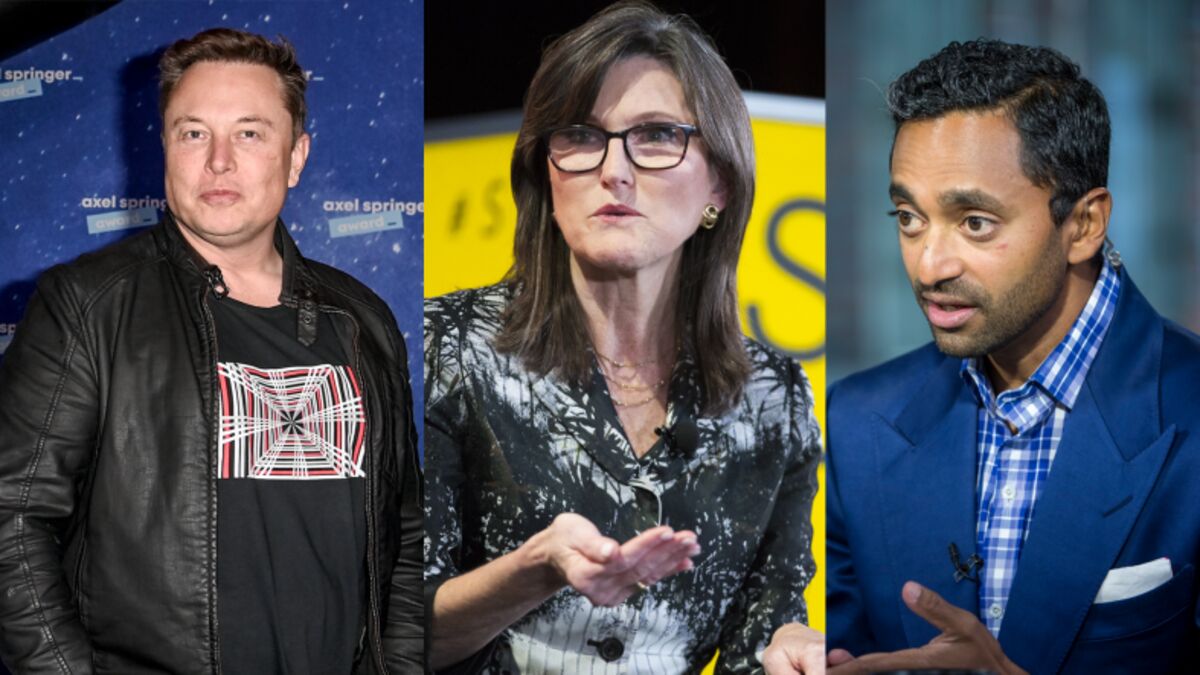
Hedge funds short-sell shares and create a pressure on it so that its price keeps falling down for their own profit which drives losses for many retail investors. Melvin’s hedge fund had also short sold Tesla’s shares a long time ago which made the prices fall for a bit. Tweets from Elon Musk and Venture Capitalist Chamath Palihapitiya (Former senior executive at FB, CEO of Social Capital) encouraged the crowd furthermore to take manipulation of the stock market out of the hands of hedge funds and into the hands of “the people.”

That’s how the power finally went from the rich to the common!

Indian festivals!

Festivals in India are celebrated in many parts of India, as India is subdivided into different Linguistic States. The local Government in each State also specifies certain festivals, in addition to Central Government festivals and holidays, depending on the local population which have elected them.

INDIA

INDIA
Festivals of India


Festivals in India
Festivals in India are celebrated in many parts of India, as India is subdivided into different Linguistic States. The local Government in each State also specifies certain festivals, in addition to Central Government festivals and holidays, depending on the local population which have elected them.

India is a multi-cultural country
India is a multi-cultural country, and it is reflected in the Festivals of India: Festivals of India is about various social, religious, and national festivals celebrated in different parts of India. India has been rightly described as a sub-continent and of its major festivals, many are region-specific festivals too. There are many festivals which are celebrated as national festivals; while a number of them are celebrated by members of particular religious or social groups. India is a land of festivals. These Indian festivals bind all Indians together of different castes, religions, etc there is no discrimination while celebration. When there is no discrimination then it is called INDIA.


The major festivals are from religious groups as under:


Diwali or Deepawali
Dussehra
Raksha Bandhan
Krishna Janmastami
Ugadi
Maha Shivaratri
Ramanavami
Makar Sankranti
Holi
Pongal
Onam
Bonalu
Hanuman Jayanthi
Vasant Panchami
Thaipusam
Chaitra Navratri
Gangaur Festival
Mahavir Jayanti
Rath Yatra
Mahavir Jayanti
Guru Purnima
Ganesh Chaturthi
Maharishi Valmiki jayanti
Karva Chauth
Dhanteras
Govardhan Puja
Bhai Dooj
Eid-ul-Fitr
Muharram
Ramzan
Barawafat
Milad-Un-Nabi
Giaravahin Sharif
Hazarat Ali’s Birthday
Shab-e-Barat
Jamat-Ul-Vida
Id-ul-Zuha (Bakrid or Eid-Ul-Zuha)
Good Friday
Easter
Christmas
Losar
Buddha Purnima
Hemis Gompa
Ullambana
Guru Nanak’s Birthday Jayanti
Guru Govind Singh’s Birthday Jayanti
Guru Teg Bahadur’s Martyrdom Day
BaisakhiMJNJ

And many more! But this is the power of our Indian culture we celebrate all of the festivals together and happily.

PREFABRICATION

What is prefabrication?

Prefabrication is the process of fabricating components of a structure in a factory or other manufacturing facility and shipping entire assemblies or sub-assemblies to the location where the structure will be installed. The term prefabrication also refers to the production of things other than construction in a fixed location. and the section is delivered assembled and ready for assembly. It generally does not refer to electrical or electronic components of a machine or mechanical parts such as pumps, gears, and compressors, which are usually supplied as separate items, but rather refers to the machine body that was used for parts in the past. . Mac premade parts This body can be called “sub-assemblies” and can be separated from other components.

Since when it is used

Prefabrication has been used since ancient times; For example, it is said to be the oldest dam in the world, Sweet Track, dating from around 3800 BC. Ancient Sri Lanka, particularly the Kingdom of Anuradhapura and the Kingdom of Polonnaruwa, used ready-made technology to erect huge structures, which are 2000 years old and some sections have been prepared separately and then assembled. In 1755 the Portuguese capital, especially the Baixa district, is popularly known as the Marqués de Pombal, the most powerful royal minister of D. The leadership of Sebastião José Von Carvalho e Melo, the most powerful royal minister of D. José IA, arose from Pombal a new architectural and urban planning style that introduced early anti-seismic design features and innovative prefabricated buildings. The buildings were manufactured entirely outside of the city, transported in pieces, and then assembled on-site, a process that lasted into the 19th century and provided city dwellers with unprecedented levels of safety before the earthquake. In the 19th century, Australia was importing large numbers of prefabricated houses from the United Kingdom. The method was widely used in prefabricated houses in the 20th century, for example in the UK as temporary living space. Space for thousands of townspeople. Families were “bombed out” during World War II. The assembly of profiles in factories saved time on site and the lightness of the panels reduced the cost of foundation and assembly on site. Gray concrete with flat roofs, prefabricated houses were uninsulated and cold, and prefabricated houses took on some stigma, but some London prefabricated houses have been occupied for much longer than the expected 10 years. The Crystal Palace, built in London in 1851, was a widely visible example of prefabricated iron and glass. Structures; Oxford Rewley Road station followed on a smaller scale.

Current uses

The most widespread form of prefabricated parts in civil engineering is the use of precast concrete parts and prefabricated steel parts in structures in which a certain part of a certain shape is repeated many times. It can be difficult to make the formwork required for pouring concrete structures on site. and delivering wet concrete to the site before it sets requires careful time management. Pouring concrete profiles in a factory brings the benefits of reusing molds and concrete can be mixed on-site without having to be transported and pumped wet into a crowded construction site. The parts reduce the cost of cutting and welding on-site, as well as the associated costs. The quality of the residential units produced had risen to such an extent that their residents could not distinguish them from traditionally built units. The technology is also used in office buildings, warehouses, and factories. Prefabricated parts made of glass and steel are widespread. Use for the exterior of large buildings: single-family houses, cottages, log houses, saunas, etc. They are also sold with prefabricated elements. Thanks to the modular prefabrication of wall panels, complex thermal insulation, window frame components, etc. can be produced on the assembly line, which tends to improve the construction quality of every wall or frame on-site prefer manual construction and the image of the prefabricated house as a “cheap” method only slows its acceptance. However, today’s practice already allows the system to be modified depending on the customer’s requirements and the choice of coating material. All clinker facades can be bricked, even if the load-bearing elements are made of wood Civil engineering work This can be decisive for the success of projects such as bridges and avalanche galleries, where the weather conditions only allow a short construction period. The systems and prefabricated bridge components offer bridge planners and construction workers considerable advantages over the construction time. e, safety, environmental sustainability, feasibility, and cost. Prefabrication can also help minimize the impact of bridge building on traffic. Small and frequently used structures such as concrete towers are also prefabricated in most cases. Radio towers for cell phones and other services often consist of several prefabricated parts. The masts are also often assembled from prefabricated parts. Prefabrication is widespread in the assembly of aircraft and spacecraft, and components such as wings and fuselage sections are often manufactured at the final assembly site in different countries or state Airbus.

Advantages

Moving sub-components out of the factory is generally cheaper than moving pre-production resources to each location.

Placing resources on the site increases costs; precast concrete components reduce costs by reducing the workload on the construction site.

The precision tools of the factory can help control the flow of heat and air in the building, reduce energy consumption and improve the health of the building.

The machine movement of the parts and the absence of wind and rain can improve the safety of the structure.

Uniform indoor factory environments eliminate most of the climate impacts on production

Advertisements

Yoga!

Yoga Sanskrit: योग; Sanskrit for “yoking” or “union”, is a group of physical, mental, and spiritual practices or disciplines that originated in ancient India. Yoga is one of the six orthodox philosophical schools of Hinduism. There are a broad variety of yoga schools, practices, and goals in Hinduism, Buddhism, and Jainism and there are four paths or types of yoga: Karma yoga, Kriya yoga, Bhakti yoga, and Jnana yoga. Research studies have shown that traditional yoga systems that include breathing exercises and asanas or postures, chants, and meditation can reduce stress and improve immunity and lung functions. Traditional forms and modern methods of yoga are practiced worldwide.

The practice of yoga has been thought to date back to pre-vedic Indian traditions, possibly in the Indus valley civilization around 3000 BCE. Yoga is mentioned in the Rigveda, and also referenced in the Upanishads, though it most likely developed as a systematic study around the 5th and 6th centuries BCE, in ancient India’s ascetic and Śramaṇa movements.

The chronology of earliest texts describing yoga practices is unclear, varyingly credited to the Upanishads. The Yoga Sutras of Patanjali date from the 2nd century BCE, and gained prominence in the West in the 20th century after being first introduced by Swami Vivekananda. Hatha yoga texts began to emerge sometime between the 9th and 11th century with origins in tantra.


Yoga gurus from India introduced yoga to the West following the success of Vivekananda’s adaptation of yoga without asanas in the late 19th and early 20th centuries. The term “yoga” in the Western world often denotes a modern form of hatha yoga and yoga as exercise, consisting largely of the asanas. Outside India, it has developed into a posture-based physical fitness, stress-relief and relaxation technique. Traditional yoga, however, includes physical exercise, meditation, and spirituality. Yoga has its own epistemological method, which assumes the ontology and metaphysics of the closely correlated Samkhya darsana.

In this today’s world it’s so difficult to spend our time and go to gym and take a diet and etc etc. But yoga is formed to pe in a peace of mind where we are not just physically but we are mentally fit too.

Skin problems!

So before I write this article I want to say that doesn’t matter how you look how we look the most precious and beauteous thing in this world is the inner beauty!

Skin disorders vary greatly in symptoms and severity. They can be temporary or permanent, and may be painless or painful. Some have situational causes, while others may be genetic. Some skin conditions are minor, and others can be life-threatening.

While most skin disorders are minor, others can indicate a more serious issue. Contact your doctor if you think you might have one of these common skin problems

There are many different types of skin disorders. Here is a list of 25 with pictures

1.eczema.
2.psoriasis.
3.acne.
4.rosacea.
5.ichthyosis.
6.vitiligo.
7.hives.
8.seborrheic dermatitis.

And so on but all of these skin diseases can be cured. Don’t take a lot of time just sitting at the home and thinking about these diseases go to a dermatologist and make sure you have a Open conversation with him/her. You’ll definitely get the better results after that treatment.

And guys if you’re bullying someone due to these diseases then please this article is not for you! You need to be honest with yourselves that am I giving my best to everyone.

Indian cricket team.

Indian cricket team.

The Indian men’s national cricket team, also known as Team India and Men in Blue, is governed by the Board of Control for Cricket in India (BCCI), and is a Full Member of the International Cricket Council (ICC) with Test, One-Day International (ODI) and Twenty20 International (T20I) status.

Cricket was introduced to India by British sailors in the 18th century, and the first cricket club was established in 1792. India’s national cricket team did not play its first Test match until 25 June 1932 at Lord’s, becoming the sixth team to be granted test cricket status. From 1932 India had to wait until 1952, almost 20 years for its first Test victory. In its first fifty years of international cricket, India was one of the weaker teams, winning only 35 of the first 196 Test matches it played. The team, however, gained strength in the 1970s with the emergence of players such as batsmen Gavaskar, Viswanath, Kapil Dev, and the Indian spin quartet.

Traditionally much stronger at home than abroad, the Indian team has improved its overseas form, especially in limited-overs cricket, since the start of the 21st century, winning Test matches in Australia, England and South Africa. It is second cricket team to win World Cup after West Indies. It has won the Cricket World Cup twice – in 1983 under the captaincy of Kapil Dev and in 2011 under the captaincy of Mahendra Singh Dhoni. After winning the 2011 World Cup, India became only the third team after West Indies and Australia to have won the World Cup more than once, and the first cricket team to win the World Cup at home. It also won the 2007 ICC World Twenty20 and 2013 ICC Champions Trophy, under the captaincy of MS Dhoni. It was also the joint champions of 2002 ICC Champions Trophy, along with Sri Lanka. The team has also won the Asian Cup seven times, making them one of the most successful cricket team in both Asia and the world. They are also one of the only four teams to win all major ICC tournaments. India have also won the ICC Test Championship, ICC ODI Championship, ICC T20I Championship and the World Championship of Cricket in 1985.

The Indian cricket team has rivalries with other Test-playing nations, most notably with Pakistan, the political arch-rival of India. However, in recent times, rivalries with nations like Australia, South Africa and England have also gained prominence.

As we do have our favourite cricketer, we all have different tastes but mine is MS Dhoni (Mahendra Singh Dhoni) he’s the beat no one can’t beat him but as we see our current Indian team so these are the players:

1. Virat Kohli.

2. Rishabh pant.

3. Kl Rahul.

4. Subhman gill.

5. Rohit Sharma.

6. Ravichandran Ashwin.

7. Jasprit B.

8. Yuzvindra chahal.

9. Umesh Yadav.

10. Ravendra Jadeja.

11. Kedar Jadhav.

And so on there’s alot of players in our Indian cricket team. And our Indian cricket team is doing so well. And is considered as one of the best teams.

Music: what’s your thing?

Allegory of Music, by François Boucher, 1764

Music is the art of arranging sounds in time to produce a composition through the elements of melody, harmony, rhythm, and timbre. It is one of the universal cultural aspects of all human societies. General definitions of music include common elements such as pitch (which governs melody and harmony), rhythm (and its associated concepts tempo, meter, and articulation), dynamics (loudness and softness), and the sonic qualities of timbre and texture (which are sometimes termed the “color” of a musical sound). Different styles or types of music may emphasize, de-emphasize or omit some of these elements.

Okay! So in simple words music gives us a thrilling experience, it lowers down our stress and gives us a reliefable experience. Many of us might have different-different artists. Different types, different tastes, but I love all the types of music. Depending upon the mood but you know we all have a phase where we do need a motivational song, Which motivates us, which gives us a idea that where we are and where do we have to go. Sometimes we need a song which make us feel good after a breakthrough it might be when you fought with your best friend may be your partner may be your siblings your parents, from those who mean alot to you.

And there are a lot of types of music it may be:

1. EDMs.

2. Motivational songs.

3. Romantic songs.

4. A breakthrough song.

5. Rock music.

6. A whole mood song. Which gives you a thrill and makes your legs move. That song will let you dance. It happened with me I was once travelling in the metro and I was using my earbuds and suddenly that song came and I was like ‘yea it’s a whole vibe’.

And etc etc there are many types of songs but yes for sure it depends upon our mood

So my moto to write an article on this topic was that if you’re angry sit alone listen to music if you’re happy listen to the music if you can’t handle things listen to the music if you’re in a phase you can’t tell anyone please listen to the music. It just lower down the stress and music is the only thing you’ll listen to at that time this is my experience.

Race: today’s generation!

As I’m going to start this blog I would love to say everyone is perfect in their own personality, in their own perspective, in their own decisions. So it’s been a long time I had passed my school and now persuing my passion (not a course) ‘my passion’ so let me tell what is the main topic I’m talking about but firstly I’ll tell you a story which is real, so I was studying in 10th and one of my closest friend I can’t revel his name but his intrest was in painting and then he was confused that ‘bro what should I take as a stream in 11th’ so I told him what you love or in which you have your interest, but he said my father is telling me to take PCM (science, math) and he wants to take humanity but he was confused because his dad said if you’ll took humanity then there’s no future! And his dad told him take science-maths and then you cout prepare for IIT and he took science-math and just because he want to become a engineer and want to earn money! And he wasn’t happy as he wasn’t able to paint because of his studies and he wasn’t that good in studies so he was trying very hard but I said why I mean if you love to paint and you wanted to take humanity as your stream then did you took science and math just for the sake of money and even you don’t have intrest in science maths then why and he said because of my father. And this is my experience ladies and gentlemen he took science and maths he studied very hard and gave the exam for jee and he failed because he wasn’t having that intrest in PCM. And on the other hand he haven’t painted for more than a year and when he gave his exam and came back home he took his brush and painted and I’ll that art was one of the best of my friend as he hasn’t painted for a while which is more than a year but,

As i said ‘IF YOU HAVE INTREST IN A PARTICULAR FIELD, YOU’LL DEFINITELY WIN’ but if you don’t have intrest in that particular field you’ll definitely lose doesn’t matter who much you work upon it ‘HAVING INTREST IS THE TOP FACTOR’

For example, if you don’t love to cook and your mom said son just cook tonight’s dinner and you know how to cook but you hate it than Tonight’s dinner would be for the dustbin. I’m damn sure! I don’t love to paint and if you’ll say please make my sketch. Then I don’t know what I’ll make but after making that Sketch you’ll disown me I know.

But why you guys just want yurselves to put yur souls, your hard-work, your precious time and obviously money, in those things where you don’t have any Intrest in. My today’s generation just want to become a engineer, doctor, or a IAS.

Okay so, let’s take an assumption, if my friend was passed in that jee exam and he was selected in a college and becomes an engineer and was doing his job properly but what do you think he used to be happy and prosperous okay if you was at his place were you used to feel good and happy. Guys invest yourselves in those materials where you’re good at and where you’ll love your thing. Its not about that we should not listen to our parents but sometimes we should listen to ourselves too.

Best Strategy for Long-Term Mutual Funds Investments

Mutual funds really help us to achieve our long-term goals. Everyone says that mutual fund investments are better when done over a longer period of time. But the question is: how long does the long run last? In this article today, we’re going to discuss the long-term strategy. Fixed Term Mutual Fund Investments: Mutual funds operate on the compound effect principle, which means that money generates money and it usually does so over a period of time. The longer you keep your money invested, the more benefits you can expect. Well, we think it not only takes time, but also a little homework and a good strategy.

What do we mean by “long-term”?
The word long term refers to something that lasts longer, but nobody tells us how long long term is. According to investors, investors generally refer to any investment of more than 3 to 5 years as long-term. However, this can vary as a person who is now in their thirties wants to keep their money invested for the next 30 years until retirement. Annuals to take advantage of this investment as you will be making money with the money. If you give your investment time, your wealth will be valued and grow over time.

Why are long-term mutual fund investments better?
Let’s take a quick example: A mutual fund that has a historic 10-year return of 12%. A person who invested 10,000 in this mutual fund ten years ago now has 22,000 (which is more than double) as a return on investment. To say about past accomplishments we should get carried away with it as the future cannot be predicted, but at the same time history gives us a clear idea of what the future holds. So the math here shows us why long-term mutual fund investing is good.

Strategy for Building a Long Term Portfolio

DEFINE YOUR LONG TERM PERIOD
The first and foremost strategy is to set your goal. Mutual funds work best for you when you decide on a goal that you want to achieve. There may be a different portfolio for a different need, and you can use several of them depending on what you want from your investments. For example, if you want to create a pension corpus. It depends on how many years there are until retirement. You can also create a separate portfolio for your children’s education that will help you streamline your investments and strategically build a secure future, say 15 years later. Investing in long-term mutual funds can be a great option.

FIND YOUR INVESTMENT OPPORTUNITIES
Not only can we invest in long-term mutual funds, we also need to research which investment best suits our needs. When it comes to mutual funds, we have several categories like equity, debt, etc. We all know that equity funds are riskier than debt funds, but there are more than 10 different funds that fall under the top fund category. With equity funds, for example, small-cap funds are riskier. as a large-cap fund. Similarly, when it comes to bond funds, credit risk funds are riskier than most other fund categories.