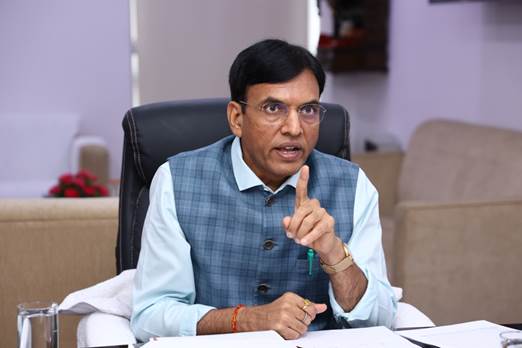
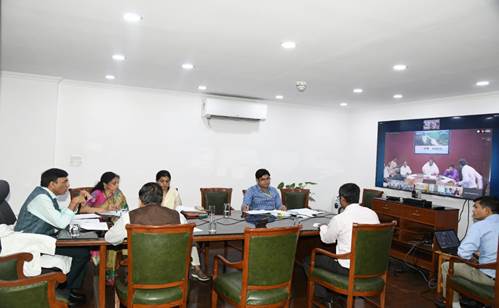
Union Minister of Chemicals and Fertilizers, Health & Family Welfare Dr. Mansukh Mandaviya interacted with State Agriculture Ministers on the availability and use of fertilizers in the country, here today. During the meeting he also reviewed progress of nano urea, nano DAP and promotion of alternate fertilizers at the field leveland steps initiated by the States in this regard.
At the outset, Dr. Mandaviya informed all the States that there is adequate availability of fertilizers in the country with the present level of 150 LMT stocks. This stock will not only take care of ongoing Kharif Season but will also ensure comfortable opening for the forthcoming Rabi Season.
Dr Mandaviya highlighted the necessity of reducing the excessive use of chemical fertilizers to save soil. He reiterated that Union Government has already taken a step in the form of PM PRANAM scheme. The efforts also include introduction of slow-release Sulphur Coated Urea (Urea Gold), nano urea, nano DAP etc. to promote use of alternate fertilizers to save the mother earth. The State Government expressed their willingness to be active participants in this resolve.
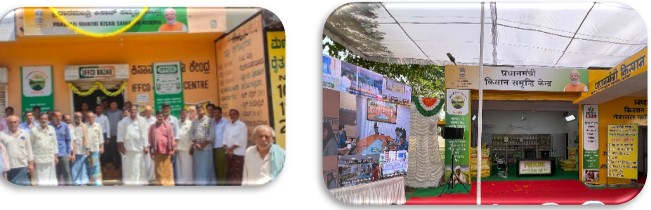
There was a discussion on the initiative of PMKSKs across the country which are acting as One-Stop-Shop catering to all the needs of farmers at one place. He made an appeal to all the State Agriculture Ministers and State Government Officials to regularly visit these PMKSKs and spread awareness among farmers.
Hon’ble Minister made an earnest appeal to the States/ UTs about the need to keep a check on diversion of agriculture grade urea for non-agricultural purpose. He further asked the States/ UTs to run awareness campaigns, thereby, reducing the possible diversion of Agriculture Urea and to take strict action against the defaulters. It is recalled that based on the Joint Inspections by the Fertilizer Flying Squad of Centre Government and various State Agriculture Departments, State Governments have registered 45 FIRs against defaulting Urea Using Units, cancelled licenses of 32 Mixture Units and de-authorized 79 mixture units along with strict actions under Essential Commodities Act & Prevention of Black Marketing Act. The State Government also echoed the sentiment of Zero Tolerance against such culprits.
The Meeting concluded with Centre and States on board to take all necessary steps forward to promote use of alternate fertilizers, reduce the excessive consumption of Chemical Fertilizers. The recently launched initiatives like PM-PRANAM, Urea Gold, Nano-Urea, Nano-DAP were well recognized by the States with equal resolve to achieve the desired results in the larger interests of the farming community.
State Agriculture Ministers from various States and senior officers from State Governments and senior officials of Department of Fertilizers & Department of Agriculture & Farmers Welfare attended the meeting.
Under Pradhan Mantri Kisan Sammrudhi Kendras (PMKSK), 600 existing district level retail shops are remodelled and provided more facilities to the farmers in terms of agri inputs and services. These kendras were inaugurated by Prime Minister on the occasion of PM Kisan Sammelan. All these centres have become excellent examples of swachhata Campaign 2 initiatives with clean premise and enhanced facilities for farmers.The launch of the 600 Pradan Mantri Kisan Samruddhi Kendras (PMKSK) across the country is one of the best practices adopted as part of the SpecialCampaign 2.0 initiativesby the Department of Fertilizers.
.
This is in addition to the other initiatives undertaken on Special Campaign 2.0 by the Department of Fertilizers that includes identification of 13 Sites from its Headquarter and its PSUs which are under the administrative control of the Department of Fertilizers to carry out weeding out of old files both physical and e files as per the Record Retention Schedule, digitization of records, reduce paper work, disposal of the e waste, scrap material etc so that they can improve efficiency and space. The updated information is also uploaded in the SCDPM portal on a regular basis.
India is an agriculture dominated country. More than 50% of Indian workforce is employed by the agriculture. Farmers strive hard to produce high yield and quality products but their income is less than expenses. Market price is determined by supply and income demand. When there is large supply of crops but less demand , there is sharp fall in farm prices affecting farmers drastically. There is always price fluctuations in agricultural products while farmers get a decent return when there is shortage of supply,the same products fetch them poor price during bumper harvest season. The government of India has introduced MSP (Minimum Support Price ) to protect producers against excessive fall in farm prices leading heavy loss suffered by the farmers.MSP is the minimum price a farmer must be paid for their agricultural produce as guaranteed by the government of India. If the market price falls below MSP, the government procures that crop from the farmers at MSP. MSP is announced for 22 major crops along with a Fair Remunerative Prices (FRP) for sugarcane. MSP is recommended by Commission for Agricultural Costs and Prices (CACP) but the final decision is taken by the Cabinet Committee on Economic Affairs(CCEA) of union government.
MSP ensures profit of atleast 50% over the cost of production for the farmers.It includes cost of production, domestic and international prices, demand-supply conditions, inter-crop price parity and the terms of trade between agricultural and non-agricultural sectors. Farmers are free to sell their products to any non-governmental parties, if they get favorable terms to sell their products or better than MSP. The government mainly buys rice and wheat at guaranteed price.
Benefits of MSP: • It acts as a surety to farmers so that their crops get the fair amount for their produce and helps them sustain their losses and does not affect them drastically • It helps to keep a floor price which does not let the prices fall below a certain point. • The government can use these crops to be sold at government fair price shops at a price lower than market rate that will also help the government recover some amount and reduce the losses of the government. • It safeguard the interest of the consumer by ensuring supplies at a reasonable price. • Government manages food scarcity by distribution of stored grains at affordable prices.
Drawback of MSP : • It doesn’t increase in proportion to the increase in cost of production. • There are a lot of farmers who don’t have adequate information about MSP and are exploited by middlemen. • There are several regions in the country where farmers can’t access to the benefits through MSP. • Open market workings , which works on supply and demand relations is detrimental for farmers , is disrupted by government intervention. • Maintenance cost of procuring grains is raised by MSP which affects the investment in agri-infrastructure.
The term ‘organic’ was first coined by Northbourne, in 1940, in his book entitled ‘Look to the Land’. In recent years, organic farming as a cultivation process is gaining increasing popularity . Organically grown foods have become one of the best choices for both consumers and farmers. Organically grown foods are part of go green lifestyle.
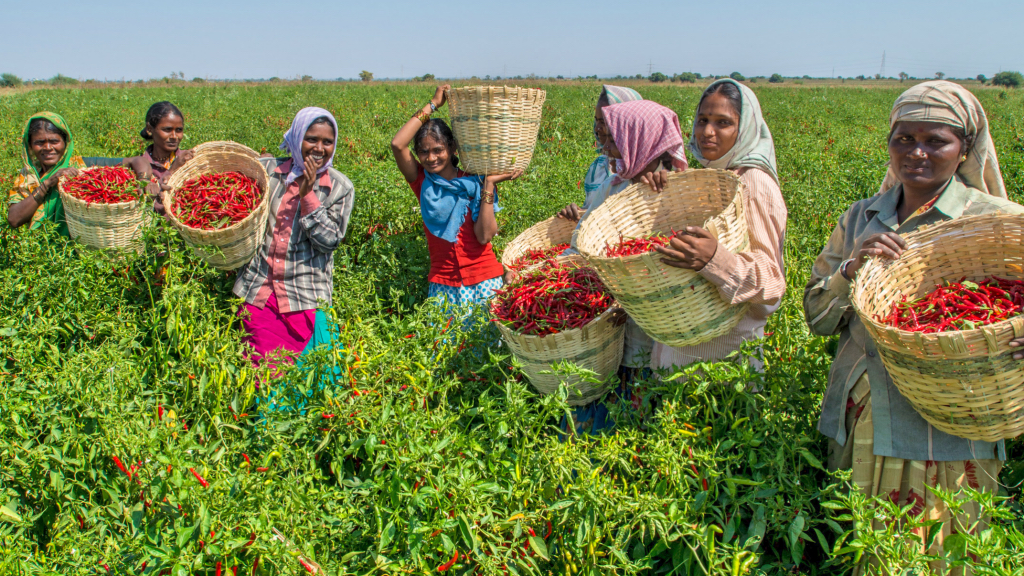
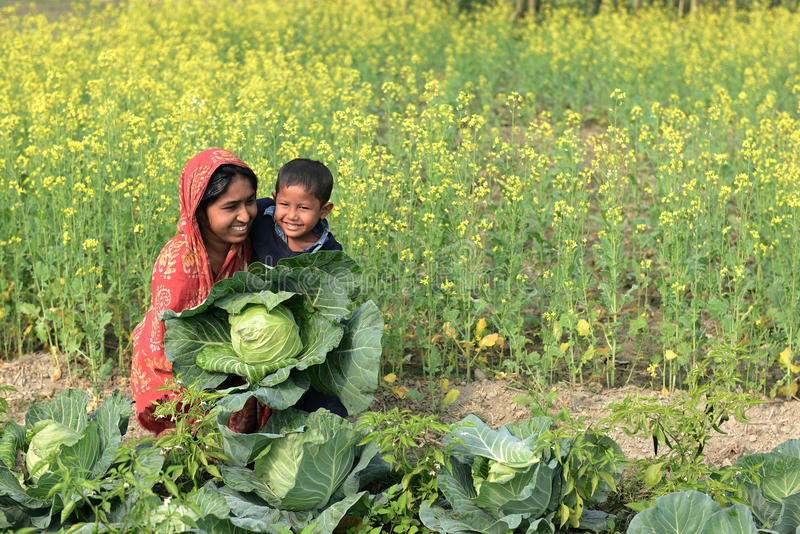
Farmers showing their Organic Harvest
Why Being Preferred These Days: The Importance of Organic Farming
Food quality and safety are two vital factors that have attained constant attention in common people. Growing environmental awareness and several food hazards (e.g. dioxins, bovine spongiform encephalopathy, and bacterial contamination) have substantially decreased the consumer’s trust towards food quality in the last decades. Intensive conventional farming can add contamination to the food chain. For these reasons, consumers are quested for safer and better foods that are produced through more ecologically and authentically by local systems. Organically grown food and food products are believed to meet these demands.
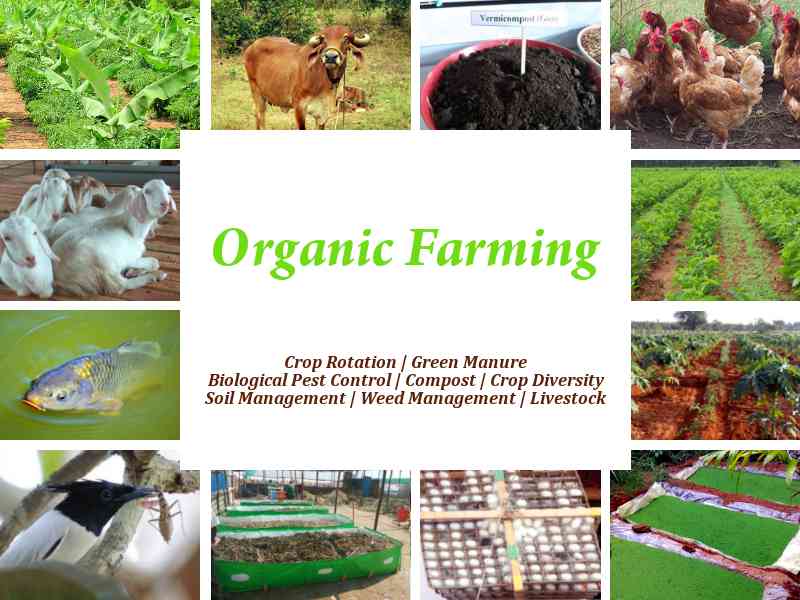
Organic Farming Processes
Organic Farming Process
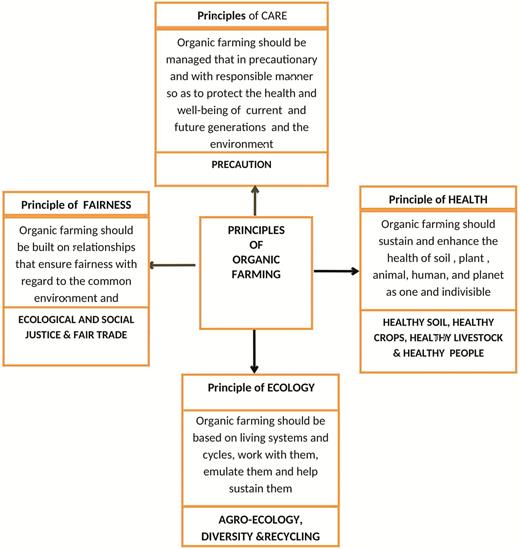
Organic farming and food processing practices are wide-ranging and necessitate the development of socially, ecologically, and economically sustainable food production system. The International Federation of Organic Agriculture Movements (IFOAM) has suggested the basic four principles of organic farming, i.e. the principle of health, ecology, fairness, and care . The main principles and practices of organic food production are to inspire and enhance biological cycles in the farming system, keep and enhance deep-rooted soil fertility, reduce all types of pollution, evade the application of pesticides and synthetic fertilizers, conserve genetic diversity in food, consider the vast socio-ecological impact of food production, and produce high-quality food in sufficient quantity.
Principles of Organic Farming
According to the National Organic Programme implemented by USDA Organic Food Production Act (OFPA, 1990), agriculture needs specific prerequisites for both crop cultivation and animal husbandry. To be acceptable as organic, crops should be cultivated in lands without any synthetic pesticides, chemical fertilizers, and herbicides for 3 years before harvesting with enough buffer zone to lower contamination from the adjacent farms. Genetically engineered products, sewage sludge, and ionizing radiation are strictly prohibited. Fertility and nutrient content of soil are managed primarily by farming practices, with crop rotation, and using cover crops that are boosted with animal and plant waste manures. Pests, diseases, and weeds are mainly controlled with the adaptation of physical and biological control systems without using herbicides and synthetic pesticides. Organic livestock should be reared devoid of scheduled application of growth hormones or antibiotics and they should be provided with enough access to the outdoor. Preventive health practices such as routine vaccination, vitamins and minerals supplementation are also needed.
Principles of Organic Farming
Types of Organic Farming
Organic Farming are of two types. Here are the two types of Organic Farming being performed in India.
(a)Pure Organic Farming – pure organic farming, there is avoiding every unnatural chemical. In the process of pure farming, fertilizer and pesticides obtain from natural sources. It is called a pure form of organic farming. Pure organic farming is the best for high productivity.
(b) Integrated Organic Farming – Integrated organic farming consists of integrated nutrients management and integrated pest management.
Organic Farming in India
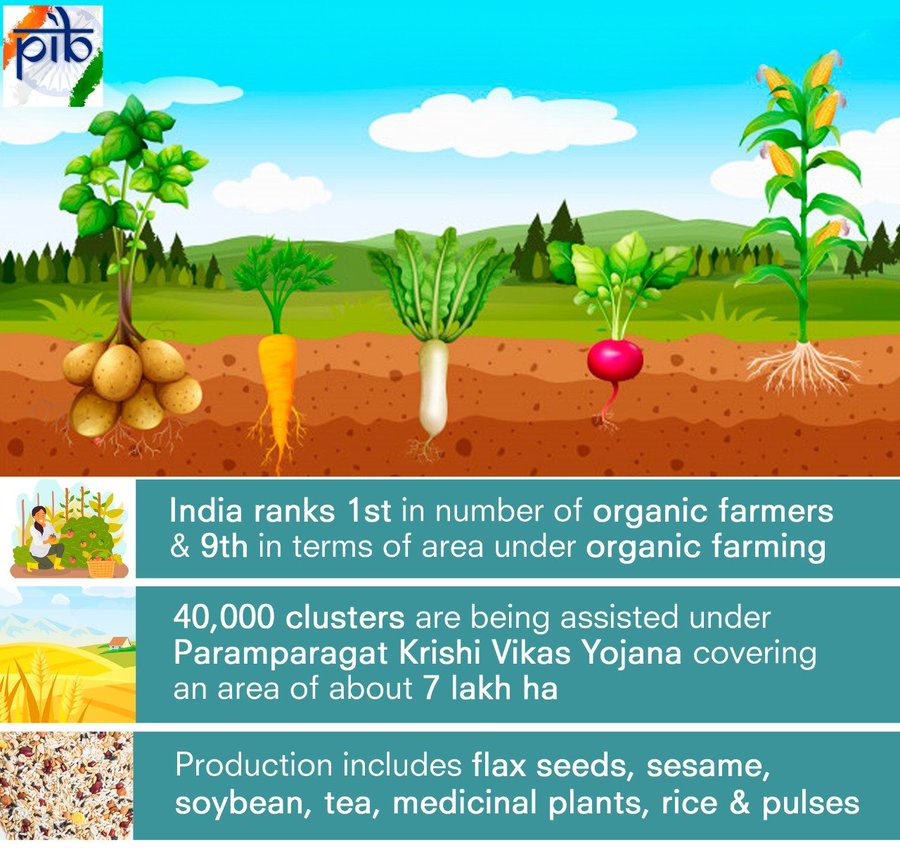
Organic farming is in a nascent stage in India. About 2.78 million hectare of farmland was under organic cultivation as of March 2020, according to the Union Ministry of Agriculture and Farmers’ Welfare. This is two per cent of the 140.1 million net sown area in the country. A few states have taken the lead in improving organic farming coverage, as a major part of this area is concentrated only in a handful of states. Madhya Pradesh tops the list with 0.76 million of area under organic cultivation — that is over 27 per cent of India’s total organic cultivation area. The top three states — Madhya Pradesh, Rajasthan and Maharashtra — account for about half the area under organic cultivation. The top 10 states account for about 80 per cent of the total area under organic cultivation. Sikkim is the only Indian state to have become fully organic so far. Even though India has very small organic area under cultivation, in terms of number of organic farmers it is being ranked first. India has over 1.9 million farmers as of March 2020, which is 1.3 per cent of 146 million agricultural landholders.
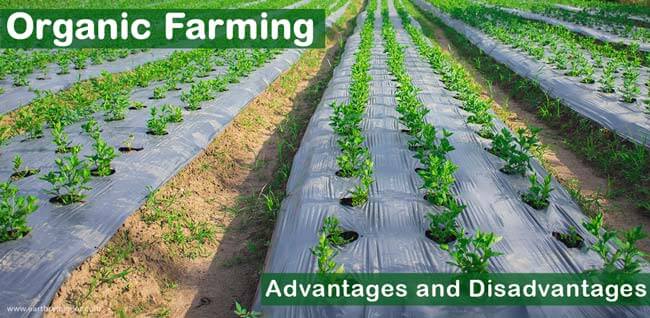
Advantages and Disadvantages of Organic Farming
Advantages of Organic Farming
Organic farming in India is very economical, it uses no expensive fertilizers, pesticides, HYV seeds for the plantation of crops. It has no expenses.
With the use of cheaper and local inputs, a farmer can earn a good return on investment. This is one of the most important benefits of organic farming in India.
There is a huge demand for organic products in India and worldwide and can earn more income through export.
Organic products are more nutritional, tasty, and good for health to chemical and fertilizer utilized products.
Organic farming in India is very environment friendly, it does not use fertilizers and chemicals.
Disadvantages of Organic Farming
Organic farming in India has fewer choices, and off-season crops are limited.
Organic agricultural products are low in the early years. Farmers find it difficult to accommodate mass production.
The main disadvantage of organic farming is the lack of marketing of the products and Inadequate infrastructure.
Organic Farming in India
Future of Organic Farming in India
India is an agriculture-based country with 67% of its population and 55% of manpower depending on farming and related activities. Agriculture fulfils the basic needs of India’s fastest-growing population accounted for 30% of total income. Organic farming has been found to be an indigenous practice of India that practised in countless rural and farming communities over the millennium. The arrival of modern techniques and increased burden of population led to a propensity towards conventional farming that involves the use of synthetic fertilizer, chemical pesticides, application of genetic modification techniques, etc.
Organic Farming leads to Sustainability and Holistic Growth
Even in developing countries like India, the demand for organically grown produce is more as people are more aware now about the safety and quality of food, and the organic process has a massive influence on soil health, which devoid of chemical pesticides. Organic cultivation has an immense prospect of income generation too. The soil in India is bestowed with various types of naturally available organic nutrient resources that aid in organic farming.
As per data collected from Government of India
Conclusion
India is a country with a concrete traditional farming system, ingenious farmers, extensive drylands, and nominal use of chemical fertilizers and pesticides. Moreover, adequate rainfall in north-east hilly regions of the country where few negligible chemicals are employed for a long period of time, come to fruition as naturally organic lands. Organic farming yields more nutritious and safe food. The popularity of organic food is growing dramatically as consumer seeks the organic foods that are thought to be healthier and safer. Thus, organic food perhaps ensures food safety from farm to plate. The organic farming process is more eco-friendly than conventional farming. Organic farming keeps soil healthy and maintains environment integrity thereby, promoting the health of consumers. Moreover, the organic produce market is now the fastest growing market all over the world including India. Organic agriculture promotes the health of consumers of a nation, the ecological health of a nation, and the economic growth of a nation by income generation holistically. India, at present, is the world’s largest organic producers and with this vision, we can conclude that encouraging organic farming in India can build a nutritionally, ecologically, and economically healthy nation in near future.
In India, agriculture is regarded as a dominant sector in the country. More than 70% of the population in India is involved in the agricultural activities either directly or indirectly. We are able to eat peacefully only due to the hard work of the farmers. Though the farmers work hard in the field day and night in order to feed the country yet they are compelled to live a life of indigence and starvation. Recently in 2020, new bills for the welfare and comfort of the farmers and the agricultural sector was introduced by the Central government. However, these bills were greatly opposed by the farmers and the government of the State. There were protests against the bills on roads and streets by the farmers across the nation. A resolution was also passed by the Punjab Assembly rejecting the ordinances of Central government on 28th August 2020.
A combination of three bills together constitute the Agriculture Bill 2020 or Farm Bill 2020. These three bills were recently passed by the Parliament. These bills are: Farmers Produce and Commerce (Promotion and Facilitation) Bill 2020, Farmers Agreement (Empowerment and Protection) on Price Assurance and Farm Services Bill 2020 and Essential Commodities (Amendment) Bill 2020. These bill make huge changes in the agricultural sector structurally. These bills also seemed to encourage corporate investments in the ecosystem of agriculture in order to make agriculture more benefitable to the farmers.
The Farm Bill 2020 contemplates an alternative possible way to the farmers to sell their produce in open market, providing them an opportunity to sell their products anywhere and to anyone and even get high price for it. In such areas of trade, neither agriculture produce market committee (APMC) fees nor tax by the government on transactions will be charged. The APMC would require to compete with these alternate platforms and now the farmers would have the choice to sell their produces of the farm. The farmers have the authority to sell their farm’s produce directly to the corporate or exporter purchasing in bulk from the farm. The current procurement of food grains based on minimum support price (MSP) is not obliterated by the Farm Bill 2020. The system of procurement based on MSP continues and the farmers can also sell their farm produces at Mandis on the existing MSP.
A number of schemes for the well being of the farmers as well as agricultural sector is launched every now and then by the government. The main aim behind introducing the Farm Bills was to boost the agriculture sector and double the income of farmers by 2022. It was believed that freeing the agriculture sector will consequently help in better pricing due to vast competition in the market. The corporate sector would be induced to invest in the ecosystem of agriculture as the farmers would have the choice to sell their crop products directly to the corporates and the exporters.
As the New Farm Bill 2020 provides great measures for the welfare of the farmers by giving them opportunity to sell their farm products in open market and also allowing them to fix the price according to themselves on mutual understanding of both the farmer and the corporates. Farmers are apprehensive of getting the MSP for their produce. However, the farmers do fear the domination on the agricultural sector with the power of money by the larger corporates and retailers, they also fear that the Mandies would become inessential like BSNL and MTNL future days and they also doubt that if in near future the trade shifts substantially to alternative platforms, the APMCs may become unavailable and have to shut down. No mechanism for fixation of price was prescribed under the Price Assurance Bill. The farmers were anxious about their exploitation as free hand was given to corporate houses. The Bill seemingly deregulated the movement, production, storage and distribution of essential food commodities such as edible oils, pulses, oil seeds, potatoes and onion which are removed from the Essential Commodities (Amendment) Ordinance.
An Indian farmer should be respected by everyone. It is he who produces grains and vegetables for the citizens of the country. Throughout the year, the Indian farmer remains busy tilling the fields, sowing seeds, and reaping the crops. Indeed, his is a very busy and hard life. India is an agricultural country. Our prosperity depends upon our agricultural production. For achieving this the Indian farmer’s contribution is very vital. India, as a matter of fact, is a land of farmers. Nearly 75 percent of our population lives in villages.
Former Prime Minister of India, Lal Bahadur Shastri rightly coined the term Jai jawan Jai Kisan to hail both farmer and a soldier. A farmer is as important to a country as a soldier. While one protects the nation against enemies and guards the citizens against bad elements, another makes sure that we never sleep hungry even for one day. The food we eat every day is because of the sweat and hard work that our farmers go through in the fields.
But just praising farmers and the farming community is not sufficient. India has one of the highest farmer suicide rates in the country. And this precedence is not taken seriously by the people of the country and is never reported in any media channels. There are various reasons why a farmer commits suicide. One might be due to lack of proper production of crops due to scanty rainfalls or unpredictable weather conditions. Governments should intervene to help farmers cope up with their losses.
Food Corporation of India (FCI) is an autonomous body in the country that buy crops directly from the farmers and store it in there cold storage areas for use during Emergency situations like wars or the one that we are facing now, COVID 19 pandemic. I would like to conclude by saying that the farmer and the work he does for his country is no less than the divine work. Governments should formulate proper policies and laws to take care of their needs. If we take care of his needs, only then he can take care of our needs.
Conclusion:
Farmers have great importance in our society. They are the ones who provide us food to eat. Since every person needs proper food for their living, so they are a necessity in society. … Moreover, farmers who grow these crops are of prime importance.
Agriculture is both art and science of cultivating plants and livestock i.e., growing crops and raising livestock. The cultivated plant and animal products are marketed for people use. Agriculture provides the most of world`s food and fabrics. It also provides leather, wood and paper products also.
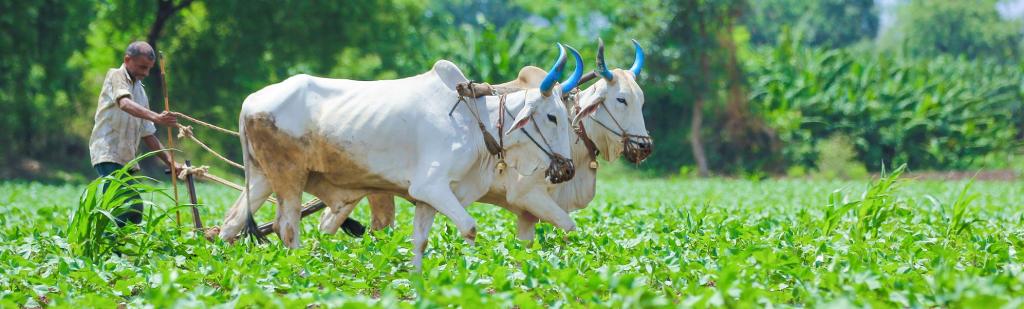
Before agriculture, humans were filling their stomach by searching for food here and there, wandering and hunting like every other animals. But 11,500 years ago humans gradually stared learning growing cereals and roots and started to settle down in one place. They also started domestication of animals around 10,000 years ago. according to scholars first domesticated plant was rice or corn. And first domesticated animal would be dog , which helped for hunting. After dogs, sheep, goats, pigs and cattle were also domesticated. first animal domestication was for meat but then gradually usage of milk and fur also started. Oxen were then domesticated for pulling and transportation.
” You know, farming looks mighty easy when your plow is a pencil, and you’re a thousand miles away from the corn field.”
Dwight D. Eisenhower
Agriculture enabled production of large amount of food which may have motivated humans to settle down and shift to agriculture for survival . But scholars think climate change made that shift happen. Production of in large amounts may have introduced the concepts of stocking for future and trading. Barter system, the exchange of products and services arose and this may have promoted growing different products. Wherever the agriculture flourished, humans came in groups and the economy and trade grew, small villages were formed and civilizations happened.
“When tillage begins, other arts follow. The farmers, therefore, are the founders of human civilization.”
Danial Webster
Development of tools are also one of the things that accelerated the growth of agriculture. Fire is one of the greatest invention and earliest tool used in agriculture. Small equipment like axes of bone, stone, iron, bronze were invented. To store the products, pots and vessels were made. Around 5500 BCE Mesopotamian farmers developed simple irrigation. A not so famous tool called shaduf, was important for irrigation and now also it is used in some parts of the world. Jethro Tull from England invented horse drawn seed drill which helped to replace planting seeds with hands. Cyrus McCormick invented mechanical reapers that helped to modernize grain cutting process.
Now, new inventions of science and technology have revolutionized agriculture. Some of the ancient cultures knew breeding of animals and plants from centuries. Gregor Mendel’s experiments then proved that crops can be improved through implementation of techniques of genetics. Scientific advances of the modern world increased the yield to an another level. introduction of gasoline and electricity and machinery powered by them replaced animals.
Further introduction of chemicals to control pests and protect crops from getting ruined increased the shelf life of the food products. Synthesis of fertilizers with elements that are essential for plants growth like potassium, nitrogen, phosphorus further increased yield. Development of different and new strains by genetic modification lead to the green revolution. Dr. Norman Borlaug is father of green revolution of the world. For India, M. S. Swaminathan, popularly known as father of green revolution, lead to the latter by producing a new strain of wheat.
agriculture is the backbone of any economy. growing population of every region will have basic necessities to be fulfilled and agriculture is holds the power to provide all that. Improvement in agriculture increases food security of the country and hence its prosperity.
” With wrong farming methods, we turn fertile land into desert. Unless we go back to organic farming and save the soil, there is no future”Today more and more people across the globe are accepting and practicing organic farming. What is Organic farming exactly? Well Organic farming is a agriculture method which is done without using any chemicals like fertilizers and pesticides, it was introduced in the world in 20th century. As we know that by 20th century our world became more advanced in technology and started using chemicals in agriculture to increase the production rate. But as the time went by people realized that these chemicals were actually degrading the quality of soil and the food crops. Also, people were tired of eating food which was full of chemicals, they were not getting any nutrients from the food. Hence, the
idea of Organic Farming originated in the west which was accepted by people
across the globe with open arms. The basic idea of Organic Farming was to provide food products with maximum nutritious value and minimum dangerous ingredients.
Big Misconception about Organic Farming : There is a big misconception that organic foods are relatively expensive. The truth is they are actually cheaper because they don’t require the application of expensive pesticides, insecticides, and weedicides. In fact, you can get organic foods direct from the source at really reasonable prices.
BENEFITS OF ORGANIC FARMING:-
1. To Accrue the Benefits of Nutrients Foods from organic farms are loaded with nutrients such as vitamins, enzymes, minerals and other micro-nutrients compared to those from conventional farms. This is because organic farms are managed and nourished using sustainable practices.
2. Natural and Better Taste Those that have tasted organically farmed foods would attest to the fact that they have a natural and better taste. The natural and superior taste stems from the well balanced and nourished soil. Organic farmers always prioritize quality over quantity.
3. Direct Support to Farmers Purchasing food items from organic farmers is a surefire investment in a cost-effective future. Conventional farming methods have enjoyed great subsidies and tax cuts from most governments over the past years. This has led to the proliferation of commercially produced foods that have increased dangerous diseases like cancer.
Four Principles of Organic Farming1. Principle of Health Organic agriculture must contribute to the health and well being of soil, plants, animals, humans and the earth. It is the sustenance of mental, physical, ecological and social well being. For instance, it provides pollution and chemical-free, nutritious food items for humans.
2. Principle of Fairness Fairness is evident in maintaining equity and justice of the shared planet both among humans and other living beings. Organic farming provides good quality of life and helps in reducing poverty. Natural resources must be judiciously used and preserved for future generations.
3. Principle of Ecological Balance Organic farming must be modeled on living ecological systems. Organic farming methods must fit the ecological balances and cycles in nature.
4. Principle of Care Organic agriculture should be practiced in a careful and responsible manner to benefit the present and future generations and the environment. As opposed to modern and
conventional agricultural methods, organic farming does not depend on synthetic chemicals. It utilizes natural, biological methods to build up soil fertility such as microbial activity boosting plant nutrition. Secondly, multiple cropping practiced in organic farming boosts biodiversity which enhances productivity and resilience and contributes to a healthy farming system.
In light of the recent ‘Farmer’s protest toolkit controversy’, a 22-year-old environmental activist from Bengaluru, Disha Ravi has been arrested by the Delhi police on Sunday 14th February 2021. She is now under five-day police custody as the Delhi Magistrate decided to remand her following the arrest. She has been booked under Indian Penal Code Sections 124(a) for sedition, 153(a) for promoting enmity between different sections of the society and 120(b) for criminal conspiracy. She is accused of involvement in the composition of the “toolkit”, an online document shared by the International environmental activist Greta Thunberg, which consists of action plans to protest against the farm bill. Police claimed that the toolkit had the violence on 26th January as one of its “action plans” to protest against the farm bill, in addition to the pro-Khalistani elements.
Since last October, thousands of farmers have been camping on the national capital borders, protesting against the three newly passed farm laws introduced by the NDA government. On the republic day, the tractor rally conducted by the protesting farmers has resulted in great commotion as the farmers attempted to enter the national capital region, storming the Red Fort complex and clashing with the police and security forces. The police allege that plans for such actions were formulated in the online document, described as a “toolkit” that Ravi created and shared with Thunberg. “The main aim of the toolkit was to create misinformation and disaffection against the lawfully enacted government,” said a police official. “The toolkit sought to artificially amplify the fake news through various tweets which they have created in the form of a tweet bank. The document that they drafted had secessionist and pro-Khalistani content embedded into it through links and texts” he added.
The arrest of Disha has instigated furious criticism against the fascist actions of the government regarding the farmers protest. The efforts made by the government to silence and oppress the voice of the farmers and the people supporting them is more of a provocative manner than a call for peace.
Intern at Hariyali Foundation In collaboration with Educational News
In the present times with new inventions in the field of chemicals and agriculture various fertilizers have been invented and are sold to the farmers to be used in farms. Farmers use those fertilizers and get higher yields in the starting one or two years but after some years the fertility of the soil starts falling. At the end, the farmland needs more and more fertilizers and failing to provide fertilizers in high amount to the soil, the fields are left uncultivated and hence the lands turns barren.
But wait!, in this world of new scientific inventions, some people have found a new technique which will help the soil regain its lost fertility and stay fertile for some more years. Yes, the technique is Organic Farming. Though the name sounds somewhat scientific, in actual it is scientific but will not at all harm the soil but will maintain its fertility for many years.
Organic farming is an integrated farming system that strives for sustainability, the enhancement of soil fertility and biological diversity while prohibiting synthetic pesticides and antibiotics, synthetic fertilizers genetically modified organisms and other unnatural methods of growth.
When talking about fields or farms, growing different cops on the same farm at the same time will help the soil to have a balance of nutrients otherwise it happens that certain crops consume more nutrients from the soil and there are lesser nutrients for the crop grown in the other season. This method of farming different crops is known as polyculture. Planting a variety of vegetable crops supports a wider range of beneficial insects, soil microorganisms, and other factors that add up to overall farm health. Crop diversity helps environments thrive and protects species from going extinct.
Secondly, the organic farming is concerned with management o soil. The soil loses nutrients each time a crop is grown on it, so for regaining those nutrients, compost, vermicompost and green manure can be used. These are environment friendly techniques having good impact on the soil for years. Also other techniques like crop rotation, crop covering, reduced tillage; intercropping and other similar techniques are needed to be followed for increasing the productivity of soil. Also crop residues can be ploughed once again with soil and will work as manure.
Thirdly, weed management on the fields is equally important. Weeds are those unwanted plants that consume nutrients from the soil and affect the growth of the crops. Removal of weeds from the fields is important so that the crop grown can grow in the soil without any hindrance in the process of consuming nutrients by unwanted plants of the other types. Weeds can be removed by introducing animals who do not consume the crop grown and just consume the weeds. Techniques like Mulching, flame weeding, thermal weeding, mowing and cutting, etc could be used for removal of weeds from the fields.
There are different factors other than weeds that affect the natural crop growth on farms like nematodes, fungi, bacteria, rodents, pests, etc. there are certain methods to remove such factors from the soil like introduction of beneficial insects for the soil against the harmful insects, using insect traps for capturing rodents, introducing good microorganisms for the soil, rotation of crops every season or using natural insecticides and herbicides.
Introduction of livestock onto the fields and providing them natural conditions to feed there and coming back again to their shelters in the evening. This nothing new but an old technique that was used by people in the past times as people had other work to do, they used to drop the cattle at the fields and go for other work. Also, before leaving the fields entirely for the cattle it must be ensured that whatever the cattle is eating it should be organic in nature, nothing else otherwise that will harm their health and overgrazing is also not done by the cattle.
And lastly composting is to be done by the farmers so that the crop gets its nutrients from time to time. Vegetable wastes, unwanted weeds removed from the fields and other dried leaves and the crop residuals are needed to be buried down in a pit and earthworms and red worms are introduced to decay it and these residual materials along with worms is covered by soil. The compost gets ready after three or four months and is very beneficial to the soil. Even some farmers call it as ‘Black Gold’.
In such way organic farming is done by the farmers along with keeping the livestock at the farms and exposing the fields entirely to the natural techniques that are important for the crop growth and helpful in maintaining the soil fertility. The crops, vegetable and the other products are really nutritious for human health. Therefore, people prefer Organic foods these days and the farmers too can get good amount for their produce.
All in all organic farming is really productive technique for the crops and the farms, a way of earning good income to the farmers and the only way for the consumers get naturally produced and nutritious foods.
One pound of saffron costs you $5000. It is the most expensive spice next comes vanilla. Saffron is a complicated spice to harvest. Harvesting saffron needs a lot of hand work to pick up the flowers, separate the saffron that is the dried stigma or the female part of the flower. Saffron comes from the saffron crocus flower and each flower has 3 stigmas. The yield of saffron is very low. One pound of saffron requires 170000 flowers. These flowers bloom over a six week period from late September to early December. There is a specific time to day to harvest them. High relative humidity and sunlight can break the chemical structure in the saffron. Early morning is preferably the best time to harvest them.
90% of the world’s saffron is grown in arid fields in Iran. It is so because workers are available and for cheap. But it’s mostly like slavery. Most workers are women getting five dollars a day. Not only Iran, it’s grown in Morocco, Spain, Italy, the Netherlands, Afghanistan, India and even in United States. Though many Americans have never eaten saffron, the US imports large amount of saffron. Saffron has a resistance to cold weather.
Over centuries saffron has proven useful in many situations. Most commonly used in cooking. Middle east Asian countries have a lot of food containing saffron. When saffron is broken down it creates a golden dye. Which is how when used in cooking it gives a different kind of colour and taste and smell to it.
Saffron contains some chemical components which are really expensive like picrocrocin, crocin and safranal. These are the main components responsible for the taste, smell and colour.
People have tried passing turmeric, red marigold petals, and lily flower stigma as saffron. But the flavour and dye is totally different. In large quantities, saffron can be a potent happiness inducing narcotic. Research suggests it may help reduce the symptoms for Alzheimer’s, depression and PMS.
• Vanilla
From ice cream to cakes and even perfume, vanilla is the go-to flavour of the world. In recent years, the price of natural vanilla has shot up. At one point it was more expensive than silver by weight. 80% of the world’s vanilla is grown in the perfectly suited climate of the north east region of Madagascar. It’s the country’s primary export crop. In 2014, vanilla was $80 a kilo. Three years later it was $600. Today its around $500. The price rise is due in part to global demand. The trend of eating naturally means that food companies have shunned synthetic flavouring in favour of the real deal.
Price fluctuations affect producers of agricultural commodities everywhere but vanilla is particularly volatile. In just a few weeks the price can jump or plummet by over 20%. Liberalisation is one reason for such movements. The Malagasy government once regulated the vanilla industry and it’s price. But now the price is negotiated at the point of sale which makes for a freer market but a more volatile one. It’s also a tiny industry. A single cyclone can knock up the entire crop within Madagascar. It’s also a difficult and delicate crop to grow.
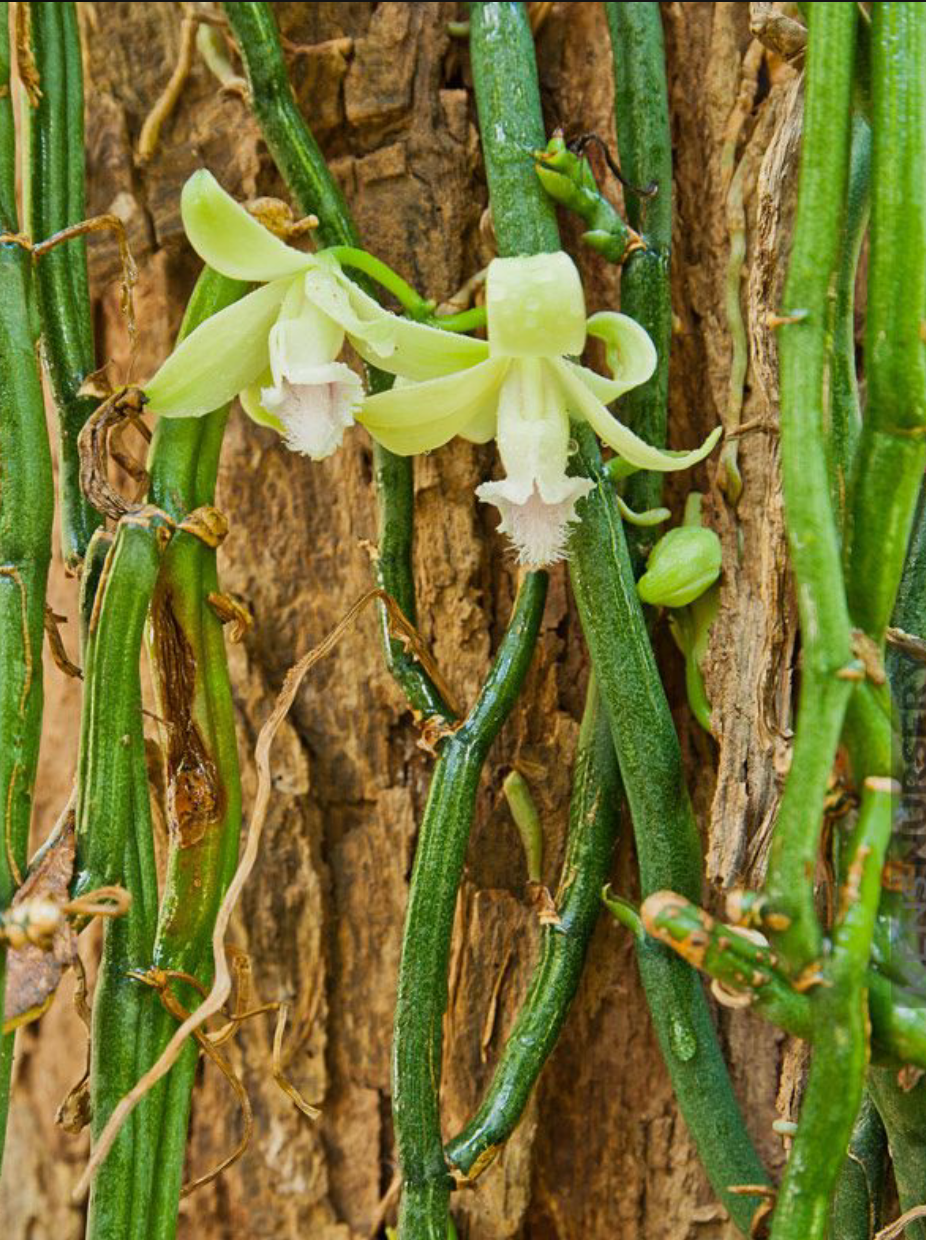
Vanilla is an orchid that needs to be hand pollinated. This is a really labour intensive practice. It takes roughly six months to grow it on the vine and then six months of manual post harvesting. The interesting thing about vanilla is that it needs to be taken off the vine when it is almost rotted!
The growers have to contend with another problem. Thieves are targeting vanilla crops. So Malagasy now have to sleep out in their vanilla fields. They can’t rely on those who are changed from the state to protect them or their crops. Some farmers have resorted to harvesting the beans before they’re ripe but this produces a poorer quality vanilla and ultimately pushes down the price. The combination of deteriorating quality and high prices is having an effect. The vanilla price bubble may burst. If the price continues to stay high there’s a number of scenarios that will play out. Continuation of current situation will cause an unstable market. Otherwise the corporate sectors step in, try to regulate the market in some way that may stabilise prices and also quality. Or the market may crash out.
Big buyers that provide vanilla are now working directly with farmers in a bid to gain greater control over quality. Other companies have started to look elsewhere for their natural vanilla. Indonesia, Uganda and even the Netherlands are growing the crop. For a century Madagascar has enjoyed a near monopoly on vanilla. But this industry maybe in line for radical overhaul.
The world has been divided into groups, sub-groups in which the people are categorised by either caste or religion and now on the basis of colour also. All of this is a very abstract topic and we just can’t argue on this but can we at least not work like the society, can we just look everyone with the same mindset, treat them equally, respect them equally. Our society has been ruled and judged by the superiors and is still being judged by our so called politicians who have manipulated the minds of the people and have turned off the ‘Humanity’ mode in them.
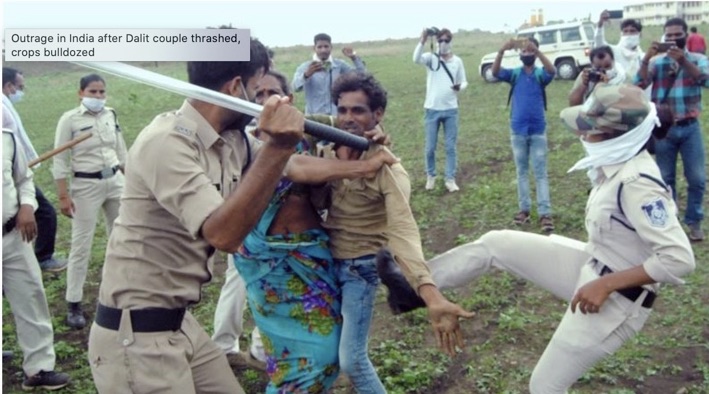
Things have turned really outrageous where people still haven’t learnt the real meaning of helping each other and treating everyone as equal. A recent example of “A Dalit couple” in Madhya Pradesh who have committed suicide because their crops were thrashed and they were being beaten up from the cops. This was a very brutal act against the marginalised sections of our society where those two were crying out for help and were begging to the police to stop and spare them, but nothing happened because it was an order from the government. This cruel and shameful act took place after the couple were seen growing crops on the land which was being inherited by the government. They were quickly rushed to the hospital after both of them consumed pesticides, and now they are in a normal condition.
Al Jazeera
“When our standing crop has been destroyed, we don’t have the option but to kill ourselves” Devi quoted.
All of this took place because the Government wants to build a college at the same spot where the couple had their farms and the government wanted them to leave everything and clear the land, but they didn’t accept their order because they were in debt and farming was the only source of living for their family. But in this also again the Political parties have started their war where they are blaming each other for this incident. This issue has come up weeks after that brutal and senseless incident where a son and a father were beaten up to death in Tamil Nadu by the cops.
What are we doing? where is the world going? On one hand where the policemen/policewomen are given the authority to serve for the country and work for the civilians, protect them, prevent all the evil things which are taking place in the society and on the other hand the police is beating up their people. Please stop, we are already having multiple issues in our society, people are dealing with numerous problems and above all Farmers are the fruit givers to the society, they feed us, how can we take their land and built something in place of a farm. This issue is something very serious and we have to fight against this, we have to fight against the rights of the farmers because they work for the Primary sector of the society. I hope this article will ring a bell of humanity in each one of us and will force us to make an initiative and stop the evil doings of this society, if not this at least we can pray for the farmers, for their health and well-being.
Agriculture is the foundation of manufactures, since the productions of nature are the materials of art. -Edward Gibbon
Agriculture plays a critical role in the entire life of a given economy. Agriculture is the backbone of the economic system of a given country. In addition to providing food and raw material, agriculture also provides employment opportunities to very large percentage of the population.
The main source livelihood of many people is agriculture. Approximately 70 % of the people directly rely on agriculture as a mean of living. This high percentage in agriculture is as a result of none development of non-agricultural activities to absorb the fast-growing population. However, most people in developed countries do not engage in agriculture.
Contribution to National revenue Agriculture is the main source of national income for most developing countries. However, for the developed countries, agriculture contributes a smaller per cent age to their national income.
Agriculture was the first occupation of man, and as it embraces the whole earth, it is the foundation of all other industries. –Edward W. Stewart
Significance to the International Trade Agricultural products like sugar, tea, rice, spices, tobacco, coffee etc. constitute the major items of exports of countries that rely on agriculture. If there is smooth development practice of agriculture, imports are reduced while export increases considerably. This helps to reduce countries unfavorable balance of payments as well as saving foreign exchange. This amount may be well used to import other essential inputs, machinery, raw-material, and other infrastructure that is helpful for the support of country’s economic development.
The agriculture we seek will act like an ecosystem, feature material recycling and run on the contemporary sunlight of our star. -Wes Jackson
The growth of agricultural sector contributes to marketable surplus. Many people engage in manufacturing, mining as well as other non- agricultural sector as the nation develops. All these individuals rely on food production that they might meet from the nation’s marketable surplus. As agricultural sector development takes place, production increases and this leads to expansion of marketable surplus. This may be exported to other nations. The main source of raw materials to major industries such as cotton and jute fabric, sugar, tobacco, edible as well as non-edible oils is agriculture. Moreover, many other industries such as processing of fruits as well as vegetables and rice husking get their raw material mainly from agriculture.
Agriculture is the great art of directing and aiding nature in the performance of those functions which were designed by Providence for the comfort and subsistence of man. –Lewis Cass
Since agriculture employs many people it contributes to economic development. As a result, the national income level as well as people’s standard of living is improved. The fast rate of development in agriculture sector offers progressive outlook as well as increased motivation for development. Hence, it aids to create good atmosphere for overall economic development of a country. Therefore, economic development relies on the agricultural growth rate.
An agricultural life is one eminently calculated for human happiness and human virtue. –C. L. ALLEN
From the twentieth century, intensive agriculture increased productivity. It substituted synthetic fertilizers and pesticides for labor, but caused increased water pollution, and often involved farm subsidies. In recent years there has been a backlash against the environmental effects of conventional agriculture, resulting in the organic, regenerative, and sustainable agriculture movements.
Agriculture for an honorable and high-minded man, is the best of all occupations or arts by which men procure the means of living. -Xenophon
In spite of many commercial options coming up, many rely on agriculture for their income. Agriculture is a nature-friendly and most peaceful method of livelihood. It is a very reliable source of livelihood for mankind and also one of the honest sources of incomes. Many people from developing nations rely on agriculture for livelihood. Some people involved in other business or jobs still have agriculture as a side business. Agriculture does not limit to cultivation and farming alone. It also extends to dairy, poultry, fisheries, sericulture, beekeeping (honey insects), etc.
These are also dependent on agriculture cultivation in some or other way. Farming becomes more profitable when combined with these alternative methods.
Agriculture, manufactures, commerce and navigation, the four pillars of our prosperity, are the most thriving when left most free to individual enterprise.



 .
.












 Eduindex

You must be logged in to post a comment.