Tips to learn a new language faster

Learning a new language often considered as really tough task, but is it true? Maybe for some, but the real truth is if followed right resources and direction is definitely an task to do so. So for this here are some tips that might help you.

1) Know about the language that you are going to learn

By writing this I mean one should know what language is he or she going to learn. If you have clear idea of what actually you are going to learn will help you to set almost perfect goals which will ultimately help you to do what you want.

2) Set goals

Setting goals to learn a new language will help you to go far and keep yourself ahead. Goal setting should be done after being familiar by the subject.

3) Set small goals

Setting small goals will help you to complete your work on given time. Setting small goals will also help you to analyse yourself and keep your records on track.

4) Analyse yourself

Analysing is an art if done properly will take you way to far. Whenever do things do them on time and analyse what mistakes you make or what are the problem that you have encountered.

5) Challenge yourself

This part will help you to grow. grow beyond your limits. But one thing to keep in mind while doing so is do not challenge yourself more than what will harm you. Doing this in moderation will definitely help but if done excessive will also harm.

6) Use the language as frequently as you can

If you do so it will help you to retain things faster. It will also help you to clear your vocabulary and pronunciation and also will help you to keep everything you learn stored in your brain for a long time.

7) Test yourself

At the end complete your learning and test your self this will help you to know how much you have learn about the language.

Hope you will like my blog follow the steps and go ahead. Happy learning!

Partition-A challenge to the Nation

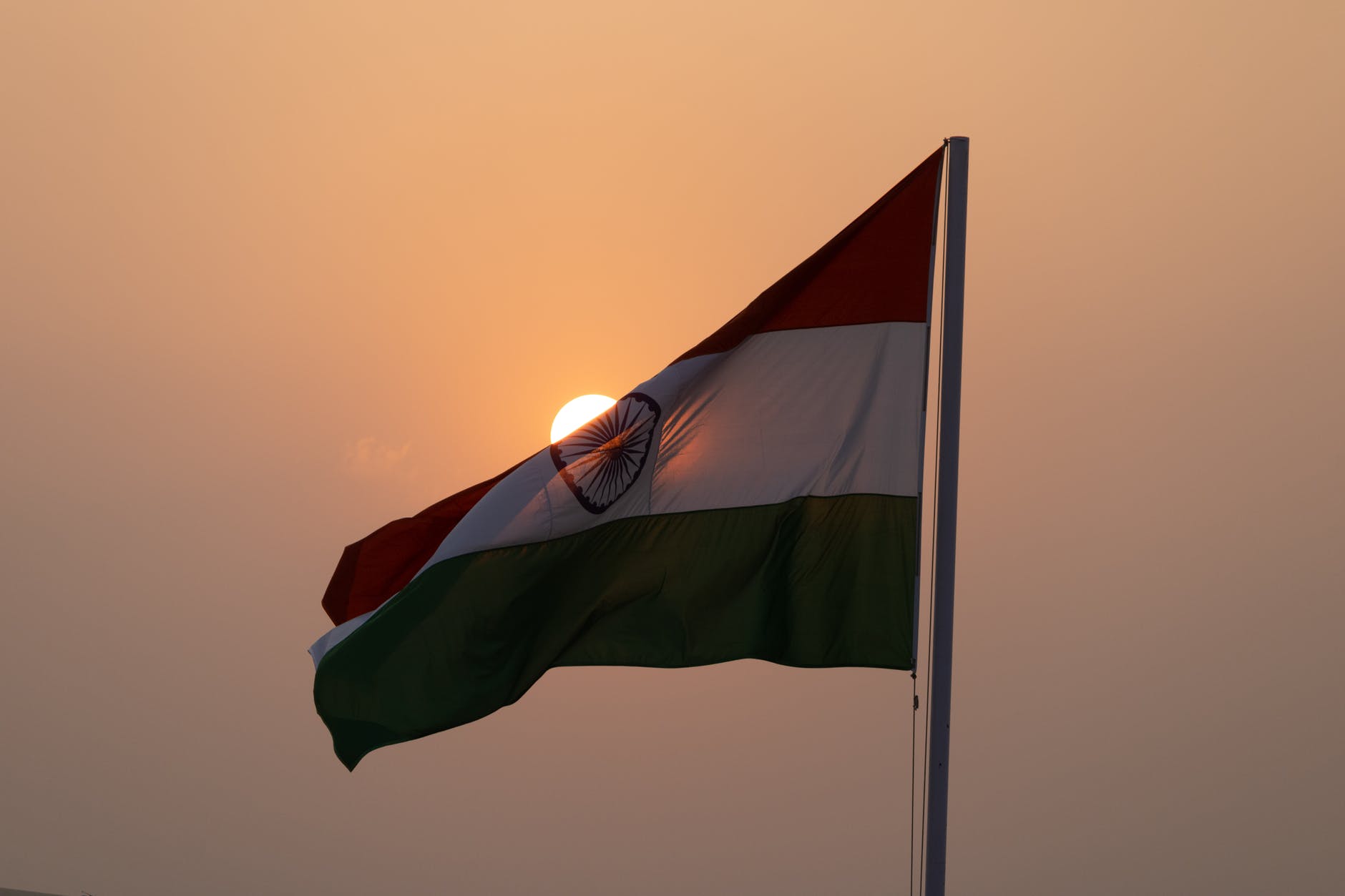
Photo by Still Pixels on Pexels.com

It happened years ago when India faced partition be it with Pakistan or within Andhra Pradesh(making of Telangana). These involved change of boundaries and beliefs but moving ahead we all adapted to them and welcomed new beginnings.

Our Independent Nation was believed to be achieving great heights in the coming years of Independence. The hopes were high and so was the joy and enthusiasm among the citizens. They dreamt of a nation where everyone would be his own master; where they will earn their living their own way and where, there would be innumerable possibilities for growth and development. Of course, the excitement was over their mind and the feeling of freedom was another level of peace and serenity. But, did that happened likewise ? Yes we have come far enough and are still moving ahead. Our past position and present scenario are way different in terms of growth which we have had been able to achieve through years of struggle as a nation. Being labelled as a developing country shows the mark we have reached through collective efforts in the areas of infrastructure, economy and livelihood. The focus is now on sustainable development which aims at development at a pace which does not harm the future goals or requirements of the future generations. This appears a fantastic model but the present needs too need attention to the same level now.

The increasing rate of unemployment, poverty and discrimination are amongst the major issues need to be resolved in order to build a strong force serving the nation at its best.

Each human is a resource and can be utilised in a way that contributes not only to the growth of the nation but the world as a whole. There is a lot that is still unexplored or which requires actions to be taken globally. Individual growth is complimentary to this.

Employment opportunities need to be developed creatively. It simply implies there are already many opportunities, what lacks is creativity and innovation. Though we are constantly innovating ideas but they are technology oriented and not human focused. Innovation is required so that there are ample opportunities for all of us to explore and learn. Technology makes us sick when it is used to make even basic tasks of our life, automatic. Hard work should always be encouraged. Technology feels good when it is used to make complex things simple. The boundaries we see between the rich and the poor, the educated and the illiterate, the working and the unemployed, the women and the men; all these make up for the partition India is facing.

As it is said a lot, “rich are becoming richer, poor are getting poorer”, similarly, the distances are widening between the other above stated partitions as well. The discrimination on the basis of colour, caste, religion, region, gender, etc. are parting the country as we go on. It seems they are left behind on the journey towards development. Still there are many places where women are treated lower to men, having no freedom to live their own way. The ‘minority groups’ still don’t have their rights as a citizen. The “untouchables” continue to be unacceptable and what to say about discrimination faced by the transgender. It is not always the government to blame upon. In fact they launch various schemes to help and support all the classes and sections of the society. The dust remains in the mind of the people who are not ready to accept everyone as their equals, the ones who believe in superiority of one over the other even after living in a democratic country. It may also happen due to the past relations. “What we learn being grown up is what we follow”, this can be a reason why people have a fixed mindset which is hard to change. But as we keep moving there arises a need to take up all, together. The nation is one as a whole and these partition need to be erased for the sake of all. There are more issues that need attention by us, therefore the previous ones need to be sorted to focus on the upcoming. If we can bring the whole nation together, not only by words but behaviour as well, we would soon be able to solve our global matters of concern as well; which include pollution, over-population, ozone layer depletion, water management, etc.

Happy Independence Day

Independence day is a meaningful and one of the most important dates in history of our country. After a long and exhausting struggle India got its Independent on 15th August, 1947.

To honor this day today we will talk about some of the facts that every Indian needs to know regarding this occasion.

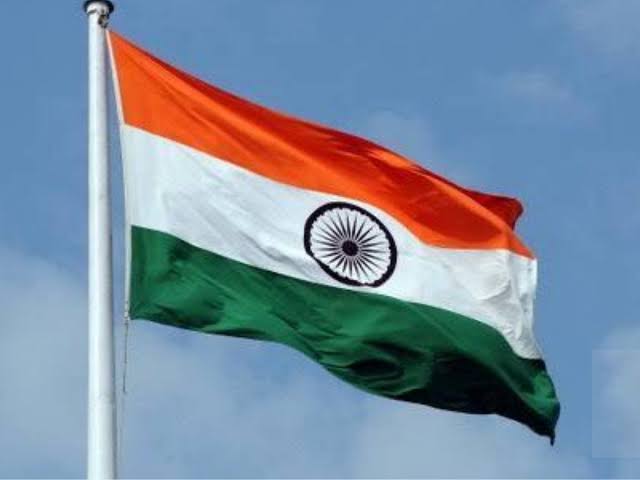
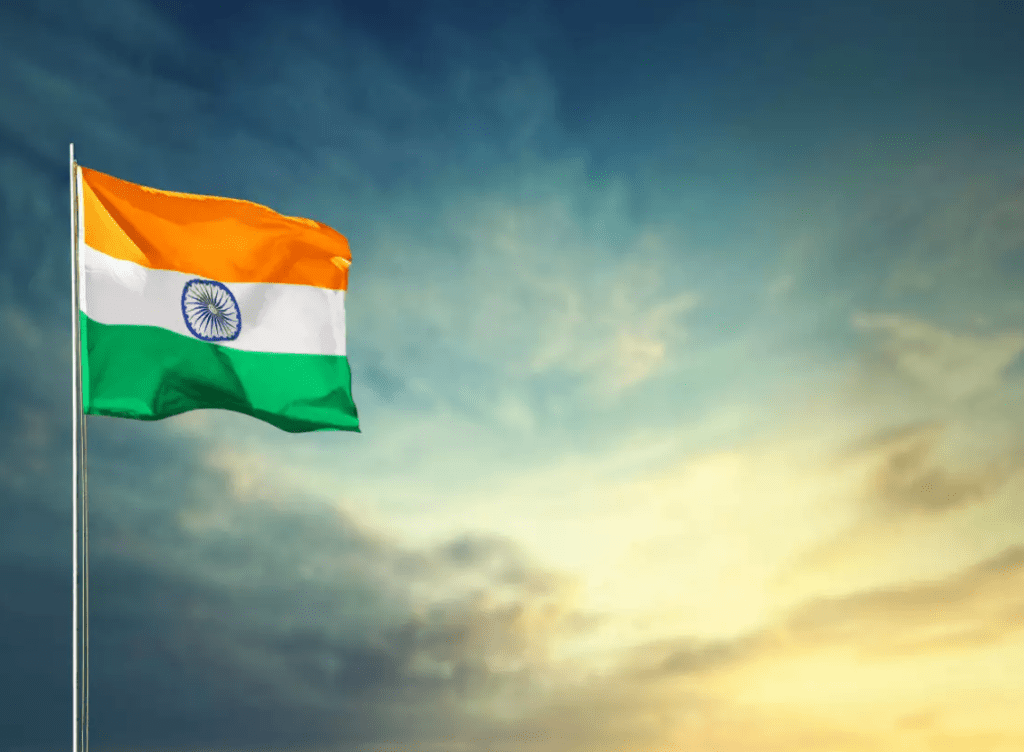
  1. Indian flag was first hosted in year 1906 in Parsee Bagan Square, Kolkata. It had three horizontal stripes of red, yellow and green. It’s first alteration was designed by Pingali Venkayya in in 1921. It is the same flag we host till date. A saffron white and green strip with 24 spokes Ashok chakra.
  2. Besides India there are five other countries who also celebrate their Independence day today. That include South Korea, North Korea, Bahrain, Republic of Congo and Lichtenstein.
  3. Goa was still under Portugal jurisdiction when the country got its independence. It was annexed to India in 1961 and became the last state to join the Indian territory.
  4. Indian flag is only manufactured and licensed by The Khadi Development Village Industries Commission. The Karnataka Khadi Gramodyog Samyukta Sangha located in Dharwad is the only manufacturer of the flag made with cotton.
  5. Our national song ‘Vande Mataram’ was part of the album ‘Anandmath’ composed by Bankim Chandra Chatterjee in 1880s. It was first sung by Tagore in 1896 and officially became the national song on 24th January, 1950.
  6. Lord Mountbatten was obliged to attend the Independence day of both countries, India and Pakistan and hence why he moved Pakistan’s Independence day to 14th August.
  7. Lord Mountbatten chose 15th August as the Independence day to honor the second anniversary of Japan’s surrender to the allied forces.
  8. Mahatma Gandhi wanted the Congress to be disband after country’s independence as the purpose of the party formation was achieved.
  9. India did not have any structural government after achieving independence. There was no president or prime minister at first. Governor general was the person with most authority at that time.
  10. The name ‘India’ originated from the name of River Indus as it was the place of first inhabitants of India.
  11. Bharat Ganarajya is the name of India in Sanskrit and hence the birth of Bharat in hindi.
  12. India hadn’t invaded any other country in last thousand centuries.
  13. Hindi is not the national language of our country but only the official language. It was declared official on 14th September, 1947 in article 343.
  14. Mahatma Gandhi did not attend the first independence day as he was participating in a hunger strike on the same day.
  15. Cyril John Radcliffe is the man behind the design of borders of Independent India despite never visiting the country once.
  16. Our first Prime minister, Jawaharlal Nehru was quite a fashion icon back in the days even making it in a Vogue issue. Nehru jacket was also named after he made it an iconic fashion piece.
  17. India had 562 princely states or kingdoms when it became independent.

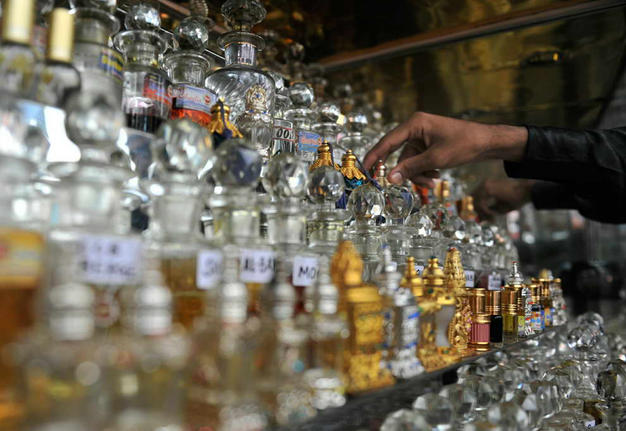
Kannauj 🌹- The Perfume Capital of India

“Kannauj is to India what Grasse is to France”

Kannauj, India’s Grasse, has been producing attar (Perfumes) for over four centuries, well over 200 years before France’s Grasse rose to prominence. In the old days, this town had over 800 perfume distilleries. Around 85,000 folks dwell in this city, with about 4,000 employed in the attar business. Ittar making is a skill that’s been passed down through generations.

Attar is an aromatic oil derived from natural sources like roses, musk, camphor, saffron, or agarwood. Except in rare cases, these natural perfumes are free of alcohol and chemicals.

Both men and women are drawn to attars. They possess rich flowery, earthy, musky, smoky, or grassy notes. Attars can be both warming (cloves, cardamom, saffron) and cooling (jasmine, vetiver, marigold) depending on the season.

Kannauj, the fascinating mitti attar, conjures the aroma of the earth after a downpour.

Shamama, a distilled blend of 40 or more flowers, herbs, and resins that takes days to prepare and months to age, is another sought-after concoction. The scent combines sweetness, spice, smoke, and dampness to create an ethereal experience for the wearer.

White jasmine blossoms and vetiver plants are used in summer varieties. The soil is utilized for monsoon varieties like Mitti ittar, which smells of damp earth, and winter varieties include Heena ittar and musk ittar.

ATTAR MAKING PROCESS

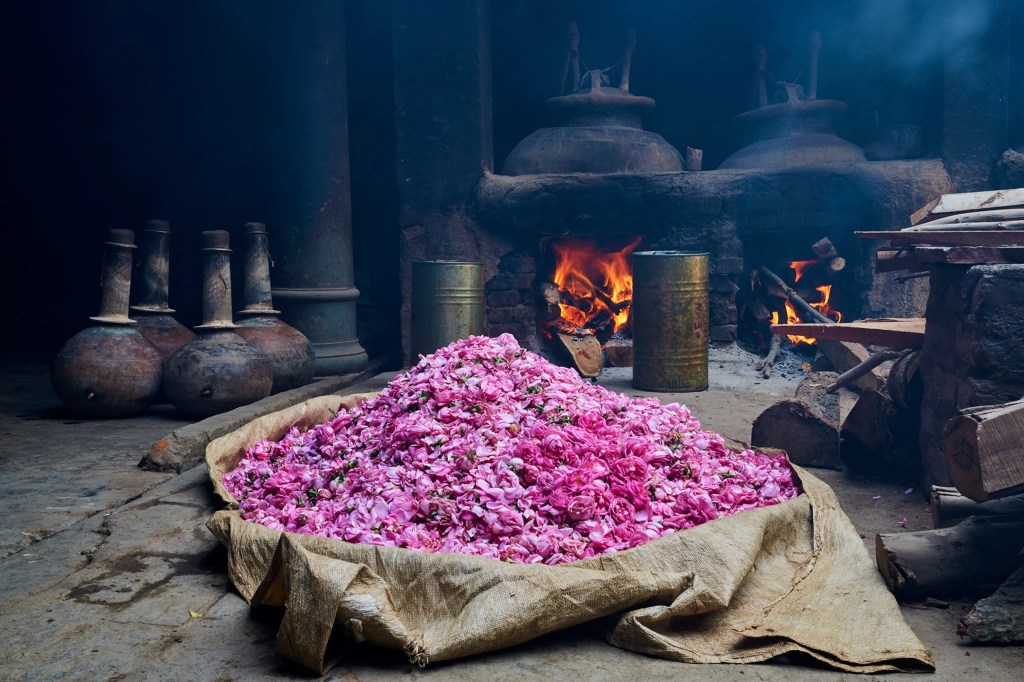
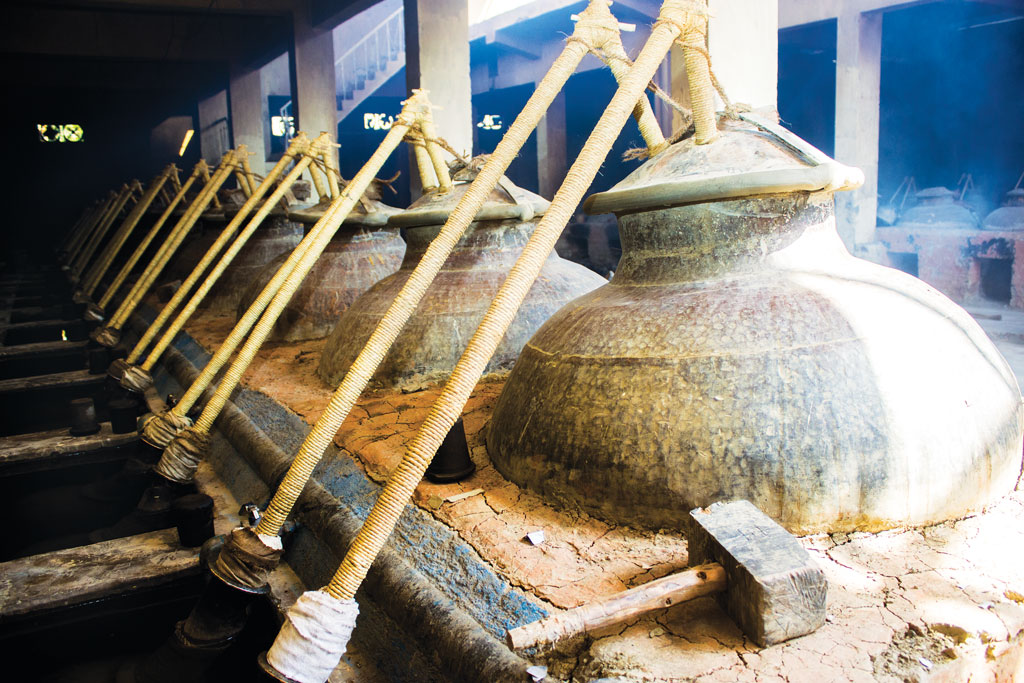
Attar is made by skilled craftsmen known as ‘dighaas‘ using a traditional steam distillation method called ‘deg and bhapka,’ which translates to ‘large pot and little pot.’

The dighaas begin by pouring the key ingredient into the deg, followed by cold water, then sealing it with a special clay. The concoction is brought to a boil by logs burning under the deg. The dighaas must ensure that the temperature remains constant during the process and that the attar doesn’t overheat or become contaminated.

Next, the steam travels from the ‘deg’ to the ‘bhapka’ (receiver) via a bamboo pipe known as the ‘chonga’. A layer of oil traps the evaporating scent molecules there, Sandalwood oil was formerly utilized for this layer, but because of its hefty price and scarcity, alternative oil-like substances are now employed instead.

Depending on the intended concentration of the final attar, the distillation process is repeated numerous times. It may take up to 25 days to complete the process.

CURRENT CRISIS

The number of perfume distilleries has dwindled from over 800 to just over 100 in recent years, as synthetic fragrances outpace attars in popularity. Kannauj is witnessing a crisis at present. Demand for attar started plummeting as power transferred to British India. Pure Mysore sandalwood was and still is expensive, but when the Indian government banned the trade of sandalwood in the late 1990s, the price of attar soared. In place of sandalwood, natural replacements such as liquid paraffin are used, and although this kind of attar is similar to the original, it falls short. At the same time, affluent Indians transferred their loyalty to imported Western fragrances and deodorants to portray themselves as modern and upper class.

Only a few people in India still purchase attars. It is crucial to resolve the issue for these historic perfume industries to sustain their uniqueness and viability.

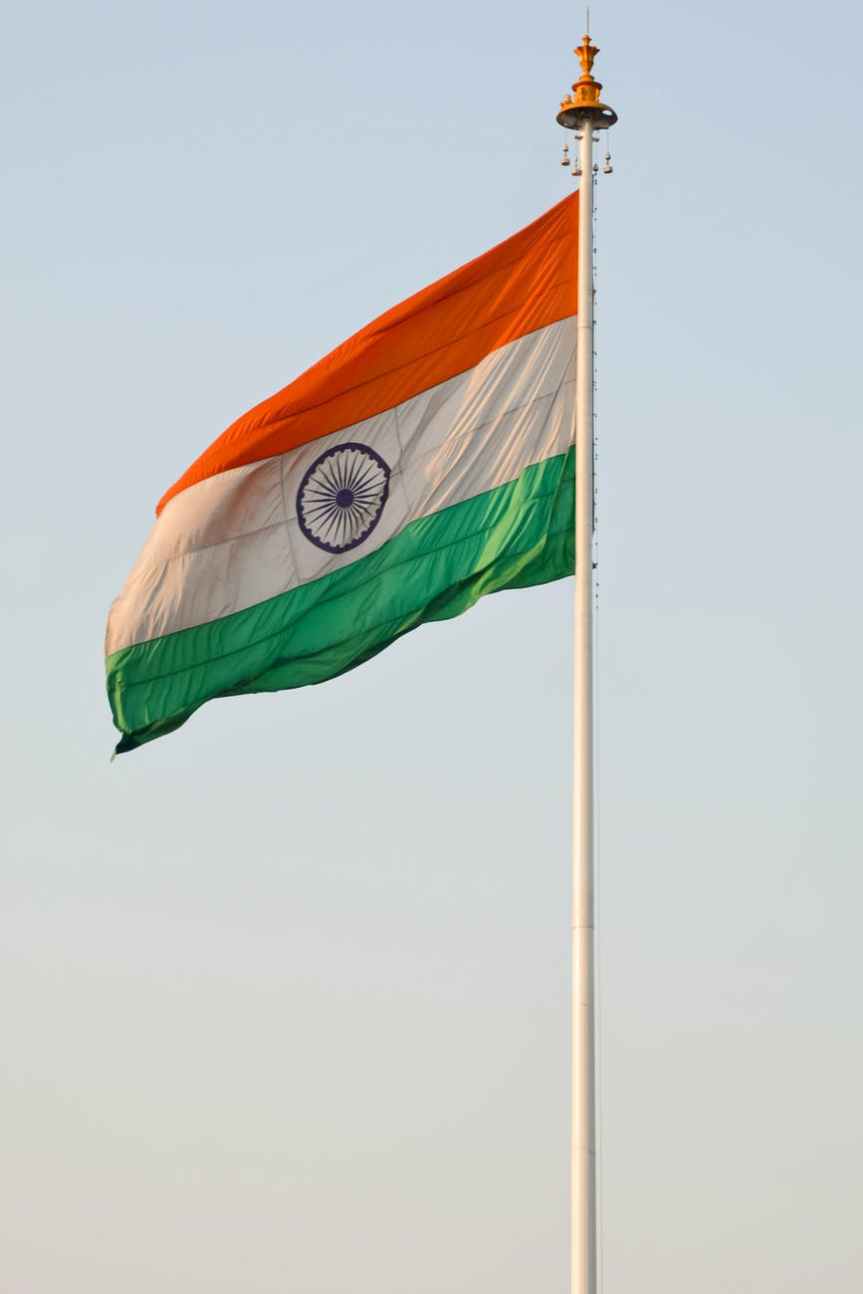
The Indian Tricolour Flag

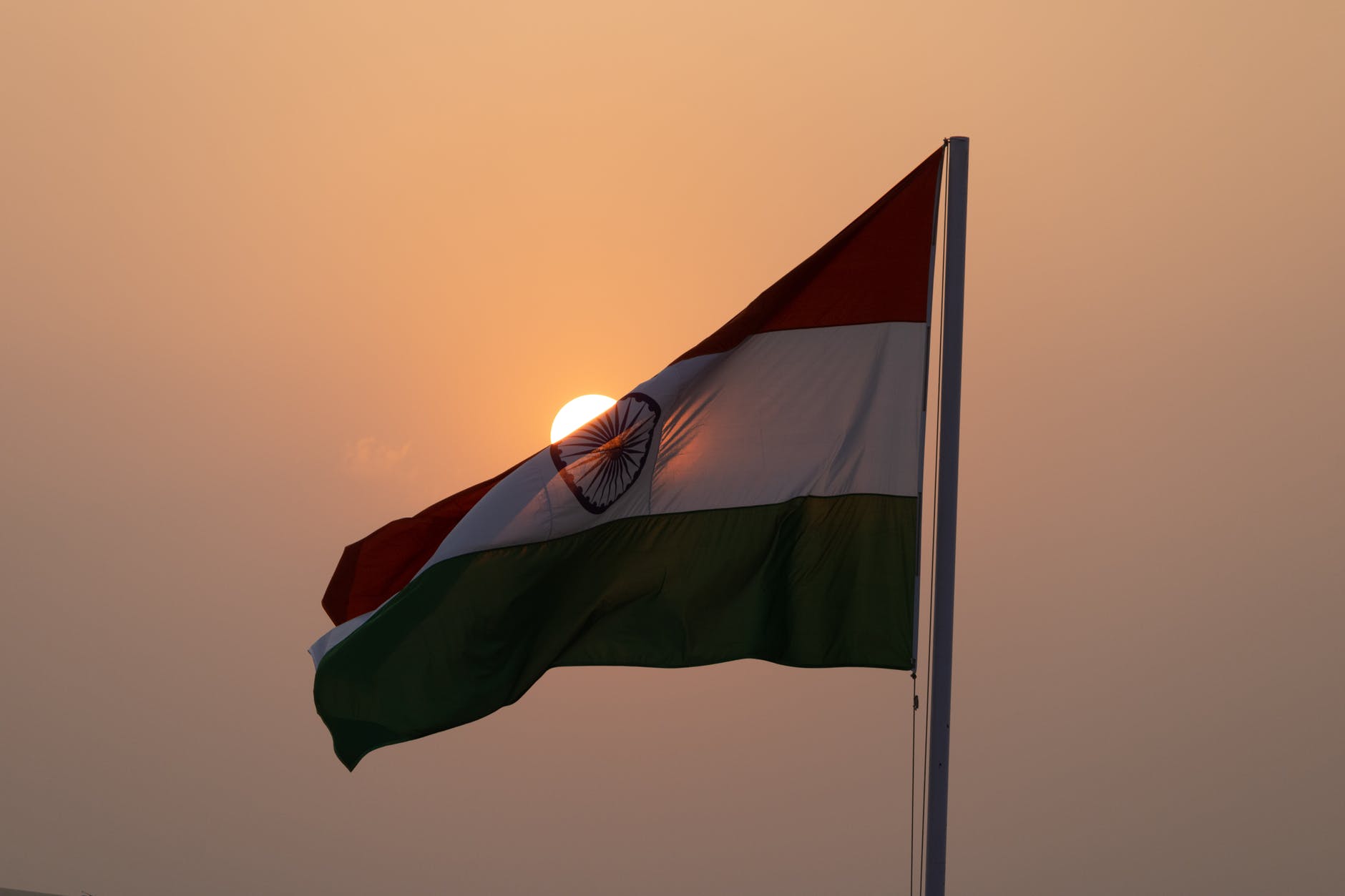
On August 15, 2021, India will commemorate its 75th anniversary of independence. As we get closer to the big day, it’s only natural to look back at the history of the tricolour, or tiranga. Did you realise that our flag’s colours of saffron, green, and white have no communal significance? In this essay, we’ll look at the history of the tricolour, its evolution, and the meaning of the Chakra and the three colours of the flag to learn more about these facts.

Photo by Still Pixels on Pexels.com

The flag of a country is a sign of its independence. The Indian National Flag in its current form was adopted just days before the country declared independence from British rule on August 15, 1947. The decision was made on July 22, 1947, during a meeting of the Constituent Assembly. Between August 15, 1947, and January 2, 1950, it was the national flag of the Dominion of India, and then the Republic of India.

India’s current tricolour flag was adopted after the country gained independence. The old flag’s colour and meaning were retained, but the Dharma Charkha of Emperor Asoka was replaced as the flag’s insignia in favour of the spinning wheel.

The colours of the Indian flag

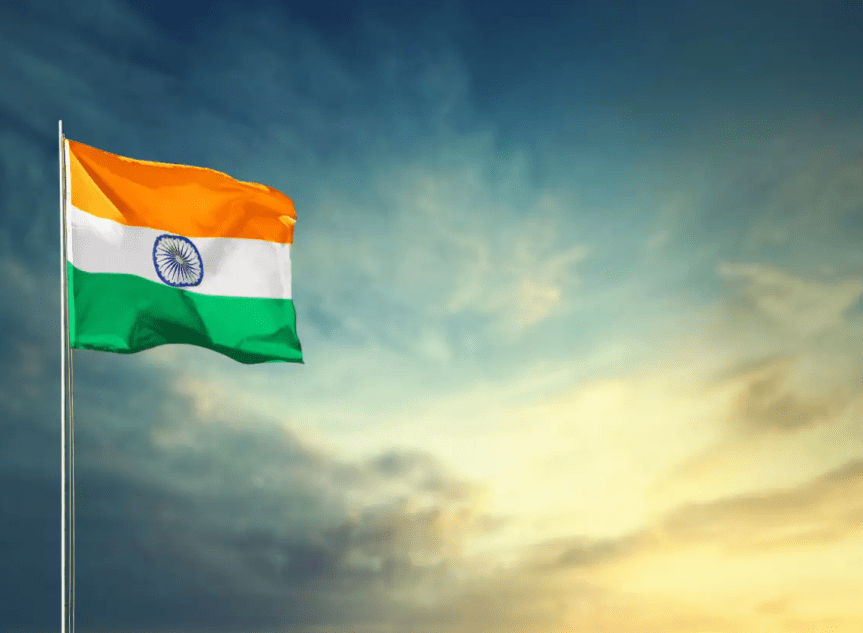
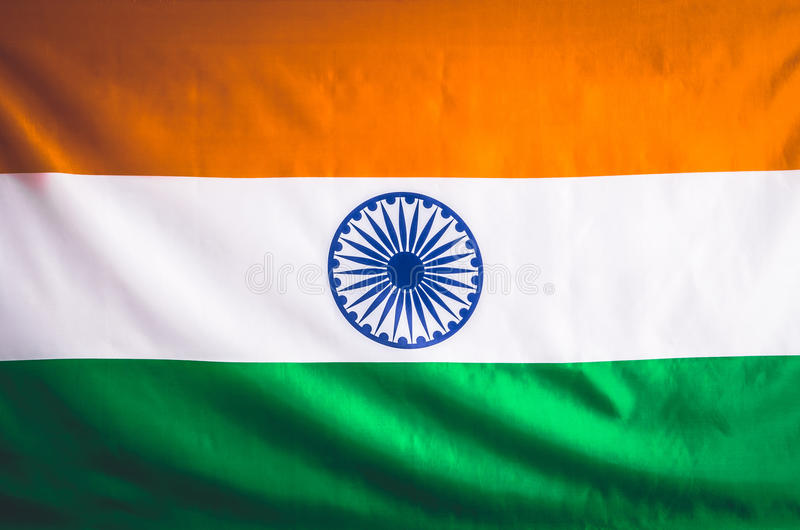
India’s national flag is a horizontal tricolour with a deep saffron top, white in the middle, and dark green at the bottom. The chakra is represented by a navy blue wheel in the midst of the white ring.

The colour saffron represents the country’s power and bravery. The colour white represents peace and truth. Our land’s fertility, growth, and auspiciousness are symbolized by the green belt.

The “wheel of the law” is shown by Dharma Chakra at the Sarnath Lion Capital, which was built by Mauryan Emperor Ashoka in the 3rd century BC. It meant that life is found in movement and death is found in immobility.

Flag Code

The Indian flag code was changed on January 26, 2002, and inhabitants of India were now allowed to hoist the Indian flag above their homes, offices, and factories on any day, not only national holidays, as was previously the case. Indians can now proudly display the national flag anywhere and whenever they want, as long as the Flag Code is rigorously obeyed to avoid any disrespect to the tricolour. The Flag Code of India, 2002, has been broken into three parts for your convenience. The National Flag is described in general in Part I of the Code. The display of the National Flag by members of the public, private organisations, educational institutions, and other entities is addressed in Part II of the Code. The National Flag is displayed by the Central and State governments, as well as their organisations and agencies, according to Part III of the Code.

Based on law passed on January 26, 2002, there are some guidelines for flying the flag. The following are some of them:

Do’s:

– To promote respect for the Flag, the National Flag may be flown in educational institutions (schools, colleges, sports camps, scout camps, and so on). The flag flying in schools now includes an oath of allegiance.

– On all days and occasions, ceremonial or otherwise consistent with the dignity and honour of the National Flag, a member of the public, a private group, or an educational institution may hoist/display the National Flag.

– Section 2 of the new code recognises that all private persons have the right to fly the flag on their property.

Don’ts:

– The flag may not be used for communal purposes, draperies, or clothing. It should be flown as much as possible from sunrise to sunset, regardless of the weather.

– The flag cannot be permitted to contact the ground, the floor, or the water’s surface. Vehicles, trains, boats, and aircraft cannot have it draped over the hood, top, sides, or back.

– There can be no other flag or bunting higher than the flag. Also, no object can be placed on or above the flag, including flowers, garlands, or symbols. A tricolour festoon, rosette, or bunting cannot be used.

Project Pegasus: Unfolding The Cyber Spy

Project Pegasus has been in news for quite some time. Project Pegasus is an investigation about the Software Pegasus, in which 16 Media Institutes participated to expose the truth behind Pegasus. India is also one of the country whose name came out during the investigation. So What is Pegasus?

Pegasus is a spying software developed by an Israeli Technology Firm, NSO. According to NSO, the software is used to hack into the phones of their target and keep an eye on their every step. The data collected through this process can be sold to the government of a country and not to any individual or firm.

Pegasus recently became a hot topic not only in India but all around the world. It is not the first time Pegasus has came in news. But why is it highlighted now in India along with the whole world?  

Pegasus came in news after an investigation was done by 16 Media institutions from all around the world. This was initiated by a Not Profit Organisation from Paris along with Amnesty International. The project is called Project Pegasus.

Pegasus is known to infect the phone and can capture every single thing around the subject. It takes control over the phone and collects data about every single thing done by the subject. This software can be really useful to track down criminals and can be helpful to stop them. But is it really used for that?

The investigation in Project Pegasus revealed something else. The investigation revealed OVER 50,000 names that were either being tracked or were people of interest for any future assignment. In India, a list of 300 people was released. The list contains names of more than 40 journalists, 3 opposition Leaders, and two serving ministers. Former and Current Head of Security Organisation is also on this list. It is also said that the phone that was registered in the name of a serving Judge of the Supreme Court is also on the list.

 There has been no statement by the Indian Government on the issue and this can problematic. It is yet not clear if all the numbers in the list are hacked or not. It is concerning regarding privacy and the fundamentals of democracy.

It can be clearly termed as misuse of power and can have a bad effect on citizens. it is really important to take strict actions against it.

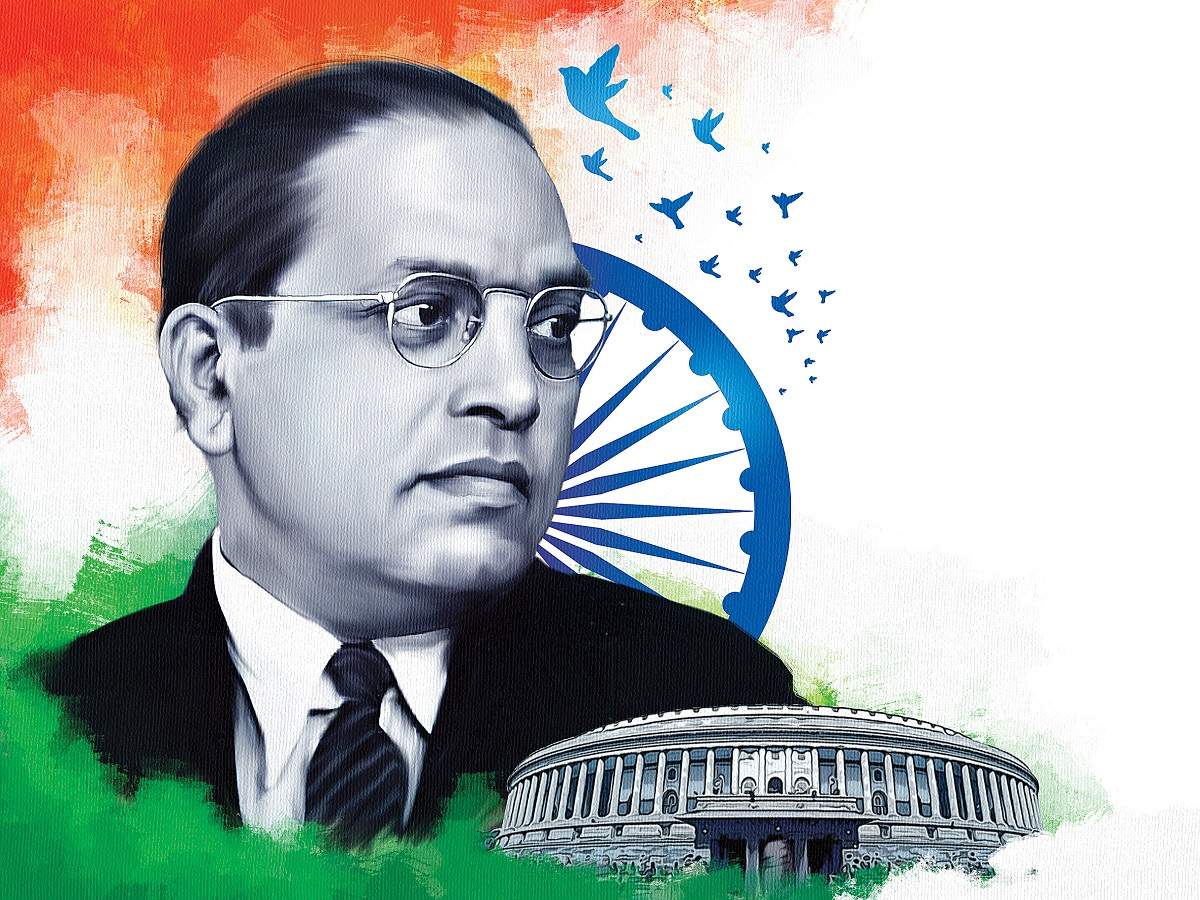
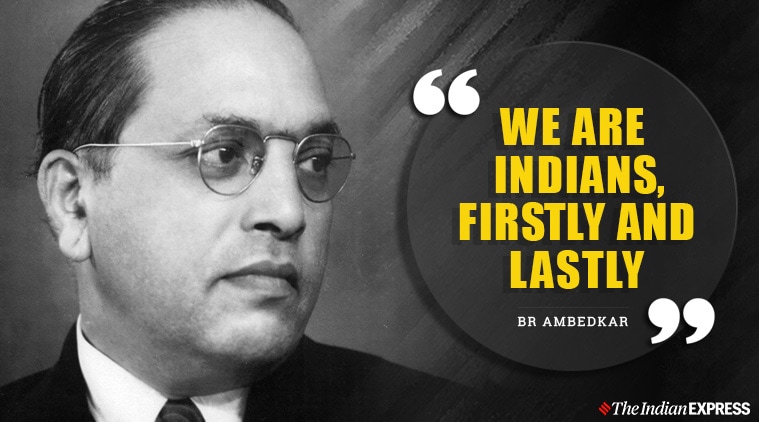
FATHER OF OUR CONSTIUTION- DR. B.R AMBEDHKAR

Bhimrao Ramji Ambedkar was brought into the world on 14 April 1891,also known as Babasaheb , was an Indian legal scholar, market analyst, legislator and social reformer, who propelled the Dalit Buddhist development and crusaded against social segregation towards the untouchables. He was British India’s Minister of Labor in Viceroy’s Executive Council, Chairman of the Constituent Drafting board, free India’s first Minister of Law and Justice, and thought about the main engineer of the Constitution of India.

Ambedkar Jayanti: Some interesting facts about the architect of Indian  Constitution, Babasaheb Ambedkar

Dr. B. R. Ambedkar showed all Indians Equality and Fraternity through the drafting of the Constitution of India, the prelude of which expresses that all Indians are equivalent according to the law and that all Indians are a tremendous family through the possibility of Fraternity.

He encouraged individuals to battle for what is correct. He advanced changes that inspired the most minimal of the projects, the Dalits. He coordinated a few developments like Anti-standing development, Dalit Buddhist development, and so forth.

Bhimrao Ambedkar Quotes: Dr. BR Ambedkar Inspirational Quotes, Speech,  Famous Thoughts on Death Anniversary

In the wake of turning into the primary Law Minister of the nation, and through the drafting of the Constitution of India, he changed the future by attempting to allow everybody an equivalent opportunity. Dr. B. R. Ambedkar held the good post of head at the Government Law College in Mumbai for a very long time. He was additionally the main Indian to have a Doctorate in Economics abroad. Following his model, many individuals left Hinduism for Buddhism since Buddhism doesn’t partition individuals into projects. He was the representative for all oppressed and neediness stricken lower projects like the Dalits.

Because of his enthusiasm in the Dalits’ upliftment, he established separate held seats for individuals of lower projects, which was pointlessly gone against by Gandhiji. He was against section 370 of the Indian Constitution, giving select rights to the province of Jammu and Kashmir. Segment 370 has been abolishes an year ago. It shows how exact and ground breaking his arrangements were. He was offered with Bharat Ratna in 1990 for this excellent work in Indian Reforms.

His works and thoughts keep on impacting the mass of individuals. His ground breaking and goals are as yet appropriate today. Many admire him as a good example, as do I. He is really a diamond to our country.

RESOURCES:

https://en.wikipedia.org/wiki/B._R._Ambedkar

WHY INDIA IS INCREDIBLE ?

You may have heard the expression “Incredible India” commonly however the genuine significance behind this expression can fascinate you. Martin Luther King, Jr said that “To different nations, I might go as a tourist, however to India, I come as a pilgrim.” What is the genuine article that made our nation so incredible ? Life in India can be upbeat, intense, beautiful, distressing, tumultuous however never exhausting.

What makes India a great country — The Indian Panorama

India really sets an illustration of “Unity in diversity”. It’s practically difficult to track down some other country with as much variety as India. Every Indian state can be considered as another country since when you go there language changes, garments changes, food changes and way of life changes. Despite that we all have same thoughts and we live with each other peacefully.

11 Quotes About India By Famous Personalities

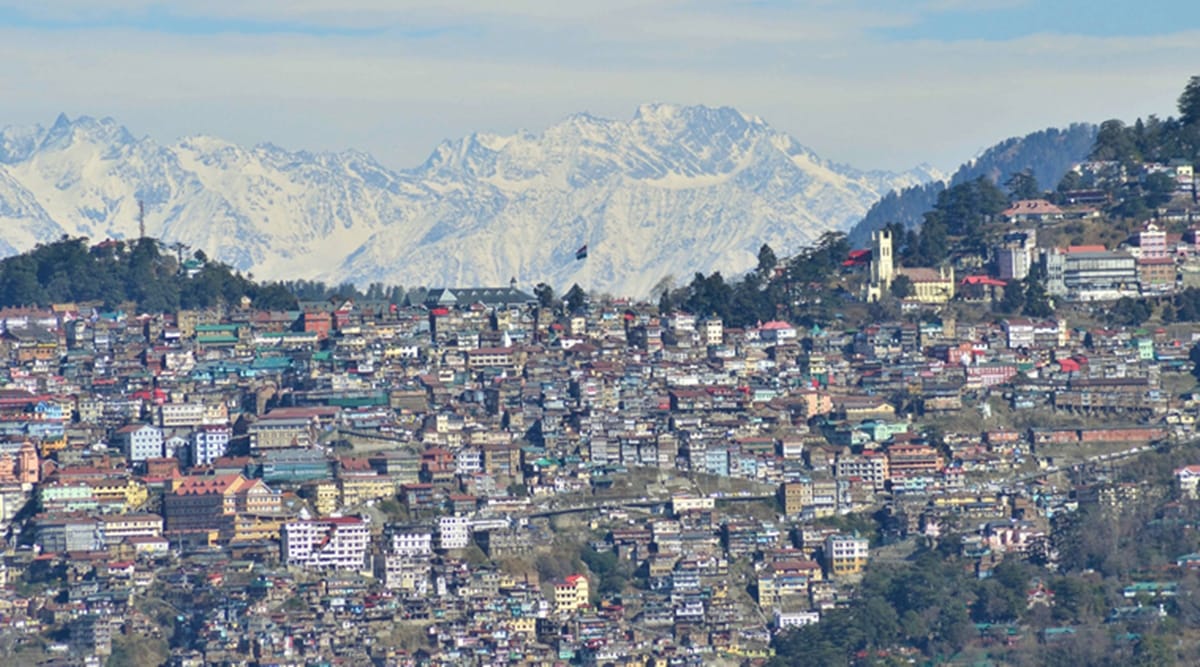
Not only that but people of different religions also live in India. That is the reason we have such countless celebrations which we praise all together. “Atithi Devo Bhava” which implies our guests are God to us. Indian food is overall mainstream you can’t get enough of it. Indian markets are open for both richer as well as poorer. Variety isn’t just among individuals yet additionally in climate. Assuming you need to see the warm places then, at that point deserts of Rajasthan can draw you in. However, assuming you need to see excellence of mountains you are generally welcome in Himachal Pradesh and Jammu Kashmir. Also there are numerous vacationer places in India which incorporate posts, sanctuaries, landmarks and some more.

50 years of Himachal Pradesh: A trip down the history lane | India News,The  Indian Express

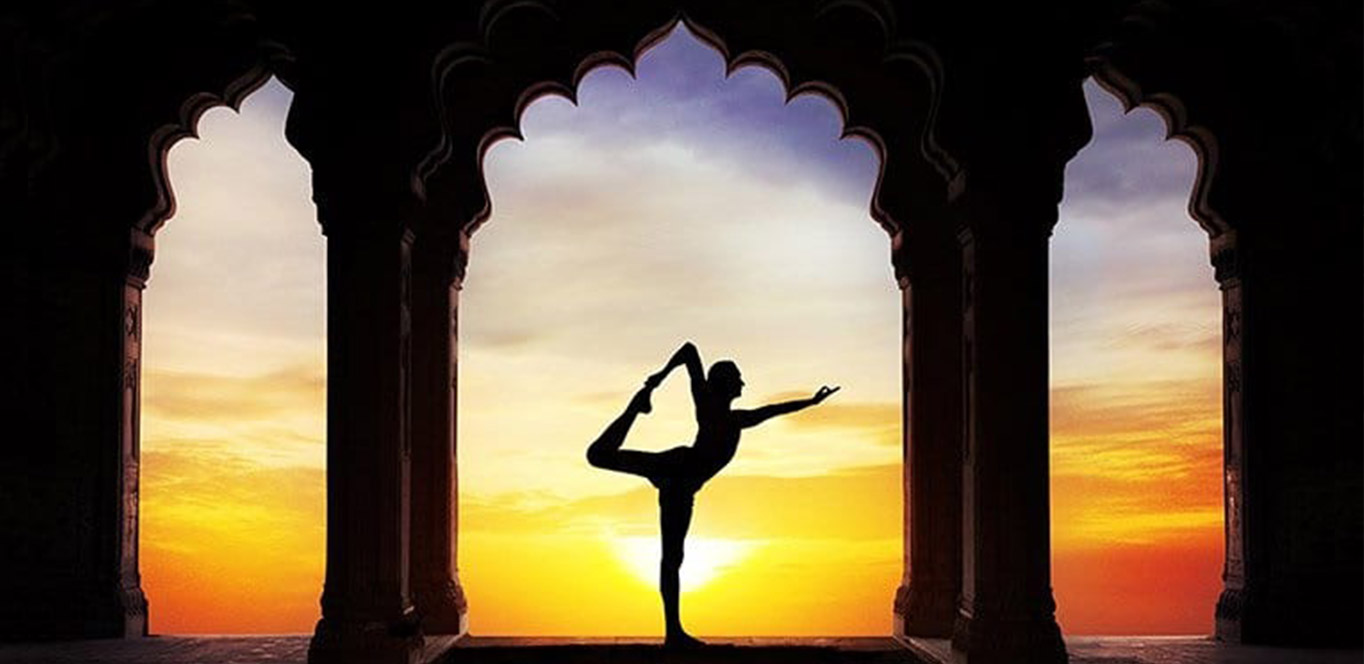
India is the land of Yoga. Yoga assists one with being truly and intellectually fit. It assists you with expanding your focus, give alleviation while having a pressure entire day. Subsequently, these all things demonstrate that why India is great. On this 75th Independence Day let us all make a promise to serve our country till death and endeavor to make India “The Best Nation in the World”. We are extremely fateful to be born in this Incredible Nation.

Yoga and Well-being - 15 Days - India Tour Guide & Driver

Important Landmarks of Indian Freedom Struggle

A freedom movement is any organized effort within a society to promote, or attain, liberation or independence, based on social, political, economic, religious, or other ideological grounds. The Indian independence movement was a series of historic events with the ultimate aim of ending the British rule in India. The movement spanned from 1857 to 1947. The first nationalistic revolutionary movement for Indian Independence emerged from Bengal.

In ancient times, people from all over the world were keen to come to India. The Persians followed by the Iranians and Parsis immigrated to India. Lastly, the Britishers came and ruled over India for nearly 200 years. After the battle of Plassey in 1757, the British achieved political power in India.

Revolt of 1857

The Revolt of 1857 is also known as The Great Revolt of 1857 or the Sepoy mutiny of 1857. The sepoys of India who were oppressed by the British for a long time revolted. The 1st initiative was taken by sepoy Mangal Pandey . He had shot a British general. The British had ordered to arrest Mangal Pandey but the Indian sepoys did not follow his instructions. Under the leadership of Mangal Pandey on 29 March 1857 the Indian sepoys marched to Delhi and made the nawab of Delhi the emperor of India. After that many revolts broke out in India. But the British had been successful In suppressing all of them. The Bengali middle class people were however apathetic to the revolt of 1857. Even they did not want the revolt to be successful. This was because they feared that if the British would go back then India would return to Its age of darkness again .the little money and status that they had acquired during the British rule would be lost. Although the Revolt of 1857 was unsuccessful It is in some cases identified as the First War of Independence.

Indian National Congress Formed 1885

The Indian National Congress is a broadly based political party in India . Founded in 1885, it was the first modern nationalist movement to emerge in the British Empire in Asia and Africa . From the late 19th century, and especially after 1920, under the leadership of Mahatma Gandhi, Congress became the principal leader of the Indian independence movement. After India’s independence in 1947, Congress formed the central government of India, and many regional state governments. Congress became India’s dominant political party; as of 2015, in the 15 general elections since Independence, it has won an outright majority on six occasions and has led the ruling coalition a further four times, heading the central government for 49 years. There have been seven Congress Prime Ministers, the first being Jawaharlal Nehru (1947–1964), and the most recent Manmohan Singh (2004–2014). Although It did not fare well in the last general elections in India in 2014, it remains one of two major, nationwide, political parties In India, along with the right-wing, Hindu nationalist, Bhartiya Janata Party (BJP).

Partition Of Bengal 1905

Bengal was partitioned in 1905 by Lord Curzon, based on the Riley Report of 1904 which stayed that ‘ Bengal United is a power : Bengal divided will pull in several different ways.’ East Bengal was given to the Muslims and West Bengal to the Hindus. The reason given to the people was that the partition was necessary for administrative convenience. But the real reason was because Bengal was the center of all Revolutionary activity. The Partition of Bengal created widespread education among the people of Bengal. Hindus and Muslims came out Into the street singing Vande Mataram. The movement soon spread to other parts of India. People decided to Boycott foreign goods and Institutions and use Indian goods. Thus the movement came to be called the Swadeshi Movement. The success of the movement led some National leads to advocate ‘revolutionary terrorism’ as a means to end British rule. Bengal was reunited In 1911.

Formation Of Muslim League 1906

After the Revolt of 1857, the British government followed a policy of ‘divide and rule’. In the beginning, Muslims were discriminated against. They were kept out of the army and the services. However, when the nationalist movement started, the policy of the government underwent a change. The government branded the Congress as a Hindu dominated Party and encouraged the upper class Muslims to start their own organization against the Congress. The partition of Bengal led to a united protest movement. At the Calcutta session of the congress in 1906, a large number of Muslim delegates participated. Mohammad Ali Jinnah moved an amendment opposing reservation of seats, which was accepted. Any-how the Influence of the communal elements among Muslims became strong. The Muslim leadership feared that, by opposing the British government, the Muslim middle and upper class’s economic interests would suffer. The encouragement given to upper class’s Muslims led to the formation of the Muslim League. On 30th December 1906, the Muslim League was formed.


The main objects of the Muslim League were :
(I) To create feeling of loyalty to the British government.
(ii) To protect and advance the political rights and interests of the Muslims of India.
(Iii) To prevent the rise among Muslims of India of any feelings of hostility towards other communities.

Split of Congress 1907

The Indian National Congress (INC), which was established in 1885 by A.O Hume, was divided into two groups(in the year 1907) mainly by extremists and moderates at the Surat Session of the Congress. The period of 1885-1905 was known as the period of the moderates as moderates dominated the Indian National Congress. These Moderates used petition, prayers, meetings, leaflets and pamphlets memorandum and delegations to present their demands in front of the British government. Moderates were not able to achieve notable goals other than the expansion of the legislative council by the Indian Council Act of 1892. This created dis-satisfaction among the people. In 1907 the INC meeting was to be held In Nagpur and the extremists wanted Lala Lajpat Rai and Bal Gangadhar Tilak as president. But moderates wanted Rash Bihari Ghosh to be president. Gopal Krishna Gokhale changed the meeting place from Nagpur to Surat fearing that If Nagpur was to be held as meeting place then Bal Gangadhar Tilak would become President. The partition of Bengal became the rise of extremism In INC.

India’s Capital shifted From Kolkata to Delhi  1911

Calcutta (now Kolkata) was the capital of India during the British Raj until December 1911. Calcutta had become the epicenter of the nationalist movements since the late nineteenth century led to the Partition of Bengal by then Viceroy of British India Lord Curzon. This created massive political and religious upsurge Including political assassinations of British officials in Calcutta. The anti-colonial sentiments amongst public leading to complete boycott of British goods forced the colonial government to reunite the Bengal partition and Immediate shift of the capital to New Delhi. 

Delhi-Lahore Conspiracy 1912

The Delhi Conspiracy case, also known as the Delhi-Lahore Conspiracy, refers to a conspiracy in 1912 to assassinate the then Viceroy of India, Lord Hardinge, on the occasion of transferring the capital of British India from Calcutta to New Delhi. Hatched by the Indian revolutionary underground in Bengal and Punjab and headed by Rash Behari Bose, the conspiracy culminated on the attempted assassination on 23 December 1912 when a homemade bomb was thrown into the Viceroy’s Howdah when the ceremonial procession moved through the Chandni Chowk suburb of Delhi. Although injured in the attempt, the Viceroy escaped with flesh wounds, but his Mahout was killed In the attack. Lady Harding was unscathed. Lord Harding himself was injured all over the back, legs, and head by fragments of the bomb, the flesh on his shoulders being torn in strips. In the aftermath of the event, efforts were made to destroy the Bengali and Punjabi revolutionary underground, which came under Intense pressure for some time. Rash Behari successfully evaded capture for nearly three years, becoming Involved in the Ghadir conspiracy before it was uncovered, and fleeing to Japan In 1916.

Formation of Ghadir Party 1913

The Ghadir Movement was an important episode in India’s freedom struggle. A ship named Komagata Maru, filled with Indian immigrants was turned back from Canada. As the ship returned to India several of its passengers were killed or arrested in a clash with the British police. This incident made the Ghadir Party proclaim war and inspired thousands of Indian immigrants to come back and organize an armed rebellion against British Imperialism. However, this movement was crushed. This article deals with the important events of Ghadir Movement. Original name of Ghadir Party was Pacific Coast Hindustan Association. The founding president of Ghadir Party was Sohan Singh Bhakna and Lala Hardayal was the co-founder of this party. Headquarters of the movement were set up at Yugantar Ashram In San Francisco.

Hindu-German Conspiracy 1914-1917

The Hindu–German Conspiracy was a series of plans between 1914 and 1917 by Indian nationalist groups to attempt Pan-Indian rebellion against the British Raj during World War I, formulated between the Indian revolutionary underground and exiled or self-exiled nationalists who formed, in the United States, the Ghadir Party, and in Germany, the Indian independence committee, in the decade preceding the Great War. The conspiracy was drawn up at the beginning of the war, with extensive support from the German Foreign Office, the German consulate in San Francisco, as well as some support from Ottoman Turkey and the Irish republican movement. The most prominent plan attempted to foment unrest and trigger a Pan-Indian mutiny In the British Indian Army from Punjab to Singapore. This plot was planned to be executed in February 1915 with the aim of overthrowing British rule over the Indian subcontinent. The February mutiny was ultimately thwarted when British Intelligence infiltrated the Ghadarite movement and arrested key figures. Mutinies In smaller units and garrisons within India were also crushed.

Rowlett Satyagraha  1919

Rowlett Acts, (February 1919), legislation passed by the Imperial Legislative Council, the legislature of British India. The acts allowed certain political cases to be tried without juries and permitted internment of suspects without trial.
Sedition Act 1870. The Sedition Act, allowed the government to arrest or detain any person without a fair trial In the court who was seen protesting or criticizing the British authority. In 1919 Gandhiji gave a call for a Satyagraha against the Rowlett Act, passed by the British. The Act restricted the freedom of expression and strengthened police powers. Mahatma Gandhi, Mohammad Ali Jinnah and others strongly opposed this Act.

Jallianwala Bagh Massacre 1919

The Jallianwalah Bagh Massacre, also known as the Amritsar Massacre was a massacre that happened in Amritsar, in 1919. It is named after the Jallianwala Bagh [Temple] in the northern Indian city of Amritsar. On April 13, 1919, British Indian Army soldiers started shooting at an unarmed gathering of men, women and children. The person in charge was Brigadier-General Reginald Dyer, the military commander of Amritsar. The shooting lasted about ten minutes. According to official British Raj sources, 379 people were killed. According to other sources, there were over 1,000 deaths, with more than 2,000 wounded, and Civil Surgeon Dr. Smith said that there were 1,526 casualties.

The Khilafat Movement 1919-1924

The Khilafat Movement was organized by the Ali brothers – Mohammed Ali and Shaukat Ali in protest against the injustices done to Turkey (which had fought against Britain) after the First World War. Turkey was important to the Indian Muslims as the Sultan of Turkey was also the ‘Caliph’ (or Khalifa) and was the head of the Muslims throughout the world. The Khilafat leaders put pressure upon the British government to give better treatment to Turkey. Through this demand, Muslims were drawn Into the national movement in large numbers. The movement become a part of the national movement. The Congress leaders joined In the agitation and helped in organizing It throughout the country.

Non-cooperation Movement 1920-1922

In the year 1921 M.K. Gandhi launched the non-cooperation Movement in India. He made an appeal to the Indian people that since the rule of Britishers in India came with the cooperation of Indians, thus, the only way to end the British rule in India is non-cooperation. This movement was launched in different phases. In the first phase, the Indian people who were awarded by the British government In their field began surrendering their titles of honors. The second stage included the boycott of civil services,  congressional assemblies, courts, foreign goods and schools. In the third stage, It was believed that if the administration practiced suppression, a complete civil disobedience drive would be launched by the nationalist leaders.

Chauri Chauri Killing 1922

The Chauri Chauri incident occurred at Chauri Chauri in the Gorakhpur district of the United Province, British India on 4 February 1922, when a large group of protesters, participating in the Non-cooperation movement, clashed with police, who opened fire. In retaliation the demonstrators attacked and set fire to a police station, killing all of Its occupants. The incident led to the deaths of three civilians and 22 or 23 policemen. the Indian National Congress halted the Non-cooperation Movement on the national level as a direct result of this Incident.

Rastriya Swayamsevak Sangh (RSS) was founded 1925

Rastriya Swayamsevak Sangh, abbreviated as RSS “National Volunteer Organisation” or “National Patriotic Organisation”, is an Indian right-wing, Hindu nationalist, paramilitary volunteer organisation that is widely regarded as the parent organisation of the ruling party of India, the Bhartiya Janata Party. The RSS is one of the principal organizations of the Sangh Parivar group. Founded on 27 September 1925, and claiming a commitment to selfless service to India. The organisation Is the world’s largest voluntary missionary organization. The initial impetus was to provide character training through Hindu discipline and to unite the Hindu community to form a Hindu Rashtra (Hindu nation). The organisation promotes the Ideals of upholding Indian culture and the values of a civil society and propagates the ideology of Hindutva, to “strengthen” the majority Hindu community.

Simon Commission 1927

Simon commission is one of the factors leading to the civil disobedience movement. This commission was appointed in November, 1927. It is named after Sir John Simon, who was the chairman of the commission. It was appointed by the British Government to investigate the need for further constitutional reforms. The commission had seven British members but no Indian members. This was seen as a deliberate move to insult the self-respect of Indians ◦In 1927, the Congress decides to boycott the commission ‘at every stage and In every form’. Even the Muslim League agreed to boycott the commission. Next year, an ‘All India Hartal’ was organized by the people. When the commission reached Mumbai, people greeted the commission with slogan “Simon Go Back”. During these protests and hartals. Lala Lajpat Rai was arrested and beaten up. Finally, the commission was sent back with some suggestions and recommendations. 

Declaration of Poorna Swaraj 1929

The Purna Swaraj declaration ( or Declaration of the Independence of India, was promulgated by the Indian National Congress on 19 December 1929, resolving the Congress and Indian nationalists to fight for Purna Swaraj, or complete self-rule independent of the British Empire. ◦The flag of India was hoisted by Jawaharlal Nehru on 31 December 1929 on the banks of Ravi river, In Lahore, modern-day Pakistan. The Congress asked the people of India to observe 26th of January as Independence Day(see Legacy). The flag of India was hoisted publicly across India by Congress volunteers, nationalists and the public. But Bhagat Singh was the first person who gave call to purna swaraj (total Independence).

Beginning of Civil Disobedience Movement 1930

Launched on April 6, 1930, the Civil Disobedience Movement was the most significant movement in the freedom struggle of India. The formation of the Simon Commission, Demand for Dominion Status and Protests against the arrest of social revolutionaries was the three most important causes of this movement. Moreover, the newly introduced salt laws played an important role in launching the Civil Disobedience Movement. According to the new laws the Indian people were required to buy the vital mineral salt, on which the British government was practicing a monopoly. As salt was the basic need for all the sections of the society people under the leadership of M.K. Gandhi launched a March known as the “Dandi March” against the unjust laws of the British government.
This march was joined by thousands of Indians. Therefore, on April 6, 1930, Gandhi formally launched the Civil Disobedience Movement. The main objective of the Civil Disobedience movement Is that the people wanted to break the unjust laws such as the salt tax law. In support of this movement, Indian people continued the production of salt and boycotted foreign clothes and goods. Farmers of India denied paying revenue and Chowkidari taxes. Indian administrators quit their jobs and In many states, tribal people violated forest laws.

The First Round Table Conference was held in London 1930

First Round Table Conference was first among the three such conferences organized between 1930 and 1932 by British government towards constitutional reforms in India. These conferences were conducted as per 1930 report of Simon Commission. First Round Table Conference was held between November 1930and January 1931. It was officially inaugurated on November 12, 1930 at House of Lords at London by the British King (George V) and was chaired by then British Prime Minister, Ramsay MacDonald.

Participants The participants of the First Round Table conference Included :

  1. Total 16 delegates from three British Political Parties
  2. Total 74 delegate from India comprising 3.58 delegates from political parties In India 4.16 delegates from princely states

Second Round Table Conference was held 1931

The second round table conference was held in London (September 1931 – December 1931). Gandhiji represented the Indian National Congress. Gandhiji said that congress alone represented the political India. The untouchable of India are Hindus and does not need label of minorities and there is no need for spate electorate or special safeguard for Muslims or other minorities. This was rejected by other Indian participants. Gandhiji returned back empty handed, disappointed from the proceedings. However, the discussions lead to the passing of Government of India Act, 1935.

The Gandhi-Irwin Pact 1931

After the failure of First Round Table Conference efforts were made by the Government to make an agreement that  the congress  would attend the next Round Table Conference. The Viceroy, Lord Irwin, was authorised to hold talks with Mahatma Gandhi. Finally, Gandhi and Irwin made an agreement on 5 March 1931. The agreement is called Gandhi-Irwin pact. By this pact Government agreed to release most of the civil disobedience volunteers, against whom there was no allegation of violence. The Congress suspended the Civil Disobedience Movement and agreed to participate In the second Round Table Conference.

Poona Pact 1932

The Poona Pact refers to an agreement between B. R. Ambedkar and Mahatma Gandhi on behalf of depressed classes and caste Hindu leaders on the reservation of electoral seats for the depressed classes in the legislature of British India government. Contrary to popular belief, Mahatma Gandhi was not involved in signing the pact. It was made on 24 September 1932 at Yerwada Central Jail in Pune, India. It was signed by B.R Ambedkar on behalf of the depressed classes and Madan Mohan Malviya on behalf of the Caste Hindus as a means to end the fast that Gandhi was undertaking In jail as a protest against the decision by British prime minister Ramsay MacDonald to give separate electorates to depressed classes for the election of members of provincial legislative assemblies In British India. They finally agreed upon 148 electoral seats.

Government of India Act was passed 1935

In August 1935, the British gove3rnment announced the Government of India Act.

The main provisions of this act were :

  1. India was to become a federation if more than 50 per cent of the Princely States decide to join it.
  2. Provincial autonomy was granted. The ministers of provincial government s were to be responsible to the legislature. The power of the legislature was also increased. But the right to vote remained limited (only 14 per cent people had voting rights).
  3. Diarchy was abolished at the provincial level but Introduced at the Centre. The Viceroy became more powerful and was not to be responsible to the legislature.

The Act was rejected by the Congress. It, however, decided to contest the elections of the provincial legislative assemblies In AD 1937. The Muslim League also contested these elections.

Quit India Movement 1942

In August 1942, Gandhiji launched the Quit India Movement (“Bharat Chhodo Andolan”).
A resolution was passed on 8 August 1942 in Bombay by the All India Congress Committee, declaring its demand for an immediate end of British rule. The Congress decided to organize a mass struggle on non-violent lines on the widest possible scale. Gandhiji’s slogan of ‘Do or Die’ (‘Karo ya Maro’) inspired the nation. Every man, women and child began dreaming of a free India. The government’s response to the movement was quick. The Congress was banned and most of its leaders were arrested before they could start mobilizing the people. The people, however, were unstoppable. There were hartals and demonstrations all over the country. The people attacked all symbols of the British government such as railway stations, law courts and police stations. Railway lines were damaged and telegraph lines were cut. In some places, people even set up their Independent government. The movement was most widespread in Uttar Pradesh, Bihar, Bengal, Bombay, Odisha and Andhra Pradesh. Places such as Ballia, Tamluk, Satara, Dharwar, Balasore and Talcher were freed from British rule and the people there formed their own governments. The British responded with terrible brutality. The army was called out to assist the police. There were lathi-charges and firing at the unarmed demonstrators.

Cripps Mission 1942

The Cripps Mission was a failed attempt in late March 1942 by the British government to secure full Indian cooperation and support for their efforts in World War II. The mission was headed by a senior minister Sir Stafford Cripps, Lord Privy Seal and leader of the House of Commons. Cripps belonged to the left-wing Labour Party, traditionally sympathetic to Indian self-rule, but was also a member of the coalition War Cabinet led by the Prime Minister Winston Churchill, who had long been the leader of the movement to block Indian independence. Cripps was sent to negotiate an agreement with the nationalist Congress leaders, who spoke for the majority Indians, and Muhammad Ali Jinnah and the Muslim League, who spoke for the minority Muslim population comprising 35% of the total population. Cripps worked to keep India loyal to the British war effort In exchange for a promise of elections and full self-government (Dominion status) once the war was over. Cripps discussed the proposals, which he had drafted himself, with the Indian leaders and published them. Both the major parties rejected his proposals, and they were also unacceptable to Churchill; no middle way was found and the mission failed. Congress moved towards the Quit India movement whereby it refused to cooperate In the war effort; in response, the British imprisoned practically the entire Congress leadership for the duration of the war. Jinnah and the Muslims, to whom Cripps had offered the right to opt out of a future Union, supported the war effort and gained In status in British eyes. He was surprised to see that the right to opt out of a future Union was Included.

The great Bengal Famine 1943

The Bengal famine of 1943 was a major famine in the Bengal province in British India during World War II. An estimated 2.1–3 million, out of a population of 60.3 million, died of starvation, malaria and other diseases aggravated by malnutrition, population displacement, unsanitary conditions and lack of health care. Millions were Impoverished as the crisis overwhelmed large segments of the economy and social fabric. Historians have frequently characterised the famine as “man-made”, asserting that wartime colonial policies created and then exacerbated the crisis. A minority view holds that the famine arose from natural causes.

India gained its freedom from British rule  1947

India got its freedom from the British Rule on 15th August, 1947. Hence, we celebrate our Independence Day on 15th of August every year. There is national holiday on Independence Day. We all know that Freedom is not free. It took years of efforts, non-violence and other movement by our national freedom fighter to attain Freedom. On 15th of August, 1947, Pandit Jawaharlal Nehru raised the tri-color national flag of India at Red Fort, Delhi. There the National Flag Is hoisted and the National anthem is sung in chorus. Everybody takes a new oath to serve the country and to do everything to uplift her glory. The elders remember the martyrs who sacrificed their lives in the struggle for independence. They pay homage to the great leaders who suffered a lot to win our freedom. This day also Inspires us to follow the teaching of peace and non-violence that was preached by Mahatma Gandhi, the father of our nation.


Difference Between Fundamental Rights And Directive Principles Of State Policy

Introduction

With 448 Articles, 25 Parts, and 12 Schedules, the Indian Constitution is the world’s longest. It is the ultimate law of the land and controls a variety of sectors, some of which are essential and necessary for the nation’s functioning. The various portions of the Constitution have a specific title under which various legislation pertaining to that subject are listed. Parts III and IV, the Fundamental Rights and the Directive Principles of State Policy, are the most visible and discussed sections of the Indian Constitution. Whereas the Fundamental Rights are the rights that all citizens have, the Directive Principles are the mandates that the State must bear in mind when making laws and regulations. Each has a specific function to play, and each is fully described.

However, there may be times when both of these elements are at odds with one another. A circumstance may call for one to be picked over the other, i.e. one to take precedence over the other. In such a scenario, not only is it difficult to select between the two, but the worth of the one not chosen is reduced. It is sometimes stated that Basic Rights, since they are essential, will take precedence over Directive Principles; nevertheless, it is also contended that Directive Principles are fundamental in the sense that they provide the foundation for the operation of the State. To determine their real nature and activities, it is necessary to thoroughly analyse both components and comprehend the points of distinction between the two.

The Fundamental Rights

Fundamental Rights - Nature, Scope and importance

Individuals’ rights are extremely essential. Rights aid in the formation of personality by providing a person with plausible claims that may be enforced against the State if any of his basic convictions are infringed. The Fundamental Rights envisioned in Part III of the Indian Constitution are the fundamental rights guaranteed to every citizen of the nation, regardless of caste, creed, gender, religion, place of birth, and so on. Articles 12 to 35 of the constitution mention six essential rights:

  1. The Right to Equality, which promotes citizen equality and forbids discrimination on certain grounds.
  2. The Right to Freedom, which enumerates numerous liberties like as freedom of expression, freedom of profession, and so on.
  3. The Right to Religious Freedom, because India is a melting pot of religious groupings, it is critical to protect the interests of religious minorities.
  4. The prohibition against forced labour, child labour, and other kinds of human exploitation is known as the Right Against Exploitation.
  5. Cultural and Educational Rights, because India is a diverse nation with so many cultures and beliefs, so it is essential to preserve the culture of every group.
  6. The Rights to Constitutional Remedies, under which a person can approach the courts of the country if he/she feels that his/her Fundamental Rights have been violated.

These rights further branch out and give us various other fundamental rights, such as the Right to Privacy, the Right to Education, the Right to Life and Personal Liberty etc.

Although the rights are fundamental in nature, they can be taken away in certain situations, for example, if there is a situation of emergency under Articles 358 and 359 of the Constitution. Even then, the Right to Life and Personal Liberty cannot be taken away by the State.

The Directive Principles of State Policy

Articles 36 through 51 of the Constitution include the Directive Principles of State Policy. They were derived from the Irish Constitution, which was derived from the Spanish Constitution. The Directive Principles are rules that the government must follow while developing legislation for the country. They fulfil the notion of a Welfare State, which can only be realised if these Principles are followed in the manner that they are stated. Article 37 of Part IV indicates that, while these principles are not enforceable in any court of law, they are important to the country’s governance and the government has a duty to adopt them when drafting legislation.
Directive Principles of State Policy - (Articles 36-51) - DPSP

In contrast to Fundamental Rights, the Directive Principles are not classified in the Indian Constitution. However, for a better understanding, they are typically divided into three categories: socialist principles, Gandhian principles, and liberal-intellectual ideas.
  1. Articles 38 to 39A, Articles 41 to 43A, and Article 47 are composed of socialistic principles, and they lay down the framework for the development of a democratic socialist state.
  2. Articles 40, 43, 43B, and 46 to 48 include Gandhian principles, which promote the ideology of Mahatma Gandhi during the movement for Independence.
  3. Articles 44, 45, and 48 to 51 are inclined towards the ideas of liberalism and intellectualism. The Uniform Civil Code is also covered under these Articles.

The Directive Principles do advocate for the protection of certain rights, such as the right to equal compensation for equal labour, as well as equality and justice, but they are more rules than rights. They may be classified as the responsibilities of those in charge of governing the country.

Points of Difference Between Fundamental Rights And Directive Principles Of State Policy

Apart from the fact that the Fundamental Rights and the Directive Principles of State Policy represent distinct things and are found in various portions and articles of the Constitution, they are fundamentally different in terms of their aims and execution. The following are the relationships between fundamental rights and state policy directive principles:

  1. The Fundamental Rights are open to all Indian people, they represent an individualised attitude. They are the fundamental rights of every individual citizen in the country, and if violated, they can be enforced against another individual or the State. The Directive Principles have a more social stance. They exist for the benefit of the country’s whole population rather than for the benefit of individuals. They have a group mentality.
  2. The scope of Fundamental Rights is essentially limited, because granting limitless rights to the citizens may result in anarchy. They are to be read strictly. But the scope of Directive Principles is limitless. They can be read and interpreted extensively and can give birth to more principles.
  3. Fundamental Rights are negative in nature, which means that they are prohibitions on the State. The State is required from doing certain things that would lead to the violation of an individual’s Fundamental Rights. They are legally enforceable in a court of law of the country. This also implies that Fundamental Rights are of such a nature that they can be violated. Directive Principles, on the other hand, do not possess the characteristic of being violated. They exist as a basis for the laws that are formulated for the country and this implies that they cannot be legally enforced in a court of law of the country. This renders the Directive Principles positive in nature, i.e. the State is obliged to do certain things for the welfare of the country.
  4. Because India is a democratic country, democratic features may be seen in its laws. Both the Fundamental Rights and the Directive Principles promote the concept of democracy, although they do it in distinct ways. Fundamental Rights spread political democracy, whereas Directive Principles spread social and economic democracy. It is simply due to the fact that the goals of both parties are dissimilar. Furthermore, Fundamental Rights represent individual wellbeing, whereas Directive Principles represent societal and economic benefit.
  5. Adequate legislation is necessary for the execution of Directive Principles. The Directive Principles can only be realised via law. They cannot be implemented automatically and in the language in which they are enshrined in the Constitution. Fundamental Rights, on the other hand, are already enforceable. They do not require any legislation to be enacted. However, this does not mean that there are no consequences for violations of Fundamental Rights. Directive Principles are subject to legal and political sanctions, but Fundamental Rights are also subject to legal consequences.
  6. If a legislation violates the Fundamental Rights, a court might declare that law illegal and void. However, the courts lack the authority to declare any statute that violates a Directive Principle illegal or void. A legislation, on the other hand, can be supported by a court if it gives effect to a Directive Principle.
  7. The Fundamental Rights were given a place of honour by the drafters of the Constitution. They are the fundamental rights granted to all citizens. The Directive Principles are granted permanent status in the Constitution since they serve as the foundation for the country’s legislative activities.
  8. Violation of the Fundamental Rights results in punishment, as per the Indian Penal Code, 1860. These rights can be enforced against the State or against any individual(s). There is no punishment for the violation of Directive Principles.
  9. Fundamental Rights can be suspended during a period of emergency, except the Fundamental Right to Life and Personal Liberty, which cannot be suspended even in an emergency. Directive Principles can never be suspended or restricted, under any circumstance.
  10. The Constitution of India was formulated at a time when a lot of countries had their own constitutions. Thus, many parts of our Constitution have been borrowed from other constitutions. While the Directive Principles have been borrowed from the Irish Constitution, the Fundamental Rights have been borrowed from the Constitution of the United States of America.

Conclusion

The differences between the Fundamental Rights and the Directive Principles of State Policy suggest that the aims and objectives of both are different but somewhat similar. Each part of the Constitution compliments another, and so do they. It is necessary to understand the importance of each and apply/use them accordingly. Fundamental Rights are rights in the sense that they are available to the people, and Directive Principles act as duties upon the State, which the State is required to fulfil, even though the Directive Principles incorporate some elements of social and economic rights. Together, they aim at promoting the principles of democracy and welfarism, which can be achieved only when both the parts go hand in hand, without any conflict.

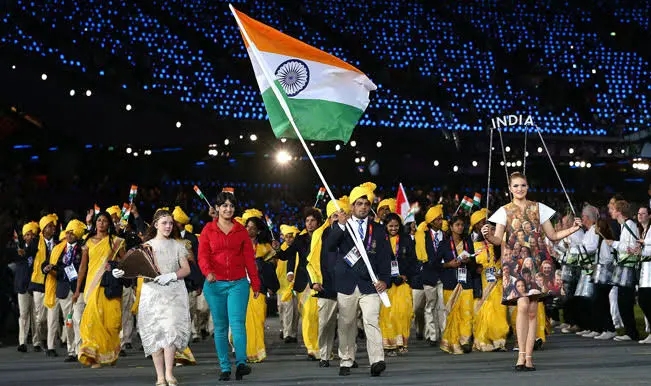
“International Event: OLYMPICS”


The word “olympics” itself is an emotion. The international sports festival which held in every 4 years in about 206 countries of the world. It is the worlds foremost athletic competition among the most promising & commendable citizens of the respective 206 countries. Olympics gives the opportunity to the citizens to showcase their aptitude and ability in every sport despite of any sense of discrimination among them. Olympics gives a friendly nature, a sense of peace and prosperity among the countries. It’s an international level sport which gives justice to each and every citizen to showcase their talent and their earnest nature in the name of their country, showcasing your country on an international level is something beyond reproach, it’s indescribable.

THE 5 RINGS OF OLYMPICS.

The five rings represent the five continents of the world that participate in “the fruitful rivalries” Of the Olympics games. The colors – blue, yellow, black, green and red – stand out against the white background which shows the sense of unity and togetherness of every colour under the white background despite of measuring the wavelength, tone and frequency in all the 5 colours, which represents that each and every citizen of every country can represent their nation without any sense of discrimination under the same sky.The six colors can be combined in any number of ways to reproduce the flag of every country without exception. It gives the opportunity to the citizens to showcase themselves in the name of their respective nations in different sports without any kind of inequity and bias among them.

IMPORTANCE OF OLYMPICS IN THE MODERN WORLD

As with the changing times, the youth of the world has become more generous and they have the sense of being vocal about their thoughts and their abilities which gives an ever-growing impression in the world. With the modern world, the youth has all the elements to showcase their respective interest in different fields. Since olympics gives an opportunity to the youth to represent their desire and talent in their respective best sport they are in, it gives a learning atmosphere for the youth to inspire and learn through a sport. Representing your culture, your country on a global level gives an indescribable emotion from which the youth seeks the importance of culture, its meaning. 

Young athletes exhibiting their respective countries in 100’s of different sports in an international level competition and earns medals through their hard work, desire and generosity. It’s an unimaginable moment for the athlete who wins on a global level among 206 countries, Olympics truly gives so many of opportunities to the citizens, to earn through their hard work and desire without getting judged or discriminated in any form.


“HISTORY OF OLYMPICS”

The Olympic Games, which originated in ancient Greece, 3,000 years ago, were revived in the late 19th century and have become the world’s prominent sporting competition. From the 8th century B.C. to the 4th century A.D., the Games were held every four years in Olympia, located in the western Peloponnese peninsula, in honor of the god Zeus. The first modern Olympics took place in 1896 in Athens, and featured 280 participants from 12 nations, competing in 43 events. Since 1994, the Summer and Winter Olympic Games have been held separately and have alternated every two years. The 2020 Summer Olympics, delayed one year because of the COVID-19 pandemic, will be held from July 23 to August 8, 2021 in Tokyo, Japan.

INDIA IN OLYMPICS

India has been participating in Olympics since 1900. Being the most diversified and culturally active country, it has been the most commendable and honoured country in the platform of Olympics as well. No doubt, India in the race of Olympics is not so graceful as compared to other countries, but India being the 2nd most populated country gives cultural competition to many other countries, it has gained prosperity in each and every sector, but in Olympics, India has a little disgraceful exhibition among the several countries.

WHERE INDIA LACKS?

  • Excess importance to cricket

We, as a country, are obsessed with a singular sport and that is cricket. It is only during major events like Olympics when other sports are given a part of the limelight and fan cheering. For the rest of the year, we stay ignorant of who’s who of other sports. They are promoted less, there are fewer sponsors for the other sports, there are even less fans hooting and cheering them to do better and then we go about complaining and trolling athletes when we do not get enough medals.

  • Lack of encouragement

The foremost factor right from the very beginning, youth in India are discouraged from pursuing a career in sports. Our parents are obsessed with the likes of medical and engineering. And for girls, the scenario is even worse with list of drawbacks and hindrances they have to face before they could persuade their parents to allow them to play. Most of them are forced to quit sports in order to do something that would give them better job security. Our success as an academically-oriented people proves that we are excellent at pursuing something that pays well, so does India’s obsession with cricket.

  • Poor administration

There is no proper governing of Administrative issues is the prime concern with Indian sports. Non-Involvement of ex-sportsman in administrative staff is also a major reason why India lacks in this sector. Our economy has been prospering and allotment of funds to different fields of development has been improvising with each year’s budget. However, there is still relatively very less allotment of funds for sports given the sheer number of youths who are willing to take up sports seriously. Enough of IITs and IIMs, when will we get a dedicated sports university?

-SUKHMANI PANESAR

Affordable places to visit in india

India the land of culture, heritage, devotion and beauty. There are many beautiful places to visit in India and we cannot talk about all places in this article. So, here are 4 affordable places to visit. If you are travel lover then this is great for you all.

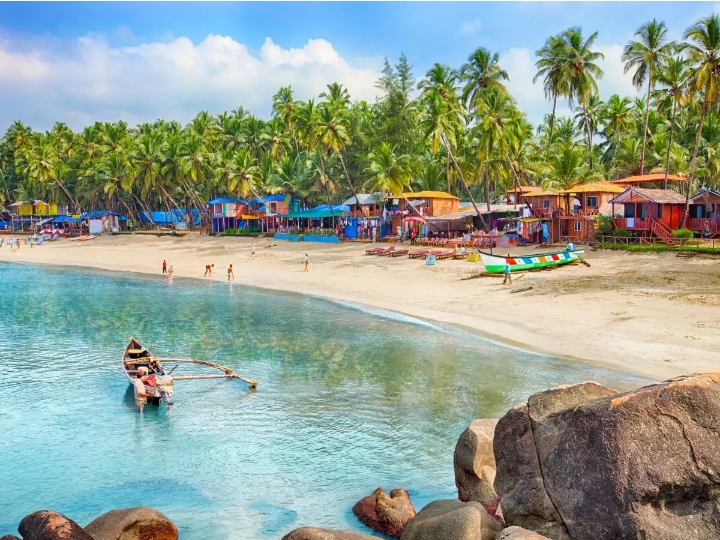
1) Goa

Goa is one of the cheapest country to visit. Alcohol is also very cheap here. You can have unlimited fun and crazy party all night and can even return with full pocket. The best time of the year to visit is October to March. Must visit places to visit is Calangute Beach, Fort Aguada, Dudhsagar falls, Anjuna beach. Goa is also known for its cruise and its water sports. You can check many websites for price. Average 4 days/ 3 Nights will cost you around 12,000 per adult on twin sharing with many amenities.

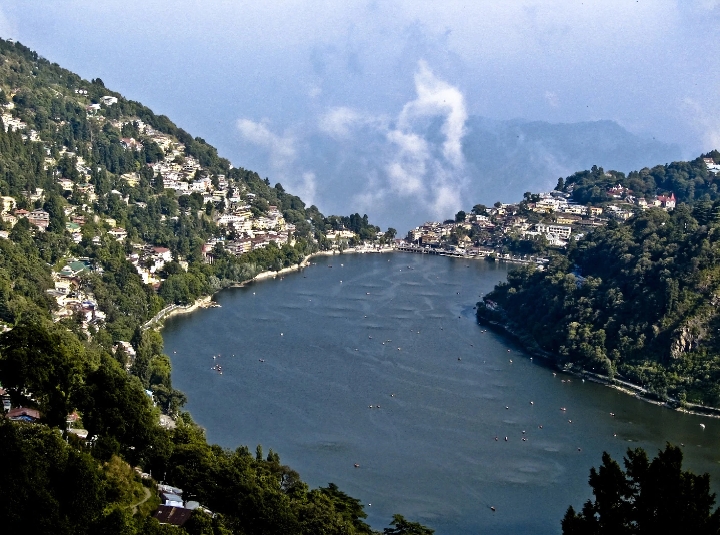
2) Nainital, uttarakhand

Nainital is famous for its misty lakes and mountains. Nainital is very beautiful hill station. It is also known for its cheap hotels and meals. You can do boating here at barely any cost. The area of interest lies in its name which it has gotten from the eye shaped Lake the Naini Lake thus due to this eye shaped Lake it’s called Nainital. Must visit places include Naini Lake, Tiffin top, Snow view point, Mall road, Eco cave gardens and High Altitude zoo. Average 3 days/ 2 Nights will cost you around 4,500 Rs per adult on twin sharing with other amenities as well. It can be seen that how much affordable is this place. Best time to visit is throughout the year.

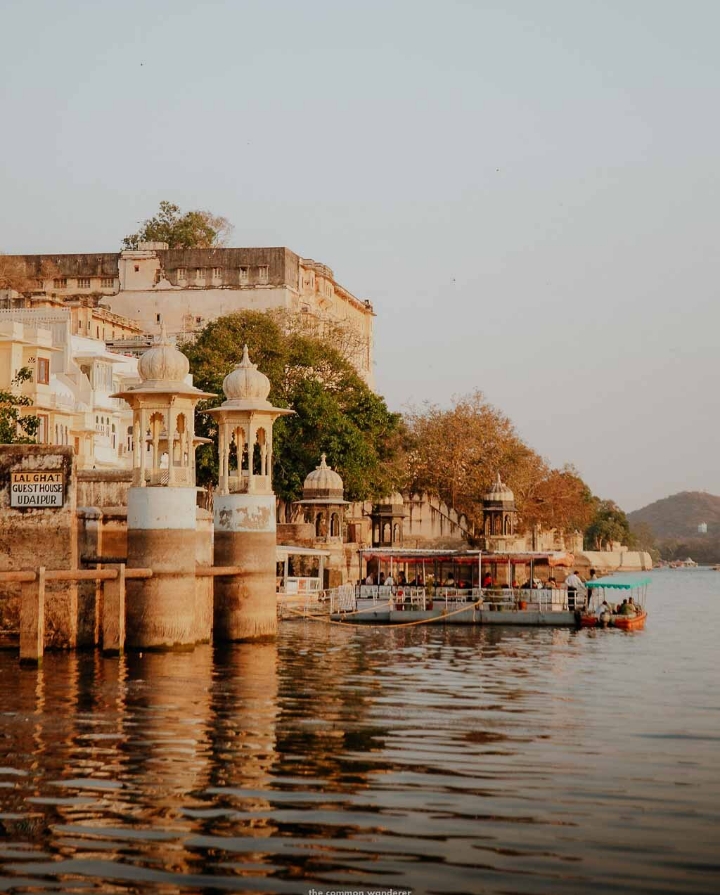
3) Udaipur, Rajasthan

Udaipur also know as city of lakes. It is also called as Venice of East. It is also termed as jewel. It has abundance of natural beauty, awesome architecture and breathtaking temples. Must visit places include Lake pichola, City Palace, Fateh Sagar Lake, Jaisamand Lake, Sajjangarh palace, Jagdish temple. In addition to this it cost very less on average 6 days/ 5 night stay cost you around 17,700 INR per adult on twin sharing. Best time to visit is from October to March.

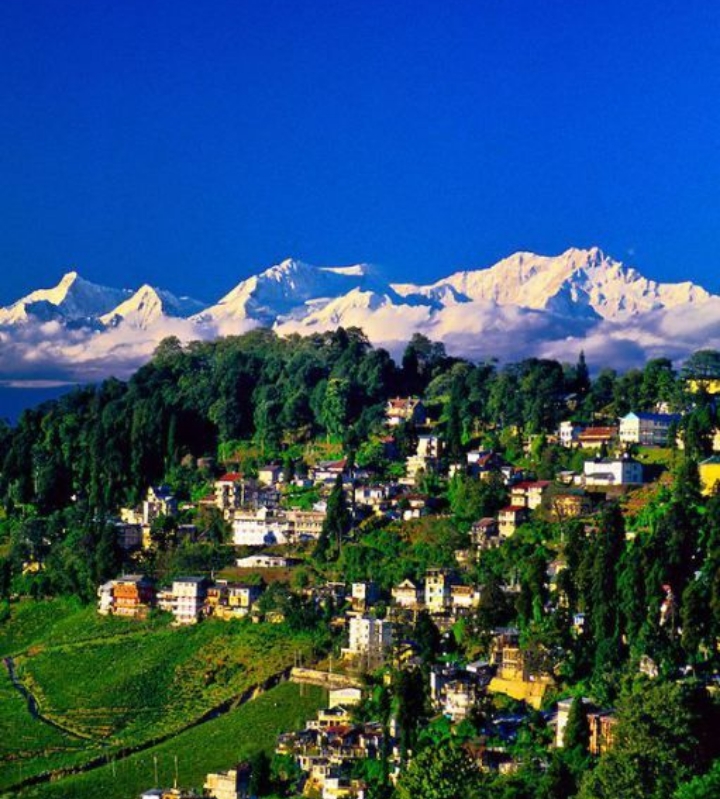
4) Darjeeling, West Bengal

Darjeeling also know as Queen of Himalayas, has jaw dropping and mesmerizing sunrises, the breathtaking beauty of the hills, the charm of past and all those beautiful smile of beautiful people. It is one of the most appealing hill station. And all chai lovers it offers best quality chai. Hotels and lodges are at reasonable price and it’s also cheap. Must visit places include Darjeeling Himalayan railway, Tiger hill, Batasia loop, Himalayan mounteering institute, Darjeeling ropeway and Nightingale park. Average 4 days/ 5 nights will cost around 8,375 Rs per adult on twin sharing. Best time to visit is from February to March and September to December.

So these are the places that have jaw dropping and breathtaking beauty. Apart from this they are also very affordable and hence you can easily visit with low money in your pocket. You can even check rates on different websites and there you may can get offers too. Hope you all like it.

5 Writs in Indian Constitution

Know about how to voice for your rights, legal bounds, and solve wrong conducts or mistakes by legal officials.

Writs! What do you mean by writs?

In common law, a writ is a formal written order issued by a body with administrative or judicial jurisdiction; in modern usage, this body is generally a court. Warrants, prerogative writs, and subpoenas are common types of writ, but many forms exist and have existed.

Why are Writs needed?

It is a constitutional remedy available to a person to bring his complaint or grievance against any administrative action to the notice of the court.

Types of Writs:

  • Writ of Habeas Corpus
  • Writ of Mandamus
  • Writ of Certiora
  • Writ of Prohibition
  • Writ of Quo-Warranto,

WRIT OF HABEAS CORPUS

It is also known as the “great writ”

Habeas Corpus means “Let us have the body.”. In other words, it means “you may have the body” which means that a person under arrest is to be brought before a judge or into court. It is an important writ for personal liberty. A person, who is arrested, can move the Court for the issue of Habeas Corpus. 

It is an order by a Court to the detaining authority to produce the arrested person before it so that it may examine whether the person has been detained lawfully or not. It ensures that a prisoner can be released from detention if the Court is convinced that the person is illegally detained—that is, detention lacking sufficient cause or evidence.

The person under arrest or any another person on his behalf can file a writ in this. Formal and informal applications in respect of the writ is accepted by the Courts. It is only a procedural remedy and does not necessarily protect other rights, such as the entitlement to a fair trial. A person cannot make the application for the Writ successively to different judges of the same court. 

In India, writs are issued by the Supreme Court under Article 32 of the Constitution of India and by the High Court under Article 226 of the Constitution of India.

Writ of Mandamus:

Mandamus means “We Command”. Mandamus is an order from a superior court to a lower court or tribunal or public authority to perform an act, within its duty. In short, it is an order to perform a duty which should have done but failed to do so.  It is the discretionary power of a court. It is simply to ensure rights are ensured and the Government Authorities perform their duties.

The writ of mandamus can be granted when there is right to compel the performance of some duty cast upon the authority. It can also be issued to public authority to restrain it from acting under a law which has been declared unconstitutional. The petitioner has a right recognized by law.

The writ cannot be granted when

  • Duty is not compulsory.
  • Against a private individual, private organization since they are not entrusted with public duty. 
  • To enforce an obligation arising out of contract.
  • Where the right of the petitioner has lapsed

Writ of Certiora

Certiorari means to be certified. The Writ of Certiorari can be issued by the Supreme Court or any High Court for retracting the order which is already passed by an inferior court and to properly investigate the matter and opinions objectively. A writ of certiorari is only granted when a Court has acted without or in excess of its jurisdiction and For correcting error of law. It cannot lie to remove merely ministerial act or to remove/cancel executive administrative acts. It is corrective in nature which means the purpose of this Writ is to correct an error.

When there is an error apparent on the record, it becomes a valid ground for issuing the Writ of Certiorari.

Certiorari can be resorted to only after the order or decision has been announced.

Writ of Prohibition

Writ of prohibition means to cease or to stop. it is also known as a ‘Stay Order’. When a lower court or a body tries to perform an action outside its jurisdiction, This Writ issued by a superior court to lower court or a tribunal to prohibit or forbidden it to do so. The Supreme Court can issue this Writ only where a fundamental right is affected.

In cases where the court is partly acting within its jurisdiction and partly outside it, the Writ will be issued against the act which is partly outside its jurisdiction. This Writ can be issued only when the proceedings are pending in the inferior court and not when an order has already been passed by that court. The Writ of Certiorari can be issued only when the order has passed.

Writ of Quo-Warranto

The word Quo-Warranto literally means “by what warrants?” and ‘by what authority’. It is issued restraining a person from acting in a public office to which is out of bounds. The business or the office in question is public office. The issue of summon is followed by legal proceedings, during which an individual’s right to hold an office or governmental privilege is challenged. 

Grounds on what it is issued.

The nature of the duties which arises from this office is public. The person against whom the Writ is sought to be issued is in actual possession of the office and is using such office.

STUNNING NATIONAL PARKS OF INDIA

Beyond India’s booming metropolis, wildlife enthusiasts can discover idyllic sanctuaries teeming with life. India’s national parks, numbering in the hundreds, cover around 15,600 square kilometers of protected land. Discover and appreciate all that nature has to offer by visiting these gorgeous wildlife National Parks. Enjoy breathtaking panoramas, adrenaline-pumping jeep safaris, and sightings of rare and ferocious creatures.

 Kaziranga National Park, Assam

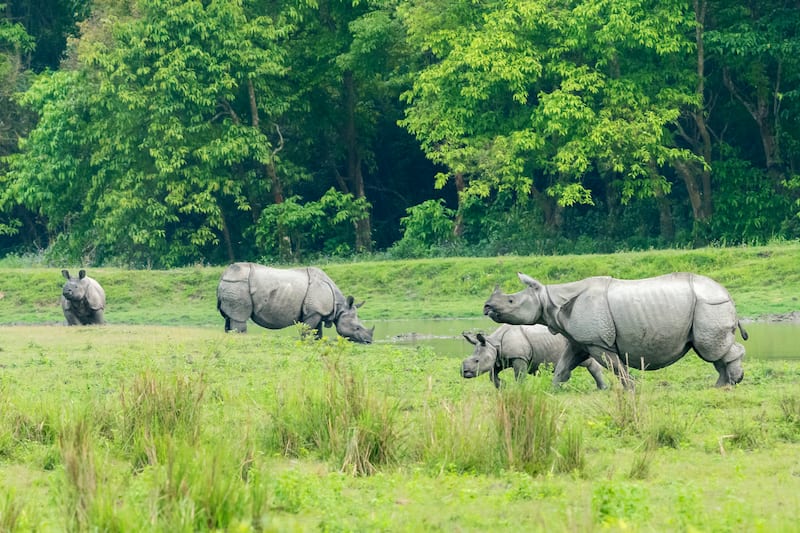
On the floodplains of the Brahmaputra River, Kaziranga National Park lies partly in Golaghat District and partly in Nagaon District of Assam. Established in 1905 as a forest preserve to save the greater one-horned rhinoceros from extinction, it is Assam’s oldest park, encompassing 430 square kilometers. It’s among the few untouched natural places in India’s north-eastern region. 

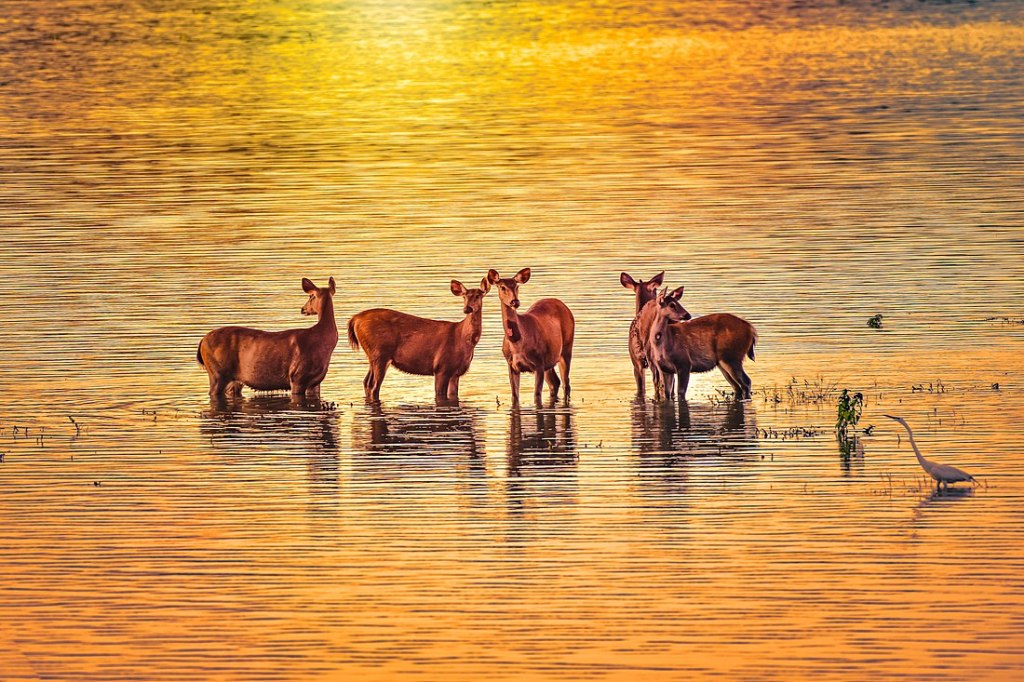
With its elephant-grass meadows, swampy lagoons, rugged reeds, marshes, shallow waters, and dense woods, Kaziranga National Park is one of India’s most popular wildlife tourist hotspots. Over 2200 Great Indian one-horned rhinoceros call it home, accounting for roughly two-thirds of the world’s total. Tigers can also be sighted here, camouflaged among the elephant grass and lush forest. There are also buffalo, rare swamp deer, and river dolphins to witness. In 1985, it was declared as a UNESCO World Heritage Site. The park is open all year, however, during monsoon season in July and August, it may close owing to flooding.

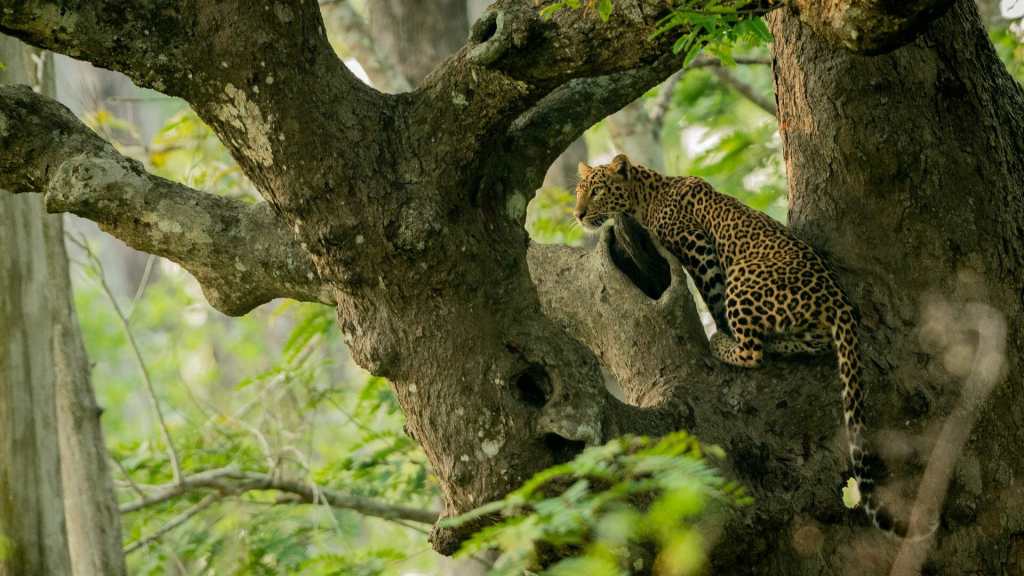
Nagarhole National Park, Karnataka

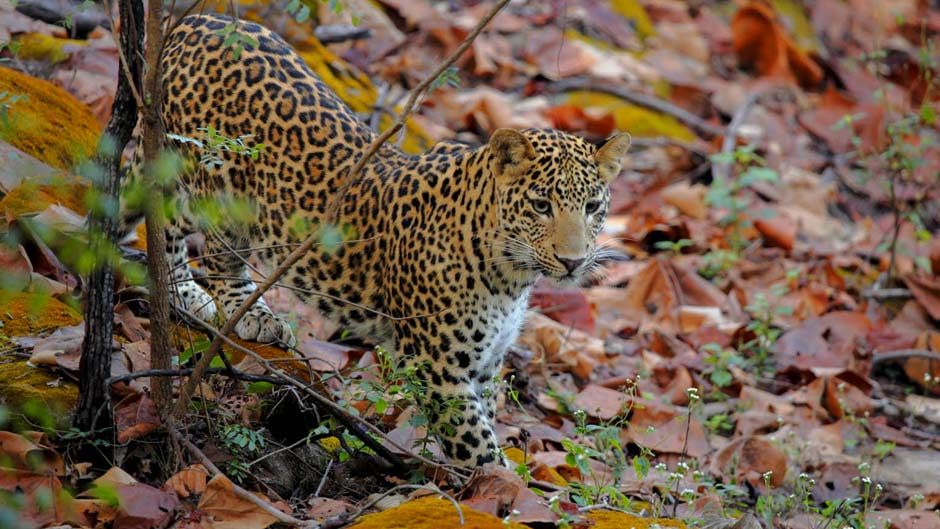
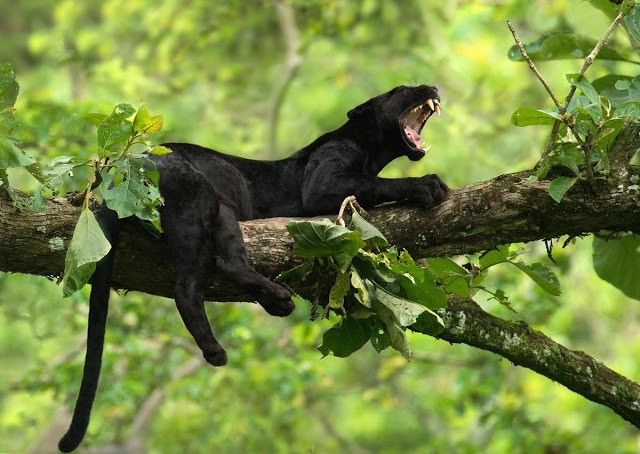
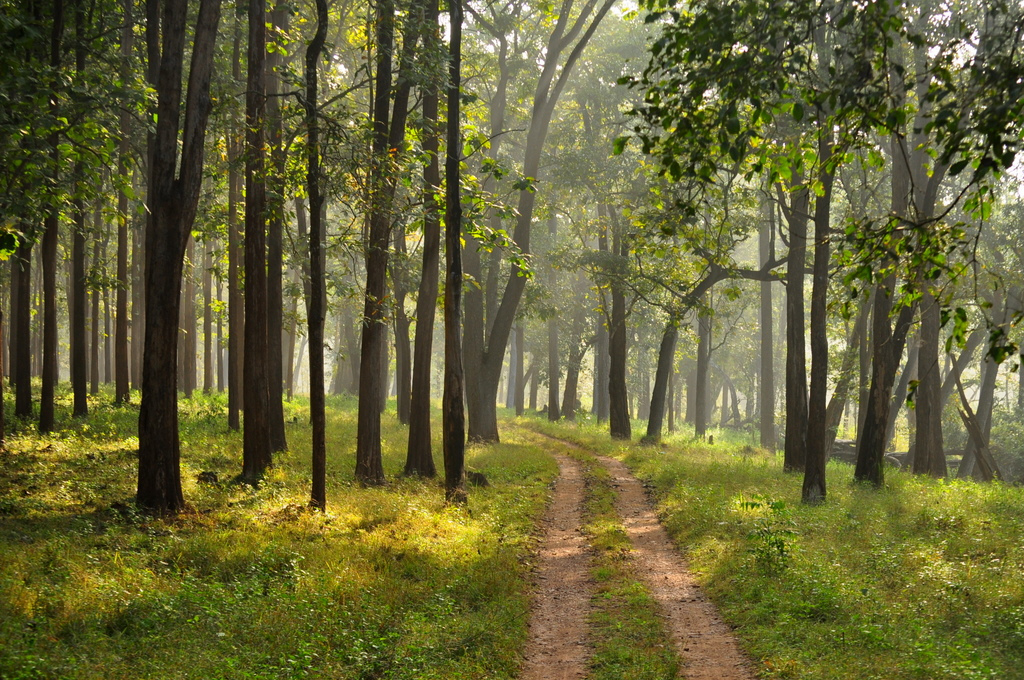
Nagarhole National Park, also known as Rajiv Gandhi National Park, is the enchanting 247 square-mile-long wild reserve located in Kodagu and Mysore district. It is one of the best places in the world to see leopards. It was designated as India’s thirty-seventh Tiger Reserve. UNESCO has designated it as a World Heritage Site. The park, ringed by the Western Ghats, is abode to aromatic sandalwood and teak trees, dense bamboo groves, and myriads of streams, including the Lakshmmantirtha River, Sarati Hole, Nagar Hole, BalleHalla, Kabini River, four perennial streams, 47 monsoonal rivulets, four small perennial lakes, 41 manmade tanks, several swamps, Taraka Dam, and the Kabini reservoir.

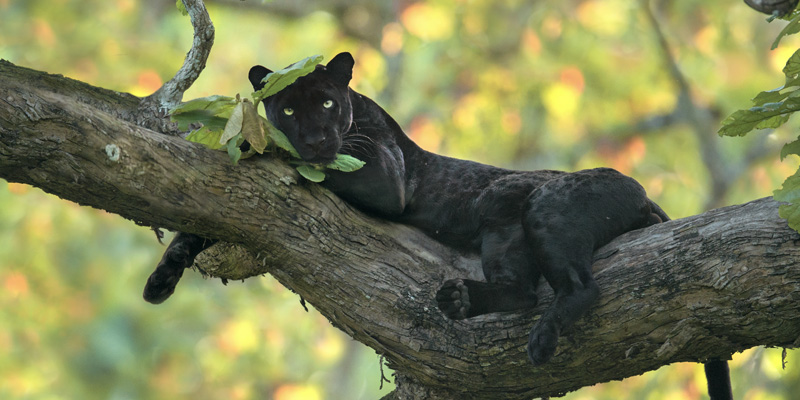
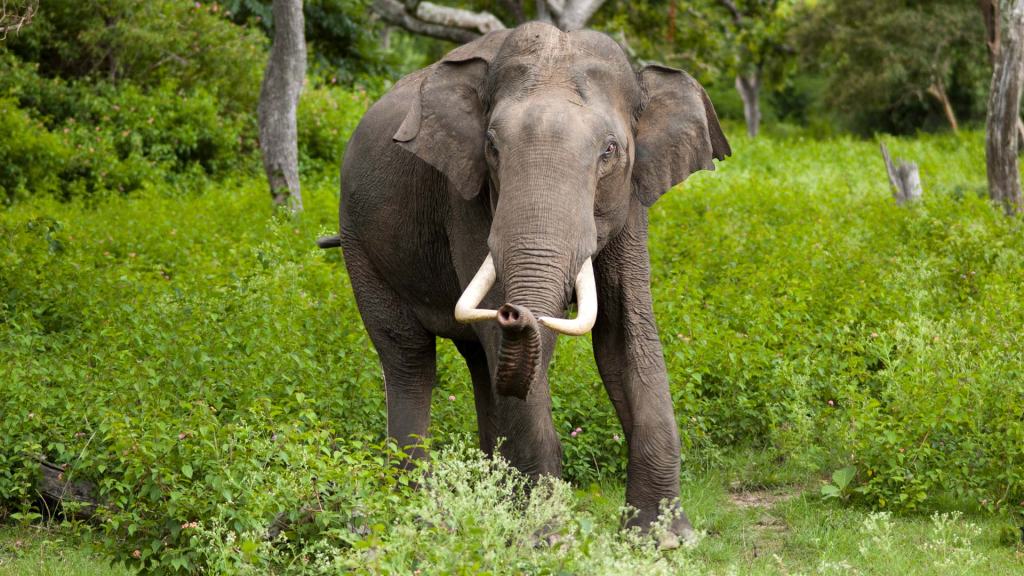
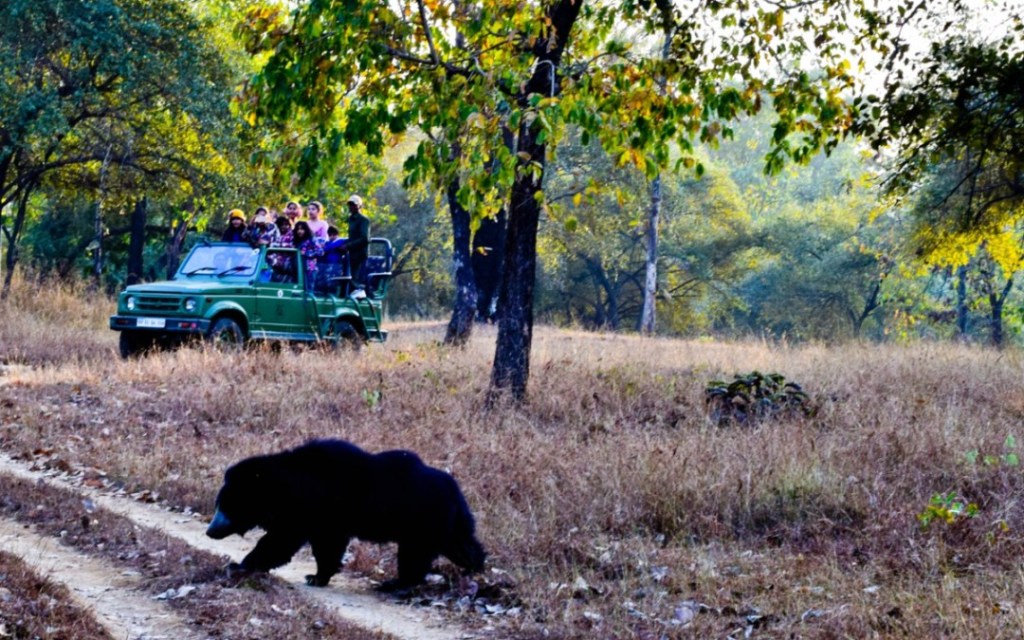
It houses ferocious predators like Bengal tigers, leopards, wild dogs, sloth bears, and hyenas. Many herbivores like spotted deer, sambar, barking deer, four-horned antelope, Bosgaurus, wild boar, and elephant, dwell in the girded region. The Bonnet macaque, jungle cat, slender Loris, common langur, civet cat, leopard-cat, mongoose, common otter, giant flying squirrel, porcupine, jackal, mouse-deer, hare, and pangolin, can also be spotted. Around 250 bird species can be spotted in the Nagarhole area, including the blue-bearded bee-eater, scarlet minivet, and Malabar whistling thrush, as well as ospreys, herons, and ducks.

The marsh crocodile, monitor lizard, rock python, and plenty more species are the most abundant reptiles in the vicinity. Marine and terrestrial tortoises, frogs, toads, and tree frogs, as well as a plethora of insects, including some very vibrantly colored butterflies, dwell in this lush southern Indian forest. A jeep expedition is the finest way to see big cats, whereas a leisurely cruise across the Kabini River in a coracle (a small circular boat) provides splendid views of aquatic birds, crocodiles, and Indian elephants.

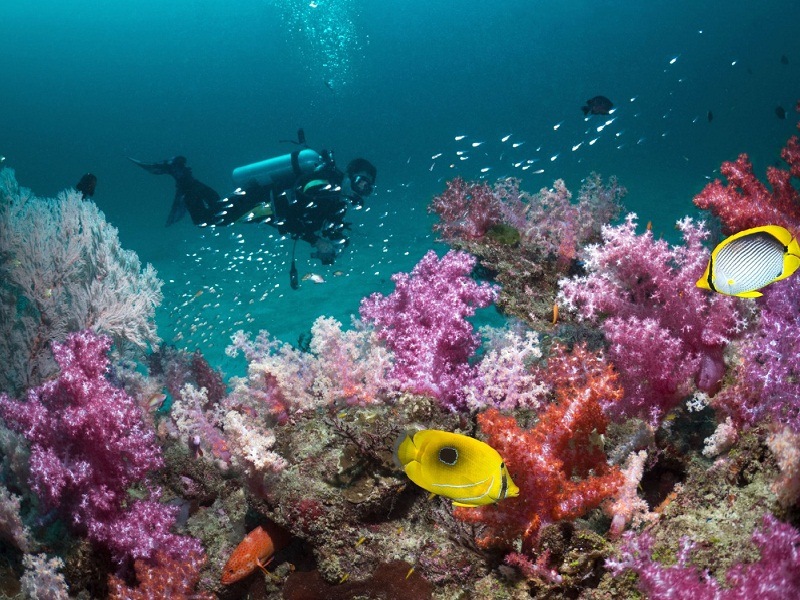
Mahatma Gandhi Marine National Park, Andaman Islands

The Mahatma Gandhi Marine National Park is located 29 kilometers west of Port Blair and occupies an area of 281.5 sq. km. There are open seas, waterways, and 15 small and big islands in this vicinity. Rare corals and underwater aquatic life can be seen from glass-bottom boats. Tourists can also enjoy scuba diving and snorkeling. Guided excursions of the Mahatma Gandhi Marine National Park are available through private ferry operators. As part of the guided tours, visitors are also allowed to spend two and a half hours on Jolly Buoy Island or Red Skin Island. It was founded to safeguard marine life, notably sea turtles and coral reefs.

Hemis National Park, Jammu & Kashmir

Hemis National Park, the largest national park in South Asia,  is situated in the eastern section of the Ladakh district in Jammu and Kashmir, India. The park is host to 17 mammal species and 73 bird species. Leopards, Asiatic ibex, Tibetan wolf, Eurasian brown bear, and red fox are among the area’s endangered fauna. It also plays host to 200 leopards and is India’s sole Ladakhi Urial habitat. Small creatures such as the Himalayan marmot, mountain weasel, and Himalayan mouse hare call it home.

It’s an excellent spot for bird watchers. Brown Accentor, Robin Accentor, Tickell’s Leaf Warbler, Streaked Rosefinch, Tibetan Snowfinch, Chukar, Fork-tailed Swift, Red-billed Chough, Himalayan Snowcock, Fire-fronted Serin, golden eagle, Lammergeier vulture, and Himalayan griffon vulture can all be spotted here. The picturesque splendor of the national park is very well-known. It’s a visual feast, with lofty mountains and alpine juniper and subalpine dry birch forests. The Stok Kangri summit can be seen from the park. The park’s boundary is the confluence of the Indus and Zanskar rivers, which is a beautiful sight.

Satpura National Park, Madhya Pradesh

Satpura National Park, located in the Hoshangabad district of Madhya Pradesh, is a magnificent wildlife park with a total area of 524 square kilometers. It is home to 52 mammal species, 31 reptile species, and 300 bird species, 14 of which are endangered.

For animal enthusiasts, it is a stunning jungle paradise. Leopards, tigers, chitals, nilgais, four-horned antelopes, bhedkis, rhesus monkeys, wild boars, deer, foxes, flying squirrels, and Indian joint squirrels are just a few of the wildlife that may be discovered here. Satpura Park’s biodiversity is impressive, with over 1300 species of flora, notably teak, sal, tendu, mahua, bel, bamboos, grasses, bushes, and other medicinal plants possessing therapeutic and medicinal effects. Besides, there are several bird species like the Malabar pried hornbills, crested hawk eagles, honey buzzards, paradise flycatchers, thrushes, pheasants, and peafowl. One can enjoy the Jungle Safari by Jeep, boat, or elephant.

Something about India

Photo by Still Pixels on Pexels.com

India is in her 75th year of independence and about to enter the 76th year. India- the 7th largest country by size, the 2nd most populous country and the world’s largest democracy. Celebrating our 75th Independence day, let us have a brief look on some interesting facts about India.

  1. India has, in the last 100000 years, not once invaded any country. She truly imbibes the spirit of ‘ Vasudhav Kutumbakam’ (‘The whole world is a family’).
  2. Algebra, Trigonometry and Calculus – prominent fields of study in mathematics finding their uses even in physics and all related fields, originated in India.
  3. The Baily Bridge- the highest bridge in the world,  located in the Ladakh valley between the Dras and Suru rivers in the Himalayan mountains, was built by the the Indian Army in August 1982.
  4.  Hinduism, Buddhism, Jainism, and Sikhism, followed by 25 percent of the world’s population, find their roots of origin in India.
  5. Jews and Christians have lived in India since 200 B.C. and 52 A.D. respectively. “Unity in diversity” forms the very foundation of India.
  6. The value of “pi” was first calculated by the Indian Mathematician Budhayana. He gave the concept of the Pythagorean Theorem in the 6th century, long before the European mathematicians.
  7. Quadratic Equations were used by Sridharacharya( 11th century). The largest numbers the Greeks and the Romans used were 106 whereas Hindus used numbers as big as 10*53 (i.e. 10 to the power of 53) (as early as 5000 BC- Vedic period)
  8. Ayurveda is the oldest school of medicine known to the whole world (founded by the father of medicine, Charaka, 2500 years ago.) , chess originated in India about 1500 years ago and yoga about 5,000 years ago.
  9. Bhaskaracharya had calculated the time taken by the earth to orbit the Sun hundreds of years before the astronomer Smart. (predicting it to be around 365.258756484 days.)
  10. India has the third highest number of billionaires (140 billionaires), after USA and China.
  11. India has the oldest cuisine in human history and the Indian tea dates back to 750 BCE.
  12. Shampooing is an Indian concept. (earlier herbs were used as shampoo)

Source: https://knowindia.gov.in/my-india-my-pride/interesting-facts-about-india.php