How & What Mindset build a better world?.

As a general rule, it’s more profitable to leverage your strengths than it is to fix your weaknesses.

This is especially true when we are talking about skills: focus on what you do well, and let someone else do the stuff that you struggle with.

There’s one huge exception to this general rule however: bad mindsets.

A bad mindset is not just any ordinary weakness, it is a criticalweakness that will hamstring your effectiveness if you don’t address it.

One example of an unhealthy mindset is the scarcity mindset. The scarcity mindset views things like wealth, success, and fame as something like a pie. There’s only so much to go around and if one person takes too big of a slice, everyone else gets less.

In this worldview, Bill Gates is inherently evil, regardless of how much good that he has done for society, regardless of how much he has helped others, both through his products and through his foundation. He’s evil because he took too big of a slice and didn’t leave enough for the rest of us.

To whatever extent you find yourself resenting rich and successful people, you have a scarcity mindset.

To whatever extent you find it difficult to be truly, genuinely happy for the success of others, you have a scarcity mindset.

The alternative to a scarcity mindset is an abundance mindset . The abundance mindset says that we can create more value for everyone. Instead of viewing wealth and success as a zero-sum game, we can create win-win situations where everyone comes out better than they were before.

If you have a scarcity mindset, you will find it hard to collaborate with others because their gains are your losses. If you have an abundance mindset you will readily collaborate with others because you recognize that you can create more value that way.

That phrase “create value” is crucial to the abundance mindset. Value, and thus wealth, doesn’t just exist, it can be created. We’re not limited to dividing up the pie we currently have. We can make the pie bigger. We can make new pieces.

In fact, if you really want to get ahead, the way to do so is not by looking out only for your interests, but the interests of others.

Instead of suspiciously hoarding all you have to offer until you see an opportunity to leverage it for profit, the best strategy is to be generous. Generous with your time, generous with your knowledge, generous with your skills.

If you really think hard about how exactly the people who are making a full-time living online are doing it, the simplest answer is generosity. They pour their time and energy into creating valuable content that helps people and they build a following of true fans — people who trust them and are grateful for their contributions. When they finally release a product, they have legions of eager customers.

I once heard Darren Rowse, the blogger behind Digital Photography school and a ProBlogger , describe his first product. It was an ebook called “31 Days to Build a Better Blog.” It wasn’t new material. He had already done a series on his blog called “31 Ways to Build a Better Blog” and just added a few things and repackaged it as an ebook.

Why would anyone want to buy something that was available online for free? One reason might be that they value the efficiency of having it all in one place so they don’t have to search through his archives when they want the info. One reason might be that people just like the thought of owning something.

But a surprising reason was revealed through several people who emailed him saying that they knew they could get the info for free, but bought the ebook anyway because it was the first opportunity they had to thank Darren for all he had done for them.

Think about that for a second. His product offered little in the way of new value, but customers happily bought because Darren had created such a surplus of value for them.

Counter-intuitiviley, one of the best strategies for getting ahead is to give generously.

The scarcity mindset is forced to always ask “what do I get from this transaction?” The abundance mindset is free to ask “what can I give in this transaction?”

A really interesting book that I read recently was called Secrets of The Millionaire Mind . This book very closely ties your ability to get rich to your mindset. The idea is that your thoughts and your feelings drive your actions, and your actions determine your results.

He says that people have a “financial thermostat.” Just like a house is set for a certain temperature, each person is programmed for a certain level of wealth. Just like the temperature in a house can fluctuate even with the thermostat on (the temperature outside the house might change rapidly or maybe someone leaves a window open), a persons level of wealth can fluctuate based on external circumstances. But as long as the thermostat is set to a certain level, that is where they will default back to in the long run.

The only way to become truly wealthy in his view is to reprogram the thermostat — to change your mindset as it relates to money.

You need to ditch the ways of thinking that are holding you back and embrace the ways of thinking that can move you forward.


So, have a abundance mindset and go forward in your life. Remember, it always the giver who gets benefits more then who charge for there givings.

See yaa..

Don’t forget your roots, your Parents

Article by – Shishir Tripathi

Intern at Hariyali Foundation
In collaboration with
Educational News

When a child is born, the two happiest souls on the earth are the parents. It is a lovely creation of god and it is a part of their body. The child now grows up. Shouts in the afternoon, cries in the night and the parents, they are continuously engaged in handling the baby. After sometime child starts calling ‘mummy’ and ‘papa’, and listening this is a dream of every parent. Now as time passes by the kid starts going to school, then college, then the little child who is developed into an adult gets a job and finally gets married to someone.

But as it is general rule that time passes for everyone, for the child’s transformation into an adult and the younger parents getting older by each passing day. Initially it was the responsibility of the parents to take care of that innocent infant but in old age parents need attention from the children, they want someone to talk them, to listen them but unfortunately only few elderly people are lucky in true sense to have responsible children.

In India as people are following the west, the culture of living in a joint family is ending and now people want privacy. Privacy is so important for these grown up children that even their parents who made them enter the world become just a burden.

People in the name of being modern are leaving their parents all alone to agonize in their loneliness and old age. Human beings when become older certain physical and mental changes happen inside the body and let me tell you, which is all very natural. Everyone goes through the same phase and ha to go through the same phase. One can’t reverse the time; hence not even the ageing factor too. People send their parents to old age homes, so that their parents won’t disturb their private and married life.

Development is good, accepting the new trends and getting familiar with the current time is also good but leaving them all alone for agonizing with hunger and loneliness, who gave birth to you, taught you walking talking, eating and what not. In India many children leave their parents and get settled somewhere else and never comeback. Parents who were so happy that they’ve got such cute and lovely kid whom they’ll be making a good, responsible adult, are left with pain, sadness and tears.

There are many incidents to prove the same. Recently, one year back it was in news that an old woman jumped off from the terrace of her building. Everyone including his son and daughter in law were all, so sad. But after investigation and the CCTV footage it was revealed that the son himself dragged her mother upstairs and throws her away from the terrace as she was old and suffering from a disease. This is so painful to listen and read. The mother who carried him in her womb for 9 months facing all the pains and difficulties was killed by his son himself. Hearing and listening such incidents, shatter the heart.

The mind is compelled to think that how these so called civilized but uncultured and heartless children do such shameful acts against Humanity. Parents are the protective shield who prevent their children from landing into different types of problems.

The world will progress each day, each year, but an individual needs to stay grounded and humble towards his or her parents. Parents are the ones who spent their entire life in forming the future and the entire life of their children and this must not be forgotten. Parents and elderly are needed to be given proper respect and attention. The responsibility of taking care of their parents’ physical as well as mental health has to be taken by the children only.

Therefore it is time to meet and hug your parents and making themselves feel so good that yes, they are not alone. Their children are there beside them in this life of journey.

And each parent deserves all the happiness and respect from his children.


Remember readers.

Superstitions in India

Superstition refers to any belief or practice that is explained by supernatural causality, therefore contradicting modern science. Some beliefs and practices that are considered superstitious by some may not be considered so by others. The gap between what is perceived as superstitious and what is not widens when the opinions of the public and scientists are considered.

Common superstitions in India today include a black cat crossing the road being bad luck, a crow calling meaning that guests are arriving, drinking milk after eating fish causing skin diseases, and itchy palms signalling the arrival of money.

Superstitions are usually attributed to a lack of education. In India, however, there have been educated people with beliefs considered superstitious by the public. According to the 2011 census, the literacy rate of India is at 74%. Beliefs and practices vary in different regions. Practices range from harmless lemon-and-chili totems for warding off the evil eye to serious concerns like witch-burning. Passed down as part of tradition and religion, these beliefs and practices could be at least a century old. Due to the rich history of these beliefs and practices, the introduction of new prohibitory laws often faces opposition from the general public.

Sati

Sati is the act or custom of a Hindu widow burning herself to death or being burned to death on the funeral pyre of her husband. After watching the Sati of his own sister-in-law, Ram Mohan Roy began campaigning for abolition of the practice in 1811. The practice of Sati was abolished in British India in 1829 by Governor General Lord William Bentinck.

On 4 September 1987, 18-year-old Roop Kanwar, from Deorala, Sikar District, Rajasthan, who had been married for 7 months, was burned to death on her husband’s pyre. It was alleged the victim had tried to escape, but she was drugged and forced on to the pyre. On 1 October 1987, The legislative assembly of Rajasthan passed an ordinance against Sati, which was later turned into an Act. It was followed by pro-Sati rallies and protests in Jaipur. On 3 January 1988, the Indian parliament passed a new law (Prevention of Sati Act 1987) based on Rajasthan’s legislation of 1987, which also criminalized the glorification of Sati. Police charged Kanwar’s father-in-law and brother-in-law of allegedly forcing her to commit the act, but they were acquitted in October 1996.

Human sacrifice

Although human sacrifices are not prevalent in India, rare isolated incidents do happen, especially in rural areas. In some cases, humans have been replaced by animals and birds. This has caused backlash from animal rights groups, so in some places they have again been replaced by human effigies. The motives behind these sacrifices include inducing rainfall and helping childless women conceive. It is alleged that cases often go unreported or are covered up. Between 1999 and 2006, about 200 cases of child sacrifices were reported from Uttar Pradesh.

Godmen

The word godman is a colloquial blanket term used for charismatic spiritual leaders in India. Locally, they may be referred to as baba, swami, guru, shastri, bapu or bhagat. Many of them claim to have magic or psychic powers and perform miracles. On the other hand, some only provide spiritual advice. There are also female gurus. Many of them are worshiped by their followers as avatars or living gods. Many of them belong to ancient ascetic lineages or claim to be successor to some previous spiritual predecessor. Some of them have built large pan-Indian or international networks. Their recent success has been attributed to the use of mass media and public relations techniques.

Witch-hunts

Some people, mostly in villages, have the belief that witchcraft and black magic are effective. This prompts some to seek advice from witch doctors for health, financial or marital problems. Unfortunately, others, especially women, are accused of witchcraft, attacked, and occasionally killed. According to reports, widows or divorcees tend to be targeted to rob them of their property. Revered village witch-doctors are paid to brand specific persons as witches, so that they can be killed without repercussions. The existing laws have been ineffective in curbing the murders. In June 2013, the National Commission for Women (NCW) reported that according to National Crime Records Bureau statistics, 768 women had been murdered for allegedly practicing witchcraft since 2008. Alongside this, they announced plans for newer, more stringent laws.

Crimes against Women: soot on the golden image of Bharatvarsh

Article by – Shishir Tripathi

Intern at Hariyali Foundation
In collaboration with
Educational News

From ancient times, India has been known for its culture, its traditions and the simple lifestyle that people follow here, diverse geographical and cultural variations. But still India is also known to be as one of the most unsafe countries for women. Mentioning India’s rank is not at all important as that won’t make a very big impact in justifying that India is a safer Nation for women.

Crimes against women are increasing day by day. Domestic Violence is one of the major crimes in India against women and rape is the second biggest crime in India against women. One rape was reported every 15 minutes in India in 2018. The central state of Madhya Pradesh reported the highest number of rape cases across India in 2018, with over five thousand. Northern states Rajasthan and Uttar Pradesh followed during the measured time period. Overall, the country reported over 33 thousand cases of rape that year.

Being a Nation with a patriarchal society, status of women in India has more or less been the same. Even it has degraded and still degrading. The Mathura first rape case that was an incident of custodial rape in India on 26 March 1972, wherein Mathura, a young tribal girl, was allegedly raped by two policemen on the compound of Desaiganj Police Station in Gadchiroli district of Maharashtra. After the Supreme Court acquitted the accused, there was public outcry and protests, which eventually led to amendments in the Indian rape law via The Criminal Law Amendment Act 1983 (No. 43) .

Another case of rape, known as Delhi Rape case shattered every Indian that happened in 2012 and the incident took place when Jyoti Singh, a 23-year-old female physiotherapy intern, was beaten, gang-raped, and tortured in a private bus in which she was travelling with her male friend. There were six others in the bus, including the driver, all of whom raped the woman and beat her friend. Eleven days after the assault she was transferred to a hospital in Singapore for emergency treatment but died two days later. Four adult convicts sentenced to death; hanged on 20 March 2020 at 5:30 AM at the Tihar Prison Complex, New Delhi.

So it is evident that a victim dies and after that the whole nation has to do online protest and come on the roads. And after all this pressure, the victim’s family gets the justice that too after years. Many rape cases go unreported as in Police station; the victim is being told about the family’s respect and outside the police station the accused, threatens the victim to death. Even if the cases get registered by the police, they are left pending, unattended. More than 32,500 cases of rape were registered with the police in 2017, about 90 a day, according to the most recent government data.  Indian courts disposed only about 18,300 cases related to rape that year, leaving more than 1,27,800 cases pending at the end of 2017.

Other crimes like domestic violence have also been increased especially during this lockdown period that occured in months of March and April. In the country, the number of domestic violence complaints received by the National Commission for Women has doubled from 123 distress calls to 239 domestic violent complaints from March 23,2020 to April 16,2020.

Many other crimes against women like acid attacks, domestic violence are so prevalent in India. Each day, the newspaper filled with cases of crime against women. Newly married brides are forced to get more dowries from their homes and are tortured and sometimes get killed. Many videos go viral on social media where women are beaten publicly, why? Just because they are weak and women!
The mentality of the people is the only thing that is needed to be changed. Formulation of strict laws like all other nations should be there against crimes like rapes, acid attacks, etc. Vulgar material in the form of videos and images on internet objectifying women needs to be permanently banned so that a woman is not looked upon as an object in reality. As soon as the crime is proved, the accused should be given strict punishment and are needed to be given the same level of torture, they gave to the victim. A strict message is needed to be passed so that people with shitty mindsets should fear from committing such crimes and ruining the lives of the innocent victims.

Therefore it is much needed that something so strict is needed to be done by the government so that the nation must not get converted into chaos for the women and all other people who want to live a life freely and safely with proud and respect.

India and Bangladesh to hold virtual summit in December

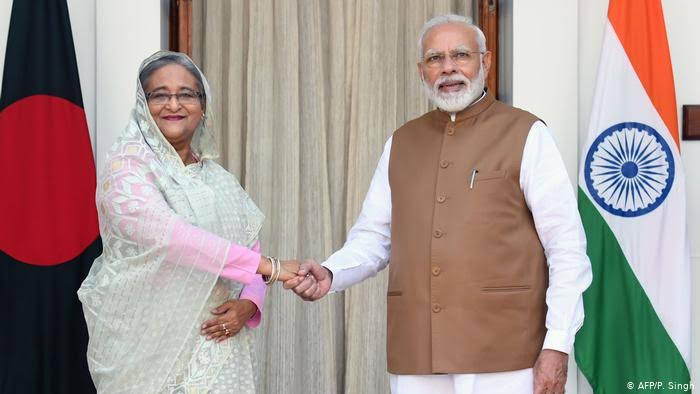
India-Bangladesh bilateral summit is likely to be held in December. A final call in this regard will be taken during the foreign ministers’ meeting on Tuesday, sources tell India Today.

There is a possibility of the summit being a virtual one if the Covid-19 situation does not ease by the end of this year, sources said. In the case that the bilateral summit is held physically, Prime Minister Narendra Modi is likely to travel to Dhaka to meet his Bangladeshi counterpart Sheikh Hasina.

Meanwhile, the sixth Joint Consultative Commission (JCC) at the foreign ministers’ level is slated to take place virtually on Tuesday. This meeting will be attended by External Affairs Minister (EAM) Dr S Jaishankar in New Delhi and his counterpart Dr AK Abdul Momen in Dhaka.

The two foreign ministers will review the entire spectrum of bilateral relations between India and Bangladesh. Substantial progress has been made in this regard in multiple areas despite the pandemic. The JCC is, in fact, a mechanism to overview the progress and substantial progress has been achieved between the two countries.

The date of the JCC meet was finalised during Foreign Secretary Harsh Shringla’s visit to Dhaka in August and a subsequent phone call with Bangladesh Prime Minister Sheikh Hasina.

According to sources, high-level visits are expected to be discussed during the JCC meet among a range of other issues.

Prime Minister Narendra Modi was unable to visit Dhaka this year for the Mujib Barsho celebrations on account of the Covid-19 pandemic. Since the JCC is meeting during the celebrations, an announcement related to Mujib Barsho is expected, sources added.

Earlier, PM Modi in his inaugural address at the Mujib Barsho celebrations in March had said that Bangladesh’s founder Sheikh Mujibur Rahman is hailed as a “hero” in India too.

The year 2021 seems promising for India-Bangladesh relations since both sides will commemorate 50 years of the Bangladesh Liberation War in which India played a crucial role. Next year will also mark 50 years since India and Bangladesh established diplomatic ties.

Indian Art Style

• Rajasthani miniature art

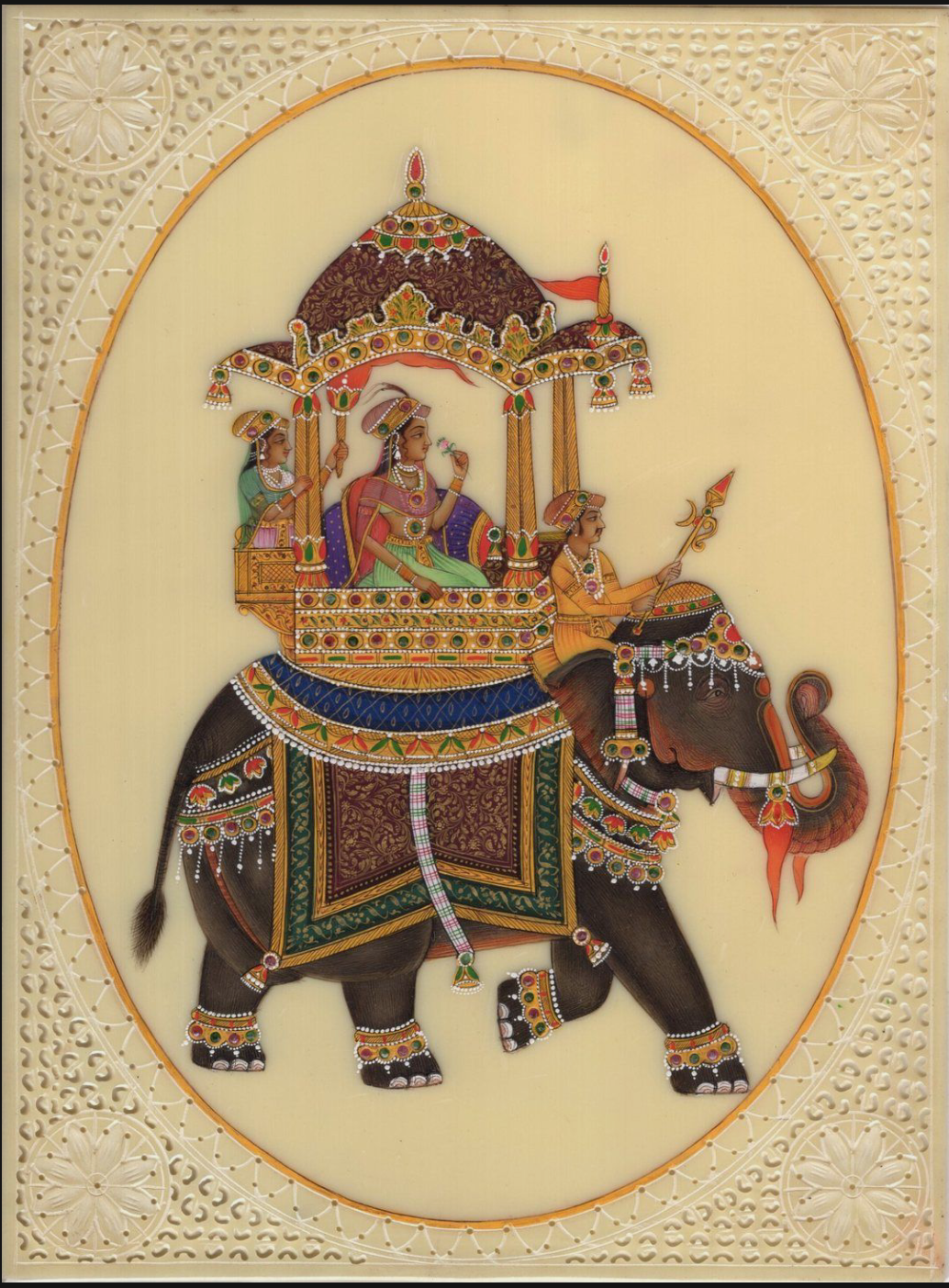
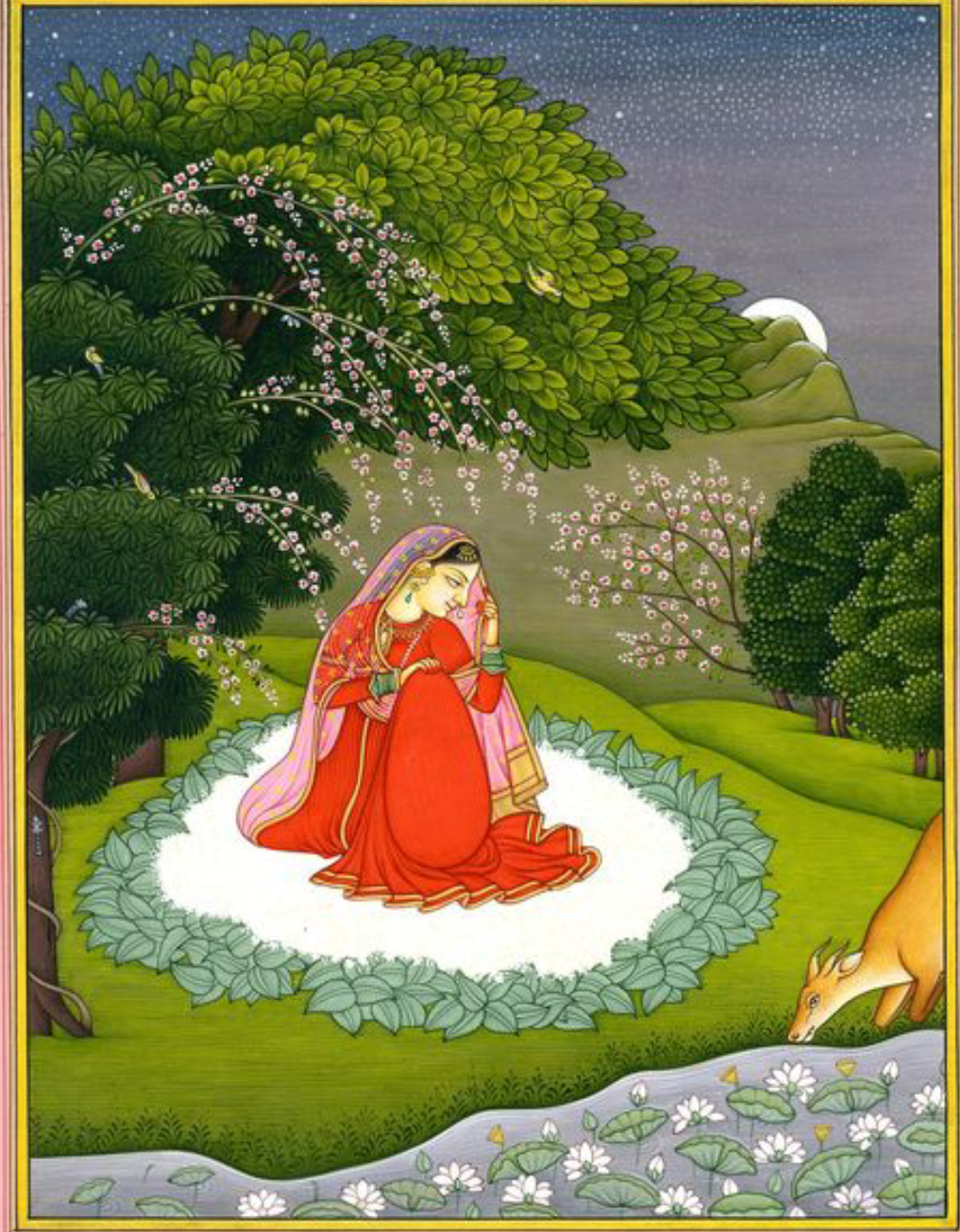
Rajasthan is one of the pioneer seats of miniature painting in India. Rajput painting, also known as Rajasthani painting, is a style of Indian painting evolved and flourished in the royal courts of Rajputana, India. Each Rajput kingdom evolved a distinct style but with certain common features. Rajput paintings depict a number of themes, events of epics like the Ramayana and the Mahabharata, Krishna’s life, beautiful landscapes and humans.

Miniatures in manuscripts or single sheets to be kept in albums were the preferred medium of Rajput painting but many paintings were done on the walls of palaces, inner chambers of the forts, havelis, particularly the havelis of Shekhawati, the forts and palaces built by Shekhawat Rajputs. The colours were extracted from certain minerals, plant sources and conch shells and were even derived by processing precious stones. Gold and silver were also used. The preparation of desired colours was a lengthy process, sometimes taking weeks. The brushes used were very fine.

• Pattachitra

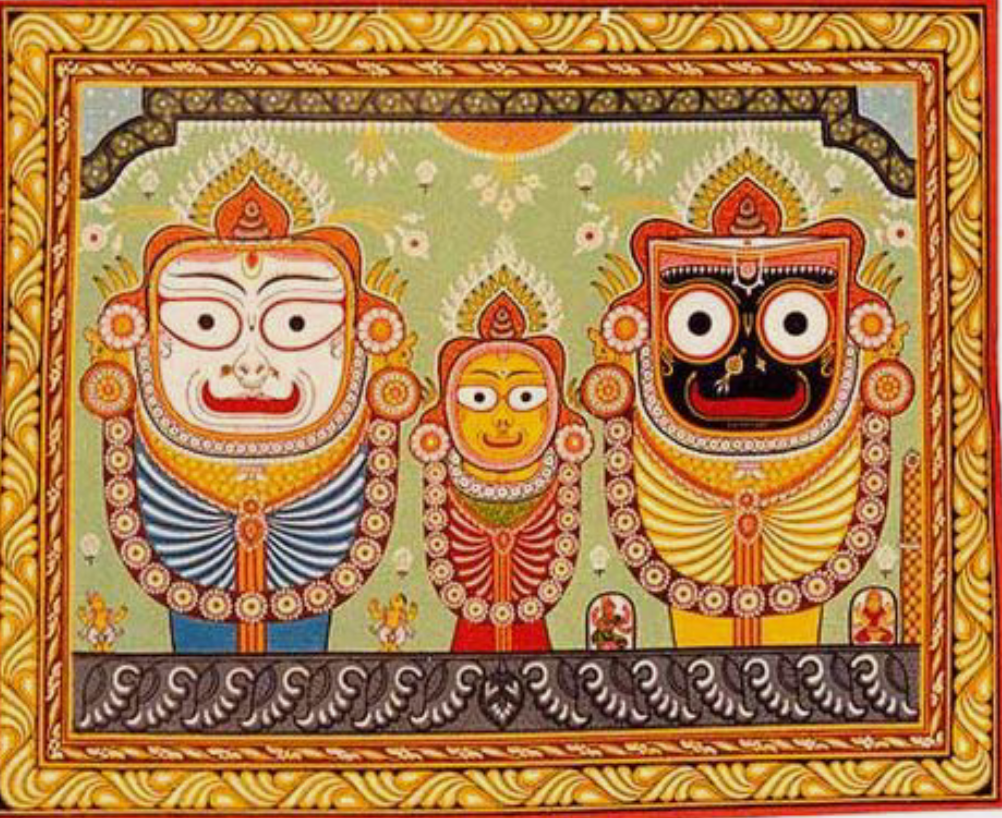
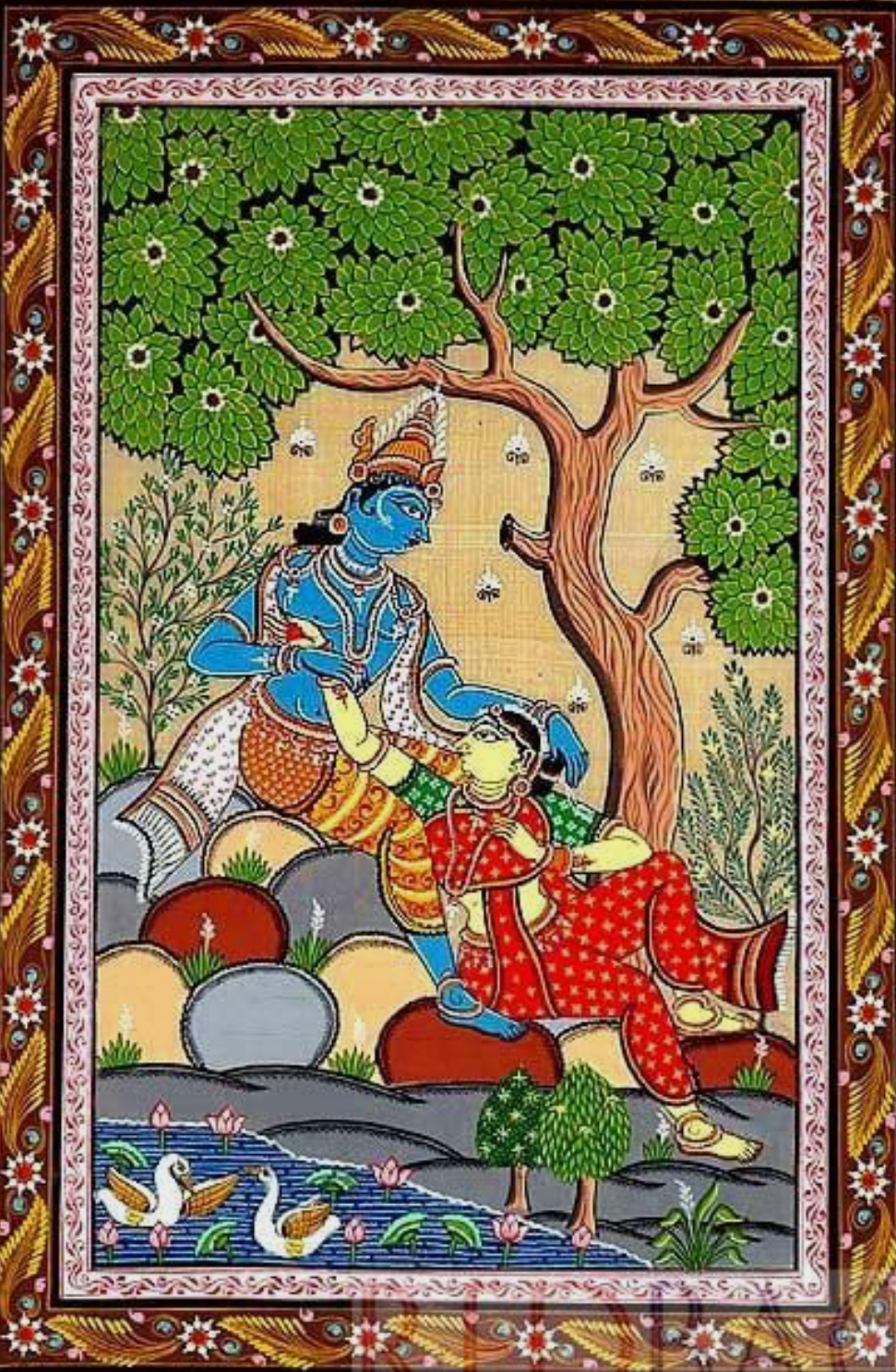
‘Pattachitra’ is a general term for traditional, cloth based scroll painting based in the eastern Indian state of Odisha. In the Sanskrit language, ‘patta’ literally means ‘cloth’ and ‘chitra’ means ‘ picture’. The pattachitra style of painting is one of the oldest and most popular art forms of Odisha.

All colours used in the paintings are natural and the paintings are made fully in the old traditional way by chitrakaras who are Oriya painters. Pattachitra is manifested by a rich colourful application, creative motifs and designs and portrayal of simple themes mostly mythological in depiction. The traditions of pattachitra paintings are more than a 1000 years old. Pattachitra paintings resemble the old murals of Odisha, especially those from the religious centres of Puri, Konark and Bhubaneswar regions, dating back to the 5th century BC. The best works are found in and around Puri, especially in the village of Raghurajpur. The theme of Oriya painting centers round the Jagannath cult and the Vaishnava cult. Since the beginning of pattachitra culture, Lord Jagannath, who is an incarnation of Lord Krishna, has been the major source of inspiration. In the 16th century, with the emergence of the Bhakti movement, the paintings of Radha and Krishna were painted in vibrant shades of orange, red and yellow. There are typical scenes and figures like Krishna, Gopi’s, elephants, trees and other creatures portrayed in these paintings. Krishna is always painted in blue and Gopis in light pink, purple or brown.

Thank you for reading. Have a nice day!🌼

Indian Folk Art

• Warli paintings

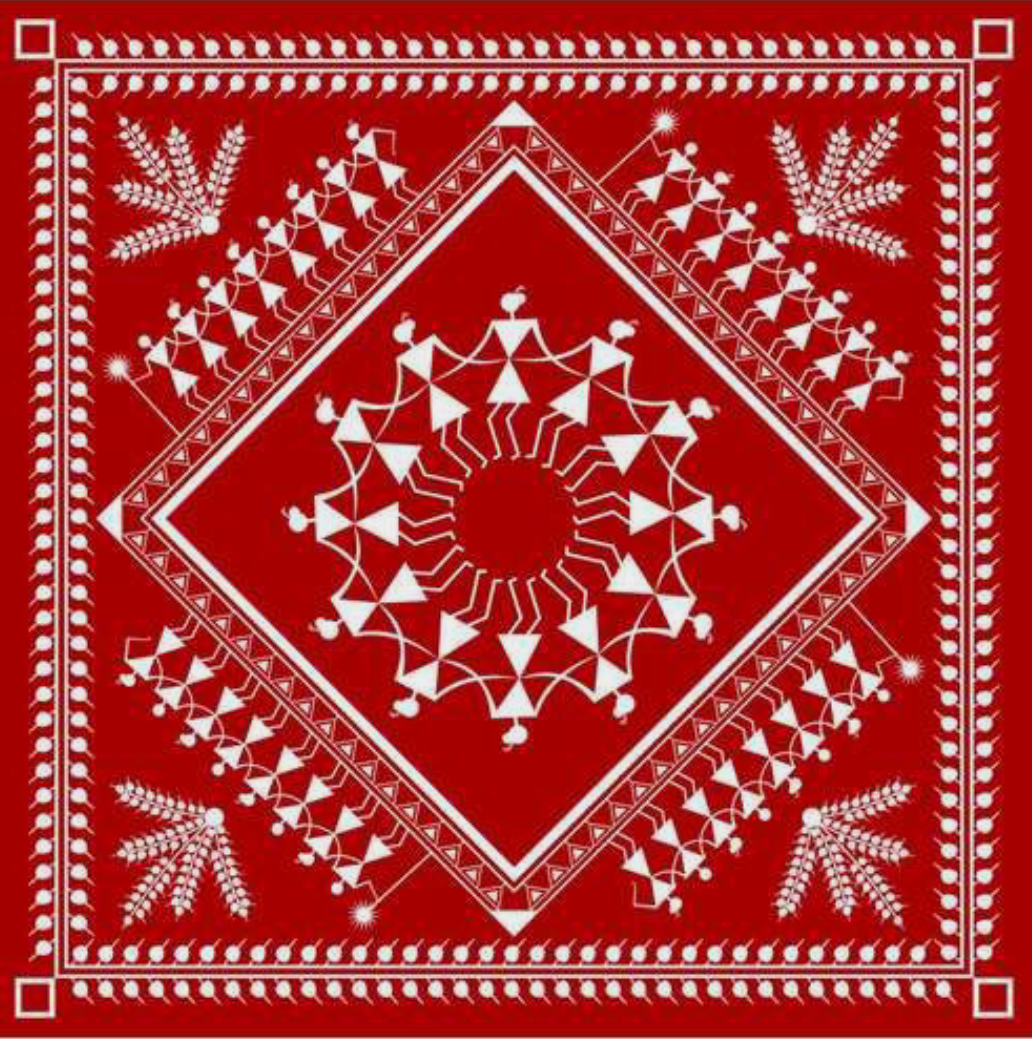
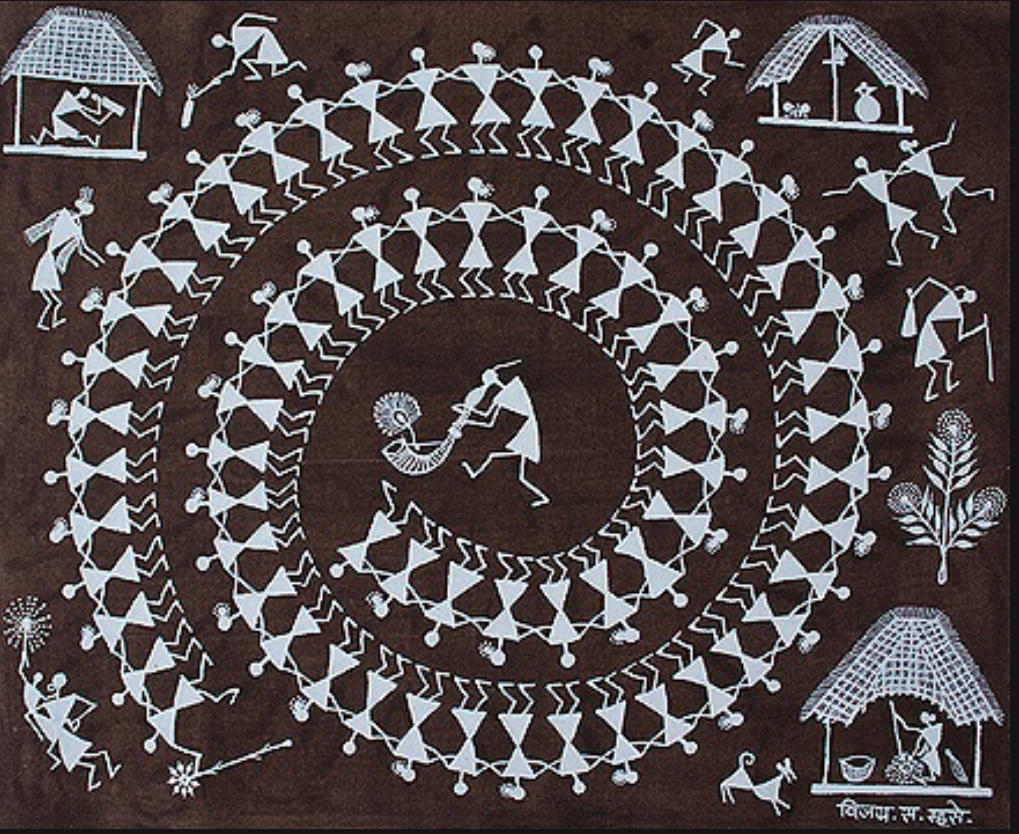
Warlis or Varlis are an indigenous tribes or adivasis living in the mountainous as well as coastal areas on the Maharastra-Gujarat border and surrounding areas. They have their own animistic beliefs, life, customs and traditions. As a result of acculturation, they have adopted many Hindu beliefs. Their extremely rudimentary Wall paintings use a very basic graphic vocabulary a circle, or triangle and a square. Their paintings were monosyllabic. The circle and the triangle come from the observation of nature, the circle representing the sun and the moon, the triangle derived from mountains and pointed trees. Only the square seems to be a different logic and seems to be a human invention, indicating a sacred enclosure or a piece of land.

The ritual paintings are usually done inside their huts. The walls are made of a mixture of branches, earth and cow dung making a red ochre background for wall paintings. Warlis use only white in their paintings. The white pigment used by them is a mixture of rice paste and water with gum as a binding. As the brush, they use a bamboo stick chewed at the end to make it as supple as a paintbrush. The wall paintings are done only on special occasions such as weddings or harvests. Warli art is the cultural intellectual property of the tribal community. Today, there is an urgent need for preserving this traditional knowledge in tribal communities across the globe. Now, Warli painting is registered with a geographical indication under the intellectual property rights act. With the use of technology and the concept of social entrepreneurship, tribals established the Warli Art Foundation, a non-profit company dedicated to Warli art and related activities.

• Cave paintings in India

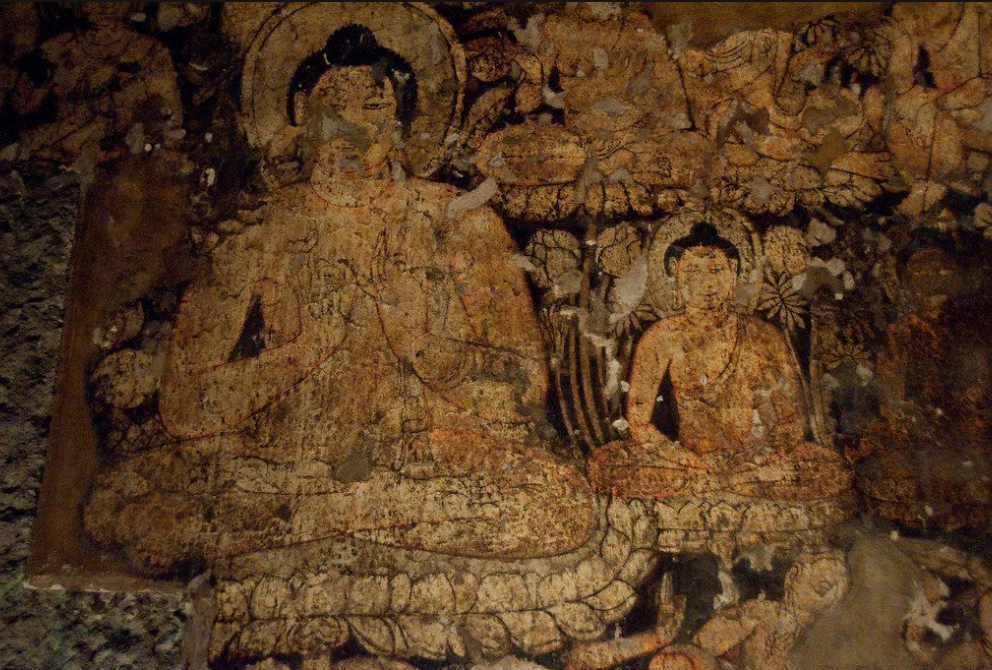
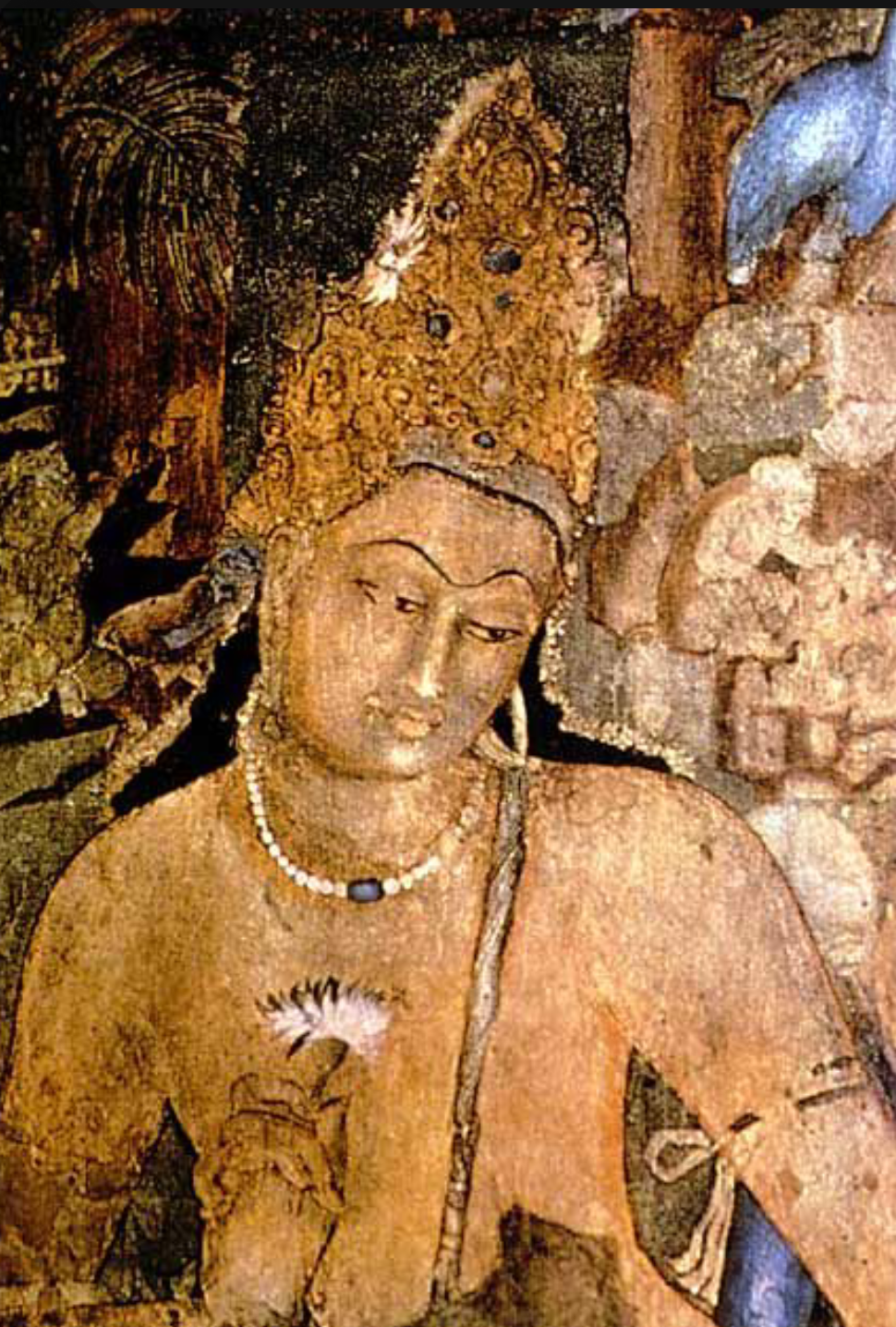
Almost all early painting in India survives in caves, as very few buildings from ancient India survive. The history of cave paintings in India or rock art range from drawings and paintings from prehistoric times – beginning around 30000 BCE in the caves of Central India, typified by those at the Bhimbetka rock shelters – to elaborate frescoes at sites such as the rock cut artificial caves at Ajanta and Ellora, prevalent as late as the 8th – 10th century CE. The frescoes of Ajanta are paintings in the Ajanta caves, which are situated near Aurangabad in Maharashtra. The caves are carved out of large rocks. Inside many of the caves are frescoes. Frescoes are paintings which are done on wet plaster in which colours become fixed on the walls and ceilings at Ajanta.

The paintings reflect different phases of Indian culture from Jain tirthankar Mahaveer’s birth to his Nirvana in the 8th century AD. The frescoes have degraded slightly due to the effect of flash photography. Photography here is not banned. The paintings depict themes of court life, feasting, processions, men and women at work, festivals and various natural scenes including animals and birds and flowers. The artists used shading to give a three-dimensional effect.

Similarly, beautiful frescoes have been found at the Bagh caves, 150 km away to the North of Ajanta. Though the themes in these paintings are both secular and religious, they do depict some aspects of Buddhist life and rituals. One of the most famous paintings show a procession of elephants. Another depicts a dancer and women musicians. These have been influenced by the Ajanta style of painting. These frescoes show a strong resemblance to the frescoes of Sigriya in Sri Lanka.

Thank you for reading. Have a nice day!🌼

IPL Fun with a Trick.

There is no doubt in the saying “It is not only a game, it is festival of India”. And every year it amazes us like we are kid and it always surprise us with a chocolate.

Hello there, As you all are I’m also become an IPL lover. But, trust me I was not. Because at first I thought these all games are fixed or kind of scripted. And soon enough I realized that my perception needs to be changed. Man! In this year 2020, IPL is the only good things happening after work from home. Don’t you believe, huh!

I’m not going to preach you about the game or about any player. Come on you all are fully aware about it , and I know it perfectly. Today, all I wanted to talk about those how are too attached to this game that it brings a kind of personal loss to them. Are you all are mad or what? Like, I know that there should be something which motivates you to do it. But, you all must have heard that it’s the path that is beautiful not the destination.

I came up with an idea that I don’t support any particular team at all. That thing is scary and depressing. So, all I do is enjoy a match. And I’m sure you all do, but, I enjoy in different manner. Like, there must be some time when you get sad because your team player got out, or you get happy because your team player hit a six. But, for me I’m happy in the both the case. Like I don’t enjoy a game from one point but the both point of view. From the bowler and the batting team.

This technique not only increase my level of excitement for the IPL but it also save me from any personal sadnesses, like my younger brother have.

Think about and you have your choice. So, tell me what you want to say about this topic down belon in comment section. Till then

See yaa..

Self-love

I’m not being sexist but this concept of self love must have been introduced by women, because when I see men, I don’t find these type of words really exist for them. And see now it’s like in the air. Actually, men get inspired by women but they don’t accept because of male ego or whatever. But,  action speaks more then words, na!

Hello there, how was your day? Don’t get me wrong but I’m asking you to ask yourself this question everyday before the day gets over. It is also a kind of self love, and when you will be able to answer this question to yourself in a very elaborating manner then you will start getting yourself better. In starting it can be little fussy but as the time passes you will learn it’s importance and will also able to see it’s impact on you.

Now a days, people thinks that everything a particular person do, should also be able to defend there own doing in the world. Like, if I’m doing something which is even though not good for me or the society, but, to save me from everyone else i should be able to defend my doing. And this is bullshit. Soon you will start doing whatever you want no matter it’s good or bad when you are ready to defend it. This is not self loving, it is self manipulation. And there’s a huge difference between them.

Self love is like accepting yourself, your own habits with its flaws. It is never to defend your flaws. If you keep defending you flaws you will be heading towards wrong way. You can never be someone who can be admired in the same society where you are trying to be cool and loveable just by putting yourself as priority.

Knowing yourself means accepting and evolving yourself. The better you know your flaws is the better you get with it. I Don’t say that defending yourself from the outer world is not good but everytime is not good. It’s always you who knows the real intention behind doing any work. So, if you keep your good intentions it will be you get benefits of it and if you are not then it will also be you who will face the conciquences.

So, try to improvise yourself by facing the real you in personal because that’s what self love means.

See yaa..

Earthquake Escapade: Changing Across The Geography of India

2020 has been marked in almost all the usual natural disasters that mankind knows about. Forest fires, floods, earthquakes, you name it. Speaking of earthquakes, India is a hotspot for the earthquake occurrence due to the dynamic interaction between the Indian and the Asian plate. So, how prone is India to earthquakes? Or should I state, which areas in India are more prone to earthquakes? Let’s see…

What’s What

Earthquakes can be described as the movement of the land surfaces due to release of seismic waves from within the Earth’s lithosphere. Earthquakes all by itself can be pretty destructive. Higher magnitude earthquakes can cause violent shaking of the ground, thus destroying structures, and sometimes disturbing the local topographic scene too. The triggered effects in Nature due to earthquake include tsunami (in case of offshore source of origin), landslide, and in some rare cases, volcanic activity.

The term earthquake, in the general scientific respect, is associated with seismic activity. The source of the seismic activity though, can be either natural, or manmade. Some of the common causes of occurence are: faulting, mine blasts, landslide, nuclear testing or volcanic activity. The original point of disturbance within the lithosphere is known as the hypocentre, and the extrapolation of the point on the ground level is known as the epicentre.

The magnitude, or the strength of an earthquake, can be measured in various scales. But the most commonly known is the Richter magnitude scale. Nowadays, moment magnitude scales have a preference within the seismological authorities, but it is still reported as the Richter scale. The Richter scale is based on the logarithm values detected from the amplitude of seismic waves. It gives the measure of the energy given out by the earthquake. The Richter scale starts off from 1.0 and theoretically has no upper limit. But on the basis of historic records, the limit has been set for 8.9 as of now. Another scale, the Mercalli Damage Risk scale, measures the earthquake on the basis of its effect on the surface. Measured from the minimum of ‘not felt’, the scale goes up to the higher end category ‘extreme’. In terms of sumericals, the scale goes from 1-12. An important point to note is that the energy and effect of the earthquake are always not in relation, as for they depend on various factors.

Trends Within India

With India being a very large country in terms of territorial area, the areas are divided into various zones in accordance to the past seismological activity and the natural factors of the area. At present, the map produced by Bureau of Indian Standards dividends the whole country into four zones (Zones 2, 3, 4, 5). Zone 5 experiences highest Damage Risk of seismic activity and Zone 2 the lowest.

  • Zone 5 (Very Severe Damage Risk Zone) are the areas most susceptible to the risk of earthquakes of Damage Risk 9 or more. This zone includes the entire North Eastern region, Andaman Nicobar island groups, some parts of Jammu & Kashmir and Uttarakhand, Ladakh, Himachal Pradesh, northern regions of West Bengal, Rann of Kutch, North and Central Bihar and Uttarakhand.
  • Zone 4 (Severe Damage Risk Zone) are areas which are prone to experience the earthquakes of Damage Risk 8. Regions like North Punjab, Chandigarh, Western Uttar Pradesh, Sunderbans, Terai, the NCR, Sikkim, and the remaining parts of Jammu & Kashmir and Uttarakhand. The Patan area in Maharashtra also comes under this zone.
  • Zone 3 (Moderate Damage Risk Zone) usually has the probability to have earthquakes of Damage Risk 7. Goa, Lakshadweep Islands, Rajasthan, Jharkhand, Madhya Pradesh, Chattisgarh, Kerala, Tamil Nadu, Andhra Pradesh, Karnataka, Maharashtra, and the remaining parts of Bihar, West Bengal and Uttar Pradesh,
  • Zone 2 (Low Damage Risk Zone) accounts for regions that tend to experience earthquakes of intensity 6 and less. All the remaining areas of India fall under this category.

The Bureau of Indian Standards has provided some guidelines for construction of buildings, with certain parameters being assigned on the basis of the seismic zones. With a large part of the country, and by virtue of that, a large part of the population being susceptible to strong earthquakes, construction of legal and anti earthquake structures are a necessity of the present time. 

Website Reference:

https://en.wikipedia.org/wiki/Earthquake_zones_of_India

https://en.wikipedia.org/wiki/Earthquake

https://en.wikipedia.org/wiki/Richter_magnitude_scale

https://en.wikipedia.org/wiki/Modified_Mercalli_intensity_scale

https://www.jagranjosh.com/general-knowledge/list-of-earthquake-seismic-zones-in-india-1591274253-1

NATIONAL MUSEUM OF INDIAN CINEMA TOUR

I was fortunate enough to have a chance to visit the National Museum of Indian cinema in Mumbai. The museum is housed in two buildings – the 5 storey new museum building and the 19th-century Victorian gothic bungalow Gulshan Mahal. We arrived there at 1:40 p.m. The museum is housed in two buildings – the 5 storey New museum building and the 19th-century Victorian gothic bungalow Gulshan Mahal. It is a house of quaint artifacts of India’s pre-cinema history, it also showcases over a hundred years of Indian cinema through nine sections raining from the origins of Indian cinema to the studio era of new wave. Gulshan Mahal discovers nine aspects that are Origin of India, cinema comes to India, Indian silent film, the advent of sound, the studio era, the impact of world war 2, creative resonance, new wave and beyond & regional cinema. Besides artifacts, posters, film clipping, etc. Adjacent to the historic building is a classy building.

The swanky building house has mobile exhibitions, 3-D compatible theatres with 4 K projectors and 7.1 surround with specific themes Gandhi and Cinema, Children Film Studio, Technology, Creativity, and Indian Cinema & Cinema across India. Gandhi & Cinema: it not only depicts the movies made on the life of Mahatma Gandhi but also showcases the deep impact his life had on cinema. Children’s Film Studio gives visitors, particularly children, an opportunity to explore the science, technology, and art behind filmmaking. It offers hands-on experience on various facets associated with making a cinema-like camera, light, shooting, the experience of acting, etc. – presented in an interactive format. The exhibits displayed include chrome studio, immersive experience zone, stop-motion animation studio, virtual makeover studio, etc. Technology, creativity & Indian cinema: it showcases the creative use of technology by Indian filmmakers over the years to produce a cinematographic impact on the silver screen. Cinema across India: it showcases the charismatic kaleidoscopic presence of the vibrant cinematographic culture across India.

The trip aimed to gain knowledge on Indian Cinema and to understand Its importance. We get to know that Cinema has been one of the greatest influences in our modern life, and it’s also a form of art, the seventh art along with photography, architecture, literature, play, painting, and music. It’s the combination of technology, business, entertainment, and aesthetics, each and everything of these four has an important role in the present-day world. The first Bollywood movie was Raja Harishchandra (1913), however, it was a silent movie. In 1931, Alam- ara came which was India’s first sound film. Then in 1937 came Kisan Kanya which was India’s first color film. We were free to explore the museum on our own.

The visit to Gulshan Mahal was fascinating. The old artifacts gave us a brief idea about how films were made in the 20th century. There were instruments like Praxinoscope, Thaumatrope, Phenakistoscope, mutoscope Modern animation from plates of The Horse in Motion by Eadweard Muybridge, etc. that were used for making films. We also saw old film posters; cameras were used during that time. Then we visited the glass building which had all 21st-century movie posters and film equipment. Something which caught my interest the most was the Bioscope Show. There were different types of camera lenses used for shooting, we could also watch our favorite movie scenes and could listen to songs which made it fun.

Then my second favorite place was Children Film Studio. We had a lot of fun; we got experience or opportunity to become an actor, director, cameraman, animator, etc. We also tried using the green screen and got a virtual makeover. Amidst the fun, we realized how much we got to know about cinema. We then went to explore Gandhi & Cinema.   Gandhi, British-Indian historical film, was released in 1982, which tells the story of Mahatma Gandhi and his struggle to win independence for India through nonviolent civil disobedience. The movie won eight Academy Awards, including that for best picture, and five Golden Globe Awards, We even had got to spin the Charkha. The charkha, or spinning wheel, was the physical embodiment and symbol of  Gandhi’s constructive program. It represents Swadeshi, self-sufficiency, and at the same time interdependence, because the wheel is at the center of a network of cotton growers, carders, weavers, distributors, and users. It was an enjoyable and informative trip.   

The 1991 Indian Economic Crisis

The 1991 Indian economic crisis was an economic crisis in India that resulted from poor economic policies and the resulting trade deficits. India’s economic problems started worsening in 1985 as the imports swelled, leaving the country in a twin deficit: the Indian trade balance was in deficit at a time when the government was running on a large fiscal deficit. By the end of 1990, in the run-up to the Gulf War, the dire situation meant that the Indian foreign exchange reserves could have barely financed three weeks’ worth of imports. Meanwhile, the government came close to defaulting on its own financial obligations. By July that year, the low reserves had led to a sharp depreciation of the rupee, which in turn exacerbated the twin deficit problem. The Chandrasekhar sir’s government could not pass the budget in February 1991 after Moody downgraded India’s bond ratings. The ratings further deteriorated due to the unsuccessful passage of the fiscal budget. This made it impossible for the country to seek short term loans and exacerbated the existing economic crisis. The World Bank and IMF also stopped their assistance, leaving the government with no option except to mortgage the country’s gold to avoid defaulting on payments.

In an attempt to seek an economic bailout from the IMF, the Indian government airlifted its national gold reserves.

The crisis, in turn, paved the way for the liberalisation of the Indian economy, since one of the conditions stipulated in the World Bank loan (structural reform), required India to open itself up to participation from foreign entities in its industries, including its state owned enterprises.

Causes of the Crisis :

The crisis was caused by currency overvaluation; the current account deficit, and investor confidence played significant role in the sharp exchange rate depreciation.

The economic crisis was primarily due to the large and growing fiscal imbalances over the 1980s. During the mid-eighties, India started having the balance of payments problems. Precipitated by the Gulf War, India’s oil import bill swelled, exports slumped, credit dried up, and investors took their money out. Large fiscal deficits, over time, had a spillover effect on the trade deficit culminating in an external payments crisis. By the end of the 1980s, India was in serious economic trouble.

The gross fiscal deficit of the government rose from 9.0 percent of Gross Domestic Product (GDP) in 1980-81 to 10.4 percent in 1985-86 and to 12.7 percent in 1990-91. For the centre alone, the gross fiscal deficit rose from 6.1 percent of GDP in 1980-81 to 8.3 percent in 1985-86 and to 8.4 percent in 1990-91. Since these deficits had to be met by borrowings, the internal debt of the government accumulated rapidly, rising from 35 percent of GDP at the end of 1980-81 to 53 percent of GDP at the end of 1990-91. The foreign exchange reserves had dried up to the point that India could barely finance three weeks worth of imports.

In mid-1991, India’s exchange rate was subjected to a severe adjustment. This event began with a slide in the value of the Indian rupee leading up to mid-1991. The authorities at the Reserve Bank of India took partial action, defending the currency by expanding international reserves and slowing the decline in value. However, in mid-1991, with foreign reserves nearly depleted, the Indian government permitted a sharp devaluation that took place in two steps within three days (1 July and 3 July 1991) against major currencies.

Recovery :

With India’s foreign exchange reserves at $1.2 billion in January 1991 and depleted by half by June, barely enough to last for roughly 3 weeks of essential imports, India was only weeks away from defaulting on its external balance of payment obligations.

Government of India’s immediate response was to secure an emergency loan of $2.2 billion from the International Monetary Fund by pledging 67 tons of India’s gold reserves as collateral security. The Reserve Bank of India had to airlift 47 tons of gold to the Bank of England and 20 tons of gold to the Union Bank of Switzerland to raise $600 million.  The van transporting the gold to the airport broke down en route due to tyre burst and panic followed . The airlift was done with secrecy as it was done in the midst of the 1991 Indian General elections. National sentiments were outraged and there was public outcry when it was learned that the government had pledged the country’s entire gold reserves against the loan. A chartered plane ferried the precious cargo to London between 21 May and 31 May 1991, jolting the country out of an economic slumber.The Chandra Shekhar government had collapsed a few months after having authorised the airlift. The move helped tide over the balance of payment crisis and kick-started P.V. Narasimha Rao’s economic reform process.

Under Narsimha Rao Sir’s Government :

P. V. Narasimha Rao took over as Prime Minister in June, and roped in Manmohan Singh as Finance Minister. The Narasimha Rao government ushered in several reforms that are collectively termed as liberalisation in the Indian media.

The reforms formally began on 1 July 1991 when RBI devaluated Indian Rupee by 9% and by a further 11% on 3 July. It was done in two doses to test the reaction of the market first by making a smaller depreciation of 9%. There was significant opposition to such reforms, suggesting they were an “interference with India’s autonomy”. Then Prime Minister Rao’s speech a week after he took office highlighted the necessity for reforms, as New York Times reported, “Mr. Rao, who was sworn in as Prime Minister last week, has already sent a signal to the nation—as well as the I.M.F.—that India faced no “soft options” and must open the door to foreign investment, reduce red tape that often cripples initiative, and streamline industrial policy. Mr. Rao made his comments in a speech to the nation Saturday night.” The foreign reserves started picking up with the onset of the liberalisation policies and reached an all-time high US$426.1 billion as on 13 April 2018

Dreams and Deeds Foundation

D&D it is a type of organisation which works for every single social cause of society.

As we know in this covid-19 whole world is suffering from financial problems . Migrants don’t have a job to run their life. As time passes, their troubles are increasing.

The government is also doing its best, but can we defeat this epidemic only by trying the government? No !

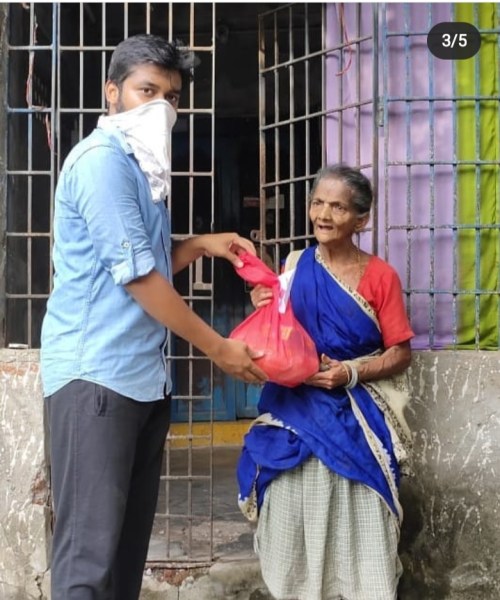
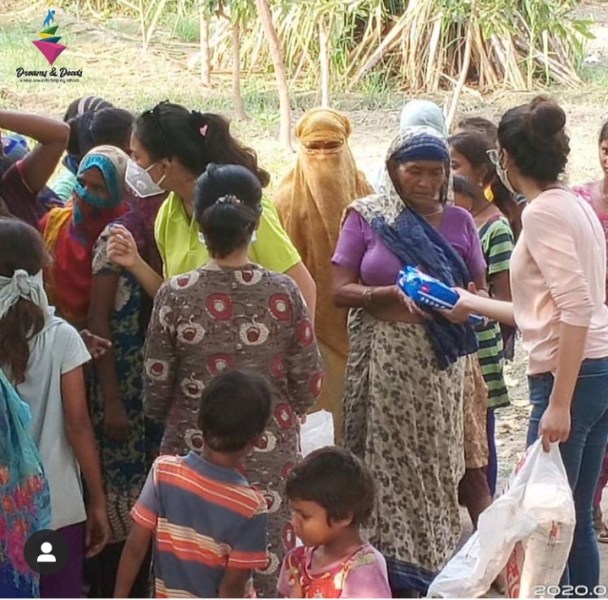
Many people need help. In the time of this epidemic, the Dreams and Deeds Foundation has emerged. And came forward to help those really need. the foundation take initiative to providing food sanitary pads and all the groceries to the migrants. As well as Foundation started feeding the animals this is one of the biggest and greatest step which is taken by dreams and deeds Foundation .

Providing groceries
Packets of the foundation for distribution
Initiate for feed animals
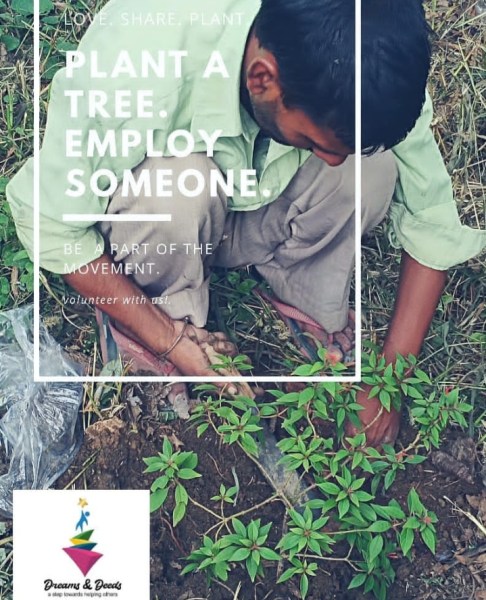
Plantation to protect the nature
Providing sanitary pads to women

So these are some main social cause on which Foundation is working like plantation to save the nature, feeding animals to protect them, providing sanitary pads to women for their safety in mensuration , providing groceries as well as concentrating on child education.

In this pandemic we really need a hand who can help us . A great work doing by the foundation and we all should appreciate it they celebrate every single day with lots of happiness and love. So let’s help them and do something new towards society.

For more query you can go on the Instagram page of the Dreams and deeds Foundation .

.

TODAY’S SOCIAL MEDIA

Social media or the internet plays a vital role in our daily lives. Now with these online classes and work from home has proved it’ But there are always advantages and disadvantages.

Social media is a necessity:

Social media is more than a “trend.” It is a means of living. It gets various jobs executed at a time. It constitutes a precise and professional association and establishes you at the front of the profession you want to grow in. it is not a mere extravagance that can be afforded only by affluent people, it has become an essential requirement of life. Because of social media, businesses increase faster and the advertisements of labels and concepts are made for free. Artists and stars have more than one platform to choose from in order to stay connected with their fan base.

Social media builds connection in spite of geographic remoteness:

The Internet epoch has built long-distance interaction dramatically quicker, simpler, and more affordable than ever before. This, it has been claimed, has reduced the consequence of geographic contiguity in social communications, modifying our world from a “global village” into a “borderless society”. The potential lies in the palms of the user, because the person can, within a single click, publish their thoughts and beliefs with anyone in the world at any time through social media. Don’t apprehend the network: the internet is transforming the method we interact for the better.

Social media is informative:

Social media benefits one to access the world of information in one click. One obtains access to plenty of data, be it science, technology, or as simple as booking tickets for a movie. E-commerce has allowed us to deliver everything anywhere easily. Hence, social media is the digital version of people. It benefits us to join, participate, and discover. 

Social media helps in the improvement of entrepreneurs and brands:

The convenience of using social media in marketing is raising brand awareness. Social media can helps a business to grow its brand recognition by improving intercommunications with a business brand. Brand awareness means the total percentage of target people who know the company exists and what the company offers of products or services. When the brand awareness is developed, the probability of purchasing is improved. Thus, attempts should be made to make the brand a part of the mindfulness of consumers.

Social media causes addiction:

Social media is as bad as alcohol and drugs for millennials. The word “addiction” brings to mind alcohol and drugs. Yet, over the past 20 years, a different type of obsession has developed: addiction to social media. It has the potential to provoke long-term destruction to our emotions, habits, and relationships. 

Social media decreases face to face conversation:

Social media has caused people to lose the skill to communicate efficiently. Social media has led us to have fewer interactions with the people that they connect with. The majority of people have access to social media at any time they want via their smartphones, so this only worsens as larger people begin to obtain smartphones. Since it has become more common, social media has made people have a trend to want to communicate with people online rather than in person because it has made the means easier.

Social media spreads a lot of trick messages and rumors:

Rumors and fabrications have been there since the start of time but on social media, it just gets more dangerous because it reaches across millions of people. Rumors begin as one small action and before we understand it has become another huge issue. Rumors have done a lot of harm and always continue to create anxiety and suffering amongst people. Beware, don’t be an associate to promoting rumors.

Anniversaries (as of 2019)

150th birth anniversary

•Mahatma Gandhi, the father of our nation is an inspiring person, who shaped world history. Gandhiji stands out among the great men of the world as a symbol of non violent resistance to political and social repression. Mohandas Karamchand Gandhi was born on October 2nd, 1869 in Gujarat. He became the leader of a movement that attracted millions in the struggle for freedom. He was strong advocate of non-violence. India got freedom on August 15th, 1947. Gandhiji was assassinated on January 30th, 1948.

100th birth anniversary

• The year 2019 marks the 100th birth anniversary of Dr. Vikram Sarabhai, the father of the Indian space programme. He was born on 12th August, 1919. Dr. Sarabhai has put India on the international map in the field of space research. In 1962, he became chairman of the Indian National committee for space research. The establishment of the Indian space research organisation, also known as ISRO, was one of his greatest achievements. Dr. Sarabhai died on 30th December 1971.

500th death anniversary

• Leonardo da Vinci was perhaps the most widely talented person ever to have lived. He was a consummate painter and sculptor, a great inventor, military engineer, scientist, botanist and mathematician! He lived during the Renaissance in Italy and while working in Milan as an artist, he began writing texts for his students and apprentices. His notebooks covered more than 1000 pages of observations and illustrations. They remained unpublished for more than a century and were printed only after his death. He was born on April 15th 1452 and died on May 2nd 1519.

150th anniversary

• The period table gives us information about element symbols and atomic weights. It brings order to information about the chemical elements and helps chemists to understand why elements react as they do. The milestone in the development of the periodic table was set by the Russian chemist Dmitri Mendeleev in 1869, who is acknowledged as the ‘father’ of periodic table though the title is also claimed by the German scientist Lothar Meyer. Today, the periodic table organizes the elements by order of increasing atomic number.

150th year of publication

• 2019 marks the 150th year of one of the greatest novels ever written – Leo Tolstoy’s ‘War and Peace’. This classic work from Russia was first published in the book form in 1869. Tolstoy took almost 7 years to finish this epic work and a Russian magazine named ‘Messenger’ serialised some portions of it during 1865-67. But the full novel came out as a book only in 1869. The story woven around Napoleon’s invasion of Russia covers a period of over 15 years. The unique literary style and the historical context make ‘War and Peace’ a monumental work.

125th year of publication

• Is there anyone who isn’t familiar with the famous character ‘Mowgli’? Hopefully none. The main character of the evergreen ‘Jungle Book’, a collection of stories written by Rudyard Kipling is a huge part of our childhood. ‘The Jungle Book’ was first published in 1894.

100th anniversary

• The Jallianwala Bagh massacre was a turning point in our freedom movement. The British troops under the command of Colonel Reginald Dyer, opened fire on unarmed Indians on 13th April 1919. This event took place in the heart of Amritsar. Hundreds were killed and thousands injured. This was followed by widespread protests across a grieving country. Many Indians became convienced that the British had to be paid back in their own coin that violence has to be met with violence. The 100th anniversary of that cruel incident fell last year.

300th year of publication

• Daniel Defoe’s ‘Robinson Crusoe’ has fascinated readers around the world for the last 300 years. Daniel Defoe was an English writer, famous for his novel Robinson Crusoe that was published in 1791. One reason for it’s popularity is that it us packed with excitement and adventure, with sailing ships, stormy seas and guns. Without doubt, Defoe’s ‘Robinson Crusoe’ established a realistic style of fiction and set the tone for modern novels.

Thank you for reading. Have a nice day!🌼