Public Policy relevancy with Social welfare Programmes

Source: Shutterstock

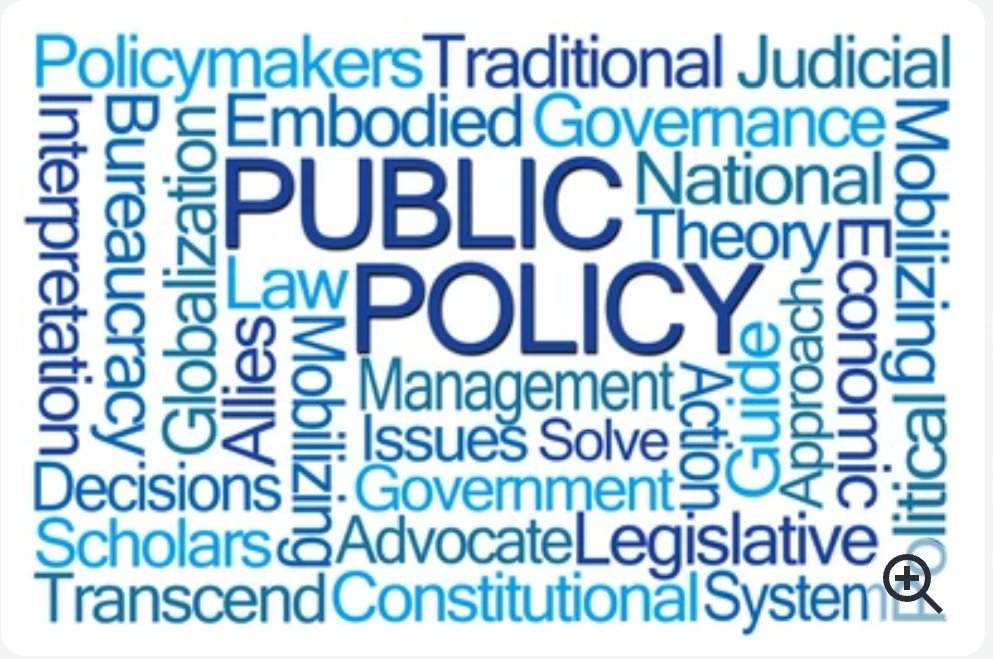
Public Policy is new tool of Government to solve socio economic problems through several policies such as Agriculture Policy, Labour Policy, Health Policy, Education Policy, Wage Policy, Industrial Policy and Foreign Policy etc. Government view public policy as a dependent variable and study as to how society is evolving and Political system shaping the nation.

The field of public policy has emerged comparatively in beginning as traced in early 1950s. The concept of public policy was originated in 1951 from the publication of Harold Lasswell. According to Thomas R Dye, Public Policy is what Government will choose to do or not to do. In indian context, public policy could be government rules and Programmes in the form of political system of laws, ordinance, court decision, executive orders, decisions or even unspoken understanding  of what is to be done.

Paul Appleby, the essence of public administrative decision policy defined as a purposed course of action of an individual a group, an Institution or government to realize a specific objective or purpose, within a given environment. The process of public policy flows both top to bottom and bottom to top or even simultaneously. The policy process is viewed from higher level as execution of Policy and viewing meta Policy meaning  progressive.

After independence, India did not carry a specific structural path for economic development. It was decided that economic development must be based on social, political growth that transmutes human advancements. India adopted the Socio – economic development model in which major areas were industries and agriculture. Planning commission (now NITI Aayog) for the purpose of development initiatives adopted in a five year plan as a major development plan. structure policies Public policy developed as academic pursuit in the 1950s. However, Public Policy was very much evident in 1940, stimulating Government activities and academic organizations. Study of government, policy, Social Science involves political Science, public administration, economics and management.

Dimock stated public policy as “deciding at any time or place what objectives and substantive measures should be chosen in order to deal with particular problems”. Public Policy process structure to maximize and utilize all resources to overcome the catastrophic events. Public Policy is a continuous process, furiously working towards  acquiring best outcomes. Righteous and accurate conditioning helps to bring desired aims. The process requires transparency, decentralization, and effective policy implementation. Public Policy Process is significant to change nation economic, social, and political representation especially in the Case of developing nations.

According to Chandler and Plano, treated public Policy as ” the strategic use of resources to alleviate national problems  or governmental concerns”. Freeman and Sherwoods stated that it is the Public answer to the interest in refining the circumstances. Robert linebewy  emphasized on “it is what governments do and fail to do for their citizens”. Anderson expresses it,” policy is being made as it is being administered as it is being made”.

 Understanding of Public Policy

Source: iass.potsdam.de

 The Public Policy process is a kind of Physics  equation that if finding a small error will cost the huge problem, also diffuses the whole processing mechanism. Public policy processes require pointed manifestation at each level. Hogwood and Gunn (Policy Analysis for the Real World, 1984) concluded nine vital Stages in the policy process: Agenda Setting, object screening issue defining , forecasting alternatives, objectives & priorities, policy implementation, monitoring and control, policy maintenance, succession and termination, these all required for successful policy. As we are aware, policy making is a complex and dynamic strategy, it requires certain tools to resolve the real world problem of economic, financial, economic, social problems. Public Policy enacted by the government or its executives with the help of civil Societies, media, and pressure groups.

 In the Context of public policy process Lindblom stressed on a highly relative and plasticity decision making system characterised by compromise, incrementalism and continual adjustment. Public policy process is conceptualized as in sequence or stages ( Benson, Jordan, 2015). There are (1) sequence follows as – i) Problem emergence 2) agenda setting 13) Consideration of policy options, &) Decision making 5) implementation 6) evaluation (Jordan and Adelle, 2012).

A policy can be simple or complex, explicit or implicit, discretionary or detailed, private or public qualitative and quantitative. Government does not set advisory principles;  it is the Supreme Court who decides and provides new interpretations of the articles of constitution to curve out the new Policy.

Nature of public policy covering wide portion of its activities such as socio- economic development, women empowerment, child labour, equality, education and so on. Nature of Public policy foremost needs Policy making closely related to decision-making. Decision making includes an identification of a problem, sharp analysis, and the ability to see alternatives. Policies have specific goals, It is absolute to expect a policy to indicate the direction towards. where actions are required. The choices of policies or its objectives are frequently mesmerized. Thus, goals and objectives depend on the values of the policy makers. Planning or formulation is a key component to move forward in the public policy process. Administrators must maintain a planner to know the portion of resources, investments because goals cannot be achieved without having proper planning. Policy Analysis is most significant to rectify any problem in process; it is a technique to use in Policy Process. Basically used for problem assessment and monitoring. Before the decisions, Similarly, Policy Management is also familiar with implementation. It deals with policy making and policy preparation process, it ensures it is producing good quality policies.

 Thus, goals and objectives depend on the values of the policy makers. Planning or formulation is a key component to move forward in the public policy process. Administrators must maintain a planner to know the portion of resources, investments because goals cannot be achieved without having proper planning. Policy Analysis is most significant to rectify any problem in process; it is a technique to use in Policy Process. Basically used for problem assessment and monitoring. Before the decisions, Similarly, Policy Management is also familiar with implementation. It deals with policy making and policy preparation process, it ensures it is producing good quality policies.

 Policy management should be considered as a loose point or giving no importance, it is an Icebreaker of Public Process, if you assess anything wrong at this stage, there will be high chance to “trash in” the policy. That is why policy analysis and policy management is interdependent. 
 

Reasons for the failure of the Policy Implementation

Policy Implementation is the soul of Administration and Public Policy, one of the problem with Policy making in India is extreme fragmentation in the structure that fragmentation fails to acknowledge the action taken in one area have implications on another and may work at Cross purpose with policies of other sector. Implementation is not automatic that is more structured and scheduled. Implementation works as make or break the deal of Public Policy.

Effective implementation requires a chain of command, and the capacity to coordinate and control; often there are shortfalls in this exercise, more so in a developing country like India. Problem in the implementation of Policy are common in all countries, be they developed or developing. Even with relatively good administrative structure, Public Policy does not have it’s intended impact due to conceptual and political problem. Implementation deficit may be due to insufficiency of the requisite resources – of time, money or manpower.
Let’s discuss the implementation problem under the headings:

1) Conceptualization Issue of Policy Implementation

Conceptual Problem become the most crucial step in Policy Implementation that holds the high capacity to hinder the implementation. Understanding the nature of contextual problems, acknowledgement to those kind of policies and procedures which can address the inside problems. These conceptual problem majorly related to Policy design and anaylsis conflicts.

Policy Design Conflict

Hogwood and Gunn stressed if at the stage of Policy design, attention is given to potential problems of implementation; successful outcome will increased. In order to avoid major shortcomings in implementation take care of few preposition that prescribed by Hogwood and Gunn and Policy makers must ensure that:

A) Adequate time and sufficient resources are made available to the programme

B) No constraints in terms of overall resources, and even at each stage in the implementation process.

C) Policy must based on valid theory of cause and effect.

D) Single implementation agency that need not depend upon other agencies for success.

E) Good communication among co – ordination, various elements involved in the programme

The problem of Policy design in Poli design include ambiguous and ill – defined objective and inappropriate measure to achieve the stated goals. Lack of adequate political will, sufficient social support are other reason. For example, National Water Policy (NWP) adopted by Water Resource Council in 1987 was a wanted step in the direction of evolving national consensus. But, because of poor design remained unimplemented. NWP lacks the blue print

Policy Analysis Conflict

Implementation of Public Policy has also been hampered by conceptual weaknesses of Policy anaylsis. For instance, National health Policy (1983) was adopted without considering alternative Policy option. This inability to set priorities and evolve appropriate strategies for reduction in health problems by the state department

Policy Statement Conflict

Policy statement announced by the government contain ambiguous and contradictory terms, posing problems in implementation. The implementers at the field level often face a variety of issues because the policy statement lack clarity. Consequently, implementers use their own discretion while implementing them or they refer the statement back to the higher paths of Administration for clarification.

2) Political Pressure

Political Pressure in implementation always been evident and complex. This kind of pressure cannot let bureaucracy to work efficiently.

• Centralisation of Policy Process

Tassel between Central and state government relation has affected the policy implementation process adversely. Environment protection is heavily centralized. Although the central government has been enthusiastic in adopting innovative population, health, education and environmental policies and programmes as a result, health or environment quality has hardly improved in terms of availability of safe water, clean air, and provision of healthy living conditions.

• Unionisation of Bureaucracy

Another important of failure of Policy implementation is due to the Unionisation of civil services, at the lower level in particular. This has destroyed not only the work culture and discipline, but it also demoralized considerably the supervisory levels into withdrawal and promoting them to take least resistance. Higher and middle levels of bureaucracy are not so powerful and marginalized to give any relief to citizen in cases of corruption. Further, political interference by the political executive has compounded the marginalisation of higher bureaucracy thereby undermining it’s capacity to implement Public policies effectively.

• Politics of Interest Group

Many times, it is observed that the policies are not implemented because of to satisfy the interest groups. For example, several industries have little concern about environmental consequences of sitting decisions; industrialist influence the environmental Policy implementation process either directly or through business lobbies and representative of the business interests concerned. Pressure by industrial association during consideration of Environmental Protection Act in parliament resulted in a weakening of government and also forced the government to delay enforcement of enacted legislation. They are links with elites of ruling parties. It’s is, common for exertion of political influence in the environmental Policy process.

3) Bureaucratic Incompentency

Christopher Hood uses the term ‘Perfect administration’ in comparison to comparison to ‘Use of Perfect Competition’. He defines ‘ Perfect administration’ as a condition in which external elements of resources availability and political acceptability combine with administration to produce Perfect policy implementation.

• Lack of Adequate Institutional Capacity

The institutional structure and administrative capabilities for implementation of environmental laws and policies, for example, by no means Adequate in terms of political, social, and economic problem. Institutional structure includes the whole system of rules and regulations by which administrative tasks and responsibilities are clearly defined and juxtaposed with the capabilities of the administrators concerned. Let’s understand by example, when 30 industrial units, including few MNCs in West Bengal failed to comply with environment laws, the supreme Court had to play the role of the executive. In 1995 two judge bench of supreme Court expressed ” these multinational concerns have huge resources yet they are not bothered about protecting the environment”.

• Lack of Personnel and Financial Resources

Many policies will diffuse because of insufficient staff and lack of financial resources. Policies in developing nation have not been implemented in full scale owing to lack of trained staff. Well structured policies fail to attain the proper goals without competent Personnel. Implementation implies allocating personnel resources to the appropriate tasks and activities tasks and activities, motivating them to do well rewarding them for action. Regardless of their status, specialized knowledge, experience and qualifications, the programme personnel need to work as a cohesive team for the purpose of achieving policy results.

• Working under heavy pressure of Time

Pressure of time often creates the implementation gap. While fixing the time frame, the policy formulators do not take into consideration the prevailing conditions. The implementation agencies under pressure are unable to fulfill the targets allocated under the said Policy.

• No Administrative Will and Motivation

Without the conscious cooperation of implementers, nothing can be done. It is responsiblity of government to ensure the working conditions for implementers so that they will not lost their interest. Social policies have remained unimplemented largely for lack of administrative will and motivation. In current environment, officials are not likely to feel enthusiastic about implementing policies. Even when officials willing to implement environment laws, government undermined by manoeuvre of industrial bigwigs. Many of them fall to the dominance of economic interests and monetary temptations end up in formal enforcement of the regulation.

Cooperation and Coordination

Poor coordination and missing links among the administrative agencies have stood in the way of adequate and appropriate Policy actions. For example, at the administrative level, different department are concerned with implementing policies related to poverty alleviation programme. Gap in Policy implementation are found in population and family planning programme.

Lack of people’s participation

Public involvement in Policy Implementation such as education, population control, health, pollution control and forest conservation etc have tremendous pressure on administrative staff to cultivate results. By demonstration, protest and Public has tried to offset the power base of interest groups and lobbies that influence Policy Implementation in their favour.

The strength and endurance of the people’s movement for implementing and enforcing regulations have not been a link to that vests interest.

Conditions for proper implementation

W. William inakes an attempt to identify ways in which Policy failure can be prevented. He exhorst policy makers to pay more attention to implementation capacity like must underline few questions:

I) How capable are Policy makers in developing meaningful guidelines for and assistance to implementers?

II) How capable are implementers to do their work efficiently?

III) How well implementer articulated the Public Policy?

Mazmanian and Sabatier formulate a sufficient conditions of effective implementation;

I) The enabling legislation mandates Policy objective that are clear and consistent or at least provides substantive criteria for resolving goal conflicts.

II) The leaders of the implementing agency possess substantial managerial and Political skills. They are committed to statutory goals.

III) The programme is actively supported by organized constituency groups and key through out the implementation process, with the courts being neutral and supportive.

IV) The relative priority of statutory objective is not undermined overtime by emergence of conflicts of Public policies or by changes in relevant socio – economic conditions that weaken the statute’ s casual theory or political support.

Conclusion

Policy Implementation requires a wide variety of actions, including issuing Policy directives that are clear and consistent; creating organisational structure and assigning personnel with the information and authority necessary to administer the policies; coordinating personnel, resources and expenditure to ensure benefits for target groups and evaluating actions of personnel regarding implementation. Therefore, serious efforts are required for Policy Implementation at the level of Policy making itself, because it’s starts from beginning right from the policy making stage.

There’s tremendous gap between Public opinion and Public PolicyNoam Chomsky

Greenberry Organics Detox activated Charcoal Face Wash

Greenberry Organics Detox activated Charcoal face wash for anti-pollution Oil control and anti-acne with the goodness of Tea tree, Mulberry and Grapefruit combo with Bio active Intense Night cream Unisex (100ml + 50ml) https://www.amazon.in/dp/B076PG55CF/ref=cm_sw_r_apan_glt_fabc_SFDCQPP9A8T30JCWP80Q

 Factors used in this face wash are Tea trees & fruits, charcoal and Vitamin c helps in keeping the skin healthy and soft. Makes the skin acne-prone and keeps it hydrated. Suitable for all types of skin.

Power of chair

We all want to see ourselves strong. Often there comes a time when we think that I wish we could do this, I wish we had this power. One such power is the strength of the chair but it is the most special. Getting it can change the fate of generations, but somewhere we are all afraid of it, all the battles of the world have been done for it. All the freedom struggles have happened just to bring the power of the chair to the people.

Often the power of the chair is considered to be the power of the politicians, but it’s the strength of every person who has any position. A H.R. have the power of the H.R.s chair. Simply we can put it as, every person who has any position or responsibility has that chair of power.

There is a famous quote “With great power comes great responsibility”. Once everyone start treating it as responsibility rather than as a power world will have no fights.

Environmental laws in india

Either Stable burning in various states accrued the air pollution in Delhi and created a gas chamber around NCR ; SC came upon a committee to observe scenario , Or 4 industries inflicting stream pollution were shut down by Maharashtra pollution board . Everybody has responsive to environmental problems as higher than . The key solution for resilience to environmental issues are provided by government in various legislations , enactments and provisions on environment laws .


In republic of India environmental law is concern with the policy and law for protection of the environment . It aims for achieving carbon free economy through taking measures for reducing climate change. All the acts under this laws are safeguards in ensuring effective management of the environment and its multiple ecosystems . It provides for preventing environmental damage .


Natural resources in the earth were unscathed from millions of years. It were remain pure until the industrialized started . After the industrialization this resources have been exploited in Spain of 100 years only . From 19th century, the environment (air , water and land ) is directly exploited by rapidly growing population at alarming-rates.


environment includes water, air and land and the inter-relationship which exists among and between water, air and land, and human beings, other living creatures, plants, microorganisms and property , as mentioned in section 2 of environmental protection Act of 1986 . Environment is a wide sphere , it consists of social, economically , political , religious dimensions .


Addressed area of environmental laws in India :

1. Quality of water : For the prevention and control of water pollution and to maintain or restore wholesomeness of water in the country the water act of 1974 was enacted. It further provides for the establishment of Boards ( CPCB and SPCB ) for the prevention and control of water pollution with a view to carry out the aforesaid purposes. This act prohibits the discharge of pollutants into water bodies beyond a given standard, it also lays down fine and penalties for non-compliance.

2. Reduction of air pollution and maintaining air quality : The Air (Prevention and Control of Pollution) Act, 1981 (the “Air Act”) is an act to provide for the prevention , protection and abatement of air pollution .It provides for establishment of Boards at the Central and State levels with a view to carrying out the aforesaid purposes.

3. Hazardous Waste management : legislations that directly or indirectly deal with hazardous waste management are the Factories Act, 1948, the Public Liability Insurance Act, 1991, the National Environment Tribunal Act, 1995 and rules and notifications under the Environmental Act.

4. Containment cleanup, damage mitigation : preventing future damage to the environment is undeniably the primary objective of environmental law, mitigating and reducing existing damage is also important. This area most often deals with issues like toxic leaks and oil spills. The central objective of this branch of environmental law is deciding liability, planning an appropriate response, and also determining the best process of investigation and monitoring in the overall clean up process. This area also concerns itself with the study and assessment of risk in the long term, to better mitigate any future accidents and risks.

5. Sustainability of resources : United Nations has put great emphasis on ensuring the sustainability of resources. For this vision , it has advocated the formation of various legal principles and legislation. In this regards concept of environmental impact assessment introduced .

Noble legislations and enactments on environment law in India :


Laws on Forest and wild life protection:
• The Indian Forest Act, 1927 ; The Wildlife Protection Act, 1972; The Forest (Conservation) Act, 1980 ; The Environment (Protection) Act, 1986; The National Green Tribunal Act, 2010.


Laws on Water pollution :
• The Water (Prevention and Control of Pollution) Act, 1974.


Laws on air pollution :
• The Air (Prevention and Control of Pollution) Act, 1981 (the “Air Act”)


Laws on hazardous waste management :
• Biomedical Waste (Management and Handling) Rules, 1998 ; Municipal Solid Wastes (Management and Handling) Rules, 2000 ; Batteries (Management & Handling) Rules, 2001 ; Hazardous Wastes (Management, Handling and Transboundary) Rules, 2008 ; E – Waste (Management and Handling) Rules, 2011 .
Laws on wetlands


Ramsar convention (1971) : This convention was initiated to push for greater conservation and sustainable use of wetlands ; Wetlands (Conservation and Management) Rules, 2017.
Constitutional provisions on environment laws


Part IVA (Art 51A-Fundamental Duties) of the constitution casts a duty on every citizen of India to protect and improve the natural environment including forests, lakes, rivers and wildlife, and to have compassion for living creatures.


• the Constitution of India under Part IV (Art 48A-Directive Principles of State Policies) stipulates that the State shall endeavour to protect and improve the environment and to safeguard the forests and wildlife of the country.

environment makes human life possible, and our cultural environment helps define who we are. It is therefore essential that our population and economic growth are environmentally sustainable.

Time management

Time is nothing but the count of the life. It is measured in Hours, minutes and seconds. It is very important to manage the time as it is very precious and cannot come back once it is lost. It is also very important to utilize the time properly.

Managing the time is very important. Many of the people don’t know how to manage the time. Let us now know some of the time management techniques and how to use them.

•Make schedules:-

Making schedules is one of the best methods to manage the time. All you have to do is, think of the things what you have to do on a particular day and allot some particular time for each activity. Complete particular activity in the allotted time. When the work takes too much time, then leave it aside and go for another work. Whenever all the work is finished, go for the work which is unanswered in the beginning and complete it. This is how schedules helps for time management and makes the proper use of the time.

•Don’t spend much time on one thing:-

Spending much time on a particular thing disturbe the individual and disturbs the concentration. So, to focus on the work, an individual must go for some another work whenever they get bored on a particular work. So, it helps to focus on the work and for not wasting the time.

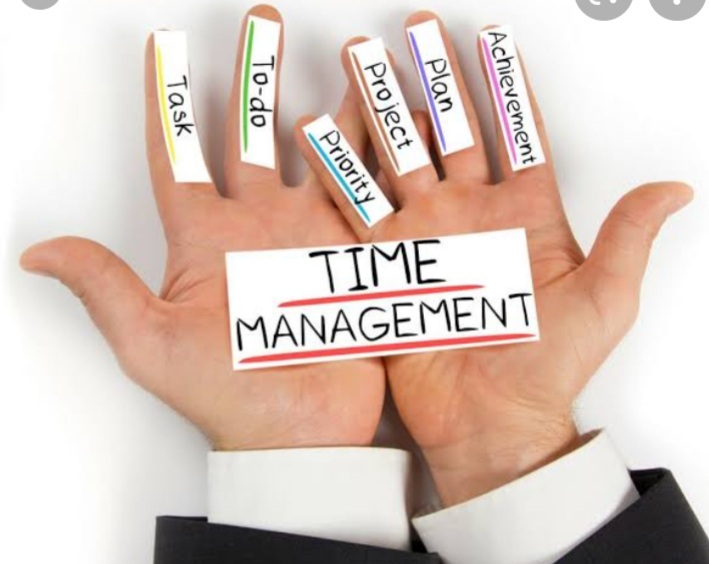
Time management is the process of planning and controlling how much time to spend on specific activities.
BENEFITS OF TIME MANAGEMENT :


The ability to manage your time effectively is important. Good time management leads to improved EFFICIENCY and productivity, less stress, and more success in life. Here are some benefits of managing time effectively:

  1. STRESS RELIEF :
    Making and following a task schedule reduces anxiety. As you check off items on your ” to- do” list, you can see that you are avoid feeling stressed out with worry about whether you’re getting things done.

  2. 2.MORE TIME :
    Good time management gives you extra time to spend in your daily life. People who can time- manage effectively enjoy having more time to spend on hobbies or other personal pursuits.
  3. MORE OPPORTUNITIES:
    Managing time well leads to more opportunities and less time wasted on trivial activities. Good time management skills are key qualities that employes look for. The ability to prioritize and schedule work is extremely desirable for any organisation.

  4. 4.ABILITY TO REALIZE GOALS :
    Individuals who practice good time management are able to better achieve goals and objectives, and do so in a shorter length of time.

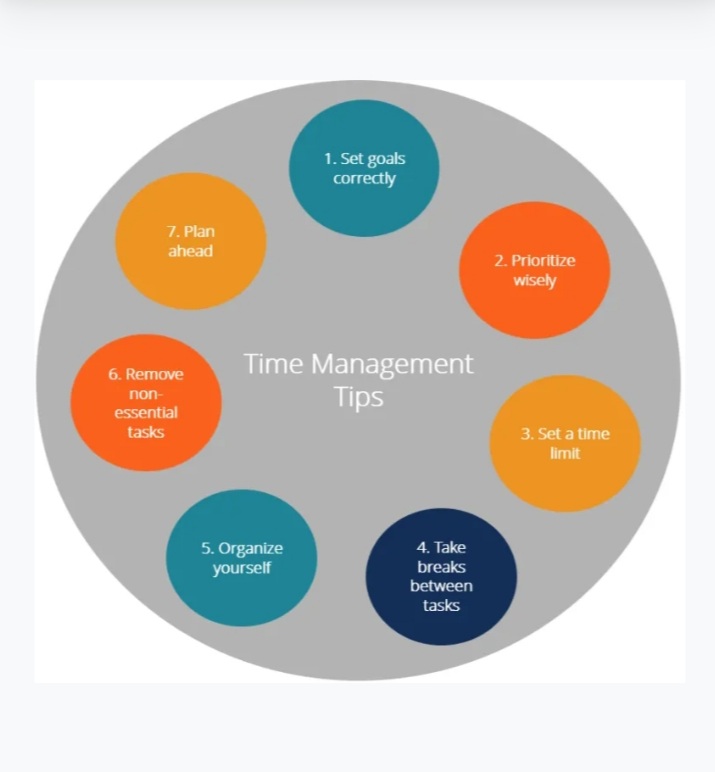
  5. LIST OF TIPS FOR EFFECTIVE TIME MANAGEMENT:


  1. 1.SET GOALS CORRECTLY:
    Set goals that are achievable and measurable. Use the SMART method when setting goals. In essence, make sure the goals you set are specific, Measurable, Attainable, Relevant, and Timely.

  2. 2.PRIORITIZE WISELY :
    Prioritize tasks based on importance and urgency. For example, look at your daily tasks and determine which are :
  • Important and urgent : Do these tasks right away.
  • Important but not urgent : Decide when to do these tasks.
  • Urgent but not important: Delegate these tasks if possible.
  • Not urgent and not important : set these aside to do later.

  • 3.SET A TIME LIMIT TO COMPLETE A TASK :
    Setting time constraints for completing tasks helps you be more focused and efficient. Making the small extra effort to decide on how much time you need to allot for each task can also help you recognise potential problems before theyv arise. That way you can make plans for dealing with them.

  • 4.TAKE A BREAK BETWEEN TASKS:
    When doing alot of tasks without a break, it is harder to stay focused and motivated. Allow some downtime between tasks to clear your head and refresh yourself. Consider grabbing a brief nap, going for a short walk, or meditating.

  • 5.ORGANISE YOURSELF :
    Utilise your calendar for more long term time management. Write down the deadlines for projects, or for tasks that are part of completing the overall project. Think about which days might be best to dedicate to specific tasks. For example, you might need to plan a meeting to discuss cash flow on a day when you know the company CFO is available.

  • 6.REMOVE NON- ESSENTIAL TASKS :
    It is important to remove excess activities or tasks. Determine what is significant and what deserves your time. Removing non- essential tasks frees up more of your time to be spent on genuinely important things
  • IMPLICATIONS OF POOR TIME MANAGEMENT :
  • Let us consider the consequences of poor time management ;
  1. PLAN AHEAD :
    Make sure you start everyday with a clear idea of what you need to do- what needs to get done THAT DAY. consider making it a habit to, at the end of each workday, go ahead and write out your ” to- do” list for the next workday. That way you can hit the ground running the next morning.
  2. POOR WORKFLOW :
    The inability to plan ahead and stick to goals means poor efficiency. For example, if there are several important tasks to complete, an effective plan would be to complete related tasks together or sequentially. That translates to reduced efficiency and lower productivity.
  3. WASTED TIME :
    Poor time management results in wasted time. For example, by talking to friends on social media while doing an assignment, you are distracting yourself and wasting time.

  4. 3.LOSS OF CONTROL :
    By not knowing what the next task is, you suffer from loss of control of your life. That can contribute to higher stress levels and anxiety.

  5. 4.POOR QUALITY OF WORK :
    Poor time management typically makes the quality of your work suffer. For example, having to rush to complete tasks at the last minute usually compromises quality

  6. 5.POOT REPUTATION :
    If clients or your employer cannot rely on you to complete tasks in a timely manner, their expectations and perceptions of you rely adversely affected. If a client cannot rely on you to get something done on time, they will likely take their business elsewhere.

General knowledge

General knowledge is very important in everyone’s life. The person without the knowledge is like the bird without the wings. It is very important to know what is happening across the world. So, it is very important to attain the general knowledge. To grab general knowlede, an individual must follow some of the techniques like reading books, articles, magazines, newspapers etc.

The newspaper consists of all the important things like the business purposes, sports, entertainment, some interesting puzzles, Hindi habits, food recipes, Current affairs etc.

Reading newspaper is an important thing because whenever an individual comes across a motivational thing, he or she will be motivated and focuses on the particular aspect. The individual will get to know the current affairs. The person will get a good grip on the general knowledge. solving puzzles improves the skills of the person. Reading about the healthy habits in the newspaper makes the individual to go for good and healthier meals.

Reading newspaper is very important because gives the chance to know what is happening around us. Early in the morning or evening whatever the time maybe, sparing at least 10 to 15 minutes of time on newspaper is a very good habit that an individual can develop.

The newspaper consists of all the important things like the business purposes, sports, entertainment, some interesting puzzles, Hindi habits, food recipes, Current affairs etc.

In one of the other way the individual develops good habits and focuses more on what they are trying to do.

Individual Differences :

Intelligence :

High scores on tests of general knowledge tend to also score highly on intelligence tests. IQ has been found to robustly predict general knowledge scores even after accounting for difference in age, and five factor model personality tarits. However, many general knowledge tests are designed to create a normal distribution of answers, creating a bell shaped curve.

General knowledge is also moderately associated with verbal ability, though only weakly or not at all with numerical and spatial ability. As with crystallized intelligence, general knowledge has been found to increase with age.

Long term semantic memory :

General knowledge is stored as semantic memory. Most semantic memory is preserved through old age, though there are deficts in retrieval of certain specific words correlated with aging. In addition, stress or various emotional levels can negatively affect semantic nemory retrieval.

Personality :

People high in general knowledge tend to highly open to new experiences and in typical intellectual engagement. The relationship between openness to experieñce and general knowledge remains robust even when IQ is taken into account. People high in openness may be more motivated to engage in intellectual pursuits that increase their knowledge. Relationships between general knowledge and other five factor model traits tend to be weak and inconsistent. Though one study found that extraversion and neutroticism were negatively correlated with general knowledge, others found that they were unrelated.

Predictor of achievement :

A number of studies have assesses whether performance on a general knowledge test can predict achievement in particular areas, namely in academics, proofreading and creativity.

Academic achievement :

General knowledge has been found to predict exam results in a study of Britush schoolchildren. The study examined congnitive ability and personality predictors of exam performance and found that general knowledge was positively correlated with GCSE english, mathematics, and overall exam results. General knowledge test scores presicted exam results, even after controlling for IQ, five factor model personality traits, and learning styles.

Proofreading :

General knowledge has been found to robustly predict proofreading skills in univeristy students. A study found that proofreading had a larger correlation with general knowledge than with general intelligence, verbal reasoning, or openness to experience. In a multiple regression analysis using general knowledge, general intelligence, verbal reasoning, five factor personality traits, amd learning styles as predictors, only general knowledge was a significant predictor.

Creativity

General knowledge has been found to have weak associations with measures of creativity. In a study examining contributions of personality and intelligence to creativity, general knowledge was positively correlated with tests of divergent thinking, but was unrelated to a bigraphical measure of creative achievemnet, self- rated creativity, or a composite measure of creativity. The realtionship between general knowledge and divergent thinking became non- significant when controlling for fluid intelleigence.

Game shows and Quizzes :

Many game shows use general knowledge questions for entertainment purpose. Game shows such as who wants to be a Millionarie? and fiteen to one centre their questions on general knowledge, while other shows focus questions more on specific subjects. Some show ask questions both on specific subjects and on general knowledge .

Do you know about Maritime laws in india ? Let’s see some marine offenses

Definition of maritime laws :

In its counterparts as public law , it widely known as “the law of sea “. It also called Admiralty law. the process of carrying goods through sea, rules concerning protection and maintenance of ships at sea, registration and damage to ships, marine insurance etc. , is covered under maritime laws .

As india is surrounded by water from the three sides , it created nature condition for Marin trade after the water territorial trade started.

Legislations prior to Independence : maritime laws in India were governed under the British government. There are some of the regulations which deal with various aspects of maritime in India.

  • Coasting Vessels Act, 1838
  • Indian Registration of Ships Act, 1841,
  • Admiralty Offences (Colonial) Act, 1849
  • Inland Steam Vessels Act, 1917
  • Indian Ports Act, 1908
  • Control of Shipping Act, 1947

Legislations after independence : after the  independence sea laws mostly governed under article 297 of the constitution. And there are different lex on waters, continental shelf, EEZ and other maritime zones.

Some of the acts are there , for maritimes affairs . This are

  • The Merchant Shipping Act, 1958
  • The Admiralty (Jurisdiction and Settlement of Maritime Claims) Act, 2017. 
  • Article 297 of the constitution

Marines crimes , are frequent offenses which  have been committing in sea . There are some marine offences mentioned below –

  • Maritime Piracy
  • Smuggling Exotic plants and animals
  • Unauthorized entry
  • Illegal Carrying of Weapons and artillery
  • Maritime Drug trafficking
  • Maritime Human Trafficking
  • Discharging in Ocean Waters
  • Sailing or fishing in unauthorized areas–
  • Tax evasion

Maritime piracy is an illegal act of violence, detention or destruction against a ship , on person or property, for private purposes, by the crew or passengers of a private ship . Piracy also includes inciting and intentionally facilitating such acts of violence, and voluntarily participating in the operation of a pirate ship . Pushiment for piracy is prescribed in anti maritime piracy bill 2019 , that is (i) life imprisonment ; or (ii) death , if the act of piracy is caused or seek to cause death.

Smuggling Exotic plants and animals : For a ship without authorization, its illegal to do Smuggling of exotic plants and animals for wildlife smuggling. This is because wildlife smuggling involves the isolation of plants and animals. When they arrived at the destination, they may not be able to adapt to the new place. Animals may also cause vulnerable diseases in people. And it may also leads to the serious illness or death of animals . To smuggle Endangered Species of Wild Fauna and Flora , is crime in maritime law.

Unauthorized entry : the ship must seek permission from government of that nation , For entry in a nation’s marine boundary . Sailing on that nation’s waters without a permission is a maritime crime and punishable in all countries. And a person who illegally and secretly boards and hides in to the ship, without the consent of ship owner and master, to travel into international waters to reach some other country without any monitory payment and legal documents , is known as stowaway.

Illegal Carrying of Weapons and Artillery : to carry weapons and artillery, throughout the water territory of any country , which is not legally bonded , is a martime offence .Goods which are sensitive in nature can be transported by specific ships only . Bringing in weapons on a ship, is not authorized , it is a punishable offense.

Maritime Drug trafficking : maritime drug trafficking means transportation of illegal drugs produced in this region to global consumer markets through using ships . To sell drug, is illegal in itself and trafficking of it become more severe offence .

Maritime Human Trafficking : maritime Human Trafficking involves the use of force, fraud, or coercion to obtain some type of labor or commercial sex act , through exporting victim in other country vie ships .

Discharging in Ocean Waters : it refers to the sewage discharge done by the vessels and ships in the water territory of any nation . Marine pollution is a serious issue and almost all countries have strict policies against ships discharging sewage or oil into their coastal waters.

Sailing or fishing in unauthorized areas : it’s an offence to do sailing in an areas of water territory where the sailing or fishing is not allowed .

Tax evasion : ship owners trying to evade taxes through false documentation or incorrect representation of cargo material have been increasing rapidly, posing a threat to maritime security. It’s a white collar crime.

Happiness

Happiness is a state of mind which we possess when something good happens to us and we feel that goodness at our heart. This is an abstract feeling which is not materialistic and cannot be bought by money or some other possession. Happiness brings with itself a lot of positivity and also provides us with the motivation to go ahead and achieve other milestones. Happiness also maintains the zeal and enthusiasm for doing things and experiencing new paths. Happy state of mind also increases the age of people and lets them live a longer life.

Happiness is a key to healthy life; it sets a soul free and encourages it to explore the world and also gives us power. Happiness is a part of being successful in life it is that fruit which we all want to grow and thus we do so much of hard work throughout our entire life so that we can live a happy peaceful life after all. Happiness cannot be ever faked it comes straight out from our heart and it is priceless. At the end of a hard-earned day all we care for is some peace and happiness in our families and ourselves so that we can start another fresh day ahead.

4 levels of Happiness :

” Happiness is the meaning and the purpose of life, the whole aim and end of human existence” . Of course, there are a number of different types of happiness and each person has different things in life that make them happy and unhappy. It is important for people to be self- aware and to truly understand what makes them happy and content as individuals. Take a look at the different types of happiness below and think about the things in your life that maku you happy.

There are main types of happiness, these being related to; pleasure, passion and purpose.

Pleasure :

Pleasure is important to us human beings but its related benefits are relatively short term. A delicious meal, a nice meeting with friends or listening to our favourite music all produce endorphins and offerus happy moments that can be the highlights of our day. However, these singular moments don’t equate to long- term satisfaction.

Passion :

Being passionate about something whether a hobby cause or group activity and actively being involved with it can be a great source of happiness. These activites deliver contentment in the medium term and provide a sense of achievement and variety in life

Purpose :

Feeling like you are part of something bigger than yourself and that your actions will really matter can lead to a deep sense of fulfillment and long- term happiness. We all like to think that our lives have menaing and if you can find your ” calling” or be part of great team, group or organisation that are making a difference then chances are you will be truly happy.

Ultimate Good :

The fourth level of happiness is known as ultimate good. This is a fundamental desire we have as human beings for perfect truth, goodness beauty and love . Many people find this form of happiness through their religious beliefs. Even those who don’t believe in a higher power can find happiness in their pursuit of truth, beauty, love and goodness in themselves and in helping others. This level is happiness is often considered the most enduring and profound.

Different types of Happiness :

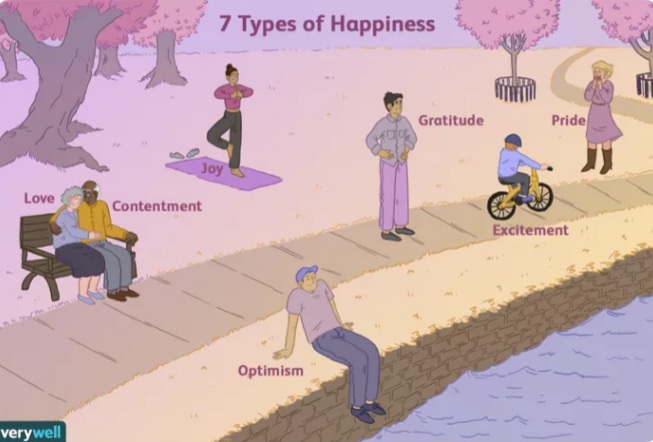
1. Joy :

Joy is when you win a hard- fought competition, you finally accomplish a project you’ve wanted to or times when you doible over in uncontrolled laughter when someone relates a hilarious story. Joy makes you feel great about yourself, makes you feel confident, assertive, capable, loved and fulfilled.

The feeling of joy is fleeting joy is presemt at the moment. It is possible to feel joy despite grief or uncertainty. Happiness can be found in many things. It transforms tough times into blessimgs and turns heartache into gratitude.

2. Love :

Second, on the list pf different types of happiness is love. Which means other things to different people still, a wholesome ,reciprocared love with another person seems to be the fundamental predictor of happiness. Here, we are not just talking about romantic love, it means to love with friends and family, as well as partners. When you’re in love, you’ re blissfully happy all the time.

3. Contentment :

The secret of Happiness is contentment which means a state of happiness or satisfaction . It isn’t a matter of being satisfied with what you have. Contentment not only holds the power tobmake you happy, but it will transforms your life in many ways.

4. Optimism :

Optimism is a type of happiness that reflects the belief that events or experience outcomes will generally be positive. The key to attaining happiness is to have an optimistic approach to life, as optimism reflects hope and faith, helping people believe that this world is the right place

5. Gratitude :

Gratitude creates positive emotions, like different types of happiness, joy, love, and contentment, it can undo the hold of negative emotions. It goes hand in hand with mindfulness in its focous on the present and greatfulness for what we have now, rather than wanting more and more.

6. Excitment :

Excitment can be anything from about a new job or moving to a different place and motivates youbto work harder and channel that positive energy into more constructive activity. Excitements is fleeting. It dissipates rather quickly and can turn into ennui. It sometimes acts as a motivating factor , and execitment often leads people to likely make a decision. Even a bad one as excitment leads to impulsivity.

7. Pride :

Last on the list of different types of happiness is pride. Yes, pride and happiness go hand in hand. You can take pride in your work and your family, your haome and yourself, and in anything you put effort, attention, and love into. It is a positive feeling in reactive to a jouous event.

There are 7 essential keys to happiness and success that will help to materialize both those things in your life:

* Gratitude.

* Be present

* Manage time Effectively

* Set smarter Goals

* Embody an Empowering morning Routine

* Tackle the MITs

* Focus on Health and wellbeing.

To get the most bang for the happiness buck, I’ve realized that I should complete four stages of reveling in a moment of happiness :

* Anticipate with pleasure.

* Savor the moment as I experience it,

* express my happiness to myself or others,

* reflect on a happy memory.

Four happy hormones :

* Dopamine

* serotonin

* Endorphins

* oxytocin

Strategies of Happiness :

* Do more activities that truely engage you

* savor life’s joy

* Learn to forgive

* Practice acts of kindness

* Nature relationships

* cultivate optimisim

* Avoid overthinking and social comparison

* Develop strategies for coping

STAY HAPPY 🤩AND KEEP SMILING ALWAYS😁 .BE HAPPY 🥳

Unemployment

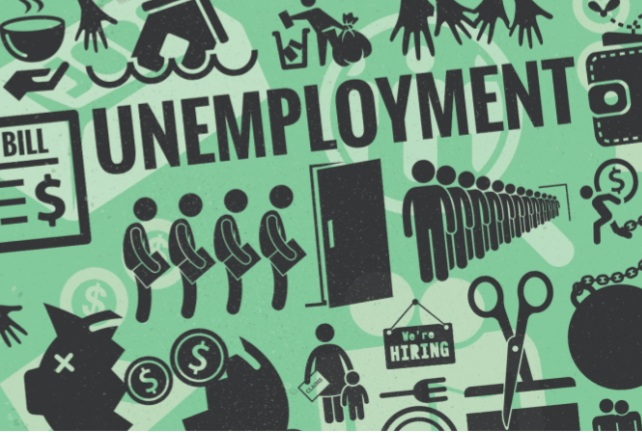
Unemployment has become one of the biggest problems around the world. When an individual is an implied, he or she will know very less about the mankind. It is so difficult to face situation and handle situations when the individual is unemployed. Unemployment leads to many silly mistakes. And an unemployed person cannot take over the family and lead the family as well. There is a huge competition in highly populated countries like India. In order to be employed, the only method is to study hard and improve the skills and score better. Basically, the students are not showing good amount of interest towards the studies. Let us now see how to motivate them.

Covid crisis has made many people unemployed. It has taken away the basic need of living. Many people are left with the unfilled stomachs. Some people are dead about by not finding a way to live.

Types of unemployment :

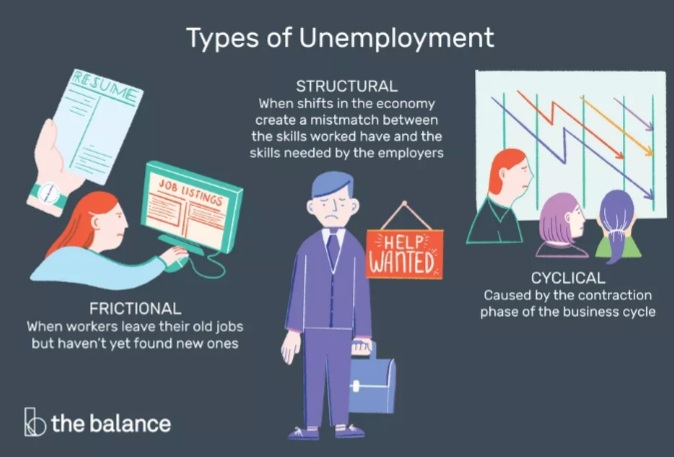
There are four main types of unemployment in an economy frictional, structural, cyclical, and seasonal and each has a different cause.

1. Frictional unemployment :

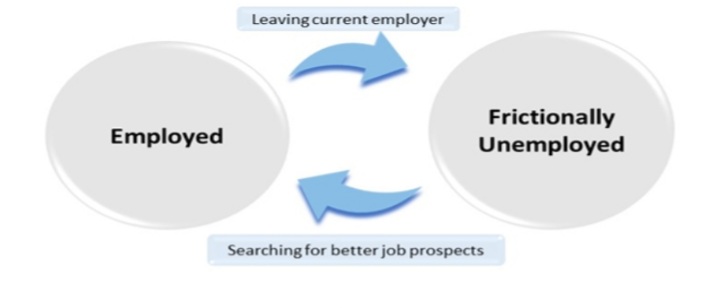
Frictional unemployment is caused by temporary transitions in workers lives, such as when a worker moves to a new city and has to find a new job. Frictional unemployment also includes people just entering the labor force, such as freshly graduated college students. It is the most common cause of unemployment, and it is always in effect in an economy.

2. Structural unemployment :

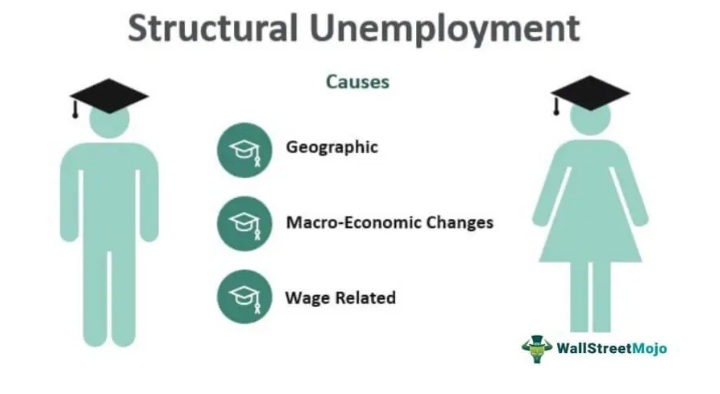
Structural unemployment is caused by a mismatch in the demographics of workers and the types of jobs available, either when there are jobs available that workers don’t have the skills for, or when there are workers availabes but no jobs to fill. Structural unemployment is most obvious in industries undergoing technological advancements.

3. Cyclical unemployment :

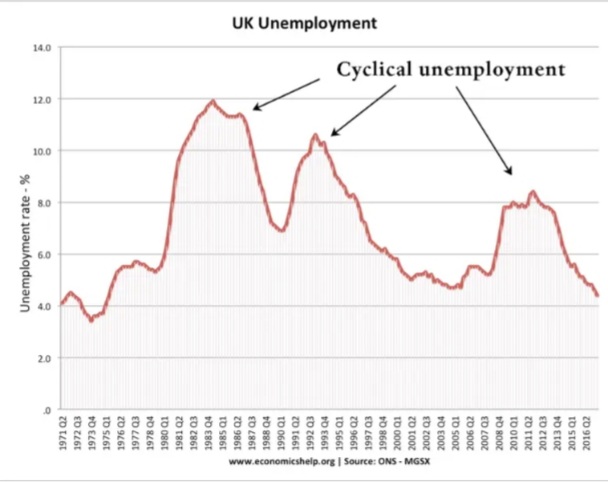
Cyclical unemployment is caused by declining demand. When there is not enough demand in an economy for goods and services, businesses cannot offer jobs . According to keynesian economics , cyclical unemployment is a natural result of the business cycle in times of recession: if all consumers become fearful at once, consumers will attempt to increase their saving at the same time, which means there will be a decrease in spending, and businesses will not be able to employ all employable workers.

4. Seasonal unemployment :

Seasonal unemployment is caused by different industries or parts of the labor market being available during different seasons. Fot instance, unemployment goes up in the winter months, because many agricultural jobs end oncr crops are have harvested in the fall, and those wotkers are left to find new jobs.

Consequences of unemployment in an Economy :

Low unemployment is key to economic stability High and long- term unemployment can cause significant stress on a nation in three key areas.

* Individuals :

Unemployed people have no ability to fulfill their financial obligations and can become mentally stressed, ill, and even homeless.

* Economic efficiency :

During times of high unemployment many job seekers will accept new jobs below their skill level, a situation called “underemployment ” which translates to a loss of human capital for an economys labor market. Unemployed workers will also significantly decreases their consumer spending, which is one of the driving forces of economic growth. Without consumer spending, the economy will slow dramatically.

* socio- political stability :

If unemployment remains high, citizen dissatisfaction can rise to the point of widespread civil unrest.

Possible solutions for Unemployment :

Solving unemployment is a hotly debated topic, and no economists agree on one simple way to do it. However, in the U.S ,if unemployment rises noticeably, the government usually steps in with specific policies designed to lower the total number of unemployed people.

1. Monetary policy :

Monetary policy is financial influence implemented by a central bank . Monetary policies usually come in the form of lower interest rates, which increase the total money supply within an economy by allowing banks and businesses more access to loans and therefore, more accessible spending power.

2. Fiscal policy :

If expansionary monetary policy doesn’t adequately lower the unemployment rate government agencies will turn to fiscal policy. Fiscal policy is fiscal stimulus implemented by the national government and fiscal policies include spending on infrastructure, proposingtax cuts , increasing the minimum wage, or implementing unemployment benefits. These methods are designed to inject more demand into private economy and strengthen economic activity.

Let us now see some of the ways to motivate the students to study and get employeed.

Make things easier :

Showing the things easier and explaining them with clarity helps the students to show better interest on the subject and makes them to pay more attention on what the teacher is trying to convey. When the topics are shown easier for the students, they start learning them and they feel achieved and they pay more attention to study. When a student learns a particular topic or a question, he/she feels comfortable and happy for getting it. Once if they start reading, they develop the interest in them and they continue to read more and more.

Tell the importance :

The students must be motivated with good number of words to understand the need of studying and what happens if they don’t study. A student is like a bird without the wings when they don’t study. So, it is very important to motivate students to study and to make them understand the need of the situation. Motivation brings the right change in the students who are not interested in learning. It develops the interest in them to study.

It seems good if the government provides good number of jobs.

Health Education

A sound mind lives in a sound body’.

Introduction

Health education is a profession of educating people about health. Areas within this profession encompass environmental health, physical health, social health, emotional health, intellectual health, and spiritual health, as well as sexual and reproductive health education.

Health education teaches about physical, mental, emotional and social health. It motivates students to improve and maintain their health, prevent disease, and reduce risky behaviours. It also focuses on emotional, mental and social health too. Educating students on the importance of health builds their motivation.

Health education is one strategy for implementing health promotion and disease prevention programs. Health education provides learning experiences on health topics. Health education strategies are tailored for their target population. Health education presents information to target populations on particular health topics, including the health benefits/threats they face, and provides tools to build capacity and support behavior change in an appropriate setting.

History

From the late nineteenth to the mid-twentieth century, the aim of public health was controlling the harm from infectious diseases, which were largely under control by the 1950s. By the mid 1970s it was clear that reducing illness, death, and rising health care costs could best be achieved through a focus on health promotion and disease prevention. At the heart of the new approach was the role of a health educator.

Code of ethics

The Health Education Code of Ethics has been a work in progress since approximately 1976, begun by the Society for Public Health Education (SOPHE).

“The Code of Ethics that has evolved from this long and arduous process is not seen as a completed project. Rather, it is envisioned as a living document that will continue to evolve as the practice of Health Education changes to meet the challenges of the new millennium.”

Importance of Health Education .

Health education builds student’s knowledge, skills, and positive attitudes about health. Health education teaches about physical, mental, emotional and social health. It motivates students to improve and maintain their health, prevent disease, and reduce risky behaviours.

Health education curricula and instruction help students to learn skills so that they will use to make healthy choices throughout their lifetime.

Health education teaches people of all ages about how diet and exercise contribute to a healthy lifestyle. It also encourages positive changes in behaviour and lowers the risk of addiction to drugs, alcohol and unsafe sexual practices. The majority of schools around the country have courses aimed at teaching health education to students. These courses often revolve around the body, healthy eating, sex and exercising. Some students are taught basic health and physical fitness early on. More in-depth courses are designed for middle and high school students.

Health education encourages a person to make healthy choices. They are instructed to avoid unhealthy habits. ‘A sound mind lives in a sound body’. Rabindranath Tagore and C.V. Raman, if they were confined to sick bed, could not have won the Nobel Prize. In fact, a sickly student with all his talents and abilities lags behind in the race of life.

Health education also teaches about the emotional and mental health of the student. A healthy person is the happiest person in the world.
Link

Deserts

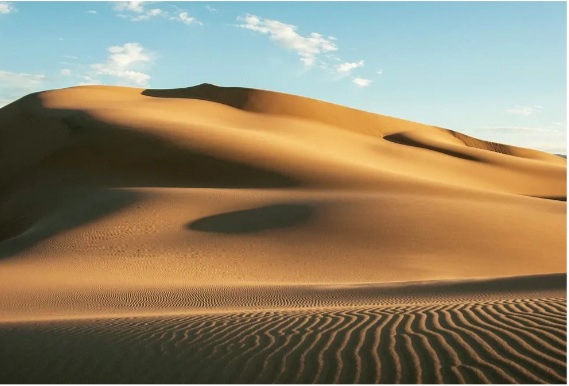
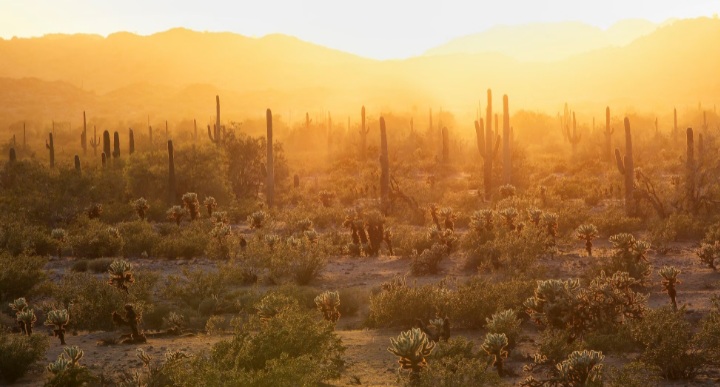
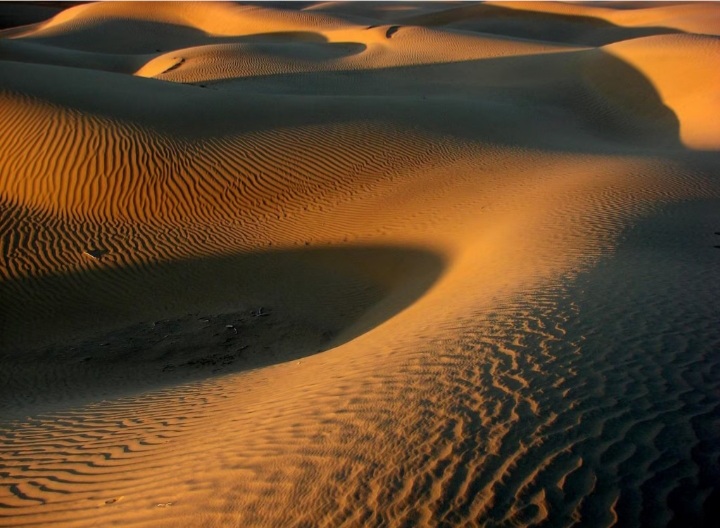
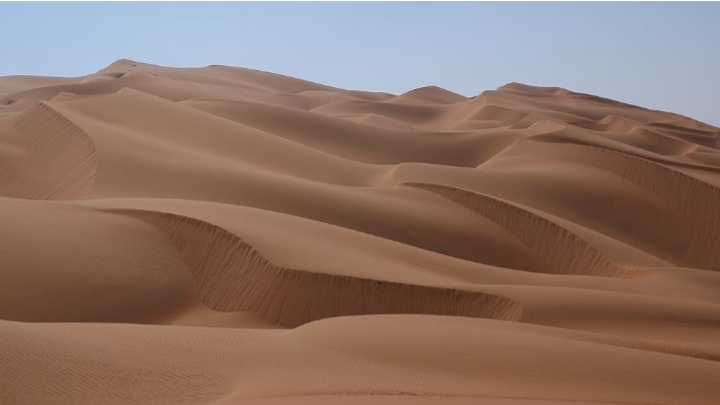
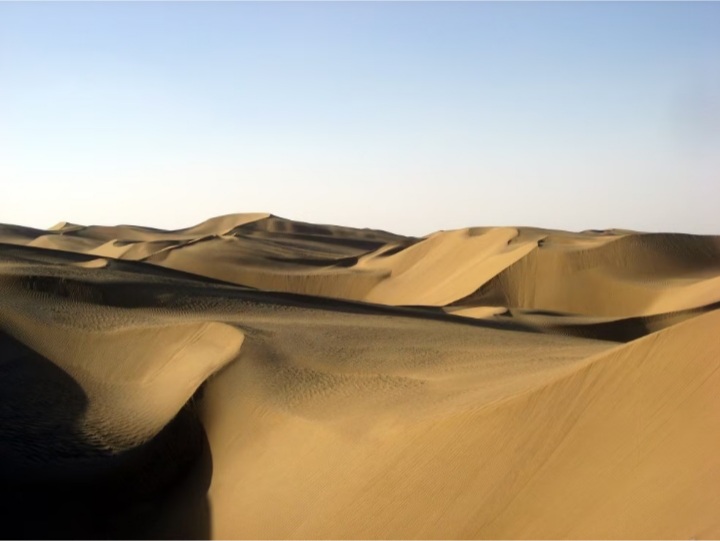
In the world we find varied geographical regions which includes mountains, plains, deserts, plateaus all with their own physical features. Desert is basically a piece of barren land which is filled with sand and lacks water bodies and have dry weather all along. In day time deserts are extremely heated up and at night it becomes chilling cold at the same place. In the Indian subcontinent we find desert in the western part of the subcontinent in the state of Rajasthan.

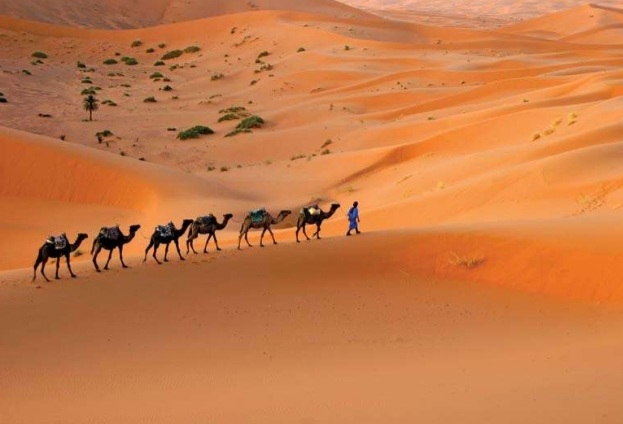
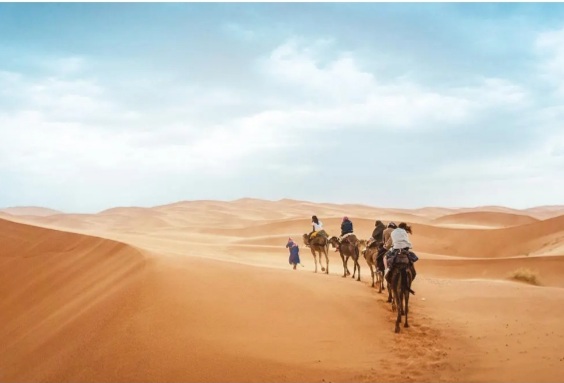
The animals and plants in the deserts have their own adaptations, among plants we find a variety of cactus, cactus plants have special adaptations to survive in the desert, they have fleshy stem which holds water in them which turns out to be useful when there is scarcity of water also they have very long roots which can penetrate deep inside the soil in search of water also they don’t have leaves and have thorns in place of them in cactus the food is prepared in the step as it contains chlorophyll and is green in color. Also, we find camel in desert their feet have adaptation to walk on the sand also they can survive with less water and they have long eyelashes to protect their eyes from dust storms.

Types of Deserts :

1. Coastal Deserts :

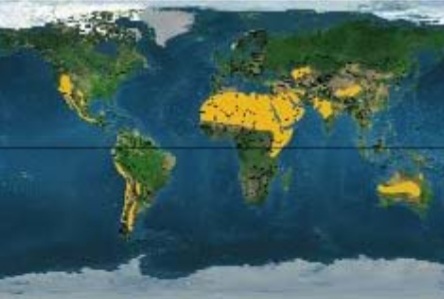
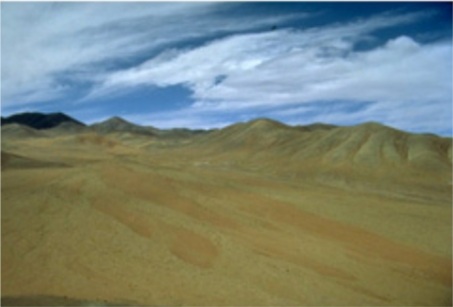
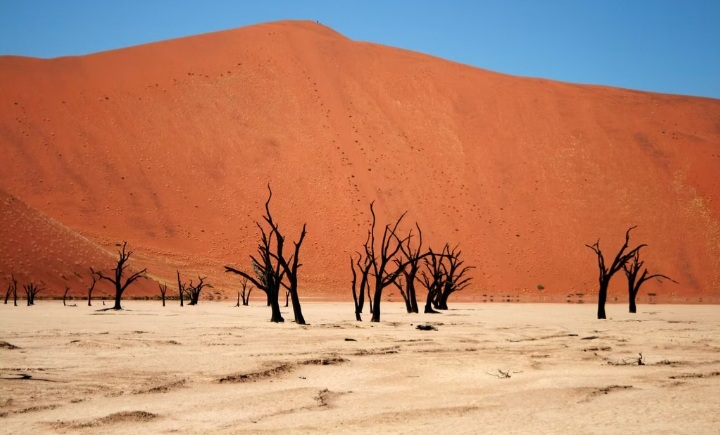
Coastal deserts occur in cool to warm areas along the coast. They have cool winters and long, warm summers. Coastal deserts are located on the west coasts of continents between 20° to 30° lattitude. Winds off the coast blows in an easterly pattern and prevents the moisture from moving onto the land. The Namib desert in Africa and the Atacama desert in chile are coastal deserts.

2. Subtropical Deserts :

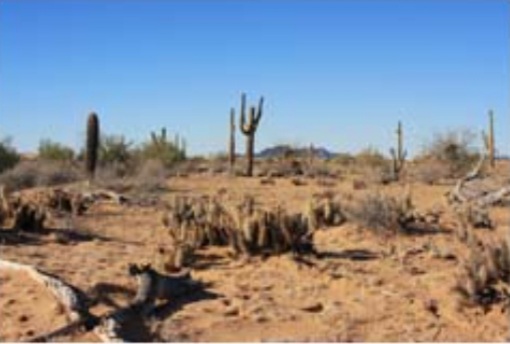
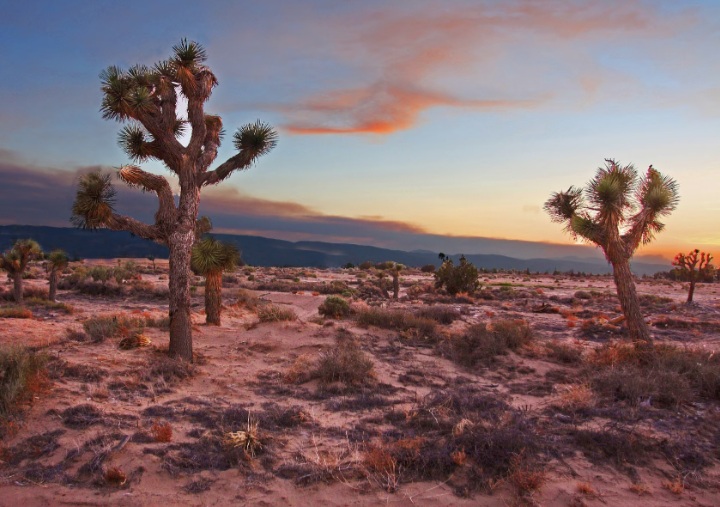
Subtropical deserts the hottest deserts. They are found in Asia, Australia, Africa and North and south America. In the united states, the chilhuahuan, sonoran and Mojave are all subtropical deserts. Subtropical deserts are very hot and dry in the summner and cooler but still dry in the winter. Rainfall happens in short bursts. The air is so hot and dry in these deserts that sometimes rain evaportaes before it even has a chance to hit the ground. The soil in subtropical deserts is usually either sandy or coarse and rocky.

Plants and animals in subtropical deserts must be able to withstand the hot temperatures and lack of moisture. Shrubs and small trees in the subtropical desert usually have leaves adapted to retain moisture. Animals in sbtropical deserts are usually active at night, when it is cooler.

3. Cold wintet Deserts :

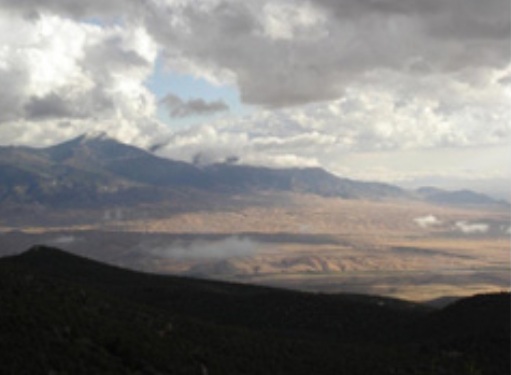
Cold winter deserts are also known as semiarid deserts . They have long, dry summers and cold winters with low rain or snowfall. In the united states the Great basin, the colorado plateau and the Red Desert are all cold winter deserts. Other cold winter deserts include the Gobi desert in china and Mongolia and the patagonian desert in Argentina. The lack of rainfall in cloud winter deserts is often caused by the rainshadow effect. The rainshadow effect happens when a high mountain range stops moisture from reaching an area. The Himalayan Mountain prevent rainfall from reaching the Gobi desert.

4. Ploar Deserts :

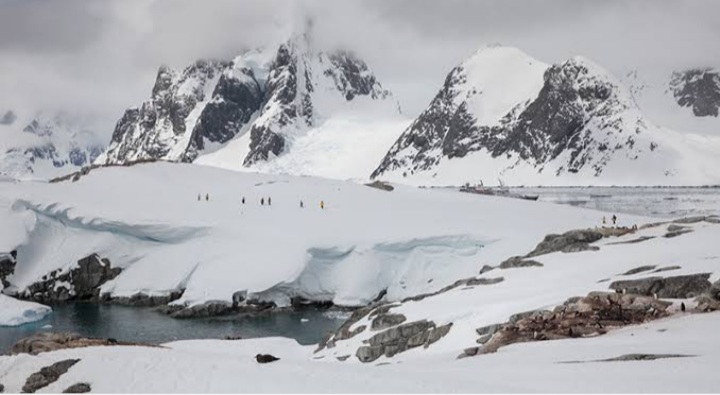
Polar deserts are found in the Arctic and Antarctic regions. Like warmer deserts, they also get very little precipitation.polar deserts are cold year- round.

Largest Desert in the world :

The antarctic polar Desert, which makes up the vast majority of Antarctica, is the largest desert in the world. In fact this single desert is larger than the combined size of the Gobi Desert, the Arabian Desert, and the sahara Desert.

* The driest desert of the world Atacama is surely the most dangerous desert of all.

The strongest animal in the Desert :

Based on strength to weight ratio, the dung beetle of the scarab is the strongest creature on earth. They can lift 1141 times their own body weight. It helps them a lot in finding the mate and food. The dung beetles also constitute a large percentage of scarab family.

The 7 hardest Animals to Hunt :

* Leopards

* Mountain Goats.

* Elk

* Eland.

* cape Buffalo

* Roan and sable

* Bears.

what can kill you in the Desert?

Aside from the oppressive heat and lack of water, the desert is also full of critters that can bite and sting. Some of these guys can even kill you if you aren’t able to find medical help. Spiders, scorpions, centipedes, and snakes are all found in dark places , abandoned builidings and under rocks.

Most Famous Deserts :

* Namib Desert – Africa

* Atacama Desert – South Americs.

* sahara Desert – Africa

* Gobi Desert – china

* Mojave Desert – Nevada

* Antarctic Desert – Antarctica

* Sonoran Desert – USA

* Thar Desert – India

* Rub’al khali – saudi Arabia

* Tabernas Desert – spain

* Taklamakan Desert – central Asia

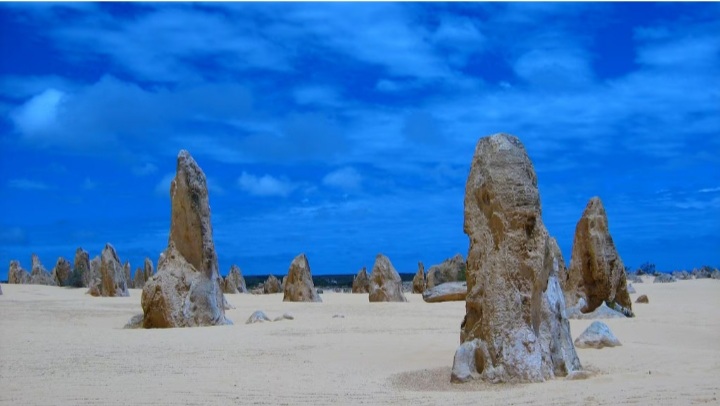
* pinnacles Desert – Australia

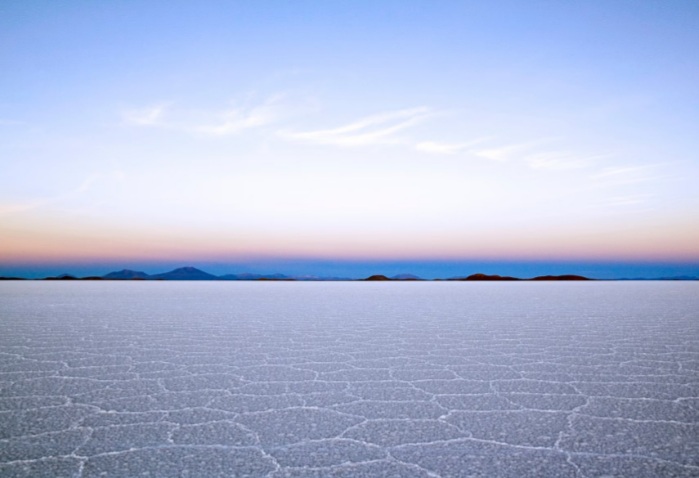
* Salar de uyuni Desert – Bolivia

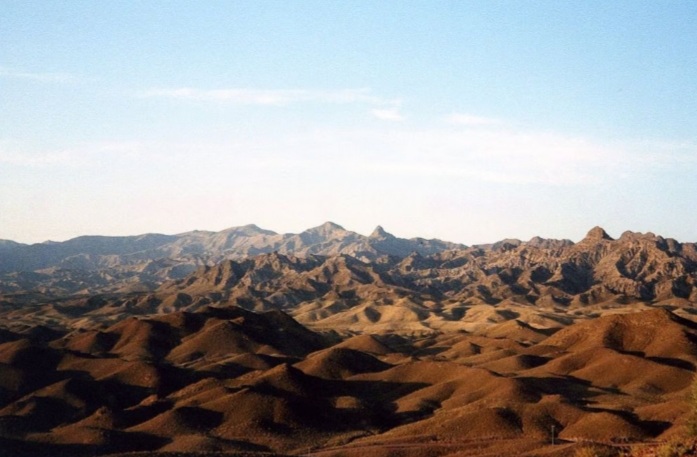
* Dasht- e kavir – Iran

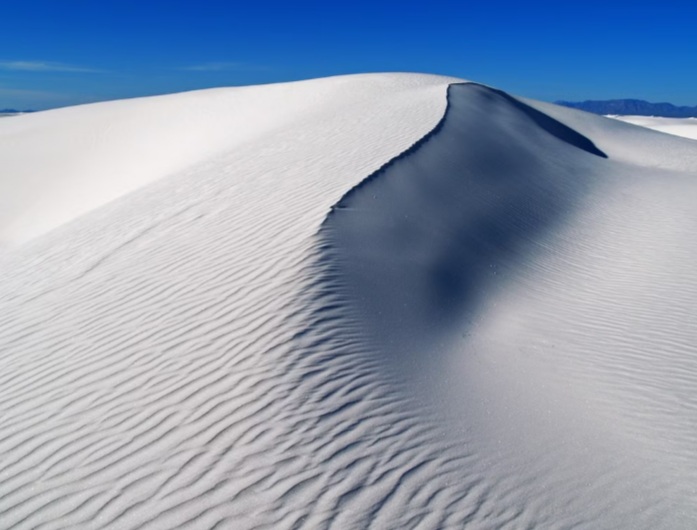
* Chihuahuan Desert –New Mexico

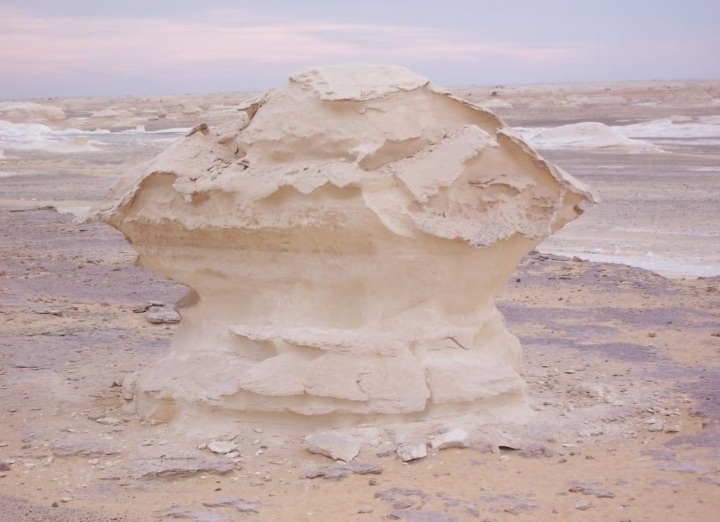
* White Desert, Farafra – Egypt

A LETTER TO THE MOTHERLAND

Hello motherland, I hope you are fine, I can only hope this because your children living here are not completely loyal to you.

Since long time you have been through many things and faced a lots of challenges. You have seen people changing, their changing lifestyles and even their behaviour towards you. During ancient times people used to discover things from you, they only used natural things like branches of trees to cook food, stones to setup fire and made tools from them. People at that time were totally dependent on you for everything from eating to wearing to shelter. As the time passes, in the medieval time people were more developed and found ways to rule over you. Different communities were made and people got divided according to their power and started making policies and planning to rule over a large piece of land this way you got divided into several religion and genders. Coming to the Modern Times now no one is afraid of you, everyone is seeking their benefit and doing whatever they wish to do without taking any precautions. Use of plastic bags, burning of crackers on festivals, wastage of water, deforestation etc all are leading to the serious conditions of the health of the motherland. Today’s society is always busy on technology and this too is creating a lot of junk on land and in people’s mind. They are harming the land as well as their health conditions. Due to huge amount of pollution, Ozone Layer has got a black hole in it and still people are not aware that it can cause serious skin problem like skin cancer.

As human beings have troubled you so much, the day will come when you will trouble us and I think the day has arrived, that is why in many parts of the world people are facing floods and even drought, heavy rainfall and even areas with graphic heat. You have suffered a lot and now that one day is very close when everybody will suffer and realise that what you have gone through.

Nowadays oxygen is free of cost and is God gifted but that day is very near when people will have pay for it. Everyone on the streets would walk by carrying oxygen cylinders on their back and masks on their face due to pollution and harmful waves. The harmful rays or pollution are not only affecting the life of people but also affecting the biodiversity. India, which is famous for its Bengal tiger is now found very rarely, butterflies which were in large quantities are now decreasing rapidly. Many of the birds and animals have been extinct because of unnecessary hunting in past and present by various kings and famous personalities in order to outshine others. Due to the overuse of the resources the time will come when the rivers will dry up and nothing will be left for the future, due to the present scenario it seems that the only thing we can leave for future generations are the photographs and paintings of the wildlife resources.

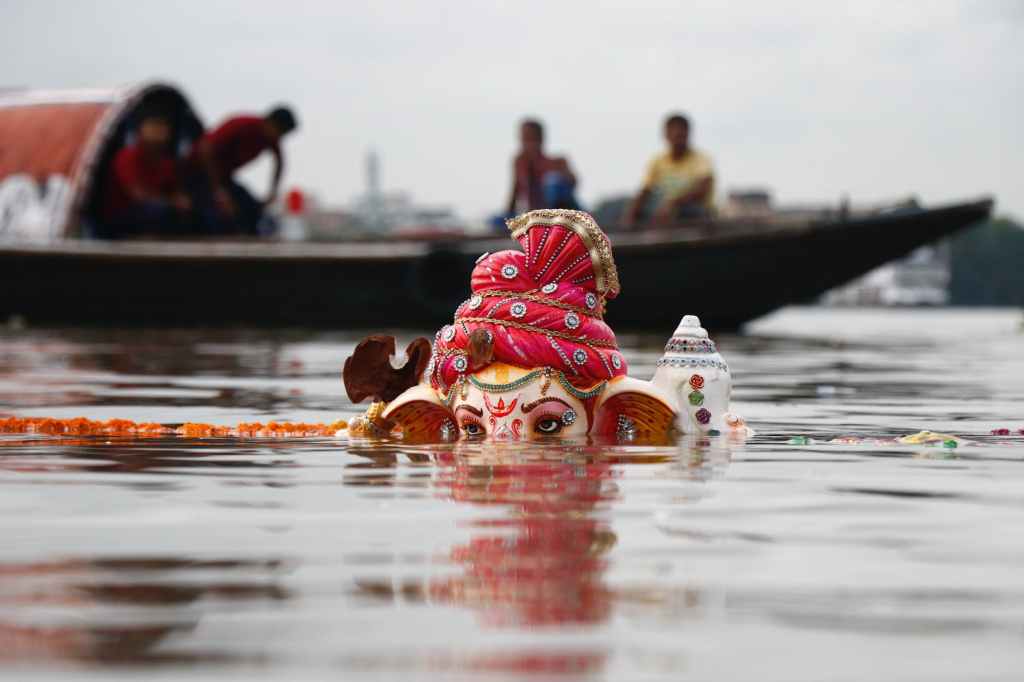
Human beings are not respecting their God then how can you expect that they will give you that respect which you deserve. It can be concluded by example of Ganesh Visarjan when tons of Ganesh idols are been sank in the rivers and later these were all collected by cleaners to take them to the safer place. The idols seems half dissolved in water and some even didn’t desolved because they are usually made of Plaster of Paris (POP). Government had insisted the public to buy idols made of mud instead of POP but for the beauty of the home they are destroying the beauty of nature.

There are very few helping hands which are not enough to protect you or conserve you. But we need more human efforts to protect you from big natural calamities.

To prevent the motherland from being old and unhealthy everyone should stop using plastic and start using alternative methods like paper bags, cloth bags, bamboo bottles, etc. Use of less pollutants should be encouraged and bicycle should be used for smaller distances to prevent the atmosphere from harmful chemicals. Candles and earthen lamps should be lighten up on festivals instead of firing crackers. These little steps by everyone can bring greater changes and will improve your health. If we talk about last year then due to covid-19 when the whole world was locked and everyone stayed at their homes, the ozone layer healed itself and pollution started to decrease.

I hope that my letter to motherland will somehow influence and aware people and hope that they will gain some more respect towards our motherland and I thank you to all those citizens who are engaged directly or indirectly in conserving it and contributing their bit for the world.

This is Ifrah Javed signing off.

Gender inequality

Discrimination is the state when all individuals are not treated equally and not given equal rights. Every individual in the community yearns for equal status, opportunities, and equal rights. People generally say these days that everyone is treated equally but they are not. Discrimination usually exists because of cultural differences, geographical differences, and gender. Inequality on the basis of gender is something that is not appreciated, but it is seen many times in many companies. There are many areas where equal opportunities are not provided to women.

We are in the 21st century, and even now, women are not treated equally as men. It is generally believed that women are more talented than men, and it has been proved many times, but society is not yet ready to accept this fact. Gender equality is the term used when equal opportunities in the fields of politics, economics, education, and health are provided to both men and women.

As per the World Economic Forum’s gender gap ranking, India holds the rank 108 out of 149 countries. The rank should be a major concern in the country as it signifies the immense gap between the opportunities given to women when compared to men. The structure in India is such that women are neglected in many fields like education, health, finance, etc. They are just limited to household chores which should not be the scene here. There are many places in India where women are considered as a burden and they are not allowed to go to school and study as well. Also, a preference for sons prevails in many areas in India.

The seven important forms of gender inequality :

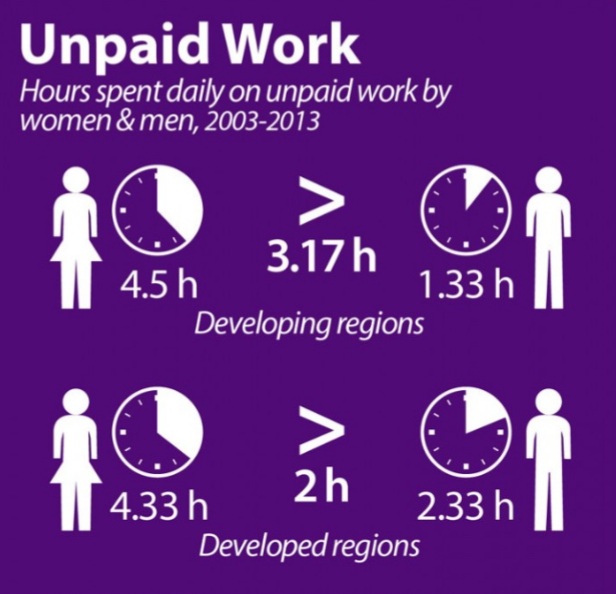
1 . Women works Longer than Men :

In most of the societies the male – stream is the main stream who argues that women have comparative advantage in household non- market production, like cooking and cleaning for the family that cant be called emotional and personal caring work. Based on this thinking, household jobs are then asymmetrically distributed. Women are more valued in home. Men are specialised in market- baesd production. Thus, being the bread- earners, males enjoy both power and status.

2. Inequality in Employment and Earnings :

Historically, men have greater participation in work outside home than women. But women ( particularly of poor households) share unequally household duties in addition to economic production. Thus they work longer than males. This kind of ‘ division of labour’ may be seen as the ‘ accumulation of labour’ on women, as described by Amartya sen. Household activites are often viewed as ‘ sedentary activites’ which require less ‘ calore’ to gain energy.

3. Ownership Inequality :

A case of social inequality. Let us turn to another kind of inequality, called ownership inequality a classic case of social inequality. In most of the societies, ownership over property and means of production rests mainly on male members . The law of inheritance provides such ownership rights on male child. Such denial coming out of hierarchical dualism within the family not only reduces the voice of women but also prevents them from participating in commerial, economic and social activites.

This kind of social deprivation means absence or lack of capability or because of ‘capability deprivation’, women are subject to various kinds of exploitation and unfreedoms. Social inequality distorts the process of development. Unfortunately, ownership inequality in any country is not of recent origin. In her earlier life, a woman comes under the influence of her father, then husband as she enters a married life and finally, under sons ownership right over property is skilfully avoided. A telugu proverbs corraborates this understanding: ” Bringing up a daughter is like watering a plant in anothers courtyard.”
4. Survival Inequality :

Another crudest from of gender disparity is the unusally high mortality rates of women , though biologically, women live longer than men! Thus more boys than girls are born evrywhere leading to a ‘ deficit’ of women and a ‘ surplus’ of men. In developed countries beacuse of absence of gender bias in health care and nutrition, women outnumber men. In Europe and in north America, 105 or more girls are born per 100 boys. Such high female- male genderd survival rate in different age groups.

5. Gender Bias in the Distribution of Education and Health :

Health and education are the major forms of human capital are realted to economic development . Human capital gets accumulated as a society advances in education . The contribution of human capital towards Japan’s remarkable economic progress attracts our attention . Improvement in health capital also improves the return to investments in education .

However, one finds a huge education and health gaps between developed and developing countries. In recent times, despite a large increase in econoc advancement on times, despite a large increase in economic advancement in asia and africa, these countries lag far behind the developed countries in terms of educational attainment particularly in respect of women’s education. Gender disparity not only hindrrs economic progress but also exacerbates social inequality.

6. Gender Inequality in Freedom Expression :

Let us talk about gender inequality beyond economic issues or factors. Women are not only subject to income or asset inequality but also in terms of freedom and power deprivation of women goes beyond one’s imagination. They lack not only economic freedom at home because of absence of autonomy in house hold decisions, limited or poor wages earned but also lack any freedom in airing opinions over education of children.

In some backward poor societies the right of women giving options is completely denied. Such un – freedoms, however, are not uncommon even among the educated elites who enjoy enormous power and authority in the male domined society. Historically , this sort of law socioeconomic status of women has been continuing nowasdays.

7. Gender Inequality in Respect of viloence and victimisation :

Finally, anti – female bias starts before the girl child is born and this attitide of the society a female member carries throughout her life. It is because of the unequal sharing of income, property, household benefits . Women are subject to both physical and sexual violence – the oppsite of freedom, and an extreme form of coercion. This is common for both poor and not too much uncommon in rich countries as well as among rich people. One in three women in the word is beaten or raped during her life times.

Dowry harassement is considered as an ‘ instrumental use’ of violence. Dowry death is the most serious form of domestic violenece. Wife beating is not uncommon. Sexual violence is an obnoxious form of human rights violation.

Specifically, public health can contribute to reducing health inequities by integrating health equity considerations into policy and programs, collebrating with other sectors to address inequities engaging with communities to support their efforts to adress inequities, identifying the reduction of health inequities.

Reducing inequality requires transformative change. Greater efforts are needed to eradicate ectreme poverty and hunger and invest more in health, education, social protection and decent jobs especially for young people, migrants and other vulnerable communities.

We should understand that women are the part and parcel of any family. When it comes to flexibility, they can manage their home and offices at the same time. If equal opportunities are not given to them, they will be led down and won’t be able to achieve big milestones which they are obviously capable of.

THE ANDAMAN AND NICOBAR ISLANDS – FAIR OF NATURE AND VIEWS 

Andaman and Nicobar Island is a union territory of India which consists of 572 islands and 38 of them are inhabited. It is at the junction of the Bay of Bengal and the Andaman Sea. Port Blair is the capital and largest city.

The territory is about three districts- the Nicobar District and its capital is Car Nicobar as its capital, the South Andaman district with Port Blair as its capital and the North and Middle Andaman district with Mayabunder as its capital.There are the Sentinelese, also known as the Sentinel, who are uncontacted tribe. 

NOW LET’S TAKE A TOUR OF THIS ISLAND BY MY ARTICLE-

The Sentinel

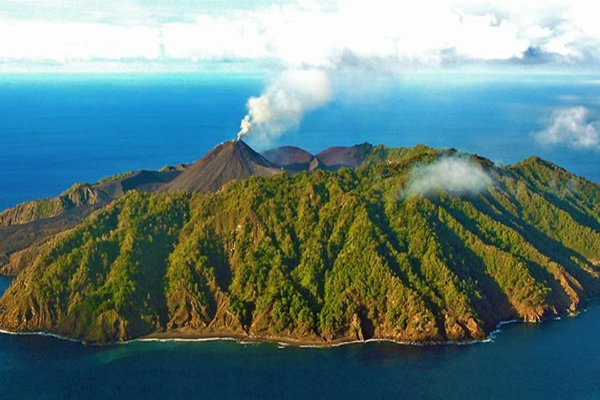
It is the place where India’s only one active volcano , Barren Island, is located, which had  last erupted in 2017. There is also a mud volcano situated in Baratang Island . In December 2018, Prime Minister Narendra Modi, renamed three of the islands as a tribute to Subhas Chandra Bose, Ross Island was renamed as Netaji Subhash Chandra Bose Islan, Neil Island as Shaheed Island, and Havelock Island as Swaraj Island.

THE TOURIST SPOTS –

There are many places to visit like – 

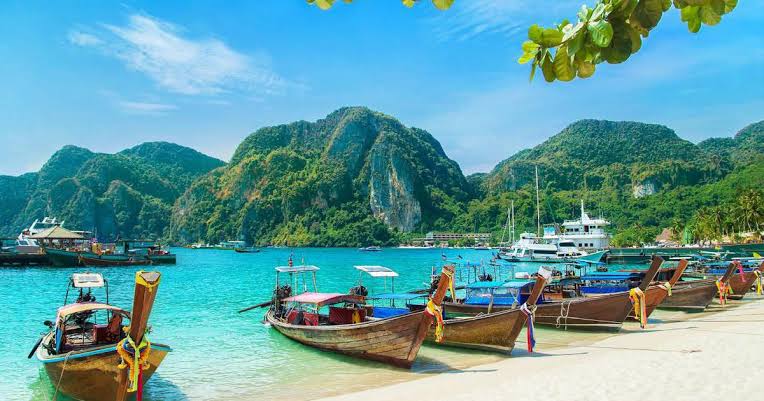
Andaman Nicobar Island

Havelock Island, Neil island, North Bay Island, Baratang Island, Viper Island, Ross and Smith Island, Cinque Island, Rutland Island, Mount Harriet National Park,Chidiya,Tapu,Rangat,Mayabunder,Diglipur,Aamkunj Beach,Dhaninallah Mangrove Nature Walkway/Walk,Panchavati Waterfalls,Cuthbert Beach,Cuthbert Bay Wildlife Sanctuary,Long island,Guitar Island,Merk Bay Beach,North Passage Island,Button islands,Lalaji Beach,Elephant Beach,Kalapathar,Jolly Buoy Island,Corbyn’s Cove Beach,Lamiya Bay Beach, Diglipur,Kalipur Beach,Ramnagar Beach, Neil Island,Ramnagar Beach, Diglipur,Pathi Level Beach,Alfred Caves,Little Andaman,Butler Bay Beach,Netaji Nagar Beach,Waterfalls at Little Andaman,White Surf and Whisper Wave,Little Andaman, Oil Palm Plantation,Stewart Island Beach,Rajiv Gandhi Water Sports Complex,Chatham Saw Mill,Anthropological Museum,Katchal Island,Karmatang Beach,Interview Island,Avis Island,Vijaynagar Beach,Limestone Caves of Baratang Island,Mud Volcanoes of Diglipur,The Parrot Island,Barren Island.

MOST VISITED PLACES- 

Port Blair
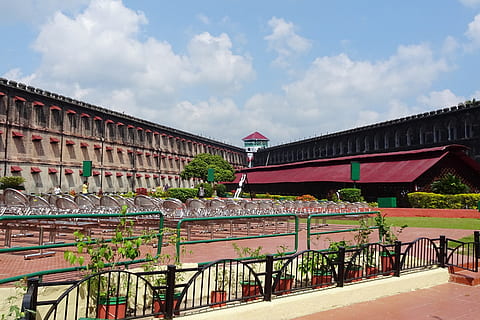
  • Port Blair- Port Blair serves as the entry point for visiting the Andaman and Nicobar Islands.The Cellular jail here is perhaps one of the most infamous remnants of India’s struggle for independence.
Havelock Island
  • Havelock Island-Havelock Island, officially Swaraj Island, is one of the largest islands.The island belongs to the Ritchie’s Archipelago and is located between Peel Island and Neill Island.
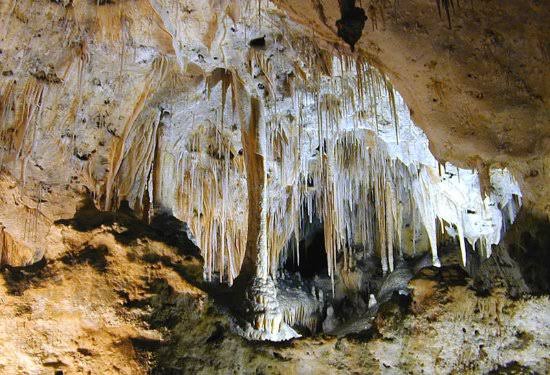
  • Baratang Island- It belongs to the North and Middle Andaman administrative district,The boat ride is covered with a canopy of the forest which is also a home to the indigenous ‘Jarawa’ tribe.The Limestone caves here will immediately gather your attention as the erosion have formed some unique shapes.
Batarang Island
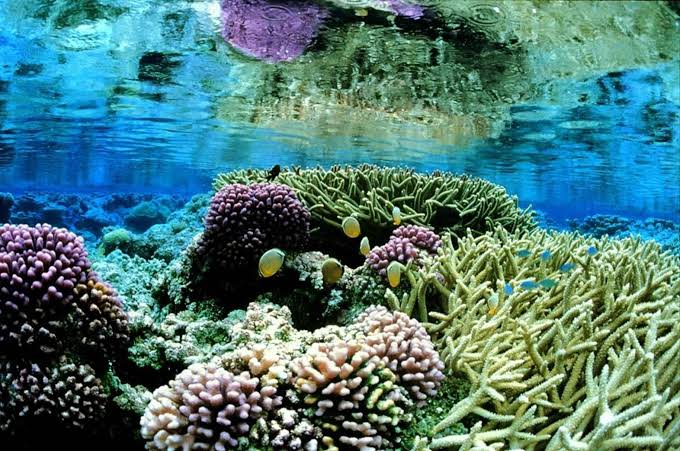
  • Neil Island- Neil Island is also known as the vegetable bowl of Andaman Islands.Because of the beauty of the reefs located here, Neil islands are often termed as the coral capital of Andaman.
Neil Island
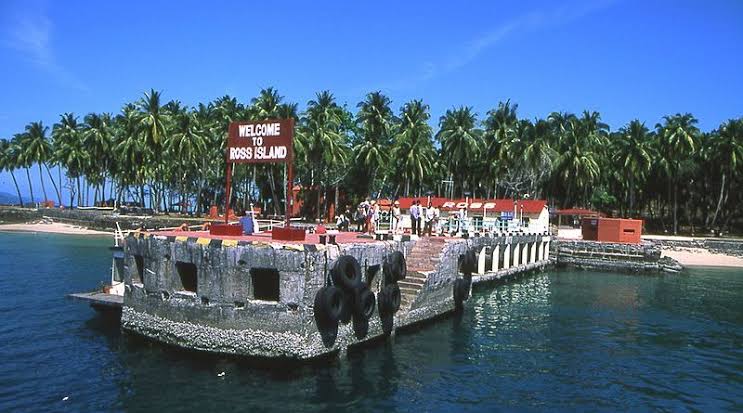
  • Ross Island- Netaji Subhas Chandra Bose Island, formerly known as Ross Island.Ross islands are famous for the ruins of Penal colony that precedes the cellular jail or the Kala pani.
Ross Island
  • Rangat- It is  a town which is located on the Middle Andaman Island,The scenic beauty of Rangat is perfect for flora and fauna lovers.famous for Cuthbert Bay Beach, which is the breeding ground for turtles. These include olive ridley turtles, green sea turtles, hawksbill and leatherback turtles.
Rangat
  • The Great Nicobar Island- Great Nicobar is the southernmost and largest of the Nicobar Islands of India. It is famous for its ecological hotspot, wildlife, and nature. Main attractions are Great Nicobar Biosphere Reserve, Indira Point.
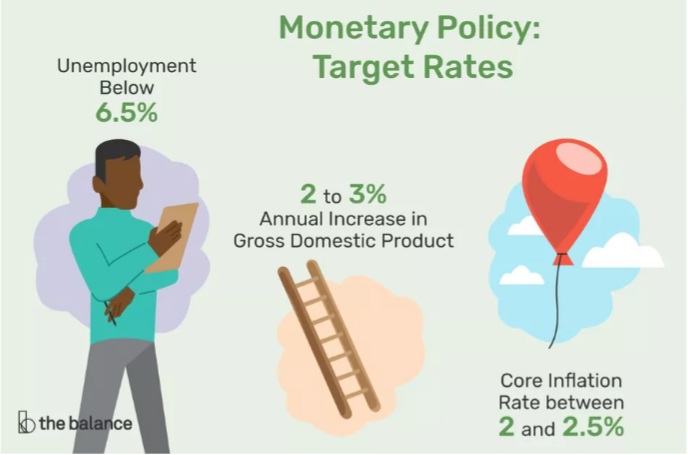
The Great Nicobar

Now it is your turn which place will be your favorite !!!