How Development Administration introducing socio economic transformation

Source: leverage.edu

The nectar of development administration is to bring changes through integration, organized and properly directed governmental action. The Administrative shift concern towards development objectives the researchers and practitioners of Public Administration forced to conceptualize the developmental conditions and to bridge the gap in administrative theory.

The term development administration was first coined in UL Goswami an Indian scholar’s article entitled ‘The structure of development administration in india’ published in 1955. George Gant, an american scholar is regarded as the father of development administration, Edward Weidner, Riggs , Ferrel Heady were major contributor to this field.

Conceptual thinking in this area is notably available in the writing of a group of American experts on comparative administration such as Merle Fainsod, Montgomery and Diamant. The writing of these scholars not just talk about foundation not Development Administration but also contributed greatly to its formulation and growth. Emergence of concept of developing countries in Asia, Africa and Latin America due to the liquidation of colonialism and imperialism. Extensive american economic and technicalassistance plans to newly emerged developing countries. Developmental schemes in the developing countries through multilateral technical aid and financial assistance and established Comparative Administration Group.

Source: futurelearn

After the World War Second, countries became politically independent, they have been facing political problem, they have been confronting immense problem if poverty, illiteracy, poor health, low agricultural productivity, lack of industrial development and socio political instability. The immediate action before these countries is to bring about socio economic transformation and nation building through change.

In order to achieve the objectives, the developing countries have under taken various Departmental activities in the economic and the social sphere of society. The term Development Administration is used to refer to the directly government led effort to intervene in the process of socio economic transformation.

The new administration required for the government in both quantitatively and qualitatively difference from the traditional administration. Development Administration is a concept that aim to strengthen the structure and function of developing countries in post world War II.

Objectives of Development Administration are conclude the innovative strategies for the development. Development Administration emphasis on development at the grassroot level. Development has to be need oriented and require self reliant process. It stress on social development and human capital as a major resource. Development has to be viewed not merely as a technological problem but found ideological ground.

Profound and rapid change in order to establish a distriction in  social order. Recognizing and highlighting the unity, effective and efficient use of scarce resources. Creation of a politics administration environment which is oriented towards securing basic needs  of the population. Freedom of administrative machinery to express its values and beliefs without fear or favour on programmes and projects.

The capacity of an administrative system to take decisions in order to meet the increasing demands coming from the environment with objective of achieving larger political and socio economic goals. Specialization and division of tasks and in the professionalism is personnel. Increase in administrative capability and capacity. A pattern increasing effectiveness in the optimum utilization of available resources and increase the Governance capability and capacity. Modernising the bureaucracy by external inducement and transfer of technology and training is necessary.

Development Administration of developing nation’s is rooted in the field as most of the developmental activities take place at field level. Emphasis on decentralization of authority which enables the different field units. Administration encompasses contribution from cultural anthropology and sociology. A wider perspective than the conventional approach based on organizational reforms. Development administration lays emphasis on self reliance and participation of people in the development activities. It stresses decentralized, responsive and accountable management of Developmental plans, policies and programmes.



READING IN THREE KEYS: How to Write a READING RESPONSE

Active reading involves looking at the text in more than one way.  For your reading responses write using these three “keys,” or methods, of analyzing what you have read: 

Reading responses in this class generally vary from 250 – 400 words. The length required will be specified on the assignment.


 Sometimes you will be asked to post your reading response to the Discussion Board and then follow-up with a response to one of your classmate’s postings. You may respond in any of the three “keys.”  A sample response building on a previous posting might start off with a sentence like this: “I agree with David that advertising objectifies women by portraying them as dehumanized objects, but I wonder whether women benefit from that objectification in any way?”  You can build your ideas on comments others have made.  And feel free to keep chatting with each other.

Get paid for the survey

What Are Paid Surveys?

A paid survey is simply a regular survey that pay you a reward for completing it. There are companies that spends a lot of money every year to get to know what consumers think about their products and services and what they can do better.

How much do I earn?

The value of each survey can differ depending of many factors such as the time it takes to complete it. Usually you get around $1 for every 10 minute survey but can be higher. It also depends on how fast you are to answer the questions.

Five Jobs That Disappear in Few Decades

As the universe is developing with many artificial intelligence. We are going to face some crisis that some jobs that will disappear in next few decades.

1) TRAVEL AGENTS

A person engaged in selling and arranging transportation, accommodations, tours, or trips for travelers. Travel agents offer advice on destinations, plan trip itineraries, and make travel arrangements for clients. Travel agents sell transportation, lodging, and admission to entertainment activities to individuals and groups planning trips.https://en.wikipedia.org/wiki/Travel_agency

2) CASHIER

A retail cashier or simply a cashier is a person who handles the cash register at various locations such as the point of sale in a retail store.https://en.wikipedia.org/wiki/Cashier. By using artificial intelligence many companies developing robots and machine to fill the cashier duties.

3) TAXI DRIVER

A taxi driver is a professional driver who transports passengers to their chosen destinations through the use of a taxi cab. By transporting their passengers, they earn a fare depending on the length of the taxi cab ride. … They may also drive around for different hours of a shift to pick up waiting passengers for fares.https://www.careerexplorer.com/careers/taxi-driver/. Similar to above job, these aslo disappear because of the artificial intelligence.

4) FOOD DELIVERIES

Food delivery is a courier service in which stores, restaurants, or third-party applications delivers food to consumers on demand. These days, orders are executed through mobile apps, websites or via telephone. Deliveries include cooked dishes as well as groceries from supermarkets.https://productmint.com/the-food-delivery-business-model-a-complete-guide/ Because of developing robots using artificial intelligence and machines this will do the food delivery activities with efficient way.

5) REFEREE/UMPIRE

A referee is an official, in a variety of sports and competition, responsible for enforcing the rules of the sport, including sportsmanship decisions such as ejection. https://en.wikipedia.org/wiki/Referee. While some feel that a move to artificial refereeing is a positive thing and reduces the scope for error, others argue that many sports rules are open to interpretation and that the possibility of human error increases the drama and spectacle of the match.https://www.careeraddict.com/disappearing-jobs

UMPIRE
REFEREE

Child Marriage legalised on Rajsthan

Currently, Rajasthan govt released an amendment “Rajasthan compulsory Registration of Marriage Amendment Bill 2021” it allowed registration of child marriages, it’s 21 century and we all are aware of how heinous child marriage is, here are some of my views on this act

In my views law is not wrong
Those who commit or help in child marriage will still be punished, but those who already had marriage were not allowed to have registration and so they were not able to avail all govt schemes and benefits, those saying it will make it easier to do child marriage remember availing govt benefits are everyones fundamental rights.

Those saying it’s illegal look it like this rape is illegal but rape victim and culprit both have some rights that we can’t snatch, like culprit must be allowed to go court etc, ofcourse child marriage is as heinous as rape and here victims are both boy and girl but why they suffer whole life for it, they can’t get rashion, jobs, water, now as everything is more and more digitalizing and you can’t prove you’re married, it will become more hard to avail services like jacha bacha Suraksha and this are thee parents who most need it.

Also one negative point is it will make child marriage easier, but many people will not be able to avail fundamental rights isn’t it totally wrong also we can make child marriage hard by making strong rules. As we have data of child marriage we can ask govt employee who are posted there why they let it happen like police or magistrate, they will become more accountable this way.

If I’m missing some points or you want to share your views here’s my email soni362002@gmail.com

Top 10 online courses to skill-up

1. IoT

Course : Introduction to Internet of Things

From : Cisco Networking Academy

Learn how the current digital transformation is creating unprecedented economic opportunity. Understand how the IoT is bridging the gap between operational and information technology systems. Discover how standard business processes are being transformed. The security concerns that must be considered when implementing IoT solutions.

2. Analytics

Course : Google Analytics for Beginners

From : Analytics Academy, Google.

Learn the basic features of Google Analytics including how to create an account, implement tracking code, analyze basic reports, and step-up goals and campaign tracking.

3. MS EXCEL 

Course : Microsoft Excel – Excel from Beginner to Advanced

From : Udemy

Excel with this A-Z Microsoft Excel Course. Microsoft Excel 2010,2013, 2016, Excel 2019 and Office 365

4. Programming Language

Course : Python for Everybody

From : Coursera

Learn to Program and analyse Data with Python. Develop Programs to gather, clean, analyze and visualize data.

5. Digital Marketing

Course : The Ultimate Digital Marketing Course 2021 : 11 courses in 1

From : Udemy

Learn market research, website creation, copywriting, SEO, Google ads, Facebook ads, email marketing, Twitter ads and more.

6. UX Design

Course : Google UX Design Professional Certificate.

From : Coursera

This is your path to career in UX Design. In this program, you will learn in demand skills that will have you job ready in less than 6 months.

7. HTML and CSS

Course : HTML and CSS

From : Codecademy

Always wandered how those perfect websites were created? Join a community of millions of students in taking this free web development course. It’s beginner friendly and will ensure that you learn the basics in only around 12 lessons!!

8. Web Development and Marketing

Course : Diploma in Web Development and Marketing

From : Alison

Further, enhance engagement with your social media pages after taking this 15 – hour course! That’s not it! Also, learn to build a website from scratch and the most effective strategies to earn money by web marketing.

9. Writing

Couse : Secret Sauce of Great Writing

From : Udemy

Writing flawlessly can give just as much of a kick as some exquisitely made sauce. Learn to perfect all the ingredients which go into mastering perfect writing. Figure out areas for improvement and upgrade your writing skills to better than ever before!

10. SEO

Course : SEO for SEO Beginners

From : Udemy

You have been seeing this term everywhere, haven’t you? Well, learn all about it with this highly recommended course. Search Engine Optimization is a skill that is indispensable in today’s digital world. So, grow your niche and command it too!

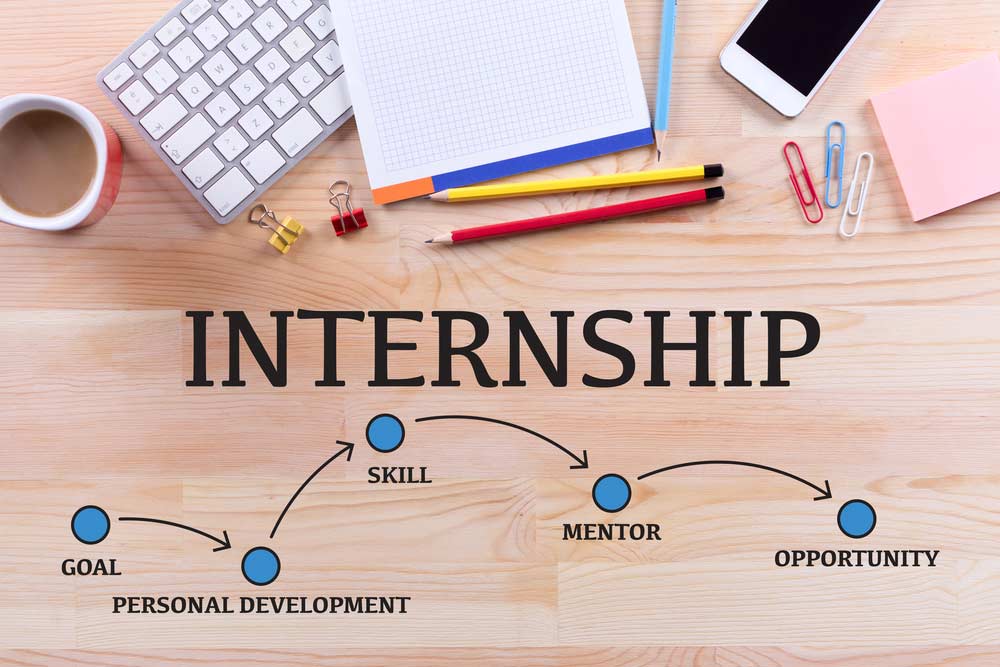
What to expect from an Internship

1. Networking

One of the most rewarding takeaways from internship is definitely Networking. It helps build professional relationship right at beginning of your professional career. Networking during an internship is really important for your career growth and social life. The power of relationships can provide you with professional opportunities in the future that you would never dreamed of. It will help you to hear tips and gain advice from others who are successful. There are so many advantage of networking, it will definitely help you to build a great future. Exchanging information on challenges, experiences and goals is a key benefit of networking because it allows you to gain new insights that you may not have otherwise thought of. Similarly, offering helpful ideas to a contact is an excellent way to build your reputation as an innovative thinker.  

In the future, these contacts could be potential references and may be also help connect you to new opportunities.


2. Soft Skills

Apart from enhancing skills in your professional domain, internships come bearing gifts in the form of soft skills. Alongside time management, teamwork and communication skills, you also learn to work with people who get on your nerves, adapt to demanding superior and long work hours and take accountability for your work. Skills like punctuality, multi-tasking, creative thinking, problem solving will help you with your full time job.

3. Working World Experience

Internship essentially serve as blueprint of how professional offices work. Regardless of the responsibilities, most internship follow a similar profile. Through an internship, you can learn more about responsibilities, hierarchies and schedules in a real time office. When students have an opportunity to experience real-world situations, it allows them to practice the skills they learn about in their books and truly understand the task at hand. Teamwork is an extremely important thing in the industry.

So if you want to try those big girl pant before buying them, an internship is your way to go!!

4. Compensation

We are gonna be loud and clear for everyone to hear, experience does not pay bills. You’ll come across internship offering ‘learning’ and ‘experience’ as compensation for your work. And often, in the rush to add a few lines to your resume you may be tempted to take up the first internship that comes your way. Trust me, there are tons of internship out there that will monetarily compensate you for your efforts and skills.

If an internship offers you all of these just grab it!!


Ola electric scooter receives record 1 lakh bookings in 24 hours

Ola Electric CEO Bhavish Aggarwal announced recently that the much-anticipated Ola e-scooter has achieved 1 lakh bookings in just 24 hours of opening of pre-launch bookings, making it the ‘most pre-booked scooter’ in the world.

Ola Electric had announced the opening of bookings on July 15th at a token amount of ₹499 on its official website.

“India’s EV revolution is off to an explosive start. Huge thanks to the 100,000+ revolutionaries who’ve joined us and reserved their scooter,” Bhavish Aggarwal said on Twitter.

“I am thrilled by the tremendous response from customers across India for our first electric vehicle. The unprecedented demand is a clear indicator of shifting consumer preferences to EVs,” Bhavish Aggarwal said in a statement.

The new Ola electric scooter is likely to go on sale in the country later this month.

Ola Electric has claimed that the scooter will get best-in-class boot space as well. Additionally, the new scooter will get an app-based key for a keyless experience.

Ola has claimed that electric scooter will come with ergonomic seating. The company also claims the scooter will come with “superior cornering” ability as well as “class-leading acceleration.”

Time management

Time is nothing but the count of the life. It is measured in Hours, minutes and seconds. It is very important to manage the time as it is very precious and cannot come back once it is lost. It is also very important to utilize the time properly.

Managing the time is very important. Many of the people don’t know how to manage the time. Let us now know some of the time management techniques and how to use them.

•Make schedules:-

Making schedules is one of the best methods to manage the time. All you have to do is, think of the things what you have to do on a particular day and allot some particular time for each activity. Complete particular activity in the allotted time. When the work takes too much time, then leave it aside and go for another work. Whenever all the work is finished, go for the work which is unanswered in the beginning and complete it. This is how schedules helps for time management and makes the proper use of the time.

•Don’t spend much time on one thing:-

Spending much time on a particular thing disturbe the individual and disturbs the concentration. So, to focus on the work, an individual must go for some another work whenever they get bored on a particular work. So, it helps to focus on the work and for not wasting the time.

Time management is the process of planning and controlling how much time to spend on specific activities.
BENEFITS OF TIME MANAGEMENT :


The ability to manage your time effectively is important. Good time management leads to improved EFFICIENCY and productivity, less stress, and more success in life. Here are some benefits of managing time effectively:

  1. STRESS RELIEF :
    Making and following a task schedule reduces anxiety. As you check off items on your ” to- do” list, you can see that you are avoid feeling stressed out with worry about whether you’re getting things done.

  2. 2.MORE TIME :
    Good time management gives you extra time to spend in your daily life. People who can time- manage effectively enjoy having more time to spend on hobbies or other personal pursuits.
  3. MORE OPPORTUNITIES:
    Managing time well leads to more opportunities and less time wasted on trivial activities. Good time management skills are key qualities that employes look for. The ability to prioritize and schedule work is extremely desirable for any organisation.

  4. 4.ABILITY TO REALIZE GOALS :
    Individuals who practice good time management are able to better achieve goals and objectives, and do so in a shorter length of time.

  5. LIST OF TIPS FOR EFFECTIVE TIME MANAGEMENT:


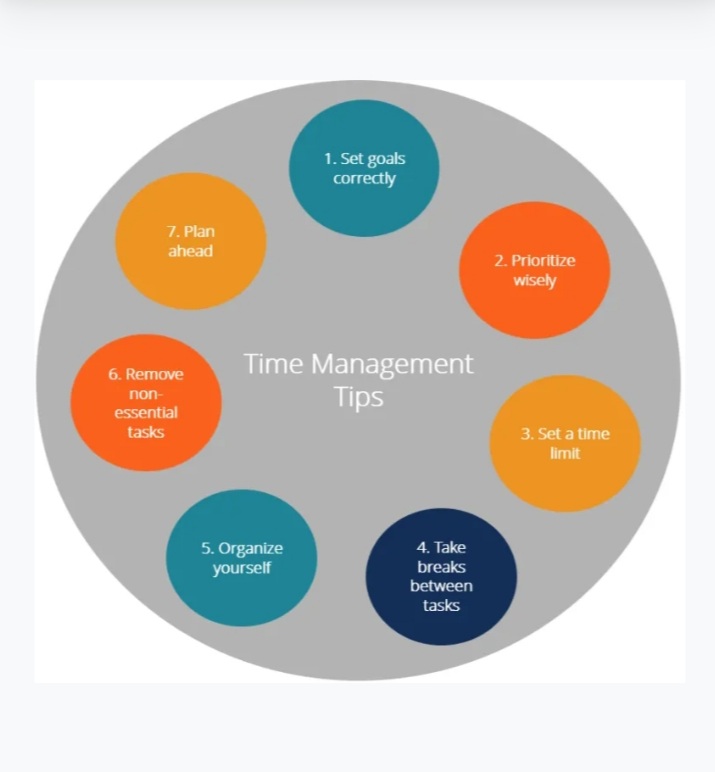
  1. 1.SET GOALS CORRECTLY:
    Set goals that are achievable and measurable. Use the SMART method when setting goals. In essence, make sure the goals you set are specific, Measurable, Attainable, Relevant, and Timely.

  2. 2.PRIORITIZE WISELY :
    Prioritize tasks based on importance and urgency. For example, look at your daily tasks and determine which are :
  • Important and urgent : Do these tasks right away.
  • Important but not urgent : Decide when to do these tasks.
  • Urgent but not important: Delegate these tasks if possible.
  • Not urgent and not important : set these aside to do later.

  • 3.SET A TIME LIMIT TO COMPLETE A TASK :
    Setting time constraints for completing tasks helps you be more focused and efficient. Making the small extra effort to decide on how much time you need to allot for each task can also help you recognise potential problems before theyv arise. That way you can make plans for dealing with them.

  • 4.TAKE A BREAK BETWEEN TASKS:
    When doing alot of tasks without a break, it is harder to stay focused and motivated. Allow some downtime between tasks to clear your head and refresh yourself. Consider grabbing a brief nap, going for a short walk, or meditating.

  • 5.ORGANISE YOURSELF :
    Utilise your calendar for more long term time management. Write down the deadlines for projects, or for tasks that are part of completing the overall project. Think about which days might be best to dedicate to specific tasks. For example, you might need to plan a meeting to discuss cash flow on a day when you know the company CFO is available.

  • 6.REMOVE NON- ESSENTIAL TASKS :
    It is important to remove excess activities or tasks. Determine what is significant and what deserves your time. Removing non- essential tasks frees up more of your time to be spent on genuinely important things
  • IMPLICATIONS OF POOR TIME MANAGEMENT :
  • Let us consider the consequences of poor time management ;
  1. PLAN AHEAD :
    Make sure you start everyday with a clear idea of what you need to do- what needs to get done THAT DAY. consider making it a habit to, at the end of each workday, go ahead and write out your ” to- do” list for the next workday. That way you can hit the ground running the next morning.
  2. POOR WORKFLOW :
    The inability to plan ahead and stick to goals means poor efficiency. For example, if there are several important tasks to complete, an effective plan would be to complete related tasks together or sequentially. That translates to reduced efficiency and lower productivity.
  3. WASTED TIME :
    Poor time management results in wasted time. For example, by talking to friends on social media while doing an assignment, you are distracting yourself and wasting time.

  4. 3.LOSS OF CONTROL :
    By not knowing what the next task is, you suffer from loss of control of your life. That can contribute to higher stress levels and anxiety.

  5. 4.POOR QUALITY OF WORK :
    Poor time management typically makes the quality of your work suffer. For example, having to rush to complete tasks at the last minute usually compromises quality

  6. 5.POOT REPUTATION :
    If clients or your employer cannot rely on you to complete tasks in a timely manner, their expectations and perceptions of you rely adversely affected. If a client cannot rely on you to get something done on time, they will likely take their business elsewhere.

General knowledge

General knowledge is very important in everyone’s life. The person without the knowledge is like the bird without the wings. It is very important to know what is happening across the world. So, it is very important to attain the general knowledge. To grab general knowlede, an individual must follow some of the techniques like reading books, articles, magazines, newspapers etc.

The newspaper consists of all the important things like the business purposes, sports, entertainment, some interesting puzzles, Hindi habits, food recipes, Current affairs etc.

Reading newspaper is an important thing because whenever an individual comes across a motivational thing, he or she will be motivated and focuses on the particular aspect. The individual will get to know the current affairs. The person will get a good grip on the general knowledge. solving puzzles improves the skills of the person. Reading about the healthy habits in the newspaper makes the individual to go for good and healthier meals.

Reading newspaper is very important because gives the chance to know what is happening around us. Early in the morning or evening whatever the time maybe, sparing at least 10 to 15 minutes of time on newspaper is a very good habit that an individual can develop.

The newspaper consists of all the important things like the business purposes, sports, entertainment, some interesting puzzles, Hindi habits, food recipes, Current affairs etc.

In one of the other way the individual develops good habits and focuses more on what they are trying to do.

Individual Differences :

Intelligence :

High scores on tests of general knowledge tend to also score highly on intelligence tests. IQ has been found to robustly predict general knowledge scores even after accounting for difference in age, and five factor model personality tarits. However, many general knowledge tests are designed to create a normal distribution of answers, creating a bell shaped curve.

General knowledge is also moderately associated with verbal ability, though only weakly or not at all with numerical and spatial ability. As with crystallized intelligence, general knowledge has been found to increase with age.

Long term semantic memory :

General knowledge is stored as semantic memory. Most semantic memory is preserved through old age, though there are deficts in retrieval of certain specific words correlated with aging. In addition, stress or various emotional levels can negatively affect semantic nemory retrieval.

Personality :

People high in general knowledge tend to highly open to new experiences and in typical intellectual engagement. The relationship between openness to experieñce and general knowledge remains robust even when IQ is taken into account. People high in openness may be more motivated to engage in intellectual pursuits that increase their knowledge. Relationships between general knowledge and other five factor model traits tend to be weak and inconsistent. Though one study found that extraversion and neutroticism were negatively correlated with general knowledge, others found that they were unrelated.

Predictor of achievement :

A number of studies have assesses whether performance on a general knowledge test can predict achievement in particular areas, namely in academics, proofreading and creativity.

Academic achievement :

General knowledge has been found to predict exam results in a study of Britush schoolchildren. The study examined congnitive ability and personality predictors of exam performance and found that general knowledge was positively correlated with GCSE english, mathematics, and overall exam results. General knowledge test scores presicted exam results, even after controlling for IQ, five factor model personality traits, and learning styles.

Proofreading :

General knowledge has been found to robustly predict proofreading skills in univeristy students. A study found that proofreading had a larger correlation with general knowledge than with general intelligence, verbal reasoning, or openness to experience. In a multiple regression analysis using general knowledge, general intelligence, verbal reasoning, five factor personality traits, amd learning styles as predictors, only general knowledge was a significant predictor.

Creativity

General knowledge has been found to have weak associations with measures of creativity. In a study examining contributions of personality and intelligence to creativity, general knowledge was positively correlated with tests of divergent thinking, but was unrelated to a bigraphical measure of creative achievemnet, self- rated creativity, or a composite measure of creativity. The realtionship between general knowledge and divergent thinking became non- significant when controlling for fluid intelleigence.

Game shows and Quizzes :

Many game shows use general knowledge questions for entertainment purpose. Game shows such as who wants to be a Millionarie? and fiteen to one centre their questions on general knowledge, while other shows focus questions more on specific subjects. Some show ask questions both on specific subjects and on general knowledge .

Do you know about Maritime laws in india ? Let’s see some marine offenses

Definition of maritime laws :

In its counterparts as public law , it widely known as “the law of sea “. It also called Admiralty law. the process of carrying goods through sea, rules concerning protection and maintenance of ships at sea, registration and damage to ships, marine insurance etc. , is covered under maritime laws .

As india is surrounded by water from the three sides , it created nature condition for Marin trade after the water territorial trade started.

Legislations prior to Independence : maritime laws in India were governed under the British government. There are some of the regulations which deal with various aspects of maritime in India.

  • Coasting Vessels Act, 1838
  • Indian Registration of Ships Act, 1841,
  • Admiralty Offences (Colonial) Act, 1849
  • Inland Steam Vessels Act, 1917
  • Indian Ports Act, 1908
  • Control of Shipping Act, 1947

Legislations after independence : after the  independence sea laws mostly governed under article 297 of the constitution. And there are different lex on waters, continental shelf, EEZ and other maritime zones.

Some of the acts are there , for maritimes affairs . This are

  • The Merchant Shipping Act, 1958
  • The Admiralty (Jurisdiction and Settlement of Maritime Claims) Act, 2017. 
  • Article 297 of the constitution

Marines crimes , are frequent offenses which  have been committing in sea . There are some marine offences mentioned below –

  • Maritime Piracy
  • Smuggling Exotic plants and animals
  • Unauthorized entry
  • Illegal Carrying of Weapons and artillery
  • Maritime Drug trafficking
  • Maritime Human Trafficking
  • Discharging in Ocean Waters
  • Sailing or fishing in unauthorized areas–
  • Tax evasion

Maritime piracy is an illegal act of violence, detention or destruction against a ship , on person or property, for private purposes, by the crew or passengers of a private ship . Piracy also includes inciting and intentionally facilitating such acts of violence, and voluntarily participating in the operation of a pirate ship . Pushiment for piracy is prescribed in anti maritime piracy bill 2019 , that is (i) life imprisonment ; or (ii) death , if the act of piracy is caused or seek to cause death.

Smuggling Exotic plants and animals : For a ship without authorization, its illegal to do Smuggling of exotic plants and animals for wildlife smuggling. This is because wildlife smuggling involves the isolation of plants and animals. When they arrived at the destination, they may not be able to adapt to the new place. Animals may also cause vulnerable diseases in people. And it may also leads to the serious illness or death of animals . To smuggle Endangered Species of Wild Fauna and Flora , is crime in maritime law.

Unauthorized entry : the ship must seek permission from government of that nation , For entry in a nation’s marine boundary . Sailing on that nation’s waters without a permission is a maritime crime and punishable in all countries. And a person who illegally and secretly boards and hides in to the ship, without the consent of ship owner and master, to travel into international waters to reach some other country without any monitory payment and legal documents , is known as stowaway.

Illegal Carrying of Weapons and Artillery : to carry weapons and artillery, throughout the water territory of any country , which is not legally bonded , is a martime offence .Goods which are sensitive in nature can be transported by specific ships only . Bringing in weapons on a ship, is not authorized , it is a punishable offense.

Maritime Drug trafficking : maritime drug trafficking means transportation of illegal drugs produced in this region to global consumer markets through using ships . To sell drug, is illegal in itself and trafficking of it become more severe offence .

Maritime Human Trafficking : maritime Human Trafficking involves the use of force, fraud, or coercion to obtain some type of labor or commercial sex act , through exporting victim in other country vie ships .

Discharging in Ocean Waters : it refers to the sewage discharge done by the vessels and ships in the water territory of any nation . Marine pollution is a serious issue and almost all countries have strict policies against ships discharging sewage or oil into their coastal waters.

Sailing or fishing in unauthorized areas : it’s an offence to do sailing in an areas of water territory where the sailing or fishing is not allowed .

Tax evasion : ship owners trying to evade taxes through false documentation or incorrect representation of cargo material have been increasing rapidly, posing a threat to maritime security. It’s a white collar crime.

Economic Development

The field of development economics is concerned with the causes of underdevelopment and with policies that may accelerate the rate of growth of per capita income. While these two concerns are related to each other, it is possible to devise policies that are likely to accelerate growth (through, for example, an analysis of the experiences of other developing countries) without fully understanding the causes of underdevelopment.
Studies of both the causes of underdevelopment and of policies and actions that may accelerate development are undertaken for a variety of reasons. There are those who are concerned with the developing countries on humanitarian grounds; that is, with the problem of helping the people of these countries to attain certain minimum material standards of living in terms of such factors as food, clothing, shelter, and nutrition. For them, low per capita income is the measure of the problem of poverty in a material sense. The aim of economic development is to improve the material standards of living by raising the absolute level of per capita incomes. Raising per capita incomes is also a stated objective of policy of the governments of all developing countries. For policymakers and economists attempting to achieve their governments’ objectives, therefore, an understanding of economic development, especially in its policy dimensions, is important. Finally, there are those who are concerned with economic development either because they believe it is what people in developing countries want or because they believe that political stability can be assured only with satisfactory rates of economic growth. These motives are not mutually exclusive. Since World War II many industrial countries have extended foreign aid to developing countries for a combination of humanitarian and political reasons.


Those who are concerned with political stability tend to see the low per capita incomes of the developing countries in relative terms; that is, in relation to the high per capita incomes of the developed countries. For them, even if a developing country is able to improve its material standards of living through a rise in the level of its per capita income, it may still be faced with the more intractable subjective problem of the discontent created by the widening gap in the relative levels between itself and the richer countries. (This effect arises simply from the operation of the arithmetic of growth on the large initial gap between the income levels of the developed and the underdeveloped countries. As an example, an underdeveloped country with a per capita income of $100 and a developed country with a per capita income of $1,000 may be considered. The initial gap in their incomes is $900. Let the incomes in both countries grow at 5 percent. After one year, the income of the underdeveloped country is $105, and the income of the developed country is $1,050. The gap has widened to $945. The income of the underdeveloped country would have to grow by 50 percent to maintain the same absolute gap of $900.) Although there was once in development economics a debate as to whether raising living standards or reducing the relative gap in living standards was the true desideratum of policy, experience during the 1960–80 period convinced most observers that developing countries could, with appropriate policies, achieve sufficiently high rates of growth both to raise their living standards fairly rapidly and to begin closing the gap.
The impact of discontent
Although concern over the question of a subjective sense of discontent among the underdeveloped and developing countries has waxed and waned, it has never wholly disappeared. The underdeveloped countries’ sense of dissatisfaction and grievance arises not only from measurable differences in national incomes but also from the less easily measurable factors, such as their reaction against the colonial past and their complex drives to raise their national prestige and achieve equality in the broadest sense with the developed countries. Thus, it is not uncommon to find their governments using a considerable proportion of their resources in prestige projects, ranging from steel mills, hydroelectric dams, universities, and defense expenditure to international athletics. These symbols of modernization may contribute a nationally shared satisfaction and pride but may or may not contribute to an increase in the measurable national income. Second, it is possible to argue that in many cases the internal gap in incomes within individual underdeveloped countries may be a more potent source of the subjective level of discontent than the international gap in income. Faster economic growth may help to reduce the internal economic disparities in a less painful way, but it must be remembered that faster economic growth also tends to introduce greater disruption and the need for making bigger readjustments in previous ways of life and may thus increase the subjective sense of frustration and discontent. Finally, it is difficult to establish that the subjective problem of discontent will bear a simple and direct relationship to the size of the international gap in incomes. Some of the apparently most discontented countries are to be found in Latin America, where the per capita incomes are generally higher than in Asia and Africa. A skeptic can turn the whole approach to a reductio ad absurdum by pointing out that even the developed countries with their high and rising levels of per capita income have not been able to solve the subjective problem of discontent and frustration among various sections of their population.
Two conclusions may be drawn from the above points. First, the subjective problem of discontent in the underdeveloped countries is a genuine and important problem in international relations. But economic policy acting on measurable economic magnitudes can play only a small part in the solution of what essentially is a problem in international politics. Second, for the narrower purpose of economic policy there is no choice but to fall back on the interpretation of the low per capita incomes of the underdeveloped countries as an index of their poverty in a material sense. This can be defended by explicitly adopting the humanitarian value judgment that the underdeveloped countries ought to give priority to improving the material standards of living of the mass of their people. But, even if this value judgment is not accepted, the conventional measure of economic development in terms of a rise in per capita income still retains its usefulness. The governments of the underdeveloped countries may wish to pursue other, nonmaterial goals, but they could make clearer decisions if they knew the economic cost of their decisions. The most significant measure of this economic cost can be expressed in terms of the foregone opportunity to raise the level of per capita income.
Shortage of savings:
Given the broad relationship between capital accumulation and economic growth established in growth theory, it was plausible for growth theorists and development economists to argue that the developing countries were held back mainly by a shortage in the supply of capital. These countries were then saving only 5–7 percent of their total product, and it was manifest (and it remains true) that satisfactory growth cannot be supported by so low a level of investment. It was therefore thought that raising the savings ratio to 10–12 percent was the central problem for developing countries. Early development policy therefore focused on raising resources for investment. Steps toward this end were highly successful in most developing countries, and savings ratios rose to the 15–25 percent range. However, growth rates failed even to approximate the savings rates, and theorists were forced to search for other explanations of differences in growth rates.

The central problem of countries with low per capita output is that they have not as yet succeeded in making use of their potential economic opportunities. To do so, they must achieve an efficient allocation of the available resources and provide incentives for resource accumulation. But efficient allocation of resources is not merely a matter of the formal optimum conditions of economic theory. It requires the building up of an effective institutional and organizational framework to carry out the allocation of resources. In the private sector this requires the development of a well-articulated market system that embraces the markets for final products and the markets for factors of production. In the public sector the development of the organizational framework requires improvements in the administrative machinery of the government, especially in its fiscal machinery.
In the setting of the developing countries, one is concerned not only with the once for all problem of efficient allocation of resources but also with improving the capacity of these countries to make a more effective use of their resources over a period of time. That is to say, one is concerned not only with the static problem of the efficient allocation of given resources with the given organizational framework but also with dynamic problems of improving the capability of this framework. From this point of view, there is no conflict, as some have maintained, between the static, or the short-run, considerations and the dynamic, or long-run, considerations. The two sets of requirements move in the same direction.

Deserts

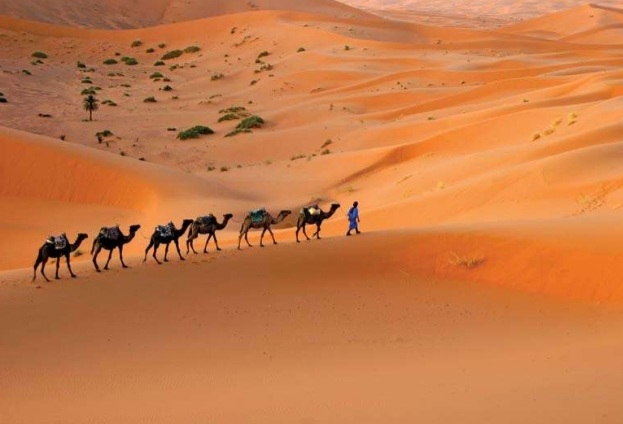
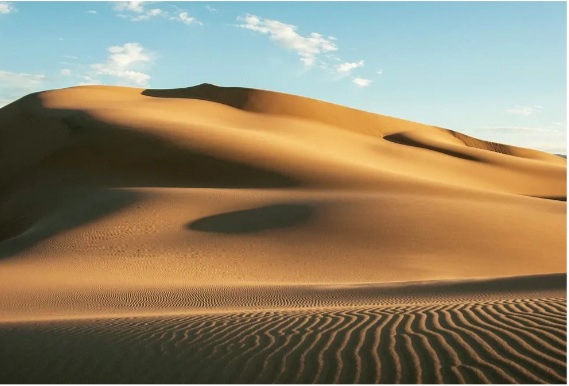
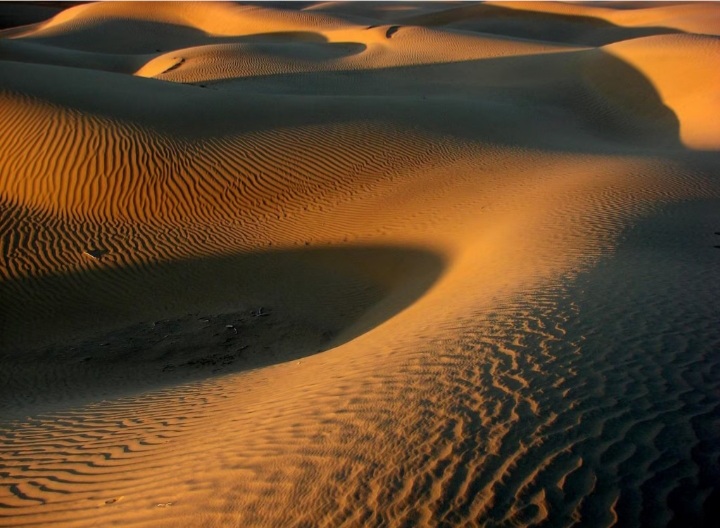
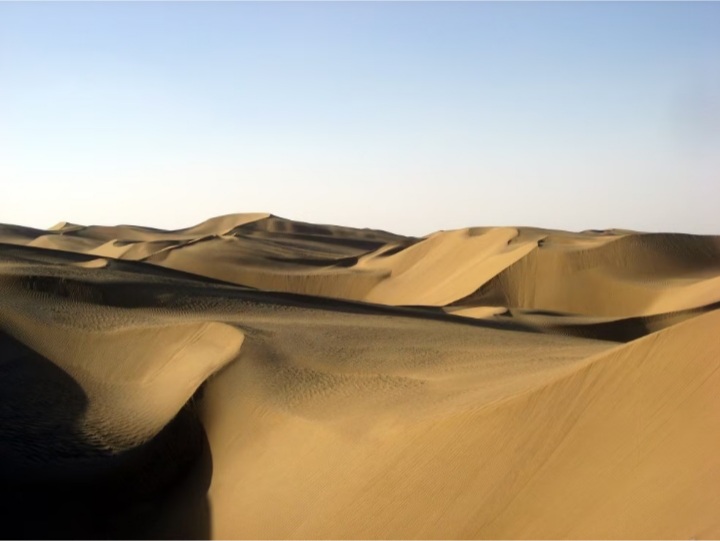
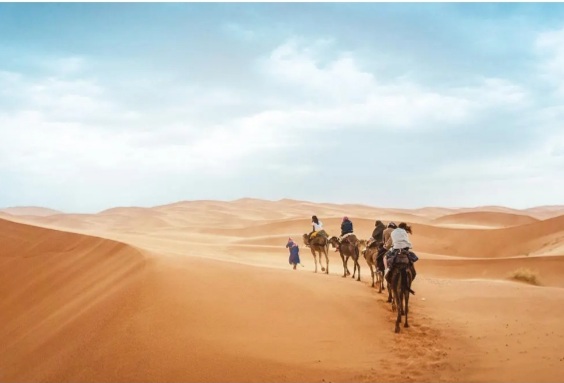
In the world we find varied geographical regions which includes mountains, plains, deserts, plateaus all with their own physical features. Desert is basically a piece of barren land which is filled with sand and lacks water bodies and have dry weather all along. In day time deserts are extremely heated up and at night it becomes chilling cold at the same place. In the Indian subcontinent we find desert in the western part of the subcontinent in the state of Rajasthan.

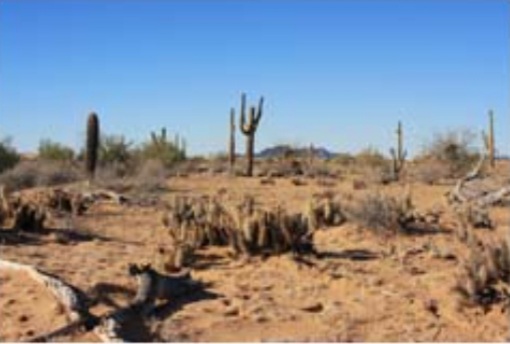
The animals and plants in the deserts have their own adaptations, among plants we find a variety of cactus, cactus plants have special adaptations to survive in the desert, they have fleshy stem which holds water in them which turns out to be useful when there is scarcity of water also they have very long roots which can penetrate deep inside the soil in search of water also they don’t have leaves and have thorns in place of them in cactus the food is prepared in the step as it contains chlorophyll and is green in color. Also, we find camel in desert their feet have adaptation to walk on the sand also they can survive with less water and they have long eyelashes to protect their eyes from dust storms.

Types of Deserts :

1. Coastal Deserts :

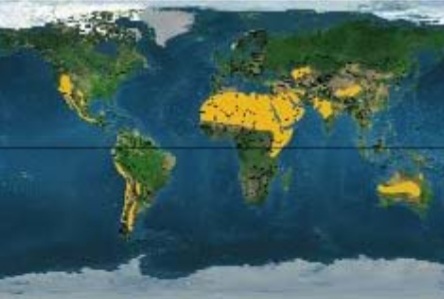
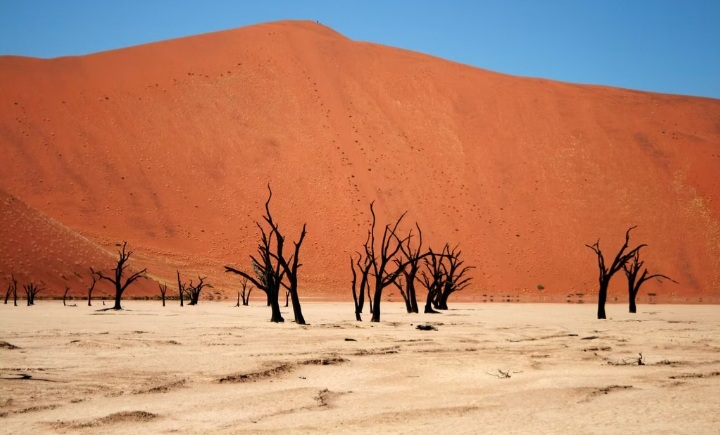
Coastal deserts occur in cool to warm areas along the coast. They have cool winters and long, warm summers. Coastal deserts are located on the west coasts of continents between 20° to 30° lattitude. Winds off the coast blows in an easterly pattern and prevents the moisture from moving onto the land. The Namib desert in Africa and the Atacama desert in chile are coastal deserts.

2. Subtropical Deserts :

Subtropical deserts the hottest deserts. They are found in Asia, Australia, Africa and North and south America. In the united states, the chilhuahuan, sonoran and Mojave are all subtropical deserts. Subtropical deserts are very hot and dry in the summner and cooler but still dry in the winter. Rainfall happens in short bursts. The air is so hot and dry in these deserts that sometimes rain evaportaes before it even has a chance to hit the ground. The soil in subtropical deserts is usually either sandy or coarse and rocky.

Plants and animals in subtropical deserts must be able to withstand the hot temperatures and lack of moisture. Shrubs and small trees in the subtropical desert usually have leaves adapted to retain moisture. Animals in sbtropical deserts are usually active at night, when it is cooler.

3. Cold wintet Deserts :

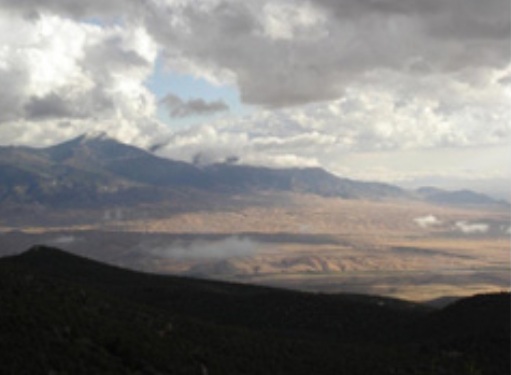
Cold winter deserts are also known as semiarid deserts . They have long, dry summers and cold winters with low rain or snowfall. In the united states the Great basin, the colorado plateau and the Red Desert are all cold winter deserts. Other cold winter deserts include the Gobi desert in china and Mongolia and the patagonian desert in Argentina. The lack of rainfall in cloud winter deserts is often caused by the rainshadow effect. The rainshadow effect happens when a high mountain range stops moisture from reaching an area. The Himalayan Mountain prevent rainfall from reaching the Gobi desert.

4. Ploar Deserts :

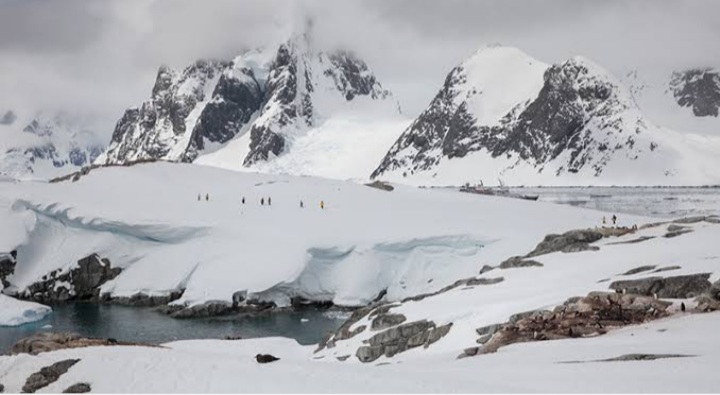
Polar deserts are found in the Arctic and Antarctic regions. Like warmer deserts, they also get very little precipitation.polar deserts are cold year- round.

Largest Desert in the world :

The antarctic polar Desert, which makes up the vast majority of Antarctica, is the largest desert in the world. In fact this single desert is larger than the combined size of the Gobi Desert, the Arabian Desert, and the sahara Desert.

* The driest desert of the world Atacama is surely the most dangerous desert of all.

The strongest animal in the Desert :

Based on strength to weight ratio, the dung beetle of the scarab is the strongest creature on earth. They can lift 1141 times their own body weight. It helps them a lot in finding the mate and food. The dung beetles also constitute a large percentage of scarab family.

The 7 hardest Animals to Hunt :

* Leopards

* Mountain Goats.

* Elk

* Eland.

* cape Buffalo

* Roan and sable

* Bears.

what can kill you in the Desert?

Aside from the oppressive heat and lack of water, the desert is also full of critters that can bite and sting. Some of these guys can even kill you if you aren’t able to find medical help. Spiders, scorpions, centipedes, and snakes are all found in dark places , abandoned builidings and under rocks.

Most Famous Deserts :

* Namib Desert – Africa

* Atacama Desert – South Americs.

* sahara Desert – Africa

* Gobi Desert – china

* Mojave Desert – Nevada

* Antarctic Desert – Antarctica

* Sonoran Desert – USA

* Thar Desert – India

* Rub’al khali – saudi Arabia

* Tabernas Desert – spain

* Taklamakan Desert – central Asia

* pinnacles Desert – Australia

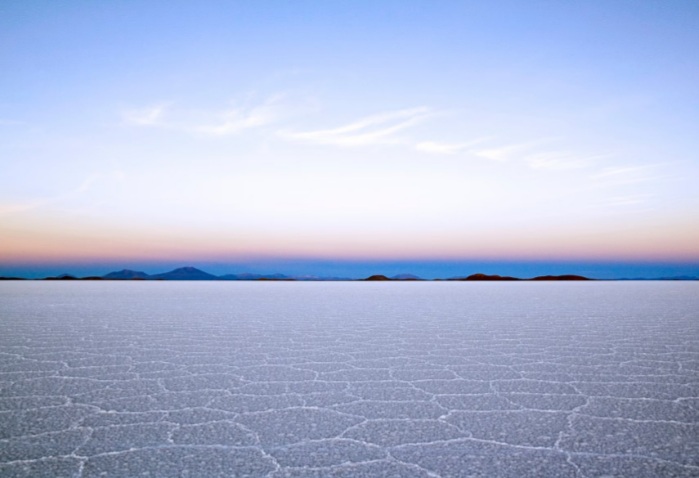
* Salar de uyuni Desert – Bolivia

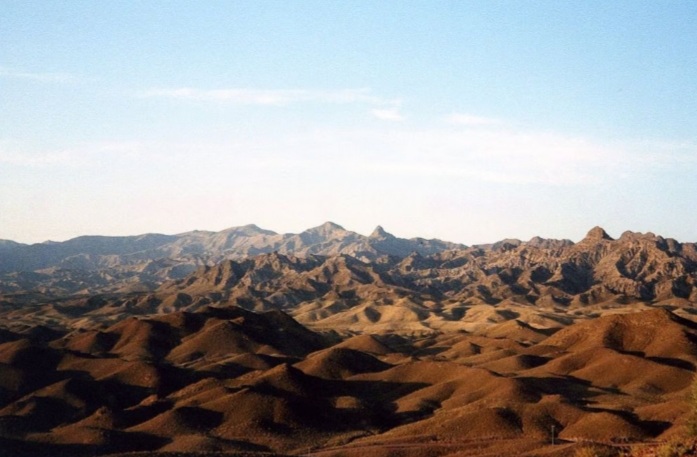
* Dasht- e kavir – Iran

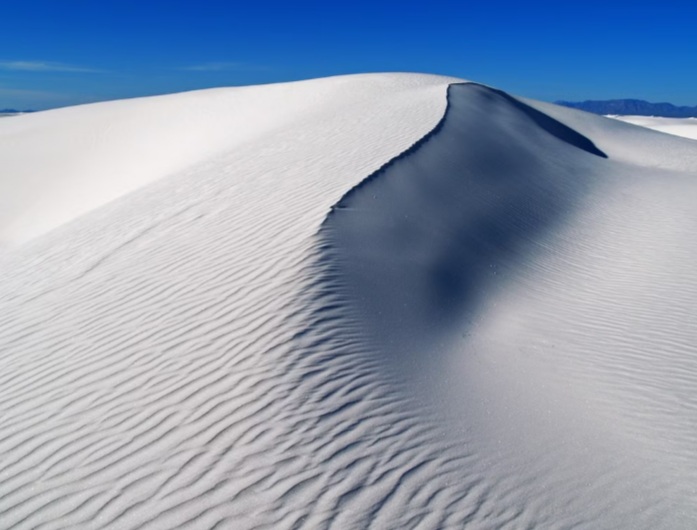
* Chihuahuan Desert –New Mexico

* White Desert, Farafra – Egypt

Gender inequality

Discrimination is the state when all individuals are not treated equally and not given equal rights. Every individual in the community yearns for equal status, opportunities, and equal rights. People generally say these days that everyone is treated equally but they are not. Discrimination usually exists because of cultural differences, geographical differences, and gender. Inequality on the basis of gender is something that is not appreciated, but it is seen many times in many companies. There are many areas where equal opportunities are not provided to women.

We are in the 21st century, and even now, women are not treated equally as men. It is generally believed that women are more talented than men, and it has been proved many times, but society is not yet ready to accept this fact. Gender equality is the term used when equal opportunities in the fields of politics, economics, education, and health are provided to both men and women.

As per the World Economic Forum’s gender gap ranking, India holds the rank 108 out of 149 countries. The rank should be a major concern in the country as it signifies the immense gap between the opportunities given to women when compared to men. The structure in India is such that women are neglected in many fields like education, health, finance, etc. They are just limited to household chores which should not be the scene here. There are many places in India where women are considered as a burden and they are not allowed to go to school and study as well. Also, a preference for sons prevails in many areas in India.

The seven important forms of gender inequality :

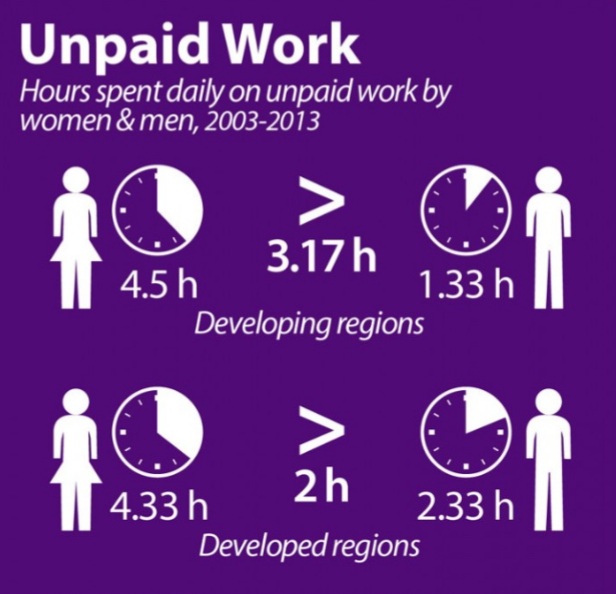
1 . Women works Longer than Men :

In most of the societies the male – stream is the main stream who argues that women have comparative advantage in household non- market production, like cooking and cleaning for the family that cant be called emotional and personal caring work. Based on this thinking, household jobs are then asymmetrically distributed. Women are more valued in home. Men are specialised in market- baesd production. Thus, being the bread- earners, males enjoy both power and status.

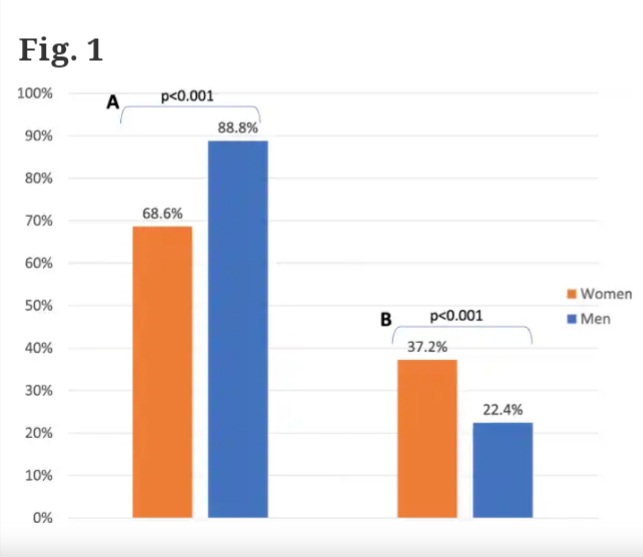
2. Inequality in Employment and Earnings :

Historically, men have greater participation in work outside home than women. But women ( particularly of poor households) share unequally household duties in addition to economic production. Thus they work longer than males. This kind of ‘ division of labour’ may be seen as the ‘ accumulation of labour’ on women, as described by Amartya sen. Household activites are often viewed as ‘ sedentary activites’ which require less ‘ calore’ to gain energy.

3. Ownership Inequality :

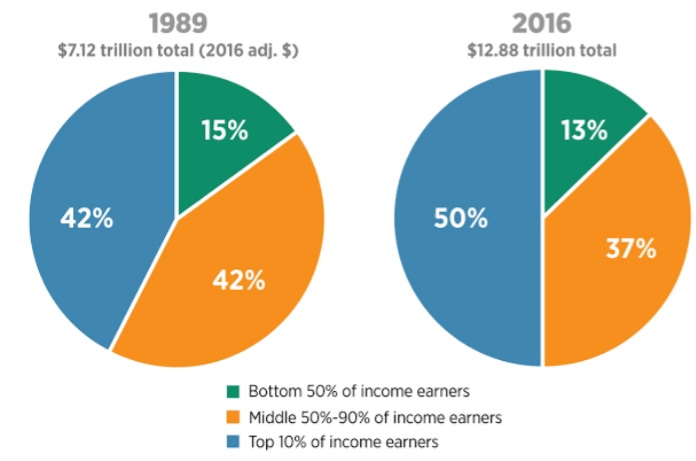
A case of social inequality. Let us turn to another kind of inequality, called ownership inequality a classic case of social inequality. In most of the societies, ownership over property and means of production rests mainly on male members . The law of inheritance provides such ownership rights on male child. Such denial coming out of hierarchical dualism within the family not only reduces the voice of women but also prevents them from participating in commerial, economic and social activites.

This kind of social deprivation means absence or lack of capability or because of ‘capability deprivation’, women are subject to various kinds of exploitation and unfreedoms. Social inequality distorts the process of development. Unfortunately, ownership inequality in any country is not of recent origin. In her earlier life, a woman comes under the influence of her father, then husband as she enters a married life and finally, under sons ownership right over property is skilfully avoided. A telugu proverbs corraborates this understanding: ” Bringing up a daughter is like watering a plant in anothers courtyard.”

4. Survival Inequality :

Another crudest from of gender disparity is the unusally high mortality rates of women , though biologically, women live longer than men! Thus more boys than girls are born evrywhere leading to a ‘ deficit’ of women and a ‘ surplus’ of men. In developed countries beacuse of absence of gender bias in health care and nutrition, women outnumber men. In Europe and in north America, 105 or more girls are born per 100 boys. Such high female- male genderd survival rate in different age groups.

5. Gender Bias in the Distribution of Education and Health :

Health and education are the major forms of human capital are realted to economic development . Human capital gets accumulated as a society advances in education . The contribution of human capital towards Japan’s remarkable economic progress attracts our attention . Improvement in health capital also improves the return to investments in education .

However, one finds a huge education and health gaps between developed and developing countries. In recent times, despite a large increase in econoc advancement on times, despite a large increase in economic advancement in asia and africa, these countries lag far behind the developed countries in terms of educational attainment particularly in respect of women’s education. Gender disparity not only hindrrs economic progress but also exacerbates social inequality.

6. Gender Inequality in Freedom Expression :

Let us talk about gender inequality beyond economic issues or factors. Women are not only subject to income or asset inequality but also in terms of freedom and power deprivation of women goes beyond one’s imagination. They lack not only economic freedom at home because of absence of autonomy in house hold decisions, limited or poor wages earned but also lack any freedom in airing opinions over education of children.

In some backward poor societies the right of women giving options is completely denied. Such un – freedoms, however, are not uncommon even among the educated elites who enjoy enormous power and authority in the male domined society. Historically , this sort of law socioeconomic status of women has been continuing nowasdays.

7. Gender Inequality in Respect of viloence and victimisation :

Finally, anti – female bias starts before the girl child is born and this attitide of the society a female member carries throughout her life. It is because of the unequal sharing of income, property, household benefits . Women are subject to both physical and sexual violence – the oppsite of freedom, and an extreme form of coercion. This is common for both poor and not too much uncommon in rich countries as well as among rich people. One in three women in the word is beaten or raped during her life times.

Dowry harassement is considered as an ‘ instrumental use’ of violence. Dowry death is the most serious form of domestic violenece. Wife beating is not uncommon. Sexual violence is an obnoxious form of human rights violation.

Specifically, public health can contribute to reducing health inequities by integrating health equity considerations into policy and programs, collebrating with other sectors to address inequities engaging with communities to support their efforts to adress inequities, identifying the reduction of health inequities.

Reducing inequality requires transformative change. Greater efforts are needed to eradicate ectreme poverty and hunger and invest more in health, education, social protection and decent jobs especially for young people, migrants and other vulnerable communities.

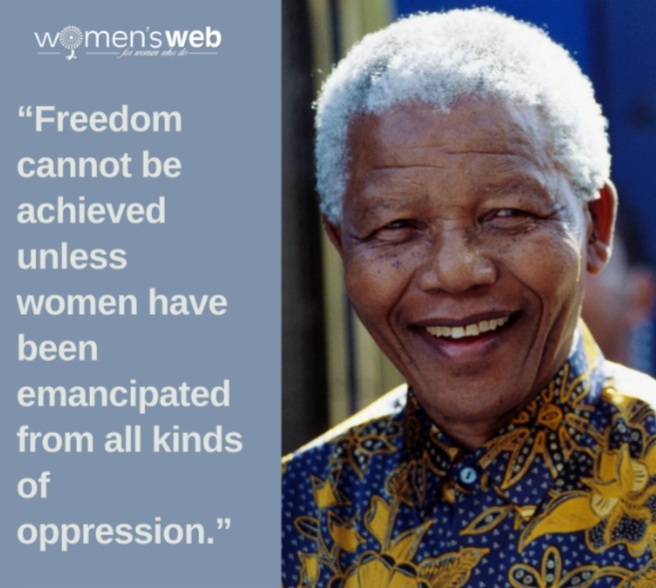
We should understand that women are the part and parcel of any family. When it comes to flexibility, they can manage their home and offices at the same time. If equal opportunities are not given to them, they will be led down and won’t be able to achieve big milestones which they are obviously capable of.

CHILDHOOD DREAMS

DREAMS AS A CHILD

Everyone has a profession or two that they aspire to be when they grow up. Some children, for example, want to be firefighters, while others want to be physicians or professors and lots more. This is where everything starts. Dreaming is what gives a child the wings to fly, the hope to survive and the will to become successful in future. Childhood and early adulthood experiences may mould and mould these dreams. Many of these children grow up to abandon their childhood ambitions whereas some of these children, continue on their road to pursue their aspirations and become the professionals they’ve always wanted to be.

My Childhood Aspirations When I reflect on my life, I realize how wonderful it has been. I had an absolutely fantastic childhood and consider myself to be quite fortunate. I grew up in a home with two loving parents who have been there for me through thick and thin, and for that I am eternally grateful, forever. My parents instilled in me the belief that I could be anything I wanted and that I could do everything I set my mind to, they made me believe that nothing is impossible and you can gain what you want if you work hard. As I grew older and developed into the person I am now, my dreams evolved.

DREAMS AS ADULTS

When people consider their life dreams, they frequently consider whether or not they are childlike fantasies. Adults are continually influenced by what is considered juvenile or practical, as well as how others would see them if they pursue their aspirations. Most people who are going to follow all of their childhood aspirations are emotionally immature in some way. Bringing this down to the level of students has a similar effect. After all, when children reach a certain age, the adults in their lives dismiss their dreams as infantile or kiddish which is very much seen among the people in the current generation. Despite the fact that it can drive someone’s willingness, childishness is usually regarded as negative or problematic in some way. People can be motivated by a variety of emotions that are considered juvenile, such as wrath, sadness and many more.

When broken down by gender, it appears that gender stereotypes were still present in the minds of today’s adults when they were children. Pilot (13 percent), Athlete/Olympian (10 percent), and Police Officer or Detective (6 percent) were the most popular dreams for boys, while Vet (12 percent), Teacher (11 percent), and Dancer/Choreographer were the most popular ambitions for girls (6 percent). I’ve had a range of interests and occupations throughout my life that have given me a lot of pleasure. But when it came to my work and something I’d be doing for the rest of my life, I couldn’t think of anything that would make me truly happy.

Some people have an easier time moving on from their “childhood aspirations” than others. As they become older, they develop interests behind the scenes or in theater administration, which they can turn into an internship, which could lead to a full-time job. That’s just fine with them but this is not fine by me.