Tag: mental wellness
World Suicide Prevention Day
Objectives
Hope Through Action
How to improve Loving Mindful relationships?
Plenty of exercise. Healthy food. Positive attitude. Plain old good luck. There’s lots of advice out there about how to keep body and brain in optimal shape as the years roll by.
But Louis Cozolino, professor of psychology at Pepperdine University, is deeply engaged with another idea. In Cozolino’s book, Timeless: Nature’s Formula for Health and Longevity, he emphasizes the positive impact of human relationships.
“How we bond and stay attached to others is at the core of our resilience, self-esteem, and physical health,” Cozolino writes. “We build the brains of our children through our interaction with them, and we keep our own brains growing and changing throughout life by staying connected to others.”

5 Effective ways to strengthen your relationship:
Spend time with the right people
We generally become more and more like the people with whom we spend our time. The more we see someone model a behavior and see that behavior being reinforced in positive ways, the more likely we are to try it out ourselves—whether it’s a friend having success with a new exercise routine or a partner staying calm during disagreements by tuning into their breath.
One of the most fundamental ways to make sure your relationships are helping you grow is to surround yourself with the right people. Some relationships frustrate us, some make us happy, and some challenge us (and some relationships do all three!). While it isn’t always easy to stop and start relationships, of course, we can aim to spend more time with the people who challenge us.
Create goals with others
Who says that goal setting should be a solitary venture?
When we share our goals with others, we immediately have someone to keep us accountable. It is difficult to stay on track with a goal all the time, but it’s easier if we have someone to help us work through an obstacle or pick us up when we fall.
The social support that we receive from others is incredibly powerful, particularly during those tough times. When the pressure is high, those who have greater levels of social support tend to experience less stress.
We may also be more motivated when we are working toward a goal with someone else. Think about being pushed by a running mate to jog a little faster than you would otherwise. Or giving up your Saturday for a service project because a friend is doing the same thing. Sometimes we need someone else to inspire us to be our best.
Ask for feedback
It’s usually up to us to decide on the areas where we could use some self-improvement. And while this process of self-reflection is important, we can sometimes be bad judges of our own abilities; we usually assume we know much more than we actually do. So why not look to our relationships as a source of feedback about where we can improve?
Feedback is crucial for our development. Research has shown that when we seek feedback and use it as an opportunity for growth, we are more likely to improve over time. How much faster would that process be if we went and asked for feedback instead of waiting for it to come? Imagine your partner’s reaction if you were to ask for feedback on what you could have done differently after a big fight, or how blown away your teenager would be if you asked how you could be a better parent this school year.
Our positive relationships represent a safe space for us to work on ourselves with support from people who care about us. But sometimes we have to make the first move and ask for that support.
Use your broader network
Just like financial capital, social capital is a valuable resource that we can invest in for our own good. The more meaningful relationships we have, the more social resources become available. We often find work or beloved hobbies through our relationships, even at three or four degrees of separation—like your brother’s wife’s friend, who heard about that great new job opening.
In addition to exposing us to new ideas, activities, and opportunities, social capital also frees us up to do more of the things we are good at when we find others to help with the things we aren’t as good at. This has benefits at home and at work: For example, employees are more engaged when they get to spend more time using their strengths. And teenagers are happier and less stressed when their parents focus on building their strengths.
Be grateful
Gratitude has long been promoted as a way of increasing our happiness, but it also motivates us toward self-improvement. If you want a simple boost from your relationships, you can start by just practicing gratitude for them. The act of being thankful can increase our confidence and encourage us to move forward with our goals, perhaps because it tends to make us feel more connected to people and creates feelings of elevation—a strong positive emotion that comes when we see others do good deeds.
So think about someone who has helped you a great deal in the past, and reach out to thank them. Not only will that exchange feel good for both of you, but it might also reignite a relationship that can spark your further growth.
No Judgement Club
Being out of the box and not following being a part of the rat race is the new black.

Being trapped inside the box of “log kya kahenge” is something that we all have faced and we still do even if we deny it. With the parents and guardians being supportive and the youth being overtly conscious and aware of their rights, we, as a generation, as a club of the 2000’s, the “gen-z club” are trying to freely reign the things that we want to do ignoring any type of judgement and pushing away the people who pull us down.
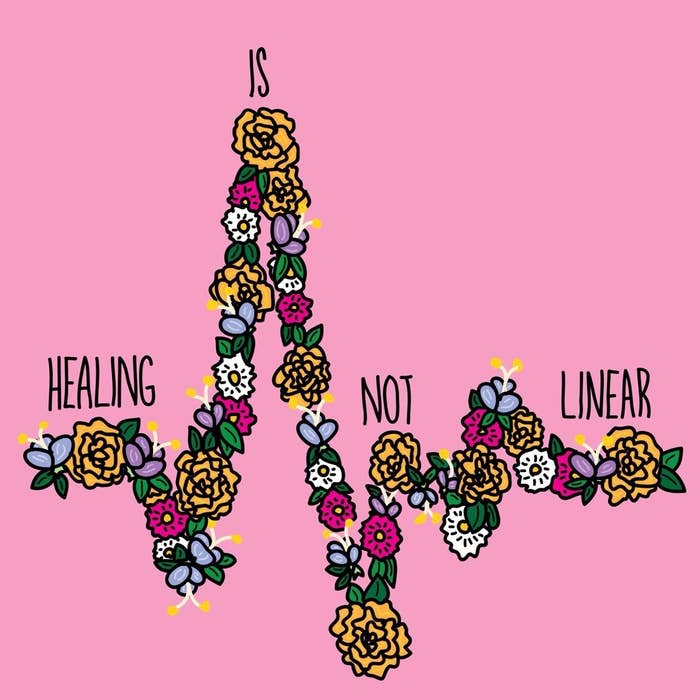
We are conquering the world of nonlinear growth pattern and not focusing on the aligned growth pattern which means that we do not focus on just the “conservative” idea of growth. We do not indulge into working like a robot but focus on a nonaligned growth pattern which means that we not only love to work but also focus on our mental health. We understand that we are not in a rat race and believe in living our lives in a comfortable manner.
Why is mental health important?
There is a clear connection between mental health and academic
performance. Mental health is important for person’s growth just like
a person’s physical health. Imagine working with a broken arm, will
you be able to work? No. Then why should someone with anxiety
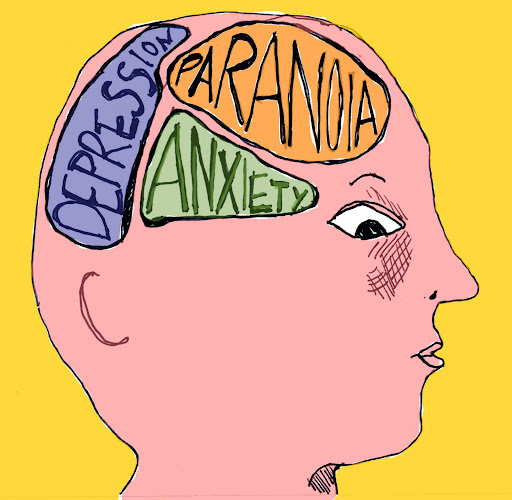
disorders, paranoia, depression, etc., are expected to work efficiently
when they can’t even process their mind the way they want to.

Social media and positivity
Being a generation with extreme activeness on the social media, we have made social media a happy, comforting place for everyone. Social media positivity helps us bear things. With innumerable creators creating content that helps us ignore the negativity and LIVE.

Log kya hi keh lenge!
When we start, when we initiate, the paradigm shifts, the pattern starts changing. We have to hold hands and work together. We all can shift the attention from “log kya kahenge” to “log kya hi keh lenge” and then see how the world changes, how we conquer the art of living and being a generation that creates better adults.

Importance of Meditation
When we hear the word meditation, we feel like we have to get immersed in a deep concentration. We feel like we have some magical powers for the same. But today I am here to brief you about what meditation is. It is a calm and lovable state of mind. It is a journey of slowing your thinking process and also a path towards positive thinking. So, meditation is a state of mind which should incorporated in your life. In times of crisis, where the pandemic has significantly affected our mental health ,we should spare at least 5 mins wherein we could sit in peace, let the thoughts and emotions flow.

So yes , it is rightly said that we thrive every moment to turn our lives into a positive direction.
But only a calm, relaxed and blissful mind can pave the way for a successful and well lived experience on this planet. To do so , we have to acknowledge and adopt meditation in our culture.
Now let’s take a look at some benefits of meditation 1- regular meditation helps in coping with anxiety attacks- practicing meditation decreases grey matter in the areas of the brain associated with fear and anxiety, and increases grey matters in areas where compassion and love exist.
2- helps in getting rid of unwanted/ negative thoughts- As an idol is created after removing unwanted stones, in the same way, meditation helps you to remove unwanted thoughts and a beautiful personality comes before everyone.
3-Meditation improves concentration and memory- the calmer the mind is , the more you can focus on things and see them clearly ; which also makes it easier to remember.
4- increases your productivity- when you’re in a peaceful state of mind , you would be able to determine which tasks are most important and which aren’t urgent.
To conclude, when we start meditating we start seeing significant changes in our life. Therefore, start meditating today to live a stress free , productive life.
How to stay mentally healthy
Good mental health is characterised by a person’s ability to fulfil a number of key functions and activities, including : the ability to learn, the ability to feel, express and manage a range of positive and negative emotions, & the ability to form and maintain good relationships with others. Who doesn’t want to be strong mentally?

Here are some methods for good mental health :
1. Value yourself
While self-worth is more emotional, self-value is more behavioural. This is where we take the foundation of how we feel about ourselves and put it to work. Self-value is the driving vehicle that allows us to walk the walk and act in ways that align with what we value. This shows up in the way we talk to people or in steps we take to speak our truth. Both self-worth and self-value feed off of one another, but it’s helpful to point out the subtle differences. Treat yourself with kindness and respect, and avoid self-criticism. Make time for your hobbies and favourite projects, or broaden your horizons. Do a daily crossword puzzle, plant a garden, take dance lessons, learn to play an instrument or become fluent in another language
2. Give yourself
Volunteer your time and energy to help someone else. You’ll feel good about doing something tangible to help someone in need and it’s a great way to meet new people.
Healthy Ways to Take a Mental Break :
- Get Outside. Getting outside and enjoying the fresh air is a great way to renew your energy
- Be Active
- Meditate
- Treat Yourself
- Drink Water
- Make Time to Socialise
3. Take care of your body
Taking better care of our bodies means increased energy levels, and a better ability to accomplish our daily goals. It means better ability to concentrate on any given task, and that our tasks will take less time to complete. Taking care of yourself physically can improve your mental health. Be sure to :
- Eat nutritious meals
- Avoid smoking and vaping
- Drink plenty of water
- Exercise, which helps decrease depression and anxiety and improve moods
- Get enough sleep. Researchers believe that lack of sleep contributes to a high rate of depression in college students.
4. Surround yourself with good people
When you surround yourself with positive people, you’re more likely to adopt empowering beliefs and see life as happening for you instead of to you. Just as you benefit when you surround yourself with people who make you happy, you suffer when those in your business or social circles are negative or narrow-minded. People with strong family or social connections are generally healthier than those who lack a support network. Make plans with supportive family members and friends, or seek out activities where you can meet new people, such as a club, class or support group.
5. Quiet your mind
Try meditating, mindfulness or prayer. Relaxation exercises and prayer can improve your state of mind and outlook on life. In fact, research shows that meditation may help you feel calm and enhance the effects of therapy. Silencing the mind does not mean stopping to think at all. It means thinking when you need to think, but keeping the mind calm when you don’t need to think.
6. Learn how to deal with stress
Like it or not, stress is a part of life. Practice good coping skills: Try One-Minute Stress Strategies, exercise, take a nature walk, play with your pet or try journal writing as a stress reducer. Also, remember to smile and see the humour in life. Research shows that laughter can boost your immune system, ease pain, relax your body and reduce stress.
7. Set realistic goals
Decide what you want to achieve academically, professionally and personally, and write down the steps you need to realize your goals. Aim high, but be realistic and don’t over-schedule. You’ll enjoy a tremendous sense of accomplishment and self-worth as you progress toward your goal. Wellness Coaching can help you develop goals and stay on track.
8. Avoid alcohol and other drugs
Keep alcohol use to a minimum and avoid other drugs. Sometimes people use alcohol and other drugs to “self-medicate” but in reality, alcohol and other drugs only aggravate problems.
Some ways to avoid using alcohol :
- Keep a diary of your drinking
- Don’t keep alcohol in your house
- Choose alcohol-free days
- Watch for peer pressure
- Set a drinking goal
9. Break up the monotony
Although our routines make us more efficient and enhance our feelings of security and safety, a little change of pace can perk up a tedious schedule. Alter your jogging route, plan a road-trip, take a walk in a different park, hang some new pictures or try a new restaurant.
5 Ways to Break the Monotony of Your Routine
- Start your morning with something different
- Add some new scenery to your day
- Shake up your lunch break
- Listen to music
- Review your habits regularly
10. Get help when you need it
Seeking help is a sign of strength not a weakness. And it is important to remember that treatment is effective. People who get appropriate care can recover from mental illness and addiction and lead full, rewarding lives. Asking for help allows us to surround ourselves with people who can make us feel good and facilitate further development. These people create optimism and hope that we are able to deal with challenging situations, which improves our resilience.
Digital Detox in 10 Steps

Digital Detoxification is a practice to limit the use of technology. Digital Detox helps us to enhance the quality of our lives. It is a way to stop the constant urge to use social media.
Do we really need Digital detox?
Our lives are filled with technology. According to a study we give about 2.5 hours daily on social media. But some take it too further than this.
Here is the list to check if you need a Digital Detox.
Do you:
- Use social media late night instead of sleeping;
- Get stressed, anxious, and irritated without social media;
- Think about social media even after using cell phone;
- Check likes, shares, comments constantly.
If yes, then you need Digital Detox.
Benefits of Digital Detox
1. Keep your life balanced.
According to Ayurveda a balanced mind, body, and life is key to all round health.
2. Sleep benefits
The health of a person can be judged by his sleeping pattern. If you have irregular sleep and insomnia then your body might have some underlying problems. Using digital detox helps you sleep peacefully.
3. Time for Family and friends
Time spent with family and friends boost your Psychological health. Digital detox helps you to focus on your life. This gives you emotional wellbeing.
4. Embracing reality
The contemporary world is virtually oriented. People spend time getting perfect selfies, try to maintain a hectic online presence, and feel insecure about themselves. Same cycle again and again.
Digital detox will give you inspiration, boost your creativity, and give you true values of life.
5. Look younger
A study shows that people who spend more time on screen age faster than others. Looking at the screen gives your skin wrinkles and lines. Digital detox helps you look fresh and young.
Check out this infographics for quick ways to detox:
How to Digital Detox
Here are 10 useful tips that you can do to Detox digitally:
1. Keep away from your cell phone for a minimum of 5 hours. You can increase as you like.
2. Keep away from distractions such as Netflix, gaming, other digital products.
3. Read a book during disconnection. Write a journal about how you feel during this time. You will be amazed that in a month your health has progressed.
4. Go out. Embrace nature. Do some activity that connects you to nature such as gardening, walking on beaches, swimming, or cycling in the morning.
5. Play with your pets. This is the best time to bond with your pets.
6. Do volunteering. Give your hand to a person in need. Everything that goes around comes around.
7. Spend time with your family.
8. Declutter your house.
9. Use cell phones ONLY when necessary. If you really need your cell phone, you may use it. Make sure you don’t exceed your time limit.
10. Practice your hobby and master it. Remove negative self with Digital Detox.
Do these 10 simple Digital Detox techniques every week. You will be surprised with the productivity and efficiency you see in your life and work.
Here are 5 famous motivational quotes to inspire you while you Digitally Detox.
The body achieves what the mind believes.
Be patient with yourself. Nothing in nature blooms all year.
Your life only gets better when you do. Work on yourself and the rest will follow.
Nurturing yourself is not selfish—it’s essential to your survival and your well–being.
It is health that is real wealth and not pieces of gold and silver.
Anxiety and movement
Anxiety is the brain’s way to inform that you are stressed. Stressed not about particularly something big and important, but maybe just about tomorrow. Sometimes it is a reaction to a past experience, sometimes it is because you are going to experience something for the first time and sometimes it is just hormonal. And the hormonal one is pretty common in adolescents. Another reason for anxiety might be that it is simply genetic. Genetic depression and anxiety have long been subject to clinical research.
Whatever the reason behind this unwanted fear and apprehension be, it is often paralysing. It takes away the brain’s capacity to deduce the right action at that point in time. And that is the most hated part about it. Because anxiety is probably one of the most natural of brain’s reactions and yet is one of the most decapacitating ones.
But the trouble is – we, as people must complete what we have to despite the anxiety we possess. And more importantly, we as people must let our mind stay healthy and hence not push that anxiety away by simply asking it to go away because we are too ‘privileged’ to have it.
So, what is the better way out? Well, perhaps, a constructive overwork on it – communication. Writing down a journal, drawing, music, watching a movie, reading a book etc. or simply speaking to someone. Communication is the better way to reduce anxiety.
Suppressing anxiety may lead to depression, over stressing and a sharp fall in productivity – maybe even some constructive thoughts might become seldom.

So, as a note, accept your emotions and communicate. That is the better way through.


.jpg)
You must be logged in to post a comment.