Infosys Ltd told employees last week they could resume work from offices, according to a memo seen by Reuters that offers an early sign of the country’s $190 billion technology services sector moving to get back on track.
Many IT businesses are mass-vaccinating their personnel to ensure that they are protected from Covid, while also preparing them to return to work once the situation gets back to normal, or the pandemic’s impact is reduced.
Most MNC employees have already received their first round of vaccination, and some have also completed their second dosage.
Infosys Ltd Will Resume Work From Offices….!!
Large corporations have allowed their staff to work from home but small businesses and startups are finding it difficult to adapt the work from home due to a lack of resources and technology.
Many corporations planned to reopen offices in full force at the moment, but with the second wave striking and more lockdowns being announced, these plans had to be postponed for a long period.
Infosys said the country’s safety situation seems to be improving, with growing vaccination coverage. Infosys did not respond to Reuters’ request for comment on the memo.
“We have been getting requests from certain accounts to allow their team members to work from Infosys campuses. In addition, some of our employees have also been asking to come back and start working from the office, as a personal preference.”
Infosys had a total employees of 2.67 lakh at the end of the June quarter, as compared to 2.59 lakh in the March quarter.
After reporting results last week, Infosys executives told analysts that roughly 99% of its staff was working from home, and the company would make efforts to get “more and more people to come to office” over the next couple of weeks.
Ilha da Queimada Grande, also known as Snake Island, is an island off the coast of Brazil in the Atlantic Ocean. It is administered as part of the municipality of Itanhaém in the State of São Paulo. The island is small in size, only 43 hectares (106 acres), and has a temperate climate. The island’s terrain varies considerably, ranging from bare rock to rainforest.
The island is the only home of the critically endangered, venomous golden lancehead (pit viper), which has a diet of birds. The snakes became trapped on the island when rising sea levels covered up the land that connected it to the mainland. The resulting selection pressure allowed the snakes to adapt to their new environment, increasing rapidly in population and rendering the island dangerous to public visitation.
Queimada Grande is closed to the public in order to protect both people and the snake population. Access is only available to the Brazilian Navy and selected researchers assessed by the Chico Mendes Institute for Biodiversity Conservation, the Brazilian federal conservation unit.
The lancehead genus of snakes is responsible for 90 percent of Brazilian snakebite-related fatalities. The golden lanceheads that occupy Snake Island grow to well over half a meter long, and they possess a powerful fast-acting venom that melts the flesh around their bites. The potent venom of this species evolved due to the need for the snake to quickly incapacitate and kill seabirds that land on the island’s trees before they are able to fly away.
Because there are so many snakes on one island — by some estimates one snake to every square meter — there is competition for resources. On an island ecosystem occupied by hundreds of competitors, the deadly venom of the golden lancehead maximizes its potential to feed and survive. Golden lanceheads are so dangerous that, with the exception of some scientific outfits, the Brazilian Navy has expressly forbidden anyone from landing on the island.
The island was previously thought to have a population of about 430,000 snakes, but recent estimates are much lower. The first systematic study of the population of the golden lancehead found the number to be 2000 to 4000, concentrated almost entirely in the rainforest area of the island.
Poverty! Poverty is lack of food, Poverty is lack of shelter, Poverty is being sick and can not afford medicines, Poverty is knowing how to read but can’t afford going to School, Poverty is being unemployed. And Poverty is lack of representation and freedom.Poverty has so many faces, and can describe in different ways. Most often, poverty is a situation people want to escape.
We have to take the step to reduce poverty so that many more may have enough food to eat, adequate shelter to cover their head, access to education and health.Overpopulation and underdevelopment in the country is the main cause for poverty. The birth rate in India is very high and the former has taken the measure of the ‘one child policy’ to change the situation, but the latter has not made any effort yet.
Underdevelopment is another reason, the country do not have enough economic growth to support their growing populations.Poverty in India can eradicate with some effective programmes, just need a joint effort from everyone not only from the government. Government of India should make effective policies aiming to develop rural areas through the key components like primary education, population control policies, family welfare, job creation and many more.
We can define poverty as the condition where the basic needs of a family, like food, shelter, clothing, and education are not fulfilled. It can lead to other problems like poor literacy, unemployment, malnutrition, etc. A poor person is not able to get education due to lack of money and therefore remains unemployed. An unemployed person is not able to buy enough & nutritious food for his family and their health decline. A weak person lacks the energy required for the job. A jobless person remains poor only. Thus we can say that poverty is the root cause of other problems.
How Poverty is Measured?
For measuring poverty United nations have devised two measures of poverty – Absolute & relative poverty. Absolute poverty is used to measure poverty in developing countries like India. Relative poverty is used to measure poverty in developed countries like the USA. In absolute poverty, a line based on the minimum level of income has been created & is called a poverty line. If per day income of a family is below this level, then it is poor or below the poverty line. If per day income of a family is above this level, then it is non-poor or above the poverty line. In India, the new poverty line is Rs 32 in rural areas and Rs 47 in urban areas.
Causes of Poverty
According to the Noble prize winner South African leader, Nelson Mandela – “Poverty is not natural, it is manmade”. The above statement is true as the causes of poverty are generally man-made. There are various causes of poverty but the most important is population. Rising population is putting the burden on the resources & budget of countries. Governments are finding difficult to provide food, shelter & employment to the rising population.
The other causes are- lack of education, war, natural disaster, lack of employment, lack of infrastructure, political instability, etc. For instance- lack of employment opportunities makes a person jobless & he is not able to earn enough to fulfill the basic necessities of his family & becomes poor. Lack of education compels a person for less paying jobs & it makes him poorer. Lack of infrastructure means there are no industries, banks, etc. in a country resulting in lack of employment opportunities. Natural disasters like flood, earthquake also contribute to poverty.
In some countries, especially African countries like Somalia, a long period of civil war has made poverty widespread. This is because all the resources & money is being spent in war instead of public welfare. Countries like India, Pakistan, Bangladesh, etc. are prone to natural disasters like cyclone, etc. These disasters occur every year causing poverty to rise.
Ill Effects of Poverty
Poverty affects the life of a poor family. A poor person is not able to take proper food & nutrition &his capacity to work reduces. Reduced capacity to work further reduces his income, making him poorer. Children from poor family never get proper schooling & proper nutrition. They have to work to support their family & this destroys their childhood. Some of them may also involve in crimes like theft, murder, robbery, etc. A poor person remains uneducated & is forced to live under unhygienic conditions in slums. There are no proper sanitation & drinking water facility in slums & he falls ill often & his health deteriorates. A poor person generally dies an early death. So, all social evils are related to poverty.
Government Schemes to Remove Poverty
The government of India also took several measures to eradicate poverty from India. Some of them are – creating employment opportunities, controlling population, etc. In India, about 60% of the population is still dependent on agriculture for its livelihood. Government has taken certain measures to promote agriculture in India. The government constructed certain dams & canals in our country to provide easy availability of water for irrigation. Government has also taken steps for the cheap availability of seeds & farming equipment to promote agriculture. Government is also promoting farming of cash crops like cotton, instead of food crops. In cities, the government is promoting industrialization to create more jobs. Government has also opened ‘Ration shops’. Other measures include providing free & compulsory education for children up to 14 years of age, scholarship to deserving students from a poor background, providing subsidized houses to poor people, etc.
Poverty is a social evil, we can also contribute to control it. For example- we can simply donate old clothes to poor people, we can also sponsor the education of a poor child or we can utilize our free time by teaching poor students. Remember before wasting food, somebody is still sleeping hungry.
Some people say that the hardest step in studying is to get started. Once you have taken the first step, the rest is easy, they suggest.
Other people, however, find it difficult to stay motivated when studying, especially when the end seems a long way away.
A Strategy for You👉
There is no single strategy that will work for everyone in supporting ongoing motivation.
However, there are plenty of options that you can try, to see if they work for you. If they do, you should incorporate them into your ongoing strategy. If not, then put them aside and try something else.
The important thing is whether your strategy keeps you motivated, not whether other people agree with you.
Tips for staying motivated👇
1. Designated study space
The first step to help you motivate yourself to study at home involves creating a designated space for your learning and revision to take place. Whether it’s a desk in your bedroom, or a portion of the kitchen table, make sure you sit in this same space each time you want to study, so your body gets into a routine of knowing that this is the space in which it needs to focus.
2. Effective study schedule
One of the greatest benefits of getting up and going into school and/or college or university, is that you follow a structured timetable that helps your body get into routine. As humans, we need routine to help our brains know where and when to focus our attention, as well as when to relax. Therefore, it’s essential you create your own schedule/timetable to ensure you can study efficiently at home.
3. Break the task down into manageable chunks
A big task, such as writing a dissertation, or revising for an extended period, can be demotivating because it seems so big.
Breaking the task down into manageable chunks can therefore help make it seem less daunting.
4. Try different study approaches
Especially when you first start studying, you will not necessarily know what works for you.
It is therefore worth trying different approaches, to see which you find most productive.
It is also worth varying your studying to keep you interested. Some days you may want to look at one subject, and try another on a different day. You may also find it helpful to vary your style of working. You could, for example, try working in different places, and varying whether you work alone or with friends.
5. Exercise regularly
When you’re focused on studying for a major exam, it’s common to overlook exercise.
But, as far as possible, get 20 to 30 minutes of physical activity every day.
This is because regular exercise is vital if you want to study effectively and stay motivated.
Aerobic activity, such as swimming, jogging or walking, sends oxygen, blood and nutrients to your brain.
This helps you to think and concentrate.
Conclusion
The key to getting motivated to study is organising your time and work, and knowing how to use your mind effectively.
OnePlus launched Nord 2 5G in India. It has been almost a year since the launch of the OnePlus Nord. Though OnePlus has brought major changes in the new Nord 2 5G like, it is the first OnePlus device to support MediaTek’s Dimensity Chipset rather than Qualcomm chipset.
The device has been priced at Rs. 27,999 for the basic variant, which comes with 6GB of RAM and 128GB. Additionally, two more variants come with 8GB/12GB of ram with 128GB and 256GB storage, respectively. The device will be available in 3 colors namely; Blue Haze, Gray Sierra, and Green Woods. The Green Woods color will be available exclusively in India.
The phone will go on sale from the 28th of July via Amazon, the OnePlus online store, and via offline stores. Also, for early access, a buyer can get the device on the 26th of July if they have membership of Red Club and Prime membership via the OnePlus online store and Amazon Prime Day sale, respectively.
The OnePlus Nord 2 5G comes with a 6.43-inch Full HD Amoled display with 90Hz refresh rate. It comes with MediaTek Dimensity 1200 AI Chipset. Also, it comes with dual 5G SIM slots. Also, OnePlus promised to give major Android updates for 2 years and security updates for 3 years. The device comes with a 4,500 mAH battery which supports 65W VOOC charging. Regarding the battery, OnePlus claims that the device will provide a backup of one day by just charging it for 15 minutes.
Talking about the cameras, the phone comes with a triple camera setup; a 50-megapixel primary lens, an ultra-wide 8-megapixel lens, a 2-megapixel mono lens. The front-facing camera comes with a punch-hole design which houses a 32-megapixel lens.
Though OnePlus has always been a promising company, it is yet to be seen what the new Nord 2 5G can do.
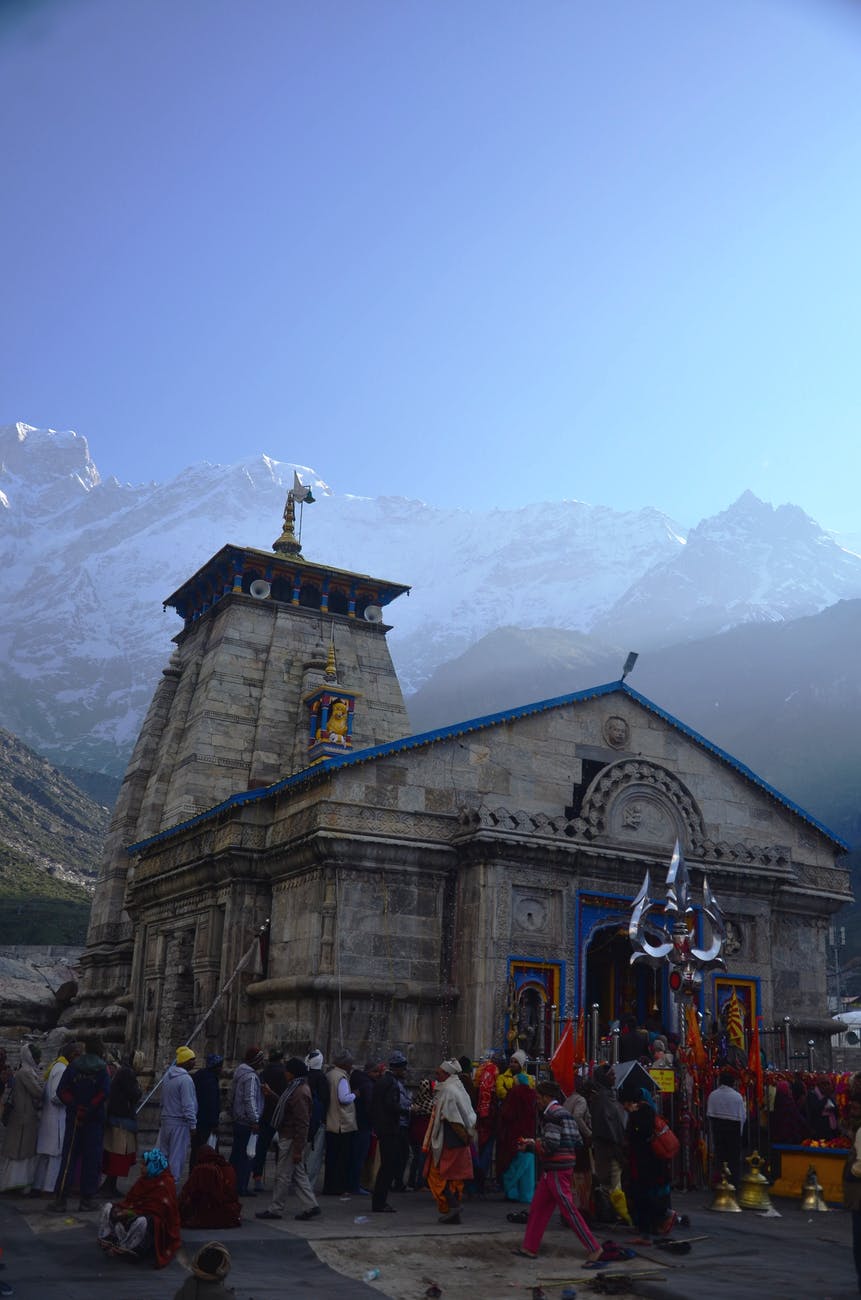
Located in Ukhimath this temple is the home of lord Kedarnath and Madhyamaheswar during winters.
2. BHAIRAVANATH TEMPLE
Bhairav Baba is known as ‘kshterapal’ the protector of Kedarnath Temple and kedar valley.
3. TRIYUGINARAYAN TEMPLE.
This is the place where Lord Shiva and GODDESS Parvati got married in presence of Lord Vishnu and Brahma.
4. VASUKI TAL
According to legends, Lord Vishnu had descended onto the earthly realm into this lake for a holy bath during the auspicious festival of Raksha Bnadhan.
5. RUDRA CAVE
Located one and half kilometers left from the Kedarnath Temple complex, Rudra Cave is an undergroung meditation cave.
6. SONPRAYAG
Soonprayag is a tiny hamlet on the confluence banks of river Mandakini and Basuki. Devotees take a dip in the holy waters with the faith to attain nirvana.
7. SHANKARACHARYA SAMADHI
It is believed that Sri Shankaracharya who propounded the adwaita Philosophy established this holy shrine and one of his four Mathas in the 8th century and attained Nirvana at age 32 here.
8. AGASTYAMUNI
Dedicated to Saint Agastya, the temple commemorates his one year tapas here. This ancient temple stands as an example of grand architecture and interiors with wall art adoring its wall.
Yes! You heard it right, international Model United Nations is offering an Official Campus Ambassador Internship at IMUN.
What is IMUN?
International MUN is recognized by the United Nations & has hosted MUN conferences in 5 different countries in the last 3 years i.e in Thailand, Vietnam, Egypt, China & Malaysia.
About IMUN internship?
5 weeks work from home internship with official internship certificate, letter of recommendation and many more. 5 weeks internship program that enables you to learn organisation management, International diplomacy and everything related to the world of United Nations. In this internship period every intern have to promote IMUN and IMUN Conferences through your social media accounts, through your friends.
This internship is a way to understand global issues, interacting with other culture and people.
Great performers receive best of IMUN certificate recognized by United Nations, letter of recommendation, appreciation, incentives, an opportunity to join IMUN team in different countries all sponsored and etc
What will you learn from this internship?
The main question comes in our mind is what new things we will learn from this internship.
Being an intern at IMUN you will learn leadership skills, social media marketing, digital marketing, communication skills, public speaking skills, networking and many more. Interns will also get an certificate after completing the internship, the international certificate from United Nations based on their performance. It will also prepare you for your career and help you to get a good job.
In March of 2020, news rapidly spread that there was a very high chance of Yes Bank collapsing. This caused widespread panic among the people and soon even the Reserve Bank of India (RBI) had to step in. On 5th March 2020, the RBI foisted a 30-day moratorium (temporary prohibition of activity) on the bank and replaced the entire top management to prevent it from collapsing. So, what exactly happened?
Well, when a bank lends money to its borrowers, it does so by charging a certain amount of interest on the loan amount. However, some of it always is in arrears or ends up as bad debts. When a borrower defaults in the payment of the principal or interest amounts, it is said to be in arrears. In finance terms, these loans are referred to as Non-Performing Assets (NPA). These NPAs are precisely what brought Yes Bank down on its knees. For any bank to survive, its deposits need to be more than the amount it lends. When we take a look at the bank’s books of accounts, we can notice what exactly went wrong. At the end of the financial year 2013-14, its loans stood at Rs.55,633 Crores and its deposits totaled to Rs.74,192 Crores. By September 2019, the loans almost quadrupled to about Rs.2,25,000 Crores. The amount in the deposits, however, failed to keep up with the pace and stood at Rs.2,21,000 crores. Also the kinds of people the bank lent money to were not as financially capable of repayment. This led to an increase of NPAs from 2% a year earlier to 19% in the year 2019-20. This surge led Yes Bank to post a loss of a whopping US$2.5 Million in the period from October to December 2020.
The founder of the Bank, Rana Kapoor, had a reputation for being good at sanctioning loans to those who were sure to repay. However, in his greed to increase the loan count, he started treating the Bank’s money as his own. He even gave loans to companies that were reporting repeated losses and manipulated the books to show the NPAs lesser than how much they were. Many of the companies that Yes lent to were caught in a vicious cycle of borrowing more to repay their previous debts. Rana Kapoor was ordered by the RBI to step down from his chair and was arrested for fraud. He was accused of deteriorating the relationship between the Bank and the Central Government. The Finance minister, Nirmala Sitharaman, proposed a plan to reconstruct the management under which the State Bank of India would have a 49% stake of ownership. Prashant Kumar was made the new CEO. However, the help came at the wrong time as the pandemic forced the financial sector to plummet. At the end of the day, the story of Yes Bank and Rana Kapoor teaches us that more does not always mean better. He sought to expand without even considering the risks or the consequences, which led to its ultimate downfall.
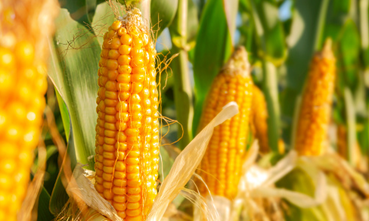
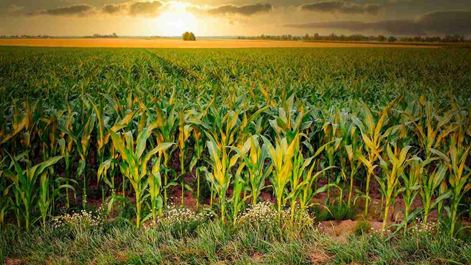
In Spite of abundant harvest, a severe fall in corn and maize rates at open market places have left cultivators to repent. It is with considerable hard work, confronting insect attack and other challenges, that growers had reaped the crop in the previous two seasons. Numerous areas even witnessed steady fluctuation in the area of cultivation.
Though, it is one of the largest cultivated crops grown in the district in about 9,500 hectares (corn and maize). overcoming various obstacles, not a ray of positivity expected them but just decline in price, driving several peasants into debts and monetary crisis.
According to V Sekaran, a farmer from Tiruchy , the retail price for maize stays at Rs 30-40 per kg, whereas at open market it is presently Rs 20 – 22. The price of corn has come down to Rs 12-15 in the market. Farmers have brought their crops to harvesting stages crossing all hardships, but the market price has left them in a major loss.
Maize, in particular, has not provided any profit in the last two years.
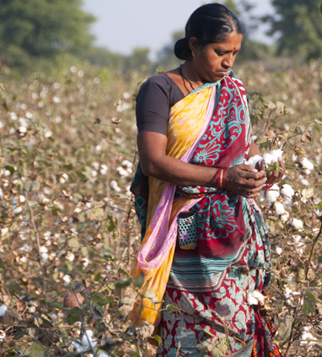
Cotton and maize take up nearly equal area of cultivation. Based on rainfall in the monsoon season, the areas will change and crop pattern will go through a shift. This season maize has failed to get the expected price, but cotton has reached record high price. Due to this farmers are likely to shift to cotton cultivation.
5) Alibaba: Alibaba.com is a Chinese multinational technology company specializing in e-commerce, retail, internet, and technology. Its initial public offering (IPO) became the world’s largest IPO ever. They enable businesses to transform the way they market, sell and operate and improve their efficiencies. They also provide the technology infrastructure and marketing reach to help merchants, brands and other businesses to leverage the power of new technology to engage with their users and customers and operate more efficiently. It is based in Hangzhou, China and was founded in 1999 by Jack Ma. The current CEO is Daniel Zhang. The e-commerce giant had a market cap of $581 billion on June 30, 2020. In 2019, Alibaba’s revenue amounted to $56.15 billion.
4) Tencent: Tencent Holdings is a Chinese multinational technology conglomerate holding company. They globally market various Internet-related services and products, including in entertainment, artificial intelligence, and other technology. It is well known for its apps, online games, advertising, and messaging services like WeChat. It is headquartered in Shenzhen, China and was founded in 1998 by Ma Huateng, Zhang Zhidong and Chen Yidan. Huateng is still the CEO. On June 30, 2020 Tencent had a market cap of $614.68 billion and its 2019 revenue amounted to $56.6 billion.
3) Facebook: Facebook is the world’s most popular social networking site according to NASDAQ. They build technologies that help people connect with friends and family, find communities, and grow businesses. They also own WhatsApp, Instagram, Oculus and Onavo. It is based in Menlo Park, California and was founded in 2004 by Mark Zuckerberg, who is also the CEO. It had a market cap of $647.15 on June 30, 2020 and reported a total revenue of $70.7 billion in 2019.
2) Alphabet: Alphabet Inc. is an American multinational conglomerate and is the parent company of the multinational technology giant, Google. It was created through a restructuring of Google on October 2, 2015, and became the parent company of Google and several former Google subsidiaries. It was founded by Larry Page and Sergey Brin and is now headquartered in Mountain View, California. Alphabet’s current CEO is Sundar Pichai. Google had a market cap of $964.51 billion on June 30, 2020 and reported total revenue as $161.86 billion in 2019.
1) Amazon: Amazon is an American multinational technology company which focuses on e-commerce, cloud computing, digital streaming, and artificial intelligence. It is one of the Big Five companies in the U.S. information technology industry. The company has been referred to as “one of the most influential economic and cultural forces in the world”, as well as the world’s most valuable brand. It was founded in 1994 by Jeff Bezos and is headquartered in Seattle. Amazon’s current CEO is Andy Jassy. It had a market cap of $1.38 trillion on June 30, 2020. In 2019, it reported $280.52 billion in revenue.
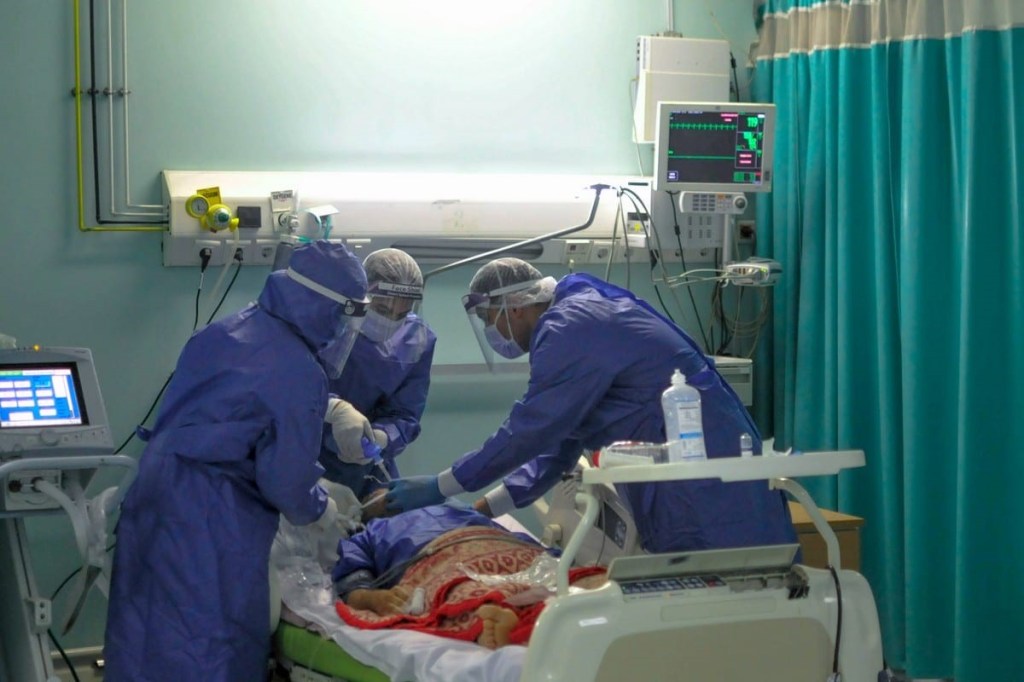
COVID-19’s catastrophic second wave left India crippled. Shortage of oxygen, hospitals on the brink, unbridled Covid deaths, rampant Covid cases, people in agony pretty much sums up the second wave.
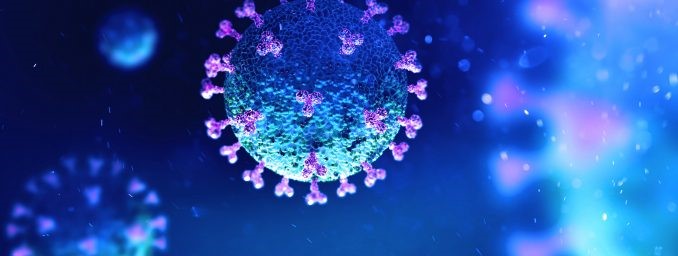
The virus evolves as it spreads. India is coping with the UK version, South African variant, Double mutant, Kappa variant, and Delta variant- to name a few.
When will COVID-19 come to an end?
Some of the viruses responsible for previous pandemics, such as the H1N1 swine flu virus, continue to spread today, so does H3N2.
And, the bitter truth is, this may also be the case with COVID-19. COVID-19 is far more difficult to eradicate since it may spread from animals to humans and from humans to humans.
“The virus sticks around, but once people develop some immunity to it — either through natural infection or vaccination — they won’t come down with severe symptoms. The virus would become a foe first encountered in early childhood, when it typically causes mild infection or none at all,” quoted Jennie Lavine, an infectious-disease researcher at Emory University in Atlanta, Georgia.
Eradication, on the other hand, isn’t the sole option. We’ve previously controlled and confined Ebola, hepatitis B, measles, and SARS, all of which were similar to the current COVID-19.
“The end of the pandemic is not the end of this virus — it’s the end of an unsustainable impact on health systems,” ANDREW J POLLARD, FRCPCH PhD FMedSci, is Professor of Pediatric Infection and Immunity at the University of Oxford said. “If we can convert it into something more innocuous, then we’ll have the end of the pandemic in sight.”
COVID-19 can also be contained and controlled with vaccination.Covishield has a 90% efficacy rate,while Covaxin has an 81 percent efficacy rate. Russia’s Sputnik V has a 91.6 percent efficacy rate. It’s time to get vaccinated for your own and your family’s protection, as vaccination is the only way out of this pandemic.
Post-vaccination symptoms &why they are good?
After taking the vaccination, one may experience some side effects like pain at the injection site, joint pain, redness, headache, chills, swelling at the injection site, fever, nausea, or fatigue.
But it’s perfectly normal and, in fact, beneficial. Side effects are the immune system’s response to the vaccine & a sign that the vaccine is working.
“The good news on our part isthat a brisk response equals an effective response,” Dr. Mark Loafman, chair of family and community medicine for Cook County Health in Illinois, told NBC 5. “It tells us that the vaccine is working. Our body’s forming a robust immune response and we feel that that’s a positive thing. So, we tend to see the vaccines that have a higher efficacy rate also have more of the so-called side effects or the symptoms because they work so well.”
Just like citizens, the RTI act has enabled lot many journalists in the country to investigate regarding their concerned issues. RTI act over the years has become an important weapon for journalists to divulge hidden and lesser known information. RTI act has become so crucial and an “everyday thing” for some journalists that they have build their entire career out of it.
Some of the famous cases where RTI act has helped journalists in their investigation procedure are:
1) Chhatrapati Shivaji Memorial Project by journalist Mr. Vishwas Waghmode:
Mr. Waghmode, a journalist at the time in The Indian Express investigated the controversial Chhatrapati Shivaji Memorial project. According to him, the initial cost quoted by the contractor was Rs.3826 crores which was supposed to be the lowest bid as opposed to the government’s bid which was Rs.2500 crores. The government in order to resolve this issue set up a committee led by the chief secretary in order to renegotiate the cost which successfully got the cost down to the government’s estimate of Rs.2500 crores. Mr.Waghmode in connection with this case stated that the rules do not allow renegotiation but rather they are supposed to issue fresh tenders. He further added that the opposition was alleging the government had reduced the height of the statue in order to reduce the cost which the government vehemently denied.
In order to have the “genuine information”, he took the help of RTI act. Mr. Waghmode discovered and revealed how the government had in reality decreased the height of the statue and the horse by 7.5m. But in order to show that the height of the statue was not reduced, they had instead increased the height of the sword by 7.5m. He further revealed that since the sword was straight, the amount of money required to build the sword was quite less when compared to the reduction in height and that in turn helped them reduce the cost by a substantial amount.
RESULT:
When all of this came into the public eye, the State Government could not justify why the height of the sword was increased and was in deep shame.
2) HONORARY DOCTORATE SCAM by Shyamlal Yadav.
When we talk about investigative journalism in India, we can never ignore this name, that is, Shyamlal Yadav. In 2018, Mr. Shyamlal Yadav in The Indian Express published a series of investigative reports on how India has emerged as one of the biggest markets for “predatory” publishers of substandard research journals.
On February 6, 2018, The Indian Express scrutinised over 500 RTI applications filed over 470 higher educational institutions to find that monitoring authorities, and hundreds of politicians and bureaucrats were awarded such degrees between 1997 and 2017.
The list for instance included former director of IISC, who received 18 honorary doctorates from public universities between 2006 and 2012 when he was chairman of NAAC’s EC. The list also had several UGC chairmen who had such degrees during their tenure.
RESULT: Rules were made by higher authorities in 2019 after the investigative report via RTI files whereby NAAC officials, family weren’t allowed to accept honorary doctorates from institutions under their watch. RTI was used to dig out crucial facts in this case.
3) Discontinuation of LIC policies by Shyamlal Yadav
Shyamlal Yadav got information through RTI from Life Insurance Corporation (LIC) that there were 59 million insurance policies those were lapsed permanently due to discontinuance of premium. And the premium deposited since then had become LIC property. Despite many efforts LIC did not provide the info on total money deposited against those policies till the date they lapsed. As a result, Indian Express published the story about the discontinuation.
RESULT:
Within 25 days of publication of the story, LIC issued fresh advertisements regarding renewal of policies.
4) Streams of Filth by Shyamlal Yadav:
This was an investigation by Shyamlal Yadav regarding water pollution in India that took over one year. About 39 RTI applications regarding expenses by Government on water projects were filed. It came into notice that large amount of money was spent by Government for water purification projects but there was little effect on nation’s lifelines. The story was published in The Indian Express and was selected by UNESCO as one of the 20 best Investigative pieces in the world.
RESULT: Central Pollution Control Board said the rivers of India are not just polluted but severely toxic.
Theme this year: “Teach someone how to play chess”
The idea to commemorate International Chess Day was proposed by UNESCO after it was established by FIDE in 1966. FIDE, the International Chess Federation has 181 chess federations as its members organize chess events and competitions across the globe on International Chess Day.
FIDE: Fédération Internationale des Échecs
-Chess was invented in India around 8th Century. It was known as chatrang-
Chess:
Chess is a board game played by two players. It is enjoyed all over the world. There have been many grandmasters and the records get tougher to hold the title. Chess is an abstract strategy game and involves no hidden information.
It is played on a square chessboard with 64 squares arranged in an eight-by-eight grid. At the start, each player controls sixteen pieces: one king, one queen, two rooks, two knights, two bishops, and eight pawns. The main chessboard and pawns are black and white.
The goal of the game is to put the opponent’s king under immediate attack .i.e. in “check” and give no way for it to escape. There are also several ways a game can end in a draw. Each pawn has its own limitation of movements.
It is one of the most fun, intellectual, and brainy indoor games.
Players: 2
Abilities: Strategy, tactics
Fact: In 1997, Deep Blue became the first computer to beat the reigning World Champion in a match when it defeated Garry Kasparov.
History:
The origin of chess date around 7-8th century. Three are written in Pahlavi and one, the Harshacharita, is in Sanskrit. Chatrang was named shatranj, after the Islamic conquest of Persia. Xiangqi is the form of chess best-known in China
The modern piece movement rules began to appear in intellectual circles in Valencia, Spain around 1475. The queen replaced the vizier chess piece and by the 15th century had become the most powerful piece.
Prague-born Wilhelm Steinitz laid the foundations for a scientific approach to the game, the art of breaking a position down into components. In addition to his theoretical achievements, his triumph over the leading German master Johannes Zukertort in 1886 is regarded as the first official World Chess Championship.
Significance of chess:
“The United Nations recognizes that sports, the arts and physical activity have the power to change perceptions, prejudices and behaviours, as well as to inspire people, break down racial and political barriers, combat discrimination and defuse conflict, and therefore contrabute in promoting education, sustainable development, peace, cooperation, solidarity, social inclusion and health at the local, regional and international levels.
The designation of World Chess Day of the UN will not only recognize the important role of the FIDE in supporting international cooperation for chess activity and aiming to improve friendly harmony among all peoples of the world, but also to provide an important platform to foster, dialogue, solidarity and culture of peace”
-United Nations
Fact: The rules of chess are published by FIDE (Fédération Internationale des Échecs)
Notable Men and women in the world of chess:
Judit Polgár
Garry Kasparov
Vera Menchik
Magnus Carlsen
Rohini Khadilkar
Andrey Espienko
Nona GAprindashvili
Hou Yifan
Movies to watch:
The Queen’s Gambit
Queen of Katwe
Pawn Sacrifice
Searching for Bobby Fischer
Brooklyn Castle
Hikaru no Go
What to do?
LEARN CHESS!!
Cause why not? Learning moves or moving pieces entirely after thorough thought, being on your toes to find the easiest or quickest win to checkmate, and tricking someone to make the move you wanted them to do! It is a load of exercise for your brain.
10) Baidu: Baidu is the main search engine in China. It offers maps, news, videos, anti-virus software, and Internet TV. It is listed in the Cayman Islands and is known to restrict search results to comply with Chinese laws and political directives. It specializes in Internet-related services and products and artificial intelligence. Its American depository receipt is listed on Nasdaq. It had a market cap of $41.32 billion on June 30, 2020, and its 2019 revenue amounted to $15.43 billion. It was founded by Robin Li and Eric Xu in 2000. Li is still the CEO till date.
9) Booking.com: Booking.com is an online travel company that lets users book reservations for restaurants, hotels, rental cars, airline tickets, safaris, cruises, and other travel services. It is based in Amsterdam, Netherlands. It had a market cap of $65.20 billion on June 30, 2020. In 2019, its total revenues were $15.07 billion. It was founded by Geert-Jan Bruinsma in 1996. The current CEO is Glenn Fogel.
8) JD.com: JD.com is a Chinese e-commerce company headquartered in Beijing. It is one of the largest B2C online platforms in China and a member of the Fortune Global 500. It is headquartered in Beijing. The company’s cutting-edge retail infrastructure seeks to enable consumers to buy whatever they want, whenever and wherever they want it. Its market cap was $93.01 billion on June 30, 2020. JD.com’s total revenue in 2019 was $82.86 billion. It was founded by Liu Qiangdong in 1998 and he remains the CEO till date.
7) Salesforce: Salesforce is cloud computing and social enterprise solutions company. It is based in San Francisco, California. It also provides customer relationship management services to various businesses. It’s one integrated CRM platform that gives all your departments — including marketing, sales, commerce etc. — a single, shared view of every customer. It had a market cap of $176.92 billion on June 30, 2020 and its total revenue in 2019 amounted to $13.28 billion. It was founded by Marc Benioff and Parker Harris in 1999. Benioff is still the CEO.
6) Netflix: Netflix is an OTT and entertainment service company that provides video streaming platforms. It has a network of over 167 million members across more than 190 countries. It is headquartered in Los Gatos, California. Its market cap was $200.68 billion on June 30, 2020. In 2019, its total revenues were $20.16 billion. It was founded in 1997 by Reed Hastings and Marc Randolph. It was originally a movie rental service where you could rent DVDs. Its current CEO is Ted Sarandos.
Property rights define the theoretical and legal ownership of resources and how they can be used. These resources can be both tangible or intangible and can be owned by individuals, businesses, and governments. In many countries, including the United States, individuals generally exercise private property rights or the rights of private persons to accumulate, hold, delegate, rent, or sell their property. In economics property rights form the basis for all market exchange, and the allocation of property rights in a society affects the efficiency of resource use.
Understanding Property Rights
Property is secured by laws that are clearly defined and enforced by the state. These laws define ownership and any associated benefits that come with holding the property. The term property is very expansive, though the legal protection for certain kinds of property varies between jurisdictions.Property is generally owned by individuals or a small group of people. The rights of property ownership can be extended by using patents and copyrights to protect:
Scarce physical resources such as houses, cars, books, and cellphones
Non-human creatures like dogs, cats, horses or birds
Intellectual property such as inventions, ideas, or words
Other types of property, such as communal or government property, are legally owned by well-defined groups. These are typically deemed public property. Ownership is enforced by individuals in positions of political or cultural power. Property rights give the owner or right holder the ability to do with the property what they choose. That includes holding on to it, selling or renting it out for profit, or transferring it to another party.
Acquiring Rights to a Property
Individuals in a private property rights regime acquire and transfer in mutually agreed-upon transfers, or else through homesteading. Mutual transfers include rents, sales, voluntary sharing, inheritances, gambling, and charity. Homesteading is the unique case; an individual may acquire a previously unowned resource by mixing his labor with the resource over a period of time. Examples of homesteading acts include plowing a field, carving stone, and domesticating a wild animal. In areas where property rights don’t exist, the ownership and use of resources are allocated by force, normally by the government. That means these resources are allocated by political ends rather than economic ones. Such governments determine who may interact with, can be excluded from, or may benefit from the use of the property.
Private Property Rights
Private property rights are one of the pillars of capitalist economies, as well as many legal systems, and moral philosophies. Within a private property rights regime, individuals need the ability to exclude others from the uses and benefits of their property. All privately owned resources are rivalrous, meaning only a single user may possess the title and legal claim to the property. Private property owners also have the exclusive right to use and benefit from the services or products. Private property owners may exchange the resource on a voluntary basis.
Private Property Rights and Market Prices
Every market price in a voluntary, capitalist society originates through transfers of private property. Each transaction takes place between one property owner and someone interested in acquiring the property. The value at which the property exchanges depends on how valuable it is to each party. Suppose an investor purchases $1,000 in shares of stock in Apple. In this case, Apple values owning the $1,000 more than the stock. The investor has the opposite preference, and values ownership of Apple stock more than $1,000.













 Eduindex
You must be logged in to post a comment.