Dreams: Our own fantasy world

When we are asleep in this world ,we are awake in another .

What is a dream.

Dreams are stories and images that our minds create while we sleep. They can be entertaining, fun, romantic, disturbing, frightening, and sometimes bizarre.

Phases of sleep.

Dreams most likely happen
Dreams feel real while we’re in them. It’s only when we wake up that we realize something was actually strange

There are five phases of sleep in a sleep cycle:

Stage 1: Light sleep, slow eye movement, and reduced muscle activity. This stage forms 4 to 5 percent of total sleep.

Stage 2: Eye movement stops and brain waves become slower, with occasional bursts of rapid waves called sleep spindles. This stage forms 45 to 55 percent of total sleep.

Stage 3: Extremely slow brain waves called delta waves begin to appear, interspersed with smaller, faster waves. This accounts for 4 to 6 percent of total sleep.

Stage 4: The brain produces delta waves almost exclusively. It is difficult to wake someone during stages 3 and 4, which together are called “deep sleep.” There is no eye movement or muscle activity. People awakened while in deep sleep do not adjust immediately and often feel disoriented for several minutes after waking up. This forms 12 to 15 percent of total sleep.

Stage 5: This stage is known as rapid eye movement (REM). Breathing becomes more rapid, irregular, and shallow, eyes jerk rapidly in various directions, and limb muscles become temporarily paralyzed. Heart rate increases, blood pressure  rises, and males develop penile erections. When people awaken during REM sleep, they often describe bizarre and illogical tales. These are dreams. This stage accounts for 20 to 25 percent of total sleep time.

Some interesting facts about dreams.

1. You Forget 90% of Your Dreams.

Within 5 minutes of waking half of your dream is forgotten. Within 10, 90% is gone.

2. Blind People also Dream

People who became blind after birth can see images in their dreams. People who are born blind do not see any visuals, but have dreams equally vivid involving their other senses of sound, smell, touch and emotion

3. In Our Dreams, We Only See Faces That We Already Know

Our mind is not inventing faces – in our dream, we see real faces of real people that we have seen during our life but may not know or remember. We have all seen hundreds of thousands of faces throughout our lives, so we have an endless supply of characters for our brain to utilize during our dreams.

4. Not Everybody Dreams in Color.

A full 12% of sighted people dream exclusively in black and white. The remaining number have full color dreams. Studies from 1915 through to the 1950s maintained that the majority of dreams were in black and white, but these results began to change in the 1960s. Today only 4.4% of the dreams of under-25 year-olds are in black and white. Recent research has suggested that those changing results may be linked to the switch from black-and-white film and TV to color media.

5. Emotions

The most common emotion experienced in dreams is anxiety Negative emotions are more common than positive ones.

even though we have stressful days with alot of failures, but at night in our dreams we can live a life filled with happiness , we also can do things we want to do and can be the way we want us to be …..


Anger

Anger is one of the basic human emotions, as elemental as happiness, sadness, anxiety or disgust. These emotions are tied to basic survival and were honed over the course of human history. Anger is related to the “fight, flight, or freeze” response of the sympathetic nervous system, it prepares humans to fight. But fighting doesn’t necessarily mean throwing punches. It might motivate communities to combat injustice by changing laws or enforcing new norms.

Of course, anger too easily or frequently mobilized can undermine relationships or damage physical health in the long term. Prolonged release of the stress hormones that accompany anger can destroy neurons in areas of the brain associated with judgment and short term memory and weaken the immune system. For those who struggle with chronic anger, or for those who only experience occasional outbursts, learning skills to identify and navigate this powerful emotion can lead to growth and change.

What causes anger?

The question of why some shrug off annoyances while others explode in rage is a fascinating one. One model of anger, put forth by psychologist Jerry Deffenbacher, posits that anger results from a combination of the trigger event, the qualities of the individual, and the individual’s appraisal of the situation.

The trigger is the event that provokes anger, such as being cut off in traffic or yelled at by a parent. The qualities of the individual include personality traits, such as narcissism, competitiveness, and low tolerance for frustration, and the pre-anger state, like levels of anxiety or exhaustion. Perhaps most importantly is cognitive appraisal—appraising a situation as blameworthy, unjustified, punishable, etc. The combination of these components determines why and if people get mad.

How can I manage my anger?

If you are often carried away by anger, it can be helpful to understand the patterns that trigger you. It’s possible to intervene at different points along the way to deal with anger effectively.

1. Sleep: Sleep deprivation makes it harder to control angry impulses, so regular, healthy sleep can prevent you from being provoked.

2. Consider alternative interpretations: And ask yourself what evidence you have to support your angering interpretation. Consider different perspectives.

3. Take deep breaths: Take long, slow, deep breaths, using the diaphragm rather than the chest.

4. Avoid the “catharsis myth”: Venting anger, acting with aggression, and viewing aggressive content does not tend to release anger effectively.

5. Know that it’s ok to get mad: If you have been wronged, treated unfairly, or provoked, you should get angry, but express it assertively instead of aggressively.

How can I manage anger that’s warranted?

In cases of warranted anger, such as a coworker who never contributes to collaborative projects, you may want to use a different set of anger management tips. In those situations:

1. Distance yourself from the angering situation. This will help you stop ruminating and develop a clear path forward.

2. Dedicate time to thinking about how to solve the root problem so it doesn’t occur again.

3. Express your anger assertively, with a solutions-oriented approach, rather than aggressively.

Toxic Positivity in an age of Nowhere

Positivity is a fad all around the place. Instagram, Twitter, the daily newsletters and what not – all have only one single message to convey – stay positive. Is that a bad message now? Bad enough to have an article against it? Well, no. And well, yes.

Positivity is important. Being hopeful is important. They are important to have the strength to move on. They are important to have the strength to carry forth with what lies at hand. If a person loses hope, then there is seldom a lot that can be done. This idea is quite agreed upon by psychologists as well as general health experts. But then what does the topic of this article convey? Positivity is something that drives a person forward. Then there is a situation where positivity becomes the only emotion a person knows. And most of the human race would agree that they are pushed into this state. If any other emotion – sad, angry, aghast or tired – tries to come, the person is told to let go of it and stay positive, to try to be happy about what lies with him or her or them. This is toxic, say many psychologists. The person is forced to accept positivity even when he/she/they are trying to cry, trying to be angry or trying to express any other emotion.

Expression is very important for mental health. There is no tool as strong as expression for the human mind. That expression can be verbal, through music, art, dance or in any other physical or art form – as long as it does no harm to another being, that expression is good and, important.

Toxic positivity can lead to the locking of emotions, mental degeneracy or probably depression, anxiety and a host of other issues. Psychologists argue that no emotion is ever fully suppressed. Suppressing of emotions locks those emotions deep in the brain, only to come out stronger and probably more harmful in situations of trauma or a sudden exposure to a stimulating environment.

In the present, all of us are struck in a nowhere – a world of our own in our houses or offices or work spaces with limited human contact. This has statistically led to an increase in cases of extreme isolation, anxiety and depression and a host of other mental health problems. This is certainly not a time to be positive all the time. And certainly not a time to try to do something positive. The important thing is to strike the balance. Give all your emotions a moment. And yet, try to do something positive each day. It is alright if you cannot. The contentment is to understand that you tried.

How To Avoid Toxic Positivity And Use Positive Thinking Healthily
Stay positive and away from becoming toxic positive. (image courtesy : Women’s health magazine)

The Silent Patient – Going to break my silence over it

Silent patient written by Alex Michaelides is the first psychological thriller I have ever read. Hence I am going to be reviewing it like a thriller novice, as it’s my first encounter with psychological warfare that’s unleashed by this book. 

Plot Summary

This story essentially revolves around Alicia Berenson and her silence.  Alicia is an artist who fortes in painting photorealistic oil paintings, which becomes the reason for her popularity. But one day when the police are called to her house her reason for popularity alters when they find her husband, Gabriel dead.  Shot in the head five times by her and with a refusal to speak anything after that. 

Six years pass since her refusal to speak, no one has heard one word from her. Sitting in the Grove, a forensic institute, we still don’t know what was the reason she committed such a brutal crime. The only clue is the last painting she painted after killing her husband and her long long silence. 

Someone finally takes the dare to solve this mystery, this how our second primary protagonist is introduced. Theo Faber, a psychotherapist with a keen interest in Alicia Berenson. Through Theo we come face to face with many elements in Alicia’s life, that may have been instrumental in the murder. 

Review

The book is written in fairly simple language, there is not much medical jargon that might have made this book complex. The two protagonists are well developed. But other than that, secondary characters are not given much attention. As the story majorly revolves around the two primary characters. 

The story is an easy read, but it is slow progress. You get to know about Alicia and Theo little by little. The driving force behind the story is essentially the question WHY, why did she kill him. While it is a good motivator to continue the book, it lacks the drama and volume for a perfect ending. 

The part I liked the most was the ending because it was a well worthy twist to wait for, but I did get an inkling for the last twist. And hence it lacked the dramatics. 

This book also gave me an insight into the world of psychology, it brought forward the inner working of our brain and how it works under absurd circumstances. The importance of past and childhood can clearly be seen in this book.  Giving some compelling takeaways as psychology lessons. 

Should You Read This Book ?

As a novice, I would definitely suggest giving a one-time read to this book. It is a good book to enter the world of psychological thrillers. Its simple language is definitely suitable for everyone. But if you are looking for a book with adventure and excitement, then maybe this book is not for you. I would give this book  3.5/5 for its interesting plotline and easy to follow plot. 

The Bermuda Triangle

The Bermuda Triangle is a region in the north-western part of the Atlantic Ocean, near the USA. It is also called the ‘Devil’s Triangle’, because of all the disappearances and supernatural activity that is associated with it. Till date, around 50 ships and 20 airplanes have gone missing in the Bermuda triangle, never to be heard of again. Not even the wreckage or debris of any vessel has been found. One such case was in 1945, when a squadron of US Navy bombers became disoriented while flying over the area and thereafter disappeared, never to be found again. Even the rescue plane sent after them disappeared with no trace. No one knows what happens to the vessels, or the people inside them after entering the Bermuda triangle. Oftentimes the boats and planes have vanished without even sending out a distress call or signal, and planes have been known to go off the radar in this region of the ocean.

What are the possible explanations?

Many people like to suggest supernatural or other-worldly causes as possible explanations, like alien abductions or some mythical sea creature. However, it is more likely to have a scientific explanation, with geophysical and environmental factors at play. One such factor is that the agonic line (imaginary line connecting the earth’s north and south magnetic poles) passes through this area, which pilots may fail to account for. This may have caused discrepancies in interpreting the magnetic compass and thereby led to significant navigational error, resulting in catastrophe. Another scientific explanation is that the region often has massive rogue waves passing through it (reaching up to 100 feet) which are enough to carry away and engulf any evidence of a ship or airplane, which is why none has been found. Since multiple storms may converge in the Bermuda triangle, and hurricanes often sweep by in that area, it is possible to form massive waves and winds that destroy, carry away, and leave no sign of any vessels.

Furthermore, the National Oceanic and Atmospheric Administration of America has said that “There is no evidence that mysterious disappearances occur with any greater frequency in the Bermuda Triangle than in any other large, well-travelled area of the ocean,” This means that though there have been mysterious disappearances, a larger number of ships and airplanes have travelled through the region, and continue to do so today, without any incident. So, the few cases in which disappearances did occur might have been due to certain unfortunate circumstances and events.

Conclusion

There is a lot of mystery and fantasy involved when talking about the Bermuda triangle, but this is because human minds are drawn towards things that are bizarre and memorable, and we are more likely to remember things that seem exceptional in nature. In this process, however, we often disregard the ordinary things that offer a more realistic view. We prefer to think about a mysteriously disappearing ship rather than a ship that simply sank in a hurricane. This leads to something known as the ‘frequency illusion’ where once we’re introduced to something, we tend to notice it more often in our lives. This makes us believe that that thing is more common and frequent than it really is. Hence, the world may suffer from a frequency illusion that makes us want to think that the Bermuda triangle keeps swallowing up vessels very often, when in reality it has been a select few cases. In fact, mysterious disappearances happen in every part of the world, and not just the Bermuda triangle. The classic example of this being Malaysia Airlines flight 370.

Regardless, the Bermuda triangle has managed to capture human imagination with the unexplained disappearances in its area, and has also been referenced in may pop-culture pieces of media like the Gulliver’s Travels and Percy Jackson movies. This shows the impact that any strange phenomenon can have on human minds, and its ability to impress us. Today the Bermuda triangle is a safe destination that even tourists can visit to see for themselves, without any risk of disappearing.

Man’s Search for Meaning by Viktor E. Frankl – Book Review

Man’s Search for Meaning by Viktor E. Frankl, originally written in German and translated to other languages, is a part memoir of the author’s experiences in concentration camps part non-fiction on psychology. It was first published in 1946 in its original language and English version was published in 1959. The book is divided into two parts – Experiences in a Concentration Camp and Logotherapy in a Nutshell – the first talks about his experiences in camps and explains the basis of his findings, and second part is completely about logotherapy(“meaning”). Viktor E. Frankl, an Austrian psychiatrist, was born on the 26th of March, 1905 in Vienna, Austria. He was a psychiatrist and psychotherapist and also a philosopher and Holocaust survivor. He developed “Logotherapy” – a psychological approach. His developments and findings are categorised as the third school of Viennese psychotherapy. The works of Sigmund Freud and Alfred Adler belong to first and second school of Viennese psychotherapy. His primary focusses in university, where he was a student of psychiatry and neurology, were the areas of sucide and depression. He received his MD and PhD from the University of Vienna. He based his works on his experiences in concentration camps. He breathed his last on 2nd September, 1997 in Vienna.

This work is based on Frankl’s own experiences and observations of other inmates in four different concentration camps(between 1942 and 1945). He lost his parents, brother and his pregnant wife in concentration camps.The book is written in a lucid manner and explains the concepts clearly. Based on his experiences and observations in the camp, Frankl argues that man by nature is not a pleasure seeking animal and his primary is motivation is to search for meaning in his circumstances. He states that only when man falls into a gulf devoid of meaning he resorts to seeking pleasure in immediate pleasure providing activities and needs.His concept logotherapy focusses on helping an individual find meaning in his circumstances. He quotes his experiences to show that man can find strength even in seemingly hopeless situations. His concept logotherapy focusses on helping an individual find meaning in his circumstances. Finding that meaning can help an individual bear suffering and find hope. 

“Those who have a ‘why’ to live, can bear with almost any ‘how’.”

His work on logotherapy and his existential analysis is mostly based on finding meaning and free will. In this work, he also explains certain techniques to deal with life. He uses the concept ‘paradoxical intention’ – practising contrary and humorous thoughts – to deal with anxieties and other problems. He also introduces the concept of dereflection – diverting the concentration of a person from his symptoms to other things – as a technique of logotherapy. Another of his techniques is about questioning the patient in a way to help him find meaning.  

“But there was no need to be ashamed of tears, for tears bore witness that a man had the greatest of courage, the courage to suffer.”

“Everything can be taken from a man but one thing: the last of the human freedoms—to choose one’s attitude in any given set of circumstances, to choose one’s own way.”

Throughout his book, the author emphasises on the human capability to deal with even the most challenging circumstances. He states that man can find courage and strength no matter what the circumstance. His views, in certain aspects, echoes the teachings of religions.

“Ultimately, man should not ask what the meaning of his life is, but rather must recognize that it is he who is asked. In a word, each man is questioned by life; and he can only answer to life by answering for his own life; to life he can only respond by being responsible.”

A Brief Understanding of Schizophrenia

Schizophrenia is a chronic and severe mental disorder that affects the way a person thinks, behaves, expresses emotions and perceives reality. It affects around 20 million people worldwide, so it is not as common as other mental illnesses like depression or anxiety disorder. However, it is perhaps the most chronic and disabling one. It is quite evident when people are suffering from schizophrenia, as they act very abnormally and differently. This is why schizophrenics often have problems doing well in society, school, work or in their personal relationships, as they appear to have lost touch with reality and do not know how to behave like a normal, sociable people. Hence, schizophrenia is associated with considerable disability and greatly affects educational and occupational performance.

Causes

Till today, the exact causes of schizophrenia are still unknown. Research conducted on the topic suggests that it may be a combination of genetic, physical, psychological and environmental factors that cause it. So the causes may range from genetic inheritance, chemical imbalances in the brain, and the use of certain drugs and medication, to external environmental factors like trauma, excessive stress, etc.

Symptoms

As mentioned before, schizophrenia causes a wide range of symptoms on a mental, behavioural and emotional level. These symptoms may vary in number and degree from one schizophrenic to another, but there are some commonly seen symptoms among all of them;

  • Hallucinations – Seeing or hearing things in their heads, which are not there in reality. A hallucinating schizophrenic may see or hear something that do not exist, but they fully believe that it is a real experience.
  • Delusions – These are false or fictitious beliefs that schizophrenics have which are not real. Such delusions could be that someone is constantly following them when no one is, or delusions of grandeur where the schizophrenic feels as if he/she is some great, famous person.
  • Disorganized Thinking (Speech) – This means that schizophrenics lack proper communication skills and do not have much interactive capability. They may only half answer questions or not respond at all, and their speech might be meaningless and incomprehensible.
  • Disorganized Motor Behavior – Even their body movements and postures are often abnormal. The behavior may be childlike and unpredictable, and often is not focused on performing any task. They may even require help to perform daily life functions like brushing teeth, eating, etc.
  • Negative Symptoms – This generally refers to their lack of ability to function like a normal human being. They may lack hygiene and care for themselves. They may also lack emotion, or express emotions at wrong times, like showing happiness at a funeral.

Treatment

Since schizophrenia is chronic, even treatment for it is lifelong. Unfortunately, schizophrenia cannot be cured, but it can be controlled. Treatment can help the afflicted person manage the symptoms of the illness and avoid hospitalization. There is no blanket treatment plan and doctors will often tailor it to suit the individual persons. The cornerstone of schizophrenia treatment is medication. Schizophrenics will most commonly be given antipsychotic drugs to keep control of the mental disabilities and allow the person to think and function somewhat normally. Along with this, even psychosocial support from family members and in the form of counselling can help a person develop coping skills in life. This is especially important because schizophrenics often have suicidal thoughts and tendencies, and having a social support system helps them in averting these thoughts and gives them hope.

It is important to highlight here that there is a stigma, and discrimination against people with schizophrenia is common nowadays. They are also often abandoned by their families or relatives thinking that they are beyond saving. We must learn as a society that such people are not as fortunate as us, and suffer from inflictions that we cannot even imagine. Society must be educated on the fact that they are not dangerous or scary people, and must be encouraged to seek help. Hence, we must do all we can to support schizophrenics and provide them with the best help we can.

The Imposter Syndrome

What is Imposter Syndrome?

Imposter syndrome basically refers to internal feelings of insecurity or inadequacy that make you believe you are not as competent as people perceive you to be. Basically, it is when we feel like we are frauds, and that anything we have achieved in our lives has been because of pure luck or chance. While in some cases such feelings may cause people to start working harder and meet their own standards of competency, most often they serve as a constant source of anxiety. You may start overworking yourself and spending countless hours trying to get better to make sure no one ‘finds out’ about you.

Especially people who are highly skilled or who have achieved a lot and become successful in a particular field may begin to garner feelings of insecurity and feel that other people are just as skilled, if not even more skilled than them. They start to feel as if they don’t deserve their achievements and success, and that someone more qualified should have got them. Even some of the great people in history like Albert Einstein suffered from this syndrome. He believed himself to be an ‘involuntary swindler’ who did not deserve the recognition his work got. This shows how pervasive and powerful imposter syndrome is, where even a man like Albert Einstein who we now revere as a great scientist that contributed so much to the world, thought of himself as mediocre and undeserving of recognition or praise. This also shows there is no threshold of achievement that puts feelings of inadequacy at rest.

However, it is important to highlight feelings of imposterism are not only felt by highly skilled individuals. Everyone is susceptible to a phenomenon known as ‘Pluralistic Ignorance’ where we each doubt ourselves privately, but think we are alone in thinking that way because no one openly voices their self-doubt. Imposter syndrome is not necessarily a disease or an abnormality, and neither is it always tied to any mental illness like depression or anxiety. Every single person is prone to imposter syndrome, regardless of their race, gender, occupation or mental/physical health. The base cause of this is that we know ourselves from the inside, but we know others only from the outside, so we do not realise that everyone is flawed in some way, not only us. We know all our own shortcomings and weaknesses, but all we know about others is what they tell us, which is far narrower and edited. So we make the mistake of concluding that we have a lot more flaws than others do.

How to deal with Imposter Syndrome?

Perhaps the easiest and most common way to deal with imposter syndrome is to simply talk about it more. We slowly learn that many people around us suffer from the same problem, and become comforted by the fact that we are not alone in such ways of thinking. Once we have this awareness of the syndrome, we can combat it by collecting and revisiting positive feedback and reassuring ourselves of our competence. It also helps us understand that it is simply a negative way of thinking and is not always true.

Apart from this, we must also look inwards and start dealing with it on an internal level as well. This includes things like separating fact from fiction, where we must recognize that even though we have these feelings, they are not objectively true and that we are unreasonably doubting ourselves. We must also stop comparing ourselves with others and try to focus on our own standards of success, not everyone else’s. This is especially important in today’s age of social media, which is the primary cause nowadays for imposter syndrome. We must learn that social media is not real life and that we shouldn’t compare ourselves to what we see on it.

Still, it may be hard to completely eradicate these feelings, but having open conversations about it and self-reflecting and introspection definitely helps us in keeping them controlled. It highlights to us how common these experiences are and that we should not burden ourselves with them. This process of humanizing the world makes us understand that everyone is like us, with their own flaws and problems, and that we all deserve success and fulfilment.   

Bandwagon Effect

What Is the Bandwagon Effect?

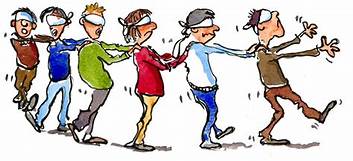
The bandwagon effect is a psychological phenomenon in which people do something primarily because other people are doing it, regardless of their own beliefs, which they may ignore or override. This tendency of people to align their beliefs and behaviors with those of a group is also called a herd mentality. The term “bandwagon effect” originates from politics but has wide implications commonly seen in consumer behavior and investment activities. This phenomenon can be seen during bull markets and the growth of asset bubbles.

Understanding the Bandwagon Effect

The bandwagon effect arises from psychological, sociological, and, to some extent, economic factors. People like to be on the winning team and they like to signal their social identity. Economically, some amount of bandwagon effect can make sense, in that it allows people to economize on the costs of gathering information by relying on the knowledge and opinions of others. The bandwagon effect permeates many aspects of life, from stock markets to clothing trends to sports fandom.

Politics

In politics, the bandwagon effect might cause citizens to vote for the person who appears to have more popular support because they want to belong to the majority. The term “bandwagon” refers to a wagon that carries a band through a parade. During the 19th century, an entertainer named Dan Rice traveled the country campaigning for President Zachary Taylor. Rice’s bandwagon was the centerpiece of his campaign events, and he encouraged those in the crowd to “jump on the bandwagon” and support Taylor. By the early 20th century, bandwagons were commonplace in political campaigns, and “jump on the bandwagon” had become a derogatory term used to describe the social phenomenon of wanting to be part of the majority, even when it means going against one’s principles or beliefs.

Consumer Behavior

Consumers often economize on the cost of gathering information and evaluating the quality of consumer goods by relying on the opinions and purchasing behavior of other consumers. To some extent, this is a beneficial and useful tendency; if other people’s preferences are similar, their consumption decisions are rational, and they have accurate information about the relative quality of available consumer goods, then it makes perfect sense to follow their lead and effectively outsource the cost of gathering information to someone else.

However, this kind of bandwagon effect can create a problem in that it gives every consumer an incentive to free ride on the information and preferences of other consumers. To the extent that it leads to a situation where information regarding consumer products might be underproduced, or produced solely or mostly by marketers, it can be criticized. For example, people might buy a new electronic item because of its popularity, regardless of whether they need it, can afford it, or even really want it.

Bandwagon effects in consumption can also be related to conspicuous consumption, where consumers buy expensive products as a signal of economic status. 

Investment and Finance

Investing and financial markets can be especially vulnerable to bandwagon effects because not only will the same kind of social, psychological, and information-economizing factors occur, but additionally the prices of assets tend to rise as more people jump on the bandwagon. This can create a positive feedback loop of rising prices and increased demand for an asset, related to George Soros’ concept of reflexivity.

For example, during the dotcom bubble of the late 1990s, dozens of tech startups emerged that had no viable business plans, no products or services ready to bring to market, and in many cases, nothing more than a name (usually something tech-sounding with “.com” or “.net” as a suffix). Despite lacking in vision and scope, these companies attracted millions of investment dollars in large part due to the bandwagon effect.

Behavioural Economics

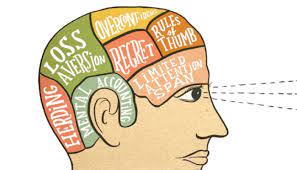
In an ideal world, people would always make optimal decisions that provide them with the greatest benefit and satisfaction. In economics, rational choice theory states that when humans are presented with various options under the conditions of scarcity , they would choose the option that maximizes their individual satisfaction. This theory assumes that people, given their preferences and constraints, are capable of making rational decisions by effectively weighing the costs and benefits of each option available to them. The final decision made will be the best choice for the individual. The rational person has self-control and is unmoved by emotions and external factors and, hence, knows what is best for himself. Alas behavioral economics explains that humans are not rational and are incapable of making good decisions.

Behavioral Economics is the study of psychology as it relates to the economic decision-making processes of individuals and institutions. Behavioral economics draws on psychology and economics to explore why people sometimes make irrational decisions, and why and how their behavior does not follow the predictions of economic models. Decisions such as how much to pay for a cup of coffee, whether to go to graduate school, whether to pursue a healthy lifestyle, how much to contribute towards retirement, etc. are the sorts of decisions that most people make at some point in their lives. Behavioral economics seeks to explain why an individual decided to go for choice A, instead of choice B.

Because humans are emotional and easily distracted beings, they make decisions that are not in their self-interest. For example, according to the rational choice theory, if Charles wants to lose weight and is equipped with information about the number of calories available in each edible product, he will opt only for the food products with minimal calories. Behavioral economics states that even if Charles wants to lose weight and sets his mind on eating healthy food going forward, his end behavior will be subject to cognitive bias, emotions, and social influences. If a commercial on TV advertises a brand of ice cream at an attractive price and quotes that all human beings need 2,000 calories a day to function effectively after all, the mouth-watering ice cream image, price, and seemingly valid statistics may lead Charles to fall into the sweet temptation and fall off of the weight loss bandwagon, showing his lack of self-control.

Culture and its effect on the brain

Definition of Culture

The study of culture can be collocated along two tenacious and prominent themes: Diversity and Change. A person’s upbringing, and living environment is what makes them diverse from others. It is the differences between all cultures and sub-cultures of the worlds regions. People’s need to adapt and alter to physical, biological and cultural aspects to survive is the pivot of the second theme, change. Culture usually changes for these two reasons: selective transmission or to stand the test of changing needs. This means that when there is a dearth of a food source, we change the way we live. There could be forced redistribution of, or relocation from ancestral domains due to external and/or internal forces.

Culture is the framework for our emotive and behavioural norms. Our culture can ascendant neural activity during various cognitive functions. The Cultural neuroscience of the self report by Shinobu Kitayama and Jiyoung Park suggests that culture “both constructs and is constructed by the mind and its underlying brain pathways”. According to this report, the mechanism has to do with the brain’s pliability (its ability to adapt to long-lasting engagement and have pre-formulated behavior stores as muscle memory. The capacity of our brains to undergo structural changes from recurrent daily tasks is commendable. A link to the research has been attached below.

https://www.researchgate.net/publication/44888800_Cultural_neuroscience_of_the_self_Understanding_the_social_grounding_of_the_brain_Social_Cognitive_and_Affective_Neuroscience_5_111-129

Many neuroscience researches are spreading knowledge on how culture shapes our functional anatomy, prejudices our brains, controls our neural activity, and even impacts the way we represent ourselves and others in our minds. That being said, culture is learned, dynamic, symbolic, shared ad systematic. Edgar Schein right said, “Culture consists of the shared beliefs, values, and assumptions of a group of people who learn from one another and teach to others that their behaviors, attitudes, and perspectives are the correct ways to think, act, and feel.” Attached below is a link to an article about his culture triangle.

Cultural exchange must be viewed as a form of cross-pollination of the society. Culture and language are reflections of one another, for better and worse, and so we must take great care with the impact of our words.

the kirlian photography

Hellooo guys ,

Today’s topic is going to be refreshing and entrancing.

I am sure you guys know about photography as skill of capturing the world that we see with our eyes in a photo. Photography is a very broad topic, based on how the photo is taken the feelings ,the emotions that the photo shows also changes.

But have you guys ever heard about Kirlian photography?

Never heard about it, no problem cause I am going to brief you guys on this topic.

Kirlian photography is also known as AURA photography.

Although the kirlian photography is not so well known among beginners or non photographers it is definitely popular quirk and that is its believed by people that through the technique of kirlian photography “aura “of the objects can be captured.

Kirlian photography is possible through only by following a certain techniques and due to that technique the possible result is believed to be the aura of the thing that is captured.

The other name aura photography also came due to many myths formed around Kirlian photography .

It is believed that the soul of the body and aura which cannot be seen with our naked eye can be captured through Kirlian photography

Even the Kirlian couple Semyon and Valentina who discovered Kirlian photography in 1939 , also believed it to be that the Kirlian photography is capturing the objects aura, which intrigued many scientists curiosity into this field and many researches started taking place.

Photo by Mikhail Nilov on Pexels.com

But sadly the truth is Kirlian photography only appears to capture aura and the crux lies in the technique the photography uses, the mechanism of the photos is the high voltage corona effect. In this effect when the photographic films encounters changes in the chemical composition which in turn alters due to the light producing the aura effect.

Although there is no particular Kirlian camera you can still produce this effect using a transparent electrode in modern cameras

Its believed that every object in this universe has distinct energies and the mental, emotional states of that person can effect those auras.

So the Kirlian photography is used in many therapies and is used to detect various diseases, they also used in treating psychiatric patients

Photo by Sergey Katyshkin on Pexels.com

Kirlian photography unlocked a new page for the subject called photography ,it showed the effects of light can totally change the result, and stills there are many mysteries to unravel.

Recently many applications were also developed , so that we can also enjoy the Kirlian photography .

Some people believe the aura photography is true and some people only believe in facts ,whatever it maybe for me its just fun to enjoy these unique things rather than contemplate ,at last my opinion is that

“Kirlian photography is fascinating”

THANKYOU^^

Please visit the below websites for more information^^

https://www.lightstalking.com/what-is-kirlian-photography-the-science-and-the-myth-revealed/

http://www.mindoverimage.com/treatment/aura-kirlian-photography-mumbai/

https://www.pixsy.com/kirlian-photography-image-protection/

A society that can breach the stereotype in India .

I never feel confined by gender, by labels, by expectations, by stereotypes. I’m free to be myself.

Princess Nokia

Introduction

During the last two decades it is said that to be a women is the most precious gift a human can have . To be able to give birth to another human being that lives inside precisely 9 months at most .

But their is another dispute that a women can only be a insider . That can fulfill the needs of the dominant society.

Isn’t these two statements are contradictory. In first one a women is a precious gift and in another she can only fullfill one’s needs but only in four walls .

Aren’t they human or a thing that can only live under the roof of men for living ?

Women have always played an important role in the society . Even in the ancient times , they were considered as an equal with the men . So what change , the air , the water , the life style or the mindset . We can also say that the stereotype mindset in society .

Years and years before people grew their ego and think about their individual benefits. Women lead life with virtue , wisdom and respect .

When it start

It was all not same as it was now , their were times when women rule the nation . But due to the foreign invasion , women suffer immensely . At the mediaeval times , women came to be confined within the four walls of the house .

Mediaeval period also known as ‘DARK AGE ‘ as very few women’s were found to be a ruler at that period . It was the period when women brought to the deeds where they made to be inferior to men .

They were raped and brutally killed by the demons who think they can dominate them .

Rani Padmavati, Jodha Bai, Gulbadan Begum, Nurjahan, Jahan Ara , Mumtaj Mahal, Razia Sultan , Jija Bai are some of the women who fought for their right , safety , people , family and love also saved many .

“And one day she discovered that she was fierce, and strong, and full of fire, and that not even she could hold herself back because her passion burned brighter than her fears.”

– Mark Anthony

Modern era

It’s a century of love , reliability , equality and most important individuality .

Then why women are always compared to the men . Why they questioned when they are innocent . ( Well not all are innocent and victim , just for those who are ) .

I do believe that men and women are different . Their differences doesn’t make them weak . It’s just a perspective and view of people that make them vulnerable .

But do women care , it’s their own life not to say that anyone means ANYONE can come and stamp their ‘so called ’ rules on them . Not against the male gender but to those who think they can dominate and lock them in four walls .

Not to say, if women lock men in four wall room . So what will happen to them . Umm. Let’s think , they run like a horse at the time when the room unlocked .

If OJO -MOJO can’t stay in their rooms can’t OLLE do the same . Yes she can , also kick their humpy dumpy bum.

Let’s end the topic and eat some more . It’s a 21st century donot let someone walk on you , you can stand for yourself .

“Don’t let anyone speak for you, and don’t rely on others to fight for you.”

– Michelle Obama

This editorial is written under one’s perspective . Neither against any gender nor in favour .

Crime and Psychology

“What was the motive?” is one of first questions law enforcement authorities ask after a crime is committed. Crime scene investigators collaborate with detectives and law enforcement to put the pieces of the puzzle together, but comprehending the psychology of crime demands a different set of skills. Psychology encompasses the study of the mind, behavior, and attitudes, among other things. Individual traits including personality, reasoning, thought perceptions, intelligence, imagination, memory creativity, and so on are studied. Crime, according to psychologists, is a learned behavior that a criminal develops via his interactions with various individuals. And this even affects how the law is implemented on a certain crime. Psychology has been useful in the legal field since it helps in evaluating the mens rea of a criminal while committing the crime, the reliability of witnesses, and the appropriate punishment for a person committing an offense by taking into account the person’s psychological state of mind. With the help of psychology it is possible to obtain a better understanding of some of the most important explanations for criminal behavior, as well as establish crucial variables in determining what motivates people to commit specific sorts of crimes.

In today’s world, psychology has become a vital aspect of the legal system. Psychology is important in law because it encapsulates theories about human behavior. A combination of biological, psychological, and social factors often impact people who engage in criminal activity. There are mainly two important psychological theories that explore this possibility. Behavioral theory, which holds that committing a crime is a developed response to events, is an important psychological theory. Cognitive theory, which looks at how people solve problems through moral growth and information processing, is another important theory. When it comes to criminal behavior, psychological theories look at personality factors including extroversion, neuroticism, agreeableness, openness, and conscientiousness. They also look at the concept of the psychopathic personality, in which a person engages in illegal adrenaline rush activity to make up for low arousal levels. Hostility, narcissism, and impulsivity are personality qualities that have been linked to criminal and violent conduct. The hypothesis is that, like all other forms of behavior, criminality is learned through direct interaction with other criminals, rather than being invented by each criminal individually. Personal interactions with other people are used to teach behavioral skills. According to psychological studies on teenage aggression, there are two basic paths that violent careers take. Before they reach adolescence, some children begin to act violently. They have a higher chance of becoming repeat violent offenders. Children who turn to violence in adolescence are more likely to correct their ways sooner or later. Birth issues, poverty, anti-social parents, bad parenting, hostility, educational failure, psychiatric disorders, alienation from family, school, and other factors can all contribute to violence.

It is clear that the impact of psychology on crime is substantial. It is a step forward in refining the legal system; its position in the legal system contributes in the modification of our legal system as well as the maintenance of justice, equity, and good conscience. Psychology will play a vital role not only in assisting the criminal justice system and political systems, but also by helping the general public to understand the elements that lead to crime and influence criminal behavior.

How Educational Psychology Help Children’s Learning?

Educational Psychology

Educational Psychology includes the investigation of how individuals master, including showing strategies, educational cycles, and individual contrasts in learning. The objective is to see how individuals learn and hold new data.

Educational Psychology draws from different fields like neuroscience and frequently includes government sanctioned testing to acquire data about youngsters’ mastering abilities.

This part of brain research includes not simply the learning cycle of youth and pre-adulthood yet incorporates the social, enthusiastic, and psychological cycles that are associated with learning all through the whole life.

Child Development

As your child grows, they go through reformist formative stages, from birth into adulthood. Natural, hereditary, and social variables would all be able to influence a youngster’s turn of events, and how rapidly they progress starting with one phase then onto the next. It’s hard for kids to clarify what they’re going through, considerably less to examine their sentiments. That is the place where kid brain science can help give you exceptionally significant and important data.

Everybody needs their children to have sound turn of events, yet it’s anything but in every case clear if a kid’s conduct is a manifestation of an ordinary stage being developed or an indication of an anomaly. Kid therapists and child psychologist can assist you with understanding the distinction. Understanding the ordinary and unusual mental examples of a youngster can assist guardians with seeing how to best impart and interface with their kid, instruct their kid methods for dealing with stress for overseeing feelings, and help their kid advance and flourish in each new formative stage.

Educational Psychology and Child development

At the point when you notice brain research the vast majority consider advising a treatment for intense subject matters, like uneasiness or sorrow… And keeping in mind that all clinicians have preparing here, our group has explicit postgraduate preparing in Educational and Developmental Psychology, which is a part of brain science zeroed in on learning and improvement.

Is educational psychology a hypothetical and applied branches at one of the parts of general brain research , which is characterized as the examination and comprehension of the standards of conduct of people in various instructive circumstances, where he is keen on investigations mental hypothesis and how to transform them right into it and commonsense strides in the instructive field bunch, ie the utilization of the laws and standards of brain science in the instructive angles, adjusted to the instructive climate wherein they identify with the viable childhood of positive and powerful, to raise the degree of capacities and capabilities, abilities and characters of the understudy bunch engaged with the cycle Altali Yeh.

Importance of educational psychology

  • The educational psychology profits by the encounters of analysts and their encounters in the field of schooling and training, to foster special hypotheses of learning and techniques, and to introduce the fundamental standards and laws for the use of these speculations.
  • So Educational Psychologists work with children to discover HOW they learn and measure data and search for approaches to improve their exhibition. What’s more, it’s difficult knowledge that influence learning results.
  • Intense subject matters, perspectives, inspiration, self-guideline, conduct and confidence all add to learning.
  • Educational clinicians acquire significant data by attempted individual appraisals with youngsters to decide what their hidden psychological cycles are meaning for their degrees of educational accomplishments.
  • It is imperative to comprehend the kid’s instructive history and whether the current concerns have been creating over the long haul. The foundation data is typically given by guardians finishing a poll, and preferably, from a survey finished by the youngster’s educator.
  • These appraisals may likewise uncover certain trouble spots like memory or passionate variables that influence learning, like uneasiness.
  • Educational Psychology offers systems and strategies that will assist the educator with understanding the understudy’s brain research and brain science through the advancement of instructive educational plans in the light of the understudies’ capacities and aptitudes so as not to over-burden them and to investigate the mental issues confronting the understudy at various age levels.

Conclusion

Alongside all the over, an educator should know about their conduct around youngsters and should be a good example for them. Kids gain so much from perception; they likewise will in general do it unwittingly. In this way now and again, it’s anything but important to really instruct the youngster but instead show them by doing it without anyone else’s help. This article concludes the importance of Educational Psychology on Children’s learning.