Keezhadi Nanotechnology

If you believe that if I say Tamil people developed Nanotechnology 2600 years ago. Yes, it is true. Researches say that the pots which the tamil people used then, was coated using Nanotechnology. This blog is going to be about the carbon nanostructures that were found in Keezhadi. Scientists found the 2600 years old earthenwares in Keezhadi coated with carbon nanotubes. Carbon nanotubes have high thermal and electrical conductivity and very high mechanical strength and also very light in weight.

Many may have heard about Keezhadi, the archeological site which portrays the rich civilization of Tamil people in the sixth century BC. Many steps of excavation was made in Keezhadi. Huge remains of pottery were found. When scientists experimented on the pot remains, they found a unique black coating over it. They also discovered that Carbon Nanotubes were in the black coating. These were the oldest known nanostructures on the Earth right now.

In the modern era, Carbon Nanotubes was developed in 1991 which is called CNT. From 1991 to 2006, in America, more than 4500 applications for getting patent rights for Nanotubes have been submitted. This data is from a Scientific paper.

A graphite consists of layers of Graphene laid one over the other. If a single layer Graphene is taken and folded cylindrically/ round, then it is called Carbon Nanotubes. These Carbon Nanotubes and Graphene comes under SP2 bond type. Diamond cones under SP3 bond type. So Carbon Nanotubes and Graphene are tougher than diamonds. So Carbon Nanotubes and Graphene are called as “Wonder Material” by the scientists. Nanotube is used in the Bullet proof vests.

How many types does the Carbon Nanotubes consist of?
Carbon Nanotube has three typpes – Armchair CNT, Zigzag CNT and Choral CNT. The direction in which they are shaped will determine the type. After they have completed a Nanotube it is called Single-Walled Carbon Nanotubes (SWCNT). If there are layers of these, then it is called Multi-Walled Carbon Nanotube (MWCNT).

Can these SWCNT or MWCNT created naturally?

There are scientific papers released in 2008 and 2017. In any of those, there is no proof that they occured naturally. So according to science, the possibility for Nanotubes to occur naturally is very low. So one should have helped the process in the ancient era. An external force in specific level is required for its formation. A paper in 2008 says that from 2020 to 2025, the carbon nanotubes would be a billion dollars business. Such a precious material is found in Keezhadi now. But no one is ready to talk about it. But we should know about our history.

Gravity is science. But it existed for billions of years. When a person named it as “Gravity” it was changed into a Scientific term but still it is a Natural Occurance. That is the Reality. The Tamils in Ancient times were dependent on nature. Their way of using Nature to their will was unique. They thought about how to use it to improve their lifestyle. The Tamils were one step ahead of research. So the Tamils in the ancient times knew that Carbon Nanotubes and Graphene were the toughest materials which were very high electrical and heat conductors. Take only the toughness property. So Tamil people who lived 2600 years ago, needed the toughest material available on Earth. Tamils had metals. But they had clay in large quantities. The Tamils wanted to toughen up the clay. So they built aypots but it broke soon. So they discovered that to toughen up the claypots, they should heat them. These heated pots were not so tough. Now they wanted a coating to be done upon the pots. So through trial and error method they did a coating in the claypots. They would have spent many years to complete the research. After many trials with many materials which resulted in failures, the Tamils would have developed the carbon nanotubes.

How many degrees Celsius was required?

Nearly 1100° to 1400° Celsius. In these extreme conditions only, they could have created the Carbon Nanotubes. The Scientists of today say that the materials used for coating may be Carbon rich materials. So when we say Carbon rich materials, it could be Vegetable oil or any other material. When it is combined with the claypots under extreme heat, the carbon nanotubes may be created. The claypots would consist of Iron content. So iron and carbon together may produced Carbon Nanotubes, a material which is 200 times tougher than steel. So through this method, the ancient Tamils would have created Carbon Coated claypots which lasted for many years. Due to the toughness of carbon nanotube, the claypots has been discovered as Archaeological remains in Keezhadi.
Adaptive Radiation

The process of evolution of different species in a given geographical area starting from a point and literally radiating to other areas of geography (habitats) is called Adaptive Radiation.

Evolution of the Finches

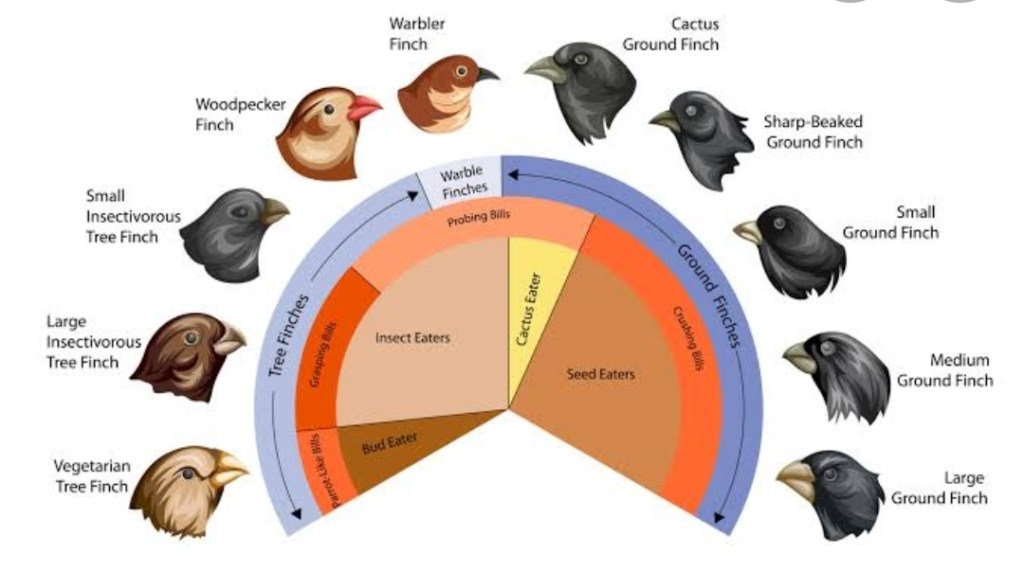
During his journey Darwin went to Galapagos Islands. There he observed an amazing diversity of creatures. Small black birds later called Darwin’s Finches amazed him. He realised that there were varieties of finches in the same island.

From the original seed-eating features , many evolved on the island itself. From the original seed-eating features, many other forms with altered beaks arose, enabling them to become insectivorous and vegetarian finches. This process is called adaptive radiation.

“The principle of adaptationism has been adopted so widely by Darwinians because it is such a heuristic methodology.”

“Adaptive radiation refers to the adaptation (via genetic mutation) of an organism which enables it to successfully spread, or radiate, into other environments.”

Adaptive radiation of marsupials

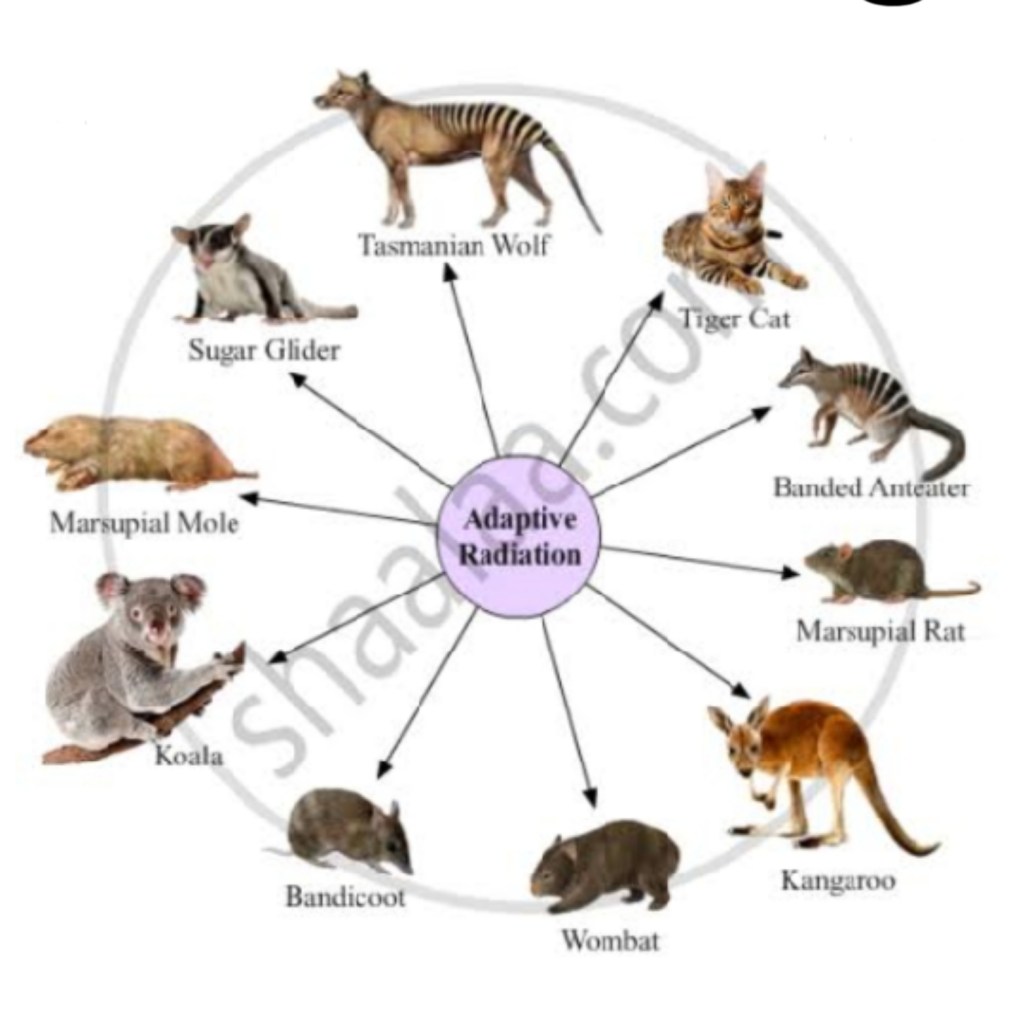
Darwin’s finches represent one of the best examples of this phenomenon. Another example if Australian marsupials. A number of marsupials, each different from the other evolved from an ancestral stock, but all within the Australian island continent.

When more than one adaptive radiation appeared to have occurred in an isolated geographical area( representing different habitats) , one can call this convergent evolution.

Placental mammals in Australia also exhibit adaptive radiation in evolving into varieties of such placental mammals each of which appears to be ‘similar’ to a corresponding marsupial.

Speciation is the development of one of multiple new species in the evolutionary process, where the original species produces mutated forms which successfully survive in other environments due to these mutations.”

“Phylogenetics is the study of the evolutionary steps a species has taken during the process of speciation.”

https://biologydictionary.net/adaptive-radiation/

https://www.sparknotes.com/biology/evolution/speciation/section3/

Longest running light bulb since 1901: The case of Planned Obsolescence

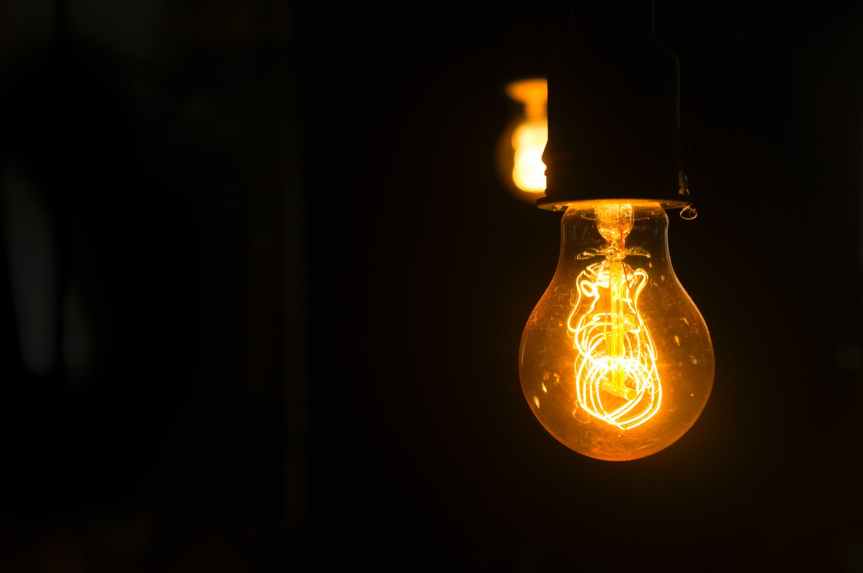
Centennial Light is the longest-running electric light bulb on record. It has been running continuously since 1901 and it has never been switched off. It is located in Fire Station 6 in Livermore, California. The ordinary dim light bulb looks like any other bulb and there is also a camera that live-streams the light bulb onto the internet.

Link for the official website and live webcam of the light bulb.

http://www.centennialbulb.org/photos.htm

It was manufactured in the late 1890s by the Shelby Electric Company, of Ohio, using a design by the French-American inventor Adolphe Chaillet. It has operated for over 100 years with very few interruptions. In 2011, it passed a milestone: One million hours of near-continuous operation. In 2015 it was recognized by Guinness World Records as the world’s longest-burning bulb.

The 60-watt bulb uses a carbon filament. One of the reasons for its longevity is that it seems to have an incredibly durable vacuum seal. There have been some researches done on bulbs manufactured by Shelby Electric Company of that era. But no one really exactly knows how these eternal bulbs were made as they were experimenting with various but the company was experimenting with a variety of designs at the time.

The electric model was quite different when first homes in The U.S had electricity. The servicing was the responsibility of the electric companies and customers would purchase entire electrical systems manufactured by a regional electricity supplier. The companies would also take care of the installation and servicing of any burned out electric bulbs would be replaced for free.

It made more logic for the suppliers to manufacture bulbs that would last longer and would burn out as least as possible. But this business model was later replaced and homeowners were responsible to change the light bulbs. It was soon realized that it would be more profitable to make cheaper bulbs that burned out faster. Since the mid-1900s goods were manufactured with a pre-determined expiry date aimed at forcing consumers into repeat purchases. This phenomenon has only been exacerbated in recent years. This can also be called planned obsolescence.

In 1924, the life span of the light bulbs was at least 2,500 hours. Phoebus cartel was formed in 1925 in Geneva. It comprised of the major incandescent light bulbs manufacturers at that time: Osram, General Electric, Associated Electrical Industries, and Philips. The cartel had directed their engineers to cut the life of the bulbs to 1,000 hours, which the engineers did by adjusting voltage and current. The cartel was intended to operate for 30 years but it was starting to fall apart in the early 1930s after General Electric patents expired and as the cartel faced competition from non-member manufactures from other regions. The cartel ceased its operations after the outbreak of World War II in 1939.

Planned obsolescence is a very critical area it does not only decrease the lifespan of the good but as a consequence, it is also wasteful. It is not sustainable for the environment and the main focus of this practice is to maximize profits. It also reminds us that technological innovations are often not accessible in favor of corporate greed.

References:

Excess Irrigation Over North India Shifting Monsoon Towards North West – report

Excess Irrigation Over North India Shifting Monsoon Towards North West

According to a report of climate researchers, heavy irrigation in north India could be the reason for shifting monsoon to the North West part of the subcontinent, increasing the land temperature in central India. These meteorological threats may lead to crop failure.

One of the chief causes of monsoons is the difference between annual temperature trends over land and sea. As peddy irrigation in North India starts way before the monsoon, the irrigated land remains flooded with water during this time. As the water evaporates, land tends to cool during the period of August-September.

It’s known that air travels from a high-pressure zone to a low-pressure zone. (Gravity plays the role here)

Low pressure is associated with rising air and high pressure associated with sinking air. Thus, when the land is hotter than the sea, the pressure difference is created.

Air carrying water vapours from the high-pressure zone travels to the low-pressure zone resulting in rising air which is linked to cloud formation that causes rain.

Notwithstanding the previous pattern, the sinking air is unlikely to travel north due to cooling; rather it goes toward the northwest region which is hotter than North India.

These hazardous trends and shifting the monsoon could pose great threats not only to the farmers but also to the people living there. Excessive irrigation can lead to water scarcity that needs to be debated.

HYMENOPTERA

Classification

Kingdom: Animalia 

  Phylum : Arthropoda 

    Class: Insecta (Endopterygota) 

      Sub-class : Pterygota 

         Order:Hymnoptera 

Hymenoptera

Hymenoptera means membrane wings. 

One of the largest insect order. 

Size range – 0.21nm(0.008inch)-5cm(2inch) in length. 

Usually 4 membranous wings

  • Forewing and hindwing are held together by small hook. 
  • Hind pair smaller than front pair

Complete metamorphosis (Holometabolous).

Mouthparts modified for chewing and sucking

In some form especially bees, certain Mouthparts (labium and maxillae) form a structure for sucking liquid food. 

Antennae usually with 10 or more segment. 

Larvae usually maggot like(i.e. Leg less) 

Large compound eyes, usually 3 simple eyes(ocelli) present. 

Females typically have a special ovipositor for inserting eggs into host or places that are otherwise inaccessible.

Most have constriction between the first 2 segment of the abdomen which is known as a wasp waist. 

Worldwide there are over 100,000 species included in the Hymenoptera. 

In Australia, there are about 1275 ant, 10,000 wasp, 2000 bee and 176 sawfly species.

Habitat

Found in all terrestrial habitat throughout Australia. 

May occur in soil, leaf litter and range of vegetation types especially flowers. 

Life Cycle

Some female produce young one without mating, while other can store sperms and spread out their egg laying to coincide with available food. 

Most species lay their egg to the host plant or paralysed food sources they have gathered into specially constructed nest. 

The Larvae will moult several times before they pupate.

Development may range from a few weeks for some parasitoid to much longer in social species. 

Feeding Habit

Feed on a wide range of foods depending on the species. 

Adult wasp mostly feed on nectar and honeydew. 

Some species are predator or parasites and spend their time searching out invertebrate hosts to lay their eggs on. 

Some are predator, scavenger, omnivores, seedeaters, fungus feeders or honeydew feeders

Suborder of hymenoptera :

1)  Symphyta(sawflies and horntails) 

2)Apocrita(ants, bees and wasps) 

Symphyta :(sawflies)

Most primitive Hymenoptera 

Have a broad junction between thorax and abdomen. 

Body has no waist. 

Paraphyletic group 

Females have a saw-like egg laying device for cutting slits in plants into which eggs are laid. 

Larvae are caterpillar-like and feed on outside and inside of plant tissue.

There are one or two parasitic families

lack of constriction at the base of the abdomen

 fly-like appearance and more extensive wing venation. 

They are often confused with lepidopteron larvae but it include–six or more pair of abdominal prolegs(which lack chrochet ), one lateral ocellus on each side of head. 

Apocrita :(wasps,bees,ants)

The body has a distinct waist. 

The first segment of the abdomen is incorporated into the thorax. A narrow region called the petiole joins this to the rest of the abdomen, called the gaster.

Characterized by Larvae that feed on other Arthropods. 

The larvae are maggotlike.

Have narrow junction between thorax and abdomen. 

Contain largest no. of species. 

Node is usually present. 

Further divided into:- Terebrantia(parasitica) which use their ovipositor for egg laying and the Aculeata, which have the ovipositor modified as a sting. 

Reference

australian.museum

ento.csiro.au

Projects.ncsu.edu

tolweb.org

britannica.com 

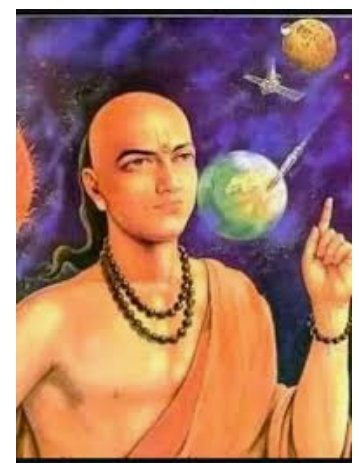
Aryabhatta

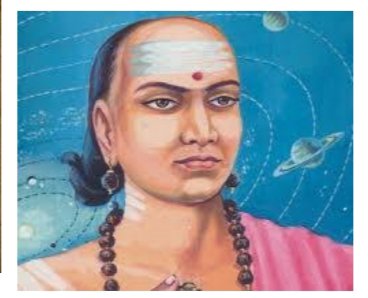
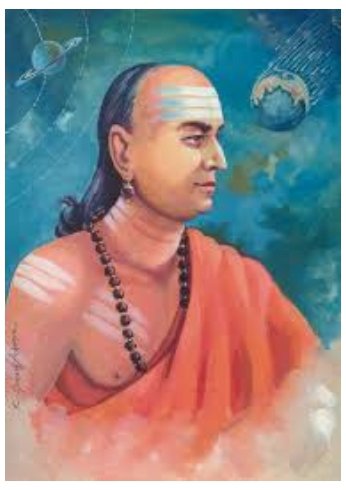
Aryabhatta (476–550 CE) was the first of the major mathematician-astronomers from the classical age of Indian mathematics and Indian astronomy.

Aryabhatta mentions in the Aryabhatiya that it was composed 3,600 years into the Kali Yuga, when he was 23 years old. This corresponds to 499 CE, and implies that he was born in 476.

Aryabhatta provides no information about his place of birth. The only information comes from Bhaskara I, who describes Aryabhatta as asmakiya, “one belonging to the Asmaka country.” During the Buddha’s time, a branch of the Asmaka people settled in the region between the Narmada and Godavari rivers in central India; Aryabhatta is believed to have been born there.

It is fairly certain that, at some point, he went to Kusumapura for advanced studies and lived there for some time. Both Hindu and Buddhist tradition, as well as Bhaskara I (CE 629), identify Kusumapura as Pataliputra, modern Patna. A verse mentions that Aryabhatta was the head of an institution (kulapa) at Kusumapura, and, because the university of Nalanda was in Pataliputra at the time and had an astronomical observatory, it is speculated that Aryabhatta might have been the head of the Nalanda university as well. Aryabhatta is also reputed to have set up an observatory at the Sun temple in Taregana, Bihar.

Therefore, it would make great sense that this was where he would have invested a great deal of time learning to be a great astronomer. There were not exactly scores of other opportunities for him to take advantage during the classical era as institutions in which to learn astronomy were likely very limited.

Aryabhatta is the author of several treatises on mathematics and astronomy, some of which are lost. His major work, Aryabhatiya, a compendium of mathematics and astronomy, was extensively referred to in the Indian mathematical literature and has survived to modern times. The mathematical part of the Aryabhatiya covers arithmetic, algebra, plane trigonometry, and spherical trigonometry. It also contains continued fractions, quadratic equations, sums-of-power series, and a table of sines.

Aryabhata gave the world the digit “0” (zero) for which he became immortal.

The Aryabhatiya was a well-constructed work that covered many different facets of mathematics and astronomy. Portions of the work were quoted in other works and this has allowed it to avoid becoming lost. Within the mathematics portion of the work, a great deal was written about high level math topics.

There are 108 verses in the text and the style of writing is very tight and direct. It can be said the work is written in a manner not dissimilar from the sutra literature crafted at the time. Within the work, information is revealed about the table of sines, progressions in geometry and arithmetic, the relationship of time, the positions of the planets, and insights into celestial spheres. To a great extent, the work was many years ahead of its time. Both thought-provoking and introspection inducing, anyone interested in the subjects of math and astronomy would find it worth reading.

As with many of the great astronomers in history, Aryabhata promoted the notion the earth spun on its own axis and the sun revolved around the earth and not the other way around. This belief is known as heliocentrism and it was deemed a heresy in most parts of the world until well past the Middle Ages.

Aryabhatta is believed to have died around 550 A.D. He has left an amazing legacy to be sure. A great many modern mathematicians and astronomers look towards his early work for inspiration.

SPACE RASPBERRIES AND RUM !

For the past few years, scientists have been studying a dust cloud near the centre of our Milky Way Galaxy. If there is a God out there, it seems that he decided to get creative – this dust cloud , named Sagittarius B2, smells of rum and tastes like raspberries… This gas cloud consists largely of ethyl formate. This large cloud is said to contain a billion , billion, billion liters of the stuff, which would be great , if it wasn’t rendered undrinkable by pesky particles like propyl cyanide. The creation and distribution of these more complex molecules is still a mystery to scientists. 

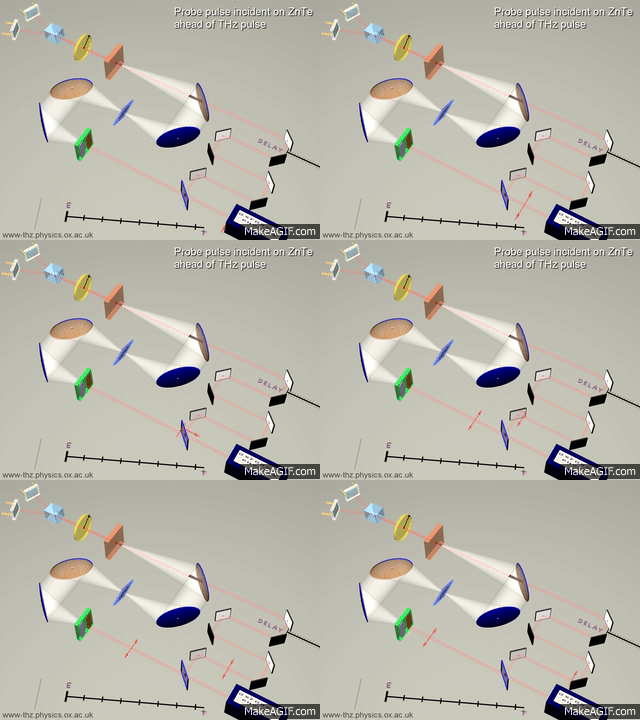
Energy-harvesting design aims to turn high-frequency electromagnetic waves into usable power

Device for harnessing terahertz radiation might help power some portable electronics.

Terahertz waves are pervasive in our daily lives, and if harnessed, their concentrated power could potentially serve as an alternate energy source. Imagine, for instance, a cellphone add-on that passively soaks up ambient T-rays and uses their energy to charge your phone.

Terahertz waves are electromagnetic radiation with a frequency somewhere between microwaves and infrared light. Also known as “T-rays,” they are produced by almost anything that registers a temperature, including our own bodies and the inanimate objects around us.

Terahertz waves are pervasive in our daily lives, and if harnessed, their concentrated power could potentially serve as an alternate energy source. However, to date there has been no practical way to capture and convert them into any usable form.

Now physicists at MIT have come up with a blueprint for a device they believe would be able to convert terahertz waves into a direct current, a form of electricity that powers many household electronics.

Their design takes advantage of the quantum mechanical, or atomic behavior of the carbon material graphene. They found that by combining graphene with another material, in this case, boron nitride, the electrons in graphene should skew their motion toward a common direction. Any incoming terahertz waves should “shuttle” graphene’s electrons, like so many tiny air traffic controllers, to flow through the material in a single direction, as a direct current.

The researchers have published their results today in the journal Science Advances, and are working with experimentalists to turn their design into a physical device.

“We are surrounded by electromagnetic waves,” says lead author Hiroki Isobe, a postdoc in MIT’s Materials Research Laboratory. “If we can convert that energy into an energy source we can use for daily life, that would help to address the energy challenges we are facing right now.”

Isobe’s co-authors are Liang Fu, the Lawrence C. and Sarah W. Biedenharn Career Development Associate Professor of Physics at MIT; and Su-yang Xu, a former MIT postdoc who is now an assistant professor chemistry at Harvard University.

Breaking graphene’s symmetry

Over the last decade, scientists have looked for ways to harvest and convert ambient energy into usable electrical energy. They have done so mainly through rectifiers, devices that are designed to convert electromagnetic waves from their oscillating (alternating) current to direct current.

Most rectifiers are designed to convert low-frequency waves such as radio waves, using an electrical circuit with diodes to generate an electric field that can steer radio waves through the device as a DC current. These rectifiers only work up to a certain frequency, and have not been able to accommodate the terahertz range.

A few experimental technologies that have been able to convert terahertz waves into DC current do so only at ultracold temperatures — setups that would be difficult to implement in practical applications.

Instead of turning electromagnetic waves into a DC current by applying an external electric field in a device, Isobe wondered whether, at a quantum mechanical level, a material’s own electrons could be induced to flow in one direction, in order to steer incoming terahertz waves into a DC current.

Such a material would have to be very clean, or free of impurities, in order for the electrons in the material to flow through without scattering off irregularities in the material. Graphene, he found, was the ideal starting material.

To direct graphene’s electrons to flow in one direction, he would have to break the material’s inherent symmetry, or what physicists call “inversion.” Normally, graphene’s electrons feel an equal force between them, meaning that any incoming energy would scatter the electrons in all directions, symmetrically. Isobe looked for ways to break graphene’s inversion and induce an asymmetric flow of electrons in response to incoming energy.

Looking through the literature, he found that others had experimented with graphene by placing it atop a layer of boron nitride, a similar honeycomb lattice made of two types of atoms — boron and nitrogen. They found that in this arrangement, the forces between graphene’s electrons were knocked out of balance: Electrons closer to boron felt a certain force while electrons closer to nitrogen experienced a different pull. The overall effect was what physicists call “skew scattering,” in which clouds of electrons skew their motion in one direction.

Isobe developed a systematic theoretical study of all the ways electrons in graphene might scatter in combination with an underlying substrate such as boron nitride, and how this electron scattering would affect any incoming electromagnetic waves, particularly in the terahertz frequency range.

He found that electrons were driven by incoming terahertz waves to skew in one direction, and this skew motion generates a DC current, if graphene were relatively pure. If too many impurities did exist in graphene, they would act as obstacles in the path of electron clouds, causing these clouds to scatter in all directions, rather than moving as one.

“With many impurities, this skewed motion just ends up oscillating, and any incoming terahertz energy is lost through this oscillation,” Isobe explains. “So we want a clean sample to effectively get a skewed motion.”

One direction

They also found that the stronger the incoming terahertz energy, the more of that energy a device can convert to DC current. This means that any device that converts T-rays should also include a way to concentrate those waves before they enter the device.

With all this in mind, the researchers drew up a blueprint for a terahertz rectifier that consists of a small square of graphene that sits atop a layer of boron nitride and is sandwiched within an antenna that would collect and concentrate ambient terahertz radiation, boosting its signal enough to convert it into a DC current.

“This would work very much like a solar cell, except for a different frequency range, to passively collect and convert ambient energy,” Fu says.

The team has filed a patent for the new “high-frequency rectification” design, and the researchers are working with experimental physicists at MIT to develop a physical device based on their design, which should be able to work at room temperature, versus the ultracold temperatures required for previous terahertz rectifiers and detectors.

“If a device works at room temperature, we can use it for many portable applications,” Isobe says.

He envisions that, in the near future, terahertz rectifiers may be used, for instance, to wirelessly power implants in a patient’s body, without requiring surgery to change an implant’s batteries.

“We are taking a quantum material with some asymmetry at the atomic scale, that can now  be utilized, which opens up a lot of possibilities,” Fu says.

This research was funded in part by the U.S. Army Research Laboratory and the U.S. Army Research Office through the Institute for Soldier Nanotechnologies (ISN).

THE EXCRETORY SYSTEM

Excretion

Removal of nirogenous waste produce during metabolism of protein and nucleic acid.

Human excretory system includes:-
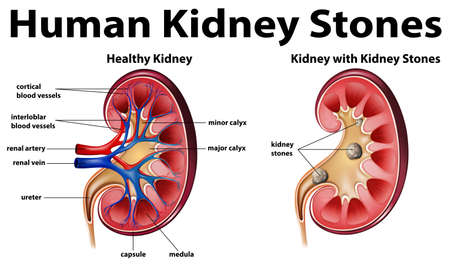
Pair of kidney
Pair of ureter
Urinary bladder
Urethra

Function of kidney

Kidneys regulate the osmotic pressure of a mammal’s blood through extensive filtration and purification, in a process known as Osmoregulation.

  • Kidneys filter the blood; urine is the filtrate that eliminates wastes from the body via the ureter into the urinary bladder.
  • The kidneys are surrounded by three layers:
    1.  Renal fascia
    2. perirenal fat capsule
    3. Renal caps

EXTERNAL ANATOMY

A typical adult kidney (mass – 135–150 g) is:

10–12 cm- long
5–7 cm – wide
3 cm cm- thick

  • The concave medial border of each kidney faces the vertebral column. 
  • Near the centre of the concave border is an indentation called the Renal hilum, through which the ureter emerges from the kidney along with blood vessels, lymphatic vessels and nerves.
  • Human kidney are Retroperitoneal(covered with peritoneum) 
  • Present between 12th thoracic vertebrae to 3rd lumber vertebrae. 
  • Left kidney is higher than the right kidney due to position of liver in right side. 

Three layers of tissue

a) .The Renal capsule(Deep layer) – Smooth, transparent sheet of dense irregular connective tissue that is continuous with the outer coat of the ureter.

  •  It serves as a barrier against trauma and helps maintain the shape of the kidney. 

b) The adipose capsule (middle layer) – Mass of fatty tissue surrounding the renal capsule. 

  •  Protects the kidney from trauma and holds it firmly in place within the abdominal cavity.

c) The renal fascia(superficial layer) – Thin layer of dense irregular connective tissue 

  •  Anchors the kidney to the surrounding structures and to the abdominal wall 

On the anterior surface of the kidneys, the renal fascia is deep to the peritoneum

Internal anatomy

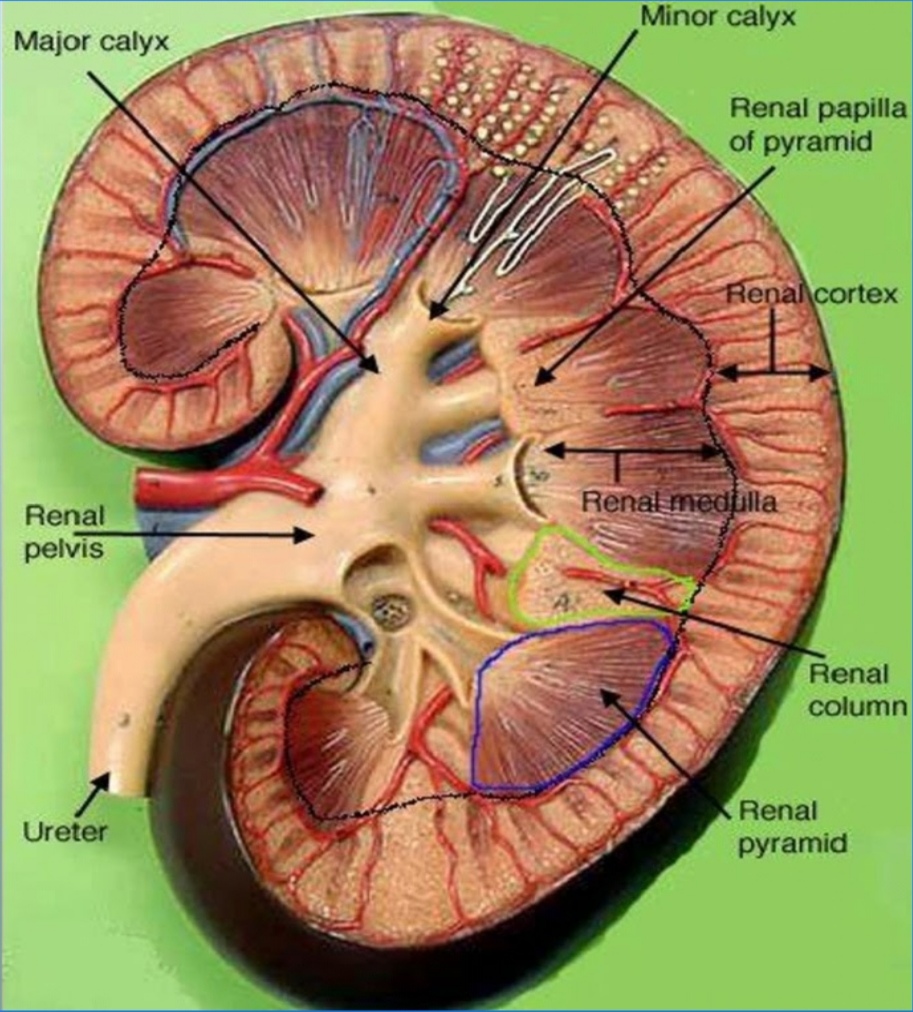
A frontal section through the kidney reveals two distinct regions: 

  1.  Renal cortex (outer)
  2.  Renal medulla (inner). 

The renal medulla consists of several cone-shaped renal pyramids. 

The base (wider end) of each pyramid faces the renal cortex, and its apex (narrower end), called a renal papilla, points toward the renal hilum. 

The renal cortex, smooth textured area extending from the renal capsule to the bases of the renal pyramids. 

It is divided into an outer cortical zone and an inner juxtamedullary zone.

Ureter

Muscular tubes of 25-30cm length, 3m in diameter. 

Wall of Ureter

  • Innermost-Transitional epithelium
  • Middle layer-Muscular(longitudinal and circular muscle) 
  • Outermost layer – Tunica adventita. 

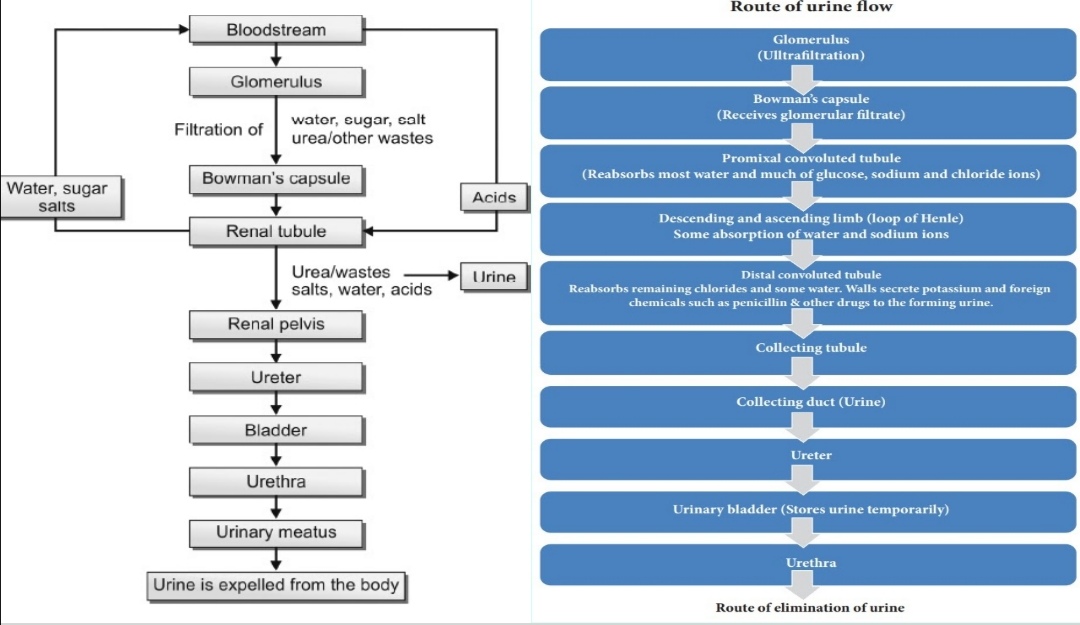
Urine is move through ureter by peristalsis.

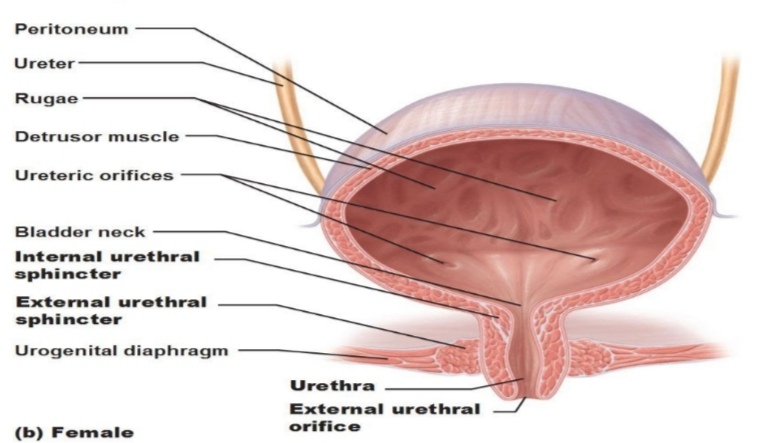
Urethra conduct the urine from urinary bladder to outside.
Female urethra is short.
Male urethra is long.


Urinary bladder

It is hollow muscular organ  that stores urine from the kidneys before disposal by urination. 

In humans the bladder is a hollow distensible organ that sits on the pelvic floor

Nephron

Structure and functional unit of kidey.

Each kidney contain about 1 million nephron 

Each nephron has 2 part 

  • Glomerulus
  • Renal tubules.
  • Take a simple filtrate of the blood and modify it into urine.
  • Cleanse the blood and balance the constituents of the circulation.
  • Many changes take place in the different parts of the nephron before urine is created for disposal. 
  • The term urine will be used here after to describe the filtrate as it is modified into true urine. 
  • The principle task of the nephron population is to balance the plasma to homeostatic set points and excrete potential toxins in the urine.

RENAL CORPUSCLE

It CONSISTS OF A GLOMERULUS SURROUNDED BY A BOWMAN’S CAPSULE. 

THE GLOMERULUS ARISES FROM AN AFFERENT ARTERIOLE AND EMPTIES INTO AN EFFERENT ARTERIOLE. 

THE SMALLER DIAMETER OF AN EFFERENT ARTERIOLE HELPS TO MAINTAIN HIGH BLOOD PRESSURE IN THE GLOMERULUS.

THE BOWMAN’S CAPSULE IS DIVIDED INTO THREE LAYERS:

  • OUTER PARIETAL LAYER- MADE UP OF EPITHELIAL CELLS WITH MINUTE PORES OF DIAMETER 12NM.
  • MIDDLE BASEMENT MEMBRANE-IT IS SELECTIVELY PERMEABLE.
  • INNER VISCERAL LAYER-IT CONSISTS OF LARGE NUCLEATED CELLS CALLED PODOCYTE(BEAR FINGER-LIKE PROJECTIONS CALLED PODOCEL) 

Renal tubule

It IS A LONG AND CONVOLUTED STRUCTURE THAT EMERGES FROM THE GLOMERULUS 

IT CAN BE DIVIDED INTO THREE PARTS BASED ON FUNCTION:-

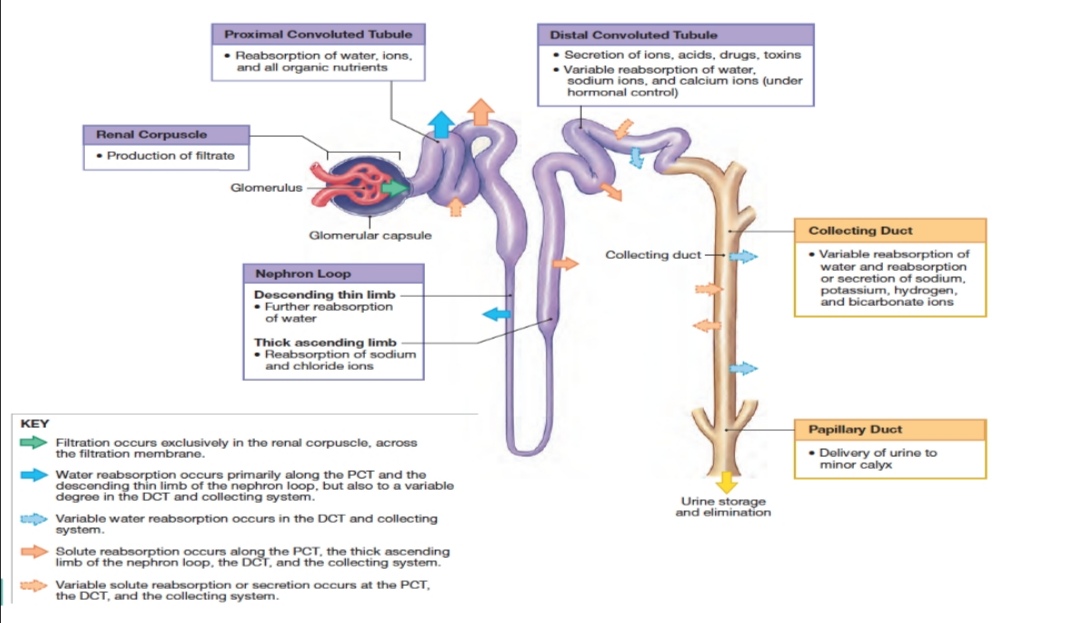
  1.  PROXIMAL CONVOLUTED TUBULE (PCT) –  IN THE RENAL CORTEX.
  2.  THE LOOP OF HENLE, OR NEPHRITIC LOOP – IT FORMS A LOOP (WITH DESCENDING AND ASCENDING LIMBS) THAT GOES THROUGH THE RENAL  MEDULLA.
  3. DISTAL CONVOLUTED TUBULE (DCT)- IN THE RENAL CORTEX.

Loop of Henle

Thick segment-Simple cuboidal epithelium
Thin segment-Simple squamous epithelium.

DCT

Distal  convoluted tubules

Cuboidal epithelium with fewer mitochondria and microvilli

  • Conditional reabsorption of water under the effect of ADH.
  • Na+ – Aldesteron
  • Ca²+ – parathyroid hormone
  • Reabsorption ofHCO3¯and secretion of H+, K+and NH3 to maintain pH. 

Collecting duct

Cuboidal epithelium

Conditional reabsorption of water, Na+, Ca²+. 

Permeability for urea 

PCT

⅔rd of water reabsorption and 60% of glomerular filtrate is reabsorbed. 

Water, Na+, Cl-, HCO3-, Glucose, vit. C, amino acid, K+and little amount of urea and uric acid.

Descending Limb-permeable to water only. 

Ascending Limb– permeable to ions only. 

Na+, Cl-, k+, Mg²+, Ca²+

Reabsorption is minimum. 

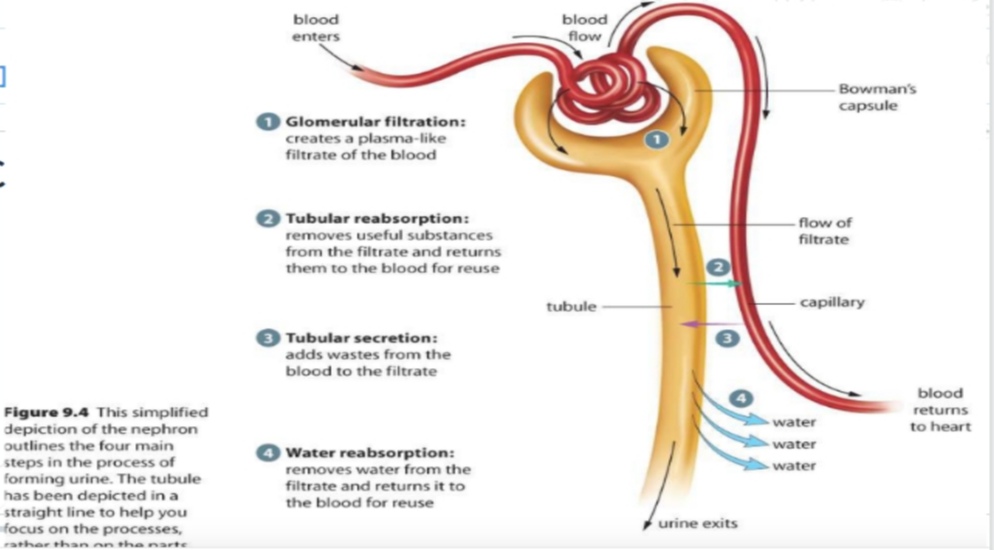
Urine formation

1) Glomerular filtration
2) Tubular reabsorption
3) Tubular secretion

Glomerular filtration 

  • WATER AND SOLUTES ARE FORCED THROUGH THE CAPILLARY WALLS OF THE Glomerulus INTO THE BOWMAN’S CAPSULE (GLOMERULARCAPSULE)
  • FILTRATE –THE FLUID THAT IS FILTERED OUT INTO BOWMAN’S CAPSULE. 
  • Glomerulus filtrate-same as plasma but protein are absent. 

Contains-Water, ions, Glucose, amino acid, water soluble vitamin, urea, uric acid etc. 

Tubular reabsorption

OCCURS BOTH PASSIVE AND Actively. 

GLUCOSE, AMINO ACIDS, AND OTHER NEEDED IONS (NA, K, CL, CA, HCO3) ARE TRANSPORTED OUT OF THE FILTRATE INTO THE PERITUBULAR CAPILLARIES ( REABSORBED BACK INTO THE BLOOD)

ABOUT 65% OF THE FILTRATE IS REABSORBED IN THE PCT. 

AS THESE SUBSTANCES ARE Reabsorbed, THE BLOOD BECOMES HYPERTONICSO WATER EASILY FOLLOWS BY OSMOSIS. 

REABSORPTIONIN THE DCT IS UNDER Hormonal CONTROL ALDOSTERONE CAUSES MORE SALT TO BE ABSORBED

 ADH CAUSES MORE WATER TO BE ABSORBED

TUBULAR SECRETION

WASTE PRODUCTS SUCH AS UREA AND URIC ACID, DRUGS AND HYDROGEN AND BICARBONATE IONS ARE MOVE OUT OF THE PERITUBULARCAPILLARIES INTO THE FILTRATE; THIS REMOVES UNWANTED WASTES AND HELPS REGULATE PH

Urine

It is pale yellow in colour due to Urochrome pigment that is byproduct of red blood corpuscles(RBC) breakdown. 

Around 1-1.5 litre of urine is formed per day. 

PH =6 (vary 4.2 – 8.2) 

It can be four times as concentrated as the blood i. e-1200mosmol/L.

Heavier than water

  • contain
  • 95% =water
  •  5%= urea, uric acid, K+, H+, NH4+, sulphate, hippuric acid, oxalate


Veggie Licious!

You may hate them or love them, but you certainly can’t dismiss the importance of vegetables and other vegetarian ingredients in your daily diet. Take a look at some exotic food that are slowly finding their way into Indian homes and restaurants…..


Couscous
Couscous is crushed durum wheat semolina formed into small granules or spheres. It’s commonly served in North African, Moroccan, Tunisian, and Algerian cuisine. It’s a protein rich food.


Brussels sprouts
The Brussels sprout is a member of the Gemmifera Group of cabbages, grown for its edible buds. The leaf vegetables are typically 1.5–4.0 cm in diameter and resemble miniature cabbages. The Brussels sprout has long been popular in Brussels, Belgium, from which it gained its name. These sprouts are rich in Vitamins K, C, B and B6, as well as other minerals. These also have anti cancer properties.


Arugula
Arugula or rocket is an edible annual plant in the family Brassicaceae used as a leaf vegetable for its fresh, tart, bitter, and peppery flavor. It is written Vitamin C and potassium, the flowers and seeds of this plant can also be eaten. Arugula can be eaten raw in salads or prepared in diverse ways of Mediterranean European and Turkish dishes. Peak season of this green leafy vegetable is early springs and fall.


Bok choy
It’s a type of Chinese cabbage. Chinese’s varieties do not form heads and have green leaf blades with lighter bulbous bottoms instead, forming a cluster reminiscent of mustard greens. Chinese’s varieties are popular in southern China, East Asia, and Southeast Asia. It tastes like, spinach with very mild bitterness. Bok choy is rich in Vitamin A, C and also has cancer prevention compounds.


Kale
Kale, or leaf cabbage, belongs to a group of cabbage cultivars grown for their edible leaves, although some are used as ornamentals. Kale plants have green or purple leaves, and the central leaves do not form a head. Kale is the powerhouse of nutrients as it is rich in Calcium, Vitamin K, Vitamin C and beta carotene. Kale has been known to block the growth of cancerous ces and can also lower cholesterol levels.


Zucchini
The zucchini, courgette or baby marrow is a summer squash, a vining herbaceous plant whose fruit are harvested when their immature seeds and epicarp are still soft and edible. It is high in Vitamin A and potassium. It is extremely low on calories so wait watchers, you can have a new friend. Zucchini is used in Turkish, Mexican, French and Italian cooking.


Quinoa
Quinoa, a grain, is native you to South American regions. It’s a good source of Vitamin B, B6 and E, along with zinc, iron, potassium and magnesium. Cooked quinoa consists of 71.6% water, 21.3% carbohydrates, 4.4% protein, and 1.92% fat. One cup (185 grams) of cooked quinoa contains 222 calories.

Dill
Dill is an annual herb in the celery family Apiaceae. It is the only species in the genus Anethum. Dill is grown widely in Eurasia, where its leaves and seeds are used as an herb or spice for flavouring food. Dill has antibacterial and antimicrobial qualities.


Oregano
Oregano is native to the hills of the Mediterranean countries and western Asia and has naturalized in parts of Mexico and the United States. The herb has long been an essential ingredient of Mediterranean cooking and is widely used to season many foods. With visas gaining acceptance in Indian culinary scene, Oregano has become synonyms with the little sachets of toppings one can use. It also has antifungal properties.

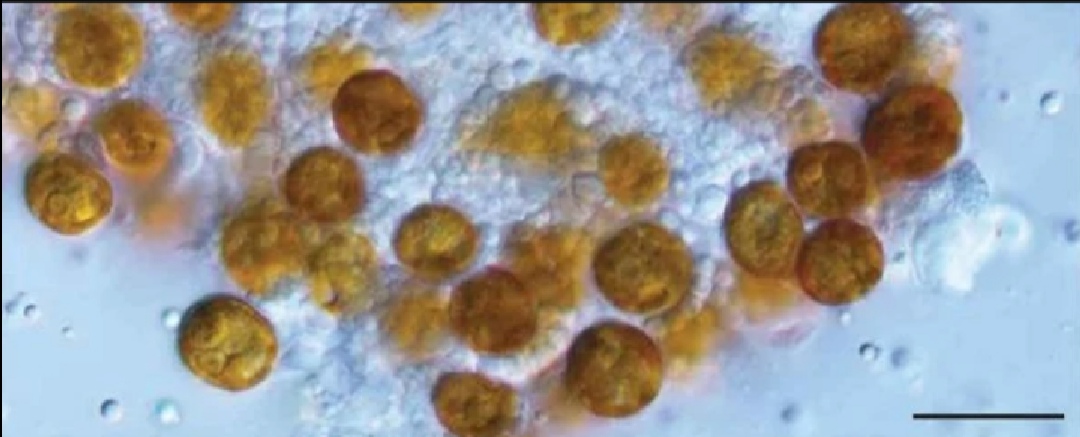
After 140 Years, Biologists Have ‘Resurrected’ The Genus of These Weird Yellow Cells

Deep in the tissues of sea anemones, corals, and jellyfish are strange yellow cells which are genetically distinct from the marine animals.

More than a century after these cells were first assigned a now forgotten genus, a new paper has resurrected the name and described six new species from around the world.https://7ebdf40ca650dbb49550c30c7626f99f.safeframe.googlesyndication.com/safeframe/1-0-38/html/container.html

“Because our team comprises scientists from seven countries, we were able to collect all of these samples, and some during the global pandemic,” said lead author of the study, biologist Todd LaJeunesse from Penn State University.

“This study highlights how the spirit of scientific discovery brings people together, even in times of hardship.”

First described in 1881, the yellow things were originally classified under the genus Zooxanthella by scientist Karl Brandt. Brandt also coined the term zooxanthellae, which is used colloquially to this day.

However, another scientist – a Scotsman called Patrick Geddes – was investigating these yellow cells at the same time. In 1882, without having seen Brandt’s work, Geddes discovered that not only were the cells separate from the animals they were within (something Brandt had also established), but that they were beneficial, acting as mutualistic symbiotes.

The genus Geddes established to categorize these cells was Philozoon, from the Greek words for ‘to love as a friend’ and ‘animal’. Unfortunately, Brandt came first, so the Philozoon genus was never used; Geddes switched to work in urban planning, and the newly named genus was largely forgotten.null

We are now well aware that these odd microorganisms Geddes and Brandt worked on back in the day are photosynthetic dinoflagellates – single-celled algae found in symbiosis with other marine life, such as corals – under the family Symbiodiniaceae.

In the new study, researchers took a closer look at these yellow cells, using genetic data, geographical data and morphology to analyze where exactly they should sit in the genetic tree.

And after determining that these creatures need to be put into a new genus, the team pulled the genus Philozoon out of retirement for two old species and six new ones.

“We emend the genus Philozoon Geddes and two of its species, P. medusarum and P. actiniarum, and describe six new species,” the team wrote in their paper.

“Each symbiont species exhibits high host fidelity for particular species of sea anemone, soft coral, stony coral and a rhizostome jellyfish.” 

The team wrote that Philozoon are found in shallow, temperate marine habitats around the world, including the Mediterranean Sea, eastern Australia, New Zealand, and Chile.

“Since most of the algae in the family Symbiodiniaceae have been thought to be mostly tropical where they are critical to the formation of coral reefs, finding and describing these new species in cold waters highlights the capacity of these symbioses to evolve and live under a broad range of environmental conditions,” explains LaJeunesse.

“Life finds a way to persist and proliferate.”

The research has been published in the European Journal of Phycology.

SPACE DEBRIS

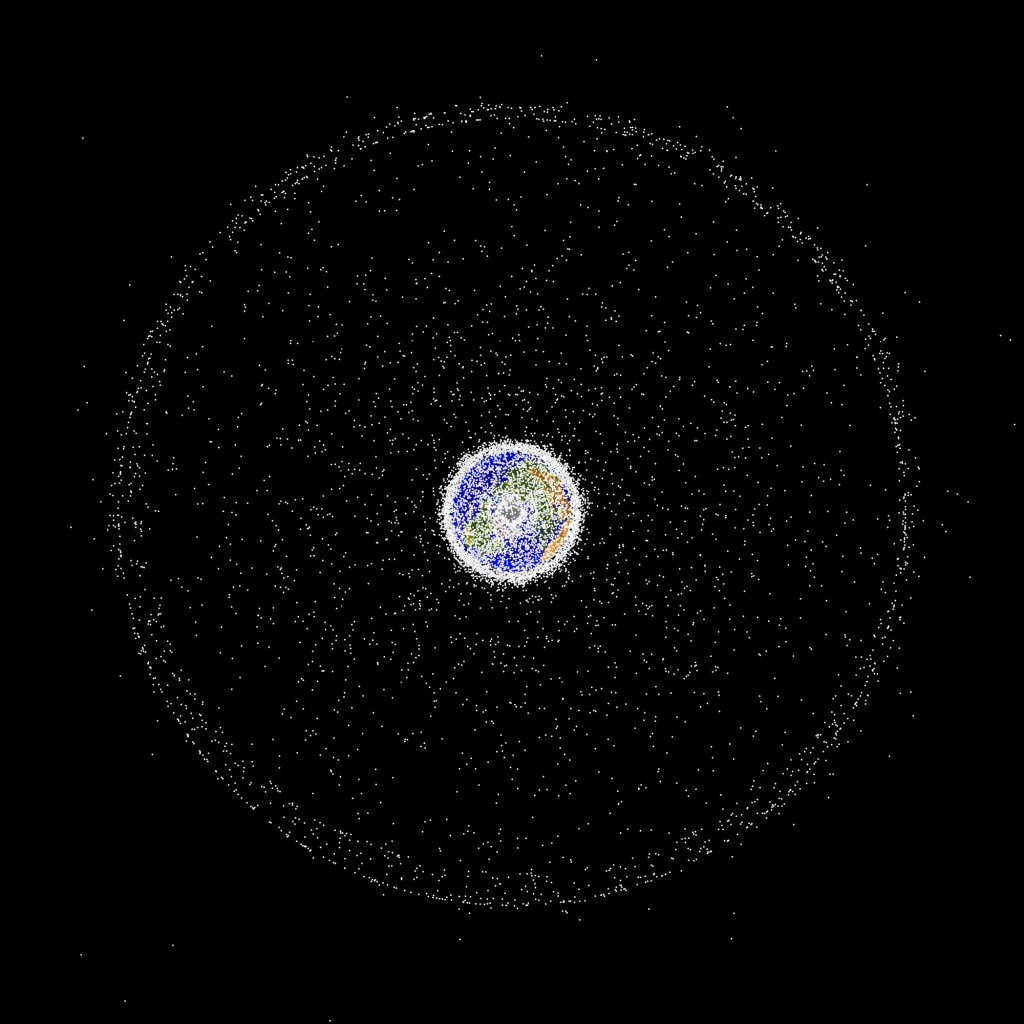
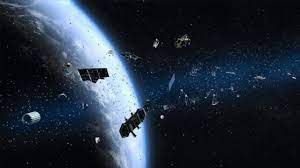
Space debris is the combination of natural(meteoroid) and artificial(man-made) particles. Natural debris orbits around the sun and artificial debris orbits around the earth. Hence they are called Orbital Debris. This can be any man-made object in the orbit moving in the earth’s orbit. Such debris includes nonfunctional spacecraft, abandoned launch vehicle stages, mission-related debris, and fragmentation debris.

In this article, we are going to focus on Artificial Debris, the Reason for its cause, and its prevention.

Space debris

What is Artificial space debris?

Any non-functional man-made object in space is called Artificial debris. 

They come from 

  • Satellites and spacecraft which are failed.
  • Satellites whose life has ended.
  • Rocket dismantle stages during the launch.
  • Hardware like nuts, bolts, payload covers, etc.
  • Solid propellant slag.
  • Cast aways during space activities like human wastes.
  • Fragments due to battery explosions, collisions, etc.

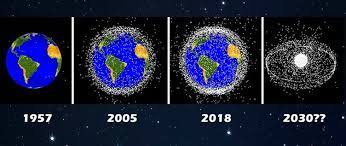
When two satellites collide they produce thousands of particles that are dangerous and can cause further destruction which makes Earth’s orbit unfit for satellite launches.

Artificial means man-made satellites

The number of satellite and rocket launches as of April 2021 is given below:

Number of rockets launched(excluding failures) since 19575560
Number of satellites carried by rockets launched11139
Number of satellites still in space7389
Number of satellites still functioning3170

Let’s have a look at the number of satellites launched only in 2020 and 2021(April)

Satellites launched in 20201283
Satellites launched in 2021 (April)853(65% of 2020)

History

In the year 2009, 19,000 debris over 5 cm in size were tracked. 

In July 2013, more than 170 million debris smaller than 1 cm(0.4), around 670,000 debris of 1 to 10 cm in size, and approximately 29,000 larger debris were detected.

By July 2016, nearly 18,000 artificial debris were orbiting the earth.

In October 2019, nearly 20,000 artificial objects including 2,218 were tracked.

The speed with which the debris travel is more than 28,000 kph(23 times the speed of sound).

Have you heard of Kessler syndrome?

NASA scientist Donald Kessler in 1978, proposed that more launches could increase the junk around the earth which results in the chain reaction of collision of objects in space and further making the earth’s orbit unfit for satellites.

This situation would be extreme, but some experts worry that a variant of this could be a problem one day, and precautionary steps should be taken to avoid the problem.

How do they track space debris?

The USA and Russia have set up tracking networks to monitor the orbital space object population. The European Union is also starting to develop its ways to track debris.

Powerful lasers are used to measure the distance of these objects, like radar or sonar. When a laser beam hits the debris and bounces back to Earth, ground crews can measure how long it takes to figure out where they are and where they are going it alerts the ground stations in case of collisions. But usually, laser technology is used to detect the movement of satellites and if the same technique is used to detect the debris then continuous monitoring should be there since debris are found randomly in space.

Detection of objects through laser technology

India’s status on tracking debris

NETRA(Network for space Objects, Tracking, and Analysis)

Till now, ISRO was dependent on NORAD(North America Aerospace Defense Command) data,

which is available in the public domain, to keep track of space debris and monitor our active and passive satellites. However, this global data is not accurate but NORAD keeps accurate data available for those who are members of its network. Therefore, ISRO cannot access the data.

But now, ISRO has decided to set up telescopes and radars in four corners of the country to get accurate data and avoid unwanted collisions of the satellites.

In September 2019, India launched the early warning system NETRA to secure satellites and other assets in space.

Can satellites be protected from space debris?

There are two ways in which the satellites and spacecraft can be protected:

  • Computer programs can search for possible collisions between large debris. This system is used in the International Space Station to detect. These operations are expensive and can disturb delicate experiments. Space tracking networks can only track objects more than 100 mm in size. Even a 10 mm object can cause big trouble this cannot be called 100% effective.
  • A debris shield can be designed to provide additional protection for a spacecraft. One way is to increase the thickness of the craft but that can increase the mass of the craft/satellite. Hence, a specially designed shield called the Wipple shield was used. It was made of two thin walls separated by some space. It was observed that this wall was more resistant to debris. The outer layer absorbs a lot of debris energy so that the inner wall is not punctured.
Protection of satellites through shields

Space debris Removal

Removing space junk, especially larger pieces before they fragment is not easy. The best way to do this is retarding the force and deorbiting the junk. When it drops in altitude less than 400 km above the earth it is burnt.

For years NASA, ESA, and other space agencies are studying debris removal technologies. Some of the ideas include the usage of nets to gather junk and robotic arm. Japanese are now developing a type of satellite that uses magnets to catch and destroy the debris. Last year, UK has successfully cast a net around a dummy satellite.

Clearspace one

Clearspace-1 will be the first space mission to remove debris from the Earth orbit, it was planned to launch in 2025. The technology demonstration satellite was first developed by the Swiss Federal Institute of Technology in Lausanne. 

Clearspace one

Many countries are trying to invent new technologies to reduce the threat of debris. Russia invented a Self Destroying Satellite. Australian researchers are developing the Hunter-Killer satellite to neutralize space junk. Finland has developed a Wooden Satellite and planning to launch this year.

credits to the right owners of the pictures used.

Why do Volcanoes Erupt?

You may have heard about the eruptions of volcanoes like Mount Vesuvius and Mount Tambora that devastated the land surrounding them and killed thousands of people living in their vicinity. However, not many of us stop to question why or how a volcano erupts in the first place. It is indeed not only an interesting, but also a useful bit of knowledge to have about one of the most fascinating natural phenomena that occur in our world.

What is the process?

We know that deep within the earth, the temperatures are extremely high. In fact, it is so hot that some rocks gradually start melting and become a thick flowing substance called magma. This melting takes place in the layer of the earth’s interior called the ‘mantle’. The mantle is the layer between the dense, superheated core and thin outer crust of the earth. The immense heat from the core melts the earth’s mantle and this melted rock (magma) begins its journey to the surface. The melting may happen where tectonic plates are pulling apart or when one plate is pushed down under another.

Magma being a lighter and more viscous substance than the rock surrounding it, starts rising to the top and collecting in areas known as magma chambers. As the magma rises, bubbles of gas also form inside it. Eventually, some of the runnier magma charges through any vents or fissures in the earth’s crust and gets released onto the surface as lava. Hence, magma that is released through volcanoes are then called lava, which flow in every direction away from the volcano to surrounding areas.

For the magma that is thicker in nature, the gas bubbles are not able to escape easily and the pressure starts building as the magma rises. When the pressure that is building reaches a point where it is too high for the earth’s surface to handle, an explosive eruption happens from the volcano. Such eruptions may also occur suddenly if the rocky surface above the magma has eroded over time, allowing the pressurized magma to easily burst through. Explosive eruptions are what often cause mass death and destruction, as the lava flows with much greater force and heat intensity. It can melt anything in its path, and most human creations will succumb to its natural power. The aforementioned bubbles, which are of undissolved water and sulphur, then burst with the intensity of a gunshot and release plumes of ash into the atmosphere. This ash can suffocate plants, animals and humans.

Another way eruptions happen is when water underneath the earth’s surface happens to come in contact with hot magma and creates steam. This may happen when ocean water is able to slip into the earth’s mantle and mingle with the magma. Over time, the rock strength of earth’s surface decreases as the pressure builds, and the steam can gradually build enough pressure to cause an explosion through the volcano.

It is important to highlight that some volcanic eruptions are explosive while others are not. As explained, it depends on the composition of the magma. If it is runny and gas is able to escape easily, lava will simply flow out. This is easy for people to avoid as it flows slowly and gives them time to move away. However, if magma is thick and gas cannot escape easily, pressure builds up until there is a violent explosion for it to escape. Magma blasts into the air, and lava flows at a greater speed for a greater distance. This is often unexpected and harder to escape from.

What is the role of Climate Change?

Geological studies have shown that human-induced climate change will most likely cause an increase in volcanic activity around the world. This is primarily because climate change has caused melting of glaciers in the earth’s crust. These glaciers have an impact on the flow of magma to the surface, and so melting glaciers may cause more magma eruptions. Basically, after glaciers are removed, the surface pressure decreases and the magma can more easily propagate to the surface and thereby erupt.

A team of researchers in the UK found that with the advancement of glaciers over time, there was diminishing volcanic activity. In turn, the team found that as the climate warmed up due to global warming and glaciers melted, there were more frequent and bigger eruptions. It has been found that even relatively minor climate changes may have an influence on this. Hence, it can be concluded that today’s global warming could mean more frequent, and even greater volcanic eruptions.

How crocodiles survived mass extinction ?

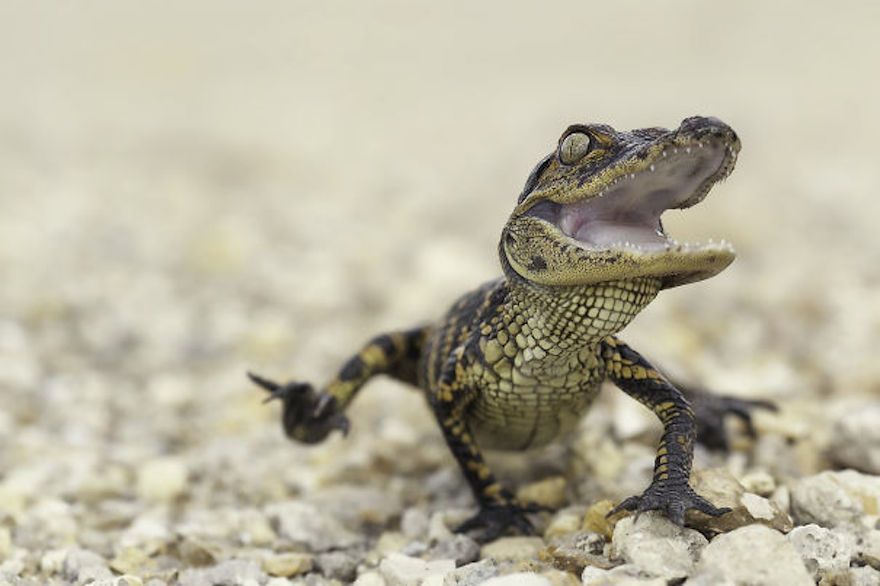
Crocodiles,by reading the name you would have picturised a massive creature with pointed teeth and a thick skin. The very appearance of them would terrify anyone. We can also call them as living relatives of dinosaurs but still it has always been a mystery on how crocodiles survived the extinction which wept out the entire dinosaurs. Crocodiles shares many common features with dinosaurs but they are different from one another and they have a distinct feature which allowed them to survive the mass extinction of dinosaurs.Though we can’t come up with a perfect conclusion still there are few amazing theories which leaves us wondering.


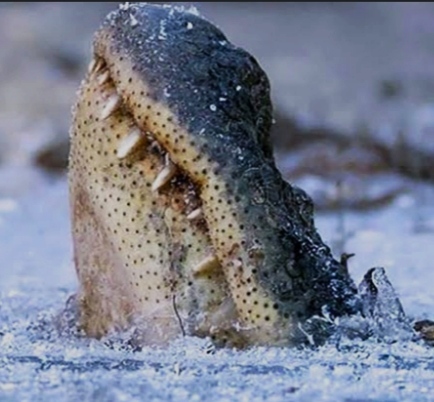
Crocodile show a slow metabolism which allows them to survive for months without food. They being cold blooded cannot generate own heat due to which they hibernate during colder periods. While hibernating they dig burrows in the side of river banks and go for a long sleep. This particular habit of them would have enabled them to withstand the climatic condition prevailed during the mass extinction. The period that followed the event of mass extinction brought a radical weather change which would have wiped of the remaining dinosaurs whereas crocodiles on the other hand had the ability to hibernate or go dormant adopted to the changes and survived the condition.


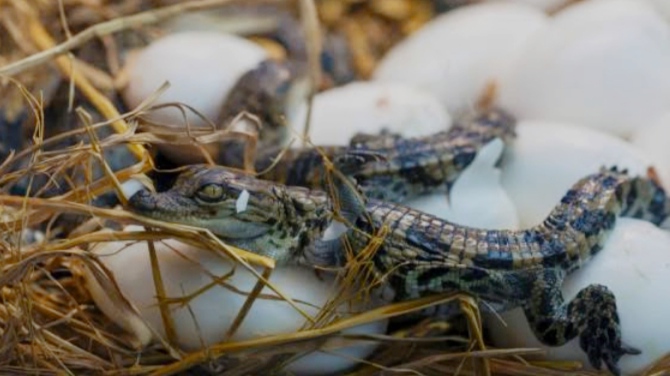
Another important characteristics of survival is in the process of reproduction. In this case the crocodiles gave rise to a large number of offsprings at a time whose young one takes quicker time to grow mature thus increases the possibility of survival.


They also have a strong immune system which enable them to fight against deadly diseases thus providing more anchorage to the survival process. They grow slowly and steadily in size adapting to the surrounding and availability of food which was not characteristic of the other creatures that lived during that age. Apart from all others features, crocodiles are smarter creatures which can be seen through the fact on how easily they can be tamed and trained. They understand the changing around them clearly and tend to adapt to it. All these factors together has assisted crocodiles to escape and thrive through the mass extinction.

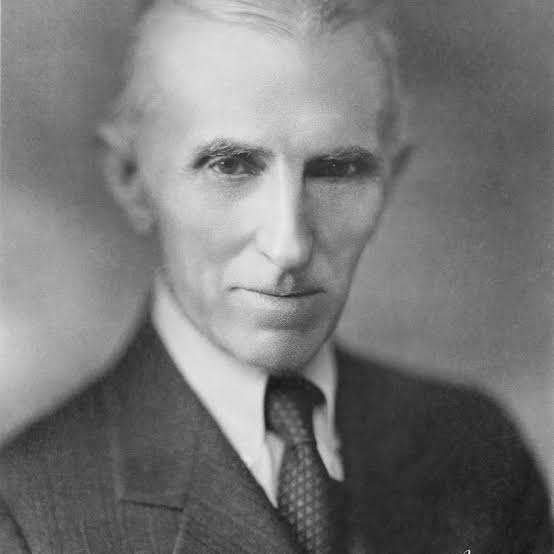
NIKOLA TESLA

Serbian-American engineer and physicist Nikola Tesla (1856-1943) made dozens of breakthroughs in the production, transmission and application of electric power. He invented the first alternating current (AC) motor and developed AC generation and transmission technology. Though he was famous and respected, he was never able to translate his copious inventions into long-term financial success—unlike his early employer and chief rival, Thomas Edison.

Nikola Tesla’s Early Years:

Nikola Tesla was born in 1856 in Smiljan, Croatia, then part of the Austro-Hungarian Empire. His father was a priest in the Serbian Orthodox church and his mother managed the family’s farm. In 1863 Tesla’s brother Daniel was killed in a riding accident. The shock of the loss unsettled the 7-year-old Tesla, who reported seeing visions—the first signs of his lifelong mental illnesses.

Did you know? During the 1890s Mark Twain struck up a friendship with inventor Nikola Tesla. Twain often visited him in his lab, where in 1894 Tesla photographed the great American writer in one of the first pictures ever lit by phosphorescent light.

Tesla studied math and physics at the Technical University of Graz and philosophy at the University of Prague. In 1882, while on a walk, he came up with the idea for a brushless AC motor, making the first sketches of its rotating electromagnets in the sand of the path. Later that year he moved to Paris and got a job repairing direct current (DC) power plants with the Continental Edison Company. Two years later he immigrated to the United States.

Nikola Tesla and Thomas Edison:

Tesla arrived in new york in 1884 and was hired as an engineer at Thomas Edison’s Manhattan headquarters. He worked there for a year, impressing Edison with his diligence and ingenuity. At one point Edison told Tesla he would pay $50,000 for an improved design for his DC dynamos. After months of experimentation, Tesla presented a solution and asked for the money. Edison demurred, saying, “Tesla, you don’t understand our American humor.” Tesla quit soon after.

Nikola Tesla and Westinghouse:

After an unsuccessful attempt to start his own Tesla Electric Light Company and a stint digging ditches for $2 a day, Tesla found backers to support his research into alternating current. In 1887 and 1888 he was granted more than 30 patents for his inventions and invited to address the American Institute of Electrical Engineers on his work. His lecture caught the attention of George Westinghouse, the inventor who had launched the first AC power system near Boston and was Edison’s major competitor in the “Battle of the Currents.”

Westinghouse hired Tesla, licensed the patents for his AC motor and gave him his own lab. In 1890 Edison arranged for a convicted New York murderer to be put to death in an AC-powered electric chair—a stunt designed to show how dangerous the Westinghouse standard could be.

Buoyed by Westinghouse’s royalties, Tesla struck out on his own again. But Westinghouse was soon forced by his backers to renegotiate their contract, with Tesla relinquishing his royalty rights.

In the 1890s Tesla invented electric oscillators, meters, improved lights and the high-voltage transformer known as the Tesla coil. He also experimented with X-rays, gave short-range demonstrations of radio communication two years before guglielmo marconi and piloted a radio-controlled boat around a pool in Madison Square Garden. Together, Tesla and Westinghouse lit the 1891 World’s Columbian Exposition in chicago and partnered with General Electric to install AC generators at niagara falls, creating the first modern power station.

Nikola Tesla’s Failures, Death and Legacy:

In 1895 Tesla’s New York lab burned, destroying years’ worth of notes and equipment. Tesla relocated to colorado Springs for two years, returning to New York in 1900. He secured backing from financier J.P morgon and began building a global communications network centered on a giant tower at Wardenclyffe, on Long Island. But funds ran out and Morgan balked at Tesla’s grandiose schemes.

Tesla lived his last decades in a New York hotel, working on new inventions even as his energy and mental health faded. His obsession with the number three and fastidious washing were dismissed as the eccentricities of genius. He spent his final years feeding—and, he claimed, communicating with—the city’s pigeons.

Tesla died in his room on January 7, 1943. Later that year the U.S. supreme court voided four of Marconi’s key patents, belatedly acknowledging Tesla’s innovations in radio. The AC system he championed and improved remains the global standard for power transmission.