1 SKILL 4 LIFE: PERSONALITY DEVELOPMENT

 1 SKILL 4 LIFE: PERSONALITY DEVELOPMENT, is a journey which has a great power to lift as knowing one self is the true power. Personality development is the conscious choices taken to improve one’s life to become a better person than yesterday and to grow as an individual. Life is all about growing every single day and thus it is beautifully said that the best investment one makes in life is investing on one self because it not only improves one’s own life but also improves the lives of all those people who are surrounded by you.

“PERSONALITY IS AN UNDERSTANDING OF TRUE FORM OF YOURSELF WITHOUT ANY LIMITATIONS”

Personality development is a set of qualities that makes a person distinct or unique from the rest of the crown. It is a steady journey which is highly concerned about the psychological patterns of an individual’ s thoughts, emotions and feelings. The character, attributes and the trait of the person are totally responsible for molding their personal development. It is the sum of their characteristics that constitute the mental and physical being of a person which includes their daily habit. It is the belief that you worth effort, time and energy needed to develop yourself.

Personality development is the bridge that carries you towards the goal you are yet to reach. The better we become in our personality the lesser time it takes us to achieve our goals. Thus the growth is the bench mark which is the great separator between those who succeed and those who do not. It is very easy to judge the mistakes of other people but difficult to recognize our own mistakes. We must take the personal responsibility to change our self , we can not change the circumstances under going but we can definitely change our personality.

1 SKILL 4 LIFE: PERSONALITY DEVELOPMENT BY SWAMI VIVEKANANDA

According to the Vedantic concept advocated by Swami Vivekananda the all round development of in regards with harmony and spiritual development is possible when proper attention is given to developing one’s own personality . This skill is not an overnight task it requires a sufficient amount of time and effort to groom and shape personality.

KEY FACTORS REQUIRED FOR PERSONALITY DEVELOPMENT

    • WILL POWER: It is the important key factor to develop as it needs to come from within , the will power is what drives us to develop our personality in a faster way. All the great men of the world who rose to a great height of success were men of strong will.
    • SELF CONFIDENCE: It is another important factor to succeed in life. A person with self confidence will never give him in the phase of difficulties. do check out my previous article on THE POWER OF PERSEVERANCE 2 SUCCESS. Failures and hardships never discourage a confident person
    • CONCENTRATION: This is yet another important ingredient for personality development as it helps us in bringing the hidden potential in human beings. It is the power of concentration which gives strength in the darkest moments of life. One must do yoga and meditation do attain concentration(do check out my previous article on YOGA AND MEDITATION: 2 PILLARS OF HEALTHY LIFE)
    • KEEP SMILING: A humorous person keeps one self always above the worries and spreads the cheerfulness in his surroundings.

do check out the learnings from the personality of great people 50 Inspiring & Great Personalities of India and the World! – Leverage Edu

1 SKILL FOR INFINITE INTELLIGENCE

 1 SKILL FOR INFINITE INTELLIGENCE, the great secret possessed by the great men of all the ages was their ability to contact and release the power of their subconscious mind. Subconscious mind is the true infinite intelligence which can make you or break you in your life. It has a wonderful capacity to reveal everything you need to know at the moment of time. Through the wisdom of your subconscious mind you can receive the new thoughts and discoveries. Moreover, the infinite intelligence in your subconscious mind can impart the amazing kinds of knowledge.

“95% OF YOUR LIFE IS DRIVEN BY SUBCONSCIOUS MIND”

The subconscious mind is the infinite riches all around you which can bring more health, more wealth and complete happiness (do check out my previous article on IKIGAI-JAPANESE SECRET 4 HAPPY LIFE)in your life.  Within our subconscious mind there is marvelous and  miracle working power. It is the one stop solution to all our questions. The subconscious mind is the builder of your body which can completely heal you. There are two levels of mind one is the conscious and the other is the subconscious or also known as the irrational level.

Conscious mind is that level of mind which is the reasoning mind on the other hand subconscious mind is the seat for emotions and is the creative mind. The process of digestion, circulation and breathing are carried by our subconscious mind. It always accepts the perceptions believed in your conscious mind. The subconscious mind is same as a soil which accepts any kind of seed no matter whether it is good or bad because it really can’t differentiate between the good or bad it blindly accepts what you believe.

1 SKILL FOR INFINITE INTELLIGENCE: HOW SCIENTISTS MADE USE OF?

Nikola tesla was a brilliant scientist who worked in the field of electricals and brought forth the most amazing innovations. When an idea for a new invention came to his mind he would always build it up in his imagination because he was very much aware of the power of this subconscious mind. He would reconstruct and reveal to his conscious mind about all the parts needed for the invention’s manufacture in a very concrete manner.

1 SKILL FOR INFINITE INTELLIGENCE: HOW TO RECEIVE THE BEST GUIDANCE

When you have the term a difficult situation or decision to make or even when you fail to see the solution to your problem begin at once to think constructively about it. Here is an absolutely easy technique which one can use to make or receive the best path on any subject. Quiet the mind and still your body. instruct your body to get relaxed it must obey you. Mobilize your attention and focus on the solution to your problem. do check out the 10 best ways to use your subconscious mind https://www.artofliving.org/in-en/lifestyle/success/power-of-subconscious-mind

Importance Of Effective Communication Skills

Contemporary World

People feel generally competent and confident when discussing matters of communication. Some perceive communication as one of the fundamental differences between human and other animal species, and as the very element that led to human change, development, adaptation, and domination. But to try and define such a broad term is a difficult task – one that many scholars have undertaken. The essence of communication though can be expressed in simple words: communication is the transfer of thoughts, feelings, ideas, and opinions from one person to another (or to a group of others) through specific channels.

The Virtual Scenario

Virtual communication clearly has many advantages including increased productivity, reduced business costs and a better work/life balance of the workforce. However, virtual communication also entails numerous challenges and obstacles which are often neglected in light of the benefits.

When communication is effective, it leaves all parties involved satisfied and feeling accomplished. By delivering messages clearly, there is no room for misunderstanding or alteration of messages, which decreases the potential for conflict. In situations where conflict does arise, effective communication is a key factor to ensure that the situation is resolved in a respectful manner. How one communicates can be a make or break factor in securing a job, maintaining a healthy relationship, and healthy self-expression.

In contemporary virtual  scenario, effective communication  fosters trust with others. Your ability to listen attentively and embrace different points of view helps others trust that you are making optimal decisions for everyone in the group. The ability to communicate effectively plays a large role in resolving conflicts and preventing potential ones from arising. The key is to remain calm, make sure all parties are heard and find a solution that is ideal for everyone involved. With people feeling more confident in their work and in their understanding of what they need to do, they become more engaged with their work as a whole. To cite a day-to-day example, video-conference with clients on another continent or even replying to a flood of emails for that matter, can be two of the very prominent instances, one may come across quite frequently.

A video-conference with clients on another continent, can be best accomplished only with one’s spontaneous communication skills, virtually. It is definitely not as easy as it may seem in an authentic face-to-face scenario.

The same holds true for online classes as well. Communicating with teachers, and students, virtually, isn’t as fun as it used to be in the past in a non-virtual scenario. To make situations like these more welcoming. One must have good communication skills and must know the right way to make use of it too. Being able to communicate effectively is one of the most important life skills to learn.

VENTRILOQUISM AND ME..


Ventriloquism, also referred to as throwing the voice, is a special way of using one’s voice to create an effect such that the sound seems to come from somewhere else, a body part other than the speaker’s mouth or a different person or object. The word is a Latin re-creation of engastrimythos, the Greek word for speaking through one’s abdomen, by combining “Venter” (stomach) and “Loqui” (to speak). For a ventriloquist, the trick to winning the audience is to have his dummy play the leading role as if it had a mind of its own. The ventriloquist displays virtuosity often by pretending to argue with the dummy—which sounds witty and mischievous—while pretending to lose the argument. In so doing, the ventriloquist stages the illusion that his dummy is somewhat out of control.

MEANING OF VENTRILOQUISM:

The art or practice of speaking, with little or no lip movement, in such a manner that the voice does not appear to come from the speaker but from another source, as from a wooden dummy.

I AND VENTRILOQUISM:

There will be a dummy in this act where both the voices are controlled by the ventriloquist. I just love ventriloquism, because even I am a ventriloquist.I use a monkey figure to do the act. That gives me really fun and sometimes the  dialogues make me laugh but I control and move ahead with the dialogues.Well,It’s a bit difficult to manage both the voices but I do enjoy to do that.I personally performed many shows here and there in My college and school. 

HOW IT IS DONE?

Ventriloquism—altering your voice to make it sounds like it’s coming from somewhere else—is familiar to most as entertainment. Performers beguile audiences by making their voices seem like they belong to a dummy (or some other figure like Lamb Chop), chatting with their playful, inanimate partner.

IS IT EASY?

It may have something to do with the fact a good ventriloquist makes it appear so easy.Some people believe to learn ventriloquism, all you must do is master how to talk without moving your lips. That is not true. Lip control is only one aspect of ventriloquism.

HOW TO ENHANCE COMMUNICATION SKILLS?

Communication is the mode of exchanging our feelings and ideas with others. It paves the way for the listener to understand and for the speaker to express their thoughts. Everyone can communicate with others but whether it is effective or not is decided by the way you convey messages. This requires communication skills. It is the ability to express and share thoughts and feelings effectively. It is one of the main soft skills that are very much essential to maintain a good rapport in the workplace. Communication may be of any form – spoken, written, visual, or even non-verbal communications like body actions. In general, it is a combination of all these. Here are few ways to upgrade your communication skills.

  • PRACTICE ACTIVE LISTENING 

Good communicator is always a good listener too. Try to listen to what others are saying so that you can communicate with those developed points and answer the questions raised as well. Don’t avoid listening or get distracted to think about what you have to respond to next. When you start paying close attention to others you become an active listener and this quality is very important to improve the skill.  

  • KEEP IT SIMPLE

Use simple words and sentences to convey your essence. Don’t show off your vocabulary and use complex words. It will not reach everyone as every listener may not be as skilled as you. Make sure that everyone understands what you are trying to convey. Try to engage the audience by asking questions and feedback to them. A mount hill of emotions or a vague expression will not get your attention. So, manage your emotions while you deliver something.

  • MAINTAIN COHERENCE

While communicating ensure that you start and end with the key points and gist. Maintain the coherent sequence of ideas from start till end. Don’t make it a mess by mixing up all the points. Be clear and precise in what you are delivering. Add short stories in the middle to have the attention of the audience throughout the session. Don’t be so spontaneous, pause in between. Stick on to the timing. Don’t finish it very soon or drag it so long. 

  • NON-VERBAL COMMUNICATION

Non-verbal communication is equally important as verbal communication. Your audience is going to judge you and your skills mostly based on this. Your body language conveys almost 50% of your ideations. So, try to have good postures and gestures. Make eye contact with the audience. This means that have eye contact with every person at least once when you communicate. Don’t be specific to a particular place, utilize most of the space provided to you.

  • OTHER FACTORS
    • Friendliness – This quality shows your positive attitude and drags others towards you to listen.
    • Confidence – Have full faith in what you do. It becomes difficult to make others understand when you are not confident enough.
    • Clarity – Use a clear tone of voice and volume to express the feelings more effectively. This is essential as it gives life to your speech.
    • Empathy – Be empathetic towards others and try to understand their emotions. Respect others’ opinions and views and give equal concern to them.

These are the few tips to enhance your communication skills. Practice this in your daily presentations and become an expert. Happy learning😊.

LESSONS TO LEARN FROM THE BOOK : IMPOSSIBLE TO FAIL

1. MAXIMISE YOUR POTENTIAL.

Maximizing our potential is not something we can learn at school. You can’t read it from a book, and you can’t learn something like this at a seminar. It is something you develop, in the form of resilience in the face of controversy and criticism.

2. EXPLORE YOUR PASSION.

Numerous studies of highly successful people indicate a high correlation between passion, believing in a calling, enjoying a job and performing at a high level.

So ask yourself what would you do with your time if you were living your ideal life? Make a list of at least ten things.

3. THE BIGGEST SUCCESS KILLER IS

identifying with being average and accepting mediocrity as your way of life.

Mediocrity is a personal choice. Without understanding the difference between success and mediocrity, we all risk accepting things that are way below our potential and leading a very average life.

4. THE SECRET OF SUSTAINABLE PERFORMANCE

Is positive attitude towards struggle.

Its not so much the struggle that cause the burnout, but the perception of struggle as a failure rather than a setback

Developing a new skill takes effort and its okay to fail productively. But don’t ask for help or give up early – allow yourself to grapple with the task so you get the maximum growth.

Why make reading A habit?

“A person lives a single life, but a reader lives multiple lives”. A quote that inspired me to get into reading. How do you define reading? Well, Wikipedia defines it as “A process of taking in the sense or meaning of letters, symbols, etc., especially by sight or touch”. But is that all a habitual reader goes through? Obviously not. This is just a definition that describes the generalized view. If you call a bibliophile to describe reading, He or she may say ” Reading is a journey, an experience filled with all the emotions and knowledge”.

Reading is not only for experience, But there are many benefits of making reading a habit:

it empowers your brain

Many researches have shown that reading involves a complex process in your brain. There are complex networks in brain which strengthen through reading. It keeps you mentally stimulated. Reading is an exercise to your brain. And these exercises will make you smarter. Reading improves brains connectivity.

it gives new ideas

Reading helps in detecting patterns, solving puzzles and problems. You are actively thinking while reading. This will arise new ideas to the problems you were having trouble to solve or it may show a new approach to the same. You may get situations in life where references from the books you have read will guide you or solve your problem.

it helps you to write better

When you read a good book, which is well written and executed, brain absorbs that technique. reading multiple types will increase your skill. These skills you acquired while reading, that technique you appreciated when you noticed it will unknowingly show up in your writing. This will increase the quality of your writing.

it influences your world view

While reading you are thinking using the writers mind. He will provide a new view to a same situation. Good things that you accumulated during reading process will reflect in your opinions. They influence and improve the way you approach the world. It broadens your perspective and makes you question and reexamine your beliefs and judgements.

reading increases your knowledge

When you love a specific genre or a type of book, you effortlessly gain all the knowledge given within the book. This will make you smarter effortlessly. Books will have information about history, economics, science, culture, customs and what not. You will get all of these information without taking courses in colleges.

reading reduces stress

When you read a good book, it will help you reduce all your stress either from work or from personnel issues. Many researches have also proven the same. Reading can ease tension in your muscles. It is like a mini break but without taking a break!

reading improve vocabulary

Reading more and more will introduce you to more and more new words. Unknowingly these words make their way in your daily vocabulary improving your language skill. A person with good conversational skill is preferred everywhere and a good vocabulary will increase your confidence also. This will definitely help in having a good career.

If all these things are not motivating you to read, here is another fact. Bill gates, one of the worlds richest man takes a braked named “Think break” where he isolates from the other distractions of the world and just reads to have new ideas. He takes this break twice a year and you don’t need a proof to show how they end up.

Tales of younger inspiration leads the roads to newer innovation

Modern world has opened the doors for newer technologies. Every day, people bring new ideas to transform the way of thinking and doing things. Stories from all over the world from different fields influence many to pursue with their field of interest. There are several successful women in many fields in India also; they become true inspiration to all the young dreamers. Moreover, this pandemic have also taught us to be more skillful to achieve success and continuous growth in our lives.

One of the inspiring stories that have made young girls believe in their dreams is that of P.V. Sindhu. She started playing Badminton at the age of 8 and made her international debut when she was 17 yrs old. After tremendous hard work and with constant learning she became the World’s 6th Ranking Women in Single Badminton. This dedication and her constant efforts are real inspiration for the women out there who believe on themselves.

Image: Sports24

Likewise, Sharanya a 24 yr old young junior doctor who treated the victims of the Kozhikode Plan Crash. After working for 1 year at Kozhikode General Hospital,she quits to start preparing for her NEET exams. On one of the fateful night, when the hospital needed all hands on deck, she jumped into help without a second thought.

12 year old Haaziq from Pune came up with ingenious innovation- Ervis – which is a prototype ocean cleaner ship that can suck out plastic from the surface of the ocean. The picture of a young whale that died of intestinal blockage after consuming huge amount of plastic is what made this 12 year old to wage war against plastic. His novel idea received global attention and he got a chance to present this idea before audience through TED-X club.

India is one of the countries having most number of youths; the need is to give them a proper direction to think and to bring a change. Engagement of young people at local, national and global levels is impacting lives. The more they explore the more idea they collect. At this stage of confusion and uncertainty youths from different part of India are setting examples for others. No talent should be wasted, because they are capable of much more. But due to societal pressure and constant discouragements they often confused to choose their field of interests.

Image: Rightful Owner

The 22 year old a Haimanti founder of the NGO Junoon, is the inspiration for people who want to bring a change in the field of education especially for underprivileged children. Since May 2018, she has been on a mission to equip them with necessary skills along with education that will enable her to enroll them in a regular school under the Right to Education Act.

There are several more tales of young minds whose acts inspire us to work towards innovative methodologies. A young regular college student from Palakkad district, Shahinsa belongs to an agrarian family from the Panamanna village have deep passion for farming and finds the time to grow crops using modern technology in the fields.

Sriya Donepudi (15), a school going girl from Khajaguda started an initiative to recycle used flowers after social functions. She collected discarded flowers from various events and with the help of women from economically weaker sections they made soaps, paper-weights and other items from floral waste. According to The New Indian Express, this initiative made her bag The Diana Awards of 2020.

In the year 2017, Malhar and his friends collected the garbage thrown by visitors at Dadar Beach. Earlier, they started it as a weekend activity that gradually turned into a fully fledged cleanup movement engaging over 20,000 Mumbaikers. Collectively they have gathered 1000 tonnes of waste including plastics, stale food and religious offerings that had been cleared from the beach side. His efforts for this cleaning drive recognized globally when United Nations felicitated him on the International Volunteer Day.

Most of Indian startup and innovation landscape provide opportunity to young inventors to bloom. Their keen observations combined with deep sense of strategic ideas helps them in dealing with various problematic situations in the field of technology. These tales not only made us proud but also inspire us to build a new India with innovative thoughts.

Image : Shutterstock

Each of us is great in our own fashion. Even a tiny story of inspiration can influence thousands of youngsters to pursue their dream; each act can impact the world.  Every one of us has that hidden power, the requirement is to have faith and continue our work with relentless efforts. These tiny tales of youths inspires many to pursue their dream . This pandemic is really tough and a challenging time for all the innovators but if you’re passionate enough to achieve your goal, you should continue with perseverance and patience.

TIPS FOR PUBLIC SPEAKING

1. ACT CONFIDENTLY

Move towards the stage with energy and enthusiasm and deeply breath for few seconds. Look towards your audience straight in the eyes, and begin to talk as confidently as if every one of them owed you money. Imagine that they do. Acting confidently will help you gain some confidence and its better than talking nervously.

2. CHOOSE YOUR TOPIC WISELY

Your topic is the major factor of the success of your talk. Choose that topic which you feel most earnest and enthusiastic about, because if you feel confidently about your topic then only you can deliver a good speech. For example I like sports and book and I will talk about them.

3. INCLUDE YOUR AUDIENCE

Make the audience a part of your speech, because then only they will attentively listen to you  and will eagerly wait for what you have to say. And the best way to do that is by asking simple question that the audience can easily answer.

4. FIRST SPEAK TO YOUR FRIENDS

Before speaking directly to audience, rehearse that topic by actually speaking in front of someone like your friend or your family member. This will help you to become more confident about your topic and also it will help to learn what you have missed in your talk through your friend.

Conversation skills that you need

communication plays a very important role in human life. It helps in the exchange of information and knowledge, it helps in developing relationships, the bonding on which the human life dwells itself. Conversations are key to language development. Ideas and thoughts also find a way to enhance through conversations. They make learning easier when combined with perfect facial and body expressions.

how do you define conversation skills?

A perfect conversation is the one which “serves the intention” and “transfers the information” perfectly. People may define it differently, But for the most part, conversation skills include ability to initiate, sustain and end a conversation. You may have the best information, but how you share, matters a lot. And also Engagement- an attempt to perfectly involve others in the conversation, is important.

“Conversation skills refer to a collective set of skills needed to communicate effectively with another person”. Better skills allow to understand and comprehend better to every person in the conversation.

The pandemic which hit the world very badly is forcefully making people to isolate themselves, replacing in person conversations to Vedio calls. Obviously there is a difference when you talk to a person when he is in front of you and when you talk through a screen. But rise in social media popularity did this before pandemic. Conversations have been changed to texting. These all are taking important conversation skills away from people. Clearly avoiding screen is not a solution, but maintaining a balance is very important.

ways to improve conversation skills

LISTEN ACTIVELY: Listening shows that we are in the person and the topic of conversation. Listening is as vital as speaking since a conversation involves sharing which needs both giving and receiving end. Practice active listening by paying attention, Asking questions to clarify confusions and repeating the message or its summary back to the speaker.

LOOK FOR NONVERBAL CUES: Non verbal communication has importance exactly as the words person chooses to do conversation. For example, consider body language. Try to have a good eye contact with the person in front of you. By saying a good eye contact I mean, the eye contact shouldn’t be making the person uncomfortable. Nodding your head to show your agreement or disagreement also helps. Keeping yourself in a position that makes you hear them correctly will also help. And if you are the speaker, make sure the message you are sending is consistent both verbally and non verbally.

HAVE EMPATHY: When you are listening to other person, try to put yourself in his/her shoes. Try to understand their point of view. Use statements which shows that you are understanding. For example ” I can understand your situation”. This will help to build trust. Learn to “agree to disagree”. Respect them even if you disagree. Be polite throughout the conversation.

PAY ATTENTION TO THE DETAILS: A person with strong conversation skill will absorb more from the conversation than the average person just by noticing extra details. This will help you have more accuracy in the information. Noticing the accent and the motive in the conversation will help in long term.

OFFER INTRESTING INSIGHTS: People with good conversation skills frequently yell you things you didn’t know and find interesting. Increase your knowledge by reading books, magazines and listening to podcasts. Observe how they are choosing words or expressing them. Be Honest when you don’t know, that will not make you anything lesser.

TALK SLOWLY: A good conversationalist often act as they have abundance of time. Don’t hurry or cut others sentences. Take your time while speaking and be confident. Try to take a time before what you say to just reflect on it. be thoughtful.

USE RIGHT WORDS: A well ability to communicate has a lot to do with the words you choose. Bad choice of words will create misunderstandings. Constantly work on your vocabulary and practice communicating accurately.

A good communication skill will help you regardless of the field you are going to be in. Develop these skills as soon as possible and shine on!

These Six Questions Will Improve Your Decisions

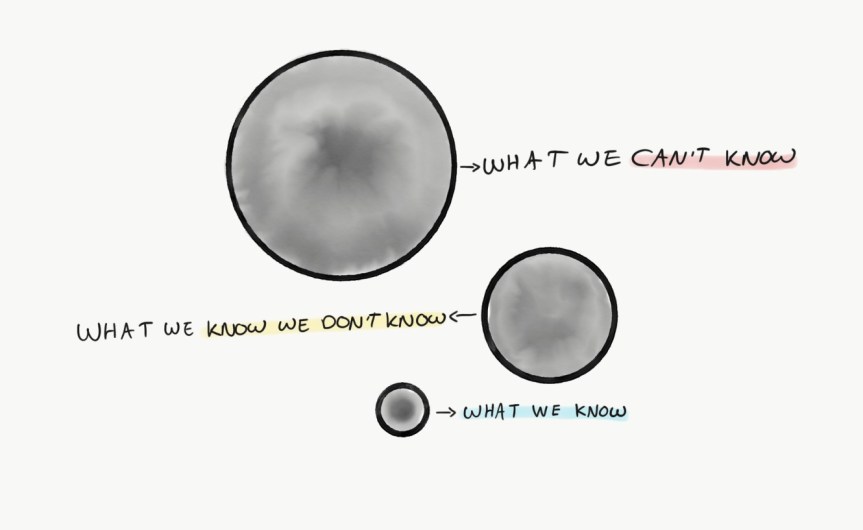
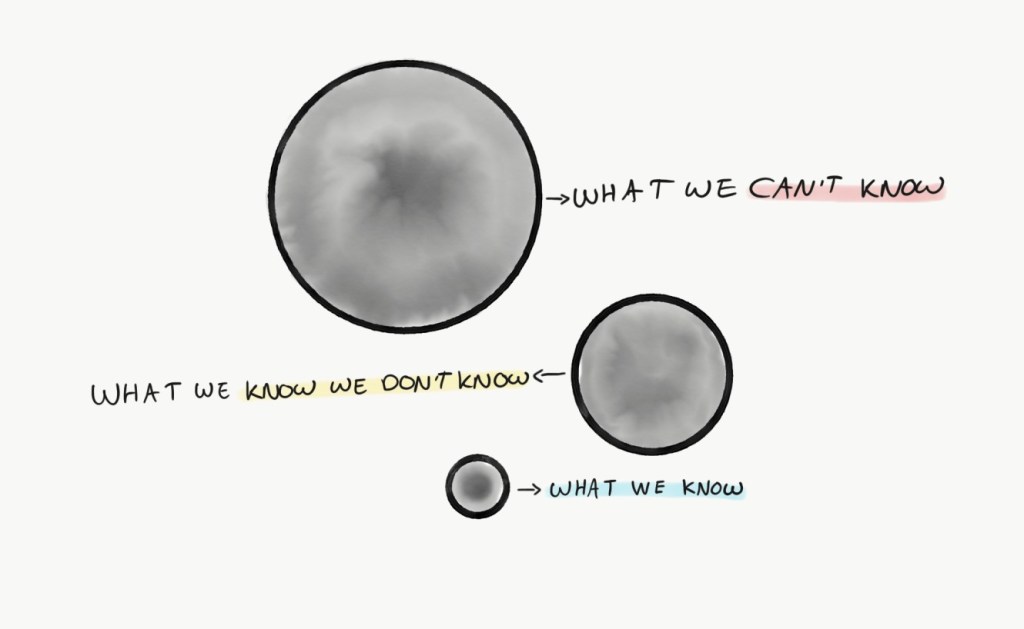
BUT WE CAN KNOW!

To improve your decisions, you want to look at your process for making a decision. Most people assume that good decision making is a matter of picking a course of action that leads to the desired outcome.

That’s a misconception. Decision making refers to your cognitive process. It’s about how you end up with your decision, not what the decision leads to. 

Good decision making can lead to bad outcomes. The opposite is also true. Bad decision making doesn’t mean you always get bad results. For every decision, there are external factors that influence your outcomes.

So how can we improve our decisions? By focusing on the process, not the outcome. The best method for improving your decision making process is to ask yourself critical questions. It’s not enough to ask obvious questions like, “What are my alternatives? What has worked for others? What are the consequences?”

While it’s good to ask yourself those questions, it will not change your decision making process. Those questions only look at what you already know. 

I found a list of six thought-provoking questions in Annie Duke’s book, Thinking In Bets. Notice what the theme is.

  • Why might my belief not be true? 
  • What other evidence might be out there bearing on my belief? 
  • Are there similar areas I can look toward to gauge whether similar beliefs to mine are true? 
  • What sources of information could I have missed or minimized on the way to reaching my belief? 
  • What are the reasons someone else could have a different belief, what’s their support, and why might they be right instead of me? 
  • What other perspectives are there as to why things turned out the way they did?

Think About What You Can’t Know

The reason I like these questions from Annie Duke is because they force you to think about what you can’t know. In my experience, that’s what drastically improves your decisions. 

We all know the feeling of talking to an experienced person who shares some insights with us, and we go, “Aha! I didn’t realize that.” That’s what you want. Duke writes the following in Thinking In Bets:

”Just by asking ourselves these questions, we are taking a big step toward calibration. But there is only so much we can do to answer these questions on our own. We only get exposed to the information we have been exposed to, only live the experiences we have experienced, only think of the hypotheses that we can conceive of.”

This is the reason I often turn to my friends, mentors, communities, books, courses, and podcasts for insights that come outside of myself. I want to learn about things I can’t know.

It’s impossible to know and see everything. We haven’t had the experiences of other people. Most of us keep making the same decisions because we never get an outside point of view. We don’t make an effort to improve our decisions.

Open To Beliefs—Not Gullible 

To improve your decisions, ask yourself questions that challenge your existing beliefs. I highly recommend saving those six questions in your note-taking app. I’ve done it and when I face a decision, I often go through these questions and my other notes on decision making.

As you become open to other beliefs and perspectives, keep in mind that other people also don’t have all the answers. Adopt the mindset of a skeptic. Be open to other beliefs, but don’t believe everything instantly. 

Keep looking for evidence and other perspectives. When you have collected enough information, make your decisions. Sometimes people assume you have to listen to everything “experts” have to say. This will only make us gullible. If there’s one thing that harms our decisions, it’s that.

We should always make our own decisions after going through a process. We should avoid making rash decisions based on the opinions of others.

Common Decision Making Pitfalls

Here’s what you should watch for when you’re making decisions (no matter how big or small):

  • Analysis paralysis—This is very common. At some point you get stuck in the process and you can’t make a decision. You go over the process over and over again. This is a big risk. You can NEVER have 100% of the information you need. It also helps that your decisions are not about the outcomes. Don’t let your fear of making the “right” decision paralyze you. There’s no right or wrong outcome. Just outcomes. Deal with it later.
  • Extinction by instinct—The opposite of the above. It’s the belief that instincts are a useful tool in decision making. This leads to rash decisions.
  • Information overload—This is when you ask too many people for their opinion or insights. Stick to trustworthy sources and keep them at a minimum. More information is not better. Reliable information is.

I’m not a fan of complicated theoretical decision-making frameworks to improve your decisions. Those types of formal frameworks might work for large institutions, but for you and me, it’s just not useful. Who makes time to read an 800-page textbook on statistical decision theory? And if you do study it, you probably can’t remember all of that theory. Instead, work with what you have.

When you face a problem, simply look at your options, collect some information, think about what you can’t know (the six questions at the top), evaluate everything, and pull the trigger. Done. Then, move on to the next one.