The Dark Side of Social Media

The internet has been taken over by Facebook and other forms of social media. People use social media because they believe it improves their life. Is it, however, true? Is it true that people go on Facebook to socialise or to study other people’s posts to see what’s going on? Are they expressing their dissatisfaction with politics or government entities in general? (Venting has been demonstrated to increase rather than decrease anger.) Are individuals battling on Facebook or other social media platforms, ruining relationships rather than strengthening them or people’s lives? Instead, it was shown that the majority of people use it to consume knowledge, which experts discovered leaves them feeling empty and unfulfilled. Another study published in the journal “Current Opinion in Psychology” in 2016 found that envying other individuals on social media leads to depression. When you’re sick, sad, or alone, browsing through vacation images from someone’s recent trip to Hawaii, positive relationship statuses, parties, or people having a good time in general makes you feel even more alone and melancholy.

What Motivates People to Use Social Media?

People use social media for a variety of reasons, including keeping in touch with others and monitoring them. Surveillance has been utilised throughout history to protect people from danger and to keep them safe. However, the majority of social media monitoring of partners or ex-partners does not fulfil that criterion. “Interpersonal electronic surveillance monitoring” is the phrase for this. Low-quality relationships, low happiness, and terrible connections in general are all indicators of online surveillance.

What Happens When People Spend Too Much Time on Social Media?

Researchers at the University of Michigan found that the more time people spend on Facebook, the more miserable they get. When browsing through the wonderful aspects of other people’s lives, it can also cause sentiments of jealously, resentment, and inadequacy. “Results showed that Facebook usage had a strong negative link with self-esteem,” according to a study conducted at the University of Gothenburg in Sweden. In other words, those who spent more time on Facebook had poorer self-esteem, according to the findings.”

For some people, Facebook might be a trigger for P.T.S.D. For many African Americans and others, the footage of Philandro Castro and Sterling being streamed live on Facebook sparked their P.T.S.D. There were many expressions of mental and psychological concerns on Facebook in the week following Sterling’s and Castro’s deaths. The African-American community was one of the hardest hit. They are not, however, the only ones who have been touched by such horrific recordings of individuals dying at the hands of police officers.

Finally, social media can have a detrimental impact on people. It’s a public bulletin board where anyone can publish anything. However, there is research underway that suggests that this type of “socialising” is actually harmful to humans. It can stymie the healing process that people go through after rejection, heighten feelings of inadequacy and jealously, and cause P.T.S.D., as well as make people feel worse.

Sources

Science Explains How Facebook Makes You Sad | Psychology Today
The most popular social media platform could be wreaking havoc on your emotional health.

How To Keep Social Media From Complicating Your Relationship | Psychology Today
It’s usual for love partners to use social media and social networking sites to keep tabs on each other. So, how can you avoid your love connections becoming more complicated as a result of social media? What are some of the thorny topics you should be aware of?

Does Social Media Help or Hurt Relationships? | Psychology Today
Do you argue with your partner as a result of Facebook use?

http://journals.sagepub.com/doi/abs/10.1177/0265407514568749?cited-by=yesl33%2F2%2F171r33%2F2%2F171p

When black death goes viral, it can trigger PTSD-like trauma | PBS NewsHour
“We’re witnessing mentally and emotionally traumatizing videos and pictures. It’s enough, it’s just enough. It’s just so overwhelming all the time.” – April Reign
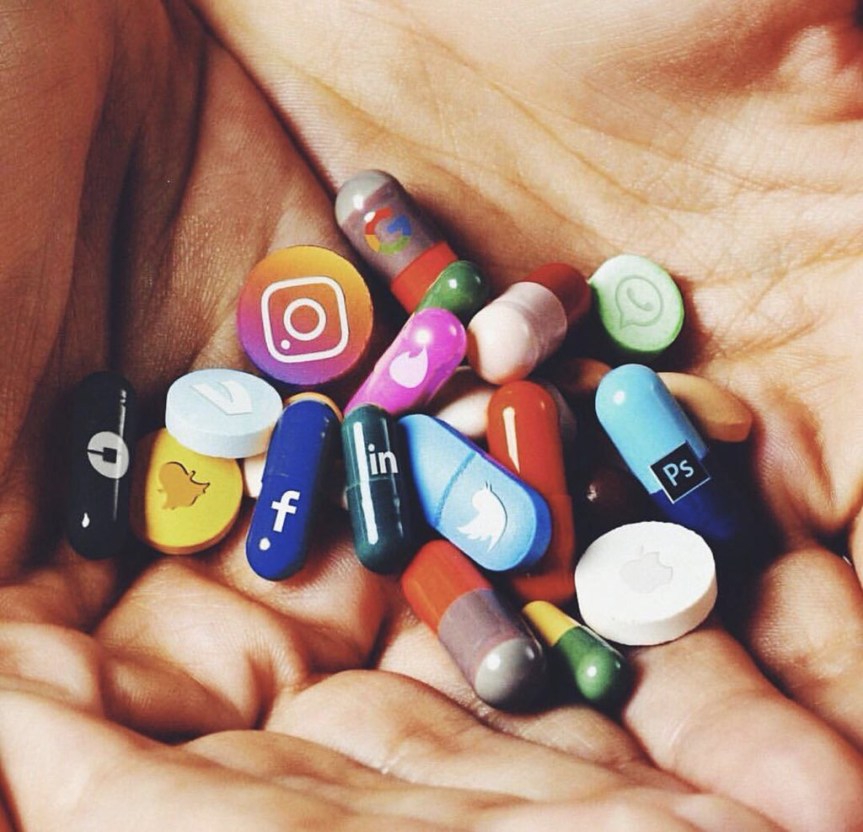
The social media addiction

From the past few days, I did not get the time to use social media as often as I would. Today when I went back on social media I realised that I am falling back into the cycle of comparing my life with people. It then hit me that from a past few days where I was busy, the world around me changed, the birds were chirping, the flowers were blooming. This was a joke obviously.

But I did notice that I wasn’t comparing my life and was focussing on myself.

Social media is a place where everyone shows how perfect their lives are, even if taking that one picture took them three hours of hard work. Scrolling through social media makes us have questions like

How are they going out daily?

How are they having so many friends?

How do they get such good pictures?

Well, I am not hating on the people who have friends or spend time taking their pictures. They are doing what they want which is good. The problem arises when we start thinking of their lives as “perfect” and start looking down on our lives.

Let’s take an example of how social media makes us feel bad about our lives:

Imagine you have a day planned for working or doing an assignment. Let me tell you which is completely normal. But then you go on social media and see people have fun and it makes you feel bad about your life.

 I know we do like posting a picture and getting likes and comments. So, I am not telling you to stop using social media. I am just asking you to remember where to stop. So today when I realised that I was going to fall back in that cycle I stopped and took a break from social media. I went and did something else because I am in a good place right now and I don’t want other people’s life to affect my life.

So the next time you are using social media always remember a few things:

No one has a perfect life: There is no such thing as a perfect life, every person has their share of problems. So, don’t make yourself feel bad about why your life isn’t perfect.

Everything we see is not real: we see stories of people going out every day. Well, they may not always have as much fun as it is shown on social media. I have ordered a few fancy-looking food and, to tell you the truth it did not taste as good as it looked. Even in stories that people post with their friends, they show how much fun they are having but in reality, people are just sitting and are using their devices and scrolling through social media.

Quality not quantity: having a big friend group is fun but they have a lot of drama too. So if you are someone with even 2-4 good friends, appreciate that because you would rather spend time with real friends than be surrounded by fake friends.

Gratitude: we need to be grateful for all that we have. We know that some people don’t even have what we currently have. If you are reading this article that means you do have a device to read it in so be thankful for that and don’t compare your life with people.

Live in the moment: There is a difference between living the moment and, only capturing it. I remember going to a concert and only recording the concert and not really enjoying it or living the moment. I wished that I lived in the moment. But, I was 13 at that time and lacked brain cells. So, don’t repeat my mistake.

Social media is a great platform and can be used to promote small businesses, raise funds, help people out, make money, become an influencer, etc. But if your mental health is getting affected by it and you are subconsciously feeling bad about your life you need to stop and take a break from it.

IS SOCIAL MEDIA TOXIC?

BY: VAIBHAVI MENON

We live in a generation where everything is controlled by social media and it is something that is normalized now. But if social media is seen as neither positive nor negative, what is true is that it leaves people fighting for views, claps, likes or praise. That affects both the younger and the older generations. The constant search for recognition and attention can have detrimental effects on our lives and leave us hurt or needing more attention. Increased use of social media can lead to a high chance of people feeling depressed, anxious etc.

Technically, you can switch off your mobile phone, or you can set up a time limit for your social media use. This will simply prevent you from using these platforms. Of course this is not so easy, as everyone is online, including our friends and families, with whom we would like to keep contact. This means we should be more ‘news literate’ and more educated about the news and any information we read online. For example, we should always check the source or the profile of the person who shares a suspicious post. We should also read from a wide range of sources, and not limit ourselves. Sharing something without reading it is a big no. Social media is toxic not just because it is addictive by design, but also because platforms spread disinformation and they encourage their users to engage with these fake news more than with fact checked ‘real’ news. As a consequence, disinformation spreads faster and reaches a wider audience. This has a toxic impact on public trust in democratic institutions like elections, governments or any public services. What it means is that our own democracy can be established and undermined by outside influences simply by exploiting the loopholes in today’s social media. Social media allows people to share their lives, but it also allows others to criticize, belittle, bully, and berate others on such a grand scale that it sometimes leads to depression and in extreme cases, suicide. I Young children are often hounded by “influencers” to buy merchandise, dress a certain way, eat certain foods, listen to specific music, and think a specific way in order to be accepted. The Logan Pauls and Kardashians of the Internet feed off of the image hungry youth. Even on Youtube and TikTok, everyone is wearing the same brand names, doing the same dance memes, and promoting the same diet or lifestyle products to cash in on the hoards of people watching and envious of the success. Showing off your newest car, handbag, watch, condo, or remote island beach house is no longer considered vain, shallow, or superficial. It’s now considered lucrative. Even on Medium, where words and ideas are King, the first step to getting anyone to read your story is the title and image. And to further cement your superior status, having a boat-load of claps and being published in a successful publication boosts your credibility.

taken control on our life and it makes the decision of what is right and what is wrong which can prove to be toxic because nothing is what it seems on social media. Its not reality.

SOCIAL MEDIA

Needs and merits

The ability to build real relationships is one of the most important aspects of social media and a key factor in attracting people of all ages, genders and nationalities. It is an important part of developing healthy social networks and powerful social network tools. People can share their business, products and services with the world as long as they stay connected and use social media. Social networks allow people to communicate, and everyone can update and report at any time. Companies make full use of social media to improve your online reputation and greatly help increase sales and personal income.

  • You need to make sure to use all social media platforms to gain insight into the needs of your customers. To make the most of social media for your business, make sure you have a content marketing plan. If you need content on any social media platform, you can use social media asset management tools to create high-quality content.
  • You can also use social media to track what people say on social media. Although social media is mainly used by the public, the government also uses it to raise public awareness.
  • Although the use of social media for teaching can be distracting, educators can do everything they can to guide students to develop good habits and practices, Benefit. Regarding the advantages provided by social networks.
  • If you consistently and continuously invest time and effort, you will see the real benefits of social media marketing. Social media can give your business a huge advantage by helping you connect with your target audience. It can cover a large number of people, but for social media, it is also a media sharing network.
  • Social media advertising is one of the two components used together to attract potential customers and spread information and brand awareness. Different from classic ads. When you actively post on social media pages, social media marketing is easy.

SOCIAL MEDIA AS A BLESSING

There are some people who actually make a good or can say the best use of the social media. Like if we talk about the young entrepreneurs who have just begun with a start up but is lacking in public attraction and funding so they create a short 30seconds advertisement and attach it with the trending apps which work through network connection . Talking about the awareness ;both the social media and mass media have been playing their roles very well by keeping their viewers updated with the latest screamers , exposing the Scams ,scandals , and even the worse parts of humanity .

IMPACTS OF SOCIAL MEDIA IN OUR LIFE

There are so many things that have advantages and disadvantages in life. More than pros and cons, these things leave an impact in our life either good or bad. One such thing is social media. Every one of us uses social media knowingly and unknowingly. Our day starts with and ends in social media. Social media doesn’t only include WhatsApp, Facebook, Instagram, or Twitter. It covers all that provide us information through the internet and keeps the world connected. Such media which influence our day-to-day life has both advantages and disadvantages. Let’s explore that in this article.

ADVANTAGES

Starting with the advantages we have many to cite as an example. Social media is a platform used to portray ourselves to the outside world. Here, we share content and get to other’s content which keeps us bound. It enables us to engage in social networking. It is widespread across the globe and allows us to create a community. It connects us and makes our communication easy and accessible. Through this, we could build our relationships stronger. Social media supports education through different learning platforms. This provides knowledge to every single part of the world. It develops the students’ interests to explore more and more. Social media also helps in building customer relationships through digital marketing. It makes customers fall for your services and give their feedback. Information spreads faster than wildfire in social media. This helps to get emergency helps like finding the missing persons. During this second wave of the pandemic, social media helped out to get blood donors, oxygen cylinders, and some rare dugs. It lets us share our achievements and also lets us know others’ accomplishments which motivates us to do a lot more. It provides support and encouragement through our community. It gives us a way to connect with our distant friends and relations. Also, social media is used for relaxing and getting relief from work stress.

DISADVANTAGES

After going through a lot of advantages, let us see some disadvantages of social media. When coming to disadvantages the first thing that comes to our mind is privacy problems. Sharing some content or posts may seem inappropriate for others and problems can arise from it. Also, sharing our personal and professional info can cost us sometimes due to hacking and other threats. Some people may try to bully us by knowing our details. This is a very bad disadvantage of social media. Another, we get influenced by others so much that we start changing our lifestyles. Scrolling for long hours will have a very bad effect on our body and health. We change our sleep cycles due to this unending scrolling and ruin our eyes and sleep. Although social media connects people, there is a lack of emotional connection between them. Due to these social media, we end up sending messages even for important issues and lost the habit of speaking over the phone. When we speak over the phone, the emotions are also conveyed along with the messages. In chatting, only our messages are sent and not the emotions. So, anybody in the conversation cannot sense that feel. We engage ourselves most of the time in social media and fail to spend time with family which is the most essential one. Finally overusing will lead us to get addicted to it and it becomes very difficult to get over the addiction.

This conflict between advantages and disadvantages continues to grow. Nothing can be perfect in life. It is our efforts that help us lead a perfect flawless life. We have to ensure that whether we are making good use of social media. If we feel that we are getting addicted to social media, just try to come out of that routine. Everything lies in our hand’s control and nothing can go out of it until we don’t allow it.

The impact of Social Media Influencers on Promotion of a brand

Promotion of a brand involves informing, persuading and keeping the potential consumers for continued and long term engagements. Promotion can be done by informing the public about the features of the product or brand, persuading them to buy the product by telling its unique features and keeping in touch with the customers to convince them to further buy more products of the same brand by providing after-sales-services and by maintaining good producer-consumer relations.

It is also important to note that there is a difference between promoting a product and promoting a brand. Promoting a brand is broader in terms as it focuses on building and maintaining brand image and is related with the promotion of the entire business. Promotion of a product is narrower in terms as it just focuses on promoting a “particular product”. For example, when Loreal Paris uses the tagline “You’re worth it”, it not just promotes a particular product but the entire Loreal brand. However, when it uses “5 problems, 1 solution”, it promotes a particular product (i.e., Total Repair 5) by highlighting the importance of it.

Online Brand or Product Promotion is the method of promoting the brand or product on different social media and online platforms by using the internet to its full potential to reach a wide range of audience. For ages, brands and advertisers have influenced and shaped consumers’ attitudes and behaviours and sometimes we don’t even get to know about it.


There are several ways in which Social Media Influencers impact promotion of a brand or a product:

1) Influencing Purchase Decision of Consumers:

Consumers’ purchase intentions are frequently measured and used by marketing managers as an input for decisions for new and existing products. Social Media Influencers do not put up advertisements but just directly talk about the product or brand in details, how to use their, if they are value for money. So influencers cover the “Frequently Asked Questions” about a product.

2) Convincing customers to buy products:

After influencing the purchase decision of the customers, the main task of influencers is to make their followers buy the products. Actions involving social media influencers help more when there is best personalised advertisement done by the influencers.

3) Distribution of Samples:

This is one of the newest techniques through which social media influencers help business firms in their promotional activities. The influencers take free samples from the producers and further distribute them to their followers in terms of “online giveaways”. This technique of “Online Giveaway” becomes extremely beneficial for those firms which are new in the market. The social media influencers ask their followers to comment, like or share the posts of the business product/firm they’re associated and few lucky winners are the ones who get to take the products in these Online Giveaways. There’s also traditional form of distribution of samples where influencers distribute a business firm’s products which are generally smaller in quantity than the original products so that customers get a first hand experience of the products.

Clearly, social media influencers have had gained and influenced their followers a lot in recent years and especially during the pandemic. People rely on influencers more these days and influencers keep on creating more content for their followers.

Media, Disability & COVID-19

According to United Nations, about 1 billion people all over the world come under the category of “disabled” and that is 15% of the global population. Now, the question is, shall we as a society neglect 15% people in the world just because they happen to be in minority?

Media being one of the crucial facets of society has a major role to play when it comes to disseminating information and making people aware about significant and ignored issues. Now, let us go through what media has done to represent people with disabilities and their issue since the beginning of the pandemic.

1) Disability and Broadcast Media


A Look: Public Broadcasters of various countries

In 2020, the World Federation of the Deaf noted that 80 governments in the world have been providing sign language interpretations while Covid-19 press briefings.

For example, in order to curb Covid-19 pandemic, South Korean government aimed to strengthen the ways disabled people could be informed during the pandemic and other related disasters. The country’s public broadcaster KBS during the pandemic announced that it would work to expand the reach of information in its disaster countries. During the pandemic, the public radio in the country had continued to provide programmes dedicated to disabled community with daily news and health updates and general life advice.

When it comes to India’s public television broadcaster Doordarshan and public radio-All India Radio, very minimal representation of disabled community took place during the pandemic. Even though the objective of the these broadcasters is social welfare, disabled community was one of the most ignored ones as “no special programmes” were held for this community, nor was their issue highlighted specifically anywhere. News Bulletins with sign language were held for the disabled community though. More has to be done to ensure social inclusion of all communities including the disabled ones.

Private Broadcasters: nothing matters, but profits!

Media all over the world, including the Indian ones either portray disabled people as “nothing” or “everything” and both of them are dangerous. In 2019, Ministry of Information and Broadcasting in India directed the private channels to include special schemes for disabled community. Although some channels have started news bulletins for disable people but there was almost equal to zero representation of the disabled community during the pandemic.

There should be open space for the disabled community such as they should be invited for panel discussions and debates relating to different happenings in the world from politics to entertainment and like.

Digital Media: A hope in every way!

This is probably the best when it comes to serving and representing the disabled community during the pandemic. Digital and online media were the perfect mediums through which disabled people got proper spaces to talk about the issues they were facing during the pandemic.

One of the online apps called “News Hook” became increasingly popular among the disabled audience which used sign language specifically for the audience with hearing impairment. It covered headlines relating to technology, politics, entertainment, business and sports during the pandemic. It should also be noted that 65% of the staff here were from the disabled community.

Moreover, web portals of Indian Newspapers like The Indian Express and The Business Standards and many more gave enough of space to the disabled people so that they can talk freely about the issues they faced during the lockdowns.

The same above mentioned media channels also used platforms like YouTube to sensitise the audiences regarding the hindrances faced by the disabled community. Some reporters and even famous YouTube personalities covered the terrible times disabled people in India went through during the pandemic.

It should also be noted that online media was comfortable for disabled people as well as the medium is now more easily accessible with good quality content and also because of its low price rates.

Media, especially the mainstream media should be more responsible and sensitive in dealing with issues relating to the disabled community. More representation about the disabled community should take place in the mainstream media. Disabled people “aren’t incapable” and therefore they should be given proper employment in the media. They should be engaged and involved in live discussions and debates. Together, as society which includes the media we should create an environment which is inclusive, anti- discriminatory and diverse.

Emerging Trends in Social Media

Image Source: Business Today

Over the past decade, social media has managed to secure a special position in our hearts.
Like every other evolutions in the world, the way we use social media platforms also evolves.
With the quick growth of social media, trends change every second day and thus brands and individuals are in a hurry to adopt them fast!

Major Trends…

1) Augmented Reality

Augmented reality (AR) is an interactive experience of a real-world environment where the objects that reside in the real world are enhanced by computer-generated perceptual information, sometimes across multiple sensory modalities, including visual and auditory.

How it is used in different ways in social media?

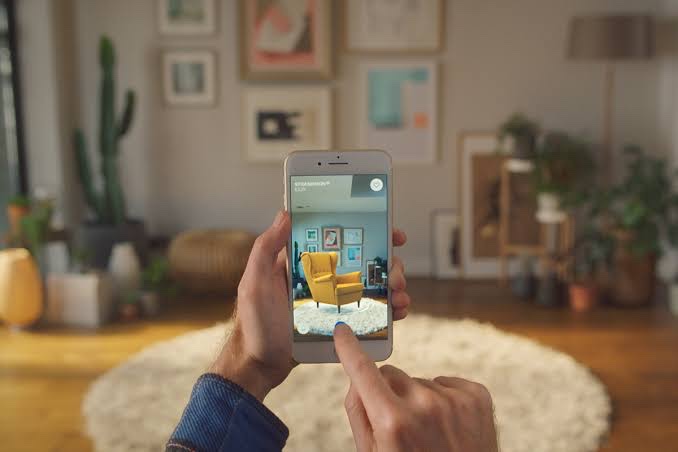
Now, during the pandemic times, it wasn’t easy for people to go out for shopping and try out the things they wanted to purchase.
So Augmented Reality became an important feature in social media apps so that consumers can try out the business products from their respective homes.

Popular furniture company IKEA using AR.

MORE COMMON EXAMPLES OF AR IN SOCIAL MEDIA

Mark Zuckerberg, founder of Facebook, recently said Augmented Reality has slowly become the company’s “topmost priority” .
We have already witnessed how social media apps like Snapchat and Instagram have become more AR oriented– all the face filters that we use on such social media apps are nothing but small facets of Augmented Reality.

Credit: The Verge

2)VIRTUAL REALITY

Virtual reality (VR) refers to a computer- generated simulation in which a person can interact within an artificial three-dimensional environment using electronic devices, such as special goggles with a screen or gloves fitted with sensors.
Users have a realistic feeling experience when it comes to Virtual Reality.

VIRTUAL REALITY IN SOCIAL MEDIA

A) VR CHAT
VRChat is a free-to- play massively multiplayer online virtual reality social media platform. It allows players to interact with others as 3D character models.
Users can interact via text chats and then play the games according to their needs.

Credits: Business Insider

B) FACEBBOOK SPACE
It allows an integration with Facebook, which makes it easy to invite our friends and acquaintances to the VR world.
Three people can actually interact using a VR device. This has however now been discontinued.

3)Shopping through Social Media

Many new brands and business firms deal with their consumers entirely though social media platforms like Facebook and Instagram.

Both these social media platforms provide services like a complete e- commerce portal and also allows business firms to show their products on the platforms while attaching a link to the firm’s official website. Customers can view products, see prices and can directly order products from these social media platforms.

Credits: Cosmetics Business

4) News Culture on Social Media

This is one of the most popular trends we tend to see these days on social media. People spent most of their times in social media and therefore many mainstream media channels maintain good interaction with their audiences on social media platforms like Instagram, Facebook and Twitter via video stories, pictorial presentations and like.

Many new media houses are completely based on social media. People mostly get to know about recent happenings through social media.
Twitter as compared to any other social media platform has distinctively been credited for instantaneous news.

Facebook page of ABP News

5) Hash-tag Culture

This is another form of social media trend that can be seen these days where interested groups make a hash-tag phrase (for example: #xyz) regarding their concerned matters.
This has widely been witnessed on Twitter and Instagram where users make their interested topics “trendy” on social media. This is especially done on Twitter to bring anything to public notice.

Credits: Elegant Themes.

Stop comparing yourself with others

Comparing ourselves with others does not do any good, rather it adds to our mental stress and anxiety. In the era of social media, everybody showcases themselves on some of the other platforms. Some of the people start feeling inadequate whether be it in looks or their career or any aspect of their life. This feeling of inadequacy might harm your mental health, and make you feel miserable.

Comparing yourself to others will not lead you to any greater heights, you must realize that everybody has their own pace of growth in life. Some people may succeed early and some later. So you should stop comparing yourself with others. It affects mental health to such an extent that you give up trying and start thinking that you are not enough. You may feel that you do not have the right body figure, or you might feel that you are not beautiful enough, or that you are not successful enough. But social media is just for showing off all the good things happening in others’ life and you must understand that the photos may be filtered.

You must work on yourself rather than comparing yourself with others. Sometimes the comparison can be healthy and it may lead you to improvement in yourself but many times it works the opposite way on our mind. When you check apps like Instagram and LinkedIn, all you see is people posting about their achievements and success and it makes you feel like you are doing something wrong in your life, questions like “Am I not doing enough? Am I not good enough”, pops up in your mind. You spend your energy comparing yourself with others without realizing that this time could be used up to improve yourself or work upon yourself if you want to succeed.

Remind yourself of the things that you are grateful for, be it your relationships with others or any of your hobbies or anything.

We start thinking that our worth is defined by the number of likes on our posts or the fake good comments by people. But nobody cares what you post on social media and neither should you care what others post. Just see it and feel that, okay, they are doing good in their life and there is no need to feel jealous, you are on your journey to success.

There will be many positive changes in your life when you stop comparing yourself with others. Your mind will be at peace, you will be able to concentrate on your growth much more, you will feel grateful for what you have, and you will at peace with your mind.

Some quotes that might help you:

  1. “The most powerful relationship you will ever have is the relationship with yourself.”
    ― Steve Maraboli
  2. “We can never obtain peace in the outer world until we make peace with ourselves.” – Dalai Lama
  3. “How you love yourself is
    how you teach others
    to love you”
    ― Rupi Kaur

tHE nEW wAY OF gROWING Business- Social Media Marketing

The Internet has made the world a global village. You can not only interact and engage with people nationally but also internationally. This has not only expanded the scope of personal interaction but also business engagement.

What is social media marketing?

Let’s get to know what social media marketing means by breaking up the term into two parts, ‘social media and ‘marketing’.

Social media is a collective term for an interactive online platform for the creation of social relations with people, communicating information and ideas. Social media lets you socialize virtually with the convenience of ‘anytime anywhere’.

Marketing on the other hand means, the activities taken up by companies to promote their products and services by bringing it to the notice of the potential customers and clients by advertising it through different platforms, be it print, broadcast, digital, or any other. So, the term social media marketing collectively means the use of social media platforms by companies to grow their audience base for their products and services by reaching out the potential customers through advertisements posted on social media. it can contain text, images, videos, or any other elements that can increase audience engagement.

Today, there are so many social media applications available, that can be easily accessed through the internet. This has made it so much easier and faster to connect with people around the world. Facebook, Instagram, Twitter, Linked In, Snapchat, and YouTube are some of the most commonly used social media apps.

Algorithms

Social media has an algorithm that it works according to. The algorithm decides which posts the users would see as they refresh their feed. The algorithm aims at recommending posts to the users so that they keep scrolling and can see more ads.

You might have noticed the moment you search for some product on a search engine or through an app to buy, the next moment you scroll through your social media you would get advertisements of more such products or more products from that shopping app.

Even the companies and brands have their page on social media. The more people engage in and see their posts, the more it gets recommended to other people as the algorithm identifies it as something people would like to see. This algorithm is prominent in the case of YouTube.

The analytics of such social media platforms lets you see the number of impressions the post has, the number of views, comments, and even the shares made. It also lets you see the graph of day-to-day, weekly, monthly and even yearly views gained. This acts as a great help in analyzing how the particular type of content is being accepted by the audience so that you can make changes in the way of your presentation of advertisements or posts accordingly for a better audience base.

Usage of appropriate hashtags also contributes to spreading the reach. Hashtags that can be well associated with your brand or the product contribute a lot to the performance of the content. 

Moreover, it is very crucial to do market research before posting up your content on social media for the product or brand, as to know what people like and accordingly design your content to meet the taste and preference of the people for greater success.

THE NEGATIVE impact OF SOCIAL MEDIA

Many parents are concerned about how toddlers’ exposure to technology might effect their development. We know that our toddlers are rapidly developing new social and cognitive skills, and they don’t want hours spent hooked to an iPad to obstruct them. But adolescence is also a critical phase of rapid growth, and far too few of us are paying attention to how our adolescents’ use of technology, much more intense and intimate than a 3-year-old playing with dad’s iPhone affects them. In fact, experts are concerned that the social media and text messaging that have become so prevalent in adolescent life are increasing anxiety and reducing self-esteem.

Young people report that there may be solid grounds to be concerned. In a poll performed by the Royal Society for Public Health, 14-24 year olds in the United Kingdom were questioned how social media platforms affected their health and well-being. According to the study findings, Snapchat, Facebook, Twitter, and Instagram all raised feelings of despair, anxiety, poor body image, and loneliness. Sites like Facebook and Instagram appear to amplify feelings that others are having more fun or enjoying better lives than you. The feeling that you’re missing out on some things might lower your self-esteem, cause worry, and drive you to use social media even more. This fear of missing out can drive you to pick up your phone every few minutes to check for updates, or to respond compulsively to each and every alert—even if it means risking your life while driving, skipping out on sleep, or choosing social media involvement above real-world relationships. According to a study conducted at the University of Pennsylvania, excessive use of Facebook, Snapchat, and Instagram enhances rather than lowers feelings of loneliness. In contrast, the study discovered that limiting your use of social media can help you feel less lonely and isolated, as well as increase your general wellbeing. Approximately 10% of kids report being bullied on social media, while many other users receive nasty comments. Twitter, for example, can be a hub for spreading harmful rumours, lies, and abuse that can cause long-lasting emotional scars. Sharing endless selfies and your deepest thoughts on social media can lead to an unhealthy self-centeredness and remove you from real-life friendships. Even if you are aware that the photographs you see on social media have been faked, they can nevertheless make you feel anxious about how you appear or what is going on in your own life. Similarly, we are all aware that others like to relate just the great aspects of their lives, rarely the terrible points that everyone goes through. But that doesn’t make you feel any less envious or dissatisfied when you’re going through a friend’s retouched images of their exotic beach vacation or reading about their fantastic new job promotion.

HOW TO CONTROL THIS ADDICTION– While 30 minutes a day may not be a realistic goal for many of us, we can still benefit from limiting our time on social media. For the majority of us, this means limiting our use of smartphones. You should use an app to track how much time you spend each day on social media. Then you can decide how much you want to cut it by. You can turn off your phone when you’re driving, in a meeting, at the gym, eating supper, spending time with offline friends, or playing with your children. Don’t bring your phone to the restroom & don’t bring your phone or tablet to bed with you, turn off devices and place them in another room to charge overnight. If you have a habit of checking your phone every few minutes, try restricting your checks to once every 15 minutes. Then every 30 minutes, then every hour. There are apps that might limit how much time you have access to your phone. Remove social networking apps from your phone and only use your tablet or computer to access Facebook, Twitter, and other sites. If you think this is too drastic, try removing one social media app at a time to see how much you really miss it. You can try to shift your focus on other activities like sports, studies and spending that time with you family. These are few steps you can try to limit the use of your phone.

Twitter blames government for threatening free speech

Twitter started putting allegations on government for threatening free speech, Government counters it is defying Indian laws: On Thursday, amid the tensions between social media platform and government due to new guidelines, Twitter putted some serious allegations on government of “dangerous overreach that is inconsistent with open, democratic principles, ” and further also said that it is being forced to withhold portions of “legitimate free speech” over fears around the employees safety and some threats of financial penalties.

Sources are indicating that these were majorly related to the government’s request to pull down tweets related to farmer protests, as it was believed that these were peddling an anti-India sentiment and was an attempt to ruin India’s image globally and initiate some riots, as well as it is also related due to incidents during corona pandemic. The B1.617.2 variant which was initially found in India was being labelled as Indian variant in this social media platform and this was also ruining image of India globally.

A spokesperson of this giant social media platform gave an statement that, “We maintain that the content reported in the original order constitutes protected, legitimate free speech, under Indian and international law, and we have formally communicated this to the government… Yet, due to the law’s limited scope under Section 69A (of the IT Act) which gives limited room to an intermediary to defend the content, we have been compelled to withhold (block in India) in response to a non-compliance notice. Not doing so poses penal consequences with many risks for Twitter employees.

However, the spokesperson also added and defended himself that Twitter does not take any action on any verified accounts that consist of news media entities, journalists, activists, and politicians in keeping with our principles of defending protected speech and freedom of expression . The statement given by him came one day after the social media platform was deemed to be non-compliant with the new social media intermediary norms under which it is now required to appoint some designated officers to deal with the grievances and compliance apart from having a mechanism for pulling down content where there are maligned individuals or there is any sexually explicit matter.

Twitter said that there were some concerns over “intimidation tactics” by police and was bit critical of the new IT rules. The big social media platform also expressed its displeasure over the new rules taking which according to them is weakening the immunity of social media platforms such as Twitter, Facebook, and Instagram over third-party content. It is making them liable for criminal and civil action.

Just after few hours of allegations imposed by Twitter on Indian government the government replied charging the company with deliberately subverting the law of the land and also trying to “dictate” its terms even while using the term “opaque policies” to “arbitrarily” suspend user accounts and delete tweets without any proper explanation. The government asked the American company to stop beating around the bush and said that “the only instance of scuttling free speech on Twitter is Twitter itself and its opaque policies, as a result of which people’s accounts are suspended and tweets deleted arbitrarily without recourse“. The government further added that “law-making and policy formulation is the sole prerogative of the sovereign and Twitter is just a social media platform, and it has no locus in dictating what should India’s legal policy framework should be” and thus slammed Twitter.


Social Media Giants to be banned in India?

Four ways social media platforms could stop the spread of hateful content in aftermath of terror attacks


Is this true that Twitter, WhatsApp, Facebook and Instagram will be banned in India from 26th May 2021?


  • In February 2021, the Central government of India came up with  a new set of IT rules and regulations. These rules imply authority over social media by appointment of compliance officials, giving their name and contact address in India, complaint resolution, monitoring of objectionable content, compliance report and removal of objectionable content. As per sources, some platforms have demanded six months deadline to take up this matter in the US Headquarters and wait for their decision . Currently only Koo App has complied with the  new rules and is ahead of the deadline. The question here is what if these platforms do not comply with the new IT rule? If the government plans on banning these platforms, is our individual rights at risk?


  • It’s important to know the sub section(1) of section 79 of IT Act. The IT Act gives protection to social media companies and web services by making them “intermediaries”. This means they are not responsible for user content. So here the government means that if any Social Media company fails to adhere to the new rules then they might lose the protection that the  “intermediaries” have.


  • As per data cited by the government, India has 53 crore WhatsApp users, 44.8 crore YouTube users, 41 crore Facebook subscribers, 21 crore Instagram clients, while 1.75 crore account holders are on microblogging platform Twitter. Koo has close to 60 lakh users, making it a major social media intermediary under the new guidelines. Many Indian are upset with this news but as of now all the social media apps are working in India so let’s wait for further information.

Source:

Government to issue laws to regulate content on Social media

The central government is set to curb the arbitrariness of social media platforms, including Facebook and Twitter. The government is engaged in enacting laws to make them accountable to the Indian Constitution. The government can bring a bill related to it in the second phase of the budget session or the monsoon session.

Actually, there is no law to remove controversial content and bring social media under the purview of the constitution. Social media companies are taking advantage of this.
At the same time, sources say that the government wants to introduce the bill only in the second part of the budget session starting from 8 March. If it is delayed for any reason, the bill will be introduced in the monsoon session. Another cause for concern is that social media is being used by a large number of people.
Around three billion people around the world use Facebook. Among them, its number of users in India is around 32 crores. If we add all the mediums of social media, then this number is more than 500 million, in which Indians topped the number of social media users.
In such a situation, it is difficult to see that there is neither legal nor effective way to monitor the reliability of these platforms.
A court case hearing is going on in the Supreme Court in this dispute case. During the hearing, the government has warned against the threat of social media. The government has said in the apex court that it should be justified to ask to write everything in the name of freedom of expression. The government has also asked the apex court to continue discussions on making laws in this regard.

The Supreme Court has also issued a notice to the Centre and Twitter on a plea, seeking to regulate hate content and to make a law as per which action can be initiated against Twitter and their representatives in India for promoting anti-India tweets and penalize them.
Google is also on target
Australia, in particular, is going to make a law soon to decide the payment in the use of media content on Google. Last week, Australia’s PM Scott Morrison, after talking to PM Modi and Canadian Prime Minister Justin Trudeau, had emphasized the law against Google.

Social media and Eating Disorders- does it have a connection?

Eating disorder describes conditions in which individuals engage in disordered eating. Eating disorders are not simply poor eating habits but are recognized mental health disorders in which emotional issues manifest in harmful eating habits. Eating problems in childhood and adolescence are very common.

It usually starts to be a problem in teenage years. It is not known for certain what causes them, but many factors could play a part such as Social pressure, particularly caused by the social media idealizing being thin, losing weight can make us feel good and in control, others include puberty, family problems, trauma, bullying, depression and low self-esteem.

The messages people get from society about how they should look, how much they should weigh especially western culture (particularly, the social media) promotes extreme thinness as the epitome of body perfection, success and happiness. Bullying others when they fail to be perfect since bullying others over the internet is easier due to anonymity so people do it without feeling guilty without worrying about the consequences. This leads people to become dissatisfied with their own bodies, their self-esteem suffers and they turn to dieting as they feel the pressure to be thin.

Our generation has become so obsessed with taking picture perfect selfies, having the perfect body and weight just like they see on the internet and thinking a person can only be happy if they have large number of followers and likes on social media that they fail to realize that social media only shows the good side of a person’s life and nobody knows what goes on the inside.

A lot of effort goes into becoming like those people or what we call “influencers” and not everything we see or hear on the internet is the truth and as the saying goes “comparison kills the joy” we see them and get disappointed with what we have when we compare ourselves to them. A lot of people start taking shortcuts just achieve those unrealistic goals like excessive dieting or starving and in turn ruining their overall health. Sometimes it leads into developing an eating disorder.

Eating disorders can develop from the desperation to live up to unrealistic cultural expectations, strained relationships within the family, other pressures arising from school or in the work place. Some people eat to curb their loneliness, anxieties and sometimes even to pass the time. A lot of people with eating disorders do not have other effective coping strategies, so, they turn to their eating disorder to help them cope and without even realizing it, many of these individuals actually end up harming their health and the quality of their lives.

The most common types of eating disorders are anorexia nervosa, bulimia nervosa, and binge eating disorder.

There are a lot of causes of eating disorders including stress from a variety of external factors such as some sort of crisis or disappointment to the individual. The loss of a loved one or life changes, lack of communication as people who are unable to communicate clearly and effectively often prefer to hold in their emotions, sometimes described as “swallowing” their emotions, many individuals choose to remain silent but express their feelings and frustrations in other ways, including through abnormal eating disorders.

Signs of Eating Disorders vary, but here are some of the signs and symptoms to look out for an eating disorder are only eating certain types of food, using the bathroom immediately after eating, making excuses not to eat at meal times, obsession with body weight/being overweight.

Anorexia Nervosa

Anorexia nervosa is an eating disorder in which an individual becomes so afraid of gaining weight and/or having body fat that they severely limit the amount of food that they eat or they exercise excessively in an attempt to burn off the calories that they do eat so that they will not gain any extra weight. Self-induced vomiting, the misuse of diet pills, diuretics, or laxatives is often found in them.

There are many health risks of Anorexia such as if weight becomes dangerously low, there is the risk of vital organs shutting down and anorexia nervosa has the highest death rate. Others include malnutrition and dehydration, anemia, amenorrhea.

Bulimia Nervosa

Bulimia nervosa, which is more commonly known as bulimia, is an eating disorder marked by binges and then purges. During a binge a bulimic will eat a great amount of food in one sitting, then purge by either inducing vomiting or taking a laxative or diuretic to expel the food. For bulimics, bingeing and purging becomes a cycle but they may never lose or gain enough weight to make it obvious that they have an eating disorder.

Damage to the digestive tract, mouth, teeth, and salivary glands is common among bulimics and the constant bingeing and purging mean that bulimics rarely keep in enough vitamins and minerals to remain healthy. Others include changes in body chemistry, erosion of tooth enamel due to vomiting and, in extreme cases, stomach rupture and death.

People suffering with bulimia are often of a normal weight so it may go undetected for many years, with those close to them often having no idea they have the disease or that their health is suffering.

Binge Eating Disorder

Binge eating disorder is a common eating disorder in which an individual regularly consumes a large amount of food in one sitting, or “grazes” constantly even when they are not hungry or become physically uncomfortable from consuming so much food.

Binge eaters do not purge after over-eating, nor do they routinely exercise excessively in an attempt to burn off the calories.

Binge eating disorder can occur in individuals of any gender, race, age and because binge eaters often become overweight or clinically obese, they put themselves at risk for a wide variety of health conditions such as high blood pressure, diabetes, heart disease, gallbladder disease, kidney disease, fertility problems, high cholesterol, and some types of cancer.

Treatment for Eating Disorders

The type of eating disorder treatment that is most appropriate will depend on the severity and type of eating disorder and the length of time it has continued, as well as, the patient’s individual preferences about the type of treatment they would like.

Getting professional help is a good idea. Various therapies are available, including psychotherapy, family counselling, group therapy, and self-help groups, in which patients can explore their issues with food and learn to develop healthy eating habits. They might suffer relapses once eating disorder treatment has begun, but early treatment makes a far greater chance of recovering successfully.

Coping with Stress

Developing efficient coping skills may prevent the development of an eating disorder. Some of the simple coping skills include:

-Accepting that life brings disappointments

-Avoiding stressful situations. If reading fashion magazines makes people feel bad about themselves, then, they should stop looking at them and focus on another activity instead.

-Scheduling time for hobbies that are enjoyable and relaxing.

-Building a support system of friends and family who support their hopes and dreams, and accept them for who they are.

Family and friends can help individuals stay strong and prevent an eating disorder by praising an individual’s talents and strengths, listening to and discussing an individual’s thoughts, feelings, and fears, supporting an individual’s hopes and dreams, reminding an individual that a healthy body, not necessarily a slim body, is most important, barring unrealistic and unhealthy diets and excessive exercise regimes.

Overuse of social media can become an addiction which might lead to anxieties, damage to eyesight after staring at the screen for long periods of time, unhealthy sleep patterns leading to insomnia and other health problems so we should always keep a check on the content and the amount of our usage of social media. If it goes out of hand and you feel like its impacting you negatively you can always quit it, since you are in control of what should be a part of your life, take a social media detox. And always know that in whatever form and whenever you need help it is always available.