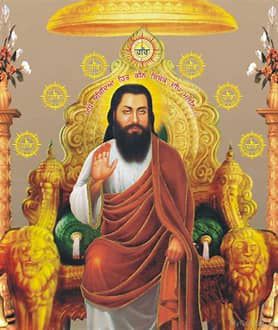
Ravidas, also known as Raidas or Rohidas, was a 15th-century Indian saint, poet, and social reformer. He was born in 1377 CE in Varanasi, Uttar Pradesh, India. Ravidas is revered for his spiritual teachings, poetic compositions, and tireless efforts to promote social equality and justice.
Early Life and Background
Ravidas was born into a family of leather workers, considered untouchables in the Indian caste system. Despite facing social and economic challenges, Ravidas’s parents encouraged his spiritual pursuits. He was initiated into spirituality by his guru, Ramananda, a renowned Vaishnava saint.
Spiritual Teachings and Philosophy
Ravidas’s teachings emphasized:
Bhakti: Devotional love for the Divine.
Equality: Irrespective of caste, creed, or social status.
Self-realization: Recognizing one’s true nature.
Detachment: Renouncing worldly attachments.
His philosophy was rooted in the Bhakti movement, which sought to bridge the gap between different castes and communities.
Literary Contributions
Ravidas composed over 200 poems, mostly in Hindi and Awadhi languages. His works are included in the Guru Granth Sahib, the sacred scripture of Sikhism. Some notable compositions:
“Banjara”: A poem highlighting the importance of self-realization.
“Miratul Masaud”: A spiritual treatise emphasizing devotion and equality.
Social Reforms
Ravidas challenged social norms and advocated for:
Caste abolition: Rejecting the caste system’s hierarchical structure.
Women’s empowerment: Promoting women’s education and equality.
Untouchability abolition: Fighting against social exclusion.
Influence and Legacy
Ravidas’s teachings and legacy have inspired:
Guru Nanak: The founder of Sikhism, who revered Ravidas as a spiritual guide.
Bhakti movement: Ravidas’s ideas influenced the movement’s emphasis on devotion and equality.
Social reform movements: His ideas continue to inspire contemporary social reformers.
Ravidas Jayanti
Ravidas Jayanti is celebrated on Magh Purnima (February) to commemorate his birth anniversary.
Key Places Associated with Ravidas
Varanasi: His birthplace and spiritual hub.
Guru Ravidas Janmasthan Temple: A temple dedicated to Ravidas in Varanasi.
Ravidas Ghat: A ghat in Varanasi where Ravidas is said to have meditated.
Conclusion
Ravidas’s life and teachings serve as a beacon of hope for a more inclusive and equitable society. His emphasis on devotion, equality, and self-realization continues to inspire generations. As a spiritual icon and social reformer, Ravidas’s legacy remains an integral part of Indian cultural heritage.
The district is the geographical unit where the complete instrument of administration can be traced. It is the cutting edge level of administration that policies are transformed into action. The success or failure of policies are dependent on the efficiency of District Administration.
It is impossible for union government to manage entire nation in one unit so it is important to distribute the power into different units. Every state is divided into a number of administrative sub centres to needs of the people in the areas comprised in small areas.
According to Willoughby, field administrative organization falls under either of the patterns of areas including territorial, functional or unitary and multiple areas. These areas organized in horizontally , vertically and hierarchically. The office incharge of the area is the head, the head of all other specialized units at that level are his subordinates.
All communication from the field station to the head office and back are routed through him and he has a responsibility for the acts of all other departmental heads. The position is very different in a multiple or functional form of organization, where different division or branches of the headquarters office have their equitable field establishment at different areas and maintain direct contact with them. There is no coordinating or integrating authority at the area level, each service or agency is treated as an independent entity unrelated to other services the line of authority runs direct by from it’s headquarter office.
Luther Gulick described three patterns of field organization as all finger, short Arms long fingers and long Arms short finger. All fingers agencies are controlled by the headquarters office directly. Short arms long fingers patterns, agencies are controlled by the division, they communicate with control field officers in their respective areas.
Long Arms short fingers pattern geographical sub division, to these sub division are located in the central office itself each with an extensive staff and they communicate with the central field office in three respective areas. These districts split into tehsils/Taluks, headed by tehsildars, tehsil lies the pargana/revenue circle under the charge of revenue inspector then primary unit, village official is the patwari or Lekhpal or village accountant.
Constitution of India did not mentioned the term ‘district’ excluding Article 233 mentioned in term of ‘district judge’s. The 73th and 74th Amendment Act of 1992 including the term district at several places under Part IX and IX A dealt with panchayat and muncipalities respectively.
District Administration is the total management of public affairs, within this unit. DA is that portion of Public Administration which functions within the territorial limits of a district as explained by S S khera who is prominent figure in describing District Administration.
District as a unit of administration has a long history from the time of Medieval times. District called Sarkar and headed by Karori faujdar under the direct control of subedar. District administration and the office of district collector existence during the of British East India Company.
After independence the office of the District collector suffered in order to maintain status and authority due to expansion of governmental activities and emerged as Panchayati Raj, replacement of ICS into IAS, influence of pressure Group and Growth of Commissionerate system.
The programme are executed under the supervision direction and leadership of the collector. Development had a top down approach where people brought under the umbrella of one or in other development Programme. District collector’s main responsibility was identification of beneficiary in the development activities. District collector regulate the development.
The task of good District Collector is the ability to work with all people. This requires good human resource management, strategic thinking and financial management. Village Panchayat refer to the councils of the local government of India, look after the administrative affairs of the rural regions. The local government of India are self sufficient and self enabled units that work under the State Government of India. The 73rd and 74th Amendment Act 1992 attach with development of city and village councils in India. Local government have regular elections, fixed five year term and review and augmentation of finance by the State Finance commission.
Sex Education, Community, media, intervention, gender norms programmes helpful to tackle GBV. Several LGBTQ+ organizations and their programmes initiated in the USA (New York, Washington, California) we’ll discuss below all their activities.
Community intervention can address gender norms and attitudes. For example, the combination of microfinance schemes for women. IMAGE microfinance and gender equity initiated in South Africa and stepping stone programmes in Africa and Asia. Well trained facilitators and community ownership appear to boost the effectiveness of the programme.
Public awareness campaigns via television, radio, newspapers and other mass media can be effective in altering attitudes towards gender norms.
School based programmes consider considerable components to spread words regarding gender norms and attitudes before they become deeply ingrained in children & youth. Positive results have been reported in the US and Canada by Youth Relationship Project.
In Rawada, UNFPA introduced “one stop centers” to fulfill the diverse physical, emotional and school needs of survivors.
Psycho – counseling, helplines and safe houses programmes on sexual reproduction health that should be treated as first place service.
Research – Build Gender sensitivity in male groups
Men as partners programme from age 10 – 14 years, only all male groups must participate in changing attitude or mindset. Encourage boys to stop domestic and sexual violence towards gender and to become responsible but programme has yet to be in evaluation process.
Youth Relationship Project in Ontario is a community based intervention to help at-risk 14 – 16 year old boys; take a health promotion approach that develops healthy, no abusive relationships by providing education about gender related issues, conflict resolution, communication skills and social action activities. Randomized controlled trials showed that intervention was effective in reducing incidents of physical and emotional abuse.
Another programme in United States, Mentors in violence prevention, provide two hours educational sessions to male and female high school and college student in mixed or single sex groups. Here, students learn about different types of abuse, gender stereotypes and society’s acceptance of violence against women. Evaluation of the programme examined the knowledge and attitudes of participants after two to five months of implementation. This study indicated that the programme improved participants’ attitudes towards violence against GBV.
Organizations like GLSEN, Lambda legal, Advocates for youth, Gender spectrum, Centrelink,The Trevor Project are working exclusively for gender sensitivity and inclusive environment, suicide prevention services to young LGBTQ people under 25. Some of the main projects/steps of organizations are:-
Through litigation, education and Policy advocacy protect the rights of LGBTQ people that seek health care and medical professional health and facilities understand their responsibility to treat LGBT patients fairly.
Sports projects as education & advocacy programme.
Solidarity week, No name calling week and day of silence are part of the project
Supportive educators, comprehensive policies and inclusive curriculum.
Train organize and support student survivor activists in challenging their educational institutions to address violence and discrimination.
Advocate for Policy change at the campus, state and federal levels to ensure meaningful systematic action to end gender violence.
Communities engagement including young people of color, black and Latino and trans color youth; members use social media campaigns, peer education, storytelling and media outreach to raise awareness of interconnection between HIV disparity, racism, homophobia and transphobia determinate for inclusion of youth most impacted by HIV in planning, implementation and evaluation of programs; policies that affect their health and well being.
NIVEA Milk Delights Minding besan Facewash does a nice job as it cleanses well, removing redundant canvas and dirt, without leaving skin dry or any slippery u forward. It adds a subtle fluorescence to the skin on regular employment. Suitable for both, dry and gushing skin.
Active reading involves looking at the text in more than one way. For your reading responses write using these three “keys,” or methods, of analyzing what you have read:
Reading responses in this class generally vary from 250 – 400 words. The length required will be specified on the assignment.
Sometimes you will be asked to post your reading response to the Discussion Board and then follow-up with a response to one of your classmate’s postings. You may respond in any of the three “keys.” A sample response building on a previous posting might start off with a sentence like this: “I agree with David that advertising objectifies women by portraying them as dehumanized objects, but I wonder whether women benefit from that objectification in any way?” You can build your ideas on comments others have made. And feel free to keep chatting with each other.
SEO stands for “SEARCH ENGINE OPTIMIZATION”. In easy way, it means the process for improving the website to increase the visibility of people who searching in Google and other search engines. In this job, the SEO expert are marketing professional who use research and analysis to improve a website’s ranking an search engine like Google. SEO is a good carrier in 2021 because it gives you access to diverse opportunities.https://developers.google.com/search/docs/beginner/seo-starter-guide
2) DIGITAL MARKETING
Digital Marketing is the promotion of brands to connect with potential customers using the internet and other form of digital communication. They do marketing through email, display advertising, affiliate marketing, public relations. Digital marketing is the one of the demandable skill which pay you high. Even we can done digital marketing from home with using phone, laptop. Their strategy of digital marketing is marketing the platform, apps, products etc. https://en.m.wikipedia.org/wiki/Digital_marketing
3) BLOCKCHAIN TECHNOLOGY
BLOCKCHAIN Technology is defined as decentralised ledger that records the provenance of a digital asset. In BLOCKCHAIN technology, the experts develops enable source digital transaction by creating system to record and store BLOCKCHAIN data in a way that prevents changes or hacks. This technology needed skills in C++, Python, Typescript. There are many free online courses to learn. Blockchain technology from edX, Coursera, Udemy etc. This Blockchain developer have good carrier for earning. The average Blockchain developer salary is 3 lakhs to 5 lakhs.https://www.euromoney.com/learning/blockchain-explained/what-is-blockchain
Coding is the computer program to create computer software, games, apps and website etc. It is the step-by-step instructions that get computer to do what you want them to do. They are many coding website to learn. The first computer programming language was created in 1883. In coding we want to understand a script that a computer can understand. Approximately the coding earn upto $50000 per year. This also demanded skill for the next decades.https://www.mygreatlearning.com/blog/all-about-coding-languages/?amp
Either Stable burning in various states accrued the air pollution in Delhi and created a gas chamber around NCR ; SC came upon a committee to observe scenario , Or 4 industries inflicting stream pollution were shut down by Maharashtra pollution board . Everybody has responsive to environmental problems as higher than . The key solution for resilience to environmental issues are provided by government in various legislations , enactments and provisions on environment laws .
In republic of India environmental law is concern with the policy and law for protection of the environment . It aims for achieving carbon free economy through taking measures for reducing climate change. All the acts under this laws are safeguards in ensuring effective management of the environment and its multiple ecosystems . It provides for preventing environmental damage .
Natural resources in the earth were unscathed from millions of years. It were remain pure until the industrialized started . After the industrialization this resources have been exploited in Spain of 100 years only . From 19th century, the environment (air , water and land ) is directly exploited by rapidly growing population at alarming-rates.
environment includes water, air and land and the inter-relationship which exists among and between water, air and land, and human beings, other living creatures, plants, microorganisms and property , as mentioned in section 2 of environmental protection Act of 1986 . Environment is a wide sphere , it consists of social, economically , political , religious dimensions .
Addressed area of environmental laws in India :
1. Quality of water : For the prevention and control of water pollution and to maintain or restore wholesomeness of water in the country the water act of 1974 was enacted. It further provides for the establishment of Boards ( CPCB and SPCB ) for the prevention and control of water pollution with a view to carry out the aforesaid purposes. This act prohibits the discharge of pollutants into water bodies beyond a given standard, it also lays down fine and penalties for non-compliance.
2. Reduction of air pollution and maintaining air quality : The Air (Prevention and Control of Pollution) Act, 1981 (the “Air Act”) is an act to provide for the prevention , protection and abatement of air pollution .It provides for establishment of Boards at the Central and State levels with a view to carrying out the aforesaid purposes.
3. Hazardous Waste management : legislations that directly or indirectly deal with hazardous waste management are the Factories Act, 1948, the Public Liability Insurance Act, 1991, the National Environment Tribunal Act, 1995 and rules and notifications under the Environmental Act.
4. Containment cleanup, damage mitigation : preventing future damage to the environment is undeniably the primary objective of environmental law, mitigating and reducing existing damage is also important. This area most often deals with issues like toxic leaks and oil spills. The central objective of this branch of environmental law is deciding liability, planning an appropriate response, and also determining the best process of investigation and monitoring in the overall clean up process. This area also concerns itself with the study and assessment of risk in the long term, to better mitigate any future accidents and risks.
5. Sustainability of resources : United Nations has put great emphasis on ensuring the sustainability of resources. For this vision , it has advocated the formation of various legal principles and legislation. In this regards concept of environmental impact assessment introduced .
Noble legislations and enactments on environment law in India :
Laws on Forest and wild life protection: • The Indian Forest Act, 1927 ; The Wildlife Protection Act, 1972; The Forest (Conservation) Act, 1980 ; The Environment (Protection) Act, 1986; The National Green Tribunal Act, 2010.
Laws on Water pollution : • The Water (Prevention and Control of Pollution) Act, 1974.
Laws on air pollution : • The Air (Prevention and Control of Pollution) Act, 1981 (the “Air Act”)
Laws on hazardous waste management : • Biomedical Waste (Management and Handling) Rules, 1998 ; Municipal Solid Wastes (Management and Handling) Rules, 2000 ; Batteries (Management & Handling) Rules, 2001 ; Hazardous Wastes (Management, Handling and Transboundary) Rules, 2008 ; E – Waste (Management and Handling) Rules, 2011 . Laws on wetlands
•Ramsar convention (1971) : This convention was initiated to push for greater conservation and sustainable use of wetlands ; Wetlands (Conservation and Management) Rules, 2017. Constitutional provisions on environment laws
• Part IVA (Art 51A-Fundamental Duties) of the constitution casts a duty on every citizen of India to protect and improve the natural environment including forests, lakes, rivers and wildlife, and to have compassion for living creatures.
• the Constitution of India under Part IV (Art 48A-Directive Principles of State Policies) stipulates that the State shall endeavour to protect and improve the environment and to safeguard the forests and wildlife of the country.
environment makes human life possible, and our cultural environment helps define who we are. It is therefore essential that our population and economic growth are environmentally sustainable.
A lady of great caliber who spends her whole life serving the poor and needy people. Although she was not an Indian still she came to India to help its people.
Mother Teresa was not his actual name but after becoming a nun she received this name from the church after the name of St. Teresa. By birth, she was a Christian and a great believer of God.
Early life Her real name was Agnes Gonxha Bojaxhiu on August 26th, 1910, at Skopje. Her father, Kole, was a widely traveled businessman. Her mother, Drana, was a housewife.
How Mother Teresa helped the society? Mother Teresa created many homes for the dying and the unwanted from Calcutta to New York to Albania. She was one of the first to establish homes for AIDS victims.
Mother Teresa joined a Roman Catholic religious order that sent her on a mission from her homeland in what is now Macedonia to far-off India. She went on to found the organization Missionaries of Charities.1962 Padma Shri Award for distinguished service.
Awards
1962 Padma Shri Award for distinguished service. 1971 Pope John XXIII Peace Prize 1971 Prize of the Good Samaritan, Boston 1971 Kennedy Prize 1972 Jawaharlal Nehru Award for International Understanding 1972 Koruna Dut, angel of charity from the President of India. 1973 Templeton Prize 1975 Albert Schweitzer International Prize 1977 Honorary PhD in Theology, University of Cambridge, England 1979 Nobel Peace Prize 1982 Honorary PhD from the Catholic University Brussels, Belgium 1985 Presidential Medal of Freedom 1996 Honorary U.S. citizenship (only the 4th person to receive this honor) 1997 Congressional Gold Medal
Ideally, what should be said to every child, repeatedly, throughout his or her school life is something like this: ‘You are in the process of being indoctrinated. We have not yet evolved a system of education that is not a system of indoctrination. We are sorry, but it is the best we can do. What you are being taught here is an amalgam of current prejudice and the choices of this particular culture. The slightest look at history will show how impermanent these must be. You are being taught by people who have been able to accommodate themselves to a regime of thought laid down by their predecessors. It is a self-perpetuating system. Those of you who are more robust and individual than others will be encouraged to leave and find ways of educating yourself — educating your own judgements. Those that stay must remember, always, and all the time, that they are being moulded and patterned to fit into the narrow and particular needs of this particular society.
Doris Lessing, The Golden Notebook
Feminism in India is a set of movements aimed at defining, establishing, and defending equal political, economic, and social rights and opportunities for women in India. It is the pursuit of women’s rights within the society of India. Like their feminist counterparts all over the world, feminists in India seek gender equality: the right to work for equal wages, the right to equal access to health and education, and equal political rights.Indian feminists also have fought against culture-specific issues within India’s patriarchal society, such as inheritance laws.
The history of feminism in India can be divided into three phases: the first phase, beginning in the mid-19th century, initiated when reformists began to speak in favor of women rights by making reforms in education, customs involving women; the second phase, from 1915 to Indian independence, when Gandhi incorporated women’s movements into the Quit India movement and independent women’s organisations began to emerge; and finally, the third phase, post-independence, which has focused on fair treatment of women at home after marriage, in the work force, and right to political parity.
Despite the progress made by Indian feminist movements, women living in modern India still face many issues of discrimination. India’s patriarchal culture has made the process of gaining land-ownership rights and access to education challenging. In the past two decades, there has also emerged a trend of sex-selective abortion. To Indian feminists, these are seen as injustices worth struggling against and feminism is often misunderstood by Indians as female domination rather than equality.
As in the West, there has been some criticism of feminist movements in India. They have especially been criticized for focusing too much on privileged women, and neglecting the needs and representation of poorer or lower caste women. This has led to the creation of caste-specific feminist organizations and movements
According to Maitrayee Chaudhuri, unlike the Western feminist movement, India’s movement was initiated by men, and later joined by women. But feminism as an initiative by women started independently a little later in Maharashtra by pioneering advocates of women’s rights and education: Savitribai Phule, who started the first school for girls in India (1848); Tarabai Shinde, who wrote India’s first feminist text Stri Purush Tulana (A Comparison Between Women and Men) in 1882; and Pandita Ramabai, who criticized patriarchy and caste-system in Hinduism, married outside her caste and converted to Christianity (1880s). The efforts of Bengali reformers included abolishing sati, which was a widow’s death by burning on her husband’s funeral pyre, abolishing the custom of child marriage, abolishing the disfiguring of widows, introducing the marriage of upper caste Hindu widows, promoting women’s education, obtaining legal rights for women to own property, and requiring the law to acknowledge women’s status by granting them basic rights in matters such as adoption.
The 19th century was the period that saw a majority of women’s issues which came under the spotlight and reforms began to be made. Much of the early reforms for Indian women were conducted by men. However, by the late 19th century they were joined in their efforts by their wives, sisters, daughters, protegees and other individuals directly affected by campaigns such as those carried out for women’s education. By the late 20th century, women gained greater autonomy through the formation of independent women’s own organisations. By the late thirties and forties a new narrative began to be constructed regarding “women’s activism”. This was newly researched and expanded with the vision to create ‘logical’ and organic links between feminism and Marxism, as well as with anti-communalism and anti-casteism, etc. The Constitution of India did guarantee ‘equality between the sexes,’ which created a relative lull in women’s movements until the 1970s.
Depression and anxiety are very common problem these days starting from teenager to elderly adults anyone and everyone can face this at any point in life and they equally affect us as any physical disease does, many people don’t take mental health seriously but it is outmost necessary to do so. Here are a few simple daily habits which will help you to deal with depression:
Stay away from negative thoughts, and always try to focus on the filled part of the glass and try not to worry about the empty.
Practice meditation regularly it helps to calm one’s mind and helps in relaxing the brain.
Try to stay out from field where you feel irritated and also do try ignoring unnecessary mess.
Physical exercising is a must for a healthy mind as it keeps the body fit and also helps keeping negativity away.
The physical environment where one spends time and the company of people with which one spend time also plays a key role in determining the and dealing with depression issues.
One must also take care of the diet, consuming fresh fruits and vegetables are highly recommended and one must take care that proper diet is consumed.
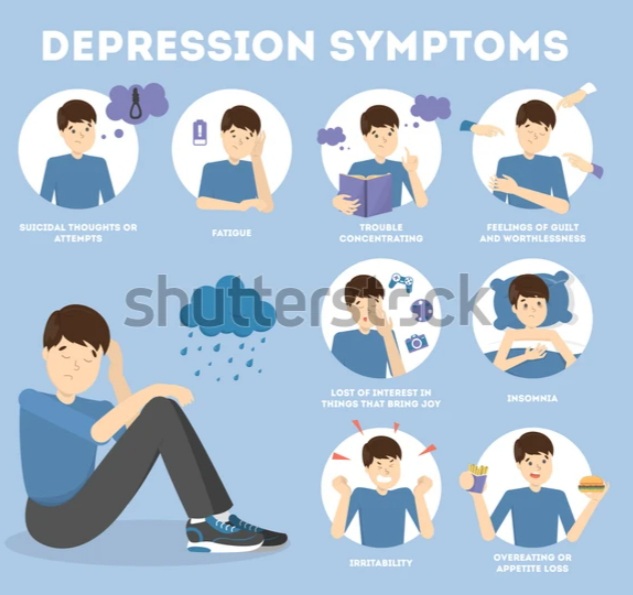
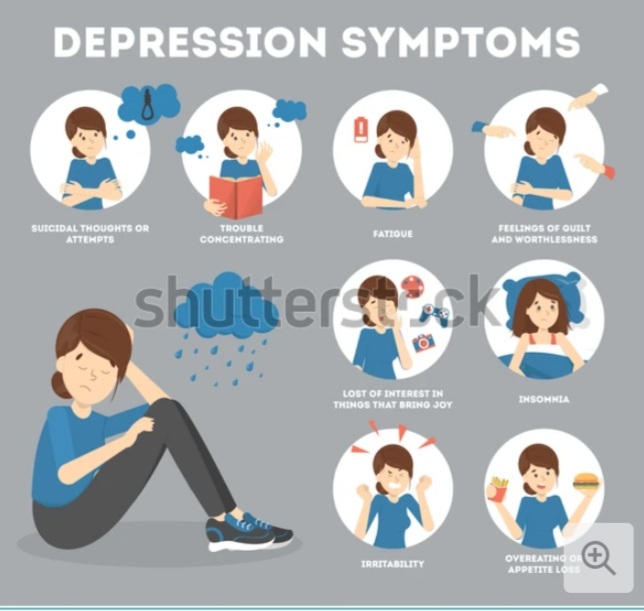
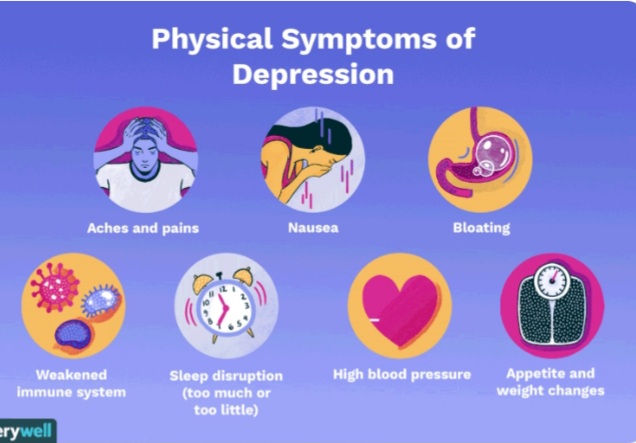
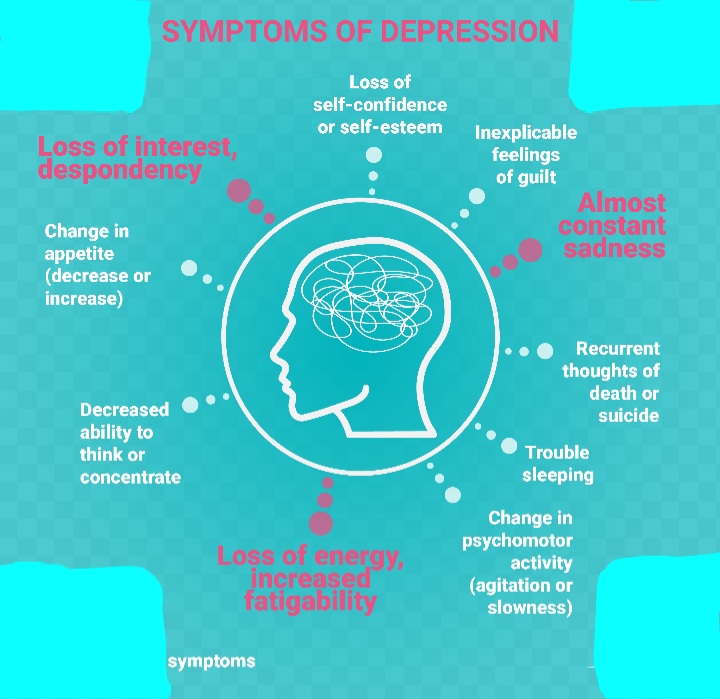
Depression symptoms :
Depression can be more than a constant state of sadness or feeling ” blue”. Major depression cane cause a variety of symptoms. Some affect your mood, and others afect your body. Symptoms may also be onging or come and go. The symptoms of depression can be experienced differently among men, women and children differently.
Men may experience symptoms related to their:
* Mood, such as anger, aggressive, irritability, anxiousness, restlessness.
* Emotional well- being such as feeling empty, sad, hopeless.
* Behavior, such as loss of interest, no longer finding pleasure in favorite activites feeling tired easily , thiughts of suicide, drinking- execessively , using drugs, engaging in high- risk activities.
* sexual interest, such as reduced sexual desire, lack of sexual performance
* cognitive abilities , such as inability to concentrate, difficulty completeing tasks, delayed responses during- conversations.
* sleep patterns, such as insomina, restless slepp, excessive sleepiness, not sleeping through the night.
* physical well- being, such as fatigue, pains, headache, digestive problems.
Women may experience symptoms related to their:
* mood, such as irritability
* emotional well- being, such as feeling sad or empty, anxious or hopless.
* congnitive abilities,such asthinking or talking more slowly
* behavior, such as loss of interest in activities, withdrawing from social engagements, thoughts of suicide
* sleep patterns, such as difficultu sleeping through the night, waling early, sleeping too much.
* physical well- being, such as decreases energy, greater fatigue, changes in appetite, weight changes, aches,pain, headaches, increased cramps.
Children may dxperiences symptoms related to their :
* mood such as irritability, anger, mood swings, crying.
* emotional well- being, such as feelings of incompetence or despair, crying, intense sadness
* behavior, such as gettkng into trouble at school or refusing to go to school, avoiding friends or siblings thoughts of death or suicide.
* cognitive abilities, such as difficulty concentrating, decline in school performance, changes in grades.
* sleep patterns, such as difficulty sleeping or sleeping too much
*physical well- being, such as loss of energy digestive problems, changes in appetite, weight loss or gain.
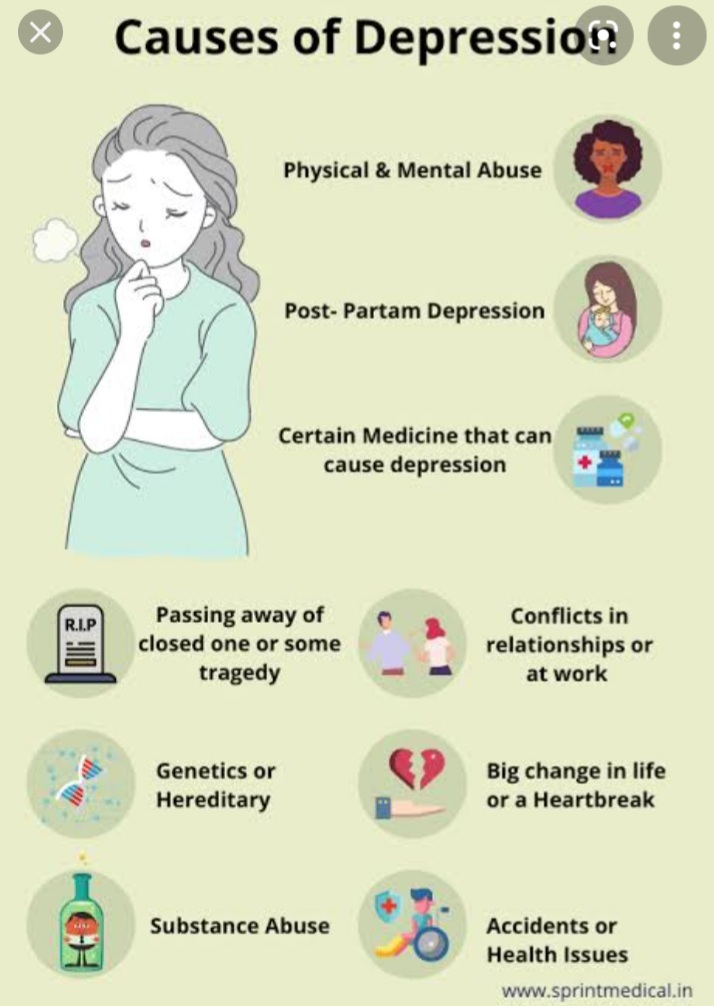
Depression causes :
There are several possible causes of depression. They can range from biological to circumstantial.
Common causes include ;
* Family history :
You’re at a higher risk for developing depression if you hace a family history of depression or another mood disorder.
* Early childhood trauma :
Some events affect the way your body reacts to fear and stressful situations
* Brain structure :
There’s a greater risk for depression if her frontal lobe of your brain is less active.
* Medical conditions :
Certain conditions may put you at higher risk, such as chronic illness, insomia, chroinc pain or attention- deficit hyperactivity disorder
* Drug use :
A history of drug or alcohol misuse can affect your risk.
Many factors can influence feelings of depression, as well as who develops the condition . The causes of depression are often tied to other elements of your health. Depression can be linked with to other health problems, your healthcare provider may also conduct a physical examination and order blood work.
Types of depression :
Depression can be broken into categories depending on the severity of symptoms. Some people experience mild and temporary episodes, whike other experience severs and ongoing depressive episodes.
There are two main types. Major depressive disorder and persistent depressive disorder .
Major depressive disorder :
Major depressive disorder is the more severe form of depression. It’s characterized by persistant feelings of sadness, hoplessness and worthlessness that dont’t go away on their own.
Persistent depressive disorder :
Persistent depressive disorder ( pDD) used to be called dysthymia. It is a milder, but chronic, form of depression.
It’s common for people with PDD to
* lose interest in normal daily activites.
* feel hopless
* lack productivity
* haveclow self- esteem
Depression can be treated successfully, but it’s important to stick your treatment plan.
Treatment for depression :
Living with depression can be difficult, but treatment can help improve your quality of life. Talk to your health care provider about possible options. You may successfully manage symptoms with one form of treatment ,or may find that a combinations of treatment works best.
“As long as I have life, as long as blood flows through this arm of mine, I shall not leave the cause of freedom…I am only a woman, only a poet. But as a woman, I give to you the weapons of faith and courage and the shield of fortitude. And as a poet, I fling out the banner of song and sound, the bugle call to battle. How shall I kindle the flame which shall waken you men from slavery…”
Introduction
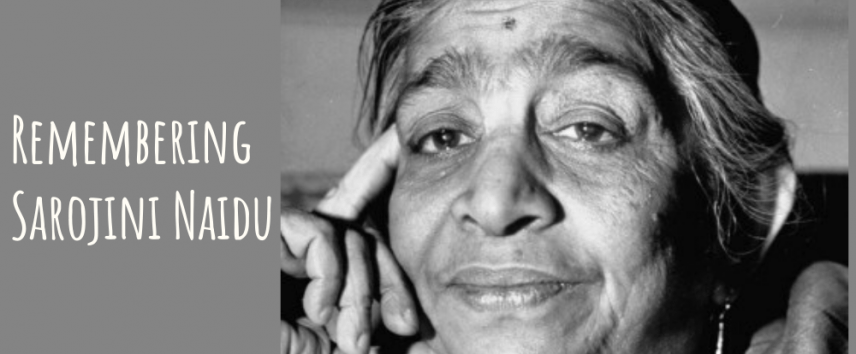
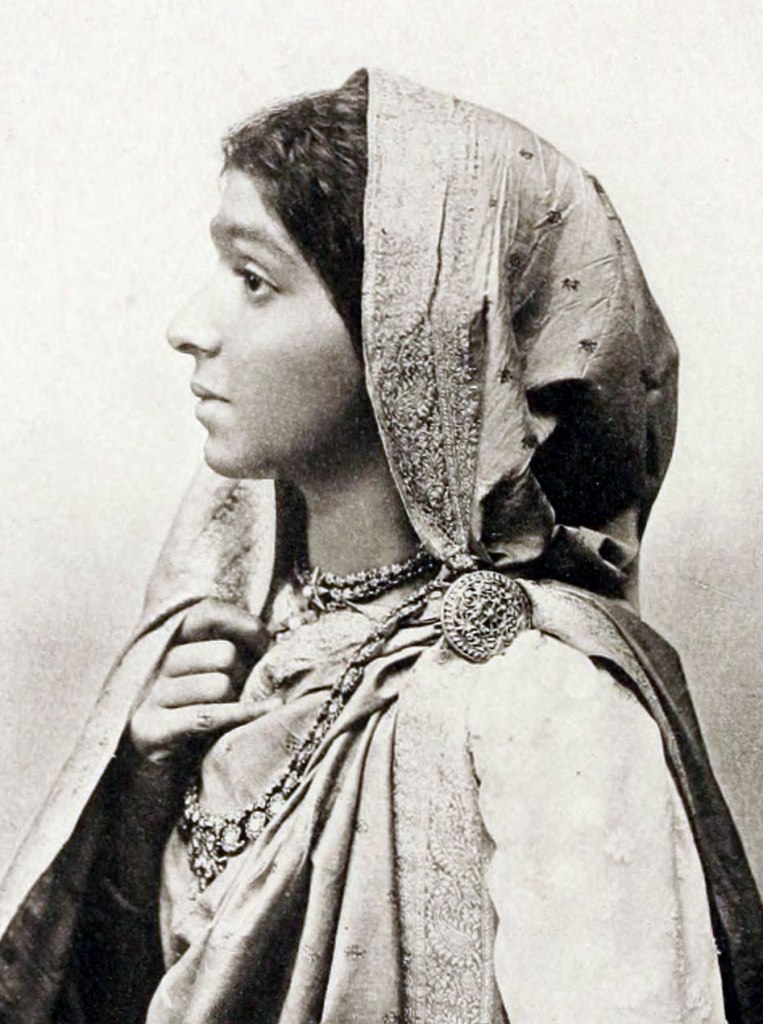
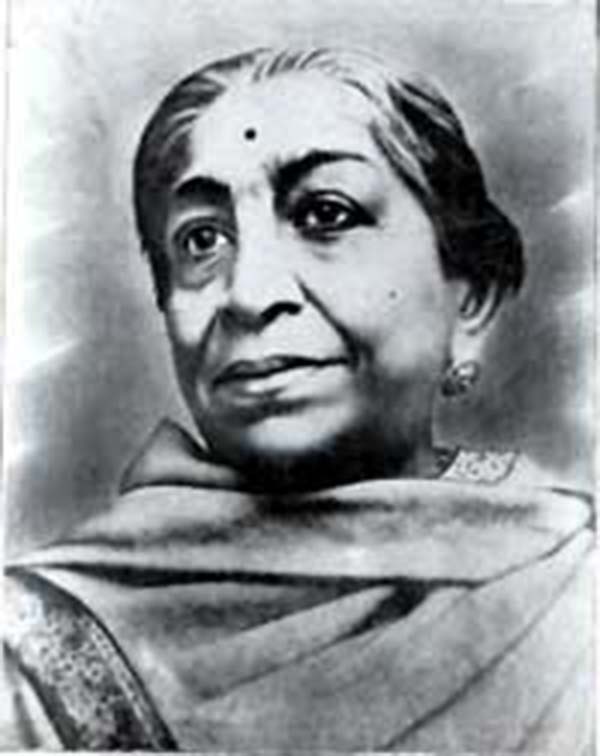
She was an Indian political activist and poet. A proponent of civil rights, women’s emancipation, and anti-imperialistic ideas, she was an important figure in India’s struggle for independence from colonial rule. Naidu’s work as a poetess earned her the sobriquet ‘the Nightingale of India’, or ‘Bharat Kokila’ by Mahatma Gandhi because of colour, imagery and lyrical quality of her poetry.
Birth and death
Born in a Bengali family in Hyderabad, Naidu was educated in Madras, London and Cambridge. Following her time in England, where she worked as a suffragist, she was drawn to Indian National Congress’ movement for India’s independence from British rule. She became a part of the Indian nationalist movement and became a follower of Mahatma Gandhi and his idea of swaraj. She was appointed as the President of the Indian National Congress in 1925 and later became the Governor of the United Provinces in 1947, becoming the first woman to hold the office of Governor in the Dominion of India.
Naidu’s poetry includes both children’s poems and others written on more serious themes including patriotism, romance, and tragedy. Published in 1912, “In the Bazaars of Hyderabad” remains one of her most popular poems. She married Govindarajulu Naidu, a general physician, and had five children with him. She died of a cardiac arrest on 2 March 1949.
Work
“Tell me no more of thy love, papeeha, Wouldst thou recall to my heart, papeeha, Dreams of delight that are gone, When swift to my side came the feet of my lover…”
– A Love Song From The North by Sarojini Naidu
1905: The Golden Threshold, published in the United Kingdom. 1912: The Bird of Time: Songs of Life, Death & the Spring, published in London. 1917: The Broken Wing: Songs of Love, Death and the Spring, including “The Gift of India” (first read in public in 1915) . 1919: Muhammad Jinnah: An Ambassador of Unity. 1943: The Sceptred Flute: Songs of India, Allahabad: Kitabistan, posthumously published. 1961: The Feather of the Dawn, posthumously published, edited by her daughter, Padmaja Naidu. 1971:The Indian Weavers.
After India attained independence, she became the first woman Governor of an Indian state, Uttar Pradesh. She served as governor till she passed away in March 1949, when she was working late in office.
As a Feminist
“Sarojini Naidu inspired the Indian Renaissance Movement and had a mission to improve the life of Indian woman.”
Bappaditya Bandopadhyay
Sarojini Naidu played an important role in women’s rights struggle in India. She helped in shaping Women’s Indian Association in 1917 with Annie Besant and others. The Association sought equal rights including the right to vote and represent. She presented the need to include more women in the Congress and in the freedom struggle. During 1918, British and Indian feminists including Naidu set up a magazine called “Stri Dharma” to present international news from a feminist perspective.
In its counterparts as public law , it widely known as “the law of sea “. It also called Admiralty law. the process of carrying goods through sea, rules concerning protection and maintenance of ships at sea, registration and damage to ships, marine insurance etc. , is covered under maritime laws .
As india is surrounded by water from the three sides , it created nature condition for Marin trade after the water territorial trade started.
Legislations prior to Independence : maritime laws in India were governed under the British government. There are some of the regulations which deal with various aspects of maritime in India.
Coasting Vessels Act, 1838
Indian Registration of Ships Act, 1841,
Admiralty Offences (Colonial) Act, 1849
Inland Steam Vessels Act, 1917
Indian Ports Act, 1908
Control of Shipping Act, 1947
Legislations after independence : after the independence sea laws mostly governed under article 297 of the constitution. And there are different lex on waters, continental shelf, EEZ and other maritime zones.
Some of the acts are there , for maritimes affairs . This are
The Merchant Shipping Act, 1958
The Admiralty (Jurisdiction and Settlement of Maritime Claims) Act, 2017.
Article 297 of the constitution
Marines crimes , are frequent offenses which have been committing in sea . There are some marine offences mentioned below –
Maritime Piracy
Smuggling Exotic plants and animals
Unauthorized entry
Illegal Carrying of Weapons and artillery
Maritime Drug trafficking
Maritime Human Trafficking
Discharging in Ocean Waters
Sailing or fishing in unauthorized areas–
Tax evasion
Maritime piracy is an illegal act of violence, detention or destruction against a ship , on person or property, for private purposes, by the crew or passengers of a private ship . Piracy also includes inciting and intentionally facilitating such acts of violence, and voluntarily participating in the operation of a pirate ship . Pushiment for piracy is prescribed in anti maritime piracy bill 2019 , that is (i) life imprisonment ; or (ii) death , if the act of piracy is caused or seek to cause death.
Smuggling Exotic plants and animals : For a ship without authorization, its illegal to do Smuggling of exotic plants and animals for wildlife smuggling. This is because wildlife smuggling involves the isolation of plants and animals. When they arrived at the destination, they may not be able to adapt to the new place. Animals may also cause vulnerable diseases in people. And it may also leads to the serious illness or death of animals . To smuggle Endangered Species of Wild Fauna and Flora , is crime in maritime law.
Unauthorized entry : the ship must seek permission from government of that nation , For entry in a nation’s marine boundary . Sailing on that nation’s waters without a permission is a maritime crime and punishable in all countries. And a person who illegally and secretly boards and hides in to the ship, without the consent of ship owner and master, to travel into international waters to reach some other country without any monitory payment and legal documents , is known as stowaway.
Illegal Carrying of Weapons and Artillery : to carry weapons and artillery, throughout the water territory of any country , which is not legally bonded , is a martime offence .Goods which are sensitive in nature can be transported by specific ships only . Bringing in weapons on a ship, is not authorized , it is a punishable offense.
MaritimeDrug trafficking : maritime drug trafficking means transportation of illegal drugs produced in this region to global consumer markets through using ships . To sell drug, is illegal in itself and trafficking of it become more severe offence .
Maritime Human Trafficking : maritime Human Trafficking involves the use of force, fraud, or coercion to obtain some type of labor or commercial sex act , through exporting victim in other country vie ships .
Discharging in Ocean Waters : it refers to the sewage discharge done by the vessels and ships in the water territory of any nation . Marine pollution is a serious issue and almost all countries have strict policies against ships discharging sewage or oil into their coastal waters.
Sailing or fishing in unauthorized areas : it’s an offence to do sailing in an areas of water territory where the sailing or fishing is not allowed .
Tax evasion : ship owners trying to evade taxes through false documentation or incorrect representation of cargo material have been increasing rapidly, posing a threat to maritime security. It’s a white collar crime.
Happiness is a state of mind which we possess when something good happens to us and we feel that goodness at our heart. This is an abstract feeling which is not materialistic and cannot be bought by money or some other possession. Happiness brings with itself a lot of positivity and also provides us with the motivation to go ahead and achieve other milestones. Happiness also maintains the zeal and enthusiasm for doing things and experiencing new paths. Happy state of mind also increases the age of people and lets them live a longer life.
Happiness is a key to healthy life; it sets a soul free and encourages it to explore the world and also gives us power. Happiness is a part of being successful in life it is that fruit which we all want to grow and thus we do so much of hard work throughout our entire life so that we can live a happy peaceful life after all. Happiness cannot be ever faked it comes straight out from our heart and it is priceless. At the end of a hard-earned day all we care for is some peace and happiness in our families and ourselves so that we can start another fresh day ahead.
4 levels of Happiness :
” Happiness is the meaning and the purpose of life, the whole aim and end of human existence” . Of course, there are a number of different types of happiness and each person has different things in life that make them happy and unhappy. It is important for people to be self- aware and to truly understand what makes them happy and content as individuals. Take a look at the different types of happiness below and think about the things in your life that maku you happy.
There are main types of happiness, these being related to; pleasure, passion and purpose.
Pleasure :
Pleasure is important to us human beings but its related benefits are relatively short term. A delicious meal, a nice meeting with friends or listening to our favourite music all produce endorphins and offerus happy moments that can be the highlights of our day. However, these singular moments don’t equate to long- term satisfaction.
Passion :
Being passionate about something whether a hobby cause or group activity and actively being involved with it can be a great source of happiness. These activites deliver contentment in the medium term and provide a sense of achievement and variety in life
Purpose :
Feeling like you are part of something bigger than yourself and that your actions will really matter can lead to a deep sense of fulfillment and long- term happiness. We all like to think that our lives have menaing and if you can find your ” calling” or be part of great team, group or organisation that are making a difference then chances are you will be truly happy.
Ultimate Good :
The fourth level of happiness is known as ultimate good. This is a fundamental desire we have as human beings for perfect truth, goodness beauty and love . Many people find this form of happiness through their religious beliefs. Even those who don’t believe in a higher power can find happiness in their pursuit of truth, beauty, love and goodness in themselves and in helping others. This level is happiness is often considered the most enduring and profound.
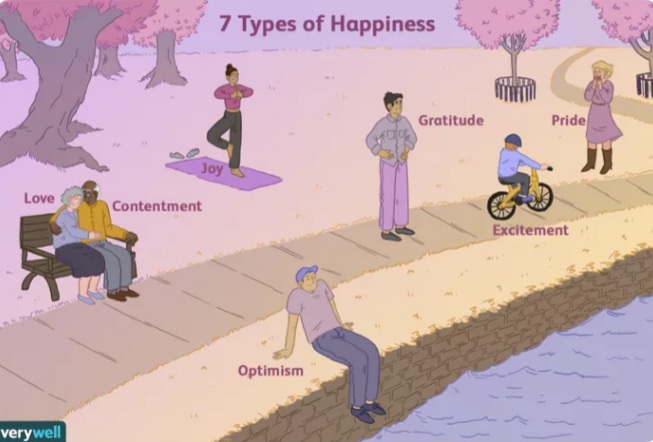
Different types of Happiness :
1. Joy :
Joy is when you win a hard- fought competition, you finally accomplish a project you’ve wanted to or times when you doible over in uncontrolled laughter when someone relates a hilarious story. Joy makes you feel great about yourself, makes you feel confident, assertive, capable, loved and fulfilled.
The feeling of joy is fleeting joy is presemt at the moment. It is possible to feel joy despite grief or uncertainty. Happiness can be found in many things. It transforms tough times into blessimgs and turns heartache into gratitude.
2. Love :
Second, on the list pf different types of happiness is love. Which means other things to different people still, a wholesome ,reciprocared love with another person seems to be the fundamental predictor of happiness. Here, we are not just talking about romantic love, it means to love with friends and family, as well as partners. When you’re in love, you’ re blissfully happy all the time.
3. Contentment :
The secret of Happiness is contentment which means a state of happiness or satisfaction . It isn’t a matter of being satisfied with what you have. Contentment not only holds the power tobmake you happy, but it will transforms your life in many ways.
4. Optimism :
Optimism is a type of happiness that reflects the belief that events or experience outcomes will generally be positive. The key to attaining happiness is to have an optimistic approach to life, as optimism reflects hope and faith, helping people believe that this world is the right place
5. Gratitude :
Gratitude creates positive emotions, like different types of happiness, joy, love, and contentment, it can undo the hold of negative emotions. It goes hand in hand with mindfulness in its focous on the present and greatfulness for what we have now, rather than wanting more and more.
6. Excitment :
Excitment can be anything from about a new job or moving to a different place and motivates youbto work harder and channel that positive energy into more constructive activity. Excitements is fleeting. It dissipates rather quickly and can turn into ennui. It sometimes acts as a motivating factor , and execitment often leads people to likely make a decision. Even a bad one as excitment leads to impulsivity.
7. Pride :
Last on the list of different types of happiness is pride. Yes, pride and happiness go hand in hand. You can take pride in your work and your family, your haome and yourself, and in anything you put effort, attention, and love into. It is a positive feeling in reactive to a jouous event.
There are 7 essential keys to happiness and successthat will help to materialize both those things in your life:
* Gratitude.
* Be present
* Manage time Effectively
* Set smarter Goals
* Embody an Empowering morning Routine
* Tackle the MITs
* Focus on Health and wellbeing.
To get the most bang for the happiness buck, I’ve realized that I should complete four stages of reveling in a moment of happiness :
“Science has learned recently that contempt and indignation are addictive mental states. I mean physically and chemically addictive. Literally! People who are self-righteous a lot are apparently doping themselves rhythmically with auto-secreted surges of dopamine, endorphins and enkephalins. Didn’t you ever ask yourself why indignation feels so good?”
~ David Brin
Introduction
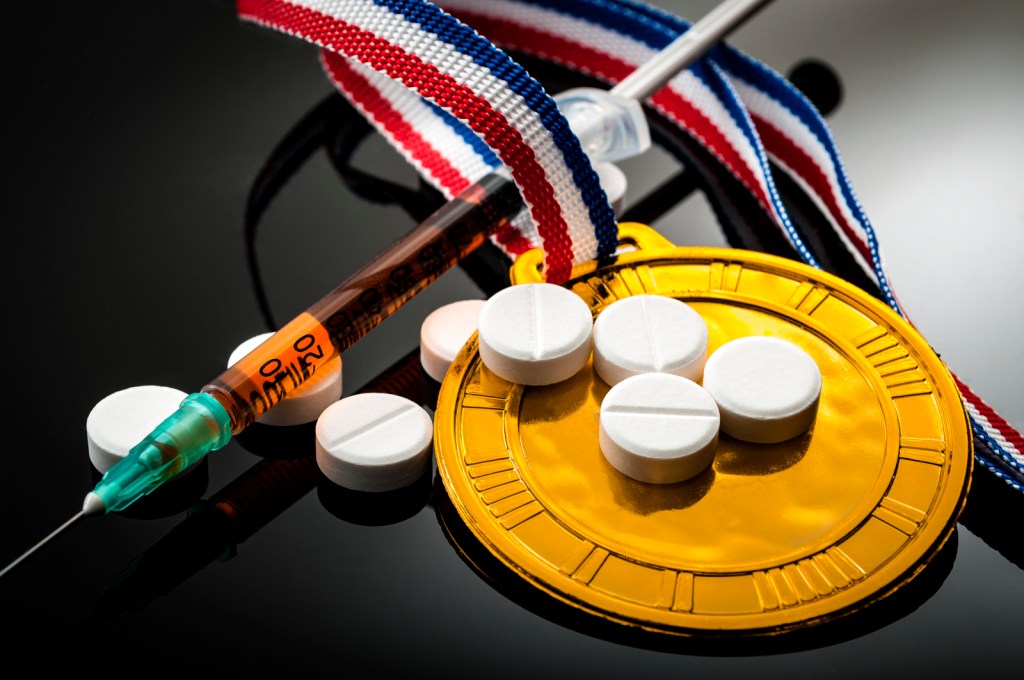
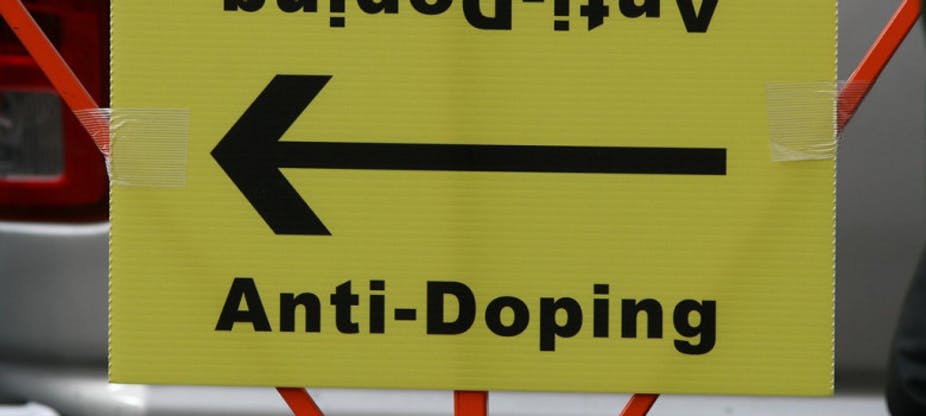
Doping in sport is a widespread problem not just among elite athletes, but even more so in recreational sports. In scientific literature, major emphasis is placed on doping detection, whereas detrimental effects of doping agents on athletes’ health are seldom discussed. Human growth hormone also increases muscle mass, although the majority of that is an increase in extracellular fluid and not the functional muscle mass.
The term doping is widely used by organizations that regulate sporting competitions. The use of drugs to enhance performance is considered unethical, and therefore prohibited, by most international sports organizations, including the International Olympic Committee.
History
According to the World Anti-Doping Agency (WADA), the term “doping” probably comes from the Dutch word “dop,” an alcoholic beverage made of grape skins that was used by Zulu warriors to make them stronger in battle.
Ancient Greek athletes used special diets and stimulating potions to improve performance, and 19th century endurance athletes indulged in strychnine, caffeine, cocaine and alcohol.
The American specialist in doping, Max M. Novich, wrote: “Trainers of the old school who supplied treatments which had cocaine as their base declared with assurance that a rider tired by a six-day race would get his second breath after absorbing these mixtures.”[8] John Hoberman, a professor at the University of Texas in Austin, Texas, said six-day races were “de facto experiments investigating the physiology of stress as well as the substances that might alleviate exhaustion.”
Effects of doping in sports
It builds muscle but causes abnormal growth, heart disease, diabetes, thyroid problems, hypertension, blood cancers and arthritis. Other adverse effects include joint pain, muscle weakness, visual disturbances, enlarged heart and diabetes.
Other side effects include:
Heart palpitations.Heart rhythm abnormalities.
Weight loss.
Tremors.
Mild high blood pressure (hypertension)
Hallucinations.
Stroke.
Heart attack and other circulatory problems.
Constipation.Skin rash or dermatitis.
Diarrhea.
Dizziness.
Drowsiness.
Dry mouth.
Headache.
Insomnia.
UFC ( Ultimate Fighting Championship ).
In December 2013, the UFC began a campaign to drug test their entire roster randomly all year-round. Random testing, however, became problematic for the promotion as it began to affect revenue, as fighters who had tested positive would need to be taken out of fights, which adversely affected fight cards, and therefore pay-per-view sales.
According to Steven Marrocco of MMAjunkie.com, about 31% of UFC fighters subjected to random testing since the program first started have failed due to using performance-enhancing drugs. That is approximately five failed tests for every sixteen random screenings.
From July 2015, the UFC has advocated to all commissions that every fighter be tested in competition for every card. Lorenzo Feritta, who at the time was one of the presidents of the UFC, said, “We want 100 percent of the fighters tested the night they compete”. Also, in addition to the drug testing protocols in place for competitors on fight night, the UFC conducts additional testing for main event fighters or any fighters that are due to compete in championship matches.
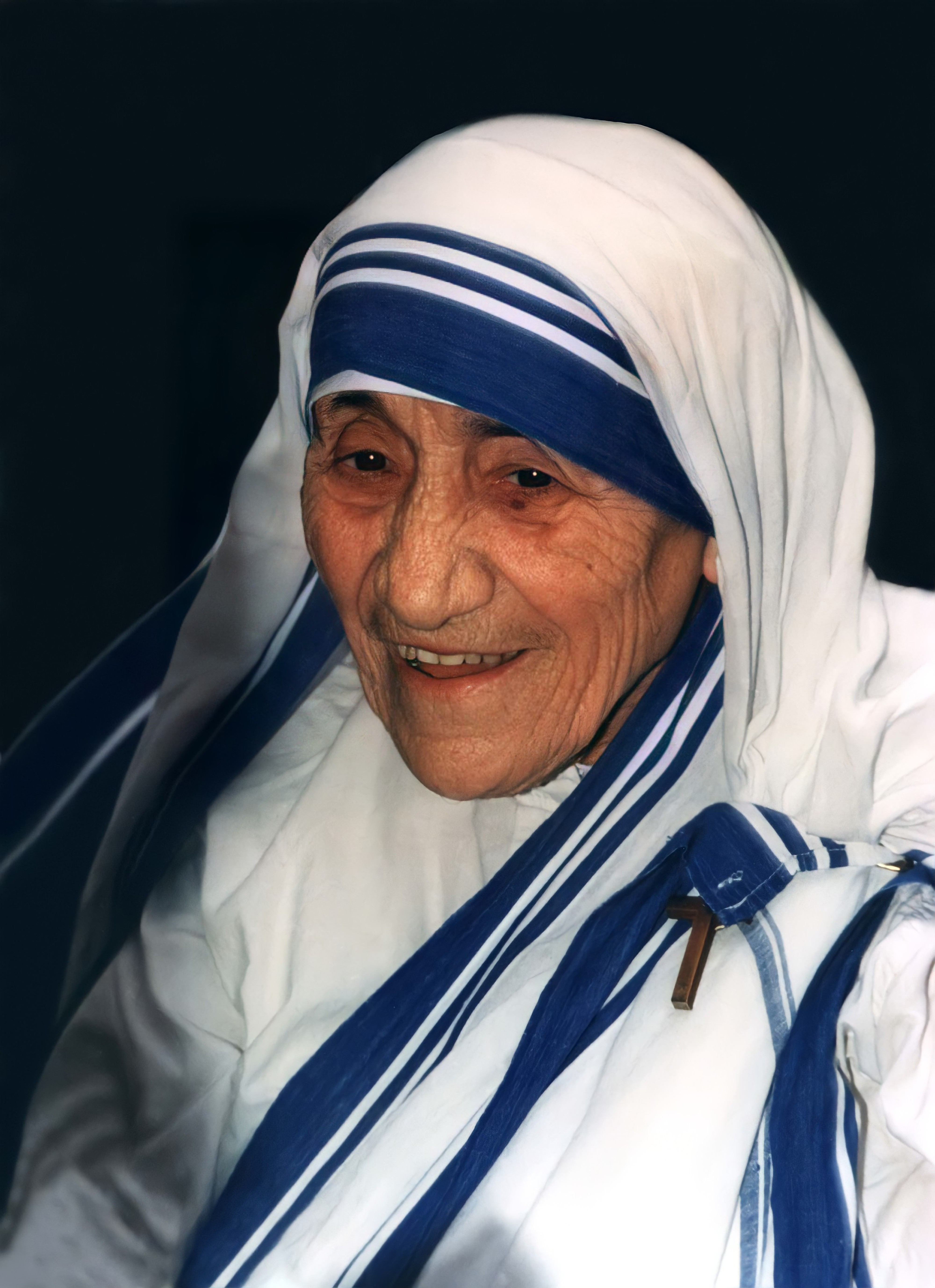
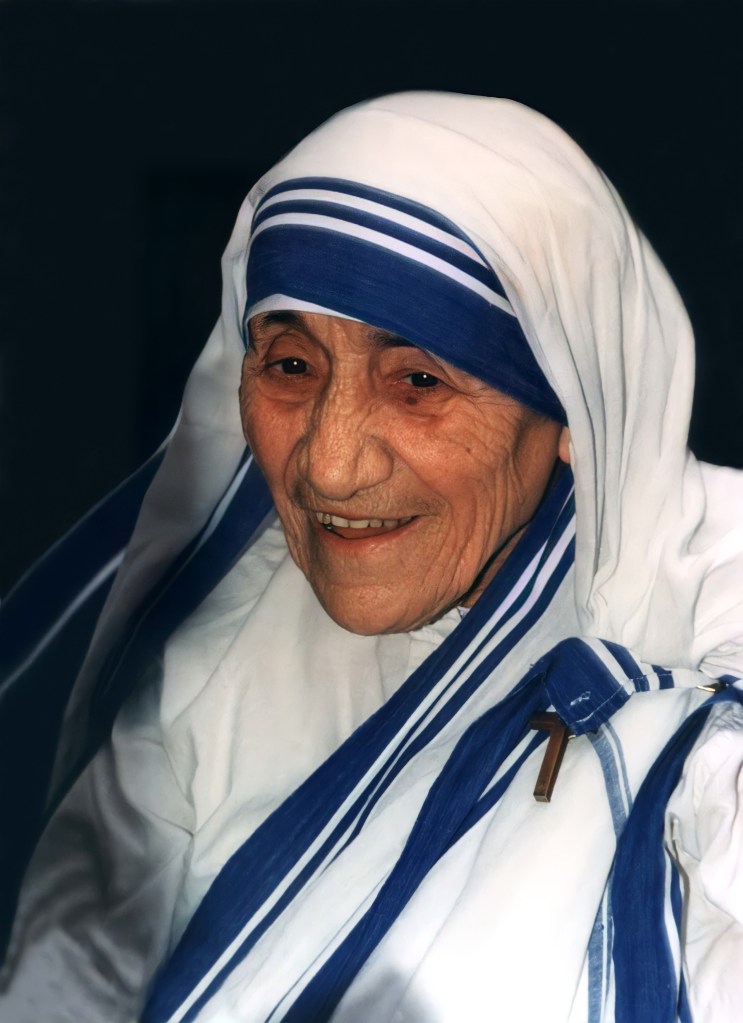
Nun and missionary Mother Teresa, known in the Catholic church as Saint Teresa of Calcutta, devoted her life to caring for the sick and poor. Born in Macedonia to parents of Albanian-descent and having taught in India for 17 years, Mother Teresa experienced her “call within a call” in 1946. Her order established a hospice; centers for the blind, aged and disabled; and a leper colony.
In 1979, Mother Teresa received the Nobel Peace Prize for her humanitarian work. She died in September 1997 and was beatified in October 2003. In December 2015, Pope Francis recognized a second miracle attributed to Mother Teresa, clearing the way for her to be canonized on September 4, 2016.
Mother Teresa’s Family and Young Life
Mother Teresa was born on August 26, 1910, in Skopje, the current capital of the Republic of Macedonia. The following day, she was baptized as Agnes Gonxha Bojaxhiu.
Mother Teresa’s parents, Nikola and Dranafile Bojaxhiu, were of Albanian descent; her father was an entrepreneur who worked as a construction contractor and a trader of medicines and other goods. The Bojaxhius were a devoutly Catholic family, and Nikola was deeply involved in the local church as well as in city politics as a vocal proponent of Albanian independence.
In 1919, when Mother Teresa — then Agnes — was only eight years old, her father suddenly fell ill and died. While the cause of his death remains unknown, many have speculated that political enemies poisoned him.
In the aftermath of her father’s death, Agnes became extraordinarily close to her mother, a pious and compassionate woman who instilled in her daughter a deep commitment to charity. Although by no means wealthy, Drana Bojaxhiu extended an open invitation to the city’s destitute to dine with her family. “My child, never eat a single mouthful unless you are sharing it with others,” she counseled her daughter. When Agnes asked who the people eating with them were, her mother uniformly responded, “Some of them are our relations, but all of them are our people.”
Education and Nunhood
Agnes attended a convent-run primary school and then a state-run secondary school. As a girl, she sang in the local Sacred Heart choir and was often asked to sing solos. The congregation made an annual pilgrimage to the Church of the Black Madonna in Letnice, and it was on one such trip at the age of 12 that she first felt a calling to religious life. Six years later, in 1928, an 18-year-old Agnes Bojaxhiu decided to become a nun and set off for Ireland to join the Sisters of Loreto in Dublin. It was there that she took the name Sister Mary Teresa after Saint Thérèse of Lisieux.
A year later, Sister Mary Teresa traveled on to Darjeeling, India, for the novitiate period; in May 1931, she made her First Profession of Vows. Afterward, she was sent to Calcutta, where she was assigned to teach at Saint Mary’s High School for Girls, a school run by the Loreto Sisters and dedicated to teaching girls from the city’s poorest Bengali families. Sister Teresa learned to speak both Bengali and Hindi fluently as she taught geography and history and dedicated herself to alleviating the girls’ poverty through education.




























 Eduindex
You must be logged in to post a comment.