Non Personal data faces pushback from US giants

Vaishali Singh

Government’s plan to regulate “non-personal” data has jolted US tech giants Amazon, Facebook, and Google, and a group representing them is preparing to push back against the proposals, according to sources and a letter seen by Reuters. A government-appointed panel in July recommended setting up a regulator for information that is anonymised or devoid of personal details but critical for companies to build their businesses.

The panel proposed a mechanism for firms to share data with other entities – even competitors – saying this would spur the digital ecosystem. The report, if adopted by the government, will form the basis of a new law to regulate such data.

But the US-India Business Council (USIBC), part of the US Chamber of Commerce, calls imposed data sharing “anathema” to promoting competition and says this undermines investments made by companies to process and collect such information, according to a draft letter for the government.

“USIBC and the US Chamber of Commerce are categorically opposed to mandates that require the sharing of proprietary data,” says the USIBC’s previously unreported letter, which is likely to be completed and submitted in coming weeks to India’s information-technology ministry.

“It will also be tantamount to confiscation of investors’ assets and undermine intellectual property protections.”

A USIBC spokeswoman had no comment on the draft letter. The US Chamber of Commerce didn’t respond to Reuters queries.

The head of the panel, Kris Gopalakrishnan, a founder of technology giant Infosys, said the group will work with the government to review input from the industry.

Ministry of Electronics and Information Technology, Amazon, Facebook, and Alphabet’s Google  did not respond to requests for comment. The report is open for public comments until September 13.


Trump executive order possibly provide better market access to indian pharma companies in U.S

President Donald Trump executive orders, aimed at substantially reducing drug prices for the US residents, underscore the campaign pitch of the next election. Pharma pricing has been one of the most widely debated topic in America and we are likely to see some pre-election action on the issue.

Trump said the first order “will require federal community health centers to pass the giant discounts they receive from drug companies on insulin and EpiPens directly to their patients,” while the second allows some drug importation and the third will take discounts away from middlemen such as pharmacy benefits manager and give them to patients.

The fourth order will require that Medicare purchase drugs at the same price as foreign countries pay, Trump said. It “will end global freeloading on the backs of American patients and American seniors.

Though the enforcement of the orders before the November 3 election looks difficult because of legal hurdles and various caveats, if they go through Indian drug manufacturers may stand to benefit in terms of increased market access on the formulation side.

As a result of the orders, the heads of major drug companies have requested a meeting on Tuesday to discuss how to lower drug prices and out-of-pocket expenses for Americans, the president added. If talks are successful, the administration may not need to implement the fourth executive order.

The Trump’s order in general is aimed at reducing the gains of middlemen in the US pharma value chain and to that extent, at least optically, it doesn’t impact manufacturers directly. But the way drug price negotiations are usually done it can have an indirect impact on the large pharma manufacturers.

The most important executive order from the manufactures point of view is the fourth one. Spooked by this order, the stocks of the US-based big pharma companies reacted negatively on Friday. While the order doesn’t distinguish between patented drugs and generic drugs, it is most likely meant for the former as the generic market is already quite competitive.

Since the whole idea of the executive orders is to make drugs affordable, there is a good chance of a revamp of the US medicare and the way drug price negotiations are done. This can have a positive outcome on market access. In our opinion, Indian drug manufactures such as Cadila, Lupin, Cipla, Dr Reddy and Sun Pharma and a few small-sized pharma companies, such as Laurus Labs, may benefit if such an event unfolds. In such a case, volume opportunity may offset the incremental pricing erosion.

Trump over the years often has stated that drug companies are “getting away with murder” and prices are “out of control,” though this year he has been meeting with pharma execs as their companies work on a CoronaVirus vaccine.

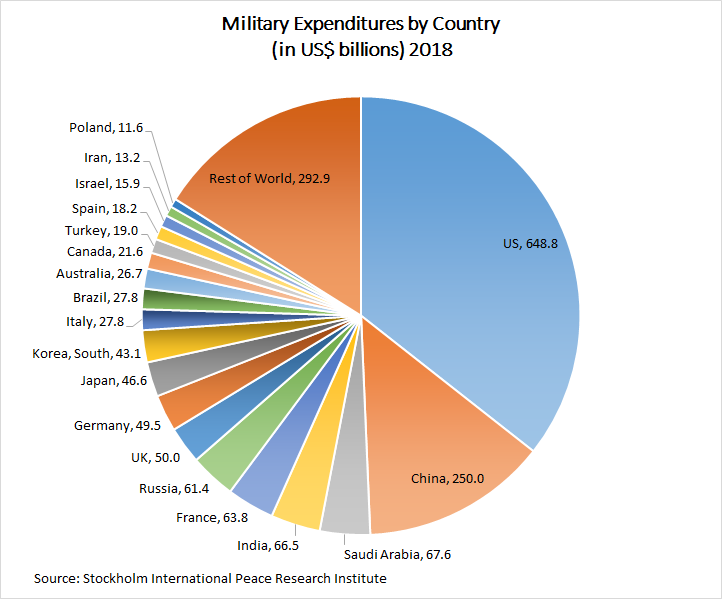
U.S. Defense Economy…

The police, obviously, they’re not in the business of of profiting from private acquisitions. We’ve seen extensive lobbying from defense industries who produce educational videos for police who were spending hundreds of millions of dollars to directly lobby Congress for defense spending, but also for these police programs. The police also have their own lobbying organizations that work toward security budgets and equipment for local law enforcement. The National Fraternal Order of Police is one of them and has lobbied in favor of federal grants that are responsible for the militarization of police. It’s really a variety of Homeland Security grants administered by the cops office, the home, the Department of Homeland Security, etc., that have allowed departments to directly purchase military grade equipment. And this has been essential to stimulating a domestic law enforcement market for military contractors. In some cases, the folks who provide the equipment actually directly assist police departments in making these grants. There’s even a Web site that is sponsored by these defense contractors and other providers of police equipment to aid departments in the production of these grant proposals. This whole industry grew significantly during the War on Drugs campaign in the 1970s.

Iranian threats 'put on hold', says US defence chief - BBC News
Congress passed a law that focused on incorporating cooperation between the military and the local law enforcement, particularly related to countering drug crimes and the war on drugs. Right. That was sort of the first connection between the military and domestic law enforcement. In 1989, Congress passed the National Defense Authorization Act, temporarily allowing the Department of Defense to transfer excess military equipment to federal and state agencies. The program continued until the 1997 National Defense Authorization Act expanded it to include local law enforcement and made it permanent under a new name. The 1033 program that began a massive transfer of military equipment to local police departments free of charge as long as they paid for shipping and maintenance. That 1033 program was the congressional authorization that allowed police departments to basically go online. There were catalogs of of weapons and vehicles and aircraft and watercraft and any kind of military surplus military equipment was available for the asking. And it was at no cost to law enforcement agencies.

Military budget - Wikipedia
Departments may purchase shotguns that are placed in police vehicles as a routine matter, and some departments are purchasing a variety of less lethal weaponry with their own resources. But when we see sniper equipment, armored vehicles, large amounts of body armor, this is often the result of federal spending. Since its inception, over 11,500 domestic law enforcement agencies have taken part in the ten thirty three program, receiving more than 7.4 billion dollars in military equipment. What you end up seeing is as a result of the 1033 program, local law enforcements continue to ramp up what we call special task force, like SWAT teams, gang task force, drug task force. Right. That all utilize this excess military material. In July 2014, Congressman Alan Grayson proposed that legislation to limit the transfer of certain weapons through the 1033 program. The amendment was met with immense opposition failing on a bipartisan vote of 62 to 355.
The people who voted not to change the 1033 program received 70 percent more money in campaign contributions from the defense sector than those who wanted restrictions. One of the really troubling developments about the involvement of the federal within the direct subsidy of purchases of militarized equipment is that this is often really about creating a new marketplace for defense contractors instead of really putting questions of public safety first. Besides providing free military equipment, the federal government also allows the police to purchase new equipment using their own funds. Under the 1122 program, it also gives local police departments the same discounts enjoyed by the federal government. We’ve seen instances across the country where local governing bodies, like boards of selectmen and mayors and city councilors are often unaware that tax dollars have been expended to acquire these kinds of military weapons and military vehicles. What makes both 1033 and 1122 programs so powerful is the lack of clear oversight and accountability.

Trump says 'revved up' economy will fund $54bn rise in military ...
The 1122 program, as an example , isn’t a grant or transfer program and thus isn’t required to be monitored by the federal . Meanwhile, the 1033 program has put lethal weapons within the hands of officers who haven’t any justifiable need for such equipment. We’ve seen instances reported of some small towns, even some college and university police departments that were acquiring military grade weapons with none demonstrable need for the utilization of these or the acquisition of these weapons. After the events in Ferguson, the Obama administration sought to tighten the 1033 program with additional requirements and restrictions after months of confrontations on America’s streets. President Obama today banned the federal government from giving some types of military equipment to local police. We’ve seen how militarized gear can sometimes give people a sense like there’s an occupying force as against a force that’s a part of the community that’s protecting them and serving them. And this led to calls in Congress to eliminate 1033 and eventually measure an executive order by the Obama administration to place some limits on the type of equipment that could be used, things like bayonets and turreted armored vehicles.
The Obama administration also required police agencies to justify purchases of equipment considered potentially lethal. President Trump, however, rescinded all of those measures within two years in office. Obama administration made some efforts to increase accountability in auditing of this. But even then, the restrictions and oversight were quite limited. Under the Trump administration, there’s even less evidence of any oversight. Any sense that we know how this equipment is being used or whether or not officers are being properly trained and how to use it. In some cases, equipment transfer through these programs has simply vanished due to a lack of oversight and poor bookkeeping.

Maximising the economic benefit of Australia's defence projects ...

There’ve been a number of situations where there have been audits of local police departments to try to figure out what they’ve done with this equipment. And these departments have been unable to provide adequate records. We don’t know if this is a local sheriff taking home camping supplies or if this is about, you know, stuff that’s really gone missing, has been resold or has just simply been lost. Oftentimes, the militarization of the police force might be what’s distracting them from their original purpose, protecting our communities.

Why Australia is least affected by recession!!!

America’s economy is approaching a big milestone. If it keeps humming until July 2019, it’ll be the longest expansion in U.S. history. It would be exactly one decade and one month old by then. But there’s another country with an even more impressive run It’s even called the ‘lucky country’ Three big lessons from Australia.

  1. Be smart.
  2. Be organized.
  3. Be lucky.

So, if I’ve got any advice for other countries, it’s try and be as lucky as Australia That luck has to do with Australia’s treasure trove of natural resources. You know Australia is on the other side of the world and sitting on tremendously valuable minerals right at the point where the Chinese economy is just around the corner and exploding. Australia and every one its natural resources were within the right geographic neighborhood even as the Chinese economy began to begin . And it just so happens that China did a big fiscal stimulus in 2008 and spent a great deal of money building new cities. So all of these resources were drawn from places like Australia. So that also served as a huge tailwind at a time when developed markets were in a whole lot of trouble.

What Currency Is Used In Australia | Australian Dollar : Compare ...

The year 2008 was a time of economic turmoil The Global Financial Crisis hit and markets crumbled around the world. But as it turns out this was also a year for Australia’s economic management to really show off At the time the government had a very helpful and very low level of debt. One reason? Pension reform in the 1990s. Australia set up a compulsory retirement system called the superannuation system. It requires employers put money into its employees’ retirement savings.

Since companies and citizens have to build up retirement savings, some of the financial burden to pay off pensions was taken off of Australia’s government As other economies reeled in the wake of the 2008 crisis, the Australian Government was then able to put money directly into people’s bank accounts This boosted consumer spending in order to stimulate growth In 2008, the Australian Government unlike some other developed market governments actually jumped in very quickly with fiscal stimulus, so that helped to kind of minimize the effect of the crisis The country’s numbers continued to look sluggish after the financial crisis. But they never quite dipped low enough or for long enough to satisfy the definition of a recession. It takes two quarters of negative growth to fall into a recession. Australia’s economy did post a couple of negative quarters since 2008, but no country’s perfect. Overall Australia’s economy has been managed pretty much in recent years partly due to a robust and stable financial institution.

Reserve Bank of Australia – Australia's LGBTQ Inclusive Employers

Australia has an independent financial institution and it is a very well-run financial institution . It also has a floating exchange rate and the exchange rate helped it adjust to international shocks. Australia’s economic reforms gave it flexibility in times of hardship. For example, floating the Australian dollar In 1983, Australia’s government moved the dollar onto a floating exchange rate This meant that the dollar would be valued by supply and demand instead of being subject to influence from its government or its central bank It allows the economy to react to shocks as well Typically when an economy is hit by some sort of negative shock. The currency will adjust. It will depreciate and that helps promote exports. Another reason behind Australia’s economic diary lies in its immigration policy. Since the late 1990s, Australia has seen growth in temporary migration, many arriving to the country on student or temporary work visas. The number of temporary migrants peaked in the year 2000. However a recent change to immigration law in 2018 gave visa applicants more hurdles to get through if they wanted to come to the country Even when our GDP per capital average incomes aren’t rising by much because the number of people continues to rise that means the total GDP continues to rise at even more rapid pace Part of that’s underpinned by much faster population growth Most experts think Australia’s economy remains strong in 2019, but it’s not without risks.

Australia’s suffering at the instant from pretty weak wage growth. That’s worrying a lot of people. There’s a lot of fear right now that China is hitting a wall. That will hit demand for Australian products. The good news is to the extent that the Chinese are buying commodities hopefully will find buyers from overseas for many of those commodities if the Chinese are not there The bad news is the rest of the world economy is not doing that well.

Australian economic growth slows, enters per capita recession ...

Best Construction Management Software for Small Businesses : Big Exclusive >>>>>>>>

A project is a series of related a task which when they are carried in the correct order will lead to the completion of the project. Projects are temporary, generally resulting in the creation of a tangible product or outcome. A construction project, sometimes just referred to as a ‘project’, is the organised process of constructing, renovating, refurbishing, etc. a building, structure or infrastructure. The project process typically starts with an overarching requirement which is developed through the creation of a brief, feasibility studies, option studies, design, financing and construction.

Construction projects are typically one offs. That is, a project team, brief and financing are put together to produce a unique design that delivers a single project. Once the project is complete the team is disbanded and sometimes will not work together again. This can make it difficult to develop ideas or relationships, and so lessons learned are often not carried forward to the next project. The exceptions to this are repeat developers such as supermarket chains, housebuilders, and so on.

Credit : Third Party Reference

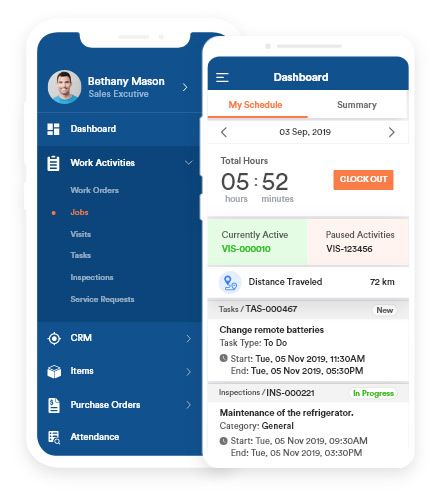
A construction software provides real time access to construction scheduling, documents, change orders, photos, warranty management etc. Construction is a task-driven business and construction project management software plans it accordingly. If you are into the construction business you should consider having one of the top construction software for better productivity. List of the top-rated construction management software’s currently authorised by United States government are given as below:

  1. ProcoreConstruction Project Management Suite:

 Procore has been one of the most talked about construction management software in the last few years. The reason is not just the quality rich features but the efficiency it provides to the project management team. Construction companies can manage multiple construction projects with ultimate visibility and without going remote. Procore ensures quality and safety by mitigating real-time risks and accessing data just a click away. Labour Management, Financial management, Time management are other important features that make Procore leading software.

Procore Construction Management Features: Accounting Integration, Budget Tracking/Job Costing, Change Orders, Commercial, Contract Management, Contractors, Residential, RFI & Submittals, Subcontractor Management.

  • Oracle AconexConstruction Project Management Software:

Oracle Aconex is cloud-based construction management software that connects major construction and engineering projects. Aconex is one of the best solutions to manage information and work process across your projects while handling multiple assignments. Aconex deals with document management, project controls, workflow management, BIM management, quality, and safety of projects, providing insights into projects and analysing data, bidding and estimating quotes.

Credit : Third Party Reference

Oracle Aconex Construction Management Features: Budget Tracking/Job Costing, Change Orders, Commercial, Contract Management, Contractors, Incident Reporting, Residential, RFI & Submittals, Subcontractor Management.

Now that you have fully understood the construction management software, you can start scheduling a call with a number of vendors to discuss your project management needs. You can and should weigh those vendors in terms of their software capability, vendor reputation and flexible price offerings in order to select the one that can promise you quick profit on your investment.

Probe Probare Aerospace Strength : Big Breaking >>>>>>>>>>>

Which is the motto of the Aeroplane & Armament Experimental Establishment at Boscombe Down in Wiltshire, where the Ministry of Defence test new military aircraft and where the Empire Test Pilots’ School is located – “To test properly”.

The BBC Radio 4 afternoon current affairs programme PM has started a new thread this past week, “Will your job be replaced by a robot?”. (Their definition of ‘robot’ is quite wide; what they actually mean is ‘Artificial Intelligence’, which can come in a number of different packages, very few of them – currently – robot-shaped.) Their overall thrust is that within twenty years, very many professional and middle-management jobs will be replaced by AI systems.

We’ve been here before. In the 1960s, the watchword was “automation”. Automated systems were not in any way ‘intelligent’, but they were beginning to replace a number of manual and skilled jobs. Big teams of workers with shovels were replaced by excavators; farm workers were replaced by specialised attachments to tractors; skilled machine workers were replaced by numerically-controlled lathes and drilling machines.

In engineering terms, this was about the advance of miniaturisation, from mechanical or electromechanical automation systems, to transistorisation, then integrated circuits (ICs), large-scale integration (LSI), very large scale integration (VLSI) and then the microprocessor revolution. In each case, the devices got smaller, faster and cheaper; and humans got ever more ingenious at identifying new situations where these devices could be applied to both systems and machines.

At some point in the late 1970s, this effect crossed over from physical activities and started to appear in knowledge and information systems. Libraries began to see the arrival of computer systems, first for complex technical searching, then for cataloguing, and finally the knowledge itself was no longer confined to the pages of books and journals.

Credit : Third Party Reference

Thinkers in what was then called ‘library science’ talked of the ‘information explosion’ and how librarians would be essential in almost every kind of organisation to help guide professionals through the jungle of printed information sources to drill down to the information they needed to run their organisations or plan their products.

So to me, a software tester is someone whose primary role is to improve software products before they go out of the door by doing a number of different things:

  • Participating in the design process by casting an experienced eye over proposed products, challenging assumptions made about users and their behaviour, and thinking about how the product should be tested;
  • Collaborating with developers and product owners during the build process in an on-going challenge process;
  • Arranging for the quality assurance of the product at various stages in its development by helping to make sure that the application works as expected; and
  • Test-driving early prototypes to see if the application does what it is supposed to, to find out the best way of using it, to critically appraise the end result, and to help those who have to write user instructions to understand what the application does, how it works and (sometimes more importantly) why it works.
  • In this last function, the tester is standing in for the end user, reviewing the product with a view to seeing if it can be improved in any way. This in turn feeds back into the design process; software goes through different versions, (hopefully) ‘upgrades’, through user feedback and the process of fixing bugs and implementing new features. At least with computer software, the old corporate mantra of “we are continually striving to improve our products” is more likely to actually be true…

Meanwhile, as the impact of computers grew in the daily life of more and more people, pundits began to debate the issue. There was a joke in the late 1980s which suggested that there was a new sort of party game. When any group of computer scientists or employment experts or economists got together, one of them would name a number – say five million – and the rest would take it in turns to explain why the new generation of microprocessor-driven computers would cause either the loss or creation of that many jobs. Oh how we laughed (or forecast doom, depending on where we were standing at the time).

At the time, of course, it was easier to see how many jobs were being destroyed by any given change – say, in mining or manufacturing. My father left his job designing and implementing signalling schemes on the railways because he was being asked to design schemes that put people

Reference- https://divyanshspacetech.wordpress.com

Confidence Zooming : Massive Success Secrets !!!!!!!!!

I think my magic power is the ability to act confident even when I feel completely sick to my stomach. I seem to be really good at masking certain emotions and using confidence as a mask is something people may mistake as me actually being confident.

The deep hard truth is, I’m not as confident in myself as I may always seem! I love to give people advice about confidence as if I do the same thing, where as I’ve been trying that ‘fake it until you make it’ process since like year 8!

So I have had an interesting journey with confidence from thinking I was the sexiest beast in all the land in primary school to being CONSISTENTLY called ugly and that I looked like a boy in year’s 7 and 8, to being bullied on snapchat in year 11-12, not showing small things like my nose or ears in photos because of how self conscious I was,  all the way to body confidence issues and self harm.. Confidence is something I have always been chasing!

But over the years I think there are things I have taken from all these experiences and can apply to grow in confidence, so maybe we can do these things together?

Credit : Third Party Reference

I think my magic power is the ability to act confident even when I feel completely sick to my stomach. I seem to be really good at masking certain emotions and using confidence as a mask is something people may mistake as me actually being confident.

The deep hard truth is, I’m not as confident in myself as I may always seem! I love to give people advice about confidence as if I do the same thing, where as I’ve been trying that ‘fake it until you make it’ process since like year 8!

So I have had an interesting journey with confidence from thinking I was the sexiest beast in all the land in primary school to being CONSISTENTLY called ugly and that I looked like a boy in year’s 7 and 8, to being bullied on snapchat in year 11-12, not showing small things like my nose or ears in photos because of how self conscious I was,  all the way to body confidence issues and self harm.. Confidence is something I have always been chasing!

But over the years I think there are things I have taken from all these experiences and can apply to grow in confidence, so maybe we can do these things together? Focus on your achievements, not your failures – I no longer class the somewhat knocking events of the past as ‘failures’ because i can safely say, that although they brought me down to some of my lowest points, I’M STILL HERE TODAY. I LIVED THROUGH THAT! I’m not saying I’m glad it happened, but I can’t change the past, it has helped me to grow.  But this can be applied to any kind of achievement, that’s just my personal relevant anecdotal achievement.

The fake it till you make it technique does work to a degree, so slowly but surely maybe using that and incorporating that into your everyday would be helpful.

I found that throwing yourself in the deep end, and doing something completely out of your comfort zone is good for confidence building, something as simple as the move from home to uni has noticeably helped me to develop my confidence!

Focus on WHO you are! We all have friends, and they all love something about us, what do you love about yourself? only focus on what you love about yourself and soon enough you’ll love every inch of yourself !

Stop focussing on the future, and spend some time appreciating the here and now! We are on a rock floating around in space, it has been perfectly placed, if it were but 5cm either way human life wouldn’t be a thing!

Dance like no one is watching, who is to tell you who you are and what you can do, as i just said, we are miraculously on this God given earth, for all of ONE life. WHY should we care what anyone thinks of us at the end of the day! If you wanna do something and people aren’t supportive of it, or if you want to go and dance in the rain and the people around you are judging you rather than joining you… THEY’RE NOT YOUR PEOPLE.

Reference- https://divyanshspacetech.wordpress.com