I’ve been a long term advocate of the use of infographics in education and especially enjoy thinking of ways that students can be encouraged to engage with and question the content as well as create their own graphics, so when I rediscovered Visme.co I was really delighted to find the tool that I once thought was a PowerPoint substitute for creating online presentations had turned into an awesome interactive infographic creator.
What’s so impressive about Visme? I’ve used quite a few infographic creation tools and most are either template based or they have a library of assets which you can drag and drop to construct your own layouts.
Visme.co offers a combination of both these options along with the possibility to animate the elements within the graphic, drop in your own images or online videos and also embed html elements such as polls and quizzes into the graphic.
This enables your infographic to be more than just data display, they can act as multimedia tools to encourage user responses and build learning and research and it\’s built on html 5 so it works across mobile platforms too.
How to use Visme When you go to the Visme.co dashboard you get three main options. You can create a presentation, an infographic or use a blank space to create any kind of hybrid of the two.
If you choose presentation you get a number attractive templates which you can flick through and select. Once you have selected one you can edit the design and images and add your own content.
If you choose infographic you can search through a wide range of completed infographic designs and choose one with a structure similar to what you want to display and edit and customise it for you own data.
Every element within the graphic can be edited, moved around and animated.
If you choose a blank canvas, then you can search through the images and icons library and create your own design from scratch. You can choose the size of your canvas so that it can be presentation size or more of a poster format.
You simply drag on any elements that you want to include from the graphics library and then click on then to edit them to suit your design. It’s easy to resize them, change the colour or even animate them. You can also search through and add images.
You can find some really nice examples of what’s possible on the Visme blog.
What I like about it
Visme.co is a really flexible tool which offers the choice between using templates to develop your content and an open canvas.
There is a huge range of professionally designed icons and graphics you can simply drag and drop into your creations to make them look professional.
The potentials for dropping in html objects such as quizzes that enable interaction can make static data much more dynamic.
The ability to drop in multimedia and particularly video can lend more significance and impact to the information in the graphic.
You can hyperlink elements within the page to pages on the internet so you can use this to show sources of information or link to other images or background information.
Visme.co is built on html 5 so runs across platforms and devices.
How use it with students
Create multimedia posters – You can get students to research a famous person and create a poster about them. This could be a fan poster about someone they like, a historical character or even someone in the news. They can add short video clips about the person as well as a range of facts.
Combine lectures with visual notes – You can combine a short lecture video with some notes about the lecture to teach students visual note taking skills or to make the content of the video more meaningful and memorable.
Create interactive animated work sheets – You can create colourful worksheets with images or text that links to various resources around the internet and embed them into online courses or blog posts.
Poems or songs with visuals – You can have videos or audios of songs dropped into graphics and add images and icons that help students to understand the words. This is an example of a poem reading with a visual gap fill activity. The images below illustrate the words of the poem, but there are some clouds with question marks and students have to listen and hear the missing word. The cloud is also hyperlinked to the answer (an image of coral), so they can check their answers. They can then use the images to help them remember the words of the poem.
Publish student research – You can ask your students to do research and find data and information about various topics and then create their own infographic display of the information.
Transforming text to visual – You can get your students to create a visual representation of a text as a means of checking comprehension. This could be based around literature, such as a play or story they are reading or it could be a representation of the information in an article or essay.
Tools like Visme.co are great to lift the level of engagement in your classroom whether you use them to create tasks, present information or put them in the hands of your students to do the creating. There is a learning curve with these tools, but Visme.co provides some great tutorials and support to get you and your students started.
Sean McDougall – speaking via videoconferencingclassrooms of the futurenot a lot has changed – still sitting in classrooms altogether slumped over desks which are unsuitable for learning and sitting at all day. All studying at same time in groups. Sean has been working in designing learning spaces for the future.
No point in designing new buildings and doing the same sort of teaching there will be no additional benefits for the teachers and students. “It is about how you do it not where you do it.” Example of a design where the teacher could get around the students (children) better which improved the activitiy. Design of saddle seats which could swivel in any direction – take up less of a footprint – tables fit around the room – four-way data projector. Cheaper option than billions spent on school rebuilding. Room designed to encourage conversation and collaboration and teacher tried to teach by standing up the front. Learned from mistakes – need to educate teachers in new approaches.
Design my school – tool where students could be involved in designing school. http://designmyschool.net used wikipedia design – Co-Design
Provided some statistics about education in UK – 80% black children leave school at 16yrs and over half jobs advertised in UK in 2012 will require a degree. need to get back to the idea of a creative school rather than an “exam factory”. The system is not working – community minority groups illustrate this.
Singapore exampleeight years old problem-solving re bomb in an oil facility – building robots to clean up oil, building website to keep parents informed, writing business plan – a year long project. need to invent and create and solve future for themselves. Xchurch School called UnlimitedBarriers removed – students direct their own learning Involved in projects in which they are interested e.g. designing logos, music distribution, own record label. Studying alongside 18 yr olds to get qualifications like Business.
Design done by people and with people. How can we work with excluded communities? Example from Ireland – Sean is working with nuns in Cork. How can they work with people who are falling through groups. Responsive servicing. Immigrants, travellers, prisoners working together to find solutions to help stop people dropping out. They told their stories – 1. need place to come to meet with friends
children had different perspectives about how the building looked like – teachers forget what the rooms of the school look like. Introduce opposites e.g. if you want technology look at what the organisation would look like without technology.
Another example-what could we do to make a fountain better? Designing a programmable, interactive fountain e.g. speed camera – measure how fast children are running around. could measure height and jets could respond to different heights. Give fountain three wishes – to see, hear, feel. Children helped design a mural with pictures and ideas of what they liked or did not like about the school. invites configuration and brings people together to work on a common problem to prepare them for the rapidly changing 21 century. create your own models and not wait for someone to “design a catalogue and you order from it”.
Allow people to skill up – learn and make mistakes. Video showing chidren with robots they constructed – watching them work and showing the great excitement. learning what they need for the knowledge economy. Need to redesign the service to meet the needs of the children e.g. reading construction manuals as that is where the interest lies for one of the children who likes building things. Have moved from where things are done to them to one where people create their world. can you hand over what is seen to be important information to be displayed e.g. Cardiff streets.
1.What will it mean if we get it right?
increased success. Teachers who get it. learners who get what they want.
2.What happens if we carry on as we are?
no change as technology etc. changes around us.
3.Why haven’t we done anything about it?
too hard, no money.
4. What could we do about it?
let people know what skills people will need in the future
Mark Nichols – institutional change for eLearning Statement: now know how eLearning works – do we? We know how to facilitate online discussion – do we? Beeby 1992 wrote about lessons learned in 1930s. Mark is an educational evolutionist. Focus is on formal education. He has failed spectacularly. Failures are far more interesting and you can learn from it. In his FLLinNZ year he read a lot about institutional change and talked to lots of people about it. Reckons it is commonsense. Has been ignored and now feels like he is prophetic. What do we know about change Peter Senge – see institution as a whole “see the wood for the trees”. Large scale change is complex. Example: had a CDROm of video, looked after website, used discussion – looked after it himself and it worked well. what would happen if it was systemised? Need to train people and learners. need to copy multiple CDs. What about looking after discussions – technical support, archiving. Who maintains resources? How do we support subject matter experts with elearning. can they use pre-prepared materials. how are new technologies incorporated? How do we enrol students? Innovation in one course is very different to what is needed in a whole programme. Good systems solve problems before they happen.
Best to work with late majority – sustainability through transformationwork on changing core ideas – workshops Core and custom – complement standardisation with innovation. How do you get buy in. Use systems that organisation has in place – systems for internal review. Meet with programme leaders and work with them. Division of labour – how to best support those who are not tech literate. Engage at level of the core with tech support at that level. FL strategy or teacing and learning strategy – use them.
How do you go about internalising elearning? strategic ownership – VLE a thermometer – some staff flocked to it – others ignored it. If few staff got excited good prognosis – otherwise more difficult to change ideas about eLearning.
John P. Kotter – leading organisational change, very good book. useful orientation to major changes that are involved. Examples from Bible College 1. establishing a sense of urgency – better resourcing of students, costing Developing a strategy and PD. College eLearning audit and prepare national exemplar. Sense of urgency varies – depends on hierarchy and priorities e.g. pbrf. When there is a crisis – lack of students for programmes. Responding to market.
2. Creating the guiding coalition put ideas in front of managers with evidence
3.Developing a vision and strategy what evidence is there that it improves learning? works well where there is no choice or it supports lifestyle. Don’t change what is working and change what and when you need to.
4. Communicating the change vision
5. Empowering broad-based action
6. Generating short term wins
7. Consolidating gains and producing more change
8. Anchoring new approaches in the culture
Some discussion on the above questions but not enough time and no summarising of them at the end.
Maret Staron – TAFEOverview of some research projects. “Designing Professional development for the Knowledge era”. Big emphasis in Australia with workforce development. Mentioned learning environmnet managers – work done in the workplace with learners there. Moving more to learner directed ideas. Open standards Now in the Knowledge era – environment, learning ecology, business, focus for all four areas on learners, context, technologies
Suggestion that the knowledge era will only last a decade – has progressed from information era. Next era proposed to be the concept era. Is this true?
Need to be knowledge workers – need to find, use information. Now need to generate our own information. One of our greatest challenges – how to work in groups to generate new knowledge?
Work is becoming more unbounded in time and space now with practitioners increasingly needing to work and engage in their own learning at work and at home” (ANTA 2004).
Used an ecology metaphor – broader than networks – what is your learning ecology? relationship between entitities and their environment. Dynamic, adaptive and diverse – there is no one way. Maron promised a model to help but no one way.
Stuck in the mechanistic metaphor – want to think, feel, use intuition, be creative – a contradiction.
Strength-based Philosophy – moves us from deficit-based modelWhat is wrong and we will fix it. Hard to shift to strength-based model. Constrained by bureaucracies who follow the deficit-based model. A lot of organisations try and solve problems by looking at what they need to fix. Martin Seligman – how to look at what helps people thrive. How to help organisations be the best they can. Mihaly Csikszentmihalyi – psychology of optimal experience – “in the flow” when things work well and you are in the optimal skill level. When in the flow anxiety, boredom and apathy reduces.
Business wisdom How to bring leadership on board. What is the glue that connects the elements of a learning organisation? (Wise thinking and actions.)
Key findings of research Strength-based orientation more effective. capability – moves beyond professional development – confident, capable, competence – ability to work in unknown areas. Values is the bedrock Disruptive model
action learning, mentoring is strength-based, communities of practice
Some places run events on a cafe conversation model for PD. Look at what is working and why. Who is practising deviance in a positive way for the benefit of the organisation. What gifts does each person bring to the organisation? How to reshape the description of your work so it is more flexible – job sculpting. Appreciative inquiry. Disruptive technology – policy, research, processes Life-based learning, expert-centred model, work-based learning In reality learning crosses work, leisure, family etc. What is the source of learning not the continuum? “Learning for work is not restricted to learning at work.” Life-based learning is integrated and holistic. What are the enablers to create this type of learning? “A business approach to capability development “- companion document to research report.
Discussion of four questions: Modifying what could we build? – Listening, sharing stories and conversations. previous knowledge and recording. Exploring – what assumptions should we challenge? Visioning – what would be your ideal, your dream? Experimenting – what can we combine and test?
What is your personal stance in relation to work-based and life-based learning? What does it it mean to design this ideal for approaches to learning?
Stanley Frielick – Real change institutional challenges and opportunitiesThreshold concepts and troublesome knowledge – a new way of understanding, interpreting or viewing something may emerge a transformed internal view of subject matter, subject landscape or world view. What is a threshold moment? – when someone starts contributing and/or facilitating to an online discussion. When people take charge of something – self-directed learning.
The real university is a state of mind. Zen and the art of motorocycle maintenance : an inquiry. Are there two universities? The first real university is the concrete one – state of mind sits within there. What are the mental models which underly our university structures?
Teachers and learners are inextricably linked and there is not just a one-way flow of information. Reactive (teacher-centred) versus constructive (learner-centred). Both demonstrate a dualist model – autonomous model where learner is separated from the world. Ecological model – capillaries of power – an energy which circulates through an institution. (Foucalt). Need to focus on capillaries when look at change. what are the technologies of power?
threshold concept 3 – Can teaching and learning function like an ecosystem? Is it similar to indigenous models of learning? Example, dialogical model where relationships occur between teachers and learners.
Mention of DNA and genetics as shaping learning – evolution, mutants, survival of the fittest – social dynamism – who supports the weak and do we just leave them in the wilderness?
Threshold concept 4 – ecological sensibility – disruptive technologies. who decides what is knowledge? Who decided what is needed for promotion?
Real change Form (media) and content – most disruption happening here – disruptive technologies and disruptive pedagogies. Assessment examination and accreditation Appraisal (teacher) and evaluation (courses)
Immune system – assessment and appraisal areas. what is needed to make this disruptive – quality, prescriptive and normative, secretive – policies and processes, rewards. Suggests real change needs to be focussed on immune system (resistance). Make them more open, networked and ecological.
The disruptive technologies and pedagogies will act as an external stimulus which will upset the balance of the ecosystem and stimulate internal systems in assessment and appraisal i.e. disrupt them – they will have to change so they can revert to a balanced model. Change cannot occur in an ecosystem without an external stimulus. An internal stimulus can change an individual’s system but not when an individual is part of a bigger system. Negative and positive feedback. Negative feedback in a closed system will return it to the status quo. Positive feedback will stimulate either rebirth or bleeding to death or system wide shock and collapse.
In complexity or chaos theory where there is a complex system – competency alone is not enough – it is very linear and serves only part of the purpose. Capability occurs when there is a branching out and multiple layers of action and direction.
Sean McDougall – speaking via videoconferencingclassrooms of the futurenot a lot has changed – still sitting in classrooms altogether slumped over desks which are unsuitable for learning and sitting at all day. All studying at same time in groups. Sean has been working in designing learning spaces for the future.
No point in designing new buildings and doing the same sort of teaching there will be no additional benefits for the teachers and students. “It is about how you do it not where you do it.” Example of a design where the teacher could get around the students (children) better which improved the activitiy. Design of saddle seats which could swivel in any direction – take up less of a footprint – tables fit around the room – four-way data projector. Cheaper option than billions spent on school rebuilding. Room designed to encourage conversation and collaboration and teacher tried to teach by standing up the front. Learned from mistakes – need to educate teachers in new approaches.
Design my school – tool where students could be involved in designing school. http://designmyschool.net used wikipedia design – Co-Design
Provided some statistics about education in UK – 80% black children leave school at 16yrs and over half jobs advertised in UK in 2012 will require a degree. need to get back to the idea of a creative school rather than an “exam factory”. The system is not working – community minority groups illustrate this.
Singapore exampleeight years old problem-solving re bomb in an oil facility – building robots to clean up oil, building website to keep parents informed, writing business plan – a year long project. need to invent and create and solve future for themselves. Xchurch School called UnlimitedBarriers removed – students direct their own learning Involved in projects in which they are interested e.g. designing logos, music distribution, own record label. Studying alongside 18 yr olds to get qualifications like Business.
Design done by people and with people. How can we work with excluded communities? Example from Ireland – Sean is working with nuns in Cork. How can they work with people who are falling through groups. Responsive servicing. Immigrants, travellers, prisoners working together to find solutions to help stop people dropping out. They told their stories – 1. need place to come to meet with friends
children had different perspectives about how the building looked like – teachers forget what the rooms of the school look like. Introduce opposites e.g. if you want technology look at what the organisation would look like without technology.
Another example-what could we do to make a fountain better? Designing a programmable, interactive fountain e.g. speed camera – measure how fast children are running around. could measure height and jets could respond to different heights. Give fountain three wishes – to see, hear, feel. Children helped design a mural with pictures and ideas of what they liked or did not like about the school. invites configuration and brings people together to work on a common problem to prepare them for the rapidly changing 21 century. create your own models and not wait for someone to “design a catalogue and you order from it”.
Allow people to skill up – learn and make mistakes. Video showing chidren with robots they constructed – watching them work and showing the great excitement. learning what they need for the knowledge economy. Need to redesign the service to meet the needs of the children e.g. reading construction manuals as that is where the interest lies for one of the children who likes building things. Have moved from where things are done to them to one where people create their world. can you hand over what is seen to be important information to be displayed e.g. Cardiff streets.
1.What will it mean if we get it right?
increased success. Teachers who get it. learners who get what they want.
2.What happens if we carry on as we are?
no change as technology etc. changes around us.
3.Why haven’t we done anything about it?
too hard, no money.
4. What could we do about it?
let people know what skills people will need in the future
Mark Nichols – institutional change for eLearning Statement: now know how eLearning works – do we? We know how to facilitate online discussion – do we? Beeby 1992 wrote about lessons learned in 1930s. Mark is an educational evolutionist. Focus is on formal education. He has failed spectacularly. Failures are far more interesting and you can learn from it. In his FLLinNZ year he read a lot about institutional change and talked to lots of people about it. Reckons it is commonsense. Has been ignored and now feels like he is prophetic. What do we know about change Peter Senge – see institution as a whole “see the wood for the trees”. Large scale change is complex. Example: had a CDROm of video, looked after website, used discussion – looked after it himself and it worked well. what would happen if it was systemised? Need to train people and learners. need to copy multiple CDs. What about looking after discussions – technical support, archiving. Who maintains resources? How do we support subject matter experts with elearning. can they use pre-prepared materials. how are new technologies incorporated? How do we enrol students? Innovation in one course is very different to what is needed in a whole programme. Good systems solve problems before they happen.
Best to work with late majority – sustainability through transformationwork on changing core ideas – workshops Core and custom – complement standardisation with innovation. How do you get buy in. Use systems that organisation has in place – systems for internal review. Meet with programme leaders and work with them. Division of labour – how to best support those who are not tech literate. Engage at level of the core with tech support at that level. FL strategy or teacing and learning strategy – use them.
How do you go about internalising elearning? strategic ownership – VLE a thermometer – some staff flocked to it – others ignored it. If few staff got excited good prognosis – otherwise more difficult to change ideas about eLearning.
John P. Kotter – leading organisational change, very good book. useful orientation to major changes that are involved. Examples from Bible College 1. establishing a sense of urgency – better resourcing of students, costing Developing a strategy and PD. College eLearning audit and prepare national exemplar. Sense of urgency varies – depends on hierarchy and priorities e.g. pbrf. When there is a crisis – lack of students for programmes. Responding to market.
2. Creating the guiding coalition put ideas in front of managers with evidence
3.Developing a vision and strategy what evidence is there that it improves learning? works well where there is no choice or it supports lifestyle. Don’t change what is working and change what and when you need to.
4. Communicating the change vision
5. Empowering broad-based action
6. Generating short term wins
7. Consolidating gains and producing more change
8. Anchoring new approaches in the culture
Some discussion on the above questions but not enough time and no summarising of them at the end.
Maret Staron – TAFEOverview of some research projects. “Designing Professional development for the Knowledge era”. Big emphasis in Australia with workforce development. Mentioned learning environmnet managers – work done in the workplace with learners there. Moving more to learner directed ideas. Open standards Now in the Knowledge era – environment, learning ecology, business, focus for all four areas on learners, context, technologies
Suggestion that the knowledge era will only last a decade – has progressed from information era. Next era proposed to be the concept era. Is this true?
Need to be knowledge workers – need to find, use information. Now need to generate our own information. One of our greatest challenges – how to work in groups to generate new knowledge?
Work is becoming more unbounded in time and space now with practitioners increasingly needing to work and engage in their own learning at work and at home” (ANTA 2004).
Used an ecology metaphor – broader than networks – what is your learning ecology? relationship between entitities and their environment. Dynamic, adaptive and diverse – there is no one way. Maron promised a model to help but no one way.
Stuck in the mechanistic metaphor – want to think, feel, use intuition, be creative – a contradiction.
Strength-based Philosophy – moves us from deficit-based modelWhat is wrong and we will fix it. Hard to shift to strength-based model. Constrained by bureaucracies who follow the deficit-based model. A lot of organisations try and solve problems by looking at what they need to fix. Martin Seligman – how to look at what helps people thrive. How to help organisations be the best they can. Mihaly Csikszentmihalyi – psychology of optimal experience – “in the flow” when things work well and you are in the optimal skill level. When in the flow anxiety, boredom and apathy reduces.
Business wisdom How to bring leadership on board. What is the glue that connects the elements of a learning organisation? (Wise thinking and actions.)
Key findings of research Strength-based orientation more effective. capability – moves beyond professional development – confident, capable, competence – ability to work in unknown areas. Values is the bedrock Disruptive model
action learning, mentoring is strength-based, communities of practice
Some places run events on a cafe conversation model for PD. Look at what is working and why. Who is practising deviance in a positive way for the benefit of the organisation. What gifts does each person bring to the organisation? How to reshape the description of your work so it is more flexible – job sculpting. Appreciative inquiry. Disruptive technology – policy, research, processes Life-based learning, expert-centred model, work-based learning In reality learning crosses work, leisure, family etc. What is the source of learning not the continuum? “Learning for work is not restricted to learning at work.” Life-based learning is integrated and holistic. What are the enablers to create this type of learning? “A business approach to capability development “- companion document to research report.
Discussion of four questions: Modifying what could we build? – Listening, sharing stories and conversations. previous knowledge and recording. Exploring – what assumptions should we challenge? Visioning – what would be your ideal, your dream? Experimenting – what can we combine and test?
What is your personal stance in relation to work-based and life-based learning? What does it it mean to design this ideal for approaches to learning?
Stanley Frielick – Real change institutional challenges and opportunitiesThreshold concepts and troublesome knowledge – a new way of understanding, interpreting or viewing something may emerge a transformed internal view of subject matter, subject landscape or world view. What is a threshold moment? – when someone starts contributing and/or facilitating to an online discussion. When people take charge of something – self-directed learning.
The real university is a state of mind. Zen and the art of motorocycle maintenance : an inquiry. Are there two universities? The first real university is the concrete one – state of mind sits within there. What are the mental models which underly our university structures?
Teachers and learners are inextricably linked and there is not just a one-way flow of information. Reactive (teacher-centred) versus constructive (learner-centred). Both demonstrate a dualist model – autonomous model where learner is separated from the world. Ecological model – capillaries of power – an energy which circulates through an institution. (Foucalt). Need to focus on capillaries when look at change. what are the technologies of power?
threshold concept 3 – Can teaching and learning function like an ecosystem? Is it similar to indigenous models of learning? Example, dialogical model where relationships occur between teachers and learners.
Mention of DNA and genetics as shaping learning – evolution, mutants, survival of the fittest – social dynamism – who supports the weak and do we just leave them in the wilderness?
Threshold concept 4 – ecological sensibility – disruptive technologies. who decides what is knowledge? Who decided what is needed for promotion?
Real change Form (media) and content – most disruption happening here – disruptive technologies and disruptive pedagogies. Assessment examination and accreditation Appraisal (teacher) and evaluation (courses)
Immune system – assessment and appraisal areas. what is needed to make this disruptive – quality, prescriptive and normative, secretive – policies and processes, rewards. Suggests real change needs to be focussed on immune system (resistance). Make them more open, networked and ecological.
The disruptive technologies and pedagogies will act as an external stimulus which will upset the balance of the ecosystem and stimulate internal systems in assessment and appraisal i.e. disrupt them – they will have to change so they can revert to a balanced model. Change cannot occur in an ecosystem without an external stimulus. An internal stimulus can change an individual’s system but not when an individual is part of a bigger system. Negative and positive feedback. Negative feedback in a closed system will return it to the status quo. Positive feedback will stimulate either rebirth or bleeding to death or system wide shock and collapse.
In complexity or chaos theory where there is a complex system – competency alone is not enough – it is very linear and serves only part of the purpose. Capability occurs when there is a branching out and multiple layers of action and direction.
It has been repeated ad nauseam that we all must respect law and allow the due process of law to work accordingly. It cannot be denied that “fake encounters” and “extra judicial killings” are a big threat to our Indian democracy. But the biggest threat to our criminal justice system is to justify the excruciatingly glacial pace with which our courts function under the garb of “due process of law”! It is the victims families who bear the maximum brunt because of this which under no circumstances can ever be justified on any ground whatsoever! This cannot be left unattended and it is high time now that the due process of law for rapists must speed up now!
Is it due process of law that thousands of Judges post are lying vacant in trial courts due to which inordinate delay in delivering justice happens? Is it due process of law that an astonishing 38% of sanctioned posts for High Court Judges – 410 of 1,079 posts are lying vacant? Is it due process of law that thousands of Judges post are lying vacant in trial courts? Is it due process of law that we earlier saw how even posts of Supreme Court Judges are lying vacant?
Is it due process of law that witnesses are threatened to turn hostile by dreaded goons due to which they succumb many times out of fear? Is it due process of law that those witnesses who still don’t listen to dreaded goons are liquidated brutally? Is it due process of law that witnesses who speak up against dreaded goons or who are rape victims and inspite of security needs are denied the same by the police due to which they are brutally murdered?
Is it due process of law that rape cases keep pending for many years first in the trial court, then for many years in the High Court and finally in the Supreme Court? Is it due process of law that Public Prosecutors many times skip appearance on crucial hearings due to which rape victim suffers immensely? Is it due process of law that the victim has to wait endlessly for getting justice and she is told clearly by the Judges that don’t expect instant justice and she can get justice after decades of fighting the legal battle in court after following the due process of law?
This must change now and the judicial system must now speed up cases in serious crimes like that of rape among others. Our judicial system needs a lots of changes which will benefit the rape victim. It can be done if there is adequate political will in this regard!
We just saw how amid a chorus of voices in both Houses of Parliament endorsing the encounter killing by Telangana Police of the four accused in the gangrape and murder of a veterinary doctor in Hyderabad, there were a few voices of caution and dissent also that cut across party lines which cannot be ignored. We are a democratic country where “rule of law” prevails and we all as good citizens have to abide by it. There can be no denying or disputing it.
While condemning the Hyderabad police encounter, BJP MP Maneka Gandhi told reporters outside Parliament that, “Whatever happened was terrible for the country. You cannot take the law in your hands. They (accused) would have been hanged anyway.” I agree with Maneka Gandhi’s first two statements that whatever happened was terrible for the country and no one can take law in one’s own hands. There can be no denying it!
But I don’t agree with the third line that, “They (accused) would have been hanged anyway.” Our past experience does not inspire the unflinching confidence which Maneka has tried to demonstrate in our criminal justice system! We cannot run away from the ugly truth that confronts us on this score!
Based on my personal knowledge I will tell what I know on this count. The last time we had the great privilege to see a rapist being hanged was 15 years ago in 2004 when a poor Dhananjoy Chatterjee was hanged on circumstantial evidence alone with his petition being drafted by Tihar jail prisoners as was pointed out by senior Supreme Court advocate Colin Gonsalves which is nothing but a “miscarriage of justice” because in other similar cases like that of Priyadarshini Mattoo rape cum murder case where the evidence was direct, death penalty was not given because there were “eminent and experienced lawyers” to defend him! Similarly before 2004, it was way back in 1982 that Ranga and Birla were rightly hanged.
But can Maneka Gandhi tell me why is it that just three rapists hanged in last 37 years and why no gang rapists have been hanged ever till now at least to the best of my knowledge? Is this due process of law? Is this the right manner of imparting justice?
What about the other thousands of rapists cum murderers who escape very easily from punishment? Why have they been spared? Is it just because they were able to hire a battery of “eminent and experienced” lawyers who were able to give thousands of reasons for saving their clients from being sent to the gallows? Is this due process of law?
I have just no words of praise for Naresh Gujral who is Rajya Sabha MP of Shiromani Akali Dal and who sums up most eloquently and elegantly by saying that, “Though I feel very strongly for women’s security because I have two daughters, the due process of law is to be followed. The problem is the process of law has become very slow. But still, there has to be process of law. This way, we are walking towards anarchy. We are not savages. There were four accused and a full investigation did not take place and we do not know whether all four were involved or not. This is dangerous.”
In other words, Naresh Gujral who is a learned Rajya Sabha MP and son of former PM IK Gujral has not minced any words to make it very clear that the nub of the problem in our criminal justice system is this: “The problem is the process of law has become very slow.” Why can’t the due process of law for rapists be speed up? Who is stopping it?
It can be done provided there is political will as was very rightly acknowledged by none other than the Vice President – M Venkaiah Naidu himself. He said that, “I am not against any bill or new law, but what I always feel is political will and administrative skills to kill the social evil are needed. Change in the mindset is the need of the hour and that we should go back to the roots and culture. Looking at such incidents from the prism of religion and politics would ensure that the “cause is lost”.” Very rightly so!
Why can’t Centre display adequate political will and take the bull by the horns? Why can’t thousands of rapists be hanged by ensuring greater speed in “due process of law” which presently is moving at snail’s pace? The ball certainly lies clearly in the Centre’s court and it must now take the historic initiative in this regard just like it did on Article 370 which invited praise from many Congress and other opposition leaders also!
Having said this, it must be pointed out that on new laws, the Vice President said that, “Bringing new laws was not the solution. We brought a Bill on Nirbhaya. What happened? Was the problem solved?”
With due respect to Vice President whom I adore, I must tell him that he is right that they brought a Bill on Nirbhaya but it did not solve the problem. In the same vein, I must tell him even though it would seem unpalatable that the Bill on Nirbhaya was riddled with inconsistencies and there were too many “escape routes” which were exploited fully. Why mercy petition for rapists and terrorists have not been abolished? Why no time limit fixed for deciding mercy petition?
Why mandatory death penalty not inserted in Bill on Nirbhaya? Why Judges were armed with “discretion bombs” in form of “may” in the new Sections inserted by the 2018 amendment which now must be defused by removing “may” and punishing those who commit rape as in Nirbhaya case with mandatory death penalty? Was it done earlier? Certainly not!
Why even for repeated offenders of rape there is no mandatory death penalty? Why “escape route” in form of “life imprisonment” still open in the Bill on Nirbhaya? Why should rapists get a chance again ever to commit rape again and still not get death penalty compulsorily?
Why no time limit was fixed for trial court, High Court and also Supreme Court to decide the case? Why was it allowed to linger on for so long? Why minimum punishment for gang rape was fixed at 20 years?
Why no mandatory death penalty was fixed for gang rape? Why maximum punishment was fixed only at life and not death? Why time limit not fixed for filing review and mercy petition and also for deciding them?
Whose interest did all this serve by leaving it totally untouched? It goes without saying that it was the accused rapist who gained the most due to all this just like we saw earlier prior to bringing of a Bill on Nirbhaya. Can the Vice President deny this? Certainly not! But certainly Vice President is right in advocating that minor rapists whop know how to rape must be punished just like other adult!
I must also admire what Trinamool Congress Leader in the Rajya Sabha – Derek O’ Brien said about this. He very rightly said that, “The problem needs a solution without politics. West Bengal has 48 fast track courts of which 46 are for dealing with cases of violence against women. I strongly believe it’s a social evil. We need to solve this without politics. Quick justice is the need of the hour, but we need the rule of law. This is a very emotional issue, a sensitive issue.”
More importantly, selective hanging of rapists as we saw in case of poor Dhananjoy Chatterjee must stop once and for all. All rapists irrespective of their background must be hanged and killed promptly just like mosquitoes! No discrimination based on economic and social status should be done on this score!
Also, those who are poor like Dhananjoy Chatterjee must be given the best lawyer so that “due process of law” is actually implemented on ground and it is not the prisoners of Tihar jail who draft his petition which ostensibly had to be rejected as it was poorly drafted! What a shame that Dhananjoy Chatterjee’s application was drafted by Tihar jail inmates as was pointed out by senior Supreme Court advocate Colin Gonsalves which is nothing but the supreme rather worst travesty of justice as he was hanged on circumstantial evidence alone whereas in other similar cases the accused rapist were not given death penalty! This nothing but abuse of “due process of law”!
This should never be allowed under any circumstances to happen! Why should rich rapists be allowed to walk away even after raping, committing murder and committing gang rape? To walk the talk, no rapist irrespective of his economic status should ever be spared under any circumstances and this is when we can then say that “due process of law” has been followed!
Most importantly, the due process of law for rapist must be speed up. The time limit for completing trial in trial courts as well as time for deciding cases in High Courts and Supreme Court must be fixed and should be accorded the topmost priority as it brooks no inordinate delay! Centre and also Supreme Court must act in tandem to ensure this.
To sum up, Julio Ribeiro who is a retired IPS officer and who was Mumbai Police Commissioner, DGP Gujarat and DGP Punjab and whom I hold in highest esteem very rightly says that, “The Telangana police unit which shot dead the four suspects in the veterinary lady doctor’s rape-cum-murder offence were likely carrying out a mandate entrusted to it by their own leaders who, in turn, will have received instructions from political superiors. The public baying for blood is a symptom of a puzzled and ill-informed society. Until the system of judicial process is put back on the rails, these short-cuts will continue. How does the government – with the judiciary, the Bar and the police, all components of the judicial process – correct all these flaws in the system? For starters, the court must hold daily hearings in such cases without any interruption. No adjournments should ever be given. If lawyers are busy with other cases, they must take steps to send their juniors to attend those other cases instead. All stakeholders in the judicial process must sit across the table and take a decision to speed up the trials of rape and murder cases, at least.”
He further adds that, “When I was a young student of law, those accused of heinous crimes like murder or rape were tried swiftly and punished or set free, as the evidence on record dictated, within a year. The average time taken was eight or nine months, during which time the accused were in the custody of jailors. The hearings were held daily, and no adjournments were asked for or given. The public prosecutor and the lawyer of the accused were invariably present in court to rise in their seats when the presiding judge entered at the appointed hour of the morning. The witnesses were kept ready outside the court and would be ushered inside the courtroom when his or her name was called by the judge’s clerk. There was great precision and solemnity to this whole process. Sadly, this has disappeared now with advocates for the prosecution or the defence seeking adjournments, often on flimsy grounds. Sadder still, they are able to obtain it without any difficulty. The entire atmosphere has been transformed into one witnessed routinely in the courts of the lower judiciary. Delays in the disposal of trials of those accused who are charged with murder and rape, or other heinous crimes, has warped the judicial system. If those who dare to commit such crimes feel that there is laxity within the system, where the chances available to suborn witnesses are enhanced, then the threat of law catching up with offender retreats. An atmosphere of lawlessness creeps in. It is exactly this atmosphere of lawlessness that presently prevails. The middle class, who form the bulk of the opinion makers in any country, put pressure – subtle or overt – on the governments of the day to preserve their sense of security in anyway possible. Since the judicial system does not operate as smoothly as it used to in the past, popularly elected governments, in turn, put pressure on the police forces to use other methods to solve the problem.”
It is high time now and both the judiciary and the Centre must take the suggestions of Julio Reibero who has a vast experience of police service most seriously and implement his commendable suggestions! Rape laws must be earnestly expedited and all laws which affect women must be speed up so that women gets justice as per due process of law and not by encounters! Only then will people start respecting judiciary in the true sense and people’s unflinching faith which earlier was there shall stand restored once again!
Sean McDougall – speaking via videoconferencingclassrooms of the futurenot a lot has changed – still sitting in classrooms altogether slumped over desks which are unsuitable for learning and sitting at all day. All studying at same time in groups. Sean has been working in designing learning spaces for the future.
No point in designing new buildings and doing the same sort of teaching there will be no additional benefits for the teachers and students. \”It is about how you do it not where you do it.\” Example of a design where the teacher could get around the students (children) better which improved the activitiy. Design of saddle seats which could swivel in any direction – take up less of a footprint – tables fit around the room – four-way data projector. Cheaper option than billions spent on school rebuilding. Room designed to encourage conversation and collaboration and teacher tried to teach by standing up the front. Learned from mistakes – need to educate teachers in new approaches.
Design my school – tool where students could be involved in designing school. http://designmyschool.net used wikipedia design – Co-Design
Provided some statistics about education in UK – 80% black children leave school at 16yrs and over half jobs advertised in UK in 2012 will require a degree. need to get back to the idea of a creative school rather than an \”exam factory\”. The system is not working – community minority groups illustrate this.
Singapore exampleeight years old problem-solving re bomb in an oil facility – building robots to clean up oil, building website to keep parents informed, writing business plan – a year long project. need to invent and create and solve future for themselves. Xchurch School called UnlimitedBarriers removed – students direct their own learning Involved in projects in which they are interested e.g. designing logos, music distribution, own record label. Studying alongside 18 yr olds to get qualifications like Business.
Design done by people and with people. How can we work with excluded communities? Example from Ireland – Sean is working with nuns in Cork. How can they work with people who are falling through groups. Responsive servicing. Immigrants, travellers, prisoners working together to find solutions to help stop people dropping out. They told their stories – 1. need place to come to meet with friends
children had different perspectives about how the building looked like – teachers forget what the rooms of the school look like. Introduce opposites e.g. if you want technology look at what the organisation would look like without technology.
Another example-what could we do to make a fountain better? Designing a programmable, interactive fountain e.g. speed camera – measure how fast children are running around. could measure height and jets could respond to different heights. Give fountain three wishes – to see, hear, feel. Children helped design a mural with pictures and ideas of what they liked or did not like about the school. invites configuration and brings people together to work on a common problem to prepare them for the rapidly changing 21 century. create your own models and not wait for someone to \”design a catalogue and you order from it\”.
Allow people to skill up – learn and make mistakes. Video showing chidren with robots they constructed – watching them work and showing the great excitement. learning what they need for the knowledge economy. Need to redesign the service to meet the needs of the children e.g. reading construction manuals as that is where the interest lies for one of the children who likes building things. Have moved from where things are done to them to one where people create their world. can you hand over what is seen to be important information to be displayed e.g. Cardiff streets.
1.What will it mean if we get it right?
increased success. Teachers who get it. learners who get what they want.
2.What happens if we carry on as we are?
no change as technology etc. changes around us.
3.Why haven\’t we done anything about it?
too hard, no money.
4. What could we do about it?
let people know what skills people will need in the future
Mark Nichols – institutional change for eLearning Statement: now know how eLearning works – do we? We know how to facilitate online discussion – do we? Beeby 1992 wrote about lessons learned in 1930s. Mark is an educational evolutionist. Focus is on formal education. He has failed spectacularly. Failures are far more interesting and you can learn from it. In his FLLinNZ year he read a lot about institutional change and talked to lots of people about it. Reckons it is commonsense. Has been ignored and now feels like he is prophetic. What do we know about change Peter Senge – see institution as a whole \”see the wood for the trees\”. Large scale change is complex. Example: had a CDROm of video, looked after website, used discussion – looked after it himself and it worked well. what would happen if it was systemised? Need to train people and learners. need to copy multiple CDs. What about looking after discussions – technical support, archiving. Who maintains resources? How do we support subject matter experts with elearning. can they use pre-prepared materials. how are new technologies incorporated? How do we enrol students? Innovation in one course is very different to what is needed in a whole programme. Good systems solve problems before they happen.
Best to work with late majority – sustainability through transformationwork on changing core ideas – workshops Core and custom – complement standardisation with innovation. How do you get buy in. Use systems that organisation has in place – systems for internal review. Meet with programme leaders and work with them. Division of labour – how to best support those who are not tech literate. Engage at level of the core with tech support at that level. FL strategy or teacing and learning strategy – use them.
How do you go about internalising elearning? strategic ownership – VLE a thermometer – some staff flocked to it – others ignored it. If few staff got excited good prognosis – otherwise more difficult to change ideas about eLearning.
John P. Kotter – leading organisational change, very good book. useful orientation to major changes that are involved. Examples from Bible College 1. establishing a sense of urgency – better resourcing of students, costing Developing a strategy and PD. College eLearning audit and prepare national exemplar. Sense of urgency varies – depends on hierarchy and priorities e.g. pbrf. When there is a crisis – lack of students for programmes. Responding to market.
2. Creating the guiding coalition put ideas in front of managers with evidence
3.Developing a vision and strategy what evidence is there that it improves learning? works well where there is no choice or it supports lifestyle. Don\’t change what is working and change what and when you need to.
4. Communicating the change vision
5. Empowering broad-based action
6. Generating short term wins
7. Consolidating gains and producing more change
8. Anchoring new approaches in the culture
Some discussion on the above questions but not enough time and no summarising of them at the end.
Maret Staron – TAFEOverview of some research projects. \”Designing Professional development for the Knowledge era\”. Big emphasis in Australia with workforce development. Mentioned learning environmnet managers – work done in the workplace with learners there. Moving more to learner directed ideas. Open standards Now in the Knowledge era – environment, learning ecology, business, focus for all four areas on learners, context, technologies
Suggestion that the knowledge era will only last a decade – has progressed from information era. Next era proposed to be the concept era. Is this true?
Need to be knowledge workers – need to find, use information. Now need to generate our own information. One of our greatest challenges – how to work in groups to generate new knowledge?
Work is becoming more unbounded in time and space now with practitioners increasingly needing to work and engage in their own learning at work and at home\” (ANTA 2004).
Used an ecology metaphor – broader than networks – what is your learning ecology? relationship between entitities and their environment. Dynamic, adaptive and diverse – there is no one way. Maron promised a model to help but no one way.
Stuck in the mechanistic metaphor – want to think, feel, use intuition, be creative – a contradiction.
Strength-based Philosophy – moves us from deficit-based modelWhat is wrong and we will fix it. Hard to shift to strength-based model. Constrained by bureaucracies who follow the deficit-based model. A lot of organisations try and solve problems by looking at what they need to fix. Martin Seligman – how to look at what helps people thrive. How to help organisations be the best they can. Mihaly Csikszentmihalyi – psychology of optimal experience – \”in the flow\” when things work well and you are in the optimal skill level. When in the flow anxiety, boredom and apathy reduces.
Business wisdom How to bring leadership on board. What is the glue that connects the elements of a learning organisation? (Wise thinking and actions.)
Key findings of research Strength-based orientation more effective. capability – moves beyond professional development – confident, capable, competence – ability to work in unknown areas. Values is the bedrock Disruptive model
action learning, mentoring is strength-based, communities of practice
Some places run events on a cafe conversation model for PD. Look at what is working and why. Who is practising deviance in a positive way for the benefit of the organisation. What gifts does each person bring to the organisation? How to reshape the description of your work so it is more flexible – job sculpting. Appreciative inquiry. Disruptive technology – policy, research, processes Life-based learning, expert-centred model, work-based learning In reality learning crosses work, leisure, family etc. What is the source of learning not the continuum? \”Learning for work is not restricted to learning at work.\” Life-based learning is integrated and holistic. What are the enablers to create this type of learning? \”A business approach to capability development \”- companion document to research report.
Discussion of four questions: Modifying what could we build? – Listening, sharing stories and conversations. previous knowledge and recording. Exploring – what assumptions should we challenge? Visioning – what would be your ideal, your dream? Experimenting – what can we combine and test?
What is your personal stance in relation to work-based and life-based learning? What does it it mean to design this ideal for approaches to learning?
Stanley Frielick – Real change institutional challenges and opportunitiesThreshold concepts and troublesome knowledge – a new way of understanding, interpreting or viewing something may emerge a transformed internal view of subject matter, subject landscape or world view. What is a threshold moment? – when someone starts contributing and/or facilitating to an online discussion. When people take charge of something – self-directed learning.
The real university is a state of mind. Zen and the art of motorocycle maintenance : an inquiry. Are there two universities? The first real university is the concrete one – state of mind sits within there. What are the mental models which underly our university structures?
Teachers and learners are inextricably linked and there is not just a one-way flow of information. Reactive (teacher-centred) versus constructive (learner-centred). Both demonstrate a dualist model – autonomous model where learner is separated from the world. Ecological model – capillaries of power – an energy which circulates through an institution. (Foucalt). Need to focus on capillaries when look at change. what are the technologies of power?
threshold concept 3 – Can teaching and learning function like an ecosystem? Is it similar to indigenous models of learning? Example, dialogical model where relationships occur between teachers and learners.
Mention of DNA and genetics as shaping learning – evolution, mutants, survival of the fittest – social dynamism – who supports the weak and do we just leave them in the wilderness?
Threshold concept 4 – ecological sensibility – disruptive technologies. who decides what is knowledge? Who decided what is needed for promotion?
Real change Form (media) and content – most disruption happening here – disruptive technologies and disruptive pedagogies. Assessment examination and accreditation Appraisal (teacher) and evaluation (courses)
Immune system – assessment and appraisal areas. what is needed to make this disruptive – quality, prescriptive and normative, secretive – policies and processes, rewards. Suggests real change needs to be focussed on immune system (resistance). Make them more open, networked and ecological.
The disruptive technologies and pedagogies will act as an external stimulus which will upset the balance of the ecosystem and stimulate internal systems in assessment and appraisal i.e. disrupt them – they will have to change so they can revert to a balanced model. Change cannot occur in an ecosystem without an external stimulus. An internal stimulus can change an individual\’s system but not when an individual is part of a bigger system. Negative and positive feedback. Negative feedback in a closed system will return it to the status quo. Positive feedback will stimulate either rebirth or bleeding to death or system wide shock and collapse.
In complexity or chaos theory where there is a complex system – competency alone is not enough – it is very linear and serves only part of the purpose. Capability occurs when there is a branching out and multiple layers of action and direction.
Sean McDougall – speaking via videoconferencingclassrooms of the futurenot a lot has changed – still sitting in classrooms altogether slumped over desks which are unsuitable for learning and sitting at all day. All studying at same time in groups. Sean has been working in designing learning spaces for the future.
No point in designing new buildings and doing the same sort of teaching there will be no additional benefits for the teachers and students. \”It is about how you do it not where you do it.\” Example of a design where the teacher could get around the students (children) better which improved the activitiy. Design of saddle seats which could swivel in any direction – take up less of a footprint – tables fit around the room – four-way data projector. Cheaper option than billions spent on school rebuilding. Room designed to encourage conversation and collaboration and teacher tried to teach by standing up the front. Learned from mistakes – need to educate teachers in new approaches.
Design my school – tool where students could be involved in designing school. http://designmyschool.net used wikipedia design – Co-Design
Provided some statistics about education in UK – 80% black children leave school at 16yrs and over half jobs advertised in UK in 2012 will require a degree. need to get back to the idea of a creative school rather than an \”exam factory\”. The system is not working – community minority groups illustrate this.
Singapore exampleeight years old problem-solving re bomb in an oil facility – building robots to clean up oil, building website to keep parents informed, writing business plan – a year long project. need to invent and create and solve future for themselves. Xchurch School called UnlimitedBarriers removed – students direct their own learning Involved in projects in which they are interested e.g. designing logos, music distribution, own record label. Studying alongside 18 yr olds to get qualifications like Business.
Design done by people and with people. How can we work with excluded communities? Example from Ireland – Sean is working with nuns in Cork. How can they work with people who are falling through groups. Responsive servicing. Immigrants, travellers, prisoners working together to find solutions to help stop people dropping out. They told their stories – 1. need place to come to meet with friends
children had different perspectives about how the building looked like – teachers forget what the rooms of the school look like. Introduce opposites e.g. if you want technology look at what the organisation would look like without technology.
Another example-what could we do to make a fountain better? Designing a programmable, interactive fountain e.g. speed camera – measure how fast children are running around. could measure height and jets could respond to different heights. Give fountain three wishes – to see, hear, feel. Children helped design a mural with pictures and ideas of what they liked or did not like about the school. invites configuration and brings people together to work on a common problem to prepare them for the rapidly changing 21 century. create your own models and not wait for someone to \”design a catalogue and you order from it\”.
Allow people to skill up – learn and make mistakes. Video showing chidren with robots they constructed – watching them work and showing the great excitement. learning what they need for the knowledge economy. Need to redesign the service to meet the needs of the children e.g. reading construction manuals as that is where the interest lies for one of the children who likes building things. Have moved from where things are done to them to one where people create their world. can you hand over what is seen to be important information to be displayed e.g. Cardiff streets.
1.What will it mean if we get it right?
increased success. Teachers who get it. learners who get what they want.
2.What happens if we carry on as we are?
no change as technology etc. changes around us.
3.Why haven\’t we done anything about it?
too hard, no money.
4. What could we do about it?
let people know what skills people will need in the future
Mark Nichols – institutional change for eLearning Statement: now know how eLearning works – do we? We know how to facilitate online discussion – do we? Beeby 1992 wrote about lessons learned in 1930s. Mark is an educational evolutionist. Focus is on formal education. He has failed spectacularly. Failures are far more interesting and you can learn from it. In his FLLinNZ year he read a lot about institutional change and talked to lots of people about it. Reckons it is commonsense. Has been ignored and now feels like he is prophetic. What do we know about change Peter Senge – see institution as a whole \”see the wood for the trees\”. Large scale change is complex. Example: had a CDROm of video, looked after website, used discussion – looked after it himself and it worked well. what would happen if it was systemised? Need to train people and learners. need to copy multiple CDs. What about looking after discussions – technical support, archiving. Who maintains resources? How do we support subject matter experts with elearning. can they use pre-prepared materials. how are new technologies incorporated? How do we enrol students? Innovation in one course is very different to what is needed in a whole programme. Good systems solve problems before they happen.
Best to work with late majority – sustainability through transformationwork on changing core ideas – workshops Core and custom – complement standardisation with innovation. How do you get buy in. Use systems that organisation has in place – systems for internal review. Meet with programme leaders and work with them. Division of labour – how to best support those who are not tech literate. Engage at level of the core with tech support at that level. FL strategy or teacing and learning strategy – use them.
How do you go about internalising elearning? strategic ownership – VLE a thermometer – some staff flocked to it – others ignored it. If few staff got excited good prognosis – otherwise more difficult to change ideas about eLearning.
John P. Kotter – leading organisational change, very good book. useful orientation to major changes that are involved. Examples from Bible College 1. establishing a sense of urgency – better resourcing of students, costing Developing a strategy and PD. College eLearning audit and prepare national exemplar. Sense of urgency varies – depends on hierarchy and priorities e.g. pbrf. When there is a crisis – lack of students for programmes. Responding to market.
2. Creating the guiding coalition put ideas in front of managers with evidence
3.Developing a vision and strategy what evidence is there that it improves learning? works well where there is no choice or it supports lifestyle. Don\’t change what is working and change what and when you need to.
4. Communicating the change vision
5. Empowering broad-based action
6. Generating short term wins
7. Consolidating gains and producing more change
8. Anchoring new approaches in the culture
Some discussion on the above questions but not enough time and no summarising of them at the end.
Maret Staron – TAFEOverview of some research projects. \”Designing Professional development for the Knowledge era\”. Big emphasis in Australia with workforce development. Mentioned learning environmnet managers – work done in the workplace with learners there. Moving more to learner directed ideas. Open standards Now in the Knowledge era – environment, learning ecology, business, focus for all four areas on learners, context, technologies
Suggestion that the knowledge era will only last a decade – has progressed from information era. Next era proposed to be the concept era. Is this true?
Need to be knowledge workers – need to find, use information. Now need to generate our own information. One of our greatest challenges – how to work in groups to generate new knowledge?
Work is becoming more unbounded in time and space now with practitioners increasingly needing to work and engage in their own learning at work and at home\” (ANTA 2004).
Used an ecology metaphor – broader than networks – what is your learning ecology? relationship between entitities and their environment. Dynamic, adaptive and diverse – there is no one way. Maron promised a model to help but no one way.
Stuck in the mechanistic metaphor – want to think, feel, use intuition, be creative – a contradiction.
Strength-based Philosophy – moves us from deficit-based modelWhat is wrong and we will fix it. Hard to shift to strength-based model. Constrained by bureaucracies who follow the deficit-based model. A lot of organisations try and solve problems by looking at what they need to fix. Martin Seligman – how to look at what helps people thrive. How to help organisations be the best they can. Mihaly Csikszentmihalyi – psychology of optimal experience – \”in the flow\” when things work well and you are in the optimal skill level. When in the flow anxiety, boredom and apathy reduces.
Business wisdom How to bring leadership on board. What is the glue that connects the elements of a learning organisation? (Wise thinking and actions.)
Key findings of research Strength-based orientation more effective. capability – moves beyond professional development – confident, capable, competence – ability to work in unknown areas. Values is the bedrock Disruptive model
action learning, mentoring is strength-based, communities of practice
Some places run events on a cafe conversation model for PD. Look at what is working and why. Who is practising deviance in a positive way for the benefit of the organisation. What gifts does each person bring to the organisation? How to reshape the description of your work so it is more flexible – job sculpting. Appreciative inquiry. Disruptive technology – policy, research, processes Life-based learning, expert-centred model, work-based learning In reality learning crosses work, leisure, family etc. What is the source of learning not the continuum? \”Learning for work is not restricted to learning at work.\” Life-based learning is integrated and holistic. What are the enablers to create this type of learning? \”A business approach to capability development \”- companion document to research report.
Discussion of four questions: Modifying what could we build? – Listening, sharing stories and conversations. previous knowledge and recording. Exploring – what assumptions should we challenge? Visioning – what would be your ideal, your dream? Experimenting – what can we combine and test?
What is your personal stance in relation to work-based and life-based learning? What does it it mean to design this ideal for approaches to learning?
Stanley Frielick – Real change institutional challenges and opportunitiesThreshold concepts and troublesome knowledge – a new way of understanding, interpreting or viewing something may emerge a transformed internal view of subject matter, subject landscape or world view. What is a threshold moment? – when someone starts contributing and/or facilitating to an online discussion. When people take charge of something – self-directed learning.
The real university is a state of mind. Zen and the art of motorocycle maintenance : an inquiry. Are there two universities? The first real university is the concrete one – state of mind sits within there. What are the mental models which underly our university structures?
Teachers and learners are inextricably linked and there is not just a one-way flow of information. Reactive (teacher-centred) versus constructive (learner-centred). Both demonstrate a dualist model – autonomous model where learner is separated from the world. Ecological model – capillaries of power – an energy which circulates through an institution. (Foucalt). Need to focus on capillaries when look at change. what are the technologies of power?
threshold concept 3 – Can teaching and learning function like an ecosystem? Is it similar to indigenous models of learning? Example, dialogical model where relationships occur between teachers and learners.
Mention of DNA and genetics as shaping learning – evolution, mutants, survival of the fittest – social dynamism – who supports the weak and do we just leave them in the wilderness?
Threshold concept 4 – ecological sensibility – disruptive technologies. who decides what is knowledge? Who decided what is needed for promotion?
Real change Form (media) and content – most disruption happening here – disruptive technologies and disruptive pedagogies. Assessment examination and accreditation Appraisal (teacher) and evaluation (courses)
Immune system – assessment and appraisal areas. what is needed to make this disruptive – quality, prescriptive and normative, secretive – policies and processes, rewards. Suggests real change needs to be focussed on immune system (resistance). Make them more open, networked and ecological.
The disruptive technologies and pedagogies will act as an external stimulus which will upset the balance of the ecosystem and stimulate internal systems in assessment and appraisal i.e. disrupt them – they will have to change so they can revert to a balanced model. Change cannot occur in an ecosystem without an external stimulus. An internal stimulus can change an individual\’s system but not when an individual is part of a bigger system. Negative and positive feedback. Negative feedback in a closed system will return it to the status quo. Positive feedback will stimulate either rebirth or bleeding to death or system wide shock and collapse.
In complexity or chaos theory where there is a complex system – competency alone is not enough – it is very linear and serves only part of the purpose. Capability occurs when there is a branching out and multiple layers of action and direction.
I recently revisited Phraseum, an app which I first discovered and reviewed in March 2014. I’m glad to see that the tool is still around, has gathered a loyal following and has developed both in terms of design and functionality since that first review.
In this article I’d like to show you some of the new features and also share some ideas for how you can use it. Let me start though by recapping what Phraseum does.
Phraseum is a tool that students can use to capture lexical chunks, collocations and expressions while they read online text. It helps students to collect these expressions into theme based phrasebooks that they can then use to revise and share their learning.
Within the platform there are also a number of features to help them learn the phrases, these include tagging of phrases and links through to Google translate. Phraseum also records the source of the phrase so that students can go back and find the phrases in their context.
A new feature that’s been added since the last review is the ‘Learn’ feature. This is great as it helps them learn and memorise the phrases using a process of spaced repetition. To use this students just select a phrasebook and then click on the ‘Learn this phrasebook’ button.
They can then select key words to remove from the phrases. After these have been clicked, they will have to select them in the correct order to put them back into the sentence.
They work through the phrases doing this a couple of times and each time things get harder and more words are removed. Eventually the prompt words are removed and they have to type in the missing words.
Once the students type in the words they will be able to compare with the original.
Phraseum can also create revision tests so that the students re-study a selection of the phrases in their collection. When students have learned new phrases, each session begins with a test. This test is designed to identify exactly what they can remember. In each test they are required to type in phrases with minimal prompts. Their success in the test determines whether a phrase is learned or marked as weak and repeated again.
As a teacher you can also create your own phrasebooks just by typing in the phrases you want stusdents to learn and then sharing the phrasebook with them.
Getting started with phraseum.
Once you have registered on the site, one of the first things to do is to add the ‘Clipping button’ to your browser. You can find it at: https://www.phraseum.com/page/clipping-button and just drag the button onto the bookmarks bar of your browser.
Once you have done this all you need to do is highlight some text while you are reading and then click the button and it will open the clipping window which helps you to save the text chunk into the correct phrasebook and add tags and annotation to it.
It’s also wise to decide how you want to organise the phrase you collect and create some empty phrasebooks too, then these will appear as options when you clip phrases from a text. Once you have done that you (or your students) are ready to start clipping as you read.
Activities for students
Here are some activities you can do with your students to get them started with Phraseum.
Choose a web based text that you would like your students to read. Collect phrases from the text into a phrasebook. Share the phrasebook with your students and get them to check their understanding of the phrases. Ask the students to try to learn the phrases using the Phraseum ‘Learn’ feature. Once they’ve made an initial attempt to learn the phrases, get them to read the text.
Give the students a web based text to read. Once you have completed comprehension and reading development activities ask the students to look for sentences in the text that have vocabulary, collocations or lexical chunks that are new to them and save the sentences into a phrasebook. Then get students to use the learn feature and choose the specific words from the phrases within the sentence that they need to learn. Students can then practice them regularly.
When using a text that has a lot of dialogue such as a play, you can get the students to choose one of the people in the text and grab all the sentences they say into a phrasebook with that person’s name. They can then use the ‘Learn’ feature to try to memorise the lines of the text. You can then get the students act out or recite the text.
Collect some different lines from a range of short poems into a phrasebook. Share the phrasebook with your students and get them to try to decide which poem each line came from (You’ll need to give them the titles of the poems, or use poems they have already read.)
Get students to collect wise quotes or sayings ( these could be based around a specific topic or just any that the students are interested in) once they have 5 to 10 quotes get the students to use the ‘Learn’ feature of the site to try to learn and memorise the quotes.
Create or get students to create a phrasebook containing each of the lines from a short poem. They can then use the ‘Learn’ feature of Phraseum to try to memorise the complete poem.
The National Capital Region (NCR) is the designation for a conurbation or metropolitan area in India. It encompasses the entire national capital territory of Delhi, including New Delhi and urban areas surrounding it in neighbouring states of Haryana, Uttar Pradesh and Rajasthan. NCR is India’s largest and one of the world’s largest agglomeration with a population of over 46,069,000. All the areas of NCR together generated GDP of $128.9 billion in 2011-2012, which was 7.5% of the Indian GDP. Delhi and its urban region have been given the special status of National Capital Region (NCR) under the Constitution of India’s 69th Amendment Act of 1991. In July 2013, NCR was expanded to include 3 more districts, Bhiwani and Mahendragarh in the state of Haryana, as well as Bharatpur in the state of Rajasthan. This brought the number of districts in NCR to 19, with the total NCR area increasing 34% to 46,208 km2. Before July 2013, NCR had a total area of 34,144 km2 spanning over 16 districts in the states of Uttar Pradesh, Haryana, and Rajasthan, together with the National Capital Territory of Delhi, with the Nation Capital as its core. On 9 June 2015, Government of India approved the inclusion of three more districts in NCR – Jind and Karnal in the state of Haryana and Muzaffar nagar in U.P. There are now a total of 22 districts (plus Delhi NCT) within NCR, covering a total area of 58,332 km2. A total of 22 districts in three neighbouring states of Haryana, Uttar Pradesh and Rajasthan along with whole of the National Capital Territory of Delhi constitute the National Capital Region (NCR) of India as defined in National Capital Region Planning Board (NCRPB) Act, 1985. The concept of the National Capital Region was first mentioned in 1962. The plan was to develop a metropolitan region around Delhi in order to divert the escalating pressure of population from Delhi. This plan was necessary in order to protect Delhi’s infrastructure from extreme pressure.
Participating States and their Districts in NCR
National Capital Territory of Delhi – It covers Delhi and New Delhi.
Haryana – Bhiwani, Faridabad, Gurgaon, Jhajjar (Jhajjar and Bahadurgarh),
The planning body for the region is the National Capital Region Planning Board (NCRPB). It has issued two regional plans, the “Regional Plan 2001, National Capital Region” approved in 1988, and the “Regional Plan 2021, National Capital Region” approved in 2005. Topics covered by the 2001 plan included transport, telecommunications, power and water supply, waste and sewerage, education, health, the environment, housing and the “counter magnet” areas. The 2021 plan extended these with the additional topics of social infrastructure, heritage, tourism, rural development and disaster management.
New Delhi, 05 May 2020: Union HRD Minister Ramesh Pokhriyal Nishank interacted with the students across the country through a webinar. During the one hour interaction, the Minister responded to the various concerns and queries of the students relating to school examinations, entrance examinations, Academic Calendar, online education, Fees, Mental health of students, international students, fellowships among others.
There will be no hike in fees for IIT, IIITs and NITs for the academic year 2020-21, said Shri Ramesh Pokhriyal Nishank. IITs, IITs and NITs are premier technical educational institutes in India. There are 23 IITs and 33 NITs in India.
The Minister highlighted that the admissions to the UG and PG programmes for the session 2020-21 may be completed by 31.08.2020. If necessity arises, provisional admissions may also be made and relevant documents of qualifying examination may be accepted up to 30.09.2020. The Academic Session 2020-21 may commence from 01.8.2020 for old students and from 01.09.2020 for fresh students. More details can be obtained from the UGC website.
While replying to questions ,ShriPokhriyal informed that MHRD is planning to bridge the academic gap created due to COVID outbreak. MHRD has encouraged students to keep on learning and to aid thelearning through various e-learning resources and digital platforms for both school and higher education. ShriPokhriyal informed students that the Alternative Calendar for the primary, upper primary stage and secondary has also been released. This Calendar provides guidelines to teachers on the use of various technological tools and social media tools available for imparting education in fun-filled, interesting ways, which can be used by learners, parents and teachers even while at home.
Speaking on the occasion the Minister said that the Prime Minister of India Shri Narendra Modi is very concerned about well being and academic activities of the students of the country. In view of this Ministry is taking all measures to quickly and immediately address the concerns of the students. Shri Pokhriyal appreciated the Minister of State for HRD Shri Sanjay Dhotre for his commendable work done to ensure safety and quality education to students.
It has to be conceded that the Supreme Court in a latest and laudable judgment titled M/S Daffodills Pharmaceuticals Ltd. & Anr. Vs. State of U.P. & Anr. In Civil Appeal No. 9417 of 2019 (Arising out of Special Leave Petition (C) No. 4074 of 2018) delivered on December 13, 2019 has once again reiterated the time tested adage and a fundamental legal principle that no one can be inflicted with an adverse order, without being afforded a minimum opportunity of hearing. In other words, the Apex Court has once again reiterated the supreme importance of the legal maxim and latin phrase titled “Audi alteram partem” which means “listening to the other side” or “let the other side be heard as well”. It is this legal principle which enunciates that no person should be judged without a fair hearing in which each party is given the opportunity to respond to the evidence against them! Very rightly so!
This was held so while quashing an order passed by Uttar Pradesh Government directing its Medical and Health Department to stop local purchase from Daffodils – a pharmaceutical supplier. Thus we see that the Apex Court has once again set to rest all the gnawing doubts that were raised in this case! Very rightly so!
To start with, this noteworthy judgment authored by Justice S Ravindra Bhat for himself and Justice RF Nariman sets the ball rolling after observing in para 1 that, “Leave granted. With consent all counsel who appeared were heard” by then remarking in para 2 that, “The appellant (hereafter “Daffodills”), a pharmaceutical supplier, is aggrieved by a decision of the Allahabad High Court, rejecting its challenge to an order (dated 21.08.2015) issued by the Principal Secretary, Government of U.P. to its Medical and Health Department, directing it to stop local purchase from the appellant. Daffodills had participated in a tender process, in which the state called for bids from interested parties, willing to supply various categories of pharmaceutical products. The successful bidder was required to supply medicines to various hospitals, under the control of the Medical and Health Department, U.P. for one year. Daffodills was one amongst 56 bidders; its bid was acceptable to the respondent, i.e. State of U.P.”
While elaborating further, it is then pointed out in para 3 that, “Daffodills was asked to match its previous bid to the Tamil Nadu Service Corporation Ltd. for the year 2015-16, at approved L1 rates, on or before, 29.05.2015 in respect of 14 specified drugs. At the time of bid submission, every tenderer/bidder had to furnish a declaration to the following effect:
“Firms should give an affidavit that there is no Court Case/Vigilance Case/CBI Case pending against the firm. All the documents given in the tender are true. If found false/fake the person/firms will have to be accepted by the firm. (Court case means “Criminal Case” against firm/board of Director/Directors/principal stock holder as per relevant law)”.
It is not disputed that Daffodills furnished the required declaration in terms of the tender.”
Going forward, it is then disclosed in para 4 that, “While so, on 21.08.2015, the impugned letter/notice was issued by the Principal Secretary to the Government of U.P. stating that a first information report (FIR) had been lodged against Daffodills alleging that it had committed offences, and that the Central Bureau of Investigation (CBI) was inquiring into the issue. Accordingly, the offices under Department of Health was directed to desist and stop all procurements from the appellant, i.e. Daffodills under the following terms:
“I am directed to say in the described situation that no more local purchase is to be done till pre order of the government, from the above said firms which are under the investigation of CBI in the NRHM Case, by the hospitals at the rate of contract of DGS&D/ESIC and Tamil Nadu Medical Services Corporation. If medicine is purchased by any hospital-in-charge from these firms without approval of the government then strict action would be taken as per rules against him.””
While elaborating on the submission by Daffodills, it is then pointed out in para 5 that, “Complaining of arbitrariness on various grounds, (including that the impugned direction not to procure or purchase medicines issued against it, was on a mistaken assumption that a criminal case was pending against it), Daffodills submitted that the criminal case was filed against one Mr. Surender Chaudhary, an erstwhile Director, who had ceased to have any connection with it (i.e. Daffodills) from 22.02.2012. Besides, it was argued that the decision not to procure, amounted to blacklisting and that it was issued without notice or pre-decisional hearing and was consequently liable to be set aside.”
To say the least, while dwelling on what the Allahabad High Court ruled and what the CBI did pursuant to it is then explained in para 6 which states that, “In the impugned order, the High Court recalled a previous direction in other proceedings, i.e. Writ Petition No. 3611 (MB)/2011 where it had enquired in regard to the execution and implementation of the National Rural Health Mission in regard to utilization of funds released by the Government of India. The impugned order states that in compliance of that order, CBI registered a case for preliminary inquiry and after concluding the investigation filed a charge-sheet in the competent court against Surender Chaudhary, the then Director of Daffodils and other co-accused.”
While elaborating further on it, para 7 then observes that, “After noticing Daffodil’s contention that Surender Chaudhary ceased to be its Director and also that it was not given opportunity of hearing before the passing of the order, the High Court observed that in matters of contractual disputes relating to policy decisions, the scope of jurisdiction under Article 226 is limited and therefore, it could not be assumed that the action of the State Government was unreasonable or contrary to public interest. Dealing with the complaint of breach of principles of natural justice, the High Court was of the opinion that such principles cannot be placed under a straight-jacket formula and consequently, Daffodills’ failure to comply with express terms of the contract and its breach of the terms resulted in the State resorting to recalling its business through various directions to State Agencies. The High Court, therefore, concluded as follows:
“32. It is clear that when there is a failure on the part of the contractor to comply with the express terms of the contract and/or to commit breach of the said terms resulting into failure to commence/execute the work or supply the items as per specification as stipulated in the agreement or giving the performance that does not meet the statutory requirements of the contract or the action of the petitioner is reported against the provisions and against the interest of the State, the Department has a right to regulate its business through various directions to State Agencies in which the petitioner has no right to interfere.””
While then dwelling on Daffodills contention, para 8 then illustrates that, “It is argued on behalf of Daffodills that the impugned decision is erroneous because the High Court overlooked a salient aspect, i.e. Surender Chaudhary has resigned as Director, way back in 2012. Therefore, his being implicated in the criminal case could have impact on the business of Daffodills, i.e. the appellant. It was argued furthermore that besides an unwarranted and arbitrary action against the company on account of the acts and omissions of its erstwhile Director, the High Court committed an error in overlooking binding decisions of this Court (including Rastriya Ispat Nigam v. Verma (2006) 7 SCC 275 and Kalja Industries v. Western Telecom (2014) 14 SCC 731), which clearly held that before proposing to pass a blacklisting or debarring orders, the parties had to be given hearing followed by an appropriate reasoned order.”
Needless to say, it is then pointed out in para 12 that, “Although in the proceedings, it appears that the suit was filed by Daffodills at some stage against the finalization of tender (issued in 2014) it is not clear whether the suit was withdrawn, in the wake of the filing and dismissal of its writ petition in 2015. What is clear, though from the narrative is that before the order of 21.08.2015 was made, no show-cause notice or opportunity was granted to the appellant to represent against the proposed action.”
Interestingly enough, it is then made clear in para 13 that, “Although, State of U.P. has argued that the impugned order requiring that no procurement ought to be made from Daffodills, is neither a blacklisting nor a debarring order, in our opinion, in fact and in reality, that order is nothing but an order or a directive, debarring and preventing the State of U.P. from local purchase of medicines from Daffodills for an indefinite duration. Unlike a “normal” blacklisting order which has a finite life span (of three or maximum five years), the indefinite directive (which appears to be co-terminous with the lifetime of the criminal case) is facially far more disproportionate than a blacklisting order. Even as on date, it is not clear whether formal charges have been framed against the accused i.e. Surender Chaudhary.”
Significantly, it is then explicitly held in para 14 that, “The decisions in Erusian Equipments and Chemical Ltd. v. State of West Bengal 1975 (1) SCC 70 and Raghunath Thakur v. State of Bihar & Ors. 1989 (1) SCC 229 as well as later decisions (Southern Painters v. Fertilizers & Chemicals Travancore Ltd., 1994 Supp (2) SCC 699; Grosons Pharmaceuticals (P) Ltd. v. State of U.P. (2001) 8 SCC 604; B.S.N. Joshi & Sons Ltd. v. Nair Coal Services Ltd. (2006) 11 SCC 548) have now clarified that before any executive decision maker proposes a drastic adverse action, such as a debarring or blacklisting order, it is necessary that opportunity of hearing and representation against the proposed action is given to the party likely to be affected. This has been stated in unequivocal terms in Raghunath Thakur (supra) as follows:
“20. Blacklisting has the effect of preventing a person from the privilege and advantage of entering into lawful relationship with the Government for purposes of gains. The fact that a disability is created by the order of blacklisting indicates that the relevant authority is to have an objective satisfaction. Fundamentals of fair play require that the person concerned should be given an opportunity to represent his case before he is put on the blacklist.””
More significantly, it is then held in para 15 that, “In the present case, even if one assumes that Surender Chaudhary, the accused in the pending criminal case was involved and had sought to indulge in objectionable activities, that ipso facto could not have resulted in unilateral action of the kind which the State resorted to against Daffodils, which was never granted any opportunity of hearing or a chance to represent against the impugned order. If there is one constant lodestar that lights the judicial horizon in this country, it is this: that no one can be inflicted with an adverse order, without being afforded a minimum opportunity of hearing, and prior intimation of such a move. This principle is too well entrenched in the legal ethos of this country to be ignored, as the state did, in this case.”
What’s more, it is then observed in para 16 that, “The High Court, in the opinion of this court, fell into error in holding that in matters of award of public contracts, the scope of inquiry in judicial review is limited. Granted such jurisdiction is extremely circumscribed; no doubt the court had refused to grant relief to Daffodils against its plea of wrongful rejection of its tender. However, what the impugned judgment clearly overlooks is that the action of the state, not to procure indefinitely, on an assumption of complicity by Daffodils, was in flagrant violation of principles of natural justice.”
Finally, it is then held in the last para 17 that, “Normally, this court would have quashed the Government of U.P.’s decision, and left it to grant a hearing to Daffodils, before taking any action. However, given that the impugned order of debarring (i.e. directive not to procure locally from Daffodills) was made over 4 years and 3 months ago, this court is of the opinion that it would be in the overall interest of justice that appropriate relief is granted. Accordingly, the said order of the Principal Secretary, Government of U.P. directing all concerned departments to desist from resorting to local purchase from the appellant is hereby quashed. The impugned judgment of the High Court is hereby set aside. The appeal is allowed in the above terms. No cost.”
In a nutshell, this landmark, latest and extremely laudable judgment once again reiterates the fundamental legal principle that no one can be inflicted with an adverse order, without being afforded a minimum opportunity of hearing! Appropriate case laws have also been cited as mentioned above! All courts must always keep this in mind while delivering decisions on such similar matters! There can be no denying it!
Eduindex News is a news portal for publishing news related to education, colleges, universities, admissions and jobs. The correspondents from different universities and colleges join us to provide the news articles.
Eduindex News prefer to publish educational contents and news related to academics and education. We invite educational institutions to share the news updated through our portal. .
How to Get Associated with Eduindex News
Representatives from different educational institutions can contact us through mail to news@eduindex.org or editor@eduindexnews.com for more details.
We have made it very simple, you can send the news articles from your institutional mail id then it will be accepted on priority basis.
Benefits of Joining Eduindex News
We publish news and educational contents which will be useful to the readers and students of the educational institutions. We try to promote good education.
Can Students of the the Educational Institutions Join?
Yes, students from educational institutional can send us essays and campus news for publication on our portal.
Benefits to Students
You will gain name and fame through our portal and we will try to showcase your talent to the world.
Derek Chirnside – Communities of Practice, creative facilitation in a Web 2.0 worldSome wonderful insights into this phenomenon. A wonderful mix of multimedia to illustrate concepts and principles of what a community is and how to create it. A little bit of theory (situated cognition) and seeding some ideas e.g. identity…Material from Etienne Wenger and ideas for designing a structure for a community. The following question caught my attention: Does a community of practice need a place?Share tools and stories e.g. housewives who meet over coffee. Elements in design – connectivity, leadership, membership, events, artefacts, projects (p17 in handout).
Bounded learning communities in formal taught courses – goals, identity, collaboration, respectful inclusion, progressive discourse and knowledge building.
Facilitation ideas: liked the one about having a task which passes from one to another “you are it” idea.
Used an idea called organic metaphors.
Derek told the group a little about Web 2.0 tools. We discussed things such as: what makes a good blog? Think of an expert in our field who keeps a blog. For example, Derek Wenmouth – models putting yourself into it, weaving stories, keeping it up to date. Blogs can be Vblogs (video) audio blogs.
Podcasting: mentioned ipods and recording, Audacity. Could do 6 minute audio summary of lectures and post to blog. These resources can be a nuturing tool.
Tools serve the community. Think identity not technology.
What We 2.0 tools should we use for the community of practice.
CPSquare.com uses a content area (Moodle or Blackboard), blog, wiki, RSS feed, Flickr, Skype.
This was a good chance to pull together some different ideas around communities of practice and it was fun. Learned about Twitter….now off to find out more about it.
It has been most rightly remarked by the Supreme Court most recently on December 13, 2019 in a latest, landmark and extremely laudable judgment titled Suraj Jagannath Jadhav vs State of Maharashtra in Criminal Appeal No. 1885 of 2019 that, “Mere intoxication is not a mitigating factor factor when accused was not in a highly inebriated condition”. This was held so while clearly rejecting the contention of the accused that he was under the influence of liquor and threw matchstick on his deceased wife and set her ablaze and therefore his condition was such that he could not understand what he was doing! There can be no reason to justify an unlawful act and that too of such a horrifying nature as burning one’s own wife!
Apex Court Bench
To start with, this noteworthy judgment authored by Justice MR Shah for himself and Justice Ashok Bhushan set the ball rolling in para 1 wherein it was observed that, “Feeling aggrieved and dissatisfied with the impugned judgment and order dated 09.10.2018 passed by the High Court of Judicature at Bombay in Criminal Appeal No. 723 of 2013, by which the High Court has dismissed the said appeal preferred by the appellant herein-original accused and has confirmed the judgment and order of conviction passed by the learned Trial Court convicting the accused for the offence punishable under Section 302 of the IPC, the original accused has preferred the present appeal.
As it turned out, para 2 then states that, “At the outset, it is required to be noted that the only submission made by the learned counsel appearing on behalf of the appellant-original accused is that the death of the deceased can be said to be a culpable homicide not amounting to murder and the case would fall under Exception 4 to Section 300 IPC and therefore the case would be under Section 304 Part II IPC. Even this Court has issued the notice in the present appeal limited to the nature of offence.”
While elaborating further on this pale defence, para 3 then states that, “Shri Sushil Karanjkar, learned counsel appearing on behalf of the appellant-original accused has vehemently submitted that, as such, there was no intention on the part of the accused to kill his wife. It is submitted that at the time when the unfortunate incident had taken place, the accused was under the influence of liquor and therefore his condition was such that he could not understand what he was doing. It is further submitted by the learned counsel appearing on behalf of the appellant-original accused that even thereafter the appellant tried to save the deceased and poured water to save her and, while doing so, even the appellant-original accused also sustained the injuries. Therefore, relying upon the decision of this Court in the case of Kalu Ram v. State of Rajasthan (2000) 10 SCC 324, it is prayed to alter the conviction from Section 302 IPC to Section 304 Part II IPC.”
For the sake of brevity, let us now have a glimpse of the key findings of the Apex Court Bench. To start with, it is observed in para 5 that, “Heard the learned counsel appearing on behalf of the respective parties at length. As observed hereinabove, in the present appeal, the sole question which is posed for consideration of this Court is, whether, in the facts and circumstances of the case, the case would fall under Exception 4 to Section 300 IPC or Section 300 fourthly and, therefore, whether Section 302 IPC shall be attracted or the case may fall under Section 304 Part II IPC?”
More significantly, it is then disclosed in para 5.1 that, “It is the case on behalf of the appellant-original accused that as at the time when the incident took place, the accused was drunk and under the influence of liquor and he had no intention to cause death of the deceased-wife and that even subsequently the accused tried to save the deceased and poured the water on her and therefore the case would fall under Exception 4 to Section 300 IPC and, therefore the conviction is to be altered from Section 302 of the IPC to Section 304 Part II IPC, having relied upon the decision of this Court in the case of Kalu Ram (supra). However, it is required to be noted that, in the present case, the appellant-accused poured the kerosene on the deceased when she was trying to run out of the house to save herself and was trying to open the latch of the door of the house, the accused threw the match stick on her person and set her ablaze. Nothing is on record that the accused was in a highly inebriated stage. Even looking to the conversation which took place between the deceased and the accused, so stated in the dying declaration given by the deceased, it can safely be said that the accused was in very much conscious condition when the incident took place. He was very much in the senses and was conscious about what he was doing. Therefore, the accused was fully conscious of the fact that if kerosene is poured and matchstick is lit and put on the body, a person might die due to burns. Therefore, the case would fall under Section 300 fourthly and Exception 4 to Section 300 IPC shall not be applicable.”
Finally and most importantly, it is then held in para 7 that, “Applying the law laid down by this Court in the cases of Bhagwan (supra) and Santosh (supra) to the facts of the case on hand and the manner in which the accused poured the kerosene on the deceased and thereafter when she was trying to run away from the room to save her, the accused came from behind and threw a match-stick and set her ablaze, we are of the opinion that the death of the deceased was a culpable homicide amounting to murder and Section 300 fourthly shall be applicable and not Exception 4 to Section 300 IPC as submitted on behalf of the accused. We are in complete agreement with the view taken by the learned Trial Court as well as the High Court convicting the accused for the offence punishable under Section 302 of the IPC.” Lastly, it is then held in the last para 8 that, “In view of the above and for the reasons stated above, the present appeal fails and the same deserves to be dismissed and is accordingly dismissed.” Very rightly so!
In conclusion, the Apex Court Bench has very rightly convicted the accused as he was fully conscious of what he was doing while he threw a match-stick and set her wife ablaze. The intoxication was not so much that he could not understand what he was doing. So he was not given the benefit of doubt. Very rightly so!
It is good to learn that while unambiguously highlighting the inevitable and invaluable importance of efficient recording of witness testimonies in a criminal trial, the Delhi High Court most recently in a latest, landmark and extremely laudable judgment titled Court On Its Own Motion Vs State in Crl. Ref. 2/2019 delivered on February 28, 2020 has issued a series of directions for collecting the evidence given by victims/witnesses, who are foreign nationals, in cases of sexual assault. This was imperative also so that the matter was decided swiftly. If this was not done then the cases as usual would have continued inordinately and this would certainly hamper the speedy and swift delivery of justice!
Court-Judgment
To start with, this notable judgment authored by Justice Manmohan for himself and Justice Sangita Dhingra Sehgal first and foremost sets the ball rolling by pointing out in para 1 that, “The subject-matter of the present Criminal Reference is reproduced below:
“There is no law/guidelines by which the court can seek intervention/involvement of the MHA and/or concerned Embassy/High Commission/Consulate for making necessary arrangements for recording of testimony of the victims/witnesses who are foreign nationals in cases of sexual assault even when the victim is very much available and has offered to get her testimony recorded. There is an urgent need to redress the issue so that the case involving victims, who are foreign nationals, do not result in imminent acquittal for want of recording of testimony of the victim/witnesses and further that the case does not remain pending in the system inordinately.””
In hindsight, para 2 then puts forth that, “It was brought to our attention that on 11th February, 2009, the Ministry of Home Affairs (hereinafter referred to as ‘the MHA’) issued the ‘Comprehensive Guidelines Regarding service of summons/notices/judicial process on persons residing abroad’ (‘2009 Guidelines’) that laid down the procedure for the service of summons on witnesses residing abroad, for the purpose of recording their evidence. These guidelines of 2009 clarified that the MHA on behalf of the Central Government had entered into reciprocal arrangements with foreign governments for service of summons/warrants/judicial processes, as required under Section 105 of the Code of Criminal Procedure. The reciprocal arrangements were in the form of Mutual Legal Assistance Treaties (‘MLAT’) with other countries.”
As it turned out, para 3 then states that, “During the pendency of the present proceedings, the MHA revised and updated its 2009 Guidelines with a view to comprehensively codify guidelines covering a gamut of issues including issuance of Letters Rogatory, mutual legal assistance requests, service of summons, notices, judicial processes including request for video conferencing, protection and preservation of data and extradition requests.”
Needless to add, it is then pointed out in para 4 that, “The comprehensive and updated Guidelines on Mutual Legal Assistance in Criminal Matters (the ‘MHA Guidelines, 2019’) was approved by the Ministry of Home Affairs and have also been placed before this Court.”
To put things in perspective, it is then added in para 5 that, “Vide order dated 29th November, 2019, this Court took on record the detailed report handed over by the learned Amicus Curiae and extracted salient features of the said report. The Union of India and the Government of NCT of Delhi were directed to file a response to the report of the learned Amicus Curiae.”
As a corollary, it is then pointed out in para 6 that, “The Union of India (through the Ministry of Home Affairs) has filed its response on 17th January, 2020 endorsing the comments of the learned Amicus Curiae.”
Be it noted, it is then disclosed in para 7 that, “The Delhi Police has also filed a status report dated 11th February, 2020 through the learned Standing Counsel (Criminal). The Report submitted by the learned Amicus Curiae had recommended that the Investigating Officer should collect relevant personal information, including passport and visa details of the witness residing abroad so that the process is immediately commenced for the issuance of summons to such witness as per the MHA Guidelines, 2019 and trial is set into motion. In paragraph 4 of the status report filed by the Delhi Police, it is stated that instructions have been issued by the DCP, Legal Cell, Police Headquarters, Delhi, vide No. 762-90/Court Cell (DA-1)/PHQ dated 20th January, 2020 to all supervisory and Investigating Officers to ensure strict compliance with the suggestions of the learned Amicus Curiae, incorporated in the order of this Court dated 29th November, 2019.”
What follows next is narrated in para 8 that, “In response to the learned Amicus Curiae’s suggestion that necessary amendments be made to the Delhi Criminal Courts (Payments of Expenses to Complainant and Witnesses) Rules, 2015, to incorporate the costs and payments for transmission of summons, notices and judicial processes, payments to witnesses including expert witnesses etc., the Government of NCT of Delhi has placed on record a letter dated 23rd January, 2020 issued by the Principal Secretary (Law, Justice and LA). By way of this letter, it has been brought to this Court’s notice that since the Delhi Criminal Courts (Payments of Expenses to Complainant and Witnesses) Rules, 2015, have been notified on the basis of a set of rules forwarded by this Court vide letter 8256/Rules/DHC/2013 dated 18th March, 2013, this Court has been requested to take necessary action for amending the rules and to forward the recommendations/set of rules to the Department of Law, Justice and LA, for compliance.”
Directions to the Government of NCT of Delhi
To be sure, it is then enunciated in para 9 that, “The learned Amicus Curiae proposes that the following amendment be made to the Delhi Criminal Courts (Payment of Expenses to Complainant and Witnesses) Rules, 2015:-
“Chapter 5
Payment of expenses in cases of persons residing abroad
The expenses for service of summons, notices and judicial processes, on persons residing abroad, and for recording of statement or collecting of evidence through video-conferencing:-
The actual expenses for service of summons, notices and judicial processes, on persons residing abroad, expenses sufficient to defray the cost of travelling of the witness within the territory of the Requested Country to a point where evidence is to be recorded through video-conferencing, the cost of establishing the live video-conferencing link, the remuneration of interpreters/translators provided by the Requested Country, expenses of preparing soft copies, certified copies of the relevant evidence and documents by the Coordinator at the Requested Country to the Court, and such other ancillary expenses as may arise, shall be paid on receipt of such demand for payment from the Requested Country, as applicable under the provisions of the Mutual Legal Assistance Treaty, or any other bilateral or multilateral treaty, or any other international instrument existing between India and the Requested Country, as the case may be.””
While continuing in the same vein, it is then also added in para 10 that, “The above proposed amendment may be placed before the Rules Committee of this Court for consideration, and if approved, be forwarded to the Principal Secretary (Law, Justice & LA), Government of NCT of Delhi, for necessary compliance.”
Video-Conferencing Guidelines
To say the least, para 11 then makes it clear that, “This Court has also issued guidelines laying down the procedure to be followed for Video Conferencing titled as ‘Video Conferencing Guidelines Issued by the High Court of Delhi: Guidelines for the Conduct of Court Proceedings between Courts and Remote Sites’, which were subsequently incorporated as Annexure B to the Delhi High Court (Original Side) Rules, 2018, and are applicable to both civil and criminal cases.”
More significantly, para 12 then minces no words in saying in simple and straight language that, “Having gone through the Report of the learned Amicus Curiae, and the need to ensure that the Video-Conferencing Guidelines issued by this Court are in conformity with the MHA Guidelines, 2019, we deem it appropriate to issue the following directions:
Directions for the High Court of Delhi
Replace existing Rule 3.4(i) with the following:-
(i) Where the person to be examined is overseas, the Court may specify the coordinator out of the following:-
(a) the official of the Consulate/Embassy of India,
Notwithstanding the above, in criminal cases, the Coordinator at the remote point shall be appointed by the Competent Authority in the Requested Country in terms of paragraph 4.9 of the MHA Guidelines, 2019, and may be any of the following:
a) the Central Authority of Requested Country,
b) if the law of Requested Country permits, the official of Consulate/Embassy of India.
Incorporate the following as Rule 6.12:-
“6.12. In criminal cases, all relevant documents sought to be put to the witness by the Prosecution/Complainant and the Defence, must be scanned, identified and numbered, and translated into a language that the witness is familiar with (if required). The same should be sent to the Coordinator in the Requested Country prior to the hearing, under strict instructions of confidentiality.”
It would be instructive to note that para 13 then observes that, “The above proposed amendments may be placed before the Information Technology Committee of this Court, for consideration.”
Practice Directions for all Trial Courts
Most significantly, it is then elucidated in para 14 that, “This Court is of the view that certain practice directions may also be issued to all criminal courts in order to streamline the procedure for service of summons, notices, and judicial processes, on witnesses residing abroad, and for recording their evidence through video-conferencing.
For the purpose of service of summons/notices/judicial processes on persons residing abroad, the Trial Courts must follow the procedure as laid out in the MHA Guidelines, 2019. The designated Central Authority in India is the Ministry of Home Affairs, and not the Ministry of External Affairs or any Indian Embassy or Consulate abroad.
It is clarified, however, that the Ministry of Home Affairs does not facilitate the execution of non-bailable warrants of arrest on an individual residing abroad. Such requests are in the nature of extradition proceedings and ought to be forwarded to the Ministry of External Affairs, CPV Division, Patiala House Annexe, Tilak Marg, New Delhi – 110001. Reference may be made to Part VII of the MHA Guidelines, 2019.
For service of summons/notices/judicial processes on persons residing abroad, Trial Courts should ensure compliance of Figure 4.6 of the MHA Guidelines, 2019, under its sign and seal. Trial Courts should additionally comply with the requirements of the checklist contained in Figure 4.3.
At the time of issuance of summons on a person residing abroad, the order of the Trial Court should also indicate whether evidence is to be recorded through video-conferencing.
It must be borne in mind that the MHA requires a minimum of ten weeks for the purpose of transmission of summons/notices/judicial processes on persons residing abroad. The process of establishing video-conferencing links between the Court and the Requested Country can begin only after service is completed. Trial Courts should therefore fix date(s) for recording of evidence, at least 12-13 weeks after its order issuing summons to the said witness.
Trial Courts should separately fix an intermediate date between the date of issuance of summons and the date of recording of evidence, to seek confirmation from the prosecuting agency about the service of summons, and to additionally seek details/information regarding the technical coordinator in the Requested Country, along with the details of the technical link for conducting video conferencing on the date(s) fixed.
Based on the information received on the intermediate date, the Trial Court should direct its own Coordinator to forthwith establish contact with its counterpart in the Requested Country, conduct a mock test of the video-conferencing link prior to the date of recording of evidence, and submit a report in this regard at least three days prior to the date fixed for recording of evidence. On the receipt of the report from Court Coordinator, the documents relied upon by the prosecution and the Defence should be identified, scanned and numbered, and sent to the Coordinator in the Requested Country, under strict instructions of confidentiality. An identical set of the above documents should be made a part of the Court record.
Due to the time taken and the costs involved in summoning witnesses residing abroad and setting up video-conferencing facilities, besides the involvement of bilateral agencies in both countries, Trial Courts should ensure that the date(s) fixed for recording of evidence through video-conferencing are utilised productively. If for some reason the Presiding Judge is unable to hold Court on the date(s) fixed, s/he should ensure, as far as possible, that the evidence is recorded by the Link Judge.”
Directions to the Delhi Police
Be it noted, it is then envisaged in para 15 that, “We have also gone through the status report filed on behalf of the Delhi Police dated 11th February, 2020. In view of Paragraph 4 of the status report, no further order or directions are required to be issued to them with regard to collection of personal information of the witness residing abroad. However, the Investigating Officer of the case must ensure that information regarding service of summons and details pertaining to video-conferencing links are provided to the Trial Court after obtaining the same from the MHA.”
Directions for Training
Of course, it cannot be missed out that it is then held in para 16 that, “We are also of the view that training sessions for judicial officers, technical staff, and police officials must be conducted to familiarize them with the procedures contained in the MHA Guidelines, 2019, the Video-Conferencing Guidelines issued by the High Court of Delhi, and the Delhi Criminal Courts (Payment of Expenses to Complainant and Witnesses) Rules, 2015.”
Now coming to the concluding paras, it is held in para 17 that, “The learned Amicus Curiae has further submitted that a copy of the MHA Guidelines, 2019, must be uploaded on the websites of this Court as well as of the District Courts. We accordingly direct the same.” Para 18 then states that, “Registry is directed that a copy of this order and the earlier order dated 29th November, 2019, be circulated to the courts below.” Lastly, it is then held in para 19 that, “In view of the above, no further orders are called for in the present matter and the Registry is directed not to list the same any further.”
No doubt, it is an extremely commendable and well written judgment by a two Judge Bench of the Delhi High Court which must be implemented in totality. It will certainly go a long way in efficient recording of witnesses in a criminal trial in cases of sexual assault. There can be no denying ort disputing it!
To start with, it has to be remarked first and foremost that in the aftermath of the most unfortunate ugly violence that broke loose at Tis Hazari court on November 2 between lawyers and police which left many injured, the Delhi High Court without wasting any time on November 3 very rightly constituted a judicial committee to conduct an enquiry within six weeks into November 2 violence. Retired Justice SP Garg will be the head of this judicial committee. He will be assisted by Director (Intelligence Bureau), Director (Central Bureau of Investigation) and Director (Vigilance).
Court-Judgment
To say the least, the Delhi High Court while taking this ugly violence between lawyers and police most seriously wasted no time in directing the Delhi Police Commissioner to transfer two senior officers – Special Commissioner of Police (law and order) Sanjay Singh and Additional Deputy Commissioner of Police Harendra Kumar Singh for ordering the firing in which two lawyers got injured as they suffered bullet injury and for their alleged role in this incident. Just transferring these two senior police officers to some other place is not enough. They must be held accountable and punished adequately if they are really guilty of ordering firing on lawyers or in any other manner! Allowing police officers to escape lightly in such cases only serves to send a wrong message that police officers can get away even after indulging in wrong doing and this can never be approved of under any circumstances in a democratic country like India!
But most shamefully this is what we see happening in our country mostly. Police have no right to beat anyone on the slightest provocation and they too are bound by law just like lawyers! But what we see on ground is just the reverse!
What is worse is they are not given life term or death penalty for custodial deaths and are allowed to get away just by transfer or suspension for a brief time! Why violence by police is taken so casually in India? If lawyers resort to violence then a lot of brouhaha is made by media but when it comes to police the reaction is most lukewarm! This is what is most condemnable!
Taking suo motu cognisance of media reports, a Bench of Chief Justice DN Patel and Justice C Hari Shankar urgently held court on afternoon of November 3 while issuing notices to the authorities to be present for hearing at 3 pm. It must be mentioned here that a suo motu proceeding is initiated when the court deems some issue to be important that needs urgent hearing. The Delhi High Court Bench directed Delhi Police Commissioner Amulya Patnaik to suspend two Assistant Sub Inspectors who allegedly dragged an advocate inside the lock-up and beat him up and another for shooting at the lawyers.
How can advocates be dragged like hooligans? Are lawyers hooligans? How can the lawyers be fired upon as if they are criminals and terrorists? How can police ignore that even in case of criminals and terrorists, they don’t fire until and unless the criminals or terrorists don’t fire on them? How can police ruthless action be justified by any sane person under any circumstances?
We all saw lawyers loosing their cool and beating policemen. This is because of the way police treated lawyers that lawyers lost their calm which they normally don’t lose. Media only shows lawyers beating policemen but rarely shows policemen roughing up lawyers as if they were hooligans and firing at them without any just cause! This is where the real rub lies! This only serves to evoke too much sympathy for police and contempt for lawyers which cannot be justified under any circumstances.
How can lawyers retain their calm if police opens fire on lawyers? How can lawyers retain their calm if police misbehaves with lawyers as if they were criminals and terrorists? How can lawyers retain their calm when their fellow lawyers are brutally fired at and beaten by police?
How can lawyers retain their calm when police personnel lathi-charged lawyers as if they were some rogues and scoundrels? How can lawyers retain their calm when police personnel vandalized their chambers? How can lawyers retain their calm when police did not spare even women lawyers as is being alleged? Assam Bar Council member Khushboo Verma who was at the Tis Hazari court said that she too was attacked by policemen while protesting against the incident! Can this be also dismissed lightly?
It merits no reiteration that violence under no circumstances can ever be justified but if we have to take a holistic view of this entire episode then we must admit that it was police who first roughed up lawyers and even fired at lawyers! The details even we don’t know fully but it is being shown in all news channels that it was police who started the fight over parking and even fired at lawyers! This barbarism on the part of police is most condemnable!
It cannot be lost on us that this high handedness on the part of the police prompted the Delhi High Court Bench to suspend two Assistant Sub Inspectors who allegedly dragged an advocate inside the lock-up and beat him up and another for shooting at lawyers as mentioned above and also order an ex-gratia payment of Rs 50,000 to Vijay Verma, Rs 25,000 to Ranjit Malik and Rs 10,000 for Pawan Kumar Dubey as these three lawyers were badly injured during the police firing on November 2. It asked the Delhi government to provide all possible medical help to the injured lawyers.
How can lawyers be expected to be calm if police behaves in such a disgraceful manner and beat their fellow lawyers in front of them and even fire at them? Why do we forget that even lawyers are human beings and they have not descended from another planet that they will never lose their cool even if their fellow lawyers are brutally beaten up, locked up and fired upon by police without any cross firing? All of us must think on it with a dispassionate mind and the reason why lawyers lost their cool are not far to seek!
It must also be mentioned here that the Delhi High Court Bench said that there would be no coercive action against the lawyers in connection with the FIRs registered against them by the Delhi Police. The Chief Justice of Delhi High Court – DN Patel asked Delhi Police how many FIRs were registered, to which Rahul Mehra who appeared for the Delhi government and Delhi police said that four FIRs were registered and one will be registered today. He also said that an FSL team was at Tis Hazari court and that an SIT has been constituted under a DCP. He further said that the ASI who took the lawyer to the lock-up has been suspended and that the Special CP Vigilance is also conducting an independent internal departmental enquiry to take further action against any suspended police officers.
To put things in perspective, when the Chief Justice asked if any FIR was lodged at the behest of the injured advocates, police informed the court that statements of only some of them have been recorded and the rest would be recorded today. The Delhi High Court ordered the Delhi Police Commissioner to record statements of the injured advocates. It was also ordered that an FIR be registered immediately and copies supplied to the court.
Meanwhile, Delhi Chief Minister Arvind Kejriwal visited the injured lawyers at St Stephen’s Hospital. In a tweet, he said that, “Yesterday’s incident was unfortunate…the way lawyers were fired at, I condemn it. I met the two persons who were injured in firing, they are stable now. All of their medical expenses will be covered by Delhi government.” It is heartening to note that even Kejriwal has condemned the ruthless manner in which the police fired at lawyers. Were they criminals or terrorists? Even criminals are not fired upon in such a brazen manner when they don’t have weapons! Why is this not being discussed in media? Why only lawyers anger in beating policemen is repeatedly being showed in media? Media must show the full truth and not just the half truth with several twists and turns in it!
As it turned out, senior advocate Mohit Mathur who is President of Delhi High Court Bar Association told the court that, “By saying one person fired gunshot, they (police) are putting forward a scapegoat to protect their team.” Lawyers certainly don’t carry weapons in court. So where does the question of lawyers firing at police arise? Mohit Mathur also rightly said that police are not allowed to carry fully-loaded weapons to the court complex and claimed that many protocols were flouted. He said that, “Many women lawyers were attacked. One advocate was dragged by 14 police officers to the lock-up..we have been attacked at our workplace.”
What Mohit Mathur who happens to be none other than the President of the Delhi High Court Bar Association has disclosed is most shocking and one is aghast to learn all this! Why were women lawyers attacked by police? Were they also criminals? Does police have birth right to attack woman lawyers whenever they want, wherever they want and as they want?
Why media is totally silent on this? Why one advocate was being dragged by 14 police officers to the lock-up? Was he a terrorist or a dreaded criminal? No, he was an officer of the court yet he was treated like a notorious criminal by the police without assigning any reasons!
Even if the advocates car hit a police jail van, this alone cannot be a reason to take him to lockup and beat him badly. Tis Hazari Bar Association Secretary Jaiveer Singh Chauhan while speaking on this said that, “He was taken inside a lockup and beaten up badly. The SHO came but was not allowed inside. The District Judges of the Central and West District along with six other Judges went there but were unable to let the lawyer out.” Why did the police not listen to all these Judges who personally went there? Why when the Judges asked the policemen to allow them to speak with the advocate were they not entertained? Why was the advocate beaten up at the first place as if he was some wanted criminal and not an officer of the court? Will this enhance the reputation of courts and lawyers? If advocate beat police media is very quick to highlight it but when police beats lawyers then why media fails to highlight it? How can police brutal action be condoned on any ground?
Jaiveer Singh Chauhan disclosed that, “We will decide the further course of action after meeting representatives of bar associations. We are getting a lot of support from bar associations of the different states, including Rajasthan, Punjab and Chndigarh. All the lawyers would abstain from work. We are abstaining from work till the time action is taken against the culprits.” Even lawyers of West UP and lawyers of Lucknow went on token strike on November 4 in support and solidarity of lawyers of Tis Hazari who faced police ruthless action including lathis not sparing even women lawyers and bullets also! The Delhi Bar Association called for an indefinite strike and it was also made clear that the strike would spread across the country if no action is initiated against the alleged erring police personnel.
It cannot be lightly dismissed that even the Supreme Court Bar Association has termed the incident an assault on the judicial system and said the accused policemen should compensate for the destruction caused to the chamber of lawyers. Preeti Singh who is Secretary of Supreme Court Bar Association said that, “We would not abstain from work but to show our anguish and solidarity, we will hold a protest march from Supreme Court to India Gate. The lawyers will wear a white band on their arm as a mark of protest.” A representative of the Delhi High Court Bar Association while expressing no faith in Delhi Police said that, “We want some other police to come to the court premises. We don’t want to face Delhi Police.” Very rightly so!
As it turned out, Bar Council of India (BCI) Chairman Manan Kumar Mishra, co-chairman Ved Prakash Sharma also have expressed full solidarity with the lawyers of Tis Hazari. Mishra also requested the L-G and the city’s police commissioner to immediately lodge complaints against the guilty and have them arrested. KC Mittal who is Bar Council of Delhi Chairman told the court that, “The departmental enquiry being conducted by the Special CP is a complete farce.” Vinod Dua who is also a lawyer and has a chamber in Tis Hazari court premises said that he had to hide in one of the chambers. But his is never highlighted in media!
Ikrant Sharma who is senior Vice President of Tis Hazari Bar Association said that they are abstaining from work in all district courts. He urged that CCTV footage be examined to ascertain the role of the real miscreants. He said that, “I would urge that the CCTV footage be examined to see whether it was the lawyer or the police who started the scuffle.” Rahul Dev Sharma who is an advocate said that, “When the word spread, we asked the police to release him. When they refused, it led to a clash during which a policeman fired at us.”
There can be no gainsaying that truth must come out and all those who are guilty must be punished most strictly. Policemen had no business to fire on lawyers. They also had no business to lock up lawyer just because his vehicle hit a police jail van and most crucially when Judges also arrived there and requested them to meet them, they should have at least allowed this and ideally should have promptly released the lawyer also in this case!
All those responsible for the violence must be sternly dealt with. Burning of vehicles, firing at lawyers, lathicharging even woman lawyers among other shameful incidents cannot be condoned under any circumstances! Let’s wait and watch what is concluded by the Judicial Committee which has been set up exclusively for this purpose! One hopes earnestly that those who were behind this ugly brawl would be dealt with most strictly and not allowed to get away lightly under any circumstances!
Derek Chirnside – Communities of Practice, creative facilitation in a Web 2.0 worldSome wonderful insights into this phenomenon. A wonderful mix of multimedia to illustrate concepts and principles of what a community is and how to create it. A little bit of theory (situated cognition) and seeding some ideas e.g. identity…Material from Etienne Wenger and ideas for designing a structure for a community. The following question caught my attention: Does a community of practice need a place?Share tools and stories e.g. housewives who meet over coffee. Elements in design – connectivity, leadership, membership, events, artefacts, projects (p17 in handout).
Bounded learning communities in formal taught courses – goals, identity, collaboration, respectful inclusion, progressive discourse and knowledge building.
Facilitation ideas: liked the one about having a task which passes from one to another \”you are it\” idea.
Used an idea called organic metaphors.
Derek told the group a little about Web 2.0 tools. We discussed things such as: what makes a good blog? Think of an expert in our field who keeps a blog. For example, Derek Wenmouth – models putting yourself into it, weaving stories, keeping it up to date. Blogs can be Vblogs (video) audio blogs.
Podcasting: mentioned ipods and recording, Audacity. Could do 6 minute audio summary of lectures and post to blog. These resources can be a nuturing tool.
Tools serve the community. Think identity not technology.
What We 2.0 tools should we use for the community of practice.
CPSquare.com uses a content area (Moodle or Blackboard), blog, wiki, RSS feed, Flickr, Skype.
This was a good chance to pull together some different ideas around communities of practice and it was fun. Learned about Twitter….now off to find out more about it.
Exploiting Infographics follows on from 10 Lessons in Digital Literacy, which is a collection of lesson plans based around infographics, and looks in more depth at the genre and how infographics can be used as both sources of information and as creative learning tasks for students.
The tasks that accompany the infographics are intended to encourage students to think more critically about the information they are exposed to and to question the sources of information they find whilst browsing the internet.
Exploiting Infographics should help teachers to start creating their own tasks, activities and lesson plans for students and to integrate infographics in a way that will enhance students’ critical thinking, digital literacy, language and communication skills.
The series is intended to help teachers, teacher trainers, materials writers and course designers integrate digital technologies into their classroom practice in a pedagogically sound and impactful way.
I hope you enjoy these books and find them useful.





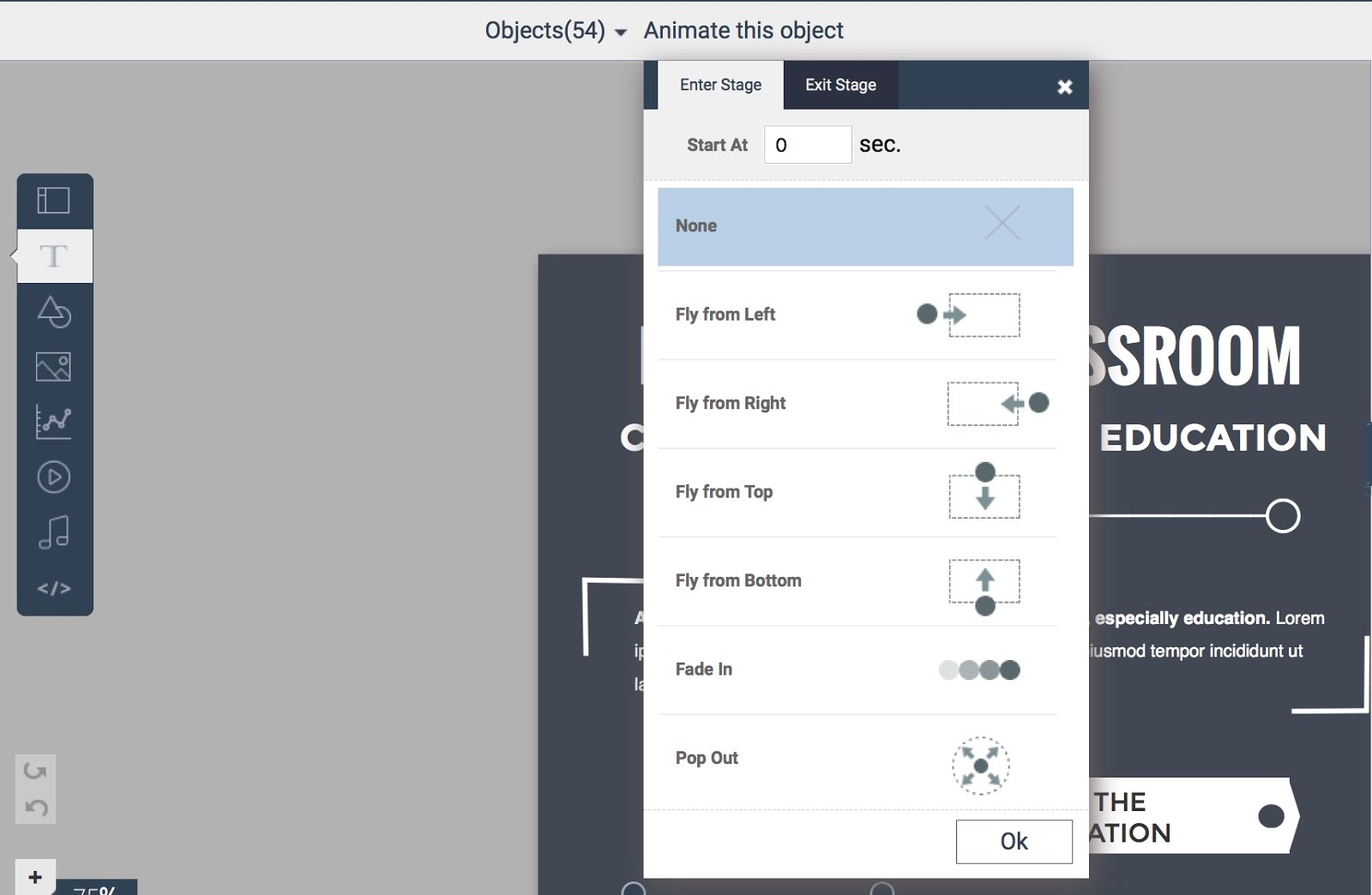



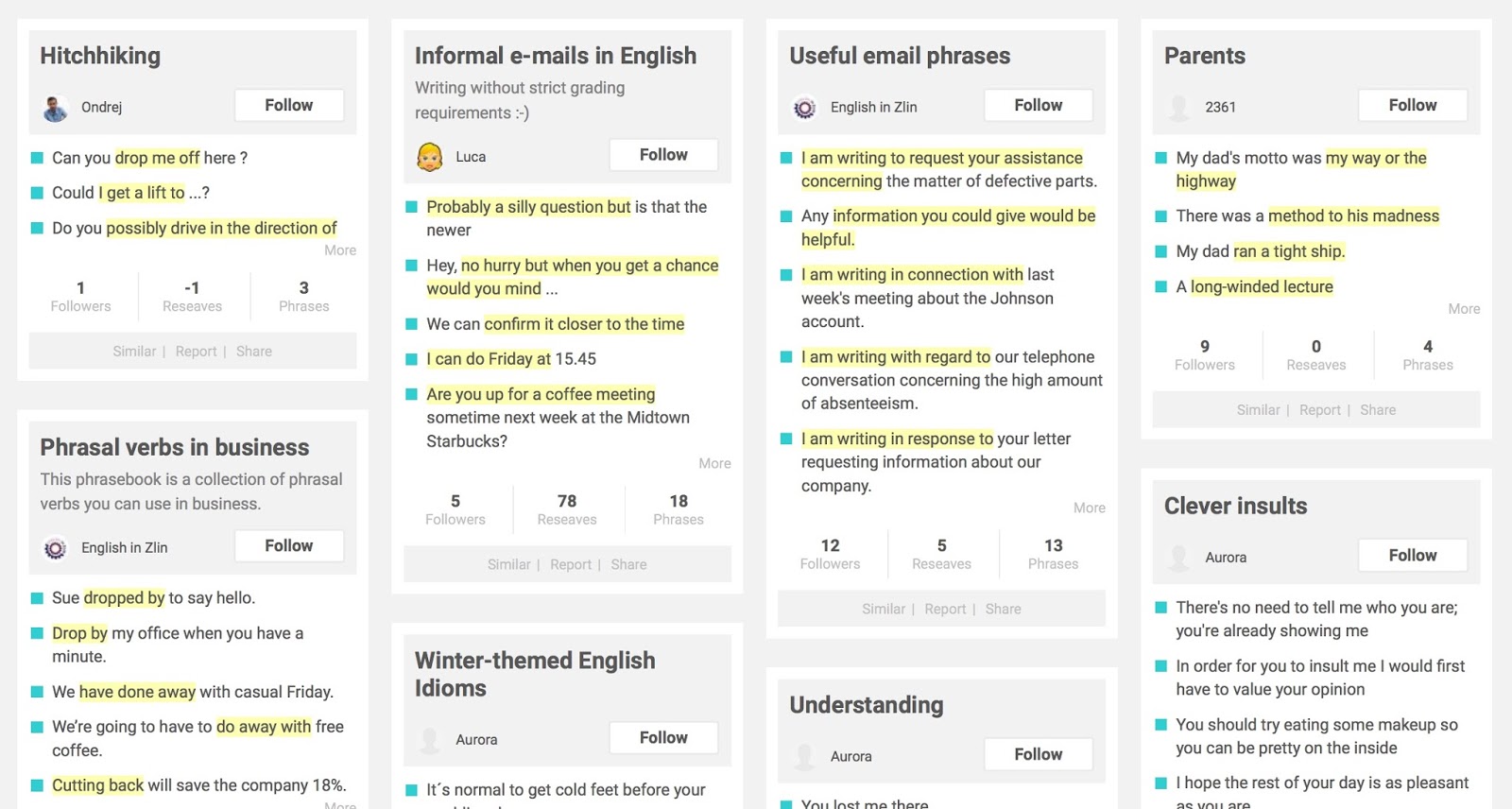
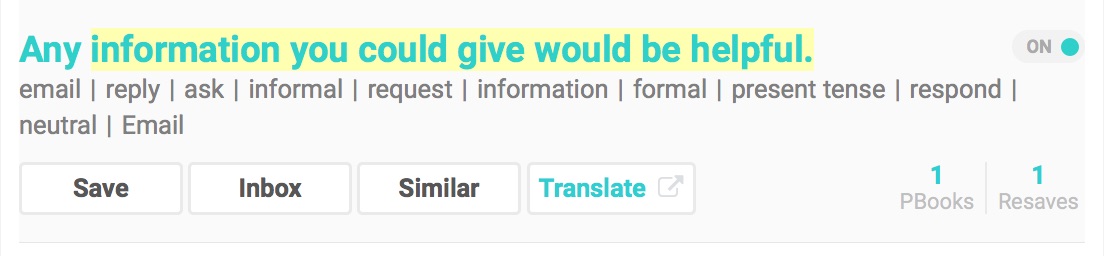
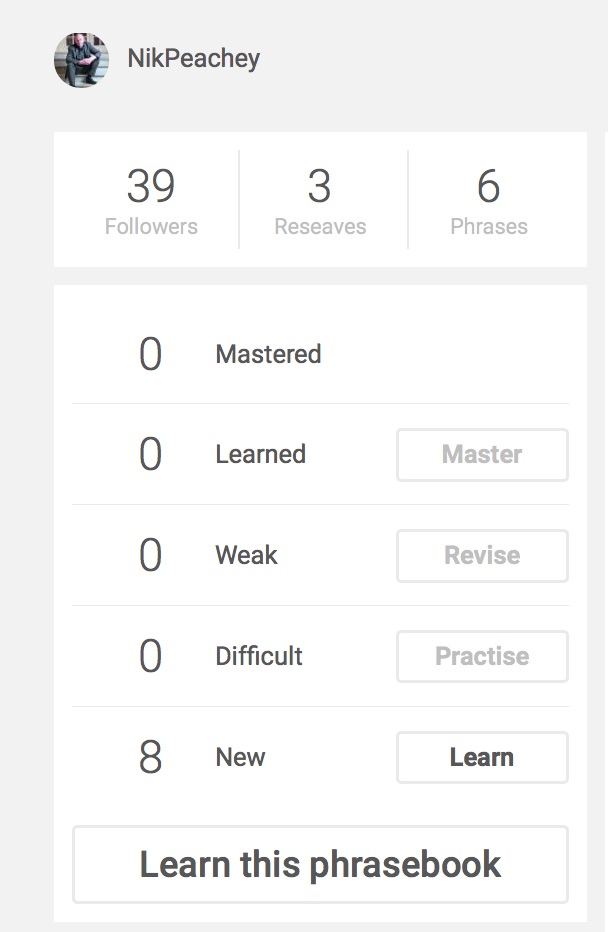
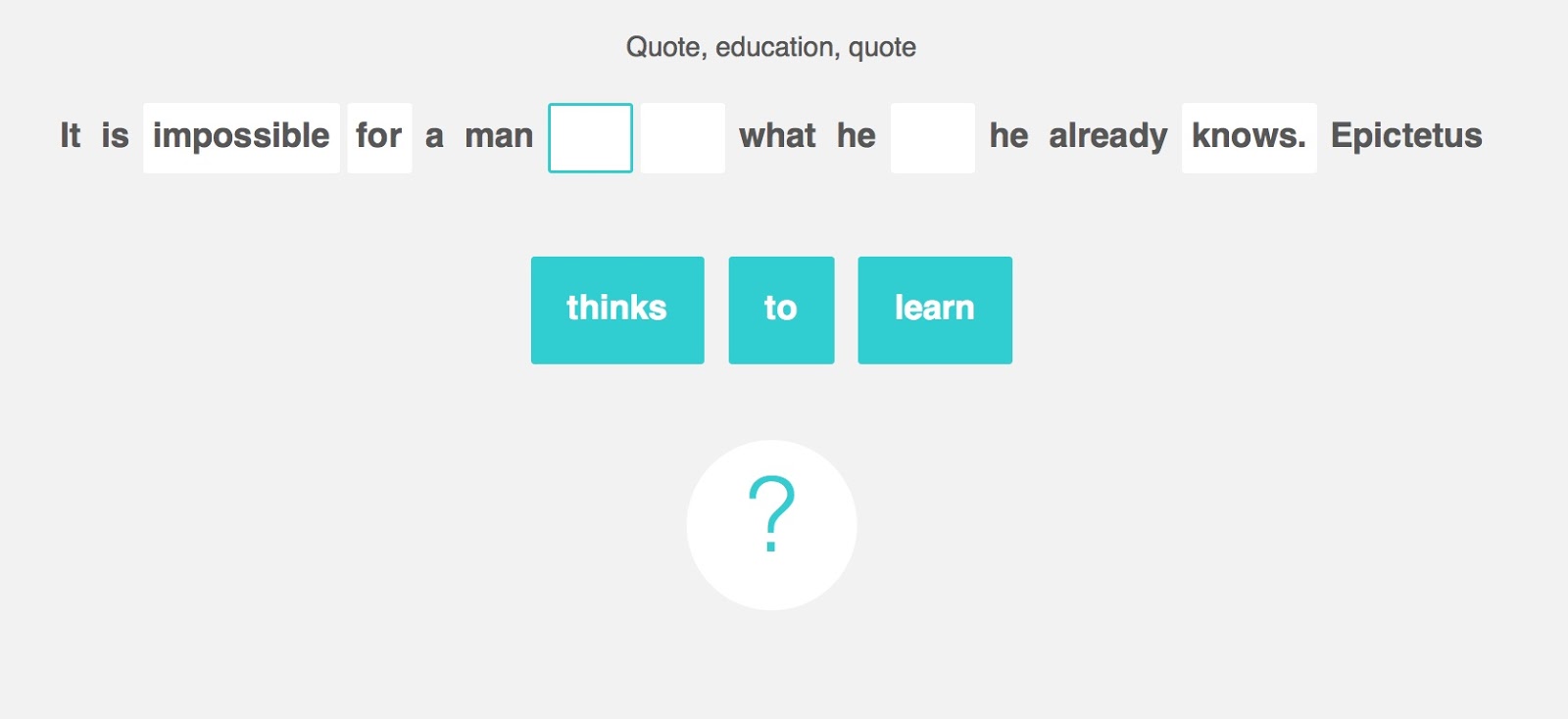

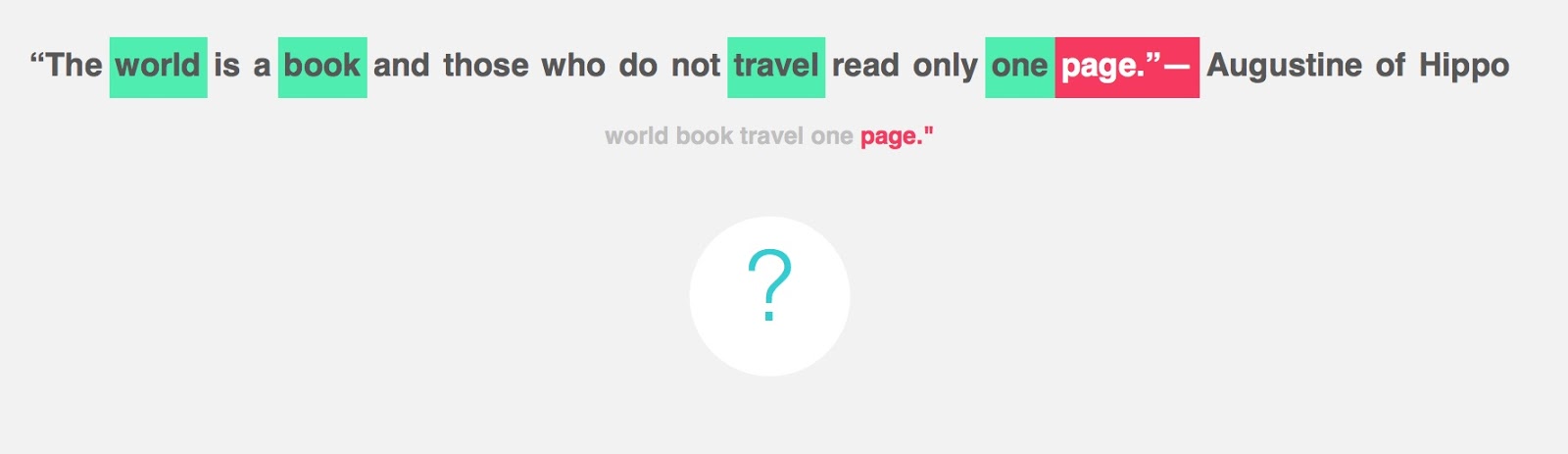

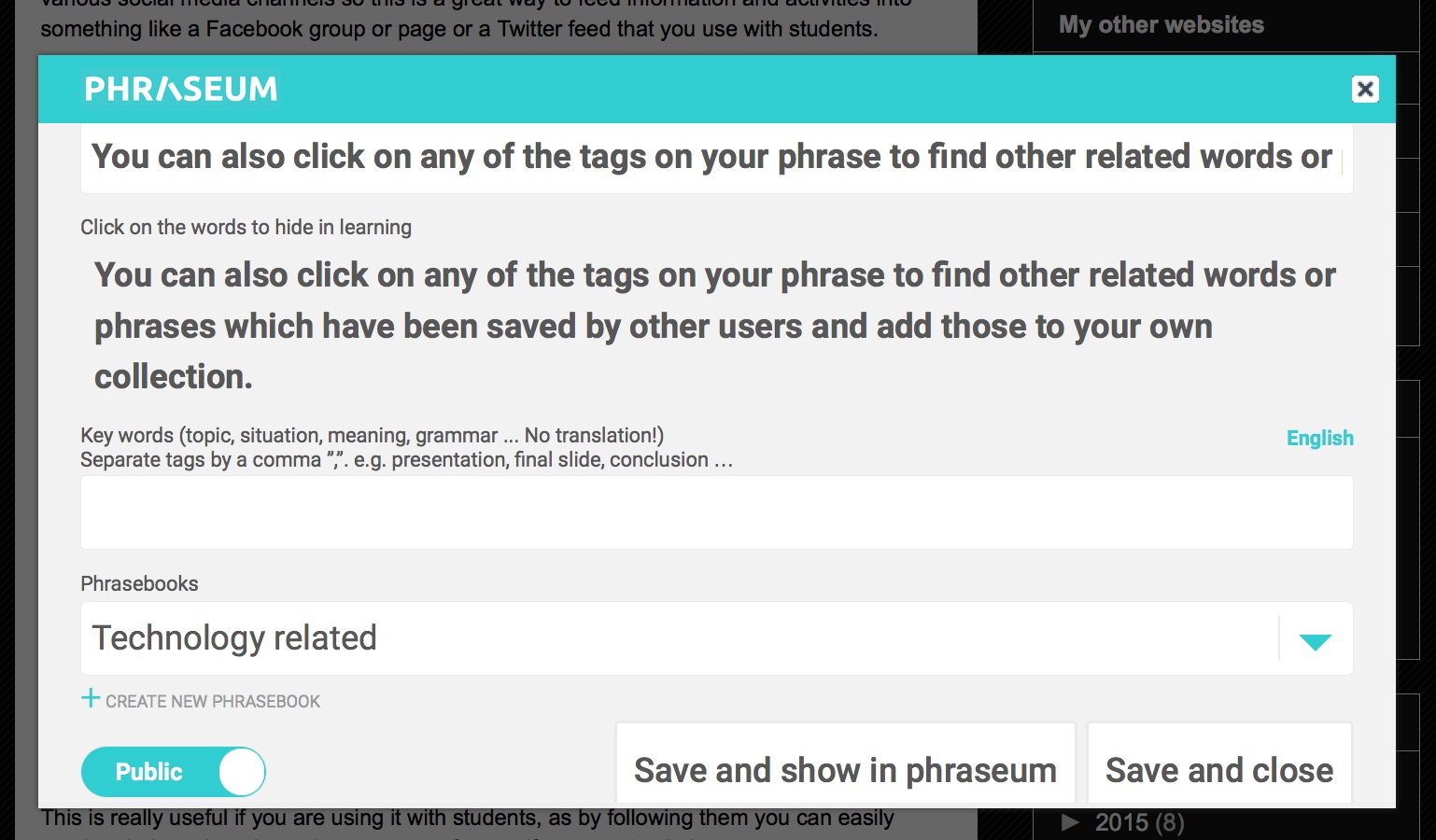








 Eduindex News
You must be logged in to post a comment.