HONGKONG PROTESTS AND CHINESE AUTHORITARIANISM

Currently, the state of Hongkong, formally called the Hongkong Special Administrative Region of the People’s Republic of China, is in complete chaos and rebellion. Hongkong, a metropolitan, is located on China’s southern most coast, 60km east of Macau, on the east side of the mouth of the Pearl River Estuary. It is surrounded by the south china sea on all sides except the north. Hongkong has always been the hub for protests against the authoritarian Chinese leadership since its handover to the People’s Republic of China by the United Kingdom on 1stJuly 1997. With the signing of the Sino-British Joint Declaration, the 156-year-old British rule came to an end. This declaration is extremely fundamental to the Hongkonger’s since it provided that Hongkong would retain its capitalist system and not accede to the socialist system of that of china. The principle of “one country, two system” was agreed by both the UK and China, which is to be followed until 2047. The Joint Declaration gave way to the drafting of the Hongkong Basic Laws, which further provided for several liberties and freedoms to the citizens of Hongkong. According to the Basic law, Hongkong was to have a separate judiciary and legislative system, free from Chinese influence and the citizens too enjoyed certain more liberties like freedom of speech and expression and the freedom to assembly and protest, unlike their Chinese counterpart. 

However, in June 2019, widespread protests were witnessed due to the introduction of the controversial Fugitive Offenders and Mutual Legal Assistance in Criminal Matters Legislation (Amendment) Bill, which allowed extradition of fugitives to Mainland China, Taiwan and Macau, and even with countries it does not have an extradition treaty. This bill not only threatened the semi-autonomous sovereignty of Hongkong but also reduced the independence of its judicial system, with the Mainland Chinese laws taking precedence. Huge criticism was raised by people all over the world stating that the criminals will be subjected to arbitrary detention, unfair trials and torture under China’s judicial system. 

“The proposed changes to the extradition laws will put anyone in Hong Kong doing work related to the mainland at risk,” said Human Rights Watch’s Sophie Richardson in a statement earlier this year. “No one will be safe, including activists, human rights lawyers, journalists, and social workers.”[1]

The fierce movement led by the protesters gave rise to 5 major demands, which was put forward to the government of Hongkong, led by the Executive Chief Carrie Lam.

The demands included-

  1. Fully withdraw the extradition bill
  1. Set up an independent inquiry to probe police brutality
  2. Withdraw a characterization of early protests as “riots”
  3. Release those arrested at protests
  4. Implement universal suffrage in Hong Kong[2]

Only the first demand was conceded by Hongkong leader, Carrie Lam, but the movement had already gained momentum where it could not be stopped. This controversial bill not only highlighted the discrepancies and inefficacy of the Hongkong government but also the high level of influence of Beijing over its territories. This movement was fuelled by the anti-government and pro-democracy patriots, who voiced their opinions for anti-China, by targeting Chinese-owned business and boycotting restaurants that expressed pro-China stance. 

The movement gained wide support from people across the world, such as the UK, US, Canada and Australia, who showed concerns over the growing influence of China, not only on its territory but also around the world.  

A US congressional commission said in May it risked making Hong Kong more susceptible to China’s “political coercion” and further erode Hong Kong’s autonomy.

Britain and Canada said they were concerned over the “potential effect” that the proposed changes would have on UK and Canadian citizens in Hong Kong.

The European Union also issued a diplomatic note to Mrs Lam expressing concerns over the proposed changes to the law.

China’s foreign ministry has refuted such views, calling them attempts to “politicise” the Hong Kong government proposal and interference in China’s internal affairs.[3]

Recently, a new wave of protests erupted in Hongkong over the implementation of the nefarious National Security Law, which conferred wide powers to Beijing, that allowed for the arrest and detention of protesters in Hongkong, who promoted anti-government feelings, with harsh penalties and punishments even leading to imprisonment. The law contains 66 articles, details of which are not revealed, which criminalises any act of subversion, secession, terrorism and collusion with external or foreign forces. Anything that causes disruption to public peace and property such as government building or public property, will be deemed to be an act of terrorism followed with ‘grave’ consequences. The residents of Hongkong believed that this law will not only take away their rare freedoms but also encroach upon its civil liberties, which was awarded to Hongkong in the form of the Basic law. This law will allow the mainland legal system to encroach and intervene in the national security cases of Hongkong, leaving it’s legal system worthless and ineffective. Many experts have expressed deep concerns over this matter. 

“The law is devastating in that it appears to have no bounds,” said Sophie Richardson, the China director at Human Rights Watch. “Hong Kong activists, accustomed to operating in mostly rights-respecting environment, now face a frightening void.”

“As a national security suspect, you can be locked up for as long as six months incommunicado, subject to torture, coerced confession, no access to counsel or family or friends, before the police decide whether to process you for a crime,” said Mr. Cohen, the law professor, speaking about practices common in mainland China.[4]

“It is clear that the law will have a severe impact on freedom of expression, if not personal security, on the people of Hong Kong,” Professor Johannes Chan, a legal scholar at the University of Hong Kong, told the BBC before the passage of the law.[5]

This notorious law violates Article 23[6]of the Hongkong Basic Law, which clearly states that, 

The Hong Kong Special Administrative Region shall enact laws on its own to prohibit any act of treason, secession, sedition, subversion against the Central People’s Government, or theft of state secrets, to prohibit foreign political organisations or bodies from conducting political activities in the Region, and to prohibit political organisations or bodies of the Region from establishing ties with foreign political organisations or bodies.

According to article 38, any foreign help to the protestors in form of fund or donations or those advocating the Independence of Hongkong, other than its citizens, will be arrested upon entering mainland china or Hongkong. Not only is this arbitrary but also shows the authoritarian intentions of the Chinese government over Hongkong. 

The Hongkong government, in 2003, had previously enacted a national security bill of its own but it was soon retracted due to its unpopularity and mass demonstration. 

This new law aims at silencing the criticisms of the party’s policies in Hongkong by activists and journalists, leading to corrosion of the judicial independence of the Hongkong. Many claim this law to be “the end of Hongkong”, and rightly so, due to the extreme measures of the mainland government,  and is likely to be  successful in being able to put off the chances of Hongkong ever achieving full democracy as it was promised. 

Works Cited

Hernández, J. C. (2020, June 30). Harsh Penalties, Vaguely Defined Crimes: Hong Kong’s Security Law Explained. Retrieved from The New York Times: https://www.nytimes.com/2020/06/30/world/asia/hong-kong-security-law-explain.html

BBC News. (2020, June 30). Hong Kong security law: What is it and is it worrying?Retrieved from BBC News: https://www.bbc.com/news/world-asia-china-52765838

BBC news. (2019, December 19). Hong Kong-China extradition plans explained. Retrieved from BBC News: https://www.bbc.com/news/world-asia-china-47810723

Yeung, J. (2019, December 20). From an extradition bill to a political crisis: A guide to the Hong Kong protests. Retrieved from CNN : https://edition.cnn.com/2019/11/15/asia/hong-kong-protests-explainer-intl-hnk-scli/index.html


[1]https://www.bbc.com/news/world-asia-china-47810723

[2]https://edition.cnn.com/2019/11/15/asia/hong-kong-protests-explainer-intl-hnk-scli/index.html

[3]https://www.bbc.com/news/world-asia-china-47810723

[4]https://www.nytimes.com/2020/06/30/world/asia/hong-kong-security-law-explain.html

[5]https://www.bbc.com/news/world-asia-china-52765838

[6] “Basic Law – Chapter 2”. Hong Kong government. Archived from the original on 29 July 2010. Retrieved 20 March 2018

Crimes against women in India : What society we are heading towards?


women held a high place of respect in ancient Indian society as mentioned in the Rigveda and other scriptures. Volumes can be written about the status of our women and their heroic deeds from the Vedic period to modern times. But later on, because of social, political and economic changes women lost their status and was relegated to the background. Many evil customs and traditions steeped in which enslaved the women and tied them to the boundaries of the house.

Domestic Violence
Domestic Violence can be described as when one adult in a relationship misuses power to control another. It is the establishment of control and fear in a relationship through violence and other forms of abuse. The violence
may involve physical abuse, sexual assault and threats. Sometimes it’s more subtle, like making someone feel worthless, not letting them have any money, or not allowing them to leave the home. Social isolation and emotional abuse can have long-lasting effects as well as physical violence.
This form of domestic violence is most common of all. One of the reasons for it being so prevalent is the orthodox and idiotic mindset of the society that women are physically and emotionally weaker than the males. According to United Nation Population Fund Report, around two-third of married Indian women face it.
And now, fuelled by mandatory stay-at-home rules, social distancing, economic uncertainties and anxieties caused by the coronavirus pandemic, It has increased globally.

Rape
In criminal law, rape is an assault by a person involving sexual intercourse with another person without that person’s consent. Outside of law, the term is often used interchangeably with sexual assault, a closely related (but in
most jurisdictions technically distinct) form of assault typically including rape and other forms of non-consensual sexual activity
According to Section 375 of Indian Penal Code, a man is said to commit “rape” who, except in the case hereinafter excepted, has sexual intercourse with a woman under circumstances falling under any of the six following
descriptions:
First: – Against her will.
Secondly: -without her consent.
Thirdly: – With her consent, when her consent has been obtained by putting
her or any person in whom she is interested in fear of death or of hurt.
Fourthly: -With her consent, when the man knows that he is not her
husband, and that her consent is given because she believes that he is
another man to whom she is or believes herself to be lawfully married.
Fifthly: – With her consent, when, at the time of giving such consent, by
reason of unsoundness of mind or intoxication or the administration by him
personally or through another of any stupefying or unwholesome
substance, she is unable to understand the nature and consequences of
that to which she gives consent.
Sixthly: – With or without her consent, when she is under sixteen years of age.

According to the National Crime Records Bureau, one woman is raped every 20 minutes in India. Incidents of reported rape increased 3% from 2011 to 2012. Incidents of reported incest rape increased 46.8% from 268 cases in 2011 to 392 cases in 2012. Despite its prevalence, rape accounted for 10.9% of reported cases of violence against women in 2016.

Sexual harrassment
Sexual harassment is intimidation, bullying or coercion of a sexual nature, or the unwelcome inappropriate promise of rewards in exchange for sexual favours. Sexual harassment in India is termed “Eve teasing” and is described as : unwelcome sexual gesture or behaviour whether directly or indirectly as sexually coloured remarks; physical contact and advances; showing pornography; a demand or request for sexual favours; any other
unwelcome physical, verbal/non-verbal conduct being sexual in nature. The
critical factor is the unwelcomeness of the behaviour, thereby making the impact of such actions on the recipient more relevant rather than intent of the perpetrator. According to India’s constitution, sexual harassment infringes the fundamental right of a woman to gender equality under Article 14 of the Constitution of India and her right to life and live with dignity under Article 21 of the Constitution.

From 2011 to 2012, there was a 5.5% increase in reported assaults on women with intent to outrage her modesty. Madhya Pradesh had 6,655 cases, accounting for 14.7% of the national incidents. From 2011 to 2012, there was a 7.0% increase in reported insults to the modesty of women.Andhra Pradesh had 3,714 cases, accounting for 40.5% of the national accounts, and Maharashtra had 3,714 cases, accounting for 14.1% of the national accounts.

Female foeticide
Female foeticide is a heinous act and an indicator of violence against women. Women in India have suffered a lot and have swallowed
innumerable atrocities for so many generations. Be it wife battering, rapes
or dowry deaths, she has been suffering and subjected to discrimination. The homicide of women exists in various forms in the societies all over. Female foeticide is one of the worst case scenarios which women expect in this country. It is because of this reason that the sex ratio of girls to boys in many parts of the country has dropped to less than 800:1,000. The determination of the sex of the foetus by ultrasound scanning, amniocentesis, and in vitro fertilization has aggravated this situation.

Dowry related marriage and early marriage

In india marriages are preceded by the payment of an agreed-upon dowry by the bride’s family. Failure to pay the dowry can lead to violence.

In Uttar Pradesh, 2,244 cases were reported, accounting for 27.3% of the dowry deaths nationwide. In, Bihar, 1,275 cases were reported, accounting for 15.5% of cases nationwide. Incidents of dowry deaths have decreased 4.5% from 2011 to 2012.

In 2018, still as many as 5,000 dowry deaths are recorded each year.

Early marriage, especially without the consent of the girl, is another form of human rights violation. Early marriage followed by multiple pregnancies can affect the health of women for life.
The report of the Special Rapporteur has documented the destructive effects of marriage of female children under 18 and has urged
Governments to adopt relevant legislation.

Acid throwing

Acid throwing, also called an acid attack, a vitriol attack or vitriolage, is a form of violent assault used against women in India. Acid throwing is the act of throwing acid or an alternative corrosive substance onto a person’s body “with the intention to disfigure, maim, torture, or kill. Acid attacks are usually directed at a victim’s face which burns the skin causing damage and often exposing or dissolving bone. Acid attacks can lead to permanent scarring, blindness, as well as social, psychological and economic difficulties.

Trafficking
Trafficking is defined as a trade in something that should not be traded in for various social, economic or political reasons. Thus we have terms like drug trafficking, arms trafficking and human trafficking. The concept of human trafficking refers to the criminal practice of exploiting human beings by treating them like commodities for profit. Even after being trafficked victims are subjected to long term exploitation.
Women and children from India are sent to nations of the Middle East daily. Girls in prostitution and domestic service in India, Pakistan and the Middle East are tortured, held in virtual imprisonment, sexually abused, and raped.

Every year thousands of women are abducted and traffic to other countries as Sex slaves.

Online bullying

In recent times, social media has gained immense popularity. Often young girls and women are stalked by perverts. They are bullied, trolled and shamed badly.

These were the major crimes against women in India. There are a lot of many other crimes also that women face. All of this are making gender equality a myth in India.

State Duty-Bound To Ensure Well-being

In a commendable and courageous judgment, the Kerala High Court just recently on July 1, 2020 in Jana Samparka Samithy Vs State of Kerala in Case No. : WP(C). No. 27148 of 2015 has minced no words to make it unmistakably clear that the State Government has a duty to ensure well-being, life and liberty of migrant workers also. The State Government cannot abdicate this onerous responsibility under any circumstances. All the State Governments must always pay heed to this what the Kerala High Court has held so elegantly, effectively and eloquently!

                                To start with, the ball is set rolling in para 1 of this latest, landmark and extremely laudable judgment authored by Justice Shaji P Chaly of Kerala High Court and its Chief Justice S Manikumar wherein it is observed that, “W.P.(C) No. 23724 of 2016 is a Public Interest Litigation suo motu registered by this Court on 17.06.2016 on the basis of the common judgment in W.P.(C) Nos. 31925 of 2015 and 15370 of 2016 of a learned single judge of this court portraying the pathetic conditions of migrant labourers in the Labour Camps situated within the State of Kerala. As per the judgment in W.P.(C) No. 31925 of 2015, the Secretary of the Vadavucode Puthencruz Grama Panchayat was directed to seal the buildings of the respondents in the said writ petition, and the District Administration along with the Local Self Government Institutions were directed to take immediate steps to avert nuisance caused by the property, remove the contaminants and restore it to ensure safe habitation of the nearby residents. Other requisite directions were also issued. One of the directions was to the District Collector, Ernakulam to depute an Officer sufficiently senior in the hierarchy to conduct an inspection of the premises and close down the labour camp by providing alternate facilities for accommodating the migrant labourers and collect samples from the well water and to conduct analysis of the same. Since we found that the captioned writ petitions have intrinsic connection, we heard them together on agreement.”

                                            To be sure, it is then stated in para 2 that, “The learned single Judge, taking into account the social ramifications emerged out of the specific instance brought before it in the writ petition, has directed as per an order dated 20.06.2016 to place the judgment before the then Acting Chief Justice requesting to take a decision as to whether a suo motu Public Interest Litigation was to be initiated, along with a memo filed by the learned Government Pleader in W.P. (C) No. 31925 of 2015 and the report of the District Collector with the photographs taken at the time of inspection. It was accordingly that the suo motu proceedings started. Thereafter, as per the order dated 18.07.2016, a Division Bench of this Court impleaded the Kerala State Legal Services Authority represented by its Member Secretary as an additional respondent in the writ petition, in addition to the State, its various Departments, District Collector, Ernakulam, an official of the Labour Department, public sector undertakings like Bharat Petroleum Corporation Limited, Indian Rare Earths Limited, Hindustan Organic Chemicals Ltd. etc. The member Secretary of KELSA was also directed to allot the suo motu case to Smt. Parvathy Sanjay, and with her consent she was appointed as amicus curiae on behalf of the Kerala State Legal Services Authority.”  

                                       While continuing in the same vein, it is then specified in para 3 that, “Thereafter, this Court was issuing periodical directions to the respondents as well as the amicus curiae to submit reports so as to issue directions to the State Government and the officials to take appropriate steps to protect the interest of the migrant labourers. The Secretary of KELSA has filed various reports before this Court pointing out the deficiencies existing in the labour camps, and the deplorable conditions of life of the migrant labourers who have been working in various establishments, especially at Perumbavoor, Ernakulam District where they were employed by the Plywood Manufacturers. Along with the report, KELSA as well as the amicus curiae have produced photographs, which would speak in volumes the pathetic condition under which the migrant labourers were living and the difficulties faced by them due to lack of facilities. To combat these issues suggestions were also placed before this Court.”

                                   Be it noted, it is then envisaged in para 4 that, “The amicus curiae has also produced before this Court emergent reports taking into account the urgent actions to be taken and also seeking appropriate directions to the State as well as the other authorities. Likewise, taking into account the report of the amicus curiae, directions were issued to the public sector undertakings who were found to be the principal employers. The report also demonstrated the unhygienic conditions, and the poor maintenance of the bathroom and toilets in labour camps. Pollution problems were also reported to be persisting in the labour camps, however consequent to the successive orders issued by this Court, steps were taken by the authorities and the public sector undertakings to abate the nuisance. Steps were also taken to decongest the labour camps consequent to such reports. The Panchayat  as well as the other authorities were also given the liberty to inspect each of the labour camps and take appropriate decisions so as to ensure only a minimum number of labourers residing in such labour camps. In fact, on the basis of the report that there was exploitation of the migrant labourers, appropriate directions were issued by this Court, and due to the constant and frequent reports of KELSA, statement filed by the Government and its officials, as also the report of the amicus curiae, and the consequent monitoring by this court, many of the problems that were faced by those migrant labourers could be curbed and other situations were also able to be regulated to a considerable and satisfactory extent. While continuing so, situations have arisen due to the lock-down restrictions on account of the pandemic, Covid-19 vis-à-vis the difficulties faced by the migrant labourers. Due to the closure of the business establishments and the factories, the migrant labourers were faced with various difficulties, including loss of employment and situations with respect to their day-to-day affairs. Thereupon, on the basis of the reports submitted by the KELSA and the amicus curiae, clarifications were sought by this Court from the Government and its officials and after considering the rival submissions, directions were being issued to sort out the difficulties faced by the migrant labourers. In fact, such reports filed by the KELSA and the amicus curiae were extending help to the State Government and its officials to identify the issues specifically, and to take urgent steps to abate the nuisances confronted by the migrant labourers, and also to alleviate the difficulties faced by them due to the unemployment, and the consequential unrest generated.”        

                                         To say the least, it is then elucidated in para 14 that, “After hearing the learned counsel for the petitioner in the said writ petition, learned Sr. Government Pleader, Sri Surin George Ipe, and the learned amicus curiae Smt. Parvathy Sanjay representing the KELSA, we are of the view that the writ petition can be disposed of with appropriate directions taking into account the present situations prevailing in the State of Kerala. Needless to say, the State Government is duty bound to protect the health and welfare of the migrant workers in accordance with the mandate contained under Article 21 of the Constitution of India and the obligations and duties contained under the directive principles which are fundamental in the governance of the State and also the fundamental duties imbibed in every citizens under Article 51-A of the Constitution of India.”  

                                                  As a corollary, it is also then said in para 15 that, “On a conjoint reading of the said provisions of the Constitution of India, we are of the view that, the State has an onerous duty to ensure the well being and life and liberty of every citizen, which includes the migrant workers also.”

                           On the face of it, what is then further underscored in para 16 is that, “Therefore, the State Government has a duty to ensure that the employers are providing appropriate shelter to the migrant workers, a clean environment and a healthy living condition with sufficient ventilation, light etc. along with other basic amenities. It is also the duty of the State Government to see that employers are satisfying the requirements in accordance with the prevailing laws with respect to the wages, contribution to welfare funds etc. of the migrant labourers. So also, adequate measures shall be taken for curbing ill-treatment of the labourers in any manner, by the employers.”

                                           Going forward, it is then stated in para 17 that, “In that view of the matter, there will be a direction to the State Government to ensure that the life and liberty of the migrants labourers are protected envisioned by the framers of the Constitution of India and bearing in mind the responsibilities and the fundamental duties and obligations of the State Government in doing so. If any information is received by the State Government and its officials in respect of any ill-treatment of the migrant labourers from any responsible corners, quick action shall be taken for ensuring their well being and life and liberty. It is also made clear that if any of the migrant labourers expressed his intention to go back to his native State, adequate steps shall be taken by the State Government through its Offices to ensure return of such migrant workers subject to the lockdown restrictions and consequential SOPs issued by the respective Governments. So also, the Government shall always be watchful to ensure that no forcible detention are made by the employers of any migrant workers so as to cause any prejudice to the migrants, and if any such action on the part of the employers are noted by the Government, adequate steps shall be taken to initiate appropriate action against such persons. We also make it clear that the State Government is at liberty to implement the suggestions in Ext. P1 report in W.P.(C) No. 23724 of 2016, if they are genuinely required to improve the health and welfare of the migrant labourers.”  

                                  In essence, this latest, landmark and extremely laudable judgment by a two Judge Bench of the Kerala High Court very rightly accords the topmost priority to the well-being, life and liberty of migrant workers also who always render their invaluable contribution in State’s development in all spheres as we have already dwelt in detail. It enjoins upon the Kerala State Government to ensure that the same is protected always! The Kerala State Government and its officials must comply with accordingly with the directions stated in the judgment without fail! There can be no denying or disputing it!

Sanjeev Sirohi, Advocate,

s/o Col BPS Sirohi,

A 82, Defence Enclave,

Sardhana Road, Kankerkhera,

Meerut – 250001, Uttar Pradesh

Why Apple was not so popular in India???

Apple sells millions of iPhones every year. In the year 2018, the tech giant reported selling close to 47 million units worldwide. But not all markets are created equal. India has been one of the hardest countries to crack for the Cupertino giant. Although it’s been over a decade since Apple began selling iPhones in India, the company can’t seem to get a big bite of the world’s second-largest smartphone market. India is a very price-sensitive market, which means that people pay a lot of attention to what value they are getting out of the price that they are paying for a particular product.

In the case of Apple, there’s a lot of premium being paid for the brand itself, and that’s where the price-conscious Indian consumer thinks about that if they are getting the same kind of features or specs from another phone that they can get a lower price, that makes it tougher to sell something at a much higher premium. Apple is definitely feeling the pressure. Samsung and Xiaomi accounted for the majority of smartphone sales in India in quarter three of 2018, garnering 22 percent and 27 percent respectively of the smartphone market. In contrast, Apple made up only about 1 percent of India’s smartphone market share, trailing behind Chinese phone makers Vivo and Oppo. It’s also worth noting that the premium smartphone market in which Apple operates still makes up less than 5 percent of the overall smartphone market in India.

7 Key Strategies That You Must Learn from Apple's Marketing

Most of the smartphones in India that sell, they are below $200 and Apple does not have any play in that segment. This environment is one that competitors like Samsung have begun to adapt to. The South Korean powerhouse is launching its Galaxy M series budget smartphones to appeal to the Indian market. In contrast, Apple doesn’t seem too keen on changing up its India strategy. I got some ideas for you, OK? I talked to some people at Walmart yesterday. An arrangement with Walmart Flipkart to take over India with a budget phone rather than doing it piecemeal? For us, we’re about making the best product that enriches people’s lives. And so, we’re not about making the cheapest. For us, what we’ve seen is, there’s enough people in every country in the world that we play in that we can have a really good business by selling the best phones. Still, some tech investors see Apple as being out of touch with the India market. You think they are going to slash prices? I think they have to. How can you sell a $1,000 phone in a market like China where the GDP per person is $10,000? In India it’s $2,000. And if you go back to the September earnings release, they talked about the fact that India was way below where they thought.

Apple postpones launch of online store in India - The Economic Times

Well, if your average GDP person is $2,000 and you’re trying to sell a $1,000 phone, it’s gonna be probably pretty hard to sell it. They probably want to eat. Another issue for Apple: stiff tariffs. I think iPhones have a specific disadvantage in the India market because of the local regulation. There is a very high import duty on the phones that are not manufactured locally in India. So for most of the big players in the India market, they are manufacturing locally so they do not have to pay that high import duty. Samsung has been manufacturing phones in India since 2007 and just last year opened the world’s largest mobile phone factory on the outskirts of New Delhi. Chinese phone makers Xiaomi and Oppo have also invested millions of dollars to build manufacturing plants in the country. That’s not to say Apple has completely ignored India.

The tech giant already manufactures its lower-cost iPhone SE and iPhone 6s models locally, through a partnership with Taiwanese manufacturer Wistron. This year, Apple is also expected to move its production of the iPhone X series into Foxconn’s plant in southern India. If you look at how we’ve done over the years, we’ve gone from a $100-$200 million business to last year we had we exceeded $2 billion. That $2 billion was flat year over year after a rapid rapid growth. And so we have more work to do. We’d like to put stores there. We would like some of the duties and so forth that are put on the products to go away. But even with its local hardware production push, Apple still fails to provide Indians with a robust software experience.

Apple iOS 13 Release: Should You Upgrade?

Apple has introduced turn-by-turn navigation for the India market. Before that, that significant part was missing. And beyond that, there’s not a lot of customization that Apple has done for the India market. There are not a lot of apps that specifically cater to the India market. Past complaints for Apple Maps also included missing major landmarks and having very sparse data of cities and towns. But again, Apple is working on a solution. The company has hired thousands of engineers at its mapping facility in Hyderabad to improve its services. Apple Pay is also not an option in India, though similar payment services from Samsung and Google have already been rolled out. Finally, unlike in most other markets, Apple can’t rely so much on its brand recognition to sell devices in India. The other challenge for Apple in India is that it cannot have its own retail stores or own Apple stores because of some regulatory issues, which means it has to have partners on the retail side, whether it’s the Apple premium resellers, which you see in many other countries as well, or with the third-party resellers. In order to have a larger presence in the market.

Apple has to have partnerships with thousands of these resellers, which in a country as big as India, can be challenging. Apple is still a premium status symbol for many Indians, but one that is out of reach for the majority of the population. With phones from Chinese brands like OnePlus, which was India’s best selling premium smartphone brand for the second quarter in a row, offering similar features at a fraction of the cost, Apple may have a very tough time getting a bigger slice of the India market.

Apple - Localizing the Message - Global Marketing Professor

Stressed and Anxious? Here’s How to Stay Emotionally Healthy

“Health is not just about what you’re eating. It’s also about what you’re thinking and saying.”

A virus is spreading across the globe. Schools are shut down. People are out of work. Grocery stores are empty.

Weddings, graduations, vacations, a day in court—canceled.

This is the ultimate test in emotional resilience.

Uncertainty is one of the main reasons we stress, along with a lack of control, and right now we’ve got it in truckloads. I’ve spent the last decade building my mental and emotional resilience to stress and adversity, and yet fighting off the anxiety is still a challenge.

I’m putting all the tools in my toolbox to good use.

And they are working. So I want to share these tools with you.

  1. Talk to someone, but limit the bitching.
    It can be cathartic to share with others the fear, panic, and challenges we’re experiencing. It makes us feel not alone. It validates our feelings and makes us feel connected. So talk to someone about what is stressing you out right now.

But set a time limit to focus on the negative. Maybe ten or twenty minutes each to share. Then it’s time to change the conversation.

Here are some cues:

What is going right?
What are you proud of yourself for?
What are you grateful for?
What are you looking forward to?
Despite the hardships, how are you coping?
How can you encourage and praise your friend?
When we only focus on the negative, we forget what is going well and then all we can see is the bad.

I also find it incredibly helpful to notice how differently my body feels when I’m complaining, angry, and blaming than it does when I’m grateful and optimistic. One feels tight, hot, and heavy. The other feels lighter, looser, and freer.

And as I listen to my husband, mother, or friends share their pain with me, I always make it a point when they are done to change the conversation and ask them what’s going good. I can hear the tone in their voice change as they bring their thoughts to the positive.

  1. Be generous.
    This doesn’t need to be a gift of money!

It can be a roll of toilet paper. It can be an hour Facetiming your grandmother who is held up in her nursing home with no visitors right now. It can be offering to pick up and drop off groceries for a neighbor or making them a plate of enchiladas.

I have a three-month-old and am blessed with an ample supply of breastmilk, so donating some of my freezer stash costs me nothing, but can mean so much for a needy mother and child right now.

Generosity can even come in the form of well wishes or prayers for others dealing with difficult times.

Giving is scientifically proven to be good for your emotional health.

It activates regions of the brain “associated with pleasure, social connection, and trust, creating a ‘warm glow’ effect. It releases endorphins in the brain, producing the positive feeling known as the ‘helper’s high.’”

Giving has been linked to the release of oxytocin, a hormone that induces feelings of warmth, euphoria, and connection to others.

It’s been shown to decrease stress, which not only feels better, but lowers your blood pressure and other health problems caused by stress.

What can you give right now?

  1. Take a mental break.
    It’s so easy to get stuck in mental go-mode all our waking hours. Especially since our brains crave being busy or entertained.

Even when we rest, we flip through Facebook, watch TV, or daydream.

These past few weeks I haven’t been making the time to take my mental breaks. I usually meditate daily, but with a baby who doesn’t yet have an eating and sleeping schedule, plus with all the extra stresses right now, I’ve not given my mind a break!

So I could feel the anxiety creeping in. It started in the body. I felt the tension in my muscles. My jaw was tight. Breathing was shallow. And I was irritable!

I know it’s time for a mental break when something as simple as my husband leaving another towel on the banister makes me want to file for divorce. (Or end up on an episode of Dateline!)

So I put my husband on baby duty, ran on the treadmill trying to focus on my breath and not my to-do list, took a shower, and brought my attention to the warm water instead of worry over how I will get clients. Then I meditated for fifteen minutes zoning in on my breath every time my thoughts turned to worry over daycare and the coronavirus.

I felt like I’d washed my brain. The tension was gone, my mind was clear, and I no longer wanted to strangle my husband.

From our anxious place, we catastrophize as we spin out in our negativity bias. All we can see is the negative.

We need these mental breaks to create space from these ruminating thoughts. We need to hit the reset button.

A mental break is taking anywhere from thirty seconds to thirty minutes to consciously turn our attention inward, away from outside influence, as well as our flow of thoughts.

We can’t stop the flow of thoughts, but we can notice when they’ve taken our attention, and purposefully redirect that attention to something in the present moment like the breath, a mantra or sound, or a visualization.

Here are a few ways to take that mental break:

Breathwork
Meditation
Time in nature
Walking, exercise, or dancing
Practicing mindfulness
Listening to music
Simple mental break breathing:

Start with a re-calibrating big, big inhale, hold it, and breathe out all the way.
Now breathe in slowly to the count of four, then hold for a second.
When you hold, hear the silence between the breaths.
Then breathe out to the count of four and hold for a second at the bottom.
When you hold, feel your mind clearing as you listen for the space between inhale and exhale.
Repeat until you feel relaxed.

  1. Allow all the feels.
    This stress and anxiety feel terrible. And it can be hard to muster up the strength and will to try out some of the items on this list to make yourself feel better.

That’s okay.

But what tends to happen is we want to run from the discomfort, try to suppress it with distraction like TV or social media, or numb it with wine, food, or drugs.

It’s normal to want to avoid pain. We’re naturally geared to avoid it. However, when we block this pain from flowing, when we don’t allow ourselves to feel our emotions, they get stuck.

Emotions are energy in motion. If you stop they, they just bottle up. They don’t disappear.

Try this exercise to allow your emotions to flow:

Take a moment to close your eyes and sit in a quiet space or block out distraction as best you can.
Take a deep breath in and slowly breathe out.
Notice the physical feelings of stress. Where are you holding it in your body? What does it feel like?
On your next exhale, release as much tension as you can.
Repeat:
“I am allowing these feelings to be present.”
“I let these feelings flow through me.”
“These feelings are causing me no harm.”
Now scan your body starting from your head, jaw and neck. Shoulders and hips. Down your legs and feet. Release any tension you find along the way.
Once you’ve allowed these feelings to exist and flow, the following tool is a fantastic next step toward emotional health.

  1. Express gratitude.
    We humans have a natural negativity bias. It’s a mechanism in place designed with the intention of keeping us safe.

Being on the lookout for danger, in theory, might be a better tactic to keep us alive than ignoring any signs of danger for the sake of focusing on pleasantries. Like being on alert for a mountain lion instead of enjoying a bed of flowers.

But 99 percent of the time, or more, our lives are not in imminent danger. Yet the negativity bias remains.

As it turns out, much like generosity, gratitude is also scientifically proven to be good for our emotional health.

It’s shown that people who express gratitude are more optimistic and feel better about their lives. Surprisingly, they also exercise more and have fewer visits to physicians than those who focus on sources of aggravation.

In some studies, it’s also shown people immediately exhibiting a huge increase in happiness scores, as well as improved relationships.

Here are some ways to express gratitude:

Write a thank-you note or email
Thank someone mentally
Try a gratitude journal
Pray or meditate on something you are grateful for

  1. Ask for help if you need it.
    I am so proud of our communities coming together, staying home, helping each other out. If there is something you need, there are whole groups of people ready and willing to help a stranger out. I see it all day on my Facebook feed, people offering up formula or diapers, services to drop off food, or offering homeschooling tools and advice.

Thankfully, this pandemic has come during a time of advanced technological capabilities, allowing us all to connect digitally.

Doctors, teachers and coaches are now available online. From the comfort of your socially distant home, you can find help right at your fingertips.

Ask. It doesn’t make you look weak. You aren’t impositioning anyone. People inherently like to be helpful.

Especially if you need help dealing with the anxiety of our current situation. We don’t make good decisions coming from a place of fear. Now more than ever it is essential to have emotional resiliency to get through this tough time and come out the other end whole and ready to move forward.

We’ll get through this. Together, even though we’re physically apart. Wishing you much love, luck, and light on your journey.

A GIFT FROM ABOVE

Hello everyone today we are going to talk about that most of we dream off. The dream which makes us so much happy to even cry. Can you guess which gift I am talking about?Is the gift is a thing or something else think about!

OK Let’s reveal which gift is the most precious gift we dream off!

By seeing picture you must have guessed correct. Yes the baby is the most precious gift in life which every parents dream. The gift which is actually blessed from god. The mom who keeps the baby in her womb for 9 months by giving the child a new life. The pain and happiness which is felt by the mom comes on 9 months.

I personally think the babies are most precious thing which brings so much of happiness and joy with them.The house becomes full of joy,every family members,relatives friends all become so happy to see the baby. Specially the children get excited to see there new brother or sister. The laugh we see in the baby face feels us so much happy, even if the person is angry if the person see the child laughing face he will suddenly will feel happy.

The cute face of every baby melts our heart. Also it brings so much happiness to our life. All the family members organize the party to welcome the child. When the child is not born the mother experience so many happiness as when the baby first kick in her womb, there are so much happiness.When we start playing with baby we forgot the time and we think time just flew away.The baby who had born and came to our house will in no time grows up in front of our eyes.

This is the moment we all should enjoy it and capture the moments by remembering it.

I hope you like my article.

Let me know in the comment box what you like most about the babies!

Thank you for reading my article and have a nice day!

Standard Operating Procedure For shooting amid covid-19: Prakash Javadekar

Recently, Union minister Prakash Javadekar has announced that government is coming up with standard operating procedures for shooting film in india in this hue and cry. Javadekar also told about incentives to be given to promote the film-making.

At the inaugration of FICCI FRAMES 2020, in convention on the buiseness of entertainment javadekar told all stakeholders to come together to make progress.

Javadekar also said that more than 80 foreign film producers have taken advantage of the film facilitation office.

they got single window clearance for shooting their films in India.

Due to the spread of virus and lockdown film production was stopped.

Bollywood which a very big buiseness in India contributes too much to GDP.

GDP has seen ever the worst in this pandemic.Now government is to start and pace up the industry in it’s full swing.So government is coming with certain SOP and incentives to set up the film-making to it’s normal.

Ukulele

It is a musical instrument, which can also be called as a miniature version of guitar but it is a bit different from it. It is a Hawaiian instrument  played from the nineteenth century. There are four types of Ukulele they are soprano , concert, tenor, and baritone out of which Soprano is the  standard Ukulele. This instrument has a carefree Jaunty music which pleases everyone. Though it is a small guitar but a guitar has 6 strings but Ukulele  has 4 strings and Ukulele is very much easier to learn than guitar as it has soft nylon strings which does not hurt the fingers and its frets are quite small which would actually make it easier to compose. A person can learn Ukulele, so as to learn guitar which would make guitar learning guitar faster.

let us learn firstly, how to play  ukulele so as to experience the pleasure of playing it..

  1. Handling Ukulele

    It is very necessary for beginners to learn how to handle Ukulele in proper position. A Ukulele has two parts one is the long thinner portion which is called the neck and other is the body. It is very important to orient it properly that means to hold it properly. The standard way is to hold the neck in the the left hand and you hod the body in the right hand. Hold the instrument a little below your chest and hold the neck of it in fifteen degrees angle. You can play the instrument by sitting , standing and also lying, But it is much easier if you play it while sitting. About your finger arrangement, you should always rest the thumb of your left hand on the first fret and then curl your remaining from the underneath of the instrument so as to hold other strings. Your hand should make a shape of C around the instrument.

  2. Strumming
    Curl your fingers over the strings in the side hole, then make a shape of a doughnut with your index finger and the thumb, you have to play from the side of your index finger. You always have to strum all the four strings together so as to play the music. You can Ukulele by a prick or by your fingers, But the tones become a bit harsh when you use a prick on the soft strings of the instrument so its better to use the fingers.
  3. Chords
    It is very important to learn the natural notes of every string in the instrument. You should always memorize the arrangement of the strings.In order,  A (1), E (2), C (3), and G (4) are the order of the strings in the bottom to top arrangement. Practice different chords make yourself familiar with all the chords and all major and minor chords. Use the chord diagram so as to master the instrument.
  4.  Songs
    Though the ultimate goal of learning an instrument is to compose your own music, to achieve that you have to  learn playing your favorite songs with the instrument. This helps in learning new chords and shifting between them. As you learn about different tunes and get familiarize with the instrument, you are now ready to compose your own song.

    Happy learning….


16 Books Written with Hand since 2003 to 2015 in Mirror Image.

Really Great to tell all of You an Indian Piyush Goel has completed 16 books in Mirror Image with hand with using different objects like Pen, Needle, Mehndi Cone, Carbon Paper, Iron Nail, Wooden Pen….and It is World Record for Writing ” World First Hand Write Needle Book Madhushala”(https://amp.bharatdiscovery.org/india/%E0%A4%AA%E0%A5%80%E0%A4%AF%E0%A5%82%E0%A4%B7_%E0%A4%97%E0%A5%8B%E0%A4%AF%E0%A4%B2_(%E0%A4%95%E0%A4%B2%E0%A4%BE%E0%A4%95%E0%A4%BE%E0%A4%B0).

16 Books Written with Hand…..it is Only God Blessing.

MOST HAUNTED PLACES!

Welcome everyone today we are going to know about the haunted cemetery places.The place where said that the people who are died are likely become ghost are live there so people get scared to go that place

Let’s get and don’t get scared!

1.BORELLA KANATTE CEMETERY:-

The Borella Kanatte Cemetery is the burial place for most of faiths of Colombia,Sri lanka.In the cemetery woman are seen to be wearing Saree and seen suddenly been disappearing.In night time there are sound of shrieking children alongside the gravel and dirt been thrown.

2.MATSUO GHOST MINE TOWN:-

Matsuo ghost mine town is also known as the “Paradise above the clouds”. This was built for house those who were working in mines.In that people use to hear the sound of running steps towards them.This place was abandoned in late 60’s and early 70’s. The workers who were staying there and working were hear sounds from the fog which was always surrounded the building.

3.EGG HILL CHURCH:-

Egg hill church was built in 1860.It was a regular church people use to go church regularly, but after the incident in 1972 it was closed because pastor took his own life after murdering several in the church congregation in the church itself.It was told that he was possessed by dark entities.

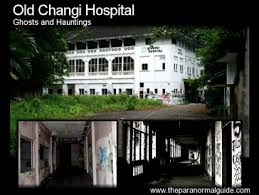
4.OLD CHANGI HOSPITAL:-

The hospital was built in 1935 and is the most haunted place till now. The hospital and locations most haunted place as there been a lot of deaths in hospital and many cruelty in the walls. This hospital was made as Royal Air Hospital but later on it became a prisoner camp and torture chamber in Singapore.

So this were the haunted places of the world.I hope you like it. Let me know in the comment box the the haunted places you know.

Thank you for reading my article and have a nice day!

Lata Mangeshkar

The queen of melody, has sung over five thousand songs in all different languages. She is the most respected singers in India, also has won three national awards and also has won many film fare awards. It is as if she was born to sing, she was also called the nightingale of India. She belonged to a family of singers, and her four siblings are also singers she is the eldest of all. Her songs became extremely popular, her voice suited every heroine and she was the favorite to all the music directors. She had a beautiful voice which can sing any song beautifully let it be a sad songs like  ” Ajeeb dastan hain yeh” or  romantic song like ” Yeh sama sama hain yeh pyar ka” or be any sensous song like” Lag ja gale” these songs always send chills down the spine every time one hears it.

Lata Mangeshkar was the daughter of Pandit Deenanath Mageshkar and Shevanthi. Her father was a marathi and Konkani singer, they used to live in Indore which is in Madhya Pradesh. Her family were a native Goan family that is the Mangheshi family. Lata received her music lessons from her father, he was his first teacher. At the age of five she used to act in her father’s musical acts in the theatre. In 1942 Lata’ s father died because of some heart disease and then her family was taken care of by Master Vinayak who happen to be her family friend then he helped Lata to start her career as an actor but then she turned into singing. Her first song was on 1942 and she sang her first song “Naachu ya gade” in a marathi movie but the song was dropped at the final cut. After that Lata moved to Mumbai in 1945, where she started taking lessons for hindi classical music she sang her first hindi song in a movie where she and her sister Asha also played a small role in the movie. She got a major break from Ghulam haider in the movie Majboor the song was ” dil mera thoda”. Lata Mangheshkar also declared that Ghulam haider was her godfather as he was the first producer to show faith in her voice. Though in the start she had a maharashtrian accent in the start and as most of the songs at that time had Urdu words,  but as the time passed she improved it and no one could point any mistake or question her singing talent. Her very major hit song was from the movie Mahaal the song was ” Aayega aanewala” which was lip synched by Madhubala. She had her own style of singing which was different and Magnificant. She had sung duets with a range of singers from Hemant kumar , Mohammad Rafi, Kishore kumar, Mukesh, Baapi Lahri, Kumar Sanu, Udit narayan, Sonu Nigam. No singer could ever match her Legacy, her voice has soothed people for many decades even now people look up to her as an inspiration. She is now 91 years, then also she does Riyaz every day, she says without that her day cannot start. We all should learn this discipline from her.

Why Australia is least affected by recession!!!

America’s economy is approaching a big milestone. If it keeps humming until July 2019, it’ll be the longest expansion in U.S. history. It would be exactly one decade and one month old by then. But there’s another country with an even more impressive run It’s even called the ‘lucky country’ Three big lessons from Australia.

  1. Be smart.
  2. Be organized.
  3. Be lucky.

So, if I’ve got any advice for other countries, it’s try and be as lucky as Australia That luck has to do with Australia’s treasure trove of natural resources. You know Australia is on the other side of the world and sitting on tremendously valuable minerals right at the point where the Chinese economy is just around the corner and exploding. Australia and every one its natural resources were within the right geographic neighborhood even as the Chinese economy began to begin . And it just so happens that China did a big fiscal stimulus in 2008 and spent a great deal of money building new cities. So all of these resources were drawn from places like Australia. So that also served as a huge tailwind at a time when developed markets were in a whole lot of trouble.

What Currency Is Used In Australia | Australian Dollar : Compare ...

The year 2008 was a time of economic turmoil The Global Financial Crisis hit and markets crumbled around the world. But as it turns out this was also a year for Australia’s economic management to really show off At the time the government had a very helpful and very low level of debt. One reason? Pension reform in the 1990s. Australia set up a compulsory retirement system called the superannuation system. It requires employers put money into its employees’ retirement savings.

Since companies and citizens have to build up retirement savings, some of the financial burden to pay off pensions was taken off of Australia’s government As other economies reeled in the wake of the 2008 crisis, the Australian Government was then able to put money directly into people’s bank accounts This boosted consumer spending in order to stimulate growth In 2008, the Australian Government unlike some other developed market governments actually jumped in very quickly with fiscal stimulus, so that helped to kind of minimize the effect of the crisis The country’s numbers continued to look sluggish after the financial crisis. But they never quite dipped low enough or for long enough to satisfy the definition of a recession. It takes two quarters of negative growth to fall into a recession. Australia’s economy did post a couple of negative quarters since 2008, but no country’s perfect. Overall Australia’s economy has been managed pretty much in recent years partly due to a robust and stable financial institution.

Reserve Bank of Australia – Australia's LGBTQ Inclusive Employers

Australia has an independent financial institution and it is a very well-run financial institution . It also has a floating exchange rate and the exchange rate helped it adjust to international shocks. Australia’s economic reforms gave it flexibility in times of hardship. For example, floating the Australian dollar In 1983, Australia’s government moved the dollar onto a floating exchange rate This meant that the dollar would be valued by supply and demand instead of being subject to influence from its government or its central bank It allows the economy to react to shocks as well Typically when an economy is hit by some sort of negative shock. The currency will adjust. It will depreciate and that helps promote exports. Another reason behind Australia’s economic diary lies in its immigration policy. Since the late 1990s, Australia has seen growth in temporary migration, many arriving to the country on student or temporary work visas. The number of temporary migrants peaked in the year 2000. However a recent change to immigration law in 2018 gave visa applicants more hurdles to get through if they wanted to come to the country Even when our GDP per capital average incomes aren’t rising by much because the number of people continues to rise that means the total GDP continues to rise at even more rapid pace Part of that’s underpinned by much faster population growth Most experts think Australia’s economy remains strong in 2019, but it’s not without risks.

Australia’s suffering at the instant from pretty weak wage growth. That’s worrying a lot of people. There’s a lot of fear right now that China is hitting a wall. That will hit demand for Australian products. The good news is to the extent that the Chinese are buying commodities hopefully will find buyers from overseas for many of those commodities if the Chinese are not there The bad news is the rest of the world economy is not doing that well.

Australian economic growth slows, enters per capita recession ...

Miracle Mirror Image Writing..

Miracle Mirror Image Writing by Piyush Goel.

Miracle Mirror Image Writing in Two Languages Hindi and English, mirror image writing from your side as well as from my side without changing the paper at 180 degree but while at the time of reading you have to move paper at 180 degree…..Really Miracle to the World.

Harmony Management- Core of the Organisation

What will happen if there will be no harmony in the organisation.? What will happen if employees will start conflicts with each other and disagreements just based on from where they come and who they are.?

There will be havock right ! Lets understand how the Harmony Management is core of organisation and find together how our organisation will flourish with harmony management.

As we all know organisation comprise of various employees and how they vary from each other. People from different religions,castes,language,culture come together under one roof for the fulfillment of organisations objectives. So, lets understand what is harmony first.Harmony mean dealing with disputes and resolving conflicts fairly and properly with neutralization and Middle Way principles to further the welfare of each individual as well as the wellbeing of mankind as a whole. Harmony is long lasting value.

Now, lets understand in detail how organisation will be much better or even best with harmony present in it.

Harmony is the secret principle that controls life – be it at the personal or Organisational level. Harmony manifests itself in good judgment and in the organizational context it means the efficiency or effectiveness of taking right decisions timely and avoiding organizational confrontation and conflict. Conflicts are a natural ingredient of any organization but do not mean there has to be conflict for good management. A man who cannot get along with others is a man who cannot get along with himself. One who finds faults with others does not have a high regard for himself and this loss of self esteem is a cause of disharmony and conflict in organizations. Things are not as they appear to be, thanks to the limited scope of human perception! Instead of getting intimidated by organizational environments and circumstances if you first harmonise the situation with discriminative wisdom in your mind, the outcome will take care of itself! A harmonized mind produces harmony in this world of seeming disharmony; Harmony is a prolific source of power. This is true of any type of organization – any structure that has interacting parts, from nature as a whole to human relationships to corporate businesses and spiritual societies. Harmony is the soul of an organization; disharmony is death.