Music Therapy

Mature man plays a guitar while seated at piano bench

HISTORY OF MUSIC THERAPY

Music has been used as a therapeutic tool for centuries and has been shown to affect many areas of the brain, including the regions involved in emotion, cognition, sensation, and movement. This fact, combined with the engaging nature of music and the diversity of music forms, makes music uniquely effective in the treatment of a wide array of physical and mental problems, including depressionanxiety, and hypertension.When traveling music groups played for hospitalized veterans during and after both World Wars, doctors and clinicians began to realize the powerful effects that music has on the healing process and requested that professional musicians be hired by the hospitals. This created a need for specialized training in the appropriate delivery of music as a therapeutic method.

Gradually, colleges and universities began to include music therapy as part of their curriculum, beginning with Michigan State University in 1944. In 1950, the first major professional organization for music therapists was formed, and it became known as the National Association for Music Therapy (NAMT). In 1998, the American Music Therapy Association (AMTA) was formed out of a merger between the NAMT and the American Association for Music Therapy. The AMTA focuses on increasing awareness of and access to music therapy services while promoting the advancement of education, training, professional standards, and research in the field of music therapy.

WHO CAN BENEFIT FROM MUSIC THERAPY?

Music therapy can benefit many individuals. The diverse nature of music means it can be applied in the treatment of concerns both physical and psychological. In some instances, the therapeutic use of music has been able to help people in ways that other forms of therapy have not, as it can sometimes elicit responses that may not appear through more traditional forms of treatment. When people find it difficult to express themselves verbally, they may display a greater degree of interest and engagement in music therapy than they would in a more traditional form of therapy. No background in music is required for a person to benefit from this approach.

Because music can evoke positive emotions and stimulate reward centers in the brain, music therapy is often able to alleviate symptoms of mental health concerns such as:

Music therapy can both assess and enhance cognitive, social, emotional, and motor functioning, and studies have shown positive results among individuals who have intellectual or physical difficulties, brain injuries, or Alzheimer’s. This type of therapy has also been used in the treatment of physical ailments such as cancer and hypertension.

The positive effects of music therapy are not limited to those coping with severe or long-lasting physical and psychological problems, and this therapy can benefit people in a variety of situations. Music is frequently used to reduce stress levels and pain perception among mothers in labor and has been associated with improvements in self-esteem, self-concept, verbal communication, prosocial behavior, socialization skills, group cohesion, and coping skills.

WHAT HAPPENS IN A MUSIC THERAPY SESSION? 

The intervention methods employed in music therapy can be roughly divided into active and receptive techniques. When a person is making music, whether by singing, chanting, playing musical instruments, composing, or improvising music, that person is using active techniques. Receptive techniques, on the other hand, involve listening to and responding to music, such as through dance or the analysis of lyrics. Active and receptive techniques are often combined during treatment, and both are used as starting points for the discussion of feelings, values, and goals.

Music therapy can be conducted with individuals or in groups, and the music may be chosen by the therapist or by the person in therapy. A music therapist will generally ensure the type and mode of the chosen form of music, as well as the timing of the music intervention, are appropriate for meeting the needs and goals of the individual in therapy.

When introducing music, therapists often base their selections on the Iso principle, which states music is more likely to have influence if it matches an individual’s current condition. Therapists therefore try to ensure the lyrics and melody of a selected piece of music are well matched with the mood and psychological state of the person in therapy.

Songwriting is commonly used in music therapy and may involve writing original songs or modifying existing ones, with the latter being a more structured approach to writing. A person might modify a song by changing some of the words or lines, adding new verses, or writing entirely new lyrics to match the existing tune. In cases when songs are freely composed, the therapist may provide an emotion or topic to serve as a starting point. 

Music therapy can be used in a variety of ways:

  • When a person experiences difficulty communicating after a stroke, singing words or short phrases set to a simple melody can often enhance speech production and fluency.
  • A person with impaired motor skills might improve fine motor skills by playing simple melodies on a piano or tapping out a rhythm on drum pads. Listening to a rhythmic stimulus, such as a metronome, can also help a person initiate, coordinate, and time their movements.
  • A therapist might play a piece of music for children with autism who have limited social skills and ask them to imagine the emotional state of the person who created the music or the person who is playing it. Doing so can help a person with autism develop or strengthen the ability to consider the emotions others are experiencing. 
  • Group drumming circles have been used to induce relaxation, provide an outlet for feelings, and foster social connectedness among members of a group. Group members might sit in a circle with a hand drum while the therapist leads them in drumming activities that may involve group members drumming one at a time or all at once. Those who are part of the circle may be asked to express how they feel by playing a rhythm on their drum or the group might be asked to improvise music as a means of increasing group cohesiveness.
  • Music might be incorporated into guided imagery or progressive muscle relaxation techniques to enhance the effectiveness of these methods.

TRAINING FOR MUSIC THERAPISTS

Those wishing to become a music therapist must have at least a bachelor’s degree in music therapy from an institution approved by the American Music Therapy Association (AMTA). Music therapy programs involve coursework as well as an internship in an educational and/or health care facility. After successfully completing one of the AMTA-approved programs, individuals must take the national examination offered by the Certification Board for Music Therapists (CBMT). If they are successful in the examination, they receive the credential Music Therapist-Board Certified (MT-BC), which is required for professional practice. Board certification is renewed every five years, and in order to maintain this credential, music therapists must retake the CBMT examination or complete 100 recertification credits within each five-year period.

LIMITATIONS OF MUSIC THERAPY

Music therapy generally produces positive results, but it is not recommended as a stand-alone treatment for serious medical and psychiatric issues. While music may help to alleviate some of the symptoms of these conditions, other forms of treatment such as medication, physical therapy, or psychotherapy may also be necessary.

Further, while it is possible for any form of music to be used effectively in music therapy, not all individuals will find each type of music to be therapeutic. The benefit of a particular type of music will often depend on an individual’s preferences and the condition experienced by that individual, and some music forms may actually cause agitation. To achieve success with music therapy, a therapist will likely need to ensure the musical preferences of the individual in treatment are taken into consideration.
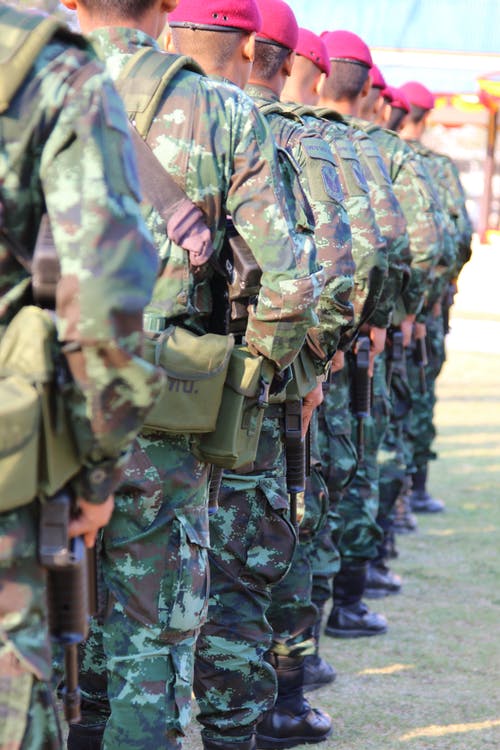
Meet our Commandos…..!

Photo by Somchai Kongkamsri from Pexels

India has many special forces ( SF ). The three branches of Indian armed forces have special forces units. There are other special forces which are operated by the civilian organization. Small groups from the military SF units are deputed in the Armed Forces Special Operations Division, which has a unified command and control structure. Research and Analysis Wing, the external Intelligence agency of India, has separate special forces under its control, namely the Special Group and the Special Frontier Force.

  • Para commandos :
    • The Indian Army has 7 units that are a part of a larger parachute regiment. This unit was created in June 1966 in the aftermath of the 1965 Indo-Pakistani war. An impromptu commando unit called Meghdoot Force, which took part in the 1965 war, formed the first nucleus of the permanent Para commando battalion which was to be raised under the Parachute Regiment. By 1969, the unit had grown into 2 battalions, viz. the 9 Para and the 10 Para. The unit’s first combat missions were conducted during the 1971 Indo-Pakistani war in which they undertook raids against Pakistan’s military. They are trained to carry out intelligence collection subversion and sabotage of vital enemy infrastructure and communication through deep penetration and surgical strike behind enemy lines. In 2002, the 2 Para (SF) participated in Operation Khukri in Sierra Leone to rescue 223 soldiers of the Indian Army’s 5/8 Gorkha Rifles who were deployed as UN peacekeepers but were surrounded by militants from the Revolutionary United Front of Sierra Leone. Some of the later reported missions carried out by Para (SF) include the 2016 ′Surgical Strikes′ and the 2015 Operation Hot Pursuit, purportedly undertaken inside Myanmar.
    • The list of PARA (SF) Battalions is as follows:
      1. 1 PARA (SF)
      2. 2 PARA (SF)
      3. 3 PARA (SF)
      4. 4 PARA (SF)
      5. 9 PARA (SF)
      6. 10 PARA (SF)
      7. 11 PARA (SF)
      8. 12 PARA (SF)
      9. 21 PARA (SF)
  • MARCOS ( Marine Commandos ) :
    • The special force unit of Indian Navy, is modelled on the US Navy SEALS. It was established in 1987. Months after their creation, MARCOS were deployed in Sri Lanka against the Liberation Tigers of Tamil Eelam (LTTE) in July 1987. 
    • Some main operations of MARCOS:
    • 1. Operation Tasha (1991) against the LTTE,
    • 2. Operation Zabardust (1992) against a ship that was smuggling arms,
      3. In support of the United Nations in Somalia (1993),
      4. Participated in 1999 Kargil War,
      5. MARCOS had participated in efforts against the 2008 Mumbai attacks.
    • After a 10 week long basic training, MARCOS are sent to train alongside Indian Army’s Para commandos for 3 weeks. Advanced training follows, during which MARCOS learn skills such as sky-diving, weapons training, counter-insurgency, languages and warfare in different terrains, among other things. Each MARCOS squad, called Prahar, is composed of 8 soldiers.
  • Garud Commando force :
    • The Garud commandos are the special forces of the Indian Air Force (IAF). Their tasks include counter-terrorism, hostage rescue, providing security to IAF’s vulnerably located assets and various air force-specific special operations. First conceived in 2002, this unit was officially established on February 6, 2004. It gets it name from Garuda ( A Hindu mythological God/bird ) .

      All Garuds are volunteers who are imparted a 52-week basic training, which includes a three-month probation followed by special operations training, basic airborne training and other warfare and survival skills. The last phase of basic training sees Garuds been deployed to get combat experience. Advanced training follows, which includes specialised weapons training.
  • Special frontier force :
    • The Special Frontier Force is a confidential special forces unit of the Research and Analysis Wing which was created on 14 November 1962, to conduct covert operations behind Chinese lines in the event of another Sino-Indian war. It works under the operational command of Indian RAW. The units personnel are derived from Tibetan resistance fighters. Is a dedicated mountain and Jungle warfare unit.
  • National security guard or Black cats :
    • The National Security Guard, which is a specialized counter-terrorism Federal Contingency Force. The NSG was formally created in 1986. It is modelled on the basis of the British Special Air Service and the German GSG 9. The commandos are trained to conduct counter terrorist tasks, including counter hijacking on land, sea and air, bomb disposal, post blast investigation and hostage rescue missions.
  • Special protection group :
    • Formed in the 1988, SPG is tasked with proximate security of prime minister, former PMs and their immediate family members. They carry some of the most sophisticated weapons that include the FN Herstal (Assault rifle ), Glock pistol and FN Herstal ( P90 ) .

( The main source of the article : https://en.wikipedia.org/wiki/Special_forces_of_India )

PASRA Act

PSARA stands for Private Security Agency Regulation Act 2005 which came into force on 15 March 2006. The foremost purpose of the PSARA Act is to provide a safety services with adding the security guards training. This Act suggest that the security agency which are private in nature will not launch or start a business as well as it may not provide a security guard according to the license of  PSARA Act. According to PSARA Act the companies which have private security agencies are desired to appoint supervisors. They are essential plus responsible for all the work of the security guards.

The PSARA Act basically deals with the authority as well as health circumstance of the security guards. The arrival of this Act made the license mandatory for carrying on business of private security agency.  According to Act 29 of 2005 “The Private Security Agencies Regulation Bill” should been passed by both the Houses of Parliament received the assent of President on 23rd June, 2005. It came on the Statue Book as THE PRIVATE SECURITY AGENCIES (REGULATION) ACT, 2005 (29 of 2005). The PSARA Act, 2005 is the reason for establishment of this Act.

As time changed there is increase in number of business establishments due to it the demand for social security is rapidly increasing and this can be the prior reason for establishment of The PSARA Act, 2005. The Private Security Agencies helped in providing the security needs of the business. The Union Government is accountable for the regulation and functioning of these private security agencies. There are certain Private Multi-national security agencies which have been established their branches in the country. Controlling Authority means the controlling Authority appointed under sub section (1) of section 3.

It can be also define in the bare act were Private Security means security provided by a person other than a public servant to protect or guard any person or property or both and includes provision of armoured car service. Private Security Guard means a person providing private security with or without arms to another person or property or both which also includes a superintendent.

Private Security Agency refers to a person or a body other than a government agency department or organization engaged in the business which aims to provide private security services including the training and development of private security guards or their supervisor as well as providing Private Security Guards to any industrial or business undertaking or a company or any other person or property.

The State Government shall by notification designate an officer not below the rank of a Joint Secretary in the Home Department of the State or an equivalent Officer to be the controlling Authority, for the purpose of this Act.

The Private Security Agencies Regulation Act is extends to whole of India except the State of Jammu and Kashmir. The PSARA Act 2005 is one of the most vital Acts for the country.

PSARA License

This Act is considered mandatory for a private security business in India. Under this Act it was mentioned that the security agency which are private in nature will not commence or start a business and may not provide a security guard according to the license of PSARA Act. The Private Security provided by a person other than a public servant to protect or guard any person or property or both and includes provision of armored car service. The Private Security Agencies are controlled by the Private Security Agency Regulation Act, 2005 and to commence any business the security agency has to obtain the license from the State Controlling Authority. The PSARA Act shall be operating in one or more district of one state.

Under this Act any individual of a partnership firm and private company will become eligible for making the application of PSARA License. The verification of the applicant is requisite to be an Indian and also having a financial standing. In the Private Security Agencies Regulation Act License is valid for five years and then it have to re-establish over again for next five years in installments. The eligibility to obtain PSARA License is prescribed under the PSARA License Act 2005. The following are some important factors for receiving the PSARA License:-

1. Sole Proprietorship

2. Partnership Firm

3. One Person Company

4. Private Limited Company

All the above mentioned business entity can file their application to the concerned authority of the State. Therefore the PSARA License Act is very important factor for providing the License to the business. No person shall carry on or commence the business or private security agency, unless he holds a license issued under this Act and this can be mentioned in the Bare Act of PSARA (Private Security Agency Regulation Act) 2005.

The 5 AM Clubby “Robin S. Sharma”

The book “The 5 AM Club” is written by “Robin Sharma” and it’s never been wanting to buy this book for a long time than you would know that there are mixed reviews about this book everywhere on the internet from the amazons, some people have a very mixed reaction to this a book so you wouldn’t know if what should you expect from the book because a lot of people are saying that this book is life-changing.


On the other hand, some people are saying that this is just the idea of waking up at 5 p.m. that I love this book a lot and that book is life-changing it can change your lifestyle to a great extent but only if you are willing to do that if you are willing to bring change your life then this book can do that so 60% of the book is devoted to developing meaning in your life and developing a purpose in your life that why you should wake up at 5 a.m. and I think that is a very an integral part of the book. This book tells you that society has given you a narrative where they ask you to live a very ordinary life where they tell you that you are an average and that you are not meant to do great things a very few people amongst us think that they are great and they are born to do great things most of us saying that we average people and that we are going to leave an ordinary life because that becomes a common thing that most of us do that is what the society wants to do you want us to live a life that everyone lives and they do not promote something greater than that they cannot accept the fact that a person can get higher than the standard that the society has set for them so this narrative is something that we have consumed right after birth and this has built a mentality in an away from where we cannot think that we can do anything greater than the standard Society has set for us so we spend most of your life has no the purpose at all within that only purpose that we have to settle down and have a normal life a book tells you that there is a potential Hero inside you and that you should believe in your heroism only then you are going to achieve a great heights in life.

The rest of the 40% of the book is devoted to these models and frameworks that you need to follow and you cannot just wake up at 5 a.m. not do anything you should have a plan and you should follow that plan so that the beginning of your day is perfect for that the entire day goes by in a very smooth and productive way so there is thus 20 20 20 model which divides the Victoria of 5 a.m. to 6 a.m. into three parts of 20 minutes each and in the first 20 minutes to work out and do something that makes you sweat in the next twenty minutes you meditate
and journal something with which you can reflect on your own emotions and take care of your mental health in the last 20 minutes is all about growing yourself into a better person and that you can do by reading some good book or you can do it by listening to an audiobook something that will make you grow as a person you can also listen to
podcasts and with these three things you can start your day on very good note so that the entire day goes by in a very smooth and very
productive day so I think that this book has been extremely useful to all whenever since I started reading this book also the only part that stays is not very perfect about this book is the last 20% of the book finding the
80% of the book is perfect the last 20 people of the book felt a little stressed like it was not necessary. The 80% of the book is great
from this book is written in a way that there is a fiction story used to tell you different lessons and guide you fighting most of the problems that people say has been expressed in this great book.

You should read this book is going to add some real value in your life and this is one of the best self-help books ever also Robin
Sharma is a very experienced person he has written many great books it has to experience he took four years to write this and just put in a lot of effort and research in this book is not very Shallow and that is written just for the sake of it. There is a lot of work in a lot of the dedication that Robin sharma has put into writing this book.

The God of Small Things

by Arundhati Roy

The 1997 Booker Prize winner, The God of Small Things is set in 1960s Kerala. Author Arundhati Roy talks about different aspects of life in late 20th century Kerala, caste system, Keralite Syrian Christian lifestyle and communism. Although the protagonists, Estha and Rahel, were loved by their mother, the rest of the family hated the twins as they were half-Hindus and made their childhood miserable. The family blamed them for every misfortune that happened. To quote a line from the book,This was the trouble with families. Like invidious doctors, they knew just where it hurt”. The siblings realized at a very young age the scary reality of life and the world. Their tortured childhood shaped their adult lives, making them more immune to the lies and hardships of the world around them.

Though the novel begins with Estha and Rahel, it also contains stories of their parents, relatives, friends of the family and political events happening at that time, which would shape the future of Kerala. Roy talks about the Indian post-colonial situation, and opinions of many Indians about the former British rulers. Estha’s and Rahel’s mother, Ammu dislikes her father for his blind devotion to the British. Ammu’s brother, Chacko explains to the twins that they come from a family of Anglophiles, or lovers of British culture, In Chacko’s words, “trapped outside their own history and unable to retrace their steps”.

Roy uses various techniques to represent the children’s point of view. She capitalizes certain words and phrases to give them significance. The children also say things that adults say, in a childish way, making short poems of dialogues they heard the adults say to each other. This shows the children’s way of looking at the world, distinct from the perspective of the grown-ups who surround them.

This book shows that how small things in life can affect a person’s life but there is always a ray of hope sent by the Almighty himself. This book is narrated brilliantly from the third person point of view and also through Rahel’s eyes. The book’s beauty lies in its way of narration and the author’s unique way of writing. A simple story of the highly complicated Ipe family set in the backdrop of social discrimination, communism and caste system, this book is mainly based on the betrayal and reading this book we can’t help but think, ‘Can we trust anyone? Can we trust ourselves?’. A stunning book, highly recommended for anyone who wish to read something different and have a great reading experience.

Sourav Ganguly

Former indian captain and currently BCCI president ,the legendary cricketer ,who considered as the revolutionarise of this indian cricket , Saurabh Ganguly .Ganguly can into limelight when scored 113 runs against England . Fastest to reach 9000s runs in ODIs. He scored 16 centuries in test matches .He truely the best captain of indian cricket team . He is popularly know as The maharaj .

Benefits of learning any foreign language.

In this cutting-edge World, who would mind having an extra set of skills. Having proficiency in more than one language is one of the skills needed in today’s era. Being bilingual/multilingual doesn’t mean one can only connect with the world in a more meaningful way but being bilingual/multilingual one can also stand out from the crowd, and advance their career. These are not the only benefits, let’s have a look at some of the benefits in brief. Mentioned below are some of the many benefits a bilingual/multilingual can have:–

Advance your career

Learning a second language can set you apart from your monolingual colleagues and provide you with opportunities for better employment. Companies with overseas clients and foreign customers are looking for fluent professionals in a second language, who can deal with various communities.

Improves decision-making skills 

It is found in a study by the University of Chicago that a multilingual person is better at decision making than a monolingual.

When you learn a foreign language, you try to learn native expressions and their hidden meaning, which enhances your decision-making process. It is also proved that the decision you make in a foreign language is more reasonable than the decision you make in your native language. 

Connect with people

One of the most incredible advantages of learning a foreign language is opening new windows of opportunities and meeting new people of different communities. When you learn a foreign language, you also generate a sense of better understanding and appreciation towards people from different communities. And you might end up having a lifelong connection with people from different parts of the world. Isn’t it magical?

Sharpens memory

When you learn a new language, your mind is been introduced to various rules, different grammar, and an entirely new set of vocabulary, which exercises your memory. It has also been claimed that people who are into learning a new language find it easier to remember names, facts, directions, and figures. 

Makes traveling easy

When you have fluency in more than one language, it is easier to travel to different parts of the world, as it makes it easier to connect with different cultures and native speakers. When you can talk to a native person you can get more information about the place, even the information that is not on the web. Hence, being bilingual/multilingual can make your traveling so much easier. 

Be it learning a foreign from a university or online classes. If you are planning to learn one, it will for sure provide you several benefits and will boost your career to new heights.

Believe it or not

A tree in uttar pradesh bears 121 varities of mango. Definately a good news for mango lovers.

15-year-old tree at Saharanpur district in UP is known for its mangoes. Horticulturists in Uttar Pradesh have managed to grow 121 different varieties of mangoes through grafting on a single tree. Grafting means the branches of different types of mangoes were planted on the branches of this 15 year old tree, when it is 10 years old. This was done for researching new varieties and taste of mangoes. The tree chosen for the research was 15 years old. Saharanpur is already famous for it’s mango production.

There are different varieties of mangoes found on that tree which include Dasheri, Chaunsa, Ramkela, Amrapali, Saharanpur Arun, Rataul, Kalmi Maldah Mango, Bombay etc. Horticulturists working on new species so that better varieties of mangoes can be produced. The tree has been grown in a very special way. This year, tree started producing 121 different varieties.

In India, there are around 1,500 mango varieties. Each state has their own specific variety, which is loved by people of that state.

Different types of mangoes are found on all the branches of this tree. According to research experts people can also use this technology.

PSYCHOLOGICAL ASPECTS OF WOMEN ATHLETE

Lesson 6 women and sports

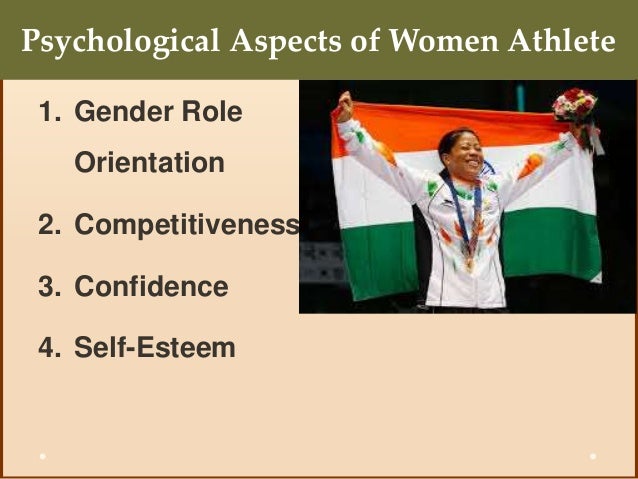
Over the past several decades , the role of women has changed drastically .However , gender beliefs and stereotypes still do exist across the world especially in sports . Most of the people in our society consider that sports are not meant for females but only for males .Social tradition , customs and cultures have great influence upon the psychology of women . In a male dominating society , males are expected to be aggressive , independent , dominating , robust and confident , whereas females are expected as well as considered to be emotional , sensitive , cooperative , sympathetic , loyal , etc. It is a well – known fact that participation of women in sports is increasing year after year .With this enhancement in female participation in sports , there is also renewed interest in the psychological characteristics of the female athletes and the effects of athletics on women . The various psychological traits of women athletes are stated below .

  1. Gender Role Orientation : It is an established fact that there has been an increase in the level of women’s participation in the types of sports that have been traditionally limited to only males , e.g., wrestling , weightlifting , kick boxing , body building , etc . However , many sports have been still considered inappropriate for women . For a long time it was considered that women should not take part in athletics because of the potentially harmful masculinising effects of sports .
  2. Competitiveness : It is evident that in the field of sports , both men and women are competitive in their own fields . In fact , women are more goal oriented and perform magnificently in artistic activities such as gymnastics . However , a number of research studies indicate that females who take part in sports are more competitive in comparison to the females who do not participate in sports .
  3. Confidence : As mentioned earlier , due to social pressures , women tend to have less confidence than men . Participation in sports , competitive environment , awards and recognitions increase confidence levels of sportspersons . However , a significant difference may exist between sportswomen and non- sportswomen .
  4. Self-esteem : Most of the research studies indicate that training plays a vital role in performance . Self -esteem improves with good performance . In the field of sports , intensive training helps in enhancing self-esteem . Research studies also show that those people who engage in sports have high self-esteem in comparison to non-participants .
  5. Aggression : Aggression is a forceful , goal- directed action that maybe verbal or physical . Participation in sports has many positive aspects which usually involve aggressive behavior . Various studies of aggression show that athletes who participate in contact sports , i.e., football players , judos or wrestlers are more aggressive than the athletes who participate in less contact sports . However , females who participate in contact sports show more aggression in comparison to females who do not participate in sports at all.

How caffeine boosts your workout

Studies have shown that Caffeine benefit endurance performance, high-intensity exercise and power sports. There have been enumerable researches on the effectivness and safety of caffeine. It is the most studied supplement out there. Caffeine has health benefits, but the performance benefits are discussed in this article.

4 reasons why caffeine makes workouts better

1 – MORE ENERGY – the first reason why caffeine makes your workouts better is, it increases your energy levels. Here, energy means alertness. The way caffeine works in your brain is as a central nervous stimulator, it blocks certain receptors to increase the levels of adernaline, dopamine, epinephrine. The increased levels of epinephrine, dopamine and adernaline give you the drive and a little bit of euphoria. The “drive” that you get makes a large difference between a good workout and a bad workout.

2. MORE STRENGTH – the second reason why caffeine makes your workouts better is, it increases your muscle strength. The research on caffeine shows that “one dose” of caffeine before workout can have an effect on your strength and increase your strength immediately. One dose implies a high enough amount of caffeine, i.e 300mg or more. The main way it does this is by stimulating the nervous system. The nerves which activate muscle fibres, with the intake of caffeine now activate those muscle fibre’s with even more force . More force on muscle fibre’s equals more strength.

3. MORE ENDURANCE – the third reason why caffeine makes your workouts better is, it increases your endurance during workouts. There are several ways through which caffeine increases your endurance. The first way is, by increasing fat burning levels during workouts. This means that when you train with caffeine, you burn more fat.That spears muscle glycogen which means you have more energy later on in the workout, when you need it. Another way by which caffeine increases your endurance is by boosting nitric oxide levels. Research actually shows that caffeine can enhance vessel dilation. It makes your blood vessel’s wider, which ensures in greater blood flowing through muscles. More blood flowing through muscles delivers more oxygen and more nutrients, which indeed increase endurance during workouts

4. LESS MUSCLE PAIN – the fourth and final reason why caffeine makes your workouts better is, it decreases muscle pain during workout. Research actually shows that caffeine works better than ibuprofen for blunting your muscle pain during workouts. With less muscle pain, you can go off limits with your workout and hit those extra reps which wouldn’t be possible without caffeine. More reps equals better results.

Performance benefits research

In a research conducted by National Library of Medicine with the purpose of studying the duration of caffeine’s ergogenic effect and whether it differs between users and non users of the drug, where Twenty-one subjects (13 caffeine users and 8 nonusers) completed six randomized exercise rides to exhaustion at 80% of maximal oxygen consumption after ingesting either a placebo or 5 mg/kg of caffeine. Exercise to exhaustion was completed once per week at either 1, 3, or 6 hours after placebo or drug ingestion. 

 Exercise time to exhaustion differed between users and nonusers with the ergogenic effect being greater and lasting longer in nonusers.

In conclusion, both the duration and magnitude of the ergogenic effect that followed a 5 mg/kg dose of caffeine were greater in the nonusers compared with the users.

*ibuprofen – Ibuprofen is a medication in the nonsteroidal anti-inflammatory drug class that is used for treating pain, fever, and inflammation*

Star Clusters- The family of stars

Many Stars in the milky way spend at least part of their lives in clusters.  Clusters are scientifically interesting because all their stars formed around the same time and generally have similar characteristics. For example, if the cloud in which they formed was rich in certain kinds of elements, then the stars from that cloud will contain higher amounts of those materials. If the cloud was metal-poor (that is, it had a lot of hydrogen and helium but very little of other elements), then the stars that form will reflect that metallicity. Their similarity makes cluster stars good targets for the study of stellar evolution (how stars age and die). Very young clusters interact with the remains of the gas and dust cloud from which they formed. Understanding how all types of clusters form in our galaxy gives astronomers good insights into how the process happens in other galaxies as well.  There are two types—open and globular.  

Open Clusters

Open clusters usually have up to a thousand or so stars gathered into an irregularly shaped collection. They are often found in the plane of the galaxy, which is where they form. Most of the stars in these clusters are less than 10 billion years old, and some still lie embedded in what’s left of their birth clouds. Our Sun was created in an open cluster that formed about 4.5 billion years ago. It has since moved away from its stellar siblings and now travels the galaxy alone.  Open clusters are generally found in spiral galaxies such as the Milky Way and irregular-type galaxies such as the Large and Small Magellanic Clouds, which are two of our galaxy’s closest neighbors.  Example of Open Clusters:

Pleiades in Taurus constellation

Jewel Box in Crux constellation

Globular Clusters

Globular clusters are collections of hundreds of thousands of old stars. The gravitational influence of all those stars binds the cluster together into a spherical, globular shape. Globulars swarm around the central region of the galaxy, called the halo. The Milky Way Galaxy has about 160 of these tightly packed clusters, but other galaxies have many more. Globulars roam around the halo and probably formed about the same time as the galaxy did.  Example of Globular Cluster: Tucanae

Cluster Formation

A cluster begins to form when some event triggers motion and turbulence in the birth cloud. For an open cluster, it could be a supernova explosion or a fast-moving wind ejecting material from an aging star in the near neighborhood. For a globular cluster, a galaxy collision could be one kind of trigger event. Whatever happens, it sends fast-moving material and shock waves through the birth cloud and starts the process of star birth. Once formation is complete, the cluster stars continue to evolve. If they are not strongly bound together by gravity, after about 100 million years they start to go their separate ways. Even though members of the cluster may get separated by large distances, they all tend to move through space in the same direction and at about the same speed. Sometimes interactions in the cluster will “kick” some stars out into space, sending them on radically different trajectories into the galaxy. Eventually, these stellar associations dissipate into what’s called a moving group, before they finally scatter to become part of the larger stellar population in the galaxy.

http://en.wikipedia.org/wiki/Star_cluster
https://en.wikipedia.org/wiki/Open_cluster

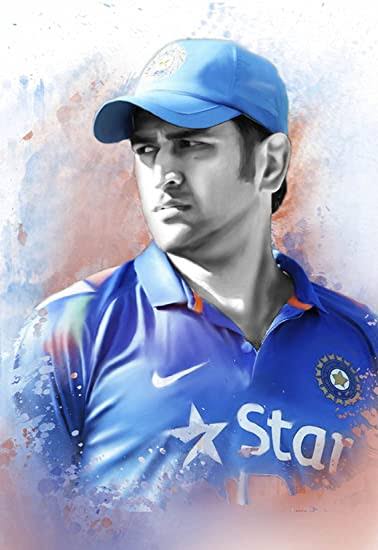
Captain Cool turned 40 yesterday!

Captain Cool turns 40!

Can any Indian forget Ravi Shastri’s words from the commentry box?

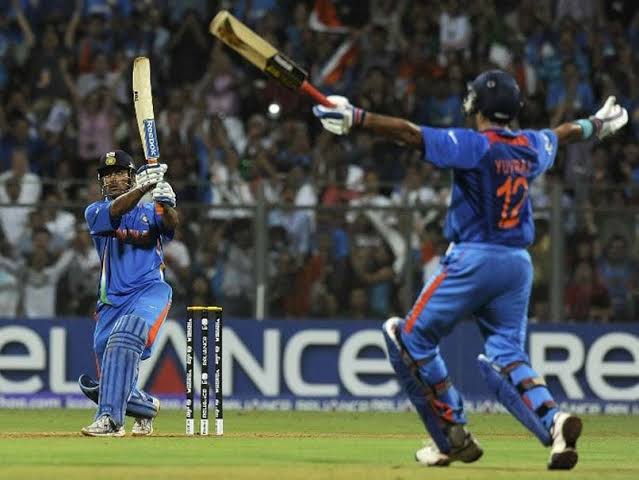
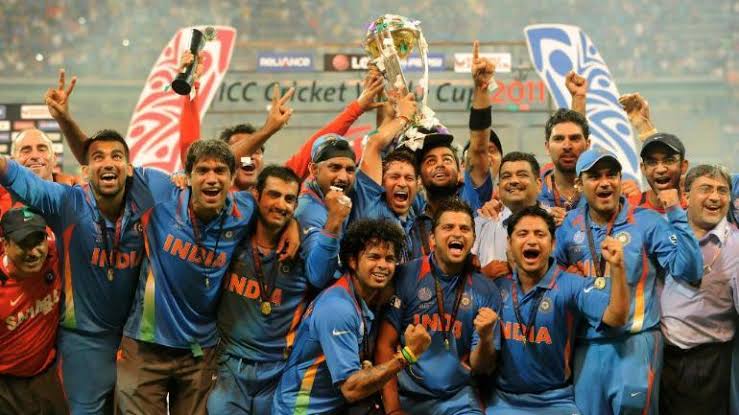
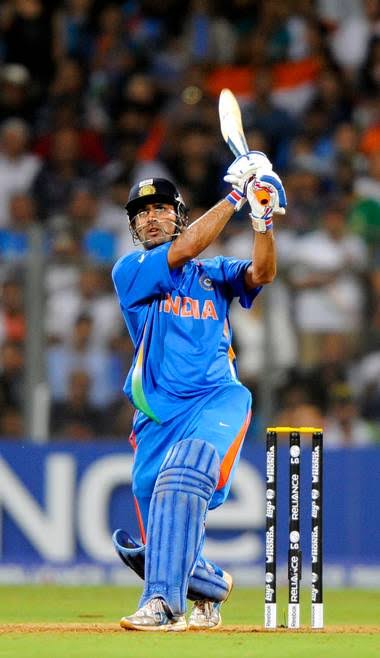
“Dhoni finishes off in style. Magnificent strike into the crowd. India lifts the World Cup after 28 years.”

– Ravi Shastri, World Cup 2011

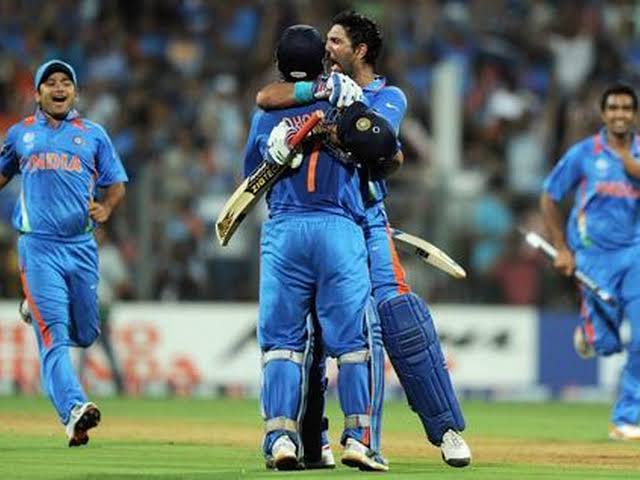
These are words that will remain engraved in our hearts and minds forever. MS Dhoni smashed the winning six to help India defeat Sri lanka and win World cup 2011 at Wankhade stadium. This World Cup winning moment is still cherished by every Indian cricket fan. Not only did Dhoni give millions of Indians a memory worth revisiting throughout their lives, but also transformed himself into a formidable “finisher”, one with ice in his veins.

The player with the most captaincy caps in international cricket, Dhoni is the only skipper in history with all 3 ICC titles (excluding WTC as it started after his retirement). He played 90 Tests, 350 ODIs and 98 T20Is before quitting international cricket in August 2020. He had quit the longest format in December 2014. India’s semi-final exit in the 2019 World Cup, a heartbreak against New Zealand, turned out to be Dhoni’s last appearance in the blue jersey. Dhoni, almost a year ago, drew curtains on an illustrious international career. He announced his retirement from all forms of international cricket on 15 August 2020. Dhoni, however, is yet to contemplate retirement from franchise cricket. He will be seen in action when CSK battles for yet another title in the remainder of IPL 2021 this year. Amid growing calls over not-so-young Dhoni’s ability to deliver with the bat, all we can say is — “Enjoy It While It Lasts”. 

The “Captain Cool”, India’s beloved skipper who has won all major cricketing accolades that one can achieve during his playing stint, and is still a fan favourite amongst all age group celebrated his 40th birthday yesterday with his family and friends.

Since the former India captain lives a private life and doesn’t make public appearances, the fans hadn’t been able to get a glimpse of their favourite player on his birthday. Dhoni lives a private life in Ranchi with his wife, daughter and parents. Dhoni also stays away from social media and the fans have to wait for Sakshi’s posts to get a glimpse of the icon. Dhoni has a staggering social media following but he hardly uses any of the platforms.

A fan managed to get his pic which has now gone viral on social media. The India legend can be seen holding a placard, which has a birthday wish for him. Dhoni is sporting his latest moustache look, a bold army one.

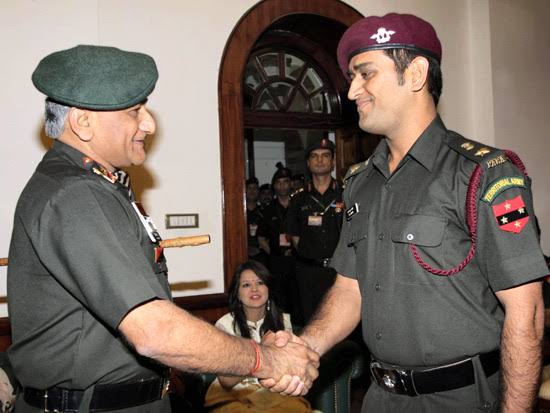
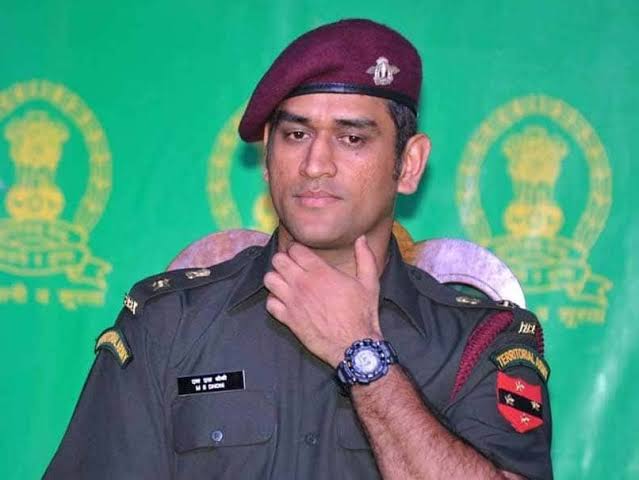
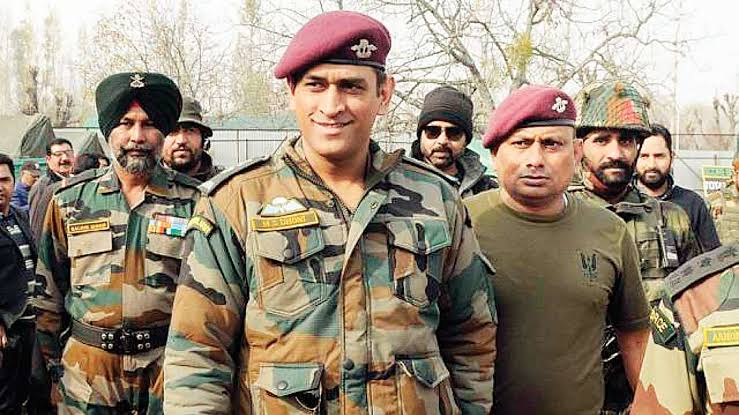
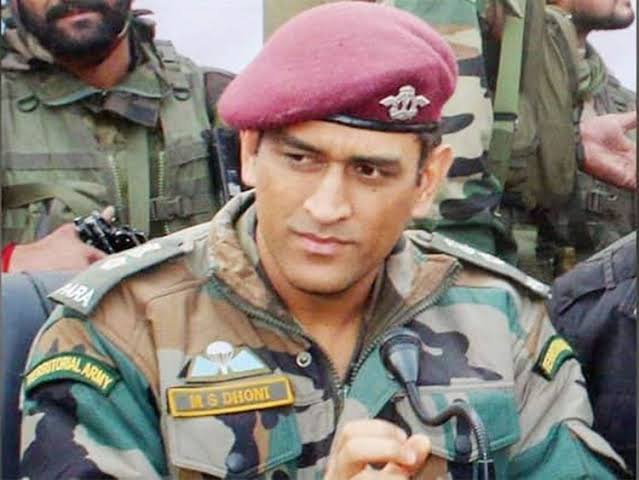
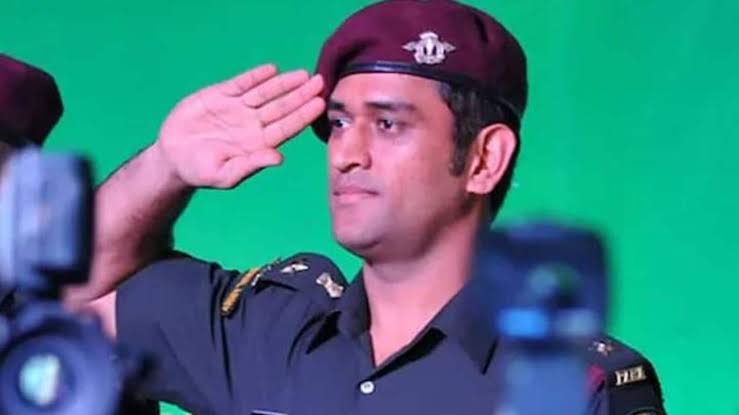
The former Indian Captain – who holds the honorary rank of Lieutenant Colonel in the Territorial Army — would like to spend more time with his unit in the Army now after his retirement, said the news agency PTI.

“One thing is for sure, he will be spending more time with the Army. He will also give time to his commercial ventures and other commitments. We will sit down soon and decide the way forward.”

Mahendra Singh Dhoni to the news agency

As our beloved Mahi turned 40, wishing him a great year ahead with lot more success in every step he takes. Hope his retirement life be brighter than the one before.

Wishing you a belated birthday Sir. Hope your smile never fades. It affects a million Indian hearts.

A smile which make millions smile. Stay cool, Captain Cool

Unpopular Opinion: Devdas was toxic, not a lover. (Book Review)

Book Cover of Novel, Devdas. (Photo Credits: Goodreads)

There’s a certain notion among Indians that every sad lover in the country is a real life Devdas. But deep down, let’s analyse, was Devdas really a lover or yet another male chauvinist?

Plot:

The story starts with two childhood family friends Devdas and Paro, both belonging to rich households and immediate neighbours. Both of their families are well connected to the each other as well. The story revolves around Indian state of Bengal.

Slowly, Devdas and Paro grow up and start developing love for each other. However, Devdas was a spoilt rich brat and this is the reason his father sends him to London for higher studies. Paro becomes sad on knowing this and waits for his return. Devdas returns home after 10 years of studies and is now a well grown up. Paro, on the other hand, exceptionally beautiful, fantasises about her childhood love Devdas.

On his return to Bengal, Devdas and Paro meet and resume their fairy tale love story. However, Dev’s family isn’t happy with their relationship as Paro was from a lower caste background. Things go worse when Devdas’s mother insults Paro’s mother for offering her daughter as a bride to Devdas’s family. This was followed my Paro getting insulted by Devdas’s father who calls her “characterless” as she went on to meet Dev at late night. Devdas seeing all this, refused to accept Paro as his family was against the relationship.

Paro’s mother, unable to bear the insult, vows to get Paro married in a family which would be lot more rich and influential than Devdas. And she does so! A week later Paro marries a rich old man from a nearby village. However, just before her marriage, Devdas suddenly arrives and offers his hand to Devdas to which Paro refuses. Devdas gets angry at the refusal and hurts Paro with a gold necklace and thus Paro suffers from an injury.

Months later Paro’s marriage to the old man, Paro pays a visit to Devdas where it’s revealed he’s completely alcoholic and lonely. Paro requests him to come with him but Devdas doesn’t agree but promises her that he would come to Paro once before his death. Devdas also meets a courtesan, Chandramukhi with whom he develops loves but leaves her yet again.

Finally, the story ends with Devdas fulfilling his promise of coming to Paro but Paro’s husband refuses to let her meet Devdas. At the end, an alcoholic Devdas passes away leaving Paro sobbing.

Character of Devdas.

1) Devdas was never a lover.

I wonder, how people have beautifully whitewashed the ignorant and abusive nature of Devdas. When Paro went to meet Devdas late at night putting her dignity at stake, Devdas refused to go with her fearing about his own family honour. If this is the case, how can he be called a lover? If family and society was more important to him, it shows he never actually loved Paro.

2) Devdas was a male chauvinist.

Devdas suddenly offered his hands to Paro when Paro was just about to marry. Paro taking into consideration her self respect questioned Devdas that why is he so late and why didn’t he come when Paro went out to meet him at his home the week before. She also asked Devdas about the reasons why her parents and she were insulted by Dev’s family. Devdas couldn’t tolerate a woman questioning him and instead of apologising to her, he shouted at her for being “too arrogant”. Devdas cared about his family honour but didn’t care about Paro’s family honour: This shows his ingrained patriarchy.

3) Devdas tries to justifies abuse!

Perhaps one of the most problematic chapters of the book was when Paro refuses Dev’s offer of running away with him on her wedding night with the old man. On getting a rejection from Paro, Dev goes intolerant and beats Paro with a gold necklace. Paro suffers from an injury and her head starts bleeding. Devdas asks Paro to keep this injury with her for life as it would always remind her of Devdas. Paro agrees to this and throughout the book she is shown to love that injury. This also shows how much the book has normalised and romanticised a brutal abuse and also definitely brutal abusers!

Minority Report : A Glimpse into the future

A world with a police force that could stop crimes even before they occur would be safe and devoid of major crimes. Minority Report by Steven Spielberg brings such a world to life, crime in Washington D.C in 2054 is at all time low due to an experimental PreCrime Police program going on from the past 6 years. The program makes use of 3 three clairvoyant humans known as Precogs who can visualize details of an impending homicide, the police force then analyses the data gathered to then apprehend the would be perpetuator. This method takes care of premeditated plans but fails to work on crimes of passion.

The Precogs are connected to a system to display and store their memories, wherein they lie floating in a pool with sleep inducing drugs to separate them from any and all stimulus of the real world. The criminals that are apprehended are sentenced to a virtual-reality as their penance. The system is not perfect and can generate errors, these imperfect predictions are analysed further and purged from the records if necessary. These imperfections occur if any one of the three precogs witnesses a different future, these are purged as group precognition agreement is the foundation of the precrime laws. The state wants to implement the PreCrime program on a national level despite of the issues.

The program is led by Chief John Anderton played by Tom Cruise. Danny Witwer an agent of the US Department of Justice played by Colin Farrell discovers a prediction made by the precogs while auditing the system for national implementation. He discovers a prediction made about Anderton hidden in the system, Anderton is going to kill Leo Crow a man with apparently no connection to Anderton. Anderton who learned about the future before Witwer decides to flee the office to save himself, which then causes Witwer to issue a manhunt.

Anderton tracks down Dr.Heinman the founder of the PreCrime program, he does so to learn about anything that he can use to save himself from being persecuted. He learns about the existence of the minority reports from Dr.Heinman and tries to use those to his advantage, the minority reports which are purged from the system are programmed to be saved to the lead Precogs mind. Anderton retuns to PreCrime to kidnap Agatha the lead Precog to try and prove his innocence, they decide to track Leo Crow down and find him in a hotel room with photos of children which includes a photo of Anderton’s own son believed to be dead. Anderton in a fit of rage attacks Crow but decides to spare his life after Crow claims that he was hired to plant the photos. Crow proceeds to kill himself to make sure his family is unharmed by whoever hired him.

Further research by Anderton points him to a murder that happened in the past, Agatha’s mother Anne was murdered even after the possible culprit was caught. Witwer deduces the murderer to be Director Lamar Burgess and is killed by him as the precog system is offline. Anderton is eventually apprehended but released when Burgess inadvertently reveals his hand in the murder of Anne Lively. Anderton displays the footage of lively death publicly and proves Burgess to be the man behind her murder, a new precrime report is generated which Predicts Burgess killing Anderton. Burgess commits suicide and precrime is abandoned, the 3 precogs are moved to an undisclosed location set to live normal lives.

In conclusion Minority Report manages to show both the benefits and the downsides to knowing ones future. An amazing movie worth watching not just for the plot but the subtle visual effects that looked like magic when it was first released.

Environmental pollution

“Humankind has not woven the web of life. We are but one thread within it. Whatever we do to the web, we do to ourselves. All things are bound together. All things connect.”

~ Chief Seattle

What is environmental pollution ?

Is it degrading our lifestyle ?

How can we improve our environment ?

Let’s get through the topic .

Introduction

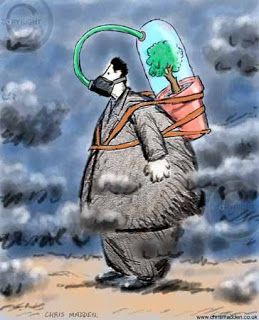
One of the greatest problems that the world is facing today is that of environmental pollution, which is causing grave and irreparable damage to the natural world and human society with about 40% of deaths worldwide being caused by water, air and soil pollution and coupled with human overpopulation has contributed to the malnutrition of 3.7 billion people worldwide, making them more susceptible to disease.

Environmental pollution is defined as “the contamination of the physical and biological components of the earth/atmosphere system to such an extent that normal environmental processes are adversely affected.”

From: Environmental Management, 2017

We all are well known about the word Environmental pollution . It is not some kind of new phenomenon , yet it is a greatest problem facing by our society . Still , people are avoiding the topic to its utmost.

Environmental pollution is one of the most serious global challenges. Wild-type organisms have a slower degradation rate of hazardous materials.

Both developed and developing nations share this burden together, though awareness and stricter laws in developed countries have contributed to a larger extent in protecting their environment.

Reasons behind environmental pollution

  • The Burning of Fossil Fuels. Industrial Emission.
  • Indoor Air Pollution.
  • Wildfires.
  • Microbial Decaying Process.
  • Transportation.
  • Open Burning of Garbage Waste.
  • Construction and Demolition.
  • Urbanization and industrialization. Since the era of industrial revolution, man has continued to introduce hazardous materials into the environment at an alarming rate.Mining and exploration.

  • Agricultural activities.
  • Particulate matter.
  • Plastics.
  • Energy production.
  • Deforestation.
  • Mining.
  • Over population.
  • Increase in global average temperature.

Effects of environmental pollution

Environmental pollution is an incurable disease . It can only be prevented.

Barry commoner

1. Effects on Humans. The effects of environmental pollution on humans are mainly physical, but can also turn into neuro-affections in the long term. The best-known troubles to us are respiratory, in the form of allergies, asthma, irritation of the eyes and nasal passages, or other forms of respiratory infections. Other rarer diseases include hepatitis, typhoid affections, diarrhea, and hormonal disruptions.

2. Effects on Animals . Environmental pollution mainly affects animals by causing harm to their living environment, making it toxic for them to live in.

3. Effects on plants . As for animals, plants, and especially trees, can be destroyed by acid rains (and this will also have a negative impact on animals as well, as their natural environment will be modified), ozone in the lower atmosphere block the plant respiration, and harmful pollutants can be absorbed from the water or soil.

Solutions for environmental pollution.

  • Evironment planning.
  • Shifting to eco-friendly transportation.
  • Air pollution must involve moving away from fossil fuels, replace them with sustainable fuels .
  • Solar power .
  • Wind power.
  • Go green.
  • Storage facilities for solid waste.
  • Environmental friendly products.
  • Policies implimentation for environmental pollution.
  • We also need to work on electromagnetic radiation (ER) reduction.
  • Awareness through mass media.
  • More green parks and areas.
  • Environmental education, etc,.

“We say we love flowers, yet we pluck them. We say we love trees, yet we cut them down. And people still wonder why some are afraid when told they are loved.”

~ Paul Morley

Link