Haryana and Punjab have 4% of India’s population

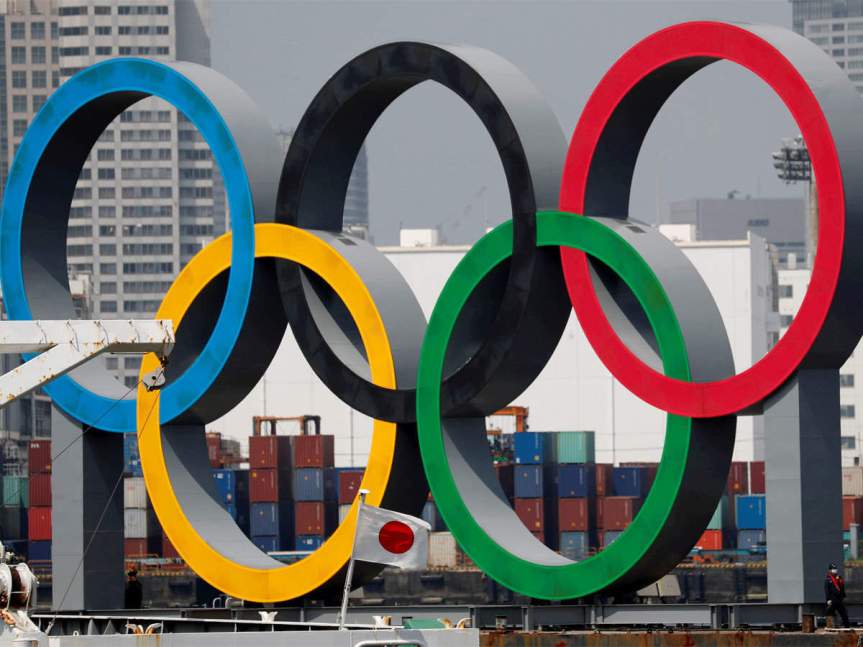
Haryana and Punjab are the two states that are once again leading the way for the country at the Olympics.

The two states, with just 4.4% share of India’s population, have together sent 50 athletes to the Tokyo Games, accounting for 40% of the Indian contingent. Haryana has 31 athletes in the contingent, nearly 25% of the total, while Punjab has 19.

Tamil Nadu had sent 11 athletes to Tokyo, 8.7% of the contingent. Other states are Kerala and UP each had sent 8 athletes.

For Haryana, nine of 19 women Hockey players, seven wrestlers(four women, three men), four boxers(three men, one women) and four shooters(two women, two men) make up most of the numbers. While for Punjab 11 out of India’s 19 member men’s hockey swell the tally. Two shooters(a man and a women), three from athletics(two men, one women), two women’s hockey team members, and one boxer make up the total.

India is sending its largest ever contingent to the Olympic Games with the total of 127 athletes and will take part in 18 disciplines: athletics, archery, badminton, boxing, fencing, equestrian, gymnastics, golf, hockey, rowing, shooting, sailing, swimming, table tennis, tennis, wrestling and weightlifting.

Kerala, known for its legacy in athletics, has six in track and field events out of the eight it is sending to Tokyo. One each is in swimming and the men’s hockey team.

What is Beauty?

We live in a culture that is obsessed with beauty. Movies, shows and other media constantly push the idea that we should look good and that we should look for beauty in our partners.

But what is beauty? How do your define it ? What do you find beautiful?

The idea of external beauty tends to be very shallow. A person we know to be cruel and harsh might be attractive, but we would not describe them or see them as beautiful. Even the best make-up or photoshop filters are not enough to make someone truly beautiful.

Beauty is something internal.

A person who is there is for you when you are down, someone who is kind, intelligent, virtuous and giving is lot more beautiful, and that is a beauty that lasts a lifetime.

No matter how well we care for our looks, they will fade and change with time. They might be affected by sickness or an accident or simply age. They are not lasting or deeply purposeful. However, what’s inside is. Beauty is based on empathy and compassion. Beauty is having self-awareness and being willing to admit when we are wrong. Its about being generous and giving, emotionally as well as in the material sense. Its internal beauty that matters, however, what allows us to live truly good lives.

REINFORCEMENT LEARNING

-MEETALI SONI

WHAT IS REINFORCEMENT LEARNING?

Reinforcement learning (RL) is an area of machine learning concerned with how intelligent agents ought to take actions in an environment to maximize the notion of cumulative reward. It is one of three basic machine learning paradigms, alongside supervised learning and unsupervised learning.

The environment is typically stated in the form of a Markov decision process (MDP) because many reinforcement learning algorithms for this context use dynamic programming techniques. The main difference between the classical dynamic programming methods and reinforcement learning algorithms is that the latter does not assume knowledge of an exact mathematical model of the MDP and they target large MDPs where exact methods become infeasible.

HOW DOES RL WORK? In reinforcement learning, developers devise a method of rewarding desired behaviors and punishing negative behavior. This method assigns positive values to the desired actions to encourage the agent and negative values to undesired behaviors.This programs the agent to seek long-term and maximum overall reward to achieve an optimal solution.

These long-term goals help prevent the agent from stalling on lesser goals. With time, the agent learns to avoid the negative and seek the positive. This learning method has been adopted in artificial intelligence (AI) as a way of directing unsupervised machine learning through rewards and penalties.

APPLICATIONS AND EXAMPLES OF RL

Gaming is likely the most common usage field for reinforcement learning. It is capable of achieving superhuman performance in numerous games. A common example involves the game Pac-Man.

In robotics, reinforcement learning has found its way into limited tests.Itis also used in operations research, information theory, game theory, control theory, simulation-based optimization, multiagent systems, swarm intelligence, statistics, and genetic algorithms.

CHALLENGES OF APPLYING RL

Reinforcement learning, while high in potential, can be difficult to deploy and remains limited in its application. One of the barriers to the deployment of this type of machine learning is its reliance on an exploration of the environment.

For example, if you were to deploy a robot that was reliant on reinforcement learning to navigate a complex physical environment, it will seek new states and take different actions as it moves. It is difficult to consistently take the best actions in a real-world environment, however, because of how frequently the environment changes.

The time required to ensure the learning is done properly through this method can limit its usefulness and be intensive on computing resources. As the training environment grows more complex, so too do demands on time and compute resources.

Supervised learning can deliver faster, more efficient results than reinforcement learning to companies if the proper amount of data is available, as it can be employed with fewer resources.

COMMON RL ALGORITHMS

Rather than referring to a specific algorithm, the field of reinforcement learning is made up of several algorithms that take somewhat different approaches. The differences are mainly due to their strategies for exploring their environments.

  1. State-action-reward-state-action (SARSA): –

This reinforcement learning algorithm starts by giving the agent what’s known as a policy. The policy is essentially a probability that tells it the odds of certain actions resulting in rewards, or beneficial states.

  1. Q-learning: – This approach to reinforcement learning takes the opposite approach. The agent receives no policy, meaning its exploration of its environment is more self-directed.
  2. Deep Q-Networks: – These algorithms utilize neural networks in addition to reinforcement learning techniques. They utilize the self-directed environment exploration of reinforcement learning. Future actions are based on a random sample of past beneficial actions learned by the neural network.

HOW IS RL DIFFERENT FROM SUPERVISED AND UNSUPERVISED LEARNING?

  1. Supervised learning: – In supervised learning, algorithms train on a body of labeled data. Supervised learning algorithms can only learn attributes that are specified in the data set. Common applications of supervised learning are image recognition models. These models receive a set of labeled images and learn to distinguish common attributes of predefined forms.
  2. Unsupervised learning: – In unsupervised learning, developers turn algorithms loose on fully unlabelled data. The algorithm learns by cataloging its observations about data features without being told what to look for.

Semi-supervised learning: –This method takes a middle-ground approach. Developers enter a relatively small set of labeled training data, as well as a larger.

  1. corpus of unlabelled data. The algorithm is then instructed to extrapolate what it learns from the labeled data to the unlabelled data and draw conclusions from the set as a whole.
  2. Reinforcement learning: – This takes a different approach altogether. It situates an agent in an environment with clear parameters defining beneficial activity and nonbeneficial activity and an overarching endgame to reach. It is similar in some ways to supervised learning in that developers must give algorithms specified goals and define rewards and punishments.

TYPES OF REINFORCEMENT LEARNING

Two kinds of reinforcement learning methods are:

  1. Positive:

It is defined as an event, that occurs because of specific behavior. It increases the strength and the frequency of the behavior and impacts positively on the action taken by the agent.

This type of Reinforcement helps you to maximize performance and sustain change for a more extended period. However, too much Reinforcement may lead to over-optimization of the state, which can affect the results

  1. Negative:

Negative Reinforcement is defined as the strengthening of behavior that occurs because of a negative condition that should have been stopped or avoided. It helps you to define the minimum stand of performance. However, the drawback of this method is that it provides enough to meet up the minimum behavior.

WHEN TO USE RL?

Here are prime reasons for using Reinforcement Learning:

  1. It helps you to find which situation needs an action
  2. Helps you to discover which action yields the highest reward over a longer period.

WHEN NOT TO USE RL?

  1. You can’t apply the reinforcement learning model in all the situation. Here are some conditions when you should not use the reinforcement learning model.
  2. When you have enough data to solve the problem with a supervised learning method

CONCLUSION Reinforcement Learning addresses the problem of learning control strategies for autonomous agents with least or no data. RL algorithms are powerful in machine learning as collecting and labeling a large set of sample patterns costs more than data itself. The key distinguishing factor of reinforcement learning is how the agent is trained. Instead of inspecting the data provided, the model interacts with the environment, seeking ways to maximize the reward. In the case of deep reinforcement learning, a neural network is in charge of storing the experiences and thus improves the way the task is performed.

WONDER OF SCIENCE

Science is a blessing to human beings. The role of science is very important in our everyday life. We cannot think of our life without science. The most important invention of science is Electricity. It is the most important thing to keep the wheel of progress running. The invention of electricity brings an incredible change in human civilization. Electricity helps us to run fa, air conditioners, trains, heavy machinery, industries, or other heavy wagons. Electric fans, lights, mobiles, Air conditioners have made our life more comfortable. All the scientific technologies rest on electricity have made our life ease.

Science is the base for preparing wonderful medicines which give us immediate relief. Science helped us to overcome many dangerous and deadly diseases. Many vaccinations and medicines have been discovered with the help of science to save humans from many diseases. Nowadays it is possible that we can transplant every part of the human body by the surgery.

Science and surgery can give us eyes to see, ears to hear and legs to walk. Medical science is doing unbelievable improvements. Blood transfusion and organ transplantation have now become possible with the help of science. Now diagnosing the problem becomes much easier with the help of the invention of X-Ray, Ultrasonography, ECG, MRI, Penicillin, etc.

Inventions of science have made our traveling fast and comfortable. We can reach safely at any part of the world within a few hours. We can easily travel by bicycles, buses, cars, trains, ships, airplanes, and other vehicles. Also, these are used to transport goods.

Science also developed a way of communication. In past days we have to wait for a long time to get one’s letter but today we can talk to our relatives even if they are too far away from us. Not only talk to them but also we can even see them on our mobile phones. The invention of mobiles and the internet has reduced the distance between people.

Many innovations and discoveries of science help farmers grow a good quality crop. The Harvesting machines, Tractors, Manures, and good quality seeds are the gift of science to a farmer. In dairy and manufacturing business, types of machinery are helping to grow their business.

The first invention of science for entertainment was Radio. In the old days, the radio is used to listen to songs and news. But now science has changed everything with its new and wonderful innovations in the field of entertainment. Now, we can watch TV programs videos on mobiles, T.V and also on computers. These are now one of the most basic needs of humans.

Science also developed our education and trade sector. The invention of printing, typing, binding, etc. has boosted our education system. Similarly, the invention of the needle, scissors, and the sewing machine to the heavy industrial machinery has done huge progress in the industrial field. In one word we can’t live a minute without science.

First online exam.

Switching from books to computers, notes in copy to PDF file, pencil/pens to keyboard keys, white board to power point presentation, question papers to online exams is a huge change.

When I attended my online examination, I was anxious, but after I attended the first exam, I felt like, I was more stress free, like we don’t have to worry for long question paper, all questions were conceptual. I have never been so stress free during an exam before. Best thing is that I can sit on my chair near study table in my comfort zone and give the exam.

However, it has some disadvantages too. In school, students are used to constant interaction with their friends but on an online platform, students tend to feel lonely and isolated. This social isolation for students can also cause a lack of communicational skill in them.

On the other hand, during assessments on online platforms, the prevention of cheating isn’t easy as there is no physical invigilator.

Hemmingway’s ‘Old Man and the Sea’

Ernest Hemmingway was an American novelist, short-story writer and journalist. He has written several best-seller classics and has also received the Nobel prize for literature in the year 1954. He was noted and admired both for the intense masculinity of his writing and for his adventurous and widely publicized life. His powerful prose writing style made an impact on the world in 20th Century. He served as an ambulance driver for American Red Cross during World War 1. His novel, The Sun Also Rises published in the year 1926 earned his first solid success. His other famous books include A Farewell to Arms, For Whom the Bell Tolls, A Moveable Feast etc.  

Old Man and the Sea is one of Hemmingway’s most famous books and the last major work of fiction that he published. Published in the year 1952, it received the Pulitzer Prize and is said to be one of the main reasons for gaining favour while being considered for the Nobel Prize. Set in the coastal regions of Cuba, it contains most of the themes that preoccupied Hemmingway as a writer and a man. It is a short heroic novel that entails the voyage of an old fisherman who ventures out into the vast sea for one last adventure. The old man is named Santiago and he sails across the sea, engaging in an epic battle to catch a large Marlin.

“But man is not made for defeat. A man can be destroyed but not defeated.”

The novel begins with Santiago mulling over his continues streak of misfortunes. Once a splendidly talented fisherman, he used to be considered the luckiest in catching fishes and selling them. But as old age started to haunt him, he was slowly overtaken by the younger folks who made fun of him for being out of luck lately. So much so that the parents of the young boy Manolin who assists him have forced him to desert the old man in favour of a more prosperous boat. In an attempt to regain his younger glory, on the eighty-fifth day of his unlucky streak, Santiago follows a large Marlin across the sea for more than forty-eight hours.

“Every day is a new day. It is better to be lucky. But I would rather be exact. Then when luck comes you are ready.”

Compared to the weakening old man, the Marlin tows Santiago’s boat into the ocean until it gets tired. Despite wanting to kill the Marlin, over the course of the journey, Santiago feels connected to the fish. He suffers hunger, sleeplessness and fatigue but feels that the Marlin has kept him company throughout. With great difficulty, he manages to kill the Marlin in a long-drawn-out duel. But as he proceeds to back home with the dead Marlin, it leaves a trail of blood into the sea attracting all sorts of sharks along the way. They attack him one after the other and he is finally left with nothing but a large skeleton of his prized fish. “The essential physicality of the story—the smells of tar and salt and fish blood, the cramp and nausea and blind exhaustion of the old man, the terrifying death spasms of the great fish—is set against the ethereal qualities of dazzling light and water, isolation, and the swelling motion of the sea.” (Britannica) Filled with symbols, allusions and strong poetic verses, the Old Man and the Sea is definitely worth the read.

Reference Links:

OBESITY

Difference Between Obesity and Morbid Obesity | Difference Between

Nowadays, obesity has become an enormous as well as fatal health problems. This problem not only in India but in other countries also. Even in United States of America, one out in three adults and one out of five children and teenagers are facing the problems of obesity. In India also, we are sailing in the same boat. Most of the people since childhood fall prey to obesity is most of the countries of the world . In fact, ‘obesity is that condition of the body in which the amount of fat increases at extreme level.’ In other words, obesity can be defined as ‘the condition when an individual weighs 20 per cent or more than the ideal weight. ‘ A child weighing around 30 pounds (approximately 13.600 kg ) or more than the ideal body weight is usually considered an obese. In the state of obesity, the body weight of the individual is always more in comparison to height . Due to a number of health risks of obesity , it has been declared a disease . It has been observed that obese persons usually fall prey to diabetes, hypertension, cardiovascular diseases, cancer, arthritis , osteoarthritis, flat foot, respiratory problems , varicose veins , liver malfunctions , etc .

Generally , the questions arises : What should be the ideal body weight of an individual ? Who is obese and who is not? Different methods are used in various countries to know the obesity of an individual .According to the first method , after having a glance over the shape of the body it can be observed whether he/she is obese or not . But this method cannot be called an appropriate method to know about obesity of an individual because the approval of a society about body shape changes with the passage of time . For example , plump females used to be liked by society in yester century in India . According to the second method , if an individual’s body weight is more than in proportion to height (according to height and weight chart) , the individual will be obese . But this method cannot be accepted as the best method. The third method is a more scientific method . In this method , the body fat percentage is calculated . If the body fat percentage of a person is more than the requirement , he/she will be an obese . This is the most accurate method to know the obesity but it is not easy to apply this method . In comparison to other methods , the weight and height chart is still preferred to know one’s obesity because it is easily available , cheap and easy to use . Another method to know the obesity is BMI (or Body Mass Index ). If you want to know your body mass index , then divide your body weight in kg by your height in meter square viz .

Obesity - Lompoc Valley Medical Center

SARDAR VALLABHAI PATEL

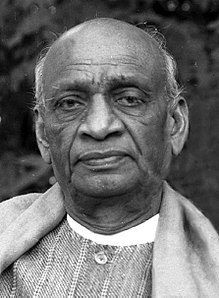
Sardar Vallabhai Patel is called the ‘Iron man of India’ for his courage and willpower. He was born in a farmer’s family in 1875 in Gujarat which was then a part of Bombay State. His father’s name was Jawar Bhai.

He had his school education at Baroda and during his school career, he was a brilliant student. He was bold and fearless from his childhood. After finishing his school education, he joined college and finally passed his law degree with credit.

He started his practice as an advocate at Ahmedabad and earned fame as well as fortune. He started leading a luxurious life. During this period he came under the influence of Mahatma Gandhi and on his motivation gave up his practice and joined the Civil Disobedience Movement. He continued to be a staunch Congress worker and leader in all other movements undertaken by Congress.

Most famous of the movements led by Sardar Vallabhai Patel was the Bardoli Farmers Movement, which he very successfully conducted. It was a no-tax campaign and the Bombay Government had to yield to the demands of the Bardoli farmers. He was one of the top leaders in Congress like Gandhiji and Nehru and no policy decision was taken without consulting him. Though he hailed from Gujarat he was and All India leader from the beginning and had a powerful voice in Congress.

After independence he became the Deputy Prime Minister of India, the first to occupy that distinguished post. Jawaharlal Nehru was the Prime Minister.

In 1947 when we got Independence, there were a number of Princely States in India and the unity of India depended on their accession to Indian Union. There was some difficulty in respect of some Princely States like Hyderabad and Travancore. With tact and willpower of Sardar Vallabhai Patel, it became easy to get all Princely States merged with the Indian Union. By consolidating all Princely States, Sardar vallabhai Patel proved that he is really and Iron Man of India. But for him, the Police Action against the Nizam of Hyderabad would not have been taken. On account of his efforts, we had a United India before we became a Republic in 1950.

The Iron man of India breathed his last on 15th December 1951 at Bombay, leaving the new nation firm and on good foundation. Many are of the opinion that if only had Patel lived longer India would have become stronger than what it is today.

HEALTH IS WEALTH

Health is God’s gift to us. Health refers to the physical and mental state of a human being. To stay healthy is not an option but a necessity to live a happy life. The basic laws of good health are related to the food we eat, the amount of physical exercise we do, our cleanliness, rest, and relaxation. A healthy person is normally more confident, self-assured, sociable, and energetic. A healthy person views things clearly, calmly, and without prejudice. 

Introduction

We live in a super-fast age. The Internet has shrunk the world dramatically and people are connected 24×7. Multitasking is the order of the day, as we struggle to fulfill our responsibilities for everyone in life. In this fight, we often forget to spare time for ourselves. The stress levels continue to build up until one day a major collapse may make us realize that in all this hectic activity, we have forgotten to take care of one important thing – our health. 

As we spend days shuttling between hospital and home, put our body through one test after another, trying to find out what has gone wrong, we are forced to remember that ‘Health is indeed Wealth’. 

In earlier days, life was very simple. People worked for a stipulated time, often walked everywhere, ate more homemade food, did household chores, and enjoyed a healthy balance in life. 

Now people have cars and bikes to commute, so they walk less. With the demand for more working hours, people are awake till late nights and indulge in more junk food than home-cooked food. Modern equipment at home has reduced the labour work and increased dependency on this equipment.  People don’t have enough time to exercise or even get enough sunlight. Basically, nowadays people are living very unhealthy lifestyles. 

Unhealthy living conditions have increased the contraction of people to various diseases like obesity, diabetes, heart attacks, hypertension, etc. This has alarming implications in our near future. So it is very important to focus on our health as much as we focus on our work. Moderation in food habits, daily exercise, and balanced work-life can surely make a big difference to our health and body. When a person stays mentally and physically fit, his action and decision are more practical and logical and hence he is more successful in life. Furthermore, good health has a direct impact on our personality. 

Importance of Good Health

A healthy body has all the major components that help in the proper functioning of the body. The essential component is the state of physical health. Your life term extends when you maintain good physical fitness. If you are committed to exercising with a sensible diet, then you can develop a sense of well-being and can even prevent yourself from chronic illness, disability, and premature death. Some of the benefits of increased physical activity are as follows.

1. It Improves Our HealthIt increases the efficiency of the heart and lungs.

2. A good walk can reduce cholesterol levels. 

3 . Good exercise increases muscle strength.

4. It reduces blood pressure.

5. It reduces the risk of major illnesses such as diabetes and heart disease.

Improved Sense of Well-beingIt helps in developing more energy.

1. It reduces stress levels.

2. Quality of sleep improves.

3. It helps in developing the ability to cope with stress.

4. It increases mental sharpness.

Improved AppearancesWeight loss contributes to a good physique. 

1. Toned muscles generate more energy.

2. Improved posture enhances our appearance.

3. Enhanced Social LifeIt improves self-image

It increases opportunities to make new friends.

It increases opportunities to share an activity with friends or family members.

Increased Stamina

Increased productivity.

Increased physical capabilities.

Less frequent injuries.

Improved immunity to minor illnesses.

Along with physical fitness, a good mental state is also essential for good health. Mental health means the emotional and psychological state of an individual. The best way to maintain good mental health is by staying positive and meditating.

Applying reader response theory to Ernest Hemingway’s Hills like White Elephants

Ernest Hemingway, has penned out hills like white elephants without providing much background information, clear conversation markers or information on characters’ background, not even proper names. A reader is left with several loose ends and scenarios so as to explain the story. Further, I will be explaining what I could make out from the story as a reader. 

Set near the Ebro river in Spain, the american and the girl are waiting for a train. The story advances through the short exchanges between the two characters. From the conversation, it is almost clear that the male character is trying to persuade the female character to do something. The female character, skeptical about the situation, appears to be trying to convince herself to be as confident as her companion. The characters are seen talking about “letting the air in” (Hemingway, 230) and everything being fine afterward, taking instances and conversations as proof, it feels like the man is forcing or rather trying hard to convince the female into an abortion. The man addressing it as a small operation, ensuring the girl that they will be like before after it, and disclosing that it is the only thing that is bothering him right now are the clear queues from the man’s side that it is an abortion. The girl being unsure about the situation and the man constantly trying to convince her and her unsure mind seeking validation from the man and asking him whether the procedure will make him love her again are clear points that state it is an abortion from the womens side. Without ever using the word abortion, Hemingway plants in our mind the seeds of thoughts that grow upto the conclusion that the characters are talking about abortion or rather the man is persuading the women into one. The woman comes out through the story as if she is convinced about the situation, she drinks without a limit almost as to prove she doesn’t care about the infant inside her. She dreams about her life after the procedure and seeks validation from the man, she needs to be sure that everything will be like before. It shows how she depends on his assurance, it shows how dependent she could be on the man. 

The story, which revolves around the conversation of the two characters, is open to many interpretations. As a reader, I feel that the woman is trying to strike a balance between what she wants and what he wants, but in the end she realises her old life is precious to leave just like that. 

Seven reasons why security awareness training is essential

1. To avoid breaches and assaults.

To begin with the most apparent, security awareness training aids in the prevention of breaches. It is impossible to estimate the exact number of breaches that security awareness training avoids. In an ideal world, we’d be able to conduct a randomised controlled experiment comparing individuals who got instruction to those who did not. 

This might be a step too far for most organisations. However, this does not exclude us from demonstrating the ROI of security awareness software. It is feasible to compare the number of occurrences prior to and following awareness efforts. The measurements that arise can be utilised to calculate ROI. Data breaches may cost millions of dollars. Meanwhile, security awareness training is reasonably priced. It doesn’t take much to generate significant profits.

2. Establishing a security culture

A security culture has long been seen as the holy grail for chief information security officers (CISOs). Similarly, such a culture is widely regarded as infamously difficult to develop. Some are moving in the right path with the help of security awareness training. 

Creating a security culture entails incorporating security ideals into the fabric of your organisation. Training that includes situational awareness (why someone could be at danger), as well as job and home-life advantages, is an effective approach to get people on board. Advanced training tools may assist in monitoring and developing a security culture, making people your first line of defence.

3. Strengthening technical defences

Technological defences are an effective tool for preventing intrusions. However, technological defences require human input. Firewalls must be enabled. Security alerts must be acknowledged. Software must be upgraded. Few firms nowadays would dare to operate without technical safeguards. Nonetheless, technology defences cannot reach their full effectiveness without security awareness training. Today’s attackers rarely bother attempting to target firms only through technical methods. Today’s attackers generally target individuals since they are viewed as a simple route into secure networks.

4. To instil trust in your consumers

Consumers are becoming more conscious of cyberthreats. They want to feel protected and secure as clients. A company that takes steps to strengthen cyber security will have a greater chance of gaining customer trust. And a trustworthy company is one that retains its consumers. 

This isn’t a wild guess. According to a recent Arcserve poll, 70% of customers feel businesses are not doing enough to protect cyber security. Almost two out of every three consumers would avoid doing business with a company that had been the victim of a cyberattack in the previous year. Customers clearly care about security credentials. Customers regard you as more responsible when you implement security awareness training. That can only be a positive thing.

5. To ensure compliance

To be clear, introducing security awareness training for the sake of compliance is not sufficient. Those that implement training merely to meet regulatory requirements risk doing the bare minimum. Nonetheless, an increasing number of agencies are requiring that particular businesses undergo security awareness training.

“Firms of all sizes must establish a ‘security culture,’ starting with the board and working their way down to every employee. Cyber security is a shared responsibility, and we adopt a collaborative approach to combating this danger, collaborating with the government, other regulators, and stakeholders on a national and worldwide scale.”

Compliance can be a pleasant side effect of security awareness training. Those that use it improve their security and, in many cases, satisfy regulatory obligations.

6. Being a socially responsible business

Cyberattacks may spread quickly, as WannaCry and NotPetya proved in 2017. The more compromised networks there are, the more vulnerable other networks become. And the vulnerability of one network raises the total risk for others.

The lack of security awareness training in one organisation exposes other organisations to risk. It’s a little like leaving your front door unlocked with the keys to the next door inside.

Security awareness training is beneficial to more than just you. It benefits your customers, suppliers, and everyone else who is connected to your network.

7. To boost staff morale

It is generally established that happy individuals are more productive. So, it’s important to realise that security awareness training accomplishes more than merely keep employees safe at work. It also keeps them safe in their personal lives.

This specific benefit, for the most part, goes unnoticed. If security awareness training serves its purpose, it is more than just an employer perk. It’s also a perk for employees.

Business War – Apple Music vs Spotify vs YouTube Music

 Hi everybody. We all know that Spotify is by far the most successful audio streaming platform in the world. In fact, even during the pandemic itself, the stock price of Spotify went up by 70%. Now, on the outside if you look at the numbers while Apple Music has only 72 million users Spotify has more than 345 million users and the rest of the competition is not even close. On top of that, its recommendation and playlist have been so amazing that you’ll agree that it has given you an incredible experience every single time. But you know what guys? Fortunately or unfortunately, in 2021, Spotify is in deep-deep trouble. 

While on one side the losses of the company have been stacking up rapidly On the other side with the giants entering the streaming market Spotify is officially in a business war. And what we are witnessing right now is perhaps one of the most interesting Internet business wars in history. And if you pay very close attention you’ll be able to learn some incredible business lessons that you can apply to your startup and most importantly, as an investor, if you’re investing into US stocks this streaming war is going to be very very crucial. The question is- What is this business war and most importantly as an entrepreneur, what are the business lessons that you can learn from this iconic case study. 

People, the music streaming revolution of the world started way back in the 1990s. Now, back then from 1984 to 1999 CDs were the ultimate instrument of the music industry. The distribution channels of the music CDs made the record labels and musicians billions of dollars every single year. But in the 1990s the Internet and the computer revolution began to pick up resulting into massive penetration of both, computers and web, into the American household. Now, people if you see this is a fine culmination of technology and connectivity and if you observe closely every time this golden combination happens, it gives rise to a new generation of startups. In the music industry, it was the company called Napster which was started way back in 1999 by Shawn Fanning and Sean Parker. 

In simple words Napster was nothing but a music torrent instead of buying a CD for 20 dollars you can download an MP3 file for free and share it with your friends And you know what guys? This invention was a disruption in the making because what followed next was the first wave of music streaming. And this wave did not just change the way people listen to music it literally changed the entire music industry. Within a few months it had 4 million song downloads and in less than a year, Napster had 20 million users. Now, initially, people thought that it’s no big deal. But in sometime, the numbers of Napster exploded further, to 60 millions users by 2001. And this is when the record labels began to realize that their stores are incurring losses and when they actually computed it shocked them to see that they were incurring more than $100 million in losses due to Napster.

 And that’s when hell broke loose for Napster. They got slapped with a lot of lawsuits and what followed next was the historic suit that led Napster to pay millions of dollars to artists, creators and record label companies eventually they had to shut down their operation in sometime. Now, while most people thought that piracy will be gone and that CDs will be back as it turns out, Napster left the market but the behavioural design of the society had been so strongly altered that people just didn’t go back to CDs at all. 

The CD stores were still closing down and other piracy websites took the place of Napster. Companies were still incurring millions of dollars of losses because people just wouldn’t pay $20 for an album. And this is where record labels were desparately looking out for an alternative to actually get their distribution channel back on track. And while all of this drama was going on, there was one man who noticed this and decided to become an opportunist during the times of chaos. And this man was none other than the legendary Steve Jobs himself and the solution that he brough to the table was to give people ultra cheap music and to give record labels a non-piratable distribution channel for their music. And this solution was none other than the iconic iPod and the rest is history. 

The record labels again started to make billions of dollars customers fell in love with the iPod as it brough along the second wave of music streaming revolution.  There were two major problems over here. Number one, not everyone owned an iPod or a Macbook and number two, not everyone could pay for each album. but everyone had the computers and the Internet. So, guess what? This culmination of technology and connectivity, again, gave rise to another generation of startups and the most successful player in this segment turned out to be none other than Spotify which started way back in 2006. 

Spotify learnt from the pains of the customers and decided to build a music streaming platform that could be used by everyone and could be used by everyone for free and this is where Spotify deploys its freemium model with an option to subscribe but this time it wasn’t easy because they knew what happened to Napster and the subscription model was way more complex than the discreet model of iTunes. Because when it comes to CDs or iTunes, it was pretty straightfoward if you buy a $1 album from iTunes 80% of that goes to record labels and 20% of that is mediator fees and that’s it. 

Whereas in case of subscription, it’s quite difficult because you are giving unlimited access to everyone for a defined fees. So, the revenue distribution itself becomes very very complex. But fortunately the Spotify guys got through it and they spent about $9.8 billion dollars between 2006 to 2018 just to get the music rights without legal issues and they built the freemium model to make music accessible to everyone. And what followed next was the third wave of music streaming that is, unlimited legal music which could be listened for free. As a result of which, again, Spotify exploded and today it is a market leader with the highest number of paid subscribers. But again there were 3 problems.

 Number one, ad revenue was not enough to pay the artists well and because the music is free, very few people actually opted in for a subscription. Number two, there was no profit for Spotify, in fact the company suffered massive losses during its rise. And last and most importantly things got really ugly with the artists. Taylor Swift and Adele broke up with Spotify over low pay. And again it led to a series of troubles for them from the creators’ side. Now, the company was badly cornered. With massive losses on one side annoyed artists on the other and on top of that they’ve now got freebie loving customers. And this gave them no option but to run a lot of ads to push their customers to buy Spotify Premium and hence a lot of interruptions. And this is when ladies and gentlemen 2 more giants decided to step into the game.

 In 2015, Apple introduced that it’s going to kill iTunes and launch the subscription model which was Apple Music as direct competition to Spotify. And in just 5 months, in November 2015, YouTube entered the streaming wars with YouTube Music. Now, if you observe this streaming war very very closely guys, you’ll see that both these services, that is, Apple Music and YouTube Music are built over the weaknesses of Spotify. And with just a few moves here and there Spotify could be killed and there could be another wave of social media revolution on YouTube. The question is- How is that even possible? If you look at this table, Apple Music deploys a premium model and its only for Apple users while Spotify and YouTube Music is for everyone and they use the freemium model which gives them a wider audience. 

Now, if you look at the user base, Apple has 1.65 billion users Spotify has 345 million users and YouTube, well it’s got 2.1 billion users. But when it comes to paid subscription Spotify is way ahead of Apple because of its accessibility through both Android and Apple. While Apple Music has only 72 million users but all of them are paid Spotify has 345 million users out of which 155 million of them pay. Now, the X factor for Spotify over here is its amazing playlists and podcasts that is integrated into the app. And this is where we saw Spotify coming out with Spotify Originals like 22 Yarns and signing up creators like Joe Rogan to become Spotify exclusive. But Apple and YouTube both also have their podcast but separately. YouTube has Google Podcasts and Apple has Apple Podcasts. And now, guys here comes the big difference. 

While Apple Music generates a revenue of $4.1 billion with very less profits because it’s just an ecosystem product Spotify being a standalone incurred a loss of $698 million inspite of generating a revenue of $9.2 billion. And YouTube? Well it’s way ahead of the game with $19.7 billion dollars in revenue and this is mainly because of it’s video service. Fun fact: YouTube is one of the most popular platforms to discover musicians and artists. Now, guys, if you take a step back (I don’t know if you see this) but YouTube can literally accommodate every single X factor of Spotify and Apple Music in the YouTube app itself. Number one You kind of already search for songs through lyrics from Google and YouTube which is the USP of Apple Music. 

Number two, you can ask Google which song is playing and it will find that out for you which is nothing but a Shazam feature. And most importantly Google has Google Podcasts and a huge base of creators who are already making podcast on YouTube. Now, every single creator knows that YouTube is by far the best platform for creating content. And users know very well how well YouTube understands them and their preferences. Now, if YouTube rolls out an update tomorrow saying that Google Podcasts is now integrated into YouTube as YouTube podcasts. 

Do you realize what’s going to happen? It is going to lead to another huge wave of creators who will flock to upload their audio content on YouTube because there are already a ton of audio creators who are desperately wanting to be on YouTube. And if given a chance with YouTube algorithm, it’s going to be a game changer for them. And the best part is, because it’s available on both Android and iOS the user base is insanely huge. So, basically YouTube literally has the best of both Spotify and Apple. And when integrated together, it will become unbeatable in the content space just like Instagram is right now for social media networks. And my sense is, one day there will be a grand announcement that’s going to change everything for Spotify. This is what, ladies and gentlemen is happening in the streaming wars. Now let’s move on to the most important part of the video and that is what are the lessons that we can learn from this iconic case study. 

 Now, let’s talk about the lesson from the case study. Lesson number one. People, always remember that being the first mover can sometimes be a terrible thing and as far as my observation goes it’s almost every time a terrible thing. And it’s always better to be a second mover so that you can build upon the mistakes made by the first mover. In this case if you see, iTunes built over Napster Spotify built over iTunes and Apple Music and YouTube music built over Spotify. So, if you’re the first mover, you’ve got to be very very careful and if you’re the second mover you’ve got to be very very happy, at the same time, very very sharp about the mistakes that have been made by the first mover. 

Lesson number two companies might come and go but the behavioral design they leave behind will stay forever. In this case, it was the paradigm shift from CDs to streaming. So, while most people will neglect it and try to reverse it you as an entrepreneur can be an opportunist and can bring about a solution which is forward looking rather than backward looking. In this case the opportunist was none other than the legendary Steve Jobs himself who built upon the behavioral design left behind by Napster. 

And most importantly, always remember guys the culmination of technology and connectivity is always the sweet spot for innovation and it will give rise to the most revolutionary startups. In this case, it was the computers and the Internet but in the next 3 years it’s going to be the green tech and the Internet, blockchain and the Internet and most importantly Artificial intelligence and the Internet.  Bye-Bye.

First Cake of India


Cake, the word itself makes us joyful, it being a part of our life from more than an era, in our birthdays, Christmas, for saying goodbye, or celebrating our small to big success. It is always present in our small to big events
But how it started, it a story of 1883 when the country’s first cake was made.


In 1880, in a coastal town of Thalasserry, Kerala, A businessman Mambally Bapu who ships milk, tea, and bread to British troops in Egypt decided to start his bakery shop to popularise baked stuff in the local, as that time there used to be just one bakery in the country which was just for the British.


He had mastered the art of biscuit making in Burma, returned from there, and set up his small bakery shop named it Royal Biscuit Factory, he began with producing 40 varieties of biscuits, bread, and buns, the interesting thing was that he uses local toddy for fermenting until the British started importing yeast into the country.
But how the idea of the baking cake was started, it was few days before Christmas in the year 1883, Murdoch Brown a British planter who started a cinnamon plantation in Anjarakkandy got off his carriage walked straight to Bapu’s shop along with a rice plum cake in his hand which he bought from England. He asked Bapu to taste the cake and asked him if he can bake one just like this.


Bapu immediately agreed, Brown gave him a 10-minute demo of the basics of cake baking, handed him some bunch of the ingredients that included cocoa, raisins, dates, and more dry fruits, and suggested French Brandy erstwhile Mayyazhi for Christmas purpose, but Bapu had his own idea about this project. He made the mould from a blacksmith in Dharmadam, chose rich spices from farms along the Malabar coast, and using a local brew made using cashew apple, Kadalipazham, a variety of banana he gave a desi touch to it.

On 20 December 1884, Bapu presented his cake to Brown, after tasting the cake Brown was amazed and certified as one of the best cakes he ever had, and order dozen of it. His made cake become a sensation in the locals and Bapu’s business becomes a hit, after that followed year he established bakery chains in different parts of the states.


Today, it has been more than 130 years since Bapu presented The first Christmas cake of India, Thalassery becomes the Leader in the cake industry of Kerala. Till now, every year in the time of December it is a rush in their bakeries just for that Christmas cake with the same recipes, not just local but from USA and UAE, they get huge orders every year.

AIR POLLUTION IN INDIA

This article foregrounds the challenges India is currently facing in bringing the level of air quality to a certain standard. It also discusses solutions that could be adopted to combat the national crisis.

Air pollution

Rising urbanisation, booming industrialisation, and associated anthropogenic activities are the prime reasons that lead to air pollutant emissions and poor air quality. It is expected that by 2030, around 50% of the global population will be residing in urban areas (Gurjar, Butler, Lawrence, et al. 2008). More than 80% of population in urban areas is exposed to emissions that exceed the standards set by World Health Organization (WHO 2016). Air pollution is one of the key global health and environmental concerns (Nagpure, Gurjar, Kumar, et al. 2016) and has been ranked among the top five global risk factors of mortality by the Health Effects Institute (HEI 2019). According to HEI’s report, particulate matter (PM) pollution was considered the third important cause of death in 2017 and this rate was found to be highest in India. Air pollution was considered to cause over 1.1 million premature deaths in 2017 in India (HEI 2019), of which 56% was due to exposure to outdoor PM2.5 concentration and 44% was attributed to household air pollution. As per WHO (2016), one death out of nine in 2012 was attributed to air pollution, of which around three million deaths were solely due to outdoor air pollution.

The rising trends in population growth and the consequent effects on air quality are evident in the Indian scenario. For example, the megacities of Delhi, Mumbai, and Kolkata combined holds a population exceeding 46 million (Gurjar, Ravindra, and Nagpure 2016). Over the years, there has been a massive-scale expansion in industries, population density, anthropogenic activities, and the increased use of automobiles has degraded the air quality in India (Gurjar and Lelieveld 2005). In the last few decades, the greenhouse gas (GHG) emissions and other emissions resulting from anthropogenic activities have increased drastically (Gurjar and Nagpure 2016).

As per WHO (2016) estimates, 10 out of the 20 most populated cities in the world are in India. Based on the concentrations of PM2.5 emissions, India was ranked the fifth most polluted country by WHO (2019), in which 21 among the top 30 polluted cities were in India. The Indian cities, on average, exceeded the WHO threshold by an alarming 500%.

The consistent population growth has led to an excessive strain on the energy consumption, thereby affecting the environment and the air quality of the megacities (Gurjar and Nagpure 2016). Kumar, Khare, Harrison, et al. (2015) calculated the increase in the total energy demand for both mobile and point sources and inferred that in Delhi, the energy demand had grown by 57.16% from 2001 to 230,222 TJ in 2011. A subsequent rise in energy consumption can be expected in the coming years, with no reliable sources available for monitoring the rate of energy consumption.

The continuous degradation of ambient air quality in the urban centres of India demands effective measures to curb air pollution. Though various policy measures are being introduced by the Government of India (GoI) to reduce the vehicular and industrial emissions, the extent to which these measures are implemented is questionable. The lack of infrastructural facilities, inadequacy of financial resources to implement advanced infrastructural innovations, difficulty in relocation of the industries from the urban centres even after mandatory court decisions, and above all, the behavioural patterns among people in accepting the green solutions are some of the crucial impediments on the road to environmental protection that our country seems to be struggling to overcome today.

Anthony Blinken mayvisit India ‘very soon’

US. Secretary of State An-
thony Blinken is expected to
make his first visit to India
“very soon”, sources said,
indicating that planning for
the visit is under way for a
meeting as early as next
week.
“The dates are still being
fnalised,” an ofcial told
The Hindu, confrming the
visit, while another ofcial
said meetings were being
scheduled in New Delhi at
the “end of July”.
Mr. Blinken’s visit is ex-
pected to prepare the way
for the Quad summit and bi-
lateral meetings between
Prime Minister Narendra
Modi and U.S. President Jo-
seph Biden due to be held in
Washington later this year,
and is also expected to dis-
cuss the emerging situation
in Afghanistan, including
Taliban advances after the
U.S. troop pull-out with In-
dian ofcials. Mr. Blinken’s
proposed visit, which is yet
to be announced, could
coincide with the 3-day visit
of Afghanistan Army Chief
Lt. Gen. Wali Mohammad
Ahmadzai to Delhi.
India and the U.S. have a
wide array of bilateral rela-
tions to discuss and Mr. Bi-
den has made it clear that
the America’s Indo-Pacifc
strategy that includes India
is an area of importance,
particularly given increasing
tensions between the U.S.
and China.
India and the U.S. have
pending talks on a free trade
agreement and India’s de-
mand for a restoration of its
GSP status for exports, res-
cinded by the previous
Trump administration, and
the two sides will discuss
improving economic, de-
fence, energy cooperation,
and cooperation on coun-
tering COVID-19. The U.S.’s
Quad initiative to produce a
billion vaccines is based on
Indian production.