Service Marketing

Must have heard this term often right? But do you really know what is service marketing all about? Keep reading to understand properly.

The term can be easily understood separately as the service refers to an act of performing something for someone in exchange for adequate consideration on the other hand marketing is a broader term but in simple word it means promotion. Collectively we can say that when a person or entity promotes services it offers to the various clients it can be known as service marketing which aims at providing the solutions to the problems faced by the clients. Both the B2B (business-to-business) and B2C ( business-to-consumer) marketing is included in it.

Service Marketing have occupied a significant role in the market because service is something which can’t be seen or touched it can only be availed and experienced. The decision of the buyers in case of products is highly influenced by its quality but it is something different in case of services because the quality of service can be determined after it is availed by the customers. So it is required by the marketers to adopt those strategies that are highly attractive for the customers to induce them for availing a particular service.

Also these services can’t be resold or returned that means they are one time action and the manner it is availed at that time affects its future sale because if the goodwill of a particular service is not maintained then it will not be able to attract another more customers.

Examples: marketing of medical services, beauty parlours and spa, coaching centres , telecommunication etc

Service marketing is often confused with the term product marketing but it is important to know that both of them are different product marketing is the marketing of a tangible item that can be seen and touched whereas services are intangible.

If the proper service marketing strategies are adopted then it can leads to huge profit potential for a business and promote it to get more customers also.

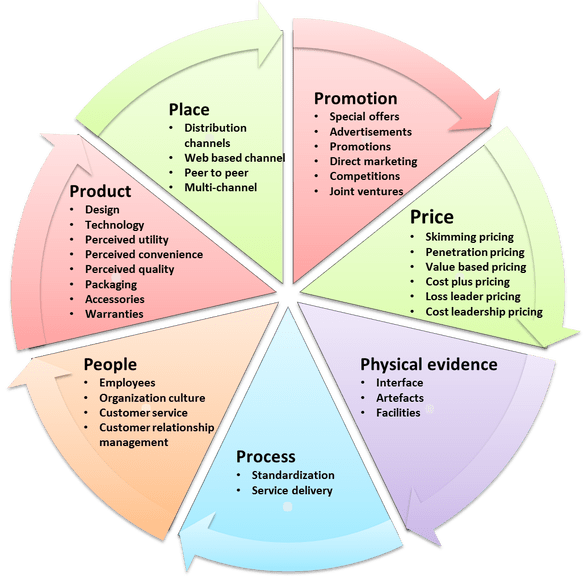
Services marketing are dominated by the 7 Ps of marketing namely Product, Price, Place, Promotion, People, Process and Physical evidence. All these are the factors or elements that are mixed by the marketer in order to deal with the customers much better.

Explanation of service marketing elements.

manners.

Why should we teach manners and etiquette in the classroom? Because kids need good social skills in order to succeed. If kids aren’t learning these basic skills at home, we need to be teaching them at school. Otherwise, through subtle social signals, the kids without manners will lose out and never know why.

And here’s a scary thought: students are learning manners from us whether we are teaching them or not. As Robert Fulghum (All I Really Need to Know I Learned in Kindergarten) said: Don’t worry that children never listen to you; worry that they are always watching you.

Where To Begin

Manners and etiquette include so many aspects of human behavior that you’ll need to determine which ones you want to focus on. Here are two simple behaviors you might start with.

1. BEING POLITE

Making an effort to be polite — smiling, saying “please” and “thank you,” holding the door for someone — goes a long way toward making and keeping friends and diffusing hostilities.

You might begin by asking students to give some examples of polite behavior. Have them demonstrate ways they have been polite and role-play situations in which they should make an effort to be polite.

Encourage them to practice in real life too. Be sure to notice when they do.

Discuss the outcomes of their practicing polite behavior. Ask students to describe any changes they feel in the classroom (or school, if everyone is working on manners and etiquette). Do they feel more comfortable, happier, safer? How do they feel when they are being polite? When someone is polite to them?

2. ACTING APPROPRIATELY FOR THE SITUATION

Behaving appropriately can help you succeed in reaching your goals — whether you want to get better grades; get a job and get promoted; or get invited to social events.

Again, brainstorm with students to get them talking about appropriate behavior for various settings. Discuss appropriate behavior for conversations, including listening when someone is speaking to you, speaking when spoken to, not talking about private things in public, looking at the person you are speaking with (I know the cultural implications, but not explaining to students what some people expect of them is doing them a disservice).

Have students role-play conversations with their peers and adults, focusing on making small talk about appropriate, positive topics, giving a compliment, and receiving a compliment graciously.

Ask students to suggest ways to remember to smile, stand up straight, or get rid of the chewing gum when they want to be taken seriously.

We Owe It To Our Kids

We owe it to our kids to teach them manners and etiquette. If we truly want to give all students an opportunity to succeed, we must stress the importance of acceptable, desirable behavior that will help them get and keep jobs, friends, and family. Someone needs to tell them.
 

HOW DOES SEARCH ENGINE GOOGLE WORKS?

Almost everyone of use google chrome for searching information today but do we ever think about how the google functions in order to give the accurate results. Today we are going to know about the functionality of search engine google.

INTRODUCTION ABOUT SEARCH ENGINE:

Search engine came into our world in the year of 1990 in the form of “archie”, which was an ftp indexing tool that allowed people to obtain certain files. A “ search engine “ is several interlinked mechanisms that work together to identify pieces of web content like images, videos , website pages, etc… based on the words you type in the search bar. The search engines always looks for the best solution, the right product, the most relevant video & the most accurate answers to better up the search experience of user.  

Search engine look simple from outside but that deceptively easy interchange requires a lot of computation and heavy lifting backstage. The too complicate matters in search engines are the algorithms used for searching. Most of the search algorithms are not only kept secret but are also constantly being changed and revised.  The hard work of search engine start it’s way before you make a search .Search engine work round-the-clock by gathering and organising information. 

FUNCTIONALITY OF A GOOGLE SEARCH ENGINE:

Understanding how a search engine works is vital to know about rank of a website. As the rank of a website is higher, the traffic that the website gets is also higher which leads to more income. The functioning of every search engine begins with the three-step process which is clearly explained in following steps:

CRAWLING:

Search engines rely on crawlers to scour the web information. Crawlers start out with a list of websites. The algorithms dictate crawlers about how many pages to crawl and how frequently.    A crawler is an internet bot that systematically browses the world wide web. Typically used by search engines . These crawlers are also called as spider.   Crawlers visit each site on the list systematically, following through tags like HREF & SRC to     jump to internal or external pages . Over time crawlers build an ever expanding map of interlinking pages

INDEXING & PAGE RANKING:

Once the content from web pages has been crawled, the web pages should be indexed based on the occurrence of multiple keywords.  When the web page content is indexing, the common elements are avoided and indexed information is stored in an organized manner. The organisation of indexed pages is called as page ranking. Search engines use algorithms for determining the rank of a web page.

PageRank is the first algorithm used by Google to evaluate web pages. It uses a simplistic model of web surfing to estimate the probability of browsing to each site on the internet. It uses the concept of random walks in a Directed Acyclic Graph.

The factors include in page ranking are Backlink quality, Mobile friendliness and how recently content was updated or Freshness. Engagement and Page speed. So, These three process steps play a vital role in “Search Engine” for query processing. The following video picturizes about the functionality of google search engine in a clear way.

CONCLUSION:

As billions of search queries per day are being performed in google, The quality of search results is closely monitored by google search quality team. The caffeine index of google takes up around 1,00,000,000 gigabytes and fills “server farms” , thousands of computers of google never get turned off around the globe. Google’s synonym system allows the search engine to recognize when groups of words mean the same thing.  For example: when you type “ dark coloured dresses”, search engine’s will results for black dresses as well as dark tones. That is the engine understands that dark as often synonymous with black

Finally, Google search engine is provided by Google LLC which is handling 40 billion indexed pages containing results along with advertisements in it. The three main reasons why internet user’s love google beside other search engines are because of it’s high quality results and regular updation of search algorithms. This is the reason why google has become most popular search engine even today in the world though it was developed at 1997 and it has almost 92% share of the global search engine market. 

ENVIRONMENT

All living things that live on this earth comes under the environment. Whether they live on land or water they are part of the environment. The environment also includes air, water, sunlight, plants, animals, etc.

Moreover, the earth is considered the only planet in the universe that supports life. The environment can be understood as a blanket that keeps life on the planet sage and sound.

Importance of Environment

We truly cannot understand the real worth of the environment. But we can estimate some of its importance that can help us understand its importance. It plays a vital role in keeping living things healthy in the environment.

Likewise, it maintains the ecological balance that will keep check of life on earth. It provides food, shelter, air, and fulfills all the human needs whether big or small.

Moreover, the entire life support of humans depends wholly on the environmental factors. In addition, it also helps in maintaining various life cycles on earth.

Most importantly, our environment is the source of natural beauty and is necessary for maintaining physical and mental health.

Benefits of the Environment

The environment gives us countless benefits that we can’t repay our entire life. As they are connected with the forest, trees, animals, water, and air. The forest and trees filter the air and absorb harmful gases. Plants purify water, reduce the chances of flood maintain natural balance and many others.

Moreover, the environment keeps a close check on the environment and its functioning, It regulates the vital systems that are essential for the ecosystem. Besides, it maintains the culture and quality of life on earth.

The environment regulates various natural cycles that happen daily. These cycles help in maintaining the natural balance between living things and the environment. Disturbance of these things can ultimately affect the life cycle of humans and other living beings.

The environment has helped us and other living beings to flourish and grow from thousands of years. The environment provides us fertile land, water, air, livestock and many essential things for survival.

Microplastic-A new global concern

Pollution from plastics have always ranked in the top for being a global problem. Now microplastic pollution is joining the club. Microplastics, as the name suggests are the minute particles of plastic. The size of a particle is less than 5mm. They occur from the larger plastics which degrades into small pieces as expected, they are also added as exfoliants to beauty and health products. Microbeads which are intentionally designed to be small can be added to this list of sources. Microplastic fragments are also found in single use plastic bottles and everyday usage plastic products like containers also one of the sources. As the macroplastic waste is omnipresent but prominent in marine bodies, microplastic also is a major pollutant of the oceans and large lakes. They get accumulated in soil as well.

Microplastics is a quite new to the pollutants list. But they are a serious threat as they can not be removed by water filtration systems. Aquatic life and birds will feed this microplastics mistaking them as food. There is no complete information available about the pollution because of less research in the area. But slowly the research is increasing in the field.

hazards of microplastics

Microplastics are made of polypropylene, polystyrene and polyethylene. UV light fragments large plastic litter into micro and nanoparticles of plastic. As mentioned above, the capacity of the to microplastics escape the filtration process poses a serious threat. We all know plastic can not be digested. If these microparticles enter the body they may get accumulated. Because of their small size they might posses the capacity to pass through cells and tissues. Their segregation in aquatic animals will be a threat indirectly to humans because we feed on them. It is estimated that humans consume 11,000 microplastic particles per annum.

If these microplastics enter cells, they may cause irritation as they are foreign bodies. They are chemically toxic to the body as well. But it is the biggest threat to marine animals. They affect the reproducing capacity of the marine animals. The number of larvae were less and size of the offspring was small. They got physical inabilities, problems in swimming. They block gastrointestinal tracts of the animals.

some solutions to reduce microplastic pollution

The main solution is the 3R, reuse reduce and recycle. Any pollution related to plastic can be reduced if we reduce the usage of the plastic. Mainly the single usage plastics should be reduced. Products containing microbeads should be avoided. people should be aware about the problems and should support bans on plastic. Conducting beach cleanups will reduce the amount of plastic that reaches the ocean. Ocean cleanup projects will also do maximum help. Finding the major sources of the problem and starting to solve the problem at its origin. People should try to have zero waste life, at least mini waste life so that there will be less contributions towards pollution. Taking the help of technologies to check the pollution and developing perfect filter systems which will filter off 100% microplastics.

Second-generation holographic displays are being developed by Looking Glass.

Looking Glass, a producer of holographic displays, has announced the development of two variants of their second-generation holographic display. Looking Glass has a video on its website demonstrating the capabilities that consumers may anticipate from the two new devices, the 4K Gen2 and the 8K Gen2, which are both powered by the company’s unique light-field technology.

The term “Through the Looking-Glass, and What Alice Found There” is derived from another word for a mirror, which was made popular by Lewis Carroll’s “Through the Looking-Glass, and What Alice Found There.” In reality, they resemble the shoebox dioramas made by elementary school children, albeit the images in the box are computer-generated in this case.

Looking Glass Portrait, the company’s first-generation holographic display, will be updated with the new goods. These were available for as cheap as $249 through a Kickstarter campaign. The second-generation gadgets are significantly more expensive, costing $3,000 for the 4K model and $17,500 for the 8K model.

The second-generation versions are a size and quality increase rather than a technological upgrade. The Portrait’s display is 7.9 inches, while the 4K version is 15.6 inches, and the 8K version is 32 inches. The two new models are both smaller and lighter, with ways for reducing ambient reflections.

All three of the company’s gadgets can transform and display images taken with a smartphone (through the Looking Glass app) into 3D pictures or movies that appear to be taken by a moving camera. The gadget may also be used to make and display 3D items; in the introduction video, they are seen designing and displaying a new shoe. In an animation, the screens may also be utilized to build and show 3D characters. All three devices run the HoloPlay Studio software from Looking Glass.

The devices operate with 3D applications such as Unity, Unreal Engine, and Blender, allowing users to generate a wide range of content. Users can also share their material with other Looking Glass users. The Looking Glass website now sells both of the new second-generation gadgets directly.

The firm sees the Portrait as a type of ambassador for its technology, especially given how difficult it was to get the systems in front of potential consumers last year. I’ve seen a few of Looking Glass’ earlier systems in person, and I can tell you that the impact isn’t quite the same over Zoom. As it strives to meet demand and overcome global supply chain difficulties, Looking Glass claims to have sold 11,000 devices and is delivering “thousands” each month.

“I think of it as their first chance to acquire their holographic display without having to gain consent from their boss,” says CEO Shawn Frayne. “Someone is interested in it, so they order it, and it meets or surpasses their expectations, and they proceed from there. The Portrait has a very high-quality level, and the larger pieces are a larger format variation of that quality.”

The new models will succeed their predecessors, which were essentially development units rather than mass-market goods (though the company will continue to offer support). In addition to being less expensive, the second-generation devices are lighter and have better visual quality than their predecessors, especially at the edges, where holographic displays often have problems.

Not everything turns out beautiful

Not everything is supposed to become something beautiful and long lasting. Sometimes people come into your life to show you what is right and what is wrong, to show you who you can be, to teach you to love yourself, to make you feel better for a little while.
Not everyone is going to stay forever and we still have to keep on going.

We may feel we weren’t bad, it may just be our destiny or the bad timing we had.

DIGITAL MARKETING

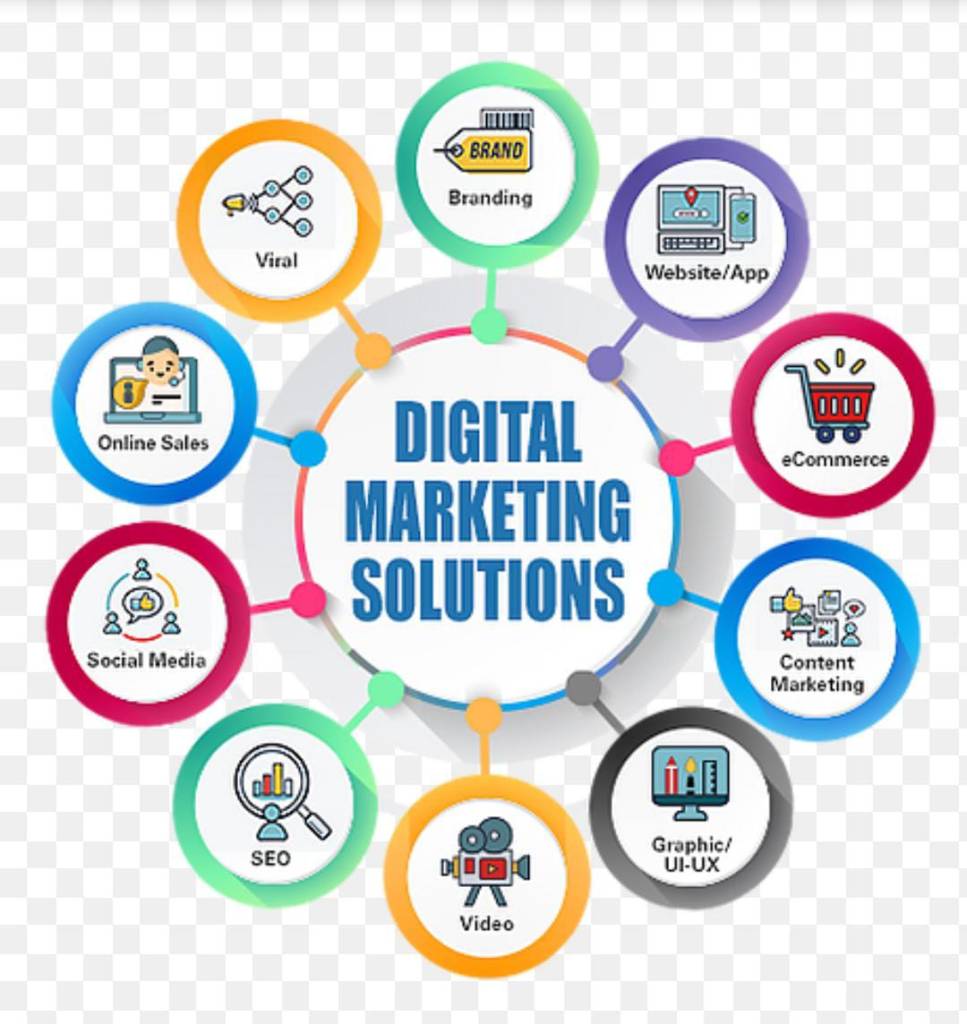
Digital Marketing refers to advertising delivered through digital channels such as search engines,websites,social media, email, and mobile apps.Digital Marketing -in other words, any form of marketing that exists online.Digital marketing helps you reach a larger audience than you could through other traditional methods, and target the prospects who most likely to buy your product or service.

BENEFITS OF DIGITAL MARKETING

  • You can target only the prospects most likely to purchase your product or service.
  • It’s more cost effective than traditional marketing methods.
  • Digital marketing lets you outrank bigger players in your industry.
  • Digital Marketing is measurable.
Digital Marketing

Types of Digital Marketing

  1. Social Media Marketing: Today’s consumers are highly addicted on social media platforms such as Instagram, facebook, LinkedIn, snapchat etc.This is why it is essential that brands are active across accounts.
  2. Influencer Marketing:Brand can reach these influencer followers with branded content and offers.Many marketers have found success with influencer marketing.
  3. Email Marketing:If an individual has interacted with a few of your branded touchpoints – like an email offer for 10 percent off the items they have been considering, or free shipping – that may be what ultimately brings about a conversion.  Nearly 60% of consumers say that email plays a role in their purchase decisions.
  4. Content Marketing:Content marketing allows marketing teams to be proactive in answering their users’ questions. Marketing teams create content, videos, and other assets to answer questions or provide context to consumers throughout the three stages of the buyer’s journey:
  • The awareness stage: Buyer realizes they have a need 
  • The consideration stage: Buyer determines a course of action to meet this need 
  • The decision stage: Buyer decides on a product / service to purchase to meet the need

5.SEO:Search engine optimization often goes hand in hand with content marketing.Marketing team wants to ensure their article appears in those top results. This is done by optimizing content for user experience and ensuring the technical elements are in place to enable search engine crawlers to easily find and index this content. 6.Pay-Per-Click:Pay-per-click is a form of paid advertising that allows marketing teams to essentially purchase traffic to their website. Marketers place ads on websites or search engines such as Google and Microsoft Bing, and pay a fee each time the ad is clicked on. These ads often appear at the top of the search results page, andare typically determined by bids on specific keywords, while banner ads on websites usually have set prices. 7.Affiliate Marketing:Affiliate marketing is similar to referral programs, it involves working with outside individuals or companies under the agreement that they promote your product in exchange for a commission from each sale that can be attributed to their efforts.  8.Mobile marketing:Mobile marketing initiatives can include many of the digital marketing strategies mentioned above, and typically leverages a combination of text messages, social media, email, push notifications, and mobile applications. The importance of mobile marketing is rising, as it is expected that by 2024, the number of mobile shoppers will rise to approximately 187.5 million users

360 Wander Writer

Welcome to Fantasy World

Cartoons play a major part of our happy childhood moments. Not only childhood they also make the later parts of life happy. It has fan base from all age groups. Cartoons are usually of illustrations . Those are drawn out of free hand drawing during the early periods of cartoon birth. They are also sometimes animated . It is a motion of picture that relies on a sequence of illustrations for its animation. The person who creates such cartoons are know as cartoonist and in a second sense they are know as animator.

The first cartoon was created by Emile Cohl, a French artist in the year of 1908. It was released by the Gaumont company in Paris . This is considered to be the worlds first animated cartoon. The name of the cartoon was ‘Fantasmagorie’. It means  “a constantly shifting complex succession of things seen or imagined.” It was released on August 17 , 1908. Thomas Nast a German-born American editorial cartoonist is considered to be the “Father of the American Cartoon“. Its popularity began with the sound cartoons in 1928 and gradually ended in the late 1960s , which was replaced by television animated cartoons, which were produced on a cheaper budget. Mickey Mouse is one of the all time fame and favorite cartoon of all. This cartoon first released in 1928 and even now, it’s still a major hit.

Comic books

These cartoons in the form of magazine release is referred to as Comic books. The Swiss schoolmaster Rodolphe Töpffer ,a Swiss school master(1799–1846) is credited with the publishing of Comic first. Most of them agree that it started booming with the launch of Superman in the year of 1938. The term ‘Silver Age‘ refers to a general time period in which the comic books were originally available.

TEA CONNOISSEUR – “HERBAL TEA”(2)

So in the previous article we have discussed about the new variety of tea that are not actually tea but called so. Herbal teas are not true teas as they are not brewed from the leaves of the Camellia sinensis plant. They are infused from fruits, flowers and plants. However, what makes them healthy is the absence of caffeine and presence of high amount of antioxidants.

Some of the types included :

Tulsi tea

Tulsi or the holy basil is famous worldwide for its innumerable properties. It is called the “Queen of Herbs” as it is bestowed with a myriad of complex biochemical compounds including eugenol, urosli acid, carvarcol, apigenin, luteolin and other flavonoids. Moreover, its also imbued with essential nutrients like vitamin A, C, calcium, zinc, iron and chlorophyll which is valuable in healing the body and mind. Tulsi tea, infused from dry or fresh leaves has various anti-inflammatory, antioxidant, antidiabetic, anticancer, antimicrobial and radioprotective properties. It is also considered a tonic for the body, mind, and spirit.

Chrysanthemum tea

Chrysanthemum tea is one of the most popular flowers teas in China, infused from its dried flowers. Studies showed it has a strong antioxidant activity and may help fight free radicals. It’s used for its cooling effect, especially during warm season, for potential sedative effect and lowering blood pressure. Chrysanthemum tea is rich in potassium, which helps reduce the risk of serious health conditions like cancer, diabetes, stroke, and heart disease. It is super rich in beta-carotene and vitamin A, that helps in eliminating oxidative stress and damaged cells in organ systems around the body and promote eye health.

Eucalyptus tea

Eucalyptus tea is infused from its dried leaves. It a famous herb native to Australia, providing numerous health benefits. The consumption of fresh or dried leaves is considered toxic because its hard to digest. However, it can be consumed in the form of tea to tap to its various benefits. The main flavonoids in eucalyptus include catechins, isorhamnetin, luteolin, kaempferol, phloretin, and quercetin. Diets rich in these compounds are known to protect against certain cancers, heart disease, and dementia. It possesses multiple antiseptic and antibacterial properties. Hence, they can be used for different breathing and lungs related problems–from treating the common cold and flu to sore throat and pneumonia.

Blue tea

Blue tea has been around in the market for ages. It is infused from dried flowers called Asian pigeonwings, bluebellvine, blue pea, butterfly pea, cordofan pea or Darwin pea. However, they are becoming more easily and widely available for consumption in stores due to its popularisation through travel blogs and shows. The tea is said to have stress busting effects that may also help reduce symptoms of anxiety. It contains anthocyanin, a compound known to increase blood circulation in the head and therefore helps maintain a healthy scalp. Blue tea has more antioxidants than green tea, hence they protect the body against free radical action and promote anti-ageing.

Guava leaf tea

Guava leaf tea is infused from the young leaves of the guava tree. It has in been a part of traditional medicine for centuries in Mexico and parts of South America. The leaves are a powerhouse of antioxidants like vitamin C and flavonoids such as quercetin. The polyphenols in guava leaf tea have been shown to regulate the absorption of carbohydrates from food and hence are beneficial for diabetic patients. The contain flavonoids (antioxidants), tannins, and acids (gallic and betulinic) that has various anti-bacterial and anti-fungal properties.

Don’t forget to read more from the series 🙂

TEA CONNOISSEUR

TEA CONNOISSEUR – ‘HERBAL TEA’

Glycolysis and Krebs cycle

Glycolysis is the process in which glucose is broken down to produce energy. It produces two molecules of pyruvate, ATP, NADH and water. The process takes place in the cytosol of the cell cytoplasm, in the presence or absence of oxygen. Glycolysis is the primary step of cellular respiration. In the absence of oxygen, the cells take small amounts of ATP through the process of fermentation. This metabolic pathway was discovered by three German biochemists- Gustav Embden, Otto Meyerhof, and Jakub Karol Parnas in the early 19th century and are known as the EMP pathway (Embden–Meyerhof–Parnas).

Glycolysis stages:

Step 1: 

A phosphate group is added to glucose in the cell cytoplasm, by the action of enzyme hexokinase.

In this, a phosphate group is transferred from ATP to glucose forming glucose,6-phosphate.

Step 2: Glucose-6-phosphate is isomerized into fructose,6-phosphate by the enzyme phosphoglucomutase.

Step 3: The other ATP molecule transfers a phosphate group to fructose 6-phosphate and converts it into fructose 1,6-bisphosphate by the action of enzyme phosphofructokinase.

Step 4: The enzyme aldolase converts fructose 1,6-bisphosphate into glyceraldehyde 3-phosphate and dihydroxyacetone phosphate, which are isomers of each other.

Step 5: Triose-phosphate isomerase converts dihydroxyacetone phosphate into glyceraldehyde 3-phosphate which is the substrate in the successive step of glycolysis.

Step 6: This step undergoes two reactions:

The enzyme glyceraldehyde 3-phosphate dehydrogenase transfers 1 hydrogen molecule from glyceraldehyde phosphate to nicotinamide adenine dinucleotide to form NADH + H+.

Glyceraldehyde 3-phosphate dehydrogenase adds a phosphate to the oxidized glyceraldehyde phosphate to form 1,3-bisphosphoglycerate.

Step 7: Phosphate is transferred from 1,3-bisphosphoglycerate to ADP to form ATP with the help of phosphoglycerokinase. Thus two molecules of phosphoglycerate and ATP are obtained at the end of this reaction.

Step8: The phosphate of both the phosphoglycerate molecules is relocated from the third to the second carbon to yield two molecules of 2-phosphoglycerate by the enzyme phosphoglyceromutase.

Step 9: The enzyme enolase removes a water molecule from 2-phosphoglycerate to form phosphoenolpyruvate.

Step 10: A phosphate from phosphoenolpyruvate is transferred to ADP to form pyruvate and ATP by the action of pyruvate kinase. Two molecules of pyruvate and ATP are obtained as the end products.

The Krebs cycle or Citric acid cycle is a series of enzyme catalysed reactions occurring in the mitochondrial matrix, where acetyl-CoA is oxidised to form carbon dioxide and coenzymes are reduced, which generate ATP in the electron transport chain.

Krebs cycle was named after Hans Krebs, who postulated the detailed cycle. He was awarded the Nobel prize in 1953 for his contribution.

It is a series of eight-step processes, where the acetyl group of acetyl-CoA is oxidised to form two molecules of CO2 and in the process, one ATP is produced. Reduced high energy compounds, NADH and FADH2 are also produced.

Two molecules of acetyl-CoA are produced from each glucose molecule so two turns of the Krebs cycle are required which yields four CO2, six NADH, two FADH2 and two ATPs.

Krebs cycle steps:

It is an eight-step process. The Krebs cycle takes place in the matrix of mitochondria under aerobic conditions.

Step 1: The first step is the condensation of acetyl CoA with 4-carbon compound oxaloacetate to form 6C citrate, coenzyme A is released. The reaction is catalysed by citrate synthase.

Step 2: Citrate is converted to its isomer, isocitrate. The enzyme aconitase catalyses this reaction.

Step 3: Isocitrate undergoes dehydrogenation and decarboxylation to form 5C 𝝰-ketoglutarate. A molecular form of CO2 is released. Isocitrate dehydrogenase catalyses the reaction. It is an NAD+ dependent enzyme. NAD+ is converted to NADH.

Step 4: 𝝰-ketoglutarate undergoes oxidative decarboxylation to form succinyl CoA, a 4C compound. The reaction is catalyzed by 𝝰-ketoglutarate dehydrogenase enzyme complex. One molecule of CO2 is released and NAD+ is converted to NADH.

Step 5: Succinyl CoA forms succinate. The enzyme succinyl CoA synthetase catalyses the reaction. This is coupled with substrate-level phosphorylation of GDP to get GTP. GTP transfers its phosphate to ADP forming ATP.

Step 6: Succinate is oxidised by the enzyme succinate dehydrogenase to fumarate. In the process, FAD is converted to FADH2.

Step 7: Fumarate gets converted to malate by the addition of one H2O. The enzyme catalysing this reaction is fumarase.

Step 8: Malate is dehydrogenated to form oxaloacetate, which combines with another molecule of acetyl CoA and starts the new cycle. Hydrogens removed, get transferred to NAD+ forming NADH. Malate dehydrogenase catalyses the reaction.

Bond linking in the monomers

Polymers such as proteins, polysaccharides and nucleic acids are formed when monomers link in long chains. The different types of bonds provide structure and stability to biomolecules and make them functional. Proteins are formed from amino acids when the carboxyl group of an amino acid reacts with the amino group of the next amino acid and form a peptide bond. This bond is formed due to dehydration. Polysaccharides are formed when several monosaccharides linked together by a glycosidic bond. This bond is also formed due to dehydration. The glycosidic bond connects carbohydrate molecules or a carbohydrate and a non-carbohydrate molecule. Nucleic acids are formed when a nitrogenous base, a phosphate group and a pentose sugar are linked to form a polynucleotide chain. Here, the three prime carbon atoms of one sugar of a nucleotide are linked to the five prime carbon atoms of the sugar of the succeeding nucleotide by a phosphate moiety. The phosphate and hydroxyl groups of sugar join to form an ester bond. The ester bonds formed by the phosphate group, between the third and fifth carbon atoms of adjacent pentose sugar rings, are called phosphodiester bonds. This bond links three prime carbon atoms of one sugar molecule with the five prime carbon atoms of an adjacent sugar molecule. The phosphodiester bond forms the backbone of the DNA strands.
The B-form of the DNA exists as a double helix, where two strands of polynucleotides are anti-parallel, that is, one strand runs in three prime to five prime and the other strand runs in five prime to three prime directions. The backbone of the DNA is formed by a sugar-phosphate-sugar chain. The four bases found in the DNA are adenine, cytosine, guanine and thymine. Adenine on one strand base pairs with thymine on the other strand by a double bond. Similarly, cytosine on one strand base pairs with guanine on the other strand by a triple bond. One full 360o turn of the helical strand would involve ten base pairs. The distance along one turn is known as a pitch, which is thirty-four angstroms. The distance between two base pairs is three-point four angstroms.

Software Development through – RAD Model

What is RAD Model ?

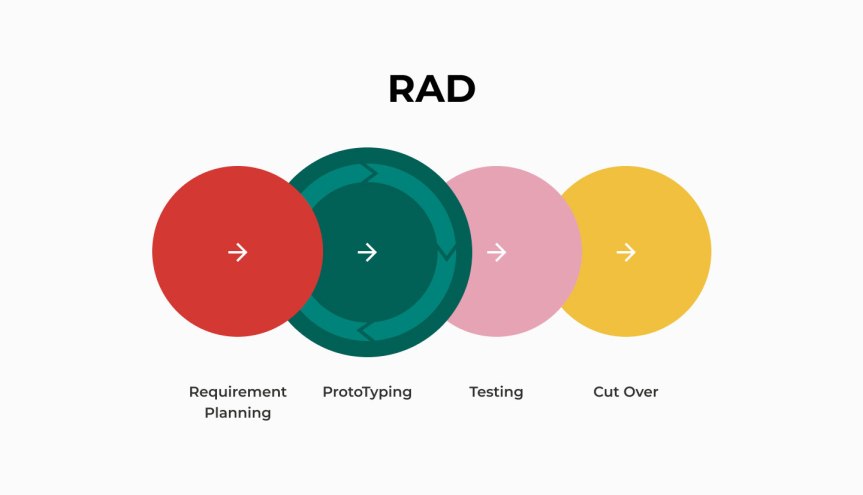
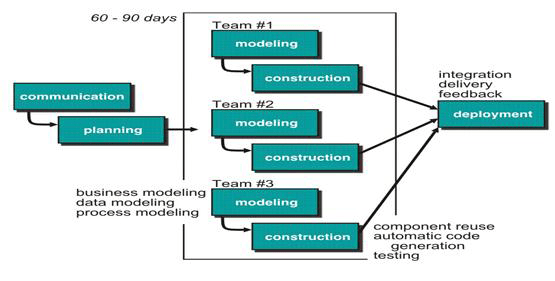
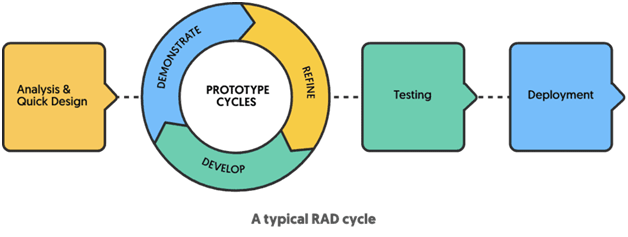
Rapid application development (RAD) is an incremental software development process model that emphasizes an extremely short development cycle.
The RAD model is a ―high-speed adaptation of the linear sequential model in which rapid development is achieved by using component-based construction.

Situation When RAD Model is Useful:

RAD should be used when there is a need to create a system that can be required in 2-3 months of time.
It should be used if there‟s high availability of designers for modeling and the budget is high enough to afford their cost
enables a development team to create a ―fully functional system within very short time periods (e.g., 60 to 90 days).

Phases

1. Communication:

Communication phase is used to understand the requirements of the project.

2. Planning:

Planning is very essential because multiple project teams are working parallel in RAD model

3. Modeling:

a) Business modeling:

The information flow among business functions is represented.

b) Data modeling:

The information flow defined as part of the business modeling phase is refined into a set of data objects that are needed to support the business.

c) Process modeling:

The data objects defined in the data modeling phase are transformed to achieve the information flow necessary to implement a business function.

4. Construction:

RAD process model reuses the existing program components (when possible) or create reusable components (when necessary).

5. Deployment:

Modules developed by different RAD teams are integrated to develop final complete product.

Advantages


Faster implementation of Project
Parallel implementation
Increases re usability of components
Encourages customer feedback
Projects divided into small teams results into better implementation

Disadvantage


•Limited Time for system implementation results into inadequate analysis of project.
•Less time for testing.
•If user is unclear with the system project may fail.
•If developers and customers are not committed to the rapid model, the RAD project fails.
•Time is the major constraint in RAD.
•RAD has to be modularized in a proper way otherwise creates a lots of confusions and problems.
•In case of high performance requirement, RAD cannot be ideal model.

Conclusion

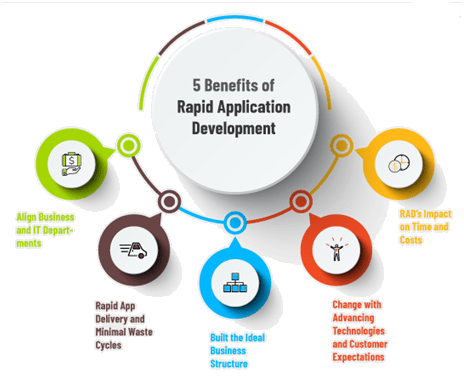
RAD Model is fast and is also based on Component Based Construction so, there is faster implementation of the project and increases re usability of the components. But also, if the user is unclear with the system the project may fail, this may lead to loss of time and cost.

Enjoying the journey

Imagine a difficult time in your life. All of us have a lot of situations that broke us. Now imagine your life without that situation. In some cases, you must be glad it happened because now you are in a good place.

But, if you are one of those people who are thinking that your life would be better if that situation did not take place. Think of the good times you had because of the bad situation.

We cannot always avoid bad situations from happening. But what we can do is enjoy our journey. I am not saying to start laughing when bad things happen but learn to embrace the journey. We are always so caught up in reaching the destination that we forget what the journey holds.

We get to learn a lot from the bad situations of our life. We become more self-aware of who we are. There are a few things that we cannot learn from school. Those things only our life experiences can teach us.

It is on us whether we want to learn from those experiences or not. One thing that all of us should understand is that problems and difficult situations will come our way no matter what. That is what life is. But, it is on us to see what we learn from it.

For example: Imagine you got rejected in an interview that you really wanted. Now, are you going to cry and give up the idea of the job, or are you going to learn from your experience and go to your next interview more prepared?

We also face issues with our friends. Our friends don’t be there for us when we need them. Sometimes they break our trust. This also teaches us an important lesson in our life. It teaches us on how to be strong on our own. It teaches us that with or without people, we need to learn to be happy.

To reach our goal or our destination, we come across hurdles called experiences. They can be good or bad. But, we are supposed to enjoy these experiences because every experience teaches us something. As cliché as it sounds,  Everything happens for a reason.

People are so caught up in reaching their destination that they forget about the beautiful journey. They often forget to embrace their experiences and learn from them.

Do not be those people because “we can never relive the same moment again” Reading this quote for the first time scared me. But, it also made me want to live more moments and appreciate them while they last.

All that we are left with are memories. Think about your school life. Good or bad, I am sure it has moments you would always capture in your heart.

We are always looking forward to the next step of our life. We forget about the journey.

More than our destination it is our journey and experiences that made us into who we are today. So enjoy the journey while it lasts.

TEA CONNOISSEUR – ”HERBAL TEA” (1)

Unlike the major broad varieties of tea, Herbal teas are not true teas. They are not brewed from the leaves of the Camellia sinensis plant. They are infused from dried fruits, flowers, spices or herbs. Hence, they are also called “tisanes”.

Herbal tea however is often considered a much better option due it the absence of caffeine. The polyphenols in herbal teas load them up with antioxidants that benefit our body in several ways. Antioxidants nurture a healthy lifestyle and gives us the boost of energy we need to get through a busy day.

Diving right into the types of herbal teas:

Chamomile tea is infused from dried Chamomile flowers. It contains Chamazulene, an aromatic chemical compound that possesses anti-inflammatory, analgesic and antispasmodic properties. Camomile tea is often known for its calming properties as it smoothens the nervous system and promotes muscle relaxation. Soothes . It relaxes the uterus and decreases the production of prostaglandins. Chamomile tea helps eliminate and prevent dandruff, soothe scalp irritation and promote healthy hair.

Peppermint tea is infused from dried or fresh peppermint leaves. The menthol in peppermint provides the cooling properties and the minty scent. This tea provides a cooling sensation that possibly eases pain. Peppermint has various antibacterial, antiviral and anti-inflammatory properties that helps them fight cold, allergies and infections caused by a clogged sinus. It aids in digestion and soothes the stomach.

Rosehips tea is infused from the pseudo fruit of the rose plant, which gives it a delicate, floral flavour and a distinct tart aftertaste. The high levels of polyphenols, carotenoids, vitamin C and E, provides powerful antioxidant properties. The presence of tiloroside promotes fat-burning and weight-loss. The antioxidants in rosehip helps to protect the brain and boosts the formation of collagen that prevents skin from aging.

Ginger tea is infused from dried or fresh ginger. It has been used for medical purposes since the old times. Ginger contains nutrients like vitamin B3 and B6, iron, potassium, vitamin C, magnesium, phosphorus, zinc. It has volatile oils, which have anti-inflammatory properties similar to that of non-steroidal anti-inflammatory drugs. It is known to prevent the nausea and vomiting associated with motion sickness. The vitamins, minerals and amino acids in ginger tea can help restore and improve blood circulation, which may help decrease the chance of cardiovascular problems. Ginger may prevent fat from depositing in the arteries, thus preventing heart attacks and stroke.

Lemongrass tea is infused from dried or fresh Lemongrass stem. Compounds like chlorogenic acid, isoorientin, and swertiajaponin promotes to its anti-inflammatory properties. According to the Memorial Sloan Kettering Cancer Centre, smelling lemongrass may help people with anxiety. It increase haemoglobin concentration, packed cell volume, and red blood cell count in the body. It soothens the symptom of premenstrual syndrome (PMS) by preventing water retention in body that leads to bloating.

Do not forget to read more from the series 🙂

TEA CONNOISSEUR

TEA CONNOISSEUR – “HERBAL TEA”(2)