Essence of Old school love

Can we please switch to old school love, where physical proposals were a thing. Where proposals were not done over texts or phone calls. Where instead of staying busy on phones, people would look into each other’s eyes and converse. This Gen Z will never understand what it was like, what it felt like.

Lovely Couple Holding Hands and Stock Footage Video (100% Royalty-free)  1036502249 | Shutterstock

When I hear my parents or grandparents describe how they met and fell in love, I see a certain purity dictated by first meetings, holding hands, exchanging letters through common acquaintances, and fighting the world to be with each other. And when I consider how long they’ve been together and how they’ve stood by each other through good times and bad, it almost always puts a smile on my face. But, I also feel envious at times. The internet has ruined many of the elements that used to make love magical. I miss the way people used to talk and write about love. It’s now only seen in vintage black-and-white films, only in dusty, faded images of my grandparents. I no longer see old school love. In fact, I’ve experienced nothing like it yet.

The respect and dignity people had for each other was unmatched. Old school love was slow and patient, it was never rushed. They didn’t expect a kiss on their first date or even third date. They made every small brief moments count, like holding hands, writing handwritten letters, talking about life over long walks. Imagine, standing out of their corridor or street just for their one glance. That’s love. Imagine, waiting for the replies to your letters for a month. That’s love. Imagine watching sunsets at beaches over Netflix and chill at home. That’s love. I believe that love comes with all the embellishments like the conveying of things through the eyes, long walks which are taken while holding hands and always feeling like something is missing when your special someone is not around. Cute gestures like buying your partner chocolates when they have a bad day or taking them to your favourite spot in the city as a way to let them into your life go a long way in making special memories. Talking through a fight or a misunderstanding instead of breaking up and moving on to the next person gives love real strength.

However, it’s slightly difficult to survive in a world where the basic idea of love is now swiping right or left on a mobile app. The kind of love we see nowadays doesn’t seem like it’s a relationship between two peoples. It seems like it’s between them and their Instagram followers. These days, people date someone for like a week and brag about them on their Instagram, change their profile pictures. That isn’t love. Going out on dates, staying busy on your phones and clicking pictures just to post on these social medias, not to create memories. That isn’t love. I’m not saying that don’t go out on dates, but can’t you keep your phone aside and just listen to your partner, look at their glowing face when the moonlight falls on them. Enjoy the small moments and don’t miss out on this happiness.

Water resources in India

Water is one of the most essential natural source for us to survive and we have heard it quite a lot time that we cannot survive without it. today I will discuss various resources of water in our country and need to conserve it for future.

In India , we have various resources of water . India receives water from precipitation is about 4000 cubic km. This rain occurs mostly in monsoon seasons with north and northeast getting maximum rain. India has about 4 % of total world’s water resources.

Beside these resources , India has a vast coastline with intended coast in some states. Odisha , Kerala and west Bengal have vast surface water resources in form of lakes. this water is also used for Irrigation of some crops. Irrigation is process of watering of agricultural plants through artificial ways. The availability from surface water ( from lakes , pond , rivers and tanks ) is about 1869 cubic kilometer. Though this level of water is more than enough but , most of the area in India is under tropical climate . About 92% of water is used in Agriculture , 6% for drinking and 2 % for industries. For agriculture , rain is most important resources in India but due to uncertainty of rainfall , uneven distribution of rainfall , crop requirements and nature of the soil, Irrigation is widely used in our country.( source : Jasmine Rachel ,135).

Irrigation are done in India by various ways . It totally depends upon availability of surface and ground water. Various means of irrigation are wells ,tanks , canals and others.

  1. well :- well is a very common source of irrigation we all have seen it in various places. it is a small hole dug in the surface of the earth to obtain water for irrigation. it is a very simple and cheap source of Irrigation.

2. Tube wells : – it is a deeper well at the depth of 20 – 30 m from which water is lifted up for various uses . it can irrigate large area for agriculture. it brings a large amount of underground water. but is little bit expensive.

3. Canals : – canal is the biggest source for irrigation . it is stretched for lakhs of kilometers. Basically ,there are different types of canals that is Inundation canals and Perennial canals . canal irrigation is practiced in Uttar Pradesh , Madhya Pradesh , Rajasthan , Andhra Pradesh and various regions.

Water conservation

Water is a natural resources in our planet . it is a basic need of humans . But due to overuse of it ( increase in population and irrigation) its demand has raised a lot since few years. and amount of water has significantly fallen. some experts also say that world war 3 could be fought due to shortage of water in various countries. we need to conserve water as much as possible . some reasons for it are :-

  1. The overuse of underground water.
  2. Irrigation
  3. The demand of water for industrial use is increasing day by day.
  4. The increase in country’s population.

Water conservation is a very serious mater . fresh water is also declining from earth’s surface. we need to take good steps to conserve water and use efficient measures to conserve water. some techniques to conserve water are rainwater harvesting , water recycling etc.

PROBLEMS FACED BY LGBT COMMUNITY

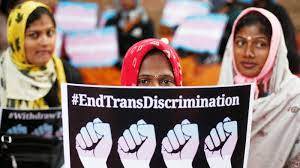
The expression “LGBT” represents lesbian, gay, bisexual and trans gender. A lesbian is lady drawn to another ladies. Gay is a man drawn to another man. Bisexual individuals are drawn to more than one gender. A transgender individual is somebody whose sex personality varies from the one they were appointed upon entering the world. Individuals in the LGBT people group are battling for equivalent rights and acknowledgment. Trans individuals, particularly, face a ton of trouble in discovering acknowledgment. Individuals in the LGBT people group are peered downward on constantly. While lesbians, gay and bisexual individuals are reluctant to inform their families about their sexuality.

They are not acknowledged in the public eye. Others ridicule them. “LGBT” terms are regularly used to affront somebody. “Gay” is frequently utilized as a revile/curse term which isn’t right. Somebody’s identity shouldn’t be utilized as reviling/cursing word.

Consistently, an enormous number of LGBT individuals face gigantic issues identified with brutality, joblessness, separation, destitution and absence of medical care. Biased individuals have issues with the manner in which individuals from the LGBT people group lead their lives. These individuals, I accept, are being juvenile. There are a few group who claims themselves as LGBT ally however the extremely next second they crack lame and sexiest jokes on them.

However, there are individuals who genuinely support LGBT people group. Be that as it may, of individuals have ill-conceived notion about them. They accept that LGBT individuals shouldn’t be permitted in home. I believe If school make their understudies mindful about the LGBT people group, we would not deal with such issues.

RESOURCES:

1.https://www.youthkiawaaz.com/2018/01/dont-ever-be-afraid-to-show-off-your-true-colours/

2.https://www.livemint.com/Sundayapp/sAYrieZdZKEybKzhP8FDbP/Being-LGBT-in-India-Some-home-truths.html

Dreaming big enough

As soon as the name of dreams comes in the mind, then we feel that dreams are those which we see in the night. But dreams are in reality what we see while sleeping, but we see the real dreams of life with open eyes. Those dreams that give us the courage to take us towards tomorrow give us happiness. Dreams come automatically in our mind which molds our thoughts accordingly. Dreams are not a slideshow but examples of our thoughts that we think of all the time.

What do we think famous people So become famous because they decide. No we think wrong rather they dream and start fulfilling them because they have dreams and they have followed their dreams due to which they have gone on right path in their life .all you need is a passion. Passion helps us to complete the dreams .When we dream big, we think accordingly and start moving forward. To contemplate a big dream is to consider your potential as a powerful creator, and that’s actually a good thing.

Dreaming is a multi-step process. Although coming up with an idea of ​​how you are going to spend the rest of your life is important, acting on that idea is half the battle. Your dreams have nothing to do with what others think of you. Others may want to see you as a doctor, but you may be dreaming of becoming a painter. This is not entirely wrong as you have the right to dream about everything that your heart desires.

We have found many people who limit their dreams. They dream according to the situation they are standing at the right moment. Then that is not dreaming big enough. For example: perhaps you would most really choose the job that is most suitable to you rather than the career you actually want but that is beyond your grasp at the current moment. However, big dreamers dream light-years from where they stand.

A truely big dream is an ultimate manifestation. A big dream is your soul’s way of reaching the highest vibration from this place in universe. If you know you are truely dreaming big enough, then your soul will let you dream manifest and your heart sing. 

So what do you think? Are you dreaming enough? Are your dream holds so much power that they can withstand any situation and will not be break by you? That’s how your dreams should be. If so, well done!

It will take higher level of path of trust in oneself to consider possibilities like these. Many people even don’t dare to dram.

If you think that you are not dreaming enough, then you have to move your training wheels bit speedily and stretch a little higher. Let you imagination runs into wild and see where it takes you!

Dreaming is not a bad thing, not fulfilling it is a bad thing.

TRENDING TECHNOLOGY

Can a robot ever be conscious and how would we know if it were?🕘

Some people think we could easily build and identify a conscious robot, while others insist that it’s impossible – it all depends on what you think consciousness.

Technology’ is one of the keywords of our world, yet it is also one of the most confused. As an analytical category it seems necessary for our understanding of all of humanity’s history, and indeed beyond. We are probably comfortable with asserting that humans have had technologies since the Palaeolithic, and a menagerie of animals, from crows to chimps, have even been identified as tool users. As an actors’ category ‘technology’ is of surprisingly recent vintage, although cognate terms – techne, arts, and so on – have a much longer history. Yet even for a recent English word ‘technology’ has come to embrace often conflicting meanings. In this essay review I have three aims. First, I will offer a summary of Eric Schatzberg’s important new opus Technology, which untangles and clarifies the history of ‘technology’ and its cognates as actors’ categories. Second, I will conduct a critical analysis, arguing that Schatzberg, while helpfully placing past ways of thinking about technology into two camps, ones he calls the ‘cultural’ and ‘instrumental’ approaches, makes a misstep when he favours the former over the latter.

Third, I offer an extension of my preferred instrumentalist definition, one which highlights an essential property of technologies – their power to intervene over scales – in a way that, I suggest, offers a new, invigorating direction of study for historians of science and technology.

There is disagreement over whether machines can ever be conscious, let alone how we would know if one were. Your view may depend on how you see consciousness.

If the subjective feeling of consciousness is an illusion created by brain processes, then machines that replicate such processes would be conscious in the way that we are. How would we know this? Daniel Dennett at Tufts University in Massachusetts thinks a Turing test, in which a machine has to convince a human interrogator that it is conscious, should, if conducted “with suitable vigour and aggression and cleverness”, be enough.

Face Packs

Face pack is easiest way to take care of your skin. Our skin faces a lot of damage due to inadequate care, pollution, climate change and health issues. There are variety face packs depending on need and skin type.

Here are some reason why to use face packs :-

  1. Deep Clean :- Using a face pack on daily basis can keep your skin healthy by getting rid of oil and dirt.
  2. Unclog pores :- The ingredients of face packs are such that they pull out all impurities on the surface of the skin or they penetrate deep inside the pores pushing out dirt to the surface along with dead skin cells.
  3. Hydrates the skin :- To maintain a radiant looking youthful skin you need to drink a lot of water. Apply face packs that will add moisture to skin such as cucumber, potato, banana etc.
  4. Reduces acne and dark spots :- Face packs helps in maintaining skin tones, prevents the formation of age spots reduces pigmentation and sun damage.

Terrorism

Terrorism is a criminal act that seeks to instil terror in ordinary people. It is a danger to mankind. It covers anybody or any organisation who spreads violence, such as riots, burglaries, rapes, kidnappings, fights, bombs, and so on. Terrorism is a cowardly act. Terrorism is also unrelated to religion. A terrorist is a terrorist, regardless of whether he or she is Hindu or Muslim.

Types of Terrorism

Terrorism is classified into two types: political terrorism, which causes widespread alarm, and criminal terrorism, which involves abduction for ransom money. Political terrorism is even more dangerous than criminal terrorism since it is carried out by well-trained individuals. As a result, it becomes difficult for law enforcement organisations to apprehend them in a timely manner.

Terrorism spreads at both the national and international levels. Regional terrorism is the most violent type of terrorism. Because terrorists believe that dying as a terrorist is precious and holy, they are prepared to go to any length. All of these terrorist organisations are formed for a variety of reasons.

Causes of Terrorism

There are several major causes of terrorism, including rapid population growth, politics, social and economic problems, dissatisfaction with the country’s system, a lack of education, corruption, racism, economic inequality, and linguistic differences. Terrorism is used as a weapon to show and justify one’s point of view. The most well-known riots are those between Hindus and Muslims, although there is a distinction between caste and terrorism.

The Effects Of Terrorism

Terrorism instils fear in individuals, and as a result, people in the country feel insecure. Terrorist attacks damage millions of products, take the lives of thousands of innocent people, and slaughter animals. After witnessing a terrorist attack, disbelief in mankind grows, giving rise to another terrorist. There are several forms of terrorism in various areas of the country and throughout the world.

Today, terrorism is not just a concern in India, but also in our neighbouring nation, and governments all over the world are working hard to combat it. The September 11, 2001, terrorist attack on the World Trade Center is widely regarded as the world’s biggest. Osama bin Laden attacked the world’s tallest skyscraper, resulting in millions of injuries and the deaths of thousands of people.

Terrorist Attacks in India

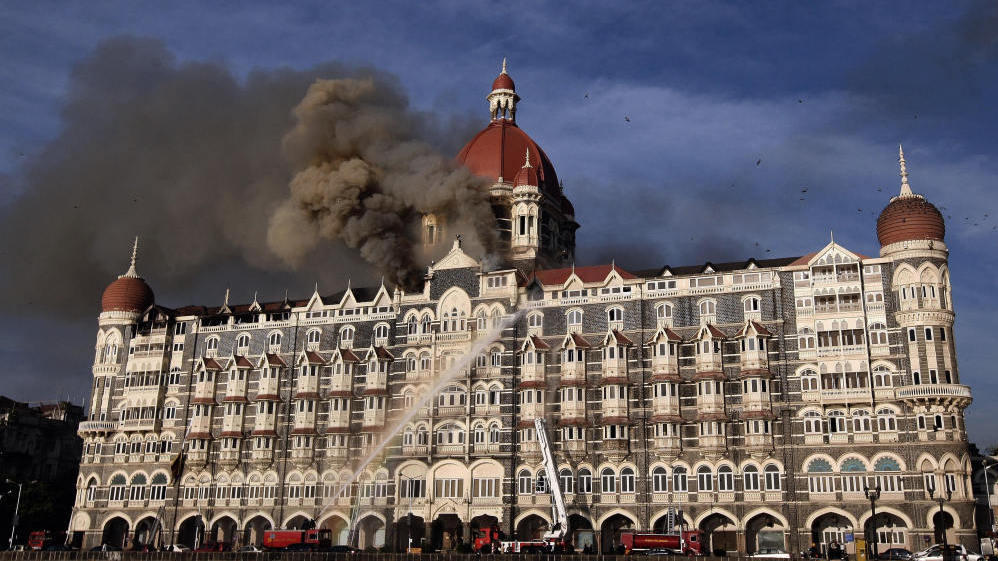
India has suffered several terrorist attacks which created fear among the public and caused huge destruction. Here are some of the major terrorist attacks that hit India in the last few years: 1991 – Punjab Killings, 1993 – Bombay Bomb Blasts, RSS Bombing in Chennai, 2000 – Church Bombing, Red Fort Terrorist Attack,2001- Indian Parliament Attack, 2002 – Mumbai Bus Bombing, Attack on Akshardham Temple, 2003 – Mumbai Bombing, 2004 – Dhemaji School Bombing in Assam,2005 – Delhi Bombings, Indian Institute of Science Shooting, 2006 – Varanasi Bombings, Mumbai Train Bombings, Malegaon Bombings, 2007 – Samjhauta Express Bombings, Mecca Masjid Bombing, Hyderabad Bombing, Ajmer Dargah Bombing, 2008 – Jaipur Bombings, Bangalore Serial Blasts, Ahmedabad Bombings, Delhi Bombings, Mumbai Attacks, 2010 – Pune Bombing, Varanasi Bombing.

The recent ones include 2011 – Mumbai Bombing, Delhi Bombing, 2012 – Pune Bombing, 2013 – Hyderabad Blasts, Srinagar Attack, Bodh Gaya Bombings, Patna Bombings, 2014 – Chhattisgarh Attack, Jharkhand Blast, Chennai Train Bombing, Assam Violence, Church Street Bomb Blast, Bangalore, 2015 –  Jammu Attack, Gurdaspur Attack, Pathankot Attack, 2016 – Uri Attack, Baramulla Attack, 2017 – Bhopal Ujjain Passenger Train Bombing, Amarnath Yatra Attack, 2018 Sukma Attack, 2019- Pulwama attack.

Agencies fighting Terrorism in India

To combat terrorism in India, many police, intelligence, and military institutions have created specific agencies. In India, major anti-terrorism agencies include the Anti-Terrorism Squad (ATS), the Research and Analysis Wing (RAW), and the National Investigation Agency (NIA).

Conclusion

Terrorism has evolved into a worldwide concern that must be addressed at the outset. Terrorism cannot be handled only by law enforcement forces. People all across the world will need to band together to combat the rising menace of terrorism.

WHY BIODIVERSITY IS SO IMPORTANT??

 Biodiversity is soul for life!!💚


Biodiversity has become an important issue on the global arena. The importance of biodiversity is increasingly being recognised as of vital concern on the local, national and international levels. The challenge is how to find practical and workable ways to increase biological diversity. Obviously action needs to be taken on the governmental level. However there are also ways that individuals, and groups of individuals can begin to act on their own right and help create ecological change and increase biodiversity.

The issues and challenges around achieving biodiversity are many and therefore likely require many solutions in order to be find the most effective solution, or combination of solutions, for a given area.

One highly effective solution which has recently emerged is called a “Rewilding Stick”. Rewilding Stick is a highly-scalable method suitable for leveraging the planting efforts of either a single individual, or of a large group of individuals.


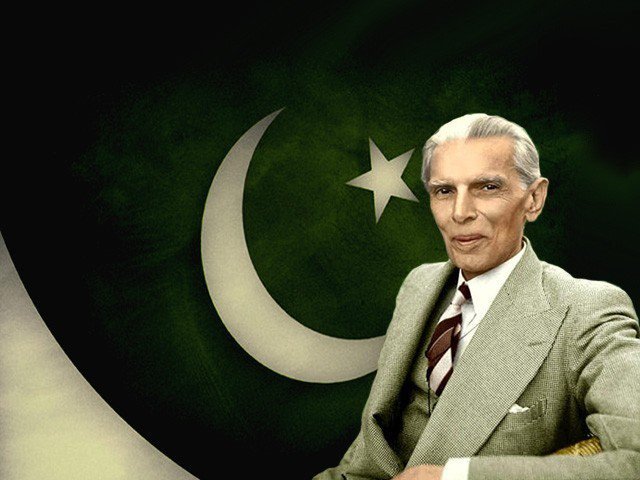
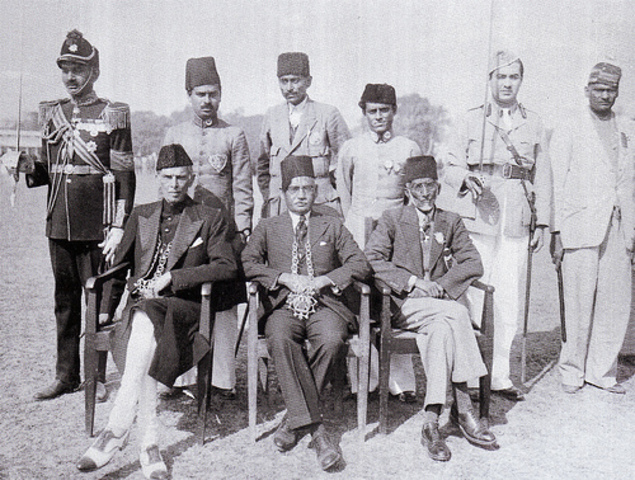
Mohammad Ali Jinnah- The man behind the Partition and creation of Pakistan.

Note- This article is based on historical facts and written with great conscience. I (the author) do not intend to hurt the sentiments of any Religion or Community. And in case I’ve made any mistake (with facts), then feel free to comment below.

Mohammad Ali Jinnah, the first Governor-General of Pakistan, was a part of the India National Congress for many years. India and Pakistan were born due to the two-nation theory that the Muslims would be given a separate nation as opposed to the Hindus and the INC.

  Hindus and Muslims had always fought as one against the oppression of the British. But the British were very crafty. They were aware that the growing nationalism would be the downfall of the British Empire sooner or later. To avoid this the British, sought the practice of ‘Divide and Rule’. They knew that the Muslims were a minority and their lack of education and comparative backwardness made them insecure and the British supposedly took up their cause. They campaigned for their cause and the Muslim intellectuals, big landlords, and leaders of the community aided them in swaying the rest of the Muslims. The way they wanted to.

 The Indians, unfortunately, did not realize that this was what the Britishers wanted and that they should be working together. The divide became wider and soon separate electorates took place in 1906. The Muslim leaders like Khan Abdul Gaffar Khan, Maulana Azad, M.A. Ansari all worked and appealed for unity, but on the other hand, Jinnah emerged as the leader of the Muslims and he gave vent to his ill feelings against Hindu leaders. It was during the conference at Calcutta in December 1928, that he demanded a separate electorate as well as reservations and safeguards for his community. He drilled into the minds of all the Muslims that they were a minority and they stood the danger of being dominated by the Hindu majority. Several Hindu organizations like the Hindu Mahasabha aided the deep-rooted resentment between the two communities.

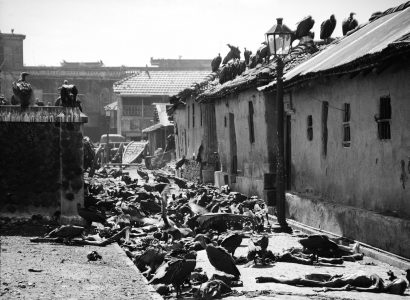
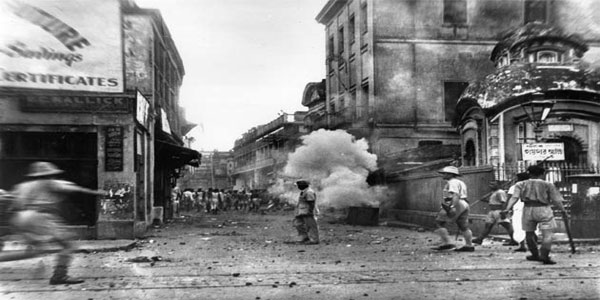
  The result of all this was partition and a nation called Pakistan was born. The initial idea of a different Muslim nation was heralded by Sir Muhammad Iqbal, who put this proposal at the Allahabad Muslim League session in 1930. But it was in April 1914 that Jinnah declared that under no circumstances would there be one government. They were determined to establish an independent nation. When the Ministers of the Interim Government, led by Pandit Jawaharlal Nehru were being sworn in, in September 1946, the Muslim League supporters were raising slogans about ‘Long Live Pakistan’. Though the two leagues worked together for a while, it was by no means a smooth sailing in the joint Government. Jinnah then announced 16th August 1946 to be considered as Direct Action Day, to assert his demand for a separate homeland for Indian Muslims out of certain northwestern and eastern provinces in colonial India. Against a backdrop of communal tension, the protest triggered massive riots between Hindus and Muslims in Calcutta (now Kolkata) in the Bengal Province of British India. More than 4,000 people lost their lives and 100,000 residents were left homeless in Calcutta within 72 hours. This violence sparked off further religious riots in the surrounding regions of Noakhali, Bihar, United Provinces (modern Uttar Pradesh), Punjab, and the North-Western Frontier Province. These events sowed the seeds for the eventual Partition of India.

  Eventually, Lord Mountbatten put forward the partition plan in June 1947. The country was divided into two separate nations- India and Pakistan. Mohammad Ali Jinnah was sworn in as the first Governor-General of Pakistan on 14th August 1947. A day later India gained Independence with Pandit Jawaharlal Nehru as the Prime Minister on 15th August 1947. As Jinnah left New Delhi to assume the office of Governor-General of Pakistan he commented that it was probably the last time he would be looking at Delhi, and this proved true enough as he died only a year later on September 11, 1948. The emergence of Pakistan was at almost the end of his lifetime and the task of fulfilling and building up his dream was left to his successors.

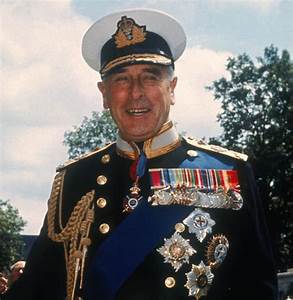
Lord Mountbatten

Movie Review – Death Bell

If you are searching for an Asian horror movie with nerve wrenching suspense, then Death bell maybe the one you are looking for. Death bell is an absolute epitome of horror and thriller. If you’re among someone who enjoys watching horror movies- you should definitely add this to your watch list right now.

Death Bell (2008) - IMDb
Rated 5.6/10 by IMBD

Death bell or Gosa is a Korean horror suspense thriller movie directed by Hong Seung Yoon who is also a music video director and produced by Core Content Medias. The movie stars Lee Beom Soo, in his first horror film role, Kpop singer Nam Gyu Ri marking her acting debut, Kim Bum, Yoon Jung Hee in peculiar characters with Son Yeo Eun, Lee EL, Son Ho Jun and many others making it star-studded cast line-up. Set in a Korean high school, the film’s native title refers to gosa, the important midterm exams that all students are required to sit. A group of 20 high school students partakes in an elite class to prepare for a college exam. Trouble ensues when the students and teachers are trapped in the school building by a maniac and to be set out free then to need to answer his question or face horrible fate. The movie has but wrenching, brutal torture scenes which can be harsh for some people. It is neat and clean, topic and genre committed movie. Most of the characters show little development but there are not also much lows in their characters. The movie upheld the high tension up to the end. Once you are immersed in the storyline, you won’t be able to leave your seat. Cinematography and screenplay can disappoint, but the acting won’t. Nam Gyu Ri as Ina is set up as the plot’s central girl, who is determined to save her classmates. She has wonderful presences which grow as action pick ups. The movie has the basic Asian horror idea of avenging host associated with modern day students’ lives. The central core of the movie is an interpretation of the “torture porn” genre of Western Horror that was doing the rounds. This cultural immersion allows it to stand apart even if it doesn’t fully deliver. This is a feature for horror fans that are less concerned with fully rounded characterization.
All in all , Death Bell gives you best horror with a wonderful cast but with moderately good plotline and other aspects.

NEANDERTHALS – Our Closest Relatives

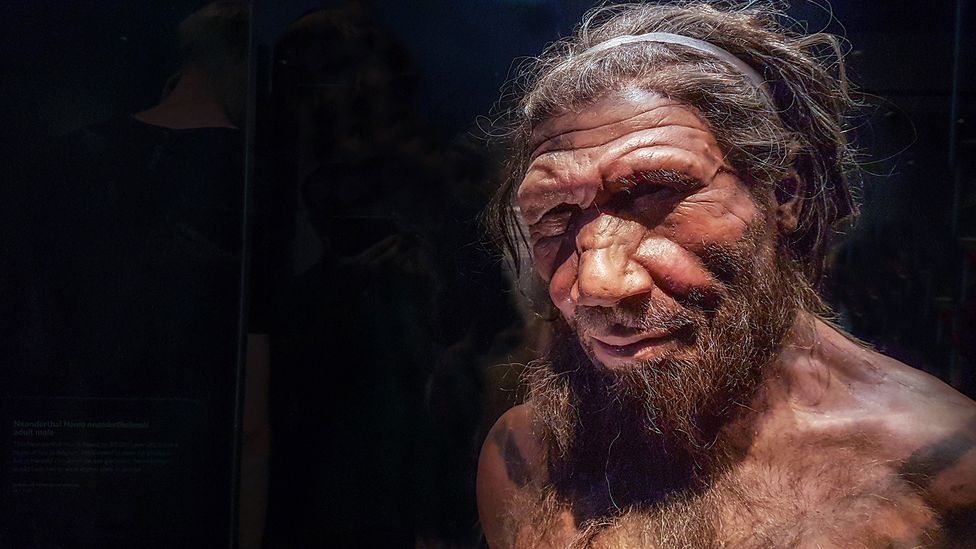
The Neanderthals (Homo neanderthalensis) are our closest ancient human relatives. Homo is a Latin word describing “man” or “human.” The term neanderthalensis comes from the Neander Valley in Germany, where the first significant specimen was discovered in 1856. The German word for valley is ‘Tal,’.  Hence, Homo neanderthalensis signifies “Human from the Neander Valley.”

During the Pleistocene Epoch (roughly 2.6 million to 11,700 years ago), Neanderthals first appeared at least 200,000 years ago. Around 35,000 to 24,000 years ago, they were superseded by modern humans (Homo sapiens). Neanderthals co-existed alongside homo sapiens for a long time before going extinct around 28,000 years ago. Both fossils and DNA evidence indicate that the Neanderthals and modern human lineages split at least 500,000 years ago.

Homo sapiens, or modern humans, originated in Africa, whereas Neanderthals appeared in Europe and Asia. From Portugal and Wales in the west to Siberia’s the Altai Mountains in the east, the species was widespread all over Eurasia. Neanderthal populations were resilient, living in icy cold habitats in England and Siberia approximately 60,000 years ago, and mild temperate woods in Spain and Italy approximately 120,000 years ago.

 Physical Appearance

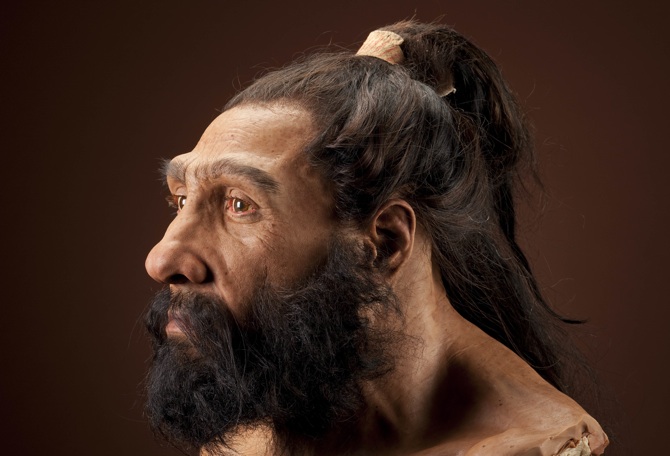
Neanderthals possessed a long, low head (opposed to modern humans’ more globular skull) with a noticeable forehead ridge above the eyes. A broad, wide nose that jutted forward in the middle of the face. Some researchers believe this trait evolved as a way to survive in colder, drier regions. The air they breathed would’ve been moistened and warmed by the nose’s vast interior size.

Their front teeth were large and scratched, suggesting they were regularly used in food preparation and other tasks. Unlike humans, Neanderthals didn’t have much of a chin. They had a robust, muscular physique with broad hips and shoulders. Adults weighed 64-82 kg and stood 1.50-1.75 m tall. On average, ancient Neanderthals were taller than later Neanderthals, yet they weighed about the same.

Their short, stocky bodies were well-suited to frigid climates. They had proportions that limited the skin’s surface area, likely to save heat in cooler regions, thanks to their broad torso mixed with their short lower legs and lower arm bones. Some researchers believe that the Neanderthals’ physique also gave them better strength in their arms and legs, allowing them to participate in close-range hunting ambushes.

Neanderthals Tools

Neanderthals were quite intelligent and skilled beings. Late Neanderthals had brain sizes ranging from 1,200cm3 to 1,750cm3, larger than the current average, yet proportional to their body size. Homo sapiens skulls from roughly 30,000 years earlier possessed, on average, bigger brains than modern humans. Spears and stone handaxes excavated in caves reveal that Neanderthals were skilled toolmakers.

Neanderthals devised incredible stone technology over 300,000 years ago. This entailed developing pre-shaped stone cores that could later be fine-tuned into a finished tool. It abled them to produce tools when they needed them. They were seasonal hunters and ate whatever animals were available at the time. Sharp wooden spears and enormous numbers of big animal carcasses, uncovered by scientists, indicating that Neanderthals chased and butchered them.

Neanderthals built shelters, regulated fire, and even crafted symbolic or attractive artifacts. There is proof that Neanderthals buried their deceased and even decorated their graves with flowers. This sophisticated and symbolic behavior had never been seen in other monkeys or earlier human species. Being buried substantially enhances the chances of becoming a fossil, which may explain why the Neanderthal fossil record is so extensive as opposed to the fossils of other human species.

Neanderthals Diet

Neanderthals are usually portrayed as carnivorous ice-age hunters and scavengers who ate massive creatures. Food remains deposited in the calculus around their teeth, on the other hand, suggest that the Neanderthal diet contained a variety of plants, either directly accessed or devoured from the stomach contents of their plant-eating prey. Fungi, Mussels, baby seals, and even dolphins were among the things they consumed.

But, as opposed to early humans living in tropical Africa, where consumable plant foods were plentiful all year, the diversity of plant foods available to Neanderthals fell dramatically during the winter season, requiring them to rely primarily on alternative food sources like meat.

Neanderthals DNA

As per fossil and genetic evidence, Neanderthals and modern humans (Homo sapiens) descended from a single ancestor between 700,000 and 300,000 years ago. Neanderthals and modern humans shared the same genus (Homo) and lived in the same geographic locations in western Asia for 30,000–50,000 years; genetic data suggests that they eventually split off into distinct species of the human family tree after mating with non-African homo sapiens.

Neanderthals and modern humans, it appears that these two groups mated whenever they crossed paths until modern humans swept into Europe during a particularly frigid period. Their arrival may have hindered Neanderthals from returning to areas where they once thrived, hastening the extinction of the Neanderthals. Their numbers plummeted to the brink of extinction barely a few thousand years after modern humans arrived in Europe. By roughly 40,000 years ago, all traces of them had vanished.

In many populations today, the genetic traces of this mingling can still be found. Neanderthal genomes make up about 2% of European and Asian genomes. The genetic shift, on the other hand, seems to have had little impact on African populations.

Know more about every 12 zodiac signs; Dates, Traits & more

There are 12 different horoscope signs, each with its own strengths, weaknesses, traits, desires, and way of viewing the world. Your personal astrological sign is based on the position of the sun on the day you were born. Take a look below to learn what your zodiac sign is, and discover their powerful traits and secrets.

Aries (23rd March- 22nd April)

As the first sign to appear in the zodiac, Aries are typically brave and outgoing.

They’re assertive by nature and won’t hesitate to tell you how they feel. But they do need to be mindful that they don’t hurt anyone’s feelings by speaking impulsively. They can be headstrong at times, and make better leaders than followers.

Taurus (23rd April- 22nd May)

No one will expose you to the finer things in life, quite like a Taurus.

This fixed earth sign has impeccable taste and loves to indulge. They tend to be financially responsible, but still know how to treat themselves and the ones they love. Though they do have a stubborn streak, this member of the zodiac is incredibly loyal and reliable.

Gemini (23rd May- 22nd June)

Perhaps the most curious sign in the zodiac, Geminis make great students and communicators.

They’re witty and charming, but also have a darker side to them. They love to socialize but can become nervous or overstimulated when they don’t take time for themselves. This sign is also great at multitasking but needs to be careful not to take on too much at once.

Cancer (23rd June- 22nd July)

As a water sign, Cancers feel deeply, though will often keep these sentiments hidden under their shell.

They are intuitively nurturing and love to take care of the people around them. They have a reputation for being moody and aren’t always the best at unpacking their feelings with others. They often opt to sort out their issues alone.

Leo (23rd July- 22nd August)

Warm, artistic, and protective of the ones they love, Leos make great friends and companions.

They are confident and larger-than life, easily charming the people they encounter. However, this sign can be dramatic from time to time, especially if they feel disrespected. They feel passionately about their personal interests but need to be mindful that they show interest in the lives of those around them as well.

Virgo (23rd August- 22nd September)

One of the most efficient members of the zodiac, Virgos are organized, driven, and meticulous in their work.

They are very detail-oriented, making them master editors with extremely high standards. However, they need to be mindful that they are not overly demanding or critical of themselves or those around them.

Libra (23rd September- 22nd October)

Known for their diplomacy and harmonious energy, Libra is one of the most laid-back members of the zodiac.

They are extremely relationship-oriented but can sometimes prioritize their partner’s needs over their own. This Venus ruled sign has a keen eye for aesthetics with impeccable personal style and well decorated homes.

Scorpio (23rd October- 22nd November)

Mysterious, charismatic, brave, and magnetic, Scorpios are hard to ignore.

They are extremely intuitive and make natural psychologists with an ability to easily read those around them. They form intense bonds with their friends and romantic partners, but they can become possessive or jealous if they’re not completely confident with themselves.

Sagittarius (23rd November- 22nd December)

Sagittarius is one of the most beloved members of the zodiac-with an adventurous, charismatic, and generous spirit.

They lean toward optimism and love to take risks, but need to be mindful of living in the present and making practical plans for the future. Sagittarius are natural philosophers and are always looking to explore the mysteries of the universe.

Capricorn (23rd December- 22nd January)

Perhaps the most disciplined members of the zodiac, Capricorns, are known for their endurance and determination.

Career-motivated and focused on status, these earth signs are highly driven to reach their professional goals and take their responsibilities very seriously. They’re typically resistant to change and will often stick with their personal routines for many years.

Aquarius (23rd January- 22nd February)

Nothing says “quirky” quite like Aquarius energy does. This member of the zodiac embodies rebellion, creativity, eccentricity, and intelligence.

They’re driven by a desire to evolve past antiquated ideals, and help society move into a more compassionate space. They can be seen as unpredictable or disorganized, but often surprise people with their streaks of brilliance and hidden genius.

Pisces (23rd February- 22nd March)

Pisces signs have a peaceful and gentle presence about them, with an uncanny ability to tap into the emotions of the collective.

They’re extremely malleable and need to be careful of who they surround themselves with. Since they are hyper-intuitive, they can sometimes become disconnected-making it important for this water sign to ground often.

Time isn’t the main thing. It’s the only thing.

  • Time Management refers to managing time effectively so that the right time is allocated to the right activity.
  • Effective time management allows individuals to assign specific time slots to activities as per their importance.
  • Time Management refers to making the best use of time as time is always limited.

Ask yourself which activity is more important and how much time should be allocated to the same? Know which work should be done earlier and which can be done a little later.

Time Management plays a very important role not only in organizations but also in our personal lives.

Time Management includes:

  1. Effective Planning
  2. Setting goals and objectives
  3. Setting deadlines
  4. Delegation of responsibilities
  5. Prioritizing activities as per their importance
  6. Spending the right time on the right activity
  • Effective PlanningPlan your day well in advance. Prepare a To Do List or a “TASK PLAN”. Jot down the important activities that need to be done in a single day against the time that should be allocated to each activity. High Priority work should come on top followed by those which do not need much of your importance at the moment. Complete pending tasks one by one. Do not begin fresh work unless you have finished your previous task. Tick the ones you have already completed. Ensure you finish the tasks within the stipulated time frame.
  • Setting Goals and ObjectivesWorking without goals and targets in an organization would be similar to a situation where the captain of the ship loses his way in the sea. Yes, you would be lost. Set targets for yourself and make sure they are realistic ones and achievable.
  • Setting DeadlinesSet deadlines for yourself and strive hard to complete tasks ahead of the deadlines. Do not wait for your superiors to ask you everytime. Learn to take ownership of work. One person who can best set the deadlines is you yourself. Ask yourself how much time needs to be devoted to a particular task and for how many days. Use a planner to mark the important dates against the set deadlines.
  • Delegation of ResponsibilitiesLearn to say “NO” at workplace. Don’t do everything on your own. There are other people as well. One should not accept something which he knows is difficult for him. The roles and responsibilities must be delegated as per interest and specialization of employees for them to finish tasks within deadlines. A person who does not have knowledge about something needs more time than someone who knows the work well.
  • Prioritizing TasksPrioritize the tasks as per their importance and urgency. Know the difference between important and urgent work. Identify which tasks should be done within a day, which all should be done within a month and so on. Tasks which are most important should be done earlier.
  • Spending the right time on right activityDevelop the habit of doing the right thing at the right time. Work done at the wrong time is not of much use. Don’t waste a complete day on something which can be done in an hour or so. Also keep some time separate for your personal calls or checking updates on Facebook or Twitter. After all human being is not a machine.

For Effective Time Management one needs to be:

Organized – Avoid keeping stacks of file and heaps of paper at your workstation. Throw what all you don’t need. Put important documents in folders. Keep the files in their respective drawers with labels on top of each file. It saves time which goes on unnecessary searching.

Don’t misuse time – Do not kill time by loitering or gossiping around. Concentrate on your work and finish assignments on time. Remember your organization is not paying you for playing games on computer or peeping into other’s cubicles. First complete your work and then do whatever you feel like doing. Don’t wait till the last moment.

Be Focussed – One needs to be focused for effective time management.

Develop the habit of using planners, organizers, table top calendars for better time management. Set reminders on phones or your personal computers.

Time management” is the process of organizing and planning how to divide your time between specific activities.

Good time management enables you to work smarter – not harder – so that you get more done in less time, even when time is tight and pressures are high. Failing to manage your time damages your effectiveness and causes stress.

It seems that there is never enough time in the day. But, since we all get the same 24 hours, why is it that some people achieve so much more with their time than others? The answer lies in good time management.

The highest achievers manage their time exceptionally well. By using the time-management techniques in this section, you can improve your ability to function more effectively – even when time is tight and pressures are high.

Good time management requires an important shift in focus from activities to results: being busy isn’t the same as being effective. (Ironically, the opposite is often closer to the truth.)

Spending your day in a frenzy of activity often achieves less, because you’re dividing your attention between so many different tasks. Good time management lets you work smarter – not harder – so you get more done in less time.

5 alarming signs that you might not be doing okay

How to Cope With Anxiety and Depression | Everyday Health

I wake up everyday wishing,
my eyebags to not be heavier than my emotional baggage
and my room to not be messier,
than the thoughts inside my head
is this something that everyone
wishes for at my age?
or is it just me?
who stares at the ceiling every night
while lying on her bed
why does only the night sky see me cry?
why do my shadows just show up in daylight and not at night,
when I’m ready to embrace them all?
why my secrets, darker than the sky, seem deeper than the silence the night holds.
the silence comforts sometimes,
but sometimes it just creeps straight into every vein in my body,
I never wished for much,
but my thoughts to not be louder,
than the silence the night holds

You know those feelings of general discontent, sadness, and hopelessness? If you have them, don’t ignore them. They could be signs of something much worse, like depression. Let’s check out the signs-

1. You feel fatigue and don’t sleep (or sleep too much).

Depression strips you of your energy and makes you feel lethargic. You stop doing things you enjoy because you feel exhausted, and begin sleeping excessively, or not sleeping at all (insomnia).

2. Your emotions are all over the place.

One moment, you’re feeling irritable and going off on someone in a full display of anger. The next, you’re crying. Depression can swing your moods uncontrollably.

3. Your topics of conversation have turned morbid.

Suicides rarely come without the symptoms that show up beforehand. Depressed people will often talk about it. If you’re in the company of a good friend who has flipped the morbid switch to “on” and is now talking about death and dying, stay close and monitor him. He may be on the doorstep of a suicide attempt.

4. Your outlook on life has done a 180.

Having a hopeless outlook on life is the most common symptom of depression. Associated feelings of worthlessness, self-hate, or inappropriate guilt may ride shotgun. You vocalize thoughts like “It’s all my fault,” and “What’s the point?”

5. You’ve lost interest in the things you enjoy.

Depression can rob you of the things you love, making you withdrawing from the very activities you once looked forward to — sports, socializing with friends, hobbies, etc.

What to do…

If depression has crept in, don’t despair. With professional help and a strong support system of loving family and friends, you can overcome it. Here’s what you can do:

  • Please sleep. Don’t set the alarm. Just sleep until you wake up.
  • Do not isolate yourself—find community and support.
  • Don’t internalize your feelings. Be totally present with them.
  • Express gratitude.
  • Journal your feelings daily to help release those negative emotions.
  • Lean on your faith, or something greater than you.
  • Rediscover the activities and hobbies that bring you peace, joy, and vitality.
  • Exercise daily. Fifteen minutes of cardio is all it takes.
  • Practice mindfulness.

Floods in Maharashtra

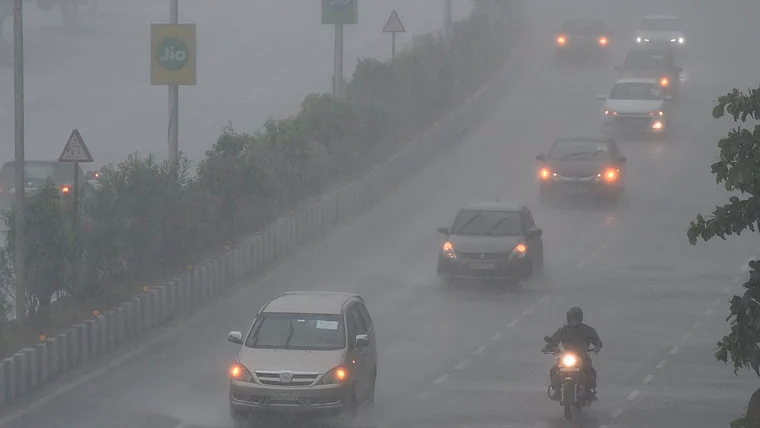
Navi Mumbai Weather Update: As rain lashes city, NNMC shares monsoon  estimates for Vashi, Belapur, Nerul and Airoli
when it rained,
after days, after months,
after years, I felt alive
when the rain touched,
my cheeks, they blushed,
and grinned. As they do,
when they meet a long-lost friend
i wanna go out and say hi,
say that it’s been rough,
without you,
but I can’t.
me grinning and blushing,
and dancing hands in hands,
in rain, would bring back wounds,
the ones that are healed,
the ones that are to be healed.

Climate change is real!

Maharashtra has been dealing with two disasters; Floods in the midst of this ongoing pandemic. These floods have posed a grave threats to all the people.

Maharashtra witnessed high-intensity floods due to the incessant rains over the past few weeks. At least 209 people have died due to the floods in Maharashtra and eight still remain missing. A total of 4,34,185 people from eight districts have been evacuated to safer places, as rescue operations continue.1Among the 209 fatalities, the Satara district reported 46 deaths, followed by 35 in Ratnagiri, 15 in Thane, seven in Kolhapur, four in Mumbai, three in Pune, four in Sindhudurg and two each in eastern Maharashtra’s Wardha and Akola districts.

A total of 3,221 animals have died. Meanwhile, the floodwater has entered the roads and fields, submerging many areas of the Sangli district in Maharashtra making it hard for people to commute from one place to another.

Heavy rainfall in Maharashtra has caused flooding in several areas of the state, including Kolhapur. Houses, roads, and commercial establishments remained partially submerged in floodwater in Kolhapur on Monday.

MUMBAI: Despite the fact that the rains have lessened this week after last week’s torrential downpour, Mumbai has already received 93 percent of the season’s average rainfall. The average rainfall for this season is 2205.8 mm, with 2052.7 mm recorded at the Santacruz observatory. There are two more months of monsoon left to cover the remaining 7% of the seasonal rain target.
While there were no rains at the IMD’s Colaba observatory, the Santacruz observatory recorded 4.3mm of rain, which is considered light rain. Significant weather systems, such as the offshore trough from Karnataka to Kerala’s coast, as well as the low pressure region, have become less prominent, according to IMD sources.
Most of the season’s rainfall so far has been recorded in a heavy rain spell restricted to just a few hours.
This resulted in significant water logging, as well as the loss of life and property. Since the start of the monsoons, IMD’s Santacruz observatory has recorded 235mm of rain on July 17-18, and 253mm on July 16-17. A total of 231.3mm fell in a 24-hour period between June 9 and 10. The IMD has issued a green alert till Thursday, indicating only light to moderate rain activity.

In these past months,