WHAT IS MENTAL HEALTH AND MENTAL ILLNESS?

Mental health and Mental illness are not the same, though it seems so they both are entirely different concept. According to the Centers for Disease Control (CDC) Mental health reflects” our emotional psychological and social well-being “Affecting “how we think, feel and act “, mental health has a strong impact on the way we interact with others, handle problems, and make decisions. And Mental illness refers to “conditions that affect a person’s thinking feeling, mood, or behavior.” These can include but not limited to depression, anxiety bipolar disorder, or schizophrenia.

Christopher M. Palmer, MD, director of McLean’s Department of Postgraduate and continuing education, pointed out that mental health and mental illness are similar to the concept of physical health and physical illness. He said the term mental health, implies the absence of illness or disorder. But there are a lot of ways people can be mentally healthy or ill, just like there are many ways people can be mentally healthy or ill, just like there are many ways to be physically healthy or unwell.”

By increasing the understanding of mental health and mental illness can help eliminate stigma and other barriers that keep people from seeking help when they require.

Mental illness affects more people than that we think, it is that we should understand what these two terms mean, the given prevalence of mental illness throughout the world. The WHO points out that around 800,000 individuals die by suicide each year, also about 20% of world’s children and adolescents have a mental disorder and depression affects about two hundred and sixty plus people worldwide.

The thing with all mental health disorders is that none of them define the entire person. Although their symptoms might impair their ability to do things others are able to do, they still have areas of strength and competence. Whenever we talk about health versus illness, it’s always important to remember this.

Being mentally healthy enables you to feel, think and act in ways that help you enjoy life and cope with its challenges. Poor mental health may result in feeling unhappy, difficulty thinking clearly, or feeling overwhelmed by stressful situation. Resiliency (The inner strength that you use to cope with stressful situations) is also a major part of mental health. Building resiliency can help you avoid being overwhelmed by stressful situations. This in turn further builds resiliencies gives you confidence to know you can get through difficult times when they come up again. It’s important to give your mental on going health and attention. There are things you can do to maintain good mental health, and other factors that influence mental health to learn about to help you build your understanding.

While mental health is always there and may be positive or negative, mental illness affects a person’s ability to function over a long period of time. It’s not the same as feeling sad, unhappy, or stressed because of difficult situations. People with mental illness feel distressed regularly and may not feel in control of their lives .

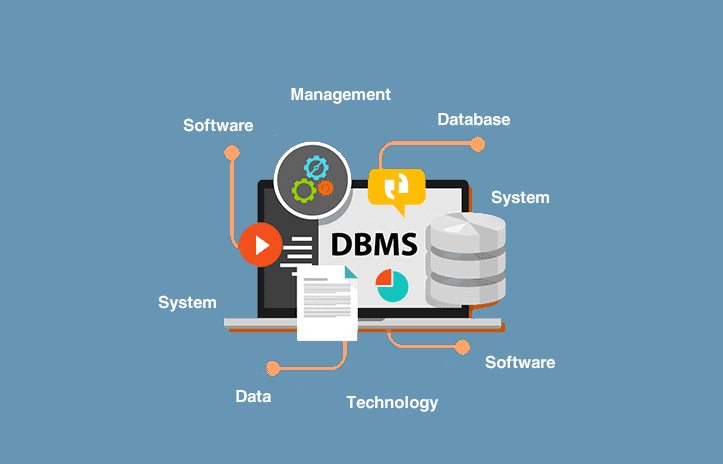
The Basics Of Database Management System

Data processing has undergone evolutionary changes in the past 30 years. Processing with a database management system offers a number of advantages. Presents the basics of today′s dynamic database management systems. Reviews the relevant professional magazines and concludes that systems now are more user‐friendly.
A collection of interrelated data together with a set of programs to access the data, also called database system, or simply database. The primary goal of such a system is to provide an environment that is both convenient and efficient to use in retrieving and storing information.
A database management system (DBMS) is designed to manage a large body of information. Data management involves both defining structures for storing information and providing mechanisms for manipulating the information. In addition, the database system must provide for the safety of the stored information, despite system crashes or attempts at unauthorized access. If data are to be shared among several users, the system must avoid possible anomalous results due to multiple users concurrently accessing the same data.
Examples of the use of database systems include airline reservation systems, company payroll and employee information systems, banking systems, credit card processing systems, and sales and order tracking systems.

A major purpose of a database system is to provide users with an abstract view of the data. That is, the system hides certain details of how the data are stored and maintained. Thereby, data can be stored in complex data structures that permit efficient retrieval, yet users see a simplified and easy-to-use view of the data. The lowest level of abstraction, the physical level, describes how the data are actually stored and details the data structures. The next-higher level of abstraction, the logical level, describes what data are stored, and what relationships exist among those data. The highest level of abstraction, the view level, describes parts of the database that are relevant to each user; application programs used to access a database form part of the view level.
The overall structure of the database is called the database schema. The schema specifies data, data relationships, data semantics, and consistency constraints on the data.
Underlying the structure of a database is the logical data model: a collection of conceptual tools for describing the schema.
The entity-relationship data model is based on a collection of basic objects, called entities, and of relationships among these objects. An entity is a “thing” or “object” in the real world that is distinguishable from other objects. For example, each person is an entity, and bank accounts can be considered entities. Entities are described in a database by a set of attributes. For example, the attributes account-number and balance describe one particular account in a bank. A relationship is an association among several entities. For example, a depositor relationship associates a customer with each of her accounts. The set of all entities of the same type and the set of all relationships of the same type are termed an entity set and a relationship set, respectively .

The information in a database is stored on a nonvolatile medium that can accommodate large amounts of data; the most commonly used such media are magnetic disks. Magnetic disks can store significantly larger amounts of data than main memory, at much lower costs per unit of data.
To improve reliability in mission-critical systems, disks can be organized into structures generically called redundant arrays of independent disks (RAID). In a RAID system, data are organized with some amount of redundancy (such as replication) across several disks. Even if one of the disks in the RAID system were to be damaged and lose data, the lost data can be reconstructed from the other disks in the RAID system.
Data manipulation is the retrieval, insertion, deletion, and modification of information stored in the database. A data-manipulation language enables users to access or manipulate data as organized by the appropriate data model. There are basically two types of data-manipulation languages: Procedural data-manipulation languages require a user to specify what data are needed and how to get those data; nonprocedural data-manipulation languages require a user to specify what data are needed without specifying how to get those data.
A query is a statement requesting the retrieval of information. The portion of a data-manipulation language that involves information retrieval is called a query language. Although technically incorrect, it is common practice to use the terms query language and data-manipulation language synonymously.
Database languages support both data-definition and data-manipulation functions. Although many database languages have been proposed and implemented, SQL has become a standard language supported by most relational database systems. Databases based on the object-oriented model also support declarative query languages that are similar to SQL.
SQL provides a complete data-definition language, including the ability to create relations with specified attribute types, and the ability to define integrity constraints on the data.
Data Security:
The DBMS can prevent unauthorized users from viewing or updating the database. Using passwords, users are allowed access to the entire database or a subset of it known as a “subschema.” For example, in an employee database, some users may be able to view salaries while others may view only work history and medical data. See database security.
Data Integrity:
The DBMS can ensure that no more than one user can update the same record at the same time. It can keep duplicate records out of the database; for example, no two customers with the same customer number can be entered.
Intelligent Databases:
All DBMSs provide some data validation; for example, they can reject invalid dates or alphabetic data entered into money fields. But most validation is left up to the application programs.
Intelligent databases provide more validation; for example, table lookups can reject bad spelling or coding of items. Common algorithms can also be used such as one that computes sales tax for an order based on zip code.
When validation is left up to each application program, one program could allow an item to be entered while another program rejects it. Data integrity is better served when data validation is done in only one place. Mainframe DBMSs were the first to become intelligent, and all the others followed suit.

SPACE-TIME-GRAVITY

Gravity is the curvature of space time-

According to Albert Einstein’s general theory of relativity, gravity is no longer a force that acts on massive bodies, as viewed by Isaac Newton’s universal gravitation. Instead, general relativity links gravity to the geometry of spacetime itself, and particularly to its curvature.

In classical physics, time proceeds constantly and independently for all objects. In relativity, spacetime is a four-dimensional continuum combining the familiar three dimensions of space with the dimension of time.

To account for gravity in relativity, the structure of this four-dimensional spacetime must be extended beyond the rules of classical geometry, where parallel lines never meet and the sum of a triangle’s angles is 180°. In general relativity, spacetime is not ‘flat’ but is curved by the presence of massive bodies.

This artistic representation visualises spacetime as a simplified, two-dimensional surface, which is being distorted by the presence of three massive bodies, represented as coloured spheres. The distortion caused by each sphere is proportional to its mass.

The curvature of spacetime influences the motion of massive bodies within it; in turn, as massive bodies move in spacetime, the curvature changes and the geometry of spacetime is in constant evolution. Gravity then provides a description of the dynamic interaction between matter and spacetime.

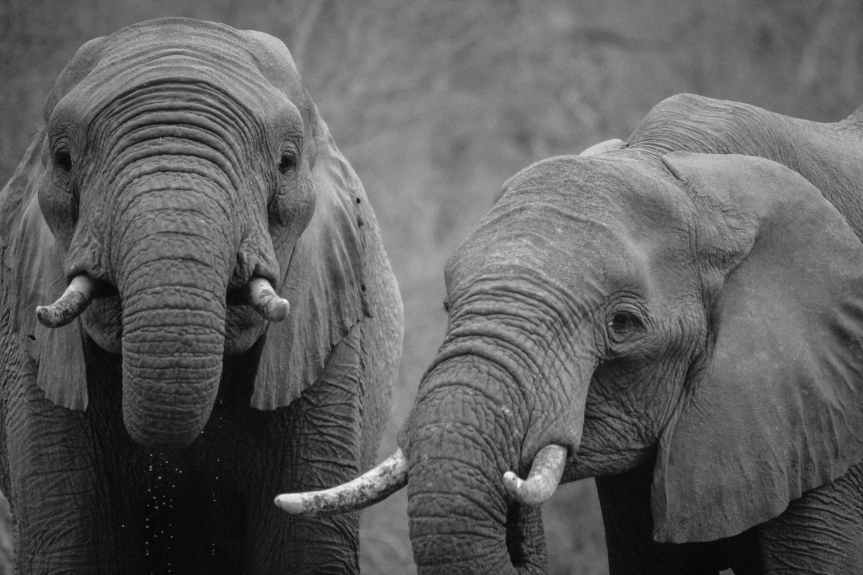
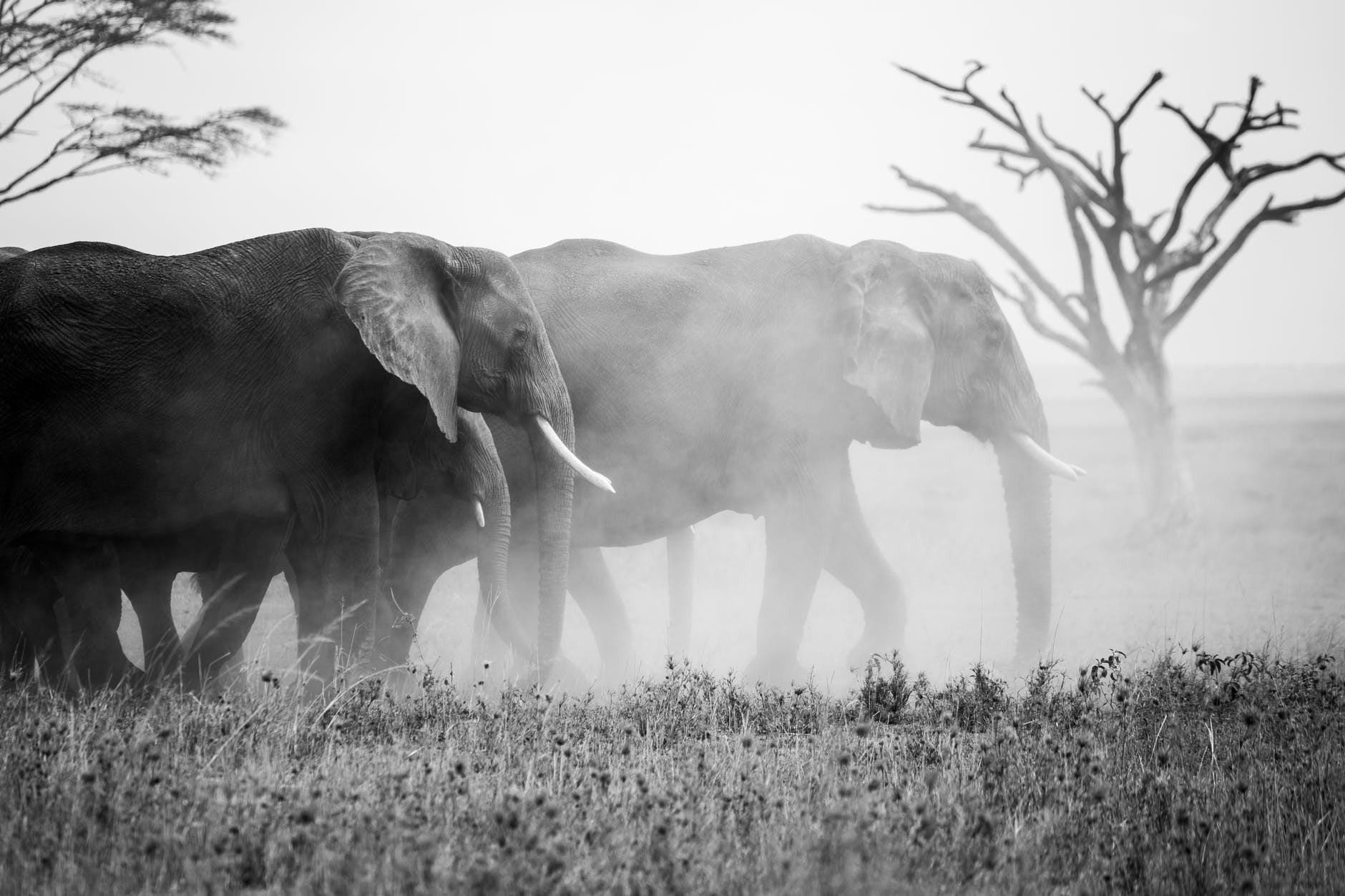
Behind every ivory trinket-is a dead elephant?

It is distressing to see the plight of the tusk-bearing animals these days. Numerous news headlines are daily highlighting the illegal smuggling of ivory. The extortionate value and demand of the ivories are not only in India, but also in the international markets. Wild animals are mercilessly being poached on a massive scale, possessing a major existential threat to wildlife. But do we really care or do enough to stop this inhumane and selfish act?

Let us first understand the connotation of the word ‘poaching’.

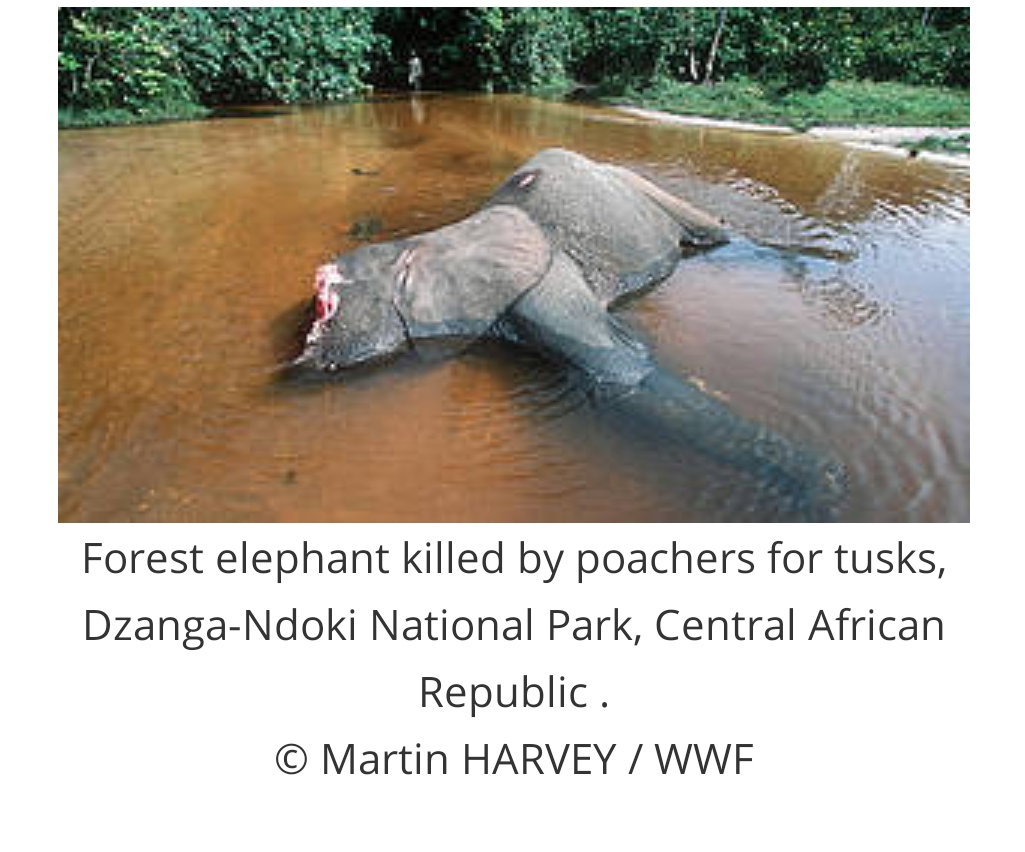
Poaching, in simple words, is the illicit act of killing, shooting, hunting or capturing of animals. The aim of this illegal act is mainly for the purpose of trade of animal products like skin, teeth, horn, bone, etc. Poaching plays a decisive role in being a contributor to biodiversity loss. Due to this felonious act, the number of extinctions has increased dramatically over the past decades. It is necessary to understand that poaching is not only about the uncontrolled killing of protected animals or endangered animals but any unlawful killing of animals.

Smuggling of elephant tusks

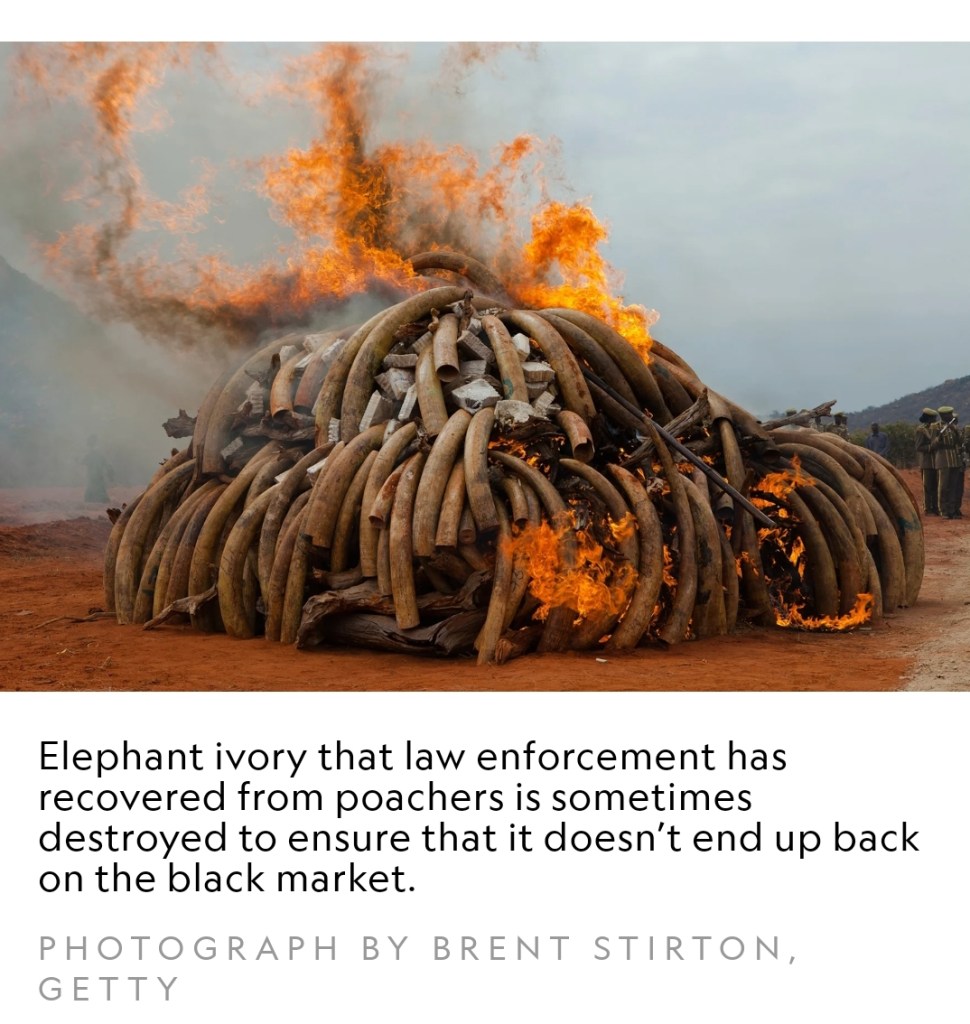
In India, poaching of elephants is very common and a major challenge to be combated. Ivory trade is in high demand mostly in the Asian countries. About 20,000 elephants are mercilessly killed every single year for their tusks. These ivory tusks are then smuggled in the international markets to eventually end up as ivory trinkets.

Ivory trade has been in practise for millennia. In the 14th century BCE, the exportation of ivory and slaves from Africa and Asia were done extensively. The freshly captured slaves along with the tusks were sold. The ivory was then used to make ornaments and aesthetically pleasing commodities.

On July 6, 2016, a complete ban on commercial trade in African elephant ivory went into effect in the United States. The African elephant population has decreased dramatically. Near about 350,000 elephants are left in Africa, as per 2019 data. It is quite shocking to know that 10,000 to 20,000 elephants are slain every year. Elephant numbers have dropped by 62% over the last decade, and if not brought under control, then they’ll be extinct by the end of the next decade.

Major countries where these tusks are sold

China is the biggest consumer market for ivory products. However, a ban was enforced on ivory trade by China in the year 2017. But it is evident that ivory is in high demand in many countries. Illegal selling of ivory is still rampant. In the year 2011, a whopping amount of 100kg of ivory was seized by Tanzanian officials. That same year several countries including Tanzania and Kenya seized a total of 17 ivory shipments weighing 800 kg.

According to surveys and in-depth interviews the demand for ivory is known to be concentrated in: China, Thailand, Vietnam, the Philippines, and the United States.

Last year, about 8.8 tonnes of ivory items were seized in Singapore.


The adverse effects of tusk-removal on the elephants

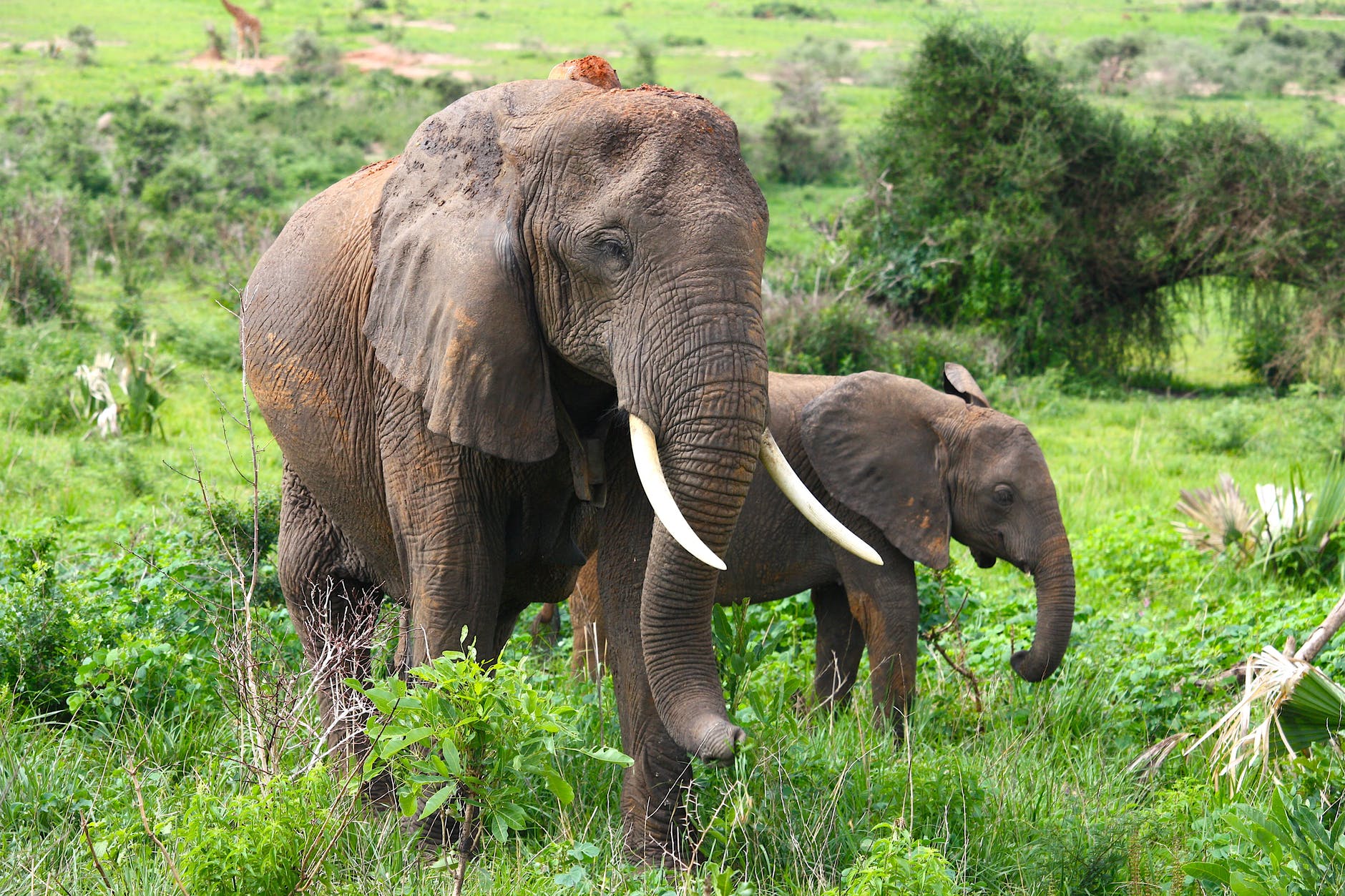
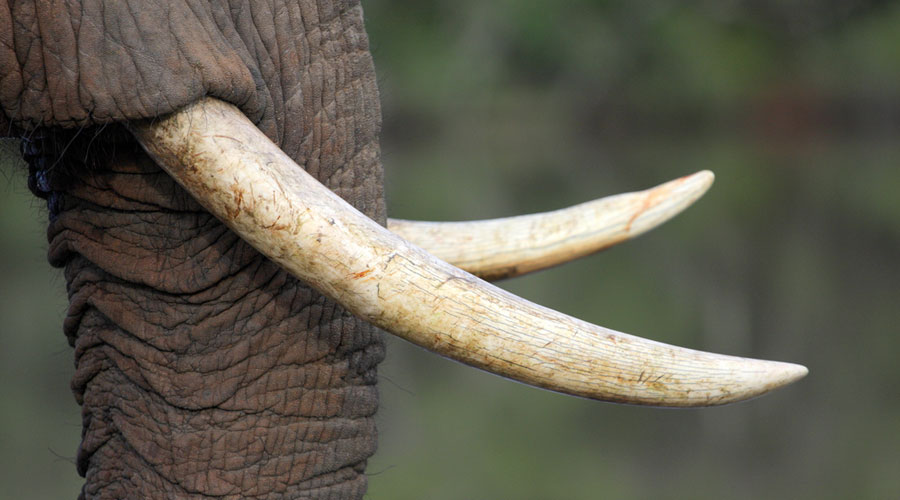
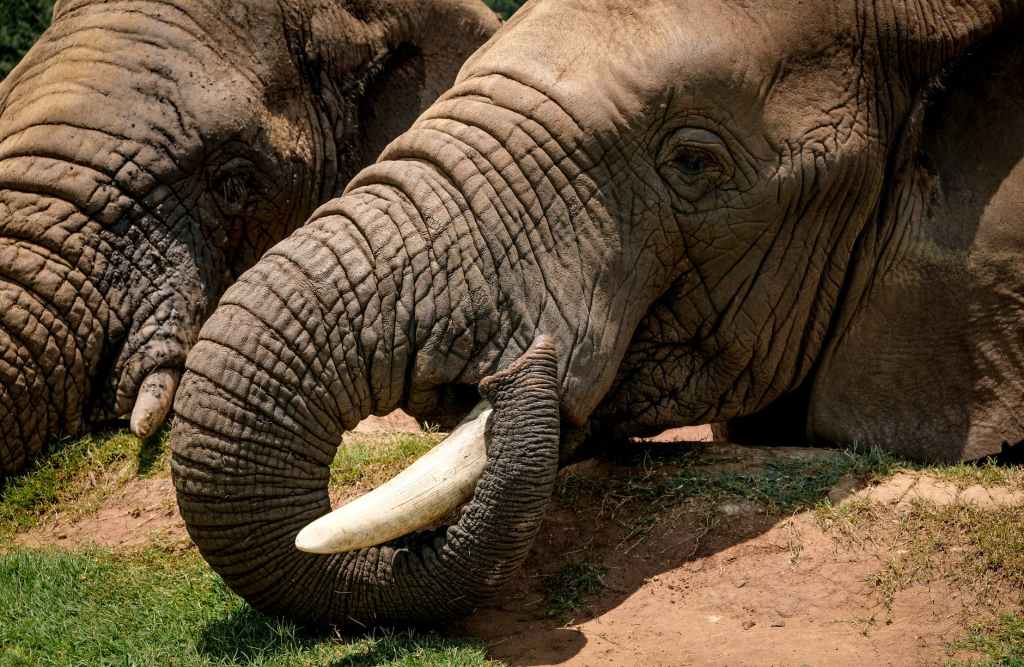
I am sure that we have all seen the majestic elephants flaunting big, off-white tusks on either side of their trunks. These tusks are both beautiful on the elephant and of utmost importance in the species’ survival.

Many poachers claim that there are no after effects of tusk-removal. Either the elephants are killed or sedated before removing their beautiful tusks.

An elephant’s tusk is deeply embedded in its skull. When the tusks are removed, there is a big hole left afterwards. The hole is big enough to stick your arm into it. If the tusks are removed at the point where it protrudes from the head, the nerve is exposed. Either way, now the wound is open and vulnerable to all sorts of infection. So, even though the elephant remains alive it is still at risk. Now, suppose there is an ivory poacher. Any poacher will want as much ivory as he can acquire with as little risk as possible. If he opts for the removal of the tusk completely, he/she will have to completely sedate or kill the elephant, because of little time and the fear of getting caught.

But is it just the elephants?

The answer is a ‘Big No’. Ivory has been valuable since ancient times in art and manufacturing a range of items and artefacts. Though elephant ivory is the most important source, ivory of walruses, mammoth, killer whale, sperm whale, hippopotamus, narwhal and warthog are used as well.

The international and national trade of ivory of threatened species such as African and Asian elephants is illegal.

Read about ivory trade and other tusk bearing species at- https://en.m.wikipedia.org/wiki/Ivory_trade#:~:text=The%20ivory%20trade%20is%20the,resulting%20in%20restrictions%20and%20bans.


The Road Not Taken

When every choice involves the loss of opportunity, which path will you choose? When your choices come with incomplete information, how can you be certain? How long will you stand still before making your choice? How confident are you when you realize you can’t save the first road for another day when the road you chose tends to lead onward to another? Whichever road you choose will make all the difference. In order to be different and do something great, you have to think different and implement things with a different approach. You have to take a different lane; the road not taken.

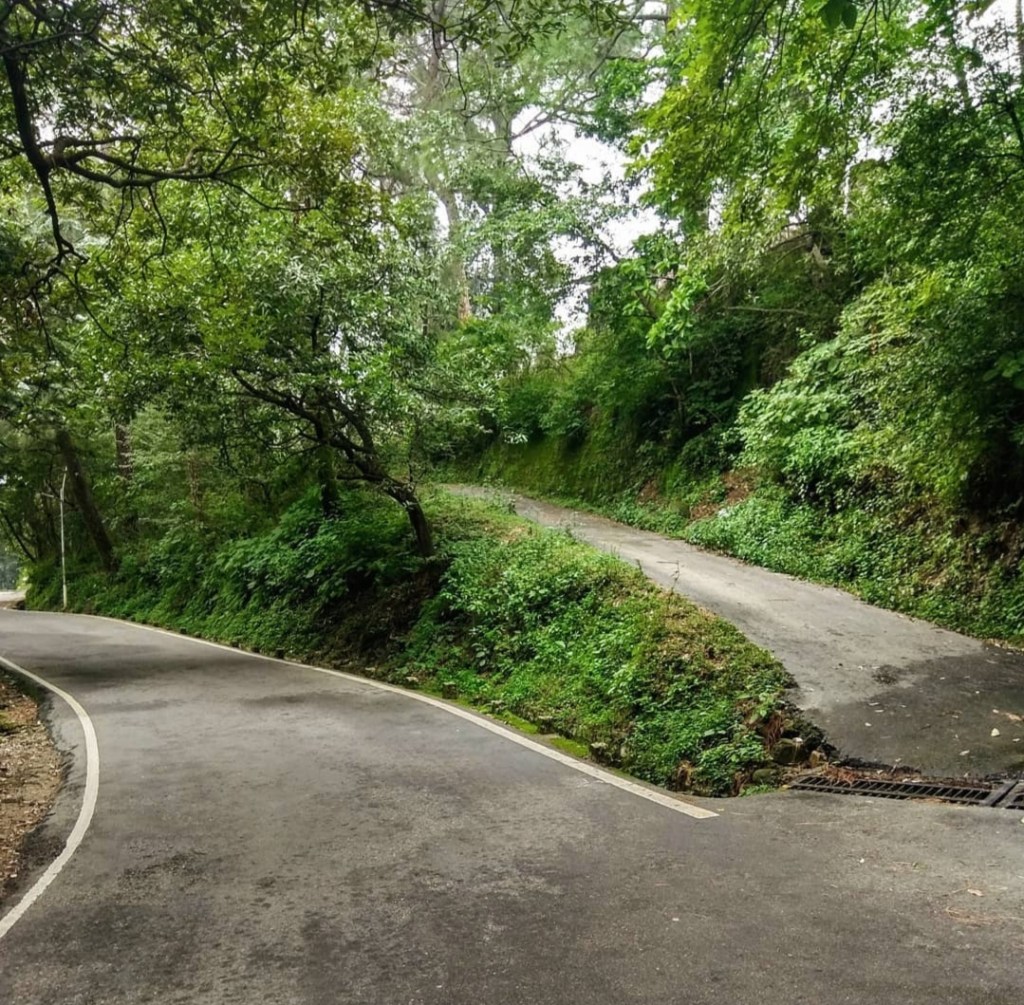
Remember the poem “The Road Not Taken” penned by Robert Frost?

Two roads diverged in a yellow wood,

And sorry I could not travel both

And be one traveler, long I stood

And looked down one as far as I could

To where it bent in the undergrowth…

The poem describes someone standing at a fork, or turning point, in a road in the woods, trying to decide which path he is going to take. He looks down one road as far as he can see, and after thinking for another minute, decides to take one because it looks like nobody’s been that way yet, and he is curious about where it leads. He thinks maybe he might come back another day and try out the other path but he has a feeling that the road he has chosen will lead him to new places and discoveries, and he probably won’t be back. He thinks wistfully about that road, which he did not take, and where he might have wound up if he’d gone that way instead. Part of him regrets his decision, but he also realizes that the things he’s seen and the places he’s gone because of the direction he chose has made him who he is.

This poem tells a lot about life in general. Life is all about making choices, whether it’s about choosing to change your daily diet or choosing the right partner. Every choice has its significance in some way or the other.

It makes me remember that past is always dynamic because it shapes my present and therefore, I should be careful about my present as it will take care of my future. Most importantly, this poem makes me think wisely about my choices. It reminds me that I should not make such a choice which I would regret one day and say ‘if I would have taken the other road, it would have been better’. Rather I should be proud of my decision and say ‘Yes! Since I chose the right path, it has led to all this difference’. The difference is what makes it different. Just as Frost ended the poem: “I took the road less travelled, and that’s all that matters”. There are no bad roads, there are only different battles that births different results.

In my opinion, the poet encourages the readers to create opportunities that may be overlooked by us because we all are in search of solutions for our problems rather than trying to sort out the things in the less conventional way.

Incredible india

– by Moni sai

India is a home to the finest architectural attractions and rich reserves of multicultural experiences.History of india dive deeper culture and heritage.incerdibility hold’s the art,spirituality,nature,food and cuisine along with adventures.Every place holds its popularity with its food and culture.Art includes the classical melodies ,handlooms,dance forms and fascinating festivals.”Colours of Culture” is fond of Dance forms,Music,Painting,Textiles.

The Popular Art in India:

Art is a form of Expression which depicts beauty and history.india blessed with billons of artists and art forms. It includes weaverings ,handicrafts and sculptures of various historical monuments.

Nature and land scapes:

From Himalayas Mountain Ranges in North to the Kanyakumari Coast in the south have made travellers to explore these landscapes.It also covers mountain ranges to sea Coasts,Deserts to Plateaus.

Himalayan Mountain Ranges:

The Himalayas are a Mountain Range In south Asia.The main ranges includes Mount Everest,Annapurna and Nanga parbat.Mount everest is the highest mountain peak on the earth at 8849 mts.The vast size huge altitude Range complex topography of the Himalayas are meant to experience wide range of climate

Land of Deserts:

The Thar Desert also Known as the “Great Indian Desert” is a large region that covers an area of 2,00,000kms and forms a natural boundary between india and pakistan.It is also Known as the world’s 9th largest hot subtropical desert.

Food and Cuisine:

Indian Cuisine consists of a variety of Regional and traditional recipes.This cuisines vary substantially and use of local spices ,herbs , vegetables and fruits.indian food is also influenced by religions.for Ex, Mughals introduced dishes like samosa ,pilaf.indian home cuisines includes various flavors of common spices as chilli peppers,mustard seeds, cumin,fennel,cardamom,cinnamon,coriander,Tumeric,fenugreek,Ghee.

some coomon combination of food’s at various destinations :

New Delhi: streetfood might be chats or samosa with masala falvours

south India: South indian cuisine features more coconut milk based falvours ,herbs like lemon grass, curry leaves and native foods . we find more Rice ,lentils and steamed food.

kerala:

kerala recipes are very found of banana fritters and sweet dumplings.flora and Fauna of kerala provides more nutrious food from surroundings.

Mumbai:

The food in Mumbai is as famous as the city .it is famous for it’s market Hawkers and cultural street food.Food is avaiable in form of stall features and mobile recipes all over the city.

Spirituality in india:

India is considered as one of the best Spiritual destination. world’s Several religions were born in India .Hinduism,sikhism,buddhism and jainism.There are various worshipping places like mandirs,Mosques,gurudwaras and churches.This is the reason for india’s unity in Diversity.

Yoga is mentioned in the Rigveda that is mostly studied around 5th and 6th centuries BCE.ancient indian ascetic includes Physical yoga,meditation and spirituality. it is method of focussing the mind on Particular object,thought or activity to train attention and awareness.meditation reduces stress ,anxiety,depression and pain to attain and enchance peace.

Discrimination – Still a social issue

 Discrimination is such a social issue that is prevalent in India from a long time. Though Indian Law describes discrimination as punishable crime, we often see many cases of it. Why is this so?? Why even after so many years of evolution and development we see such social issues?? All the answers to these questions lies in our foundation and environment that we grow in. 

From the very start of growth many children are not taught the difference between “leg pulling” and discrimination. Many young as well as elderly people discriminate people and remark it as a “joke.” For instance calling someone “black” just for fun seems funny but in reality it is a huge social drawback. This shows how much we lack education. Recent incident of “youtuber Paras Singh calling Arunachal Pradesh a Chinese Territory” proves the fact. Though he apologized and realized his mistakes , no one can neglect the fact that this incident would not have occurred if we were more cautious and educated. 

There is a huge hole in our mindset and its needed to be filled before it eat us all. A discriminated person faces huge mental trauma and may have a severe impact. We need to be more sensitive while dealing with such topics. Educating children from the young age  as well as educating ourselves on such topic may bring a huge change in near future. It is well known that discrimination have a long history and it will not eradicate instantly. But taking small steps today will bring major change in near future

Laundry in Space

Cleanliness is the half your health. But sadly this does not go well in space. Astronauts say they run through a pair of T-shirts and socks on a weekly basis. There’s no scope for laundry in space.

This unhygienic practice is not only affecting the astronaut’s health but also making a huge trash of cloths which are burnt up in the atmosphere. NASA has taken an initiative in order to bring a change in this. They have teamed up with Procter and Gamble Co. to find out the best remedies in cleaning astronaut’s cloths in space.

The company has assured to send a pair of a Tide detergent and stain removal experiments to the space station. As weight is a big issue in rocket cargoes, P & G is planning to send up some customized detergents in December to see how the enzymes and other ingredients will react to the six months of weightlessness. After getting approval from scientists they will send the stain removal pens and wipes in the May. The company is also trying to design a washer-dryer combo that will operate in space using minimal amount of the recyclable laundry water and detergent. Officials expressed high hope in this diverse research.

BILLIONS : GREED IS GOOD

Premiering in 2016 on Showtime this drama tells the story of hedge fund manager Bobby Axelrod played by Damian Lewis as he accumulates wealth and power in the world of high finance in New York City. Axelrod’s aggressive tactics often pits him in the crosshairs of United States Attorney Chuck Rhoades played by Paul Giamatti. The show features intelligent dialogue with interesting plot twists you won’t see coming.

WESTWORLD: SCIFI AT ITS BEST

The science fiction dystopian drama is based on the Michael Crichton film of the same name. Premiering in 2016 on HBO in a technologically advanced wild west theme park that allows visitors to live out their illicit fantasies. The writing, acting and cinematography are all top notch with an excellent cast which includes Evan Rachel Wood, Anthony Hopkins, Thandie Newton, Ed Harris and Jeffrey Wright. Aaron Paul joined the cast for season 3 of West world.

OZARK: HIGHLY UNDERRATED

This Netflix original premiered in 2017 and with each passing season continues to get better. It stars Jason Bateman and Laura Lenny as a married couple who have to relocate their family to summer resort facility when a money laundering scheme goes wrong. Bateman’s character Marty Bird who is a financial advisor comes up with an even bigger money laundering operation in the Ozarks to make things right with the Mexican drug cartel. The writing and acting are superb. The tension created with each episode is reminiscent of shows like Breaking Bad.

PEAKY BLINDERS: A MUST WATCH

Premiering initially in 2013, it is loosely based on a 19th century urban gang of the same name. The show is set in England after World War One and follows the notorious Peaky Blinders gang who are led by their ambition’s leader Tommy Shelby. It features original production values and fantastic performances from the entire cast.

BETTER CALL SAUL: THE PERFECT SHOW

BETTER CALL SAUL

Premiering on AMC this crime drama created by Vince Gilligan and Peter Gould is a prequel to the hit T.V. series Breaking Bad. Starring Bob Odenkirk with a fantastic supporting cast the series begins six years prior to the events of Breaking Bad and follows a con-man turned small time lawyer Jimmy McGill as he transforms into criminal attorney Saul Goodman.

10 countries that are open to Indian travellers right now

01. 10 countries that are open to Indian travellers right now
As India was struggling with the second wave of Coronavirus, many countries restricted entry of Indian travellers to their countries. However, with the cases gradually declining now, and with the threat of a third wave looming at large, it is advisable that one travels with caution. Subject to certain conditions, some foreign countries are now opening to Indian travellers; however, those arriving from India will either have to provide a negative RT-PCR report, or will be required to undergo quarantine there.So, if you are keen to pack your bags once again, here is a list of 10 countries that are open to Indian travellers right now.


02. Russia
Russia recently resumed flight operations in a move to revive its tourism industry. Travellers will, however, be required to carry a negative RT-PCR test result, which must be issued not less than 72 hours before their arrival. Note, antibody tests will not be accepted.


03. Turkey
It’s mandatory to carry a negative PCR test result to travel to Turkey. The test must have been conducted not more than 72 hours before boarding their flight. Also, travellers will have to undergo quarantine for 14 days in locations determined by Turkish authorities. One may also be subjected to random PCR testing upon their arrival.


04. Iceland
All travellers ‘regardless of their origin’ can now visit Iceland. A proof of previous infection and recovery or certificate of vaccination (Covishield in India’s case) will even exempt one from providing a negative PCR-test result. However, all travellers will be required to undergo a COVID screening upon arrival, without any exceptions. Travellers will be required to undergo quarantine till one takes another test five days later. If that test result comes negative, your quarantine period will also end.


05. Serbia
Serbia’s doors are also open for Indian travellers. But, unlike most countries, where travellers are required to show a negative RT-PCR report, which is less than 72 hours older prior to boarding their flight, Serbia requires one to provide a report that is no older than 48 hours for entry.


06. Egypt
Indians can now travel to Egypt, although the number of flights to the country has been reduced. However, you will need to produce an RT-PCR test report that is not older than 72 hours prior to arrival. Travellers are expected to undergo quarantine at their place of stay till they receive a negative test result.


07. Uzbekistan
If you want to holiday in Uzbekistan this year, along with providing a negative RT-PCR test report that is not older than 72 hours prior to arrival, they will also be required to undergo quarantine for 14 days.


08.Afghanistan
Indians will need to produce a negative RT-PCR test report that should not be older than 72 hours prior to arrival, to travel to this landlocked country. However, it is advised that travellers should avoid travelling to Kabul for the next few weeks, owing to the rise of COVID cases in the capital city.


09. South Africa
All you need to visit this destination is an RT-PCR test report, which should not be older than 72 hours prior to arrival. As per the reports, if those arriving in South Africa fail to present their negative PCR test as the certificate of proof, they will need to self-quarantine at their own expense.


10. Costa Rica
Indians can now travel to Costa Rica, and will neither need a vaccination certificate or an RT-PCR test report. However, do note that travellers will have to fill out a health pass form upon arrival at the rainforested Central American country.

why should women in rural areas get sanitary napkins, for free.

 India is a country, where women make up half  the population. more than 60 percent of population India lives in rural areas. women lack access to sanitary napkins and menstrual cycle becomes a burden and bane for them. women are god’ s precious creation.  For us, the privileged, periods are normal, something which occurs every month. we might have to deal with pain and discomfort But for those who live in rural areas this prevents them to do their daily activities. Myths and taboos which are embedded with periods, makes lives of these women even worse. According to a report only around 35 percent of women in India use sanitary napkins. The cost of sanitary napkins are expensive for the people of rural areas, who hardly get to earn money to have some food. Some follow hand to mouth process. Sanitary napkins are not a luxury, they are a necessity and every women deserves to have access to them. A lot of women in rural areas use cloth during their periods, this can cause infection and fungal diseases. Due to Menstruation, a lot of young adults in villages are forced leave the schools. Free sanitary napkins and some encouragement might help the child to not to discontinue their studies and their daily activities. Menstruation is a topic, people resist talking about, they feel its shameful. It is disheartening to see people thinking of it to be dirty.  The Government of India, is indeed, working towards the progress of our country but some steps like these would definitely work towards achieving the India, we all wish for.