Art Institutes

At The Art Institutes, financial aid is available to those who qualify. We\’re here to help you understand everything you need to know to help fund your creative education. We\’re always working to make your education more affordable. The Art Institutes system of schools is offering full and partial scholarships to new and current students. In fact, The Art Grant gives you the chance to earn a tuition grant of up to $17,340 for bachelor’s degree programs (an average of up to 18%) and up to $5,845, (up to 13%), for associate’s degree programs.

The hardest thing you’ll ever love.

Because it’s tough out there, it’s tough in here. But whatever direction your talents take you, your hard work and our support can take you from passionately creative to creative professional. Select an Area of Study below to learn more about our College Degree Programs.


ArtCenter College

Like many ideas emerging from ArtCenter throughout the decades, the very concept for such a school was visionary.

Edward A. “Tink” Adams was an advertising man with a radical idea in education: to teach real-world skills to artists and designers and prepare them for leadership roles in advertising, publishing and industrial design. To achieve that, he would create a faculty of working professionals from those fields. ArtCenter opened in 1930 with Adams serving as its director.

The viability of the idea he and a small group of colleagues launched was quickly proven. Even in the midst of the Great Depression, ArtCenter graduates quickly found employment.

In the years since, the caliber of our faculty and visiting artists has been extraordinary: Ansel Adams taught photography here; on a visit to campus, Keith Haring painted a mural; science fiction author Bruce Sterling was the College\’s first \”Visionary in Residence.\” Our alumni include many of the world’s leading car designers, contemporary filmmakers (Man of Steel, Transformers, The Vow), ad makers (“Thatsa one spicy meatball,” “Got Milk?”), concept illustrators, (The Avengers, Star Wars), artists (The Blue Dog), product designers (Apple monitor, Oakley Zeros, Kikoman soy sauce dispenser) and others who have shaped culture with their talents and vision.

Related Links
Mission and VisionArtCenter at a GlanceArtCenter ArchivesMaster PlanDiscover ArtCenter

Our original campus was in a courtyard of buildings on West Seventh Street in Los Angeles, a site sufficient for ArtCenter’s then 12 teachers and eight students. From the beginning, a simple filled-in circle—what has endured as the orange dot—was chosen as a graphic element to add to ArtCenter’s printed materials. By 1940, enrollment had grown to nearly 500 students representing 37 states and several foreign countries.

After the war, returning veterans pushed enrollment numbers even higher, prompting a move in 1946 to a larger building on Third Street, as well as a commitment to a year-round schedule. In 1948, our renowned Automotive Design Department—now Transportation Design—was founded.

A year later, ArtCenter became an accredited four-year college, and offered its first bachelor’s degrees in Industrial Design, Photography, Illustration and Advertising. We played a seminal role in the founding of the first advanced-concept design studio for the automotive industry in the 1950s.

Adams was the first to encourage ArtCenter’s international relationships. One of the turning points came in 1956, when the Japanese External Trade Recovery Organization began sending students to ArtCenter. Adams and faculty members George Jergenson and John Coleman visited Japan and wrote a report, “The Future of Japanese Industrial Design.”

Adams oversaw ArtCenter for nearly 40 years. When he stepped down, leadership transferred to an alumnus, Don Kubly, who would lead the College for nearly 20 years, including our move to Pasadena.

Throughout our existence, we continued to grow with, and often anticipate, the many cultural and technological landmarks of the 20th century while refining our educational tools and methodologies to remain on the forefront of art and design education. In 1965, we became ArtCenter College of Design.

Reflecting the College’s forward-looking momentum, new undergraduate departments would be added each decade: Fine Art in 1967, Film in 1973, Graphic Design in 1984, Product Design in 1991, Environmental Design in 1992, Entertainment Design in 2008, and Interaction Design in 2012. Graduate degree programs were launched in Film in 1975, Art in 1986, Media Design Practices in 2000, Industrial Design in 2004, both Environmental Design and Transportation Design in 2012, and Graphic Design in 2016. Additionally, the College partnered with Claremont University’s Drucker School of Management to offer a dual MS/MBA degree in Innovation Systems Design in 2014. 

Tink Adams was a terrific guy, and he knew exactly what the profession needed in preparing young people to run the world—it needed a school that could address that. We wanted to be leaders in the field, so it wasn’t a matter of training, but a matter of truly understanding. A school like ours was unusual back in those days.Don KublyArtCenter President


We moved to the Hillside Campus in Pasadena in 1976, into an iconic building designed by the modernist architectural firm Craig Ellwood Associates. In the 1980s, we were the first design school to install computer labs, spearheading the revolution in digital design. More recently, ArtCenter has focused on design’s potential to generate positive social change and improve people’s lives through our groundbreaking Designmatters educational program. In 2003, we became the first design school to receive Non-Governmental Organization (NGO) status by the United Nations Department of Public Information.

We have long taken a global view of the importance of design and art, and from 1986 to 1996, had a second campus in Vevey, Switzerland. Today, we continue to leverage opportunities as they arise in the world, sending our students to work on projects across Europe, Asia and Central and South America, in order to address particular design challenges.

Closer to home, our Public Programs reflect our philosophy of design being integral to all aspects of life and being accessible to the surrounding community. The Public Programs administrative team is based at our South Campus—a former aviation wind tunnel—opened in 2004. South Campus is also home to our Graduate Art and Media Design Practices programs.

In 2014, ArtCenter expanded South Campus by renovating a neighboring former post office building, effectively doubling the size of our downtown Pasadena location. The new facility provides dedicated space for our Fine Art and Illustration students, with a professional Printmaking Studio, added classrooms, individual studio spaces, shared exhibition spaces and a sculpture yard.

The most recent acquisition at South Campus, now spanning seven urban acres, is a six-story office building at 1111 S. Arroyo Parkway. The addition of the office building completes an eclectic trio of structures that have found vibrant new life as classroom, studio, exhibition and administrative spaces serving the needs of a growing student body.

We remain focused on our core educational mission of developing creative leaders and innovators in art and design. We’re leading the way with cross-disciplinary programs and studios that prepare students within and outside their chosen fields.

Our story is one that continues to unfold—and to be told.

Mission
Learn to create. Influence change.

This is our mission statement—and our answer to how art and design impact our global society. Part call-to-action. Part promise. All opportunity.

Vision
A new model for art and design education in the 21st century.

ArtCenter’s visionary approach to art and design education is based on the College’s conservatory-like approach to teaching and learning; a desire for rich, intercultural and transdisciplinary dialogue; and a mandate to provide students innovative learning and making spaces.

Strategic Plan
Create Change 2.0

Create Change 2.0 is the product of the ArtCenter community evolving and updating initiatives of Create Change 1.0, the plan that guided the institution from 2011 to 2016. We undertook our planning for Create Change 2.0 with a keen eye on the opportunities created by the bold initiatives we launched in the last five years. We have new programs in place, extraordinary new facilities and the strength and willingness to assess our progress honestly and to ask some tough and critically important questions about our future. The overarching driver of this plan is the question of value—how we create value for our students in the process of realizing our mission. In doing so, Create Change 2.0 organizes our thinking around issues of student success, educational innovation and strategic infrastructure.

1. Student Success

As our programs continue to expand at both the undergraduate and graduate levels, student demographics are shifting and new needs are emerging. Within this context, ArtCenter is dedicated to supporting students and helping them thrive in the classroom and beyond. Key aspects of this initiative include diversity, a “whole student” approach and post-graduation support.
2. Educational Innovation

ArtCenter values our history of rigor, mentorship and professionalism that has made us a standard bearer in the field of art and design. As we face ongoing challenges in higher education, we strive to continue to lead by expanding our pedagogical perspectives, cultivating our faculty, increasing access to our community and innovating art and design curricula that remain adaptive to the needs 
of our students first.

3. Strategic Infrastructure

ArtCenter’s vibrant community, pedagogy and dual-campus system demands a state-of-the-art infrastructure of accessible facilities (actual and virtual), processes and staff. In tandem with our significant campus expansion, we must identify and build crucial infrastructural competencies and capabilities. These will ensure that the College functions efficiently, supports nimble innovation and invests wisely.

Smile, because??


No matter what life you are living, where you are living, how you are living..
Try to keep that smile on you, not because it make you look good and neither because everybody ask for it..
But, try it as a trick which works on every situation.. Note, that when some one leave you, it’s obvious that you are gonna cry, maybe not infront of them but you will.. at that Moment try this trick or at this moment smile because there are many more about to come or already arrived, who will leave you.

So smile man! Because it is just a trick. That’s it. No more Hopes from smile because it is just a trick. And that’s it.

P.S:- You know a moment where you are throwing your hands and legs at your desired place to get some.. yeah! There’s two possibility of it, either you are gonna get that or your legs are going to feel some pain or probably getting hit by something. And at that particular moment, just smile because it’s a trick and nothing else. The pain is still there, eyes are still wet, invisible tears are still Rolling out, and yet you smile.. what a beautiful scene it will be or it is..
So, remember people, smile Because ___________._______. yeah! You got it.

See yaa..

Antioch University

 Antioch University’s roots began as Antioch College. It first opened its doors in 1852 in Yellow Springs, Ohio. Antioch’s first president, Horace Mann, was a lawyer and Congressman from Massachusetts, a well-known abolitionist and social reformer. He is considered the founder of public education in the United States, believing that a well-educated populace was essential to a strong democracy. In his first graduation speech, Horace Mann implored the Antioch graduates to “be ashamed to die until you have won some victory for humanity.” Those words remain throughout our history a guiding light of our values and an underlying commitment to an Antioch education.

Nonsectarian and co-educational from the outset, Antioch was a leader of progressive thought and innovation. Antioch was the first college in the country to have a woman faculty member as equal to her male counterparts. Antioch’s curriculum was the same for men and women and we admitted black and white students to learn together over a century before civil rights laws would require the same result. In the early 1860s, Antioch adopted a policy that no applicant could be rejected due to his or her race. Sadly, this was quite revolutionary for its time.

The modern Antioch began to take shape in the 1920s under the leadership of President Arthur E. Morgan. As an engineer and former Chair of the Tennessee Valley Authority, he was interested in progressive education. He reorganized the Antioch curriculum to include co-op, a structured method of combining classroom-based education and practical work experience. Antioch was the first liberal arts college in the United States to establish a co-op program. This important innovation in experiential learning has been widely reproduced throughout higher education today.

Always positioned at the forefront of social activism, the period during and after World War II proved even more groundbreaking for Antioch. During the war, Antioch participated in a program that allowed Japanese citizens incarcerated in internment camps to enroll at Antioch and move to Yellow Springs, Ohio.

Also in the 1940s and beyond, Antioch set out to diversify the campus by offering more scholarships to people of color. A number of famous African Americans graduated from the College, including Coretta Scott King, author, activist, civil rights leader, and the wife of Dr. Martin Luther King, Jr.; Eleanor Holmes Norton, Congressional Delegate for Wash. D.C., and A. Leon Higginbotham, Jr., civil rights advocate, author, and Chief Justice of the U.S. Court of Appeals for the 3rd Circuit.

Other notable Antioch alumni include two Nobel laureates, Mario Capecchi (B.S. 1961), co-recipient of the 2007 Nobel Prize in Physiology or Medicine, and José Manuel Ramos-Horta (M.A., Peace Studies, 1984), co-recipient of the 1996 Nobel Peace Prize, and later President of East Timor (2007-2012).

One University

The current Antioch University began to take shape in the 1960s. As Antioch College’s reputation for academic excellence, social relevance, activism and experiential learning continued to grow, so did its campuses. As part of the ‘university without walls’ movement of the 1960s and 70s, Antioch expanded to sites across the country. The strong values-based nature of developing these campuses is important to recognize. The vision inspiring the expansion in the mid- to late 1960s and early 1970s was to serve adult learners and especially women and minorities, an approach to ‘taking the ivory tower’ out to the people. This was a very distinctive call for higher education at the time.

The first of the adult campuses, today’s Antioch University New England, was established in 1964, and the last, Antioch University Santa Barbara, was established in 1974. During this era, over 35 Antioch “satellite” campuses were founded across the country, including locations in inner cities from coast to coast, on native-American reservations, and in international locations. Antioch also founded an innovative law school in 1972 in Washington D.C. which operated on an experiential legal clinic teaching model. All students of the Antioch School of Law participated in the clinic which provided legal services to poor and underserved communities in D.C. The law school now operates as The University of the District of Columbia David A. Clarke School of Law and is no longer part of Antioch University.

Due to its expansion of programs, graduate degrees, and campuses, Antioch’s name was changed in 1978 from Antioch College to Antioch University. Nonetheless, it is the same institution that was originally incorporated in Ohio in 1852. It has been in continuous existence since then, and has been continuously accredited by the Higher Learning Commission since 1926.

We are proud that Antioch University has had significant influence on higher education; in fact, the precursor to the national Council of Adult and Experiential Learning (CAEL), was founded by Morris Keeton when he was Antioch’s Vice President of Academic Affairs. CAEL’s influence was instrumental in facilitating other colleges and universities recruiting and supporting adult learners, especially as the demographics of traditional 18 to 22 year old students was decreasing in the 1980s.

We are also proud of the many innovations in academic programming offered by the campuses in promoting undergraduate degree completion and graduate degrees responsive to the needs of adult learners. As examples, our New England campus offered Antioch’s first APA accredited doctoral program in Clinical Psychology (PsyD) followed by a PhD in Environmental Studies, one of the first in the nation. In 2001, Antioch University established a highly innovative low residency PhD Program in Leadership and Change. It has expanded to become Antioch’s Graduate School of Leadership & Change, which is a distinctive, outcomes-based, doctoral program focused on the study, research, and practice of leading positive change in workplaces and communities worldwide.

In 2008, Antioch University closed its residential College campus in Yellow Springs, Ohio due to significant enrollment and financial challenges. The College campus and other assets were then transferred in 2009 to a new Ohio non-profit corporation known as Antioch College Continuation Corporation, formed by a group of Antioch alumni. In that transaction, the University agreed to license to them the name “Antioch College”. The College was subsequently reopened in 2011 as a legally separate institution, but with a shared heritage with Antioch University. Those shared roots and an abiding commitment to social, economic and environmental justice remain at our core.

Today’s Antioch University is composed of Antioch University New England, Antioch University Midwest, Antioch University Los Angeles, Antioch University Santa Barbara, Antioch University Seattle, Antioch University Online, and the University’s Graduate School of Leadership & Change. Collectively, they make up one Antioch University with progressive values and a mission to educate the next generation of those determined to win victories for humanity.

Our Mission

Antioch University provides learner-centered education to empower students with the knowledge and skills to lead meaningful lives and to advance social, economic, and environmental justice.

Our Vision

Antioch aspires to be a leading university offering learners and communities transformative education in a global context that fosters innovation and inspires social action.

Our Core Values

Excellence in Teaching and Learning

The University offers quality academic programs relevant to the needs of today’s learners and embraces experiential learning by bridging academic outcomes with the real-world experience of all members of its learning community.

Nurturing Student Achievement

The University educates the whole person by cultivating personal growth, pragmatic idealism, and the achievement of professional goals.

Supporting Scholarship and Service

The University supports the active engagement of students and faculty in both scholarship and service. Antioch values the creative and deliberative application of teaching and learning to ‘further social, economic and environmental justice.’

A Commitment to Social Engagement

The University maintains a historic commitment to promoting social justice and the common good. Students graduate from Antioch University with a heightened sense of their power and purpose as scholars, practitioners, and global citizens.

Building and Serving Inclusive Communities

The University nurtures inclusive communities of learners, inspiring diversity of thought and action. Antioch University engages and supports the educational, cultural, and environmental vitality of the diverse regional, national, and international communities that it serves.

Argosy University


Introduction

Argosy University entered into federal receivership on January 18, 2019 and its schools closed on March 9, 2019. This page is designed as a guide to support the needs of former students.

Transcripts

Transcripts may be ordered through Parchment. Visit:  https://www.parchment.com/u/registration/30244283/account  for more information and to order. We have filled more than 45,000 transcript requests to date. With our apologies, if you requested a transcript previously and your request was not fulfilled, your request was not received and you must re-order through Parchment.

Completing Your Education/ Transfer Opportunities 

If you are interested in completing your education and earning your degree, please visit www.dcedh.org for a list of partner institutions willing and able to assist students. 

Diplomas

If you are in need/would like a print of your diploma, please visit https://www.parchment.com/u/registration/30244283/account. Parchment is is the only place that diplomas can be requested moving forward. If you have not received your diploma as of yet (even if you previously requested it) you will need to order it here. 

Angeles College

 Founded in 2004, Angeles College has equipped hundreds of students with the skills needed to succeed in the challenging and gratifying field of healthcare. While offering the most up-to-date training in the fastest growing careers, we are committed to creating a welcoming environment with small class sizes and experienced instructors, ensuring each student has the opportunity to succeed.

Throughout the years, AC has grown quickly, expanding both its curricula as well as its locations. In 2013, the Los Angeles based main college opened its City of Industry satellite campus. Since this time the College has expanded its Mission Statement to include programs outside of the Healthcare niche.

As the school grows, Angeles College will continue to provide excellent training and support to students, preparing them for successful careers in the healthcare field.

Angeles College serves its immediate and extended community with the following Mission Statement:

Angeles College is committed to the educational preparation of its socially diverse community which it serves by creating a learner-centered environment that enables graduates to contribute to society through the application of problem-solving, critical thinking, and a deep knowledge of their respective discipline.

As part of the institution’s Mission, the College strives for the following Vision:

Angeles College strives to become a center of academic excellence by providing educational programs that are learner-centered, interpersonally supportive, engaging, innovative, success-oriented, and technologically responsive to a rapidly changing student population, educational milieu, business environment, and to an increasingly global community.

In the Identity Statement:

Angeles College is a private degree-awarding institution located in Southern California. It offers a variety of academic programs predominately in various health-related disciplines, as well as in business management and other fields to meet the need for an educated workforce and to provide opportunities for graduates to pursue rewarding careers. In respect to health related programs, Angeles College seeks to improve human health and welfare by educating students to provide clinical, managerial, and educational services.

In self-reflection, Angeles College represents the following Philosophy statement:

Angeles College believes that one of the highest calling people can have is to serve other people. We believe that the purpose of education is to prepare the next generation of professionals who have the knowledge, skills and attitudes necessary to continuously improve the quality, safety, and effectiveness of health and human services, and to serve as dedicated and competent professionals and employees in the business community. Educators facilitate student learning by functioning as partners, role models, coaches, and mentors of students in their discovery of new knowledge.

These institutional statements qualify the Mission Statement, Vision, Identity and Philosophical values Angeles College has developed into since its founding in 2004.

Institutional Objectives:
Upon completion of an Angeles College Program, graduates will be equipped to implement the following Institutional Learning Outcomes:

  1. Master the knowledge, skills, and attitudes of a discipline
  2.  Apply critical thinking and professional judgment skills in both problem analysis, and planning and implementing solutions
  3. Communicate effectively both orally and in writing, and through use of technological media
  4.  Exhibit the highest ethical and professional standards and integrity
  5. Function collaboratively as members of interdisciplinary teams
  6. Contribute to continuous quality improvement efforts.
  7. Use information literacy skills necessary to support continuous, lifelong learning
  8. Appreciate cultural differences and values in order to serve their communities as responsible professionals in a diverse society

In consideration, Institutional objectives for Angeles College evolve over time as they are shaped by students, faculty, staff, employers, and other constituencies along with the changing environment of its community.

Anaheim University


Mission 

Anaheim University was established as a unique, innovative and sustainable institution of higher learning to meet the educational needs of a diverse and global student body through academic programs of the highest quality. Dedicated to a student-centered philosophy, Anaheim University makes higher education accessible to qualified students worldwide through both online and on-campus study.

Anaheim University Objectives

Taking advantage of opportunities available through the newest of technological innovations, Anaheim University has been designed to be a global institution with a multicultural perspective with programs designed to meet the needs of its diverse student population. To accomplish this, Anaheim University has the following objectives:

  • Excellence of academic instruction through the guidance and expertise of dedicated faculty
  • Utilization of new and reliable technologies
  • Deployment of technology-based learning resources
  • Meeting the educational needs of the students by offering instructional programs otherwise unavailable to those students because of access, cost, or work schedule
  • Provision of an instructional environment where students can take active roles in their learning processes
  • Support of an academic environment where faculty members are able to deliver the highest quality educational programs
  • Regular course and program assessments and evaluation to ensure the quality of the curriculum


History

stdmain 2220Anaheim University was founded in Orange County, California in 1996. Anaheim University is accredited by the Distance Education Accrediting Commission (DEAC). The DEAC is listed by the U.S. Department of Education as a recognized accrediting agency and recognized by the Council for Higher Education Accreditation (CHEA).

 In addition, Anaheim University is approved to operate by the California Bureau for Private Post-Secondary Education. \”Approval to operate\” means that Anaheim University operates in compliance with state standards as set forth in the California Education Code and the California Code of Regulations.

Anaheim University operates primarily as a distance education institution.

About Anaheim:

Celebrating its 160th anniversary in 2017, the City of Anaheim is one of the nation’s premier municipalities and California’s 10th most populous city. Located in Orange County, California, 28 miles southeast of Los Angeles, Anaheim covers 50 square miles with more than 346,000 residents, and has established sister-city relationships with Mito, Japan and Vitoria-Gasteiz, Spain. The municipal corporation’s annual budget is $1.6 billion. Anaheim supports a thriving business community with companies such as Disneyland Resort, CKE Restaurants, Inc., L-3 Communications, and Pacific Sunwear. Successful sport franchises including the Los Angeles Angels of Anaheim Major League Baseball (MLB) team, the Anaheim Ducks National Hockey League (NHL) team, and the USA Men’s National Volleyball Team call Anaheim home. Anaheim also boasts world-class meeting and entertainment venues with the Anaheim Convention Center, the largest on the west coast, Honda Center, The Grove of Anaheim and Angel Stadium of Anaheim. Anaheim is ranked one of the safest cities in the nation and annually welcomes millions of visitors to the city, truly making it where the world comes to live, work and play.

For more information, please visit Anaheim.net.


Anaheim University\’s Vision

Share It Forward

Anaheim University\’s Vision is a commitment to Share It Forward and to make a positive impact on society and the natural environment through a series of initiatives. \”Share It Forward\” means doing your part to make the world a better place so that we can all share in the benefits for many generations to come. Share It Forward originated from the concept of \”Pay It Forward\”, which means to ask that a good turn be repaid by having it done to others instead. It was first described by Benjamin Franklin and became the subject of the 2000 film by the same name.

The tradition of Sharing It Forward was originally initiated by Anaheim University students who sought to develop a practice within the institution that would help new students get used to the online learning environment. Their proactive student involvement in developing student-centered systems, introducing supplemental learning resources, and offering tutorship and guidance to new and potential students, was done with the hope that those that receive the benefits would also Share It Forward.

The idea of Sharing It Forward had such an impact on our learning community that the University\’s administration has embraced it. The philosophy has been incorporated into the mission of numerous University-led projects including our Vision in which we spread goodwill beyond our own institution to the world.

The administration, faculty and student body are united. We have a clear vision of our role and responsibility in leading change towards a sustainable future. We are now at the threshold of fulfilling our Quest to be Paperless. This is an achievement that has taken the cooperation of our entire learning community. Becoming the world\’s first paperless university certainly brings a feeling of pride and satisfaction to those of us who have worked hard to lead change within our own institution. However, an even stronger sense of pride will come when we have encouraged other universities to join us in this quest of becoming paperless and developing a sustainable future through environmental and social responsibility. It is the hope of Anaheim University to inspire students and academic leaders around the globe to join this initiative to change the world, one good turn at a time.


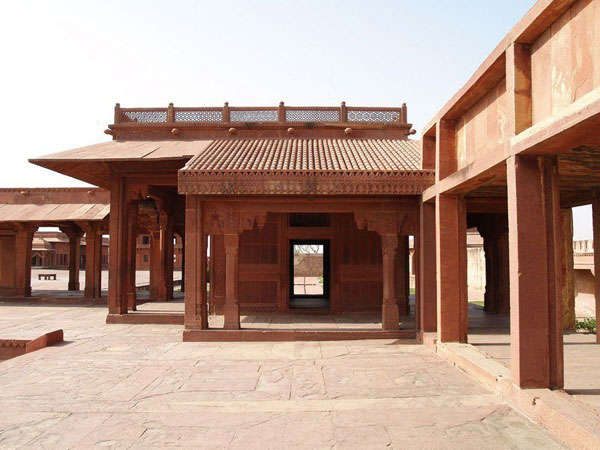
Fatehpur Sikri – World Heritage Site

Fatehpur Sikri, , a city predominantly in red sand-stone, situated at a distance of 37 kms from Agra, was built by the Mughal Emperor Jalal-ud-din Mohammad Akbar, in honour of the great Sufi saint Sheikh Salim Chisti ; its magnificence and uniqueness offers a fine example of the emperor’s architectural finesse. Akbar’s tolerant religious views and interest in literature, architecture and fine arts gave the buildings at Fatehpur Sikri a charismatic blend of Islamic and Hindu elements in their style and design.

At Fatehpur Sikri during sunset and sunrise, the turrets and domes create shadows and silhouette against the copper red sky; which truly is an inspirational scene for a painter’s canvas or the visitor’s eyes.

Fatehpur Sikri is enclosed by a 11 kms long fortification wall interspersed with numerous gateways. The remains of the great city; the Imperial Palace Complex, the intricately built marble tomb of the great Sufi saint, Sheikh Salim Chisti and the grand mosque are second only to The Taj Mahal, a benchmark of architectural beauty.A rich imagination is all it takes to transport any visitor to the era of gold tapestry, drapes, rich plush carpets and the royalty of the Mughal courts.

Fatehpur Sikri

37 kms from Agra is built a city predominantly in Red Sandstone and is called Fatehpur Sikri. This town was built by the Mughal Emperor, Akbar. He had planned this city as his capital but shortage of water compelled him to abandon the city. After this within 20 years, the capital of Mughals was shifted to Lahore. Fatehpur Sikri was built during 1571 and 1585. Today this ghost city has a population of about 30,000. This deserted city has retained many of the old structures, because of the efforts of the Archaeological department .Fatehpur Sikri is one of the finest examples of Mughal architectural splendour at its height. Though the city is in ruins, it is a place to visit if one comes to Agra.But in real terms Fatehpur Sikri is a place where one should spend some time. The sunset over the ruins is sight to cherish.Fatehpur Sikri is the best example of the culmination of Hindu and Muslim architecture. Fatehpur Sikri Mosque is said to be a copy of the mosque in Mecca and has designs, derived from the Persian & Hindu architecture.


Diwan-I-Am

The journey to the royal palace begins with Diwan-I-Am or the Hall Of Public Audience. This hall was also used for celebrations and public prayers. It has cloisters on three sides of a rectangular courtyard. To the west is a pavilion with the Emperor’s throne. Beautiful jali screen on either sides separated the ladies attending the court.


Diwan-khana-I-khaas

To the right is an apparently looking two storeyed building, with corner kiosks, known as diwan-khana-I-khaas or Hall Of Private Audience. On entering it, one finds only a single vaulted chamber. In the centre stands a profusely carved column supporting a collosal-bracketed capital. Four narrow causeways project from the centre and run to each corner of the chamber. It is believed that Akbar’s throne occupied the circular space over the capital and the corners were assigned to the four ministers.


Turkish Sultana’s House

To the left of the Pachisi Board is the Turkish Sultana’s house. The house, as its location at the corner of Anup Talao shows, was a pavilion for repose, attached to the pool. The geometrical pattern on the ceiling is reminiscent of Central Asian carvings in wood.


The Treasury

To the left of the Diwan-I-Khaas is the Treasury or Ankh Michauli, once believed to have been used for playing the game, comprising three rooms each protected by a narrow corridor which were manned by guards.


Daulat khana-I-khas

Located in the corner to the left is the emperor’s private chamber. It has two main rooms on the ground floor. One housed Akbar’s library while the larger room was his resting area. On the first floor is the Khwabgah or the bed-chamber. It was connected with the Turkish Sultana’s house, the Panch Mahal, Mariam’s House and the Jodha Bai’s palace by corridors.


Palace of Jodha Bai

To the left of the Sunehra Makan is the largest and the most important building in the royal palace, named after Akbar’s Rajput wife, Jodha Bai. This spacious palace was assured of privacy and security by high walls and a 9 metre guarded gate to the east. The architecture is a blend of styles with Hindu columns and Muslim cupolas.


Hawa Mahal And Nagina Masjid

To the right of Jodha Bai’s palace is Hawa Mahal, the Palace of Winds. This small-screened wind tower faces the garden and is attached to the palace. The garden is laid out in the Char Bagh style with straight walls intersecting at right angles and divided by shallow channels.


The Jami Masjid

One of the largest mosques in India, Jami Masjid was built in 1571 AD. Inside, there is a vast congregational coutyard. To the right, at the corner, is the Jammat Khana Hall and next ot this is the tomb of the royal ladies. To the left of the Jami Masjid is the Stone Cutters’ mosque, the oldest place of worship at Fateh Pur Sikri. It is entered through the eastern entrance known as the Buland Darwaza.


Buland Darwaza

This gate can be approached from the outside by a 13-metre flight of steps which adds to its grandeur. The gate erected in 1602 AD to commemorate Akbar’s victory over Deccan is the highest and grandest gateway in India and ranks among the biggest in the world.

Getting to Fatehpur Sikri

Agra is the most easily accessible tourist destination in India. The city has excellent air, rail and road links. While in Agra, the best way to visit Fatehpur Sikri is by a taxi. The Imperial fort of Fatehpur Sikri is approachable from Agra, 37 kilometers away or 18 kilometers from Bharatpur. Most visitors prefer to make a day trip to the fort en route from Agra or from Bharatpur, as it requires at least half a day to explore.

AIR : Nearest airport is Agra which is 7 km from the city center and 3 km from Idgah bus stand. It only takes 40 minutes from Delhi to Agra.

RAIL : The main railway station is the Agra Cantonment station. It is well connected to all major cities of India. 

ROAD : Idgah bus stand is the main bus stand of Agra, from where one can catch buses for Delhi, Jaipur, Mathura, Fatehpur-Sikri, etc.

Calcutta HC Orders Minimum 20% Reduction In Private School Fees

It is most heartening, most refreshing, most rejuvenating and most remarkable to learn that the Calcutta High Court while exercising its constitutional writ jurisdiction on appellate side in a recent, remarkable and righteous judgment titled Vineet Ruia v. Principal Secretary, Department of School Education, Government of West Bengal and Others in WPA 5890 of 2020 with others delivered on October 13, 2020 after hearing was concluded on October 6, 2020 has slashed the fees charged by private schools in the State by 20%. The two Judge Bench of Calcutta High Court comprising of Justice Sanjib Banerjee and Justice Moushumi Bhattacharya observed clearly, categorically and convincingly that, “From the month beginning April 2020 till the month following the one in which the schools reopen in the physical mode, all 145 schools will offer a minimum of 20 percent reduction of fees across the board.” Rightly so!

                           To start with, the ball is set rolling in para 1 of this latest, landmark and extremely laudable judgment authored by Justice Sanjib Banerjee for himself and Moushumi Bhattacharya penned her own concurrent judgment agreeing with what Justice Sanjib Banerjee held wherein it is put forth that, “An invisible virus, that has threatened the dominant species on the planet and has spawned an array of bewildering reactions across diverse spheres of life, has also made sure that it leaves its impact in the judicial arena. From bringing to life the act-of-God clause that was mostly regarded as a redundant appendage in contracts to redefining the rules of human engagement, the pandemic has almost been all pervasive. The present lis is born in its wake: upon a unique situation arising where students have been kept away from academic institutions for months together, prompting their parents or guardians to question why regular fees ought to be paid in such a scenario. These five petitions canvass a point of public interest that private unaided schools across the State should allow substantial concession in fees as the physical conduct of classes has not been possible for more than six months and normal functioning may not resume in a full-fledged manner for several months more.” 

                           While elaborating further, the Bench then holds in para 2 that, “The lead petition is WPA 5890 of 2020. In due course the other petitions, though filed earlier, have been heard together. In the principal matter, parents or guardians of students of about 145 schools, mostly in and around the city, have joined together to suggest that these private institutions cannot be allowed to make merry and charge the usual fees despite no classes being conducted for a considerable period and, thereafter, classes being resumed on the online mode in some cases with very limited resources being used by the schools. The parents or guardians complain of profiteering by the schools by unjustly enriching themselves even as several of the schools have terminated the services of several of the usual employees or have not paid the teachers in full and not incurred the normal expenses needed to physically operate such schools.”

                           For the sake of brevity and paucity of space, it would be in the fitness of things to discuss the most significant para 61 of this commendable judgment wherein it is pointed out that, “In the light of the foregoing discussion and purely as a one-time measure necessitated by the present unprecedented situations, the following directions are issued:

i.            There will be no increase in fees during financial year 2020-2021.

ii.       From the month beginning April, 2020 till the month following the one in which the schools reopen in the physical mode, all 145 schools will offer a minimum of 20 per cent reduction of fees across the board. Non-essential charges for use of facilities not availed of will not be permissible. For instance, additional charges for laboratory, craft, sporting facilities or extracurricular activities or the like will not be permissible during the months that the schools have not functioned in the physical mode. Session fees traditionally charged periodically will be permissible, but again, subject to a maximum of 80 percent of the quantum charged for the corresponding period in the financial year 2019-20.

iii.  The minimum figure of 20 percent reduction in the monthly tuition fees will be on the basis of the tuition fees charged for the corresponding month in the previous financial year.

iv.      For the financial year 2020-21, a maximum of five per cent excess of revenue over expenditure will be permissible; the balance excess (without any mathematical precision) should be passed on by way of general concession or special concession in individual cases of extreme distress. If any school makes a loss as a consequence of following these directions, such loss can be made up in course of the next two financial years, 2021-22 and 2022-23, if normal physical functioning resumes by March 31, 2021.  

v.   No amount towards the arrears on account of revision of pay to teachers or other employees can be passed on in the fees for financial year 2020-21. The amount on account of arrears may be recovered in 2021-22 and 2022-23, if normal physical functioning resumes by March 31, 2021.

vi.  There will be no increase in salaries of teachers or of other employees during financial year 2020-21. If any individual school has given effect to a higher pay-scale, the difference must not be realised out of the school fees during the financial year 2020-21.

vii.  Parents and guardians of students are requested not to avail of the reduction in schools fees, if their financial situation does not merit the reduction. However, if any set of guardians or parents obtains the benefit, no questions in such regard can be asked.

viii.  In addition to the across-the-board reduction, every school will entertain applications from parents or guardians for further reduction or waiver or exemption or delayed or installment payments, as the case may be. Every application in such regard must be supported by the financial statements of the parents or guardians so as to justify the request. The financial statement should be certified by any qualified auditor and accompanied by a declaration by the applicant parent or guardian verifying the particulars to be true and correct.

ix. Each application will be considered on merit. Such applications have to be filed before the respective schools by November 15, 2020 and every application should be dealt with on an individual basis and a decision communicated to the applicant by December 31, 2020. Till the decision on the individual application is communicated and for a further period of two months thereafter, no coercive action should be taken against the relevant student. In other words, the student must be allowed every facility that a similarly placed other student would enjoy, including the name of such student being put forward for the board examinations, subject, however, to the fees payable to the board being tendered within time on behalf of the relevant student.

x. When an application for further reduction or waiver or exemption or delayed payment of fees has been disposed of by the relevant school but the parents or guardians are aggrieved by the decision, an application may be filed, upon deposit of Rs 1000/-, to a committee for further adjudication of the request and to assess the decision communicated by the relevant school. Such application has to be filed within 10 days of the rejection, in full or part, of the request being communicated to the relevant parents or guardians.

xi. The committee referred to in the immediate preceding clause will be headed by Mr Tilok Bose, Senior Advocate as its chairperson and will be assisted by the Headmistress or Principal (the occupant of the higher of the two offices, if they are two) of Heritage School and Ms Priyanka Agarwal, Advocate for the parents in WPA 5890 of 2020. The committee will be empowered to engage an auditor or a firm of chartered accountants to assist the committee. The committee and the auditor appointed by the committee will look into the extent of reduction or exemption or the like sought and the feasibility thereof on the basis of the accounts of the relevant school for the financial year 2019-20 and the financial figures for the first six months of the financial year 2020-21 as certified by the auditors of the relevant school. The two other members of the committee will assist the chairperson of the committee to arrive at an appropriate decision, but the chairperson will have the final say therein.

xii. The deposit obtained by the committee will be retained by the committee and Rs. 800/- therefrom disbursed to the auditor or firm of chartered accountants for the first time the accounts of a particular school need to be assessed by the auditor or firm of chartered accountants. For every repeat exercise, meaning studying the accounts of the same school from the second time onwards, Rs. 500/- per case will be paid to the auditors. The balance amount in the hands of the committee will be used for the purpose of secretarial and managerial services the committee may be required to obtain. Any ultimate surplus has to be made over to court for the same to be dealt with in accordance with law. No remuneration is provided for any of the members of the committee and the court hopes that the members nominated graciously accept this onerous task in the larger public interest.

xiii. By November 30, 2020, the committee should indicate a dedicated e-mail account whereat the appeals against the decisions of the schools may be filed. The e-mail ID should be communicated to Advocate-on-record for the petitioner in the lead matter for it to be disseminated to all parents and guardians. The money required to be deposited will be tendered in cash to a secretary or manager as may be indicated by the committee. The application will be deemed complete only upon the grievance in writing being forwarded to the relevant e-mail account and the deposit being made. No application will be entertained without the deposit being tendered. Full accounts of the monies received and expenses incurred must be maintained and presented in court, when sought.

14. All schools should have the accounts for the financial year 2019-20 ready and also the accounts for the period of April to September, 2020 ready to be furnished within two days of the demand therefor by the committee.

xv. Every application made before the committee must clearly indicate the name and other particulars of the student involved and furnish the e-mail ID of the school and its Principal or the like for the committee to communicate with the school.

xvi. The committee must endeavour to dispose of every application within 45 days of the receipt thereof and the decision of the committee will be binding, subject to the relevant schools having a right to apply to this court in the present proceedings for the reconsideration thereof on cogent grounds. Till a dispute between the parents or guardians of a particular student and the relevant school is finally decided, no coercive action against the student may be taken by the school, whether to disallow the student from attending class in any form or taking any examination or for the candidature of such student being forwarded for any board examination (subject to the board’s fees being tendered).        

xvii. The quantum of fees to be charged for every month will be indicated by the individual schools on any website and the notice-boards of the schools and informed to Advocate for the petitioner in WPA 5890 of 2020 for the same to be put upon a website that such petitioner must set up for this purpose. The fees payable for every month and the other periodic charges, like session fees, for the entire financial year 2020-21 should be indicated by the individual schools and put up on the website to be set up by the petitioner in WPA 5890 of 2020 by October 31, 2020.

xviii. By November 30, 2020, the fees payable in terms of this order for the period up to November 30, 2020 should be tendered on behalf of all students of the 145 schools. To the extent the parents or guardians of the students apply for further reduction or waiver or exemption, they can pay the amount as possible by November 30, 2020 and copies of the applications for further reduction or the like should be deposited by such date.    

xix. With effect from December 8, 2020 all schools will be entitled to disallow students whose fees have not been paid in full in terms of this order and those who have not applied for reduction or waiver or the like. However, schools should ensure that this extreme step is taken only after exercising due care and caution.

xx. No student will be entitled to apply for a transfer certificate without the full quantum of fees in terms of this order being first discharged.

xxi. For the purpose of clarity, it is reiterated that fees payable by students to boards for examinations or otherwise shall have to be paid in addition to the monthly fees and other charges in terms of this order and no waiver or reduction of the fees or charges payable to the boards may be sought or granted.

xxii. There will be no refund of the fees already paid. However, to the extent fees have already been paid which are in excess of the directions contained herein, suitable adjustments will be made over the remaining months of the financial year, unless the parents agree in writing otherwise. 

xxiii. The expenses incurred for developing the infrastructure of the schools should not be passed on to the students during the current financial year, though it will be open to recover the same from the students from financial year 2021-22 onwards, if the physical functioning resumes by March 31, 2021.

xxiv. The cap of five per cent of the revenue over expenditure for the year 2020-21 will be subject to the exception that it may exceed the five per cent only if the general reduction afforded to the parents is not availed of by any of the parents and no student in financial distress has been denied additional concession despite being worthy.

xxv. No unusual expense should be incurred during financial year 2020-21 and no development or infrastructure expense should be incurred unless absolutely unavoidable.  

xxvi. These directions will continue till such time that physical functioning of the schools resumes in the normal course.

xxvii. The above directions for any form of concession will not apply to any of the 145 schools  where the average monthly fee (calculated on an annual basis over the year from April, 2020 to March, 2021) is less than Rs. 800/-. However, such schools may voluntarily take such measures as deemed fit. The exception carved out is perceived to be reasonable since the quantum of concession in such cases will be nominal and the elaborate exercise may be unnecessary as the extent of possible profit is unlikely to be significant. But the monthly fees payable in such cases must be put up on the notice-boards and websites as in the other cases and without any exception.

xxviii. The other private unaided schools in the State should also abide by the directions mutatis mutandis, particularly since the matter has been heard extensively and as public interest litigation. However, only the disputes pertaining to the 145 schools included in WPD 5890 of 2020 may be referred to the committee constituted herein; and not the disputes pertaining to other private unaided schools in the State.”

While clarifying that this order is only a one-time measure under the present extraordinary circumstances, it is then made clear in para 62 that, “It is made clear that this order may not be used as a precedent for the regulation of fees in the schools in future. The present measure may be seen as an extraordinary step in an unforeseen situation to somewhat relieve the parents and guardians of students of their financial burden in the economic distress brought about by the pandemic.”

    Furthermore, it is then made clear in para 63 that, “The writ petitions will remain pending till the physical classes are resumed in the schools and the directions contained herein are worked out completely. The petitions will appear next on December 7, 2020 to monitor the progress in the implementation of the directions contained herein.” 

What’s more, it is then directed in para 64 that, “The accounts submitted by the schools in sealed covers should be retained in their present condition by the Registrar-General. The accounts will not be looked into by any person or the sealed covers opened without the express previous leave obtained from the court.”

       Not stopping here, it is then also directed in para 65 that, “Out of the deposit made by the petitioners pursuant to the previous directions, a sum of Rs. 20,000/- will be paid on account of secretarial services obtained by the two-member committee appointed earlier. The Registrar-General should ascertain from Prof. Suranjan Das the mode and manner of disbursement of such amount and act accordingly. The court expresses its appreciation for the work done by such committee and its report. The accounts submitted before the committee should be retained in strict confidence by the office of Prof. Suranjan Das and destroyed after three months unless contrary directions are issued by this court.”

Justice Moushumi Bhattachraya who wrote her separate concurring judgment too agrees with her senior colleague – Justice Sanjib Banerjee when she says that, “I entirely support his reasons leading to the conclusions.” She also said that, “Writ courts not only have the power to issue the five writs but also to issue orders and directions having the force and effect of the five writs, separately or together, for enforcing the rights guaranteed under part III of the Constitution.” She further referred to the Supreme Court’s judgment in the case of TMA Pai and recounted that despite recognizing the right of minority institutions to administer their affairs, the Court reprimanded them against profiteering and commercializing of education. In this backdrop, she also said that, “In the case at hand, our aim is not to intermeddle in the internal affairs of these institutions or supplant the present governing bodies of these institutions with a court appointed agency, but to figure out a best-fit in a disparate set of schools and guardians and that also for a limited period of time, with the paramount interest of the students in mind.”

               It must also be borne in mind that as for privacy, Justice Moushumi clarified that, “The right to privacy, taken at its most obvious connotation, is the right of a person to draw his or her boundaries in terms of sharing of information. It is a pro-individual right where the person can choose the company he keeps and the time and the agency to disclose what he wishes to. It is a right aimed at preserving the spatial and intellectual integrity of an individual in matters of choice and acts as a springboard for the connected freedoms which are guaranteed under the Constitution.” 

       It is a no-brainer that the bedrock of this judgment are the directions that Justice Sanjib Banerjee has listed so exhaustively. So it merits no reiteration that these directions must be implemented in letter and spirit at the earliest. It is rightly concluded that, “It is obvious that schools have incurred less expenditure over a prolonged period of time.” No doubt, schools must comply with this judgment in totality!

Sanjeev Sirohi, Advocate,

s/o Col BPS Sirohi,

A 82, Defence Enclave,

Sardhana Road, Kankerkhera,

Meerut – 250001, Uttar Pradesh.

Alliant International University

Alliant Mission and Vision

Our Mission: Alliant International University prepares students for professional careers of service and leadership, and promotes the discovery and application of knowledge to improve the lives of people in diverse cultures and communities around the world.

Our Vision: An inclusive world empowered by Alliant alumni.

OUR STORY

Alliant Pillars

Alliant is committed to excellence in four areas:

Education for Professional Practice

Alliant’s educational programs are designed to give students the knowledge, skills, and ethical values they need to serve and lead effectively in a variety of professional settings. Alliant graduates are expected to achieve mastery of a body of knowledge and be able to apply that knowledge in professional practice in order to achieve desired, and beneficial outcomes.

Scholarship

Scholarship in the Alliant context includes the discovery of new knowledge; the discovery of new applications of knowledge to solve practical problems; the integration of knowledge in new ways; and innovation in teaching knowledge and professional competencies.

Multicultural and International Competence

Alliant is an inclusive institution committed to serving diverse populations around the world by preparing professionals to work effectively across cultural and national boundaries, by increasing the number of professionals working in underserved areas, and by understanding and responding to the needs of diverse communities.

Community Engagement

Alliant’s faculty, students, alumni, and staff are dedicated to making a positive difference in the world through professional education and practice. We measure the success of our university in part by the impact we have—both directly and indirectly—on the welfare of individuals, families, organizations, and communities.

Why Choose Alliant?

Hands-On Training

A combination of internships, practica, consulting, and community service projects will ensure that you have the professional practice you need to begin making an impact in your field from the moment you take your first step off of our commencement stage.

Accreditation

Alliant is accredited by the WASC Senior College and University Commission (WSCUC) and offers programs accredited by The American Psychological Association (APA), the California Commission on Teacher Credentialing (CTC), and the Commission on Accreditation for Marriage and Family Therapy Education (COAMFTE), among others.

See All Accreditations

Industry Immersion

Alliant staff and faculty work with students to harness every opportunity to present at industry conferences, publish their work, and build partnerships with industry organizations while earning their degrees.

Small Classes, Individual Attention

Our faculty are pioneers in their fields and prepare each of their students to continue their legacy. Our professors train their students with the expectation that they will one day join them in the top echelon of industry experts—they are training their future colleagues.

Proven Professional Success

The national average loan default rate is 10.8%, Alliant’s is less than one third of the national average at 3.3%.

Global Network of Impact

Alliant has nearly 50,000 alumni making an impact across the world. From the U.S. Congress, to NASA, the United Nations, non-profit organizations, and more, our alumni are transforming the world—one industry, one community, one family, and one individual at a time.

See Alumni Impact

The Alliant Difference

Theory & Practice

Our model of theory paired with practice helps Alliant students become innovative agents of change. Each of our programs is designed to help develop professionals to do meaningful work that makes a lasting impact. Our approach to education combines theory and practice; scholarship and application. We provide a professional school environment in which students learn from a faculty of seasoned working professionals and receive practical training while still in school through a combination of internships, practica, consulting, and community service projects.

Purpose & Impact

At Alliant, success is measured not only in terms of the number of degrees awarded and the quantity of academic papers published, but also by the impact students and graduates make in their communities. Alliant students contribute more than 1.2 million hours of community service each year as part of their professional education. Field placements, practica, and internships are often aimed at benefiting underserved communities, and students frequently engage in projects that address the real-time needs and issues in their surrounding communities.

Diversity & Alliance

Alliant has been a top producer of graduate degrees for minorities for the last six years and has been named one of the nation’s most military friendly schools. Our students come from all walks of life, from the first in the family to pursue a higher education to military veterans completing or re-starting their education to working professionals and graduates of community colleges as well as the Ivy League. We believe a diversity of views leads to a better environment for solving communal problems and inspires bigger thinking.

“One of the greatest things taught to me throughout my journey at Alliant was not from a textbook, or even from a lecture from the professors, it was the ability to understand by experience…This gift taught throughout my experience allows me to understand how impactful I can be both within my professional life and within my community.”
Jessie Ramirez
Alliant Alumna

Alliant 2022

Here is Alliant\’s 5-year Strategic Plan, which outlines how we plan to grow and change and become the best version of Alliant we can be by the year 2022.

Click here to download the pdf

Areas of Study

Find the Alliant International University Program that is right for you.
VIEW AREAS OF STUDY

Acupuncture & Integrative Medicine College

ABOUT AIMC BERKELEY

Welcome to AIMC Berkeley! We are happy you are curious about our unique college. We promote an integrative approach to medicine by offering strong Western medicine courses and cutting edge clinical experiences in Western medicine settings. We offer a diversified curriculum that incorporates mind body and spirit. We are extremely proud of our successful Masters program and our Professional Doctorate program that started in 2019.

We provide a supportive culture for you to realize your unique mission as a healer—to create for yourself what I call “tailor-made-medicine.” We offer an environment that encourages each student to put their singular imprint on medicine.

One of my core values is my commitment to our students’ needs. Sometimes that is quite literal: I provide our students with snacks every day and lunches during finals. This is just one of the ways I welcome students into our warm and inviting community.

Sincerely,
Yasuo Tanaka
President & CEO

PAST & PRESENT

The Acupuncture & Integrative Medicine College-Berkeley formerly known as Meiji College of Oriental Medicine (MCOM) was established in San Francisco, California in 1990 by the Meiji School of Oriental Medicine in Japan and its alumni. The first class was enrolled in September of 1991. In January 1999, the school relocated to Berkeley, California in order to provide its students with a higher quality facility and a better educational environment. In 2002, Dr. Shuji Goto assumed an appointment as a chairman of the board for the MCOM. In April 2003 the name of the school was changed to Acupuncture and Integrative Medicine College, Berkeley (AIMC, Berkeley) and new management has started under the new chairman’s leadership. Through the introduction of curriculum of Japanese Acupuncture and Kampo Medicine, the goals were set to take a leadership role for further development of Asian Medicine in the US. It was accredited by ACAOM under its new name in May 2004.

Today AIMC continues to develop its programs and professional affiliations. In 2017 we launched a new MSOM that improved the curriculum and streamlined the program so that it could be completed in 10 terms, or a little over 3 years. We have recently developed a First Professional Doctorate degree that launched in 2019.

“AIMC Berkeley prides itself on our accomplished faculty, our inclusive student community, and our integrated approach to medicine.”
INSTITUTIONAL MISSION & VISION

The mission of Acupuncture & Integrative Medicine College, Berkeley is to develop caring, proficient, and successful practitioners who serve our communities and the East Asian medicine profession by treating illness and promoting health and wellness. AIMC Berkeley promotes patient-centered integrative medicine focused on treating the whole person (mind/body/spirit), with consideration for both traditional and contemporary medical models and other factors that influence health, wellness, and disease.

AIMC Berkeley supports the following vision:
To serve as a center for international collaboration in the development of acupuncture and East Asian medicine within the concept of integrative medicine
To serve as a center for the promotion of health and wellness and care of the community through education, outreach, and patient care

AIMC Berkeley’s Strategic Plan outlines the institution’s goals and strategies
DIVERSITY & INCLUSION

At AIMC Berkeley we believe that a diverse community of students, faculty, staff and board members strengthens our capacity for empathy, compassion, and cultural humility and prepares us to be of best service to the rich plurality of the Bay Area and beyond.

We celebrate and strive to create an inclusive culture for all people of all identities. This includes, but is not limited to, sexual orientation, gender identity and presentation, racial identity, nationality, ability, belief system or religion, citizenship, socioeconomic status, and any identity that faces institutionalized oppression.

We honor the ancient East Asian roots of this medicine and aspire to practice in alignment with its original intent, while respectfully integrating it with allopathic medicine. We strive to learn from and live in harmony with the natural world and to recognize one another as varied and equal expressions of nature. We honor the Ohlone peoples whose land we occupy, as well as the long legacy of skilled practitioners who came before us.
EDUCATIONAL PROGRAMS & OBJECTIVES

AIMC offers the Master of Science in Oriental Medicine degree program and the Doctor of Acupuncture & Integrative Medicine degree program. These programs comprise the primary academic focus of AIMC Berkeley. Our faculty, curriculum, and clinical instruction promote the education and training of compassionate, successful, well-rounded practitioners; and our learner-centered, competency-based educational philosophy fosters lifelong learning and personal
improvement.

The mission of AIMC Berkeley’s Master of Science in Oriental Medicine (MSOM) and Doctor of Acupuncture & Integrative Medicine (DAIM) programs are to educate students to become knowledgeable, skilled, and professional practitioners of acupuncture and Integrative medicine. Upon completion of the MSOM program, graduates of AIMC Berkeley will be able to:
Demonstrate knowledge of the principles and practices of acupuncture and Chinese medicine
Apply the principles and practices of acupuncture and Chinese medicine to patient care
Describe the broad traditions in both Chinese and Japanese medicine
Demonstrate clinical effectiveness in patient assessment, diagnosis, and treatment
Make informed and appropriate referrals to other healthcare providers
Practice within established ethical, legal, and professional guidelines
Apply the principles of successful practice management

In addition, graduates of the DAIM program will be able to:
Utilize research methodology for research projects
Creatively synthesize the theories of traditional Chinese and Japanese medicine with a scientific viewpoint
Collaborate with a broad range of health care providers on incorporating the modalities of Chinese and Japanese medicine in patient care
ONGOING LEARNING

AIMC Berkeley advocates for continuing education after graduation and licensure. We provide a variety of certificate programs and CEU courses, as well as classes, seminars, and workshops for professionals, students, and community members interested in enhancing their understanding of East Asian Medicine and the art of healing.
SUCCESSFUL PRACTITIONERS

AIMC Berkeley-trained practitioners are successful because they attain MSOM and DAIM degrees, pass state and national certification exams with high first-time pass rates, and gain licensure. Furthermore, AIMC Berkeley-trained practitioners enjoy success because they graduate as skilled, confident, and compassionate healers who truly love what they’re doing with their lives, are happy serving in their communities, and are dedicated to making a difference in the world – one patient at a time.
COMMUNITY & PARTNERSHIPS
AFFORDABLE PATIENT-BASED HEALTHCARE

AIMC Berkeley endeavors to maintain the therapeutic treatment of patients in our community at the highest level of our activities. Our educational programs, research, and student and professional clinics target the beneficial, effective, holistic, and compassionate treatment of individuals rather than merely the fighting of disease. AIMC Berkeley is dedicated to providing effective healthcare to under-served populations, including women, children, youth, students, the elderly, minorities, and those who are economically disadvantaged and without access to medical insurance. Our Community Acupuncture Clinic and Herbal Dispensary offer office visits, treatments, services, and prescriptions at below local market rates.
OUR COMMUNITY

AIMC Berkeley recognizes the diversity of the community it serves. The people of Berkeley, Oakland, and Alameda County comprise our societal center; however, our patients, and especially our students, are drawn from throughout the entire Bay Area, Northern and Southern California, the United States, and many other countries. The participation with and interchange between our sister schools in Japan and China broaden and deepen our alliance with and commitment to Integrative Medicine. As an academic community, AIMC Berkeley finds within itself a vibrant and dynamic society composed of patients, students, faculty, administrators, and directors.
SISTER SCHOOLS

AIMC Berkeley has developed international partnerships and study-abroad programs in China and Japan as a part of ongoing collaborations with Goto College of Medical Arts and Sciences in Japan, Shikoku Medical College in Japan, and Tianjin University in China.

Goto College Japan

Shikoku Medical College

Tianjin University China

These programs give AIMC Berkeley students the opportunity to spend several weeks studying in China or Japan and to learn from leading international practitioners of Chinese and Japanese medicine.
INTERNATIONAL AFFILIATIONS
Japanese Society of Acupuncture & Moxibustion (JSAM)
Kampo, Acupuncture and Integrative Medicine (KAIM)

What technology we want to live our daily life?

Transformers.

Yup , the transformer which are used to increase or decrease the alternating voltages in electric power appliances .

As we all know without electricity we all return to the Stone age . No bulbs , no fans , no computers , no machines nothing . Everything depends upon the electricity and effective electricity distribution or we can say propagation depends upon the transformer .

We need high voltage for effective power transmission but we can’t use that high voltage to charge our mobile phones ,hence presenting the transformer . It’ll step down that voltage to the value suitable for your phone’s charging .

Depending upon where they are used they can be of two type step up and step down . When we need more output voltage we use step up and vice versa.

So thank you all the brains that were involved in the invention of such beauty.


So, what else would you like to include in this because I guess for that to you need an electricity. Think.

See yaa..

Book Review:- Good to Great

Experts say that books are portable magic. They’d transform you from an ordinary, demotivated soul to an extravagant fighter.

Books are a sanctuary for every individual with a spontaneous imagination; they are friends in the loneliest of times and they are teachers.

They are proof that time travel does exist because a book enables the voice of the writer to escape the shackles of time and speak out to the reader through its pages.

1. Good to Great: Why some companies make the leap…and others don’t

Summary:

This book is definitely one of the best books to read, known to open doors for those who are struggling to make the leap and add a little extra to their ordinary and become extraordinary; it has proven to generate a lot of revenue.

This book has been written and based on a lot of research and carries careful evaluations.

The author of “Good to Great: Why some companies make the leap … and others don’t”, Jim Collins, was very curious about the factors that make a company sustainable. Good to Great has been constructed on the basis of his hard work and the results of his findings; which makes the book all the more amazing.

The book enabled six companies to take the leap from good to great! The book includes the six ingredients that the transit from good to great require. They are bound to change your life.

Want to know what the book is all about?

It is based on the best Management strategies out there!

“Some of the key concepts discerned in the study,” comments Jim Collins, “fly in the face of our modern business culture and will, quite frankly, upset some people.”

Reviews:

Perry Leon talked about the influence the book had on her life while writing her Campaign Blog and talked about how she would rate it as probably the top three business books of all times.

She went to reply to a question about what she had taken from the book, “I took from it that you should focus on key competencies and not get distracted by the other stuff.”

She rates it as one of the top books of all time and goes on to say that it should be included in every piece written on business books and self-help books because it has really helped her.

PROS:-

Helps you deal with people from corporate world

Motivate entrepreneurs towards valid conversation.

Covers a broad spectrum of management practices

CONS:-

Does not cover anything other than management

Too long to read the same content over and over
Slight theoretical; less motivational

Have a look and share your views on my review.

See yaa..