The relation between Indian and Chinese army are now being worse. India holds a record of never attacking any of the army first till date. Many near by countries think that India is weak and cannot attack first, but this is our spirituality and religion to avoid any fight, but when the things get worse there need to be done something. India never approach any army for fight it always keep the things calm and to solve the problem with words and not the wars. India always gave a extraordinary action in case of any mischief done by the opponents, India carried out many operations like:
Operation Vijay
Operation Meghdut
Operation Surya Hope
Operation Brasstackes
Operation Cactus and many more to list…
India also gave a very strong answer of the Pulwama attack. India has the strongest army and technology support from Russia and US.
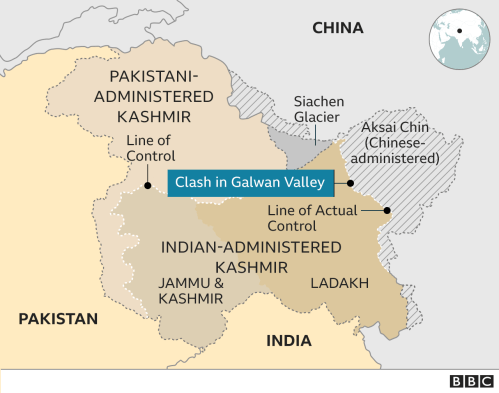
Recantly, India was betrayed by dragons during a normal peace talk Chinese army betrayed Indian army by sudden attack on our prestigious soldiers. In this betrayal our 20 soldiers lost theirs lives for India:
Col B Santosh Babu
Nb Sub Nuduram Soren
Nb Sub Mandeep Singjh
Nb Sub Satnam Singh
Hav K Palani
Hav Sunil Kuma
Hav Bipul Roy
Nk Deepak Kumar
Sep Rajesh Orang
Sep Kundan Kumar Ojha
Sep Ganesh Ram
Sep Chandrakanta Pradhan
Sep Ankush
Sep Gurbinder
Sep Gurtej Singh
Sep Chandan Kumar
Sep Kundan Kumar
Sep Aman Kumar
Sep Jai Kishore Singh
Sep Ganesh Hansda
Image source: BBCnews
In return Indian army gave an dangerous answer with their 35 troops by killing. PM Modi gave freedom, if in near future again this type of activities are done by Dragons than Indian army can do anything without any upper orders. Indian army are ready with thier backpacks and loaded arms and waiting for activities by dragons and it will be close to WAR.
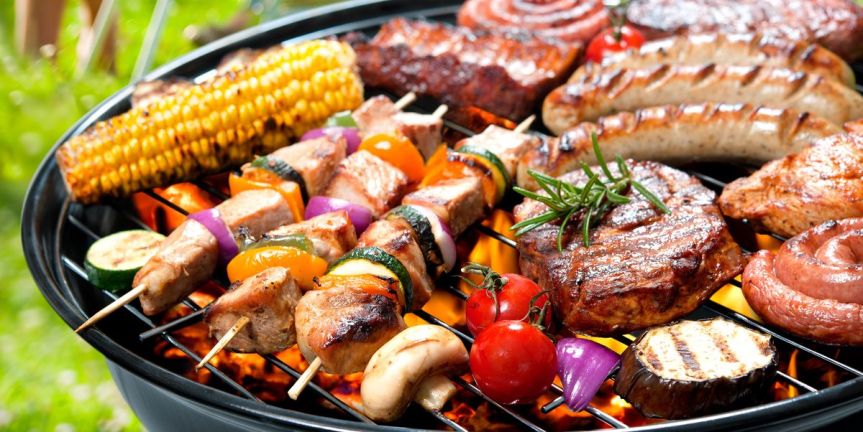
We celebrate world picnic day on 18 June, and It’s often claimed that life is no picnic but today it is! International Picnic Day is a chance to eat out in the open air with friends or family. The word “picnic” comes from the French language, and it’s believed this type of informal outdoor meal became a popular pastime in France after the Revolution. As fans of Jane Austen’s novels will know, 19th-century picnics were elaborate social occasions, with menus featuring a wide range of cold meats and pies that took days to prepare. International Picnic Day is celebrated in many countries, though its origins are uncertain. Charity events, school picnics, and all kinds of other group meals are organized to mark the occasion. You could also bike, walk or hike to a nearby beauty spot, or just take your sandwiches and cold hard-boiled eggs into the garden and enjoy an al fresco lunch.
International Picnic Day is observed on June 18, every year. It is a day to encourage people to go outdoors and enjoy a hearty meal in nature, with other people’s company. In the early days, people used to go on a picnic as an escape from their daily lives. The true origin of International Picnic day remains unknown, but it can be traced back to the end of the French Revolution and the Victorian Era. This day is also marked by various charity events and school picnics. People all around the world meet their friends and family and go on picnics. They generally used to carry food, outdoor games, soft drinks, juices, and other essentials to share it with their travel partners. According to the Guinness Book of World records, the largest Picnic took place in Portugal. In Australia’s Northern Territory, the International picnic day is celebrated in August on the first Monday of each year. It is a popular concept in that area and the general public gets a day off on this day. Schools and Colleges are also shut on this day.
Asian people do not give any importance to the picnic day, and this day always celebrated in Australia and the U.S., Australian celebrate Picnic Day events since the late 1800s in Northern Territory. The Harts Range Races in Central Australia are held each Picnic Day long weekend. The races began in 1946 when three brothers Bennett, Quinton, and Kil Webb from Mount Riddock Station raced stockman Jack Schaber and the regional policeman Senior Constable Bob Darken over a distance of about a mile to the Ulgarna Yards to determine who had the fastest horse.
Moreover, in the U.S., Picnic Day is organized by a board of directors consisting of 18–20 students, ranging from different backgrounds and talents. Directors are full-time students and active participants of other extra-curricular activities and events at UC Davis. Every year, the board of directors selects a theme that will reflect the mission and vision of that year’s Picnic Day, and they also organized a different kind of themes and parade marshals each and every year since 1942 the themes started and in 1962 the parade marshal was started.
Here are some advantages and benefits of a picnic:
Spending time outdoors, basking in nature, breathing fresh air, and enjoying a great view. The pure air invigorates you and leaves you feeling rejuvenated.
Spending time with family is always a great bonding experience. In the fast-paced, urbane lifestyle of today, there is often limited time for maintaining relationships with some of the most important people in your life.
Since picnics often take place in warm environments, the tendency to participate in relaxing small talk is high.
While picnics offer many social benefits, you don’t have to spend the entire time chatting up a storm.
Meals prepared and eaten at home are usually more nutritious and healthy than eating out and particularly so when you bring food for a picnic.
Eatinglunch outdoors is a natural mood booster. You can be amazed at how much the lack of sun in your body can affect your mood.
Picnics are a great stress buster as it helps reduce the stress and anxiety related to work and home.
Please, spend time with family at outdoor and spread awareness regarding it.
Henri Fayol is the universalist and he father of general management and Fayol developed the Theory of Management and he has given his opinion that managerial excellence is technical ability and can be acquired and he developed theories and principles of management which are universally accepted and made him a universalist. He was a pioneer of the formal education in management, Fayol’s principles of management meet the requirements of modern management, as such, he is rightly accepted as the “Father of General Management”.
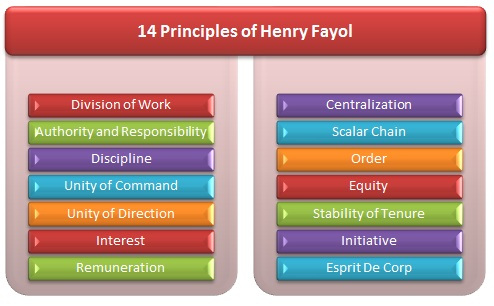
Fayol’s long practical experience in the field of management is reflected in his written work and He did not develop a logical theory of management, nor evolved a philosophy that answered all questions and satisfied all doubts about its practicability and based on his own experience in the field, Fayol set forth 14 Principles of management and they are:
1. Division of Work
The division of work is applied to all kinds of work- technical as well as management and division of work also means specialization and division of work promoted efficiency.
2. Authority and Responsibility
Authority and responsibility go together and Fayol stressed that right and power to give orders should be balanced by the responsibility for performing necessary functions and according to Fayol “The result of authority is responsibility. It is the natural result of authority and essentially another aspect of authority and whenever authority is used, responsibility is automatically born”.
3. Discipline
According to Fayol, “Discipline is in essence obedience, application, energy, behavior and outward marks of respect observed following the standing agreements between the firm and its employees”. Agreements must be obeyed in totality, without any dissent and discipline is essential for the smooth running of the business.
4. Unity of Command
A subordinate should take orders from only one boss and Fayol claimed that if the unity of command is violated “Authority is undermined, discipline is endangered, order disturbed and stability threatened” if there are two or more superiors for an employee then confusion and conflict of interest arise and everyone has to make sure that this doesn’t happen.
5. Unity of direction
Fayol advocates, “One head and One plan” for a group of activities having the same objectives, and this will create dedication of purpose and loyalty. Unity of direction for achieving unity of action in the pursuit of common objectives by a group of persons.
6.Subordination of Individual Interests to general Interests
This is a home truth and, in a family, the interests of its members should be subordinated to the interests of the family as a whole.
7. Remuneration to employees
Remuneration should to fair and adequate and it should be supported by both types of incentives- Financial as well as non-financial.
8.Centralization and Decentralisation
There should be one central point in the organization that exercises control over all the parts but the degree of centralization of authority should vary according to the needs of the situation.
9. Scalar Chain
The Scalar chain is a chain of supervisors from the highest to the lowest rank and this principle suggest that there should be a clear line of authority from top to bottom linking all managers at all level.
10. Principle of order
This principle applies to the arrangement of material and people and there should be a place for everything and everything should be in a place.
11. Principle of Equity
Kindness and justice should be exercised by management in dealing with their subordinates and this will infuse loyalty and devotion among the employees.
12. Stability of Tenure of Personnel
An employee with all the requisite abilities needs some time to gain specialization and stability is linked with a long tenure of personnel in the organization and efficiency is promoted by a stable workforce.
13. Principle of Initiative
The initiative is the power of thinking out a plan and ensuring its successful implementation. Initiative on the part of its employees can become a great source of strength, but it must not be against the established practice.
14.Esprit-de-corps
It means the spirit of loyalty and revolution which unites the members of a group or society and Fayol said that there is strength in unity and the two enemies of sprit-de-corps are:
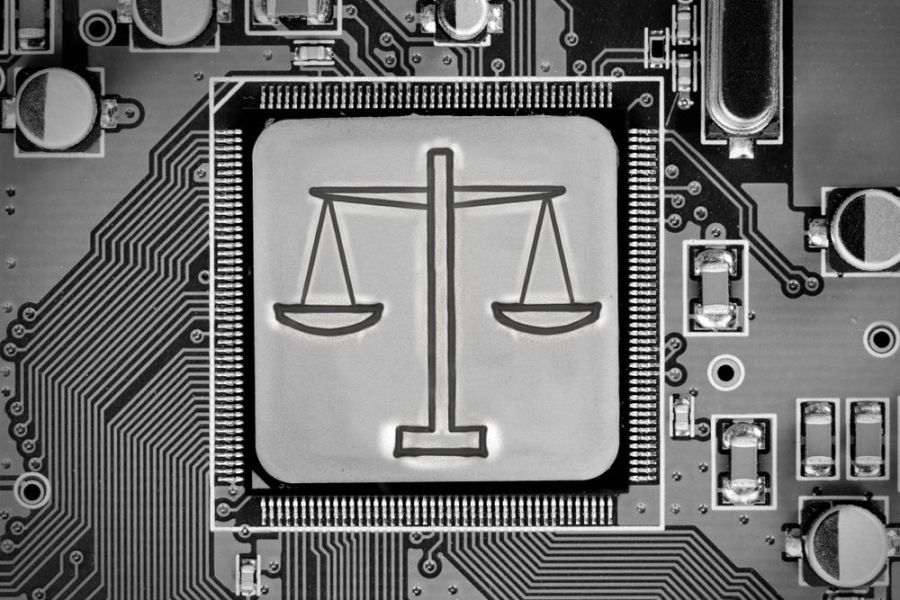
Sophisticated, specialized ASIC technology is making an impact on the everyday world around us. Whether it’s a gadget you can have a conversation with, a car that will take over driving from time to time, or internet speeds that seem impossibly fast, there is likely sophisticated custom silicon present as a critical enabling technology. Plenty has been written about advanced ASICs for networking, computing, AI and 5G applications. FinFET technology is always part of the conversation. So is 2.5D packaging and the associated HBM2 memory stacks. We talk about high-speed interfaces and specialized memories.
All of this is really important and quite relevant, but there is another dimension that is often overlooked. In order to minimize time to market, you must avoid distractions from your one true mission – developing that core element of the chip that will make your product truly different. And in order to achieve that, you must make sure that you have all of the supporting elements not only available, but pre-integrated and pre-verified in such a way that they can be “plugged” into your design with predictable interoperability.
Consider that the elements of a typical advanced ASIC are delivered by more than one IP provider and several supply chain partners. How do you ensure all this capability works together? Even more daunting, how do you ensure you can configure parts of the design without breaking other parts? eSilicon has considered this problem for quite a while and our answer is clear.
You need a platform. A market-specific platform.
Credit : Third Party Reference
A platform delivers relevant IP to a pre-specified chip architecture. It ensures the IP is compatible across technology and operating condition choices and it delivers flexibility and configurability through careful design of the IP components. These tenets apply to the IP developed by the platform provider of course. But they also must apply to any third-party partner IP as well. Building a reliable and robust platform isn’t easy and doesn’t happen quickly.
The benefits of using a platform for FinFET ASIC design can be quite rewarding. For example: achieving the required performance for a switching ASIC by tuning memory configurations or adding a few SerDes lanes. Or, modifying the convolution algorithm for a deep learning ASIC by swapping one IP tile for another. The consistency, compatibility and predictability of a platform can be the margin of victory.
Credit : Third Party Reference
And yet, platforms do not serve every conceivable chip if you want to preserve the efficiency and performance that drove you to an ASIC in the first place. Platforms must be market-specific, even if many of their components are similar or the same. As an example, the PPA targets, number of elements and required bandwidth of an AI chip are widely different from a top-of-rack data center switching chip. So, one size does not fit all.
So, where does a platform fit then? If you build it properly and make it sufficiently configurable, it will be able to support many requirements across a given market. This works well for building families of products and derivatives.
Name of Conference: Two Days Interdisciplinary International e-Conference on Impact of COVID-19 on Various Areas of Global Economy, Science & Humanities Date of Conference: 24 & 25 June 2020 Venue: Virtual Conference Organized by: Collaboratively organised by Gondwana University Gadchiroli, Chintamani College of Commerce, Pombhurna; Chintamani Mahavidyalaya, Pombhurna; Chintamani Mahavidyalaya Ghugus; Chintamani College of Arts and Science, Gondpipri; Chintamani College of Science, Pombhurna URL of the Conference: www.chintamani.edu.in Brief of Conference: e-Conference organised for academic development Theme and Sub-Themes: Economics ⢠Future of work system after COVID-19 Economic opportunities for India after locked down Effect of locked-down on employment & wages ⢠Central & State Govt. Packages- need, role, advantages & challenges. ⢠Challenges in safely reopening the economy Impact of the Covid-19 crisis on the economic development of country. ⢠Thinking locally Acting Globally! (Based central government vision for reopening the economy) ⢠Role of the employees in globe development after the scenario of the Covid-19 crisis. ⢠Pricing policies of firm or industry after locked down. ⢠Effect of COVID-19 and locked down on production cost. ⢠Migration of labour during locked down & its effect on MSMEâs ⢠Effect of locked down on factors of production. ⢠Challenges in balancing income & expenditure for individual, firm & government ⢠Impact of COVID-19 on long and short term policies and strategies ⢠Global socioeconomic impact of covid-19 ⢠Impact of COVID-19 on FDI, investments and share markets ⢠Impact of COVID-19 on Agriculture Sector. Commerce & Management ⢠Impact of COVID-19 on Banking/Insurance/Transport/Etc. ⢠Challenges in front of MSMEâs during and after locked down ⢠Challenges in front of traders during and after locked down. ⢠Challenges to fulfil the trained workforce after labour migration. ⢠The prevention and management of staff in institutes during post era of pandemic Covid-19. ⢠Challenges of managers during and after locked down ⢠Marketing challenges & remedial strategies during and after locked down. ⢠New theories of management after locked down. ⢠Role of local products during locked down. Languages & Literature ⢠Expecting life style of people in forthcoming period after pandemic Covid-19. ⢠Fundamental Accountability of an educated citizen during pandemic presentiality. ⢠Odd and even psychological effects among country people of disastrous presentiality of Covid-19. ⢠Exploring new ability of writing during COVID-19 ⢠Effect of COVID-19 on writers, poets, & thinkers. ⢠Impact of locked-down & quarantine on reading habits. ⢠Role of e-books & e-literature during COVID-19 Social Sciences: ⢠Role of political and social organisations during and after locked down. ⢠Impact of COVID-19 on International relations ⢠Impact of locked down on assembly work system. ⢠Political challenges during and after locked down. ⢠Relationship between Centre & State Govt. ⢠Changing structure of federation after COVID-19 ⢠International Diplomacy in India and other countries after COVID-19 ⢠Role of administration and citizens in health emergency. ⢠Social distancing V/s physical distancing. ⢠Religion, culture V/s treatment with COVID-19 deceased. ⢠Religious places and locked down. ⢠Social challenges during and after locked down. ⢠Histories of epidemic diseases and teachings ⢠COVID-19 and its historic impressions. ⢠Humanity and moral responsibilities of human being during crises. Education & Sports ⢠Role of digital education system during and post ⢠Future of Education after locked down. ⢠Advantages and Disadvantages of online teaching learning program in Covid-19 situation. ⢠Collegiate studentâs role during and post era of pandemic Covid-19. ⢠Creating new technical resources for virtual meeting and online practical lab. ⢠Impact of Covid-19 on Sport economy. ⢠Scope of Physical Science and Technology in various fields after COVID-19 ⢠Stress management other roles of yoga, pranayam & meditation during Covid-19 pandemic. ⢠Stress management and mental health wellness tips for quarantine during pandemic covid-19 ⢠Psychological effect of Covid-19 on Elite sport players. ⢠Covid-19 and sport tourism. ⢠Covid-19 impact on Sport and leisure industries. ⢠Essential goals of health management during quarantine period. ⢠Role of standard precautions and use of personal protective equipment during pandemic Covid-19. ⢠Impact of social distancing and personal hygiene during Covid-19. Science & Technology ⢠Covid-19 outbreak: psycho social support to youth ⢠Covid-19 pandemic and need of vaccine. ⢠Effectiveness of Plasma Therapy for Corona virus infection. ⢠Ayurveda and Covid-19. ⢠Role of vitamin D as an immunomodulator in Covid-19. ⢠Strategic changes required to tackle health emergency. ⢠Biodiversity at local, national and global levels. ⢠India as a mega biodiversity nation. ⢠Conservation of biodiversity at global level. ⢠Impact of the Covid-19 Crisis on healthcare crisis across the globe. ⢠Impact of the Covid-19 crisis on the environmental issues. ⢠Impact on Climate and various mitigation strategies. ⢠Creating new possibilities in environmental pollution after the Covid-19 crisis. ⢠Basic infrastructure changes required to tackle with pandemics. Email: conference@chintamani.edu.in
Army Chief General MM Naravane today said all ranks of the Indian Army salute the supreme sacrifice of valiant soldiers at Galwan. General Naravane said , their sacrifices will not go in vain.
Offering deepest condolences to the families, Army Chief said, the Defence forces stand strong towards protecting the sovereignty and integrity of the country.
External Affairs Minister Dr. S. Jaishankar has conveyed to his Chinese counterpart Wang Yi, India’s protest in strongest terms on violent face-off in Galwan on 15th of this month. External Affairs Ministry said in a release that Dr Jaishankar and the Chinese Foreign Minister had a phone conversation on Wednesday afternoon on recent developments in Ladakh. Dr Jaishankar recalled that at the meeting of senior Military Commanders held on 6th June, an agreement was reached on de-escalation and disengagement along the Line of Actual Control.
Ground commanders were meeting regularly to implement this consensus throughout the last week. While there was some progress, the Chinese side sought to erect a structure in Galwan valley on Indian side of the LAC. While this became a source of dispute, the Chinese side took pre-meditated and planned action that was directly responsible for the resulting violence and casualties. It reflected an intent to change the facts on ground in violation of all agreements to not change the status quo.
Dr Jaishankar stressed that this unprecedented development will have a serious impact on the bilateral relationship. He said the need of the hour was for the Chinese side to reassess its actions and take corrective steps. The two sides should scrupulously and sincerely implement the understanding that was reached by the Senior Commanders on 6th June. The Minister said, troops of both sides should also abide by the bilateral agreements and protocols. They should strictly respect and observe the line of actual control and should not take any unilateral action to alter it.
The Chinese Foreign Minister on his part, conveyed the Chinese position on recent developments. They agreed that the overall situation would be handled in a responsible manner, and both sides would implement the disengagement understanding of 6 June sincerely. Neither side would take any action to escalate matters and instead, ensure peace and tranquility as per bilateral agreements and protocols.
The martyrdom of Indian Soldiers who died fighting in the violent clash in the Galwan Valley in Eastern Ladakh will not go in vain. Prime Minister Narendra Modi said this in his remarks before the second day of virtual meeting with the State and Union Territories Chief Ministers to chalk out further roadmap to embolden nation’s fight against the global pandemic. He said, India will give a befitting reply to anyone who tries to impunge upon its sovereignty and integrity.
Mr. Modi paid homage to the martyred soldiers and remembered their valour. He said, India is a peace loving nation which thrives on the principle of sacrifice. Mr. Modi asserted that India always strives to reach out to its neighbouring countries in order to arrive at a common consensus.
Highlighting the valour and courage of Indian soldiers, the Prime Minister said, the Nation has always prayed for peace in the region but in case of any incitement, it is ready to give a befitting reply. Mr. Modi and the participating Chief Ministers stood up and observed two minute silence remembering the martyrs of Galwan Valley.
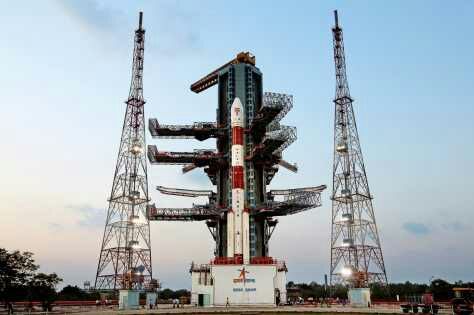
GSLV-F06 carrying GSAT-9 at the second launch pad” width=”660″ height=”auto” tw=”1200″ th=”801″ />In picture: The fully integrated GSLV-F06 carrying GSAT-9 at the second launch pad. India has long been yearning for uninhibited high-speed internet services, despite having the world’s second largest internet user base after China. The country has fallen behind numerous Asian countries in acquiring the fastest internet connectivity speeds due to infrastructure limitations and outdated satellite technology.
There is, however, some good news for the netizens of India as Indian Space Research Organisation (ISRO) has plans to introduce a new era of high-speed internet to the country with the launch of its three new communication satellites: GSAT-19 in June, followed by GSAT-11 and GSAT-20.
Credit : Third Party Reference
ISRO chairman Kiran Kumar said to Times of India (TOI):
We will launch three communication satellites. GSAT-19 in June and GSAT-11 and GSAT-20 thereafter. GSAT-19 will be launched by GSLV Mk III, Isro’s next-generation launch vehicle boosted by an indigenous cryogenic engine that is capable of carrying a four-tonne satellite to the geosynchronous transfer orbit. These satellites will use multiple spot beams (a special kind of transponder that operates on a high frequency) that will increase internet speed and connectivity. These multiple spot beams will cover the entire country.
Unlike the traditional broad beam, these new satellites will be using narrower beam known as “spot beam” which can travel faster and enable high-speed internet connectivity within a limited range of operation. As the name suggests, spot beams are concentrated high-power signals that can provide better signal reception within the specified boundaries and consequently the coverage will be limited.
The catch here is to reuse the beams multiple times over smaller areas, unlike the single broad beam sent across wider areas of coverage. The spot beams will not lose their signal strength which is the case with a single broad beam that has to travel longer distances and suffer from interference.
Tapan Misra (director of Ahmedabad-based Space Application Centre) sheds more light on the data-transfer speed comparison between the current-gen and next-gen GSAT satellites. Accordingly, the GSAT-19 is rated to be capable of reaching top data transfer speeds up to four gigabytes per second as opposed to existing data transfer speeds of one gigabyte per second. In other words, the GSAT-19 will offer a data transfer output which is equivalent to four existing GSATs and this output will be further multiplied with the use of up to eight beams.
The GSAT-11 (heavier version of GSAT-19) is touted to support up to 16 beams for a total attainable data transfer speed of 13 gigabytes per second. The GSAT-11 is expected to be launched by the end of 2017.
The GSAT-20 has a proposed launch set for the end of 2018 and it is expected to use two polarisations for each of its 40 beams. Thereby, it is expected to support a total of 80 beams for a net data throughput of 60-70 gigabytes per second. A recent report from the Internet and Mobile Association of India projects the country to reach a massive internet user-base of 450-465 million by June. In contrast, the country’s average connection speed is rated at a meagre 4.1Mbps.
Consequently, India has a lowly 105th position in the world’s fastest internet connectivity speed rankings behind other Asian countries, according to a recent survey report by a US-based cloud service provider. South Korea leads the pack with 26.3Mbps and followed by Hong Kong (20Mbps), Sri Lanka (6Mbps), Vietnam (6.3Mbps), and finally China (5.7Mbps).
The United Nations Security Council (UNSC) will elect five new non-permanent members to the council today. France took over the Presidency of the powerful 15-member Security Council for the month of June. The United Nations General Assembly last month adopted a decision to hold the Security Council Elections under new voting arrangements taking into account restrictions in place due to the COVID-19 pandemic.
India is a candidate for a non-permanent seat from the Asia-Pacific category for the 2021-22 term. Its victory is given since it is the sole candidate vying for the lone seat from the grouping. New Delhi’s candidature was unanimously endorsed by the 55-member Asia-Pacific grouping, including China and Pakistan, in June last year. Each year the General Assembly elects five non-permanent members out of ten in total, for a two-year term.
The 10 non-permanent seats are distributed on a regional basis. This year, Canada, Ireland and Norway are vying for two seats in the Western Europe and Other countries category, Mexico is the only candidate for the one Latin America and Caribbean seat while Kenya and Djibouti will contest the seat available for the African group. Beginning in January 2021, the new members will serve a two-year term on the UNSC.
On the first day yesterday,Prime Minister Narendra Modi interacted with 21 States and Union Territories through video conferencing. During his interaction, the Prime Minister observed that timely decisions taken to combat the pandemic have been effective in containing its spread in the country. He said, its early preparedness approach helped the country to chalk out measures to save many lives.
Mr Modi said, when India’s fight against COVID-19 will be analysed in the future, the time will be remembered for how the Centre and States worked together to fight the pandemic. The Prime Minister said, they have presented an example for cooperative federalism to the world. Mr Modi said that even a single loss of life due to coronavirus is saddening and the nation should not lower it’s guard even during the unlock. He urged every citizen to strictly follow all necessary precautions including wearing mask, maintaining Do Gaj ki Doori and washing hands regularly with soap. Mr Modi said, they have tried to save each and every life.
The Prime Minister said, even though India has a huge population, coronavirus has not assumed as life threatening a form as in the rest of the world. He said that health experts worldover are praising the discipline shown by Indians, adding that the recovery rate in the country is now over 50 percent. He also noted that India is amongst the nations with the least deaths due to coronavirus.
First part of the two day interaction yesterday witnessed participation of States and Union Territories including Punjab, Assam, Kerala, Uttarakhand, Jharkhand, Chhattisgarh, Tripura, Himachal Pradesh, Chandigarh, Goa, Manipur, Nagaland, Ladakh, Puducherry, Arunachal Pradesh, Meghalaya, Mizoram, Andaman and Nicobar Islands, Dadra Nagar Haveli and Daman Diu, Sikkim and Lakshadweep.
The Union Government today said that the recovery rate has reached to 52.79 per cent in the country and a total of one lakh 86 thousand 935 people affected with Corona virus have cured so far. During the last 24 hours, six thousand 922 people recovered from this virus. Presently, the total number of active Corona cases in the country is one lakh 55,227.
Health and Family Welfare Ministry said that a total of 10 thousand 974 new cases of COVID-19 were reported in the last 24 hours taking the total number of cases to three lakh 54,065. India registered the highest death toll today since the outbreak of Corona virus in the country. In one day, a total of two thousand three deaths were reported taking the nationwide toll to 11 thousand 903. With this, the case fatality rate reached to 3.36 per cent. Meanwhile, Indian Council of Medical Research, ICMR said that a total of one lakh 63 thousand 187 tests of Corona virus samples were conducted by the various laboratories in the country within 24 hours. This is the highest number of tests conducted by the laboratories in a single day. So far, 60 lakh 84 thousand 256 tests have been conducted.
ICMR is continuously scaling up its testing facilities for COVID-19 by giving approval to government and private laboratories. As of now, total 924 laboratories across India have been given approval to conduct the test for COVID-19 including 674 government laboratories and 250 private laboratories’ chains.
Ministry of Health and Family Welfare data reveals that more than 69 per cent COVID-19 cases are from the five States and Union Territories – Maharashtra, Tamil Nadu, Delhi, Gujarat and Uttar Pradesh. In terms of recovery rate, top five States and Union Territories are Chandigarh, Andaman & Nicobar Islands, Rajasthan, Madhya Pradesh and Punjab wherein the recovery rate is above 72 per cent. There are 17 States and Union Territories in India, wherein the recovery rate is above the national average of cured patients.
Defence Minister Rajnath Singh paid homage to the martyred soldiers in Galwan Valley and said, the loss of soldiers is deeply disturbing and painful. He said, the soldiers displayed exemplary courage and valour in the line of duty and sacrificed their lives in the highest traditions of the Indian Army.
In a tweet, Mr. Singh said, the nation will never forget their bravery and sacrifice. He said, his heart goes out to the families of the fallen soldiers. Defence Minister said, the nation stands shoulder to shoulder with them in this difficult hour and the Nation is proud of the bravery and courage of the breavehearts.
Prime Minister Narendra Modi will interact with Chief Ministers of 15 States and Union Territories through video conferencing on the second day today. The Prime Minister will discuss with them the situation emerging following the first phase of nationwide Unlock and plan ahead for tackling the COVID-19 pandemic.
The States and Union Territories include Maharashtra, Tamil Nadu, Delhi, Gujarat, Rajasthan, Uttar Pradesh, Madhya Pradesh, West Bengal, Karnataka, Bihar, Andhra Pradesh, Haryana, Jammu and Kashmir, Telangana and Odisha. On the first day yesterday, the Prime Minister interacted with 21 States and Union Territories through video conferencing.
During his interaction, the Prime Minister observed that timely decisions taken to combat the pandemic have been effective in containing its spread in the country. He said, its early preparedness approach helped the country to chalk out measures to save many lives. Mr Modi said, when India’s fight against COVID-19 will be analysed in the future, the time will be remembered for how the Centre and States worked together to fight the pandemic. The Prime Minister said, they have presented an example for cooperative federalism to the world.
Mr Modi said that even a single loss of life due to coronavirus is saddening and the nation should not lower it’s guard even during the unlock. He urged every citizen to strictly follow all necessary precautions including wearing mask, maintaining Do Gaj ki Doori and washing hands regularly with soap. Mr Modi said, they have tried to save each and every life. He emphasized that with all modes of transport now open, in last few weeks, thousands of Indians returned from abroad and hundreds of migrant workers reached their home towns. The Prime Minister said, even though India has a huge population, coronavirus has not assumed as life threatening a form as in the rest of the world. He said that health experts worldover are praising the discipline shown by Indians, adding that the recovery rate in the country is now over 50 percent. He also noted that India is amongst the nations with the least deaths due to coronavirus.
Prime Minister noted that due to the efforts of the past few week, several green shoots in the economy are visible which are encouraging the country to forge ahead. Mr Modi highlighted the increased sale of fertilizers, larger year on year sowing of Kharif Crops and digital payments in retail sector as few benchmarks. He also mentioned the historic reforms introduced by the Central government, including provisions to provide automatic collateral free loans to MSMEs and boosting the agrarian economy as measures which will ensure creation of strong and sustained demand in the country.
Mr Modi emphasized the need to focus on both life and livelihood. He said, on the one hand, there is a need to boost health infrastructure with emphasis on testing and tracing, economic activity will also need to be increased. The Prime Minister said, the decisions need to be taken keeping in view both current needs and future requirements. He appealed to the Chief Ministers to turn crisis into opportunity.Mr Modi said, the views and the experiences of all states and Union Territories will be discussed to strategize future roadmap of nation’s fight against the global pandemic.
First part of the two day interaction yesterday witnessed participation of States and Union Territories including Punjab, Assam, Kerala, Uttarakhand, Jharkhand, Chhattisgarh, Tripura, Himachal Pradesh, Chandigarh, Goa, Manipur, Nagaland, Ladakh, Puducherry, Arunachal Pradesh, Meghalaya, Mizoram, Andaman and Nicobar Islands, Dadra Nagar Haveli and Daman Diu, Sikkim and Lakshadweep. The Chief Ministers thanked the Prime Minister for his leadership during such a challenging time and uniting the country to fight for the collective fight against the virus. They provided feedback about existing health infrastructure in their states and efforts for augmentation to tackle the impact of the virus. They mentioned about the awareness campaigns being run by them, help being provided to workers who have returned home, usage of Aarogya Setu app, and kickstarting of economic activities in the states.
Speaking on the occasion, Home Minister Amit Shah said that while the country has so far fought a successful battle against the pandemic, the road ahead is long and suggestions given by the Prime Minister regarding use of mask and face cover, maintaining do gaz doori should be followed by all. The meeting assumed significance in the wake of the rising number of novel coronavirus cases in the country. This was the sixth meeting of the Prime Minister with the Chief Ministers since the announcement of nationwide lockdown in March.
Currently, the country is under the fifth phase of the lockdown which entails much more relaxations than the previous ones. Under the first phase of nationwide Unlock, the Centre and state governments have eased several restrictions for the convenience of public and businesses to ensure that economic activities gather momentum. AIR correspondent reports that earlier, the Prime Minister had held a detailed meeting with senior ministers and officials on 13th of this month to review India’s response to Covid-19 pandemic. The meeting had reviewed the national level status and preparation in the context of the pandemic.
It has been a long time since there is a debate, whether animals have been exploited for humans’ needs. However, More than 200 million animals are killed for food around the world every day – just on land. Including wild-caught and farmed fishes, we get a total closer to 3 billion animals killed daily. That comes out to 72 billion land animals and over 1.2 trillion aquatic animals killed for food around the world every year. In the United States alone, around 9 billion chickens hatch every year for the sole purpose of growing to an edible size and dying for human consumption. Animal suffering is the most direct consequence of consuming meat, but there are unintended consequences of eating animals, too.
All-around the globe, animals are used in a different way by humans to fulfill their need, they use it as food, making shoes, jewelry, irrigation, medical research, end experiments. Is it justified to use animals to human’s personals needs? not all animals grass-eaters, they also have to kill or hunt to fill their stomach, Video from the first large-scale investigation of intensive fish farming in Europe shows fish thoughtlessly scooped out of nets and thrown into plastic containers, where they slowly asphyxiated, Some of them miss the bin and flap to death on the floor. This video was disturbing, Some fish survive out of water for hours on their way to the slaughterhouse. If they’re still breathing when they get there, they die by a blow to the head. Nearly 300 wild sea animals are killed every year to feed one American, but that doesn’t include the fishing industry’s bycatch.
Considering the number of Americans that claim they only eat humane meat, it’s worth a quick math lesson. If 99% of farm animals in the U.S. are raised on factory farms, compared to about 90% globally, and 75% of Americans think they consume humane meat, the survey says that most of them don’t. Animals raised for food die by the millions in slaughterhouses around the world, and they do not think before eat. but the main thing is that animals also take revenge by spreading life threating viruses like swine flu and plague, even though human-made vaccines of these viruses, it had taken lots of human life.
If I talk about India, each and every day many animals have been killed by humans, even though the majority of the population is Hindu, and the coastal area also famous for fishing and fish farming, many famous franchises like K.F.C, Mc.donald, Subway, and Burger King provide chickens, beef, meats, poke, and many other animals eatable product. furthermore, in the fashion industry like L.V., Gucci, Prada, Zaara, and more, provide clothes and fashion accessories like a leather purse, belts, leather shoes, and jackets that are obtained from animal’s flesh.
On the other hand, if we talk about science and research, in that process animals always be preyed by the scientist, and in recent news, they narrated that “Tests of other fast-tracked vaccines show that they have prevented infections in the lungs of monkeys.” they are so mean to not test on human or own self, they also not have an idea that there are lots of difference between the skin and immune system. there are many alternatives to reduce the suffering causes of animals.
Additionally, in India, there are many N.G.O.s, which always stands for animals rights, People for Animals India does a great job by saving street dogs in COVID-19 situation by serving food, shelter, and medicines. however, not only N.G.O.s but all people around the world stand for mutated animals, and if you wont to do great help, join the nearby N.G.O.s and save animals.







You must be logged in to post a comment.