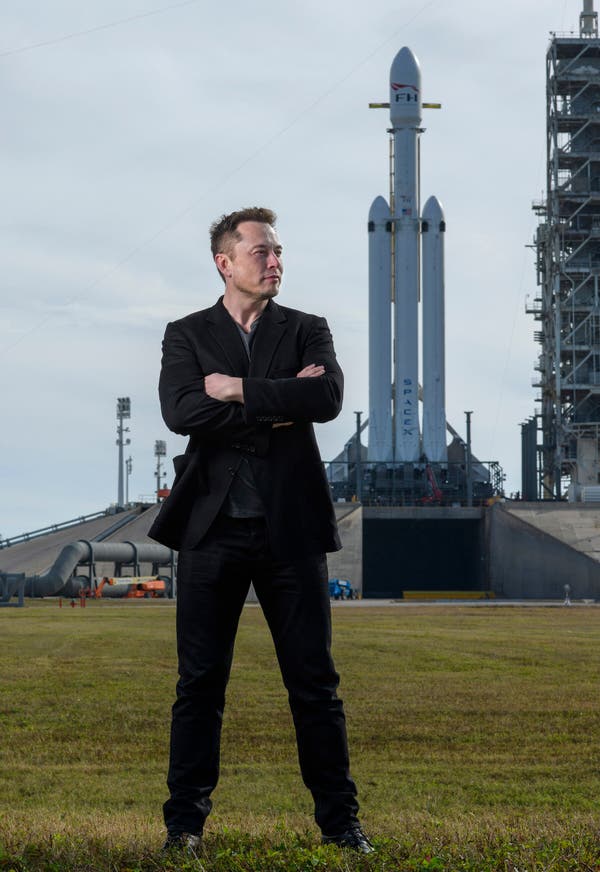
Elon Musk(born June 28, 1971) is an businessman. He was born in South Africa. He moved to Canada and later became an American citizen. Musk is the current CEO & Chief Product Architect of Tesla, Inc., a company that makes electric vehicles. He is also the CEO of Solar City, a company that makes solar panels, and the CEO & CTO of SpaceX, an aerospace company. In August 2020, Bloomberg ranked Musk third among the richest people on the planet with net worth to be $198 billion. In January 2021, Musk became the richest person in the world with a net worth of US$209 billion.
When Jeff Bezos first started his virtual venture, he wanted to call the company Cadabra, as in abracadabra. He phoned his Seattle lawyer to try out the name, but the attorney misheard Bezos and replied, “Cadaver! Why would you want to call your company that?” Bezos quickly reconsidered and adopted the name Amazon.com, after the world’s second-largest river.
Despite Amazon’s stunning revenue numbers—the company’s gross profit in 2019 neared $115 billion—it hardly ever declares a major profit, as Bezos’ strategy has always been to reinvest profits into the company’s growth. But that doesn’t bother Jeff Bezos. “To be profitable [now] would be would be a bad decision,” he told PC Week. “This is a critical formative time if you believe in investing in the future.” By expanding the site’s offerings far beyond it’s initial book inventory, Bezos has turned Amazon into the largest online retailer in the world. “There are always three or four brands that matter,” Bezos told PC Week. “With the lead we have today, we should be the No. 1 player.”
Amazon’s runaway growth has made Jeff Bezos the richest man in the world. By owning 12 percent of the company, Bezos’ net worth is estimated to be $116 billion. He maintains the world’s richest man status despite going through a divorce in with wife MacKenzie, who received 4% of Amazon in the settlement (valued at $38 billion). But you wouldn’t know how rich Bezos is from his pay stub. He has collected the same $81,840 salary from the company for over two decades.
Crowd Funding dates back to 1713 when Alexander Pope united his subscribers to find the translation of Homer’s Iliad into English. He had promised to include the 750 donors’ names in the book in exchange for two gold guineas.
The Internet has modernized crowdfunding by connecting people in search of funds with the general public. Crowd funding is generally defined as the collective – ‘Crowd pooling funds’ to support a specific project or an organization. Crowd fund serves as an alternative source of capital to support a wide range of ideas and ventures. Crowd funding can also be a great way to fund ideas and it can also be a great way for new businesses to get some funding in the initial stages.
An entity or individual raising funds through crowd funding typically seeks small individual contributions from a large number of people. Crowdfunding campaigns have a specified target amount to be raised. It can also be a goal and an identified use of those goals.
The entrepreneur of the company usually offers donors non monetary goods in return for their donation. The reward is personal satisfaction. This makes crowd funding a very efficient and cost effective method to raise money. Some of the most popular platforms for crowdfunding are Kickstarter and Indiegogo.
But we also have to realize that not all the companies or entrepreneurs are successful in funding their campaign. The majority of the campaigns fail. They usually fail to hit their financial targets. Kickstarter’s success rate sits around 38%.
The ways to Endure a successful campaign
One of the ways to ensure a successful crowdfunding is when the entrepreneur defines the objective of their campaign. They also need to factor in how much money is being spent, thus consideration of the costs is also very critical. The entrepreneur also has to be content creator and talk with experts to improve upon the product or the idea. Wise use Networking is also very important to increase the reach of the campaign.
The different types of crowdfunding are:
Donation based crowdfunding
Donation based crowdfunding involves amassing high amounts of donations without needing to provide the investors with anything in return. It is usually used for charities and NGOs.
Rewards based crowdfunding
Rewards-based might seem similar to Donation based crowdfunding but there are key differences that make it one of the most popular forms of crowdfunding. This form of crowd funding is also the most feasible to startups to utilize. One of the main differences is that investors are provided with different tiers of rewards which directly correspond with the numerous wage pledges.
Equity based crowdfunding
This form of crowd funding is increasingly getting very popular among startups. One of the primary reasons is that startups are usually short of money and by providing investors with shares in their company can be a great way to raise funds rapidly.
Royalty based crowdfunding
It is a type of crowd funding that gives its backers a smaller percentage of the revenue that’s gained once the venture or project becomes successful and starts to generate money. One big difference between Equity based funding and this one is that backers will only get royalties based on sales that are made from the product they invested in.
Loan or debt based crowdfunding
This form of crowd funding is beneficial for the owners of the company because they do not need to give shares and royalty. Instead this is more similar to a typical loan where the project initiator has to repay the amount within a certain period of time. It can also be used to raise a comparatively large amount of money.
A tool that has become extremely popular among all generations because of its user-friendly interface is social media. The most dominant user crowds of social media are the youth, which is both impressive and a daunting issue at the same time.
Our connections have widened thanks to social media, and almost the entire world is available at our fingertips. But amid all the fleeting but intriguing trends on social media that impact us, we must be careful not to lose our uniqueness.
The massive reach quality of social media is a powerful quality that makes me wonder about times when it is not be used for positive purposes. And it is no news that industries have also realized the power of social media on our lives and have started using it in their favor.
To sum up, social media has both good and bad aspects, which is a debatable topic, just like our opinions. It also gives rise to several online arguments and debates on social media.So use social media in limited way .
Social media is a tool that is becoming quite popular these days because of its user-friendly features. Social media platforms like Facebook, Instagram, Twitter and more are giving people a chance to connect with each other across distances. In other words, the whole world is at our fingertips all thanks to social media. The youth is especially one of the most dominant users of social media. All this makes you wonder that something so powerful and with such a massive reach cannot be all good. Like how there are always two sides to a coin, the same goes for social media. Subsequently, different people have different opinions on this debatable topic. So, in this essay on Social Media, we will see the advantages and disadvantages of social media.
Advantages of Social Media
When we look at the positive aspect of social media, we find numerous advantages. The most important being a great device for education. All the information one requires is just a click away. Students can educate themselves on various topics using social media.
Moreover, live lectures are now possible because of social media. You can attend a lecture happening in America while sitting in India.
Furthermore, as more and more people are distancing themselves from newspapers, they are depending on social media for news. You are always updated on the latest happenings of the world through it. A person becomes more socially aware of the issues of the world.
In addition, it strengthens bonds with your loved ones. Distance is not a barrier anymore because of social media. For instance, you can easily communicate with your friends and relatives overseas.
Most importantly, it also provides a great platform for young budding artists to showcase their talent for free. You can get great opportunities for employment through social media too.
Another advantage definitely benefits companies who wish to promote their brands. Social media has become a hub for advertising and offers you great opportunities for connecting with the customer.
Disadvantages of Social Media
Despite having such unique advantages, social media is considered to be one of the most harmful elements of society. If the use of social media is not monitored, it can lead to grave consequences.
It is harmful because it invades your privacy like never before. The oversharing happening on social media makes children a target for predators and hackers. It also leads to cyberbullying which affects any person significantly.
Thus, the sharing on social media especially by children must be monitored at all times. Next up is the addition of social media which is quite common amongst the youth.
This addiction hampers with the academic performance of a student as they waste their time on social media instead of studying. Social media also creates communal rifts. Fake news is spread with the use of it, which poisons the mind of peace-loving citizens.
In short, surely social media has both advantages and disadvantages. But, it all depends on the user at the end. The youth must particularly create a balance between their academic performances, physical activities, and social media. Excess use of anything is harmful and the same thing applies to social media. Therefore, we must strive to live a satisfying life with the right balance.
If there’s one dessert that every person on this planet loves, it’s an ice cream! But one Mumbai-based label is giving every ice cream company a run for its money. Naturals Ice Cream company, which started with an investment of Rs 2 lakh, now has a turnover of Rs 300 crore.
Renowned for its cafe-like ice cream parlors, Naturals has129 stores in all major cities of India, including Mumbai, Bengaluru, Hyderabad,and Delhi.
“You don’t have to wait for the ‘big idea’. It is important to start and build upon the small ideas to create the biggest wins,” very well said by Raghunandan Kamath, the Founder of Naturals Ice Cream, hails from Mangaluru. The boy of a fruit vendor, Raghunandan learnt to distinguish good fruits early on. Shortly, his eldest brother came to Mumbai to make it big. He unveiled a cafe in Santa Cruz, and put Raghunandan in charge of the ice cream counter.
Raghunandan soon understood thatice cream was a unique and exotic dessert that grabbed the fancy of the working class, and was a symbol of elitism.
In 1983, after getting married, he decided to start something of his own, and thus, Naturals Ice Cream came into existence in 1984.
Today, Raghunandan’s sons, Srinivas Kamath and Siddhant Kamath, are assisting him operate the enterprise across India.
While ice cream comes across as the ultimate sweet-tooth experience, production it is not very tough. For the past 37 years, Kamath has been leveraging small ideas to build his empire.
At a time when ice creams were a rare, albeit prized possession and only aristocratic families had access to them, Kamath sold Pav Bhaji with ice cream. This pioneering brand also refrained their brand from artificial colours, flavours and preservatives that its competitors were using.
Kamath keenly observed his surroundings to make ‘Naturals’ a household name — whether it was learning to pick quality fruits like his father, using his mother’s traditional hacks or taking customer feedback seriously.
Today, his wife, Annapurna and sons, Siddhant and Srinivas also serve on the management board. Their staff of 125 members produce close to 20 tonnes of ice creams daily.
Originally from Puttur taluka of Mangalore in Karnataka, Kamath was the youngest of seven siblings. His mother was a homemaker and his father was a fruit vendor. The family of eight also cultivated some fruits on their one-acre land but their monthly earnings were as low as Rs 100.
The prospect of education looked insubstantial. Students of Classes 1 to 5 in Kamath’s school were taught together and despite failing in his exams, he was promoted. However, it was the lessons outside the classroom that Kamath liked the most.
The COVID-19 pandemic saw a dip in sales for the brand’s business, but Siddhant, his brother, and their father are not new to challenges. In 1993, an income tax query on the business turned out to be a big blow for the company. “We incurred several losses because my father was not aware of several taxation policies,” Siddhant adds.
However, the family started on its road to recovery by giving out five franchises of the business.
Similarly, in 1991, when the economy had just opened, allowing foreign companies to open a business in India, ice cream companies like Baskin Robbins and Haagen Dazs posed a lot of difficulties for Naturals.
There were no ‘MBA-level’ tactics used by this courageous businessman who simply wanted to sell fruit-flavoured ice cream. By moving into a niche segment like the ice cream market, which was largely overshadowed by a handful of brands, Kamath took a huge risk and his courage paid off !
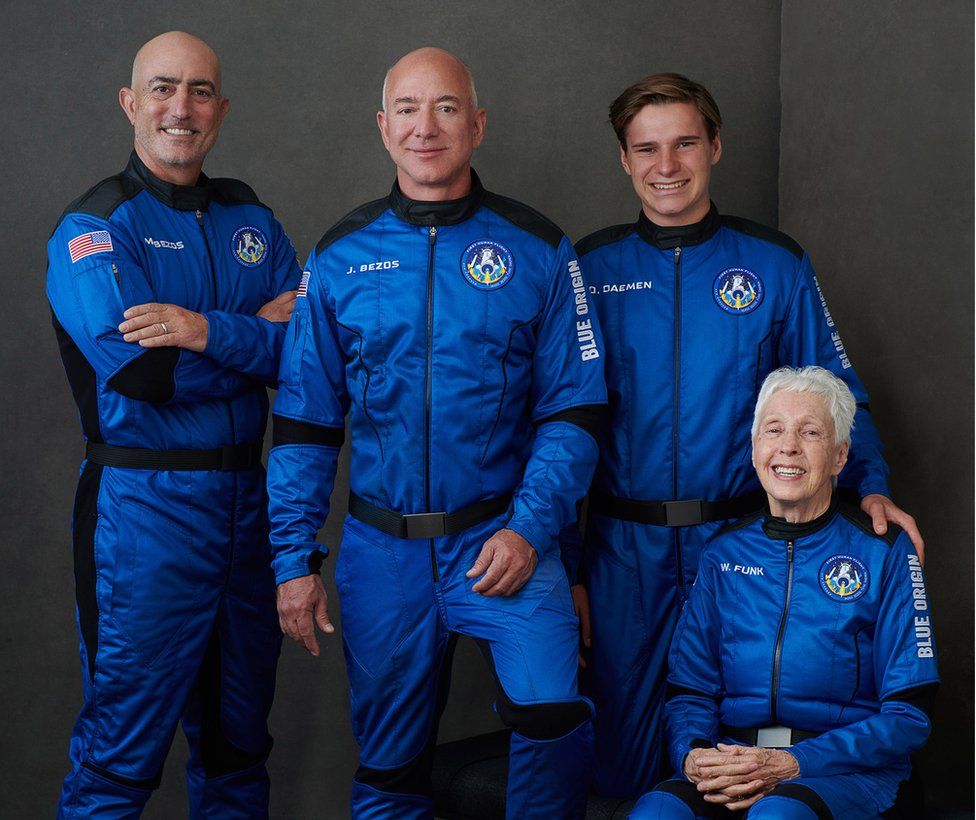
Jeff Bezos, the founder of Amazon and Blue Origin, the richest man on the planet and a lot many adjectives that are used for him – finally and quite successfully monetized space travel in the eyes of the Earthlings.
Commercial Astronaut Bezos in his maiden space voyage.
To begin with, he thanked and congratulated all earthlings for this success. He added that it was we, the people and all the employees of Amazon who had paid for it. Well, he isn’t exactly lying. And we could be thankful to him too, for he has successfully monetized space travel – something we all wanted to hear as kids – well maybe not the monetization part. But it will be this monetization that will fuel more companies to enter into the market. Elon Musk has already worked a lot on reusable space crafts, not to forget that many space agencies – the most prominent being ISRO in India are working to create cheaper means of launching cargo and satellites into space and there are many private space-based start-ups opening up too. Maybe in a decade, space travel will be accessible to at least the upper middle class across the planet.
But should we really thank Jeff Bezos? Opening space for travel opens space for greater amount of debris and maybe a push for institutions all around the world to find out ways to tackle an already existing problem. To add to that, Space travel and Musks’s goal of colonising Mars are but only more incentives to reduce budget on the environment in the long run. Sounds like a dystopian Science Fiction but history points out to the facts that when man was not bound by citizenship laws, forests and agrarian lands have gone barren only because they had options. It is this history that has pushed us towards all the environmental litigations we know of. Will we be as enthusiastic about them if Mars colonies were a reality? As Musk has himself repeatedly stressed that Earth might no longer be livable. Well, scientifically, it is livable upto another 4.5 billion years. But we, the people and the way in which we living beings influence the climate might not allow the planet to see more than 500 years from now. And we are not to be shamed about it. Our education, our governments and our media is more accountable than we are. These are the institutions that tell us what and how the world is. And unfortunately, we believe that is the way the world is.
So, should we or should we not support a scientific and technological advancement?
The answers don’t really lie with anyone. While Bezos travelled to space and Musk revolutionised reusability of the crafts, we still saw public demonstrations in South America against the change in fishing litigations, India against the allegedly anti-environment and corporate-friendly revisions in Environment Impact Assessment Law draft and in Brazil against the government’s decision to not do a lot about the Amazon fires. Humanity still loves this Earth and while in a distant future, capitalism can shame people for doing so, it is increasingly unsuccessful right now. And let us not only keep it that way, but also create ways to add to that love.
Zero to One presents at once an optimistic view of the future of progress in American and a new way of thinking about innovation. It starts by learning to ask the question that lead you to find value in unexpected places.
2. THE LEAN STARTUP
Rather than wasting time creating elaborate business plans, the lean startup offers entrepreneurs- in companies of all sizes – a way to test their vision continuously, to adopt and adjust before its too late. The author provides scientific approach to creating and managing successful startups in a age when companies need to innovate more than ever.
3. THE FOUNDERS DILEMMAS
The founder dilemmas draws on the inside stories of founders like EVAN WILLIAMS of twitter and TIM WESTERGREN of Pandora, while mining quantitative data on almost ten thousand founders.
People problems are the leading cause of failure in startups. This book offers solutions.
4. HOOKED
The author of this book provides practical insights to create user habits that stick , actionable steps for building products people love, fascinating examples from the iPhone to Twitter, Pinterest to Bible app, and many other habit forming products.
Glass ceiling is a metaphor that is used to represent invisible barrier that prevents women from reaching the highest executive levels within their respective organizations. This term was first popularized in the 80’s to describe the challenges women face when their respective careers.
The United States Federal Glass Ceiling Commission defines the glass ceiling as “the unseen, yet unbreachable barrier that keeps minorities and women from rising to the upper rungs of the corporate ladder, regardless of their qualifications or achievements”.
REASONS WHY IT STILL EXIST:
Psychological differences between men and women would be the main reason for this and it can account for up to 10 percent pay gap.
The need child care, housework and other chores outside of work depend heavily on women than on men which eventually leads them taking the back seat.
College-educated women, more often than men, avoid majors that lead to higher-earning occupations.
Women are still expected to be deferential, polite and timid.
EFFECTS:
It leads to unwanted
Stress
Self doubt
Sense of Isolation
Depression
Sadness
CRACKING THE CEILING:
However nowadays women are appointed in higher positions faster than men in high income countries, but data shows that women have still a long way to go and equalize the number of men in these roles. Also the fact that bigger the company, lesser we are to see women at the helm which has to overcome and there is a need to achieve something closer to gender balance. Raise your voice. It is you who have to stand up for yourself. Also, apart from standing up for yourself try to raise awareness and address the problem so that others can also benefit from it. One can also crack this stereotype by normalizing the practice of parental leave. A study by the Institute for Labour Market Policy Evaluation in Sweden found that a mother’s earnings increase by about 7% for each additional month her spouse takes off work. Pair that with the fact that 87% of women want men to take the parental leave available to them. Recruit equally across all levels and departments
At the end of the day, companies win when women and other underrepresented minorities are treated with fairness. When they focus on fairness and opportunity for all, everyone wins
The story of early skyscrapers begins in the late 19th and early 20th century America. Between 1884 and 1945 numerous skyscrapers were built American cities of New York City and Chicago. The two cities competed with each other with many subsequent constructions surpassing the earlier one. The growth of the skyscrapers in the 20th century American cities were mainly fueled by dynamic economic growth as the demand for various new office spaces to hold America’s expanding workforce of white-collar employees continued to grow. With better engineering and construction methods it became easier to construct taller buildings.
Flatiron Building in New York City finished its construction in June 1902. The 22 floors building was one of the first tallest skyscrapers and later in the subsequent decades even taller buildings were constructed.
But the developments of modern skyscrapers have many challenges and questions that need to be cleared. Though the growth of skyscrapers has not subsided, they are not the most ideal form of buildings. According to engineer Tim Snelson, of the design consultancy, a typical skyscraper will have at least double the carbon footprint of a 10-story building of the same floor area. This tells us that skyscrapers are not environmentally sustainable. Also, any additional methods to minimize the environmental impact will require overcoming the fight of the handicap of being a tall skyscraper in the first place. As the majority of the building is made with glass and steel frame, high-rise buildings are subject to the consequence of the substantial amount of sunlight and a lot of wind on their mostly glass skins. Glass is inherently inefficient in keeping excessive heat out of the buildings in summer or keep heat trapped in the colder months. This also leads to the reliance on continuous Air Conditioning.
The modern construction of skyscrapers in the cities of today is no longer driven purely by economic growth or the need for commercial office space, but instead, it is more driven by glamorous architecture construction and many times the dirty money gets funneled into the construction of Skyscrapers. High rises also separate people from the street and people lose a connection to nature and the outdoors. The occupants in the tall buildings are often isolated from the street of the city and meaningful contact with ground-level events is often disconnected with taller buildings.
High-rise buildings also lead to gentrification and inequality. It is no surprise that taller buildings often tend to be luxury units as the higher a building rises, it becomes more expensive to construct. This means that high rises also inflate the prices of the adjacent lands and driving out the affordable properties, thus increasing the inequality. The areas near the skyscrapers are often dark and swept under the shadow of these tall buildings.
Contrary to the popular notion, skyscrapers are not the only way to build high-density construction. The mid-rise buildings are often more able to house more amount of people per area compared to the high rises. Mid rises are also more flexible to affordable. The mid-rises can work as a good middle ground between the taller buildings and low-density buildings. Instead of blindly building taller buildings we will have to look at the construction of our future buildings that are more sustainable, affordable, and efficient.
Either Stable burning in various states accrued the air pollution in Delhi and created a gas chamber around NCR ; SC came upon a committee to observe scenario , Or 4 industries inflicting stream pollution were shut down by Maharashtra pollution board . Everybody has responsive to environmental problems as higher than . The key solution for resilience to environmental issues are provided by government in various legislations , enactments and provisions on environment laws .
In republic of India environmental law is concern with the policy and law for protection of the environment . It aims for achieving carbon free economy through taking measures for reducing climate change. All the acts under this laws are safeguards in ensuring effective management of the environment and its multiple ecosystems . It provides for preventing environmental damage .
Natural resources in the earth were unscathed from millions of years. It were remain pure until the industrialized started . After the industrialization this resources have been exploited in Spain of 100 years only . From 19th century, the environment (air , water and land ) is directly exploited by rapidly growing population at alarming-rates.
environment includes water, air and land and the inter-relationship which exists among and between water, air and land, and human beings, other living creatures, plants, microorganisms and property , as mentioned in section 2 of environmental protection Act of 1986 . Environment is a wide sphere , it consists of social, economically , political , religious dimensions .
Addressed area of environmental laws in India :
1. Quality of water : For the prevention and control of water pollution and to maintain or restore wholesomeness of water in the country the water act of 1974 was enacted. It further provides for the establishment of Boards ( CPCB and SPCB ) for the prevention and control of water pollution with a view to carry out the aforesaid purposes. This act prohibits the discharge of pollutants into water bodies beyond a given standard, it also lays down fine and penalties for non-compliance.
2. Reduction of air pollution and maintaining air quality : The Air (Prevention and Control of Pollution) Act, 1981 (the “Air Act”) is an act to provide for the prevention , protection and abatement of air pollution .It provides for establishment of Boards at the Central and State levels with a view to carrying out the aforesaid purposes.
3. Hazardous Waste management : legislations that directly or indirectly deal with hazardous waste management are the Factories Act, 1948, the Public Liability Insurance Act, 1991, the National Environment Tribunal Act, 1995 and rules and notifications under the Environmental Act.
4. Containment cleanup, damage mitigation : preventing future damage to the environment is undeniably the primary objective of environmental law, mitigating and reducing existing damage is also important. This area most often deals with issues like toxic leaks and oil spills. The central objective of this branch of environmental law is deciding liability, planning an appropriate response, and also determining the best process of investigation and monitoring in the overall clean up process. This area also concerns itself with the study and assessment of risk in the long term, to better mitigate any future accidents and risks.
5. Sustainability of resources : United Nations has put great emphasis on ensuring the sustainability of resources. For this vision , it has advocated the formation of various legal principles and legislation. In this regards concept of environmental impact assessment introduced .
Noble legislations and enactments on environment law in India :
Laws on Forest and wild life protection: • The Indian Forest Act, 1927 ; The Wildlife Protection Act, 1972; The Forest (Conservation) Act, 1980 ; The Environment (Protection) Act, 1986; The National Green Tribunal Act, 2010.
Laws on Water pollution : • The Water (Prevention and Control of Pollution) Act, 1974.
Laws on air pollution : • The Air (Prevention and Control of Pollution) Act, 1981 (the “Air Act”)
Laws on hazardous waste management : • Biomedical Waste (Management and Handling) Rules, 1998 ; Municipal Solid Wastes (Management and Handling) Rules, 2000 ; Batteries (Management & Handling) Rules, 2001 ; Hazardous Wastes (Management, Handling and Transboundary) Rules, 2008 ; E – Waste (Management and Handling) Rules, 2011 . Laws on wetlands
•Ramsar convention (1971) : This convention was initiated to push for greater conservation and sustainable use of wetlands ; Wetlands (Conservation and Management) Rules, 2017. Constitutional provisions on environment laws
• Part IVA (Art 51A-Fundamental Duties) of the constitution casts a duty on every citizen of India to protect and improve the natural environment including forests, lakes, rivers and wildlife, and to have compassion for living creatures.
• the Constitution of India under Part IV (Art 48A-Directive Principles of State Policies) stipulates that the State shall endeavour to protect and improve the environment and to safeguard the forests and wildlife of the country.
environment makes human life possible, and our cultural environment helps define who we are. It is therefore essential that our population and economic growth are environmentally sustainable.
US. Secretary of State An- thony Blinken is expected to make his first visit to India “very soon”, sources said, indicating that planning for the visit is under way for a meeting as early as next week. “The dates are still being fnalised,” an ofcial told The Hindu, confrming the visit, while another ofcial said meetings were being scheduled in New Delhi at the “end of July”. Mr. Blinken’s visit is ex- pected to prepare the way for the Quad summit and bi- lateral meetings between Prime Minister Narendra Modi and U.S. President Jo- seph Biden due to be held in Washington later this year, and is also expected to dis- cuss the emerging situation in Afghanistan, including Taliban advances after the U.S. troop pull-out with In- dian ofcials. Mr. Blinken’s proposed visit, which is yet to be announced, could coincide with the 3-day visit of Afghanistan Army Chief Lt. Gen. Wali Mohammad Ahmadzai to Delhi. India and the U.S. have a wide array of bilateral rela- tions to discuss and Mr. Bi- den has made it clear that the America’s Indo-Pacifc strategy that includes India is an area of importance, particularly given increasing tensions between the U.S. and China. India and the U.S. have pending talks on a free trade agreement and India’s de- mand for a restoration of its GSP status for exports, res- cinded by the previous Trump administration, and the two sides will discuss improving economic, de- fence, energy cooperation, and cooperation on coun- tering COVID-19. The U.S.’s Quad initiative to produce a billion vaccines is based on Indian production.
In today’s technology driven world, people are turning towards less harmful modes of electricity. For many years now, solar power, hydro power, and wind energy have been the main source of electricity across the globe. But now more advanced technology is known to the world and it is being used to create more effective methods. Scientists and engineers are devising methods to create such sources of energy which will reduce the use of conventional resources furthermore. Solar water pumps are another product of that technology. Many people are already enjoying its benefits. Why aren’t you? Are you searching for the best one? We are here to guide you through the whole of it. At the end of this, you will be able to choose the best solar water pump there is and you can enjoy it too.
What to Look For in a “Solar Water Pump”
Efficiency – Efficiency is the most critical factor to check in the solar water pump. The pump should provide great efficiency to work properly.
Flow rate – Flow rate defines how fast the water will flow through the pump. More the flow rate, the better. You must remember that the ideal instantaneous water flow rate of a pump must be equal to one-third of its daily consumption.
Head – The head of the pump represents the increase in energy accumulated by 1 liter of water. It is also an important factor to consider as it may reduce pressure loss.
Power – The power of the solar water pump should be considered properly. It depends on the conversion of solar energy into electrical energy.
Speed – Speed is the number of revolutions taken by the pump in a specific interval of time. You need to make sure that you have a high speed pump available.
NPSH (Net Positive Suction Head) – Net Positive Suction Head is the main factor to keep in mind while buying a solar water pump. It indicates its inability to create absolute volume.
Raw material – You need to check the raw material used to make the solar water pump. It plays an important role in defining the lifetime of the pump. If the pump is made from weak raw materials, it will not last long and will cost you more for maintenance.
Quality – Quality is the first and most important factor you keep in mind while buying anything so it applies to solar water pumps too. The quality of a pump varies from company to company and is different for different manufacturers.
Size – The size of the pump should also be considered before buying it. It depends on your preference where you want to install the pump or for what purpose you are going to use it.
What do we mean by Solar Water Pump and how does it work?
Solar Water Pumps are also called Solar Photovoltaic Water pumping systems. They are designed like the old, traditional water pumps. But the difference is that they are powered by solar energy instead of fossil fuels.
There are several purposes for using a solar water pump. Some of them are listed below:
For pumping water for livestock
Providing water for farms and residential areas
For pumping water for crops and irrigation
Providing water supply for general need in households
May be used for water treatment
For pumping fluids across a long distance
And of course, sunlight is free and abundant and water is essential for all living beings. So why not put it to use?
Are they worth it over other conventional options?
Yes, the solar water pumps are worth more than the other conventional options. The main reason is that they are more eco-friendly as compared to the fossil fuels burning for electricity.
Should you just DIY a Solar Water Pump
If you want to experiment with your skills and have much free time on your hands, then you can make a DIY solar water pump at your home. Some of the crucial information you will need to do that is given below:
Main Components of Solar Water Pump
Solar Cell Module – Solar power generating device that directly converts solar energy into electrical energy.
Solar Pump Inverter – most important equipment of the photovoltaic system. It controls and regulates the operation of the whole system.
Water pump, pipeline, and reservoir – To pump, deliver and store water
Typical Design ofSolar Water Pump
Model selection process
Confirm head and flow rate of the pump
Confirm solar panel capacity
Confirm the power of the water pump
Confirm the inverter
Selection of cable specification
Obtain user demand – Daily water demands, the diameter of the well, depth of the well, area to irrigate, average sunshine daily in the area.
Some Specifications of Solar Water Pumps
Head: 110m
Flow: 1000/(300*0.8*3.5)= 1.19 m3/h
Pump selection: pump motor power 1.5kW, flow 1.2m3/H, head 115m
1.5KW water pump is equipped with 2.2KW solar pump inverter
The working voltage of the solar pump inverter is 200V-360V.
Steps of Construction
Step 1: Find a perfect location
Before building a solar water pump, the most important requirement is finding a perfect location where you want to lace the water pump. So go on the search right away and get back here to start building your solar water pump.
Step 2: Choose the size
The size of the pump is the main factor to look after while building a solar water pump. It is going to affect the amount of water that can be pulled from a water source. For this, you can use a power cord or simply install a solar panel for reducing any further costs.
Step 3: Assemble the pump
Assembling the main unit of the pump will be a tiresome job. But it can be easily done by following the instruction manual provided to you with the components of the pump. After you are done assembling the pump, move on to the next step.
Step 4: Add the solar panel
Now you are building a solar water pump all by yourself, which means you need to keep a check on your budget. So to ensure that you should install a solar panel instead of a power cord. Choose your solar panel properly. It should be large because you want to absorb as much sunlight as you can. In addition, place it at a proper angle, preferably facing the east or west to absorb light effectively during the day.
After installing the solar panel, attach it to the main unit of the pump so that you don’t have to use a power cord.
Step 5: Cover the pump
The last important step you need to follow is to cover the pump so that it is not visible as it may not look good in the middle of the garden. If you don’t want it as decor then consider hiding it in a corner.
Step 6: Modify the pump
A solar water pump will be a feast to the eyes in the garden. To decorate it you can add some flowers, some tree leaves, or other things you want it to design it with. You can be creative and make an excellent piece of decor for your garden or pool in the backyard.
That’s it. You are done. In just these 6 simple steps you will have a perfect homemade solar water pump. You can use it to decorate your garden or place it in a pool.
Pros and Cons of Solar Water Pumps
If you are not sure how to decide about the solar water pumps, check out the listed advantages and disadvantages of the same. You will get a proper image of what to look for in a solar water pump before buying. These will help to change your mind about your preference or maybe make you sure of what you want.
Advantages
Zero fuel cost – Solar water pumps are powered by solar energy so it does not require fuels to operate. Fuel adds a significant cost to the cost of the whole solar water pump system.
Installation costs only – Once you install the solar water pump system, then it only requires sunlight. That means after installation it is free.
Less labor and maintenance – Solar water pumps require very little labor to operate properly. It also does not require much maintenance. In addition, it reduces the time taken to irrigate the farm.
Environment friendly – They are sustainable and use non conventional energy sources.
Disadvantages
Can’t pump when it’s dark – However great solar water pumps are but they do need sunlight to operate. So this is the biggest disadvantage of them. They can’t operate when it’s dark.
High upfront costs – This may be the reason why it is not much use for the farmers because it is not as easily affordable.
Frequently Asked Questions
Here are some of the important frequently asked questions about solar water pumps.
How does a solar water pump work?
It works like any other water pump. The only difference is that it is operated by sunlight.
What is the use of solar water pumps?
A solar water pump is useful in irrigation for farms and for extracting water from wells and ponds.
What are the different types of solar water pumps?
There are several types of solar water pumps:
Submersible pump
Surface pumps
DC pumps
AC pumps
Can a solar water pump be relocated?
The system once installed can be relocated but it is not recommended. The process is expensive and can cause severe damage to the system.
Taxes are those compulsory financial charges or some other type of levy imposed on a taxpayer by a governmental organization in order to fund government spending and various public expenditures. Everyone who is of a certain pay grade and receiving a certain amount of income has to pay taxes, and even corporations have to pay a certain amount of money in the form of taxes. Hence, there are various types of taxes that must be paid as a financial obligation to the government, to help in defraying government expenses for public welfare. The money given in the form of taxes are meant to be put to productive use, thereby benefitting all those people who have given tax in the first place. However, nowadays we can observe the trend of inequitable taxing in many countries, as the rich are getting away with tax avoidance while ordinary middle class and working-class people are being taxed unreasonably. Failure to pay taxes, as well as tax evasion/avoidance is punishable by law, but many rich people get away with these activities.
The Main Reason
While regular working-class people get paid wages and salary as their income, the rich do not get paid any such fixed remuneration. People with normal jobs get a pay check and pay income tax, ranging from 10-37%. However, wealthy people mainly have capital income, meaning they earn from investments like stocks and real estate. These investments are taxed as capital gains tax, and things like long-term stock have a maximum tax rate of only 20%. Thus, the capital gains tax is taxed at nearly half the rate as income tax. It is clear that there is a large discrepancy in taxation here. This is evidenced by the fact that a billionaire like Warren Buffet has said that he pays less tax than even his secretary.
Hence, billionaires often face small and insubstantial tax amounts in comparison to what they are earning, and the main reason for these small tax rates is the fact that these people maintain their wealth differently than ordinary people. Their wealth is not being held in their wallets or in their bank accounts. Instead, it is being held in assets like stocks and real estate, which are only taxed when sold. Until then, they are considered ‘unrealized’ and cannot be counted as income. Even when they are sold, the capital gains tax that applies is minimal.
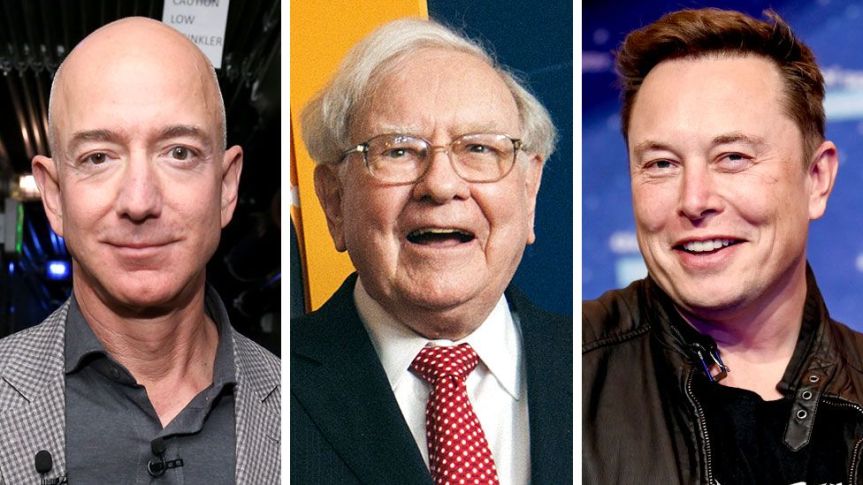
People like Warren Buffet and Jeff Bezos are worth so much money because of the stock they hold, but these stocks are not tangible, spendable or taxable money. This allows them to preserve their wealth effectively, and protect it from excessive taxation. Jeff Bezos, the richest man in the world, pays almost nothing in taxes because his holdings are not defined by U.S. laws as taxable income unless and until he sells them. So, even though he is worth around $200 billion, he is never taxed unless he sells a stock and turns it into real money. This is why we say billionaires are worth so much, but almost never have to pay taxes.
Conclusion
The reality is that most rich people today do not pay taxes proportionate to their wealth or earnings. It is definitely a problem if wealthy people are not paying their fair share of taxes while normal people are bearing the burden of taxation. Such taxation systems allow the rich to keep getting richer without any real consequence, while everyone else is limited from increasing their financial position due to high tax obligations. To solve this, maybe taxes could be imposed on wealth, or on gains in the stock market. Wealth is the value of the things you own, such as stocks, bonds, houses, etc. Generally, there is no tax on wealth, but it should be implemented as a means of more justified taxation. Even things like increasing the income tax of those at the top, or increasing estate tax will help in taxing the rich more. Basically, taxation must become proportionate to wealth so as to keep a check on the rich, while staying fair to the people working normal jobs.
Cooperatives play an important role in the growth of a country, although they are rarely the focus of policy planning.
According to the government, the formation of a new Union Ministry to manage the cooperatives sector will save it from neglect.
Cooperatives aren’t supposed to follow the market logic of maximising profits, but rather to evenly distribute the advantages to all stakeholders.
Cooperatives have made major contributions to poverty alleviation, food security, natural resource management, and environmental protection in India, albeit they are not consistent.
True, the sector has devolved into a tool of favouritism and plunder. In several states, mismanagement and corruption ruined the sector.
Cooperatives are effective at mediating politics at the local level, outside of the parliamentary system, in addition to helping localities and segments that markets may overlook.
As market conditions change, cooperatives in states like Kerala have expanded their businesses to include IT parks and medical schools.
More expansion opportunities, such as insurance, remain untapped, and the regulatory framework must keep pace.
Because cooperatives are on the Constitution’s State List, the Centre will have to come up with new ways to ensure the new Ministry’s legal validity.
However, the sector’s distributed capacity can be marshalled by a different Ministry.
Conclusion-The need for greater openness and efficiency in the sector is compelling; yet, this goal must be pursued not by terrifying the industry’s very soul, but by fostering a cooperative spirit.
Netflix started in its second-quarter earnings report on Tuesday that its early gaming efforts will be centered on mobile games and that the games will be included with customers’ Netflix subscriptions. The news comes just days after the firm announced the hiring of Mike Verdu, a former EA, and Oculus executive, to lead its gaming efforts.
From Netflix’s letter to investors, here’s what it said about gaming:
We’re also in the early phases of extending into games, drawing on our previous interactive initiatives (e.g., Black Mirror Bandersnatch) and Stranger Things games. We see gaming as a new content category for us, in the same way, that we’ve expanded into original films, animation, and unscripted television. Games, like films and shows, will be included in customers’ Netflix subscriptions at no additional cost. We’ll start by concentrating on games for mobile devices. We’re as thrilled as ever about our movie and TV series offerings, and we foresee a long runway of increased investment and growth across all of our existing content categories, but now that we’ve been at it for almost a decade, we believe it’s time to learn more about how our members value gaming.
Although Netflix just expanded its TV contract with Shonda Rhimes to include feature films and gaming content, there are still no indications on what sorts of games would be accessible. There’s also no indication of how Netflix subscribers will get their games.
In the past, the business has admitted that it competes for time and attention with games, with co-CEO Reed Hastings stating in 2019 that “we compete with (and lose to) Fortnite more than HBO.” In April, as part of the company’s first-quarter reporting, COO Greg Peters mentioned the interest of the company in gaming (PDF). And with games like Black Mirror: Bandersnatch and Carmen Sandiego, the firm has already dabbled with gaming.
However, it appears like Netflix is now more interested in gaming than ever, with the recent appointment of Verdu and the fresh details revealed Tuesday about its first intentions.
Before we get into the details about marketing on Twitter and Instagram, let us learn quickly about some of the key features of both Twitter as well as Instagram. Twitter was launched in 2006 whereas Instagram was founded in 2010. As of 2020, there are 1.3 billion twitter accounts out of which only 330 million are monthly active users globally whereas there are 1.2 billion Instagram accounts out of which 1 billion are monthly active users globally.
About 293 million Instagram users are aged between 15 and 24 and 338 million users are aged between 25 and 34. Talking about Twitter, 80% of its global population is below 50 years old. Twitter ranks slightly behind Instagram when it comes to users 60+ users.
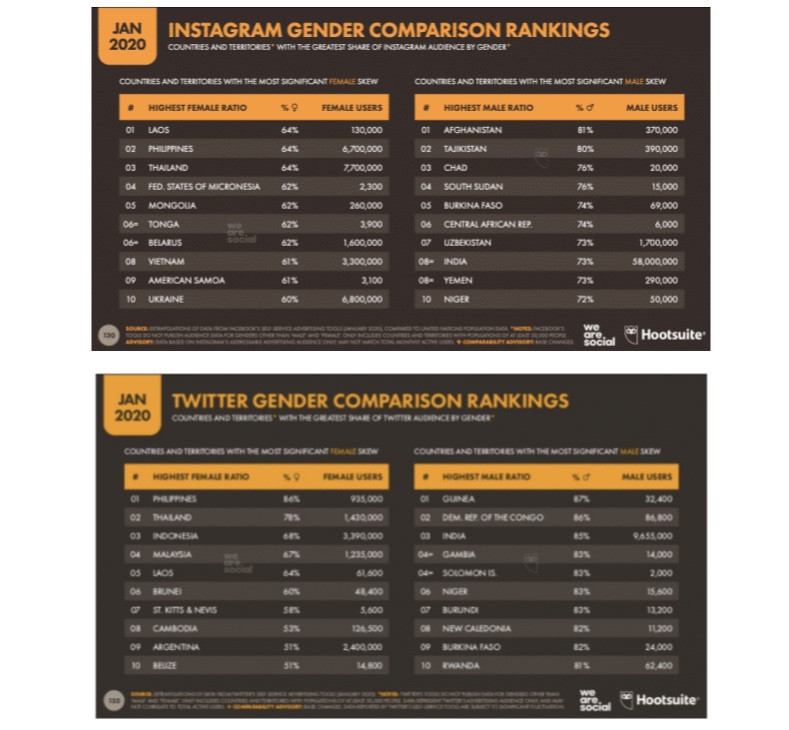
When it comes to the worldwide gender split, about 51% of Instagram users are female and 49% are male and when we talk about Twitter 62% are male and 38% are female. 85% of India’s Twitter audience is male, ranking the country third highest for male-to-female ratio.
With the help of the above graphs, we come to know that Laos has highest female ratio when it comes to Instagram and for Twitter its Philippines with highest female ratio.
1. USER ENGAGEMENT REACH
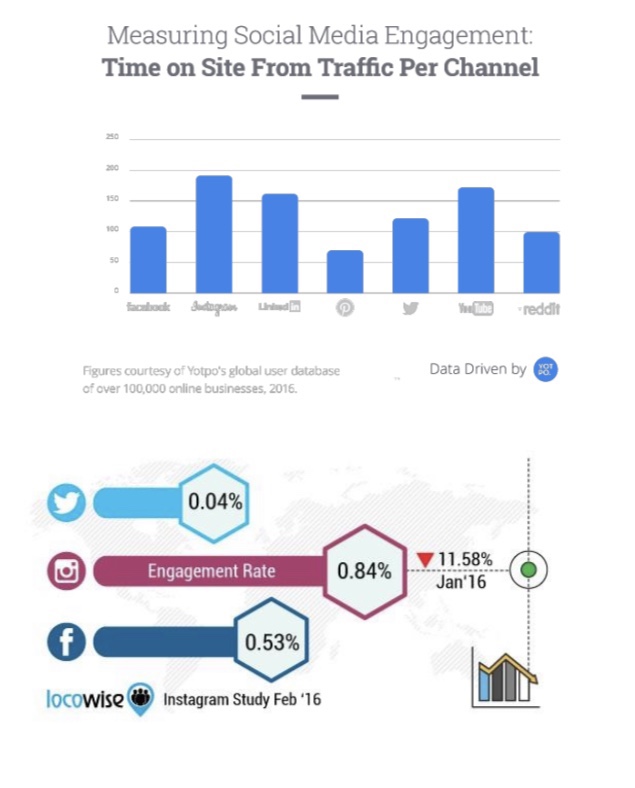
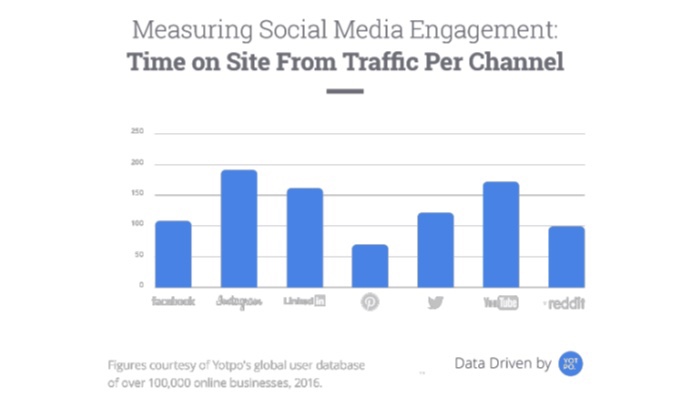
One of the commonality between Instagram and Twitter is that maximum of their active users are aged between 18 and 29. And if a business is looking for a young audience, then surely it has to select both Instagram and Twitter. From the above two graphs, it is quite evident that user traffic is much higher on Instagram than any other platform. However, it is important to note that maximum Twitter users are inactive and Instagram users are mostly active with over 500 million people using Instagram daily whereas only 330 million Twitter users are active monthly. So if a new business wants to enter the market and wants easy and quick promotion, Instagram is a better option any day.
2. Sales
Instagram has separate business profiles specifically for collaborations and business deals. Email, contact number can be directly attached on profiles whereas same does not happen with Twitter. Another important characteristic where Instagram leads over Twitter is its “Trackable” feature. Sales and Leads can be tracked through Instagram Advertisements and hence we can see clear Return on Investment.
According to Shopify, an e-commerce platform, average price tag for a sale referred from Instagram is $65 and it is $55 for Facebook and $46 for Twitter. With Instagram settings, we can link our profile to other social media accounts such as Facebook and Twitter but the same is not possible with Twitter and this can indirectly help in increasing sales.
Instagram being a more visual platform with variety of formats available is doing better than Twitter in driving sales. In the graph below, it is found that traffic on Instagram is more than Twitter. So it is obvious, Instagram is ahead of Twitter when it comes to generating sales.
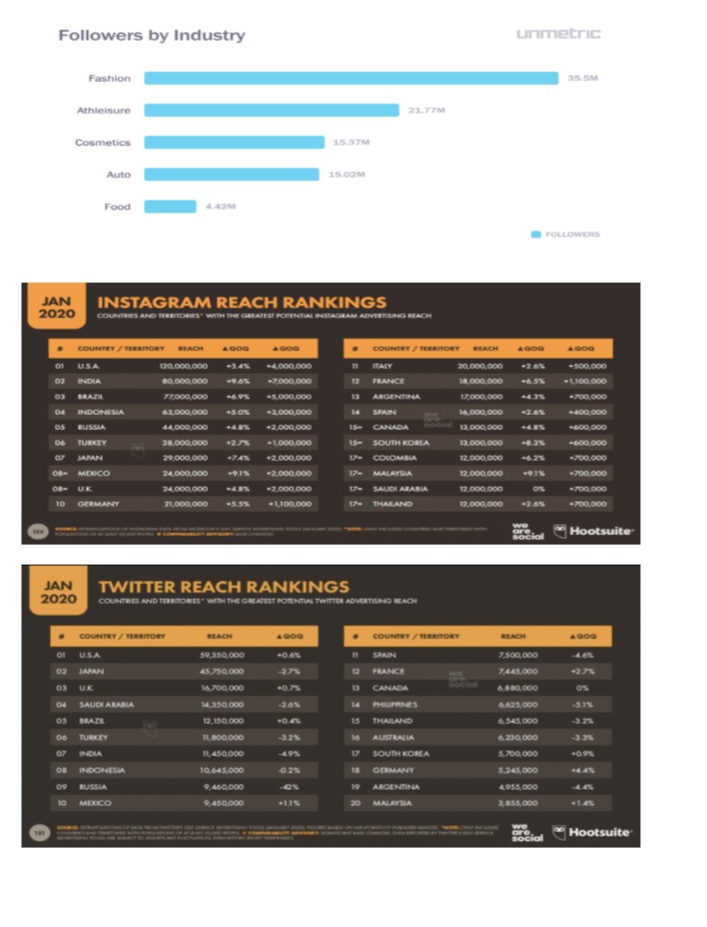
It is also important to note that Sales on social media platforms also depend on the country and the business field one is in. After analysing the below three graphs, we will be able to understand that it is better to avoid using any of these applications for our business if our target audience is not into these fields and countries.
3) Return on Investment
Providing a link on our Instagram bio can fetch a lot of traffic and doing the same on our Tweets would also increase our traffic. Making good investment on Instagram sponsor advertisements and Twitter advertisement also increases our user traffic dramatically as Twitter shows our advertisements on “TRENDS” while Instagram shows our advertisements on stories. Mostly, influencers prefer Instagram over any other platform since it is easy to handle and even users like Instagram posts as compared to other formats. And at the end all a business wants to do is to increase sales and earn profits. This is possible more on Instagram due to its unique yet diverse formats, high user engagement and efficient promotional techniques, so definitely ROI is bound to be more in Instagram than on Twitter.
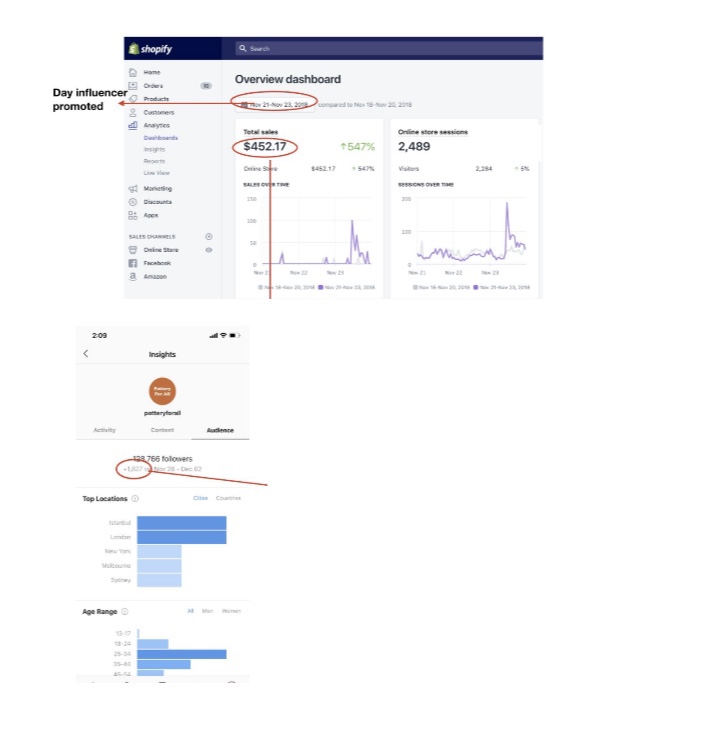
Also, as mentioned before, Instagram Business profiles provide each and every detail about insights, engagements, and sales and as a result it gives better information regarding ROI in comparison to Twitter. Two examples of Sales Tracking, User Enagagement and ROI information are given below.
Conclusion: Both Instagram and Twitter are doing well when it comes to marketing strategy and business. If we talk about situation half a decade ago, Twitter was leading but in 2020, Instagram is unbeatable winner. Growth of the business also depends on the industry, for example fashion industry will do better on Instagram while News Industry will do better on Twitter.




















 Eduindex
You must be logged in to post a comment.