Every individua ‘s life and work are closely related to his environment . Man has progressed in various fields of life such as industrialisation , mechanisation, transport and science, etc. Therefore, this age is called an electronic age or space age. But on the other hand, this development has created such conditions that a person may get injured anywhere and at anytime.
In spite of good measures aimed at industrial safety and the development of safety devices and techniques, the number of accidents is still high in industries and specially in day to day life. Indeed, there is no definite time of such injuries. These can happen to anyone, anywhere and at anytime. Injuries usually occur in industries and on the farm, during the repair, maintenance and operation of vehicles of various kinds, during games and sports and in various situations everyday. These often happen by accident, so it is impossible to anticipate the time and place of an accident. Someone may get fractured, another may be bitten by snake. So, it can be said that every individual is trapped in one way or the other by accidents. In fact, it is very difficult ton get medical aid to victims at the sport of the accident. At that moment, some immediate possible aid is required to the victim. So, first aid is the first help which is given to the wounded or accidental victims before the arrival of the doctor.
In other words, ” It is an immediate and temporary care given to a victim of an accident or sudden illness before the services of a physician is obtained.”
In can also be said that first aid is that aid is that aid which is provided to the injured in case of an accident, injury or sudden illness. It enables the trained persons to render the help to preserve life, promote recovery of the injury until the arrival of the doctor.
In fact, the area of field of sports and games is such a field, where getting injured is very common. Any player can be injured at least once during his/her sports career. The facilities of a qualified doctor are available in national or international level competitions but usually such facilities or services of a doctor are not available during practice, training or competitions of normal levels. The teacher of health and physical education should also have enough knowledge of first aid so that he may provide first aid to the players at the time of training and competitions.
Color is a communicator. It has a language all its own that we utilize, and culturally participate with, on a daily basis. Color can inspire moods from outside in interior designers and decorators know this. To initiate color choices, color professionals.Mere color,unspoiled by meaning,and unallied with definite form, can speak to the soul in a thousand different ways.
It is used effectively color theory is one of the most powerful tools a designer can wield. Colors are a form of non verbal communication that can speak volumes in a fraction of second. They can instantly set a mood,convey an emotion,invoke a physiological reaction or inspire people to take action.when we harness the right color emotion to help tell a client’s story it can have a powerful effect. Below is a list of PMS colors and their associated moods.
Red :
Evokes strong emotions like passion or intensity, encourages appetite,symbolizes love and danger, Eyes look to red first, it draws attemtion,creates movement and exctiment, Too much red however,feels hostile. Use to stimulate quick decision making, shows to increase respiration rate ,raise blood pressure and enhance metabolism.
Yellow :
A spontaneous yet unstable color, associated with joy, intellect , energy, happiness, and food. Use to attract attention. When overused it can have a disturbing effects, studies have shown that babies cry more in yellow rooms. Cherrful, warm and symbolizes energy and increases metabolism. Yellow also causes the brain to seretonin, giving one a feeling of optismism . That is all well are good but if used wrongly on a brands graphics and especially on a website, and can strain eyes and cause eye fatigue.
Blue :
Number one color preferred by males. Symbolizes trust, loyality, wisdom, confidence, intelligence, faith, truth. Use to promote cleaniness, stability and hi tech products. Shown to supress ones appetite and stimulate productivity.
Orange :
Highly accepted among the younger generation. Associated with tascination, creativity, determination, attraction, encouragement and stimualtion. Effective in promoting food products by stimulating, appetite. Increases oxygen to the brain amd stimulates mental activity.
Green :
The color of nature that involves a healing power. Symbolizes grown relaxation, harmony, freshness and fertility. Use to promote saftey and tranqullity. Stimulates harmony in the brain promoting balance between body and mind.
White :
A depiction of faith and purity. Associated with safety and cleanliness. Use to suggest simplicity and sterlitity in products. Acts as a clean state and helps to promote creativity.
Purple :
The color of royality. Associated with luxury, ambition, wisdom, dignity, independence, creativity and magic. Use when marketing toys to children. Surveys taken have shown that 3/4 of childen prefer that color purple.
Black :
A mysterious yet authoritative color, associated with elegance, formality, fear, death and evil. Use behind bright colors to make them pop. Know to create a slimming effect when worn.
Gray :
Gray is the perfect neutral to work with in a graphics environments and has less reflection than white. Evokes a sense of professionalism and calm. Seen a sleek and high-end and gives one a sense of stability. Too much evokes a feeling of aging, depression and loss.
Pink :
A calming and warm color that evokes love and romance. Pink is a clean and feminine color. Recently however, there has been a backlash against is overuse in product packaging, giving rise to the term ” pink- washed”.
Color Harmony :
Color is similar to musical notes in many ways, and there are certain combinations of colors that are pleasing when put together, approximately called color chords or color Harmonies.
Complementary :
Colors that are opposite of each other on the color wheel are called complementary colors. The high contrast between complementary colors when seen together causes them to stand out more and has a very vibrant look, but can be tricky to use in large doses without being too intense.
Split- Complementary:
Split – complementary is a variation on complementary. It uses one color and the two adjacement colors to its complement to bring the same strong contrast as complementary color combinations,but with less tension.
Analogous :
Using colors next to each other on the color wheel tend to give designs a feeling of unity and serenity. Because these colors are similar in hue, having constrating values is important when using analogous combinations to keep colors distinct from each other.
Triadic :
Triadic combinations are made with three colors located equal distance from each other on the color wheel, such as red, yellow, and blue making a triangular pattern. This harmony has a tendency to be vibrant despite satuartion, and is often more impacting when one color is used more than the others.
” We do not believe in anarchy in material production and we do not believe in anarchy in human reproduction . Man must control nature and he must control his number “
Population of the world has been consistently increasing especially after world war II . In demographic terms ,the world is experiencing a period of population explosion . Population itself is not a problem . Qualitatively good population with manageable size , represents the strength of a nation but if the size becomes unmanageable, the same population invites unwanted problems . It not only halts economic progress but also innumerable challenges to the social system .
The Governing Council of The United Nations Development Programme established , ” World Population Day ” an annual event, observed on July 11 every year in 1989 , to seek and raise awareness of global population issues .
World Population Day aims to increase people’s awareness on various population issues such as the importance of family planning, gender equality, poverty, maternal health and human rights
History :-
World Population Day was established by the United Nations in 1989. It was inspired by the public interest in Five Billion Day on July 11 in 1987, the approximate date on which the world’s population reached five billion people.
A resolution was passed on July 11, 1990 by the United Nations General Assembly (UNGA) deciding to continue observing World Population Day every year to enhance awareness about population issues, including their relations to the environment.
Theme , 2021
The theme is organised by the Population Division of the United Nations Department of Economic and Social Affairs (DESA).
The theme for World Population Day 2021 is “Rights and Choices are the Answer: Whether baby boom or bust, the solution to shifting fertility rates lies in prioritising all people’s reproductive health and rights.”
This year’s theme raises awareness about ‘the impact of the Covid-19 pandemic on fertility i.e on sexual and reproductive health and reproductive behaviour globally.
Significance of World Population Day
World Population Day is observed every year with the aim of highlighting the unwanted problems created by overpopulation as well as raising awareness about the harmful effects of overpopulation in an ecosystem.
Through this great awareness celebration, people are encouraged to take part in the event to know about population issues like importance of family planning towards the increasing population, gender equality, maternal and baby health, poverty, human rights, right to health, sexuality education, use of contraceptives and safety measures like condoms, reproductive health, adolescent pregnancy, girl child education, child marriage, sexually transmitted infections, etc.
Sexuality related issues are very necessary to solve among youth, especially those between 15 to 19 years of age.
This year the significance of World Population Day is about how a pandemic has compromised health care systems particularly in the area of sexual and reproductive health.
The World Population Day also spread awareness about gender-based inequities.
According to UNFPA research in March, an estimated 12 million women experienced disruptions to family planning services.
Gender-based violence as well as the sharp rise of unplanned pregnancies has increased under lockdown. The condition of the women didn’t change any better this pandemic , they are being exploited by restricting their freedom of taking decisions . Despite being empowered educationally, economically and politically women are not allowed to exercise choice over their bodies and fertility.
UNFPA lays out joint health service programmes to educate people about the fertility and reproductive health service and advises against policy which can be extremely harmful and violate rights, health and choices aiming particularly for women education regarding health service and choices.
Population growth
” No social problem is beyond human control and solution “.
The actual measure of the real problem of overpopulation has been superlatively seen during the present days of the Covid-19 pandemic.
The world population is continuously increasing . Several nations of the world are gripped by the problem of overpopulation .
The unsustainable population growth and lack of access to reproductive health care also puts pressure on human communities, reducing the facilities to save life at risk during this pandemic and making it harder for the most vulnerable communities to come out of this death threatening time .
About 95% of World population growth is occurring in developing countries. One/ third of the world’s population is under 15 and will soon enter the reproduction bracket , giving more potential for population growth . The UNFPA estimates that the world population is most likely to nearly double to 10 billion people in 2050 , peaking at 11.6 billion reaching 20.7 billion a century later . World population is currently growing at 176 people per minute .
The world population is indeed increasing at an alarming rate . This speedy growth of population is one the greatest obstacles to the economic and social advancement of the majority of people in the underdeveloped world.
“Population growth is the primary source of environmental damage.” – Jacques Yves Cousteau
Overpopulation brings down per capita income and national income , bringing down the standard of living of the people . It becomes difficult to face the challenges of poverty , unemployment and underemployment .
Celebration :-
Every year, on World Population Day , various events and activities are organized, mostly in schools and colleges like seminar discussions, educational information sessions, and essay competitions to draw attention to the issues of the growing population. They also talk about family planning, poverty, gender equality, maternal health, and human rights, and also the health issues faced by childbearing women.
The pandemic has wreaked a devastating toll on this generation. UNFPA and other United Nations agencies and civil society stakeholders are practicing programs to improve health care and social services,
There are several programs. providing detailed knowledge about sexuality and delaying marriages till they become able to understand their responsibilities , educating youths to avoid unwanted pregnancies by using reasonable and youth friendly measures.
A serious problem like “the population explosion ” requires immediate solution . Though it cannot be solved by an act of legislation or by the Presidential promulgation ,it can very well be handled skillfully and efficiently by creating general social awareness. Hence as a member of society it’s our duty to provide a lasting solution to this problem.
Etiquette refers to correct manners and behaviour in a formal eating scenario in the world of dining. Making a positive impression at both lunch/dinner interviews and social business scenarios requires proper manners. The following tips can help you stand out as a polished professional, even if common sense is frequently your greatest guide.
SOCIAL HOUR
The objective of reception or sociable hours is usually to network for jobs and entertain clients. Follow the majority of people in the room’s lead and the following fundamental guidelines:
At least one hand should be free. If you’re standing, always use one hand to hold a drink or food; never use both. Hold a drink in your left hand so you have a dry hand to provide a solid but not crushing handshake.
You can eat and drink while sitting, but standing and greeting is usually preferable.
Maintain strong eye contact. Don’t forget to greet the host/hostess and refrain from interrupting discussions.
Approaching two individuals who are deep in discussion is not a good idea. Wait until there is a pause in the conversation to introduce yourself. To join the conversation, look for visual signals.
Make eye contact with the other person. Inquire about people’s backgrounds and occupations.
Always provide your contact information and be aware of when it is time to go. Move on to the next group or person, follow up with prospective contacts, and assimilate new information.
Maintain a professional and courteous tone throughout your discussions. In certain situations, stay away from contentious topics like politics, religion, and sports. Make an effort not to take over the conversation.
ARRIVAL OR SITTING DOWN
Arrive on time, and if you know you’ll be late, phone ahead.
Bags, handbags, sunglasses, mobile phones, and briefcases should not be placed on the table.
Maintain correct posture and keep your elbows away from the table.
Wait 15 minutes before phoning to inquire about your dinner companions’ arrival status.
When meeting someone get up if you are seated, smile and extend your hand, that handshake should last for 3-4 seconds.
Men are expected to help ladies with their chairs, but this does not always happen; at luxury establishments, wait staff may provide assistance.
Take your napkin, fold it in half, and lay it on your lap once seated.
TABLE SETTING AND USAGE OF NAPKIN
When faced with a variety of dining utensils, keep in mind the rule of thumb of starting on the outside and working your way in. If you have two forks, for example, start with the fork on the exterior.
Never converse with your cutlery and never make a fist with a utensil.
When you’re not using the utensils, place them on your plate rather than on the table.
Following your host’s lead, you should place your napkin on your lap shortly after sitting down at the table. The end of the napkin on your legs should be folded inwards.
Throughout the meal, the napkin should be kept on your lap. If you leave the table, place your napkin on your chair as an indicator to the waiter that you will be back or to the left of your plate after the meal which signifies the meal is over and you are done.
BEING SERVED AND PLACING AN ORDER
1. Unless your host urges you to, do not order the most costly item on the menu, appetisers, or dessert. Even if the interviewer orders alcohol, it is better not to order it; nevertheless, if alcohol is taken, it should be drunk in moderation.
2. Ordering things that are messy or difficult to consume is not a good idea (i.e. spaghetti, French onion soup).
3. Before you begin, wait until everyone has been served, unless the person who hasn’t been served urges you to do so.
BE AWARE OF DIFFERENT TYPES OF EATING
Continental or European Style: Use the right hand to cut the food and the left hand to hold it while cutting and eating.
American Style: Use the right hand to cut the food and the left hand to hold it, then swap hands to eat with the right hand.
WHILE EATING
While eating Slowly chew your food and take only a few tiny nibbles at a time.
Chew with your mouth closed and avoid talking while eating.
Bread should be ripped into little pieces and just a few tastes of butter should be consumed at a time. Bread should not be sliced with a knife or eaten whole.
Instead of blowing on your soup, gently stir it to chill it. Take a spoonful of soup and move it away from you.
It is not necessary for you to clean your plate. Leaving some food on your plate is considered courteous.
AFTER YOU’VE COMPLETED
1.When you’re done, don’t stack or push your dishes away; instead, leave them in the same position.
2. Place your fork and knife diagonally across the plate, side by side, with the fork and knife pointing at 10:00 and 4:00 on a clock face, respectively. This indicates to the wait staff that you have completed your meal.
3. In most cases, the individual who begins the dinner pays and tips appropriately.
Education is the most powerful weapon for the human. Education is proved the our mental stability, education can change life. It is good for career. And it can taken to lead the happy life.
What is education?
Education is the process of facilitating learning, or the acquisition of knowledge, skills, values, morals, beliefs, and habits. Educational methods include teaching, training, storytelling, discussion and directed research. … The methodology of teaching is called pedagogy.
Importance of education in life
Education can turn our life’s. It is help to growing the life. If you learn some thing not only study’s whatever you learn that is also education.
Features of education:
1.Removing poverty
Education helps in removing poverty as if a person is educated, he can get a good job and fulfill all the basic needs & requirement of his family.
2.women empowerment
Education also helps in empowering women. Certain old customs like Not Remarrying Widows, Sati Pratha, Child Marriage, Dowry System etc. can be demolished with the power of education. Women, if educated, can raise voice against the injustice done to her. This will bring a lot of development in society as well as in the nation. In short, Right to Freedom of speech & expression can be used in the right way if all women will become educated.
3.communications
The relationship between the education and communition is related to each other. Education can makes help to good communication.
person who is educated feels confident within him to confront or give a speech in front of a large public or can held a meeting or seminar.
Writing emails, letters, typing messages, reading magazines & newspapers or even using a Smartphone can never be possible without getting a basic education.
4.law and order
Education enables the process of the Nation’s Fast Development. If you have a good education, you can serve your country well. It develops a good political ideology.
Types of education
1.Formal education:
Formal education or formal learning usually takes place in the premises of the school, where a person may learn basic, academic, or trade skills. Small children often attend a nursery or kindergarten but often formal education begins in elementary school and continues with secondary school.
2.Informal education:
Informal learning refers to learning that occurs away from a structured, formal classroom environment. Informal learning comes in many forms, including viewing videos, self-study, reading articles, participating in forums and chat rooms, performance support, coaching sessions, and games…
3.Non-formal education
Non–formal education refers to education that occurs outside the formal school system. Non–formal education is often used interchangeably with terms such as community education, adult education, lifelong education and second-chance education. … Inclusion in a regular school should be prioritized as every child’s right.
Characteristics of education
Characteristics of education (A) Formal Education Highlights (i) Planned with a particular end in view. (ii) Limited to a specific period. (iii) Well-defined and systematic curriculum (iv) Givenby specially qualified teachers. (v) Includes activities outside the classroom (vi) Observesstrict discipline.
MEPAP(MULTIPURPOSE ELECTRICITY PRODUCER INTEGRATED WITH AIR PURIFIER)
WHAT MADE ME TO DO THIS PROJECT
I was from a lower middle class family. We suffered many months without electricity and our area is prone to traffic so our area is filled with smoke and dust. Many were suffering from several respiratory disorders due to this dust and smoke. These made me to think of inventing a low cost electricity generator
The growing demand for electrical energy and increasing air pollution around the globe is the main factor that driven my research.
More than 80 percent of our energy today comes from burning fossil fuels, which is both harmful to our environment and unsustainable as well. My invention will help to solve the energy crisis by improving the efficiency of electromagnetic energy-harvesting systems, vibration energy-harvesting systems , wind energy-harvesting systems, thermal energy harvesting system and air cleanser all in a single project.
Due to increase in the carbon dioxide level and other harmful gases specially which are contributing in increase in pollution and global warming, our automobile industries are one of the easy and clear target therefore many researches has been undertaken in this field . Globally, it is estimated that about 1/3 of the total energy is utilized while remaining is rejected as waste heat. The maximum efficiency of an engine is around 25% which means that 75 % of the energy left is wasted in the form of heat from parasitic losses and friction which causes 30% waste in the engine coolant and 40% in the form of gases in exhaust.
The given figure shows the energy distribution in an Internal Combustion Engine.
MEPAP’S AIR PURIFIER
FEATURES AND WORKING
MEPAP AIR CLEANSER IS AN AIR PURIFIER WHICH PURIFIES AIR FROM THE SOURCE (VEHICLES AND FACTORIES EXHAUST) WHERE IT IS PRODUCED.
IT IS MADE TO REDUCE THE AIR POLLUTION
The compact purifier is an apt solution for the increasing pollution. The Active Oxidization Cell with its self-cleaning abilities keeps the purification process on, while the 360º air flow guards us from harmful impurities by distributing healthy air.
Active shield
The purification process eliminates sub-micron respirable particles and infection carrying microbes in the air.
Active Carbon Filter
The most advanced technology filters out bad odor, toxic gases and other harmful gases including VOCs (Volatile Organic Compounds) from the air you breathe in. The carbon filters have excellent absorbent qualities to soothe respiratory discomforts by eliminating irritants in the air.
ICC (Improved Catalytic Converter): Catalytic converters, having expensive metals namely platinum-palladium and rhodium as the catalysts, are fitted into automobiles for reducing emission of poisonous gases. As the exhaust passes through the catalytic converter, unburnt hydrocarbons are converted into carbon dioxide and water, and carbon monoxide and nitric oxide are changed to carbon dioxide and nitrogen gas, respectively. To overcome from cost and reducing the rare metal usage the project made the drive to develop an alternate source of oxidation catalyst for oxidation reaction and thus reduces the NOx and HC emissions. The substrate selected in this project is wash coat technology employed by using the silicon dioxide and alumina with silica. The catalytic converter is constructed with inner/outer shell construction supported with cones and flanges. The initial emission readings are conducted in the experimental engine. This catalytic converter reduces the harmful pollutant more efficiently and at a lower cost than the conventional catalytic converter.
Honeycomb Active Carbon Filter
The carbon filters have excellent absorbent qualities to eliminate repulsive smell, toxic gases and other odor, leaving behind fresh and pure air to breathe.
HEPA (High Efficiency Particulate Air Filter) Type Filter
The HEPA type filter removes airborne pollutants and eliminates ultra-fine particles like bacteria, pollen, and mould, which cannot be done by other air purifiers.
Anion Generator
The technology ensures that the air you breathe has no positive ions, leaving you rest assured of living in a no impurities zone. Negative ions produced by purifier bind themselves with airborne pollutants and removes them from the air thereby creating a fresh and cleaner environment
Air pollution sensors
Air pollution sensors are devices that detect and monitor the presence of air pollution in the surrounding area. They can be used for both indoor and outdoor environments. These sensors can be built at home, or bought from certain manufactures. Although there are various types of air pollution sensors, and some are specialized in certain aspects, the majority focuses on five components: ozone, particulate matter, carbonmonoxide, sulfur dioxide, and nitrous oxide.
FUTURE PLAN FOR AIR PURIFIER PART
Carbon Separator and Collector: Carbon dioxide is considered a major reason for global warming. The element jeopardizes people’s health, threatens national security, and endangers basic human needs. Yet, it also holds great promise as a fuel of the future.
The carbon dioxide splitter, which consists of copper and tin.
The splitter has an atomic layer of tin in order to trap the energy that would be lost if copper is utilized as an electrode. It also has a thin membrane between the cathode and anode to improve the reaction.
The splitter can open windows to solving the problem of storing energy from renewable sources by turning it straight into liquid fuel.
The process of splitting is efficient and carbon-neutral. It is already a well-known method of producing fuel without increasing the level of carbon dioxide in the atmosphere. CO2 is split into oxygen and carbon monoxide.
Carbon monoxide can be incorporated with hydrogen to create synthetic carbon-based fuel. CO2 is taken out of the atmosphere without being put back in, which produces clean fuel.
MEPAP ELECTRICITY GENERATOR GENERATES ELECTRICITY WITH THE HELP OF VIBRATRION(Piezoelectric Materials) AND ELECTROMAGNETIC RADIATION(with the help of MetaMaterials) ELECTROMAGNETIC induction [inductive coupling(power density is proportional to d, q, 1/d^3)] and wind energy( from purifier where mini turbine is connected with dynamo) AND ALSO THERMOELECTRIC ENERGY (power density=25µW/cm^2).
ELECTRICITY from VIBRATRION
MEPAP ELECTRICITY GENERATOR could produce enough electricity from random, ambient vibrations to power a wristwatch, pacemaker, wireless sensor , phones etc..,
MEP are highly efficient at providing renewable electrical power from arbitrary, non-periodic vibrations. This type of vibration is a byproduct of traffic driving on bridges, machinery operating in factories and humans moving their limbs.
In two of the sub generators present in PFIG (Parametric Frequency Increased Generators), the energy conversion is performed through electromagnetic induction, in which a coil is subjected to a varying magnetic field. This is a process similar to how large-scale generators in big power plants operate. It also uses piezoelectric material, which is a type of material that produces charge when it is stressed. This version has applications in infrastructure health monitoring. The generators could one day power bridge sensors that would warn inspectors of cracks or corrosion before human eyes could discern problems.
Power Density= 4 µW/cm^2
MECHANISM AND APPLICATIONS:
It contains a resonator which is used to amplify the vibration source, and a transducer device which changes the energy from the vibrations into electrical energy. The transducer consists of a magnet and coil of a piezoelectric crystal.
A number of crystals can emit an electric current when compressed or they can change shape when an electric charge is employed. This piezoelectric effect is used in ultrasound and sonar devices, as well as energy harvesting.
Piezoelectric generators utilize thin casings or beams made of piezoelectric crystals as a transducer mechanism. When a crystal is placed under strain by the kinetic energy of the vibration, a small quantity of current is produced because of the piezoelectric effect. These mechanisms are generally straightforward with few moving parts, and they have a very long service life, making them the most prevalent technique of harvesting the energy from vibrations. It is fabricated by MEMS process.
This device uses a freely rotating, unconventional brass rotor with an implanted magnet, and multiple PZT beams with a magnet on each beam.
As the magnet on the rotor draws near one of the beams, the magnets repel each other and deflects the beam, pulling the beam in a process that is described as frequency up-conversion. The gradual rate of a rotating wrist is changed into a higher frequency oscillation. This device is more efficient than a standard electromagnetic harvester, as such as those used in self-powered watches.
Another application, which is in the early stages of development, desires to use the vibrations generated during aircraft flight to power the electronics on the plane that currently depend on on batteries. Such a system would produce a reliable energy source, and reduce maintenance, since batteries would not need to be replaced and piezoelectric systems have a long service life. This system uses a resonator, which permits the airflow to produce a high amplitude steady tone. This is the same principle that is used in many wind instruments by converting the airflow furnished by the musician into a loud steady tone. This tone is used as the vibration that is transformed from kinetic to electric energy by the piezoelectric generator
ELECTRICITY from ELECTROMAGNETIC RADIATION:
Electromagnetic energy harvesting based on the “full absorption concept.” This involves the use of metamaterials that can be tailored to produce media that neither reflects nor transmits any power—enabling full absorption of incident waves at a specific range of frequencies and polarizations since the inception of collecting and harvesting electromagnetic energy, classical dipole patch antennas have been used. “Now, my technology introduces ‘metasurfaces’ that are much better energy collectors than classical antennas. microstrip patch antennas areused because of their low profile, light weight, and planar structure for RF harvesting.
Metasurfaces are formed by etching the surface of a material with an elegant pattern of periodic shapes. The particular dimensions of these patterns and their proximity to each other can be tuned to provide “near-unity” energy absorption. This energy is then channeled to a load through a conducting path that connects the metasurface to a Electromagnetic energy collector.
We can also channel the absorbed energy into a load, rather than having the energy dissipate in the material as was done in previous works. Other key applications include “wireless power transfer—directly adaptable to power remote devices such as RFID devices and tags or even remote devices in general.
The technology can also be extended to the infrared and visible spectra
Power Density= 25µW/cm^2.
ELECTRICITY from ELECTROMAGNETIC RADIATION(RF):
Wi-Fi signals are made of radio waves. Receiving antennas can wirelessly harvest electromagnetic radiation in the Wi-Fi (2.4 GHz and 5.9 GHz), global satellite positioning (1.58 GHz and 1.22 GHz), the cellular communications fourth-generation (4G) (1.7 GHz and 1.9 GHz), and Bluetooth (2.4 GHz) bands and convert the energy from these electromagnetic waves to alternating current (AC). The AC electricity is then sent to the rectifier, which converts it to direct current (DC) electricity.
Using a rectifier made from a molybdenum disulfide (MoS2) layer that is only 3 atoms thick. At this thickness, the MoS2 behaves differently than the bulk material — the atoms rearrange themselves when exposed to certain chemicals. This means the material can behave like a switch, changing from a semiconductor to metallic structure. The MoS2 creates what’s called a Schottky diode, a junction of semiconductor and metal. The diode described in their paper can convert signals at higher frequencies because the structure reduces the extra energy stored by certain materials used in electronics, known as parasitic capacitance. The researchers’ design reduces parasitic capacitance by an order of magnitude compared to current flexible rectifiers, meaning they can capture the previously elusive high-frequency Wi-Fi band radio waves.
ENERGY FROM TERAHERTZ(will implement in future.):
Terahertz waves are electromagnetic radiation with a frequency somewhere between microwaves and infrared light. Also known as “T-rays,” they are produced by almost anything that registers a temperature, including our own bodies and the inanimate objects around us.
Terahertz waves are pervasive in our daily lives, and if harnessed, their concentrated power could potentially serve as an alternate energy source. However, to date there has been no practical way to capture and convert them into any usable form.
MEPAP device would be able to convert terahertz waves into a direct current in future, a form of electricity that powers many household electronics.
This design (referred from MIT ) takes advantage of the quantum mechanical, or atomic behavior of the carbon material graphene. They found that by combining graphene with another material, in this case, boron nitride, the electrons in graphene should skew their motion toward a common direction. Any incoming terahertz waves should “shuttle” graphene’s electrons, like so many tiny air traffic controllers, to flow through the material in a single direction, as a direct current.
Rectifiers, devices that are designed to convert electromagnetic waves from their oscillating (alternating) current to direct current.
Most rectifiers are designed to convert low-frequency waves such as radio waves, using an electrical circuit with diodes to generate an electric field that can steer radio waves through the device as a DC current.
Solar Energy:
Photovoltaic (PV) solar panels use the sun’s power to create a flow of electricity. This is the most widely adopted method of harvesting solar energy today. These panels, which range in size from a few square centimeters to a few square meters, are constructed from many PV cells arranged in an intricate matrix. Intuitively, the larger the surface area available for sunlight to penetrate the PV cells, the more solar energy that gets harvested.
Each PV solar cell is generally made up of a compound semiconductor wafer structure, which can either be a monocrystalline or polycrystalline structure. The structure’s two thin semiconductor wafers, one P-type and one N-type, are each grown separately. The two wafers are placed on top of each other, and the natural reaction that occurs between the two semiconductor types creates a depletion zone that reaches an equilibrium point, without generating any electricity. Due to the PV cell, when light photons pass through and connect with the semiconductor wafers, their interaction releases enough energy to create an equilibrium disruption in the depletion region. That action subsequently creates a brief flow of electricity. However, because of the constant presence of light, this interaction occurs continuously and can produce massive amounts of electrical energy.
The power produced by a single photon interaction replicates across the entire surface of the PV cell. It’s compounded into a whole panel of solar cells. This minor interaction in the depletion zone can be repeated and multiplied, resulting in a significant amount of electricity. PV solar arrays, however, produce DC power. To be integrated with modern power transmission technology, such as the outlets in your home, this DC energy must be converted to AC power using an inverter. There are a variety of proprietary iterations of this fundamental technology that seek to optimize the efficiency of each PV cell on a molecular level, the assembly of the panel, and the panel’s ability to be integrated into a larger solar array.
Thin-film solar cell, type of device that is designed to convert light energy into electrical energy (through the photovoltaic effect) and is composed of micron-thick photon-absorbing material layers deposited over a flexible substrate.
Cadmium telluride thin-films have a peak recorded efficiency of more than 22.1 percent (the percentage of photons hitting the surface of the cell that are transformed into an electric current). By 2014 cadmium telluride thin-film technologies had the smallest carbon footprint and quickest payback time of any thin-film solar cell technology on the market. This is the reason why I used Cadmium telluride thin-film in MEPAP.
Power Density= 1000µW/cm^2
Energy Harvesting from a Vehicle’s Exhaust System Using Thermoelectric Generator Module(TEG):
The efficiency in an internal combustion engine ranges from 25% to 35%. About 50% – 85% of the overall energy loss in a combustion engine is heat, which is either cooled away by the vehicle’s radiator or blown out with the exhaust gases. The other losses take place in bearings and gear boxes. This energy is never put into use again and therefore is called “waste heat”. Even if a small fraction of the waste heat could be turned into useful energy again, it would be a step to the right direction of improving fuel economy.
TEG in MEPAP is a solid stated device which works on the principle of ‘Seebeck effect’.
They are found in solar energy systems like solar panels, solar hot water system, biomass power applications, energy power plants and solar pond systems .Installing a TEG with MEPAP is easy and very beneficial as it has some advantages like small in size, it has no vibrations, makes less or no noise while operating, it generally requires less or no maintenance. And major advantage is that it is using free thermal energy and converting into useful electrical energy. A thermoelectric module consists of many thermo elements connected in electrical channel in series to increase the operating voltage and to increase the thermal conductivity they are connected in parallel. According to a research the conversion of this waste heat into electricity results to an increase of fuel efficiency about 20% . A TEG in MEPAP works on the principle of a Seebeck effect. Two metallic strips, made of different metals and joined at the ends to form a loop. If the junctions are kept at different temperatures then there is an electric current in the loop and the emf developed is called the SEEBECK emf or thermo emf and the current can be used to power a load.
The TEG in MEPAP structure is sandwiched with the thermoelectric material which is then sandwiched by the heat exchanger plates at their ends respectively. The two heat exchangers remains at different temperatures, one at high temperature and the other at lower temperature and called the hot side and cold side. A thermally insulated layer is present between metal heat exchanger and material of a TEG in MEPAP. The p type and n type materials are connected by the metal electrically. A TEG in MEPAP consists of a two sides, one is cold and other is hot side. The hotter side derives the electrons in n type leg towards the cold side which pass through the metallic connection and then passes into the p type leg, hence develops current. Larger the temperature difference between cold side and hot side, larger value of emf will produce.
TEG Power Generation Calculation:
The equation involved in calculation of the performance of a TEG
Z = α2/ kR
Z is a figure of merit of thermoelectric material, R is the electric resistivity
k is a thermal conductivity and
α is a Seebeck coefficient which is
α = ∆V / ∆T,
THERMOELECTRIC METALS:
Thermoelectric materials are used in automobiles, power plants, space satellite, etc. Thermoelectric materials can be characterized according to the structure and composition. They can be classified as – chalcogenide, clathrates, skutterudites, half-heusler, oxides and silicides. The most common thermoelectric materials are the alloys of chalcogenide. The calcogenide materials are popular for their use with (Bi2Te3) and (PbTe).Thermoelectric materials made with Bi2Te3, Se and Sb for temperature use are economical. PbTe has better thermo electric properties at temperature range 500-600 ⁰C and has been used by NASA as a radioactive thermo electric generator (RTG’s) . The stability of a TE material is very important as it should not oxidize within the operating temperature when exposed in air .But nowadays; automobile industries are focusing on bismuth telluride for constructing a TEG.
High charge mobility and small band gaps are the properties of two heavy elements Bi and Te and Bulk alloys of PbTe have a zT value of 0.7 at 467 ⁰C. When SrTe and PbTe are doped with Na, zT value was 2.2 at 642 ⁰C .Skutterudites (MX3) have a lower thermal conductivity due to its complex crystal structure has large voids. CoSb3 based skutterudites are versatile in accepting various actinides, lanthanides, alkalis and alkaline earth metals to be used in void filling and thermal conductivity of skutterudites lowers as the size decreases .Compounds of half heuslers are intermetallic compounds which are thermally stable, having high thermal conductivity and corresponding seebeck coefficient. The lattice thermal conductivity of these compounds reduces having nano structures due to phonon scattering. SiGe alloys are used for high temperature applications because of having very low degradation up to 1000 ⁰C. When compared to their bulk alloys, nanostructured SiGe alloys have higher zT value. Bulk Si0.8 Ge0.2 has zT value of 1 and 0.6 for n type and p type respectively. There is an improvement in zT value when nanocomposite thermoelectric materials are used.
HARVESTING WIND ENERGY(HEW Module):
The present invention relates to a combination air purifier and wind generator. The combination air purifier and wind generator includes a wind-receiving unit installed on a central shaft for driving an electric generator mounted in housing, and an air purifier. The wind-receiving unit includes a governor fixed to an upper end of the central shaft, a spherical blower installed in the middle of the central shaft, and planar magnetic rotary plates installed at a lower end of the central shaft for receiving both artificial and natural winds. Lower magnets are attached to the top of the housing while upper magnets having the same polarity as the lower magnets are attached to the bottoms of the magnetic rotary plates to face the lower magnets. The air purifier includes two air inlets; one air outlet; a copper net, a silver net and a hard charcoal/zeolite net disposed within the air purifier for purifying air introduced there into; and a blower interposed between the silver net and the hard charcoal/zeolite net.
Even though the intensity of the wind increases, the shaft of the generator is prevented from being accelerated beyond a predetermined speed so that any damage to the generator can be avoided and its life can be prolonged, and which includes a multi-stage wind-receiving unit for causing the shaft to be easily rotated even with the gentle natural wind and the artificial wind from the blower so as to enhance the electricity generation.
HEW Module consist of electric generator installed in a box-type housing, a central shaft protruding beyond the top of the box-type housing and having a lower end with a gear coupled thereto for engaging with a gear of the electric generator and transmitting a rotational force, and a wind-receiving unit coupled to the central shaft. The wind-receiving unit includes a governor fixed to an upper end of the central shaft, a spherical blower disposed below the governor, and planar magnetic rotary plates disposed below the blower for receiving both artificial and natural winds. The governor includes a plurality of cylinders of which one ends are fixed to the central shaft, a plurality of wind cups of which one ends are slidably installed within the respective cylinders, and springs connected with the inner ends of the wind cups for elastically supporting them. Lower magnets are attached to the top of the box-type housing, and upper magnets having the same polarity as the lower magnets are disposed on the bottoms of the respective magnetic rotary plates to face down toward the lower magnets.
FIG. 1 is a sectional view of a combination air purifier and wind generator according to the present invention.
FIG. 2 is a section view taken along line A—A of FIG. 1.
BRIEF DESCRIPTION OF DRAWINGS:
Hereinafter, a preferred embodiment of a combination air purifier and wind generator according to the present invention will be described in detail with reference to the accompanying drawings.
FIGS. 1 and 2 are sectional views of a combination air purifier and magnet-type wind generator according to the present invention. Reference numeral 1 designates a box-type housing, 2 designates a wind-receiving unit, 3 designates an air purifier, and 10 designates an electric generator.
Each of the electric generators 10 is a conventional model for converting mechanical energy into electrical energy. A shaft of the electric generator 10 is coupled with a gear 11.
The electric generator 10 is installed within the box-type housing 1 made of steel frame and plate, or the like. The gear 11 of the electric generator 10 is engaged with and rotated together with a gear 12 coupled with a lower end of a central shaft 13 which penetrates through the center of a top surface of the box-type housing 1 and is positioned in the box-type housing 1. Thus, the gear 11 connected to components for generating electricity, such as a coil and a magnet that are not shown in the figures, within the electric generator 10 converts the mechanical energy into the electrical energy.
The wind-receiving unit 2 installed on the central shaft 13 includes three wind-resistant bodies: a governor 7 fixed to an upper end of the central shaft 13, a spherical blower 6 disposed below the governor, and planar magnetic rotary plates 5 disposed below the blower 6 for receiving both artificial and natural winds.
The governor 7 fixed to the upper end of the central shaft 13 is a horizontal centrifugal rotary body and includes a plurality of cylinders 73 of which one ends are fixed to the central shaft 13, a plurality of wind cups 72 of which one ends are slidably installed within the respective cylinders 73, and springs 75 connected with the inner ends of the wind cups 72 and inner walls 74 of the cylinders 73 for elastically supporting them.
The blower 6 installed in the middle of the central shaft 13 takes the shape of a sphere defined by a plurality of grouped winglets and can obtain a rotational force even with gentle winds generated in all directions. Further, since the blower 6 is disposed in the middle of the central shaft, it can serve to provide a starting force to the central shaft 13 upon existence of the gentle wind while keeping the balance of the central shaft 13, thereby preventing the central shaft 13 from stopping.
Each of the planar magnetic rotary plates 5 installed at a lower portion of the central shaft 13 is made in the form of a rectangular bucket as shown in FIG. 2. Upper magnets 4′ are attached to the bottoms of the respective magnetic rotary plates. Repulsive forces are produced between the upper magnets 4′ and lower permanent magnets 4 (20,000 gauss or higher) that have the same polarity as the upper magnets and are attached to the top of the box-type housing 1, and thus, a levitation phenomenon occurs therebetween. Accordingly, weights of all the components installed on the central shaft 13 become zero, so that the magnetic rotary plates can be easily rotated even with the gentle wind by means of a rotational action resulting from the repulsive forces between the magnets having the same polarity. Consequently, the rotational ability of the magnetic rotary plates can be improved even under any windy conditions. Particularly, the magnetic rotary plates are constructed to be forcibly rotated with the artificial wind discharged from a blower 36 of the air purifier 3 to be described later, even in the gentle natural wind or windless state.
Moreover, as shown in FIG. 2, the wind cups 72 of the governor 7 and the magnetic rotary plates 5 are staggered so that the wind sequentially and consecutively encounters the wind cups 72 and the magnetic rotary plates 5. Thus, a continuous rotational force is transmitted to the central shaft 13.
The air purifier 3 is fixedly installed on a side of the top of the box-type housing 1 and is Y-shaped by including two air inlets 31, 31′ and one air outlet 32. One of the air inlets 31 is horizontally in line with the air outlet 32 while the other air inlet 31′ is formed to incline upward, so that a wind can be generated due to a change in ambient airflow resulting from drawn air streams and a discharged air stream. Further, a copper net 33, a silver net 34 and a hard charcoal/zeolite net 35 for purifying the polluted air are disposed to be spaced apart from one another at predetermined intervals within the air purifier so that the polluted air is caused to pass through them and to be purified. The blower 36 is interposed between the silver net 34 and the hard charcoal/zeolite net 35 so that the air is forced to be drawn and discharged. Mosquito nets 37, 37′ can be installed at the air inlets 31, 31′ to prevent insects from entering the air purifier.
Reference numeral 8, which has not yet been explained, designates a bearing for ensuring smooth rotation of the central shaft 13.
Next, the operation of the combination air purifier and wind generator according to the present invention will be described.
When the box-type housing 1 of the combination air purifier and wind generator is installed at a desired location such as the interior of a room or a roadside, a no-load state suitable for rotation of the central shaft 13 is achieved by means of the repulsive forces between the upper magnets 4′ in the magnetic rotary plates 5 and the lower magnets 4 attached to the box-type housing 1. Thus, even though a very gentle wind encounters the blower 6, the wind cups 72 of the governor 7 and the magnet rotary plates 5, the central shaft 13 immediately begins to be rotated and is further accelerated by the action of the repulsive forces between the lower and upper magnets 4, 4′. Accordingly, the desired electricity can be easily obtained through the electric generators 10.
In order to reduce loads and cause the rotational speed of the central shaft 13 to reach a normal rotational speed in a short time upon initial rotation of the central shaft 13, the wind cups 72 of the governor 7 are maintained in a state where they are pulled toward the central shaft 13 by the springs 75. The wind cups 72 are kept in the initial starting state without any change in their state so as to facilitate the rotation of the central shaft 13 until rated electricity is provided through normal electricity generation.
The initial rotation of the central shaft is facilitated even with the gentle wind by means of the repulsive forces between the lower and upper magnets 4, 4′, the inward positioned state of the wind cups 72, and the spherical blower 6. Further, the magnetic repulsive forces and the inward positioned state of the wind cups 72 continuously assist the central shaft 13, which has begun to be rotated, to cause its rotation speed to reach the rotational speed at which the desired rated electricity can be generated.
Meanwhile, if the intensity of the wind is increased in a state where the rotational speed of each electric generator 10 reaches a normal rotational speed, the rotational speed of the central shaft 13 is also increased and thus the electric generator may be burdened with an overload.
In order to protect the electric generator 10 against the overload, if the central shaft 13 is rotated with a rotational force larger than a predetermined rotational force, the wind cups 72 of the governor 7 are urged outward from the center of the central shaft 13 by centrifugal forces to reduce its rotational force. On the contrary, if the rotational force of the central shaft 13 begins to be reduced, the wind cups 72 are pulled toward the central shaft by means of the restoring forces of the springs 75 so as to reduce the centrifugal forces. Therefore, it is possible to always maintain the normal rotational speed of the central shaft 13.
Meanwhile, in the very gentle natural wind state or the windless state, the blower 36 of the air purifier 3 is operated using either electric power, which has been generated by the electric generators 10 and then stored, or separate electric power. With the operation of the blower 36, the ambient polluted air is caused to be introduced into the air inlets 31, 31′. This causes a change in airflow thereabouts which in turn generates a wind. The introduced polluted air is purified by passing through the copper net 33, the silver net 34 and the hard charcoal/zeolite net 35, which are disposed within the air purifier. The purified air is discharged and then causes the magnetic rotary plates 5 to be rotated as shown in FIG. 2. As the magnetic rotary plates 5 are rotated, the blower 6 and the governor 7 installed above the magnetic rotary plates are rotated together therewith to increase the rotational force. Finally, the central shaft 13 operates the electric generators 10 so that the electricity is generated.
STORAGE SYSTEMS:
The hybrid energy-storage system(HESS) contains two supercapacitors of different sizes and a switching circuit. An adaptive-learning switching algorithm controls the switching circuit. This algorithm predicts the available source energy and the period that the sensor node will remain in the high-energy area. The algorithm dynamically switches between the supercapacitors according to available ambient RF, Vibration, Solar, EM and Thermal energy. Extensive simulation and experiments evaluated the proposed method. The proposed system showed 40% and 80% efficiency over single supercapacitor system in terms of the amount of harvested energy and sensor coverage.
In a HESS typically one storage (ES1) is dedicated to cover “high power” demand, transients and fast load fluctuations and therefore is characterized by a fast response time, high efficiency and high cycle lifetime. The other storage (ES2) will be the “high energy” storage with a low self-discharge rate and lower energy specific installation costs .
Main advantages of a HESS are:
Reduction of total investment costs compared to a single storage system (due to a decoupling of energy and power, ES2 only has to cover average power demand)
Increase of total system efficiency (due to operation of ES2 at optimized, high efficiency operating points and reduction of dynamic losses of ES2)
Increase of storage and system lifetime (optimized operation and reduction of dynamic stress of ES2)
Energy storage coupling architecture in HESS used in MEPAP:
The coupling architecture in MEPAP consists of two DC/DC-converters. Here the parallel converter topology is very common. The additional DC/DC-converter associated with the “high-power” storage is in charge of the voltage regulation of the DC-bus. It helps to operate the “high-power” storage in a broader voltage band, and hereby the available storage capacity is better utilized.
Frequency decoupling used in MEPAP is well suited for real-time applications. It is accomplished by a simple low-pass filter or by advanced filter concepts based on wavelet or Fourier transform. The low frequency component supplies the set-point value of the power controller of ES2, the high frequency component is covered by ES1.
DESIGNS
PIEZOELECTRIC TRANSDUCER
ELECTRICITY from ELECTROMAGNETIC RADIATION
Metasurfaces
MoS2 layer
RF CIRCUITS
Photovoltaic (PV) solar panel:
Thermoelectric Generator Module(TEG)
STORAGE SYSTEMS
RESEARCH TEST AND IMPACTS
RESEARCH TEST ON PIEZOELECTRIC MATERIAL AND ENERGY FROM VIBRATION:
RESEARCH TEST ON ENERGY HARVESTING FROM EM RADIATION,METAMATERIALS AND RECTENNA:
Output power Usually, the outcome of a WPH system is DC power, which is characterized by load voltage VDD and current IDD. Measuring open-load voltage demonstrates the performance of WPH in general since VDD and IDD depend on load impedance. If the load is a sensor, VDD is more important than IDD while in applications like electrolysis or LED, current is the dominant parameter
Comparison of power-harvesting antenna:
Comparison of voltage multiplier:
R as:
Pr= PtGtGr (λ/4πR)2
where Gt and Gr are antenna gains, and λ is the wavelength of the transmitted signal. The received signal strength, diminishes with the square of the distance, requires special sensitivity considerations in the circuit design. Moreover, FCC regulations limit the maximum transmission power in specific frequency bands. For example, in the 900 MHz band, this maximum threshold is 4 W. Even at this highest setting, the received power at a moderate distance of 20 m is attenuated down to only 10 μW.
(a) The concept of a Huygens’ metasurface [38]. (b) A loaded strip-loop unit cell. (c) A reflection less refracting bi-anisotropic metasurface tested using a quasi-optical system at 20 GHz. (d) Full-wave simulation of reflection less refraction for normal incidence to 71.8 degrees.
(a) A collimating Huygens’ metasurface lens. A ‘spider’ unit cell has been used. (b) Beam collimation in the E-plane at 35.2 GHz. Top view of the metasurface metallization pattern. (c) Concept of a cavity excited metasurface to synthesize arbitrary antenna patterns. (d) Synthesized one parameter Taylor’s distribution with side lobes <-20Db. Sketch of metamaterial converter for the generation of flying doughnut pulses. The metasurface consists of azimuthally oriented dipole resonators arranged in concentric rings. The inset at the bottom left of the figure shows a false color image of a flying doughnut pulse, experimentally generated by a plasmonic metasurface (fabricated by focused-ion-beam milling.
Schematics of TPV (a) and STPV (b) systems. Metasurface emitters are heated with the heat source (TPV) or with solar irradiance in STPV using broadband absorbers and the emission is used to power PV cells.
Waveform-dependent absorber which uses a diode bridge and RC circuit to selectively respond to the envelope of the incoming signal rather than simply its frequency.
Generic representation of a nonreciprocal metasurface, with bias field F0. (b) Magnetless transistor-loaded ring metamaterial particle, mimicking electron spin precession in ferrites, with current J0 operating as the biasing field. (c) Reflective Faraday ring metasurface based on the particle in (b). (Left) Perspective view of the metasurface structure. (Right) Faraday rotation angle versus frequency obtained theoretically from the equivalent magnetic Polder tensor (dashed and solid curves) and experimentally from the prototype shown in the insets (dots) .
(a) Calculated dispersion diagram of a coaxial cable loaded with circular metallic inclusions. (b) calculated effective index of refraction of a parallel-plate glide-symmetric structures .
RESEARCH TEST ON PHOTOVOLTAIC CELL AND SOLAR ENERGY
FF is determined by the relation Vmpp /Voc .
RESEARCH TEST FROM EXHAUST ENERGY(TEG MODULE)
Speed of the vehicle is the most important factor for the power generated by a TEG. For better Performance of TEG, speed of vehicle should be greater. As the exhaust temperature is higher, more energy is available for the conversion into electrical energy. There is increase in optimal length and reduction in optimal width based on dynamic optimization simulations when the Temperature of the exhaust increases.
The efficiency and power of a TEG remarkably depends on the temperature. Given figure shows the temperature of inlet and outlet when the engine is operated between 2500 rpm to 3400 rpm. As the engine speed increases, the temperature difference between the surfaces of TEM increases rapidly, hence the output power also increases.
It was found that there is a possibility of generating 1.4 kW of electricity form the heat recovery system in the exhaust of the car if the power produced by the engine is 150 kW and also found that it is possible to produce electricity of 5.9 MW by a waste heat energy recovery system of 500 MW of gas turbine power plant.
Another experiment has been performed for checking the power output of TEG by changing the speed of vehicle. The speed of the vehicle were 48.3, 80.6 and 112.7 km/hr and the result was the output power increased as speed of vehicle increases correspondingly mass flow rate of exhaust and inlet temperature increased as per the speed. At the speed of 80 km/hr, the power output with 72 mm * 4 mm TEM was 75 W.
Fig1. Variation in temperature due to variation in speed.
Fig2. Variation in power production.
TEG Power Generation Calculation:
The equation involved in calculation of the performance of a TEG is
Z = α2 / kR,
Z is a figure of merit of thermoelectric material, R is the electric resistivity
k is a thermal conductivity and
α is a Seebeck coefficient which is
α = ΔV / ΔT,
T ͞ is the average temperature of cold and hot plate of a TEM and when multiplied by Z it makes it Dimensionless.
ZT ͞ = α2 T ͞ /KR
And
T ͞ = (TH +TC ) / 2
As per the second law of thermodynamics,
ῃ = TH – TC / 2
The maximum efficiency of conversion of a TEG can be found using
The output efficiency of a TEG mainly depends on two variables: the temperature and MFR of exhaust. Maximum power output and corresponding heat transfer can be obtained by maximizing the
MFR ratio. As the size of a TEG increases, the output power also increases.
The awesome spectacle of a black hole ripping a star to shreds can be seen in this striking new visualization from the Deutsches Elektronen-Synchrotron (DESY), a particle accelerator lab in Hamburg, Germany.
Such events are known as stellar tidal disruptors, and they are fairly rare, occurring just once every 10,000 years in a typical galaxy, according to NASA. Stars are typically flung toward a ravenous black hole after interacting gravitationally with another star or massive object, only to become stretched and devoured should they come too close to the black hole’s maw in a process called spaghettification.
Gravitational tidal forces, similar to the ones that cause the moon to raise tides on Earth, are responsible for most of the destruction. At first, the star’s outer atmospheric layers will get pulled toward the black hole, spinning around its edge like water going down a drain and forming what’s known as an accretion disk, as the video depicts.
Surprisingly, the black hole only consumes about 1% of a star’s mass, according to NASA. The majority will actually get catapulted back out into space in the form of enormous jets of energy and matter that shoot from the black hole’s central region.
These jets can sometimes light up the cosmos, allowing astronomers on Earth to catch glimpses of distant black holes, which are otherwise mostly invisible. Tiny, ghostly particles called neutrinos will also be flung from the black hole, occasionally giving researchers insights into processes occurring during the consumption event.
Some of the star’s material does fall past the event horizon, the point after which nothing, including light, can escape. The visualization shows some of the strange optical effects that the event horizon produces, such as bending light so much that regions at the back of the accretion disk can be seen from its front.
Witnessing how swiftly the black hole dismembers and dispatches the star is an excellent reminder that no one should want to get anywhere near such a powerful object any time soon.
WHAT IS TENDER? In this system the entity invites suppliers to give their quotations. The supplier with the lowest quotation wins the contract. It is a kind of contract mostly followed by large organisations and governments when purchases are of large value.
Open Tender This is where an opportunity (including all tender documents) is advertised inviting providers to bid directly for a contract. All interest parties then submit a tender. Scoring takes place and the successful organisation is awarded the contract. Sometimes there is a selection stage first, which is then followed by the award stage.
Restricted Tender This involves the opportunity being advertised in the relevant places and media. Organisations will then submit an expression of interest and fill in a pre qualification questionnaire. Successful organisations will go onto select list and be given an invitation to tender with the tender documents. Tender documents are completed and submitted. From the submitted tender documents scoring takes place and the successful organisation is awarded the contract.
Advantages: Competitive Lower Cost Transparent Process Disadvantages: Low Price usually Detriment of Quality Time consuming
PROCESS
Invitation Pre/Post Qualification Questionnaire Bid Bond Site Visit Tender Box Receipt of Tenders Withdrawal of Offer Tender Offerings Evaluation Recommendations Letter of Award Conditions of Award
BLANKET ORDER
Company purchase many small items on day to day basis. It becomes difficult to have inventory for all. It is most popular method for purchasing items which are used regularly. There are two methods: Agreement is made to supply a Fixed Quantity of the product at a Fixed Price for a Specific Period. Agreement is made to supply for a Specific Period but the Quantity is unknown.
The constitution of India clearly states that it is the duty of the state to “protect & improve the environment and to safeguard the forests & wildlife of the country”. The department of environment was established in India in 1980. this later became the Ministry of environment & forests in 1985. The EPA (Environment Protection Act), 1986 came into force soon after the Bhopal gas tragedy & is considered an umbrella legislation as it fills many gaps in the existing laws. Thereafter a large number of laws came into existence as the problems began arising, or example, handling and management of hazardous waste rule in 1989.
An Act to provide for the protection and improvement of Environment. Whereas the decisions were taken at the United Nations Conference on the Human Environment held at Stockholm in June, 1972, in which India participated, to take appropriate steps for the protection & improvement of human environment.
Objective
Providing for the protection & improvement of the environment.
Preventing environmental pollution in all its forms.
To tackle specific environmental problems that are peculiar to different parts of the country.
To co- ordinate the activities of the various regulatory agencies already in existence.
To appoint environment officers to check environmental pollution.
To improve the quality of life by protection of environment.
Establishing environmental laboratories. To protect the forests & wildlife in the country.
SCHEME OF THE ACT
The Environment (Protection) Act, 1986 has 26 Sections & it has been divided into four chapters relating to, 1.Preliminary 2.General Powers of the central Government. 3.Prevention, Control, & Abatement of Environmental Pollution. 4.Miscellaneous.
The environmental protection act (1986) enacted under article 253 of the Indian constitution. To protect & improve environmental quality, control & reduce pollution from all sources. 1.This act may be called the Environmental (Protection) Act, 1986. 2.It extends to the whole of India.
IMPORTATNT DEFINATIONS
Environment
Environmental Pollutant
Environmental Pollution
Handling
Hazardous Substance
Occupier
GENERAL POWERS OF THE CENTRAL GOVERNMENT
Planning and execution of a nation-wide program for the prevention, control and abatement of environmental pollution.
Restriction of areas in which any industries, operations or processes or class of industries, operations or processes shall not be carried out or shall be carried out subject to certain safeguards.
Laying down procedures and safeguards for the handling of hazardous substances
Examination of such manufacturing processes, materials and substances as are likely to cause environmental pollution.
Carrying out and sponsoring investigations and research relating to problems of environmental pollution.
Establishment or recognition of environmental laboratories and institutes to carry out the functions entrusted to such environmental laboratories and institutes under this Act.
RULES TO REGULATE ENVIRONMENTAL POLLUTION
The standards of quality of air, water or soil for various areas and purposes
The maximum allowable limits of concentration of various environmental pollutants (including noise) for different areas
The procedures and safeguards for the handling of hazardous substances
The prohibition and restrictions on the handling of hazardous substances in different areas
The prohibition and restriction on the location of industries and the carrying on process and operations in different areas
The procedures and safeguards for the prevention of accidents which may •cause environmental pollution and for providing for remedial measures for •such accidents.
PREVENTION, CONTROL, AND ABATEMENT OF ENVIRONMENTAL POLLUTION
Persons carrying on industry operation, etc., not to allow emission or discharge of environmental pollutants in excess of the standards.
Persons handling hazardous substances to comply with procedural safeguards
Furnishing of information to authorities and agencies in certain cases
Powers of entry and inspection
Power to take sample and procedure
PUNISHMENTS
One of the objective of EPA is provide for deterrent punishment to those who endanger human environment safety & health. Section 15 of EPA provides that any person who fails to comply or contrivance any provision or rule or act he shall be punishable. With a fine of 1 lakh. with imprisonment for term for 5 years. or both
Digital marketing is the use of the Internet, mobile devices, social media, search engines, and other channels to reach consumers. Some marketing experts consider digital marketing to be an entirely new endeavor that requires a new way of approaching customers and new ways of understanding how customers behave compared to traditional marketing.
Understanding Digital Marketing
Digital marketing targets a specific segment of the customer base and is interactive. Digital marketing is on the rise and includes search result ads, email ads, and promoted tweets – anything that incorporates marketing with customer feedback or a two-way interaction between the company and customer.
In the parlance of digital marketing, advertisers are commonly referred to as sources, while members of the targeted ads are commonly called receivers. Sources frequently target highly specific, well-defined receivers.
Digital Marketing Channels
Website Marketing
A website is the centerpiece of all digital marketing activities. Alone, it is a very powerful channel, but it’s also the medium needed to execute a variety of online marketing campaigns. A website should represent a brand, product, and service in a clear and memorable way. It should be fast, mobile-friendly, and easy to use.
Pay-Per-Click (PPC) Advertising
PPC advertising enables marketers to reach Internet users on a number of digital platforms through paid ads. Marketers can set up PPC campaigns on Google, Bing, LinkedIn, Twitter, Pinterest, or Facebook and show their ads to people searching for terms related to the products or services. PPC campaigns can segment users based on their demographic characteristics (such as by age or gender), or even target their particular interests or location. The most popular PPC platforms are Google Ads and Facebook Ads.
Content Marketing
The goal of content marketing is to reach potential customers through the use of content. Content is usually published on a website and then promoted through social media, email marketing, SEO, or even PPC campaigns. The tools of content marketing include blogs, ebooks, online courses, infographics, podcasts, and webinars.
Email Marketing
Email marketing is still one of the most effective digital marketing channels. Many people confuse email marketing with spam email messages, but that’s not what email marketing is all about. Email marketing is the medium to get in touch with your potential customers or the people interested in your brand. Many digital marketers use all other digital marketing channels to add leads to their email lists and then, through email marketing, they create customer acquisition funnels to turn those leads into customers.
Social Media Marketing
The primary goal of a social media marketing campaign is brand awareness and establishing social trust. As you go deeper into social media marketing, you can use it to get leads or even as a direct sales channel.
Affiliate Marketing
Affiliate marketing is one of the oldest forms of marketing, and the Internet has brought new life to this old standby. With affiliate marketing, influencers promote other people’s products and get a commission every time a sale is made or a lead is introduced. Many well-known companies like Amazon have affiliate programs that pay out millions of dollars per month to websites that sell their products.
Video Marketing
YouTube has become the second most popular search engine and a lot of users are turning to YouTube before they make a buying decision, to learn something, read a review, or just to relax. There are several video marketing platforms, including Facebook Videos, Instagram, or even TikTok to use to run a video marketing campaign. Companies find the most success with video by integrating it with SEO, content marketing, and broader social media marketing campaigns.
SMS Messaging
Companies and nonprofit organizations also use SMS or text messages to send information about their latest promotions or giving opportunities to willing customers. Political candidates running for office also use SMS message campaigns to spread positive information about their own platforms. As technology has advanced, many text-to-give campaigns also allow customers to directly pay or give via a simple text message.
Digital marketing challenges
1. Not getting lost in the volume
The digital world is booming, and almost every business out there has taken its products/services online to reach out to the masses. According to a report by Experian, most marketers are now facing the challenge of making their brand stand out in the volumes available on the internet. This eventually leads to the difficulty of running a brand awareness campaign or acquiring new customers.
What can you do?
While it is a fact that at least some of your products/services might be similar to what another business has to offer, there is a minor aspect that is unique to you. Discover the USP of your product/service and find ways to convey the same. Conduct surveys on your existing customers and your target audience to better understand what they are looking for and identify which needs your brand can fulfill.
2. Driving relevant traffic to the website
Continuing on the point above, marketers today are consistently facing a challenge in spreading brand awareness in the right target market. This also makes it harder for them to drive the ideal traffic to their business websites. Therefore, understanding which channel to tap into and driving the relevant audience to your website to turn them into customers is becoming an ongoing challenge for marketers.
What can you do?
Conduct an audit of your online activity. Identify what tactics you are opting to reach out to your audience. Consider the content you’re producing, the channels you’re presenting it on, your social presence, and the paid/unpaid campaigns you are running. Use robust analytics to know which of them work the best for you and optimize your efforts simultaneously. But it is essential to measure your analytics at modest intervals of time to give each of your efforts enough span to work over.
3. Targeting the right audience effectively
The first and foremost thing that an effective marketer would do is identify their target audience in the market. With the number of internet users increasing by the day and their needs changing almost every second, targeting the right audience has become one of the biggest challenges for marketers.
Keeping in mind what your business has to offer and what kind of problems it would solve when put to use, create your value proposition. This will help you identify who or what demographics would resonate with it the most when targeted.
What can you do?
Look at the general demographics of the market that you want to reach out to. Identify their needs and create customer personas taking into consideration their online behavior and possible future needs. In this case, companies like Wigzo equip you with machine learning and predictive analytics tools to enable better persona creation.
4. Lead generation using social media
When it comes to the various social channels, most businesses and marketers don’t know how to remain consistent. Most of them feel that it is all about the paid campaigns they are supposed to run for brand awareness and lead generation. Although, both of them is a constant challenge with the ever-increasing market competition.
Even though considerable marketing budgets are set aside by businesses, most marketers cannot run their engagement into revenue. But you mustn’t just build your social following – you need to get conversions that add up to the overall business goal.
What can you do?
The most effective way to leverage social media is to integrate your marketing and sales efforts. Sharing behavioral data and interaction levels with leads on social media can help the sales team define a custom, personalized customer journey for them – which they are more likely to convert on.
5. Optimizing marketing budgets and ROI
With the increase of digital channels and advanced analytics tools, marketers are now expected to optimize the marketing budgets and the ROI to best suit the business’s needs. He is expected to measure each effort and its value to achieve the end goal – the number of leads generated or the revenue raised.
What can you do?
Tap into the power of machine learning and robust analytics regularly. An effective marketer can gauge the value of every single lead generated from a marketing effort. Understand the impact of each digital campaign on lead generation, test different variants and approaches of reaching out to your target audience to optimize your campaigns for much better results.
While you measure the digital inbound results, ensure that you consider the outbound efforts being made by your business and what kind of results it is yielding.
6. Keeping up with the changing trends
The digital market and marketing techniques have changed drastically over the last few years. And it continues to change even today to cater to the modern-day addressable market needs. Hence, marketers need to stay up-to-date with all these changes.
Be it the launch of a new social media platform or a technology that would make a marketing effort more robust, marketers need to remain on top of things to ensure their business does not lose out on possible conversions.
What can you do?
Consistently engage with your target audience on platforms that they are most active on. The most effective way of doing so is to leverage social listening using tools like Hootsuite. They help you understand what people are saying about you and your product/service, what they expect – allowing you to become a part of their conversation.
7. A Check on Increased Security Risks
We have come across cases wherein online security has been compromised. The news and media keep it afresh. Since more information is shared online, hackers get more incentives to find ways to get through security. Shopping, bill payment, application submission, order copies, certificates, and other essential documents, and so much more are stored online for easy access – making these spaces a treasure trove for hackers and thieves. Venturing into digital marketing sure comes with its cost of security getting compromised as most of the work remains online. Security comes as a challenge.
What can you do?
You may already have a good firewall, HTTPS encryption, and maybe a good antivirus program. But that’s not enough. You will need more. Sit out and work with an authentic security team and identify your website’s weak spots and apps to create measures to reduce risk.
8. Lesser Focus on Keywords
Keywords were the bread and butter of SEO sometime in the immediate past. You just needed to find the right keywords and use them right, and your site could shoot up to the top in the search results—helping you with more exposure and traffic.
Now Google has changed algorithms making the keywords less critical. However, they are still to be used but are not the focus. Instead, it has become a topical approach rather than seeking and finding one, meaning that Google first gets an overall scope of your website.
What can you do?
First, you need to use search phrases instead of keywords and build content around topics rather than coming up with content for each keyword you want to target. Make your website a resource for the phase or question you need to target and see the changes.
Developers spend countless hours solving business problems with code. Then comes a never ending part where ops team’s turn to spend countless hours figuring out how to get the code that developers write up and running on whatever computers are available and making sure those computers operate smoothly. Serverless computing represents an enhancement of cloud programe models, abstraction, and platforms, and is a command to the attainment and wide acceptance of cloud technologies.
What is serverless computing?
Serverless computing is a cloud computing implementation model in which the cloud provider deals with machine resources on demand, taking care of the servers on behalf of their customers. It does not hold resources in volatile memory; computing is rather done in short bursts with the results persisted to storage. When an app is not in use, there are no computing resources allocated to the app. It is an execution model for the cloud in which Some of the Common languages supported by serverless runtimes are Java, Python and PHP. Amazon’s AWS Lambda was the first serverless platform and it defined several key dimensions including cost, programming model, deployment, resource limits,security, and monitoring. Supported languages include Node.js, Java, Python, and C programming. Initial versions had limited composability but this has been addressed recently.
Current trend
1.Google Cloud Functions : It provides basic FaaS functionality to run serverless functions written in Node. The functionality is currently limited but expected to grow in future versions.
2.Microsoft Azure Functions: It provides HTTP webhooks and integration with Azure services to run user provided functions. The platform supports C , Node.js, Python, PHP, bash, or any executable. The runtime code is open-source and available on GitHub under an MIT License. To ease debugging, the Azure Func-tions CLI provides a local development experience for creating, developing, testing,running, and debugging Azure Functions.
3.IBM OpenWhisk provides event-based serverless programming with the ability to chain serverless functions to create composite functions. It supportsNode.js, Java, Swift, Python, as well as arbitrary binaries embedded in a Docker Container. OpenWhisk is available on GitHub under an Apache open source license.Besides There are several serverless projects ranging from open source projects to vendors that find serverless a natural fit for their business. OpenLambda is an open source serverless computing platform. The source code is available in GitHub Lunder an Apache License. It’s paper outlines a number of challenges around performance such as supporting faster function startup time for heterogeneous language runtimes and across a load balanced pool of servers, deployment of large amounts of code, supporting stateful interactions (such as HTTP sessions), etc
4.AWS Lambda: It is a serverless compute service that lets you run code without provisioning or managing servers, creating workload-aware cluster scaling logic, maintaining event integrations, or managing runtimes. With Lambda, you can run code for virtually any type of application or backend service – all with zero administration. Just upload your code as a ZIP file or container image, and Lambda automatically and precisely allocates compute execution power and runs your code based on the incoming request or event, for any scale of traffic. You can set up your code to automatically trigger from over 200 AWS services and SaaS applications or call it directly from any web or mobile app. You can write Lambda functions in your favorite language (Node.js, Python, Go, Java, and more) and use both serverless and container tools, such as AWS SAM or Docker CLI, to build, test, and deploy your functions.
Advantages
1.No infrastructure to maintain :Serverless computer services, which are small snippets of code meant to execute a single function are executed on pre-existing servers that run functions for countless other customers as well. Since you’re literally using someone else’s computer to execute your serverless functions, there’s no infrastructure to maintain it.
2.No costs : when functions aren’t running As Hacker Noon points out, the costs associated with serverless computing are minimal compared to other cloud services. Access authorization, presence detection, security, image processing, and other costs associated with operating a server, whether physical or virtual, are eliminated under a serverless model. In short, serverless functions can be dirt cheap, and if they aren’t being spun up for use, you aren’t paying anything.
3.Infinitely scalable : Automatic scaling capability of any serverless platform worth investing in is designed to scale based on need. That’s another advantage to serverless computing as there’s never a need to partition a new cloud server or purchase additional computing power for an existing instance. All of that is handled by the serverless computing platform, leaving you with no complication outside of a slightly larger bill for additional computing time.
4.Reduced latency : Cloud flare points out that using serverless functions can greatly reduce the latency experienced by end users. Serverless functions don’t operate from an origin server, so there’s no single location that an end user’s traffic has to be directed to.
5.Reduced software complexity : Serverless computing functions don’t need to take any of that into account–the code just has to be supported by the cloud platform being used. On top of being easier to build, serverless functions require a lot less coding knowledge to build, which opens up development to those at lower skill levels. As cloud native systems inherently scale down as well as up, these systems are known as elastic rather than scalable. Small teams of developers are able to run code themselves without the dependence upon teams of infrastructure and support engineers; more developers are becoming DevOps skilled and distinctions between being a software developer or hardware engineers are blurring.
Disadvantages
1.Security issues : server that runs serverless functions runs them for myriad customers, which opens up a lot of security concerns.
2.Vendor lock-in : Building serverless functions on one platform can mean that migrating to another is difficult. Code might need to be re-written, APIs that exist on one platform may not exist. you’re going to invest in a serverless platform, be sure the vendor you’re considering has everything you need because becoming unhappy with your serverless computing provider a few months or years into your service can be a major problem.
3.Debugging is more difficult : Every time a serverless instance spins up it creates a new version of itself, and that means it’s difficult to collect data necessary to debug and fix a serverless function. Debugging serverless functions is possible, but it’s not a simple task, and it can eat up lots of time and resources.
Conclusion
Evolution of the trend towards higher levels of abstractions in cloud programming models, and currently exemplified by the Function as a Service (FaaS) model where developers write small stateless code snippets and allow the platform to man-age the complexities of scalably executing the function in a fault tolerant manner.This seemingly restrictive model nevertheless lends itself well to a number of common distributed application patterns, including compute intensive event processing pipelines. Most of the large cloud computing vendors have released their own serverless platforms.
Culture is a term that refers to a large and diverse set of mostly intangible aspects of social life. According to sociologists, culture consists of the values, beliefs, systems of language, communication, and practices that people share in common.
Culture is the speed and direction of social change . It not only influences our social relationship ,it also influences technological inventions .
The complex combination of technology and social values produce conditions that encourage further technological change . Cultural factors play a positive as well as negative role in bringing about technological change . Cultural factors such as habits , customs , traditions , conversation , values etc. can resist technological changes or diversification of social values can contribute to technological inventions .
William F. Ogburn ,in his famous book , “Social change ” and his work Respect to Culture and Original Nature in 1922, has formulated the hypothesis of ‘ cultural lag “.
Ogburn has divided culture into two parts namely :, material and non – material culture , and the difference between material culture and nonmaterial culture is known as cultural lag. ‘ Lag ‘, in its general term, denotes crippled movement . Here culture means the faltering of one aspect of culture behind another .
In a more precise way , cultural lag occurs whenever there is an unequal rate of change between different parts of culture causing a gap between material and non-material culture.
By material culture Ogburn means civilization which includes tools , utensils , machines , dwelling , science ,means of transport and technology , in brief , ‘ the whole apparatus of life “
By non – material culture he means just ‘ culture’ in its ordinary sense which includes beliefs , practices , customs , traditions , morals , values and institutions like family , morality , religion , education n,etc.
According to Ogburn , referred cultural Lag as “imbalance in the rate and speed of change between these two parts of culture “
Cultural lag is a theory and explanation that identifies and explains social problems to predict future problems in society that are caused because of the difference between the two cultures during social changes.
According to Ogburn , changes are quick to take place in the material culture . These in turn stimulate changes in the non- material culture which are slower to respond giving rise a gap or a lag between both cultures
Cultural Lag theory resonates with the ideas of Technological Determinism which assumes that technology has independent effects on society at large. Cultural Lag creates problems for a society in a multitude of ways .
When new technologies are considered, For example , the development in the field of industry requires a corresponding change in the system of education . The failure of education to cater to the needs of modern industrial development leads to the cultural lag .
Ogburn’s classic example of cultural lag was the period of adaptation when automobiles became faster and more efficient. It took some time for society to start building infrastructure and development of new, more efficient, vehicles. This is because people are not comfortable with change and it takes them a little time to adapt.
According to sociologists William F. Ogburn, cultural lag is a common societal phenomenon due to the tendency of material culture to evolve and change rapidly and while non-material culture tends to resist change and remain fixed for a far longer period of time.
This happens due to the fact that ideals and values are much harder to change than physical things are. Non-Material culture tends to lag behind material culture due to the fact that it is easier to create a physical object that people will use than it is to create a system of beliefs or ideals that people will use and follow.
Ogburn lists and discusses six general reasons
1. Scarcity of invention in the adaptive culture. 2. Mechanical obstacles to adaptive changes 3. The heterogeneity of society-The need for change in the adaptive culture may be felt by only one class, whereas the change must be made by society as a whole. 4. The closeness of contact with material culture 5. The connection of the adaptive culture with other parts of culture. 6. Group valuations.
Non-material culture tends to be very different because people from different backgrounds and areas in the world were raised on different ideals and beliefs that help shape society and culture .
For example , India opposed technological innovations and refused to accept and use many of the technological products during the early stages of British rule . On the other hand , America welcomed almost all kinds of technical inventions.
Technology is the creation of man . Men are always moved by ideas , thoughts , values, beliefs , etc. These are elements of culture . These elements sometimes decide and influence the direction in which technology undergoes change
But due to the opposing nature of non material culture, adaptation of new technology becomes rather difficult.
Cultural Lag is a common societal phenomenon . If the society is to maintain its equilibrium it has to seek ways and means of bridging this gap .
Hence, Ogburn concluded that , “the problem of adjustment in modern life is chiefly one of enabling the non +material aspects of culture to catch up , as it were ,with material aspects .”
The Journalism and mass media is the graduates work nationwide and worldwide at newspapers and magazines and in advertising, branding, broadcast news, social media, marketing, media research, photojournalism, publication design, public relations, radio, and other areas.
The Journalism is the activity of gathering, assessing, creating, and presenting news and information. It is also the product of these activities. Journalism can be distinguished from other activities and products by certain identifiable characteristics and practices.
There are five types,
investigative,
news,
reviews,
columns,
feature-writing.
The Rules Of Journalism
#1: Ask questions.
The journalist’s greatest assets is their natural curiosity. Start with the famed five W’s (and one H), then ask some more. Asking “why?” is what gets you the good stuff.
#2: Dig for the story.
If you think you’ve got the whole story, dig around some more. The most fascinating parts of the story are often just under the surface.
#3: Master the language.
As a journalist, language is your main tool. Read as much as you can and as often as you can, research odd words and archaic sayings, look at what’s behind etymology. Learn the patterns behind language and how to use them.
#4: Spelling matters.
Double-check if you aren’t sure about spelling or style (especially in the case of names), and read through messages and articles thoroughly before sending either.
#5: Know thy publication.
Before you pitch, know a publication’s style, editorial staff and content. Publications are usually more than happy to provide back-issues. If you can’t find writer’s guidelines, send a short introductory email requesting them.
#6: Contacts are your career.
Contacts (and your reputation with said contacts) are your entire career. Editors, sources and interviewees are all vital parts of the journalistic process. Without them, you’d be screwed.
#7: Once it’s off the record, keep it that way.
Trusted sources will tell you all sorts of juicy, fascinating, scandalous and personal things in your career as a journalist, often off the record. Shut up about it.
#8: Three is a golden number.
Mind the rule of threes: Have at least three reliable, corroborating sources for every fact; three interviewees for every article; and read through a piece at least three times before you sit down to change a comma – that’s at least.
#9: Rejection is opportunity.
Getting a story rejected means you’ve just opened up a line of communication with a new editor – congratulations. Pitch again. Rejection also gives you a chance to sell the story elsewhere: Sometimes rejection just means it’s not right for them
#10: Editors are teachers.
You can learn a hell of a lot from the experience of your editors, and when given the chance you should. They braved the journalistic battlefield before you, so you can trust their edits and advice. Usually, they’re right.
#11: Mind the word count.
Yes, you can do that in the assigned word count, and the editor will either make you add or cut if you don’t. Here, they always know better. (Remember this piece of key-advice from The Elements of Style and repeat it as your daily editing mantra: Omit unnecessary words.)
#12: Deadlines are holy.
Deadlines exist for a reason: Never skip out on a deadline unless you are incapacitated or dead. If you have to, let your editor know beforehand and have a damn good reason. Then, don’t do it again. Compare deadlines to menstrual cycles: If you skip one, you might just be stressed. If you skip several, you’re in trouble.
#13: Know the law.
Journalism can take you to some strange places. Make sure you know the law and what side of it you’re standing on at all times.
#14: Always do your research.
Make sure that your research is flawless and that you can always match which source gave which fact. Cross-reference, find first-hand information and do your background research before requesting, planning or conducting an interview.
#15: Have it outlined.
Have the skeleton of your idea outlined and ready by the time you pitch the idea. That way you have all the information ready, and it makes your job – and theirs – easier. Your outline should include the article’s proposed headline, the article’s sub-headers and sections (you can write down facts as key-words here) and who you will interview.
#16: Keep and file everything.
Keep prior notes, interviews, sources, tapes, the lot: You never know when you’ll need it, and you probably will.
#17: Guard your vices.
Many great journalists have been crippled or completely destroyed by their vices – and it can be almost anything: Overworking, coffee, manic exercising, painkillers or heavier drugs. Whatever yours is, keep it in check or risk your job.
#18: Burnout is a rabid, fanged monkey.
Burnout is a myth, until you’re there. It’s a mental and physical size of your writing engine, and if you don’t find your way to unwind you’ll get there a lot quicker.
The Mass media refers to a diverse array of media technologies that reach a large audience via mass communication. … Broadcast media transmit information electronically via media such as films, radio, recorded music, or television.
The types of mass media include Newspapers, Radio, Television, Internet, Magazines and more,
…
What is Mass Media?
Journalism.
Social Media.
Films.
Television.
Radio.
Advertising.
Public Relations.
Books, Magazines, Newspapers and Journals.
RULES OF MASS MEDIA
The Privacy Act works to guarantee privacy to individuals and controls how personal information is used. Defamation in the written form (libel) or the spoken form (slander) is illegal in the United States.
Section 315 (Equal Time Rule) ensures that broadcast media cannot favor any one candidate over another by granting one more time than another. The Fairness Doctrine ensured that radio stations offered equal time to opposing viewpoints.
The Freedom of Information Act grants the public, including the news media, access to many government documents. The Digital Millennium Copyright Act, established in 1998, extended existing copyright laws to encompass and protect information online.
MBA is the most popular choice for a graduate in management domain. The course takes the graduate one step further in the management stream and builds on the basic principles that he/she was taught during graduation. A graduate can choose to go for a particular sector or industry after MBA by choosing the correct MBA specialization as per his/her interest and requirements.
Fee Structure
The average course fee for MBA in India is around Rs. 5,00,000.
May extend beyond Rs. 15,00,000 in the top colleges with a national and international reputation
What attracts students?
i) Excellent returns
ii) Pathway to some of the most well-paying jobs available in the private sector
Bachelor of Legislative Law (LLB)
Many students may decide to go for an LLB after BBA. Having a degree in law along with the management skills can work in the favor of a student and help them earn more money, take up cases in their chosen specialization or switch fields completely. LLB gives graduate a wide range of career options and provides a great alternative skill set to rely on.
Fee Structure
The average course fee for LLB in India ranges between Rs. 2.5-4 LPA.
What attracts students?
•Excellent returns •Range of Salary offered by Law firms range from 25-30 LPA.
•Offers a package ranging between 5-10 LPA to 18-20 LPA for Freshers
Bachelor of Education (B. Ed.)
Students who like teaching and see their future in teaching line can purse higher education by pursuing B. Ed. courses.
Qualification Requirements
Graduation from a recognized institute
Drawbacks of joining B. Ed after Graduation
• Only eligible to apply for teaching in class I-VIII
• Not eligible to apply for teaching in Higher Secondary Schools or Colleges
•Must hold Master Degree to become eligible for teaching in Higher Secondary Schools or Colleges
Every student wants to join a dream college or university.
After schooling, we desire to join a top college or university for the security of our feature
Is a college the same thing as a university? What does “liberal arts” mean? Why are some colleges called public and others private? Here are the basics of the types of colleges.
Let me know about NIT AGARTALA
Institute is committed to developing highly competent young Engineers, Scientists, and Management Professionals to cater to the ever-increasing techno-managerial needs of national and international standards fulfilling professional ethics and societal commitment.
MISSIONS
• To produce techno-managerial human resources in line with global needs, offering a state-of-the-art facility, research, and engineering and allied disciplines.
• To enhance the effectiveness of technical education with innovative systems and devising a mechanism to facilitate the application of research findings to solve real problems of industries/academics.
• To nurture and sustain an academic ambience conducive to the development of intellectually capable and committed professionals so that effective growth is obtained for the region’s economic development and the nation as a whole.
• To establish as the corridor of higher education for the South East Asian countries.
EDUCATION SYSTEM
Presently the Institute offers eight UG courses and PG courses in several fields along with Post Doctoral Fellowships. This Institute is autonomous under NIT being act passed by the parliament.
The Institute recently introduced a new curriculum in IITs where more elective subjects are being offered to make the system flexible. Previously, the Institute used to follow the mark based system of evaluation, but have been switching over to a credit-based system to keep track of the global evaluation methods. Industrial training, Undertaking projects are parts of the education system and students are also encouraged to take various activities for social development through NSS and NCC.
Initiatives
The Institute recently has been converted from State Engineering College to National Institute of Technology. The total seats have been increased from 250 to 420 for the academic session 2007-2008. Recently three Under Graduate courses has been introduced in Electrical & Electronics Engineering, Transportation Engineering and Production Engineering. The Civil Engineering Department will start a PG programme in Structural Engineering to fulfil the requirement of the State. The nonresidential campus is to be made residential with the reopening of two boys hostels and one girl’s hostel for the students admitted for the session 2007-2008. A master plan is under preparation for 335 acres of land where a new campus will be built with modern facilities for the overall requirement of the Institute. The Institute is getting a 33 VK dedicated power supply through Tripura State Electricity Corporation Limited for uninterrupted power supply in the campus. The R. D. Department of Govt. of Tripura took total renovation work of the existing buildings after conversion to NIT. The Institute has also obtained a grant of 12 crore rupees from DoNER for the development of infrastructures like the extension of the Library Building, an extension of the Academic Building, the Centralized Computer Centre, a new water treatment plant and boys and girls common room. The campus is now totally connected through Wi-Fi with WiMAX wireless backbone and all e-journal facilities are available in the digital library of NIT Agartala.





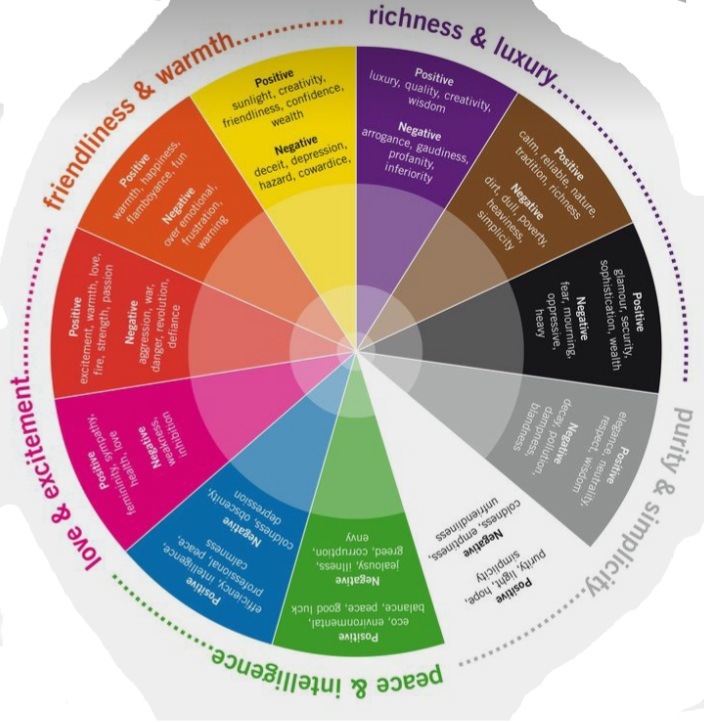














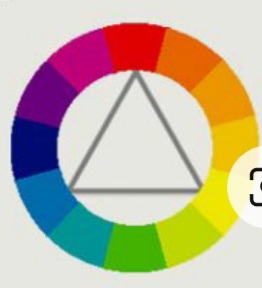
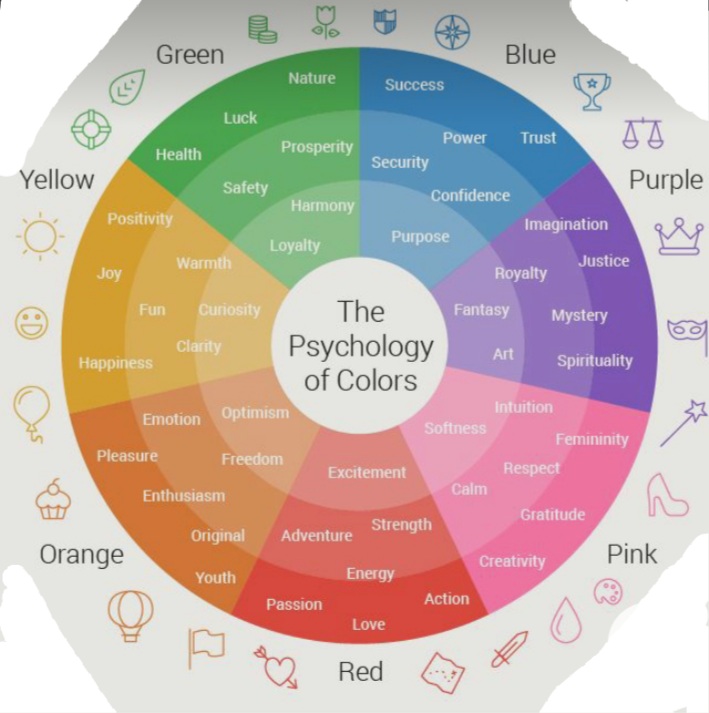




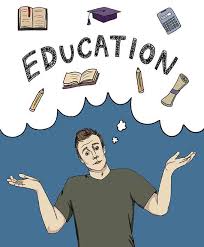

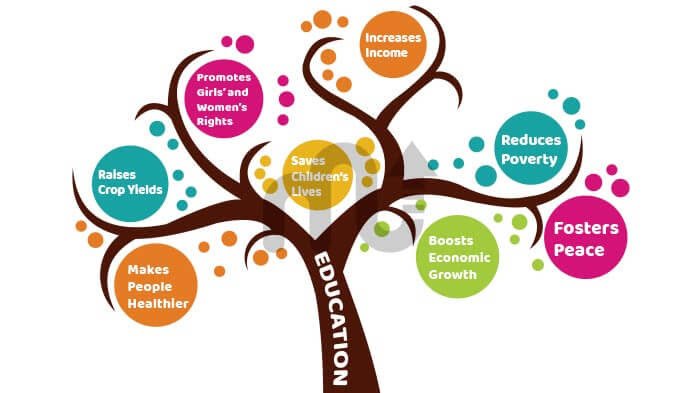

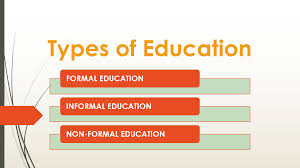
























 Eduindex
You must be logged in to post a comment.