DS0101EN: Introduction to Data Science course by edX

Hey peeps! Here is a course for all the engineering students out there who want to pave their way towards being a data scientist. So, gear up and tighten the seat belts. Let’s get into the world of data science.

Top 10 Careers in Data Science that are Shaping the Future

In this course you will:

  • Meet people who work in data science
  • Explore definitions of data science
  • Learn about data science in a business context
  • Discover some use cases and applications of data science

Syllabus

Module 1 – Defining Data Science

  • What is Data Science?
    • Fundamentals of Data Science
    • The Many Paths to Data Science
    • Advice for New Data Scientists

Module 2 – What Data Scientists Do

  • A Day in the Life of a Data Scientist
    • Old problems, new problems, Data Science solutions
    • Data Science Topics and Algorithms
    • Cloud for Data Science

Module 3 – Data Science in Business

  • Foundations of Big Data
    • How Big Data is Driving Digital Transformation
    • What is Hadoop?
    • Data Science Skills and Big Data
    • Data Scientists at New York University

Module 4 – Use Cases for Data Science

  • What is the Difference?
    • Neural Networks and Deep Learning
    • Applications of Machine Learning

Exercise – Computer Vision with IBM Watson

Module 5 – Data Science in Business

  • How Data Science is Saving Lives
    • How Companies Should Get Started in Data Science
    • Applications of Data Science

Module 6 – Careers and Recruiting in Data Science

  • How Can Someone Become a Data Scientist
    • Recruiting for Data Science
    • Careers in Data Science
    • High School Students and Data Science Careers

MODULE 1:

Learning Objectives

In this module you will:

  • Hear from data science professionals to learn what data science is.
  • Learn about the many paths to data science.
  • Hear from data science professionals as they give advice to anyone who is passionate about data science.
  • Learn some statistics about the field of data science, the demand for data scientists, and some of the qualities of excelling data scientists.
  • Learn why data science is the sexiest job of the 21st century.

SUMMARY:

In this module, you have learned:

  • Data science is the study of large quantities of data, which can reveal insights that help organizations make strategic choices.
  • There are many paths to a career in data science; most, but not all, involve a little math, a little science, and a lot of curiosity about data.
  • New data scientists need to be curious, judgemental and argumentative.
  • Why data science is considered the sexiest job in the 21st century, paying high salaries for skilled workers.

MODULE 2:

Learning Objectives

In this module you will:

  • Hear from data scientists as they share with you what a typical day in the life of a data scientist looks like.
  • Hear from data scientists as they share with you what tools, algorithms, and technologies they use on a daily basis.
  • Hear from data scientists as they try to explain the term “cloud”.
  • Learn about data science, data scientists, and how each is defined.

In this module, you have learned:

  • The typical workday for a Data Scientist varies depending on what type of project they are working on.
  • Many algorithms are used to bring out insights from data. 
  • Accessing algorithms, tools, and data through the Cloud enables Data Scientists to stay up-to-date and collaborate easily.

MODULE 3:

In this module, you have learned:

  • How Big Data is defined by the Vs: Velocity, Volume, Variety, Veracity, and Value.
  • How Hadoop and other tools, combined with distributed computing power,  are used to handle the demands of Big Data.
  • What skills are required to analyse Big Data. 
  • About the process of Data Mining, and how it produces results.

MODULE 4:

Learning Objectives

In this module you will:

  • Hear from Norman White, the Faculty Director of the Stern Centre for Research Computing, at New York University.
  • Hear from Norman White as he talks about data science and what skills are required for anyone interested in pursuing a career in this field.
  • Hear from Norman White as he explains some of the popular data science tools and algorithms.
  • Hear from Norman White as he gives advice to high schools students, in particular, and anyone, in general, who are looking to start a career in data science.
  • Learn about data mining, and the steps the comprise the process of mining a given dataset.
  • Learn about regression and what questions can be put to regression analysis.

SUMMARY:

In this module, you have learned:

  • The differences between some common Data Science terms, including Deep Learning and Machine Learning.
  • Deep Learning is a type of Machine Learning that simulates human decision-making using neural networks.
  • Machine Learning has many applications, from recommender systems that provide relevant choices for customers on commercial websites, to detailed analysis of financial markets.
  • How to use regression to analyze data.

MODULE 5:

Learning Objectives

In this module you will:

  • Learn about what companies need to do in order to start with data science.
  • Learn about some of the qualities that differentiate data scientists from other professionals.
  • Learn about some applications of data science.
  • Learn about analytics and what important role data scientists play in this process.
  • Learn about story-telling and the importance of an effective final deliverable.
  • Learn about the main components of an effective final deliverable.
  • Apply what you learned about data science to answer open-ended questions.
  • Demonstrate your understanding of the readings to define what data science and data scientist mean.
  • Demonstrate your understanding of the readings to answer a question about the final deliverable of data science project.

Summary:

In this module, you have learned:

  • Data Science helps physicians provide the best treatment for their patients, and helps meteorologists predict the extent of local weather events, and can even help predict natural disasters like earthquakes and tornadoes.
  • That companies can start on their data science journey by capturing data. Once they have data, they can begin analysing it.
  • Some ways that data is generated by consumers. 
  • How businesses like Netflix, Amazon, UPs, Google, and Apple use the data generated by their consumers and employees.
  • The purpose of the final deliverable of a Data Science project is to communicate new information and insights from the data analysis to key decision-makers.

MODULE 6:

Learning Objectives

In this module you will:

  • Learn about what companies need to do in order to start with data science.
  • Learn about some of the qualities that differentiate data scientists from other professionals.
  • Learn about some applications of data science.
  • Learn about analytics and what important role data scientists play in this process.
  • Learn about story-telling and the importance of an effective final deliverable.
  • Learn about the main components of an effective final deliverable.
  • Apply what you learned about data science to answer open-ended questions.
  • Demonstrate your understanding of the readings to define what data science and data scientist mean.
  • Demonstrate your understanding of the readings to answer a question about the final deliverable of data science project.

SUMMARY:

In this module, you have learned:

  • The length and content of the final report will vary depending on the needs of the project.
  • The structure of the final report for a Data Science project should include a cover page, table of contents, executive summary, detailed contents, acknowledgments, references, and appendices.
  • The report should present a thorough analysis of the data and communicate the project findings.

Where to Look for an Internship

Hunting for internships? Read the Article to Know Where to Look!
Once you know your interests and prospects. You can start hunting for internships opportunities. Here is how you can start!

Job sites

Websites like Internshala and Linkedin have many jobs and internship listings. Research well! Look for the internship titles you’re interested in, and narrow result down by location, size, industry company rating, pay and more. To get relevant updates in your inbox, create a job alert.

Internships and Job fair

Your college, as well as other students organization often organise career and internship fairs- make sure to attend them as they allow you to connect face-to-face with hiring decision-makers.

Leverage Your Network

Getting a personal recommendation can make all the difference in your internship search, so make sure to reach out to friends, family, colleagues, classmates, professor and alumni to see if they know anyone hiring. Another great strategy is to look up the companies you’re interested in and reach out to employees there for an informational interview – don’t underestimate yourself!

Cold Mailing companies

If you have a dream company in mind but they don’t have any relevant internship you can always try writing them a letter of interest in hopes that they will either contact you when one opens or even create a position for you. It’s a longshot, but worth a try.

Put a word on your social media

Job hunts are as dynamic as technology-you don’t have to stick to the above mentioned traditional methods of job hunting! Put a word on your Instagram stories, make a post on Linked ln and Facebook. opportunities present themselves in the most unexpected places!

Data Science

A deep dive into the course revolutionising business worldwide.

What is Data Science?

According to Wikipedia Data Science is an interdisciplinary field that uses scientific method, processes, algorithms and system to extract insights from structured and unstructured data.

There is an humongous amount of data being generated every minute and so, industries need experts who can solve problem fast.
Currently, many popular universities across the world offer postgraduate programs specialising in Data Science.

Why is Data Science is important for students and businesses?

The importance of data Science brings together the domain expertise from programming, mathematics, and statistics to create insights and make sense of data. When we think about why data science is increasingly becoming important, the answer lies in the fact that the value of data is soaring heights.
Data science is high in demand domain and explains how digital data is transforming businesses and helping them make sharper and critical decisions. So data that is digital is ubiquitous for people who are looking to work as a data scientist.

Is Data Science a good career?

Data scientists are in constant demand because it is a data-heavy world! Data scientists are a new growing breed of professionals, highly in demand today.
Data science has been called “the sexiest job of the 21st Century” by Harvard Business Review. The Scope of Data science is getting more popular in recent times. Data scientists are professionals who can simplify big data through coding and algorithms and turn it into a problem-solving solution for the business.

What Will I Study?

A chance to study subject like
• Machine learning
• Data analytics
• Business analysis
• Data visualisation
• Cloud computing
• Database systems
• Internet technology
• Algorithm

What Exams Do I Need To Take?

Most of the universities in the United States prefer students to undertake the GRE/GMAT exam.
Many universities in Australia, Canada, UK, Ireland and New Zealand assess the student based on their academic background and may not ask for GRE/GMAT scores.

Career Opportunities?

Being one of the most sought – after courses in these days, Data Science is a field to ripe opportunities for you, not to mention handsome remuneration.

Career option after data science
• Business Intelligence Developer
• Data Scientist
• Marketing Analyst
• Statistician
• Quantitative Analyst

What Is Hypnotherapy?

Hypnotherapy is an adjunctive technique that utilizes hypnosis to aid in the treatment of specific symptoms or health conditions. Hypnotherapy works by inducing a hypnotic state marked by waking awareness that allows people to experience detached external attention and to focus on inner experiences. It is sometimes used as part of a treatment plan for phobias and other anxiety disorders. It is also sometimes used for pain management, weight loss, smoking cessation, and a variety of other applications. Formal explorations in the therapeutic uses for hypnosis began in the late 1700s but did not gain scientific credibility until much more recently. Modern researchers have further explored how hypnosis can be used, which conditions it can treat, and how effective it may be compared to other treatments.

What Hypnotherapy Can Help With

There are many different reasons why a person might want to try hypnotherapy. Research suggests that some possible applications include:

  • Chronic pain conditions
  • Dementia symptoms
  • Nausea and vomiting related to chemotherapy
  • Pain during childbirth, dental procedures, or surgery
  • Skin conditions, such as psoriasis and warts
  • Symptoms of irritable bowel syndrome (IBS)
  • Symptoms of attention-deficit/hyperactivity disorder (ADHD)

Hypnotherapy may also be used by licensed physicians and psychologists in the treatment of conditions like anxiety disorders, depression, eating disorders, and post traumatic stress disorder (PTSD).

Benefits of Hypnotherapy

Some people may experience dramatic results with hypnotherapy. In other cases, people may simply feel very relaxed. Some of the benefits of hypnotherapy may include:

  • Awareness: Some people remain fully aware during the entire experience. They recall everything that happens and are even able to have conversations while under hypnosis. Other people may experience states of relaxation that are so deep that they may even feel detached from what is happening.
  • Focus: Most of the time, we are distracted by our surroundings. Whether the TV is blaring, your kids are demanding attention or your spouse wants to talk, it can be difficult to fully focus on yourself. Our conscious minds are also cluttered. You may be worried about paying a bill, concerned about an upcoming project, or planning tonight’s dinner. The therapy session is intended to break through these day-to-day concerns and allow you to focus completely on the problem at hand.
  • Relaxation: In the hypnotic state, you are deeply relaxed. Your conscious mind is quieted, allowing your unconscous mind to deeply focus on your issue. You are also calmer, and therefore more receptive to facing your problems or fears.

Most hypnotherapists utilize a series of calming messages, such as “you are safe” and “no one can harm you” to reassure their clients that during hypnosis they can objectively face their problems without having a panicked reaction.

Effectiveness

The effectiveness and impact of hypnotherapy can vary based on the individual and how the treatment is used. Hypnotherapy has been shown to have some degree of efficacy for certain applications, particularly:

  • Pain reduction and control during dental procedures and childbirth
  • Reduction in nausea and vomiting in individuals being treated for cancer with chemotherapy
  • Reduction in the severity of symptoms associated with irritable bowel syndrome (IBS)

While it may help people cope with problems related to stress and anxiety, it may be best applied when used in conjunction with first-line treatments such as cognitive behaviour therapy (CBT) and medications.

Things to Consider

While hypnotherapy is generally safe and well-tolerated, that does not mean that it doesn’t pose some potential risks, such as: 

  • Hypnotherapy can produce false or distorted memories in some cases.
  • People who are very suggestible may experience a decreased sense of personal control while under hypnosis.
  • Some people can experience side effects such as anxiety, headaches, or dizziness.
  • Hypnotherapy may not be appropriate for people who are experiencing symptoms of psychosis such as hallucinations and delusions

Common Misconceptions

Hypnotherapy is still considered controversial, as many mental health professionals dispute its effectiveness. There are a number of myths and misconceptions about hypnotherapy that can affect how people view this therapeutic tool.

  • Hypnotherapy is often confused with stage hypnosis. Stage hypnotists are performers who are excellent at reading people. They seekextroverts who will put on a great show for the crowd. Whether or not their subjects are truly hypnotized is debatable, but they are willing to go along with the sometimes outrageous suggestions of the stage hypnotist.
  • Hypnotherapy doesn’t cause you to forget what happened. You will remember the things that occur during your hypnotic state, you will not be asleep or unconscious, and you will be able to break the hypnotic trance at any time.
  • Hypnotherapy doesn’t cause you to lose control. During hypnotherapy, you remain in control. It is not possible for anyone to force you to do anything against your will, even under hypnosis. You will be tuned in to the work at hand, and so may not pay attention to your surroundings, but you will always be in charge of your own actions, behaviors, and statements.
  • Being hypnotizable doesn’t mean you are less intelligent. While some people believe that they cannot be hypnotized, research suggests that most people are hypnotizable to a certain degree. Only about 10% of people are difficult or impossible to hypnotize.

DEEPIKA KUMARI – INDIAN ARCHER!!!

Everyone in the world have some unique talent. The talent to do something vary from person to person. Yes, I believe I have the talent of writing articles. I would say this is my unique talent. Likewise, we haven’t heard a lot about the so called unpopular games. Archery is not as famous a cricket. But Archery is a wonderful sport. The people who has interest in this is also low. This game needs a free and concentrated mind. In this game, concentration plays a major role. Let me ask you a question? Do you know the name of any archers in India? Have you heard of Deepika Kumari? I would say I have heard her name and now I know about her a little bit by writing this article. Come on! Let’s see about Deepika Kumari.

Deepika Kumari Mahato was born on 13th June 1994 in Ranchi, Jharkand. Her father, Shivnarayan Mahato, is an auto-driver and her mother Geeta Mahato, a nurse at Ranchi Medical College. Her interest in Archery came from hitting the mangoes with stones. Many of us did this, but this has laid the strong foundation for her archery career. Deepika’s family was financially unstable and they cannot buy her new equipments to practice. So she used bamboo bow and arrow. After that her cousin helped her to develop and improve her talent.

DEEPIKA KUMARI

DEEPIKA’S PROFESSIONAL CAREER:

  • She made her breakthrough in 2005, by entering the Arjun Archery academy run by Wife of Jharkand Chief Minister Arjun Munda.
  • Her professional career started in 2006 by joining Tata Archery Academy in Jhamsedpur. After being sent there, she had uniform and professional equipments and she praticed hard. She only returned home after three years, by winning Cadet World Championship title in November 2009. She is the one to get first medal for India in Archery.
  • Deepika became the second women to win the World Archery Competition held in 2006.
  • She won the 11th Youth World Archery Championship in 2009 at her age of fifteen.
  • In 2010 Common Wealth Games, She won two medals, one in individual event and the other in team event. In the same year, she was awarded Outstanding performance at CWG in the women’s catergory at the Sahara Sports ceremony.
  • In the 2010 Asian games, she lost in the individual Archery game to a North Korean player in the Bronze-level playoffs. But as a recurve team defeated Taipei of China in the Bronze-level playoffs.
  • In 2012, She won her first Word Cup individual stage, held in Turkey.
  • In London Olymbics 2012, She lost to Amy Oliver of Britain in the opening rounds due to relatively high fevers and winds.
  • In July 2013, she won the gold medal in Archey World Cup stage 3 held at Mendellin.
  • In September 2013, she won silver in the FITA Archery World Cup.
  • In 2015, in Stage 3 Archery world Cup, she won bronze in the individual event. She won team Silver with her teammates in the same World Cup.
  • In November 2015, she won a bronze medal in the Asian Championship with Jayanth Taldukar in the Recurve Mixed Team event.
  • In April 2016, at the first stage of the World Cup in Shangai, Deepika equaled the Ki-Bo-Bae’s world record of (686/720) in the women’s recurve event.
  • In November 2019, Deepika Kumari secured an Olympic quota at the Continental Qualification Tournament being held on the sidelines of the 21st Asian Archery Championships in Bangkok.
  • She won three gold medals In Stage Three World Cup held in Paris 2021.
  • She recorded the 13th triple gold and became the 11th archer to achieve the feat – in the 15-year history of the Hyundai Archery World Cup.

In 2017, a Biographical Documentry called Ladies First, flimed the life of Deepika Kumari. This movie won at London Independent Festival and was screened in  Mallorca Film Festival in October 2017. This movie has also been submitted in Short Documentary category at Oscars.

Deepika Kumari - Wikipedia
PadmaSri awarded by Hon’ble Pranab Mukerjee.

AWARDS WON BY DEEPIKA KUMARI

  • 2012 – Arjuna Award by the Government of India
  • 2014 – FICCI Sportsperson of the Year Award
  • 2016 – Padmasri by the Government of India
  • 2017 – Young Achievers award which is felicitated by Vogue.

Read more;

https://en.wikipedia.org/wiki/Deepika_Kumari

Advantages And Disadvantages Of Online Learning

Online learning, like other educational techniques, offers advantages and disadvantages. Decoding and comprehending these positives and negatives will assist institutes in developing ways for more effective class delivery, guaranteeing a continuous learning journey for students.

Discover Everything You Need To Know (Good And Bad) About  Online Education

The term “new normal” has become one of the most commonly used expressions in the aftermath of the epidemic. The growing usage of online learning resources is the new normal in education. The COVID-19 epidemic has prompted new methods of learning. Educational institutions all around the world are turning to online learning platforms to help them continue the process of educating pupils. The new normal is a changed vision of education, with online learning at its heart. Digital learning has now emerged as an essential resource for students and schools all around the world. For many educational institutions, this is a whole new method of teaching that they have had to adapt to. Online learning is currently used not only to study academics, but also to learn extracurricular activities for students. The demand for online learning has increased substantially in recent months and will continue to do so in the future.

As with most teaching methods, online learning also has its own set of positives and negatives. Decoding and understanding these positives and negatives will help institutes in creating strategies for more efficiently delivering the lessons, ensuring an uninterrupted learning journey for students.

What Are The Advantages Of Online Learning?

1. Efficiency :- Online learning allows teachers to provide courses to students in a more efficient manner. Online learning includes a variety of materials such as videos, PDFs, and podcasts, which teachers may use into their lesson plans. Teachers may become more efficient instructors by expanding the lesson plan beyond standard textbooks to include internet resources.

2. Accessibility Of Time And Place :- Another advantage of online education is that it allows students to attend classes from any location of their choice. It also allows schools to reach out to a more extensive network of students, instead of being restricted by geographical boundaries. Additionally, online lectures can be recorded, archived, and shared for future reference. This allows students to access the learning material at a time of their comfort. Thus, online learning offers students the accessibility of time and place in education.

3. Affordability :- Another advantage of online learning is that it saves money. When compared to traditional schooling, online education is considerably more inexpensive. This is due to the fact that online learning reduces the costs of student transportation, food, and, most significantly, real estate. Furthermore, all course or study materials are available online, resulting in a paperless learning environment that is both more cheap and environmentally friendly.

4. Improved Student Attendance :- Since online classes can be taken from home or location of choice, there are fewer chances of students missing out on lessons.

5. Suits A Variety Of Learning Styles :- Every kid has a unique learning experience and learning style. Some pupils like to study visually, while others prefer to learn through audio. Similarly, some kids flourish in the classroom, while others prefer to learn alone and are easily distracted by large groups. With its variety of options and resources, the online learning system may be customized in a variety of ways. It is the most effective method for creating a perfect learning environment tailored to the needs of each learner.

What Are The Disadvantages Of Online Learning?

Disadvantages of Online Learning - YouTube

1. Inability To Focus On Screens :- One of the most difficult aspects of online learning for many students is the inability to focus on a screen for extended periods of time. With online learning, pupils are more likely to be quickly sidetracked by social media or other sites. As a result, it is critical for professors to maintain their online lessons concise, engaging, and interactive in order to keep students focused on the subject.

2. Technology Issues :- Another significant issue with online classes is access to the internet. While internet coverage has increased by leaps and bounds in recent years, a continuous connection with adequate speed remains a challenge in smaller cities and villages. There may be a loss of consistency in learning for the child if pupils or teachers do not have a continuous internet connection. This is harmful to the educational process.

3. Sense Of Isolation :- Being in the company of their peers may teach students a lot. However, there are little physical encounters between students and professors in an online class. This frequently leads to a sense of isolation among the kids. In this case, it is critical that the school provide for other modes of communication between students, classmates, and teachers. This includes online chats, emails, and video conferencing, which allow for face-to-face connection and reduces feelings of isolation.

4. Teacher Training :- Online learning necessitates that teachers have a fundamental grasp of how to use digital forms of learning. However, this is not always the case. Teachers may have a very rudimentary grasp of technology. They may not even have the required resources and tools to conduct online lessons at times. To address this, it is critical for schools to spend in training instructors on the most recent technological advancements so that they can conduct their online lessons smoothly.

5. Manage Screen Time :- Many parents are concerned about the health risks of their children spending so much time looking at a screen. One of the most serious issues and drawbacks of online learning is the rise in screen time. Students may acquire improper posture and other physical issues as a result of sitting slumped in front of a screen. A excellent approach would be to offer kids frequent pauses from the computer in order to rejuvenate their minds and bodies.


Common Mistakes to Avoid on Your Resume


Saying YES to the mess

An unprofessional resume screams SKIP! Remember to keep it sleek and professional with proper highlighting, bullets, and minimal colours. Don’t make it fancy or too simple, don’t use any kind of word or sentence, which will look like a command or too unprofessional, make it professional.
Ensure that it isn’t too busy, too colourful or has illegible fancy font styles.

Check out my posts, ‘Tools to enhance your resume’ for more on this.

Not linking your portfolios, and recommendation

One of the most common mistakes that are made while creating a holistic resume is not providing links to these. Ensure you add a hyperlink to your port folio and recommendation. Also, ensure it is accessible to the employer to view!
Recommendations are like a golden star on your resume. Keep it short, but do provide a contact that they can reach out to, for verification.
Never forgot to add this!!

Not highlighting well enough

Sure, we did tell you what to highlight. But what do you not highlight? Unnecessary minor details, especially in a stretched – out manner. Just add what is important, that will make it look good but if you add small things, it will make your resume look bad. So just remember that you have added things which are important and don’t make it too long.
Use action verbs to describe your daily responsibilities and experience.

Sorry, they can’t come to the phone right now

Why? Because they listed an incorrect contact details on their resume or didn’t list one at all.
So many times we never check our personal information and because of this even if you got the job you will miss it.
Be careful to double and triple check your contact information. E-mail addresses and phone numbers should be highlighted for easier identification.

Too long to read

Keep it short. Your ideal resume should not exceed 2 pages. Employers usually have to go through several resumes in a single day. A super lengthy resume, just make it easier for them to glance and skip.
Make it effective and short.

Grammatical or spelling error

Not only is it extremely unprofessional, but it also implies to the employer that you are not very interested in the position. Use tools like Grammarly to run spelling and grammar checks. Additionally, you could also run it by a friend, just in case you missed something. It’s that easy!

TOOLS TO HELP ENHANCE YOUR RESUME

1. KICKRESUME

Kickresume is a resume builder tool that lets you choose from pre- designed resume and cover letter templates. Kickresume is by far the most easy to use and effective resume website which will help to make your resume look more elegant, well designed and impressive. Kickresume gives you amillion design combinations to improve your resume. Whether you are nurse or an engineer it doesn’t matter with kickresume your resume will always stand out.

“Being a college student who is transitioning to the work life, I consider Kickresume the most helpful tool available. It is very user-friendly with a variety of designs tailored to your personal preferences and profession. It doesn’t get any better than this!!!“

It offers templates for various professional arenas. Simply choose your profession and further customize it according to your needs!

2. READABLE

While creating your resume it is extremely necessary to view it from an employer’s perspective. Is the format clear? Does it hold attention? Is it easy to read and understand? Readable can help. The tools scores your content based on various aspect such as sentence construction, structure and more!

Readability is about making content clear and easy to understand for the largest audience possible. Focusing on readability increases the chance that your target audience will actually read and interact with the content you publish. For this reason, readability should be a natural part of your content management.

3. CANVA

Of course, you’ve heard of Canva choose from a plethora of templates to add that touch of finesse to your own resume. Customize your resume by changing elements, colour, and style. While it can be a lot of fun customizing your resume remember to it professional, sleek, and clean.

4. GRAMMERLY

Yes, this tool is nothing short of a lifesaver when it comes to assignments. But guess what? You can also use Grammarly to create grammatically flawless application and resumes. it will make sure that everything you type is effective and mistake-free, it will help you write mistake-free in not only resume but also in Gmail, Facebook, Twitter, LinkedIn and many other app you use. Even the text messages also!

It also check the tone of your application, making it suitable for professional and formal use . No silly spelling errors anymore, yay!

Grammarly isn’t just a safety net. You’ll get detailed explanations for all your mistakes to help you avoid making them again in the future.

Money Management

“Money” is a medium of economic exchange in which prices and values are expressed. It is very important to live a life. Just like the three basic units of life- “food, cloth and shelter”. Money is also can be said to be the basic unit as we can but food, cloth and shelter with money only. So its management is also important. “Money Management” means budgeting, saving, investing, earning, spending money in the best way possible. Spending money to satisfy cravings/needs is a natural human phenomenon. The idea of managing money has been developed to reduce the amount of money that is spend on items that add no significant value to one’s living standards. In a nut shell money management means spending money carefully on the needs rather than on wants and wishes and also saving it for the better future.

In Indian Society, if we take a look, we can see that indian society people/groups were divided into different categories on the basis of their earning and living standards. People are divided on assets and income/expenditure. Based on these parameters there are broadly three categories (sub categories are also there) i.e., rich/upper class people, middle class people and poor/lower class people.

Rich/upper class refers to a group of individuals have highest place and status in society. These people are considered the wealthiest, lying above the poor and middle class in the social hierarchy. Middle class people fall between the poor class and upper class. They are neither poor nor rich. These people have a simple living and their earning are mostly equal or less than their expenditure resulting to short debts. Poor/lower class people are those who live under poverty. They are homeless, living on roads and slums, don’t have food to eat, usually dependent on begging and daily wage activities.

People ending up in the same category in which they are born, it is very less likely that a poor class person becomes a middle class one in this life span. There are chances that a rich person becomes a middle class one due to many reason but the chances of upgradation in class is very less.

The reason for such situations- “Wrong money management” and less/no knowledge of managing money. Rich people become more rich and poor become more poor and middle class reamains in debt, the reason behind this phenomenon is that knowledge of money management is not being taught in school and if we talk about poor class children dont even go to school. They don’t even know how to read and write. Money management is taught at home rather than in school. Many of us usually learn about money from our parents.

Talking about poor people, how can you say that they can teach their children about money when they themselves don’t have money to fill their stomach. Poor people just teach their children to go school and work hard. It might happen that the child will pass with excellent grades in his/her academic career but even after this their economic status and mindset remain poor and they keep running in the vicious cycle of poverty like a rat.

Children of upper class are given exposure and knowledge of money management from their childhood. As their parents have more than enough money and seeing their parents earning and managing money they also learn and their intellectual development happens in the same matter but it is not possible in the case of middle and lower class as they themselves don’t have enough money so how can they teach their children about the importance of the same.

Money management should be a topic of concern as it is an important aspect of one’s life which determines his/her status and standard of living. Money management be taught from school level only then children can understand the importance of it. Both government and private schools should organise lecture and seminars on the topic “money management”. If they can manage then parents should also be invited to attend such seminars and lectures. Parents should also give opportunities to their child to learn about the money, its expenditures, saving and management. Parents should send their children to the nearby shops to purchase small goods.

Tips for Money Management

1.Every child should be given the opportunity to go to schools. 2.Budgeting should be done to save money. 3.One should create a realistic monthly budget. 4.Everyone must track their spending. 5.One should build up their savings 6.Must pay your bills on time. 7.Have an investment plan. 8.Know your money priorities. 9.Differentiate between needs and wants.

Money is important to live a good life so as its management also. Money management is a skill that everyone must know to have a good present and better future. Children should be taught about money management at school from the very beginning. It is effectively must to manage money to have a good lifestyle. So don’t waste your time and manage your money now to have a healthy, happy and wealthy lifestyle.

MANAGING MONEY AND INCREASING SAVING

“Before Money becomes Wealth, it’s just Money. And for making Wealth from Money, we need to MANAGE it.”

Money Management is the broad concept which incorporates the key principles required for developing wealth and for preserving and protecting that wealth. It teaches about investing, budgeting, banking, tracking your expenses and assess the tax liabilities. This can also be called as Investment Management. Thus, Money Management is a technique where high interest output is delivered with any amount invested for money.

Spending money for satisfying needs, wishes and cravings regardless of whether they are justifies and included in a budget. can be seen in every human and is a very natural tendency and phenomenon and this idea of money management is especially developed to make the people, institutions and firms understand how to channelize and reduce the amount of money spent on different items and values which care not significant and which do not have any contribution in enhancing their living standards, long term asset or benefit. Money gives you the sense of self fulfilment and this sense of self fulfillment doesn’t come from rigorous spending of money or buying wealth but from having an amount of money which will not get outlived while fulfilling their lives needs, ambitions and providing a meaning livelihood which is convenient for them.

Thus, for money management it is also important to properly analyze the behavioral aspect of individuals or firms. Money Management also focuses on the behavioral attributes which influence the decision made by investors or organizations or individuals. And this decision making phenomena can severely affect the outcomes of long term strategies. In fact, everyone battles against the powerful elements like taxes, debt or inflation etc. which have the power to destroy and take away the wealth that we have attained by working hard. And a single wrong decision can affect and ensure our defeat.

8 Tips for Money Management:

  1. CREATING A COMPREHENSIVE BUDGET PLAN (Listing the amount of money you receive and planning how to manage your expenses by using that amount and what will be your savings.)
  2. TRIMMING UNNECESSARY DAY TO DAY COSTS (Identify different ways to save and start from small scale. Eliminate day to day unnecessary costs and avoid penalty charges and fines)
  3. FIND WAYS TO PAY LESS INTEREST ON YOUR DEBTS
  4. MAKE GOALS FOR EFFECTIVE SAVINGS AND ACCELARATE THE SAVINGS
  5. AVOID PAYING MORE TAX THAN NEEDED
  6. USE ONLINE BANKING (because they help in setting up payment reminders, scheduling future bills and help in reviewing and analyzing the amount of money spent.)
  7. SAVE FOR RETIREMENT AND PLAN ACCORDINGLY
  8. WORK WITH AN ADVISOR (To reduce financial stress and feel secured. They help in analyzing your financial status and set up goals.)

NEED OF MONEY MANAGEMENT

  • Money and Finance Management is a vital part of personal and business life. Hence, it is hard to ignore and needs to be planned with proper vision, career, finances, goals etc. and these will drive your future. Proper financial knowledge is important for starting any successful business and it is the ability to manage one’s money.
  • It develops the ability of a person to understand financial concepts which will help him in managing money better. And ensures financial well being.
  • Money Management and Financial literacy is one of the major life skill and it increases the financial ability of a person. One can start investing in his 50s also but starting early has its own benefits.
  • Today, the rich is getting richer, poor is getting poorer and the middle class people are getting indebted. The reason is the lack of knowledge of money management. People learn about money management from their parents and families and not in school. What will the children of poor people learn about money management for them? The only thing that they know is to study hard for getting a job. That’s why even after having proper knowledge, skills and expertise they don’t get proper job and don’t get enough savings.

Nature of Partnership

When two or more persons join hands to set up a business and share its profits and losses it is called Partnership. Section 4 of the Indian Partnership Act 1932 defines partnership as the ‘relation between persons who have agreed to share the profits of a business carried on by all or any of them acting for all’.

Partners are the persons who have entered into partnership individually with one another. Partners collectively are called ‘firm’. The essential features of the partnership are as follows:

Two or More Persons:
There should be at least two persons coming together to form the partnership for a common goal. In other words, the minimum number of partners in a partnership firm can be two.
Indian Partnership Act, 1932 has put no limitations on maximum numbers of partners in a firm. But however, Indian Companies Act, 2013 puts a limit on a number of the partners in a firm as follow:
1.For Banking Business, Partners must be less than or equal to 10.
2.For Any Other Business, Partners must be less than or equal to 20.
3.If the number of partners exceeds the limits, the partnership becomes illegal.

Agreement
The partnership is an agreement between two or more persons who decided to do business and share its profits and losses. To have a legal relationship between the partners, the partnership agreement becomes the basis. The agreement can be in written form or oral form. An oral agreement is equally valid. But, preferably the partners should have a written agreement, in order to avoid disputes in future.

Business
To carry on some business there should be an agreement. Mere co-ownership of a property does not amount to the partnership. The business must also be legal in nature, a partnership to carry out illegal business is not valid.

Mutual Agency
The business of a partnership firm may be carried on by all the partners or any of them acting for all. This statement has two important implications. First, to participate in the conduct of the affairs of its business, every partner is entitled. Second that a relationship of mutual agency between all the partners exists.
For all the other partners, each partner carrying on the business is the principal as well as the agent. He can bind other partners by his acts. And also is bound by the acts of other partners with regard to the business of the firm.

Sharing of Profit
The agreement between partners must be to share profits and losses of a business. Sharing of profits and losses is important. The partnership is not for the purpose of some charitable activity.

Liability of Partnership
Each partner is liable jointly with all the other partners. And also when is a partner, severally liable to the third party for all the acts done by the firm. Liability of the partner is not limited. This implies that for paying off the firm’s debts, his private assets can also be used.

Partnership Deed
Agreement to carry on a business between the partners, partnership comes into existence. The partnership agreement can be either oral or written. The Partnership Act does not require that the agreement must be in writing. But when the agreement is in written form, it is called ‘Partnership Deed’. Partnership deed should be duly signed by the partners, stamped & registered.

Partnership deed generally contains the following details:
1)Names and Addresses of the firm and its main business;
2)Names and Addresses of all partners;
3)A contribution of the amount of capital by each partner;
4)The accounting period of the firm;
5)The date of commencement of partnership;
6)Rules regarding an operation of Bank Accounts;
7)Profit and loss sharing ratio;
8)The rate of interest on capital, loan, drawings, etc;
9)Mode of auditor’s appointment, if any;
10)Salaries, commission, etc, if payable to any partner;
11)The rights, duties, and liabilities of each partner;
12)Treatment of loss arising out of insolvency of one or more partners;
13)Settlement of accounts on the dissolution of the firm;
14)Method of a settlement of disputes among the partners;
15)Rules to be followed in case of admission, retirement, a death of a partner; and
16)Any other matter relating to the conduct of business. Normally, all the matters affecting the relationship of partners amongst themselves are covered in partnership deed.

Termination Of Agency

Introduction

In a contract of agency, a person appoints another to act on his behalf with the third party it is called ‘Agency’. According to Section 183 of the said Act, Principal must be competent to contract. Any person may be an agent (Section 184). According to Section 185, in the contract of agency, consideration is not necessary. Termination of agency means putting an end to the legal relationship between principal and agent. Section 201 to 210 of the Indian Contract Act 1872 lay down the provision relating to the termination of Agency.

As above said termination of agency means putting end to the legal relationship between principal and agent. Section 201 to 210 of the Indian Contract Act 1872 lay down the provision relating to the termination of Agency.

Section 201, Indian Contract Act 1872 provides for termination of an agency –

An agency is terminated by the principal revoking his authority, or by the agent renouncing the business of the agency; or by the business of the agency being completed; or by either the principal or agent dying or becoming of unsound mind; or by the principal being adjudicated an insolvent under the provisions of any Act for the time being in force for the relief of insolvent debtors.

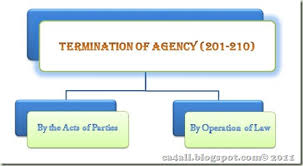
Agency may be terminated two ways –
1) By the Act of the Parties
2) By Operation of Law

1) By the act of the parties
i) By agreement – The Contract of Agency can be terminated at any time by mutual agreement between the principal and agent.
ii) By revocation of the principal – The Principal revoke agency at any time by giving notice to the agent.
iii) By Renunciation of an agent – Renunciation which means withdrawing from responsibility as Agent. Like Principal, Agent can also renounce the agency. According to Section 206 of the Indian Contract Act 1872, the agent must give to his Principal reasonable notice of renunciation. Otherwise, he will be liable to make good for the damage caused to the principal for want of such notice.

2) By operation of law
Agency can be terminated by operation of law-
i) By the completion of agency – Agency can become to an end after the completion of work for which the agency is created.
ii) By expiry of the time – Agency can also be terminated by the expiry of time. if the agency is created for the specific period, it is terminated after the expiry of the time.
iii) Death or insanity of principal or agent – Section 209 of the Indian Contract Act 1872 imposes an agent, duty to terminate the contract of agency on the death of the principal. In other words, Agency comes to an end on the death or insanity of the principal or agent.
iv) Insolvency of principal – According to Section 201 of the Indian Contract Act 1872, an insolvent or bankrupt is a person who is unable to run the business due to Excess of liabilities over assets. In this way, if the principal becomes an insolvent agency can be terminated.
v) Destruction of the subject matter – If this subject matter of the agency is destroyed agency comes to an end.
For example – Any agency is created for sale of an Airplane if the Airplane caught fire before the sale the agency comes to an end. In this contract Airplane is the subject matter.
vi) Principal becoming an alien enemy – If the Principal becomes an alien enemy the contract of agency comes to an end. vii) Dissolution of company or firm – A Firm or company may be regarded as a Principal in the contract of Agency. If the company or firm is dissolved the agency comes to an end.

Relationship between Principal agent and sub agent

Relationship between principal agent and sub-agent depends on the question whether the agent has an authority to appoint sub-agent and whether the sub-agent is properly appointed.
If then sub-agent is properly appointed:
1) The principal is bound by and responsible for the acts of a sub agent;
2) the agent is responsible to the principal for the acts of the sub-agent;
3) the sub agent is responsible for his acts to the agent, but not to the principal except in case of fraud or willful wrong.

It is of interest to observe clause (3) above. Sub-agent is responsible and accountable to the agent and not to the principal by clause (1). Principal is liable for acts of the sub-agent if he is properly appointed. Sub-agent is not responsible to the principal because there is no privity of contract between the principal and sub agent. It is case of fraud or willful wrong that the principal can proceed against the sub-agent. Principal can, however, against the agent for acts of a sub-agent. As far as the rights of a third party are concerned, he can enforce the wrongs of a sub-agent on the principal if the sub-agent is properly appointed. Principal is therefore liable for acts of the sub-agents if he is properly appointed.

If the sub-agent is not properly appointed: Where an agent has appointed a person to act as sub agent without having authority to do so, the principal shall not be deemed to be represented or responsible for the acts of the sub-agent so employed, nor is such a sub-agent responsible to the principal. The agent is responsible for the acts of such a sub- agent both to the principal and to third persons.

Sub-agent is said to be improperly appointed where agent delegates his powers without authority from the principal or where none of the circumstances stated above exist which necessitate appointment of a sub agent.

It will be observed that where a sub-agent is not properly appointed, the liability of agent is also towards third parties. As a rule, we have seen that an agent is responsible to the principal and it is the principal who is responsible for the acts of his agent to the third party. However, the section throws additional liability on the agent where he has improperly appointed a sub-agent. Agent stands liable to the third party for the acts of a sub-agent.

Termination of sub-agent’s authority: (Sec 210) Lastly it must be noted that the termination of the authority of an agent causes the termination of the authority of all sub-agents appointed by him

Liabilities of principal, agent and sub-agent: The agent is responsible to the principal for the acts of a sub-agent and the sub-agent is responsible for his acts to the agent but not the principal, except in cases of fraud and willful wrong.

Where an agent improperly appoints a sub-agent, the agent is responsible for his acts both to the principal and to third parties. The principal in such cases is not responsible for the acts of the sub-agent nor is the sub-agent responsible to the principal. But where a sub-agent is properly appointed, the principal as regards third person, is represented by the sub-agent, and is bound by and responsible for his acts, as if he were an agent originally appointed by the principal.

Where an agent under an express or implied authority has named another person to act for the principal, such a person is not a sub-agent, but an agent of the principal. There is no liability on the agent appointing him provided the agent so appointing exercises discretion as a man of ordinary prudence would exercise is his own case (Sec 194 & 195). Such an agent is called a substitute agent.


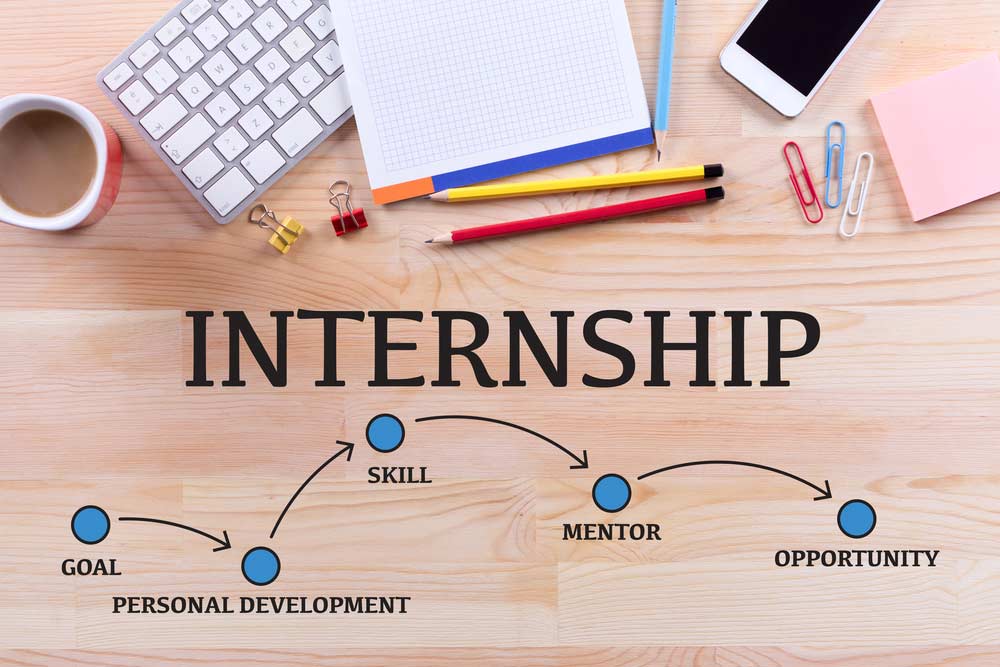
What to expect from an Internship

1. Networking

One of the most rewarding takeaways from internship is definitely Networking. It helps build professional relationship right at beginning of your professional career. Networking during an internship is really important for your career growth and social life. The power of relationships can provide you with professional opportunities in the future that you would never dreamed of. It will help you to hear tips and gain advice from others who are successful. There are so many advantage of networking, it will definitely help you to build a great future. Exchanging information on challenges, experiences and goals is a key benefit of networking because it allows you to gain new insights that you may not have otherwise thought of. Similarly, offering helpful ideas to a contact is an excellent way to build your reputation as an innovative thinker.  

In the future, these contacts could be potential references and may be also help connect you to new opportunities.


2. Soft Skills

Apart from enhancing skills in your professional domain, internships come bearing gifts in the form of soft skills. Alongside time management, teamwork and communication skills, you also learn to work with people who get on your nerves, adapt to demanding superior and long work hours and take accountability for your work. Skills like punctuality, multi-tasking, creative thinking, problem solving will help you with your full time job.

3. Working World Experience

Internship essentially serve as blueprint of how professional offices work. Regardless of the responsibilities, most internship follow a similar profile. Through an internship, you can learn more about responsibilities, hierarchies and schedules in a real time office. When students have an opportunity to experience real-world situations, it allows them to practice the skills they learn about in their books and truly understand the task at hand. Teamwork is an extremely important thing in the industry.

So if you want to try those big girl pant before buying them, an internship is your way to go!!

4. Compensation

We are gonna be loud and clear for everyone to hear, experience does not pay bills. You’ll come across internship offering ‘learning’ and ‘experience’ as compensation for your work. And often, in the rush to add a few lines to your resume you may be tempted to take up the first internship that comes your way. Trust me, there are tons of internship out there that will monetarily compensate you for your efforts and skills.

If an internship offers you all of these just grab it!!


What Is Fast Fashion?

Clothes shopping used to be an occasional event—something that happened a few times a year when the seasons changed or when we outgrew what we had. But about 20 years ago, something changed. Clothes became cheaper, trend cycles sped up, and shopping became a hobby. Enter fast fashion and the global chains that now dominate our high streets and online shopping. But what is fast fashion? And how does it impact people, the planet, and animals?

It was all too good to be true. All these stores selling cool, trendy clothing you could buy with your loose change, wear a handful of times, and then throw away. Suddenly everyone could afford to dress like their favourite celebrity or wear the latest trends fresh from the catwalk.

Then in 2013, the world had a reality check when the Rana Plaza clothing manufacturing complex in Bangladesh collapsed, killing over 1,000 workers. That’s when consumers really started questioning fast fashion and wondering at the true cost of those affordable t-shirts. If you’re reading this article, you might already be aware of fast fashion’s dark side, but it’s worth exploring how the industry got to this point—and how we can help to change it.

What is fast fashion?

Fast fashion can be defined as cheap, trendy clothing that samples ideas from the catwalk or celebrity culture and turns them into garments in high street stores at breakneck speed to meet consumer demand. The idea is to get the newest styles on the market as fast as possible, so shoppers can snap them up while they are still at the height of their popularity and then, sadly, discard them after a few wears. It plays into the idea that outfit repeating is a fashion faux pas and that if you want to stay relevant, you have to sport the latest looks as they happen. It forms a key part of the toxic system of overproduction and consumption that has made fashion one of the world’s largest polluters. Before we can go about changing it, let’s take a look at the history.

How did fast fashion happen?

To understand how fast fashion came to be, we need to rewind a bit. Before the 1800s, fashion was slow. You had to source your own materials like wool or leather, prepare them, weave them, and then make the clothes.The Industrial Revolution introduced new technology—like the sewing machine. Clothes became easier, quicker, and cheaper to make. Dressmaking shops emerged to cater to the middle classes.

Many of these dressmaking shops used teams of garment workers or home workers. Around this time, sweatshops emerged, along with some familiar safety issues. The first significant garment factory disaster was when a fire broke out in New York’s Triangle Shirtwaist Factory in 1911. It claimed the lives of 146 garment workers, many of whom were young female immigrants. By the 1960s and 70s, young people were creating new trends, and clothing became a form of personal expression, but there was still a distinction between high fashion and high street.

In the late 1990s and 2000s, low-cost fashion reached its zenith. Online shopping took off, and fast-fashion retailers like H&M, Zara, and Topshop took over the high street. These brands took the looks and design elements from the top fashion houses and reproduced them quickly and cheaply. With everyone now able to shop for on-trend clothes whenever they wanted, it’s easy to understand how the phenomenon caught on.

How to spot a fast fashion brand

Some key factors are common to fast fashion brands:

  • Thousands of styles, which touch on all the latest trends.
  • Extremely short turnaround time between when a trend or garment is seen on the catwalk or in celebrity media and when it hits the shelves.
  • Offshore manufacturing where labour is the cheapest, with the use of workers on low wages without adequate rights or safety and complex supply chains with poor visibility beyond the first tier.
  • A limited quantity of a particular garment—this is an idea pioneered by Zara. With new stock arriving in store every few days, shoppers know if they don’t buy something they like, they’ll probably miss their chance.
  • Cheap, low quality materials like polyester, causing clothes to degrade after just a few wears and get thrown away.

What’s the impact of fast fashion?

On the planet: Fast fashion’s impact on the planet is immense. The pressure to reduce costs and speed up production time means that environmental corners are more likely to be cut. Fast fashion’s negative impact includes its use of cheap, toxic textile dyes—making the fashion industry the second largest polluter of clean water globally after agriculture. That’s why Greenpeace has been pressuring brands to remove dangerous chemicals from their supply chains through its detoxing fashion campaigns through the years.

Cheap textiles also increase fast fashion’s impact. Polyester is one of the most popular fabrics. It is derived from fossil fuels, contributes to global warming, and can shed microfibers that add to the increasing levels of plastic in our oceans when washed. But even ‘natural fabrics’ can be a problem at the scale fast fashion demands. Conventional cotton requires enormous quantities of water and pesticides in developing countries. This results in drought risks and creates extreme stress on water basins and competition for resources between companies and local communities.

The constant speed and demand mean increased stress on other environmental areas such as land clearing, biodiversity, and soil quality. The processing of leather also impacts the environment, with 300kg of cehmicals added to every 900kg of animal hides tanned. The speed at which garments are produced also means that more and more clothes are disposed of by consumers, creating massive textile waste. In Australia alone, more than 500 million kilos of unwanted clothing ends up in landfill every year.

On workers: As well as the environmental cost of fast fashion, there’s a human cost. Fast fashion impacts garments workers who work in dangerous environments, for low wages, and without fundamental human rights. Further down the supply chain, the farmers may work with toxic chemicals and brutal practices that can have devastating impacts on their physical and mental health, a plight highlighted by the documentary The True Cost.

On animals: Animals are also impacted by fast fashion. In the wild, the toxic dyes and microfibres released in waterways are ingested by land and marine life alike through the food chain to devastating effect. And when animal products such as leather, fur, and even wool are used in fashion directly, animal welfare is put at risk. As an example, numerous scandals reveal that real fur, including cat and dog fur, is often being passed off as a faux fur to unknowing shoppers. The truth is that there is so much real fur being produced under terrible conditions in fur farms that it’s become cheaper to produce and buy than faux fur!

On consumers: Finally, fast fashion can impact consumers themselves, encouraging a ‘throw-away’ culture because of both the built-in obsolescence of the products and the speed at which trends emerge. Fast fashion makes us believe we need to shop more and more to stay on top of trends, creating a constant sense of need and ultimate dissatisfaction. The trend has also been criticized on intellectual property grounds, with some designers alleging that retailers have illegally mass-produced their designs.

Differences between agency and distribution agreement

When a supplier/manufacturer wishes to distribute products, he examines whether he needs to select an agent or a distributor to do so, as this is an essential choice, and forms an agreement accordingly. There are several factors that must be considered while making such a decision. As a result, it is necessary to understand the distinctions between an agency agreement and a distribution agreement.

Now we need to know who is an agent. An agent is defined in section 182 of the Indian Contract Act, 1872. He is a middle man or a mediating person who is involved in making a contract between the primary supplier and the primary client. There are two types of agents where goods are sold i.e. the sales agent who does the sales work and a marketing agent who does the marketing of goods. The sales agent has the authority to enter the agreement on behalf of the supplier and the prescribed agreement is binding to the supplier as well. Unlike the sales agent, the marketing agent doesn’t have the authority to bind the supplier but he can market and endorse the supplier’s goods and articles to potential clients. Now when there is a demand or wish in the market by the client to make a purchase of goods the supplier completes the contract. 

The next step is to determine who is a distributor. In this case, the distributor gets the products from the supplier/manufacturer and then resells them in the market in a specific location where there is demand, on his own description, with complete control over the pricing and profit. Let us continue reading to learn more about the distinctions between an agency agreement and a distribution agreement.

Agency agreement

The agency agreement is a legal document in which the supplier/manufacturer and the agent enter into a contract with certain particular acceptable terms and conditions, and the agent, on behalf of the supplier, mediates between the primary supplier and the client for the sale of products to the market. It establishes a fiduciary connection between the agent and the manufacturer, as well as an indirect link between the manufacturer and the customer.

In this contract, the self-regulating body assumes all the risks in the work and makes all the choices on behalf of the first-party as stipulated in the contract. This contract is defined and controlled by the Agency Agreement Legislation, and it also has the rights of agents specified in the Contract law under sections 217, 219, 225, 222, and 223 and in the Sales of Goods Act, 1930. Agency arrangements might be exclusive, non-exclusive, or sole.

Advantages:

  • To begin, the supplier can reclaim control of the conditions of sale of the goods, namely the price and marketing tactics.
  • Can also establish direct contact with needy consumers on their own, eliminating the necessity for a middleman in sales and reducing competition.
  • In comparison to the margins earned by distributors, the agent generally receives a lesser commission.

Disadvantages:

  • The Commercial Agents (Council Directive) Regulations 1993(the “Commercial Agents Regulations”) shall apply and impart certain legal necessities benefiting the agents wherein the parties cannot exclude the agents. 
  • During the contract, the agent will be entitled to commission and under certain situations, after its termination too as per the Commercial Agents Regulations. 
  • The supplier regains all of the monetary possibilities of those goods which are not sold. 
  • Tax-related issues can arise wherein sometimes a supplier can be held as a dealing person in a place where an agent is based so tax liabilities can lead to him. 
  • An agent would be working for several manufacturers/suppliers so he carries several goods from them. So if some goods of any supplier are not selling well, the agent focuses more on the saleable goods of other suppliers. 

Distribution agreement

This agreement is a legal contract in which the supplier/manufacturer authorises distributors to distribute products for resale in a certain location. A combined partnership of two firms is necessary in such a deal to distribute the goods. It is accomplished through the authorization or commercial practises of the provider. The distributor is the sole authorised party to engage in such operations and is permitted to profit by putting the cost on the goods. As there is no legal regulation, no unified jurisprudence on analogicality of both civil and commercial law applies to the distribution agreement.

There are several types of distribution agreements, such as exclusive rights, sole rights, non-exclusive, selective distributorship agreements, and so on. Exclusive rights agreements forbid the supplier from seeking sales in his region and appointing any other distributors in the same area. Sole rights permit the supplier to seek sales but do not permit the appointment of any other distributor in the same region. Non-exclusive rights are those in which the provider may designate as many distributors as he wishes and pursue direct sales in the same geographic region. Selective distributorship agreements are ones in which the provider appoints distributors based on his own needs.

Advantages:

  • The majority of the supplier’s risk is transferred to the connected items in this case.
  • The distributor is encouraged to sell the majority of the items acquired from the supplier, taking the risk of not generating sales, and the distributor will be held accountable for any difficulties that arise.
  • The supplier will simply be required to validate and check accounts with the distributor.
  • According to the current law, the provider is not obligated to pay any compensation or indemnity upon termination of the agreement.

Disadvantages:

  • Under this case, unlike in an agent arrangement, the supplier has no influence over the distributor’s operations.
  • All risk associated with the location where the distributor is appointed is transferred to the distributor with the credit risk rather than to each client/customer.
  • In this arrangement, the distributor is constantly at danger of violating competition legislation, which jeopardises the agency’s connections.

Differences between agency and distribution agreement

To distinguish the agency agreement from the distribution agreement, both are completely distinct. To begin, an agent is hired to assist the supplier/manufacturer in negotiating and concluding contracts on his behalf, but the distributor is appointed exclusively to resale the supplier’s goods on its own terms. Second, an agent is a paid person who is given a percentage commission by the supplier and distributor to buy and own the products from the supplier, sell them in the market, bear the risk on his own, and add a profit margin to cover its expenses and profit from it.

Third, the agent does not own the products, but the distributor does and also bears the risk of commodities that do not sell in the market for any reason. Fourth, an agent interacts with the client on behalf of the supplier/manufacturer, whereas the distributor interacts with the consumer directly, and the supplier has no idea to whom his goods/products were sold.

When it is necessary to extend the firm into a new market or location, distributorships are utilised as a low-risk method. He accepts legal responsibility for his own conduct or omissions in connection with the sale of products. The distributor assumes a higher amount of risk than the agent in the course of his operation. Because the consumer knows the distributor, if there is a problem with the product/goods, he can sue the distributor rather than the provider.

On the other hand, the agent is a self-employed mediator who negotiates with the customer for the sale of the goods and concludes the deal on behalf of the supplier/manufacturer. He has no ownership of the goods so no risk for any legal issues it remains with the supplier itself. 

Conclusion

We learned about the numerous distinctions between the agency and distribution agreements in the preceding session. Both operate for very distinct purposes and employ entirely different methodologies. Prior to commencing the partnership, it is critical to consider and investigate formalising these commitments in writing. Failure to do so may result in uncertainty, and the connection may result in litigation rather than commercial progress. So, before entering into any commercial contracts, it is essential to evaluate the significance and differences of such agreements.

The Indian courts have made a clear distinction between non-competent covenants after the terms of the agreement and beyond the duration of the agreement. To assess enforceability, the courts consider whether the covenant is or is not a trade limitation. To improve customer service and efficiently manage product sales and price, relevant limitations must be imposed in accordance with contract law and competition law.