Bhagat Singh- The Legend.

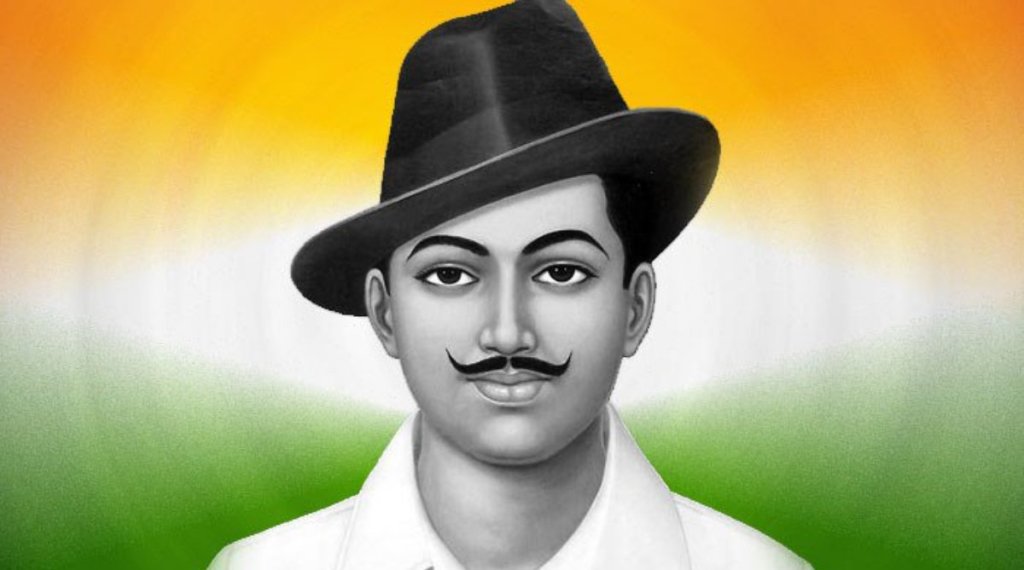
Bhagat Singh was a true symbol of heroism for the youth of India. Born on September 28, 1909, in Lyallpur now in Pakistan. Bhagat was the son of Shri Kishan and Shrimati Vidyavati. He was still a student of the National College and only sixteen years of age when he joined the revolutionary movement.

  The very tragedy of Jallianwala Bagh in 1919, where the British fired at the gathering in the bagh killing men, women, and children. This event caused a wave of terror and anger amongst the people all over the country. Bhagat Singh then a young lad of twelve years was greatly disturbed by this event. The feeling that the British must be driven out of India., lodged in the young boy’s mind. He asked his father Kishan Singh who himself was a revolutionary for permission to join the revolutionary movement.

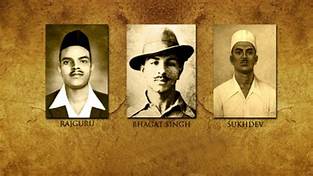
  Later on, he even refused to marry and dedicate his life to the Liberation of India. He organized revolutionary activities others like namely Raj Guru, Chandrashekhar Azad, Sukhdev, and others. The planned agitations in Panjab, U.P., Delhi. They also planned agitation against the Simon Commission who had come from England to India to decide how much freedom and responsibility could be given to Indians. The absence of Indians on the committee made the Indians very angry. They protested with black flags, shouting ‘Go Back, Simon’. Lala Lajpat Rai was the patriot leader of this group. An officer named Saunders had hit Lala Lajpat Rai on his chest. Lalaji was badly injured and succumbed to his injuries a month later. This loss was avenged by Bhagat Singh and his revolutionaries who decided to kill Scott who had ordered the assault, instead they killed Saunders, the same officer who had hit Lalaji and killed him.

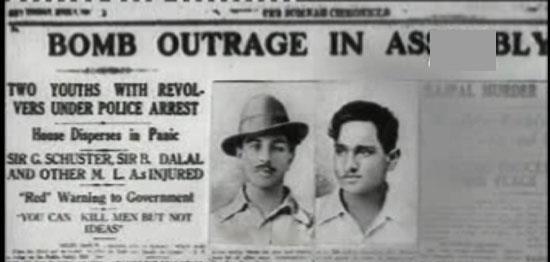
   They also exploded a bomb in the Central Legislative Assembly of ‘Inqalaab Zindabad’ ( long live Revolution). Bhagat Singh and his companions were arrested and a trial commenced. The judgment said that Bhagat Singh, Raj Guru, and Sukhdev were to be hanged until death while some others were jailed for a few years. The day decided was the 24th of March 1931, but they were hanged a day earlier and not even their families were allowed to meet them. Even on the day of hanging, they were fearless and cheerful. Kissing the rope, they themselves put it around their neck, they died with the name of Bharat Mata on their lips.

  Bhagat Singh was a revolutionary and a true patriot. He was against the tyrannical explorers and was of the view that the people were strong enough to rid themselves of their capitalist oppressors. He urged the people to feel proud and dedicate themselves to the liberation of their Motherland. Bhagat Singh died when he was only twenty-four years of age. An age at which other young people indulge in trivial pleasures and have no real aim in life. We owe it to him, and to the others who had died for the nation, to realize their dreams and shape India according to the ideals set by them that of a progressive and peaceful India.

Gambling laws in India

Introduction

Gambling is defined as betting, gaming, or participating in an activity that is based on luck not on the skills to win a huge amount of money or any other prize by wagering some amount of money. To control gambling across the country legislation was passed in the year 1867, the Public Gaming Act of 1867, and is the most important legislation that regulates gambling in India.

Under the gambling legislation, the meaning of the act of wagering or betting for money or money worth is understood in the 2006 “jay video games and electrical v. State of Gujarat’’  case.

So here we discussed about the gambling, why it has become a more sensible topic in India and other countries, how it has come in scenario where their strict laws are must needed, why gaming skills are excluded from gambling or why Indian law classifies the games into two broad categories i.e. game of chance and game of skills. What are those games where gambling is not a big deal?

Legality

As per the status of the legality of Gambling in India, there is no unified law regarding any activities of gambling as it comes under the State list of the 7th schedule of the Constitution. So the gambling is a state subject, so the state has only the rights to regulate the law for the gambling activities in their respective territory. The state legislatures, under the Constitution of India, have been entrusted with significant regulatory flexibility to form state-specific gambling laws. 

The Gambling Act is the central enactment that has been adopted by certain states in India and other states have enacted their own legislation to regulate and govern gambling activities within their territory. So some states have allowed or some have banned gambling in their state. For example, casinos are banned in the other states except for Sikkim, Goa and Daman.

 As per Section 12 of the Public Gaming Act 1867, any game of mere skill will not be treated as gambling, but games of chances will be treated as gambling. 

The Public Gambling Act of 1867 is a central law that prohibits running or being in charge of a public gambling house. The penalty for breach of this law is a fine of Rs. 200 or imprisonment of up to 3 months. Additionally, this Act prohibits visiting gambling houses. A fine of Rs.100 or imprisonment of up to one month is the penalty. 

There is always a doubt regarding which games are covered under gambling because poker in India has very unclear significance in Indian law because it could never figure out whether it is a game of skills or a game of chance. It’s very interesting that games, such as wagering on cricket, are prohibited and while Rummy is permitted as observed by the court under  Mahalakshmi  Cultural Association v. The Director, Inspector General of Police, State of Tamil Nadu in 2012. Gone are the times of Matka betting and the preferences in India. These days, you can just wager on a couple of sports, that too in some states. As of now, betting on horse racing, online poker in states like Goa and Sikkim, online rummy, lottery, and a couple of gambling clubs are legal in India in accordance with the case of K .R Lakshmanan v. state of Tamil Nadu in 1996. 

Not only wagering on games is illegal, visiting or working in those places is also unlawful or illegal under section 4 of the  Public Gaming Act. It is likewise unlawful to visit such a place. The main problem is that the exact meaning of betting is not adequate in the legislation. As per the Act, it states Gaming as betting or wagering of money on a game which is a game of chance and not of skill except Horse Racing.

Laws on online-based betting

In the Public Gaming Act of,1867 there were no provisions related to online-based betting. There is in addition to this Act another act that could be considered to identify with web-based wagering and gaming i.e. The Information Technology Act of 2000. From this Act, it is very easy to identify the offences with online gambling and gives the government ability to check and search if required. However, this Act also does not mention online-based gambling like Public Gaming Act, 1867 does. 

The laws for online gambling are enacted by several states also like Sikkim. The state of Sikkim enacted the Sikkim Online Gambling (Regulation) Act,2008, which was passed on 28th  June 2008 by the Sikkim Legislative Assembly with the object of controlling and regulating through electronic and non-electronic ways in online gaming. And imposes Tax also on online gaming within its territory.

Game of chance or game of skills

Gambling is understood both under its traditional form as well as modern avatar. The traditional gambling is understood in the context of physical space, brick and mortar format, whereas modern gambling consists of computers connected offline or online, mobile phones, internet, etc. the Gambling legislations exclude the “game of skills” from the statute of gambling and hence doesn’t attract the penal provisions.

A game of chance is a game where the result is leveraged by a random number creator in which the participant may choose to bet money for that result. While in a game of skill, A person bet on the result which comes out of the skills of person or person requires them to have a degree of mental expertise to succeed, for example, Betting on Horse racing. However, in games like Poker and Rummy, many times the courts got confused about whether these are Game of Chance or Game of Skill. 

Penalties

Under the Public Gaming Act,1867 any person is found playing games for money, wager, stake or something else with cards, dice, counters, shall be liable to imprisonment for any term not exceeding one month and fine not exceeding one hundred rupees. As per the section 45 of the Indian Penal code 1860.  

Any person found in such gaming rooms during any gaming or playing there shall be presumed, until proven, to have been there for gaming purposes.  

Conclusion

Whereas there are various legislations in India, even every state has its own legislation for gambling as legal and regulated in the most appropriate ways. There is a need for a section or portion which would provide which type of gambling is legal and which is not. Apart from this, there is a need for central laws for online Gambling, we see that few States like Goa, Sikkim, and Nagaland are the only states that permit online gambling. Also, such a type of thing showed that there are no possible ways to stop or curb. At least something could be done to regulate this.

The Government, being a welfare State, acts in a manner to promote the economic and social well-being of its citizens, and therefore, it is necessary for the State to protect the sensitive sections of the society. About gambling, they can at least form a committee to survey the need for gambling and improvisation on the current legislation based on that survey. Thus, there is a need for aggressiveness to be taken from the side of the executives as well as the parliament to provide such norms which would codify the system of gambling in India. 

Peace and trust builds humanity.

As the famous quote by Dalai Lama goes, “World belongs to humanity, not this leader, that leader or that king or prince or religious leader. World belongs to humanity.” So what does Humanity mean and how can we induce a sense of humanity in our society and how can we build it up?

Humanity refers to the human race. It also symbolises qualities that make us human, qualities like love and compassion towards each other. Humanity is an important part of life which tells that to help others whenever and wherever possible. Humanity entails putting others’ needs ahead of our own at times when they are most in need, and putting others’ needs ahead of our own when they are most in need. Humanity means extending unconditional love to each and every living being on Earth. For showing humanity you don’t need to be a rich person, even a poor person can show humanity by helping someone or sharing food, etc.

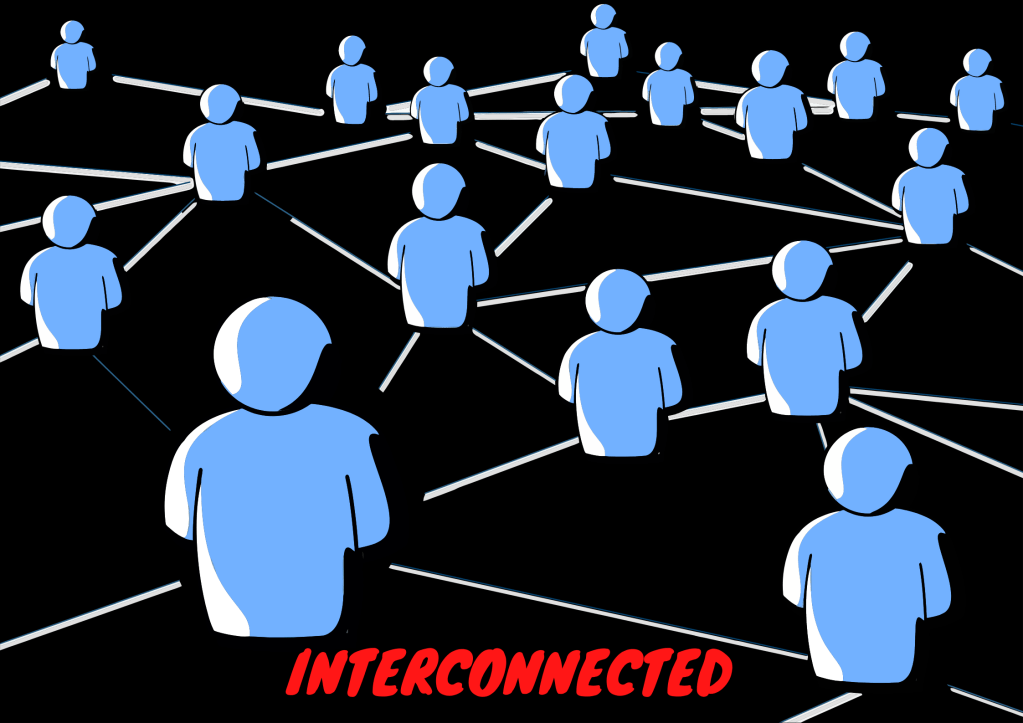
The image above shows us, that as human we are all interconnected, so for one to thrive, the others have to thrive as well, and for that, humanity needs to built.

However, humanity has not always been this perfect idea of love, compassion and togetherness. As humans, we tend to be selfish rather than selfless in many ways, we tend to view minorities and less fortunate as lesser humans, we take pleasure at the expense of another person’s distress, we create divisions and play God. And as we go through this cycle of the same vile thoughts and ideas, the sense of humanity slowly moves further away from us. 

To break this cycle, humans need to be more trustworthy and must have a sense of peace. As the concept of humanity is also dependent on qualities like trust, honesty and a sense of peace and togetherness one must know the importance of the qualities of trust and peace.

Trust is the glue of society, it cements relationships, makes us feel safe and helps us to belong to a group. To trust is human, however, somewhere along the lines the actual meaning of trust has gotten erased in all the selfishness, insensitivities and egoism of humankind. For any society to flourish, trust is one of the many prerequisites  for humanity to thrive as when trust is present things go well, whether it is trust in a leader to follow, in a doctor, in a consultant or a coach or trust in spouses, siblings and friends. However, trust has to be earned and yet even the trust that is earned can be lost, but it can also be regained.

Peace is another pre-requisite for humanity, as it a necessary conditions for the development of mankind. Peace of all the human beings mean peace and harmony among all the nations, ethnic groups and religions. It can bring about a stable society. The virtue of peace and its importance is mentioned in many religions.  However, in today’s society peace doesn’t seem to exist between countries, political parties or even in families. This absence of peace gives rise to many conflicts and violence. These violence’s are created by differences in political or religious ideologies. This ends up with people fighting and losing sight of the basic humanity.  

Hence, trust is one of the most important tools that has an incredible power to helps us to connect, inspire, motivate and encourage people and peace is a way of sustaining social life distant from internal conflict, which is necessary for what is left of humanity to survive.

A HOME-MAKER PREFERRED ARTICLE WHERE YOU CAN CHOOSE OUT YOUR STOVE ACCORDING TO YOUR BENEFITS.

THE TRENDY AND EVERLASTING HOME APPLIANCE OF STOVES TO MAKE HEALTHY FOODS AT HOME

  • A tiny Introduction

This is a random general topic but if I point out and ask this as what is an auto-ignition or in simple terms as stove we would say that as a cooking appliance and more probably some might wonder how to spell them exactly like in defined terms.

Actually, this might be answered only by honorable homemakers at your home who prepare food for your family on a daily basis.

  Let us not break it up as I explicitly give you a clear understanding about these auto-ignition stoves exactly.

  • A short and Crisp description upon AIGS (Auto-Ignition Gas Stove)

-> Auto-Ignition Stoves – Kind of necessary appliance for our regular cooking purposes that has several burners attached according to people’s convenience as you can use the ignition of spark as electricity after you regulate the volume of gas coming out from burners and keep them constant.

Then quickly you fire your burner to start your cooking works. These can also be called as LPG Gas stove, but we most probably have the habit of pronouncing it as an auto-ignition stove for our homely foods.

They consist of two different categories of these stove

  1. The Auto-Ignition Gas Stove
  2. Manual Gas Stove.
  • A Brief note on explanation between various types
  1. Manual Stove:

                             These are the similar types like the auto-ignition stoves unless they have to be lighted with some matches / candles.

  1. Auto-Ignition Stove:

                               A slight difference from the above is you trigger your burner by just switching the knob and bursting the light out of it from just a spark given by any igniting device that is associated with electricity.

You just note a slight difference is both are up to your expectation and will fulfill your requirement and with multiple types of burners equipped in it. But you just make a click on the Auto-ignition stoves whereas you have to make out the flare/fire to bring out the flames in it.

You have alternatives in stoves but the best choice for you is to opt for the automatic stoves / ignitions in the latest model known in short as auto-ignition gas stoves (AIGS) by me.

  • Have a glimpse of these advantages of Auto-Ignition stoves and a small para about the lifestyle of cooking in India.

The preferred benefits of it are:

  1. It lessens the time duration you take to activate your stove when compared with manual one.
  2. You can easily wash your spill-traps and detachable trays where in manual it is a bit heavier than these stoves and will not catch fire if you wash and replace them.
  1. In Manual ones you are in the range of getting fire marks on your hands but you don’t have the tension to worry about it in auto-ignition gas stoves as you are at a safe distance from handling it.
  2. And much more can be listed.

These are some sample and basic ideas got by professionals working on cooking especially women in India as most of the families have homemakers as women only.

In India, we can view a high rate of dependency on homely foods rather than the readily prepared foods or ordered from outside.

 If you are into a family of traditional or health preferred members you can experience one obviously pushing you to the same situation.

So, I clearly understand that I made the points stand tall in your minds and hearts of all the ideas I had with me and hope so there is no opposition to my points.

As we are clear of all these basic awareness, we can confidently view two top-rating and best performing stoves on the side of auto ignition for you to choose out of your budget if you are in need of it.

  • Different top performing and friendly stoves exclusively for our home-makers.
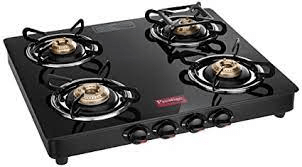
  1. Prestige Royale Plus Schott Top auto-ignited one.

This is the top on our list that almost fulfills everyone’s need than any other auto-ignition stove can do. It is a both featured cooking appliance that works as a manual and an auto-ignited stove where you get two mangoes on a single stone.

It is preferred by three-fourth of people in India for its guarantee and warranty given by its brand, one of the top and toughest competitors in the appliance.

It has a default plugin of lighter type so you can discover the click of spark being given by an automatic mechanism so won’t have the feel to replace the battery or the bulk instruments attached as it is sleek and automated type.

If you are a tidy and cleanliness preferer than this suits you well and good as it is also embedded with an immortal system of ignition behind.

  • Thermador 3 Brass Burner Gas Stove LPG Use only, auto-ignition

This is a recently arrived appliance that has been sold for less than three thousand also in recent studies conducted by others.

It is the best and safeguarding appliance of the stove from the fire burns and has an awesome reliability of the ignition process that works on automatically instead of manual operation. You can really congratulate the model prepared by the brand as it is long-lasting and works on the terms of long run too.

All the basic amenities to work on an automatic stove are considered under a single platform, obviously designing it in an advance that still astonishes even now.

These two options are enough for our limits and expectancy of features we trust up on for our whole hereditary.

  • A random conclusion

As I described, only a few adopted features will help you out to make notes on a page wise basis as it shows every feature of it uniquely once when you start using them as your friend for all your dishes under one stove.

You can even explore it in several articles so you will have a complete functionality of them in mind.

Partition-A challenge to the Nation

Photo by Still Pixels on Pexels.com

It happened years ago when India faced partition be it with Pakistan or within Andhra Pradesh(making of Telangana). These involved change of boundaries and beliefs but moving ahead we all adapted to them and welcomed new beginnings.

Our Independent Nation was believed to be achieving great heights in the coming years of Independence. The hopes were high and so was the joy and enthusiasm among the citizens. They dreamt of a nation where everyone would be his own master; where they will earn their living their own way and where, there would be innumerable possibilities for growth and development. Of course, the excitement was over their mind and the feeling of freedom was another level of peace and serenity. But, did that happened likewise ? Yes we have come far enough and are still moving ahead. Our past position and present scenario are way different in terms of growth which we have had been able to achieve through years of struggle as a nation. Being labelled as a developing country shows the mark we have reached through collective efforts in the areas of infrastructure, economy and livelihood. The focus is now on sustainable development which aims at development at a pace which does not harm the future goals or requirements of the future generations. This appears a fantastic model but the present needs too need attention to the same level now.

The increasing rate of unemployment, poverty and discrimination are amongst the major issues need to be resolved in order to build a strong force serving the nation at its best.

Each human is a resource and can be utilised in a way that contributes not only to the growth of the nation but the world as a whole. There is a lot that is still unexplored or which requires actions to be taken globally. Individual growth is complimentary to this.

Employment opportunities need to be developed creatively. It simply implies there are already many opportunities, what lacks is creativity and innovation. Though we are constantly innovating ideas but they are technology oriented and not human focused. Innovation is required so that there are ample opportunities for all of us to explore and learn. Technology makes us sick when it is used to make even basic tasks of our life, automatic. Hard work should always be encouraged. Technology feels good when it is used to make complex things simple. The boundaries we see between the rich and the poor, the educated and the illiterate, the working and the unemployed, the women and the men; all these make up for the partition India is facing.

As it is said a lot, “rich are becoming richer, poor are getting poorer”, similarly, the distances are widening between the other above stated partitions as well. The discrimination on the basis of colour, caste, religion, region, gender, etc. are parting the country as we go on. It seems they are left behind on the journey towards development. Still there are many places where women are treated lower to men, having no freedom to live their own way. The ‘minority groups’ still don’t have their rights as a citizen. The “untouchables” continue to be unacceptable and what to say about discrimination faced by the transgender. It is not always the government to blame upon. In fact they launch various schemes to help and support all the classes and sections of the society. The dust remains in the mind of the people who are not ready to accept everyone as their equals, the ones who believe in superiority of one over the other even after living in a democratic country. It may also happen due to the past relations. “What we learn being grown up is what we follow”, this can be a reason why people have a fixed mindset which is hard to change. But as we keep moving there arises a need to take up all, together. The nation is one as a whole and these partition need to be erased for the sake of all. There are more issues that need attention by us, therefore the previous ones need to be sorted to focus on the upcoming. If we can bring the whole nation together, not only by words but behaviour as well, we would soon be able to solve our global matters of concern as well; which include pollution, over-population, ozone layer depletion, water management, etc.

VARIOUS DANCE FORMS OF INDIA

Dances reflect the mood and feelings of human beings through expression and body movements. India is known for many dance forms each of which is originated from its state. However, only six classical dance forms such as Bharatanatyam, Kuchipudi, Kathak, Kathakali, Odissi, and Manipuri are nationally recognized. Apart from this, many dance forms have their origin from India. Indian dance arts are not only about body movements and gestures. It is one of the ancient ways of showing devotion to God. It shows the inseparable connectivity with the Indian culture. Here, in this article, some of the famous dance forms of India would be discussed briefly.

BHARATANATYAM

Being one of the most famous classical dances of the world, Bharatanatyam owns its origin from Tamil Nādu, one of the southern states of India. Bharatanatyam was performed for the divine Carnatic music by women in temples in the ancient period. The movements and gestures of this dance form are called mudras and the dancer uses mudras and facial expressions to show the Navarasa (9 emotions). It is one of the most honourable art and is still learned by many women in the south.

KATHAK

Kathak is an Indian dance form that has its origin from the northern state, Uttar Pradesh. The word Kathak is derived from the term ‘Katha’ which means story. This dance is performed in a way to narrate a story with the dance movements. Both male and female dancers perform together. The ankle movement is the most important one which is done by wearing the Ghungroos (Ankle bells). 

KATHAKALI

Kathakali is another traditional dance form that is related to storytelling. It is originated from The Land of Spices of India, Kerala. The tales performed are Ramayana and Shiva stories. It includes heavy makeup, costumes, and face masks that are bright and colourful. The dance depicts both evil and good through facial expressions and gestures.

KUCHIPUDI

Kuchipudi, belonging to the southern state Andhra Pradesh is said to be the toughest dance form. It includes singing along with dancing. Hence it requires more skill and dedication compared to other forms. It was performed by male dancers, especially the brahmins in temples in ancient times. However, as time flew it became common and is performed even by women nowadays.

ODISSI

Odissi is the oldest dance form from the eastern state of India, Odisha. It narrates the stories of the Gods Shiva and Surya which are given in the form of poems. These poems are played as songs and the dancers express them through more than 50 intriguing mudras. These mudras are sculpted in the Hindu temples of India. It is preserved by practicing and making its survivance till today.

MANIPURI

Manipuri stands as a symbol to represent the rich traditions of the north-eastern state, Manipur. It narrates the romantic relationship between Lord Krishna and Radha, which is called Raas Leela. It is performed to the music of classical instruments by wearing the traditional Manipuri costumes and makeup to showcase the tale of the two gods. 

Bhangra, Garba, Bihu, Mohiniyattam, Ghoomar, Lavani, Rouf, Karagattam, etc. are the other well-known dance forms of India. 

FATHER OF OUR CONSTIUTION- DR. B.R AMBEDHKAR

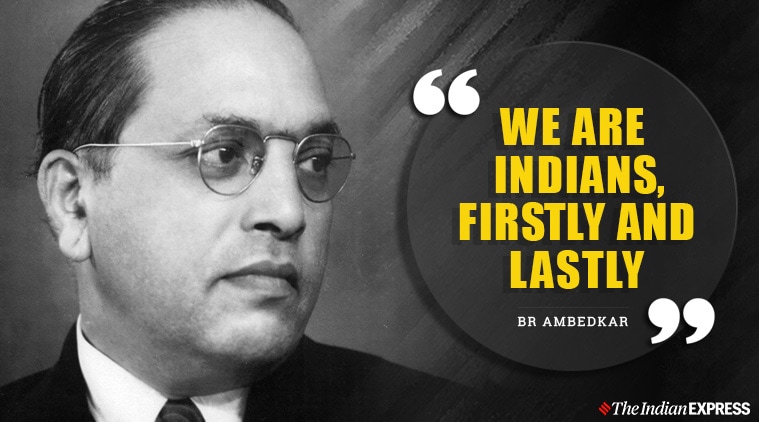
Bhimrao Ramji Ambedkar was brought into the world on 14 April 1891,also known as Babasaheb , was an Indian legal scholar, market analyst, legislator and social reformer, who propelled the Dalit Buddhist development and crusaded against social segregation towards the untouchables. He was British India’s Minister of Labor in Viceroy’s Executive Council, Chairman of the Constituent Drafting board, free India’s first Minister of Law and Justice, and thought about the main engineer of the Constitution of India.

Ambedkar Jayanti: Some interesting facts about the architect of Indian  Constitution, Babasaheb Ambedkar

Dr. B. R. Ambedkar showed all Indians Equality and Fraternity through the drafting of the Constitution of India, the prelude of which expresses that all Indians are equivalent according to the law and that all Indians are a tremendous family through the possibility of Fraternity.

He encouraged individuals to battle for what is correct. He advanced changes that inspired the most minimal of the projects, the Dalits. He coordinated a few developments like Anti-standing development, Dalit Buddhist development, and so forth.

Bhimrao Ambedkar Quotes: Dr. BR Ambedkar Inspirational Quotes, Speech,  Famous Thoughts on Death Anniversary

In the wake of turning into the primary Law Minister of the nation, and through the drafting of the Constitution of India, he changed the future by attempting to allow everybody an equivalent opportunity. Dr. B. R. Ambedkar held the good post of head at the Government Law College in Mumbai for a very long time. He was additionally the main Indian to have a Doctorate in Economics abroad. Following his model, many individuals left Hinduism for Buddhism since Buddhism doesn’t partition individuals into projects. He was the representative for all oppressed and neediness stricken lower projects like the Dalits.

Because of his enthusiasm in the Dalits’ upliftment, he established separate held seats for individuals of lower projects, which was pointlessly gone against by Gandhiji. He was against section 370 of the Indian Constitution, giving select rights to the province of Jammu and Kashmir. Segment 370 has been abolishes an year ago. It shows how exact and ground breaking his arrangements were. He was offered with Bharat Ratna in 1990 for this excellent work in Indian Reforms.

His works and thoughts keep on impacting the mass of individuals. His ground breaking and goals are as yet appropriate today. Many admire him as a good example, as do I. He is really a diamond to our country.

RESOURCES:

https://en.wikipedia.org/wiki/B._R._Ambedkar

WHY INDIA IS INCREDIBLE ?

You may have heard the expression “Incredible India” commonly however the genuine significance behind this expression can fascinate you. Martin Luther King, Jr said that “To different nations, I might go as a tourist, however to India, I come as a pilgrim.” What is the genuine article that made our nation so incredible ? Life in India can be upbeat, intense, beautiful, distressing, tumultuous however never exhausting.

What makes India a great country — The Indian Panorama

India really sets an illustration of “Unity in diversity”. It’s practically difficult to track down some other country with as much variety as India. Every Indian state can be considered as another country since when you go there language changes, garments changes, food changes and way of life changes. Despite that we all have same thoughts and we live with each other peacefully.

11 Quotes About India By Famous Personalities

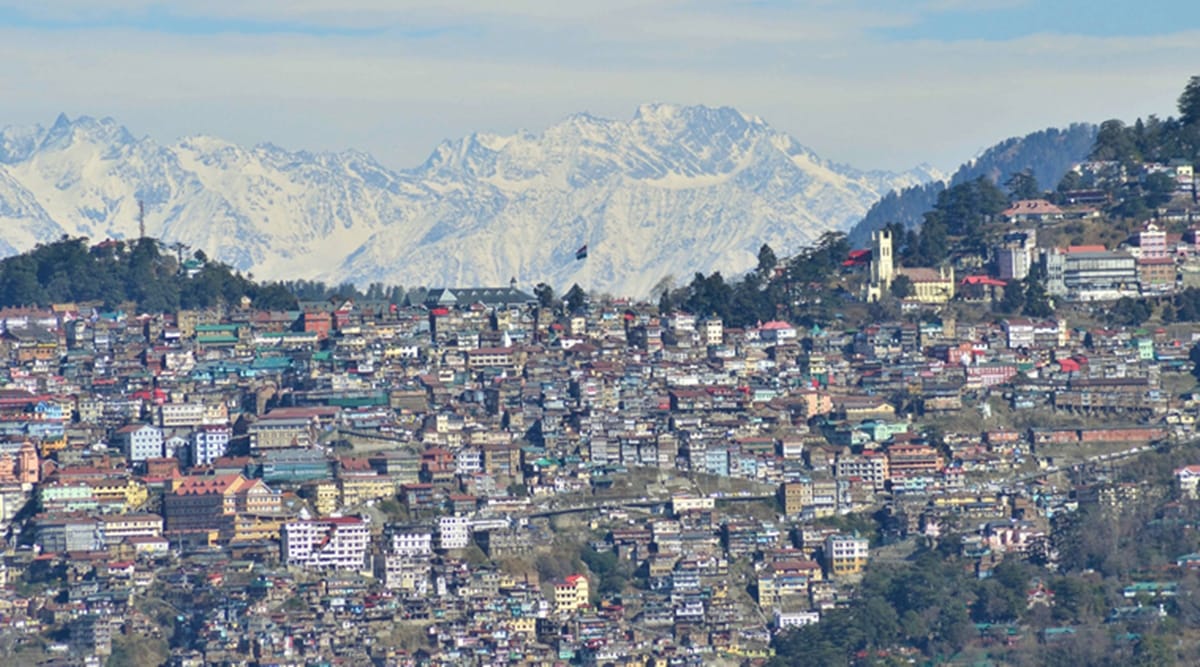
Not only that but people of different religions also live in India. That is the reason we have such countless celebrations which we praise all together. “Atithi Devo Bhava” which implies our guests are God to us. Indian food is overall mainstream you can’t get enough of it. Indian markets are open for both richer as well as poorer. Variety isn’t just among individuals yet additionally in climate. Assuming you need to see the warm places then, at that point deserts of Rajasthan can draw you in. However, assuming you need to see excellence of mountains you are generally welcome in Himachal Pradesh and Jammu Kashmir. Also there are numerous vacationer places in India which incorporate posts, sanctuaries, landmarks and some more.

50 years of Himachal Pradesh: A trip down the history lane | India News,The  Indian Express

India is the land of Yoga. Yoga assists one with being truly and intellectually fit. It assists you with expanding your focus, give alleviation while having a pressure entire day. Subsequently, these all things demonstrate that why India is great. On this 75th Independence Day let us all make a promise to serve our country till death and endeavor to make India “The Best Nation in the World”. We are extremely fateful to be born in this Incredible Nation.

Yoga and Well-being - 15 Days - India Tour Guide & Driver

Fashion Trends That Made Comeback

Fashion trends are forever changing.

Bell Bottoms
Bell bottoms are a trend from the ’70s and ’80s which have recently made a comeback. They exhibit a retro summer style for fashion divas. These trousers are ideal for those who want to make their legs look longer and slimmer. For a perfect office look, you can match it with a black or a neutral colour trousers with a white shirt and a short vest.

Asymmetric Dresses
Nowadays the fresh asymmetrical trend is sweeping the fashion arena. Fashion influencers have adopted this uber-chic trend and are experimenting with ways of wearing asymmetrical dresses. The rule of fashion is ‘not to follow’ the rules.

Animal prints
Animal prints always make a comeback with the latest fashion twist. Prints like leopard, zebra or even tiger are steadily taking the spotlight.

Mom Jeans
Mom jeans were incredibly popular back in the ’90s and have made a strong comeback in the 21st century with many new ways to style them.

Chunky Sneakers
Chunky sneakers were a trend that nobody thought would come back into style again. But like they were in the ’80s, these have made a huge comeback.

Bike Shorts
Bike shorts keep coming back as a hot trend in fashion. Pairing these shorts with oversized sweaters, t-shirts and often with a pair of chunky sneakers.

Facts About The Indian National Flag

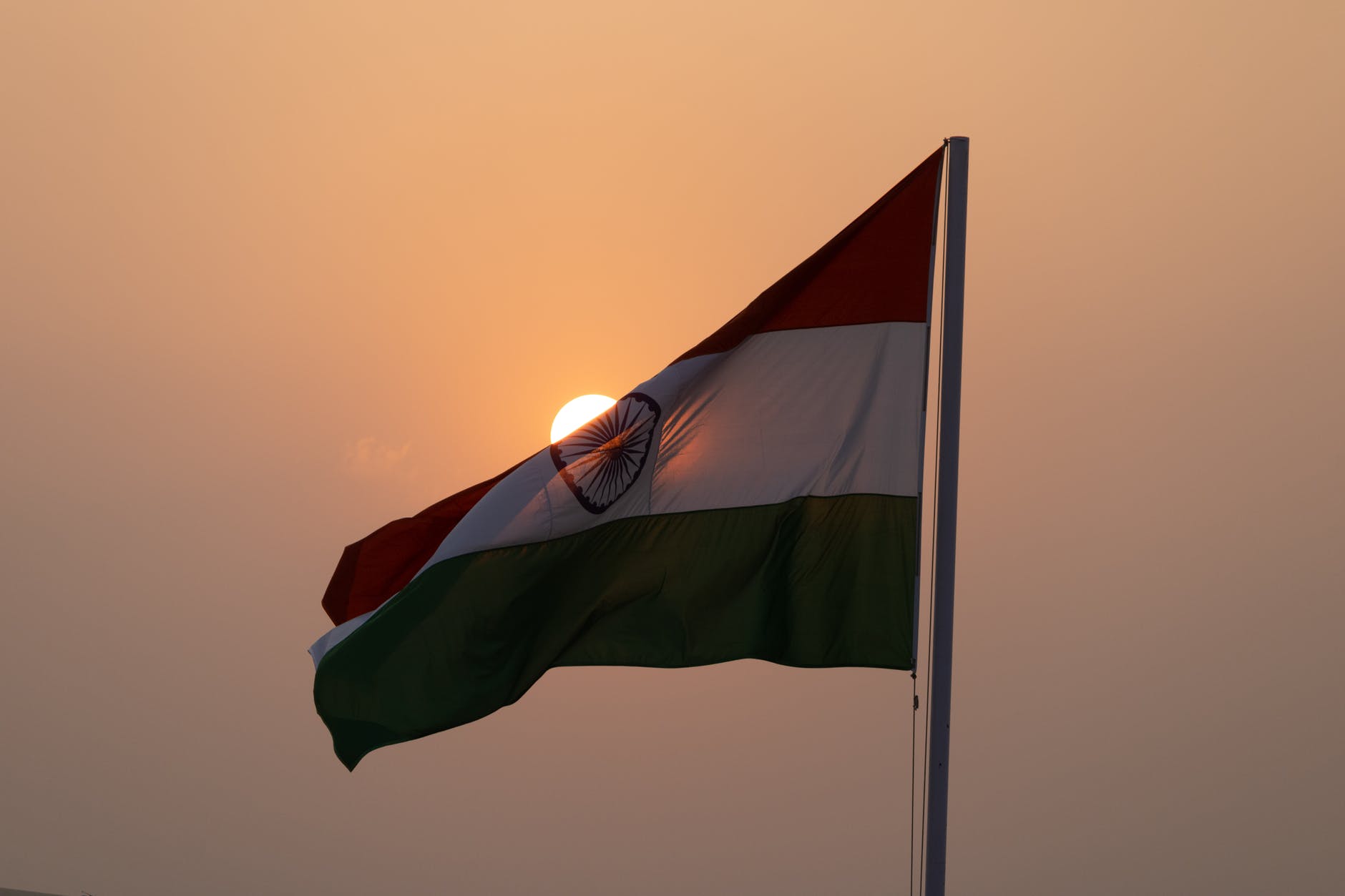
Pingali Venkayya, a freedom fighter from Andhra Pradesh designed the Indian National Flag.

India adopted its national flag on July 22, 1947, just before its independence.

It was first hoisted on August 7, 1906, at Parsi Bagan Square in Calcutta.

The first Indian flag consisted of three horizontal stripes of green, yellow and red.

As per the law, The Indian National Flag, is to be made of khadi which is a special type of hand-spun cloth of cotton or silk.

Karnataka Khadi Gramodyoga Samyukta Sangha or KKGSS is the only licensed manufacturer and supplier of the Indian National Flag. The original cloth flag can only be made by them.

The saffron colour present in the flag portrays courage and sacrifice while the white colour depicts truth, peace and purity. Prosperity is symbolised by the green colour while the Ashok Chakra represents the Laws of Dharma.

Ashoka Chakra, with 24 equally spaced spokes, in navy blue colour is present in the middle white stripe in the national flag.

The first Indian to raise the Indian National flag on foreign soil was Bhikaji Rustom Cama.

Before 2002, normal citizens of India were not allowed to hoist the National Flag except on Independence Day and Republic Day. In 2002, the Supreme Court of India amended the flag code and gave rights to all citizens to hoist the flag any time as per the flag code.

As per the flag code, the flag must be hoisted in the daytime and there should be no flag or any other symbolic representation above it.

The Indian flag must never be put on the ground and must never be placed upside down.

Moreover, When a foreign dignitary travels in a car provided by the government, the flag should be flown on the right side of the car while the flag of the foreign country should be flown on the left side.

Difference Between Fundamental Rights And Directive Principles Of State Policy

Introduction

With 448 Articles, 25 Parts, and 12 Schedules, the Indian Constitution is the world’s longest. It is the ultimate law of the land and controls a variety of sectors, some of which are essential and necessary for the nation’s functioning. The various portions of the Constitution have a specific title under which various legislation pertaining to that subject are listed. Parts III and IV, the Fundamental Rights and the Directive Principles of State Policy, are the most visible and discussed sections of the Indian Constitution. Whereas the Fundamental Rights are the rights that all citizens have, the Directive Principles are the mandates that the State must bear in mind when making laws and regulations. Each has a specific function to play, and each is fully described.

However, there may be times when both of these elements are at odds with one another. A circumstance may call for one to be picked over the other, i.e. one to take precedence over the other. In such a scenario, not only is it difficult to select between the two, but the worth of the one not chosen is reduced. It is sometimes stated that Basic Rights, since they are essential, will take precedence over Directive Principles; nevertheless, it is also contended that Directive Principles are fundamental in the sense that they provide the foundation for the operation of the State. To determine their real nature and activities, it is necessary to thoroughly analyse both components and comprehend the points of distinction between the two.

The Fundamental Rights

Fundamental Rights - Nature, Scope and importance

Individuals’ rights are extremely essential. Rights aid in the formation of personality by providing a person with plausible claims that may be enforced against the State if any of his basic convictions are infringed. The Fundamental Rights envisioned in Part III of the Indian Constitution are the fundamental rights guaranteed to every citizen of the nation, regardless of caste, creed, gender, religion, place of birth, and so on. Articles 12 to 35 of the constitution mention six essential rights:

  1. The Right to Equality, which promotes citizen equality and forbids discrimination on certain grounds.
  2. The Right to Freedom, which enumerates numerous liberties like as freedom of expression, freedom of profession, and so on.
  3. The Right to Religious Freedom, because India is a melting pot of religious groupings, it is critical to protect the interests of religious minorities.
  4. The prohibition against forced labour, child labour, and other kinds of human exploitation is known as the Right Against Exploitation.
  5. Cultural and Educational Rights, because India is a diverse nation with so many cultures and beliefs, so it is essential to preserve the culture of every group.
  6. The Rights to Constitutional Remedies, under which a person can approach the courts of the country if he/she feels that his/her Fundamental Rights have been violated.

These rights further branch out and give us various other fundamental rights, such as the Right to Privacy, the Right to Education, the Right to Life and Personal Liberty etc.

Although the rights are fundamental in nature, they can be taken away in certain situations, for example, if there is a situation of emergency under Articles 358 and 359 of the Constitution. Even then, the Right to Life and Personal Liberty cannot be taken away by the State.

The Directive Principles of State Policy

Articles 36 through 51 of the Constitution include the Directive Principles of State Policy. They were derived from the Irish Constitution, which was derived from the Spanish Constitution. The Directive Principles are rules that the government must follow while developing legislation for the country. They fulfil the notion of a Welfare State, which can only be realised if these Principles are followed in the manner that they are stated. Article 37 of Part IV indicates that, while these principles are not enforceable in any court of law, they are important to the country’s governance and the government has a duty to adopt them when drafting legislation.

Directive Principles of State Policy - (Articles 36-51) - DPSP

In contrast to Fundamental Rights, the Directive Principles are not classified in the Indian Constitution. However, for a better understanding, they are typically divided into three categories: socialist principles, Gandhian principles, and liberal-intellectual ideas.

  1. Articles 38 to 39A, Articles 41 to 43A, and Article 47 are composed of socialistic principles, and they lay down the framework for the development of a democratic socialist state.
  2. Articles 40, 43, 43B, and 46 to 48 include Gandhian principles, which promote the ideology of Mahatma Gandhi during the movement for Independence.
  3. Articles 44, 45, and 48 to 51 are inclined towards the ideas of liberalism and intellectualism. The Uniform Civil Code is also covered under these Articles.

The Directive Principles do advocate for the protection of certain rights, such as the right to equal compensation for equal labour, as well as equality and justice, but they are more rules than rights. They may be classified as the responsibilities of those in charge of governing the country.

Points of Difference Between Fundamental Rights And Directive Principles Of State Policy

Apart from the fact that the Fundamental Rights and the Directive Principles of State Policy represent distinct things and are found in various portions and articles of the Constitution, they are fundamentally different in terms of their aims and execution. The following are the relationships between fundamental rights and state policy directive principles:

  1. The Fundamental Rights are open to all Indian people, they represent an individualised attitude. They are the fundamental rights of every individual citizen in the country, and if violated, they can be enforced against another individual or the State. The Directive Principles have a more social stance. They exist for the benefit of the country’s whole population rather than for the benefit of individuals. They have a group mentality.
  2. The scope of Fundamental Rights is essentially limited, because granting limitless rights to the citizens may result in anarchy. They are to be read strictly. But the scope of Directive Principles is limitless. They can be read and interpreted extensively and can give birth to more principles.
  3. Fundamental Rights are negative in nature, which means that they are prohibitions on the State. The State is required from doing certain things that would lead to the violation of an individual’s Fundamental Rights. They are legally enforceable in a court of law of the country. This also implies that Fundamental Rights are of such a nature that they can be violated. Directive Principles, on the other hand, do not possess the characteristic of being violated. They exist as a basis for the laws that are formulated for the country and this implies that they cannot be legally enforced in a court of law of the country. This renders the Directive Principles positive in nature, i.e. the State is obliged to do certain things for the welfare of the country.
  4. Because India is a democratic country, democratic features may be seen in its laws. Both the Fundamental Rights and the Directive Principles promote the concept of democracy, although they do it in distinct ways. Fundamental Rights spread political democracy, whereas Directive Principles spread social and economic democracy. It is simply due to the fact that the goals of both parties are dissimilar. Furthermore, Fundamental Rights represent individual wellbeing, whereas Directive Principles represent societal and economic benefit.
  5. Adequate legislation is necessary for the execution of Directive Principles. The Directive Principles can only be realised via law. They cannot be implemented automatically and in the language in which they are enshrined in the Constitution. Fundamental Rights, on the other hand, are already enforceable. They do not require any legislation to be enacted. However, this does not mean that there are no consequences for violations of Fundamental Rights. Directive Principles are subject to legal and political sanctions, but Fundamental Rights are also subject to legal consequences.
  6. If a legislation violates the Fundamental Rights, a court might declare that law illegal and void. However, the courts lack the authority to declare any statute that violates a Directive Principle illegal or void. A legislation, on the other hand, can be supported by a court if it gives effect to a Directive Principle.
  7. The Fundamental Rights were given a place of honour by the drafters of the Constitution. They are the fundamental rights granted to all citizens. The Directive Principles are granted permanent status in the Constitution since they serve as the foundation for the country’s legislative activities.
  8. Violation of the Fundamental Rights results in punishment, as per the Indian Penal Code, 1860. These rights can be enforced against the State or against any individual(s). There is no punishment for the violation of Directive Principles.
  9. Fundamental Rights can be suspended during a period of emergency, except the Fundamental Right to Life and Personal Liberty, which cannot be suspended even in an emergency. Directive Principles can never be suspended or restricted, under any circumstance.
  10. The Constitution of India was formulated at a time when a lot of countries had their own constitutions. Thus, many parts of our Constitution have been borrowed from other constitutions. While the Directive Principles have been borrowed from the Irish Constitution, the Fundamental Rights have been borrowed from the Constitution of the United States of America.

Conclusion

The differences between the Fundamental Rights and the Directive Principles of State Policy suggest that the aims and objectives of both are different but somewhat similar. Each part of the Constitution compliments another, and so do they. It is necessary to understand the importance of each and apply/use them accordingly. Fundamental Rights are rights in the sense that they are available to the people, and Directive Principles act as duties upon the State, which the State is required to fulfil, even though the Directive Principles incorporate some elements of social and economic rights. Together, they aim at promoting the principles of democracy and welfarism, which can be achieved only when both the parts go hand in hand, without any conflict.

Impact of Social Media on Youth

In today’s society, we are all witnessing how social media is evolving on a daily basis. The majority of individuals on the planet use social media. This is very popular among the younger generation. Even if you look at statistics, you will find the same scenario. Every day, the popularity of social media grows. The effects of social media on youngsters are also seen in other aspects of our life.

Social Media Trivia: Brush Up Your Knowledge

Here are some statistics that were done on social media.

  • The average time spent by the people per day on the social network is 1.72 hours.
  • For the teenagers, the numbers are much higher which is up to 27 hours per week.
Impact of Social Networking Sites on the Youth | The Knowledge Review

In today’s society, social media has become an integral part of many young people’s lives. Many young people continue to engage in social media without stopping to consider the influence of social media on youth. The consequences might be beneficial or bad, but they are usually detrimental if they are not linked with a commercial or professional purpose.

It is a major issue for the majority of people in today’s society because what is more important?

Is it more essential to be concerned about “Facebook” friends than those with whom we meet face to face in our everyday lives? What is the long-term influence of social media on today’s youth?

There are many advantages to using sites such as Twitter, Facebook, Pinterest, LinkedIn, Tumblr, Google +, Gaming sites, Instagram, and blogs, but there are also many disadvantages. If we want to make sound decisions, we must go deep within ourselves and conduct extensive study on the subject.

Positive Impact of Social Media on Youth

  • It keeps connected to their friends when they are not able to see each other always when they want to.
  • Social media keeps you updates about the important things that are going across the globe currently or maybe in your locality. It is a great benefit to know about everything just by the simple click of your finger.
  • The youths have the perfect place to express themselves in such a way in which they won’t be allowed to do in public. This is something which makes the youth feel better about them and they hold some position in society.
  • It helps you in developing social skills and the best part is that a number of friendships can begin from the social website. Youths generally like make new friends and know about others as much as they can. All of this is possible with the social media platform.
  • One more interesting impact of social media on youth is that it feels fun to interact with peers rather than talking to them face to face.

Negative Impact of Social Media on Youth

  • People in today’s age place such a high value on social media that it has become their top priority. They like being on social networking sites and neglect all of the things that should come first for them, such as family, sports, and school.
  • We can only see the virtual aspect of a person on social media sites. This implies that we can only see the aspect that they want us to see. Many people strive to present themselves to others as someone they are not.
  • Young people have a bad tendency of bullying their classmates, which is understandable to some extent. However, when it comes to cyberbullying, it has a significant impact on the other peer because it may appear on anyone’s newsfeed and quickly go viral. Such factors can sometimes lead to despair and suicide ideation.
  • Some young people are extremely susceptible to influence. They may feel the urge to modify their physical appearance and compare themselves to everyone they see on social media.
  • Social media provides a powerful temptation. It might become an addiction for the young and cause them to get distracted.

Positive Impact of Social Media on Youth in different Sectors

Educational Aspects

  • Social media allows teachers to quickly interact and connect with students and others.
  • Students have free and simple access to internet sites where they may obtain all of the information.
  • Grades have improved, and the rate of absentees has decreased.
  • According to a poll, around 59 percent of schools confess that their students use social media for instructional purposes. In addition, 50 percent of them utilise social media to discuss school tasks.

Political Aspects

  • The participation of the voters has increased. The users of the platform of Facebook have admitted that they get the inspiration to vote in an election when they see online their friends have voted too. A survey reported that those who visited Facebook more than two times in a single day were more likely to attend a political meeting or rally- 43% more people said that they are sure to vote.
  • Social media gives birth to the idea of change in politics. Social networking gives the social movement cheap as well as a quick method for distributing the information and make the people come together.

News/ Awareness

  • Around 30% of the people of America get their news from online. The information in the social networking sites spreads much faster than any other forms of media.
  • More than 50% of people in the world nowadays get the breaking news from a social media platform
  • The social networking sites provide the benefits academic research to the people along with the online access. This helps the people to get access to the resources that were unavailable before
  • The people who use the platforms of social media get empowered and informed to change their communities and themselves.

Social Aspects

  • With the help of social media, people can communicate with friends and this enhanced communication online strengthens the relationship between them. Survey says around 52% of the teens that remain online say social media have helped them with their friendships and around 88% of the people say that staying online has helped them stay in touch with the friends they don’t see regularly.
  • As said earlier, young people always have this tendency to make new friends. Around 57% of the teens that remain online say that they make new friends on social media.

Jobs for the Youth

  • Social media is one of the best ways for marketing products, connecting with people and find business opportunities.
  • It helps the employers to get the employees and those who are in search of new jobs. Around 87% of the job recruiters have found their employers through LinkedIn, around 30% through Facebook and 15% through Twitter.
  • The social media sites are the reasons for creating thousands of job opportunities for the people and they have brought new avenues of income.

Negative Impact of Social Media on Youth in different Sectors

Work/School

  • Social media helps the students to cheat on school assignments and for those who work can get some idea about their work.
  • If social media is used on a light scale, it will help the students to improve their grades. However, for those students who are heavy users, their grades tend to fall incredibly. A study shows that students who are using Facebook have an average GPA of 3.06 while those who don’t use Facebook have an average GPA of 3.82.
  • On average of 106 minutes in every 90 minutes that is spent on Facebook college students drop their grades to12.
  • The social media platform affects the productivity of the employees to .51%. These workers are generally between the age of 25-34 and check their social media during work.

Lacking Privacy

  • One thing that is seen common among the young people is they often get too open in the public and share their personal information. Most of the people don’t read the privacy policies and are unaware that their information that the information is read by the insurance companies, advertisers and the IRS.
  • They expose themselves to the governmental and corporate intrusions. The justice department of the US gather hundreds of pieces of information from the social networks and email every year.

Cyber Bullying

  • One of the very prime negative impact of social media on youth as some of the negative minded individuals use it for bullying someone.
  • People use it for sending intimidating messages to others that sometimes create trauma for the others as well.
  • Misinformation or false propaganda is another negative impact of social media on youth.

VEDANGAS – THE LIMBS OF THE VEDAS

Vedangas are the six forms i.e., the six auxiliary disciples of Vedas. It is said to be the six limbs of the Purusha called Veda. 

  1. Shiksha (Education) – Nose 
  2. Kalpa (Ritual) – Arms
  3. Vyakarana (Grammar) – Mouth 
  4. Nirukta (Etymology) – Ears 
  5. Chhanda (Metrics) – Feet 
  6. Jyotisha (Astronomy) – Eyes 

SHIKSHA

It is referred to as the nose of the body. Shiksha is related to giving instructions through recitation. It consists of instructions for correct pronunciation and accent of the Samhita texts. It mainly focuses on phonetics and gives the rules for the sound of syllables and pronunciation. Phonetics decides the sound changes while recitation and hence becomes very important for Vedic language. The aim is to attain 

  • Akshara suddhi – syllable purity
  • Swara suddhi – tone and pitch purity
  • Maatraa suddhi – durational purity
  • Balam – the force of articulation
  • Samam – evenness
  • Santana – continuity

KALPA

Kalpa is the arm of the Vedas. It speaks about rules for the right method of performing the rituals. These rules are followed in ceremonies such as weddings, naming functions, and other ceremonies. It has its origin from the brahmana texts of the Veda. These are written in sutra style, referring to sacrifices. Kalpa sutras are divided into 

  • Srautasutras – contains rules for performing different sacrifices and rituals.
  • Smarthasutras – further partitioned into 
    • Grihyasutras – gives domestic rites and rituals for the three castes namely – Brahmins, Kshatriyas, Vaisyas, and the responsibilities for the household life.
    • Dharmasutras – gives rules for behaviour and talks about the four stages of life

VYAKARANA

Vyakarana is called the grammar for the Vedas. It is essential for the formation of sentences, phrases, and words. It is the mouth of the Vedas. It is necessary for understanding the Vedas. It is related to the next Vedanga, Nirukta. It is written by scholars named Panini and Yaska. It consists of 4000 sutras which belong to the four padas of the eight chapters. The four divisions are 

  • Siva sutras – deals with phonetics and intonation
  • Ashtadhyayi – deals with sentence structure and construction
  • Dhatupadha – deals with root words
  • Ganapadha – deals with a group of nouns and phrases

NIRUKTA

Nirukta is the ear of the Veda purusha. It means etymology and tells why a word is chosen for the context and the meaning of the used word. It is generally called the Kosa or the dictionary. It deals with the interpretation of obscure and difficult words and provides insights into the hidden meaning delivered in the content. Hence, the study of Nirukta becomes essential to understand the concealed meaning and linguistic significance of the texts.

CHHANDA

It is regarded as the feet of the Veda Purusha. The word Chhanda is derived from the term Chad meaning to cover. It deals with the metrics to be used in the Vedic hymns. A sloka generally consists of four quarters called paadas. Based on the number of syllables in each paada, there are different meters.

  • Gayatri – 8 syllables
  • Trishtup – 11 syllables
  • Jagati – 12 syllables

JYOTISHA

Jyotisha is the eyes of the Vedas and it means astronomy or astrology. It gives knowledge about auspicious dates and times for the ceremonies and rituals to be performed. This is determined based on the position of the sun, the moon, the planets, and other heavenly bodies. It is believed that the rituals succeed when performed under the influence of a particular graha, nakshatra, or thithi. This is calculated using some mathematical calculations and hence mathematics forms an integral part of it.

CHHATTISGARH

Chhattisgarh is a state located in the region of Central India. Formerly part of Madhya Pradesh, it was granted statehood on November 1, 2000. It is the 9th-largest state in India, with an area of 135,192 km2 . As of 2020, it has a population of roughly 29.4 million, making it the 17th most populated state in the country.

The state was formed by the partition of ten Chhattisgarhi and six Gondi-speaking districts in the southeast of Madhya Pradesh. Its capital city is Raipur. It borders 7 states – Uttar Pradesh to the north, Madhya Pradesh to the northwest, Maharashtra to the southwest, Jharkhand to the northeast, Odisha to the east, and Telangana and Andhra to the south. Currently, it comprises 28 districts.

Chhattisgarh is one of the fastest-developing states in India. Its Gross State Domestic Product (GSDP) is ₹3.63 lakh crore , with a per capita GSDP of ₹102,762 . A resource-rich state, Chhattisgarh provides electricity, coal, and steel to the rest of the nation
CULTURE –
The state hosts many religious sects such as Satnampanth, Kabirpanth, Ramnami Samaj and others. Champaran is a small town with religious significance as the birthplace of the saint Vallabhacharya, increasingly important as a pilgrimage site for the Gujarati community.

Chhattisgarh has a significant role in the life of the Lord Rama. Lord Rama along with his wife Sita and his younger brother Lakshmana had started his Vanvas (exile) in the Bastar, then known as Dandakarayna. They lived more than 10 of their 14 years of Vanvas in different places of Chhattisgarh. One of the remarkable places is Shivrinarayan which is nearby Bilaspur district of Chhattisgarh. Shivrinarayan was named after an old lady Shabari. When Ram visited Shabari she said “I do not have anything to offer other than my heart, but here are some berry fruits. May it please you, my Lord.” Saying so, Shabari offered the fruits she had meticulously collected to Rama. When Rama was tasting them, Lakshmana raised the concern that Shabari had already tasted them and therefore unworthy of eating. To this Rama said that of the many types of food he had tasted, “nothing could equal these berry fruits, offered with such devotion. You taste them, then alone will you know. Whomsoever offers a fruit, leaf, flower or some water with love, I partake it with great joy.”
The Odia culture is prominent in the eastern parts of Chhattisgarh bordering Odisha.

CRAFTS –
Chhattisgarh is known for “Kosa silk” and “Dhokra or Bell metal art”. Besides saris and salwar suits, the fabric is used to create lehengas, stoles, shawls and menswear including jackets, shirts, achkans and sherwanis. Works by the internationally renowned sculptor, Sushil Sakhuja’s Dhokra Nandi, are available at the government’s Shabari Chhattisgarh State Emporium, Raipur.

CUISINE –
The State of Chhattisgarh is known as the rice bowl of India and has a rich tradition of food culture.

TOURISM –
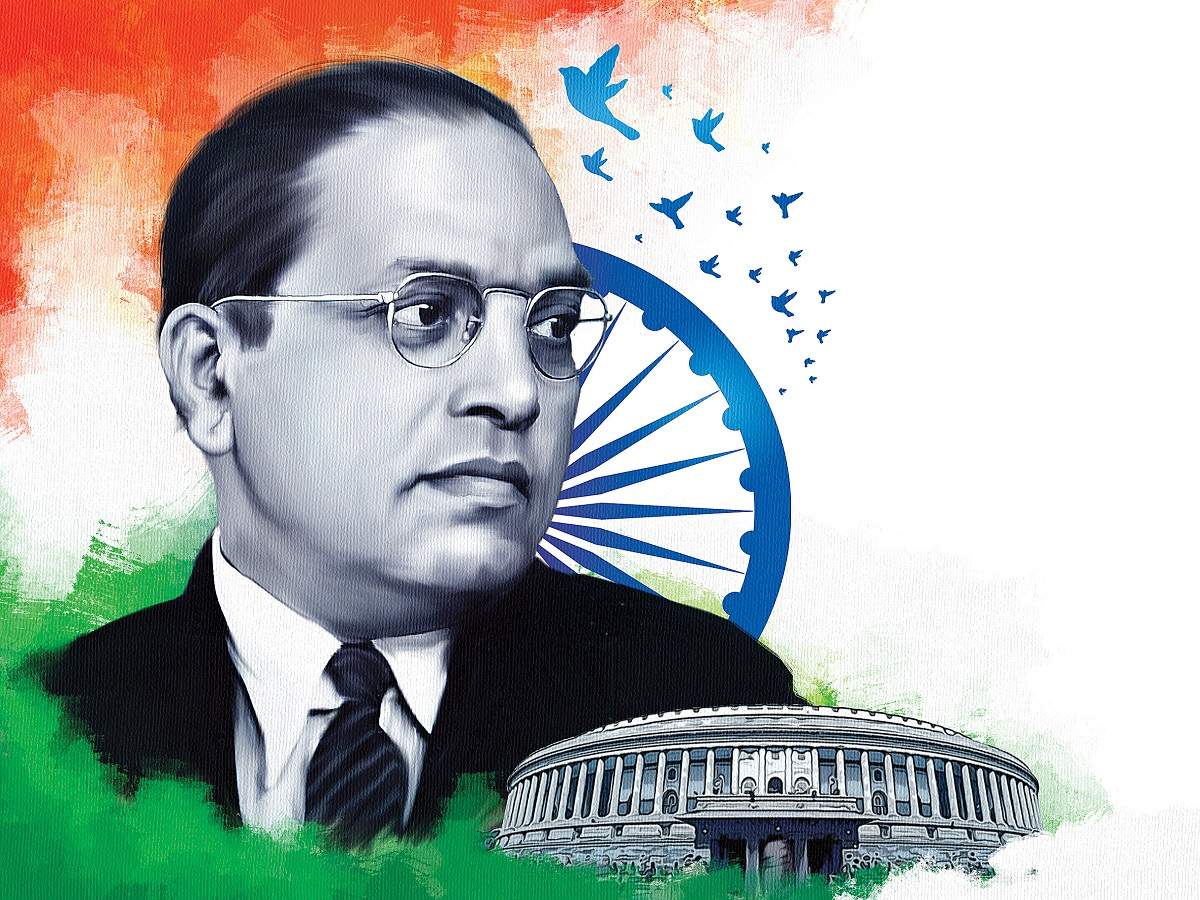
Chhattisgarh, situated in the heart of India, is endowed with a rich cultural heritage and attractive natural diversity. The state is full of ancient monuments, rare wildlife, exquisitely carved temples, Buddhist sites, palaces, waterfalls, caves, rock paintings, and hill plateaus.

Mainpat is mini Shimla of Chhattisgarh.

There are many waterfalls, hot springs, caves, temples, dams and national parks, tiger reserves and wildlife sanctuaries in Chhattisgarh.

India’s first man-made jungle safari is also situated in Raipur.

VEDAS

The word Veda means Knowledge. Vedas are the earliest piece of literature that was written in the Sanskrit language. These were handed down from one generation to the other orally by the pandits who learned this from their ancestors. Even if there were no facilities to preserve the Vedas through the art of writing, it is preserved by transmitting to the generations orally. In Hindu culture, Vedas are considered spiritual and everlasting revelations. Vedas come under Shruti which means what is being heard. There are four Vedas, each of which was composed of different ages. However, it is believed that it always existed and sages chanted this in their deep meditative states. The four Vedas are – Rig Veda, Yajur Veda, Sama Veda and Atharva Veda.

RIG VEDA

The earliest of Vedas is the Rig Veda. It is a set of 1028 hymns in Vedic Sanskrit. Many of those are beautiful descriptions of nature. The prayers in this seek prosperity and well developed and cultured society. It is believed that these compositions are the natural outburst of Vedic rishis when they went through the mental transcendental stage. Some of the prominent rishis of this period are Vasistha, Gautama, Gritasamada, Vamadeva, Vishvamitra and Atri. Indra, Agni, Varun, Rudra, Aditya, Vayu, Aditi, and Ashwini twins are the eminent gods of this Veda whereas Usha (the goddess of dawn), Vak (the goddess of speech), and Prithvi (the goddess of earth) are the notable goddess of the Rig Veda. Do you know that the majority of the hymns spoke of universally recognized higher values of life like truthfulness, honesty, dedication, sacrifice, politeness, and culture? Rig Veda also provides knowledge about the social, political, and financial conditions of ancient India apart from religion.

YAJUR VEDA

The word Yajur means sacrifice or veneration. This Veda is mostly related to Rites and mantras of different sacrifices. It tells the directions and ways to conduct the yajnas. It is a mixture of both prose and poetry. Being a treatise on rituals, it’s the foremost popular of the four Vedas. Yajur Veda has two main divisions called Shukla and Krishna Yajur Veda i.e., Vajasaneyi Samhita and Taitriya Samhita. This mainly talks about the social and religious aspects of India at that time.

SAMA VEDA 

The term Sama means melody or songs. This contains the tunes for the recitation of Hymns. Sama Veda is mainly of 16,000 ragas and raginis which means musical notes. Only 75 verses out of 1875 verses are original and others belong to the Rig Veda. However, the Sama Veda gives the tunes for the recitation of the hymns of the Rig Veda. It may be called the book of Chants (Saman). This book stands as evidence of Indian music during this era.

ATHARVA VEDA

The Atharva Veda is also called the Brahma Veda. It talks about the treatment for ninety-nine diseases. This Veda is originated from the 2 rishis called Atharvah and Angiras. The Atharva Veda is of immense value because it represents the religious ideas at an early period of civilization. It consists of two main branches namely, Paipaddala and Saunaka. This book gives detailed information about the family, social and political life of the later Vedic period. To know the Vedas, it becomes mandatory to know the Vedangas, the limbs of the Vedas. The Vedangas talk about Siksha (education), Vyakarana (grammar), Kalpa (rituals), Nirukta (etymology), Chhanda (metrics), and Jyotisha (astronomy). 

Each Veda is composed of 4 parts: The Mantra-Samhitas or hymns, The Brahmanas or explanations of Mantras or rituals, Aranyakas, and Upanishads. The division of the Vedas into four parts is to suit the four stages during a man’s life.