These oceans are arranged in the decreasing order of their sizes.
The third largest ocean based upon its size, it is the only ocean in the whole world to be named after a country. It covers 27,240,000 sq ml or 19.8 percent of the world’s water on the Earth’s surface. Bounded by Asia to the north, southern ocean to the south, Africa to the west and the Indonesian islands (the strait of Malacca) and Australia to the east, it also hass many marginal seas and islands.
Marginal Seas:
Bay of Bengal
Arabian sea
Laccadive sea
Java sea
Andaman Sea
Timor Sea
Red sea
Persian Gulf
Gulf of Aden
Gulf of Oman
Gulf of Suez
Molucca sea
Gulf of Khambhat
Major islands
Andaman and Nicobar
Lakshadweep
Maldives
Madagascar
Reunion
Seychelles
Mauritius
Comoros
Indonesia
Enclosed by land on three sides, it is centered along the Indian peninsula and doesn’t extend from pole to pole. It has roughly 800 drainage basin of which 50% are located in Asia, 30 % in Africa and 20% in Australia. It is considered to have subtropical climate. The northern half of the Indian ocean experience monsoon winds that lead to reversal in direction of winds (caused by the movement of ITCZ that in summers reaches above the Tibetan plateau, due to the apparent movement of sun) during summers and winters. This brings the monsoon winds to India during the rainy season(80% of the Monsoon rains dependent on them).
40 % of the total sediments found in this ocean are the results of deposition of the Ganga and Indus fans, the largest submarine fans of the world. The western Indian ocean has the largest phytoplankton blooms in summer due to the monsoon winds (they lead to the ocean water upwelling, building nutrient rich cold water to the surface of the ocean). These phytoplankton later support a complete ecosystem, acting as the primary food producers in the chain, in the ocean leading to high concentration of fish and other marine organisms. Thus, harm to the growth of these phytoplankton (continuously on the rise due to global warming, dumping of acidic and industrial waste water and algae bloom) can further destroy the fragile marine ecosystem.
There are 10 large marine ecosystems in the Indian Ocean-
Agulhas current
Somali coastal current
Red sea current
Persian gulf current
Arabian sea
Bay of Bengal
Gulf of Thailand
West central Australian shelf
Northwest Australian shelf
Southwest Australian shelf
Coastal reefs, sea grass bed and Mangrove forest: The most productive and important ecosystems. This ocean has 36 biodiversity hotspots and is an actively spreading and expanding ocean(having only two trenches- The Java and Sunda trench and the Makaran trench). It also has an active volcanic hotspot- The Reunion hotspot(currently below the reunion islands). Salinity follows the trends similar to the Atlantic ocean(though it doesn’t extend towards the poles.)
This is all about the Indian ocean. See you tomorrow with the Southern ocean.
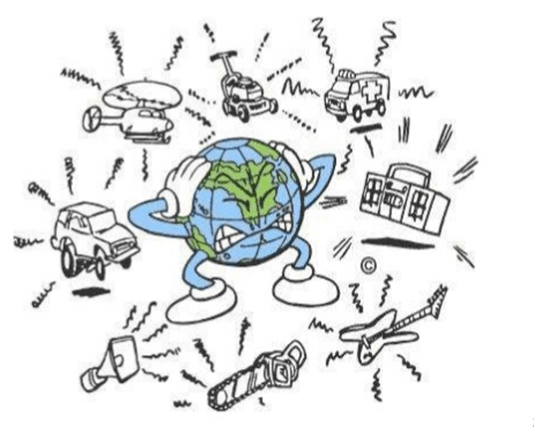
Noise is usually defined as unwanted sound or a sound without value that causes discomfort to the listener. Noise is usually measured in units of decibels and is denoted by dB.
1. On human beings:-
• Mental health
Exposure to intense levels of noise can cause personality changes and violent reactions. Noise has also been shown to be a factor that attributed to violent reactions. Psychological health effects from noise include depression and anxiety stress. Individuals who have hearing loss, including noise induced hearing loss, may have their symptoms eased with the use of hearing aids. Individuals who do not seek treatment for their loss are 50% more likely to have depression than their aided peers. These psychological effects can lead to detriments in physical care as reduced self-care, work-tolerance, and increased isolation.
• Physical health
Exposure to loud sound or longer exposure causes threshold shift. Noise-induced threshold shifts are seen as a notch on an audiogram from 3000 to 6000 Hz, but most often at 4000 Hz. Exposure to loud noises, either in a single traumatic experience or over time, can damage the auditory system and result in hearing loss and sometimes tinntius as well. Noise induced hearing loss is sometimes unilateral and typically causes patients to lose hearing around the frequency of the triggering sound trauma.
2. On animals:-
•Marine animals
Two main reasons that make an environmental impact of noise in marine life a grave are – 1. Noise travels much more in water, covering greater distances than it would do on land while travelling though air, and secondly because the marine life is extremely sensitive to noise pollution and an absence of any mechanism to safeguard them against it, underwater noise pollution disrupts marine life in more serious ways.
The deaths can occur because of haemorrhages, changed diving pattern, migration to newer places, and damage to internal organs and an overall panic response to the foreign sounds. There is also a disruption in normal communication between marine animals because of underwater noise pollution. This means animals prone to noise pollution cannot call their mates, look for food or even make a cry for help under such circumstances.
•Birds
Anthropogenic noise, emitted from the oil and gas compressors, is becoming a global issue. The idea of the study was to measure the stress levels of the birds compared to the distance they were nesting with the oil and gas compressors.
So much so that they were showing Post Traumatic Stress Disorder-like (PTSD) symptoms. In the birds, their corticosterone levels were relatively low. And that isn’t exactly what you would expect to see in a high-stress situation. This is likely to be what was happening with the birds. It triggered health defects such as stunted growth, issues with their reproduction, and fewer feathers on the birds. Their ability to hear predators also seemed to be jeopardised because of the noisy surroundings.
Preventive measures to reduce noise pollution
Factories should be established away from the settlements.
Settlements should be located 20 kms away from the mining areas and coal areas.
Explosives should be not used in mountainous, forest and mining areas.
Use of horn in public places should be banned.
The sound of musical instruments should be controlled to desirable limits.
The use of sound amplifiers of high power should be banned in religious events.
The use of sound absorber tiles should be encouraged in the construction of multi-storeyed buildings.
In industrial, commercial and hospital buildings, adequate soundproof systems should be installed.
Intensive plantation should be made in the entire building complex.
Planting green trees along the roadside reduces the intensity of noise pollution.
Protective tools should be provided for workers.
Legal provisions should set limits on noise and control over noise pollution.
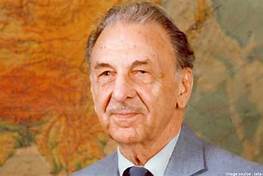
Jehangir Ratanji Dadabhai Tata, known throughout the world as J.R.D Tata, was born on the 29th of July, 1904 in Paris. His father, Ratanji Tata. His mother Sujaine was French. The Tatas belong to the Parsi community. They settled in Navsari, a small town near Bombay in 1942 A.D.
The Tatas, an industrial family, have provided employment to lakhs of Indians all over the country. Tata Corporate is an industrial giant in our country. The Tatas have products that cover almost every industry right from railway engines to watches, cloth to soaps to common salt and also electrical goods. The Tata industry was started by Jamshedji Tata the Grand Old Man of the Tata family. He started a steel factory in Jamshedpur and a cotton factory in Nagpur, laying a foundation for industrial technology in India. This tradition was continued by J.R.D. Tata was known as the father figure of Indian industry.
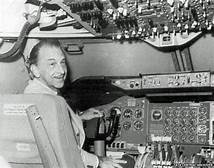
J.R.D. Tata received his primary education both in Paris and Bombay. He wanted to pursue his studies at Cambridge but his father involved him in the running of the company and hence he could not pursue his further studies at Cambridge. From childhood, J.R.D. wanted to be a pilot. His inspiration was Louis Blerio, an adventurous pilot who had crossed the English Channel in an airplane. After Tata returned to India he became a member of the Bombay Flying Club in 1929, obtained a pilot’s license. He flew his plane and in 1953 the Tata airlines were born which later became Air Indian, India’s international airline. Tata had undertaken his maiden solo flight from Bombay to Karachi and back, he re-enacted his maiden flight fifty years later from Karachi to Bombay in memory of the inaugural flight at the age of 88, such was his spirit!
J.R.D. Tata participated in the struggle for freedom too. He was influenced by Pandit Jawaharlal Nehru and attended Congress meetings but later he felt he would be of better service if could help in eradicating poverty and employment than being behind bars. Under his chairmanship, the assets of the Tata Group grew from US$100 million to over US$5 billion. He started with 14 enterprises under his leadership and half a century later on 26 July 1988, when he left, Tata Sons was a conglomerate of 95 enterprises which they either started or in which they had a controlling interest.
He was the trustee of the Sir Dorabji Tata Trust from its inception in 1932 for over half a century. Under his guidance, this Trust established Asia’s first cancer hospital, the Tata Memorial Centre for Cancer, Research and Treatment, in Bombay in 1941. He also founded the Tata Institute of Social Sciences (TISS, 1936), the Tata Institute of Fundamental Research (TIFR, 1945), and the National Center for Performing Arts. The growth of Tata industries under him was phenomenal. As mentioned earlier from salt to steel, soap to atomic power, hotels, transport system, Tata industries lead by J.R.D. Tata was everywhere.
To recognition of his achievements and services in various fields, he received numerous awards. The Padma Vibhushan, in 1955 was one such award of civilian honor. He was awarded the Bharat Ratna in 1992 the highest civilian honor in India. J.R.D. Tata breathed his last on November 29, 1993, in Geneva, Switzerland. He is no more but his industries spread out all over India give a lifeline to lakhs of people.
Note- This article is based on historical facts and written with great conscience. I (the author) do not intend to hurt the sentiments of any Religion or Community. And in case I’ve made any mistake (with facts), then feel free to comment below.
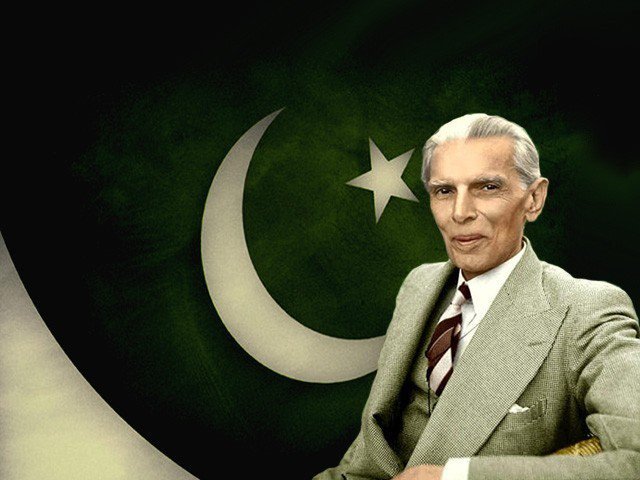
Mohammad Ali Jinnah, the first Governor-General of Pakistan, was a part of the India National Congress for many years. India and Pakistan were born due to the two-nation theory that the Muslims would be given a separate nation as opposed to the Hindus and the INC.
Hindus and Muslims had always fought as one against the oppression of the British. But the British were very crafty. They were aware that the growing nationalism would be the downfall of the British Empire sooner or later. To avoid this the British, sought the practice of ‘Divide and Rule’. They knew that the Muslims were a minority and their lack of education and comparative backwardness made them insecure and the British supposedly took up their cause. They campaigned for their cause and the Muslim intellectuals, big landlords, and leaders of the community aided them in swaying the rest of the Muslims. The way they wanted to.
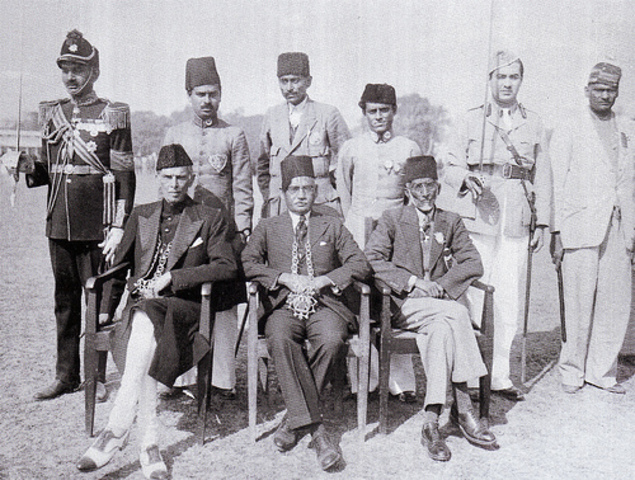
The Indians, unfortunately, did not realize that this was what the Britishers wanted and that they should be working together. The divide became wider and soon separate electorates took place in 1906. The Muslim leaders like Khan Abdul Gaffar Khan, Maulana Azad, M.A. Ansari all worked and appealed for unity, but on the other hand, Jinnah emerged as the leader of the Muslims and he gave vent to his ill feelings against Hindu leaders. It was during the conference at Calcutta in December 1928, that he demanded a separate electorate as well as reservations and safeguards for his community. He drilled into the minds of all the Muslims that they were a minority and they stood the danger of being dominated by the Hindu majority. Several Hindu organizations like the Hindu Mahasabha aided the deep-rooted resentment between the two communities.
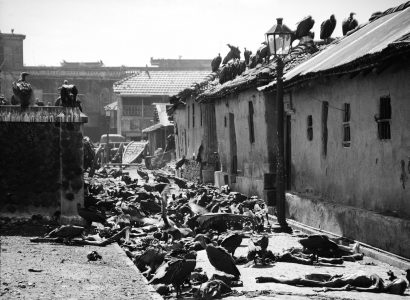
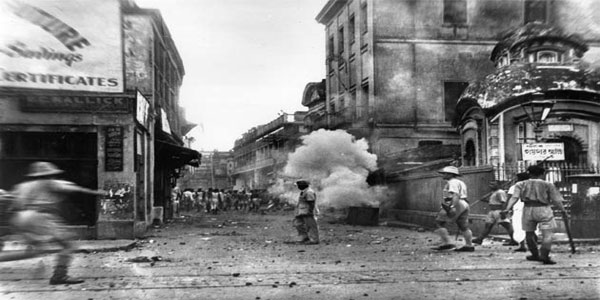
The result of all this was partition and a nation called Pakistan was born. The initial idea of a different Muslim nation was heralded by Sir Muhammad Iqbal, who put this proposal at the Allahabad Muslim League session in 1930. But it was in April 1914 that Jinnah declared that under no circumstances would there be one government. They were determined to establish an independent nation. When the Ministers of the Interim Government, led by Pandit Jawaharlal Nehru were being sworn in, in September 1946, the Muslim League supporters were raising slogans about ‘Long Live Pakistan’. Though the two leagues worked together for a while, it was by no means a smooth sailing in the joint Government. Jinnah then announced 16th August 1946 to be considered as Direct Action Day, to assert his demand for a separate homeland for Indian Muslims out of certain northwestern and eastern provinces in colonial India. Against a backdrop of communal tension, the protest triggered massive riots between Hindus and Muslims in Calcutta (now Kolkata) in the Bengal Province of British India. More than 4,000 people lost their lives and 100,000 residents were left homeless in Calcutta within 72 hours. This violence sparked off further religious riots in the surrounding regions of Noakhali, Bihar, United Provinces (modern Uttar Pradesh), Punjab, and the North-Western Frontier Province. These events sowed the seeds for the eventual Partition of India.
Communal Riots in Calcutta
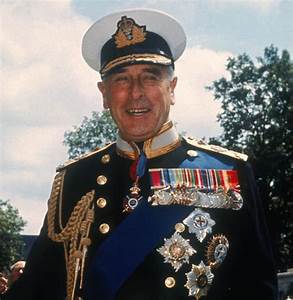
Eventually, Lord Mountbatten put forward the partition plan in June 1947. The country was divided into two separate nations- India and Pakistan. Mohammad Ali Jinnah was sworn in as the first Governor-General of Pakistan on 14th August 1947. A day later India gained Independence with Pandit Jawaharlal Nehru as the Prime Minister on 15th August 1947. As Jinnah left New Delhi to assume the office of Governor-General of Pakistan he commented that it was probably the last time he would be looking at Delhi, and this proved true enough as he died only a year later on September 11, 1948. The emergence of Pakistan was at almost the end of his lifetime and the task of fulfilling and building up his dream was left to his successors.
There are 12 different horoscope signs, each with its own strengths, weaknesses, traits, desires, and way of viewing the world. Your personal astrological sign is based on the position of the sun on the day you were born. Take a look below to learn what your zodiac sign is, and discover their powerful traits and secrets.
Aries (23rd March- 22nd April)
As the first sign to appear in the zodiac, Aries are typically brave and outgoing.
They’re assertive by nature and won’t hesitate to tell you how they feel. But they do need to be mindful that they don’t hurt anyone’s feelings by speaking impulsively. They can be headstrong at times, and make better leaders than followers.
Taurus (23rd April- 22nd May)
No one will expose you to the finer things in life, quite like a Taurus.
This fixed earth sign has impeccable taste and loves to indulge. They tend to be financially responsible, but still know how to treat themselves and the ones they love. Though they do have a stubborn streak, this member of the zodiac is incredibly loyal and reliable.
Gemini (23rd May- 22nd June)
Perhaps the most curious sign in the zodiac, Geminis make great students and communicators.
They’re witty and charming, but also have a darker side to them. They love to socialize but can become nervous or overstimulated when they don’t take time for themselves. This sign is also great at multitasking but needs to be careful not to take on too much at once.
Cancer (23rd June- 22nd July)
As a water sign, Cancers feel deeply, though will often keep these sentiments hidden under their shell.
They are intuitively nurturing and love to take care of the people around them. They have a reputation for being moody and aren’t always the best at unpacking their feelings with others. They often opt to sort out their issues alone.
Leo (23rd July- 22nd August)
Warm, artistic, and protective of the ones they love, Leos make great friends and companions.
They are confident and larger-than life, easily charming the people they encounter. However, this sign can be dramatic from time to time, especially if they feel disrespected. They feel passionately about their personal interests but need to be mindful that they show interest in the lives of those around them as well.
Virgo (23rd August- 22nd September)
One of the most efficient members of the zodiac, Virgos are organized, driven, and meticulous in their work.
They are very detail-oriented, making them master editors with extremely high standards. However, they need to be mindful that they are not overly demanding or critical of themselves or those around them.
Libra(23rd September- 22nd October)
Known for their diplomacy and harmonious energy, Libra is one of the most laid-back members of the zodiac.
They are extremely relationship-oriented but can sometimes prioritize their partner’s needs over their own. This Venus ruled sign has a keen eye for aesthetics with impeccable personal style and well decorated homes.
Scorpio (23rd October- 22nd November)
Mysterious, charismatic, brave, and magnetic, Scorpios are hard to ignore.
They are extremely intuitive and make natural psychologists with an ability to easily read those around them. They form intense bonds with their friends and romantic partners, but they can become possessive or jealous if they’re not completely confident with themselves.
Sagittarius (23rd November- 22nd December)
Sagittarius is one of the most beloved members of the zodiac-with an adventurous, charismatic, and generous spirit.
They lean toward optimism and love to take risks, but need to be mindful of living in the present and making practical plans for the future. Sagittarius are natural philosophers and are always looking to explore the mysteries of the universe.
Capricorn (23rd December- 22nd January)
Perhaps the most disciplined members of the zodiac, Capricorns, are known for their endurance and determination.
Career-motivated and focused on status, these earth signs are highly driven to reach their professional goals and take their responsibilities very seriously. They’re typically resistant to change and will often stick with their personal routines for many years.
Aquarius (23rd January- 22nd February)
Nothing says “quirky” quite like Aquarius energy does. This member of the zodiac embodies rebellion, creativity, eccentricity, and intelligence.
They’re driven by a desire to evolve past antiquated ideals, and help society move into a more compassionate space. They can be seen as unpredictable or disorganized, but often surprise people with their streaks of brilliance and hidden genius.
Pisces (23rd February- 22nd March)
Pisces signs have a peaceful and gentle presence about them, with an uncanny ability to tap into the emotions of the collective.
They’re extremely malleable and need to be careful of who they surround themselves with. Since they are hyper-intuitive, they can sometimes become disconnected-making it important for this water sign to ground often.
We may live in different place, different state, different country but we a got together by music. Would you agree if say like that? Yes, music is a good companion which helps us to express our feelings. It may be any form of music but we may feel accompanied with music rather than being lonely. Let me tell you about how music has an great effect on us.
Music is something that we enjoy as a part of our life. It accompanies us from birth to death. During our childhood, our parents and grandparents used to sing songs to make us sleep. Crying is a kind of music. When we woke up, we can hear the birds chirpping and trees rustling which is the most lovely feel in the morning. Music is everywhere, all we need is to open our ears to listen to it.
One who knows to create music on their own with musical instruments is called a Musician. The different music instruments include – Percussion, Brass, String, woodwind and keyboard. Brass music instruments are played using mouth. Those instruments include Trombone, Trumpet etc. String music instruments give rythym to music and those instruments include Guitar, Veena, Violin etc.
Some musical instruments
Percussion musical instruments gives main beat and feel to the song and those include Drums, Tabla, Dolak etc. Woodwind instruments are made of wood and they are also played using mounth like brass instruments and these instrument include Flute. The keyboard consists of keys which has high pitches.When you add another voice to an instrument, it is called singing and is a vital part of the music. When people who play different instruments come together to play them together, it is called a band.
There are different genres of music such as rock, pop, classical, blues, jazz, R&B, hip-hop, etc. All of these genres of music are characterized by how the instruments work together. Rock music is often louder and is played using percussion and string instruments. In Jazz music, Saxophone is very popular. In this modern world, the newest genres of music is electronic dance music (EDM) which consists of loud percussive beats and is very popular to young people.
We all have our favorite music director, singer, band, etc. Music is a universal language that unite people regardless of boundaries. This has the sense of familiarity among the people. Eventhough, we don’t understand the meaning of the lyrics of a song, we like it because of the tune and voice. Music is not just a sound but a communicable language which makes feel good. I love to hear music when am alone. But I used to play music when I am with my friends and family and it unites us very much. Listening to your favourite song can completely uplift your mood if you are feeling down. Everybody has their own kind of music that they love, which is why it is special to us all in our own unique ways.
My best advice for you is to enjoy the music when you are alone and enjoy more than that when you are with your family. This feel cannot be explained in words and you’ll understand by experiencing it. Often hear songs; make everyone around you happy. Be happy; lead a helathy life.
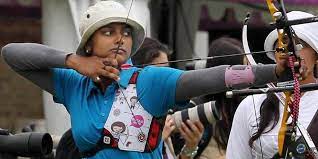
Everyone in the world have some unique talent. The talent to do something vary from person to person. Yes, I believe I have the talent of writing articles. I would say this is my unique talent. Likewise, we haven’t heard a lot about the so called unpopular games. Archery is not as famous a cricket. But Archery is a wonderful sport. The people who has interest in this is also low. This game needs a free and concentrated mind. In this game, concentration plays a major role. Let me ask you a question? Do you know the name of any archers in India? Have you heard of Deepika Kumari? I would say I have heard her name and now I know about her a little bit by writing this article. Come on! Let’s see about Deepika Kumari.
Deepika Kumari Mahato was born on 13th June 1994 in Ranchi, Jharkand. Her father, Shivnarayan Mahato, is an auto-driver and her mother Geeta Mahato, a nurse at Ranchi Medical College. Her interest in Archery came from hitting the mangoes with stones. Many of us did this, but this has laid the strong foundation for her archery career. Deepika’s family was financially unstable and they cannot buy her new equipments to practice. So she used bamboo bow and arrow. After that her cousin helped her to develop and improve her talent.
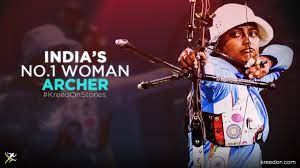
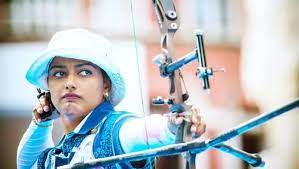
DEEPIKA KUMARI
DEEPIKA’S PROFESSIONAL CAREER:
She made her breakthrough in 2005, by entering the Arjun Archery academy run by Wife of Jharkand Chief Minister Arjun Munda.
Her professional career started in 2006 by joining Tata Archery Academy in Jhamsedpur. After being sent there, she had uniform and professional equipments and she praticed hard. She only returned home after three years, by winning Cadet World Championship title in November 2009. She is the one to get first medal for India in Archery.
Deepika became the second women to win the World Archery Competition held in 2006.
She won the 11th Youth World Archery Championship in 2009 at her age of fifteen.
In 2010 Common Wealth Games, She won two medals, one in individual event and the other in team event. In the same year, she was awarded Outstanding performance at CWG in the women’s catergory at the Sahara Sports ceremony.
In the 2010 Asian games, she lost in the individual Archery game to a North Korean player in the Bronze-level playoffs. But as a recurve team defeated Taipei of China in the Bronze-level playoffs.
In 2012, She won her first Word Cup individual stage, held in Turkey.
In London Olymbics 2012, She lost to Amy Oliver of Britain in the opening rounds due to relatively high fevers and winds.
In July 2013, she won the gold medal in Archey World Cup stage 3 held at Mendellin.
In September 2013, she won silver in the FITA Archery World Cup.
In 2015, in Stage 3 Archery world Cup, she won bronze in the individual event. She won team Silver with her teammates in the same World Cup.
In November 2015, she won a bronze medal in the Asian Championship with Jayanth Taldukar in the Recurve Mixed Team event.
In April 2016, at the first stage of the World Cup in Shangai, Deepika equaled the Ki-Bo-Bae’s world record of (686/720) in the women’s recurve event.
In November 2019, Deepika Kumari secured an Olympic quota at the Continental Qualification Tournament being held on the sidelines of the 21st Asian Archery Championships in Bangkok.
She won three gold medals In Stage Three World Cup held in Paris 2021.
She recorded the 13th triple gold and became the 11th archer to achieve the feat – in the 15-year history of the Hyundai Archery World Cup.
In 2017, a Biographical Documentry called Ladies First, flimed the life of Deepika Kumari. This movie won at London Independent Festival and was screened in Mallorca Film Festival in October 2017. This movie has also been submitted in Short Documentary category at Oscars.
PadmaSri awarded by Hon’ble Pranab Mukerjee.
AWARDS WON BY DEEPIKA KUMARI
2012 – Arjuna Award by the Government of India
2014 – FICCI Sportsperson of the Year Award
2016 – Padmasri by the Government of India
2017 – Young Achievers award which is felicitated by Vogue.
These oceans are arranged in the decreasing order of their sizes.
The Atlantic is the second largest ocean in the whole world with an area of about 106,460,000 km2(source: Wikipedia). It lies between the Americas in the west and Europe and Africa in the east. The equatorial counter current divides the ocean into two equal parts latitudinally and the Mid Atlantic Ridge divides the ocean into two parts longitudinally(It is how the Mid Oceanic Ridge gets its name). The ocean has very few trenches and it is why the ocean is expanding(at a rate of 2-5 cm/year). Continental shelves are found in the areas of Newfoundland, southernmost South America, and north-eastern Europe. Though continental shelves are, in themselves, wonderful fishing grounds and petroleum and gas reserves, the coast off Newfoundland and Bahia Blanca(off the coast of Southern America- Brazil) are meeting points of warm and cold currents. It makes them even better fishing grounds as the amount of Phytoplankton increases in the ocean. It also leads to the formation of fog in the area that makes navigation difficult.
The Atlantic ocean is the saltiest major ocean with a salinity of 33-37 parts per million. Maximum salinity occurs in the subtropical regions. Though the heavy rainfall makes the salinity of the region around the equator lowest, in general salinity decreases as one moves to the poles. The poles also experience higher salinity though, because of the fresh water being occupied in the form of glaciers, decreasing the overall amount of fresh water. The Northern Atlantic clockwise ocean circle and the counter-clockwise South Atlantic ocean circle are the two gyres in the ocean. The flow of ocean currents in the northern hemisphere form Sargasso sea(the world’s only sea without any continental coast). The sea is surrounded by Gulf Stream, North Atlantic drift (and by extension the Canaries Current) and North Equatorial currents. Earthquakes and a few active volcanoes are found along the Mid Atlantic Ridge. The temperature decreases as we move towards the poles (generally) but is influenced by warm ocean currents in some places. Eg. The Norwegian sea ports are functional throughout the whole year as the ocean doesn’t freeze (the warm ocean current – The North Atlantic drift).
This is all about the Atlantic Ocean. I have included all that I label off as important for our general knowledge. But do let me know in the comments if I missed something. Next in the series, as you can all guess, is our Indian ocean-the only ocean to be named after a country.
” What mental health needs is more sunlight, more candor, and more unashamed conversation.” – Glenn Close
Mental health plays a supreme role in everyone’s life . It is mental health only which affects how we think , how we behave , how we feel , & how we cope up with life . It also help us determine how we cope up with stress , relate to others & make choices . It is important at every stage , from childhood to adulthood & aging . This includes our physical , psychological & social well being .
WHAT CAN AFFECT OUR MENTAL HEALTH ?
Many factors affect our mental health , some of them are , biological factors , such as genes & brain chemistry , family history & mental health problems in the family . This affects a lot , because they are present already in you , they are biological factors & outside factors have no affect hand & effect on you mental health . Sometime your very own experience in your life make you mentally ill , experiences such trauma , abuses , accidents leads to poor mental health . Not only biological factors , family history or bad experiences affect our mental health , but our way of living the life decides the how our mental health is . Our diet , food habits , physical activity also tells us our state of mental health . you can improve your mental health by meditating , doing yoga , by involving in physical activities .
What are the signs that I might have a mental health problem?
When it comes to your emotions, it can be hard to know what is normal and what is not. There are warning signs that you may have a mental health problem, including
A change in your eating or sleeping habits
Withdrawing from the people and activities you enjoy
Having low or no energy
Feeling numb or like nothing matters
Having unexplained aches and pains
Feeling helpless or hopeless
Smoking, drinking, or using drugs more than usual
Feeling unusually confused, forgetful, angry, upset, worried, or scared
Having severe mood swings that cause problems in your relationships
Having thoughts and memories that you can’t get out of your head
Hearing voices or believing things that are not true
Thinking of harming yourself or others.
Not being able to perform daily tasks like taking care of your kids or getting to work or school
WHY IS MENTAL HEALTH IMPORTANT ?
Mental health is very important , it tells you how to behave to a particular situation , how to cope up with stress . It helps us to stay physically fit & mentally strong . By being in good mental health one can carry good relationships with everyone . It increases your work productivity , helps you to contribute a handsome amount of efforts for the community . It makes you realize your full potential & caliber with which you can outshine anywhere & everywhere.
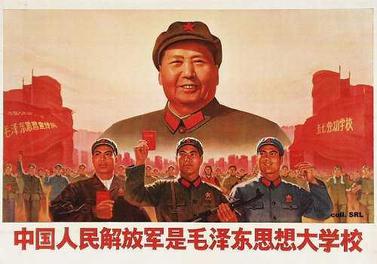
One of the most tragic instances in history would be that of the holocaust – a word that in itself is a definition of six years of European geopolitics. In Russia, Palestine and China, the expulsion of the White Army, the expulsion of the Arabs and the brutual suppression of cultures across China in the name of cultural revolution respectively bring to picture the way in which states and not just people can sometimes be the enemy of people. However, there have been several such instances in history, most of them hidden because they were carried out by the more ancestors of the ones who ended up being economically and intellectually influential communities.
A poster calling out for Chinese Cultural Revolution
Human history is a record of forced displacements both internal and external, ethnic cleaning and genocides and murders both to the dismay and sponsored by states. When Captain Cook discovered the down under, it led a massive import of British criminals on the continent. With them came officers, scientists and explorers. The businessmen and civilians searching for more opportunities came in later. The people of the continent – the Australian arboginals, the Maoris from Oceania and many more tribes were reduced to a mere holder of small patches of lands and often no land at all by the British who had a superior military.
When the first Irish and British settlers landed in the new World of America, the red Indians offered them food and shelter which soon became a situation where the Red Indians had to fight for the survival of their lives and their cultures which was systematically and quite institutionally taken away by the New World settlers. Similarly, when the Spanish invaded Latin America, it meant a complete and absolute dissolution of their traditions and a genocide that would annihilate their population to an extent where even after 400 years, they would not attain the same.
Machu Pichu stands as a testimony to the Grand Incan Empire in the Andes before the Spanish arrived.
To add to all these miseries are the tales of the Rohingya community from Myanmar, the Tamils in Sri Lanka, the Kashmiri Pandits in Indian state of Jammu and Kashmir, the now diminishing sea faring communities in Philippines and Malaysia and many more. Japanese and Italian unifications were also carried out at the cost of the local traditions, cultures and ways that the communities living there had been practicing for a millennia. In India, the use of English and Hindi have slowly gobbled up on the rich culture of local languages that the communities had. In fact, many communities from the state of Bihar and Uttar Pradesh have completely given up on their languages. Bihar – a state where only 6% people had Hindi as their mother tongue now has a minority of about 20%!!
World loses about 1 language every 15 days!!!
Wikipedia defines Indigenous people as – “Indigenous peoples, also referred to as first people, aboriginal people, native people, or autochthonous people, are culturally distinct ethnic groups who are native to a place which has been colonised and settled by another ethnic group. ” But, a broader definition is the fact that indigenous people are defined by their cultures which is at a steady loss across the globe. The most important thing is to treasure the fragments of their traditions that still remain. Because a rainbow is better a rainbow.
Happy International Day for the Indigenous communites.
“WHERE SHIVA EXISTS IN EVERY STONE , IS UTTRAKHAND “
And this statement gives the justification of why Uttarakhand is know as “the land of gods “. Uttarakhand was formed on 9th November 2000 as the 27th State of India, when it was carved out of northern Uttar Pradesh. Located at the foothills of the Himalayan mountain ranges, it is largely a hilly State, having international boundaries with China (Tibet) in the north and Nepal in the east. On its north-west lies Himachal Pradesh, while on the south is Uttar Pradesh. It is rich in natural resources especially water and forests with many glaciers, rivers, dense forests and snow-clad mountain peaks. Char-dhams, the four most sacred and revered Hindu temples of Badrinath, Kedarnath, Gangotri and Yamunotri are nestled in the mighty mountains.
LET ME GIVE YOU A BRIEF ABOUT THE MAJOR TEMPLES FOR WHICH UTTARAKHAND IS FAMOUS FOR :
PANCH BADRI ( 5 BADRI )
a. BARDINATH : Badrinath is the northern Dham of the four sacred Dhams called Char Dham. Though the Badrinath temple is believed to date to the Vedic period, the current structure was built in the 8th century AD by Adi Shankaracharya. The other three dhams are Rameswaram in the south, Dwarka in the west and Jagannath Puri in the east; all of these four temples are dedicated to god Vishnu. Adi Shankara’s basic intention was to unite the country under the banner of Hinduism. The temple, which had been subjected to damage due to snow avalanches and landslides, several times in the past, was last restored in the 19th century. Badrinath is also part of Chota Char Dham, four sacred temples in Uttarakhand. The others include the Shiva temple of Kedarnath and the sources of the holy rivers Ganges and Yamuna.
b. AADI BADRI : In ancient times, when approach to the main shrine of Badrinath was closed due to weather conditions, pilgrims worshipped Vishnu at this temple. Adi Badri, also known as Helisera according to revenue records, is a tiny temple complex enclosed within a space of 14 meters (46 ft.) X 30 meters (98 ft.). The height of the temples vary from 2–6 meters (6.6–19.7 ft.).
c. BHAVISHAY BADRI: According to the legend of Bhavishya Badri (literally “Badri of the future”), when evil transcends the world, the mountains of Nara and Narayana would block up the route to Badrinath and the sacred shrine would become inaccessible. The present world will be destroyed and a new one established. Then, Badrinath will appear at the Bhavishya Badri temple and be worshipped here, instead of the Badrinath shrine.
d. DHAYAN BADRI : The legend of Dhyan Badri (meditating Badri) is linked to the Urvashi, son of King Puranjaya of the Pandavas lineage who meditated in the Urgam region and established the temple for Vishnu. The image of Vishnu is four-armed, made of black stone and in a meditative posture.
e. YOGADHYAN BADRI : Yogadhyan Badri, also called Yoga Badri, is located at Pandukeshwar at the elevation of 1,829 meters , close to Govind Ghat and is as ancient as the main Badrinath shrine . Legend has it that King Pandu, father of the five Pandavas – heroes of the Hindu epic Mahabharata, meditated here to god Vishnu to cleanse him of the sin of killing of two mating deer, who were ascetics in their previous lives. The Pandavas were also born here and Pandu died and attained salvation here. Pandu is believed to have installed the bronze image of Vishnu in the Yogadhyan Badri shrine. The image is in a meditative posture and thus the image is called Yoga-Dhyan (meditative) Badri. The idol is life size and has been carved from Shaligram stone. According to legend, the Pandavas, after defeating and killing their cousins Kauravas in the Mahabharata war, came here to repent.
2. PANCH KEDAR ( 5 KEDAR )
A folk legend about Panch Kedar relates to the Pandavas, the heroes of the Hindu epic Mahabharata. The Pandavas defeated and slayed their cousins — the Kauravas in the epic Kurukshetra war. They wished to atone for the sins of committing fratricide and Brahmanahatya (killing of Brahmins — the priest class) during the war. Thus, they handed over the reins of their kingdom to their kin and left in search of lord Shiva and to seek his blessings. First, they went to the holy city of Varanasi (Kashi), believed to be Shiva’s favorite city and known for its Shiva temple. But, Shiva wanted to avoid them as he was deeply incensed by the death and dishonesty at the Kurukshetra war and was, therefore, insensitive to Pandavas’ prayers. Therefore, he assumed the form of a bull (Nandi) and hid in the Garhwal region.
Not finding Shiva in Varanasi, the Pandavas went to Garhwal Himalayas. Bhima, the second of the five Pandava brothers, then standing astride two mountains started to look for Shiva. He saw a bull grazing near Guptakashi (“hidden Kashi” — the name derived from the hiding act of Shiva). Bhima immediately recognized the bull to be Shiva. Bhima caught hold of the bull by its tail and hind legs. But the bull-formed Shiva disappeared into the ground to later reappear in parts, with the hump raising in Kedarnath, the arms appearing in Tungnath, the face showing up at Rudranath, the nabhi (navel) and stomach surfacing in Madhyamaheshwar and the hair appearing in Kalpeshwar. The Pandavas pleased with this reappearance in five different forms, built temples at the five places for venerating and worshipping Shiva.
3. PANCH PRAYAG( FIVE PRAYAG )
VISHNU PRAYAG : The Alaknanda River, which originates from Satopanth glacier is joined by the Dhauli Ganga River near Joshimath . Alaknanda flows in front of the Badrinath temple, one of the most revered Hindu shrines. Dhauli Ganga originates from the Niti Pass, after traveling a distance of 25 km (15.5 mi) from its source to the Vishnu Prayag
2. NAND PRAYAG :Nand Prayag is the second Prayag in the cascade sequence of the confluences where the Nandakini River joins the main Alaknanda River. According to one tale, a noble King Nanda performed Yagnya (fire-sacrifice) and sought blessings of God. Hence, the confluence is named after him.
3. KARNA PRAYAG : KARN Prayag is the location where Alaknanda River is joined by the Pindar River that originates from the Pindar glacier, below the Nanda Devi Mountain range. The epic Mahabharata legend narrates that Karna did penance here and earned the protective gear of Kavacha (armour) and Kundala (ear rings) from his father, the Sun god, which gave him indestructible powers. The name of the confluence is thus derived from the name of Karna.
4. RUDRA PRAYAG : At Rudra Prayag the Alaknanda meets the Mandakini River. The confluence is named after god Shiva, who is also known as Rudra. According to a widely narrated legend, Shiva performed the Tandava here, Tandava is a vigorous dance that is the source of the cycle of creation, preservation and dissolution. Shiva also played his favourite musical instrument the Rudra veena here. By playing the Veena, he enticed god Vishnu to his presence and converted him to water.
5. DEV PRAYAG : Dev Prayag is the confluence of the two holy rivers, the Bhagirathi – the chief stream of the Ganges and the Alaknanda. It is the first prayag on the way to Badrinath. Beyond this confluence, the river is known as Ganges. The holiness of this place is considered equal to the famous Triveni sangam confluence at Allahabad where the Ganges, Yamuna and Saraswati rivers merge.
A part from temples , there are many other famous place to pay a visit for . some of them are , Dehradun , Nainital , Mussoorie , Rishikesh, Haridwar , Almora , Kausani , Pithoragarh , Chopta , Ranikhet , valley of flowers , etc. One in his life time should make a visit to this state , to see nature from you soul , from your eyes . It is a heaven on earth .
Global warming yet again comes to news as it has been for the past soo many years and there’s gonna be nothing we are going to do about it once again. Even then, as a moral duty, I feel this compelling desire to inform all of my fellow malefactors of the supplementary and thoroughly under-appreciated results of our activities.
Let’s bestow upon them our much needed, though short term, attention. Today, I read on the newspaper about how the Ladakh glaciers are retreating due to global warming and decreased winter precipitation and that the Atlantic Meridional Overturning Circulation (AMOC)- a prominent warm ocean current belt particularly important for Europe and by extension, the whole earth has weakened over the centuries and reached a tipping point.
Lets start with the issue of the Ladakh Glacier. “The Pensilungpa Glacier located in Ladakh’s Zanskar Valley is retreating due to an increase in temperature and a decrease in precipitation during winters”, a recent study conducted by a team of scientists from the Wadia Institute of Himalayan Geology(Dehradun) revealed. Now with the increasing temperatures and retreating glaciers, it might be very well possible for the current snowfall in those areas to be replaced with rainfall: the snowfall that is responsible for balancing temperature of the lower altitude zones. It is now very much a possibility that the summer and winter patterns of surrounding regions are very much likely to be changed. We might very well be having winter rains real soon people, and floods.
And now, lets move towards the AMOC- The Atlantic Meridional Overturning Circulation-a result of difference in the water’s density(caused due to temperature and salinity difference). Well, that plus the combined effort of continental boundaries and Coriolis force(due to gravity). A large system of ocean currents, it is quite prominent in the Atlantic ocean. It is quite easily recognizable with the northward flow of warm, salty(salt dissolving capability increases with temperature. In colder regions, after being provided a sufficient time to cool off, these waters descend as denser and cold waters) water in the upper layers and a southward flow of colder, deep waters. Global warming is one of the main reasons of the slowing down of this current, contributing by causing the Arctic circle to warm, Greenland(a prominent ice sheet zone) to melt, rainfall to increase and the flow of fresh water to the Northern sea to intensify(It initially had high salinity due to no fresh water river drainage and less intermixing caused by ocean currents). Though, it is being said the rising temperature of the Indian ocean will keep the current going. The increased precipitation in the Indian ocean will draw winds from other parts of the world, lowering the amount of rainfall in the Atlantic ocean. It will increase the salinity of the AMOC current waters and increase the strength of the flow of current.
Seems like the global warming is creating a problem and further creating another one with the purpose of solving the first one and somehow completely increasing both the problems together. Wait, replace the global warming with humans. Quite amusing, how we managed to create a string of issues and now they are finding more and more beads to stitch, and we sit by and watch it all unfold. Well, not all of us, obviously. Most of us don’t even know of these unique products of our everyday activities. But, now that we are at it, we will let them know and invite, or rather force them all to join us in the midst of the unfolding of a future disaster, as we all sit by and do nothing.
I have started this chain, would be later adding more to it. You all share it. After all, the more the merrier. Right?
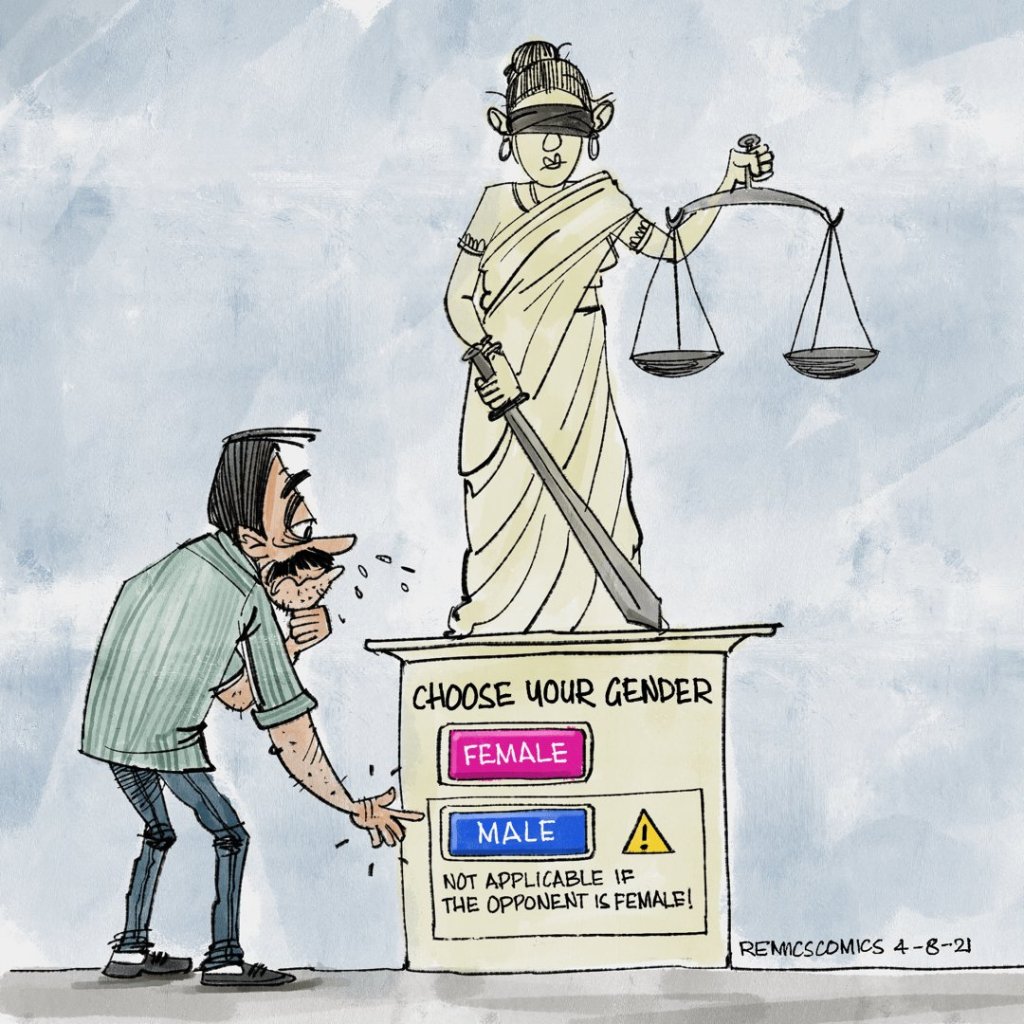
Patriarchy is a system of relationships, beliefs, and values embedded in political, social, and economic systems that structure gender inequality between men and women. Attributes seen as “feminine” or pertaining to women are undervalued, while attributes regarded as “masculine” or pertaining to men are privileged. Patriarchal relations structure both the private and public spheres, ensuring that men dominate both. Feminist scholarship traces the histories and geographies of patriarchal relations to demonstrate that patriarchy manifests in dynamic and flexible ways in order to sustain patriarchal relations. These approaches theorize the linkages between patriarchy and capitalism, colonialism, and nationalism, arguing that patriarchal relations operate across scales in ways that not only constitute those scales but also order social relations in hierarchical relationships. Such research examines patriarchal relations at the level of the body, the public-private divide, nationalism and citizenship, colonialism, and globalization. As an analytical tool, patriarchy has been criticized as too universalizing and overarching in its conceptualization of the unequal relations between men and women.
Earlier sociological and political definitions of patriarchy focused on domestic social relations organized around the law of the father and the social control that men, as heads of households, have over their wives and daughters. Within feminist scholarship, patriarchy has been understood more broadly as the system in which men as a group are constructed as superior to women as a group and as such have authority over them. In some instances, scholars have distinguished between ‘paternal’ patriarchy to refer to forms of a private, household organization run by the father and ‘fraternal’ patriarchy to refer to the domination of women in public civil society. For geographers, this distinction mirrors the division between private domestic space and public social space. More generally, patriarchy is conceived of as a broadly based system of social, legal, economic, political, and cultural structures and practices, which position men as the dominant social group and as able to marginalize, and exploit women. Some of the most widespread violations of human rights: Violence against women and girls takes many different forms, including domestic violence, sexual assault and harassment, child, early and forced marriage, sex trafficking, so-called ‘honor’ crimes and female genital mutilation. It is rooted in the gender inequality that women face throughout their lives from childhood through to old age. One in three women worldwide experience physical or sexual violence, mostly by an intimate partner. Violence against women and girls is a human rights violation, and the immediate and long-term physical, sexual, and mental consequences for women and girls can be devastating, including death. Violence negatively affects women’s general well-being and prevents women from fully participating in society. It impacts their families, their community, and the country at large. It has tremendous costs, from greater strains on health care to legal expenses and losses in productivity.
At least 155 countries have passed laws on domestic violence, and 140 have legislation on sexual harassment in the workplace (World Bank 2020). But challenges remain in enforcing these laws, limiting women and girls’ access to safety and justice. Not enough is done to prevent violence, and when it does occur, it often goes unpunished. For a woman to make more money than her male partner is frowned upon, and thus the male partner feels less than. These two examples are all directly linked to the fact that our culture sees parenting and childcare as feminine activity.
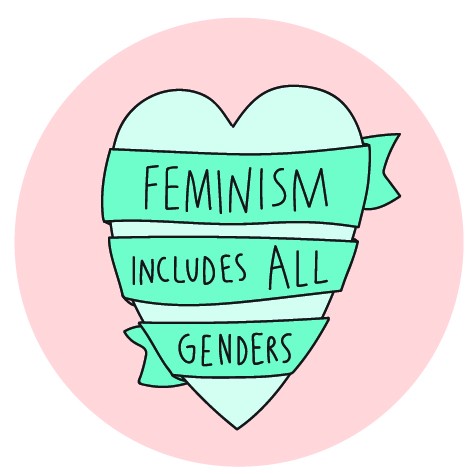
If we don’t begin by raising our children to understand that traditional gender roles are antiquated and unnecessary, we will have another generation of women, and society as a whole, living in a rape culture. By not understanding how patriarchy impacts men, we are negating the entire message of feminism: that there should be equality amongst all genders. It is time to change the standards that men and young boys are held up to. Instead of telling young boys that they cannot show emotion, that they must be self-reliant, and that violence is normal; it is time that we show them that being an “alpha male” is not something to aspire to, that being violent and destructive are not traits that we normalize, and that displays of emotion are both normal and encouraged. By doing this, we can restructure society and the way that society treats women.
Term ‘Feminism’ was initially brought up as a Label for women to fight against the discriminations happening towards them under it’s name. The purpose of the concept was to retrieve back the rights of women, breaking all the Stereotypes and putting an end to the prejudice beared by females since the earliest times. The beginners fought for women rights but never had a mission to demean males’ in any form or lower their status or rights so as to provide a higher position to women. Feminism was never invented to disregard men’s existence but all it was meant for is making the society aware of the fact that women deserve to have the same standard and respect EQUAL to that of Men. Majority of each and every person who has come across the notion, considered it worthy of all the attention and a very important agenda for empowerment. Feminism raised several issues and even unveiled injustices occurrings taking place against women in tremendous ways worldwide. For example, To receive an equal pay – as of the Male worker in the company while working on the same position, To get the freedom of working, dressing and living with their own choice, To ensure safety, To fight against domestic violence, sexual harassment and the superstitious harmful practices such as Female genital mutilation / cutting.
Likewise every law has a loophole, there are always Some people in a crowd who just couldn’t think Right! So Here’s where came a wave of demolishing the concept of Feminism. While, the movement was bringing a good change in the social norms and actually convincing the people about the shortcomings on the grounds of Building Equality, the fake flag bearers of Morality amd virtue started exaggerating the agenda. They created a state of Gender Bias all around. Some women would try to take unfair benefits in the name of feminism namely, a practice called PSEUDO FEMINISM. This includes examples such as; women’s income tax slab is higher than men’s. A woman who earns till 3,00,000-3,50,000 is exempt from tax payment. If both men and women earn the same account, why should it only be the men who pay tax. Another example is As of 2009, 175 men had been kidnapped and abducted for the purpose of illicit intercourse, according to the 2012 NCRB data. As per a reliable source the cases were registered under the Indian Penal Code (IPC) Sec 363 to 369, 371 to 373. Such cases are not dealt with in the same way as the abuse committed on women, even under regulation.
A Dilemma…
But Why can’t we just accept, respect and treat both the genders equally at the same time? We are already living in a culture where both Women and Men face so many challenges everyday due to Orthodox mindsets of people. Upon that, these Psuedo feminists suggest that women deserve more respect, priority, benefits than any other genders everywhere. They believe that the world should be governed/ controlled by females and they also potray all men as nemesis, responsible for all crimes against women. Little do they know, The most brutal crimes against women are conducted by another women themselves at many places. You get enough proofs of this on daily basis especially, when you are an Indian citizen. As here, there’s no place to be where you won’t find an elder Lady or even young girls judging others for one’s clothes or casual behaviour. The biggest example to this (in India) is when “A women is proclaimed as responsible for her own rape. She is ashamed for wearing certain clothes and provoking Men herself to do this injustice to them”. Now this is why Not only the “Men” But every single person irrespective of their gender or age having that narrow mindset with preconceived representations in their head of how a Women is a weaker gender, supposed to be kept and treated like slaves, etc. are responsible. And an even bigger mistake that Pseudo feminists do here is to blame and hurt those who are innocent considering it their right. Such incidents not only could hurt the image as well as emotions of the ones who are actually decent but also can pave a way for their thoughts to turn in a wrong direction. It creates an unjust impression of the actual concept of Feminism in everyone’s mind specially, in today’s era where every news is spread on social media at an incredible pace amd affects millions of brains which could even change the supporters and drive their views to become Feminism’s antagonists.
LATEST NEWS.
Is it true?
We all are familiar with case of Priyadarshani yadav from lucknow, taking advantage of her gender to prove herself as the victim for hiding the cruel deed of her’s. A video that is now quite viral on social media shows a woman in Uttar Pradesh’s Lucknow getting into a fight with a cab driver and during this, the woman slapped this driver not once or twice but more than 20 times. The girl could be seen crossing the road when the traffic light was green. She claimed that the driver was coming with a high speed and ran into her, while the cab driver (Saadat ali) said that the girl suddenly came in front of the car but he immediately stopped it. However, whatever the case might be no person haves a right to take law in his/ her hands and hit a person in midst of the road in front of a wholesome crowd. This incident has left the netizens in rage and a hashtag called #arrestlucknowgirl is trending on Twitter. All the support on social media is with cab driver who is clearly be seen calmly handling the situation. He further ranted in his statement in an interview that, being a guy if he had done such cruelty thousands of amendments would have been cast on him, he would be criticised by the whole country and his image and self respect would have been damaged by herher which is indeed a true scenario fabricated by pseudo feminists.
On the contrary, the actual lesson what our country need to get is to stop favouring citizens according to their gender. Rather, everyone should be influenced to treat each other with Equality and Respect no matter the sex. And mainly, acquire the knowledge of deciding Right and wrong after learning all the facts and figures instead of judging and building conclusions and defaming anyone while being exposed to only one side of the story, just because some fake feminists motivate us to do so.
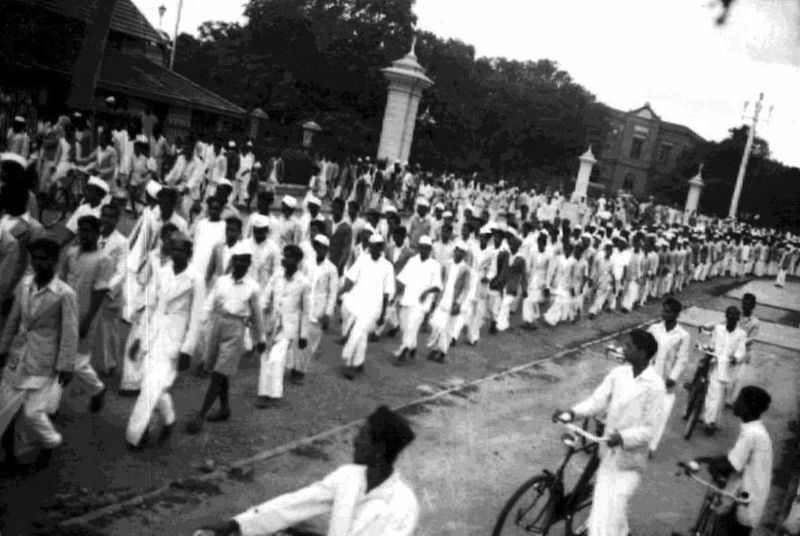
August 8th marks a very iconic day in Indian history. The Indian National Congress declared its ultimatum for the British to leave India. This movement in itself had contested set of consequences – the strengthening of the Muslim League, the rise of freedom struggle motivated Subash Chandra Bose to invade the British camps in Noth East and Gandhi, for the fist time in his career was willing to go agressive even if he had his own definitions of the word – when he announced, “karo ya maro” (Do or Die).
The Quit India movement came up at the heels of the failure of the Cripps Mission that was sent by the Raj to secure Indian cooperation towards the British war efforts in the second world war. The leader of the mission, Sir S. Cripps was left wing British statesman who was sympathetic to the cause of Indian self rule but was also a member of the war cabinet of 1942.
The proposals of the mission were refused by the Congress which had seen similar proposals in the first world war where the Raj had promised more autonomy but ended up imposing harsher taxes that resulted in the Non-Cooperation movement, the Rowlatt and Jalia Walah Bagh massacres. The Indian National Congress resigned from its positions in all provincial governments and announced the Quit India Resolution that led a national movement that was difficult for the British to look after in the face of the then ongoing second world war. Virtually all of the INC leaders were jailed for the next three years and the Muslim league got enough time to build itself a support that shook the years Gandhi had spent projecting himself and his colleagues as leaders of a secular, united state of India. To add to it was the vehement opposition Hindu nationalists showed to the movement where many, including the Hindu Mahasabha and Veer Savarakar denounced the movement pointing out to the power vacuum it might cause and quite correctly predicitng the Muslim League partially filling the same.
The British soon left the subcontinent – too weak due to the war to control a population that was showing both civil disobedience and had an army of its own – a reference to the insurgency and attacks the INA had started in the Raj’s territories.
The Quit India movement – with all its pros and cons and consequences formed a very important phase in the history of modern India.
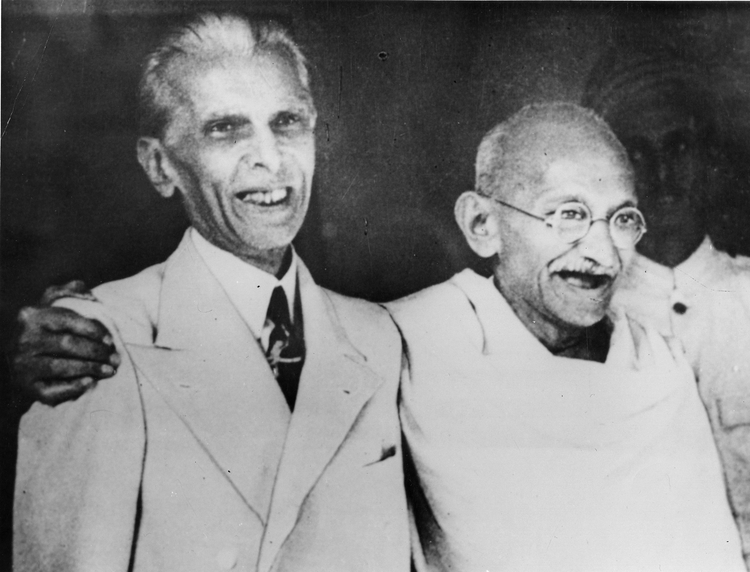
Jinnah and Gandhi had quite different outlook and faced different consequences due to the Quit India Movement – one failed in his projection of a secular and inclusive India, the other successfully used it to campaign for Pakistan















 Eduindex
You must be logged in to post a comment.