Major problems faced in India.

Every country in the world have some other the problems, like that India also have some problems. In this blog, we are going to discuss, some major problems in India like the , education system, unemployment, poverty, basic sanitation, and pollution.
EDUCATION SYSTEM

Every education system will have both theoretical and practical knowledge. Both theoretical and practical knowledge are important. In India’s education system consist of 90 percent theoretical knowledge and 10 percent practical knowledge. Every student needs practical and skilled knowledge, because they are the one who help student to live in the real world. Every sector whether it is agriculture or IT needs skilled workers not theoretical workers. Students in India often study to score marks not knowledge.

UNEMPLOYMENT

According to a survey, 6.9 percent of people in India are unemployed. Nowadays, unemployment become common among youngsters. Unemployment is the state at which person who is able to work but fails to get one. Why there is unemployment in India? The unemployment rate is high in India because there are more job seekers than the job requirement. Due to covid-19 pandemic many people lost there jobs because of the national wide lock down and shut down of some companies. There is high competition for every job in India because of the high population. India stands at 86th position in unemployment in the world. The government of India must take the necessary steps to eradicate unemployment. This is very serious problem in the society.

POVERTY

Poverty is another major problem for a country. As of now, 13.7 percent of people in India live below the poverty line. People who earn less than 1060 rupees in rural and 1286 rupees per month in urban comes under the poverty line. 80 percent of the poor people live in villages only. 43 percent of the people belongs to Scheduled Caste(SC) and Scheduled Tribes(ST). The maximum people living below the poverty line are found in Bihar, Madhya pradesh, Uttar pradesh and rajasthan only. People under the poverty line declined from 37 percent in to 13.7 percent in 2021. Experts suggest that it will decline by 5 percent in 2025.

POLLUTION

Pollution is the serious problem for all countries in the world. As of now, India stands 5th position in world’s most polluted countries. Delhi is the most polluted city in India, Breathing air in Dehli is like breathing 35 cigarettes at a time. There are many types of pollution such as water pollution, air pollution, land pollution and noise pollution. sewage water is main reason for water pollution in India. Ganga and yamuna are the most polluted rivers in India. Vehicle horns and construction sounds are main reason for noise pollution. Government needs to take care of these following problems.

BASIC SANITATION

Sanitation is another big problem in India. According to a survey, more than 700 million people don’t have the access to toilets at there home. In slums people don’t have a toilet at all. Many rural schools don’t have toilet facilities because of that parents don’t send there daughter to school. We should be thankful government because under the Swach Bharat Abhiyan government built 12 million toilets for the people.

That’s all from my side. I hope you like it.

The utterly butterly delicious story of Amul

Over the years, Amul, one of the most beloved brands of our country, has become the taste of India, just as its tagline claims. Every Indian millennial has grown up listening to the jingles of its many dairy products, and the Amul girl, the brand’s mascot in the polka-dotted dress, has become a nostalgia-evoking symbol. Amul has truly come a long way since its founding in 1946.

The beginning

Amul was formed as a part of a cooperative movement against Polson Dairy in Anand, Gujarat, which procured milk from local farmers of Kaira District at very low rates and sold it to the then Bombay government. Everyone except the farmers benefited from this trade. The farmers took their plea to Sardar Patel, who had advocated farmers’ cooperatives since 1942. The result was the formation of the Kaira District Co-operative Milk Producers’ Union Limited in Anand.

The union started pasteurising milk produced by a handful of farmers for the Bombay Milk Scheme and grew to 432 farmers by the end of 1948. The rapid growth led to problems including excess production that the Bombay Milk Scheme couldn’t accommodate. To solve this issue, a plant was set up to process all that extra milk into products such as milk powder and butter.

Amul is born

The late Dr. Verghese Kurien, rightly called the Milkman of India, was Amul’s true architect. His journey at Amul began in 1949 when he arrived in Anand to manage a dairy as a government employee. He went from helping farmers repair machinery to revolutionising India’s dairy industry with the White Revolution (or Operation Flood), the largest dairy development programme in the world.

The new dairy with the milk processing plant was ready for operation in October 1955, the year that also saw a breakthrough in dairy technology —buffalo milk was processed to make products for the first time in the world. The word ‘Amul’, derived from ‘Amulya’, which means ‘precious’ or ‘priceless’ in Sanskrit, was used to market the range of milk products developed by the Kaira Union. It is also an acronym for Anand Milk Union Ltd.

Dr Kurien had a vision. He wanted to offer small-scale dairy farmers quality-control units and centralised marketing, which were missing at the time in the dairy economy. Thus, the Gujarat Cooperative Milk Marketing Federation (GCMMF) was created in 1973 to market milk and all milk products produced by six district cooperative unions in Gujarat. GCMMF is the largest exporter of dairy products in India and Amul is the umbrella for all of its products.

Awards, accolades, and a global presence

Over the years, Amul, together with GCMMF, has won numerous awards. Some of these include the Rajiv Gandhi National Quality Award, 1999; the Golden Trophy for Outstanding Export Performance, 2009-10; Best Marketing Campaign, 2014; and World Dairy Innovation Award, among many others. Amul earned recognition all over the world when GCMMF  introduced it on the Global Dairy Trade (GDT) platform, where only the six top dairy players across the world sell their products.

More than a mere slogan

Amul’s famous slogan, which is now a part of its logo, was created in 1994 by Shri Kanon Krishna of a Mumbai-based advertising agency called Advertising and Sales Promotion (ASP). According to Amul, the Taste of India slogan is more than just corporate positioning or advertising jargon. This slogan lends meaning to the brand’s never-ending commitment to taking quality food and products to the rural man, which he otherwise couldn’t have afforded.

The Butter Girl

Amul did not always have the round-eyed moppet as its mascot. The Butter Girl was born in 1966 when Sylvester daCunha, the then MD of the advertising agency handling Amul butter’s account, created her for its campaign. It was a pleasant change from the dull, corporate ads that the previous agency had come up with. Being a seasoned marketer himself, Dr Kurien gave daCunha complete creative freedom to create and release the ads without taking the company’s permission. 30 years later, the Utterly Butterly Girl still wins hearts wherever she is, whether on a billboard or on the packet of butter.

Amul is not just a brand; it is also a movement that represents farmers’ economic freedom. The name is now a household term that is here to stay, and the chubby-cheeked Amul girl will continue to cast a spell on the public.

MENTAL HEALTH: DON’T TAKE IT EASY

Many people believe that being physically healthy is a sign of good health, but do they even consider their mental health? Today I am going to discuss this particular topic called “Mental health of a human being”.

Today youngsters and even old people are very particular about their physical health. They join gyms, participate in various cardio activities to make themselves physically fit but what about their mental health? How people would understand whether they are mentally fit or not? And if they know, then how will they overcome it? Today in this era of competition in everything, being in studies or fashion or anything else, everyone is running a race and is trying to outshine each other. Because of this, they have forgotten that their mind should also be taken care of like anything else. 

Anxiety and depression have now became a common issue for every individual. Some people try to hide their anxiety by talking too much or by remaining extremely quiet.

Have you ever wondered, everybody, talks about an illness like cancer, heart attack, migraine, etc very freely but when it comes to mental health, they often hide from everyone and consider it a shameful thing? No one openly talks about their mental illness because somewhere they think that it is shameful to share it with anyone. Even, if he/she talks about it openly then they get very little support and is stabbed by their friends in tougher times, which makes them weaker and lonely even when surrounded by a crowd. Nowadays there are some who understand this problem and openly help such victims. Else, earlier they used to tag that person insane and didn’t look after them. 

But I want to convey to such people to come out, express yourself whatever you are feeling, either share it on your social media or talk with your loved ones, there are definitely people who will help you to overcome it. This is not something to be ashamed of, it is also a part of your health. Never feel low because of love failure, study stress or family problems, etc.

You are not alone in this. Your loved ones are standing behind you to support you.

And in the end, I would like to convey my message to those who take mental health for granted that please don’t judge people in any way. You have no idea about what a person is going through. So, LIVE AND LET LIVE.

Video Game crash of 1983

In 1983 the video games industry was hit with a recession that almost ended the existence of video games of that time period. This period lasted for almost two years from 1983 to 1985. Many people and journalists who were critical were calling video gaming a fad. Numerous companies went bankrupt or stopped making video games entirely. This recession is known as the Great North American Video Game Crash or Atari Shock (Primarily in Japan).

Video games in the 1970s were dominated by arcade machines and by the end of the decade home game consoles were also getting popular. With the start of the 1980s, the video gaming industry witnessed a boom with numerous companies like Mattel, Atari, and Coleco dominating the market. The early 80s was a time of innovation and growth in the video game industry but there was instability in the industry as well. This was a time period when video games were becoming more mainstream and popular. Many new players entered the market ranging from industries to small developers that had no association or prior experience in game development in general.

Pacman was a big hit in the early 80s and it was not of the most popular video games in the arcades. Its successor Miss. Pacman improved on the formula and was a success as well. After the success of Pacman in the arcades, Atari wanted to replicate the success in the home game consoles. But with the limited constraints with the memory and short development period, the game was not well received by the consumers and critics alike. In 1982 Atari also brought the license to release the video game of the movie for 21 million. The game was developed in a time period of only 5 weeks. The game was negatively received and only 1 million copies of the game were sold off the 5 million manufactured. Many of the sales were also returned to the retailers furthering the damage. During this period video games were being published by small developers with very poor quality and many big developers were producing games that were more of a marketing token than the game. There were many clones of the same games with little to no redeeming quality and replayability. There were also numerous consoles unlike today with too many options that were no different from one another. With the abundance of supply and low sales of games, retailers started to remove stocks of video games and this led to the shrinking of the industry. Atari had lost $500 Million in 1983 and had to cut its workforce from 10,000 employees to just 400 employees.

During the 1980s there was a boom in the Personal Computers market as well. The PCs were much more powerful than consoles and they could play games and do many tasks like word processing and spreadsheets. The PC industry was unaffected by this low point of video game consoles.

In 1985 Nintendo Corporation launched the Nintendo Entertainment systems in North America and Nintendo ensured that only a limited number of games to be released under their license agreement. This ensured a certain threshold of quality for the games that were released for the system and Nintendo emerged out of the survivor from the video game crash. The Nintendo Corporation started to dominate the video game industry with an assurance of quality that was unmatched by any other corporation at that time. Many other entrants like SEGA also emerged after the crash. Nintendo with its approach and license and quality assurance of video games has left a big impact on the industry to this date. Video games industry has only grown since then and also overtaken other source of entertainment. Nintendo can be credited to provide the industry a trajectory that was severely needed after the crash of 83.

References:

A COMPUTER WILL NEVER REPLACE A BOOK

In this digital era we always use an electronic device like computer for getting our works done but coming to the taste of experience a computer will never replace a book. There might be several reasons to say that computer is best than a book but for sure what ever the epic information that we see today in a computer was written in a book priorly. A good book in the words of John Milton is the precious lifeblood of a master spirit, embalmed and treasured up to a purpose of life.

The thoughts and ideas contained in a book are immortal like tulasidas’s Rama Charitra Manas, Veda Vyas Mahabaratha, The Bible and many other religious literary works like shakespere’s play etc… On the other hand, a computer is a machine that can visualize the contents of a specific book but thinking about the replacement of a book by a computer is unthinkable and far fetched.

A book provides the most cost effective for spreading education and literacy. It is available at a fraction of the cost of a computer. Moreover it is extremely portable and handy, it is not dependent on any external factors like availability of power supply, software and space which are essential prerequisites for a computer. To go through the contents of a book, the two basic ingredients required are time and inclination. It can be read at any time of day or night and anywhere, like while travelling or even while dozing off to sleep.

Though the above mentioned all phases can be full filled by an electronic gadget also reading a book does not create any physical discomfort or eye strain. We all are aware of the hazards of back pain and eye strain caused by a long stretch of viewing a computer screen. Another factor in favor of the book is the general high degree of respectability and faith commended by the written word. Thus while we may see or hear event on our computer terminal, there is nothing better than to confirm the same from a newspaper or a book. Besides helping in spreading education to masses, a plays an important role in developing our power of expression, and the generation of new ideas and thoughts, which help in modelling our personality .

A book is a source of knowledge on a particular subject, offering no diversion or distraction while a computer offers multiple sources like reading, entertainment, games or news on one go along with several advertisements which some times leads to the distraction of our mind and consequently hinders the acquisition of knowledge.

Thus the computer can never replace a book either now or in the near future, this is for the conviction and convenience offered by a book and it can never be possible through a computer. Moreover being a machine it has chance to break down or show an error, these factors are non-existent while reading a book.

To the unknown

The UNKNOWN

Maybe it’s some mystery or may it be what I have ignored.
In this luxury of hustling world, is it that we don’t take time to search or at least wonder about the unknown at.
In this society set ‘Pattern of Living’ and ‘Frame of Thinking’, do we ever care to get a glimpse of what we don’t know!?
Yeah,I agree with the fact that we aren’t able to harness we have grown already; what we have known already.
But why do we often let this ‘Want’ fade away, is it just because of the uncertainty of the next? Or too coward to take that one little extra mile?
No matter how efficiently I try to describe this unsettling situation, the quotation that, “Knowing that I don’t know, itself is an accomplishment”, is undeniable.

How beautiful would it be to able to reach that far fixed fence; but is it really how this is supposed to be?


The unknown as it pertains to me ,
is the horizon, it’s up to us to believe in or not but the run for eternity is happening constantly like it’s been always
Things do happen whether we acknowledge it or not , isn’t it?
But it’s just that my WANT TO KNOW THE UNKNOWN keeps rising. What about your want?

For more content catch up @shambhavimeti .

WEB ENSLAVEMENT !

Internet addiction is a social enslavement where an individual becomes reliant upon utilization of the Internet, or other online gadgets, as a maladaptive method of adapting to life’s anxieties. Web fixation is turning out to be broadly perceived and recognized, especially in nations where it is influencing enormous quantities of individuals, like South Korea, where it has been proclaimed a public wellbeing problem.1 Much of the momentum research regarding the matter of Internet habit has been completed in Asia. It’s anything but a developing worry in created countries in North America and Europe.

Web dependence is especially unsettling for youngsters and adolescents. Youngsters come up short on the information and attention to appropriately deal with their own PC utilize and have no clue about the potential damages that the Internet can free them up to. Most of children approach a PC, and it has gotten typical for youngsters and teenagers to convey cellphones.

While this may promise guardians that they can have two-way contact with their youngster in a crisis, there are genuine dangers that this steady admittance to the Internet can open them to.

Youngsters have gotten progressively familiar with extensive timeframes associated with the Internet, disengaging them from the encompassing scene.

Kids who own a PC and have favored online access have an expanded danger of inclusion in cyberbullying, both as a casualty and as a perpetrator.8

Kids who participate in tricky web use are bound to utilize their cellphone for cybersex, especially through sexting, or access applications which might actually build the danger of sex compulsion and online sexual damages, like Tinder.9

Also, kids who mess around online regularly face peer strain to play for expanded timeframes to help the gathering they are playing with or to keep their abilities sharp. This absence of limits can make kids powerless against creating computer game addiction.10 This can likewise be problematic to the improvement of solid social connections and can prompt seclusion and exploitation.

In the event that you perceive the manifestations of Internet dependence in yourself or somebody in your consideration, converse with your PCP about finding support. Just as having the option to give references to Internet enslavement centers, analysts, and different specialists, your PCP can recommend prescriptions or treatment to treat a hidden issue in the event that you have one, for example, gloom or social tension disorder.11

Web dependence can likewise cover with other social addictions, for example, work enslavement, TV habit, and cell phone fixation.

UNAIDS- Achievements and Challenges.

As of 2018, about 38 million people in the world are infected with HIV and out of these about 21 million people were living in Africa alone. South Africa, Nigeria and India are the worst affected countries with over 7 million, 3 million and 2 million people with HIV infection respectively. Interestingly, India is on third position with over 2 million of its population infected with HIV; however it has the lowest HIV rate in the world due to its vast population.

Source: UNAIDS.

UNAIDS acts as a global cogent body that protects HIV infected people from discrimination and aims to provide them a safer environment by creating awareness among the masses. It also provides deliberate and strategic advocacy and cooperates with different governments and private bodies to achieve its goals.

Achievements of UNAIDS.

1) Because of UNAIDS’s effective advocacy, different Government responses towards every aspect of HIV and AIDS was positive with good leadership and management.

2) UNAIDS’s advocacy also inspired many countries to change and abolish discriminatory laws that used to keep HIV patients on the fringes. It also convinced many countries to make laws in favour of women’s rights so that stigma faced by women decreases.

3) In 2019, 67% of all people living with HIV were accessing treatment. 68% of adults aged 15 years old and above had access to treatment, 53% of children had access to treatment and 73% of the female adults also had the access to treatment.

4) About 85% of pregnant women living with HIV had access to antiretroviral medicines to prevent transmission to their child in 2019.

5) UNAIDS also worked a lot in raising awareness about HIV and related stigma all over the world. It focused on myths related to HIV which ultimately led to a positive attitude of public towards HIV patients.

CHALLENGES FACED BY UNAIDS

There are a lot many challenges attached to HIV infection and thus it also becomes difficult for UNAIDS to deal with the issue at times. It is a social difficulty too and HIV patients suffer in silence because misconceptions about HIV.

1) HIV and Violence on women:

Every week, about 5500 young women aged 15-24 years become infected with HIV.

In Sub-Saharan Africa, five in six new infections among adolescents aged 15-19 years are among girls. Young women aged 15-24 years are twice more likely to be living with HIV than their male counterparts.
More than one third (35%) of women around the world have experienced physical and/or sexual violence by an intimate partner or sexual violence by a non-partner at some point of time in their lives.

2) HIV and Tuberculosis:

Tuberculosis remains the leading cause of death among people living with HIV, accounting for around one in three AIDS related deaths.
In 2018, an estimated 10 million people developed Tuberculosis and 9% of them had HIV.

3)HIV and COVID-19, newest of all:

A new analysis by UNAIDS has revealed that COVID-19 is going to have a detrimental effect on low and medium income families and countries around the world on supplies of the generic antiretroviral medicines used for HIV treatment.
The lockdowns and border closures imposed by Governments to stop Covid-19 have impacted both production of the medicines and their distribution.

It’s important for us as a society to support the HIV-AIDS patients and their families morally, socially and make a stigma-free environment for them.

Not Fair But Still Lovely

Image Source: google.com

India’s obsession to fair skin is not new. Fairness does not define beauty and racism harms everybody. Colourism is the bias against dark skinned tone that views white skin as the ultimate benchmark. It is a persistent social force in India, and many South Asian countries.

George Floyd’s killing in police custody in U.S has led to the ‘Black lives matter’ across the globe. Undoubtedly, there is power in protest. But the question lies when we think, does this really bring a change and do people really mean it. The protests happening through social media has advantages as well as disadvantages. According to many, the notion of beauty lies in skin colour which is absolutely wrong. 

‘Fair and lovely’ has been criticized for years as they promote the idea of being fair to be an achiever. Chandana Hirana, a 22-year-old, Mumbai girl started a petition against the brand before the name was changed to ‘Glow and lovely’. Changing the brand’s name turned out to be an utter failure as there is no change in ingredients. Also, Loreal and many other brands are also removing words like ‘whitening’ or ‘fair’ from their products. Sure, it is a welcome move but it is a high time to ban the prevailing mindset of people that equate fair skin not just to beauty but also to rich and upper caste.

As anti-racism protest erupted across the globe, many celebrities like Sonam Kapoor, Disha Patani, Yami Gautham etc came forward in support of ‘Black lives matter’ who were latter trolled massively as they were already promoting fairness products. Priyanka Chopra in an interview said that she regretted promoting such products. 

Last year, Nandita Das, founder of Dark is beautiful campaign did a rap video to fight skin-tone discrimination. She also added that she is fed up of people commenting on her skin tone. Hassan Minhaj, an American comedian on his popular show ‘Patriot act’ on Netflix said that ‘it is bad to be black in Desi culture’ and I couldn’t agree more. We shouldn’t assume a particular race to be superior than others. Even filters and photo editing apps are focussing now how to make you fairer.

Matrimonial ads are the best example to see how things are uglier in the world. People search for wheatish skin girls. It is surprising to know that most of the matrimony sites have filter option to select the skin tone.

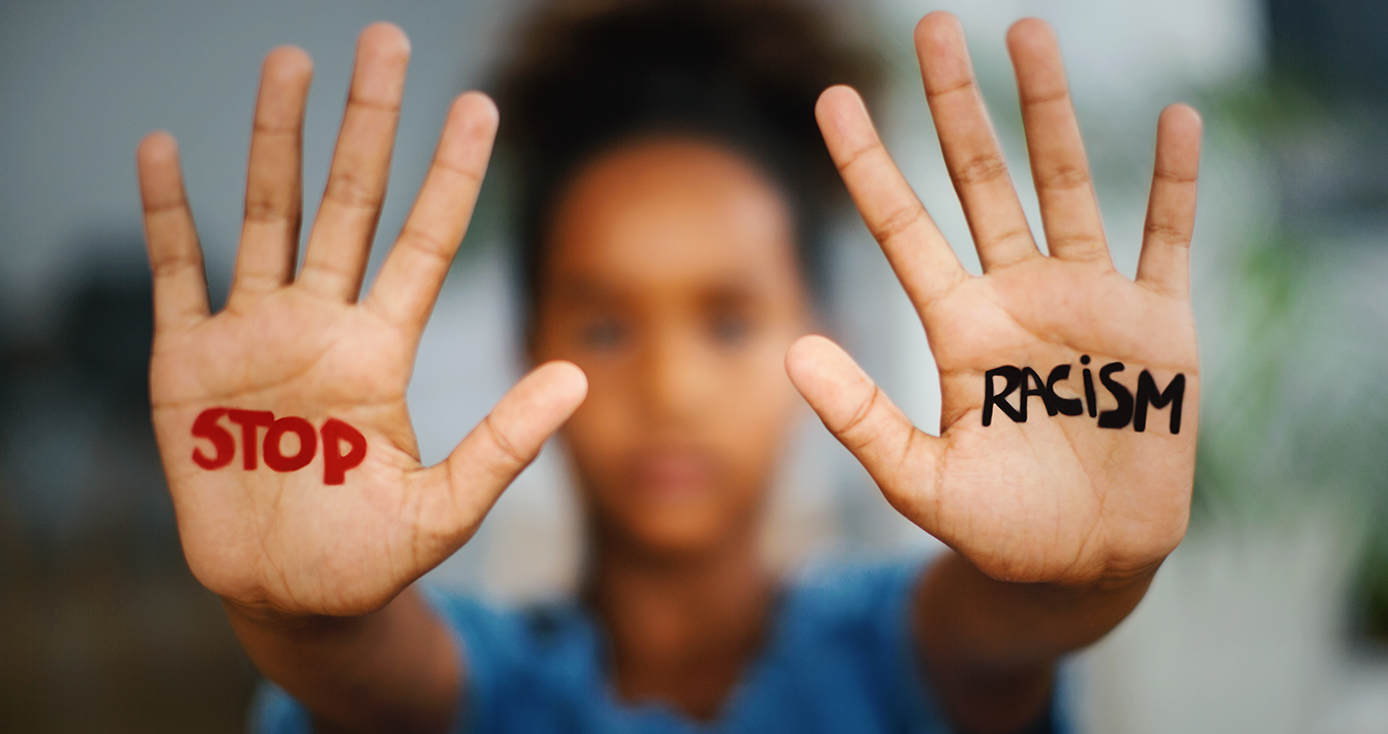
In ‘my experiments with truth’ Gandhiji tells how he was embarrassed because of his dark skin tone against white skinned people around him. Even after Britishers have left India, racism still exist here. We should learn that all shades are lovely. We are all in different shades for many reasons. Embrace your shade instead of hating it. Let us not give space for racism to exist in our mind. No shade is superior or inferior than any shade. It is of no doubt that racism will take a mental toll on people. Stop racism. Nothing more, nothing less. 

Sexual Harassment

When we hear the word Sexual Harassment what we picture in our mind a girl or a woman getting harassed by a man! But sexual harassment is not a narrow term which we can use only with respect to girls or women. It is a broader term which includes harassment on all the gender.

What is the meaning of Sexual harassment?

The word sexual harassment means any form of unwelcome sexual behavior which is offensive, humiliating and intimidating. According to EEOC (Equal Employment Opportunity Commission) sexual harassment is defined as : Unwelcome sexual advances, requests for sexual favors, and other verbal or physical conduct of a sexual nature when

  • Submission to such conducts is made either explicitly or implicitly a term or condition of individual’s employment,
  • Submission to or rejection of such conduct by an individual is used as a basis for employment decisions affecting such individual, or
  • Such conduct has the purpose os effect of unreasonably interfering with an individual’s work performance or creating an intimidating, hostile, or offensive working environment.

Here, unwelcome does not mean “involuntary.” A victim may consent or agree to certain conduct and actively participate in it even though it is offensive and objectionable. Therefore, sexual conduct is unwelcome whenever the person subjected to it considers it unwelcome. Whether the person in fact welcomed a request for a date, sex-oriented comment, or joke depends on all the circumstances.    Source: Preventing Sexual Harassment (BNA Communications, Inc.) SDC IP .73 1992 manual

Types of Sexual Harassment

  1. Verbal or Written
  2. Non-verbal or Visual
  3. Physical

Verbal or Written

Here in the sense of sexual harassment verbal or written means saying, commenting, joking, or writing about someone in vulgar manner. We have often see on the road boys are shouting out to girls using words like doll, babe etc. Yes, this is also sexual harassing and that’s why it is called verbal. Following are some more examples:-

  • Referring someone using inappropriate or vulgar language.
  • Whistling at someone in an unwanted manner.
  • Making sexual comments on someone’s body
  • Making kissing sounds.
  • Repeatedly asking out someone who is not interested.
  • Spreading rumors about a person’s personal life.
  • Texting someone offensive joke.

Early these were very trivial matter on the roads and  now-a-days it can be widely and easily seen on social media.

Non-verbal or visual

Well, this is the most trivial and probably the hardest to spot because it’s most subjective and one have to put in the shoes of the other person. For example:-

  • Looking a person with elevator eyes (up & down).
  • Staring at someone.
  • Following someone.
  • Making sexual gestures with hands or trough body movements.
  • Making facial expressions such as winking, throwing kisses etc.

Physical

It seems that this is very easy to recognize but it is also too complex. Many time people get confused about physical touch. Here are some examples:-

  • Touching someone sexually around other people.
  • Hugging, kissing , stroking.
  • Actual or attempted rape.
  • Touching someone’s clothing, hair, or bodily assault.

Now-a-days sexual harassment is very common in workplaces and even in educational institutions. Cases about these things can be seen frequently. For example recently in Calicut University an Mphil student leveled sexual harassment charges against an assistant professor, Haris Kodampuzha from English department. As per complaint, he used to send sensual message to the student and for this he was suspended.

There are laws all over world which protects people from sexual harassment. In there is The Sexual Harassment of Women at Workplace (Prevention, Prohibition and Redressal ) Act, 2013that seeks to protect women from sexual harassment at their place of work. The Act came into force from 9 December 2013. In India, the legislations talk only about sexual harassment and rape of women. Then the question is who will protect men from harassments. There is no law to shield males from the bloodthirsty act of harassment and rape. Under Indian law, there is only one section 377 of Indian Penal Code which talks about “sodomy”. 377.  it is written that “Unnatural offences: Whoever voluntarily has carnal intercourse against the order of nature with any man, woman or animal, shall be punished with imprisonment for life, or with imprisonment of either description for a term which may extend to ten years, and shall also be liable to fine.” Explanation: Penetration is sufficient to constitute the carnal intercourse necessary to the offence described in this section. Except this all other laws and sections are meant only for females.

While the sexual harassment of females has consistently declined in the past few years as government has made some very effective legislations in India. But sexual harassment of men is increasing day by day. Hence it is important to demand equal accesses  to justice for both males as well as females. For this the legislation of government has to make laws which protect the male from various kinds of harassments and assaults at different areas. There is also a need to educate and aware people especially children and students about sexual harassment. So if they suffer from any such act then they will be able to approach to any authority or any elder person rather than suffering.

Bioterrorism

From the past two decades , it is stated that the threat of biological warfare is not a myth but a harsh reality of the world . Due to the outbreak , we can recognise the high risk and consequences of bioterrorism.

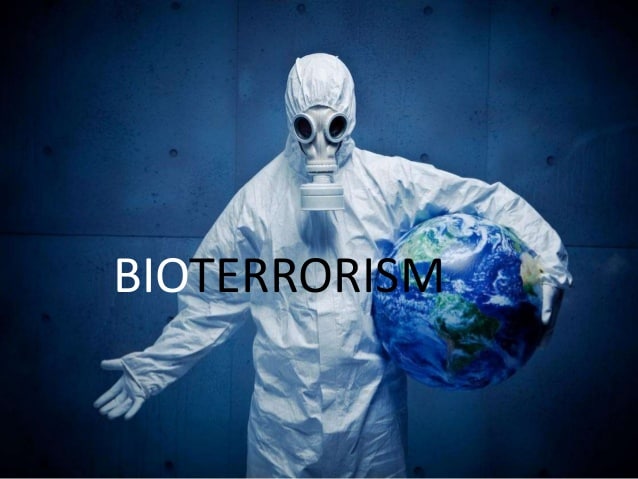
This editorial provides you the overview of bioterrorism , it’s symptoms , causes , measures and impact on humans in present scenario .

Introduction

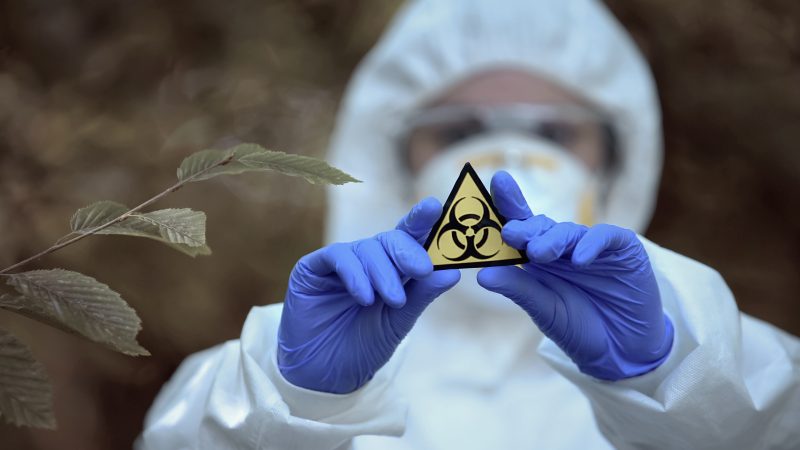
A bioterrorism attack is the deliberate release of viruses, bacteria, or other germs to cause illness or death. These germs are often found in nature. But they can sometimes be made more harmful by increasing their ability to cause disease, spread, or resist medical treatment.

Biological agents spread through the air, water, or in food. Some can also spread from person to person. They can be very hard to detect. They don’t cause illness for several hours or days. Scientists worry that anthrax, botulism, Ebola and other hemorrhagic fever viruses, plague, or smallpox could be used as biological agents.

Despite patchy intelligence, France started its own biological weapons programme in the early 1920s. It was headed by Auguste Trillat, an inventive German-educated chemist who envisioned and tested the sustained virulence of airborne pathogens.

The goal of bioterrorism is usually to create fear and/or intimidate governments or societies for the purpose of gaining political, religious, or ideological goals. Bioterrorism may have a different effect on societies than would weapons such as explosives.

Symptoms

The symptoms of exposure to a biological agent might include sore throat, fever, double or blurred vision, rash or skin blisters, exhaustion, difficulty talking, confusion, descending muscle weakness, nausea, abdominal pain, vomiting, diarrhea, and coughing.

History

Historically, biological weapons have been a threat to humans for many centuries. At those times, very crude methods such as fecal matter, animal carcasses, etc. were used to contaminate water sources, but now the concentrated forms of biological agents such as dried spores and genetically modified organisms are available, which are fatal even in minute quantity.

During the Indo-Pakistan war of 1965, a scrub typhus outbreak in north-eastern India came under suspicion. India’s defense and intelligence outfits were alert to the outbreak of pneumonic plague – well known in biological warfare – in Surat and Bubonic plague in Beed in 1994, which caused several deaths and sizeable economic loss.

Prevention

There are some points that you need to consider during the outbreak :

  • If you become aware of a suspicious substance, quickly get away.
  • Cover your mouth and nose with layers of fabric that can filter the air but still allow breathing. Examples include two to three layers of cotton such as a t-shirt, handkerchief or towel.
  • Depending on the situation, wear a face mask to reduce inhaling or spreading germs.
  • If you have been exposed to a biological agent, remove and bag your clothes and personal items.
  • Follow official instructions for disposal of contaminated items.
  • Wash yourself with soap and water and put on clean clothes.
  • Contact authorities and seek medical assistance. You may be advised to stay away from others or even to quarantine.
  • If your symptoms match those described and you are in the group considered at risk, immediately seek emergency medical attention.
  • Follow the instructions of doctors and other public health officials.
    Avoid crowds.
  • Wash your hands with soap and water frequently.
  • Do not share food or utensils.

Link

Calming Mother Nature

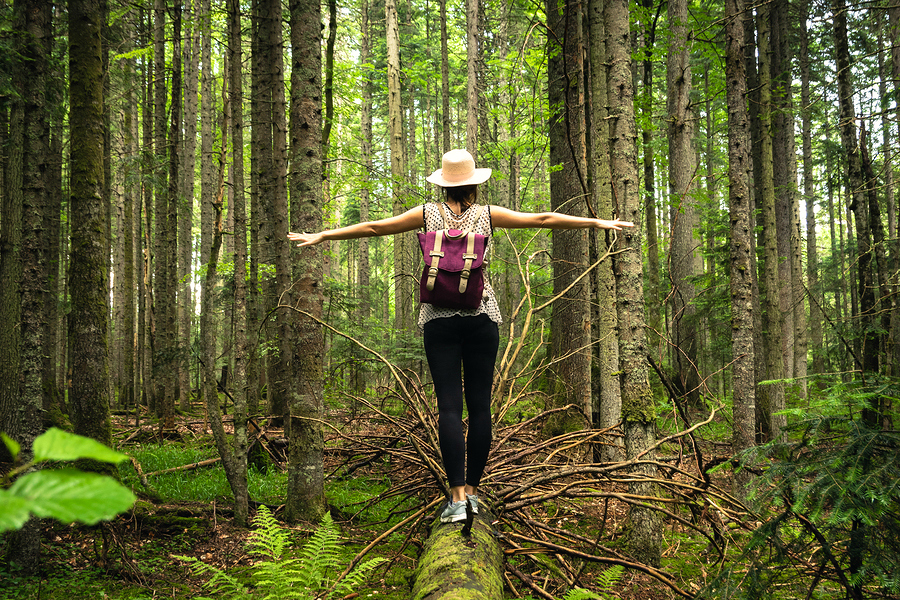
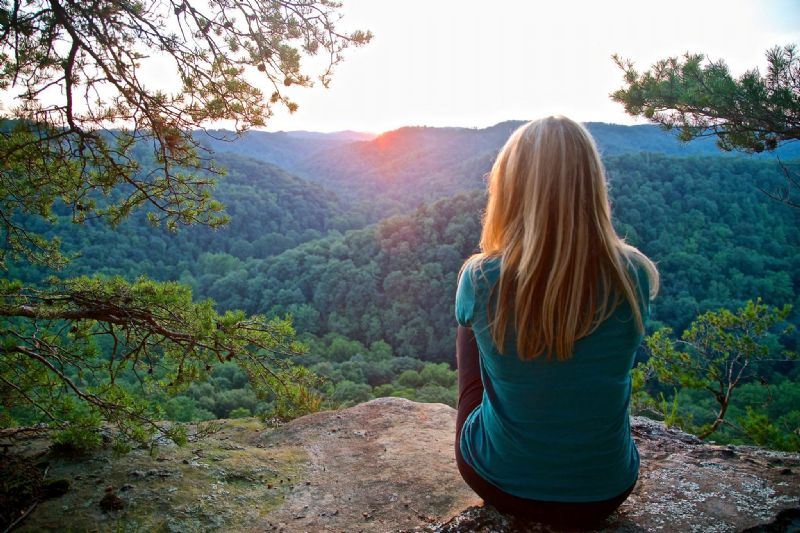
Spending time in nature can improve memory, lower stress hormones, and reduce feelings of depression or anxiety, among other perks. Being in nature can help clear your head and bring you into the present moment, and is a great way to de-stress and relax.

Being in nature, or even viewing scenes of nature, reduces anger, fear, and stress and increases pleasant feelings. Exposure to nature not only makes you feel better emotionally, it contributes to your physical well being, reducing blood pressure, heart rate, muscle tension, and the production of stress hormones.

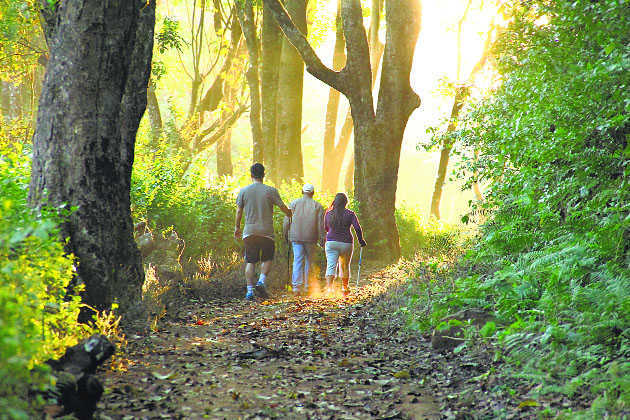
Feel Better. If you’re able to, get back to nature to energize your mind and body. Depressed: If you’re feeling blue, try going outside to green, natural spaces. A stroll in the woods has been shown to help combat depression, and even just the view of the forest from a hospital room helps patients who are feeling down.

Spending time in nature has been found to help with mental health problems including anxiety and depression. For example, research into ecotherapy (a type of formal treatment which involves doing activities outside in nature) has shown it can help with mild to moderate depression.

The natural world is an incredible wonder that inspires us all. It underpins our economy, our society, indeed our very existence. Our forests, rivers, oceans and soils provide us with the food we eat, the air we breathe, the water we irrigate our crops with.

The Flash Theory: Iris Brings Back The Arrowverse Multiverse Post-Crisis

Warning! Spoilers ahead for The Flash season 7 episode 16, “P.O.W.”

The Flash season 7 is barreling towards its two-part finale and Iris West-Allen’s latest storyline could bring back the Arrowverse’s multiverse following its collapse in Crisis on Infinite Earths. Time and interdimensional travel have been heavily utilized in the shared universe ever since The Flash unlocked the titular character’s abilities to move backwards and forwards in time. The team’s trip to Earth-2 opened up yet another gateway to traversing the multiverse. While Crisis on Infinite Earths changed that for good, Iris’ situation could unlock the multiverse once again. 

Iris has been noticeably absent from two episodes of The Flash. In season 7’s episode 15, Barry revealed she wasn’t feeling well and was recovering from a bout of illness at home. In the following episode, however, Iris confirmed what she was experiencing was far more than a regular cold; when she sneezed, her eyes briefly and startlingly flashed green before returning to their normal color afterward. Why the illness is affecting Iris in this way remains unclear, but her symptoms have led her molecules to become unstable, inducing headaches and time displacement.   

At the end of the episode, Nora West-Allen confirms that Iris will be okay, but there’s no telling when her symptoms will clear up or what will happen before they do. That said, it’s possible Iris moving in and out of the timeline could play a crucial role in the future of the multiverse and the reason for her predicament may be hiding in plain sight.

Iris Is Phasing In & Out Of The Timeline

Iris’ absence from The Flash season 7’s episode 15 was suspicious, especially since it involved a possible pregnancy storyline that was happening without her. In the following episode, however, fans learned why Iris has been absent. As it turns out, her cold wasn’t a normal one and it was somehow causing her to phase in and out of the timeline. It got so bad apparently that Deon, the Still Force, swooped in to protect Iris by using his abilities to stabilize her from phasing through various temporal planes, moving her to “pure temporal strains” to keep her alive. If it wasn’t for Deon, Iris would have fractured through time itself, which doesn’t sound very pleasant and could have unprecedented repercussions.

This subplot creates an interesting twist considering everything happening on The Flash right now. Between what’s going on with Iris, the Godspeed clones, August Heart — who originated as Godspeed in 2049 pre-Crisis on Infinite Earths — coming into the picture, and Barry dreaming about Nora telling him there seems to be something wrong in the future, Iris’ timeline instability may be the one thing connecting each of these separate storylines. That said, the reason why she’s suddenly phasing in and out of the timeline has yet to be confirmed on the show, but all roads seem to be leading back to one cause.  

Iris Being Pregnant Is Causing Her To Be Unstuck From Time

Barry and Iris have been trying to conceive for a few episodes now. After Barry dreamed about Nora the first time, he assumed Iris was pregnant only for the results of the test to come back negative. However, this could have been a false negative. Considering that Iris’ presence in the timeline has been unstable, it’s possible that she is already pregnant and doesn’t realize it. What’s more, being pregnant with speedster babies won’t follow the same patterns of a normal pregnancy and it’s possible that Iris carrying metahumans is causing her to be unstuck from time. Her phasing in and out of the timeline could be The Flash’s equivalent to morning sickness. 

This could also explain why she will be able to regain her speedster powers in the season 7 finale. In the comics, Iris phases back and forth in time because it’s revealed she is actually from the future and was sent back to the 20th century by her birth parents. The Flash showrunner Eric Wallace has teased this storyline coming into play, but like with all things that make their way onto the show, it will probably be a loose adaptation from the comics storyline it’s based on. Traveling between timelines because of a pregnancy might be the closest the series gets to this particular comics arc in this instance.

Jay Garrick’s The Flash Return Hints At Alternate Earths Connection

Jay Garrick (aka, The Flash of Earth-3) was last seen prior to Crisis on Infinite Earths, warning Barry of the impending doom facing the multiverse. However, the speedster didn’t participate in the crossover, nor was he confirmed to be alive in the aftermath that saw the multiverse rebooted and Earth-1 merge with others (including Supergirl’s Earth-38) to become Earth-Prime. Jay will be appearing in The Flash’s two-part season 7 finale to aid in the Godspeed clone war. How his reappearance will be explained remains to be seen, but it’s possible he will show up courtesy of Iris’ temporal phasing. Jay originally hails from Earth-3 and his return to The Flash coinciding with Iris being able to phase through time (and maybe dimensions) could be connected. Iris may be acting as the bridge between Earth-Prime and Jay’s world without even realizing, and the superhero series might confirm that he is now from Stargirl’s Earth-2 instead.

Theory: Iris’ Temporal Phasing Brings Back The Multiverse

In The Flash season 6, Nash Wells detected particles of Eternium, an interdimensional (and multiversal) element, on Iris prior to the events of Crisis on Infinite Earths. At the time, nothing much came of it, just another tease that seemed to lead nowhere. However, this could come back into play now that Iris is phasing through temporal planes in season 7. It’s possible the combination of Eternium and her moving in and out of time now allows her to connect to not only different time periods on Earth-Prime, but alternate universes as well. Perhaps before she is finally stabilized, Iris will indeed fracture through time and that’s what breaks the barrier separating Earth-Prime from the rest of the multiverse, which has remained a secret post-Crisis.

Namely, Iris’ temporal instability could alert her and The Flash to the fact there are still other worlds out there despite the collapse of the multiverse during Crisis. After all, Stargirl exists on the rebooted Earth-2 and it’s been confirmed that Jay Garrick will make an appearance on the series in its sophomore season. And so Iris’ temporal imbalance could open the gateway to interdimensional travel once more, reestablishing the connection between Earth-Prime and other earths. There has to be a reason for why Nash detected Eternium on her. All of this could also be setting up The Flash’s five-episode crossover event in the fall. Whatever the reasons behind Iris’ phasing in and out of time, the introduction of this storyline for her could finally tie together so many loose plot threads for The Flash and the Arrowverse at large. 

10 Amazing Tips For Terrace Gardening

Introduction

Even though the modern lifestyle hardly leaves us with any time, we all love to have soothing hobbies for those rare times. For some it’s reading and for others it’s gardening. Unlike some other hobbies, gardening requires a lot of time, effort and a lot of empty space. While most of us would love to have a huge garden filled with greenery, not all of us can. One of the drawbacks of living in metropolitan cities is that you can’t ever have enough space, especially for your dream garden. This is where terrace farming comes in handy. Whether it’s plants, herbs or vegetables, you can literally grow anything on your terrace itself. Here are some terrace gardening tips that will be useful for people living in small urban spaces. You can even try these home terrace farming techniques in your balconies!

1. Construct Shade

The terrace mostly receives a good amount of sunlight. However, depending on the plants that you want to grow, you will need to monitor the sunlight. On an average, your terrace should get at least 4 hours of direct sunlight. If you receive more than 6 hours of direct sunlight, make sure you arrange for some shade. Too much sun isn’t good for the plants either.

2. Selecting suitable pots and planters

They make your garden bigger: Growing plants in containers is a great way to expand your garden space. Pots can go anywhere: on pavement, a window sill, a deck, up a flight of steps. Allows you to control the soil your plants grow in. Your garden soil may not be the greatest but when you plant in a pot, you control the soil and can provide excellent growing conditions that the soil in your garden may not have.

3. Add Home Decor Elements

Gardening is sort of an extension of home decor. It adds to the beauty of the home and terrace too. This is why our next home gardening tip is to add aesthetic lighting and some garden furniture. If you are thinking about growing a beautiful terrace garden, you should be able to spend time there. Trust us, it will become the most popular spot of your home for hosting or otherwise. 

4. Don’t Keep Plants Too Close

This terrace gardening tip stands true for most types of farming and gardening. You don’t want to plant the seeds too close. They will compete for sunlight, water and other nutrients and thus, might not mature at an even rate. Also, for home terrace farming, you should opt for creepers since they are huge in volume and grow fast without much effort.

5. Choose Air Purifying Plants

This terrace gardening tip is a very useful one for people living in urban spaces. The air is filled with pollutants that affect our health in ways we don’t even know. While you’re at it, why not plant some air purifying plants. Generally, these plants are great for indoors but if you keep them away from harsh, direct sunlight, they will prosper even on your terrace. Most of them also release oxygen at night, which is an added bonus!

6.  Let Sunshine be Your Guide

Each plant thrives in different amounts of sunlight. While some prefer shade, others grow well in prolonged exposure to bright sunlight. In a terrace garden, you have to make sure your plants get both, especially shade. One tip to keep rotating the plant frequently so that all the branches will have buds growing on them. 

7. Prune The Infections Away

Prune (trim) the flowering plants regularly with a rust-free scissor/cutter to ensure bushy growth with lots of flowers. Also, cover the pruned tip of the stem with some soil to protect it from infections. Add some compost to the soil immediately after pruning to boost the growth of the plant.

8. Strength in Unity    

Plants must be grouped together, instead of isolating them from one another. In a terrace garden, it is easier how you want to group your plants as we use pots and planters. It is important to strategically cluster houseplants together, just as they do naturally in the wild, according to their growth requirements.

9. Unity in Diversity

A healthy garden must have a variety of plants. Biodiversity attracts essential pollinators. “For example, plant a few flowering plants in your vegetable garden to attract pollinators (insects that move pollen from the male anther of a flower to the female stigma of a flower).”

 10. Patience is The Key

Gardening needs patience. Do not rush your gardening activities. Patience is a virtue in many aspects of life, but particularly so in gardening. Plants take their own sweet time to bloom, to produce fruit, to become mature. So gardeners must be patient.

Conclusion

Patience is a virtue in many aspects of life, but particularly so in gardening. Plants take their own sweet time to bloom, to produce fruit, to become mature. So gardeners must be patient.

What lies ahead for Afghanistan

On July 2, U.S. troops departed from the Bagram Air Base that coordinated the 20-year-long war in Afghanistan, effectively ending their military operations in the country. The exit is part of President Joe Biden’s plan to withdraw American troops from Afghanistan by September 11, the 20th anniversary of the terrorist attack on the twin towers of the World Trade Center and the Pentagon. Ever since the remaining U.S. troops began pulling out on May 1, the Taliban have made rapid territorial advances. If the Taliban had controlled 73 of Afghanistan’s 407 districts before May 1, the number of districts went up to 157 in two months as of June 29. They contest another 151 districts, which leaves 79 districts firmly in the hands of the government. The Taliban’s military offensive is focussed on the northern districts, far away from their southern strongholds, and several provincial capitals are under threat.

Why did the U.S. invade Afghanistan?

Weeks after the September 11, 2001 terrorist attacks, U.S. President George W. Bush declared war on Afghanistan, which was then ruled by the Taliban. Mr. Bush said the Taliban regime had turned down his demand to hand over al-Qaeda leaders, including Osama bin Laden, who plotted the attacks. Inside Afghanistan, the NATO coalition troops led by the U.S. quickly dislodged the Taliban regime and established a transitional government. Al-Qaeda’s leaders and key operatives fled to safe havens in Pakistan. The U.S. rejected an offer from the Taliban to surrender and vowed to defeat the insurgents in every corner of Afghanistan. In May 2003, Defense Secretary Donald Rumsfeld announced that major military operations in the country were over. The U.S. focus shifted to the Iraq invasion, while in Afghanistan, western powers helped build a centralised democratic system and institutions. But that neither ended the war nor stabilised the country.

Why is the U.S. pulling back?

The U.S. had reached the conclusion long ago that the war was unwinnable. Presidents, starting with Barack Obama, had promised to bring American troops back home from Afghanistan. But the U.S. wanted a face-saving exit. In July 2015, the Obama administration had sent a representative to the first-ever meeting between the Taliban and the Afghan government that was hosted by Pakistan in Murree. The Murree talks did not progress as the Afghan government disclosed after the first round that Taliban leader Mullah Omar had died two years earlier.

Later, President Donald Trump appointed a special envoy for Afghanistan, Zalmay Khalilzad, with a mandate to directly negotiate with the Taliban. Mr. Khalilzad and his team held talks with Taliban representatives in Doha that led to the February 2020 agreement between the U.S. and the insurgents. In the agreement, the Trump administration promised that it would withdraw all American troops from Afghanistan by May 1, 2021. President Joe Biden endorsed the Trump-Taliban deal, but pushed the deadline for withdrawal to September 11. Mr. Biden said on Friday, “We’re on track, exactly where we expected to be.”

What are the terms of the Trump-Taliban deal?

Before the Doha talks started, the Taliban had maintained that they would hold direct talks only with the U.S., and not with the Kabul government, which they did not recognise. The U.S. effectively accepted this demand when they cut the Afghan government off the process and entered direct talks with the insurgents. The February deal dealt with four aspects of the conflict — violence, foreign troops, intra-Afghan peace talks and the use of Afghan soil by terrorist groups such as al-Qaeda and the Islamic State (the IS has an Afghan unit, the Islamic State Khorasan Province, or ISKP, which largely operates from Nangarhar in eastern Afghanistan). According to the agreement, the Taliban promised to reduce violence, join intra-Afghan peace talks and cut all ties with foreign terrorist groups, while the U.S. pledged to withdraw all its troops, roughly 12,000 at the time of the signing of the agreement in February 2020, by May 1, 2021.

After the agreement was signed, the U.S. put pressure on the Afghan government to release thousands of Taliban prisoners — a key Taliban precondition for starting intra-Afghan talks. Talks between Taliban representatives and the Afghan government began in Doha in September 2020 but did not reach any breakthrough. At present, the peace process is frozen. The Taliban reduced hostilities against foreign troops but continued to attack Afghan forces even after the agreement was signed. Afghanistan also saw a series of targeted killings of journalists, activists and other civil society figures over the past many months, which the Afghan government says is a Taliban act. Kabul maintains that the Pakistan support for the Taliban is allowing the insurgents to overcome military pressure and carry forward with their agenda.

Is the Afghanistan government doomed?

The American intelligence community has concluded, according to The Wall Street Journal, that Kabul could fall within six months. None of the American leaders, from General Austin Miller to President Biden, is certain about the survival of the Afghan government. When Mr. Biden was asked this question on Friday, he didn’t say that the government would survive, but said, “They have the capacity to sustain the government”. One thing is certain — the American withdrawal has turned the balance of power in the battleground in favour of the Taliban. They are already making rapid advances, and could launch a major offensive targeting the city centres and provincial capitals once the Americans are out.

So, there could be three scenarios, according to experts. One, there could be a political settlement in which the Taliban and the government agree to some power-sharing mechanism and jointly shape the future of Afghanistan. As of now, this looks like a remote possibility. Two, an all-out civil war may be possible, in which the government, economically backed and militarily trained by the West, holds on to its positions in key cities and the Taliban expand its reach in the countryside, while other ethnic militias fight for their fiefs. This is already unfolding. A third scenario would be of the Taliban taking over the country.