MOTHER TERESA

Who Was Mother Teresa?

Nun and missionary Mother Teresa, known in the Catholic church as Saint Teresa of Calcutta, devoted her life to caring for the sick and poor. Born in Macedonia to parents of Albanian-descent and having taught in India for 17 years, Mother Teresa experienced her “call within a call” in 1946. Her order established a hospice; centers for the blind, aged and disabled; and a leper colony. 

In 1979, Mother Teresa received the Nobel Peace Prize for her humanitarian work. She died in September 1997 and was beatified in October 2003. In December 2015, pope francis recognized a second miracle attributed to Mother Teresa, clearing the way for her to be canonized on September 4, 2016.
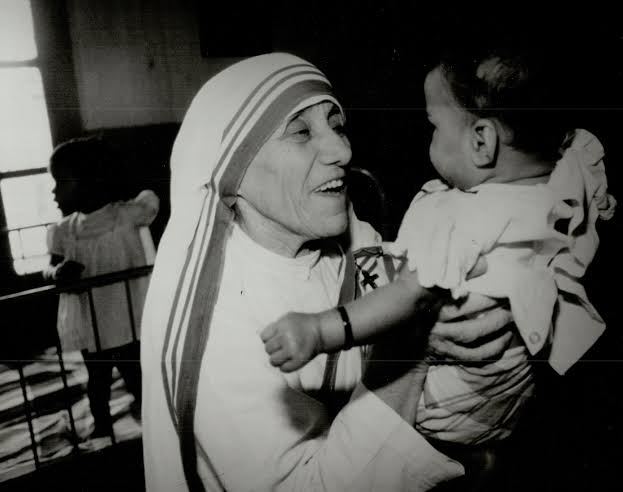
Mother Teresa’s Family and Young Life

Mother Teresa was born on August 26, 1910, in Skopje, the current capital of the Republic of Macedonia. The following day, she was baptized as Agnes Gonxha Bojaxhiu.

Mother Teresa’s parents, Nikola and Dranafile Bojaxhiu, were of Albanian descent; her father was an entrepreneur who worked as a construction contractor and a trader of medicines and other goods. The Bojaxhius were a devoutly Catholic family, and Nikola was deeply involved in the local church as well as in city politics as a vocal proponent of Albanian independence.

In 1919, when Mother Teresa — then Agnes — was only eight years old, her father suddenly fell ill and died. While the cause of his death remains unknown, many have speculated that political enemies poisoned him.

In the aftermath of her father’s death, Agnes became extraordinarily close to her mother, a pious and compassionate woman who instilled in her daughter a deep commitment to charity. Although by no means wealthy, Drana Bojaxhiu extended an open invitation to the city’s destitute to dine with her family. “My child, never eat a single mouthful unless you are sharing it with others,” she counseled her daughter. When Agnes asked who the people eating with them were, her mother uniformly responded, “Some of them are our relations, but all of them are our people.”

Education and Nunhood

Agnes attended a convent-run primary school and then a state-run secondary school. As a girl, she sang in the local Sacred Heart choir and was often asked to sing solos. The congregation made an annual pilgrimage to the Church of the Black Madonna in Letnice, and it was on one such trip at the age of 12 that she first felt a calling to religious life. Six years later, in 1928, an 18-year-old Agnes Bojaxhiu decided to become a nun and set off for Ireland to join the Sisters of Loreto in Dublin. It was there that she took the name Sister Mary Teresa after Saint Thérèse of Lisieux.

A year later, Sister Mary Teresa traveled on to Darjeeling, India, for the novitiate period; in May 1931, she made her First Profession of Vows. Afterward, she was sent to Calcutta, where she was assigned to teach at Saint Mary’s High School for Girls, a school run by the Loreto Sisters and dedicated to teaching girls from the city’s poorest Bengali families. Sister Teresa learned to speak both Bengali and Hindi fluently as she taught geography and history and dedicated herself to alleviating the girls’ poverty through education.

On May 24, 1937, she took her Final Profession of Vows to a life of poverty, chastity and obedience. As was the custom for Loreto nuns, she took on the title of “Mother” upon making her final vows and thus became known as Mother Teresa. Mother Teresa continued to teach at Saint Mary’s, and in 1944 she became the school’s principal. Through her kindness, generosity and unfailing commitment to her students’ education, she sought to lead them to a life of devotion to Christ. “Give me the strength to be ever the light of their lives, so that I may lead them at last to you,” she wrote in prayer.

‘Call Within a Call’

On September 10, 1946, Mother Teresa experienced a second calling, the “call within a call” that would forever transform her life. She was riding in a train from Calcutta to the Himalayan foothills for a retreat when she said Christ spoke to her and told her to abandon teaching to work in the slums of Calcutta aiding the city’s poorest and sickest people.

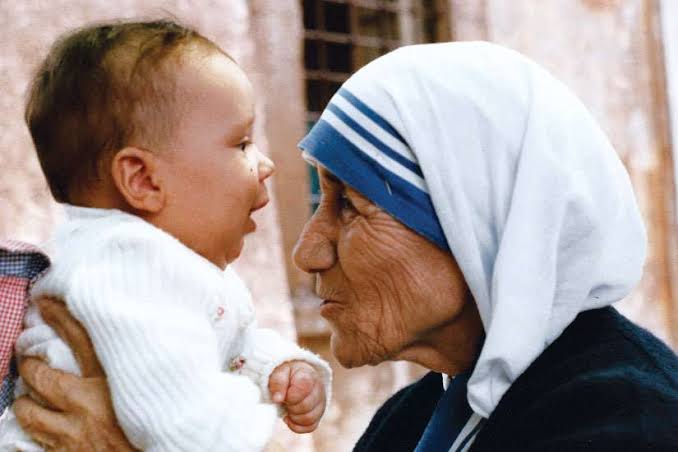
Since Mother Teresa had taken a vow of obedience, she could not leave her convent without official permission. After nearly a year and a half of lobbying, in January 1948 she finally received approval to pursue this new calling. That August, donning the blue-and-white sari that she would wear in public for the rest of her life, she left the Loreto convent and wandered out into the city. After six months of basic medical training, she voyaged for the first time into Calcutta’s slums with no more specific a goal than to aid “the unwanted, the unloved, the uncared for.”
Missionaries of Charity

Mother Teresa quickly translated her calling into concrete actions to help the city’s poor. She began an open-air school and established a home for the dying destitute in a dilapidated building she convinced the city government to donate to her cause. In October 1950, she won canonical recognition for a new congregation, the Missionaries of Charity, which she founded with only a handful of members—most of them former teachers or pupils from St. Mary’s School.

As the ranks of her congregation swelled and donations poured in from around India and across the globe, the scope of Mother Teresa’s charitable activities expanded exponentially. Over the course of the 1950s and 1960s, she established a leper colony, an orphanage, a nursing home, a family clinic and a string of mobile health clinics.

In 1971, Mother Teresa traveled to New York City to open her first American-based house of charity, and in the summer of 1982, she secretly went to Beirut, Lebanon, where she crossed between Christian East Beirut and Muslim West Beirut to aid children of both faiths. In 1985, Mother Teresa returned to New York and spoke at the 40th anniversary of the United Nations General Assembly. While there, she also opened Gift of Love, a home to care for those infected with HIV/AIDS.

Mother Teresa’s Awards and Recognition

In February 1965, Pope Paul VI bestowed the Decree of Praise upon the Missionaries of Charity, which prompted Mother Teresa to begin expanding internationally. By the time of her death in 1997, the Missionaries of Charity numbered more than 4,000 — in addition to thousands more lay volunteers — with 610 foundations in 123 countries around the world.

The Decree of Praise was just the beginning, as Mother Teresa received various honors for her tireless and effective charity. She was awarded the Jewel of India, the highest honor bestowed on Indian civilians, as well as the now-defunct Soviet Union’s Gold Medal of the Soviet Peace Committee. In 1979, Mother Teresa was awarded the Nobel Peace Prize in recognition of her work “in bringing help to suffering humanity.”

Criticism of Mother Teresa

Despite this widespread praise, Mother Teresa’s life and work have not gone without its controversies. In particular, she has drawn criticism for her vocal endorsement of some of the Catholic Church’s more controversial doctrines, such as opposition to contraception and abortion. “I feel the greatest destroyer of peace today is abortion,” Mother Teresa said in her 1979 Nobel lecture.

In 1995, she publicly advocated a “no” vote in the Irish referendum to end the country’s constitutional ban on divorce and remarriage. The most scathing criticism of Mother Teresa can be found in Christopher Hitchens’ book The Missionary Position: Mother Teresa in Theory and Practice, in which Hitchens argued that Mother Teresa glorified poverty for her own ends and provided a justification for the preservation of institutions and beliefs that sustained widespread poverty.

When and How Mother Teresa Died

After several years of deteriorating health, including heart, lung and kidney problems, Mother Teresa died on September 5, 1997, at the age of 87.

The Big Bang

Ever heard of the Big Bang? No, not the TV show. The beginning of the Universe as we know it. 

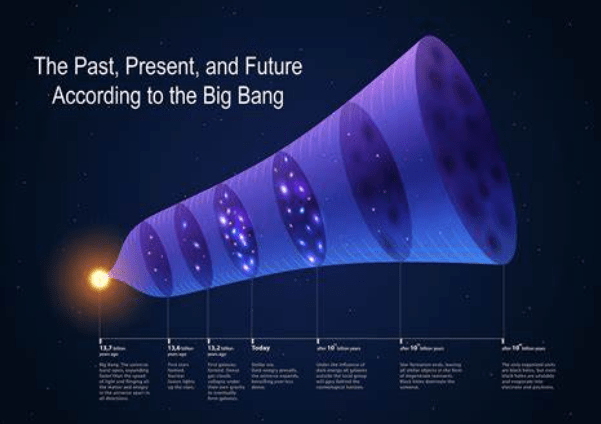
The Big Bang theory is the prevailing cosmological model explaining the existence of the observable universe from the earliest known periods through its subsequent large-scale evolution. The model describes how the universe expanded from an initial state of high density and temperature,  and offers a comprehensive explanation for a broad range of observed phenomena, including the abundance of light elements, the cosmic microwave background (CMB) radiation, and large-scale structure.

Crucially, the theory is compatible with Hubble–Lemaître law—the observation that the farther away a galaxy is, the faster it is moving away from Earth. Extrapolating this cosmic expansion backwards in time using the known laws of physics, the theory describes an increasingly concentrated cosmos preceded by a singularity in which space and time lose meaning (typically named “the Big Bang singularity”). Detailed measurements of the expansion rate of the universe place the Big Bang singularity at around 13.8 billion years ago, which is thus considered the age of the universe. 

Timeline

The first second after the Big Bang, the entire universe was a soup of subatomic particles, superheated to 10 billion degrees. In that first second, amazing things happened: The force of gravity separated out from the electronuclear force and was joined soon thereafter by the electromagnetic force. The universe changed from being a hot soup of quarks and gluons (elementary particles), and protons and neutrons began to form. At the ripe old age of one second, the newborn universe was cool enough that it began forming deuterium (a form of hydrogen) and helium-3. At this point, the newborn universe had doubled in size at least ninety times!

Over the next three minutes, the infant universe continued to cool down and expand, and the creation of the first elements continued. 

For the next 370,000 years, the universe continued its expansion. But it was a dark place, too hot for any light to shine. There existed only a dense plasma, an opaque hot soup that blocked and scattered light. The universe was essentially a fog. 

The next big change in the universe came during the era of recombination, which occurred when matter cooled enough to form atoms. The result was a transparent gas through which the original flash of light from the Big Bang could finally travel. We see that flash today as a faint, all-encompassing, distant glow called the cosmic microwave background radiation (sometimes shortened to CMB or CMBR). The universe was leaving its cosmic dark ages behind. Gas clouds condensed under their own self-gravity (possibly helped along by the gravitational influence of dark matter) to form the first stars. These stars energized (or ionized) the remaining gas around them, lighting up the universe even more. This period is called the Epoch of Reionization.

From the Big Bang to You 

Pre–Big Bang: quantum density fluctuations

Pre–Big Bang: cosmic inflation

13.8 billion years ago: the Big Bang

13.4 billion years ago: the first stars and galaxies 

11 billion years ago: the Milky Way Galaxy starts to form 

5 billion years ago: the Sun begins to form, along with the planets 

3.8 billion years ago: the first life appears on Earth 

2.3 million years ago: the first humans appear Modern time: you were born

https://en.wikipedia.org/wiki/Big_Bang
https://science.nasa.gov/astrophysics/focus-areas/what-powered-the-big-bang

Email marketing

Email marketing is the act of sending a commercial message, typically to a group of people, using email. In its broadest sense, every email sent to a potential or current customer could be considered email marketing. It involves using email to send advertisements, request business, or solicit sales or donations.

Benefits of email marketing: spread sheet use, customization draft, option of subscribe and unsubscribe, track links, provide list categories, personification feature, save time. Businesses and organizations who send a high volume of emails can use an ESP (email service provider) to gather information about the behavior of the recipients. The insights provided by consumer response to email marketing help businesses and organizations understand and make use of consumer behavior. Words that can help in increasing the chance of opening an email by your customer- free, discount, specials, reminder,customer name; link with such words can help.

A/B testing- test many things via email. It is a method of comparing two versions of a web page or app against each other to determine which one performs better. AB testing is essentially an experiment where two or more variants of a page are shown to users at random, and statistical analysis is used to determine which variation performs better for a given conversion goal.


Email analytics tools can help to manage the business via email and lessen the burden for checking and keeping track thousands of emails. Many email analytics platforms are geared toward email marketers, who have a more pressing need and a bigger budget, rather than office workers trying to improve their own productivity – or office managers trying to improve the productivity of their team members. The majority of apps focusing on improving productivity add some functionality that makes workers faster or more efficient, rather than getting to the heart of the problem with objective data analysis. Some tools which can help- sortd, email analytics powered by google, ActiveInbox, The Email Game, Todoist, and many more.

Michael Jackson

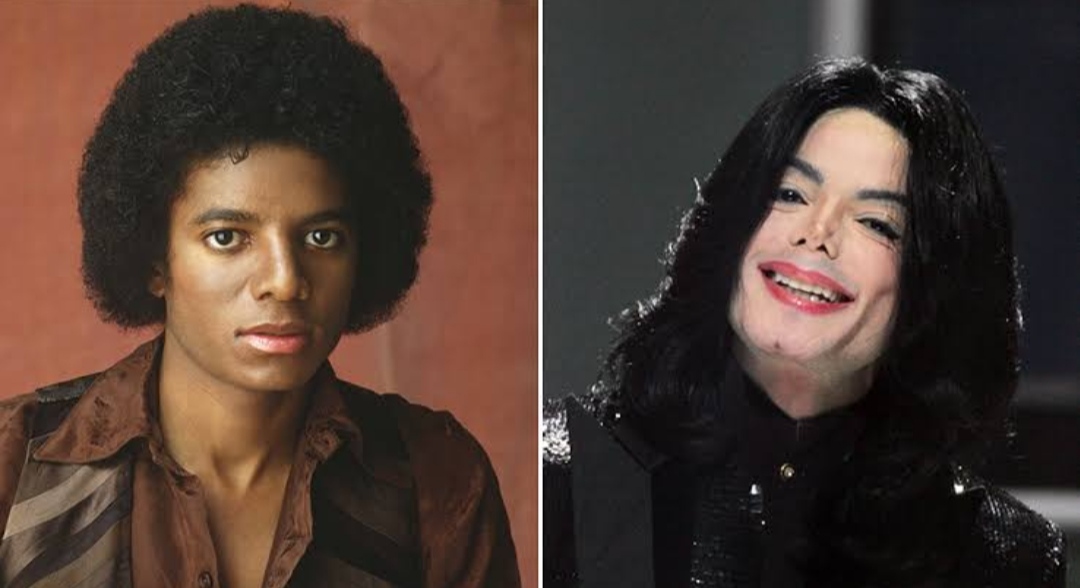
Michael Joseph Jackson(1958-2009) also popularly known as Michael Jackson,was an American singer, songwriter, and dancer. He is famously known as king of pop,he is regarded as one of the most significant cultural figures of the 20th century. 

His contributions to music, dance, fashion, and philanthropy, made him a global figure.

He influenced many people, many genres across the world through stage and video performances.

His popularized dance moves like moon walk , still this complicated dance gestures is creating popularity, records.He is the most awarded music artist in history.

Jackson is one of the best selling music artists of all time, with estimated sales of over 350 million records worldwide. For his incredible contribution to music,dance he was honoured with 15 Grammy awards, six Brit awards, a golden globe award, and 39 Guinness world records.

Michael Jackson, also known as most commercially successful entertainers of all time. At the age of 50, Michael Jackson passed away,at his home in Los Angeles, California, after suffering from cardiac arrest caused by a fatal combination of drugs given to him by his personal doctor.

The Stunning Galaxies

A galaxy is a gravitationally bound system of stars, stellar remnants, interstellar gas, dust, and dark matter.The word galaxy is derived from the Greek galaxias , literally “milky”, a reference to the Milky Way. Galaxies range in size from dwarfs with just a few hundred million (108) stars to giants with one hundred trillion (1014) stars, each orbiting its galaxy’s center of mass.

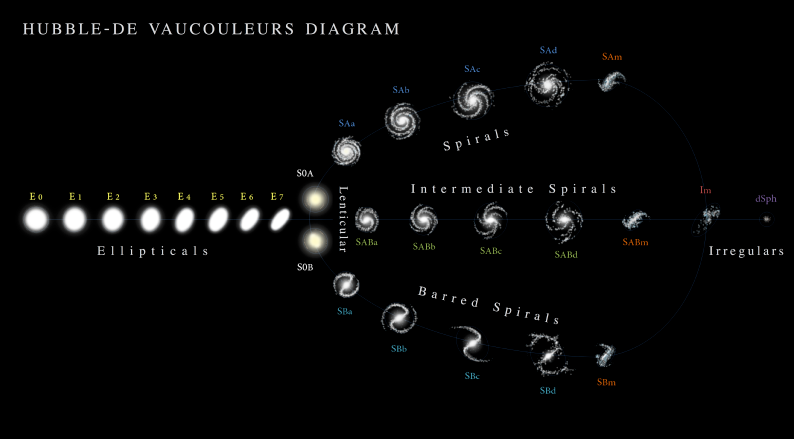
Galaxies are categorized according to their visual morphology as elliptical, spiral, or irregular. Many galaxies are thought to have supermassive black holes at their centers. 

Some famous Galaxies: 

1]Milky Way

ESO-VLT-Laser-phot-33a-07.jpg

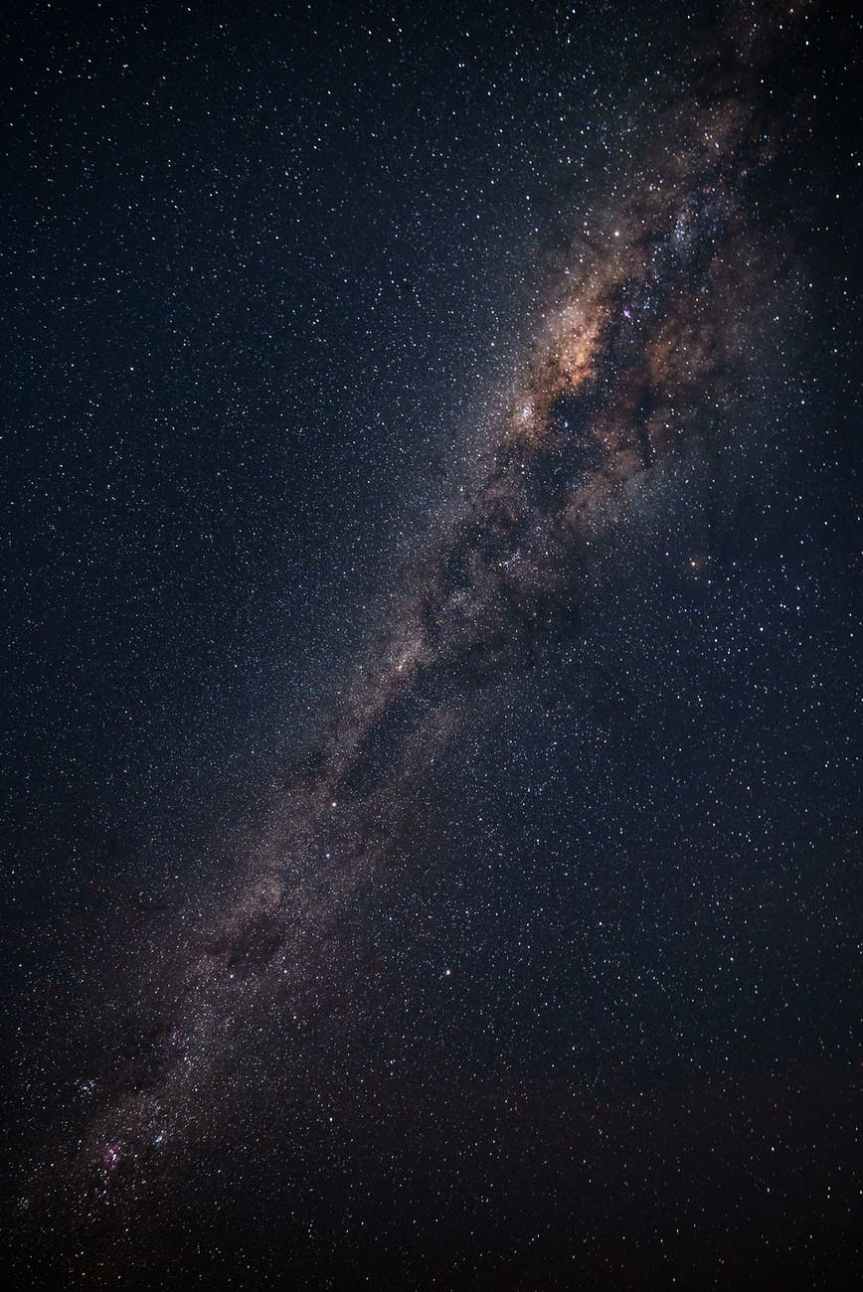
The Milky Way is the galaxy that includes our Solar System, with the name describing the galaxy’s appearance from Earth: a hazy band of light seen in the night sky formed from stars that cannot be individually distinguished by the naked eye. From Earth, the Milky Way appears as a band because its disk-shaped structure is viewed from within. Galileo Galilei first resolved the band of light into individual stars with his telescope in 1610. The Milky Way is a barred spiral galaxy with an estimated visible diameter of 100,000–200,000 light-years. Recent simulations suggest that a dark matter disk, also containing some visible stars, may extend up to a diameter of almost 2 million light-years. The Milky Way has several satellite galaxies and is part of the Local Group of galaxies, which form part of the Virgo Supercluster, which is itself a component of the Laniakea Supercluster.

2]Andromeda-

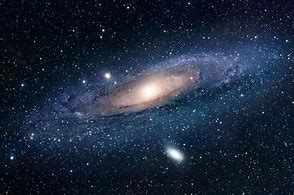
The Andromeda Galaxy also known as Messier 31, M31, or NGC 224 and originally the Andromeda Nebula, is a barred spiral galaxy approximately 2.5 million light-years (770 kiloparsecs) from Earth and the nearest major galaxy to the Milky Way. The galaxy’s name stems from the area of Earth’s sky in which it appears, the constellation of Andromeda, which itself is named after the Ethiopian (or Phoenician) princess who was the wife of Perseus in Greek mythology. The virial mass of the Andromeda Galaxy is of the same order of magnitude as that of the Milky Way, at 1 trillion solar masses (2.0×1042 kilograms). The Andromeda Galaxy has a diameter of about 220,000 ly (67 kpc), making it the largest member of the Local Group in terms of extension. The number of stars contained in the Andromeda Galaxy is estimated at one trillion (1×10¹²), or roughly twice the number estimated for the Milky Way.

3]Barnard’s galaxy

NGC 6822

NGC 6822 (also known as Barnard’s Galaxy, IC 4895, or Caldwell 57) is a barred irregular galaxy approximately 1.6 million light-years away in the constellation Sagittarius. Part of the Local Group of galaxies, it was discovered by E. E. Barnard in 1884 (hence its name), with a six-inch refractor telescope. It is one of the closer galaxies to the Milky Way. It is similar in structure and composition to the Small Magellanic Cloud. It is about 7,000 light-years in diameter.

4]Black eye galaxy

The Black Eye Galaxy (also called Sleeping Beauty Galaxy or Evil Eye Galaxy and designated Messier 64, M64, or NGC 4826) is a relatively isolated spiral galaxy 17 million light-years away in the mildly northern constellation of Coma Berenices. It was discovered by Edward Pigott in March 1779, and independently by Johann Elert Bode in April of the same year, as well as by Charles Messier the next year. A dark band of absorbing dust partially in front of its bright nucleus gave rise to its nicknames of the “Black Eye”, “Evil Eye”, or “Sleeping Beauty” galaxy. M64 is well known among amateur astronomers due to its form in small telescopes and visibility across inhabited latitudes.

5]Whirlpool galaxy

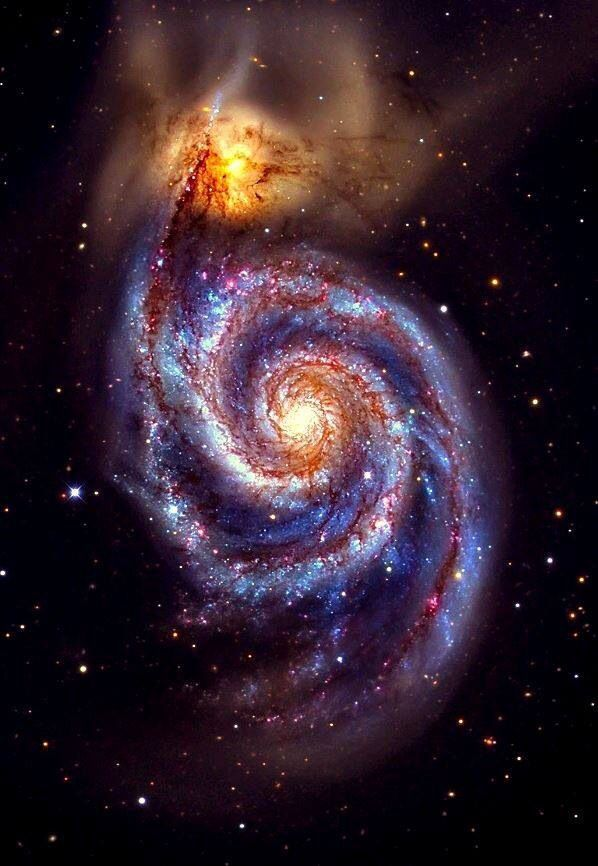
The Whirlpool Galaxy, also known as Messier 51a, M51a, and NGC 5194, is an interacting grand-design spiral galaxy with a Seyfert 2 active galactic nucleus. It lies in the constellation Canes Venatici, and was the first galaxy to be classified as a spiral galaxy. Its distance is estimated to be 31 million light-years away from Earth

http://en.wikipedia.org/wiki/NGC_6822
https://en.wikipedia.org/wiki/Black_Eye_Galaxy

Modernism & Postmodernism – II

The 2nd half 20th Century – the socio cultural movements that effected people are merging and becoming more. Post Colonial literature became  popular, Ngugi wa thiongo a Kenyan thinker – Moving the Centre – The plurality of culture and literature, the shift from Eurocentric understanding of the world. Grand narratives centred around the Eurocentric understanding, and postcolonial works thus became a shift from these Grand Narratives. The way art aesthetics and literature were looking at the past and the grand narratives became problematic, because people felt a need to bring back the past, but simultaneously in every country there was this need to bring something new back. Every age becomes a response to a previous period and the previous period is a response to resistance. Literatureis not something that is just to entertain people, the position of literature is embedded in our social systems, part of your existence. To understand postmodernism, is to lie on modernism. France Fanon, Meena Kandasamy, examples of theoretical perception are taken forward with people of different discipline. Thiongo’s  work becomes important for the possibility of multiple centres and multiple meanings – a product of European imperialism and internal resistance as well. 

Mcluhan’s  Medium as message, depending on the medium the reachability is different and the access as well is differing. 

Susan Sontag – a revolt against  ‘the departure from modernism can be regarded as new sensibility, a revolt against canonised modernism’s avant-guard revolution’  – Critiquing the high culture of Modern Capitalist world, against the cannon. On one hand Modernism tried critiquing the Grand narratives and on the other it cerated a canon for itself. 

Modernism is adopting plurality like Postmodernism, but was lamenting fragmentation even though working through it, trying to work on a wholesome unity, they continued to believe that with lit or artistic expression we may achieve a ‘self’ while postmodernism are embracing fragmentation, praising dissent, rather celebrating fragmentation. 

Arnold Toynbee – birth of postmodernism, and questioning the tradition moral values and beliefs (grand narratives); and by questioning this he’s talking about the development of cultural modernists and the different understanding of the world, a better apparatus of understanding world and culture. Grand Narratives continue to be over – aching and totalising and replace or silence other narratives around us. And how mini-narratives can replace grand narratives by promoting plurality and heterogeneity as it becomes local. [Culture in modernism – a cultural innovation – development of new meanings.] Postmodernism is branching out to different ways, questioning the requirement and the need for plurality and heterogeneity.  

Modernism & Postmodernism – I

1922 – TS Elliot’s Wasteland & James Joyce’s Ulysses, Virginia Woolf – Jacob’s Room

1927 – Virginia Woolf – To the lighthouse.

1924 – Manifesto of the Surrealist Moment – Andre Bretel

1937 – Guernica – an anti-war painting. 

1914 – Stravinsky – Rise of Spring

Before Modernist was the Victorian Period, certain set of practices that was held sacrosanct up until the 1920’s, and everything that came out post 1920’s questioned everything. Linear chronological narrative was held sacrosanct for ages, and Elliot, James Joyce, Virginia Woolf were subservient to these narrative, alongside the impressionist, and the Credo of Modernism ‘make it new’ campaign by Ezra Pound; Modernist thinkers and philosophers stood for renovation and experiments, ‘Avant Garde’ ‘Sapere Aude’ (dare to know – courage to chart new territories) – after WWI. 

Theoretical justification form this break of the past ? Why ? The central image of modernism was a big large void that defined Modernism – Scepticism/disbelief/boredom/disillusionment/restrictive and that this is not ‘it’, and to replace it with something new; and everything that was held important started falling apart. The science that was to make everything better couldn’t hold, the centre was falling apart and one couldn’t make sense of it, here structuralism to poststructuralism – Derrida – meaning is differing. 

1990 – Virginia Woolf – Modern Fiction – in the pre-verbal or pre-literate thought your words are not linear, because it’s happening in your mind, therefore chronological pattern never works, it’s always in a flux, therefore she suggests “stream-of-consciousness” – a randomness of a narrative – no structure, a linear mode of storytelling – Virginia Woolf’s Mrs. Dalloway. 

Purist, Exclusivist/Universalist – to contain a single meaning – something that is questioned by Modernism. Meta Narratives/Grand Narratives that dictate the Euro – Centric understanding of the world, that make things/life better or easier – Marxism, Religion – Christianity – Redemption. 

Single Epistemology (the theory of knowledge) 

Post Colonial/Gender/Race came in complicating others. 

Moving the Centre by Ngugi wa thiongo, and Afrocentrism. 

Importance of cardio

Cardiovascular fitness is the ability to handle aerobically challenging situations of varying duration. The leading cause of death in the United States is heart disease. Improving cardiovascular fitness can reduce your risk of developing heart disease by increasing the efficiency of your heart, lungs, and blood vessels. The easier it is to pump blood through your body, the less taxing it is on your heart. Your heart’s contraction strength, the elasticity of your blood vessels, and the efficiency of your blood to carry oxygen all improve if cardiovascular training is effectively executed.
Cardiovascular exercise also aids in maintaining a healthy body composition. Aerobic and anaerobic exercise, especially at higher intensities, contributes to a healthy Caloric burn. The fat you store on your body is reserved for periods of prolonged or intense activity. Training the cardiovascular system through high intensity intervals increases the activity of certain hormones, such as testosterone and growth hormone, that stoke fat burning. While low-intensity, steady-state cardio burns a higher percentage of fat, high intensity exercise results in greater total Calories burned, and speeds up the enzymes associated with burning fat.
Finally, having greater cardiovascular fitness means you can confidently complete activities that have a cardiovascular demand, such as climbing stairs, hiking, biking, swimming, and even strength training. Being able to move through your day without feeling winded can make a huge difference in your confidence and quality of life. A good cardiovascular base allows you to train harder during strength sessions without feeling fatigued, as well!
It is very common to perform cardiovascular exercise as your ONLY form of exercise. For example, a typical marathon runner would have a very high level of cardiovascular fitness, but they may be muscularly weak due to a lack of strength training, and stiff due to repetitively working the same muscles on a single plane of motion.
Remember the four pillars of Fitness: Strength, Cardiovascular Fitness, Mobility, and Body Composition. In the example above, the marathon runner has developed their cardiovascular fitness, but neglected the other pillars. As a result, they are protected from diseases associated with the cardiovascular system, and can handle aerobically taxing situations, but are still susceptible to the consequences of having poor strength, mobility, and body composition. The lack of strength training, coupled with only moving the joints in one repetitive motion, can exacerbate joint degradation and lead to overuse injuries, poor posture, and immobility. If an individual could run a marathon, but was unable to confidently pick up 100 lbs off the floor, would you consider them physically fit? Could they complete a variety of physical demands, and come out uninjured? The runner may escape developing cardiovascular disease later in life, but their poor mobility and lack of strength may lead to needing a knee replacement, or they become more susceptible to falling due to a lack of muscle mass. It is crucial to understand that cardiovascular exercise is only one component of being a healthy, fit, and capable person!
Here are some tips for effectively training your cardiovascular fitness:
1. Vary your cardiovascular activity. Your body quickly adapts to the type of training you do, which makes it harder to achieve the same results. To continue reaping the benefits of cardiovascular training, change up the equipment and form of training. Biking, Swimming, Running, Sled Pushing, Circuit Training, Battle Ropes, and more can all be cycled on a weekly or even daily basis to keep your training challenging and effective.
2. Train at the appropriate intensities. A heart rate monitor is one of the best pieces of equipment you can buy for dialing in your cardiovascular training. Try to exercise within 60-80% of your maximum heart rate to achieve the optimal physiological results. If you don’t have a heart rate monitor, use the RPE method: On a scale of 6-20, with 6 being sitting on the couch, and 20 being running for your life from a wild animal, try to exercise around a 15-18.
3. Give yourself the appropriate rest intervals. Try to set your working intervals anywhere from 15-60 seconds, and have a work:rest ratio of 1:3 or 1:4. For example, do a sprint interval on a bike for 15 seconds, and rest for 60 seconds. Total workout duration can be anywhere from 10-30 minutes.
4. Progress! Whether you add seconds to your work intervals, take away seconds from your rest intervals, or increase the total number of intervals you perform in a given workout, always progress! Your body will adapt to your workouts quickly, so you must remember to strive for more challenging sessions over time.

Fitness

Health can be defined as a holistic way of the growth of the human body and mind. A healthy person’s body is in complete harmony with his mind. We can practice the art of health and wellness by keeping in mind that our bodies are made from living tissues. Those tissues require nutrition to grow, and the food we eat is directly responsible for the nutrients that reach our tissues. Keeping that in mind, we must understand the importance of a balanced meal.
A meal is balanced when it has all the components like carbohydrates, starch, fat, protein, and vitamins in an equal proportion. If the balance is disturbed, we can eat a lot of the same type of food. Even if something is good for our health, eating too much can have a negative impact. For example, even if vitamins are beneficial to our health, eating a lot of vitamins can convert the excess quantity into toxic substances. The perfect sign of a healthy human body is resistant to diseases.
A healthy person can effectively fight off disease-causing germs. Immunity is provided by the WBC cells in our blood. These cells determine how strong a person’s immunity is. Immunity can be improved by eating foods rich in antioxidants like melons, citrus, guava, and strawberries.

Experience of online classes

The coronavirus pandemic has resulted in the closure of schools and colleges across the country. Education has changed dramatically during the lockdown period, with a considerable rise of e-learning, whereby teaching is executed remotely and on digital platforms.
Tens of thousands of students are glued to computers and smartphone screens as teachers and students enter a new world of virtual lectures, tutorials, and assessments. Though e-learning poses a challenge to both students and teachers over technology and access, it is keeping everyone busy with lectures, worksheets, and assignments.
Skill development and enhancement is key to career growth in the competitive times we live in. Various online education platforms have made it easy for students to develop new skills while continuing with a regular course at a college/university.
Since the virus outbreak forced educational institutes to adopt online classes, there is a considerable improvement in the attendance of students.
While there is no need to travel long distances for classes online learning materials are visually stimulating, concise, and more interactive combined with features like surveys or polls, quizzes,
etc.
As a result, online classes increase student engagement. However, there are some disadvantages of online classes also. Online classes affect the eyes of the students due to long hours in front of the blue screen.
Small children like the playschool and the primary grades must not have this type of class because they have low concentration power, and these small kids do not have the ability to sit for a longer time in front of the blue screen.
Lots of poor students do not have access to laptops and computers and they can not afford the high cost of these electronic items and internet charges.

Irani chai

Despite the fast-developing chai scene in Hyderabad, some places stand the test of time; and Hotel Rumaan in Tolichowki is one of them, with its almost perfect formula for retaining patronage that spans generations.
From streets away, you cannot miss the unmistakable smell of chai spices melded with hot butter. The unmissable signage beckons invitingly to loyal patrons. If you are a stranger to Rumaan’s helm, make sure you initiate yourself by having a couple of chais served in their cups stamped with Rumaan.
Hotel Rumaan is a destination, not just a stop-along-the-way. The popular array of biryanis speak for themselves, constantly being well-received by consumers across the city, whether you are health-minded or indiscriminate towards it. Most importantly, the chai is not compromised upon; each cup is an excuse for a good old kick-back; the perfect balance of sweet, spicy and milky all holding the promise of Irani heritage.
The unity of consumers across the city at Rumaan is something worth immersing yourself in; entrepreneurs, politicians, construction workers and artists — all under the same roof — engage in a fascinating interaction over the cups of chai and mountainous plates of food makes for an ideal story-telling setting.
Dedicated hospitality and pocket-friendly prices formulate the secret to running an establishment that has kept Hyderabadis returning ever since it was established. In the battlefield of getting your chai and biryani, everyone is an equal; the notion of ‘special service’ is thrust aside. But keep in mind; Rumaan attracts a male-dominated customer base, so be sure to go there as a group. The pride of Rumaan is evident in the staff, conveyed through arduous workflows, as well as the joyous and defeaning ways they communicate with each other.
Additionally in the overwhelming chaos of Tolichowki, Rumaan’s location could not be better, encouraging the bustling passers-by to slow down and indulge. Some explain that Rumaan is the crux of Tolichowki, retaining the flavours of old Hyderabad while being a window for the liveliness of the city.

Pituitary gland and hormones secreted by it.

Pituitary gland is one of the most important endocrine glands. It secretes a number of hormones which control a wide range of body functions. Pituitary gland is situated just below the mid brain behind the optical chiasma and lies in the cavity of sphenoid bones called Sella turcica. It is about 10mm in diameter and average weight is 0.5-0.6g in males and 0.6-0.7g in females.

It has two lobes. The anterior lobe called adenohypophysis and the posterior lobe is called neurohypophysis.

Hormones secreted by the anterior lobe or adenohypophysis are:

  1. Somatotrophic hormone: It is also called as growth hormone. It stimulates the body growth by influencing protein synthesis. Mobilization of fat from the adipose tissue and the free acids in the blood is accelerated by this hormone.

It also increases the intestinal absorption of calcium as well as its excretion. As it stimulates the growth of long bones and also the soft tissues, maintains retention of other minerals such as potassium, phosphate, sodium, magnesium and chloride.

Deficiency of this hormone in childhood retards growth and leads to dwarfism and over secretion causes gigantism.

  • Thyroid stimulating hormone: It mainly controls the activity of the thyroid gland. These hormones speedup oxidative energy releasing process, thus controlling the rate of metabolic activities and growth.

It also influences the release of thyroxine from the thyroid gland.

Hypersecretion of TSH shows that person has hypothyroidism and thyroid gland is underactive. Less amount of TSH in blood shows thyroid gland is producing too much thyroid hormone, and the condition is called hyperthyroidism.

  • Adrenocorticotropic hormone: It regulates the normal functioning of adrenal cortex and release of glucocorticoids and mineralocorticoids. It helps in the increase of the total protein synthesis and also causes the synthesis of steroid hormone from cholesterol.

Increased secretion of this hormone results in Addison disease, Cushing syndrome etc.

  • Follicle stimulating hormone: In females this hormone stimulates the growth and maturation of graafian follicles and prepares them for ovulation and the action of Luteinizing hormone and enhances the release of estrogen. Hence, we can say that this hormone is very active during menstrual cycle.

In males, it stimulates growth of seminal tubule and testicular growth and early stages of spermatogenesis, the process of generation of sperms.

High FSH level shows low chances of getting pregnant. In males shows damaged testicles. It may also indication of Klinefelter syndrome.

  • Luteinizing hormone: This hormone continues the action of follicle stimulating hormone and helps in maturation of graafian follicle and ovulation. This also involves in the development of corpus luteum. This hormone also stimulates the secretion of estrogen and progesterone.

In males, this hormone stimulates the interstitial cells of the testes to secrete testosterone thereby maintains the spermatogenesis.

Increased LH secretion may cause irregularities in menstruation and troubles to get pregnant.

  • Prolactin or Lactogenic hormone: This hormone promotes the growth of mammary glands during pregnancy. This hormone also helps in milk secretion after delivery of the baby. Prolactin is secreted in high amount if a female is pregnant or a new mother.
  • Melanocyte stimulating hormone: It influences the melanin secretion and deposition on human skin by acting on melanocytes. Increased levels of the hormone mean increased melanin deposition.

 Hormones secreted by posterior lobe or neurohypophysis are,

  1. Oxytocin: This hormone controls the contraction of muscles of the uterus during labor. It also helps in stimulation of lactation after child-birth. This is also a chemical messenger to the brain and controls the reproductive system.
  2. Vasopressin: this hormone has a major role in controlling the water balance of the body. This increases the reabsorption of water from the distal tubules of nephron. If there is failure in secretion of enough amount of this hormone, large amount of dilute urine which causes excess amount of thirst. This condition is called diabetes insipidus.

BHOPAL GAS TRAGEDY

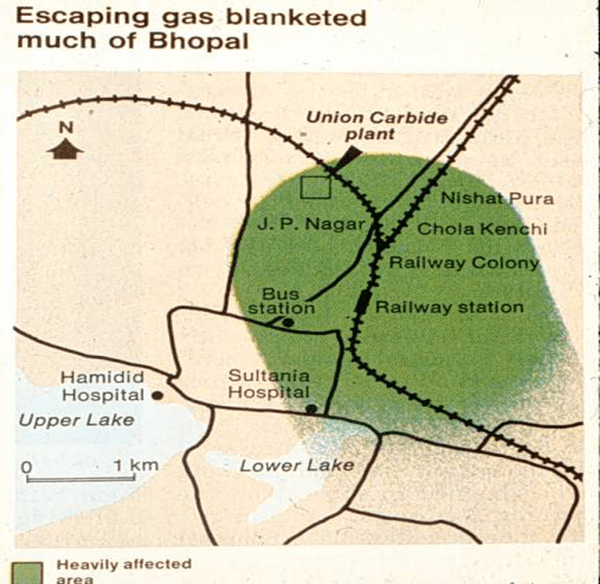
Around 1 a.m. on Monday, the 3rd of December, 1984, In the city of Bhopal, Central India, a poisonous vapour burst from the tall stacks of the Union Carbide pesticide plant. This vapour was a highly toxic cloud of methyl isocyanate. 2,000 people died immediately, 300,000 were injured. 7,000 animals were injured, of which about one thousand were killed.

AFFECTED AREA

POSSIBLE CAUSES

A tank containing methyl isocyanate (MIC) leaked. MIC is an extremely reactive chemical and is used in production of the insecticide carbaryl. The scientific reason for the accident was that water entered the tank where about 40 cubic meters of MIC was stored. When water and MIC mixed, an exothermic chemical reaction started, producing a lot of heat. As a result, the safety valve of the tank burst because of the increase in pressure. It is presumed that between 20 and 30 tonnes of MIC were released during the hour that the leak took place. The gas leaked from a 30 m high chimney and this height was not enough to reduce the effects of the discharge.

The high moisture content (aerosol) in the discharge when evaporating, gave rise to a heavy gas which rapidly sank to the ground. A weak wind which frequently changed direction, which in turn helped the gas to cover more area in a shorter period of time (about one hour). The weak wind and the weak vertical turbulence caused a slow dilution of gas and thus allowed the poisonous gas to spread over considerable distances.

One of the main reasons for the tragedy was found to be a result of a combination of human factors and an incorrectly designed safety system. A portion of the safety equipment at the plant had been non-operational for four months and the rest failed.

LAPSES ON THE PART OF THE GOVERNMENT

The Madhya Pradesh State government had not mandated any safety standards. Union Carbide failed to implement its own safety rules. The Bhopal plant experienced six accidents between 1981 and 1984, at least three of which involved MIC or phosgene.

WHY DID THE PEOPLE STAY QUITE ??

The country needed pesticides to protect her agricultural production. MIC is used to produce pesticides that control insects which would in turn, help increase production of food as a part of India’s GREEN REVOLUTION. Initially, India imported the MIC from the United States. In an attempt to achieve industrial self-sufficiency, India invited Union Carbide to set up a plant in the state of Madhya Pradesh to produce methyl isocyanate. To the people of the city of Bhopal, Union Carbide was a highly respected , technically advanced Western company. This coupled with political power and scientific expertise worked together to changed the people’s perception of what was dangerous and more importantly what was safe.

Suggested Solution

Alpha Napthol on carbonyl group addition followed by reaction with methyl amine would eventually gives carbaryl. This process does not generate or require handling the of Phosgene. This process does not require storage of MIC. Inherently safe process.

WORMHOLE-That helps you to teleport

Wormhole theory

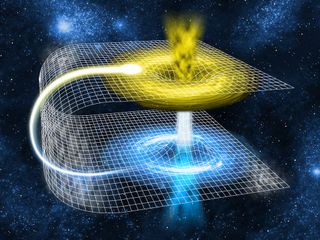
Wormholes were first theorized in 1916, though that wasn’t what they were called at the time. While reviewing another physicist’s solution to the equations in Albert Einstein’s theory of general relativity, Austrian physicist Ludwig Flamm realized another solution was possible. He described a “white hole,” a theoretical time reversal of a black hole. Entrances to both black and white holes could be connected by a space-time conduit.

In 1935, Einstein and physicist Nathan Rosen used the theory of general relativity to elaborate on the idea, proposing the existence of “bridges” through space-time. These bridges connect two different points in space-time, theoretically creating a shortcut that could reduce travel time and distance. The shortcuts came to be called Einstein-Rosen bridges, or wormholes.

“The whole thing is very hypothetical at this point,” said Stephen Hsu, a professor of theoretical physics at the University of Oregon, told our sister site, LiveScience. “No one thinks we’re going to find a wormhole anytime soon.”

Wormholes contain two mouths, with a throat connecting the two. The mouths would most likely be spheroidal. The throat might be a straight stretch, but it could also wind around, taking a longer path than a more conventional route might require.

Einstein’s theory of general relativity mathematically predicts the existence of wormholes, but none have been discovered to date. A negative mass wormhole might be spotted by the way its gravity affects light that passes by.

Certain solutions of general relativity allow for the existence of wormholes where the mouth of each is a black hole. However, a naturally occurring black hole, formed by the collapse of a dying star, does not by itself create a wormhole.

Wormhole

Through the wormhole

Science fiction is filled with tales of traveling through wormholes. But the reality of such travel is more complicated, and not just because we’ve yet to spot one.

The first problem is size. Primordial wormholes are predicted to exist on microscopic levels, about 10–33 centimeters. However, as the universe expands, it is possible that some may have been stretched to larger sizes.

Another problem comes from stability. The predicted Einstein-Rosen wormholes would be useless for travel because they collapse quickly. 

“You would need some very exotic type of matter in order to stabilize a wormhole,” said Hsu, “and it’s not clear whether such matter exists in the universe.”

But more recent research found that a wormhole containing “exotic” matter could stay open and unchanging for longer periods of time.

Exotic matter, which should not be confused with dark matter or antimatter, contains negative energy density and a large negative pressure. Such matter has only been seen in the behavior of certain vacuum states as part of quantum field theory.

If a wormhole contained sufficient exotic matter, whether naturally occurring or artificially added, it could theoretically be used as a method of sending information or travelers through space. Unfortunately, human journeys through the space tunnels may be challenging.

“The jury is not in, so we just don’t know,” physicist Kip Thorne, one of the world’s leading authorities on relativity, black holes and wormholes, told Space.com. “But there are very strong indications that wormholes that a human could travel through are forbidden by the laws of physics. That’s sad, that’s unfortunate, but that’s the direction in which things are pointing.”

Wormholes may not only connect two separate regions within the universe, they could also connect two different universes. Similarly, some scientists have conjectured that if one mouth of a wormhole is moved in a specific manner, it could allow for time travel

“You can go into the future or into the past using traversable wormholes,” astrophysicist Eric Davis told LiveScience. But it won’t be easy: “It would take a Herculean effort to turn a wormhole into a time machine. It’s going to be tough enough to pull off a wormhole.”

However, British cosmologist Stephen Hawking has argued that such use is not possible. [Weird Science: Wormholes Make the Best Time Machines]

“A wormhole is not really a means of going back in time, it’s a short cut, so that something that was far away is much closer,” NASA’s Eric Christian wrote.

Although adding exotic matter to a wormhole might stabilize it to the point that human passengers could travel safely through it, there is still the possibility that the addition of “regular” matter would be sufficient to destabilize the portal.

Today’s technology is insufficient to enlarge or stabilize wormholes, even if they could be found. However, scientists continue to explore the concept as a method of space travel with the hope that technology will eventually be able to utilize them.

“You would need some of super-super-advanced technology,” Hsu said. “Humans won’t be doing this any time in the near future.”

Additional resources:

Enrich your soft skills

What are soft skills and why do they take a prominent role in building & formulating a splendid career? How are soft skills interrelated with the work we do?

Many come up with similar questions when they face several challenges in an interview which is the most salient part to get placed in a job and some become obsessed with it when they are not able to grasp the opportunities due to the lack of soft skills. Soft skills play a vital part that makes you fit in a particular role at the workplace. It is the essence by which a person gets qualified for a job or an employee is been promoted/retained by the employer on this grounds. We cannot ace the interviews under the shadow of hard skills because the managing team hire individuals initially, on how the participants present and carry themselves in an interview. Every interview demands the parity of both hard and soft skills. Soft skills consistently deals with a person’s EQ ( Emotional Quotient), it is a combination of interpersonal traits, time management, team work, flexibility, public speaking, leadership qualities, basic etiquettes, critical thinking, communication skills etc. There should be an ultimate professionalism in the conversations that we have at our work place and that’s why soft skills play a major role. Soft skills doesn’t demand for some external course or trainings to acquire them. They are some of the innate qualities that we possess or need to develop for an engrossing career such as,

Expand your network and build a positive circle.

Broaden your mindset for a mindful learning.

Develop self esteem and embolden self reflection.

Get out of the comfort level and explore new horizons.

Strive to get along with people easily, be amiable and emphasize team work , by this you can promote the leadership qualities. Organize events, take up the lead roles and responsibilities to exhibit the inner leader in you.

Have a self assessment , be open to constructive criticisms, update yourself and don’t be reluctant to learn and gather knowledge.

Do not stand still, adapt to different circumstances which is the most eminent trait at a work place.

All these skills are very efficient because they make you stand out from others and aids you to ace in the career. Soft skills are the cluster of personal and professional qualities that the companies and firms look for value in their forces in today’s world. This increases the chances for employability that the proprietors consider because such skills are needed to get sideways with the colleagues and customers. Hard skills could be acquired by many as we all get a strong platform through universities and virtual courses to nourish it but soft skills is the abilities and qualities that we nurture on our own. Soft skills also helps us on a personal standard to formulate into a better person. Let us see some of the important soft skills in brief to pursue a triumphant career.

LEADERSHIP

Leadership is the potential of an individual to lead and influence the other team members by their mission and vision. This is a very eminent attribute of individuals and those who exhibit this quality can ascend to many prestigious positions in life.

COMMUNICATION

The ability to communicate effectively is perhaps the most important of all soft skills. At its simplest it is the act of conveying ideas and information from one to the other. To have an effective communication the person should first listen and comprehend the opponents point of view and then share his/her views in a precise manner & clearly and should not be overlooked. This can help in every nuance of life from the professional stratum to the social gatherings.

CRITICAL THINKING

Critical thinking is the analysis of facts and ideas to arrive to a solution or judgement. It is the ability to think clearly and rationally, comprehending the logics inter connected with the ideas. It comprises of a set of skills like observation, interpretation, analysis, evaluation, problem solving and decision making ability.

INNOVATION AND CREATIVITY

Individuals should be able to adapt to the upcoming and the changing technologies and put forth their innovative ideas in problem solving. They should not be conservative with their ideas and should evolve with time. They should reach the solution for the different tasks and challenges posed on them in a new and different way.

TEAM WORK

Coordination is very vital among a set team members to envision ideas , to establish them in the finest way and to produce magnificent results. Effective communication is the foundation for team work. So we can come to know that all the soft skills are inter related with each other. The capability to put forward the point and truly interpret & understand what others say is the cornerstone of effective teamwork.

FLEXIBILITY

Flexibility is being able to adapt oneself to various situations, works and places and to fit in effectively. You should bend yourself to deal with unexpected challenges calmly and efficiently and then you would arrive at strategies to meet the ends.