The Rise of Esports in India

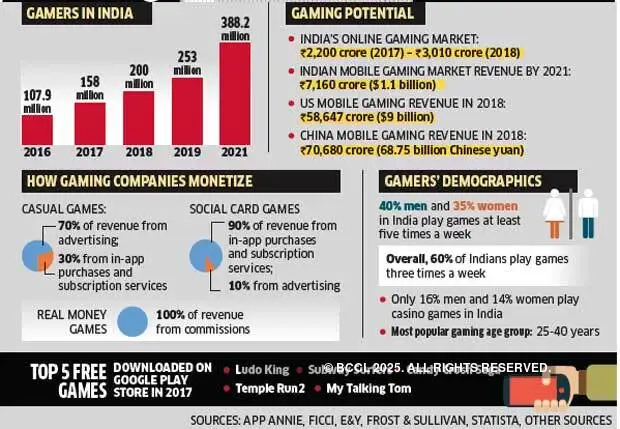
India is emerging as a leader in sports gaming, a growing field that has fascinated the interest of millennials like never before. The Indian digital gaming industry is growing rapidly with behemoths like Dream11, Mobile Premier League, Junglee Games creating their footprints globally.In the past couple of years, the country has witnessed multiple e-sports startups, namely JetSynthesys, Cobx Gaming, FanMojo, Playtonia and Nodwin Gaming, joining the online gaming space, establishing E-sports as an investor-friendly industry. According to the IFSG-KPMG report, the industry is already worth INR 43.8 billion and is said to reach INR 118.8 billion by FY23 with a growth rate of CAGR 22.1 per cent. 

This is to solicit a story on how e-sports platforms are evolving the landscape of sports gaming in India. The primary reason for investors to take an interest in the e-sports section is because India is growing as a sporting nation and the people are taking an interest in building and popularizing leagues for Football, Kabaddi, Hockey, Badminton and other sports.
Alibaba: Tencent and Alibaba-Paytm evaluating India's startup ...

Why E-sports?

More than often people confuse E-sports with Fantasy gaming. While the former is catching a certain interest, electronic sports are not far behind. This form of video gaming has a professional and competitive nature that is facilitated by an electronic system and is often based on organized multi-player video games.Sports gaming is a growing field in India and E-sports is said to be leveraging the country’s love for real sports. “Watching real sports is a passive activity. You switch on your television or open up your mobile app, sit back and enjoy the game,” Ankush Gera, CEO and Founder of Junglee Games started, adding that Online gaming has recognized India’s love for action by making a passive activity engaging.

“Today’s consumers are no longer satisfied with just clicking a button. They want action. They want to do more. They want to be a part of the experience,” he shared. A leader in skill gaming space with over 10 million users across the globe, Junglee Games has emerged as India’s answer to PUBG. The success story specifies that the growth of Indian E-sports platforms is only limited by the initiative.

The Rise of Esports

Currently, India stands at a global number 17 in the soon-to-be USD 1.5 billion Esports industry. Estimated to be about $818 million, the Indian Esports sector while vastly unstructured, is growing rapidly. The number of online gamers worldwide has increased from 20 million in 2010 to 250 million in 2018, whereas the number of game developing companies has grown from 25 in 2010 to 250 in 2018.The IFSG-KPMG reports suggested that fun and excitement are the primary motivators for 72 per cent users for playing online sports across all age and income groups. For around 81 per cent of respondents, the ‘ability to manage teams virtually’, ‘remain connected with the sport’ and ‘utilization of sports knowledge’ was other important motivators for engagement.

The mass penetration of mobile 4G, triggered by Reliance Jio, has further popularized online gaming sports (along with several other internet services) in the country. Thanks to digital innovation, sports have become more interactive, engaging and fun. However, both the real world and online sports have their own charm.Real-life games have their own adrenaline rush whereas the online community to fulfil their urge to play sports, expressed Asifa Sunar, SVP (Head of Product Quality) of Mobile Premier League. Sharing their idea of E-sports, she stated, “MPL is bridging the gap in terms of access to sports by connecting people online who were left out by the world of physical sports.”

Impact over Sports Viewership

Indians harbour a special love for sports. Cricket, especially, has been treated as more like a religion in India. However, a significant change has been noted in the consumption patterns and genre expansion, formulating a jump in the popularity & viewership of other games such as Kabaddi, Badminton, Wrestling & even Football.

“The popularity of a particular sport depends completely on the achievements of the national level teams,” provided Mujahid Rupani, the Co-founder & CEO, Cobx Gaming, an Indian E-sports company. Traditional sports are losing their appeal for the younger viewers due to the multi-hour formats and length of tournaments, making E-sports attractive for quicker gratification and results.While almost every Indian follows at least one sport and has a point of view on the game, players & team selection. Online gaming platforms are now rewarding them for testing their skills as a team selector or coach. Online gaming platforms give the nation an outlet for what they think sports should look like. 

Technology Over Traditional Mediums

“The conventional model of the single-screen broadcast is now only one of the many options at a fans disposal,” provided Sumesh Menon, Co-founder and Group CEO of U2opia Global, the parent company of FanMojo, a homegrown fantasy e-Sports platform that handpicks their players, use their skill to play games, compete and win prize money.Gera argues that Sports gaming does not negate the attraction sports fans have to view the game, in fact, it increases it. “They (Sports viewers) are so much more invested in the performance of the players, (that) watching the match on mobile or catching scores on a mobile app may hold appeal when travelling or busy, the appeal of viewing the match live on a bigger screen is much higher.”

However, he does agree that digital formats might encroach on some market share of traditional media. It would be interesting to see how traditional media adapts to technology. There could be some interesting crossovers between the two formats.

Big players in the market

With a larger appetite for gaming in India, there’s more money moving through the industry, with increased overseas investment and partnership, mostly from China. Alibaba-backed digital payments startup Paytm and Hong Kong’s AGTech Holdings launched a gaming platform Gamepind; Tencent, which has stakes in legendary games like League of Legends, Call of Duty and World of Warcraft, is planning to investin gaming in India this year, and Chinese gaming company Youzu launched local casual strategy games last year. Vietnam-based StomStudio also partnered with mobile game publisher Gamesbond to create mobile games in India.

Although most mobile games in India have a very low average revenue per user, except the casino and strategy genre games,  Manojh says, “As the market is maturing, the sector has been getting increasing attention from investors, with many startups raising funds to create niche games.”Globally, over the last few years, the games industry has seen free-to-play (F2P) hit the mainstream, tablet and smartphone games have come into the ascendent and we’ve seen Facebook gaming rise and fall, but in India though, F2P business model – in which games can be downloaded for free, but then make money through adverts – continues its growth.Between 2014 and 2016, game downloads in India more than doubled. “In terms of downloads, casual and sports genre games perform very well,” says Manojh. A survey reveals that mobile gaming is part of daily lives of more than one-third Indians — 40% men and 35% women play mobile games at least five days a week.

AI in gaming

There’s no question that there’s more interest than there has ever been. Virtual-reality gaming is also a fast-evolving vertical in the country. Digital advertising is forcing companies to look at gaming in a big way, embedding commercials through games.What makes all of this even more exciting is the introduction of artificial intelligence into gaming. Tech startup Absentia has developed Norah.ai, a AI-powered tool for quick creation and incorporation of all game elements. “Our engine is trained over 40 million data points, it generates variety at each step thereby adding countless number of possibilities to the terrains, 3D models and game play environments among others,” says Shubham Mishra, co-founder of Absentia. “At the click of a button, a fleet of 100 different variants are generated, empowering the developers with more options.”

This means that games developers don’t need to have particularly powerful hardware — they will be able to create assets for games, ranging from story, to animations, and even models quickly, and affordably. And, it’s all adding up to a fast-growing business.


“Desalination 97% of Water Reserves-Solution To Water Crises?”

Humans and animals have been travelling since ages in search of food and water. Fresh water and Food are required for any person not to be healthy and fit enough to carry his daily day to day routine. We have been able to find various fresh sources of these waters and their origin, and through advancement in technology we have brought them to land directly to our house. We now need not to travel distances in search of water related just turn on the taps and thus we get it anytime anywhere. This truly has transformed human life and has led cities to develop. The source of freshwater is mainly the groundwater which is assumed to be fresh and not contaminated with dust and adulterants. There are possibilities of hard water in some areas due to the geography of particular areas, but still it is drinkable and people can just boil it or just purify it through the RO or Reverse Osmosis process. 

But as we see and acknowledge these water reserves and resources, these are wasted a lot in various processes including technology and manufacturing. Due to which we are facing a lack of water in various parts of the world and has become a worldwide crisis. It is expected that around 5-6 billion people will be living in areas which will lack water resources by 2050. So it’s high time to be involved in the activities to save this essential resource and thus save humanity. 

But the big question which comes into the mind is that we have 3% of drinkable water, what about the rest 97%. “Why Can’t we use it? And What if we make that water clean and salt free, thus 100% drinkable.So what would be the results if we do remove all the salt water or no salt was ever dissolved in these oceans, how would our lives get affected ?” 

First of all what we need to know is how these water resources got salt into them ? It is assumed that since the existence of earth which was about 4.5 billion years ago,  earth was very hot and it took a few years to cool down. Then Around 3.8 billion years ago, the surface of earth got cooler and the vapours in the surrounding or atmosphere turned into liquid state and were fresh enough to drink directly. But sooner it became saltier due to various natural phenomenon especially like rain. Rain brought the carbon content in the air with it and dissolved in the freshwater. This makes the water a bit acidic, thus eroding the rocks. This water then goes into the rivers and streams residing nearby and thus dissolving those salts of rocks in it. Also there were emissions from Volcanoes which dissolved in these rivers and then into oceans. This process continues for another billion years and hence most of the water we do see around is saltier. 

Technologies and research have been followed up with the steps to remove salts from water and thus make it drinkable. So would it be beneficial for us or rather harmful ? 

  1. It is assumed that cleaning up most of these ocean waters by desalination would affect the life inside the sea and oceans. The marine life creatures have evolved to drink and remain hydrated through the salt water present in the surrounding. Cleaning this water will surely lead to death of most of this aqua life. These have evolved as per their surrounding and remove out the extra salt which helps them to survive. 
  2. The underwater algae which is assumed to be spread all around the world, is responsible for absorbing the carbon dioxide and giving out oxygen, which humans require to survive. Thus cleaning of water would affect these plants and would affect our atmosphere, filling it more with the carbon content and less pure and fresh air to breath
  3. Increase climate change making some parts of the world extremely hot to live in. Phenomenon like hurricanes and cyclones would get common as the temperature increased and this would help these tropical storms to build up. This surely looks no good for humans as per their survival would surely be at stake. 

“So it can be an option to shift towards these ocean water, make it clean and drink it, but still we should prohibit it from doing it as it can have a devastating effect on the survival of all living beings. We could rather save the resources which are present around us rather than interfering with nature. As we know everything is balanced in nature and if any interference could lead to a phase humans would never want to enter. So we all need to understand the importance of water, save it as much as we can, so as to be safe from future affects and thus remain safe.” 

History of Internet…

internet is a global computer network providing a variety of information and communication facilities, consisting of interconnected networks using standardized communication protocols. It connects millions of computers together globally, forming a network in which any computer can communicate with any other computer as long as they are both connected to the Internet. the full form of the internet is  Interconnected Network, firstly the Internet has its origin in the efforts to build and interconnect computer networks that arose from research and development in the United States and involved international collaboration, particularly with researchers in the United Kingdom and France.

Fundamental theoretical work in data transmission and information theory was developed by Claude Shannon, Harry Nyquist, and Ralph Hartley in the early 20th century. Information theory, as enunciated by Shannon in 1948, provided a firm theoretical underpinning to understand the trade-offs between signal-to-noise ratio, bandwidth, and error-free transmission in the presence of noise, in telecommunications technology. With so many different network methods, something was needed to unify them. Robert E. Kahn of DARPA and ARPANET recruited Vinton Cerf of Stanford University to work with him on the problem. By 1973, they had worked out a fundamental reformulation, where the differences between network protocols were hidden by using a common internetwork protocol, and instead of the network being responsible for the reliability, as in the ARPANET, the hosts became responsible. Cerf credits Hubert Zimmermann and Louis Pouzin designer of the CYCLADES network and his graduate students Judy Estrin, Richard Karp, Yogen Dalal, and Carl Sunshine with important work on this design.

800px-Internet_map_in_February_82

During the first decade or so of the public Internet, the immense changes it would eventually enable in the 2000s were still nascent. In terms of providing context for this period, mobile cellular devices like smartphones and other cellular devices, which today provide near-universal access, were used for business and not a routine household item owned by parents and children worldwide. Social media in the modern sense had yet to come into existence, laptops were bulky and most households did not have computers. Data rates were slow and most people lacked means to video or digitize video; media storage was transitioning slowly from analog tape to digital optical discs (DVD and to an extent still, floppy disc to CD). Enabling technologies used from the early 2000s such as PHP, modern JavaScript, and Java, technologies such as AJAX, HTML 4, and various software frameworks, which enabled and simplified speed of web development, largely awaited invention and their eventual widespread adoption.

The Internet was widely used for mailing lists, emails, e-commerce and early popular online shopping (Amazon and eBay for example), online forums and bulletin boards, and personal websites and blogs, and use was growing rapidly, but by more modern standards the systems used were static and lacked widespread social engagement. It awaited a number of events in the early 2000s to change from a communications technology to gradually develop into a key part of global society’s infrastructure.

The first Internet link into low earth orbit was established on January 22, 2010, when astronaut T. J. Creamer posted the first unassisted update to his Twitter account from the International Space Station, marking the extension of the Internet into space..) This personal Web access, which NASA calls the Crew Support LAN, uses the space station’s high-speed Ku band microwave link. To surf the Web, astronauts can use a station laptop computer to control a desktop computer on Earth, and they can talk to their families and friends on Earth using Voice over IP equipment.

Communication with spacecraft beyond earth orbit has traditionally been over point-to-point links through the Deep Space Network. Each such data link must be manually scheduled and configured. In the late 1990s, NASA and Google began working on a new network protocol, Delay-tolerant networking which automates this process, allows networking of spaceborne transmission nodes, and takes the fact into account that spacecraft can temporarily lose contact because they move behind the Moon or planets, or because space weather disrupts the connection. Under such conditions, DTN retransmits data packages instead of dropping them, as the standard TCP/IP Internet Protocol does. NASA conducted the first field test of what it calls the “deep space internet” in November 2008. Testing of DTN-based communications between the International Space Station and Earth has been ongoing since March 2009 and is scheduled to continue until March 2014.

As the Internet grew through the 1980s and early 1990s, many people realized the increasing need to be able to find and organize files and information. Projects such as Archie, Gopher, WAIS, and the FTP Archive list attempted to create ways to organize distributed data. In the early 1990s, Gopher, invented by Mark P. McCahill offered a viable alternative to the World Wide Web. However, in 1993 the World Wide Web saw many advances to indexing and ease of access through search engines, which often neglected Gopher and Gopherspace. As popularity increased through the ease of use, investment incentives also grew until in the middle of 1994 the WWW’s popularity gained the upper hand. Then it became clear that Gopher and the other projects were doomed to fall short.

In recent years, it’s become very clear that the internet is key to living in the modern age. Basically, everyone is expected to have an internet connection and everyone is expected to use that internet on a daily basis. The idea of doing something as simple as finding work without the internet is alien to most Europeans. I remember entering a job center in Norway and seeing the staff completely baffled and out of ideas when I informed them I was temporarily out of the internet. I also found it near impossible to manage here without some form of daily internet access, I think everyone who has been without it for more than a day will realize how much they rely on it, not just ‘want’ it.

However, when people think, “free internet” I don’t think they mean “we should have free WiFi hotspots everywhere.” I think they instead mean that you should not have to pay for WiFi to be wired to your house, and you should not be charged by a company to provide you the internet. I agree with this fully, the internet should not be a paid commodity like it’s simply something you can go without, it simply is too important. Like water and electricity, most developed countries monitor these services consistently and try to ensure they’re as cheap as possible, otherwise, the cost of surviving is simply too high, that’s why you can often find electricity and water for rather cheap prices. Internet, however, can be damned expensive, and the packages and contracts that must be signed are sometimes akin to signing a contract with the devil. Sometimes the companies won’t even deliver your modem, or they will purposely throttle you in order to ensure you upgrade your package. Internet providers can be, and often are, thieves, it’s almost completely unchecked.

In 2015, Google started the ‘Station’ program to bring free public Wi-Fi to 400 busiest railway stations in New Delhi, India, Google has decided to gradually wind down the service globally as it believes that better data plans and improving mobile connectivity have made it “simpler and cheaper” for users to get online. Google explained that it took the decision to end the program because it was becoming difficult to scale up and to make a sustainable business. The company had worked with various partners in each market where it offered the Station service, but each had different technical and infrastructure requirements. In India, it worked with RailTel, Indian Railways, and Pune Smart City, for example, while in South Africa it worked with Think WiFi. However, Google isn’t the only company to have tried to make it easier for users in developing markets to get online. Facebook founded the Internet.org project in 2013, and in 2016 it launched Express Wi-Fi In India after its previous internet service was banned in the country.


The SuperNova, the dreamer, the photon in a double slit and the achiever,a self-made man ~ Sushant Singh Rajput 🔭

A person’s death caused so many of us to become observant about the facts related to him. Where from he started his career, where did he land, about his possessions, about his family, about his relationships, about his bucket list, about his travels, about the dreams he fulfilled, how good he was as a person, about the rejections he faced, about his abandonment, about the way he was humiliated or boycotted, his interviews and what not?

Okay so imagine, you being exceptionally wonderful in your academics, cracked the engineering entrance holding a single digit rank, you get into one of the reputed colleges of your country, you are about to get your degree and you suddenly are struck by the thought of dropping engineering and following your passion although you are not sure about how successful you will be in it or will you even be able to get into that stream where you will be attacked by Nepotism. Tough decision, ain’t it? which requires alot of courage and understanding. You need to convince yourself and most importantly your family that you will surely reach heights and will not give them any chance to point out a finger at your decision. And then imagine, your family not being that good financially but you still took that decision.
You did theatres, you danced behind those famous star kids, you got a big break through a   TV series, you made a debut through a movie, you fairly did well, you gave some hits, you rejected some movies because you wanted to do a movie of your choice, you where never called to parties, you where denied the acknowledgement by your other fellow stars, you were not awarded for the movies which made crores on boxoffice, then your where boycotted not because of your skills but because of the choices you made, the movies you signed with the directors where taken away from you, lockdown hits, you are alone at your house thinking that no one tried to see the potential you got, no one tried to figure out the hardships you went through to reach where you are and people denying that they don’t recognise you. Today people are claiming that these humiliations and rejections made him fall into depression, killed his mental health, made him emotionally weak and forced him to commit a suicide?

You seriously think so? I wrote this long paragraph so that we can analyse where we are going wrong. Rejections and humiliations are a part of life and I agree that it shatters some part of you but it will never make you step into your coffin. What actually harms you is no one being around you to discuss about your problems, what breaks you is the decision that you made. You remorse about it, you are surrounded by the thoughts of what you would have been if you continued with your academics, you see yourself in dark, you get those negative feelings of you never getting a chance for any other movie because you have no godfather, people will stand against you, no one will watch your movies and so your career is finished, you failed. You let down your family, you let down your mother who was watching you from above, you could not meet their expectations, you will be bullied for your decisions because you could not become a STAR and so you finally choose to become a ⭐. Not the rejections but the repentance brings you to a situation where you just don’t have answers for those questions in your mind,   even nobody else bought you the answers and so you just want to end up thinking, you don’t want to face the cruelty prevailing outside and you want yourself out of this trauma and put a full stop to your pain.

Acceptance and dignity is what every human being craves for. Sushant Singh Rajput was not a special case. So, if his sudden demise still does not changes you, your opinions, your mindset and your choices, then that day is not far away when few among we audiences will certainly take the same step. Start respecting you near ones decision, start appreciating their  efforts, don’t humiliate them for their mistakes, give them positivity, serve them optimism, talk to them, make sure they never feel low. Stay connected because boycotting the star kids is incomplete till you start appreciating the work of the talented ones. Make sure that the journalists realise how pathetically they had put the camera on that numbed person’s face who is yet to digest his son’s loss, who is still trying to figure out where he went wrong and who is still regretting that he could have been there for his son patting his back.

We can’t have him back but we can make sure that no one else has to use ‘.’ punctuation ever in their life.

You will be the brightest among all those stars in the sky
And we will be here, gazing at you
So that you don’t have to think again that why,
those few denied of having no clue
About you!
Rest in peace dear SSR💜

Still I can’t believe that he attempted suicide. Daily something new comes up ! I am unable to move on ! Still its a question it was a suicide or a murder ?

How to attract people in first 90 seconds- Must read!!!

These are the secrets from an amazing book called “How to Make people like you in 90 seconds or less” by Nicholas Booth Man. Likable people are always open, welcoming and friendly in nature and you can notice their sincerity, trust, and self-confidence in their behavior as well, and you can develop all these qualities in yourself by meeting other people in a regular manner. If other people do not find you interesting in first 90 seconds after meeting you, then they would want to get rid of you as soon as possible.

How to Maintain Communication and Culture as a Growing Startup ...

If you want that people like you more, then you have to invest your efforts from the very beginning, and this starts even before you speak a single word from your mouth. Any new person notices three basic things just after meeting you, these three things are your

  1. Body language
  2. Your eyes
  3. Expression on your face

Thus, it is essential that when you meet anyone, these three elements give the feeling of openness to other people. For doing this, you will have to show your interest in them, along with your body, you will have to move your brain as well toward them. This effort will show your sincerity and commitment and openness in the conversation and in them as well after this, you need to see directly in the eyes of other people, this establishes the trust and as soon as you make an eye contact with other person make sure you give a genuine smile to them before they think or assume anything else about you. Let your positive attitude shine with a broad and genuine smile with this simple action, other people will consider you as a genuine, open and sincere person with this simple effort, you already made a warm and welcoming mood for the situation, and now you need to initiate by introducing yourself. You can do that with a standard greeting, like Hi or hello and you must need to do that in a very pleasant tone. Along with that make sure you share your first name to the other person and it will encourage the other person to introduce themselves for example, you can say,….”Hello, I am Akash”. When you say this, then the other person will also share his or her name with you, and as soon as they share their name, you must need to repeat their name like wise you said… “Hello, I am Sahil” you got response… “Hi, I am Sohil” now you have to say, “Sohil, Nice to meet your Sohil.” In his famous book, “How to win friends and influence people,” Dale Carnage shared the fact that the name of any individual is the sweetest sound in the entire world for that person that is why it is essential that you repeat other person’s name in the conversation as much as possible. This method will increase your acceptance and respect, it will also make it easier for your to memorize their name. And finally, you have to lean forward slightly. Just a little leaning would be enough, just like Mr. Obama is slightly leaning forward in this photo.

How To Give A Proper Handshake - Business Insider

Image source: BusinessInsider

With your slight inclination, other people will assume you are showing interested in them, and you are listening to them carefully, also, it will give you a pleasant appearance. Just look at photo and tell who is looking more generous in both of them. Of course, it is Mr. Obama, because he is using this principle.

Studies proved that people hire those people that are similar to them and even most of the time they date people with similar people because they make them feel safe and comfortable. If you try to pay attention, you will find, you enjoy the company of those people who think like you, who behave like you and those who make you feel comfortable. You can be comfortable for them just by synching your voice with their voice. The synching of voice is a very powerful tool in communication skills for this, you need to speak at the same pace as other people are speaking that means if they talk slow, then you should not run fast and second thing, you shall try to use the same tone similar to them. If they are calm and relaxed, and you will speak loudly or with excitement, then it won’t work well for you. You need to use same volume and you need to relax while talking. With this, other people will think you are like them and they will feel more comfortable while talking to you.

photo of people doing handshakes
Photo by fauxels on Pexels.com

In 1979, Dr. Lisa Berkman did a study on 7000 people, and this study lasted for 9 years with this study, she found that people that do not have more social connections or those who do not meet other people, they get ill more often, and it increased their chances of earlier death as well and who meet other people more often, were likely to live longer. So, go and expand your social circle without having any fear, without any complications.


The Curse Of Love.

Majority of the people look back at their past relationships with regret and many say they are “unlucky in love”. The fact is that whether you find love with one person who lasts a lifetime or find it with 15 other people who were short term, it means you’re lucky in love! The problem arises when you expect a relationship to last forever, especially in today’s day and age where there are so many changing dynamics and you’re surrounded by so much opportunity and so many choices. Lots of people look at the “good old days” when marriages lasted a lifetime as exemplary, completely ignoring the fact that if many of them lasted a lifetime, it was not for positive reasons. Back then, the woman was not allowed to return to her marital home once she left. Being a divorcee was a stigma and almost always meant being an outcast and seen as “threatening” to other marriages. There was also the aspect that women were brought up to see marriage as a final destination and lacked education and the ability to earn and support themselves outside of marriage. So, they had to take whatever came their way, be it abuse, dowry demands, infidelity, lack of rights, and being treated like a slave by the family she was married into. Child brides and couples who were married off the moment they were of marriageable age never had the opportunity to find love or even look for it. They were bound by family decisions and had to live with it for a lifetime whether they liked it or not. The nature of relationships has changed dramatically in just one lifetime, and it’s incredible to see the amount of opportunity and resources available to find a compatible life partner. There is an acceptance of pre-marital sex and to be able to move on if things don’t work out. Experiencing multiple relationships doesn’t mean you’re unlucky. It means it felt right and was right for that period of time, and that you’re lucky to be able to move on from a relationship that was headed downhill. Thank it for what it did bring into your life instead of regretting it. Yes, sometimes the nature of love evolves and lasts a lifetime, but love is not a commitment for a forever, marriage is. And marriage can be a way to force someone to stay with you, but it isn’t a way to force someone to stay in love with you.

Some thoughts and their answers.

I have had a history of bad relationships. I want to break this cycle but I simply don’t know how to. Can I do it by myself or should I approach a mental health expert? I have been trying to understand why I keep making the same mistakes. time I promise myself a better future but it ends in heartache. Please guide me. ( Question by a Girl)

Please define “bad relationship”. If you feel that the people chosen weren’t right for you, ask whether they were right for that period of time and if you let them in, what void exists that they were filling. If what you want is sex and some happy times, realise it and go for it. If what you want is love, enjoy it while it exists. If you want a long term it’s about compatibility, so focus on getting to know the person and not to jump into relationships. If there is a pattern of physical abuse then it’s mostly connected with self-worth and allowing yourself to be punished and for that, it’s best to meet with a good therapist or hypnotherapist to sort out inner child issues. (The Answer)

I am in my late 20s, and wondering about whether arranged marriage as a concept is still relevant in today’s times. My parents want me to meet potential suitors, but I have my reservations about arranged marriages and the way you are rushed into things that you may not necessarily be prepared for. I don’t mind meeting people, but I don’t want to be rushed into things. How do I meet people without the sword of marriage hanging on my head? (The Question)

Whether it’s meeting someone in your orbit, finding someone on the internet, or having your parents find someone for you, the rule remains the same: Ensure you have multiple areas of compatibility and things you like to do together to keep a strong bond. Most importantly, focus on what you both don’t like and what is not acceptable as those become thorns that tear the fabric of respectful togetherness apart. Tell your parents, you’re happy to meet people but will settle down only when you feel it’s the right fit for a long haul. (The Answer)

I am a 45-year-old single woman and have been working at the same organisation since the past 20 years. I feel like I am stuck in a rut, but I also don’t have the guts to leave and look for better opportunities. I don’t know whether I should continue or take a leap of faith and quit. Please help. (The Question)

Sounds like a dead marriage. Except, in a marriage, looking for options is considered cheating, but in work, it’s acceptable for sourcing a better future. 45 is not an age to resist change, go out there… put out your applications, and follow your gut instincts when they accept as to whether it’s the right fit for you. Perhaps you can take a one month holiday and use that time to work at another company to check out the work dynamics at a new place. It might excite you to leave, or alternatively make you aware of how wonderfully comfortable you are with your current job. Both ways, a win-win eye-opener. (The answer)

#NoExamsInCovid trends on social media

Covid-19 : Due to the spike in corona cases, students and parents all across the country are demanding for the exams to cancel. A large group of parents filed a petition against conducting CBSE exams in July in pandemic situation in Supreme Court.

HRD Minister Ramesh Pokhriyal conducted review meetings with CBSE, NTA, and the School Education and Literacy department of MHRD. CBSE, NEET and JEE all were supposed to be conducted in July, but corona cases rising rapidly becoming a risky time for students. Amid all these, #NoExamsInCovid are trending over Twitter. Memes are being shared for cancellation of exams.

The student body, National Students’ Union of India (NSUI), has demanded the cancellation of ICAI CA and ICSI CS exams 2020 which are scheduled from July-end to mid-August.

CBSE had informed the Supreme Court that a decision would be made on the CBSE exams in July within June 23.HRD Minister Ramesh Pokhriyal Nishank has been holding regular consultations on the issue, as well as demands for postponement or cancellation of the National Eligibility cum Entrance Test (NEET) and JEE (Joint Entrance Exam), entrance examinations for admission to medical and engineering courses.

Any further postponement in the CBSE’s school Board examinations will also lead to further delays in college admissions and the higher education schedule for the next academic year, said an official. If the examinations are cancelled internal assessment scores may be considered instead, along with the student’s performance in the examinations already completed.

However, students are sharing memes on social idea for expressing their views on exams. We can only wait for further announcements.

Indian Politics and the Chinese Factor

The brutal killing of 20 personnel of the Indian Army, including a colonel-level officer, by China’s People’s Liberation Army (PLA) in the Galwan Valley on the night of June 15 will reverberate across India for a long time to come. Indian security personnel — from the armed forces, paramilitary forces, and the police — have often given their lives in the quest to defend India’s territorial integrity, sovereignty and the Constitution. And as often, their contribution is forgotten.But Colonel Santosh Babu and the 19 other men killed in the line of duty will stay on in public memory for three reasons. First, this was the first time since 1975 that Indian blood was shed defending the border against China. Two, the nature of the killing was brutal — PLA, in what India has called a “pre-meditated” attack, violated norms of war. And India and China are not even officially at war. And finally, their killing has highlighted the place of Ladakh in general, and Galwan Valley in particular, as essential to India’s territorial imagination.

This, then, can make June 15 — or Ladakh 2020 — the moment when, for two generations of Indians, the security threat from China has become tangible and real. It can make it the moment when discussions about the “competitive-cooperative” relationship with China and how to navigate great power politics will move beyond the rarefied seminar circuits of elite analysts and assume a strong place in public consciousness. And it can make it the moment when China becomes an issue in Indian domestic politics, strongly tied to public opinion, partisan positions, and the idea of nationalism.

The intersection of domestic politics and foreign policy is old. Indeed, a lot of scholarship suggests that foreign policy itself is the extension of domestic politics and is shaped substantially by it.

Fathoming the Depth of Their Relationship

The tensions between China and India are real, but they will eventually prove to be aberrant. There are three good reasons for believing that: one historic, one economic, and one strategic.

First, China and India sealed their borders in modern times, but in the 2,000 years preceding the conflict of 1962, the two countries enjoyed strong economic, religious, and cultural ties. By the second century bc, the southern branch of the Silk Road—an interconnected series of ancient trade routes on land and sea—linked the cities of Xi’an in China and Pataliputra in India. Trade on the Tea and Horse Road, as the Chinese called it, was a significant factor in the growth of the Chinese and Indian civilizations. Seen in that light, the closing of the Sino–Indian border—not the border’s reopening—is the anomaly.

In fact, Buddhism traveled from India to China in 67 ad along the Silk Road. In those days, the relationship between China and India was one of mutual respect and admiration. The monk Fa-hsien (337 to 422 ad), who traveled from China to India to study Buddhism, referred to the latter as Madhyadesa (Sanskrit for “Middle Kingdom”), which is similar in meaning to Zhongguo, the word the Chinese used to describe China. In the 1930s, no less a scholar than Beijing University’s Hu Shih said that the sixth century ad marked the “Indianization of China.” Even today, visits by Chinese and Indian leaders include a trip to a Buddhist shrine in the host nation.

There was also much goodwill after the birth of the two modern states, India in 1947 and China in 1949. During the 1930s, India’s future prime minister Jawaharlal Nehru frequently wrote about how India supported the struggles of fellow Asians under the foreign yoke. He organized marches in India in support of China’s freedom, organized a boycott of Japanese goods, and in 1937 sent a medical mission to help the Chinese. India was the second non-Communist country, after Burma, to recognize the People’s Republic of China, in 1950. Five years later, India supported the idea that China should attend the Bandung Conference, in Indonesia, which led to the creation of the Non-Aligned Movement, an alliance of developing countries that supported neither the United States nor the Soviet Union. In those heady years, one slogan heard in India was Hindi Chini Bhai Bhai (“Indians and Chinese are Brothers”). The slogan hasn’t been forgotten; China’s premier, Wen Jiabao, repeated it in 2006 when he visited the Indian Institute of Technology in Delhi.

Second, economists tell us that neighbors tend to trade more than other nations do. An official committee set up to encourage commerce between China and India recently suggested that bilateral trade could touch $50 billion by 2010. Even the official numbers understate the potential, according to economists who use gravity models to estimate what the trade between two countries should be. Such models calculate potential bilateral trade as a function of the size of the nations, the physical distance between them, and other factors such as whether they share a language, a colonial past, a border, membership of a free-trade zone, and so on. Sino–Indian trade today is up to 40% less than it could be, according to those models. Moreover, Sino–Indian trade is more balanced than China’s trade with the United States and Europe; the latter countries’ large deficits cause political friction.

Third, China and India, after they cut themselves off from each other, evolved in complementary ways that reduced the competitiveness between them. What China is good at, India is not—and vice versa. China instituted sweeping economic reforms in 1978 and has steadily opened up thereafter. A balance-of-payments crisis forced India’s reforms in 1991, but because of political factors, liberalization has been slow and piecemeal there ever since. China uses top-down authority to channel entrepreneurship; in fact, the government is the entrepreneur in many cases. India revels in a private sector–led frenzy, and its government is incapable of efficiency. China struggles to control fixed asset investment, while India is constrained by scarce capital. China welcomes foreigners, shunning only those who are not part of its power structure. India shuns foreigners and mollycoddles its own. China’s capital markets are nonexistent; India’s are among the best in the emerging markets. And so on. There are no two countries more yin and yang than China and India.

Getting the Best of Both Worlds

These complementarities pose both an opportunity and a threat. It’s easy to spot the advantages of treating China and India synergistically and getting the best of both worlds. Companies can use China to make almost anything cheaply. They can turn to India to design and develop products cost-effectively; they can also hire Indian talent to market and service products. For instance, China’s Lenovo, which purchased IBM’s PC business in 2005, recently moved its global ad-management function from Shanghai to Bangalore. That’s because India has a highly creative and sophisticated advertising industry.

To be sure, Chinese and Indian companies will compete intensely with each other. That doesn’t mean that the rise of one will necessarily be at the expense of the other. For instance, as the Chinese government tries to develop a software industry, Indian companies such as Infosys, Tata Consultancy Services, and Satyam have been among the first to recruit Chinese engineers. Does that mean they are sowing the seeds of their own destruction? Not really. Most Indian companies have gone into China to provide software services to their multinational clients. Chinese firms will try to compete for those contracts, even as Indian companies fight for a share of the local Chinese market. China will gain from having a software industry, but the benefits may not come at the expense of India’s software industry.

The Current Backlash

In a hardening of stance in the backdrop of tensions at the Indo-China border, the government has decided to ask state-owned Bharat Sanchar Nigam Ltd (BSNL) not to use Chinese telecom gear in its 4G upgradation, which is being supported as part of the company revival package, according to sources. The development comes at a time when Indian and Chinese armies are engaged in a standoff in Pangong Tso, Galwan Valley, Demchok and Daulat Beg Oldie in eastern Ladakh. The standoff has stirred anti-China sentiments in India, with protesters and some trade bodies like Confederation of All India Traders calling for a boycott of Chinese products in protest to border standoff. Amid the face-off between Indian and Chinese troops in Galwan Valley, hashtags like “HindiCheeniByeBye” and “BharatVsChina” were trending on Twitter.

The Indian strategic community has long recognised China as a threat. The border dispute and Beijing’s efforts to change the facts on the ground by its consistent incursions; its claim over Arunachal Pradesh, particularly Tawang; the large trade deficit; China’s firm support to its “all-weather friend”, Pakistan, now buttressed by the China-Pakistan economic corridor; its efforts to box in India by encouraging regimes hostile to New Delhi in the neighbourhood; its moves to thwart India’s legitimate ambitions (such as permanent membership of the Security Council or entry into the Nuclear Suppliers Group); and its ambitions to establish new style imperialism through the Belt and Road Initiative have all been closely noted and are a part of the institutional memory of the government of India.

But along with this, there is also a recognition of the power asymmetry between the two countries. India’s economy is much weaker; its military and technological capabilities don’t match up to China; its State capacity is more limited; and in the maze that is international politics, China is a more significant player and India cannot rely on partnerships and external bandwagoning. Along with it, India — at this stage of its economic development — needs foreign capital and investment, and deepening economic interdependence with China has been seen as a way to both neutralise the competitive elements and aid Indian development.

The killings of June 15 have suddenly woken a large number of citizens to the fact that Pakistan is an important, but perhaps not the most important, security challenge India confronts. The Chinese willingness to assert itself abroad under President Xi Jinping, and the power differential with India, makes it a more serious adversary. The calls for boycotting Chinese goods may be populist and rooted in ignorance of economic realities but they reflect the emerging mood about China, which is going beyond suspicion to a degree of loathing.

The evolution of public opinion is bound to have an impact on political discourse. And that is why even a prime minister such as Narendra Modi — who has proudly worn the badge of nationalism and presented himself as a security hawk — had to face tough questions, not just from critics but also more independent observers, about his claim on Friday night that there is no external presence in Indian territory. The Prime Minister’s Office, on Saturday, came up with a clarification. But the response to his initial statement is instructive. Indian public opinion is not in the mood to tolerate even the hint of a territorial concession to China anymore.

This, then, will have an impact on the politics of nationalism in India. The Bharatiya Janata Party (BJP) — by disengaging with Pakistan till it acts on terror and through the surgical and air strikes under its term in office — has projected itself as a staunchly nationalist force. But now, it will have to be accountable for its actions on China too. The well-meaning advice to the Opposition not to “politicise” the national security issue may go unheeded, for if the ruling dispensation has benefited from weaponising national security for electoral ends, the Opposition will seek to emulate the same. Expect the BJP to talk about Pakistan, and expect the Opposition to counter it with China from now on. Ladakh 2020 has introduced the China factor into Indian politics. Its consequences will be long-lasting.

“Questioning the Healthy State of Milk”

Food is the necessity of our life and we cannot live without it for obvious regions. People and our ancestors have travelled distances in search of better and pure food. Food consists of various constituents helpful for our body to grow well and thus perform well. Proteins, vitamins, some fats and fibre along with carbohydrates helps our body to generate its own energy which helps us to perform our day to day activities. Also some of these helps our body to develop a protective shield which is our immune system which do protect us from various harmful bacteria and virus and thus fight them back, keeping us healthy and fit. Humans have been eating various foods for the purpose of taste and dissolved energy sources in them. Milk is one of them and has helped our dynasties to build up the desired strength from it’s richness in desired components. Milk has been the basics of life as soon as a new baby is born. Mammals feed their babies with their own milk initially which not only keeps the new one  feeded but also provides the necessary antibodies and proteins which help him/ her to survive the  new environment and protect them by building a strong immune system

We shifted to animals excreted milk be it cow, goat or sheeps. As we came to know about the nutrition and taste in those dairy products which could be made from these. But with times  people’s mindset has seen a change and have shifted to dairy diets thus food which is not made from dairy products and especially milk. Various controversies have come up and people have made a number of claims which do suggest the negative effects of milk on human health. People have come up with the thought that milk and it’s product causes:

  1. Bones to be brittle
  2. Cancer 
  3. Disease related to cardio
  4. Allergies
  5. Pesticide in these products

There have been researches and studies which do find relation between milk and it’s cancer causing possibilities.These could be breast cancer, or prostate cancer especially.But from different sources and collecting on a wider scale it was found out to be healthier than unhealthy. Rather various studies on a contrary came up with the possibility of how milk can be healthy for cancer patients as it do build a protective wall and immune system.But still the risk of Prostate cancer was seen as they increase the quantity of milk products in their diet with this also is believed to be incorrect by many scientist and food expert, also no significant result could find any relation between milk causing bones to be brittle, cardiovascular disease and many others. But people do believe that these do consist of pesticides as cattle and other animals do feed on them might have them.But The milk or the products we consume are fully tested and purified and all these adultrants are removed from them, thus making it healthier to drink but facts regarding allergies have been found real especially the acne. 

But we know that milk has the desired nutrients, fast, proteins responsible for making our body stronger and healthier. But the other factors which do make these products as suffering is the treatment with cow, as they are impregnated over and over so as to obtain milk from them. Also they are killed when they become non productive to us. But we acknowledge that milk is an important part of our lives and we can not just stop utilizing it. But what could be the other source? Plant based milk is a good option, which includes soy milk  and has equal constituents like those of normal milk. There are other sources like almond, coconut and many more. But there are some other ways to make milk also. Various technologies and machines have come up which can prepare alternative milk and identical to the dairy ones this is done by fermentation and gene modifying bacteria. 

“Milk is not harmful for humans and not for other animals but it’s production does let to increase in animals suffering. So we need to surely come up with the ideas so as to reduce the harm effect and increase its usage and spread it with more of its benefits and make people around us and the coming generation more healthy and fit”. 

My groovy kind of love !

For some people, love can be used to describe almost everything. But I have one question is it necessary that love can exist between humans only?

I strongly believe that love can be for anything living or non living doesn’t matter.

For me love is the most secure feeling .Love is having a companion, best friend, and buddy through every avenue in journey of life. Perhaps you can attain all these feelings with non human entity too.

Today I am here to tell you my love for writing.

WHY I LOVE TO WRITE?

I am my characters and my characters are me, but we are very different versions of each other. I write to sink into those souls and skins and be reborn under a different, unfortunately fictional, sun. A sun that promises brighter fates and futures, I write to reborn into my fictitious realms which hold magic and everything I lack.

I am a youngster with extravagant ideas that I condense and place onto a page. I realize my poems are dark and painfully real. I realize my stories are wild and far-fetched and very unrealistic, but these are the things that develop my style. Reality is cold and unforgiving. Writing, however, is anything you want it to be. Writing is freedom, love, bravery. Writing is death, pain and sorrow. Whatever direction you want your stories to go in. Writing is a way of forming thoughts into deep, magical words that pierce the human psyche.

Writing is a way of escape. To break away from the suffocating and dreary world around me, or sometimes, to forever encase my sorrows in diary. Writing, for me, is like the emergency exit of living. I write because I know that even when nobody will listen to me and hear my voice, the paper will never reject my pen.

My words belong to me and, of course, anyone who wishes to read them. But they are still my words. I am an artist. I am a storyteller. I am a poet. I am an author. I am a writer.

The heart and soul of a writer lives in the words on the page.

This has been my mantra, my understanding, of reading and writing since long now. I believe that writing will tell you more about the writer than any words that ever come out of their mouths, whether the author wills it or not.

Writing is ultimately about expression. The expression of thoughts, ideas, and emotion. Through reading and writing, we as humans can connect on a deeper level than what can be accomplished through almost any other means. You can feel my heart, see inside and understand the essential “me.” And I you ……

I write, because I want to reach the end of my imagination and then break through it. Writing helps me lose or find myself, depending on what I need to feel, and when I need to feel it … it gives me the chance to live thousands of lives in thousands of realities, exploring every possible scenario no matter how minuscule it might be. Through the order I put my words on paper, I can create everything and look from the eyes of it all.

To me, writing is a superpower like no other; it can be art, it can be a simple instruction or it can be a weapon. I write not because it gives me the power of a god, but because it makes me feel human. I write because I should, I write because I can, because I must. I have tried not writing on purpose, and I didn’t last long; writing is an itch that can be scratched only by it. It’s a question and an answer at the same time. I write; because it helps me live, not simply exist. I love it. I hate it. I am disappointed in it, and I am also proud of it. Writing is a mental mirror, an extension of yourself that helps you communicate with the pure reflection of what your soul is.

I write because that is when I am most myself and least myself. I pick the subject from my mind and heart, I gather the words from my mind and ear, but I write from a stream that flows from beyond me or deep within me. I may hate to begin writing, I may love to have written, but I definitely live in the space between the two. I write to discover myself. The words I put down tell the tale my speech can never seem to capture.

Many people have always asked me why I write. I never really know what reason to tell them, besides the fact I simply trust my pen the most. It’s my way to escape to my own world. When I talk, awkward garbage spills out. When I write (and rewrite!) I’m elegant and precise. When I write, truths that aren’t usually heard are given a place, a face and a purpose.

All in all,

I LOVE writing because there are no expectations, no lying and doubting, no reason of giving up.

I would prefer to be in peaceful bond where I can trust for whole life!

And openly I can say “YES I AM IN A RELATIONSHIP WITH MY PEN AND I LOVE WRITING UNCONDITIONALLY”.

“A writer is a world trapped inside a person.”


Parents and their importance…

A parent is their child’s first teacher and should remain their best teacher throughout life.  Functioning as a coach, the parent exposes a child to age-appropriate challenges to encourage development as well as to experiences that allow the child to explore on their own and learn from interacting with their environment. Child Development specialists have learned that from birth children are goal-directed to experiment and learn from each experience. Child Development experts have taken the concept of scaffolding from the building trades.  Just as scaffolding is put up to support the structure of the building as it is being built and gradually taken down as the building is able to stand on its own, a parent will need to provide the necessary support for a child to allow them to safely and productively explore and learn from their environment.

As the child matures and develops mastery the scaffolding is removed or changed to allow the child to become more independent.  If the child is not quite ready, the support is reinstated and then gradually withdrawn once again. As children develop from infants to teens to mature they go through a series of developmental stages that are important to all aspects of their personhood including physical, intellectual, emotional, and social.  The proper role of the parent is to provide encouragement, support, and access to activities that enable the child to master key developmental tasks.

Parents and caregivers make sure children are healthy and safe, equip them with the skills and resources to succeed as adults, and transmit basic cultural values to them. Parents and caregivers offer their children love, acceptance, appreciation, encouragement, and guidance. They provide the most intimate context for the nurturing and protection of children as they develop their personalities and identities and also as they mature physically, cognitively, emotionally, and socially.

The role of grandparents in the rearing of healthy and happy children should not be overlooked. A recent study concluded that spending time with a grandparent is linked with better social skills and fewer behavior problems among teenagers, especially those living in single-parent or stepfamily households. This study found that children and teenagers whose parents have separated or divorced see their grandparents as confidants and sources of comfort. In fact, supportive relationships with other family members outside the immediate family may lead to better adjustment for all children and teenagers.

Here some when parents involve in child education life:

Families are the keystone that holds the educational framework together. In a research report, Southwest Educational Development Laboratory (SEDL) concluded: “When schools, families, and community groups work together to support learning, children tend to do better in school, stay in school longer, and like school more.” The synergy of these forces is infinitely more beneficial to students when parents do their part. Consider the following benefits to students who have involved parents, according to SEDL:

  1. Higher grades and test scores, enrollment in more advanced programs.
  2. Grade promotions, earn more credits.
  3. Better school attendance and homework completion rates.
  4. Improved social skills and behavior allow students to acclimate better to school environments.
  5. Higher self-esteem.
  6. High school graduation and advancement to post-secondary education.

Even parents themselves benefit when they are involved in their children’s education. By involving themselves at the school and community levels, parents:

  1. Interact with their children more and are thus more sensitive to their emotional and intellectual needs.
  2. Have more confidence in their parenting abilities.
  3. Have a better understanding of the teacher’s role and the curriculum.
  4. Use more positive reinforcement the more they know about developmental stages.
  5. They are more likely to respond to teachers’ requests for help at home when they stay apprised of what their children are learning.
  6. Have higher opinions of and feel more committed to their children’s schools.
  7. Become more active in policy-making at school and in the community.

parents-505x336

Sometimes, Considering the heavy workload at the workplace and stress, parents find it difficult to take out time for their children. They spend very little time listening to and communicating with children because of their long working hours. As a result, children avoid sharing their school life or other regular events with their parents and feel neglected. These factors form communication barriers between them, and their child gets more freedom to whatever they wont to do, and they become fearless of parents or guardians they can not choose their right way of success, so parents are one of the entities, who can control and give batter information regarding better career, sometimes a child does like their parent’s suggestions, they start to grumble but they do no think that it is life-changing steps are taken by the second face of GOD.

so, please respect parents and their suggestions and discussions.


How Surat Boy and NIT Hamirpur Graduate Shantanu Yadav cracked CAT with 99.7%ile and got into IIM Ahmedabad for MBA 2020!

Shantanu Singh Yadav, CAT 2019 topper from Surat, cracked the exam with 99.73 percentile and has converted number of top B-schools including IIM Ahmedabad. A graduate from NIT Hamirpur, Shantanu belongs to a modest service class family. While preparing for CAT exam, he earned 3 years of working experience in a fertilizer industry. Read his CAT preparation strategy and success mantra

Coming from the small town of Surat in Gujarat, Shantanu Singh Yadav cracked CAT 2019 with 99.73 percentile and has converted number of top B-schools including IIM Ahmedabad. A graduate from NIT Hamirpur, Shantanu belongs to a modest service class family. While preparing for CAT exam, he earned 3 years of working experience in a fertilizer industry.


Shantanu appeared in CAT 2018 also, and scored 95.73 percentile but decided to prepare again to get his dream B-school. He likes playing Football and his hobbies and interests include Photography, Trekking and Hiking.


MBAUniverse.com invited Shantanu to share his exam taking strategy and GD-PI experience. Read on for his views and success mantras.


Q: How did you perform in CAT 2019?

A: I scored 99.73 overall percentile in CAT 2019; 89.44 percentile in VARC section; 99.76 in DILR Section and 99.86 percentile in Quantitative Ability section. I also appeared in CAT 2018 and scored 95.73 percentile.


Q: Apart from CAT 2019, which other exams did you appear?

A: Apart from CAT 2019, I appeared in XAT 2020 and scored 99.914 percentile; appeared in IIFT 2020 and scored 98.74 percentile.


Q: Which top B-schools have offered you admission and which one you have finally chosen?

A: Apart from getting final admission offer from IIM Ahmedabad, I have converted IIM Calcutta, IIM Shillong, MDI Gurgaon, all Baby IIMs. I have finally decided to join IIM Ahmedabad


Q: What have been your academics and family back ground? Do you have some work experience as well?

A: I graduated from NIT Hamirpur with Chemical Engineering in 2017 with 82.6 percent. I scored 91.2 percent in class X; 90.2 in class XII and 82.6 in Graduation. I have 3 years of work experience in the Fertilizer Industry. I belong to a service class family. My father is in Service, Mother is a housewife and younger brother is in 11th grade.


Q: What was your overall preparation strategy for CAT?

A: CAT 2019 was my second attempt at the exam, when the first one in 2018 fetched me admits to some new and baby IIMs. I started preparing again in May’19, mostly focusing on mocks and timing my attempts effectively. I started cross-checking and analysing my wrong answers, something I never used to do earlier.


The quants section was my strength but still I devoted equal time to all the three sections with some extra effort towards DI and LR which is I believe is the most unpredictable section in the exam. You could practice a hell lot of LR sets prior to the exam but might still hassle on the D-Day. LR sets are not straightforward like Quants or DI sets. Timing my complete mocks and sectional tests along with thoroughly analysing my wrong as well as right attempts turned out to be fruitful.


Q: Please share your sectional preparation strategy for VARC in CAT

A: For Verbal and RC, I used to read articles from diverse fields to get a hold of difficulty faced to comprehend as well as retain a column when it does not belong to something you’re usually used to. Reading articles from newspapers and business magazines not only helped in VA and RC but also made a solid base to ace the current affairs during the interview and GD rounds.


Q: Please share your preparation strategy for DILR Section

A: For DILR, I focused mostly on LR and LR based DI sets, as for the past few years you rarely get to see a pure DI set in the actual exam. LR being the most unpredictable section in CAT, I followed a strategy to solve and analyse each and every set I face either during mocks or during practise from dedicated books. Try looking for practise material online on GoogleDrive and you’ll find plenty of LR sets to solve. IMS’s mocks helped a lot in DI LR section as they had questions which were closest to the ones actually faced in the CAT Exam.


Q: Please share your preparation strategy for Quant Section

A: For Quants, I thoroughly practised books by Arun Sharma with a timed approach to solve at least 25-28 questions from various topics under 60 minutes. Apart from this I also solved previous years’ CAT papers with minimal use of on screen calculator.


Q: Was there any particular section/area that you were weak at? How did you overcome this challenge?

A: I was lagging a bit in VA and LR during my initial preparation. For VA there’s only one approach and that is to read, read and read. Read from publications you’re not familiar or used to. Read foreign journals/magazines, editorials in intl. newspapers etc. For LR I solved as many sets I could get my hands on with a timed approach, trying to crack the set within 10-12 minutes was my strategy.


Q: What role did Mocks play in your success? How many mocks did you attempt before the exam?

A: Mocks are the key to better preparation as well as time management skills. I solved about 40 mocks before the actual CAT.


Q: Did you self-prepare or attend a coaching centre and why?

A: I self-prepared for the exams and took guidance from IMS Surat for the WAT-GD-PI. I also enrolled for mocks with IMS because of their well-structured and closest to CAT mocks.


Q: Please share your strategy for the CAT Day. What was your last-minute preparation? How did you plan your CAT test taking?

A: Strategy for D-Day would be to avoid any last minute preparation. Since the syllabus for CAT is so wide and even has no boundaries defined for VARC and DILR, last minute hustle mostly turns fruitless and overloads you with added stress. I appeared for one mock, a day before the exam and scored just 16 in VARC which freaked me out. It somehow affected my actual performance in CAT where I scored merely 40 marks in VARC which took my sectional percentile below 90.


Take rest and sleep well a day before the exam, not much you’ll be able to change with a day’s preparation. I spent my rest of the day watching Netflix after flunking VARC a day before CAT.


Q: How did you prepare for GD/PI/WAT. Please share your GD/WAT topics & PI questions?

A: Post the release of response sheets by IIM Kozhikode and realizing I was scoring 180+, I started my preparation for GD and PI. The first thing I did was to prepare an exhaustive write-up about myself, starting from academics, work experience, achievements, projects, interests and hobbies, short and long term goals. Current affairs for GD and PI didn’t require much preparation owing to my habit of reading newspapers and magazines religiously.


I attended a few sessions from experts along with two mock GD and PI sessions, of which one was purely focused on my IIM Ahmedabad interview, which was only my second interview in a long list of 14-15 shortlists including IIM A,C,L,S, MDI, SPJIMR, XLRI and IIFT. I also prepared a few core subjects from my engineering and also mathematics, which eventually aided me a lot during my IIM A, C & L interviews.


Q: Your final message and tips for candidates preparing for CAT 2020.

A: I want to share following four tips for the prospective candidates:


Always analyse your mocks thoroughly. It’s not at all tough to land in the top 1 percentile.

Try not to appear for a mock on the penultimate day. Relax and sleep well for the D-Day.

Try not get stressed, during the exam and also in the interviews.

Never globe in the interviews. Professors will have a laugh and you’ll walk out looking like a clown.

23 June – World Olympics Day – History…

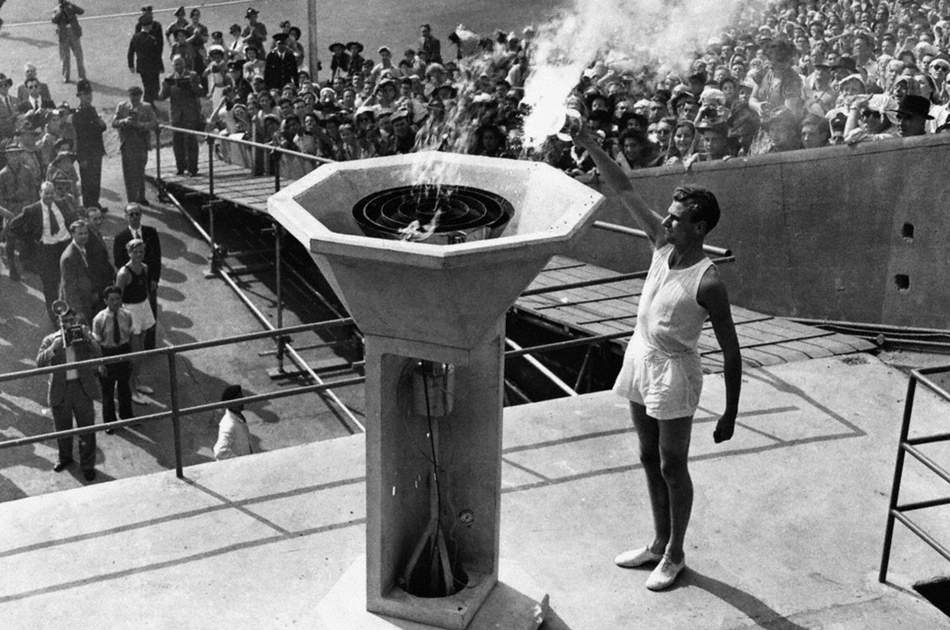
On the 23rd of June 1894 the International Olympic Committee was founded at the Sorbonne in Paris. Prior to the IOC establishment by Pierre de Coubertin the British physician Dr. William penny Brookes had set up the Wenlock Olympian games in the English market town of Much Wenlock although he always maintained that he had the idea of reviving the ancient Olympic Games for amateur athletes himself, Coubertin entered correspondence with Brooks and benefited from his connections with the Greek government Coubertin was the Secretary General of the Union of French sports associations.

A Brief Look At The Olympics History

Image source: Confidential man.com

Coubertin first proposed establishing a modern Olympic Games at his meeting on the 25th of November 1892 although his enthusiasm was met with little more than general polite applause Coubertin wasn’t deterred and commenced to get the groundwork for what was to become the primary Olympic Congress at the Sorbonne in Paris in 1894. Initially invited participants to a gathering entitled reflections on and propagation of the principles of amateurism Coubertin later changed the name to a congress on the revival of the Olympic Games seventy-nine delegates from nine countries subsequently met at the Sorbonne though Coubertin himself recognized that there was still little enthusiasm for reviving the games. Despite this a vote was held at the last word meeting of the Congress on the 23rd of June that established the International Olympic Committee Coubertin was elected to the role of general secretary with the Greek businessman and writer Demetrius Vikelas because the first president it had been further agreed that the primary modern Olympic Games would happen in Athens in 1896. The second in Paris four years later the IOC has remained liable for the Olympic Games ever since.

All About the Olympics for Kids - The History and Symbols of The ...

There are two main events there are the Winter Olympics and the Summer Olympics if you’re wondering when the winter and summer olympics take place they take place every four years when you see the Olympic logo there are five rings the reason for that is in history it has been told that a man named Baron de Coubertin saw the five rings on an ancient Greek artifact the reason we see five colors on each ring is to represent the five continents Europe, Asia, Africa, Oceania and the Americas finally with sports like track gymnastics figure skating and more each category is awarded a gold silver and bronze medal for the first second and third place winners. Hope you enjoy the Olympics.

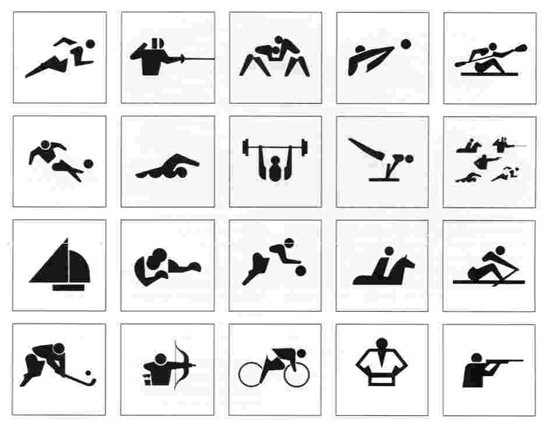
The History of the Olympic Pictograms: How Designers Hurdled the ...

Image source: Smithsonian magazine

The World’s Fastest Sport.

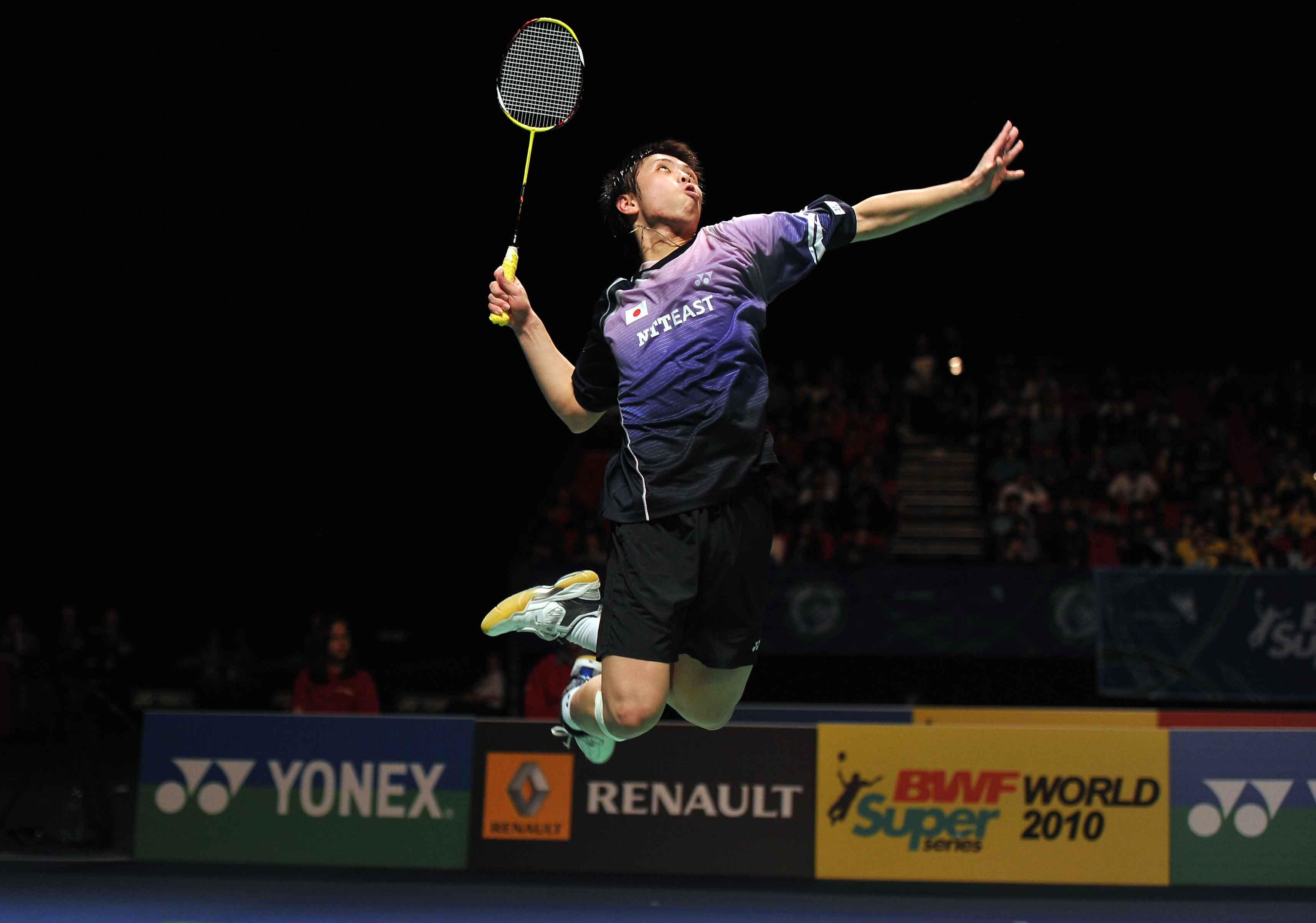
There are a lot of sports with a lot of quicker moments but have you ever guessed which sport might be the fastest sport in the world? BADMINTON yes, that’s right badminton is the fastest sport in the world which is played with a feather shuttlecock. One must be wondering how an object made of feather can travel so fast by the action of a human being. Below are some of the statistics for your knowledge.

  • The fastest ever smash recorded in a men’s singles competition was when Taufik Hidayat of Indonesia smashed with a speed of 305 km/h (189 mph).
  • Fu Haifeng of China has set an official world record smash during a doubles badminton match by smashing with a speed of 332 km/h (206 mph) on June 3, 2005.
  • Tan Boon Heong who belongs to Malaysia had set a new world record by smashing the shuttlecock with a speed of 493 kph in july 2013.

Now compare this to the speed of Lamborghini Gallardo or Eurostar train at its most in-service speed (186.4 mph) or perhaps a jai alai ball.

Yes, a straightforward arrangement of sixteen overlapping goose feathers connected to a rounded cork head is quicker.

As stunning because it could seem, however this is often the reality.

151 mph (243 kph) and a mere 138 mph (222 kph) for lawn tennis.

Badminton’s promoters hope the speed record may bolster the sport’s image and facilitate move it out of alternative racket sports’ shadows, notably in regions wherever lawn tennis and squash reign supreme.

Besides Guinness, I saw some books claiming the speed for shuttlecock is concerning three hundred km/h.” – Ming, Wang of Philippine court game Community, one Jan 2002.

It is a renowned undeniable fact that a shuttle slows down because it travels through the air. It is believed that the shuttle slows down by half-hour each 2 meters .

Badminton rallies last longer than that of lawn tennis and at intervals twenty seconds, it’s calculable that the player hit the shuttlecock forty to fifty times.

The on-court movements in an exceedingly game of court game are additional. It’s additionally calculable that on a mean, there area unit 2 thousand hits per match.

Throughout a match, the player will run up to four miles within the court. Nonetheless however rarely will we see the players roar whereas touch the shuttle.

The level of fitness demanded for the game should be quite obvious to you by currently. A player needs high levels of concentration, lightsomeness and fast reflexes.

He’s needed to get on his toes all the time to maneuver round the court to come the unpredictable shuttle.

The exchanges between high court game players on court area unit so testing the bounds of human ability.

A strict diet regime and regular apply of seven to eight hours (this figure goes to double digits among the Chinese) area unit of overriding importance, if you have

Saina Nehwal had to present informed her feeder ways in which to satisfy the organic process demands of the sport.

Badminton has grownup in quality by leaps and bounds within the Asian countries.

Indeed, it’s thought of jointly of the foremost watched sports throughout the athletic contest.

The quantity of Indians taking on this sport has inflated within the recent years and therefore the credit principally goes to the achievements created by our players in past years.

Velofel South Africa- Pros and Cons

Velofel South Africa consists of all natural and herbal ingredients. They are of extremely high quality and purity. They are-
 Nettle root extract- it plays a major role in boosting testosterone levels. It stops the production of enzyme, aromatase, which is responsible for converting testosterone to oestrogen, thus, testosterone levels naturally increase as compared to oestrogen levels.
 Tongkat Ali- it is a type of antioxidant. Antioxidants are beneficial due to many reasons but here, it prevents experience of erectile dysfunction. Moreover, it increases the penal size and grants a long lasting erection.
 Horny goat weed- it increases sexual urges to a large extent primarily by boosting testosterone levels.
 Orchic substance- it is responsible for increasing libido. It also plays a role in increasing strength, energy and overall vigour of the body.
 Zinc- it plays a role in determining potency. It improves the sperm count and motility.
 Citrus fruits- citrus fruits improve the lasting time, which improves the sexual satisfaction experience.
 Muira Puama- it is an herbal ingredient which provides nutrients, vitamins and minerals to the body. It improves assimilation of Velofel readily in the body.
 Pomegranate- it is a type of a citrus fruit which increases excretion of toxins from the body. When the toxins flush out, the working efficiency of the supplement improves.
 Gingko Biloba- it is plant which is responsible for production of nitric oxide in the body. Nitric oxide releases all sort of sexual tension and makes your experience smoother and convenient.
 Tribulus terrestris- it aids in boosting testosterone by maintaining a good balance of all sexual nutrients.
 Boron extracts- these extracts prolong the ejaculation time, which makes you last longer in bed.
 Epimedium- it plays a key role in sex as it betters the flow of blood to the penis, this automatically solves the problem of erectile dysfunction.
 Bioperine- its origin is pepper extract. It absorbs nutrients and minerals in the intestinal wall and boost blood flow to the genital area.

Benefits

Let us know about the various benefits Velofel South Africa provides us with-

  1. It produces nitric oxide which increases blood flow to the penis and helps keep it erect.
  2. Best male enhancement supplement.
  3. It causes no side effects as it only contains natural and herbal ingredients.
  4. It consists of no chemical or toxic ingredients.
  5. It increases the body’s stamina to perform longer and strenuous sessions.
  6. It prevents occurrence of erectile dysfunction by improving blood flow to the penile area.
  7. It controls early ejaculation.
  8. It boosts libido levels, which promote the quality of experience.
  9. It maintains an overall sense of energy and vigour in the body.
  10. As it boosts testosterone, it empowers muscle building.
  11. It increases self-confidence.
  12. It improves sexual immunity by provision of nutrients.
  13. It provides harder erections solving the problem of brokenness.
  14. It provides a 100% satisfactory climax.
  15. It increases length, girth and size of penis.
  16. Strengthens relations with your partner.

Pros of Velofel South Africa

 Quality sexual experience.
 Long lasting in bed.
 Natural enhancement of genitals.
 Boosts confidence.

Cons of Velofel South Africa

 Not fit for teenagers.
 Not fit for females at all.
 Only available online for purchase.

Side effects

Men are inquisitive to know if Velofel South Africa causes any side effects. The answer is NO. This supplement causes no side effects as it is a composition of only natural and organic ingredients. It is free of all chemicals and toxins.