3D PRINTING

3D Printing is an new and emerging field of biotechnology, it’s a field of revolution in science, the earliest record of 3D printing through the additive process was the Japanese inventor Hideo Kodama in 1981. He created a product that used ultraviolet lights to harden polymers and create solid objects. This is a stepping stone to stereolithography (SLA).Overall 3D printing has changed and improved over the past thirty years. SLA, SLS, and FDM show the history of 3D printing, and thus how it became a vital tool for manufacturing. It allows you to make virtually anything simply by creating a computer file

HOW DOES IT WORKS ?

3D printing, also known as additive manufacturing, is a method of creating a three dimensional object layer-by-layer using a computer created design.3D printing is an additive process whereby layers of material are built up to create a 3D part. This is the opposite of subtractive manufacturing processes, where a final design is cut from a larger block of material. As a result, 3D printing creates less material wastage.

3D Printing Technologies :

There are three broad types of 3D printing technology; sinteringmelting, and stereolithography.

  • Sintering is a technology where the material is heated, but not to the point of melting, to create high resolution items. Metal powder is used for direct metal laser sintering while thermoplastic powders are used for selective laser sintering.
  • Melting methods of 3D printing include powder bed fusion, electron beam melting and direct energy deposition, these use laser, electron beams to print objects by melting the materials together.
  • Stereolithography utilizes photopolymerization to create parts. This technology uses the correct light source to interact with the material in a selective manner to cure and solidify a cross section of the object in thin layers.

3D Printing Processes :

3D printing has been categorised into seven groups by ISO/ASTM 52900 additive manufacturing – general principles – terminology. All forms of 3D printing fall into one of the following types:

  1. Binder Jetting
  2. Direct Energy Deposition
  3. Material Extrusion
  4. Material Jetting
  5. Powder Bed Fusion
  6. Sheet Lamination
  7. VAT Polymerization

Applications

  • Most common application is organ transplantation, and are also used for producing metal orthopedic implants. Due to 3D printing’s capabilities for creating porous surfaces, these types of implants more easily integrate with the patient’s own natural bones, allowing them to grow into the implant.
  • 3D printing applications that are used in construction include extrusion (concrete/cement, wax, foam, and polymers), powder bonding (polymer bond, reactive bond, sintering) and additive welding. 3D printing in construction has a wide array of applications in the private, commercial, industrial and public sectors. Advantages of these technologies include allowing more complexity and accuracy, faster construction, lower labor costs, greater functional integration, and less waste.

Public administration and development related

INTRODUCTION:-

public administration at the local, regional, national and international levels where it is directed to managing development processes in low and medium income countries. It gives special attention to investigations of the management of all phases of public policy formulation and implementation which have an interest and importance beyond a particular government and state. PAD has a particular interest in the link between public administration practice and management research and provides a professional and academic forum for reporting on new experiences and experiments. PAD also publishes
articles on development management research in the NGO sector. It is widely read by academics and practitioners alike, including consultants, donors and policy advisers. With its case study approach, it is also frequently used for teaching and training purposes.

Public Administration and Development

Information for Subscribers

Public Administration and Development (Print ISSN 0271‐2075; Online ISSN 1099‐162X at Wiley Online Library, wileyonlinelibrary.com) is published in 5 issues per year. Institutional subscription prices for 2020 are: Print & Online: US$2987 (US and Rest of World), €1929 (Europe), £1528 (UK). Prices are exclusive of tax. Asia‐Pacific GST, Canadian GST/HST and European VAT will be applied at the appropriate rates. For more information on current tax rates, please go to http://www.wileyonlinelibrary.com.tax‐vat. The price includes online access to the current and all online back files to January 1st 2017, where available. For other pricing options, including access information and terms and conditions, please visit wileyonlinelibrary.com/access.

Delivery Terms and Legal Title

Where the subscription price includes print issues and delivery is to the recipient’s address, delivery terms are Delivered Duty Unpaid (DDU); the recipient is responsible for paying any import duty or taxes. Title to all issues transfers FOB our shipping point, freight prepaid. We will endeavour to fulfil claims for missing or damaged copies within six months of publication, within our reasonable discretion and subject to availability.

Services

Adver tisements

Advertisement Sales Department, John Wiley & Sons, Ltd.,

The Atrium, Southern Gate, Chichester, West Sussex

PO19 8SQ, UK.

Tel: +44 (0)1243 770254

Fax: +44 (0)1243 770432

e‐mail: adsales@wiley.co.uk

Commercial Reprints:

E‐mail: corporatesaleseurope@wiley.com;

corporatesalesusa@wiley.com; or

corporatesalesaustralia@wiley.com

Author Reprints (50–300 Copies):

Order online: http://www.sheridan.com/wiley/eoc

Backstock Agent

PSC

Back issues: Single issues from current and recent volumes are

available at the current single issue price from cs‐journals@wiley.com.

Earlier issues may be obtained from Periodicals Service Company,

351 Fairview Avenue ‐ Ste 300, Hudson, NY 12534, USA.

Tel: +1 518 822‐9300

Fax: +1 518 822‐9305,

Email: psc@periodicals.com

General Enquiries

Tel: +44 (0) 1243 779777,

Fax: +44 (0) 1243 775878.

Contact Details within John Wiley & Sons

Journal Customer Services: For ordering information, claims

and any enquiry concerning your journal subscription please go to

http://www.wileycustomerhelp.com/ask or contact your nearest office:

Americas: Email: cs‐journals@wiley.com; Tel: +1 781 388 8598 or

1 800 835 6770 (Toll free in the USA & Canada).

Europe, Middle East and Africa: Email: cs‐journals@wiley.com;

Tel: +44 (0) 1865 778315

Asia Pacific: Email: cs‐journals@wiley.com; Tel: +65 6511 8000

Japan: For Japanese speaking support, Email: cs‐japan@wiley.com;

Visit our Online Customer Help available in 7 languages at

http://www.wileycustomerhelp.com/ask

Copyright and Copying (in any format)

Copyright© 2021 John Wiley & Sons, Ltd. All rights reserved

No part of this publication may be reproduced, stored or trans

mitted in any form or by any means without the prior permission

in writing from the copyright holder. Authorization to copy items

for internal and personal use is granted by the copyright holder

for libraries and other users registered with their local Reproduction

Rights Organisation (RRO), e.g. Copyright Clearance Center

(CCC), 222 Rosewood Drive, Danvers, MA 01923, USA (www

copyright.com), provided the appropriate fee is paid directly to the

RRO. This consent does not extend to other kinds of copying such

as copying for general distribution, for advertising or promotional

purposes, for republication, for creating new collective works or

for resale. Permissions for such reuse can be obtained using the

RightsLink “Request Permissions” link on Wiley Online Library.

Special requests should be addressed to: permissions@wiley.com

Disclaimer

The Publisher and Editors cannot be held responsible for errors

or any consequences arising from the use of information

contained in this journal; the views and opinions expressed do

not necessarily reflect those of the Publisher and Editors, neither

does the publication of advertisements constitute any endorsement

by the Publisher and Editors of the products advertised.

Abstracting and Indexing

Public Administration and Development is covered by the following

abstracting and indexing services: Abstracts on Hygiene &

Communicable Diseases (CABI), ASSIA: Applied Social Sciences

Index & Abstracts (ProQuest), CAB Abstracts® (CABI), CAB

HEALTH (CABI), CABDirect (CABI). Current Contents: Social &

Behavioral Sciences (Thomson Reuters), Emerald Management

Reviews (Emerald), ERA: Educational Research Abstracts Online

(T&F), Forestry Abstracts (CABI), GEOBASE (Elsevier), Global

Health (CABI), Grasslands & Forage Abstracts (CABI), IBSS:

International Bibliography of the Social Sciences (ProQuest),

Journal Citation Reports/Social Science Edition (Thomson Reuters),

PAIS: Public Affairs Information Service (ProQuest), Plant Genetic

Resources Abstracts (CABI), ProQuest Central (ProQuest), Rural

Development Abstracts (CABI), SCOPUS (Elsevier), Social Sciences

Citation Index (Thomson Reuters), Social Services Abstracts

(ProQuest), Sociological Abstracts (ProQuest), Soils & Fertilizer

Abstracts (CABI), Studies on Women & Gender Abstracts (T&F),

Tropical Diseases Bulletin (CABI), Web of Science (Thomson Reuters),

World Agricultural Economics & Rural Sociology Abstracts (CABI),

Worldwide Political Sciences Abstracts (ProQuest).

Online open

Public Administration and Development accepts articles for Open

Access publication. Please visit http://olabout.wiley.com/

WileyCDA/Section/id‐406241.html for further information

about OnlineOpen.

Production Information

For manuscripts that have been accepted for publication,

please contact:

Podhumai Anban

e‐mail: padproofs@wiley.com

Production Details

Printed in Singapore by C.O.S. Printers Pte Ltd.

Identification Statement

PUBLIC ADMINISTRATION AND DEVELOPMENT (Print ISSN

0271‐2075; Online ISSN 1099‐162X) is published in February, May,

August, October and December. US mailing agent: Mercury Media

Processing, LLC 1850 Elizabeth Avenue, Suite #C, Rahway

NJ 07065 USA. Periodical postage paid at Rahway, NJ.

Postmaster: Send all address changes to PUBLIC ADMINISTRATION

AND DEVELOPMENT, Wiley Periodicals LLC, C/O The Sheridan

Press, PO Box 465, Hanover, PA 17331.

For submission instructions, subscription and all other information

visit: wileyonlinelibrary.com/journal/pad

Wiley’s Corporate Citizenship Initiative Statement

Wiley’s Corporate Citizenship initiative seeks to address the

environmental, social, economic, and ethical challenges faced in

our business and which are important to our diverse stakeholder

groups. Since launching the initiative, we have focused on sharing

our content with those in need, enhancing community philan

thropy, reducing our carbon impact, creating global guidelines

and best practices for paper use, establishing a vendor code of

ethics, and engaging our colleagues and other stakeholders in our

efforts. Follow our progress at http://www.wiley.com/go/citizenship

Statement on Research4Life

Wiley is a founding member of the UN‐backed HINARI, AGORA,

and OARE initiatives. They are now collectively known as

Research4Life, making online scientific content available free or

at nominal cost to researchers in developing countries. Please

visit Wiley’s Content Access – Corporate Citizenship site:

http://www.wiley.com/ WileyCDA/Section/id‐390082.html

Reference Link:-

https://onlinelibrary.wiley.com/journal/1099162x

https://onlinelibrary.wiley.com/loi/1099162x

Know about Engineering departments

What does an Engineer do?
Engineers design machinery, build skyscrapers, and oversee public works, but they address society’s needs and problems on so many other levels as well. At a molecular level, they work on drug delivery systems that work inside cells. At a macro level, they look at the particle flow of pollutants through soil to clean up oil spills, abandoned industrial sites and other biohazards. At a galactic level, they design spacecraft for other-planet exploration. At an atomic level, they develop data storage that focuses on the spin of electrons in atoms. Clean drinking water, safe food storage, and the protection of our environment are also under the engineering umbrella.

What is Mechanical Engineering?

Mechanical engineering is the branch of engineering which deals with the design, manufacturing, maintenance and testing of machines. It is also considered as one of the most diverse and versatile disciplines of engineering. Mechanical engineering also includes the application of mechanics, material science, applied mathematics and physics.

With the rise of modern technology, mechanical engineering has witnessed newfound importance with more and more students opting to learn less explored domains of robotics, mechatronics, nanotechnology, etc.

New trends and future scope:

The scope of mechanical engineering no longer remains limited to just manufacturing and testing of huge machinery and equipment. With technology making new advancements, there are several new domains in mechanical engineering which are being taken up by passionate engineers. These domains include robotics, new materials, nanotechnology, computer-aided design, geomechanics, etc. The two highly pursued domains are robotics and mechatronics, both of which combine the knowledge of mechanical engineering with other streams to deliver state of the art products.

Robotics

Robotics is an interdisciplinary stream of engineering that combines mechanical engineering, electrical engineering and computer science with an aim to design and develop robotic systems along with computer systems to control them. With the AI revolution already started, Robotics as a stream has been on the rise and is expected to grow in both reach and demand in the coming decade.

Mechatronics

Mechatronics too, is an interdisciplinary branch of engineering which usually combines mechanical engineering, electrical engineering and Information technology. A mechatronic engineer is responsible for designing complex engineering systems, can assist in process automation and also test the systems in use in the processes.

From automobiles to heavy-duty lifting machines and even the modern aircrafts that defy speed barriers, a variety of modern systems are being designed under the supervision of expert mechanical engineers. You will not find mechanical engineers limiting themselves to the manufacturing industry anymore. Mechanical engineers are being welcomed in various industries with open arms and high compensation packages, provided that the candidates are skilled and proficient.

The current market scenario and scope:

According to the portal payscale.com, the average salary of mechanical engineers falls below Rs. 3.4 lakhs per annum. A few skills are able to add value to this compensation package. For example, knowledge of robotics or robotics process automation and a sound understanding of electrical systems can make a recruiting firm provide you with a better pay package, as per their need. Even though the pay package is lower in certain sectors as compared to computer science engineering, mechanical engineer with IT skills are very high in demand and the pay package is higher than CS engineers.

Courses and programs

Courses and programs for students are the main role to their education .

A program is your degree . A course is one building block (subject) of your program

Our featyre is depends on our Courses and programs

Some of courses

1 B.Com. This is the most popular choice among Commerce stream students. …

2 Chartered Accountancy.

3 Bachelor’s course in Economics.

4 Company Secretaryship course.

5 Law courses. …

6 Management courses. …

7 Technical courses. …

8 Designing courses.          

And some more

Administration Studies

Architecture Studies

Art Studies

Aviation

Business Studies

Construction

Cosmetology Studies

Design Studies

Economic Studies

Education

Educational and academic news and updates

Energy Studies

Engineering Studies

Environmental Studies

Fashion

Food and Beverage Studies

General Studies

Health Care

Humanities Studies

Journalism and Mass Communication

Languages

Law Studies

Life Sciences

Life Skills

Management Studies

Marketing Studies

Natural Sciences

Performing Arts

Professional Studies

Self-Improvement

Social Sciences

Sport

Sustainability Studies n

Technology Studies

Tourism and Hospitality

How to W.R.A.P decisions in Life

Every living being in this universe is subjected to make decisions for their survival – be it an ant and or a humpback whale. Fortunately, humans are the only beings gifted with the power of discrimination of understanding what is right or wrong for us and making a decision accordingly. Decisions can either be positive or otherwise but the quality of your decisions will determine how deeply they would impact your life.

It's A WRAP - Better Decision Making

Chip and Dan Heath, in their book ‘ Decisive: How to Make Better Choices in Life and Work’, talk about a Framework called W.R.A.P for making better decisions
WRAP consists of four elements:
W- Widen your options
R- Reality test your assumptions
A- Attain distance before deciding
P- Prepare to be wrong

Widen your options

There is a misconception that having a lot of options can lead to confusion and is as same as seeing only the big picture. So, people narrow their frames of you and often lose possible options that could have worked better for them.
You can start finding more options by creating a mindset where none of the options you are considering is available. What else can you do? Think about it and be surprised about how many new options crop up!

Reality test your assumptions

While encountering a decision-making situation, we all tend to select the options that support our preconceived beliefs and actions. But that might not work all the time.
We can overcome this by seeking out relevant data that might redeem or discard the options at hand. Also, for example, if you have a piece of work or a product to be published you can sample your work ok for a response from a small group first instead of jumping right into the market. Reason out to yourself why you would want to make a particular choice.

Attain distance before deciding

We often let our short-term emotions cloud our rationality and take hasty decisions. It is imperative to have a well-settled mind before making an important life decision.
Try broadening your point of view. Ask yourself what a reliable third person would do in such circumstances- step into your friend’s shoes or think like someone who you look up to. This can give you a fresh perspective of the situation at hand and make you take a better decision.

Prepared to be wrong

Voice Blog: In Order To Be Original, Prepare to Be WRONG - Ben Francia

We predict a lot in our life. What if a decision that you made is based on such predictions and things actually don’t turn up the way you wanted? What then? You should be ready to acknowledge the decision’s flaw.
Think about working back from a possible future. For example, suppose your work has been published and was poorly received. Think about how the work could have been made better so that you really don’t have to face that situation. Come up with backup ideas that can act like your ‘insurance’ and protect you in case things go the other way.

The next time when you faced a situation, remember that the process is as important as the decision itself. You are the master of your life- so make sure that the decision you made don’t make your life different from what you wanted.
Trust the process!

UNDERSTANDING SOFTWARE DEVELOPMENT LIFE CYCLE

In todays cyber world we are driven with a technical life style which introduces software to be an integral part in our day to day life. It is hardly possible to imagine our every day life with out any computerized process. When we closely observe the applications that we use daily we all get a common doubt that, how were these applications are developed and what is the process behind them? Let me explain you about the process of developing a software keenly.

SOFTWARE DEVELOPMENT LIFE CYCLE:

Whenever there is a need for sophisticated system or an end user web or a mobile application we have to design a procedure which describes the whole process of development from starting stage to final stage. Similarly, Software development life cycle is also a methodology or a set of principles that should be followed in every software development team as preliminary steps to development a software.

This software development life cycle organizes the whole work process of the project into different stages which simplifies the work in order to complete it in the desired dead lines and it also focusses on the cost of project development. According to the project type we can apply different software development life cycles. The different SDLC processes applied by the companies are Agile model, RAD model, Waterfall model, Spiral model etc…. Though there are different models for the different kinds of projects, we use the following stages most frequently.

THE STAGES OF SOFTWARE DEVELOPMENT LIFE CYCLE:

1) BRAIN STORMING (OR) PLANNING: This is the first and fore most step in the software development life cycle process. This stage include brain storming session and then the development team finalizes an idea to proceed further into the project. After the completion of brain storming the team plans about the initial and core stages of the project and they also set the time frames and strategies to complete the project. When the prerequisite stage is perfectly completed then only the can move to the requirements stage.

2) DEFINING REQUIREMENTS: In this stage the team understands the project in deeper and classifies the requirements according to the stages of the project development and also in this stage only the team analyzes the future risks of the project and comes to a conclusion on the overall cost of the project.

3) DESIGN: Software design is the most complicated stage in the project development cycle. During this phase the team conceptualizes the created solution and verifies that whether the created solution meets the requirements or not. In this stage the team concentrates on the functionality of the solution and also analyze the structure capabilities, objectives of the proposed solution. After identifying a certain design for the development of software team forward in to development stage.

4) DEVELOPMENT: The development stage is all about converting the design into the actual software through coding. This stage of the development cycle is the longest path as it is the back bone of the whole project and the software development team should have to verify the code constantly to meet the requirements of the project. Once the development of complete architecture of the solution is completed. The team proceeds to the testing stage.

5) TESTING: In this stage the developed solution is tested under different methods in order to fix the bugs in the code and all the verified code at different stages are integrated in this stage. The testing stage is mainly useful for checking the quality of developed code prior to its release.

6) IMPLEMENTATION & MAINTENANCE: Once the software is certified with out having any errors or bugs then the team will release the developed software to production environment. This means the developed software product can be used by customers. Though the software is implemented also the development team must focus on the maintenance of the software in order to fix the bugs and update the new features.

These are the stages that are commonly used in every software development life cycle by a developer team. This SDLC process is use full to make perfect time frames for the completion of desired software product and also SDLC gives a perfect figure about total cost accomplished for the development of the project at every stage. Finally, SDLC is a process which sets the whole work in an organized and simplified manner.

Journalism and mass media

INTRODUCTION:-

Journalism and mass communication graduates work nationwide and worldwide at newspapers and magazines and in advertising, branding, broadcast news, social media, marketing, media research, photojournalism, publication design, public relations, radio, and other areas

Journalism:-

Journalism is the activity of gathering, assessing, creating, and presenting news and information. It is also the product of these activities.Journalism can be distinguished from other activities and products by certain identifiable characteristics and practices. These elements not only separate journalism from other forms of communication, they are what make it indispensable to democratic societies. History reveals that the more democratic a society, the more news and information it tends to have.

JOURNALISM ESSENTIALS

  1. What is journalism?
  2. What makes journalism different than other forms of communication?
  3. What is the purpose of journalism?
  4. The elements of journalism
  5. What does a journalist do?
  6. The journalist as a ‘committed observer’
  7. The theory of the interlocking public
  8. Bias and objectivity
  9. The lost meaning of ‘objectivity’
  10. Understanding bias

1.What is journalism?

Journalism is the activity of gathering, assessing, creating, and presenting news and information. … Journalism can be distinguished from other activities and products by certain identifiable characteristics and practices.

2. What makes journalism different than other forms of communication?

The vast majority of this communication, however, is not news and especially not journalism. Almost 70 percent of email traffic is spam, according to web security company Symantec. In 2012, there were an average of 175 million tweets each day. But almost all – 99% — consisted of “pointless babble,” according to researchers at Carnegie Mellon University.

3. What is the purpose of journalism?

“The purpose of journalism,” write Bill Kovach and Tom Rosenstiel in The Elements of Journalism, “is not defined by technology, nor by journalists or the techniques they employ.” Rather, “the principles and purpose of journalism are defined by something more basic: the function news plays in the lives of people.”

4. The elements of journalism?

In their book The Elements of Journalism, Bill Kovach and Tom Rosenstiel identify the essential principles and practices of journalism. Here are 10 elements common to good journalism, drawn from the book.

5. What does a journalist do?

Asking who is a journalist is the wrong question, because journalism can be produced by anyone.At the same time, merely engaging in journalistic-like activity – snapping a cell-phone picture at the scene of a fire or creating a blog site for news and comment – does not by itself produce a journalistic product. Though it can and sometimes does, there is a distinction between the act of journalism and the end result.

6. The journalist as a ‘committed observer’

Gil Thelen, the former publisher and president of The Tampa Tribune, believes the journalist has a very specific role in society. He calls it the “committed observer.” What he means by that, Thelen explains, is that the journalist is not removed from community, though at times may stand apart from others so as to view things from a different perspective.

7. The theory of the interlocking public

The splintering of mass media audiences and the migration of information consumers to tens of thousands of niche web sites is further evidence that everyone is interested, and expert, in something. The diversity and magnitude of the public, in fact, is its strength. A mix of publics is usually much wiser than a public comprised of just the elite or one segment of special interest.

8. Bias and objectivity

Journalism attempts to be fair and accurate. It does this through objective methods and managing bias. The guides in this section help you understand and navigate those processes.

9. The lost meaning of ‘objectivity’

One of the great confusions about journalism, write Bill Kovach and Tom Rosenstiel in The Elements of Journalism, is the concept of objectivity. When the concept originally evolved, it was not meant to imply that journalists were free of bias. Quite the contrary. The term began to appear as part of journalism after the turn of the 20th century, particularly in the 1920s, out of a growing recognition that journalists were full of bias, often unconsciously. Objectivity called for journalists to develop a consistent method of testing information – a transparent approach to evidence – precisely so that personal and cultural biases would not undermine the accuracy of their work.

10. Understanding bias

For a time, “bias” was the term of choice to describe anything people hated about journalism, whether the power and influence of corporate news organizations to the choices reporters made in writing individual stories. In 2001, in fact, a book about media unfairness entitled “Bias” was number one on the New York Times bestseller list. In recent years the public seems to have adopted a more nuanced view of bias.  Perhaps this is because many critics have found their voice online – where studies confirm that half the blogs contain just the author’s opinion – or that one-sidedness has become a successful business model, as Fox News Channel and MSNBC have demonstrated.

What Is Mass Media?

INTRODUCTION:-

Mass media is communication that is to a large group, or groups, of people in a short time (Mass Media, 2013, p. … This can be written, spoken or broadcast communication. Some of the most popular forms of mass media are newspapers, magazines, radio, advertisements, social media, television, Internet, and films/movies.

Mass Media:-

Think about this for a second: whenever you want to hear your favorite song, watch your favorite show, or see the latest current events, where do you go? You more than likely turn on your television, radio, or computer. The source that the majority of the general public uses to get their news and information from is considered mass media.Mass media means technology that is intended to reach a mass audience. It is the primary means of communication used to reach the vast majority of the general public. The most common platforms for mass media are newspapers, magazines, radio, television, and the Internet. The general public typically relies on the mass media to provide information regarding political issues, social issues, entertainment, and news in pop culture.

There are 6 main types of Mass Media:

  1. Traditional Media
  2. Print Media
  3. Electronic/Broadcasting Media
  4. Outdoor Media or Out of Home Media (OOH)
  5. Transit Media
  6. Digital Media/New Media/Internet

1. Traditional Media:-

People have developed different ways of communication depending upon their local language and culture. Traditional media is one of the oldest types of mass media to transfer traditions and culture over generations. The tools of communication have been developed from beliefs, customs, rituals, and practices of society. Traditional media imparts indigenous ways of communication for ages. Further, this type of mass media varied as per each culture and society as every culture has their own mediums to communicate to their mass audience. Thus, the traditional media can be folk songs, dances, folktales and folklore as well as paintings, sculptures, stupas, statues and fairs, festivals, rural or community radio and announcement mediums like nagada, etc.

Forms of Traditional Media

  • Folk Dances
  • Folk Songs and Music
  • Theatre, Drama, and Folktales
  • Painting, Sculptures, Inscriptions, Statues, and Stupas
  • Motifs and Symbols
  • Announcements made by beating drums or ‘nagada’
  • Shadow Puppetry and String Puppetry
  • Storytelling
  • Nautanki
  • Fairs and Festivals
  • Rural Radio

2. Print Media

In simple words, Print Media is all about the printed form of information and news. Before the invention of the printing press, printed materials had to be hand-written that made mass distribution almost impossible. Print media is one of the basic types of mass media tools making it very popular and convenient to reach a wider audience. Newspapers are considered as the oldest forms of mass media after the traditional mass media as for a long period of time, the general public relied on newspapers to know the latest happenings in their local areas as well as from around the world. Thus, print media originally refers to newspapers and then expanded towards magazines, tabloids, promotional brochures, journals, books, novels and comics.

Forms of Print Media

  • Newspapers (broadsheet and tabloid)
  • Periodicals, Newsletters, and Magazines (general or specific interest)
  • Brochures, Leaflets and Pamphlets
  • Journals
  • Books, Novels and Comics

3. Electronic/Broadcasting Media

Broadcasting is simply a distribution of audio and video content to a dispersed audience using the electronic broadcasting medium. Originally the term ‘broadcasting’ referred to the sowing of seeds on farms by scattering them over the large field. Broadcast media allows ease of news dissemination to even an illiterate person because it appeals to both the auditory and visual senses making it one of the most lucrative types of mass media. Centuries later after the newspapers were used as the original mass media, the advent of radio and television happened. Radio was the primary medium of news for the general public during wars as well as for sports and entertainment. When television was invented, it became the most effective type of mass media as it was primarily used for news dissemination and then for TV shows, live events and other entertainment purposes.

Forms of Broadcasting Media

  • Television
  • Radio (AM, FM, Pirate Radio, Terrestrial Radio, and Satellite)
  • Traditional Telephone
  • Film/Movie/Motion Picture
  • Video Games
  • Audio Recording and Reproduction

4. Outdoor Media or Out of Home Media (OOH)

This is also known as OOH or Out-of-Home Media and is focussed on transmitting information and news when the public is outside their home. Outdoor media gives importance to display advertising and attracting individuals towards new products, some social cause or any development or change in the society. These are prominent in brand promotion seen on buildings, streets, electric polls, roadside, vehicles, screens, kiosks, etc. This is one of the most prominent types of mass media used for commercial as well as public welfare advertising and mainly includes billboards, banners, posters, brochure distribution, ComPark Advertising, Wallscape, amongst others!

Forms of Outdoor Media

  • Billboards or Bulletins
  • Inflatable Billboards
  • Mobile Billboards
  • Banner
  • Lamppost Banners
  • Posters
  • Signs and Placards
  • Blimps, Skywriting
  • Brochure distribution
  • ComPark Advertising
  • Wallscape

5. Transit Media

Transit Media revolves around the concept of advertising and information dissemination when consumers are “on the go” in public places or in transit. These include display advertising on vehicles and transportation. With the aim “driving home a message” transit media is significantly used for massive brand promotion to millions of people who travel the country’s streets and highways every day.Some people might think that this type of mass media is outdated or ineffective, yet it is widely visible on the sides of buses, in subway cars, at transit stations where passengers enter or disembark from public transportation.

Forms of Transit Media

  • Bus Advertising
  • Railway Advertising
  • Taxi Advertising
  • Transit Shelter Advertising

6. Digital Media/New Media/Internet

Since the invention of the World Wide Web by English scientist Tim Berners-Lee in 1989, the Internet has drastically taken over all the types of mass media because of faster dissemination speed and higher digital technology. New Media is an interactive two-way communication with users being the active producers of content and information. The Internet is considered as a highly interactive mass medium and can be simply defined as the “network of networks”. It has quickly transformed as the centre of the mass media as it has marvellously integrated all the prominent types of mass media. Now, you can see news websites, broadcasted TV shows as well as listen to online radio using the internet and this is also called as the convergence of mass media!New Media is normally a re-conceptualization of the existing media. This is a rapidly growing mass media with the ease of accessibility with a computer and an Internet connection (broadband or WiFi). From Story Writing and Graphic Designing to Multimedia and Animation, pursuing a career in this field can be highly advantageous.

Forms of Digital Media

  • Websites
  • Emails
  • Social Media and Social Networking Sites (SNS)
  • Webcast and Podcast
  • Blogging and Vlogging
  • IPTV (Internet Protocol Television)
  • E-forums and E-books
  • E-commerce and M-commerce
  • Digital Videos
  • Computer Animation
  • Digital Video Games
  • Human-Computer Interface
  • Virtual World & Virtual Reality

Reference Link:-

https://www.americanpressinstitute.org/journalism-essentials/what-is-journalism/

https://leverageedu.com/blog/types-of-mass-media/

WINDOWS XP

Windows XP is still going strong

Windows XP is a line of proprietary operating system which was developed by Microsoft and is meant to be used for general purpose computers , such as home computers and business desktops , notebook computers and various types of media centres . Windows XP succeeds Windows 2000 and Windows ME , and is the first consumer – oriented operating system produced by Microsoft to be built on the Windows NT kernel and architecture . The most popular operating systems versions are Windows XP Home Edition , which is primarily meant for home users , and Windows XP Professional , which boasts additional features , such as support for Windows Server domains and dual processors , and is meant for professionals and other experts . Windows XP Media Centre Edition has additional multimedia features . Windows XP has an edge over the earlier versions of Microsoft Windows because of enhanced efficiency and better stability .

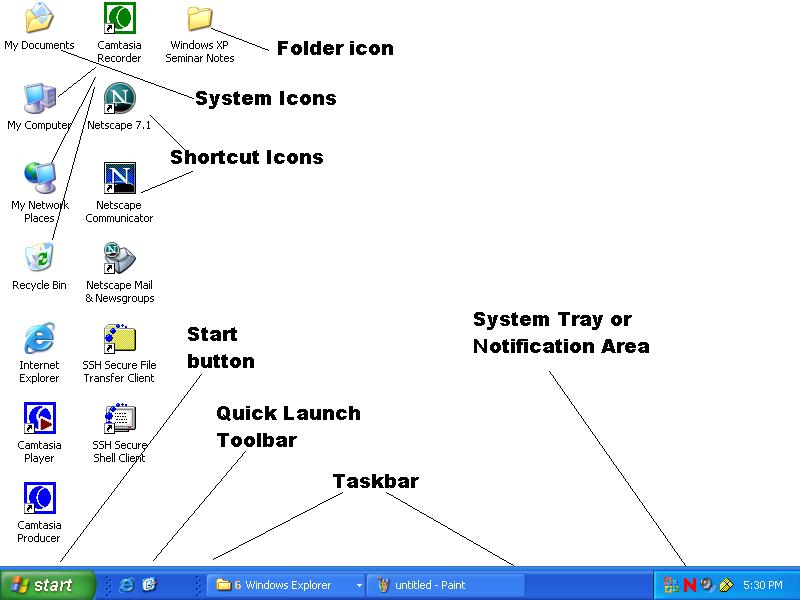
Windows XP helps you access and manage your files on the pc using a Graphical _User Interface GUI . All Programs and files stored on the PC are represented as pictures that are called icons . These icons are stored on the desktop .

Components of Windows XP

Windows XP

The Windows XP user interface consists of various components and concepts that help make Windows XP user friendly and intuitive . Some of the important components are :-

  1. Desktop
  2. Start Menu
  3. Taskbar
  4. Icons
  5. Recycle Bin
  6. Windows
  7. Applications
  8. Folders
  9. Files
  10. Control Panels

How To Discuss Your Reasons For Leaving A Job In Interview?

“I had a job insurance at an insurance company once, and the lady said, ‘Where do you see yourself in five years?’ I said, ‘Celebrating the fifth year anniversary of you asking me this question.”

  • Mitch Hedberg

When we say ‘a job’, do we only refer to a task that procures income? If you harbour such a myopic perspective, then it would be difficult for you to ace that interview which almost every individual fears. Sitting on that chair, surrounded by one or more interviewers and then confidently framing creative answers to their easy questions which seem difficult due to our nervousness seems so perilous! The thought of not being selected leaves us confused, nervous, and petrified which is why we cock things up and our tongues start shaking! However, what if I tell you that a job is actually an experience to make you smarter, bolder, and strategic with regards to business which should help you have your very own business in the future? What if instead of fearing the loss of one job, you accept the ideology that there are many fish in the sea and there would be other recruiters who would definitely discern your talent, if not the current ones? Don’t shy away. Show your true self to the interviewers. Be honest and confident. Speak what comes to your mind without worrying about vocabulary! Job interviews see ones capability of handling complex situations creatively which is why, they may whack your nerve and create an intimidating atmosphere. But it is you and your hope in the end that everything happens for good! Perhaps you aren’t hired here because some greater opportunity is awaiting you- this method of thinking will automatically create a confident interviewee and your fear or nervousness would die down. Gradually, those interviewers would seem like friends to you and your tone would embrace honesty! However, there can be a negative part to this thought. Just because you know that other good jobs await you doesn’t mean you would completely lose interest in the current interview and recruiters. This thought is only meant to calm an individual down and encourage him to perform his very best without worrying rejection!
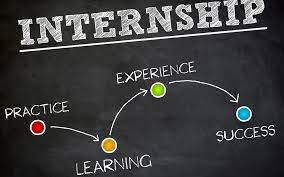
So, what exactly is a job? It is the way you handle people. It is an experience of working amazingly under pressure because mostly, people tend to screw themselves under strict deadlines which isn’t the accurate method of having your own business either. You don’t want your customers to wait for a long long time just because working under pressure isn’t your thing! Thus, a job is not a duty that provides income but an experience that helps one become independent. Yes, urgent need for income may be the reason for that former definition of a job but instead of working for money, one must work for work to get efficient results that bear fruit. Money is a sidelined concept that would keep pouring in with the fantabulous consequences of your efforts!

Reason 1

Now that you are working in that company of your choice after practically nailing the interview with the above given thoughts and creative actions, you suddenly receive a new opportunity that sits incredibly with your qualifications and area of interest. It is the spot where you wouldn’t just work for money. However, doing two jobs simultaneously wouldn’t be possible due to clash in timings which means you may have to give up on the current one. You decide to submit the resignation here and wonder why you ever felt nervous for job interviews in the first place. Jobs keep changing and so do your preferences. However there is yet another interview, that final rendezvous with your boss to explain him the reason behind your resignation. You can’t bluntly state that this job doesn’t fulfill your expectations and area of interest anymore which means creating a suitable excuse that seems appealing and digesting to the recruiter.

You approach his cabin, formally greet him, and ask for a seat to discuss something important. Of course, you don’t begin directly with that departing statement because you want the situation to be under control. Firstly, you give a brief speech regarding your experience with the company and its colleagues, how much you enjoyed and how well your boss behaved. You thank your boss for his co-operation all along and also, for trusting and hiring you. Slowly but steadily, you ask for resignation. However, you don’t reveal directly but gradually that a new job is already out there awaiting you. So, all you say is:

“Firstly, I would like to thank you for hiring and trusting me with this job. I don’t know whether I have worked as per your expectations or not, but I surely have gained profound experience under your guidance. Not to mention, I am lucky to have such co-operative colleagues too who helped me grow. However, I feel that multiple experiences with several other types of people helps one blossom professionally which is why I have decided to look for another job offer wherein a new experience with new set of people would lay new standards to the usual ones in my life. I feel that doing one job offers a single experience which ends up creating a comfort zone from where one refuses to move out, later on. Thus, I want to splash my feet and hands to keep swimming in the pool of jobs! I hope you understand. Thank you once again for the amazing asset of experience! I bade my heartiest farewell and a sincere apology for this sudden decision.”

Reason 2

However, what if the new job offer you received, not only fulfills your area of interest but also provides a higher salary than the one you currently are in? The reason to leave should be as follows:

‘Thank you for trusting and hiring me sir. I have worked very hard for this company considering it close to my heart. I have also gained immense experience in this field with your support. However, I feel that with time, the difficulty level of work must increase to check on the capability of an individual and to escalate his adeptness in handling complex situations which is why, I have applied for a harder job in the same sector making me bid adieu to this company. I say this with a heavy heart but I really want to thank you for giving me a platform to showcase my talents. Of course, this isn’t a beginner’s job in the absolute sense but I definitely accrued considerable experience with you to work with my dream sector that demands more services and experiences. Thanking you once again along with a heartfelt apology.” (Handing the resignation letter)

Reason 3

What if there are certain personal reasons like your close one’s terminal illness? Here, you can reveal the reason directly since you aren’t disregarding the company with a genuine misery which anybody would understand. Reason could be as follows:

“Hello sir, I would like to thank you for hiring and trusting me with this job. This has always been my dream job and I definitely am enjoying it here. However, due to my mother’s sudden terminal illness I am forced to leave this job since handling the house chores and other responsibilities isn’t quite easy for my dad and aging grandma. If work from home would be possible, then I am eager to continue with this job. Thank you once again for your respect, admiration, and jaw dropping co-operation which really helped me improve.”

Reason 4

What if the travelling expense is huge due to the working distance? Frame a reason as follows:

“Working here has been a fantastic experience. Everyone’s a family here encouraging the other to bloom. I find myself grateful to have worked with this company. However, I helplessly am forced to take the decision of leaving this precious job though I would love to keep working here forever! Due to the working distance, I had been staying at a rented apartment right opposite to this building. But relations with the landlord have unfortunately deteriorated which meant me, evacuating that house. There are no other rental apartments near the office, neither am I ready to live as a paying guest. Thus, I have to return home and the travelling distance daily wouldn’t be affordable. Thus with a heavy heart and a genuine apology, I bade farewell. I remain thankful to you for showering me with loads of precious experiences and memories.”

Reason 5

You were working efficiently in a company until the pandemic arrived and made work from home a priority. You are happy working at home too but someone from your family is inflicted by the virus which is making it difficult for you to concentrate on your work since your loved one and his life matters the most. Thus, you decide to resign because one can’t possibly ask for a month’s leave! Since the use of online medium becomes mandatory now, you don’t directly message your boss on Whatsapp to seem casual. Instead, prefer emailing to do the same. Compose a formal email even if you are on friendly terms with your boss because one can’t ignore that employer-employee relationship which demands a decorum. You give the reason as follows:

“Greetings,

Thank you for hiring and trusting me with the responsibilities of this company. Working can’t be more exciting here. However, a jolting situation is forcing me to give up. One of our family members has been inflicted by the deadly virus thereby creating a chaotic situation at home. Of course, I am mentally disturbed with trauma and aren’t able to concentrate on the tasks provided. I don’t wish to compromise with the efficiency and quality of my work and have thus, arrived at the conclusion of demanding a resignation. I understand it to be a harsh move but my mind just wouldn’t remain stable and the responsibilities at home are being shared by all with the absence of one important member. Acknowledging the current situation, I thus want to bid farewell not without thanking you and providing a genuine apology! Below, you will find attached the resignation letter.

Regards,

XYZ”

Reason 6

There are certain other cases though where the boss doesn’t seem motivating or berates, demeans, and pressurizes you into working more than usual. Thus one fine day, the pressure cooker bursts and you decide to quit once and for all because as stated earlier, you don’t have to face sheer domination when there are plenty of fish in the sea. Work with dignity and respect because employees are assets without whom no company can touch the acme of success. You, as an employee are special and must therefore have the courage to free yourself from such demonic clutches and choose the ones who value you. If you are highly talented then there is no stepping back. You don’t have to adjust with the current working environments because your creative determination would definitely fetch you a new platform. This was just a brief note for all the employees who feel that they wouldn’t find a new job and keep tolerating the worst working conditions. Please believe and value yourself. Don’t surrender your honour to a cruel boss and then blame yourself to have a cruel fate. You design your fate so make sure, you choose the right people in it!

Getting back to what reason you would cite to get rid of such a menacing and mentally abusing job. Of course, this too can’t be revealed directly. You have to strategically plan your way out. Most of the people in such situations use any possible excuse, be it a lie. Of course, it has to be a professional lie so that your evil boss falls for it. But if you choose honesty, then your answer needs to be creative and persuasive. One may frame it as follows:

“Hello sir. I have been working since quite a long time and have enjoyed the job. However, I feel demotivated and am experiencing mental trauma because of which I wish to resign. I don’t want to compromise with the efficiency of my work and infuriate you later. In short, I need a break to gather myself. I need some family love to overcome mental instability. If need be, I might visit a psychiatrist to maintain sanity. Of course, you wouldn’t want a sick employee tarnishing your reputation because of stupid errors coming up in major projects. Before you fire me because of company losses, I choose to back off. Thank you for this opportunity and I apologize for this sudden breakdown.”

In short, make sure you include the company losses he would incur with your illness to convince him into expelling you because the meanest of bosses would never want their company to shatter.

Reason 7

At times, people end up quitting due to colleague discomfort. Some colleagues are jealous and thus, try creating hurdles in your work and at a point, you have had enough of it. You decide to give up and look for a comfortable spot that shares a friendly environment. Also, some colleagues are dominant and force you to work for them or perhaps, you are lonely and not a single colleague has extended the hand of friendship towards you which has really made work an uphill task for you. Good colleagues, happy environment, understanding boss, a motivating bond between the staff, and punctual paychecks are essential aspects that inspire you to work harder. But if a certain company is making you compromise with either of these aspects then it will be best to look for other options! Though you may not get that perfect environment everywhere, look for happy atmosphere with a successful group of friends who actuate and act as role models to help you flourish.

What reason would you cite to leave? Create it as follows:

“Greetings sir. I have always appreciated your versatile manner of handling important projects effectively. You have inspired me to put in not just massive but quality efforts that guarantee fruit. However, I’m afraid I don’t find the same inspiration from my colleagues. I feel that for employees to succeed, a correct set of co-workers is necessary along with an understanding boss because colleagues have the opportunity to learn from each other’s mistakes which can be considered a step towards excellence. Sadly, the atmosphere here doesn’t seem boosting but gloomy because no employee wants to share their views with the other. Friendships are few and far between and the colleagues are almost always like robots burying their heads in laptops. Though the job is quite interesting and has been my deep rooted preference, I am not receiving that amiable nudge to keep going. I don’t receive a few feedbacks from my colleagues neither do they ask for any. This isn’t accurate and would only limit us to single or absolute perspectives hindering our growth. You may say that co-workers don’t matter but they do, with regards to learning something new since every new individual carries some unique perspective which may trigger an amazing idea in the other. In short, sparse interaction between colleagues is making me arrive at the only available option- resignation! Thank you once again for being an amazing boss. I sincerely apologize for this harsh decision but I really need a happy environment to maintain sanity and fetch better results. Please accept my resignation.”

To summarize, the only way to ask for resignations is to emphasize the philosophical aspects as to why you are uncomfortable with that particular environment. Secondly, you highlight the losses that the company would suffer because of your instability and of course, you end on a happy note stating that you enjoyed the work and due to that particular cause are ‘forced’ to take such a step or that you need a ‘break’ so that your boss doesn’t feel offended. You must remember to formally converse with your boss because somewhere in the core of your heart, you’ve got to respect him for hiring you in the first place, even if he is evil. After all, you have definitely been paid and trusted. Taking such points into consideration, you should frame formal speeches.

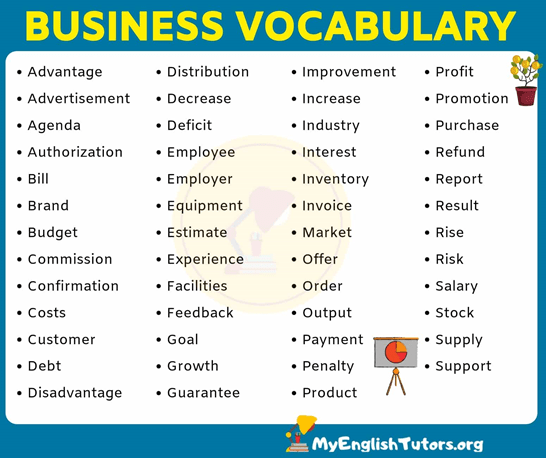
Also, using business words is essential to sound professional because you aren’t speaking to a friend! For instance, there is a huge difference between the words ‘Resignation’ and ‘Leave’ in business dictionary. ‘Resignation’ means to leave permanently while ‘a Leave’ means to temporarily cease work due to personal reasons. Thus, business English can be complex and isn’t the same as normal English. Thus, when you speak to interviewers for the first time, ensure that you have completed a course in Business English communication skills to sound impressive. As seen in the responses above, I have made use of professional and mature reasons to seem convincing.

If you choose to speak as, “Hi sir. My mom is sick and I have to tend to her. Thus, I am quitting urgently.” This not only makes you sound unprofessional but also as a liar even though you are genuine. That’s exactly why, the choice of words matters a lot. The way you interact, the serious expression you pull, and the creative philosophical reasons you provide make you look professional and genuine. Thus, one must focus on creating a grand impression on the CEO with words, sounding sweet as honey but camouflaging the harsh reality thereby cooling the situation down.

Quick Reference that could help

Thus, I would conclude stating that resignations need to be extremely formal because you don’t want to upset your boss by directly asking for it. That’s exactly why, you begin with a few consoling words to form a brief speech to engage your boss, then cite the problems you have been encountering, and gradually move towards the resignation part. During such a process, there is a possibility of receiving some solutions from your boss who could help eliminate them and if that’s the case, you wouldn’t want to quit. Be professional, be respectful, think about others, frame a formal speech, and reflect deeply over your choice of words!

All The Very Best!

FORMAL COMMUNICATION- GETTING JOB READY

Ever imagined reading someone’s mind? Well you can do that once you go through the wonderful experience of learning effective communication. Yes, a simple yet complicated study of human behaviour, attitude, personality can be very well assessed through communication. Maybe you feel it absurd talking about communication since it’s a very typical thing we all inhibit as we grow. But, Let me correct you. It’s an art to communicate EFFECTIVELY.

Communication not only means speaking and listening. It’s more about how you present yourself while speaking and how you behave while listening.

It creates an impact on the person you are communicating with. Suppose you have a business meeting going on and you are wearing your pyjamas while presenting your COMPANY. The clients will lose interest on first sight since your clothes are speaking about you . And what if you go to a night club wearing formals, all eyes will be on you. Not because you look attractive, but you went the wrong place, they will think. Of course clubs welcome party wears! Every place has its own demand, you see. It is essential to get into what the situation demands of you.

For an effective communicator, you have to be a good speaker as well as a good listener. You should be able to ADMINISTER one’s thoughts. We will soon return to this point after learning few basics.

Now, When you are in a formal set up, you should know what your business requires you to be like. In a textile business you should have knowledge of cloth materials while in a transport business you should be aware of the routes where your business is operative. The basic motive behind KNOWING YOUR BUSINESS is that it allows you to interact with your clients, employees, suppliers, in a better way. The basic know-how plays an important role in deciding investment plans, employee- pay, expansion and likewise for the company. Similarly if you are an employee/employer of the company, you should be aware of the current trends and evolutions that may bother your business. Actions are to be taken accordingly. Each and every person concerned should be active in terms of knowledge. When you will go for an interview with no idea of what the company offers, the rejection happens before the communication. It is like hitting hammer on your own legs. Not only it creates negative impact about you but also there are chances of you being tricked by people. They may hire you for irrelevant or undesirable work without you knowing an inch about it. Such cases do exist!

However, Being knowledgeable is not sufficient to interact. You should follow the basic etiquettes of a business.

After making a formal appearance, Your body language while presenting matters a lot.

Body language shows how confident you are and what determination you have to turn the world around. Your behaviour should be active and not like the one of a procrastinator. Organisations employ or contract with only those who have the stamina to do something for their welfare. No one recognises a lethargic and frustrated person. You should be a solution provider for their problems and not a problem yourself.

Good posture and attentive behaviour are the ideology to get attraction towards you.

A smile on the face, tight hand shakes, confident walk

These attributes relate to interviews but apply to all businesses where companies deal with the clients on a daily basis. A serious look is not advisable as much a happy face while dealing formally. Weak hand shakes signal the low confidence level of a person. Similar is the case of walking manner. Remember, you are being judged throughout. Nothing gets ignored when it comes to formal interactions.

There are more of such signals that show your nervousness. While shaking hands, if your hands are getting cold, the interviewer will know it and such observations may affect your selections for jobs having specific demands.

Another example can be your movements. If you are clicking a pen while waiting for your turn in the interview or you are changing your postures very often or clicking your fingers; all of these give a direct impression in the interviewers head. Here, your behaviour speaks about you.

On the contrary, if you are too loud while speaking or too frank/cheerful/excited while interacting with that person of authority, it shows your over confidence or other such attitude as may be undesirable for the post you are being interviewed for. Formal set ups admire moderate personality employees-neither too loud in their behaviour nor too lazy.

Having discussed the basics, we now come to the most important and the final stage of our discussion – Administering the thought process

Now that you know the dressing sense, body language and awareness (knowledge) required for effective communication in formal set ups, we now learn how to read the mind of the individual we are interacting with. It is quite a simple task which comes with experience. Ever imagined how such big organisations manage time to interview a number of applicants ? They are the mind readers. They excel at knowing your personality via your thought process. You are asked questions that reflect you. Your way of speech and your answers decide if you are suitable. This is why interviews are often quick as they read you through your words and expressions.

But what does this has for you? You also can read them up. As humans, we interact and communicate on a daily basis. What you need is work upon it. Make your every interaction effective by being attentive and presentable. You will come up with more ideas to communicate through practice. You should be clear in your speech and responsive to others‘. Give time to others’ complete their point and make place for your words on the same hand. This way you get better at understanding point of views.

Through more such assessments you will become able to grasp ideas before people speak up. You will know what the interviewer is going to ask about. Yes, it happens! You too will start to get an idea of the thought process of a person and analyse his personality. These signals are hard to trace in formal set ups, that is why it comes with experience…

Use of MS Excel in today’s world.

Excel is typically used to organize data and perform financial analysis. It is used across all business functions and at companies from small to large. The main uses of Excel include: Data entry.

Excel is a software program created by Microsoft that uses spreadsheets to organize numbers and data with formulas and functions. Excel analysis is ubiquitous around the world and used by businesses of all sizes to perform financial analysis.

The main uses of Excel include:

1 Data entry
2 Data management
3 Accounting
4 Financial analysis
5 Charting and graphing
6 Programming
7 Time management
8 Task management
9 Financial modeling
10 Customer relationship management (CRM)
** Almost anything that needs to be organized!

Excel is used extensively in finance and accounting functions. In fact, many organizations run their entire budgeting, forecasting, and accounting functions entirely out of Excel spreadsheets.

While Excel is defined as a “data” management tool, the data that is most commonly managed is financial. At CFI, we would define Excel as the ultimate financial software. While there are other pieces of financial software that are tailored toward performing specific tasks, the strongest point about Excel is its robustness and openness. Excel models are as powerful as the analyst wishes them to be.

Accountants, investment bankers, analysts, and people in all types of financial career paths rely on excel to perform their daily job functions.

And one should know how to use MS Excel. Its on of the most important skill in today’s corporate world.

Digital marketing

INTRODUCTION:-

Any marketing that uses electronic devices to convey promotional messaging and measure its impact. In practice, digital marketing typically refers to marketing campaigns that appear on a computer, phone, tablet, or other device. It can take many forms, including online video, display ads, and social media posts. Digital marketing is often compared to “traditional marketing” such as magazine ads, billboards, and direct mail. Oddly, television is usually lumped in with traditional marketing.
Did you know that more than 3 quarters of Americans go online on a daily basis? Not only that, but 43% go on more than once a day and 26% are online “almost constantly.” These figures are even higher among mobile internet users. 89% of Americans go online at least daily, and 31% are online almost constantly. As a marketer, it’s important to take advantage of the digital world with an online advertising presence, by building a brand, providing a great customer experience that also brings more potential customers and more, with a digital strategy

What is digital marketing?

Digital marketing, also called online marketing, is the promotion of brands to connect with potential customers using the internet and other forms of digital communication. This includes not only email, social media, and web-based advertising, but also text and multimedia messages as a marketing channel.
Essentially, if a marketing campaign involves digital communication, it’s digital marketing.

Inbound marketing versus digital marketing:-

Digital marketing and inbound marketing are easily confused, and for good reason. Digital marketing uses many of the same tools as inbound marketing—email and online content, to name a few. Both exist to capture the attention of prospects through the buyer’s journey and turn them into customers. But the 2 approaches take different views of the relationship between the tool and the goal.
Digital marketing considers how each individual tool can convert prospects. A brand’s digital marketing strategy may use multiple platforms or focus all of its efforts on 1 platform.
Inbound marketing is a holistic concept. It considers the goal first, then looks at the available tools to determine which will effectively reach target customers, and then at which stage of the sales funnel that should happen.
The most important thing to remember about digital marketing and inbound marketing is that as a marketing professional, you don’t have to choose between the 2. In fact, they work best together. Inbound marketing provides structure and purpose for effective digital marketing to digital marketing efforts, making sure that each digital marketing channel works toward a goal.

B2B versus B2C digital marketing:-

Digital marketing works for B2B as well as B2C companies, but best practices differ significantly between the 2.

  • B2B clients tend to have longer decision-making processes, and thus longer sales funnels. Relationship-building strategies work better for these clients, whereas B2C customers tend to respond better to short-term offers and messages.
  • B2B transactions are usually based on logic and evidence, which is what skilled B2B digital marketers present. B2C content is more likely to be emotionally-based, focusing on making the customer feel good about a purchase.
  • B2B decisions tend to need more than 1 person’s input. The marketing materials that best drive these decisions tend to be shareable and downloadable. B2C customers, on the other hand, favor one-on-one connections with a brand.
Of course, there are exceptions to every rule. A B2C company with a high-ticket product, such as a car or computer, might offer more informative and serious content. Your strategy always needs to be geared toward your own customer base, whether you’re B2B or B2C.

Types of digital marketing:-

What is Digital Marketing & Types of Digital Marketing (2021)

The 7 Types of Digital Marketing:-

INTRODUCTION:-

A group of men and women sitting around a conference room table working in their role as digital marketers.
Digital marketing can be broadly broken into 7 main categories including: Search Engine Optimization, Pay-per-Click, Social Media Marketing, Content Marketing, Email Marketing, Mobile Marketing, Marketing Analytics.
In the past decade, digital marketing has become a vital component in organizations’ overall marketing strategy. It allows companies to tailor messages to reach a specific audience, making it possible to market directly to people who are likely to be interested in their product. Digital marketing encompasses a wide variety of marketing tactics and technologies used to reach consumers online. Two academic team members from Southern New Hampshire University (SNHU) spoke about how digital marketing aligns with traditional tactics and shared information on some of the types of digital marketing in practice now.
A senior associate dean of business programs, Dr. Mark Hobson, said although digital marketing seems like a new world, in fact it is based in many of the principles familiar to traditional marketers and requires both foundational marketing knowledge and technical know-how.
Dr. Jessica Rogers, associate dean of marketing programs, said the two disciplines serve to connect with distinct groups of consumers. “… Traditional media is a great way to reach a broad consumer base, whereas digital media has the ability to reach very specific audiences,” she said “A key point is that depending on the target audience, some channels are more effective than others.”

Types of Digital Marketing:-

Rogers talked about some of the most popular types of digital marketing, providing a brief overview of each

1. Search Engine Optimization (SEO):-

The goal of SEO is to get a business to rank higher in Google search results, ultimately increasing search engine traffic to the business’s website. To accomplish this, SEO marketers research words and phrases consumers are using to search for information online, and use those terms in their own content. According to leading SEO software company Moz’s “Beginners Guide to SEO,” SEO encompasses many elements, from the words on your web pages to the way other sites link to you on the web to how your website is structured. An SEO specialist can make around $59,000, according to Salary.com.
So, what are some things that can improve a site’s SEO? It’s important to understand that one of the things that makes SEO challenging is that the answer to this question always depends on Google and its most current algorithm. Keeping that in mind, here are a few of the most important things for SEO strategists and marketers in general to understand about how SEO works today, from Moz’s Beginners Guide to SEO:
  • Content indexing – It is important to allow search engines to clearly “read” what your site content is, by doing things like adding alt text for images and text transcripts for video and audio content.
  • Good link structure – It is important that search engines can “crawl” your site structure to easily find all the content on your site. There are many things that an SEO specialist can do to properly format links, URLs, and sitemaps to make them most accessible to site crawlers.
  • Keywords and keyword targeting – Properly deploying your keywords – i.e. the search terms you want your site to be found for—in your content and headers is one of the fundamental building blocks of SEO. It is no longer good practice to “stuff” your content with as many keywords and keyword variations as possible. Writing high-quality content that uses keywords in the headers and a few times in the crawl-able page content is now considered better practice, and will make pages rank better in search results.

2. Pay-per-Click (PPC):-

A laptop screen showing the analytics behind a pay-per-click digital marketing campaign.

Pay-per-click refers to paid advertisements and promoted search engine results. This is a short-term form of digital marketing, meaning that once you are no longer paying, the ad no longer exists. Like SEO, PPC is a way to increase search traffic to a business online.
Pay-per-click can refer to the advertisements you see at the top and sides of a page of search results, the ads you see while browsing the web, ads before YouTube videos and in ads in mobile apps.
One of the other things that differentiates pay-per-click from SEO is that you only pay for the results. In a typical PPC model like a Google AdWords campaign, you will pay only when someone clicks on your ad and lands on your website. You can spend just about any amount of money on pay-per-click advertising. Some companies may see results from investing just a few hundred dollars, but plenty of large companies spend tens of thousands a month on pay-per-click.
How much it costs to run an ad or promote your search results will depend primarily on how much competition there is for your keywords. High competition keywords (i.e. keywords that many people are searching for and that many sites are trying to be found for) will be more expensive and lower competition terms will likely cost less.
When you set up a pay-per-click campaign, you will also be able to choose whether you want your ad or promoted results to be shown to users all over the world, or only within a specific geographic area. If you are marketing a brick-and-mortar business, this ability to tailor by location helps you not waste ad dollars serving ads to users who don’t live anywhere near your business, according to Google.

3. Social Media Marketing:-

A woman using her cell phone to track the results of a social media marketing campaign.

This includes everything a business does via social media channels. Just about everyone is familiar with social media, but marketers must approach social with an integrated and strategic approach. Social media marketing goes far beyond simply creating posts for social channels and responding to comments.
To be effective, efforts must be coordinated and consistent rather than an afterthought. To help keep posts consistent, there are many online tools available to automate and schedule social media posts, although marketers only should use automation as a tool, not a “set it and forget it” solution. Users will figure it out quickly if there is no real person behind the posts.
Social media marketers should not be in a silo separate from other marketing functions. Social marketers need to work with the company’s wider marketing team to coordinate their message across all platforms, online and off, so that every part of the brand is telling the same story.
A crucial part of social media marketing is analytics: Social media marketers must also be savvy at analyzing the performance of their posts, and creating strategies based on that data. Another reason for marketers to be consistently measuring and tracking their campaigns is that this data allows marketers to demonstrate to business leadership that their efforts are driving users to engage with the brand and eventually converting users into customers, therefore providing value to the company, according to Forbes contributor Jayson DeMers.
In other words, social media marketing is a lot more complicated than managing your personal Facebook or Twitter profile. It requires a blend of creative thinking and objective, data-driven strategy, and may be a great fit for professionals who enjoy blending these two disciplines. A social media analyst with a bachelor’s degree can earn about $63,841, according to Salary.com.

4. Content Marketing:-

A digital marketer working on a content marketing article on his laptop.

Content marketing uses storytelling and information sharing to increase brand awareness. Ultimately, the goal is to have the reader take an action towards becoming a customer, such as requesting more information, signing up for an email list, or making a purchase. “Content” can mean blog posts, resources like white papers and e-books, digital video, podcasts, and much more. In general, it should first and foremost provide value to the consumer, not just advertise the brand or try to make a sale. Content marketing is about building a sustainable, trusting relationship with your customers that can potentially lead to many sales over time, not just making a single transaction.
Content marketing works in symbiosis with other types of digital marketing: It is a way to incorporate SEO search terms into fresh website content, and the content created can be shared as social media posts and in email marketing publications. Looking at the analytics for your content marketing can tell you a lot about your customers: what are they looking for when they land on your site? What kinds of content make them stay on the site longer and keep looking around? What kinds make them lose interest and navigate away?
Unlike a method such as PPC, content marketing is a long-term strategy. Over time, marketers build up a library of content (text, video, podcasts etc.) that will continue to bring users to the site via search engines, according to Marketo, a marketing automation company. This content library also helps promote knowledge of your brand and increases your profile as a resource for information. And, if users are visiting your site for information, ideally they will remember you as an authority when it’s time to make a purchase.
Content marketing is a great avenue for people who enjoy writing and/or video and audio production. But as with digital marketing in general, it also calls for strong strategic and analytic skills.

5. Email Marketing:-

A cell phone displaying bar graphs associated with an email marketing campaign.

Even with the emergence of social media, mobile applications and other channels, email is still one of the most effective marketing techniques, Rogers said. It can be part of a content marketing strategy, providing value to consumers and over time convert an audience into customers. Email marketing pros not only know how to create compelling campaigns, they also understand optimal audience outreach and are skilled at analyzing customer interactions and data, and making strategic decisions based on that data, according to the American Marketing Association. 
Email marketing software can offer many different analytical measures, but two that marketers are always striving to improve are the open rate –the percentage of recipients who opened the email – and the click through rate – the number of recipients who opened the email and clicked on a link in the email. According to leading email marketing software company Constant Contact, there are many things marketers can do to make their emails more appealing to users and more likely to be opened. These include:
  • Create a Sense of Urgency – Writing email copy that lets your recipients know that time is running out to get a special deal or that there are only a limited number of the offer available, can increase the number of people clicking through to your website.
  • Personalize Your Email – Setting your emails and subject lines up to incorporate the recipient’s name is a proven way to increase open and click through rates. (A sample subject line: “Katie, a special offer just for you.”)
  • Let Recipients Set Their Preferences – Allowing users to specify how often they want to hear from you can help keep some of your email subscribers subscribed to your list and clicking on your emails.

6. Mobile Marketing:-

A group of digital marketer looking at a tablet displaying the results of a mobile marketing campaign.

This digital marketing type is this focused on reaching your target audience on their smart phone or tablet. Mobile marketing reaches people through text messages, social media, websites, email and mobile applications. Marketers can tailor offers or special content to a geographic location or time, such as when a customer walks into a store or enters an event.
ccording to a recent TechCrunch article, consumers in the United States now spend five hours a day on their phones. This represents a 20% increase from the fourth quarter of 2015. Users are also spending much more of their time in apps rather than on mobile browsers. In 2017, users are spending much more time with apps than watching television. 15% of that app time is spent with entertainment apps like Netflix and Hulu, 19% of it is spent on Facebook’s mobile app, 12% on other social and messaging apps, and 11% in gaming apps, according to the TechCrunch article.
Retail Dive reports that 45% of all shopping always or frequently involves a mobile device in some way, whether it’s used to do research, compare prices or make a purchase. For a majority of Millennials (defined the Pew Research Center as people born between 1981 and 1997), that number is 57%.
Marketers know that you need to take your message to where you customers are, and in 2019 it is very clear: your potential customers are on their phones.

7. Digital Marketing Skills:-

A laptop screen showing the analytics behind a digital marketing campaign.

Digital marketers support the wider marketing team and the strategic goals of the whole company by rolling out marketing strategies in the online environment, Hobson said. Digital marketers strive to be a voice for the customer and how they want to interact with a brand digitally, Rogers said. “(Marketers) strategically approach the brand’s channels to maximize investments, drive traffic and conversions, as well as manage integrated digital content,” she said.
The need to be where the customers are at all times means that digital marketers have a significant responsibility to be attuned to changes in technology, social media and software.
Technology changes quickly; the hot social media app of today may be all but abandoned by next year, but many of the foundational principles of marketing remain the same.
Today, many employers are requiring experience in Google Analytics, Google and Facebook Ads, HubSpot and Hootsuite, according to Rogers. In a master’s in digital marketing program, you’ll learn the foundations of tools such as these, exploring and applying them through coursework. They are also looking for candidates who are proficient in Adobe Creative Suites and have a working knowledge of SEO and keyword research.
However, some important pieces of the marketing puzzle have not changed since the days when companies primarily advertised in print, radio and TV. All marketers need strong communication skills and a strong basis in marketing principles.
Employers include these soft skills with the technology-related proficiencies in job posting requirements, according to Rogers. 
“A basic tenant of marketing is communicating a marketing message to a target audience,” she said. “… Not only must we communicate with our teammates, but we must be able to communicate to customers, executives and more. These folks are our target audience and without strong communication skills, messages will not be received in the way in which we intended.”
Since digital marketing is a rapidly changing space and it is imperative for companies to stay up to date on new and emerging strategies, Hobson said. There are many ways that companies do this, some of which are the responsibility of digital marketers and some of which is done by other departments.
“Staying ahead of the competition has never been more important,” Rogers said. “The landscape for businesses is changing so rapidly, that is has become a key strategy to include looking to the competition to help inform your own digital strategy.”

Reference Links:-

https://mailchimp.com/marketing-glossary/digital-marketing/

https://www.snhu.edu/about-us/newsroom/2017/11/types-of-digital-marketing

Work from Home culture

Work From Home is the new normal. After a decade or so when someone will be talking about the year 2020- 2021, he is surely counting in the work from home that emerged as a part of daily routine of the working class.

The definition of Work from home totally changed in these years. It is not new but, it used to be optional. As pandemic restricted things to a certain extend both the personal and professional life of people changed extremely. Now, the scenario is that most of the people are bound to their laptops and phones maximum time of a day, just like students of every age group are trying to adapt to this new change so are the professionals as it was totally unexpected.

People have mixed views about the work from home culture as some of the company heads and CEO claims that the employees have done well in work from home and the productivity has increased whereas, on the other hand the people who are actually working from home says that productivity is hampered also, they feel more stressed and frustrated than usual. Moreover, it can be seen that work from home, which is the only option for working professionals has-
Jumbled work life
Adapting to new changes is what we learn, a person who can easily adapt is considered valuable professionally but, it has taken far beyond adaptability, work from home has actually jumbled the personal life and professional life of almost every person.

Nothing new
Working in office cabin, meeting your colleagues daily, work break and the whole vibe of what we call work is dead. Sitting at one place, attending seminars, phone calls, video calls, virtual presentation has turned things upside down and work does not seem exciting and worth exploring to many instead, the increased work pressure and total dependence on technology has made things boring.

Future concern
The way work from home is implemented, there is a high possibility that in future companies tend to follow the same as this not only saves their office space but, it is a simple method of cost cutting the expenses related to employee in different aspects. Bill Gates has already announced that he is looking forward to continue work from home policy for Microsoft employees post pandemic. So did Facebook, there are clear chances of permanent work from home even after the situation gets normal.

Work from home culture can prove beneficial in some cases like-
• The employees who have to travel a lot to reach offices find it convenient.
• Since employees are working from home, they can devote time with family side by side. And the employees who are living away from family due to job can now stay home and work.
• Some people find the home environment more suitable for working purpose as they can focus more.
• It provides a little flexibility and ease at the same time

Conclusion
Depending on the requirement of the company and employee work from home can serve in both bad and good way but, it is also important to note that things beyond limits can create more harm thus, a balance must be maintained.

INTERNSHIPS

The internship is the main source for a college student to improve and prove his/her knowledge.

Every college student has composed placements and off compose placements.

At the time of placements in a different company, we have to submit our Resume. That resume gives our real appearance to interview. If we have done any internships and any skill development that will help for our desired company placements.

Lets more about internships

Internships is the training and real-time project to the confidence of our skills for real-world understanding

 The internship is an opportunity offered by an employer to potential employees, as an intern, to work at a firm for a fixed period of time. Interns are usually likes undergraduates or students, and most internships period last between a month and three months. … An internship can be either paid or voluntary.

Which internships we have done?

Internships are based on your desired knowledge, department and day by day improved courses

Things to consider when choosing an internship

  • Which sector are you interested? …
  • What will be your responsibilities? …
  • What will you will get ? …
  • Where you have to do? …
  • What’s the environment like is it comfortable ? …
  • Will you get the opportunity to more network? …
  • What are the skills will you learn? …
  • What are your qualifications for ?

Let specific directions for your internships

There are some websites for internships that may have offline and online internships :

  • Linkedin
  • Glassdoor
  • Google
  • Internshala
  • Internship.com
  • Internmatch.com
  • Youturn
  • Idealist
  • Global Experience
  • Coolworks

Go for these websites you will find “updated(your name) version.0”

TACHYON A PARTICLE THAT HELPS US TO TIME TRAVEL…

Tachyonhypothetical subatomic particle whose velocity always exceeds that of light. The existence of the tachyon, though not experimentally established, appears consistent with the theory of relativity, which was originally thought to apply only to particles traveling at or less than the speed of light. Just as an ordinary particle such as an electron can exist only at speeds less than that of light, so a tachyon could exist only at speeds above that of light, at which point its mass would be real and positive. Upon losing energy, a tachyon would accelerate; the faster it traveled, the less energy it would have.

The name ‘tachyon’ (from the Greek ‘tachys,’ meaning swift) was coined by the late Gerald Feinberg of Columbia University. Tachyons have never been found in experiments as real particles traveling through the vacuum, but we predict theoretically that tachyon-like objects exist as faster-than-light ‘quasiparticles’ moving through laser-like media. (That is, they exist as particle-like excitations, similar to other quasiparticles called phonons and polaritons that are found in solids. ‘Laser-like media’ is a technical term referring to those media that have inverted atomic populations, the conditions prevailing inside a laser.)

an experiment at Berkeley to detect tachyon-like quasiparticles. There are strong scientific reasons to believe that such quasiparticles really exist, because Maxwell’s equations, when coupled to inverted atomic media, lead inexorably to tachyon-like solutions.

“Quantum optical effects can produce a different kind of ‘faster than light’ effect (see “Faster than light?” by R. Y. Chiao, P. G. Kwiat, and A. M. Steinberg in Scientific American, August 1993). There are actually two different kinds of ‘faster-than-light’ effects that we have found in quantum optics experiments. (The tachyon-like quasiparticle in inverted media described above is yet a third kind of faster-than-light effect.)

“First, we have discovered that photons which tunnel through a quantum barrier can apparently travel faster than light (see “Measurement of the Single-Photon Tunneling Time” by A. M. Steinberg, P. G. Kwiat, and R. Y. Chiao, Physical Review Letters, Vol. 71, page 708; 1993). Because of the uncertainty principle, the photon has a small but very real chance of appearing suddenly on the far side of the barrier, through a quantum effect (the ‘tunnel effect’) which would seem impossible according to classical physics. The tunnel effect is so fast that it seems to occur faster than light.

“Second, we have found an effect related to the famous Einstein-Podolsky-Rosen phenomenon, in which two distantly separated photons can apparently influence one anothers’ behaviors at two distantly separated detectors (see “High-Visibility Interference in a Bell-Inequality Experiment for Energy and Time,” by P. G. Kwiat, A. M. Steinberg, and R. Y. Chiao, Physical Review A, Vol. 47, page R2472; 1993). This effect was first predicted theoretically by Prof. J. D. Franson of Johns Hopkins University. We have found experimentally that twin photons emitted from a common source (a down-conversion crystal) behave in a correlated fashion when they arrive at two distant interferometers. This phenomenon can be described as a ‘faster-than-light influence’ of one photon upon its twin. Because of the intrinsic randomness of quantum phenomena, however, one cannot control whether a given photon tunnels or not, nor can one control whether a given photon is transmitted or not at the final beam splitter. Hence it is impossible to send true signals in faster-than-light communications.

Pin on The Laws of Relativity