Amar Dubey supposed right hand of Vikas Dubey killed in police encounter.

Amar Dubey, the supposed right hand of Kanpur gangster Vikas dubey was shot dead in an encounter with cops in Maudaha, Hamirpur, on Wednesday morning.A Special Task Force (STF) is also investigating the case along with officers from 40 other police stations. Posters of Dubey have been pasted in many areas including Kanpur, Kanpur Dehat, Unnao and adjoining districts.

Vikas Dubey is wanted in the killing of eight policemen in Kanpur and has been on the run since Thursday last week. Amar Dubey was also reportedly involved in the incident, which has also revealed the alleged nexus between criminals and some moles in the police department who tipped them off about possible action against them.

Vikas Dubey was able to shoot 8 policemens due to internal support of some corrupt police. Till date, three policemen have been suspended for their alleged involvement in tipping off Dubey ahead of the police raid in which eight cops lost their lives and seven were seriously injured. The suspended police personnel include two sub-inspectors and a constable.

Dayashankar, a close partner gangster, was arrested by police after being shot in the leg during an encounter in Kanpur’s Kalyanpur area on Saturday. He was later admitted at a district hospital for treatment. He is one of the 18 aides of Dubey on whom the police had declared a reward of Rs 25,000 each.

Kanpur police has got some success in killing Amar Dubey and arresting 3 other partners, but still the main accuse Vikas Dubey is in search. Police has kept Rs 5 lakh reward on information of the wanted gangster. Hope they will soon get hold of him.

Big loss to China:Chinese apps to lose around USD 6 billion after ban in India.

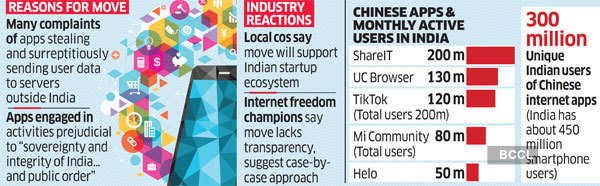
Chinese  tech giant unicorn ByteDance Ltd. is anticipating a huge loss of over USD 6 billion after ban on its 3 apps including hugely popular video making TIK TOK app in India. The decision was taken by indian government in wake of  unfortunate clash in Galwan valley in Ladakh between Indian and Chinese soldiers which led to death of 20 Indian brave soldiers and more number of casualties in Chinese camps.

Besides TikTok , India on last Monday banned 58 more Chinese apps including Club Factory, UC Browser and Share it apps for engaging in activities prejudicial to sovereignty  and integrity of India, defence of India, security of India and public order.

India was the biggest market in terms of users . Of the total 611 million  downloads nearly 112 million are from India which is considerably huge. This ban has however sent image to Chinese government that India would never compromise its privacy, sovereignty and integrity.

The Chinese government has been angry over the decision and want us to take back the decision. However the ban period is not clear and the banned apps are claiming that they have not revealed any information to foreign countries even China.

A top official said the government had considered all aspects before taking the decision. “These apps have been there for a long time, and there are some privacy and security issues with them including risks of data going out of the country,” said the person. 

The statement from the Ministry of Electronics and IT (MeitY) said it had received complaints from various sources, including several reports about the misuse of some mobile apps for stealing and surreptitiously transmitting users’ data in an unauthorised manner to servers outside India. 

graph

The ban would surely help in bringing Indian alternatives for the Chinese apps and reduce the dominance of Chinese products in Indian market.

Struggles of big dairy companies in India!!!

India is that the world’s biggest producer and consumer of dairy. In 2018 alone, India produced 186 million metric tonnes of milk — about 410 billion pounds and 22 percent of the milk produced globally. Almost all of that is consumed domestically thanks to India’s dairy-heavy diet — think creamy curries, yogurt drinks, and a popular type of butter called ghee. A quick note before we proceed: this includes milk from buffaloes, which are an important source of milk in many developing countries. the point is that India loves milk.

What is pushing India's small dairy farmers out of business?

In 2011, the French dairy company Danone hoped to capitalize on this by opening a division in India. Danone opened its own processing plant in Haryana and tried to capture some of India’s 1.2 billion dairy lovers. But less than a decade later, Danone shuttered their dairy business in India. That same year, the corporate made 28 billion dollars worldwide and was within the top three global dairy companies. With all this success, elsewhere, why did Danone’s dairy business sour in India? Let’s start with some background on Danone. Their business is broken down into three categories:

  1. 1.specialized nutrition, like supplements and formula for babies;
  2. bottled waters and seltzers;
  3. dairy and plant-based alternatives.

That one makes up over half of their global sales, but it’s also the one that failed in India. Danone does still sell specialized nutrition products in the country, but they don’t break out those sales figures separately. This is the same company as Dannon in the U.S. The company decided to rebrand to make the spelling less confusing for American consumers. Anyway, now for some background on India’s dairy industry. There are about 75 million dairy farmers in India. Most of them are women who own one or two buffaloes or cows to supplement the family’s income. Nearly half of India’s milk is not sold, but consumed by the farmers household. This makes India’s dairy industry much more fractured and localized than other countries where Danone operates. Take the company’s native France and one of its biggest customers, the U.S. Each has far fewer dairy farms with herds that dwarf India’s one or two animal average. This was Danone’s first big problem in India: sourcing milk is difficult. Of the half not consumed by farmers’ households, only about 15 percent goes to big organized companies or government run cooperatives. The rest goes to hundreds of small, local milk processors.

Tainted milk: Branded dairy in India sees 5% increase in ...

The largest companies like Amul, Mother Dairy, and Nestlé have tiny percentages of the market, and they’ve been there for decades. Market research firms Mintel and Euromonitor declined to release specific market share numbers to CNBC. However, a 2016 piece in The Economic Times of India citing Euromonitor put the figures at about 7 percent for Amul, 3.7 percent for Mother Dairy, and 2.9 percent for Nestlé. In short, tapping into the existing dairy infrastructure is effective but time consuming. Imagine the effort of contacting dozens or hundreds of local and regional dairies, processors, or individual farmers. But establishing a separate supply chain altogether is very expensive — a lesson Danone learned the hard way. And when Danone did get milk, the company focused on the wrong products. Danone pushed plain yogurt and flavored yogurt drinks — popular in places like the U.S. and France with high profit margins to boot. But in India around the time when Danone arrived, yogurt comprised only 7 percent of the dairy consumed.

The real money was in ghee, a type of clarified butter, and plain old fluid milk, a product with razor-thin margins dominated by those hundreds of local small-scale producers. Analysts explained to CNBC the simple reason why Indian consumers shunned Danone’s prepackaged yogurt. And if Indian consumers did want to buy premade yogurt, they had a slew of cheaper options than Danone. Dairy never accounted for more than 10 percent of Danone’s sales in India, a far cry from its global 50 percent. Its specialized nutrition arm picks up the slack, and the company announced a renewed focus on that division when it shuttered its dairy operation. Meanwhile, two of their biggest competitors, Amul and Nestlé, made nearly five billion and 750 million from dairy, respectively. But not all hope is lost for Danone’s dairy in India.

Amul, Nestle, Mother Dairy, Tru & Danone: Which Milk Tastes the ...

In January 2018, the same time that Danone ended its dairy production there, the investment arm of the company announced its part in a 26.5 million dollar investment in Epigamia, an Indian yogurt startup. This could be a sustainable move for Danone in India’s dairy industry because Epigamia offers consumers products that add value onto the plain yogurt they will make cheaply reception . But perhaps most importantly is this: while much of the population still makes yogurt the old-fashioned way, analysts predict that a growing number of consumers will want to buy premade options as they move into corporate jobs in developing urban centers. Very large numbers indeed. If only 5 percent of India’s 1.35 billion people decides to buy prepackaged yogurt, that’s over 67 million consumers — more than the entire population of Danone’s native France.

A look at the history of witch hunts

Witch hunt, a phrase often used by politicians whenever accused has become very common these days. A witch hunt often means a persecution of someone through baseless facts and inconclusive evidence. But essentially it refers to the attempt to punish someone whose opinions are unpopular and said to be a danger to society. But the question arises as to how and when did the original witch hunts related to witchcraft started. Contrary to popular belief it wasn’t because of the uneducated masses started accusing those with odd behavior but rather belief in witches, in the sense of wicked people performing harmful magic, had existed in Europe since before the Greeks and Romans. In the early part of the Middle Ages, authorities were largely unconcerned about it. Things began to change in the 12th and 13th centuries, ironically because educated elites in Europe were becoming more sophisticated. Universities were being founded, and scholars in Western Europe began to pore over ancient texts as well as learned writings from the rest of the world, which often gave some sort of complex system of magics as an explanation for day to day phenomenon. Ordinary people – the kind who eventually got accused of being witches – didn’t perform elaborate rites from books. They gathered herbs, brewed potions, maybe said a short spell, as they had for generations. And they did so for all sorts of reasons, such practices were important in a world with only rudimentary forms of medical care.

Photo by Joy Marino on Pexels.com

Christian authorities had previously dismissed this kind of magic as empty superstition. Now they took all magic much more seriously. They began to believe simple spells worked by summoning demons, which meant anyone who performed them secretly worshiped demons. These ideas of common folk engaging in witchcraft really gained traction after the pope gave a friar and a professor of theology called Heinrich Kraemer permission to conduct inquisition in the search of witches in 1485. At first his ideas did not gain traction as the people disapproved of his harsh questioning of respectable citizens and shut down his trials. However undeterred in his supposed quest to rid the world of the devil’s influence Kraemer wrote a book called “Hammer of Witches”. He wrote a lot of ideas which would subsequently be seen practiced in various towns across Europe. His book spurned others to write their own books on the topic and give sermons on the “dangers of witchcraft”. Even though there was no evidence to support any of these claims belief in witchcraft became widespread. A witch hunt often began with a misfortune; a failed harvest, a sick cow, or a stillborn child. Many of the accused were people on the fringes of society, the elderly, the poor or social outcasts but it wasn’t just limited to them, any one could be targeted even children. While religious authorities sanctioned these hunts, it was the local secular government that carried out the detainment and punishment of the witches. Those suspected were tortured rather than questioned, and under these tortures thousands of people falsely confessed to witchcraft and implicated others to save their hides. This was a time where the way repentance rather than justice prevailed in the courts, so even with flimsy evidence a lot of people were persecuted. Punishments varied from a fine to burning at the state, for many of the poor it was always the later. While motivations of witch-hunters varied considerably from jealousy, anger and spite, many genuinely felt they were doing good by rooting out the evil in society. But like even in these troubled times, there were those of sound mind who dissented various scholars, jurists and physicians countered with logic and sense against the mob mentality of the masses and with a rise of strong central governments, witch hunting slowly declined until it disappeared altogether.

Both the onset and the demise of these atrocities came gradually and the potential for similar situations to arise is still there, where authorities use their power to mobilize against false threats, but with reasoned dissent to combat it we as a society can still move forward.

Honest Concurrent User in Trademark

The main contention to prove the honest concurrent use is that the applicant has been using the mark in good faith and/or he didn’t have the knowledge of the earlier registered trademark and thereafter explains the legal requirements to prove the claim of the bonafide user of the trademark.
Introduction
A Trademark which is similar to an already registered trademark would not be recognized. According to Section 11 of the Trade Marks Act, 1999,
a trademark shall not be registered if it is similar to a registered trademark. This provision is there to prevent confusion among the consumers as to the ownership or origin of the goods claimed.
For a trademark to get protection under the Trade Marks Act, 1999, it has to be registered with the Registrar of Trade Mark. Section 12 of the Trade Marks Act, 1999 provides for registration of a trademark in case of honest and concurrent use depending upon the subjective discretion of the Registrar.
The burden of proof under the evidentiary aspect of trademark law says that an applicant needs to establish prima facie contentions that there is no such person using an identical or similar mark, as it is not possible to show conclusively that there is no such person. The registrar may take notice of a state of affairs that would enable it to raise a presumption that according to “the common course of natural events, human conduct, and public and private business” such a situation does not exist. However, if an objection is raised such a presumption would not be raised. Then the burden is on the objecting person to prove his case in accordance with the principle of section 101 of the Evidence Act, 1872 and he must also prove that the registration of the mark would be of material detriment to him. In Concurrent registration of identical or similar marks, heavy burden lies on the applicant to prove the existence of the following conditions, the findings on which are necessarily subjective in nature.
Various Jurisdiction
The quantum of the concurrent use of the trademark in connection with the goods concerned and the duration, area and volume of the trade.
The degree of confusion likely to ensue from the resemblance of the marks, which is to an indication of the measure of public inconvenience.
The honesty of the concurrent use Whether any instances of confusion have in fact been proved. The relative inconvenience, which would be caused if the marks were registered, subject if necessary to any conditions and limitations.
In most jurisdictions, Trade Mark law provides for a Trade Mark of an honest and concurrent user to co exist with another similar mark. The defence of honest and concurrant user was conceived mainly through two cases. Firstly, the case of Dent v Turpin determined that two users of a mark (which had derived from a common predecessor) had a separate right to obtainan injunction against a third person using the mark. Secondly, in Southorn v Reynolds , the Dent case was relied on to come to a conclusion on very similar facts. Though, it should be noted that neither of these two cases was related to dispute between concurrent users. The courts, in these two cases were not protecting the exclusive property rights but restraining a person from misrepresenting his goods as those of another.
In Dr. Reddy’s Laboratories Ltd v M/s. Reddy Pharmaceutical Limited ‘Dr. Reddy’ was a mark adopted and used by Dr. Reddy Laboratories since 1984 and has acquired reputation and goodwill. However, application for registration of this mark was filed only in 2001 under various classes. Reddy Pharmaceuticals Limited, the respondent, was the agent of Dr. Reddy Laboratories for 10 years. This association was terminated on 1st April 2003 and on 17th April 2003 the respondent filed the impugned trademark application for the mark ‘Reddy’. Though the respondent’s application was filed subsequent to the applicant’s application, the mark was registered in favour of the respondent in 2005 under ‘medicinal and pharmaceutical preparations’. The IPAB observed that the applicant was the first to apply for the mark in 2001 and the respondent’s application was subsequent to the applicant’s in 2003. Therefore, the registry erred in accepting the respondent’s subsequent application. The IPAB remarked “The applicant company headed by a scientist/technocrat have indulged in benign neglect of not seeking timely protection for their brand name and are now ruing its decision.” The IPAB further stated “It is true law recognizes and preserves the right which every man has to use his own name including for carrying on trade or business provided such use is not fraudulent.” In the present case it was held that all the facts point towards the fact that the respondent deliberately adopted the impugned mark to deceive the public. It was not a bona fide user and therefore the respondent could not take support of honest and concurrent use under S. 12.
English Law
Quite often a business is advised that a certain trade mark that it wishes to register, or a confusingly similar version of it is already registered in a third party’s name. The trade mark attorneys acting for the business will then, as a matter of course, request details of the use of the mark, if any, What is the significance of this enquiry? The answer lies in section 14(1) of the Trade Marks Act 194 of 1993. It aunty that a mark can be registered, despite its conflict, among other things, with a registered mark, in the case of honest concurrent use, OE o other special circumstances that may make it proper to do so. The obvious INsue that requires attention is the meaning of the concept honest.
Relevant factor under English law were set out in the decision of Piries Application (19331 RPC 147. These include • contingencies of confusion the duration of use, • whether the choice of the mark was honestly made, • the nature of the trades of the respective purtics, and actual confusion.
In the application of these factors, the hardship Involved in refusing registration must also be considered. In practice, the most controversial aspect is probably whether the knowledge vain of a mark excludes protection. The impact of knowledge of a mark featured in Massachusetts at Work 1918 KPC 137, also a British decision. In this matter it was stated that tugh it had been suggested that the use had been other than honest, this use had taken place with full knowledge of the mark.
Registration was thus refused
In George Ballantine & Son Lule Ballantyne Stewart & Coy td|1959) RPC 47, it was said that use was in good faith in Latin, bona fide) if the user was someone ignorant of the conditions in the market and of the state of the register. In the light of such knowledge, the adoption of the mark was held not to be in good faith.
The ruling would also support the inference that knowledge of a mark amounts to an exclusion of good faith. However, in the authoritative Pirie decision, it was held that knowledge of a mark loses its significance once the selection of the mark is property explained.
Conclusion
To conclude, when claiming honest concurrent use after receipt of a similarity objection or opposition, the applicant or the defendant should produce strong evidence to substantiate such claims of extensive, honest and concurrent use of the trademark. Extensive, honest and concurrent use of the disputed mark does not negate but mitigates the likelihood of consumer confusion due to the conceptual similarity of the marks. The primary objective of a Trade Mark is to act as a source identifier, and if two identical or similar marks can exist without any public confusion then the mark can be registered subject to the subjective discretion of the Registrar.

Data Protection

Recently got a chance to attend webinar where Former Justice B.N Srikrishna talking about data protection luckily got great insights and delighted to share with you guys hope it’s helps you to understand everything about Data Protection.

India is not a party to any convention on protection of personal data which is equivalent to the GDPR or the Data Protection Directive. However, India has adopted or is a party to other international declarations and conventions such as the Universal Declaration of Human Rights and the International Covenant on Civil and Political Rights, which recognise the right to privacy.

India has also not yet enacted specific legislation on data protection. However, the Indian legislature did amend the Information Technology Act (2000) (“IT Act”) to include Section 43A and Section 72A, which give a right to compensation for improper disclosure of personal information.

The Indian central government subsequently issued the Information Technology (Reasonable Security Practices and Procedures and Sensitive Personal Data or Information) Rules, 2011 (the “Rules”) under Section 43A of the IT Act. A clarification to the above Rules was issued on 24 August 2011 (the “Clarification”).

The Rules have imposed additional requirements on commercial and business entities in India relating to the collection and disclosure of sensitive personal data or information which have some similarities with the GDPR and the Data Protection Directive.India has introduced a biometric based unique identification number for residents called ‘Aadhaar’. Aadhaar is regulated by the Aadhaar (Targeted Delivery of Financial and Other Subsidies Act) 2016 (“Aadhaar Act”) and rules and regulations issued thereunder.

Entities in regulated sectors such as financial services and telecom sector are subject to obligations of confidentiality under sectoral laws which require them to keep customer personal information confidential and use them for prescribed purposes or only in the manner agreed with the customer.

To better balance privacy and innovation, India’s data protection legislation must be narrowly focused and designed to protect individuals and society against any injury resulting from data processing.In December 2019, the government introduced the Personal Data Protection Bill, 2019, in parliament, which would create the first cross-sectoral legal framework for data protection in India.

A framework for protecting personal data has to be designed on a more precise understanding of the role of privacy in society and of the harms that emanate from violations of individual privacy.The notion of informational privacy has become salient in the past decade.

India has privacy jurisprudence going back several decades. Most of it focuses on privacy in the context of harms caused due to a violation of privacy. This jurisprudence changed in 2017, when the Supreme Court in Justice K.S. Puttaswamy v. Union of India held that the Indian Constitution included a fundamental right to privacy. While deciding the case, though the court listed a long line of jurisprudence, the central deficiency in the existing jurisprudence in the court’s opinion was the lack of a “doctrinal formulation” that could help decide whether privacy is constitutionally protected.

The Personal Data Protection Bill, 2019, follows a long line of privacy jurisprudence in India that has been influenced by global developments as well as the country’s own constitutional jurisprudence.

Though the constitution does not explicitly mention a right to privacy, Indian courts have held that a right to privacy exists under the right to life guaranteed under Article 21.5 However, there was always some ambiguity regarding the exact nature of the constitutional protection of privacy due to the long-standing judgment of the Supreme Court in Kharak Singh v. State of Uttar Pradesh, where the court held that a right to privacy did not exist under the constitution.

The Bill governs the processing of personal data by:

(i) government,

(ii) companies incorporated in India,

(iii) foreign companies dealing with personal data of individuals in India.

Personal data is data which pertains to characteristics, traits or attributes of identity, which can be used to identify an individual. The Bill categorises certain personal data as sensitive personal data. This includes financial data, biometric data, caste, religious or political beliefs, or any other category of data specified by the government, in consultation with the Authority and the concerned sectoral regulator.

The Bill sets up a Data Protection Authority which may:

(i) take steps to protect interests of individuals,

(ii) prevent misuse of personal data,

(iii) ensure compliance with the Bill.

It will consist of a chairperson and six members, with at least 10 years’ expertise in the field of data protection and information technology. Orders of the Authority can be appealed to an Appellate Tribunal. Appeals from the Tribunal will go to the Supreme Court.

Offences under the Bill include:

(i) processing or transferring personal data in violation of the Bill, punishable with a fine of Rs 15 crore or 4% of the annual turnover of the fiduciary, whichever is higher,

(ii) failure to conduct a data audit, punishable with a fine of five crore rupees or 2% of the annual turnover of the fiduciary, whichever is higher. Re-identification and processing of de-identified personal data without consent is punishable with imprisonment of up to three years, or fine, or both.

State Duty-Bound To Ensure Well-being

In a commendable and courageous judgment, the Kerala High Court just recently on July 1, 2020 in Jana Samparka Samithy Vs State of Kerala in Case No. : WP(C). No. 27148 of 2015 has minced no words to make it unmistakably clear that the State Government has a duty to ensure well-being, life and liberty of migrant workers also. The State Government cannot abdicate this onerous responsibility under any circumstances. All the State Governments must always pay heed to this what the Kerala High Court has held so elegantly, effectively and eloquently!

                                To start with, the ball is set rolling in para 1 of this latest, landmark and extremely laudable judgment authored by Justice Shaji P Chaly of Kerala High Court and its Chief Justice S Manikumar wherein it is observed that, “W.P.(C) No. 23724 of 2016 is a Public Interest Litigation suo motu registered by this Court on 17.06.2016 on the basis of the common judgment in W.P.(C) Nos. 31925 of 2015 and 15370 of 2016 of a learned single judge of this court portraying the pathetic conditions of migrant labourers in the Labour Camps situated within the State of Kerala. As per the judgment in W.P.(C) No. 31925 of 2015, the Secretary of the Vadavucode Puthencruz Grama Panchayat was directed to seal the buildings of the respondents in the said writ petition, and the District Administration along with the Local Self Government Institutions were directed to take immediate steps to avert nuisance caused by the property, remove the contaminants and restore it to ensure safe habitation of the nearby residents. Other requisite directions were also issued. One of the directions was to the District Collector, Ernakulam to depute an Officer sufficiently senior in the hierarchy to conduct an inspection of the premises and close down the labour camp by providing alternate facilities for accommodating the migrant labourers and collect samples from the well water and to conduct analysis of the same. Since we found that the captioned writ petitions have intrinsic connection, we heard them together on agreement.”

                                            To be sure, it is then stated in para 2 that, “The learned single Judge, taking into account the social ramifications emerged out of the specific instance brought before it in the writ petition, has directed as per an order dated 20.06.2016 to place the judgment before the then Acting Chief Justice requesting to take a decision as to whether a suo motu Public Interest Litigation was to be initiated, along with a memo filed by the learned Government Pleader in W.P. (C) No. 31925 of 2015 and the report of the District Collector with the photographs taken at the time of inspection. It was accordingly that the suo motu proceedings started. Thereafter, as per the order dated 18.07.2016, a Division Bench of this Court impleaded the Kerala State Legal Services Authority represented by its Member Secretary as an additional respondent in the writ petition, in addition to the State, its various Departments, District Collector, Ernakulam, an official of the Labour Department, public sector undertakings like Bharat Petroleum Corporation Limited, Indian Rare Earths Limited, Hindustan Organic Chemicals Ltd. etc. The member Secretary of KELSA was also directed to allot the suo motu case to Smt. Parvathy Sanjay, and with her consent she was appointed as amicus curiae on behalf of the Kerala State Legal Services Authority.”  

                                       While continuing in the same vein, it is then specified in para 3 that, “Thereafter, this Court was issuing periodical directions to the respondents as well as the amicus curiae to submit reports so as to issue directions to the State Government and the officials to take appropriate steps to protect the interest of the migrant labourers. The Secretary of KELSA has filed various reports before this Court pointing out the deficiencies existing in the labour camps, and the deplorable conditions of life of the migrant labourers who have been working in various establishments, especially at Perumbavoor, Ernakulam District where they were employed by the Plywood Manufacturers. Along with the report, KELSA as well as the amicus curiae have produced photographs, which would speak in volumes the pathetic condition under which the migrant labourers were living and the difficulties faced by them due to lack of facilities. To combat these issues suggestions were also placed before this Court.”

                                   Be it noted, it is then envisaged in para 4 that, “The amicus curiae has also produced before this Court emergent reports taking into account the urgent actions to be taken and also seeking appropriate directions to the State as well as the other authorities. Likewise, taking into account the report of the amicus curiae, directions were issued to the public sector undertakings who were found to be the principal employers. The report also demonstrated the unhygienic conditions, and the poor maintenance of the bathroom and toilets in labour camps. Pollution problems were also reported to be persisting in the labour camps, however consequent to the successive orders issued by this Court, steps were taken by the authorities and the public sector undertakings to abate the nuisance. Steps were also taken to decongest the labour camps consequent to such reports. The Panchayat  as well as the other authorities were also given the liberty to inspect each of the labour camps and take appropriate decisions so as to ensure only a minimum number of labourers residing in such labour camps. In fact, on the basis of the report that there was exploitation of the migrant labourers, appropriate directions were issued by this Court, and due to the constant and frequent reports of KELSA, statement filed by the Government and its officials, as also the report of the amicus curiae, and the consequent monitoring by this court, many of the problems that were faced by those migrant labourers could be curbed and other situations were also able to be regulated to a considerable and satisfactory extent. While continuing so, situations have arisen due to the lock-down restrictions on account of the pandemic, Covid-19 vis-à-vis the difficulties faced by the migrant labourers. Due to the closure of the business establishments and the factories, the migrant labourers were faced with various difficulties, including loss of employment and situations with respect to their day-to-day affairs. Thereupon, on the basis of the reports submitted by the KELSA and the amicus curiae, clarifications were sought by this Court from the Government and its officials and after considering the rival submissions, directions were being issued to sort out the difficulties faced by the migrant labourers. In fact, such reports filed by the KELSA and the amicus curiae were extending help to the State Government and its officials to identify the issues specifically, and to take urgent steps to abate the nuisances confronted by the migrant labourers, and also to alleviate the difficulties faced by them due to the unemployment, and the consequential unrest generated.”        

                                         To say the least, it is then elucidated in para 14 that, “After hearing the learned counsel for the petitioner in the said writ petition, learned Sr. Government Pleader, Sri Surin George Ipe, and the learned amicus curiae Smt. Parvathy Sanjay representing the KELSA, we are of the view that the writ petition can be disposed of with appropriate directions taking into account the present situations prevailing in the State of Kerala. Needless to say, the State Government is duty bound to protect the health and welfare of the migrant workers in accordance with the mandate contained under Article 21 of the Constitution of India and the obligations and duties contained under the directive principles which are fundamental in the governance of the State and also the fundamental duties imbibed in every citizens under Article 51-A of the Constitution of India.”  

                                                  As a corollary, it is also then said in para 15 that, “On a conjoint reading of the said provisions of the Constitution of India, we are of the view that, the State has an onerous duty to ensure the well being and life and liberty of every citizen, which includes the migrant workers also.”

                           On the face of it, what is then further underscored in para 16 is that, “Therefore, the State Government has a duty to ensure that the employers are providing appropriate shelter to the migrant workers, a clean environment and a healthy living condition with sufficient ventilation, light etc. along with other basic amenities. It is also the duty of the State Government to see that employers are satisfying the requirements in accordance with the prevailing laws with respect to the wages, contribution to welfare funds etc. of the migrant labourers. So also, adequate measures shall be taken for curbing ill-treatment of the labourers in any manner, by the employers.”

                                           Going forward, it is then stated in para 17 that, “In that view of the matter, there will be a direction to the State Government to ensure that the life and liberty of the migrants labourers are protected envisioned by the framers of the Constitution of India and bearing in mind the responsibilities and the fundamental duties and obligations of the State Government in doing so. If any information is received by the State Government and its officials in respect of any ill-treatment of the migrant labourers from any responsible corners, quick action shall be taken for ensuring their well being and life and liberty. It is also made clear that if any of the migrant labourers expressed his intention to go back to his native State, adequate steps shall be taken by the State Government through its Offices to ensure return of such migrant workers subject to the lockdown restrictions and consequential SOPs issued by the respective Governments. So also, the Government shall always be watchful to ensure that no forcible detention are made by the employers of any migrant workers so as to cause any prejudice to the migrants, and if any such action on the part of the employers are noted by the Government, adequate steps shall be taken to initiate appropriate action against such persons. We also make it clear that the State Government is at liberty to implement the suggestions in Ext. P1 report in W.P.(C) No. 23724 of 2016, if they are genuinely required to improve the health and welfare of the migrant labourers.”  

                                  In essence, this latest, landmark and extremely laudable judgment by a two Judge Bench of the Kerala High Court very rightly accords the topmost priority to the well-being, life and liberty of migrant workers also who always render their invaluable contribution in State’s development in all spheres as we have already dwelt in detail. It enjoins upon the Kerala State Government to ensure that the same is protected always! The Kerala State Government and its officials must comply with accordingly with the directions stated in the judgment without fail! There can be no denying or disputing it!

Sanjeev Sirohi, Advocate,

s/o Col BPS Sirohi,

A 82, Defence Enclave,

Sardhana Road, Kankerkhera,

Meerut – 250001, Uttar Pradesh

Why Apple was not so popular in India???

Apple sells millions of iPhones every year. In the year 2018, the tech giant reported selling close to 47 million units worldwide. But not all markets are created equal. India has been one of the hardest countries to crack for the Cupertino giant. Although it’s been over a decade since Apple began selling iPhones in India, the company can’t seem to get a big bite of the world’s second-largest smartphone market. India is a very price-sensitive market, which means that people pay a lot of attention to what value they are getting out of the price that they are paying for a particular product.

In the case of Apple, there’s a lot of premium being paid for the brand itself, and that’s where the price-conscious Indian consumer thinks about that if they are getting the same kind of features or specs from another phone that they can get a lower price, that makes it tougher to sell something at a much higher premium. Apple is definitely feeling the pressure. Samsung and Xiaomi accounted for the majority of smartphone sales in India in quarter three of 2018, garnering 22 percent and 27 percent respectively of the smartphone market. In contrast, Apple made up only about 1 percent of India’s smartphone market share, trailing behind Chinese phone makers Vivo and Oppo. It’s also worth noting that the premium smartphone market in which Apple operates still makes up less than 5 percent of the overall smartphone market in India.

7 Key Strategies That You Must Learn from Apple's Marketing

Most of the smartphones in India that sell, they are below $200 and Apple does not have any play in that segment. This environment is one that competitors like Samsung have begun to adapt to. The South Korean powerhouse is launching its Galaxy M series budget smartphones to appeal to the Indian market. In contrast, Apple doesn’t seem too keen on changing up its India strategy. I got some ideas for you, OK? I talked to some people at Walmart yesterday. An arrangement with Walmart Flipkart to take over India with a budget phone rather than doing it piecemeal? For us, we’re about making the best product that enriches people’s lives. And so, we’re not about making the cheapest. For us, what we’ve seen is, there’s enough people in every country in the world that we play in that we can have a really good business by selling the best phones. Still, some tech investors see Apple as being out of touch with the India market. You think they are going to slash prices? I think they have to. How can you sell a $1,000 phone in a market like China where the GDP per person is $10,000? In India it’s $2,000. And if you go back to the September earnings release, they talked about the fact that India was way below where they thought.

Apple postpones launch of online store in India - The Economic Times

Well, if your average GDP person is $2,000 and you’re trying to sell a $1,000 phone, it’s gonna be probably pretty hard to sell it. They probably want to eat. Another issue for Apple: stiff tariffs. I think iPhones have a specific disadvantage in the India market because of the local regulation. There is a very high import duty on the phones that are not manufactured locally in India. So for most of the big players in the India market, they are manufacturing locally so they do not have to pay that high import duty. Samsung has been manufacturing phones in India since 2007 and just last year opened the world’s largest mobile phone factory on the outskirts of New Delhi. Chinese phone makers Xiaomi and Oppo have also invested millions of dollars to build manufacturing plants in the country. That’s not to say Apple has completely ignored India.

The tech giant already manufactures its lower-cost iPhone SE and iPhone 6s models locally, through a partnership with Taiwanese manufacturer Wistron. This year, Apple is also expected to move its production of the iPhone X series into Foxconn’s plant in southern India. If you look at how we’ve done over the years, we’ve gone from a $100-$200 million business to last year we had we exceeded $2 billion. That $2 billion was flat year over year after a rapid rapid growth. And so we have more work to do. We’d like to put stores there. We would like some of the duties and so forth that are put on the products to go away. But even with its local hardware production push, Apple still fails to provide Indians with a robust software experience.

Apple iOS 13 Release: Should You Upgrade?

Apple has introduced turn-by-turn navigation for the India market. Before that, that significant part was missing. And beyond that, there’s not a lot of customization that Apple has done for the India market. There are not a lot of apps that specifically cater to the India market. Past complaints for Apple Maps also included missing major landmarks and having very sparse data of cities and towns. But again, Apple is working on a solution. The company has hired thousands of engineers at its mapping facility in Hyderabad to improve its services. Apple Pay is also not an option in India, though similar payment services from Samsung and Google have already been rolled out. Finally, unlike in most other markets, Apple can’t rely so much on its brand recognition to sell devices in India. The other challenge for Apple in India is that it cannot have its own retail stores or own Apple stores because of some regulatory issues, which means it has to have partners on the retail side, whether it’s the Apple premium resellers, which you see in many other countries as well, or with the third-party resellers. In order to have a larger presence in the market.

Apple has to have partnerships with thousands of these resellers, which in a country as big as India, can be challenging. Apple is still a premium status symbol for many Indians, but one that is out of reach for the majority of the population. With phones from Chinese brands like OnePlus, which was India’s best selling premium smartphone brand for the second quarter in a row, offering similar features at a fraction of the cost, Apple may have a very tough time getting a bigger slice of the India market.

Apple - Localizing the Message - Global Marketing Professor

Why Australia is least affected by recession!!!

America’s economy is approaching a big milestone. If it keeps humming until July 2019, it’ll be the longest expansion in U.S. history. It would be exactly one decade and one month old by then. But there’s another country with an even more impressive run It’s even called the ‘lucky country’ Three big lessons from Australia.

  1. Be smart.
  2. Be organized.
  3. Be lucky.

So, if I’ve got any advice for other countries, it’s try and be as lucky as Australia That luck has to do with Australia’s treasure trove of natural resources. You know Australia is on the other side of the world and sitting on tremendously valuable minerals right at the point where the Chinese economy is just around the corner and exploding. Australia and every one its natural resources were within the right geographic neighborhood even as the Chinese economy began to begin . And it just so happens that China did a big fiscal stimulus in 2008 and spent a great deal of money building new cities. So all of these resources were drawn from places like Australia. So that also served as a huge tailwind at a time when developed markets were in a whole lot of trouble.

What Currency Is Used In Australia | Australian Dollar : Compare ...

The year 2008 was a time of economic turmoil The Global Financial Crisis hit and markets crumbled around the world. But as it turns out this was also a year for Australia’s economic management to really show off At the time the government had a very helpful and very low level of debt. One reason? Pension reform in the 1990s. Australia set up a compulsory retirement system called the superannuation system. It requires employers put money into its employees’ retirement savings.

Since companies and citizens have to build up retirement savings, some of the financial burden to pay off pensions was taken off of Australia’s government As other economies reeled in the wake of the 2008 crisis, the Australian Government was then able to put money directly into people’s bank accounts This boosted consumer spending in order to stimulate growth In 2008, the Australian Government unlike some other developed market governments actually jumped in very quickly with fiscal stimulus, so that helped to kind of minimize the effect of the crisis The country’s numbers continued to look sluggish after the financial crisis. But they never quite dipped low enough or for long enough to satisfy the definition of a recession. It takes two quarters of negative growth to fall into a recession. Australia’s economy did post a couple of negative quarters since 2008, but no country’s perfect. Overall Australia’s economy has been managed pretty much in recent years partly due to a robust and stable financial institution.

Reserve Bank of Australia – Australia's LGBTQ Inclusive Employers

Australia has an independent financial institution and it is a very well-run financial institution . It also has a floating exchange rate and the exchange rate helped it adjust to international shocks. Australia’s economic reforms gave it flexibility in times of hardship. For example, floating the Australian dollar In 1983, Australia’s government moved the dollar onto a floating exchange rate This meant that the dollar would be valued by supply and demand instead of being subject to influence from its government or its central bank It allows the economy to react to shocks as well Typically when an economy is hit by some sort of negative shock. The currency will adjust. It will depreciate and that helps promote exports. Another reason behind Australia’s economic diary lies in its immigration policy. Since the late 1990s, Australia has seen growth in temporary migration, many arriving to the country on student or temporary work visas. The number of temporary migrants peaked in the year 2000. However a recent change to immigration law in 2018 gave visa applicants more hurdles to get through if they wanted to come to the country Even when our GDP per capital average incomes aren’t rising by much because the number of people continues to rise that means the total GDP continues to rise at even more rapid pace Part of that’s underpinned by much faster population growth Most experts think Australia’s economy remains strong in 2019, but it’s not without risks.

Australia’s suffering at the instant from pretty weak wage growth. That’s worrying a lot of people. There’s a lot of fear right now that China is hitting a wall. That will hit demand for Australian products. The good news is to the extent that the Chinese are buying commodities hopefully will find buyers from overseas for many of those commodities if the Chinese are not there The bad news is the rest of the world economy is not doing that well.

Australian economic growth slows, enters per capita recession ...

How India’s massive Election System works?

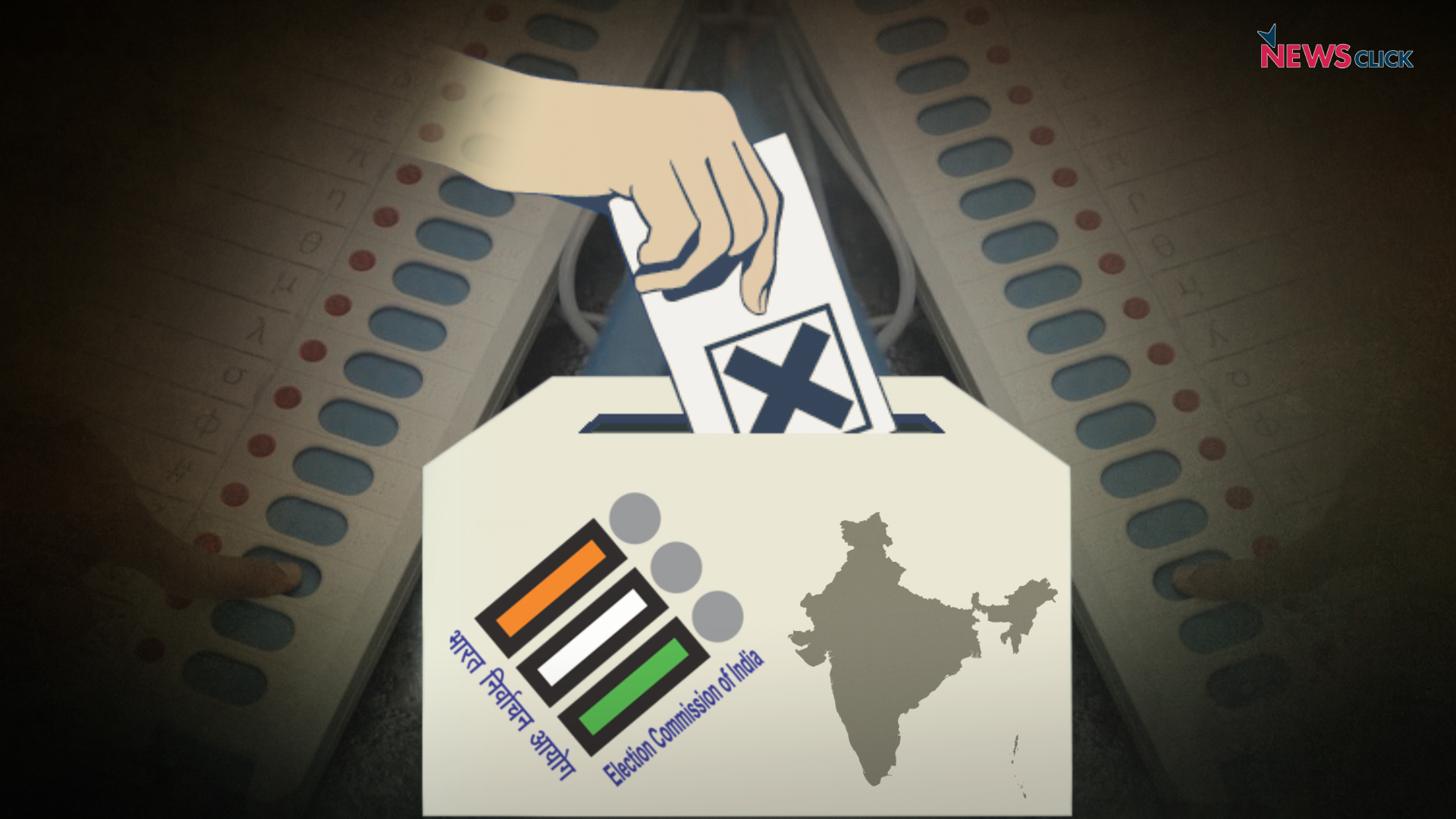
The world’s biggest democracy just had an election. The world’s biggest democratic election It’s a marathon election A mammoth undertaking It’s the world’s biggest exercise in democracy In India, voters picked its central government for the next five years. An eighth of the world’s population was eligible to vote in this election. In the year, 2019, there are 900 million eligible voters in India making this the largest Democratic exercise in the history of humanity.

A vote for reform: Election Commission collaborating with IIT-M on ...

In one of the largest and most populous countries in the world, that isn’t an easy task. India has to reach voters in coastal cities in the south, in the rural regions of the west, and jungles to the east and everywhere in between. And what’s more, they want every Indian citizen to be within 2 km of a voting station. That’s only about 25 city blocks no matter where you are in the country. It’s an incredibly ambitious goal and yet, somehow they’re able to do it. This is the biggest election in the world and I wanted to know how does it work. Every election a team of state officials and security forces, get on a ship within the east of India to require off towards this island. They travel about 100 km to get here, all to securely deliver these Electronic Voting Machines or EVMS, the instrument that logs India’s votes, the heart of this elaborate election process.

Election Commission's crackdown on poll-related monetary ...

India has 2.3 million voting machines for its 900 million voters. So, getting these machines on the brink of every voter may be a big logistical undertaking. That’s why India doesn’t have one polling day , instead, it’s closer to an election month with multiple phases that last weeks. This process takes more than 11 million election officials and security forces, who move from polling station to polling station to polling station from densely populated cities to the rural areas where the majority of Indians live. Once on the island with the EVMs, officials pile on to bike carts and head towards the polling station. Once they arrive, they start setting everything up for the vote.

On Election Day, voters line up, cast their vote, and get their fingers inked to prevent double voting. This is where the process ends for the voters, but for the election officials this is just the beginning. Driving a boat out to a remote island is just one of many ways that officials reach every voter. India’s vast and diverse terrain requires transportation methods of all kinds, like in the jungles of this northern state where elephants transport voting machines to reach a remote town or in the Himalayas where officials hike for hours to bring EVMS for election day. Helicopters, trains, they even use camels. But what makes India’s elections so impressive is not just how they reach everyone in such an enormous country, that’s just half the battle. It’s also the ways they try to include voters of all backgrounds into the process, a challenge that has been a part of India’s elections since the very beginning. India has 22 official languages and hundreds of dialects and when India became an independent nation, less than a quarter of the population could read and write.

Why EC Owes an Answer to the Country Over 'Phantom Votes' | NewsClick

The newly formed Election Commission of India created a range of symbols to correspond to each political party, like an elephant, a lotus, a hand or even an alarm clock so that from the beginning all people regardless of literacy level and language could vote with confidence. Since 1947, the literacy rate has increased significantly, but it’s still only 75 percent, so these symbols are still useful to many when casting a vote. But this is a massive sprawling operation and over the years it’s run into some pretty serious problems like allegations of election rigging and problems with a practice called booth capture, where gangs actually take over polling stations and tamper with the elections. It’s partly because of these problems that the Commission introduced these voting machines in the 1990s.

It also increased security around the elections. These efforts to include all voters and protect elections seem to be working. In 2019, India saw the highest voter turnout yet and for the firsttime women voted just as much as men. India’s elections are only getting bigger and more complicated. India has one among the fastest growing populations within the world. and in 2020, young people will make up more than a third of the country. This is the most important election within the world that takes many officials fanning out across a huge country to assist many millions vote.

Election Commission rejects Opposition demand to tweak VVPAT ...

MHA allows colleges to hold final year exams.

MHA order says the final exams are to be compulsorily conducted according to UGC guidelines. UGC said it is upto colleges to decide how they want to conduct the exams.

New Delhi: Students in universities and colleges across India will have to now “compulsorily” take their final-year exams this year.

In a press statement issued late Monday evening, the Ministry of Home Affairs (MHA) said: “Ministry of Home Affairs, in a letter to the Union Higher Education Secretary, today permitted conduct of examinations by universities and institutions.”

The MHA statement, however, didn’t clarify the mode — online or offline — in which the exams would be conducted.

“The final term examinations are to be compulsorily conducted as per the UGC guidelines on examinations and academic calendar and as per the standard operating procedure approved by the MoHFW (Ministry of Health and Family Welfare),” it added.

UGC also in favour of holding final exams
Following the statement, senior officials in the University Grants Commission (UGC) confirmed to ThePrint the UGC is also in favour of holding final exams, and will ask all states and central universities to conduct the final exams.

The UGC will allow institutes to conduct exams in the mode most feasible to them, officials added.

“There was a meeting of the commission members today and there is a decision in favour of conducting exams. The MHA and MoHFW have also given the due permission now and the universities will be allowed to conduct exams keeping all the social distancing protocols put in place by the government,” a senior UGC official told ThePrint.

“In the interest of the students and academic credibility, exams cannot be bypassed and institutions must have final exams. How they want to do it and when they can conduct the exams is up to them, but they will have to conduct exams,” the official added.

According to the minutes of UGC meeting, accessed by ThePrint, the commission will give universities time until September to finish their final-year exams either in offline or online mode.

“The commission approved the recommendations of the expert committee regarding conduct of final-year examinations to be completed by the end of September 2020 in offline/online/blended mode,” according to the minutes.

States, which cancelled exams, have to reconsider
According to a resolution passed during the UGC meeting, states that have cancelled exams will have to reconsider their decision and they cannot opt for internal assessment.

Many states, including Maharashtra, Rajasthan, Madhya Pradesh and Kerala, have decided to cancel the final exams for university students, while Gujarat, Karnataka and Uttar Pradesh have been waiting for UGC directions.

The UGC had in May released an academic calendar based on suggestions from an expert committee headed by Haryana University Vice-Chancellor R.C. Kuhad.

The calendar had taken into account the pandemic situation during that time, and suggested that pen and paper exams can be conducted in July if local conditions are favourable.

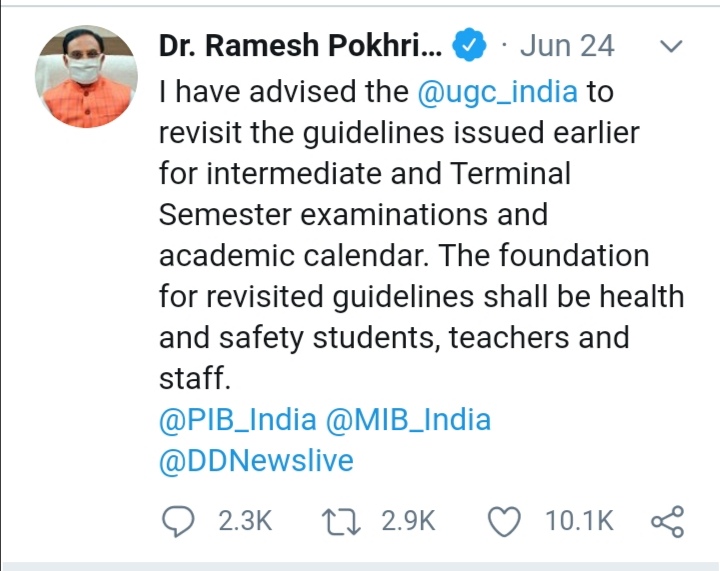
In June, however, looking at the rising number of Covid-19 cases across the country, Minister of Human Resource Development Ramesh Pokhriyal Nishank had asked the UGC to re-visit the guidelines.

How to control your mind & thoughts through Vipassana Meditation


mind_control-01

A Non-Sectarian Technique

Vipassana meditation is for the purification of the mind. It is the highest form of awareness—the total perception of the mind-matter phenomena in its true nature. It is the choiceless observation of things as they are. Vipassana is the meditation the Buddha practiced after trying all other forms of bodily mortification and mind control, and finding them inadequate to free him from the seemingly endless round of birth and death, pain and sorrow. It is a technique so valuable that in Burma it was preserved in its pristine purity for more than 2,200 years.

Vipassana meditation has nothing to do with the development of supernormal, mystical, or special powers, even though they may be awakened. Nothing magical happens. The process of purification that occurs is simply an elimination of negativities, complexes, knots, and habits that have clouded pure consciousness and blocked the flow of mankind’s highest qualities—pure love (mettā), compassion (karuṇā), sympathetic joy (muditā), and equanimity (upekkhā).

There is no mysticism in Vipassana. It is a science of the mind that goes beyond psychology by not only understanding, but also purifying, the mental process. The practice is an art of living which manifests its profound practical value in our lives—lessening and then eliminating the greed, anger, and ignorance that corrupt all relationships, from the family level to international politics. Vipassana spells an end to daydreaming, illusion, fantasy—the mirage of the apparent truth. Like the sizzling explosion of cold water being thrown on a red-hot stove, the reactions after bringing the mind out of its hedonistic tendencies into the here and now are often dramatic and painful. Yet there is an equally profound feeling of release from tensions and complexes that have for so long, held sway in the depths of the unconscious mind. Through Vipassana anyone, irrespective of race, caste, or creed, can finally eliminate those tendencies that have woven so much anger, passion, and fear into our lives. During the training a student concentrates on only one task—the battle with his own ignorance. There is no guru worship or competition among students. The teacher is simply a well-wisher pointing the way he has charted through his own long practical experience. With continuity of practice, the meditation will quiet the mind, increase concentration, arouse acute mindfulness, and open the mind to the supramundane consciousness the “peace of nibbāna (freedom from all suffering) within.”

As in the Buddha’s enlightenment, a student simply goes deep inside himself, disintegrating the apparent reality until in the depths he can penetrate even beyond subatomic particles into the absolute. There is no dependence on books, theories, or intellectual games in Vipassana.

The truth of impermanence (anicca), suffering (dukkha), and egolessness (anattā) are grasped directly with all the enormous power of the mind rather than the crutch of the intellect. The illusion of a “self,” binding the mental and physical functions together, is gradually broken. The madness of cravings and aversions, the futile grasping of “I, me, mine,” the endless chatter and conditioned thinking, the reaction of blind impulse—these gradually lose their strength. By his own efforts, the student develops wisdom and purifies his mind.


The foundation of Vipassana meditation is sila—moral conduct. The practice is strengthened through samadhi—concentration of the mind. And the purification of the mental processes is achieved through panna—the wisdom of insight. We learn how to observe the interplay of the four physical elements within ourselves with perfect equanimity, and find how valuable this ability is in our daily lives. We smile in good times, and are equally unperturbed when difficulties arise all around us, in the certain knowledge that we, like our troubles, are nothing but a flux, waves of becoming arising with incredible speed, only to pass away with equal rapidity.

Although Vipassana meditation was developed by the Buddha, its practice is not limited to Buddhists. There is no question of conversion—the technique works on the simple basis that all human beings share the same problems, and a technique that can eradicate these problems will have a universal application. Hindus, Jains, Muslims, Sikhs, Jews, Roman Catholics, and other sects have all practised Vipassana meditation, and have reported a dramatic lessening of those tensions and complexes that affect all mankind. There is a feeling of gratefulness to Gotama, the historical Buddha, who showed the way to the cessation of suffering, but there is absolutely no blind devotion.   The Buddha repeatedly discouraged any excessive veneration paid to him personally. He said, “What will it profit you to see this impure body? Who sees the teaching—the Dhamma—sees me.”

Although Vipassana is a part of the Buddha’s teaching, it contains nothing of a sectarian nature, and can be accepted and applied by people of any background. The Buddha himself taught Dhamma (the way, the truth, the path). He did not call his followers “Buddhists”; he referred to them as “Dhammists” (those who follow the truth).

Vipassana courses are open to anyone sincerely wishing to learn the technique, irrespective of race, caste, faith or nationality. Hindus, Jains, Muslims, Sikhs, Buddhists, Christians, Jews as well as members of other religions have all successfully practiced Vipassana. The malady is universal; therefore, the remedy has to be universal. For example, when we experience anger, this anger is not Hindu anger or Christian anger, Chinese anger or American anger. Similarly, love and compassion are not the strict province of any community or creed: they are universal human qualities resulting from the purity of mind. People from all backgrounds who practice Vipassana find that they become better human beings.

The Present-day World Environment

Developments in the fields of science and technology, in transportation, communications, agriculture and medicine, have revolutionized human life at the material level. But, in actuality, this progress is only superficial: underneath, modern men and women are living in conditions of great mental and emotional stress, even in developed and affluent countries.

The problems and conflicts arising out of racial, ethnic, sectarian and caste prejudices affect the citizens of every country. Poverty, warfare, weapons of mass destruction, disease, drug addiction, the threat of terrorism, epidemics, environmental devastation and the general decline of moral values—all cast a dark shadow on the future of civilization. One need only glance at the front page of a daily newspaper to be reminded of the acute suffering and deep despair which afflict the inhabitants of our planet.

Is there a way out of these seemingly insolvable problems? The answer is unequivocally, yes. All over the world today, the winds of change are readily apparent. People everywhere are eager to find a method which can bring peace and harmony; restore confidence in the efficacy of wholesome human qualities; and create an environment of freedom and security from all types of exploitation—social, religious and economic. Vipassana can be such a method.

mind_control-01.jpgVipassana and Social Change

The technique of Vipassana is a path leading to freedom from all suffering; it eradicates craving, aversion and ignorance which are responsible for all our miseries. Those who practice it remove, little by little, the root causes of their suffering and steadily emerge from the darkness of former tensions to lead happy, healthy, productive lives. There are many examples bearing testimony to this fact.

Several experiments have been conducted at prisons in India. In 1975, Mr. S. N. Goenka conducted a historic course for 120 inmates at the Central Jail in Jaipur, the first such experiment in Indian penal history. This course was followed in 1976, by a course for senior police officers at the Government Police Academy in Jaipur. In 1977, a second course was held at the Jaipur Central Jail. These courses were the subject of several sociological studies conducted by the University of Rajasthan. In 1990, another course was organized in Jaipur Central Jail in which forty life-term convicts and ten jail officials participated with very positive results.

In 1991, a course for life-sentence prisoners was held at the Sabarmati Central Jail, Ahmedabad, and was the subject of a research project by the Department of Education, Gujarat Vidyapeeth.

The Rajasthan and Gujarat studies indicated definite positive changes of attitude and behaviour in the participants, and demonstrated Vipassana is a positive reform measure enabling criminals to become wholesome members of society.

In 1995, a massive course was organised for 1000 prisoners in Tihar jail with far-reaching effects. Vipassana was adopted as a prison reform technique in the largest jails of India. A detailed report of the scientific studies carried out to assess the impact of Vipassana meditation on the prisoner’s mental health proves that Vipassana is capable of transforming criminals into better human beings.

The civil service career of S. N. Goenka’s meditation teacher, Sayagyi U Ba Khin, is an example of the transformative effect of Vipassana on government administration. Sayagyi was the head of several government departments. He succeeded in instilling a heightened sense of duty, discipline and morality in the officials working under him by teaching them Vipassana meditation. As a result, efficiency dramatically increased, and corruption was eliminated. Similarly, in the Home Department of the Government of Rajasthan, after several key officials attended Vipassana courses, decision-making and the disposal of cases were accelerated, and staff relations improved.

The Vipassana Research Institute has documented other examples of the positive impact of Vipassana in such fields as health, education, drug addiction, government, prisons and business management.

These experiments underscore the point that societal change must start with the individual. Social change cannot be brought about by mere sermons; discipline and virtuous conduct cannot be instilled in students simply through textbook lectures. Criminals will not become good citizens out of fear of punishment; neither can caste and sectarian discord be eliminated by punitive measures. History is replete with the failures of such attempts.

The individual is the key: He or she must be treated with love and compassion; he must be trained to improve himself — not by exhortations to follow moral precepts, but by being instilled with the authentic desire to change. He must be taught to explore himself, to initiate a process which can bring about transformation and lead to purification of mind. This is the only change which will be enduring.

Vipassana has the capacity to transform the human mind and character. It is an opportunity awaiting all who sincerely wish to make the effort.


Chief Minister Public Hearing Cell Does Not Have Jurisdiction

In a fresh development, the Jharkhand High Court just recently in a latest, landmark and laudable judgment titled Sanjay Kumar Sharda v. State of Jharkhand & Ors. in W.P.(Cr.) No. 395 of 2019 has made it amply clear in no uncertain terms that the Chief Minister Public Hearing Cell does not have jurisdiction to direct the police to register an FIR.  While deprecating the usurpation of power, the Jharkhand High Court in this noteworthy case has strongly deprecated the practice of the Chief Minister Public Hearing Cell pressurizing the police officials to register an FIR as it has no jurisdiction to direct the police officials to register an FIR and has no power to monitor the same. Very rightly so!

                                     To start with, the ball is set rolling in para 1 of this notable judgment authored by Justice Ananda Sen wherein it is stipulated that, “The lawyers have no jurisdiction with regard to the proceeding, which has been held through video conferencing today at 10:30 A.M. They have no complaint in respect of the audio and video clarity and quality.”

                                       While stating the purpose behind filing the petition, it is then stated in para 2 that, “By way of filing this petition under Article 226 of the Constitution of India, the petitioner has prayed for quashing of the entire criminal proceeding including the First Information Report in connection with Ramgarh P.S. Case No. 300 of 2018, registered for the offence under Section 406, 420 and 34 IPC, pending before the court of learned Chief Judicial Magistrate, Ramgarh.”

                                         As it turned out, after hearing the counsel for the parties as pointed out in para 3, it is then brought out in para 4 that, “Counsel for the petitioner submits that from the perusal of the FIR, it will be clear that no criminal offence is made out. He further submit that there was on going business transaction between the parties and if for some breach of contract or because of some misunderstanding between the parties, the business transaction fails, it cannot be said that criminal cause of action arises for initiating a criminal proceeding. He submits that FIR was registered at the pressure of “Mukhya Mantri Jansanbad Kendra” (the Chief Minister Public Hearing Cell), which is a non-statutory authority and no direction can be given by such authority to register the FIR. He also submits that the action of the said Cell is absolutely bad, when there is procedure laid down in the Code of Criminal Procedure as to what steps are to be taken, and in what manner, if an FIR is refused registration by police.”    

                                On the contrary, it is then brought out in para 5 that, “Mr. Anil Kumar, learned senior counsel for respondent No. 5 submits that the petitioner has cheated the respondent No. 5, as some of the materials have been kept/withhold by the petitioner and thus, offence under Section 406 IPC is made out. He further submits that when an offence is made out, FIR cannot be quashed.”

                  To put things in perspective, it is then pointed out in para 6 that, “This is a petition in which, an FIR is sought to be quashed. The law is well settled on this issue. The Hon’ble Supreme Court in the case of State of Haryana and Ors. Vs. Bhajan Lal and Ors. reported in (1992) Suppl. 1 SCC 335 (2014) 3 SCC 151 has held that when an offence is made out, the FIR cannot be quashed. The Court has to see as to whether from perusal of the FIR, any offence is made out or not.”

                                        While elaborating on the details of FIR, it is then observed in para 7 that, “I have gone through the FIR. The informant has stated in the FIR that he had a business relationship with M/s Kameshwar Alloys & Steel Pvt. Ltd., Gola. He submits that the petitioner is the director of M/s Kameshwar Alloys. It is further stated that he was having business transaction with the accused persons since the year 2010 till January 2015. He stated that 40 pieces of Oxygen Cylinder and 26 pieces of commercial Gas Cylinder have been kept by the petitioner, which have not been returned. The value of the materials would be Rs. 6,60,000/-. He also submits that neither the amount has been paid nor the cylinders have been returned. This is the sum and substance of the written report, on whose basis, FIR has been registered.”

                            As is quite ostensible, it is then made clear in para 8 that, “From perusal of the aforesaid written report, it is clear that there was business relationship between the parties. This business relationship continued from the year 2010. The materials were kept by the petitioner, valued at Rs. 660,000/-. It is the case of the informant that the said amount has not been paid to him by the petitioner. FIR has been registered under Section 406, 420 and 34 IPC.”

                                           For the sake of brevity, what is mainly mentioned in para 9 apart from mentioning that Section 406 IPC prescribes punishment for criminal breach of trust and criminal breach of trust has been defined under Section 405 IPC is that, “In this case, even if there is allegation that the materials were entrusted to the petitioner, but there is no allegation that the materials were dishonestly misappropriated or has been converted to the use of the petitioner. The ingredient of Section 405 IPC is missing in the instant case.”  

                                         To say the least, it is then stated in para 11 that, “From the facts narrated in the FIR, I find that there is no element which attracts Section 415 IPC. Admittedly there was business transaction between the parties since the year 2010 to 2015. The intention to cheat by the petitioner cannot be derived from perusal of the instant FIR. The Hon’ble Supreme Court in the case of Dalip Kaur Vs. Jagnar Singh, reported in (2009) 14 SCC 696 has held that there has to be an intention to cheat from the very beginning of the transaction. While I go through the written report, I find that there is no such pleading to that effect. In absence of this pleading, it can safely be held that there is no application of Section 415 IPC in the instant case.”

                               Going forward, it is then illustrated in para 12 that, “The Hon’ble Supreme Court in the case of Binod Kumar and Others Vs. State of Bihar and Another reported in (2014) 10 SCC 663 has held that civil liability cannot be converted into criminal liability. The Hon’ble Supreme Court has also held that by doing so, the power as well as the process of the court is abused. The Hon’ble Supreme Court has also held that the criminal proceeding are not the short cut for other remedies. In the aforesaid judgment, the Hon’ble Supreme Court has taken into consideration several judgments on the same line, which has been delivered by the Hon’ble Supreme Court.”

                         To put it succinctly, it is then held in para 13 that, “Considering the principles laid down by the Hon’ble Supreme Court, I find in the facts and circumstances that even if the FIR is taken on the face value, no offence punishable under Sections 420 and 406 IPC is made out. A simple money claim, arising out of a continuing business transaction, has been given the colour of criminal case, which is nothing but an abuse of the process of law.”

                                As things stand, it is then stated in para 14 in simple and straight language that, “In view of the aforesaid facts and the principle, which has been laid down by the Hon’ble Supreme Court, I find that continuation of criminal proceeding against the petitioner will be an abuse of the process of the Court. I, therefore, exercising the jurisdiction under Article 226 of the Constitution of India, quash the FIR in connection with Ramgarh P.S. Case No. 300 of 2018, registered for the offence under Section 406, 420 and 34 IPC, pending before the court of learned Chief Judicial Magistrate, Ramgarh.”

                       Most significantly, it is then held in para 15 that, “Before parting, I find that the FIR was registered at the direction of the “Mukhya Mantri Jansanbad Kendra” (the Chief Minister Public Hearing Cell) as the informant made a complaint to that Cell, when the FIR was not being registered. This document is the part of the FIR and from perusal of the same, I find that there was a direction by that Cell on 25.12.2017 to register the FIR. Further several directions were given by the said Cell, which would be apparent from pages 26, 27 and 28 of the FIR. Not only direction but the matter was supervised by the said Cell. If a written complaint is placed before a police officer wherein cognizable offence is alleged, the Officer cannot refuse to refuse to register the same as FIR. If there is refusal or negligence on the part of the police in registering the same, the remedy lies in Code of Criminal Procedure. The complainant/informant can send the complaint to the Superintendent of Police or to the Higher Authority praying therein to register the same. He even has the option to file a complaint before the court of competent jurisdiction. There is no provision in law to approach “Mukhya Mantri Jansanbad Kendra’’, which is absolutely a non-statutory body nor having being vested with any power under Cr.P.C. Further the said “Mukhya Mantri Jansanbad Kendra’’ has got no jurisdiction to direct the police official to register an FIR and have no power to monitor the same. Thus, the “Mukhya Mantri Jansanbad Kendra’’ has absolutely acted beyond jurisdiction and usurped the power, which was not vested in it by the Cr.P.C. This type of usurping of power by the said Cell is deprecated.’’

                                  Be it noted, it is then stated in para 16 that, “Let a copy of this order be forwarded to the Chief Secretary of the State and the Advocate General, Jharkhand High Court, Ranchi, for looking into the matter and taking proper action in this matter.’’ Lastly, it is then held in the last para 17 that, “With the aforesaid direction and observation, this criminal writ petition stands allowed.’’

                                  On a concluding note, it needs no Albert Einstein to conclude that what Justice Ananda Sen of Jharkhand High Court has directed makes sense and must be complied with forthwith in totality. Hemant Soren who is the Chief Minister of Jharkhand must act swiftly and comply with what has been directed as mentioned above! There can be no denying or disputing it!

Sanjeev Sirohi, Advocate,

s/o Col BPS Sirohi,

A 82, Defence Enclave,

Sardhana Road, Kankerkhera,

Meerut – 250001, Uttar Pradesh.

Position of interstate trade in india

Introduction

“Democracy is the art and science of mobilising the entire physical, economic and spiritual resources of various sections of the people in the service of the common good of all.” To an extent the Article 301 of the Indian Constitution could be said to the derived or influenced from such a philosophy with the objective to protect the National integrity and unity with the help of hassle free flow of trade throughout the country. An intention to unify different fields and different regions with the help of this freedom guaranteed in Art. 301 Even then for all practical purposes this freedom could not have remained absolute in order to ensure that a privatized market Grab economy does not further exploit the already starving population of India. Therefore this freedom was made subject to the other provisions of this Part (Part XIII). But as the researcher proceeds with the analysis of the position of inter-state trade it becomes clear that these provision which act as restrictions on this freedom bestowed by Article 301 is been severely hinders it . And therefore the Concept of Free Trade as envisaged by the constitution makers has remained a concept only with the amount of barriers and complications involved in interstate trade today. The free flow of trade and commerce are sine qua for the economic enhancement domestically as well as internationally has not given to the Indian Markets. The European Union is an amazing example of such a trade union which has opened up trade barriers among the countries of the union and has shown dramatic advancement in the field of trade and commerce. It is time for India to overhaul its current taxing system and central as well as state policy towards free trade.

Thus in this project the researcher will analyse the case laws which are responsible for the current position of the interstate trade and also the effect of Part XIII on them to determine how effective the provisions have been to strike a balance between the economic development and advancement of the country on one hand and the protection of the majority who were likely to the exploited and starved if the free market was allowed to thrive at the whims of capitalists.

An Analysis Of The Provisions And The Case Laws

The Constitution Makers have borrowed the concept of freedom of trade from the Australian constitution (Section 92) but the Indian version has a couple of changes in the scope of its application, and they are

  1. that the freedom guaranteed is not limited to among the states but ‘throughout the territory of India’ and,
  2. the privilege of trade being free is not qualified by the adverb ‘absolutely’ as in the Australian constitution.

And the reasons for these changes in the adaptation of this Article, from the Australian constitution, lies in the rest of the Articles of the Part XIII starting from Article 302 till 307. The Freedom is not absolute as the rest of the provisions impose several restrictions and exceptions to this freedom. Another very important aspect of the Part XIII of the Constitution is that it is not subject to any other part or provision of this constitution. In the simplest sense any kind of tax that is levied on any particular activity which involves interstate transaction can be taken to be a restriction on the freedom of trade. But as taxes are also necessary for the functioning of the Centre and the State all of them cannot be treated as restrictions violating the Article 301. This question was first brought up in the Atiabari case in which the Apex court held that tax laws are not outside the scope of ‘the Freedom’. And therefore the Assam State Legislature had to amend the provision as to meet the requirements of the exception in Article 304(b) so that the tax that it imposed did not amount to a direct and immediate impact of the movement of the goods. This case has also gone into the historical background of the Making of this constitution in which it discusses that the makers of the Constitution were fully aware of the fact that economic unity was an absolute prerequisite for the stability and progress of the federal polity. Considering the possibility that there might be several political parties in the future, unlike the only congress majority then, with different ideologies and following different ‘isms’ for pursuing socio-economic goals is likely to give rise to a mechanism wherein the regional pull (by regions with higher influence) will affect the economic policy which in turn will have negative impact on the overall development of the economy of the nation as a whole. Thus the object of Part XIII to avoid such a possibility and to ensure that the political freedom won and political unity which had been accomplished by the Constitution, had to be sustained and strengthened by the bond of economic unity. But this harsh approach towards the taxing power of the state was later review by a larger bench in the Automobiles case. Therefore to ensure that this freedom of trade did not evolve to be an absolute one legitimate restrictions like compensatory taxes or regulatory measures will not be taken into account as restrictions hampering the trade and thus would stay out of the purview of the Article 301. The court also dilated further on the issue raised in Atiabari about the problem of economic integration due to diversity in several fields. The two questions however stood out:

“ first that how to achieve a federal, economic and fiscal integration, so that economic policies affecting the interests of India as a whole could be carried out without putting an ever-increasing strain on the unity of India, particularly in the context of a developing economy. And 2nd that how to foster the development of areas which were under-developed without creating too many preferential or discriminative barriers”

“first, in the larger interests of India there must be free flow of trade, commerce and intercourse, both inter-State and inter-State; second, the regional interests must not be ignored altogether; and third, there must be a power of intervention by the Union in any case of crisis to deal with particular problems that may arise in any part of India.

Scope Of Articles 301, 302 & 304 Vis-A-Vis Compensatory Tax:

Considering the above doctrine dilated by court, it is clear that whenever a law is challenged on the ground of violation of Art. 301, the court has also to determine the effects of the operation of the impugned law on inter/intra state trade in addition to applying the doctrine of pith and substance to determine the basis of the Levy.The Vijayalakshmi Rice Mills Case is another recent case which deals with the ability of the state legislatures to the levy of cess without violating Art. 301. It was contended that the cess levied under the Act (Andhra Pradesh Rural Development Act, 1996) did not correspond to any of the entries in List II or III of the Seventh Schedule and this rendered the cess invalid andmoreover the there was no quid pro quo in the levy of cess, and hence could not be said to be a fee. On the argument of the respondent that it was in fact a fee and therefore it came under Entry 66 of List II. But the court on this ground made it clear that co-relationship between the totality of the fee and the totality of expenses of the services was indispensible even though mathematical precision wasn’t necessary between the service rendered and the fee realised. Thus a fee levied for rendering to the service of rural development was held viable and the validity of the act was upheld. Thus with this position of the case laws on the Freedom of trade and commerce, the following is the likely procedure to be followed while deciding a case. First is to check whether the law, be it taxation or non-taxation, violates the Freedom in Art. 301. And to do that first it is necessary to know the scope of operation of such law, whether the operation of the act of that law affects movement of trade, commerce or intercourse throughout the country.

If it is so then the next question is: What is the effect effect of operation of the law on the freedom guaranteed under Article 301? If the effect is to facilitate free flow of trade and commerce then it is regulation and if it is to impede or burden the activity, then the law is a restraint. After finding the law to be a restraint/restriction one has to see whether the impugned law is enacted by the Parliament or the State Legislature

GST: To Strengthen The Unified And Integrated Domestic Trade.

The Goods and Service Tax Bill which was supposed to be enacted by now is still pending as a bill due to various complications. The GST if enacted would have drastically impacted the inter-state trade and it is likely so that whenever in the future the GST will be enacted it will do its job. One of the several advantages of the GST is that it will not only replace the existing Sales tax by central and the state governments but also subsume most of the indirect taxes on the supply of goods and services. It includes central excise duties, additional custom duties, cesses levied by the union and surcharges in case of the Centre. And in case of the States it would replace purchase tax, state excise duty, luxury tax, octroi, entry tax in lieu of octroi. Under the GST regime the CST was to be reduced to zero by 1st April of this year! But the States have lobbied against it as after that the Centre alone would levy IGST and the exporting state will transfer to the centre the credit of SGST used in the payment of the IGST Purohit in his article says that the implementation of the IGST mechanism would prove to be a daunting task as all statewise exports and imports would have to be recorded. Moreover he says that “the importing state will have to give set-off as soon as the import takes place and will get it back only after a delay of a month or so. Given the fiscal scenario of the states today, the states exporting goods may not find it possible to fulfil their commitment to transfer the tax amount promptly to the central pool.”

Thus this model seems to be built on various assumptions which might require more time, efforts and planning than anticipated.