Culture is a term that refers to a large and diverse set of mostly intangible aspects of social life. According to sociologists, culture consists of the values, beliefs, systems of language, communication, and practices that people share in common.
Culture is the speed and direction of social change . It not only influences our social relationship ,it also influences technological inventions .
The complex combination of technology and social values produce conditions that encourage further technological change . Cultural factors play a positive as well as negative role in bringing about technological change . Cultural factors such as habits , customs , traditions , conversation , values etc. can resist technological changes or diversification of social values can contribute to technological inventions .
William F. Ogburn ,in his famous book , “Social change ” and his work Respect to Culture and Original Nature in 1922, has formulated the hypothesis of ‘ cultural lag “.
Ogburn has divided culture into two parts namely :, material and non – material culture , and the difference between material culture and nonmaterial culture is known as cultural lag. ‘ Lag ‘, in its general term, denotes crippled movement . Here culture means the faltering of one aspect of culture behind another .
In a more precise way , cultural lag occurs whenever there is an unequal rate of change between different parts of culture causing a gap between material and non-material culture.
By material culture Ogburn means civilization which includes tools , utensils , machines , dwelling , science ,means of transport and technology , in brief , ‘ the whole apparatus of life “
By non – material culture he means just ‘ culture’ in its ordinary sense which includes beliefs , practices , customs , traditions , morals , values and institutions like family , morality , religion , education n,etc.
According to Ogburn , referred cultural Lag as “imbalance in the rate and speed of change between these two parts of culture “
Cultural lag is a theory and explanation that identifies and explains social problems to predict future problems in society that are caused because of the difference between the two cultures during social changes.
According to Ogburn , changes are quick to take place in the material culture . These in turn stimulate changes in the non- material culture which are slower to respond giving rise a gap or a lag between both cultures
Cultural Lag theory resonates with the ideas of Technological Determinism which assumes that technology has independent effects on society at large. Cultural Lag creates problems for a society in a multitude of ways .
When new technologies are considered, For example , the development in the field of industry requires a corresponding change in the system of education . The failure of education to cater to the needs of modern industrial development leads to the cultural lag .
Ogburn’s classic example of cultural lag was the period of adaptation when automobiles became faster and more efficient. It took some time for society to start building infrastructure and development of new, more efficient, vehicles. This is because people are not comfortable with change and it takes them a little time to adapt.
According to sociologists William F. Ogburn, cultural lag is a common societal phenomenon due to the tendency of material culture to evolve and change rapidly and while non-material culture tends to resist change and remain fixed for a far longer period of time.
This happens due to the fact that ideals and values are much harder to change than physical things are. Non-Material culture tends to lag behind material culture due to the fact that it is easier to create a physical object that people will use than it is to create a system of beliefs or ideals that people will use and follow.
Ogburn lists and discusses six general reasons
1. Scarcity of invention in the adaptive culture. 2. Mechanical obstacles to adaptive changes 3. The heterogeneity of society-The need for change in the adaptive culture may be felt by only one class, whereas the change must be made by society as a whole. 4. The closeness of contact with material culture 5. The connection of the adaptive culture with other parts of culture. 6. Group valuations.
Non-material culture tends to be very different because people from different backgrounds and areas in the world were raised on different ideals and beliefs that help shape society and culture .
For example , India opposed technological innovations and refused to accept and use many of the technological products during the early stages of British rule . On the other hand , America welcomed almost all kinds of technical inventions.
Technology is the creation of man . Men are always moved by ideas , thoughts , values, beliefs , etc. These are elements of culture . These elements sometimes decide and influence the direction in which technology undergoes change
But due to the opposing nature of non material culture, adaptation of new technology becomes rather difficult.
Cultural Lag is a common societal phenomenon . If the society is to maintain its equilibrium it has to seek ways and means of bridging this gap .
Hence, Ogburn concluded that , “the problem of adjustment in modern life is chiefly one of enabling the non +material aspects of culture to catch up , as it were ,with material aspects .”
Area-51 is a highly protected, secured and restricted part of the USA for many years. America didn’t accept that there is a place called Area-51 in their country until 2003. America didn’t reveal what actually happens inside that place. That place is highly protected from outside world. In September 20, 2019, a wierd thing happened in Area-51. People crowded in millions and protested against the government that Aliens should be protected from humans. They planned to get inside the Area-51 and see what was inside it. They said there should be aliens inside and humans were torturing the aliens and the people were going to save the aliens.
First of all, a funny Facebook event called ‘Storm Area-51’ was arranged to get into Area-51 and see what actually happens there. They believed that there were aliens inside Area-51.
What exactly is Area-51?
After World war1, the government of USA panned to test their weapons and bombs in a very big open place. They chose a desert called Nevada in the USA. They divided the desert into 30 areas each of square shape. In each area, they used to test specific weapon that they are preparing to use in World war 2. The advantage for the USA is that this place is located in the middle of a desert so that any nation can’t find that place and also even an American citizen has to travel many kilometres and cross high security to get into that place. So literary it was impossible for anyone to know what happens inside that place.
Even after the World war 2, there prevailed a cold war between the USA and Russia. The USA continued to test their weapons in that place and maintained their secretive nature. Among the areas from Area-1 to Area-30, there was Area-15. Near to Area-15, there was also a big lake initially. After the lake had gone dry, the government decided to build an underground place called Area-51 so that the inside of that area won’t be visible from outside. The interesting thing is, even when seeing from the top nothing will be visible except a flight landing strip. There are no road facility or train facility to go there. The only transport in and out is through flight.
People in the USA were gone mad to know what was inside Area-51. There was a hill called ‘Challenger cliff’ that was few kilometres far from Area-51. People tried to see Area-51 from the top of that hill. But no one knew what’s inside. They could see only the outside of it. Knowing this, the government made that hill as a restricted area. Nearly for a range of 30 kilometres around the Area-51, no one could enter there. The security was that high. Seeing that the government makes fights to go in and out of that area and keeping it that secured, people were curious to know what was inside. This continued for many years. The government keeps quiet about this till now.
We will continue this reading journey check “Secrets of Area-51 – Part2”. That’s our next blog.
The Journalism and mass media is the graduates work nationwide and worldwide at newspapers and magazines and in advertising, branding, broadcast news, social media, marketing, media research, photojournalism, publication design, public relations, radio, and other areas.
The Journalism is the activity of gathering, assessing, creating, and presenting news and information. It is also the product of these activities. Journalism can be distinguished from other activities and products by certain identifiable characteristics and practices.
There are five types,
investigative,
news,
reviews,
columns,
feature-writing.
The Rules Of Journalism
#1: Ask questions.
The journalist’s greatest assets is their natural curiosity. Start with the famed five W’s (and one H), then ask some more. Asking “why?” is what gets you the good stuff.
#2: Dig for the story.
If you think you’ve got the whole story, dig around some more. The most fascinating parts of the story are often just under the surface.
#3: Master the language.
As a journalist, language is your main tool. Read as much as you can and as often as you can, research odd words and archaic sayings, look at what’s behind etymology. Learn the patterns behind language and how to use them.
#4: Spelling matters.
Double-check if you aren’t sure about spelling or style (especially in the case of names), and read through messages and articles thoroughly before sending either.
#5: Know thy publication.
Before you pitch, know a publication’s style, editorial staff and content. Publications are usually more than happy to provide back-issues. If you can’t find writer’s guidelines, send a short introductory email requesting them.
#6: Contacts are your career.
Contacts (and your reputation with said contacts) are your entire career. Editors, sources and interviewees are all vital parts of the journalistic process. Without them, you’d be screwed.
#7: Once it’s off the record, keep it that way.
Trusted sources will tell you all sorts of juicy, fascinating, scandalous and personal things in your career as a journalist, often off the record. Shut up about it.
#8: Three is a golden number.
Mind the rule of threes: Have at least three reliable, corroborating sources for every fact; three interviewees for every article; and read through a piece at least three times before you sit down to change a comma – that’s at least.
#9: Rejection is opportunity.
Getting a story rejected means you’ve just opened up a line of communication with a new editor – congratulations. Pitch again. Rejection also gives you a chance to sell the story elsewhere: Sometimes rejection just means it’s not right for them
#10: Editors are teachers.
You can learn a hell of a lot from the experience of your editors, and when given the chance you should. They braved the journalistic battlefield before you, so you can trust their edits and advice. Usually, they’re right.
#11: Mind the word count.
Yes, you can do that in the assigned word count, and the editor will either make you add or cut if you don’t. Here, they always know better. (Remember this piece of key-advice from The Elements of Style and repeat it as your daily editing mantra: Omit unnecessary words.)
#12: Deadlines are holy.
Deadlines exist for a reason: Never skip out on a deadline unless you are incapacitated or dead. If you have to, let your editor know beforehand and have a damn good reason. Then, don’t do it again. Compare deadlines to menstrual cycles: If you skip one, you might just be stressed. If you skip several, you’re in trouble.
#13: Know the law.
Journalism can take you to some strange places. Make sure you know the law and what side of it you’re standing on at all times.
#14: Always do your research.
Make sure that your research is flawless and that you can always match which source gave which fact. Cross-reference, find first-hand information and do your background research before requesting, planning or conducting an interview.
#15: Have it outlined.
Have the skeleton of your idea outlined and ready by the time you pitch the idea. That way you have all the information ready, and it makes your job – and theirs – easier. Your outline should include the article’s proposed headline, the article’s sub-headers and sections (you can write down facts as key-words here) and who you will interview.
#16: Keep and file everything.
Keep prior notes, interviews, sources, tapes, the lot: You never know when you’ll need it, and you probably will.
#17: Guard your vices.
Many great journalists have been crippled or completely destroyed by their vices – and it can be almost anything: Overworking, coffee, manic exercising, painkillers or heavier drugs. Whatever yours is, keep it in check or risk your job.
#18: Burnout is a rabid, fanged monkey.
Burnout is a myth, until you’re there. It’s a mental and physical size of your writing engine, and if you don’t find your way to unwind you’ll get there a lot quicker.
The Mass media refers to a diverse array of media technologies that reach a large audience via mass communication. … Broadcast media transmit information electronically via media such as films, radio, recorded music, or television.
The types of mass media include Newspapers, Radio, Television, Internet, Magazines and more,
…
What is Mass Media?
Journalism.
Social Media.
Films.
Television.
Radio.
Advertising.
Public Relations.
Books, Magazines, Newspapers and Journals.
RULES OF MASS MEDIA
The Privacy Act works to guarantee privacy to individuals and controls how personal information is used. Defamation in the written form (libel) or the spoken form (slander) is illegal in the United States.
Section 315 (Equal Time Rule) ensures that broadcast media cannot favor any one candidate over another by granting one more time than another. The Fairness Doctrine ensured that radio stations offered equal time to opposing viewpoints.
The Freedom of Information Act grants the public, including the news media, access to many government documents. The Digital Millennium Copyright Act, established in 1998, extended existing copyright laws to encompass and protect information online.
The spreading out and mixing of a substance with another substance due to motion of its particles is called diffusion It is based on motion of its particles and is fastest in gases and slowest in solids. The rate of diffusion increases on increasing temp. (kinetic energy increases giving faster motion to particles). Light gases diffuses faster than heavier ones. Egs- smell of food reaches us even at considerable distances, smell of perfume is spread all over the room, spreading of ink in water on its own when put undisturbed for sometime, dissolving of oxgen and co2 in water for survival of aquatic plants and animals, disappearance of chalk from blackboard when leave uncleaned for 15 days.
The common unit of measuring temperature is degree celsius and the SI unit of measuring temperature is Kelvin 0 degree = 273 kelvin / kelvin scale temp. = celsius scale temp. + 273 melting point of ice = 0 degree /273k and boiling point of water is 100 degrees/ 373k.
Change of state from one form to other can be done by- 1.Changing the temperature 2.Changing the pressure. Effect of change in temperature : The process of changing solid to liquid by heating is called melting/ fusion. The temp. at which this happen at atmospheric pressure is called melting point of that substance. This happens due to weakening of attraction forces due to high kinetic energy in particles.
The process in which a liquid substances changes into gas rapidly on heating is called boiling. The temp. at which this takes place at atm pressure is called its boiling point. The process of changing a gas to a liquid by cooling is called condensation. This happens as gas looses its kinetic energy and particles come closer. When liquid changes to solid by cooling it is called freezing.
LATENT HEAT OF FUSION: The latent heat of fusion of a solid is quantity of heat in joules required to convert 1kg of solid to liquid without any change in temperature. It is 3.34*10^5 joules per kg. Heat energy is used up in changing the state by overcoming the force of attraction between the particles so the temp. remain the same even after supply of energy, further heating increases the kinetic energy rising temp. Ice at o degree is more effective in cooling than water at same temp. as for melting each kg of ice takes latent heat from substance whereas water do not have any such latent heat. When solid melts it absorbs heat from liquid also when liquid freeze to form a solid an equal amount of heat is given out.
Latent heat of vaporization: It is the quantity of heat in joules required to convert 1 kg of liquid to vapors/gas without change in temp. The temp. don’t rises due to overcoming force of attraction. When water changes to steam it absorbs latent heat, when steam condenses to form water an equal amount of latent heat is given out therefore burns caused by steam is much severe than boiling water as steam contains more heat than water.
Sublimation- the changing of solid directly into vapors on heating and gas on solid by cooling; substances = ammonium chloride, iodine, camphor, naphthalene ,etc. solid co2(dry ice) sublimes to form liquid co2.
Effect of change of pressure- Gases can be liquefied by applying pressure and lowering temp. Dry ice is extremely cold substance it is used as deep freeze to keep food and ice cream cold. Solid co2 changes to Gas by decrease in pressure and higher atmospheric temp. So it is always kept under high pressure.
“The soul of religion is one but encased in a multitude of forms. Wise men will ignore the outward crust and see the same soul living inside a variety of crusts.”– Mahatma Gandhi
“At the bottom of all tributes paid to democracy is the little man and woman, walking into a little booth, with that little pencil, making a little cross on paper- no amount of rhetoric or voluminous discussion can possibly diminish the overwhelming importance of the point.”– Winston Churchill
“Literacy in itself is no education. Literacy is not the end of education or even the beginning. By education I mean an all round drawing out of the best in the child and man- body, mind and spirit.” -Mahatma Gandhi
“Deliberation and debate is the way you stir the sole of our democracy.“- Jesse Jackson
“Freedom is not a matter of political decisions or new constitutions…. it is of the mind and heart and if the mind narrows itself and is befogged and heart is full of bitterness and hatred, then freedom is absent.”– Jawahar Lal Nehru
“India is the cradle of the human race, the birthplace of human speech, the mother of history, the grandmother of legend and the great grandmother of tradition. Our most valuable and most constructive materials in the history of man are treasured of India only.” – Mark Twain
“An investment in knowledge pays the best interest.“- Benjamin Franklin
“You can fool all the people some of the time and some of the people all the time but you cannot fool all the people all the time.” -Abraham Lincoln
“Workers of the world unite, you have nothing to lose but your chains; you have a world to win.” -Karl Marx
“I alone cannot change the world but I can cast a stone alone across the waters to create many ripples.” -Mother Teresa
“Just as a country cannot be ruled by another country, a class cannot be ruled by another class.” -BR Ambedkar
“It is impossible to think about the welfare of the world unless the condition of women is improved. It is impossible for a bird to fly on only one wing.“- Swami Vivekananda
Centennial Light is the longest-running electric light bulb on record. It has been running continuously since 1901 and it has never been switched off. It is located in Fire Station 6 in Livermore, California. The ordinary dim light bulb looks like any other bulb and there is also a camera that live-streams the light bulb onto the internet.
Link for the official website and live webcam of the light bulb.
It was manufactured in the late 1890s by the Shelby Electric Company, of Ohio, using a design by the French-American inventor Adolphe Chaillet. It has operated for over 100 years with very few interruptions. In 2011, it passed a milestone: One million hours of near-continuous operation. In 2015 it was recognized by Guinness World Records as the world’s longest-burning bulb.
The 60-watt bulb uses a carbon filament. One of the reasons for its longevity is that it seems to have an incredibly durable vacuum seal. There have been some researches done on bulbs manufactured by Shelby Electric Company of that era. But no one really exactly knows how these eternal bulbs were made as they were experimenting with various but the company was experimenting with a variety of designs at the time.
The electric model was quite different when first homes in The U.S had electricity. The servicing was the responsibility of the electric companies and customers would purchase entire electrical systems manufactured by a regional electricity supplier. The companies would also take care of the installation and servicing of any burned out electric bulbs would be replaced for free.
It made more logic for the suppliers to manufacture bulbs that would last longer and would burn out as least as possible. But this business model was later replaced and homeowners were responsible to change the light bulbs. It was soon realized that it would be more profitable to make cheaper bulbs that burned out faster. Since the mid-1900s goods were manufactured with a pre-determined expiry date aimed at forcing consumers into repeat purchases. This phenomenon has only been exacerbated in recent years. This can also be called planned obsolescence.
In 1924, the life span of the light bulbs was at least 2,500 hours. Phoebus cartel was formed in 1925 in Geneva. It comprised of the major incandescent light bulbs manufacturers at that time: Osram, General Electric, Associated Electrical Industries, and Philips. The cartel had directed their engineers to cut the life of the bulbs to 1,000 hours, which the engineers did by adjusting voltage and current. The cartel was intended to operate for 30 years but it was starting to fall apart in the early 1930s after General Electric patents expired and as the cartel faced competition from non-member manufactures from other regions. The cartel ceased its operations after the outbreak of World War II in 1939.
Planned obsolescence is a very critical area it does not only decrease the lifespan of the good but as a consequence, it is also wasteful. It is not sustainable for the environment and the main focus of this practice is to maximize profits. It also reminds us that technological innovations are often not accessible in favor of corporate greed.
MBA is the most popular choice for a graduate in management domain. The course takes the graduate one step further in the management stream and builds on the basic principles that he/she was taught during graduation. A graduate can choose to go for a particular sector or industry after MBA by choosing the correct MBA specialization as per his/her interest and requirements.
Fee Structure
The average course fee for MBA in India is around Rs. 5,00,000.
May extend beyond Rs. 15,00,000 in the top colleges with a national and international reputation
What attracts students?
i) Excellent returns
ii) Pathway to some of the most well-paying jobs available in the private sector
Bachelor of Legislative Law (LLB)
Many students may decide to go for an LLB after BBA. Having a degree in law along with the management skills can work in the favor of a student and help them earn more money, take up cases in their chosen specialization or switch fields completely. LLB gives graduate a wide range of career options and provides a great alternative skill set to rely on.
Fee Structure
The average course fee for LLB in India ranges between Rs. 2.5-4 LPA.
What attracts students?
•Excellent returns •Range of Salary offered by Law firms range from 25-30 LPA.
•Offers a package ranging between 5-10 LPA to 18-20 LPA for Freshers
Bachelor of Education (B. Ed.)
Students who like teaching and see their future in teaching line can purse higher education by pursuing B. Ed. courses.
Qualification Requirements
Graduation from a recognized institute
Drawbacks of joining B. Ed after Graduation
• Only eligible to apply for teaching in class I-VIII
• Not eligible to apply for teaching in Higher Secondary Schools or Colleges
•Must hold Master Degree to become eligible for teaching in Higher Secondary Schools or Colleges
This essay focuses the critical review of the debate on ‘whether we will be better off without religion’. The debate is between two very famous scholars in religious studies, Raza Azlam who is an author of the book called ‘God: A human history and the other a physicist and atheist Lawrence Krauss. Both of them hold two very different opinions as to how religion affects people emotionally and morally while holding the same opinions on matters of religious violence and influence of it in the society.
The debate begins with Raza talking about how religion is both good and bad because its man-made institution and how we are inherently attached to it like a second skin. He moves on to lay the floor for faith and discussion to be discussed as two concrete elements so that it becomes easier to debate on a concrete premise. Raza also talks about how we cannot separate religion as an entity from people’s life as it has become a part of who we are and its so much of an identity to people. He also brings into account that the fact the religion causes conflicts, wars and no other entity does this is completely flawed since people go to war for various other reasons too by quoting the example of world wars. And also, how we shouldn’t categorise Islam as violent force inherently since violence is found in all religions not just a specific one.
On the other hand, Lawrence talks about the idea of accepting reality and how important it is to believe in something that is true and you have facts and evidences on. He completely takes over the idea of Raza talking about divine power by asking him how such a human made institution can proclaim such statements. He talks about how people aren’t identifying themselves with religions as they used to before and even people who do aren’t even aware of the basic doctrines. He questions the idea of God in life and what exactly is the purpose of god or how it has actually helped the world. He brings in an important argument of how people’s morality is connected to religion and they aren’t ready to let go of the wrong side of it.
What is fundamentally wrong about this debate was that it failed to reach a consensus or give us a basic idea of which would be the best option, the idea of the debate was to understand if religion is needed or not and this was something that wasn’t addressed at the end of the debate. Problems of individual identity and group identity weren’t discussed in wide scope and questions based on the scared use of Quran and Bible addressed to Raza did not really have a concrete answer. In so many ways questions of absolutism was also not answered by Lawrence. Both the sides failed to grasp the fundamentals of the debate taking it to extremes
According to WIKIPEDIA, “A library is a collection of materials, books or media that are easily accessible for use and not just for display purposes. It is responsible for housing updated information in order to meet the user’s needs on a daily basis. A Library provides physical (hard copies documents) or digital access (soft copies) materials, and may be a physical location or a virtual space, or both. A library’s collection can include printed materials and other physical resources in many formats such as DVDs, CDs and Cassette as well as access to information, music or other content held on bibliographic databases.”
IMPORTANCE OF LIBRARIES TO MAN
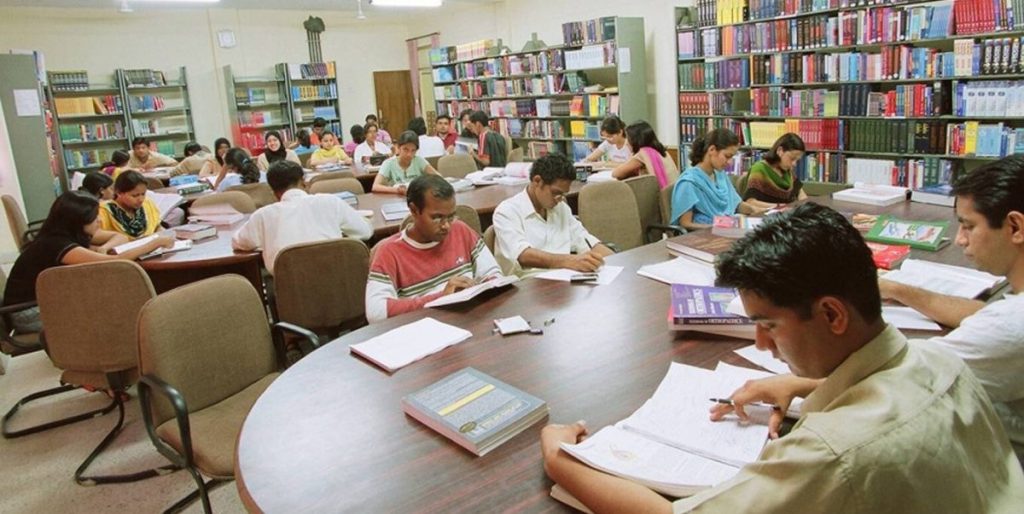
Libraries are said to be the storehouse of culture. If a man is to be known by the company he keeps, society is to be known by the number of good libraries it has. Man’s craving for knowledge is eternal. He wants to know more; he wants to enjoy more. But he cannot always move about for various reasons. He goes to a library and reads books of his choice. Libraries preserve books of various types, old and new. There are also periodicals and daily papers to meet the demands of the people. In all ages, libraries have been considered to be the best medium of public instructions.
The doors of library are exposed to everyone for rewarding the requirement for information. They are run by the government, schools, colleges, and universities. The society members of the neighbouring locality can visit these libraries to boost their information and complete their research.
TYPES OF LIBRARIES
There are different types of libraries, such as public libraries, circulating libraries, private or personal libraries. Of these, public libraries are most important. These are financed either by Government or by public institutions. All readers are allowed to read here. These libraries have two sections-lending and reference. Books are lent out to those who deposit money. Others are allowed to sit a id read books during the period, these are kept open. As libraries spread education, the Government of India have taken up a scheme to establish rural libraries for the benefit of rural people. They sanction annual grants to these libraries in cash or kind. In these libraries, books are stocked to suit the half-literate people of villages.
A FRIEND IN NEED
Government-managed libraries are well equipped and well manned. Only technical men are employed here to help the readers. Quite a large number of scholars, students and members of the public daily attend such libraries for reading and making notes. There are public libraries organised by public institutions. These libraries cater to the needs of a large number of people living in particular localities. Students of schools and colleges also utilise these libraries and derive benefit from them. But these libraries are in bad shape. Government grants to these libraries are not adequate. Public-spirited men now-a-days, are rare. Development of libraries is an important task of a welfare Government. Common people and students get opportunities to read in these libraries. In our country where the percentage of illiteracy is high, these libraries help in expanding the facilities for reading. Public libraries and rural libraries do a lot of good to the localities where they are established. Now the Government has established primary unit libraries, town libraries etc. The Government gives regular grants for the purchase of books and equipment. But still the grants are not adequate. However, they help the public libraries to satisfy the needs and aspirations of the local people.
CONCLUSIONS
So, if we can see deeply a library Builds and helps to connect Community, it Provide Access to the full range of information resources needed to live, learn, govern, and work. It Promote Literacy to both children and adults. It Protect Your Rights to read and offers freedom of information gathering and sharing. People becomes innovative and smart in the company of library, which enhances creation and collaboration.
Every student wants to join a dream college or university.
After schooling, we desire to join a top college or university for the security of our feature
Is a college the same thing as a university? What does “liberal arts” mean? Why are some colleges called public and others private? Here are the basics of the types of colleges.
Let me know about NIT AGARTALA
Institute is committed to developing highly competent young Engineers, Scientists, and Management Professionals to cater to the ever-increasing techno-managerial needs of national and international standards fulfilling professional ethics and societal commitment.
MISSIONS
• To produce techno-managerial human resources in line with global needs, offering a state-of-the-art facility, research, and engineering and allied disciplines.
• To enhance the effectiveness of technical education with innovative systems and devising a mechanism to facilitate the application of research findings to solve real problems of industries/academics.
• To nurture and sustain an academic ambience conducive to the development of intellectually capable and committed professionals so that effective growth is obtained for the region’s economic development and the nation as a whole.
• To establish as the corridor of higher education for the South East Asian countries.
EDUCATION SYSTEM
Presently the Institute offers eight UG courses and PG courses in several fields along with Post Doctoral Fellowships. This Institute is autonomous under NIT being act passed by the parliament.
The Institute recently introduced a new curriculum in IITs where more elective subjects are being offered to make the system flexible. Previously, the Institute used to follow the mark based system of evaluation, but have been switching over to a credit-based system to keep track of the global evaluation methods. Industrial training, Undertaking projects are parts of the education system and students are also encouraged to take various activities for social development through NSS and NCC.
Initiatives
The Institute recently has been converted from State Engineering College to National Institute of Technology. The total seats have been increased from 250 to 420 for the academic session 2007-2008. Recently three Under Graduate courses has been introduced in Electrical & Electronics Engineering, Transportation Engineering and Production Engineering. The Civil Engineering Department will start a PG programme in Structural Engineering to fulfil the requirement of the State. The nonresidential campus is to be made residential with the reopening of two boys hostels and one girl’s hostel for the students admitted for the session 2007-2008. A master plan is under preparation for 335 acres of land where a new campus will be built with modern facilities for the overall requirement of the Institute. The Institute is getting a 33 VK dedicated power supply through Tripura State Electricity Corporation Limited for uninterrupted power supply in the campus. The R. D. Department of Govt. of Tripura took total renovation work of the existing buildings after conversion to NIT. The Institute has also obtained a grant of 12 crore rupees from DoNER for the development of infrastructures like the extension of the Library Building, an extension of the Academic Building, the Centralized Computer Centre, a new water treatment plant and boys and girls common room. The campus is now totally connected through Wi-Fi with WiMAX wireless backbone and all e-journal facilities are available in the digital library of NIT Agartala.
We know the term “city “that is on the ground,but there is another term when associated with the term city gives of a thrilling vibes and piques the curiosity of people and the term is “UNDERGROUND”
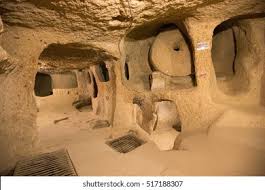
“Underground city” it is a city which is literally as the name says underneath the ground. So today we are going to discuss about a city called “Derinkuyu”.
From viator.com
It is an ancient multi-levelunderground city in Turkey.
It is the deepest excavated underground city in Cappadocia and a stunning wonder.
The city is said extends to a depth of 200 feet and could have sheltered as many as 20,000 people together.
Derinkuyu city is famous for its capacity to hold thousands of families that is one of the highest among many underground cities that were found.
It’s said that this city dwelling not only could hold thousands of people, but also contained everything an entire population would need to survive any crises.
There are numerous subterranean dwellings and secret tunnel passages that were used as shelters.
From:Getyourguide
The underground city at Derinkuyu could be closed from the inside with large stone doors enhancing the security measures up a notch and each floor could be closed off separately.
It had aminities such as wine and oil presses, stables, cellars, storage rooms, refectories, and chapels.
On the second floor is a spacious room with a barrel-vaulted ceilings ,and rooms were used as a religious school and for study purposes.
There is a series of vertical staircases between the 3rd and 4 th floor leading to the church located at lowest level.
From:Shutterstock
There is a large 55-metre ventilation shaft a which seemed to provide water to both the villagers above and, if the outside world was not accessible, to those in hiding.
What fascinates me is how did they build this city without having any access to the technology and designed it beautifully and they took all kinds off possibilities into account making a city which is anytime ready to face any kind of problem.
It is said to be one of the top most tourist destinations in Turkey. You can also visit this by booking tickets in a trusted website.
Human intelligence is the intellectual capability of humans, which is marked by complex cognitive feats and high levels of motivation and self-awareness.Through intelligence, humans possess the cognitive abilities to learn, form concepts, understand, apply logic, and reason, including the capacities to recognize patterns, plan, innovate, solve problems, make decisions, retain information, and use language to communicate. There are conflicting ideas about how intelligence is measured, ranging from the idea that intelligence is fixed upon birth, or that it is malleable and can change depending on an individual’s mindset and efforts.Several subcategories of intelligence, such as emotional intelligence or social intelligence, are heavily debated as to whether they are traditional forms of intelligence.They are generally thought to be distinct processes that occur, though there is speculation that they tie into traditional intelligence more than previously suspected.
Various definitions of intelligence tend to converge around similar notions designed to capture the essence of this psychological factor. Jensennotes Carl Bereiter’s definition of intelligence: “what you use when you don’t know what to do” (p 111). After their extensive survey, Snyderman and Rothmanunderscored reasoning, problem solving, and learning as crucial for intelligence. The “mainstream science on intelligence” report coordinated by Gottfredsonhighlights reasoning, planning, solving problems, thinking abstractly, comprehending complex ideas, learning quickly, and learning from experience. The American Psychological Association (APA) report on intelligence acknowledges that “individuals differ from one another in their ability to understand complex ideas, to adapt effectively to the environment, to learn from experience, to engage in various forms of reasoning, to overcome obstacles by taking thought.
For more than a century, psychologists have developed hundreds of tests for the standardized measurement of intelligence with varying degrees of reliability and validityThe resulting measures allowed for the organization of taxonomies identifying minor and major cognitive abilities. J. B. Carroll,for example, proposed a threestratum theory of intelligence after the extensive reanalysis of more than 400 datasets with thousands of subjects from almost 20 different countries around the world.shows a simplified depiction of the taxonomy of cognitive abilities.
This survey of factor analytic studies supports the view that intelligence has a hierarchical structure (ie, like a pyramid). There is strong evidence for a factor representing general intelligence (g) located at the apex of the hierarchy (stratum III). This g factor provides an index of the level of difficulty that an individual can handle in performing induction, reasoning, visualization, or language comprehension tests. At a lower order in the hierarchy (stratum II), several broad ability factors are distinguished: fluid intelligence, crystallized intelligence, general memory, visual perception, auditory perception, retrieval, or cognitive speed. Lastly, stratum I is based on specific abilities, such as induction, lexical knowledge, associative memory, spatial relations, general sound discrimination, or ideational fluency.
Artificial Intelligence:-
INTRODUCTION:-
Artificial intelligence (AI), the ability of a digital computer or computer-controlled robot to perform tasks commonly associated with intelligent beings. The term is frequently applied to the project of developing systems endowed with the intellectual processes characteristic of humans, such as the ability to reason, discover meaning, generalize, or learn from past experience. Since the development of the digital computer in the 1940s, it has been demonstrated that computers can be programmed to carry out very complex tasks—as, for example, discovering proofs for mathematical theorems or playing chess—with great proficiency. Still, despite continuing advances in computer processing speed and memory capacity, there are as yet no programs that can match human flexibility over wider domains or in tasks requiring much everyday knowledge. On the other hand, some programs have attained the performance levels of human experts and professionals in performing certain specific tasks, so that artificial intelligence in this limited sense is found in applications as diverse as medical diagnosis, computer search engines, and voice or handwriting recognition.
Today, Artificial Intelligence is a very popular subject that is widely discussed in the technology and business circles. Many experts and industry analysts argue that AI or machine learning is the future – but if we look around, we are convinced that it’s not the future – it is the present.With the advancement in technology, we are already connected to AI in one way or the other – whether it is Siri, Watson or Alexa. Yes, the technology is in its initial phase and more and more companies are investing resources in machine learning, indicating a robust growth in AI products and apps in the near future.
The following statistics will give you an idea of growth!
– In 2014, more than $300 million was invested in AI startups, showing an increase of 300%, compared to the previous year (Bloomberg)
– By 2018, 6 billion connected devices will proactively ask for support. (Gartner)
– By the end of 2018, “customer digital assistants” will recognize customers by face and voice across channels and partners (Gartner)
– Artificial intelligence will replace 16% of American jobs by the end of the decade (Forrester)
– 15% of Apple phone owners’ users use Siri’s voice recognition capabilities. (BGR)
Unlike general perception, artificial intelligence is not limited to just IT or technology industry; instead, it is being extensively used in other areas such as medical, business, education, law, and manufacturing.
In the following, we are listing down 9 very intelligent AI solutions that we are using today, marketing machine learning as a present thing – not the future.
Siri
Tesla
Cogito
Netflix
Pandora
Nest (Google)
Boxever
Flying Drones
Echo
1. Siri
Siri is one of the most popular personal assistant offered by Apple in iPhone and iPad. The friendly female voice-activated assistant interacts with the user on a daily routine. She assists us to find information, get directions, send messages, make voice calls, open applications and add events to the calendar.Siri uses machine-learning technology in order to get smarter and capable-to-understand natural language questions and requests. It is surely one of the most iconic examples of machine learning abilities of gadgets.
2. Tesla
Not only smartphones but automobiles are also shifting towards Artificial Intelligence. Tesla is something you are missing if you are a car geek. This is one of the best automobiles available until now. The car has not only been able to achieve many accolades but also features like self-driving, predictive capabilities, and absolute technological innovation.If you are a technology geek and dreamt of owning a car like shown in Hollywood movies, Tesla is one you need in your garage. The car is getting smarter day by day through over the air updates.
3. Cogito
Cogito originally co-founded by Dr. Sandy and Joshua is one of the best examples of the behavioral version to improve the intelligence of customer support representatives, currently on the market. The company is a synthesis of machine learning and behavioral science to enhance customer collaboration for phone professionals.Cogito is applicable on millions of voice calls that take place on a daily basis. The AI solution analyzes the human voice and provides real-time guidance to enhance behavior.
5. Pandora
Pandora is one of the most popular and highly demanded tech solutions that exist. It is also called the DNA of music. Depending on 400 musical characteristics, the team of expert musicians individually analyzes the song. The system is also good at recommending the track record for recommending songs that would never get noticed, despite people’s liking.
6. Nest (Google)
Nest was one of the most famous and successful artificial intelligence startups and it was acquired by Google in 2014 for $3.2 billion. The Nest Learning Thermostat uses behavioral algorithms to save energy based on your behavior and schedule.It employs a very intelligent machine learning process that learns the temperature you like and programs itself in about a week. Moreover, it will automatically turn off to save energy, if nobody is at home.In fact, it is a combination of both – artificial intelligence as well as Bluetooth low-energy because some components of this solution will use BLE services and solutions.
7. Boxever
Boxever is a company that heavily relies on machine learning to enhance the customer experience in the travel industry and conveys micro-moments or experiences that can please the customers.Boxover significantly improves customer engagement through machine learning and Artificial Intelligence to rule the playing field, helping customers to find new ways and make memorable journeys.
8. Flying Drones
The flying drones are already shipping products to customers home – though on a test mode. They indicate a powerful machine learning system that can translate the environment into a 3D model through sensors and video cameras.The sensors and cameras are able to notice the position of the drones in the room by attaching them to the ceiling. Trajectory generation algorithm guides the drone on how and where to move. Using a Wi-Fi system, we can control the drones and use them for specific purposes – product delivery, video-making, or news reporting.
9. Echo
Echo was launched by Amazon, which is getting smarter and adding new features. It is a revolutionary product that can help you to search the web for information, schedule appointments, shop, control lights, switches, thermostats, answers questions, reads audiobooks, reports traffic and weather, gives info on local businesses, provides sports scores and schedules, and more using the Alexa Voice Service
Conclusion
Artificial Intelligence is gaining popularity at a quicker pace; influencing the way we live, interact, and improve customer experience. There is much more to come in the coming years with more improvements, development, and governance.
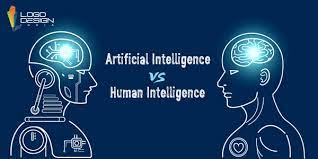
Difference Between Artificial Intelligence and Human Intelligence
Artificial Intelligence: Artificial Intelligence is based on the human insights that can be decided in a way that can machine can effortlessly actualize the tasks, from the basic to those that are indeed more complex. The reason for manufactured insights is learning, problem-solving, reasoning, and perception. This term may be connected to any machines which show related to a human intellect such as examination and decision-making and increments the efficiency. AI covers assignments like robotics, control systems, face recognition, scheduling, data mining, and numerous others.
Human Intelligence: Human intelligence or the behaviour of the human being has come to past experiences and the doings based upon situation, environment. And it is completely based upon the ability to change his/her own surroundings through knowledge which we gained. It gives diverse sorts of information. It can provide data on things related to the particular aptitude and knowledge, which can be another human subject, or, within the case of locators and spies, diplomatic data to which they had to get to. So, after concluding all it can give data on interpersonal connections and arrange of interest.
Below is a table of differences between Artificial intelligence and Human intelligence:
Feature
Artificial Intelligence
Human Intelligence
Emergence
AI is an advancement made by human insights; its early improvement is credited to Norbert Weiner who theorized on criticism mechanisms.
On the other hand, human creatures are made with the intrinsic capacity to think, reason, review, etc.
Pace/Rate of AI and human
As compared to people, computers can handle more data at a speedier rate. For occurrence, in the event that the human intellect can solve a math problem in 5 minutes, AI can solve 10 problems in a minute.
In terms of speed human cannot beat the speed of AI, or, machines.
Decision Making
AI is profoundly objective in choice making because it analyzes based on absolutely accumulated data.
Human’s choices may be affected by subjective components which are not based on figures alone.
Perfection
AI frequently produces precise comes about because it capacities based on a set of modified rules.
For human insights, there’s more often than not a room for “human error” as certain subtle elements may be missed at one point or the other.
Energy Consumption
Modern computer generally uses 2 watts energy.
On the other hand, human brains uses about 25 watts
Modification of AI and Human
AI takes much more time to adjust to unused changes.
Human insights can be adaptable in reaction to the changes to its environment. This makes individuals able to memorize and ace different skills.
Versatility
AI can as it were perform less assignments at the same time as a framework can as it were learn duties one at a time.
The human judgment skills underpins multitasking as prove by differing and concurrent roles.
Social Networking
AI has not aced the capacity to choose up on related social and enthusiastic cues.
On the other hand, as social creatures, people are much way better at social interaction since they can prepare theoretical data, have self-awareness, and are delicate to others’ feelings.
communication plays a very important role in human life. It helps in the exchange of information and knowledge, it helps in developing relationships, the bonding on which the human life dwells itself. Conversations are key to language development. Ideas and thoughts also find a way to enhance through conversations. They make learning easier when combined with perfect facial and body expressions.
how do you define conversation skills?
A perfect conversation is the one which “serves the intention” and “transfers the information” perfectly. People may define it differently, But for the most part, conversation skills include ability to initiate, sustain and end a conversation. You may have the best information, but how you share, matters a lot. And also Engagement- an attempt to perfectly involve others in the conversation, is important.
“Conversation skills refer to a collective set of skills needed to communicate effectively with another person”. Better skills allow to understand and comprehend better to every person in the conversation.
The pandemic which hit the world very badly is forcefully making people to isolate themselves, replacing in person conversations to Vedio calls. Obviously there is a difference when you talk to a person when he is in front of you and when you talk through a screen. But rise in social media popularity did this before pandemic. Conversations have been changed to texting. These all are taking important conversation skills away from people. Clearly avoiding screen is not a solution, but maintaining a balance is very important.
ways to improve conversation skills
LISTEN ACTIVELY: Listening shows that we are in the person and the topic of conversation. Listening is as vital as speaking since a conversation involves sharing which needs both giving and receiving end. Practice active listening by paying attention, Asking questions to clarify confusions and repeating the message or its summary back to the speaker.
LOOK FOR NONVERBAL CUES: Non verbal communication has importance exactly as the words person chooses to do conversation. For example, consider body language. Try to have a good eye contact with the person in front of you. By saying a good eye contact I mean, the eye contact shouldn’t be making the person uncomfortable. Nodding your head to show your agreement or disagreement also helps. Keeping yourself in a position that makes you hear them correctly will also help. And if you are the speaker, make sure the message you are sending is consistent both verbally and non verbally.
HAVE EMPATHY: When you are listening to other person, try to put yourself in his/her shoes. Try to understand their point of view. Use statements which shows that you are understanding. For example ” I can understand your situation”. This will help to build trust. Learn to “agree to disagree”. Respect them even if you disagree. Be polite throughout the conversation.
PAY ATTENTION TOTHE DETAILS: A person with strong conversation skill will absorb more from the conversation than the average person just by noticing extra details. This will help you have more accuracy in the information. Noticing the accent and the motive in the conversation will help in long term.
OFFER INTRESTING INSIGHTS: People with good conversation skills frequently yell you things you didn’t know and find interesting. Increase your knowledge by reading books, magazines and listening to podcasts. Observe how they are choosing words or expressing them. Be Honest when you don’t know, that will not make you anything lesser.
TALK SLOWLY: A good conversationalist often act as they have abundance of time. Don’t hurry or cut others sentences. Take your time while speaking and be confident. Try to take a time before what you say to just reflect on it. be thoughtful.
USE RIGHT WORDS: A well ability to communicate has a lot to do with the words you choose. Bad choice of words will create misunderstandings. Constantly work on your vocabulary and practice communicating accurately.
A good communication skill will help you regardless of the field you are going to be in. Develop these skills as soon as possible and shine on!
This thought first crossed my mind when I was writing a letter to one of the stranger penpals that I met online (Although I left it long back). After putting this thought into words and re-reading it again, I realized how sound this phrase was and how accurately it represented what I lacked and what I had.
For all my life I’ve been too focused on productivity, change, and self-improvement so much so that often I ended up exhausting myself while trying to fulfill any of them. As I saw the people around me go through the ‘self-growth’ phase, I always downplayed my own self. I compared their self-growth with my own only to further degrade myself for not possessing enough ‘passion’ or ‘dedication’ to make anything work. Whatever little efforts I put in self-improvement always ended up as failures for they were driven by empty self-motivation. Be it daily work-out or developing a new habit or improving a previous habit, none of them were ever achieved.
Surprisingly, I have also found a link to this exact issue. This one came to me through one of the conversations that took place between my mom and brother. My brother stated that “When our needs increase, we ourselves start taking responsibilities.” After pondering upon this for long I found a path to my own problem. ‘To put myself in situations where I am forced to take responsibilities.’
As a person for whom self-motivation doesn’t last long but for whom deadlines and responsibilities make me work hard as hell, I realized that what I needed was not self-motivation or a human nagging at me to do work but a situation where I am endowed with responsibility. I thought if I can’t take responsibility on my own then putting myself in a situation where I am forced to take responsibility would force me to change. To explain this approach to you I’d take the example of school. When you are a student, the rules of the school make you take responsibility such as doing your assignments, being punctual, etc. By being in this system of school we have definitely changed from whom we initially were.
I know it’s easier said than done, but I think this is much easier than an empty self-motivation. And I can say this because I have tried it. One of the jobs that I got was less with the mindset of money and more with the mindset of responsibility. The only first step that I needed to do was force myself into the situation of a job interview. That’s it. What followed after that were the responsibilities linked with the job and my dedication to fulfill those responsibilities.
But what’s important to note is that you can’t rashly force yourself in any situation. It is important that you choose the situation carefully. Choose a situation and assess how it will help you change the things you want to change by forcing responsibilities upon you. But don’t let the responsibilities be a big burden. Just like this internship which I decided to put myself into, I am now dedicated to fulfilling the tasks of writings almost daily. Thereby, growing not only in terms of self-improvement but also improving my skills of writing. After all, practice makes perfect 🙂































 Eduindex
You must be logged in to post a comment.