Astronomers Detect a Lurking Cosmic Cloud, Bigger Than The Entire Milky Way.

In the yawning vacuum of intergalactic space, something large is lurking.

Not a galaxy, although it’s of a comparable size: A vast cloud of hot, faintly glowing gas, bigger than the Milky Way, in the space between galaxies congregating in a huge cluster.

Scientists believe this cloud may have been unceremoniously stripped from a galaxy in the cluster, the first gas cloud of this kind we’ve ever seen. Even more surprisingly, it hasn’t dissipated, but has remained clumped together for hundreds of millions of years.

This not only tells us something new about the environments inside galaxy clusters, it suggests a new way to explore and understand these colossal structures.

“This is an exciting and also a surprising discovery. It demonstrates that new surprises are always out there in astronomy, as the oldest of the natural sciences,” said physicist Ming Sun of the University of Alabama in Huntsville.

Galaxy clusters are, as the name suggests, groups of galaxies that are bound together gravitationally. The galaxy cluster where our ‘orphan’ gas cloud was found is called Abell 1367, or the Leo Cluster, around 300 million light-years away. It contains at least 72 major galaxies, and makes up part of a larger, supercluster complex.

Such environments often have a lot going on, and astronomers like to peer into them to try and figure out how our Universe is connected. In 2017, astronomers using Japan’s Subaru Telescope spotted what appeared to be a small, warm cloud in Abell 1367; since its origin was unclear, they went back with more instruments to take a closer look.

A team led by astronomer Chong Ge of the University of Alabama in Huntsville used the ESA’s XMM-Newton X-ray telescope and the Multi Unit Spectroscopic Explorer (MUSE) on the Very Large Telescope, in addition to Subaru – and, to their surprise, they found X-ray emission showing the cloud was larger than they first thought.

Much larger, in fact – bigger than the Milky Way galaxy, with a mass around 10 billion times that of the Sun. And it didn’t seem to be associated with any known galaxy in the cluster. It was just drifting there. But the wealth of data allowed the researchers to take the the temperature of the gas, in turn providing clues as to its provenance.

The cloud’s temperature ranges between 10,000 and 10,000,000 Kelvin – consistent with gas that can be found within galaxies, the interstellar medium. The much more tenuous hot gas of the intracluster medium (the space between galaxies in the cluster) is hotter still, at around 100 million Kelvin.

This suggests that the cloud of gas was stripped from a galaxy as it moved through space.

“The gas in the cloud is removed by ram pressure of the hot gas in the cluster, when the host galaxy is soaring in the hot gas with a velocity of 1,000 to 2,000 kilometers [620 to 1,240 miles] per second,” Sun said.

“It is like when your hair and clothes are flying backward when you are running forward against a strong headwind. Once removed from the host galaxy, the cloud is initially cold and is evaporating in the host intracluster medium, like ice melting in the summer.”

This is fascinating, but kind of weird – because the researchers couldn’t find any nearby galaxies that could account for this occurring recently. Yet, if the gas had been ripped from its galaxy hundreds of millions of years prior, as this lack of proximity suggested, how had it not been diffused into the intracluster medium?

To work this out, the team performed calculations, and found that a magnetic field could hold the gas cloud together against the instabilities that ought to otherwise tear it apart, for long periods of time.

Given the high mass of the cloud, the team has inferred that the parent galaxy from which it was torn was a large and massive one. This could help them track down which galaxy it was; another clue could be traces of gas that extend from the cloud, which might point in the right direction.

In addition, now that one lonely cloud has been identified, scientists have a set of data that will help to identify other such clouds in the future. This will provide valuable information about intracluster dynamics, and the distribution of matter in galaxy clusters.

Plus, we now have observational evidence that the intracluster medium can divest galaxies of their gas.

“As the first isolated cloud glowing in both the H-alpha spectral line and X-rays in a cluster of galaxies, it shows that the gas removed from galaxies can create clumps in the intracluster medium, and these clumps can be discovered with wide-field optical survey data in the future,” Sun said.

Peaky blinders!

Tommy Shelby

Peaky Blinders is a British period crime drama television series created by Steven Knight. Set in Birmingham, England, the series follows the exploits of the Shelby crime family in the direct aftermath of the First World War. The fictional family is loosely based on a real urban youth gang of the same name, who were active in the city from the 1890s to the early 20th century.

Peaky Blinders features an ensemble cast, led by Cillian Murphy, Helen McCrory and Paul Anderson starring as Tommy Shelby, Elizabeth “Polly” Gray and Arthur Shelby respectively, the gang’s senior members. Sam Neill, Tom Hardy, Paddy Considine, Adrien Brody, Aidan Gillen, Charlotte Riley, Sam Claflin and Anya Taylor-Joy also have recurring roles at various junctures of the series. The show premiered on 12 September 2013, telecast on BBC Two until the fourth series, and then shifted to BBC One for the fifth and upcoming sixth series.

In 2018, after the show’s Drama Series win at the BAFTA TV Awards, Knight confirmed his “ambition of making it a story of a family between two wars, and by ending it with the first air raid siren in Birmingham”, which was 25 June 1940. The fifth series premiered on BBC One on 25 August 2019 and finished on 22 September 2019. Netflix, under the deal with Weinstein Company and Endemol, had acquired the rights to release Peaky Blinders in the United States and around the world. In January 2021, it was announced that the sixth season would be the final season of the series.

How to Write Recommendation Letter: Writing Tips and Samples

Want to write recommendation letter but don’t know how to write recommendation letter then this article is only for you and the learners who wants to learn letter writing. In today’s article we are sharing the steps, Tips or samples for writing recommendation letter.

Recommendation letters are written to evaluate the persona, individuality and capabilities of person being recommended in terms of that individual’s ability to perform a particular task or function.

Recommendation letters are particularly requested to be written about somebody by addressing a particular requestor. These letters are typically related to employment, admissions to institutions of higher education or scholarship eligibility.

Recommendation letters classified into three categories:

  1. Academic Reference
  2. Letter Character Reference
  3. Letter Employment Reference Letter

Recommendation letters are also formal letters therefore just like other formal letters these letters also need to follow some fundamentals while writing.

Tips to Write Recommendation Letter

First thing to keep in mind about recommendation letter is that you should be well familiarized with the person to whom you are writing recommendation.It is important to establish credibility of writer in beginning of letter in order to make the letter more effective.

Always write recommendation letters on the business or company’s letterhead and also mention your designation as well in case if you are writing employment, academic and scholarship reference letters.

While writing recommendation letter, it is important that writer should clearly show for how long and how well he/she has known the individual in question and also in what capacity.

For example, an employee recommendation letter would be more effective when given by the immediate boss or supervisor.The body of letter should have specific instances which throw light on the information which would be beneficial for individual you are going to recommend such as personal traits of individual.

The closing paragraphs should preferably repeat the recommendation of the individual.Length of recommendation letter can vary but particularly it should be about a page.

Try to keep it as concise as possible because generally readers have not much time to go into minute details. It is a good idea to provide your contact number or email address for further clarifications.

Try to keep tone of recommendation letters personalized because it can be more effective and beneficial for the person to whom letter of recommendation is written for.

Try to highlight good qualities of subject matter to make letter more effective.

To make your letter writing more convenient, I am providing here with some sample recommendation letters. These letters are designed as per accurate format of recommendation letter.

You can use these letters for your guidance only because copy and paste can harm you. You have to make your letter unique and up-to-mark to convince the reader.

Character Letter of Recommendation Format

Bettina Norman

Deputy Manager

Freeman Consultant

August 6, 2011

Fedora Morgan

Feral Enterprise

24 Longwood Street

Bradford

Dear Ms. Fedora,

I would like to recommend Damon Crosby in the position of Help Desk Manager in your organization. Damon has been working with us since 2009 and has been an excellent worker and proved herself as an asset to our company.

He is very good in written as well as verbal communication, organized and able to take minor decision on his own to ensure that the job is done. In her capacity as the supervisor of the office assistants, he was responsible for our office’s managerial and clerical functions.

Damon is always ready to offer his assistance in any area of office administration. I am confident that he will be an asset to any organization he works for. I would strongly recommend him for any job in your organization.

If you have any further clarification please feel free to contact me anytime at 123-4556-454.

Sincerely,

Bettina Norman

Deputy Manager

Freeman Consultant

Letter of Recommendation Residency

Wilbur Zane

Empire State Building

NY 10118

New York

August 6, 2011

Pierce Olin

Empire State Building

NY 10118

New York

Subject: Recommendation letter for tenants

Dear Pierce,

I am writing you this letter in order to recommend my current clients Mr. and Mrs. Peter to you for the rental of property available at your agency on Sunshine Street, ground floor. Currently, this couple is renting from our agency but now because of having a baby they are looking for a larger apartment on ground floor.

Your property on Sunshine Street would suit the couple perfectly due to its central location and its ground floor situation. Mr. and Mrs. Peter have been renting property from me for more than five years and are always up-to-date on their rental payments as well as their utility bills.

I therefore recommend Mr. and Mrs. Peter for the letting of the premises, as I can assure you that they will be good tenants and you will have no worries as to payments, utility bills etc.

Thanking you in anticipation for your consideration,

Yours faithfully,

Wilbur Zane

Adoption Recommendation Letter

Emline Salome

66 Convent Garden

11454 London, UK

234-4469-102

Kervin Meryl

78 Regent Street

4455 London, UK

August 6, 2011

Subject: Adoption recommendation letter

Dear Mrs. Meryl,

I am writing this letter to recommend Mrs. Edwina Kenyon for the adoption of child. I personally known Edwina, she is such a nice lady and I came to know this by working with her during last five years. We are co-workers at the same department within our company. Through this period of time I have learned that she is very caring, patient, calm and attentive person. You probably know that our company is organizing different projects and the ones that we have to do is children gathering which is always assigned to Edwina since her ability to get along with children is well known within a company.

Kids love her and after each project she acquires lot of new friends among the kids.

Edwina and her husband are very kind people full of love but unfortunately they can’t share their love with their own child. They want to adopt a baby and the baby that will be adopted by her will be one of the luckiest ones.

I strongly recommend her for the adoption. In case you need any clarifications, please contact me at 234-4469-102 or email me at abc@example.com.

Sincerely,

Emline Salome

Sample of Recommendation Letter for Award

Culver Godfrey,

Chief Executive Officer,

International Medical Corporation,

45 East Avenue

August 6, 2011

San Jose, California

Herbert Gilroy,

Chairman, Danu Begot Foundation,

45 North Avenue

San Jose, California

Dear Sir,

SUBJECT: LETTER OF RECOMMENDATION FOR AWARD

I would like to recommend Ms. Kendra Giles to be one of the finalists for the prestigious annual Danu Begot Awards. She has several contributions in business industry by inviting a number of foreign investors to invest in our city. Ms. Kendra is able to bring improvement on the way businesses are regarded in our locality.

Another reason that Ms. Kendra deserves such award is her years of experience in the business world. She is an expert in the field of research and investigation to satisfy her curiosity concerning business matters. Several people are looking up to her leadership and she has served as mentor to almost all novice businesswomen.

Yours sincerely,

Culver Godfrey,

Chief Executive Officer,

International Medical Corporation,

Sample of Recommendation Letter for Citizenship

Secretary,

Ministry of External Affairs,

Government of France,

2 Avenue Gabriel,

75008 Paris,

France.

Respected Sir,

I am writing this letter to recommend Mr. Norman Sherlock, who wishes to seek the citizenship of France. I would like to inform you that, Mr. Norman was a native of Canada. He migrated from Canada to France in the year 2000 in pursuit of his employment. Since then, he had been staying in France, working for a government organization under French minority. Now he wishes to change his nationality as French.

We have verified all the facts pertaining to his stay in France and confirm them as valid. He has been residing at the address 674, Paris, CDSE since 2001. His Canadian passport no is CAFS570844 and he has not applied for any voter identity card/ration card/pan card for the same reason.

Attached to this letter are the documents required, in support of the above said.

Kindly consider his citizenship.

Thanking you so much for considering this letter.

Yours Sincerely,

Secretary,

Home Ministry,

Government of Paris,

France.

Volunteer Services Recommendation Letter Samples

Michael Rutledge, M.D.

Associate Dean for Educational Affairs

Illinois State University, School of Medicine

Illinois State University ­ Main Campus

Chicago, IL, USA 60615

Dear Smith,

Hope you will read this letter in the best of your health. How your days are going on because it is a golden period for you mean holidays. What are you planes regarding holidays? I am assured that you have planned something sensational and creative as usual. I am writing this letter to you for special purpose and want to ask have you some free time now? Actually the staff of organization for which I discharge services has been struck badly by weather. Almost quarter the strength of my staff has been struck.

I dreadfully need your services and if you are wishing to give your volunteer services for the organization at least for a period of 4 weeks then it would be very kind of you. It will also be an exciting new experience for you and it can’t disturb your activities because I know you have sufficient free time now.

Hoping for a favorable response,

Your loving uncle,

T. Morgano, M.D.

What are you overthinking about??

Overthinking is one of the most challenging things for most of us.And it is blessing for an Introvert

Overthinking is biggest cause of unhappiness

So what are we overthinking about?

what if I mess it up

To not overthink

 “what if I say the wrong things

Waking up early in the morning”

Daily schedule”

Use social media or not”

And many more things like-Business, life, study, exams, career Interviews, future, love life, healthcare, etc

Some peoples overthink about random things or like, pimple, height, weight, timepass and overthink on meme or reels…

we overthink just by assuming something but in reality it works differently…

We think If I am going to do that thing then what will everyone say…, What if my parents won’t allow this, what if I got punished, what if….., what if….

And I currently overthink about my college life… I don’t even visit my college and don’t know when this gonna happen. But I also enjoy my life with online classes and to be relaxed at home.

Whenever you overthink much then listen some music, watch movies, or talk to someone… It really going to help

So tell me what are you overthinking about in comment section –

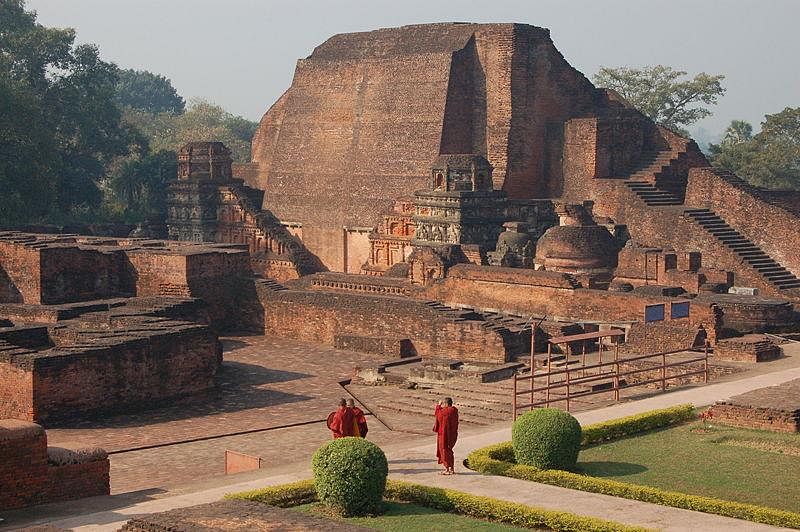
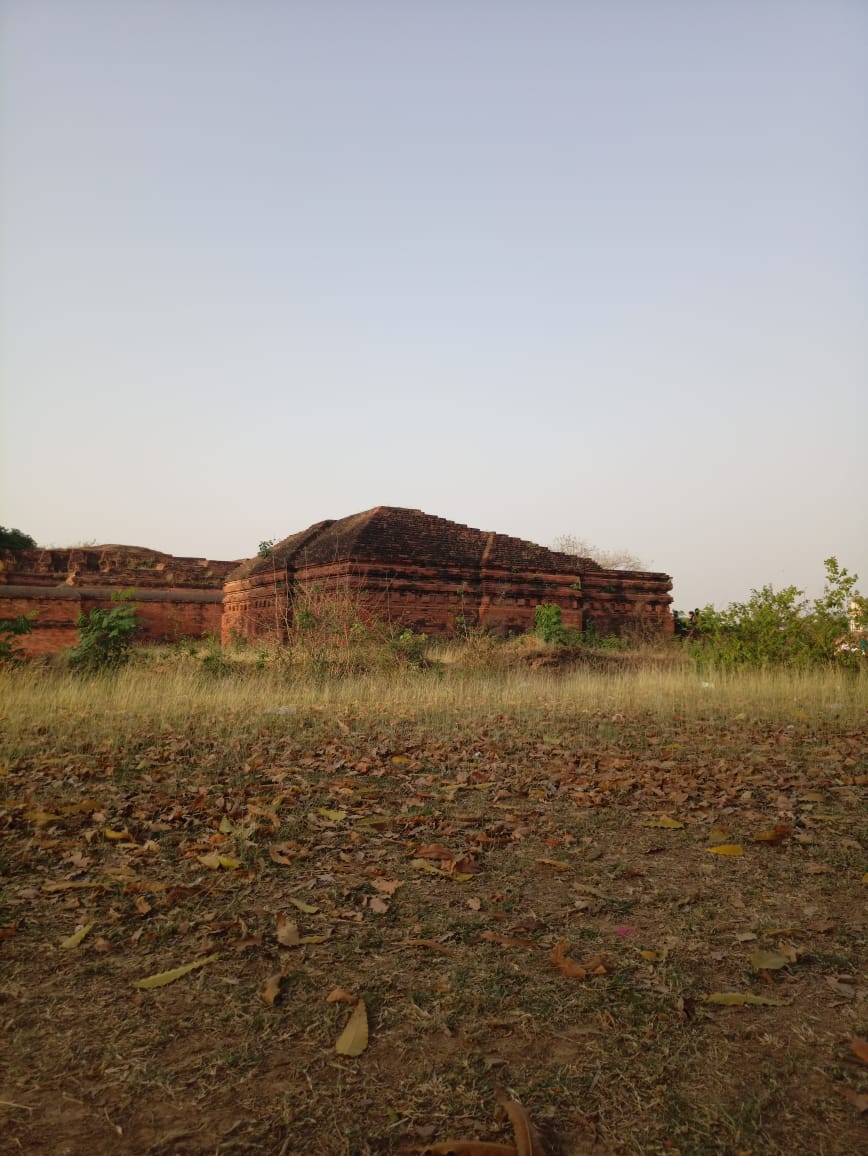
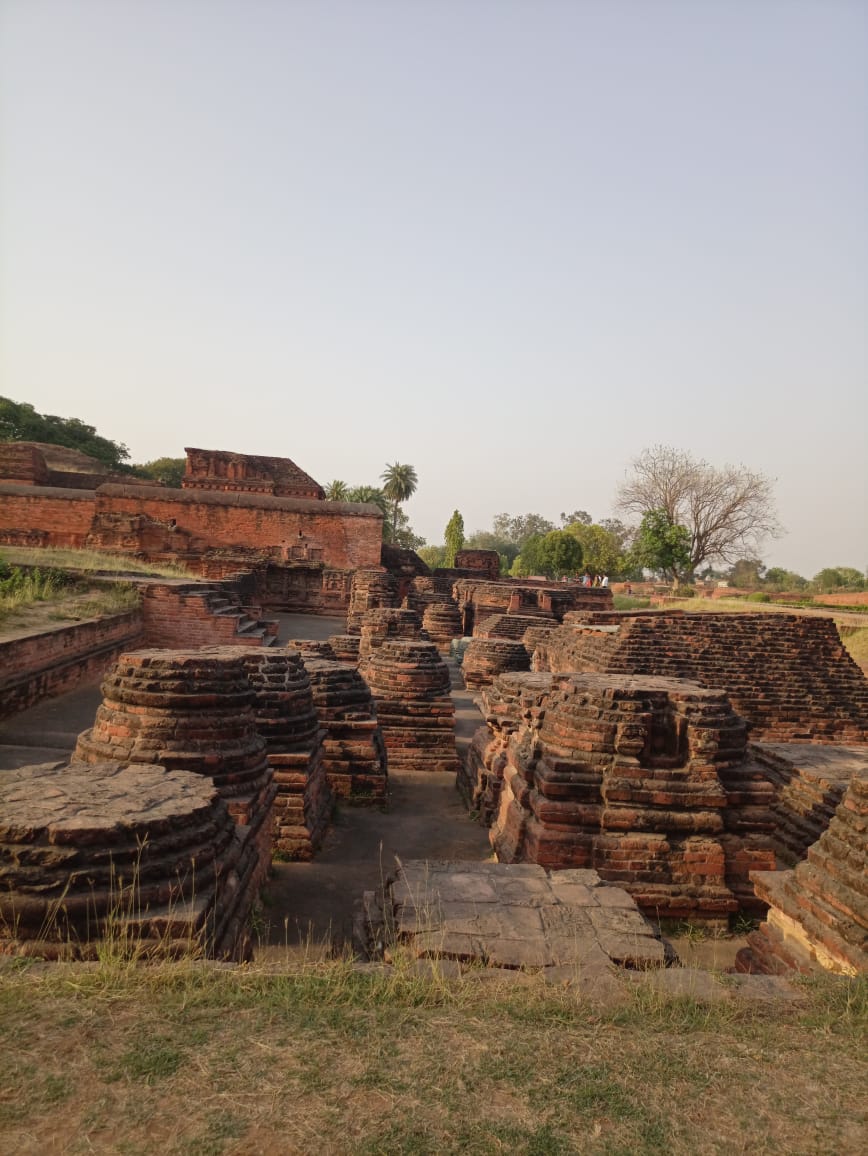
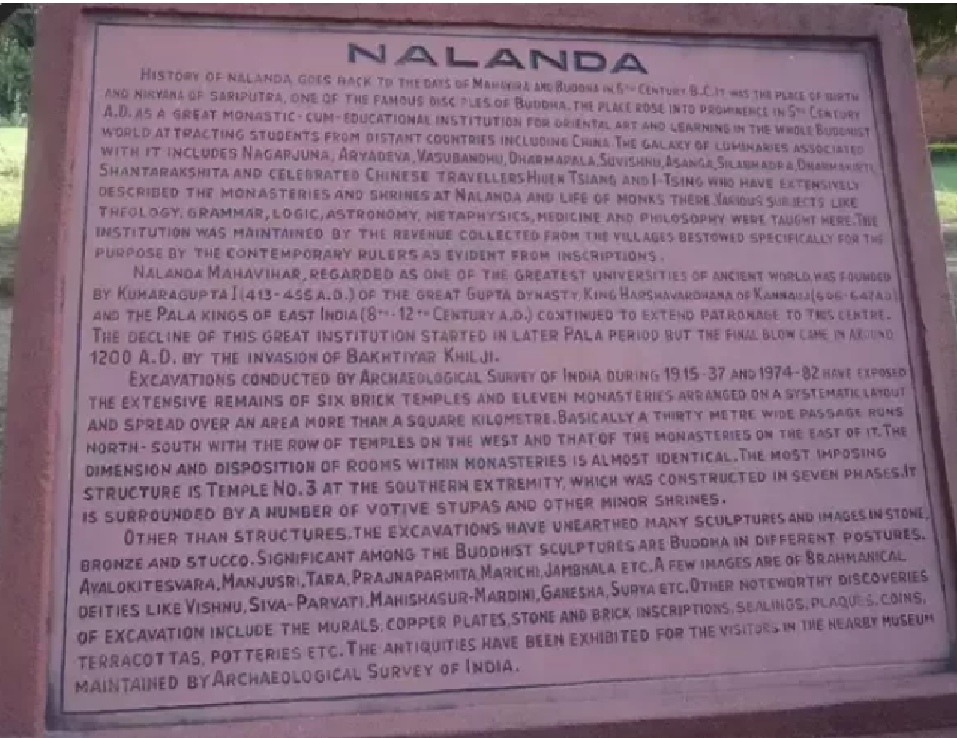
Nalanda University – An Ancient Seat of Learning

Nalanda was one of the earliest and finest universities in India.

It is located in Nalanda District, Bihar, India.

ORIGIN OF NALANDA

The origins of this scholastic institution in 5th century CE. It served for an uninterrupted duration of 800 years

The university thrived under the patronage of the rulers of the Gupta dynasty during the 5th and 6th centuries.

 It continued to flourish under Emperor Harshavardhan of Kannauj in the 7th century as well. 

The growth and the popularity of the university continued until the 9th century.

The declination of Nalanda University was primarily due to the establishment of four other seats of Buddhist learning in the same region under the Pala Empire from the 9th century to the 12th century

FACTS

  • Oldest university with hostel facilities in India.
  • The massive library of Nalanda was called Dharma Gunj, meaning the Treasury of Truth or the Mountain of Truth.
    • It contained hundreds of thousands of books.
  • The subjects taught at Nalanda covered in every field of learning, and it attracted pupils and scholars from Korea, Japan, China, Tibet, Indonesia, Persia and Turkey
  • It is believed that the library of Nalanda was so huge that it burned for months after the university was ransacked by Bakhtiyar Khilji and the library was set on fire.
  • Nalanda was attacked three times by the invaders –
    1. The Huns
    2. The Gaudas
    3. Bhaktiyar Khilji – who brought about its complete destruction.
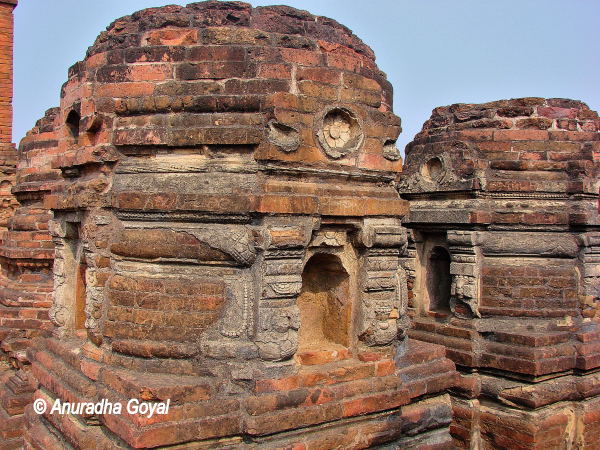
  • Archeologists and historians are of the opinion that just 10% of the Nalanda campus has been excavated till date. Around 90% remain to be excavated.
  • The ruins of Nalanda were the location for the shooting of the popular song “O Mere Raja” from the Bollywood movie Johny Mera Naam starring Hema Malini and Dev Anand.
By Kirti kumari

DECLINATION

  Muḥammad Bakhtiyar Khalji, a Turkic invader destroyed the Nalanda University in 1202 AD.

At that time Bakhtiyar Khilji had captured some areas ruled by Buddhists in North India and once he became quite ill. He got enough treatment from his princes but he could not recover and reached a moribund condition.

Then someone advised him to take the treatment from Acharya Rahul Sribhadra, who was head of Ayurveda department of Nalanda University. But Khilji was not ready for this. He had more faith in his princes. He was not willing to believe that Indian physicians have more knowledge than his wife and their masters.

But to save his life he had to call Acharya Rahul Sribhadra, head of Ayurveda department of Nalanda University. Then Bakhtiar Khilji put a strange condition in front of Vaidyaraj that I will not eat any kind of medicine given by him. They had to fix it without medication. After thinking of this, Vaidyaraj accepted his condition and after a few days, he came to Khilji with a Quran and said that he had to read the page of the Quran. And after reading these pages you will free from illness.

Bakhtiar Khilji read the Quran as Vaidyaraj said he was cured.

“It is said that Rahul Shribhadra applied for medicine on some pages of the Quran. and as he started reading those pages of the Quran he kept on recovering.”

After recovering khilji was shocked by the fact that an Indian scholar and teacher had more knowledge than his princes and countryman.

After this, he decided to destroy the roots of Buddhism and Ayurveda. As a result, Khilji set fire to the great library of Nalanda and burned around 9 million manuscripts.

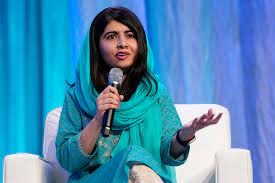
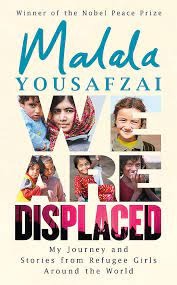
May Malala Come in Every Lap!

Let’s peep in the alleys of the most promising international icon with exceptional zeal:

Malala Yousafzai (Pic Source: Google)

We Human beings are succumbing every minute to fear & bigotry since the mysterious accident by which life sprang on Earth .And also every era-produced Malala pick up the flag of humanity with the brave philanthropic hymns. The world which is now somehow livable, is about to celebrate the 24th birthday of an exceptional mental strength as well as of such a magnificent lens and throw a glance on the pager of her life:

The journey of an ordinary human to an extraordinary one started on July 12 , 1997 at Mingora in Pakistan. Since childhood, with the touch of her father. Ziauddin Yousafzai, a school owner and an educational activist himself (whom Malala termed as the ‘Falcon’) Malala got herself involved in human rights advocacy, especially education of women in her native swat valley in Khyber Pakhtunkhwa where the local  Taliban had banned girls from attending schools . Then the little mind rarely couldn’t take so much time to realize the bluffing of terror patriarchy and resolved to eradicate it for a harmonious life of every girl with a backbone.

When she was only 11 years old, She gave a speech in Peshawar on “How dare the Taliban take away our Basic Right to Education” In 2009 , She started blogging as a short step towards the zenith of her life. In 2011 , She was awarded ‘Pakistan’s  National youth peace prize’ In that year, Archbishop Desmond Tutu, a south African activist, nominated her for the International Children’s Peace Prize of the Dutch International children‘s advocacy group kids Rights Foundation.

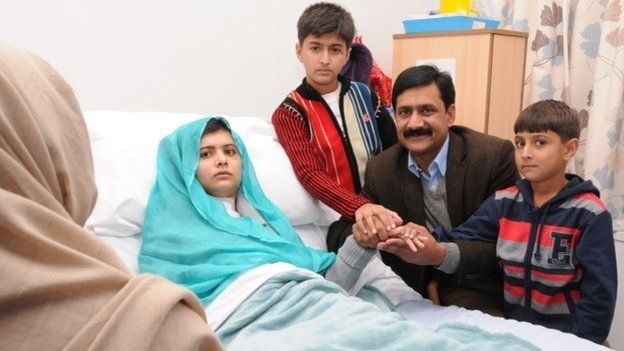
With Malala’s growing popularity, dangers too stealthily came along her way. On October 09, 2012, the Taliban ascended to the peak of inhumanity by shooting this 15-year old child  returning from school by bus. One bullet went through her head, neck and ended in her shoulder. Though her health was critical, her fighting spirit made her recover from the malign wounds and after almost 1 year restarted attending school.

Malala with her lovely Family, during her hospitalization (Pic Source: Google)

Eventually, Malala got a massive outpouring of support in the limelight. On July 12, 2013 on her 16th birthday Yousafzai delivered a speech at the United Nations. There she sad:

“The terrorists thought that they would change our aims and stop our ambitions but nothing changed in my life except this weakness, Fear and hopelessness died ; Strength, power and courage were born.”

–Malala

There Malala challenged orthodoxy, illiteracy & terrorisms:

“The extremists were and they are, afraid of books and pens… They are afraid of women… Let’s speak of our books and pens — our most powerful weapons.”

–Malala

On that very auspicious day, Ban Ki-moon, Secretary General of the UN, pronounced “Malala Day” in honor of The young leader’s activism. He assured that no child should have to die for learning and nowhere should teachers to teach.

When the second voyage of Malala’s life had just started to roll out the wheels, European parliament awarded her the ‘Sakharov Prize’ in 2013.

In the next year, conches of ‘Satyam’ blew when Malala became the youngest ever Nobel Prize Laureate. She received the award along with Kailash  Satyarthi, Indian children’s rights activist. This unparalleled and unequal ‘Global Teacher‘ became a gentle advocate of Peace.

Malala Yousafzai (Source: Google)

In April 2017, United Nations secretary general Antonio Guterres appointed Yousafzai as a UN messenger of peace to promote girls’ education. She was also given Honorary Canadian Citizenship in 2017.

In the meanwhile, Yousafzai family launched the Malala fund in 2014 to ensure girls around the world have access to 12 years of free, safe & quality education, though later she revealed her extreme grief:

“The shocking truth is that world leaders have the money to fully fund primary AND secondary education around the world – but they are choosing to spend it on other things, like their military budgets. In fact, if the whole world stopped spending money on the military for just 8 days, we could have the $39 billion still needed to provide 12 years of free, quality education to every child on the planet.”

Malala wrote in her Website (https://malala.org/)

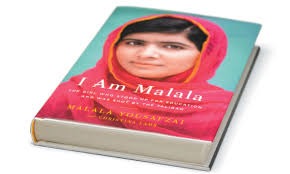
This torch bearer of Pakistan as well as of the enter world have offered the opportunity to go through the reviews by publishing books:

However Malala has taught all the Homo sapiens sapiens what education is, what consciousness is, what backbone is and what fearlessness is. We all are hopeful — this gene of Brave is/will be straight at the nook and corner of this world — every mother will stealthily smile, seeing her fearless child crying in its subconscious mind.

The art of self appreciation

Self-appreciation is an underrated thing about life. It is the best practice that one can include on daily bases and the best part about self-appreciation is that it comprises of all other positive elements like self-care, motivation, it gives hope and a lot more.
These days stress and mental pressure is very common, it starts from teenage and turns out to be lifelong. Life getting stressful people becoming short tempered and frustrated easily and they face lack of confidence, demotivated, unable to focus or feel like they are stuck. It may look like the same day is repeated every day, same work, same you. Every other person today is depressed and those who are not able to cope up soon feel like ending things right away. But this is not the right way of dealing with life, yes life is getting stressful, it looks more complicated each day and we might start avoiding things staying away from people, avoiding gathering and all. But this is not how people should deal with things. Instead, a little self-appreciation at the end of the day is a better approach.


Even the most prominent personalities from a saint to a CEO have told the people about self-appreciation in their talks. As they practice it too, so how things change with this? Self-appreciation can be practiced in different forms like you may come across a beautiful quote which relates to your current situation and those words can help you feel better, indirectly they might also suggest a solution on how to deal with the situation. This shows how powerful self-appreciation is similarly if an individual is stuck in a situation where he feels that he is not doing really well in life and people are much ahead, trying hard to reach a certain level and continuously keeping themselves engaged, in this race we often forget to spend time with ourselves and appreciate the small things. It is not possible to achieve all at once, not being at the same level because it is about timings you will reach there trust the timings and definitely yes one should keep trying but, killing yourself in this whole process is just not right. Counting the small achievements, taking notes, learning the lessons and most importantly appreciating yourself for all that you are doing right now.


Self-appreciation is very simple form of self love and can actually save you from the cut throat competition, it is the right way of dealing with modern day problems and at the end you are your best mate. Many of us loose ourselves while trying to defeat the world. Thus, self-appreciation can help you to value yourself more over others and even in the darkest days you can set yourself up with the motive that yes, I am doing great! and no one is more important than me. Self-appreciation is not about getting self-centred in every way but, just a daily dose of healthy living. As all of us are aware of the magic appreciation has, so if we appreciate ourself we can enjoy our achievements to the fullest, the progress even if it’s slow and we can keep going facing bigger challenges of life.

Global research on coronavirus disease (COVID-19)

WHO is bringing the world’s scientists and global health professionals together to accelerate the research and development process, and develop new norms and standards to contain the spread of the coronavirus pandemic and help care for those affected.

The R&D Blueprint has been activated to accelerate diagnostics, vaccines and therapeutics for this novel coronavirus.

The solidarity of all countries will be essential to ensure equitable access to COVID-19 health products.

Global research database

WHO is gathering the latest international multilingual scientific findings and knowledge on COVID-19. The global literature cited in the WHO COVID-19 database is updated daily (Monday through Friday) from searches of bibliographic databases, hand searching, and the addition of other expert-referred scientific articles. This database represents a comprehensive multilingual source of current literature on the topic. While it may not be exhaustive, new research is added regularly.

The WHO evidence retrieval sub-group has begun collaboration with key partners to enrich the citations and build a more comprehensive database with inclusion of other content. The database is built by BIREME, the Specialized Center of PAHO/AMRO and part of the Regional Office’s Department of Evidence and Intelligence for Action in Health.

For further information or questions, please contact the WHO Library via email.

Disclaimer: the designations employed and the presentation of the material in publications listed in this database does not imply the expression of any opinion whatsoever on the part of WHO concerning the legal status of any country, territory, city or area or of its authorities, or concerning the delimitation of its frontiers or boundaries. Dotted and dashed lines on maps represent approximate border lines for which there may not yet be full agreement.

The mention of specific companies or of certain manufacturers’ products in publications listed in the database does not imply that they are endorsed or recommended by WHO in preference to others of a similar nature that are not mentioned. Errors and omissions excepted, the names of proprietary products are distinguished by initial capital letters.

By listing publications in this database and providing links to external sites does not mean that WHO endorses or recommends those publications or sites, or has verified the content contained within them. The database has been compiled without warranty of any kind, either expressed or implied. The responsibility for the interpretation and use of publications included in this database lies with the reader. In no event shall WHO be liable for damages arising from its use.

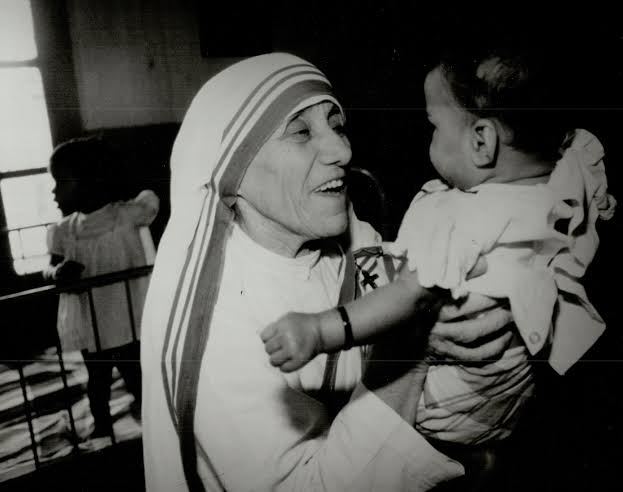
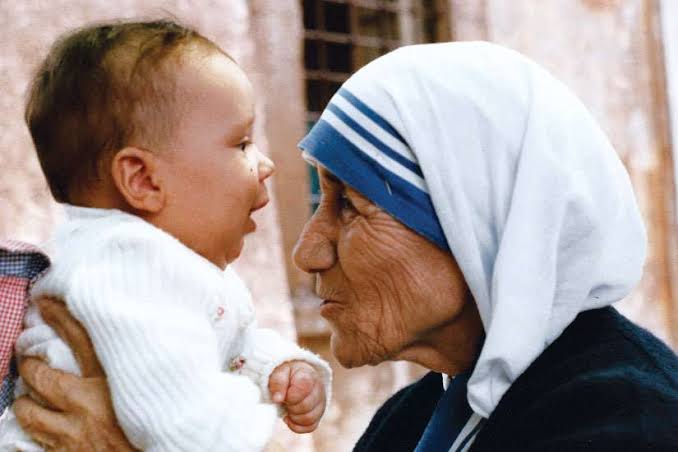
MOTHER TERESA

Who Was Mother Teresa?

Nun and missionary Mother Teresa, known in the Catholic church as Saint Teresa of Calcutta, devoted her life to caring for the sick and poor. Born in Macedonia to parents of Albanian-descent and having taught in India for 17 years, Mother Teresa experienced her “call within a call” in 1946. Her order established a hospice; centers for the blind, aged and disabled; and a leper colony. 

In 1979, Mother Teresa received the Nobel Peace Prize for her humanitarian work. She died in September 1997 and was beatified in October 2003. In December 2015, pope francis recognized a second miracle attributed to Mother Teresa, clearing the way for her to be canonized on September 4, 2016.

Mother Teresa’s Family and Young Life

Mother Teresa was born on August 26, 1910, in Skopje, the current capital of the Republic of Macedonia. The following day, she was baptized as Agnes Gonxha Bojaxhiu.

Mother Teresa’s parents, Nikola and Dranafile Bojaxhiu, were of Albanian descent; her father was an entrepreneur who worked as a construction contractor and a trader of medicines and other goods. The Bojaxhius were a devoutly Catholic family, and Nikola was deeply involved in the local church as well as in city politics as a vocal proponent of Albanian independence.

In 1919, when Mother Teresa — then Agnes — was only eight years old, her father suddenly fell ill and died. While the cause of his death remains unknown, many have speculated that political enemies poisoned him.

In the aftermath of her father’s death, Agnes became extraordinarily close to her mother, a pious and compassionate woman who instilled in her daughter a deep commitment to charity. Although by no means wealthy, Drana Bojaxhiu extended an open invitation to the city’s destitute to dine with her family. “My child, never eat a single mouthful unless you are sharing it with others,” she counseled her daughter. When Agnes asked who the people eating with them were, her mother uniformly responded, “Some of them are our relations, but all of them are our people.”

Education and Nunhood

Agnes attended a convent-run primary school and then a state-run secondary school. As a girl, she sang in the local Sacred Heart choir and was often asked to sing solos. The congregation made an annual pilgrimage to the Church of the Black Madonna in Letnice, and it was on one such trip at the age of 12 that she first felt a calling to religious life. Six years later, in 1928, an 18-year-old Agnes Bojaxhiu decided to become a nun and set off for Ireland to join the Sisters of Loreto in Dublin. It was there that she took the name Sister Mary Teresa after Saint Thérèse of Lisieux.

A year later, Sister Mary Teresa traveled on to Darjeeling, India, for the novitiate period; in May 1931, she made her First Profession of Vows. Afterward, she was sent to Calcutta, where she was assigned to teach at Saint Mary’s High School for Girls, a school run by the Loreto Sisters and dedicated to teaching girls from the city’s poorest Bengali families. Sister Teresa learned to speak both Bengali and Hindi fluently as she taught geography and history and dedicated herself to alleviating the girls’ poverty through education.

On May 24, 1937, she took her Final Profession of Vows to a life of poverty, chastity and obedience. As was the custom for Loreto nuns, she took on the title of “Mother” upon making her final vows and thus became known as Mother Teresa. Mother Teresa continued to teach at Saint Mary’s, and in 1944 she became the school’s principal. Through her kindness, generosity and unfailing commitment to her students’ education, she sought to lead them to a life of devotion to Christ. “Give me the strength to be ever the light of their lives, so that I may lead them at last to you,” she wrote in prayer.

‘Call Within a Call’

On September 10, 1946, Mother Teresa experienced a second calling, the “call within a call” that would forever transform her life. She was riding in a train from Calcutta to the Himalayan foothills for a retreat when she said Christ spoke to her and told her to abandon teaching to work in the slums of Calcutta aiding the city’s poorest and sickest people.

Since Mother Teresa had taken a vow of obedience, she could not leave her convent without official permission. After nearly a year and a half of lobbying, in January 1948 she finally received approval to pursue this new calling. That August, donning the blue-and-white sari that she would wear in public for the rest of her life, she left the Loreto convent and wandered out into the city. After six months of basic medical training, she voyaged for the first time into Calcutta’s slums with no more specific a goal than to aid “the unwanted, the unloved, the uncared for.”

Missionaries of Charity

Mother Teresa quickly translated her calling into concrete actions to help the city’s poor. She began an open-air school and established a home for the dying destitute in a dilapidated building she convinced the city government to donate to her cause. In October 1950, she won canonical recognition for a new congregation, the Missionaries of Charity, which she founded with only a handful of members—most of them former teachers or pupils from St. Mary’s School.

As the ranks of her congregation swelled and donations poured in from around India and across the globe, the scope of Mother Teresa’s charitable activities expanded exponentially. Over the course of the 1950s and 1960s, she established a leper colony, an orphanage, a nursing home, a family clinic and a string of mobile health clinics.

In 1971, Mother Teresa traveled to New York City to open her first American-based house of charity, and in the summer of 1982, she secretly went to Beirut, Lebanon, where she crossed between Christian East Beirut and Muslim West Beirut to aid children of both faiths. In 1985, Mother Teresa returned to New York and spoke at the 40th anniversary of the United Nations General Assembly. While there, she also opened Gift of Love, a home to care for those infected with HIV/AIDS.

Mother Teresa’s Awards and Recognition

In February 1965, Pope Paul VI bestowed the Decree of Praise upon the Missionaries of Charity, which prompted Mother Teresa to begin expanding internationally. By the time of her death in 1997, the Missionaries of Charity numbered more than 4,000 — in addition to thousands more lay volunteers — with 610 foundations in 123 countries around the world.

The Decree of Praise was just the beginning, as Mother Teresa received various honors for her tireless and effective charity. She was awarded the Jewel of India, the highest honor bestowed on Indian civilians, as well as the now-defunct Soviet Union’s Gold Medal of the Soviet Peace Committee. In 1979, Mother Teresa was awarded the Nobel Peace Prize in recognition of her work “in bringing help to suffering humanity.”

Criticism of Mother Teresa

Despite this widespread praise, Mother Teresa’s life and work have not gone without its controversies. In particular, she has drawn criticism for her vocal endorsement of some of the Catholic Church’s more controversial doctrines, such as opposition to contraception and abortion. “I feel the greatest destroyer of peace today is abortion,” Mother Teresa said in her 1979 Nobel lecture.

In 1995, she publicly advocated a “no” vote in the Irish referendum to end the country’s constitutional ban on divorce and remarriage. The most scathing criticism of Mother Teresa can be found in Christopher Hitchens’ book The Missionary Position: Mother Teresa in Theory and Practice, in which Hitchens argued that Mother Teresa glorified poverty for her own ends and provided a justification for the preservation of institutions and beliefs that sustained widespread poverty.

When and How Mother Teresa Died

After several years of deteriorating health, including heart, lung and kidney problems, Mother Teresa died on September 5, 1997, at the age of 87.

WATER FASTING

Fasting is considered as a part and parcel in the process of losing their weight and staying healthy. When it comes to fasting there is no one approach that is suitable for all. As the time progresses newer ways of fasting are coming to light. On the one hand we have diets that involve eating only during a certain time window (Intermittent Fasting) and on the other hand we have a diet that involves not eating at all for hours. This type of diet is known as Water Fasting.

Water fasting is a type of fasting that restricts the consumption of any kind of solid foods as well as drinks (even zero calorie drinks) except water. Someone who wishes to pursue this diet must only intake water during the entire timeline of their fasting. Even though the practice of restricting food intake has been around for a long period of time but people normally don’t do it for a period long enough for it to actually work. Water diet is as extreme as other forms for dieting and it a little bit tougher follow as compared to other forms of fasting too. However, before considering following this diet one must be familiar with both sides of the coin.

ADVANTAGES:

+ The main advantage of water diet is that it helps in loosing weight.
+ Water diet helps in improving blood pressure and keeps blood sugar levels in check too.
+ It helps in breaking down broken cells and further recycles them.
+ Consuming so much water for days will detoxify you body and ensure all toxins are excreted.
+ Some studies have shown that water fasting reduces the risk of certain types of cancer and diabetes too.
+ It has physical as well as psychological benefits. It helps in improving the cognitive functioning.

DISADVANTAGES:

– This fasting might help in weight loss but the results are short lived.
– Giving up food for long period of time can trigger an eating spree leading to development of disorders.
– It might sound odd but drinking that much water can lead to dehydration. You could feel dizzy, nauseated and might even develop headaches.
– It increases the risk of kidney stones.
– Consumption of only water can lead to nutrient deficiency in the body.
– And lastly, water fasting can worsen many other health conditions and impact you body negatively.

WHO SHOULD NOT DO IT?

As you would have been able to judge by now that water fasting not as easy as it sounds, there are certain categories of people who should avoid it at all costs. The categories include:
1. people having eating disorder
2. pregnant women
3. people with severe diseased
4. people who have heart problems, diabetes and migraines
5. people who are underweight

Except from the people mentioned above, everyone who wants to follow the diet must consult their doctors once to avoid complications in the future. These kinds of fasting are physically tiring so try to avoid exercising and undertake the fast on days when you can take ample rest and the effects don’t take a toll on you. Doctors recommend a person not to fast more than 3 days at a time. The fasting period can be anywhere between 24 hours to 3 days.

Fasting and different kinds of diet might look appealing but they work only if you are regular and if your body agrees with it. No one should push their body to its limits just to loose that stubborn belly fat. Start easy and then progress. Remember that you must not loose your healthy self in a race to loose weight. Consume whatever is healthy and best suited for your lifestyle.

Misuse of contempt of court

Contempt in its true sense means scandalizing, disrespecting courts or individual judges or jury and
attributing motive to certain judgment. With the intent of implementing the orders of the court of law
and preserving it from scandalizing the “CONTEMPT OF COURT ACT” was modified and adopted in the
parliament in 1971. The punishment for contempt is maximum of six months imprisonment or fine of
rupees 2000 or both. It is a restriction on one of the fundamental rights “The Right to Expression”.
Contempt is of two types-Civil contempt and Criminal contempt.


According to the section 2(b) of The Contempt of Court Act, 1971, civil contempt means willful
disobedience to any judgment, decree and direction, order, writ or other process of a court or willful
breach of an undertaking given to the court.


According to the section 2(c) of The Contempt of Court Act, 1971, criminal contempt means the
publication (whether by words, spoken or written, or by signs, or by visible representation, or otherwise)
of any matter or the doing of any other Act whatsoever which scandalize or tend to scandalize, or lower or tends to lower, the authority of any court or prejudice or interfere or tends to interfere with, the due course of any judicial proceeding or ineterface or tends to interfere with or obstructs, the administration of justice in any other manner.
Criminal contempt is considered a conduct directed against dignity of Court. That’s why criminal contempt
often highlights as the only contempt. But that’s not true according to the report submitted on the review of
the Contempt of Court Acts, 1971 by The Law Commission of India chaired by Justice B.S. Chauhan states that
there is more number of civil contempt cases (96,993) than civil contempt cases (583) in various high courts
and The Supreme Court. But despite high ratio of civil contempt the punishment ratio is very low. There is a
very fine line between contempt and criticisms and because of it criticism is understood as contempt. In its
previous judgments Supreme Court states that contempt victims should not be punished until the contempt
is intended or tends to interfere in the due course of administration of the courts. One of the major
drawback of the contempt law is that the judge is victim as well as prosecutor and the same person is
assuring justice which is against the basic theory of justice. In the recent cases we see renowned Prashant
Bhushan criticizing CJIs and found guilty in the court of law and fined for Rs 1. The court has the power to
pick up any publication and scrutinize it as contempt of court in the courts. This makes people hesitate to
present their point of views on certain judgments as they fear to be punished for contempt. This also present
judiciary in a bad light in front of the citizens.


The Courts should check civil contempt more than criminal contempt. The Courts should develop habit of
criticism on their judgment because they can also give controversial judgments. Even the Supreme Court is
supreme but not infallible. In a healthy democracy everything should be questioned. Courts should accept
their bonafide criticism as they will help them deliver better judgments in the future and criticism makes any
institution better not disrespect them.

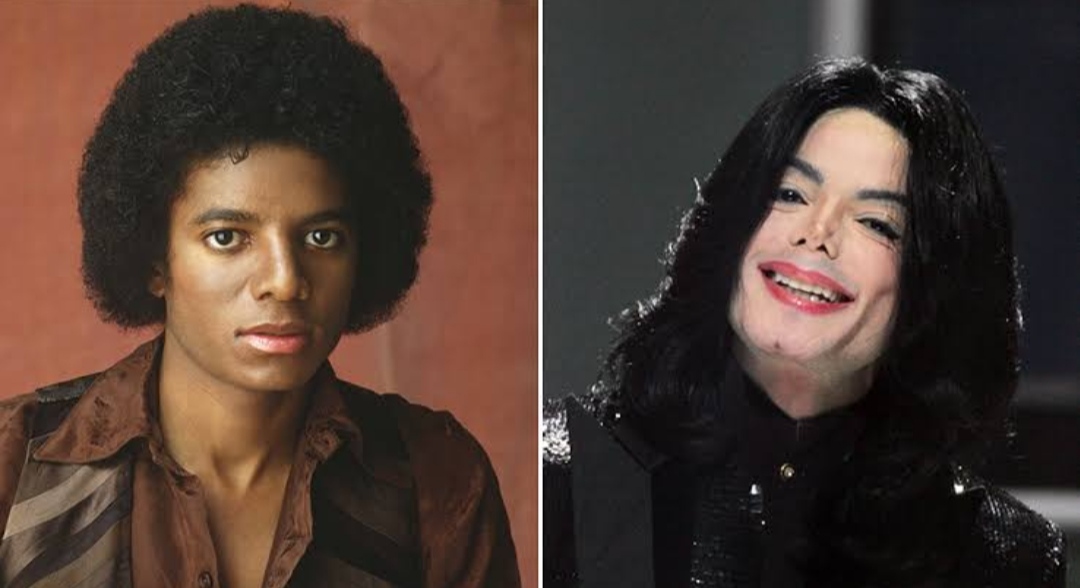
Michael Jackson

Michael Joseph Jackson(1958-2009) also popularly known as Michael Jackson,was an American singer, songwriter, and dancer. He is famously known as king of pop,he is regarded as one of the most significant cultural figures of the 20th century. 

His contributions to music, dance, fashion, and philanthropy, made him a global figure.

He influenced many people, many genres across the world through stage and video performances.

His popularized dance moves like moon walk , still this complicated dance gestures is creating popularity, records.He is the most awarded music artist in history.

Jackson is one of the best selling music artists of all time, with estimated sales of over 350 million records worldwide. For his incredible contribution to music,dance he was honoured with 15 Grammy awards, six Brit awards, a golden globe award, and 39 Guinness world records.

Michael Jackson, also known as most commercially successful entertainers of all time. At the age of 50, Michael Jackson passed away,at his home in Los Angeles, California, after suffering from cardiac arrest caused by a fatal combination of drugs given to him by his personal doctor.

Modernism & Postmodernism – II

The 2nd half 20th Century – the socio cultural movements that effected people are merging and becoming more. Post Colonial literature became  popular, Ngugi wa thiongo a Kenyan thinker – Moving the Centre – The plurality of culture and literature, the shift from Eurocentric understanding of the world. Grand narratives centred around the Eurocentric understanding, and postcolonial works thus became a shift from these Grand Narratives. The way art aesthetics and literature were looking at the past and the grand narratives became problematic, because people felt a need to bring back the past, but simultaneously in every country there was this need to bring something new back. Every age becomes a response to a previous period and the previous period is a response to resistance. Literatureis not something that is just to entertain people, the position of literature is embedded in our social systems, part of your existence. To understand postmodernism, is to lie on modernism. France Fanon, Meena Kandasamy, examples of theoretical perception are taken forward with people of different discipline. Thiongo’s  work becomes important for the possibility of multiple centres and multiple meanings – a product of European imperialism and internal resistance as well. 

Mcluhan’s  Medium as message, depending on the medium the reachability is different and the access as well is differing. 

Susan Sontag – a revolt against  ‘the departure from modernism can be regarded as new sensibility, a revolt against canonised modernism’s avant-guard revolution’  – Critiquing the high culture of Modern Capitalist world, against the cannon. On one hand Modernism tried critiquing the Grand narratives and on the other it cerated a canon for itself. 

Modernism is adopting plurality like Postmodernism, but was lamenting fragmentation even though working through it, trying to work on a wholesome unity, they continued to believe that with lit or artistic expression we may achieve a ‘self’ while postmodernism are embracing fragmentation, praising dissent, rather celebrating fragmentation. 

Arnold Toynbee – birth of postmodernism, and questioning the tradition moral values and beliefs (grand narratives); and by questioning this he’s talking about the development of cultural modernists and the different understanding of the world, a better apparatus of understanding world and culture. Grand Narratives continue to be over – aching and totalising and replace or silence other narratives around us. And how mini-narratives can replace grand narratives by promoting plurality and heterogeneity as it becomes local. [Culture in modernism – a cultural innovation – development of new meanings.] Postmodernism is branching out to different ways, questioning the requirement and the need for plurality and heterogeneity.  

Modernism & Postmodernism – I

1922 – TS Elliot’s Wasteland & James Joyce’s Ulysses, Virginia Woolf – Jacob’s Room

1927 – Virginia Woolf – To the lighthouse.

1924 – Manifesto of the Surrealist Moment – Andre Bretel

1937 – Guernica – an anti-war painting. 

1914 – Stravinsky – Rise of Spring

Before Modernist was the Victorian Period, certain set of practices that was held sacrosanct up until the 1920’s, and everything that came out post 1920’s questioned everything. Linear chronological narrative was held sacrosanct for ages, and Elliot, James Joyce, Virginia Woolf were subservient to these narrative, alongside the impressionist, and the Credo of Modernism ‘make it new’ campaign by Ezra Pound; Modernist thinkers and philosophers stood for renovation and experiments, ‘Avant Garde’ ‘Sapere Aude’ (dare to know – courage to chart new territories) – after WWI. 

Theoretical justification form this break of the past ? Why ? The central image of modernism was a big large void that defined Modernism – Scepticism/disbelief/boredom/disillusionment/restrictive and that this is not ‘it’, and to replace it with something new; and everything that was held important started falling apart. The science that was to make everything better couldn’t hold, the centre was falling apart and one couldn’t make sense of it, here structuralism to poststructuralism – Derrida – meaning is differing. 

1990 – Virginia Woolf – Modern Fiction – in the pre-verbal or pre-literate thought your words are not linear, because it’s happening in your mind, therefore chronological pattern never works, it’s always in a flux, therefore she suggests “stream-of-consciousness” – a randomness of a narrative – no structure, a linear mode of storytelling – Virginia Woolf’s Mrs. Dalloway. 

Purist, Exclusivist/Universalist – to contain a single meaning – something that is questioned by Modernism. Meta Narratives/Grand Narratives that dictate the Euro – Centric understanding of the world, that make things/life better or easier – Marxism, Religion – Christianity – Redemption. 

Single Epistemology (the theory of knowledge) 

Post Colonial/Gender/Race came in complicating others. 

Moving the Centre by Ngugi wa thiongo, and Afrocentrism. 

Skincare

This is a topic that each one of us need to address, and over the years, there is definitely been a rise in discussions on but what has predominantly tampered these discussions are the issues of finance, because skincare isn’t just for the middle class or the elites, it’s is for everyone, even if the common consensus is not for the same. 

Undoubtedly, there are startups and other companies that cater to the lower side of budget scale, and even deliver a somewhat mediocre result, but it still isn’t cost effective for everyone. 

Next, the complicated process that is served to us, makes us blinded towards what our needs are or what our skin needs, we are normalised to ignore the nourishments our skin needs, the lil’ TLC we deserve, rather we are fished by companies, complicating the process and many celebrities add more to this complication, just because it suits their skin, it doesn’t necessarily suit yours, and these celebrities are more often than not are paid to promote a certain product, or are using products that are capable to leave a dent on your pockets.

So what’s the best line of action? Some R&D, dig through articles, figure what skin type you have, read what could suit your skin, what could benefit you, and is good for you — ingredient wise, and one that, start filtering what suits your budget, and what is easily available to you, read more about the products and the company, their ethical practices, and its cruel-free deliverance, and once you are satisfied with your choice, go for it, trust you gut, since its about self care, start loving yourself as well. 

And make sure, you always, ALWAYS, listen to your skin’s needs, they will speak to you and depending upon that go by your routine, nothing has to be rigid.