SEBI clears norms for gold exchanges

The Securities and Exchange Board of India (SEBI), on Tuesday approved the framework for a gold exchange as well as for vault managers, facilitating trading in securities tied to the yellow metal. The markets regulator’s approval for the proposals made in the Union budget paves the way for the gold exchanges to be set up for the trading in ‘Electronic Gold Receipts’ (EGRs) like in the case of other securities. Existing stock exchanges will allowed to provide the platform for trading of EGRs, SEBI said after a board meeting in Mumbai.

The denomination for trading the EGRs and conversion of EGRs into gold would be decided by the exchanges with the approval of SEBI, Chairman Ajay Tyagi said, while addressing the media. The clearing corporation would settle the trades executed on the exchanges by way of transferring EGRs and funds to the buyer and seller, respectively, he said.

Vault Managers

EGR holders, at their discretion, could withdraw the underlying gold from the vaults after surrendering the EGRs. SEBI-accredited vault mangers would be responsible for the storage and safe keeping of gold deposits, creation of EGRs, withdrawal of gold, grievance redressal and periodic reconciliation of physical gold with the records of depository. The vault managers would have to have a net worth of at least 50 crore rupees. On the broader objective of such exchanges, Mr. Tyagi said, “India is a net importer of gold. We are price takers not price setters. The whole idea is to move from being price takers to the price setters. Price discovery at the exchanges will lead to… transparency in gold pricing.” Mr. Tyagi added that the exchanges would enable transparent price discovery, investment liquidity and assurance in the quality of gold. SEBI also cleared norms for social exchanges.

Car Market in India during Pandemic Covid-19

The impact of pandemic covid-19 in India has been vastly disruptive in terms of loss of life and economic movement.
Almost every sector has been adversely affected by the pandemic. Production cut due to decline in demand of cars during covid-19 also impacted employment growth negatively.


As the domestic demand and export stopped with some notable exceptions. Pandemic with the lockdown derived in shutting down of production in automobile industries and impacted car marketing in India. In addition, the reduction in the consumer demand for cars is also increased. The car market during covid-19 in India had the hardest hit.

With the statement of automobiles Manufacturers society, the car market registers a negative growth in sales. But that’s not equally true for all. Still, luxury car manufacture said they are seeing a boom in the demand despite the pandemic. While studying the car market trends during covid-19. Profits are been made on the kind of car being sold during pandemic covid-19. Overall car sales were down compared with the previous year. As lockdown is giving ease in some cities hence people are electing to buy cars rather then using public transport. The reason being behind is people are afraid of using public transport while concerning about their safety.
The main Impact that the car market during covid-19 submitted is the slowdown in the demand for new cars and increase in demand for used cars. Because Used cars are budget-friendly and the supply of new cars is slow. Nowadays, The supply and demand all are delivered online. The available option is more.


The picture is improving however, the manufacturers must start the production after relief from the second wave of the covid-19. Confirming the protection of its employees and customers. Following the social distancing and vaccination. In addition, the government has decided to support The car market during covid19 by its policies, such as decreasing the cost of raw material required and cutting down the tax rates on automobiles. All such measures can help the market to recover sooner and tougher.

REGARDING CORRECT CERTIFICATE FROM EDUINDEX

From few days I am writing emails to give me certificate of date 16 june to 16 july. since month of july i am doing so but AGAIN and AGAIN I am rcieving wrong certificate. I need to prepare summer internship report. i cant attach wrong certificate. This is my last option to write here. I am in a complusion otherwise I would have not written here.

Its my humble request to everyone who is reading it please like . So that it can come in front of the team.

And if team you are reading this please prepare a certificate from the 16 june to 16 july. In my offer letter too you have mentioned same date. COMMENT ME IF YOU HAVE PREPARED. I WILL SEND U DETAILS.

I am quite depressed with such an unlawful behaviour.

Persecution of Muslims

Persecution of Muslims is the religious and political persecution that is inflicted upon followers of the Islamic faith and/or those with a Muslim identity. This page lists incidents in which Muslim populations have been targeted for persecution by non-Muslim groups throughout the history of Islam, a history that coincides with medieval and modern history.

In the early days of Islam in Mecca, the new Muslims were often subjected to abuse and persecution by the pagan Meccans (often called Mushrikin: the unbelievers or the polytheists). In the contemporary period, Muslims face religious restrictions in some countries. Various incidents of Islamophobia have also occurred, such as the Christchurch mosque shootings, the Afghanistan conflict (1978–present), the Kashmir conflict, the Xinjiang Ethnic cleansing and the mass imprisonment of people in re-education camps, the West Bank annexation in Palestine, and many more incidents.

The ongoing Rohingya genocide has resulted in over 25,000 deaths from 2016 to the present, 700,000+ refugees being sent abroad since 2017, gang rapes and other acts of sexual violence which are mostly committed against Rohingya women and girls, mostly by Rakhine’s Buddhists and Burmese soldiers, the burning of Rohingya homes and mosques, as well as many other human rights violations.

The ongoing Uyghur genocide has led to more than one million Muslims (the majority of them are Uyghurs) being held in secret detention camps without any legal process, with birth rates plummeting in Xinjiang, falling by nearly 24% in 2019 alone compared to just 4.2% in the rest of China.

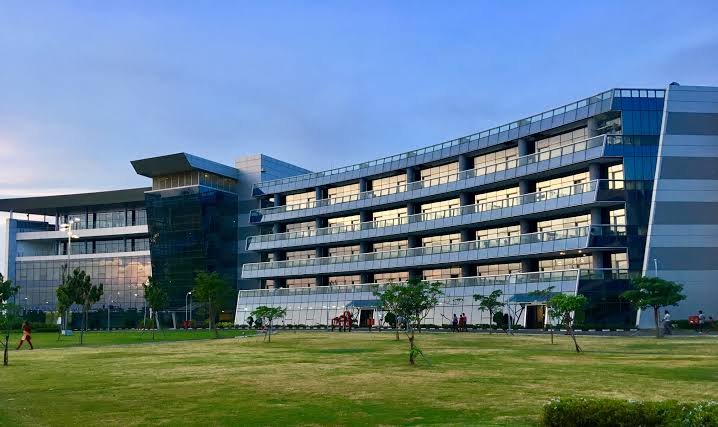
TOP FIVE INFORMATION TECHNOLOGY IN INDIA

Information technology is the use of computer to create, process, store, and exchange all kinds of electronic data and information. IT is typically used within the context of business operation as opposed to personal or entertainment technologies. Here I came with top five most-valuable information technology in India

1) TATA CONSULTANCY SERVICES

Tata Consultancy Services is a global leader in IT services, consulting & business solutions with a large network of innovation & delivery centers. https://www.tcs.com/home TCS is the largest IT services company in the world by market capitalisation ($200 billion). It was founded in 1968 by TATA Sons. It has headquarters in Mumbai, Maharashtra, India. The main service of the company is consultancy, services, outsourcing. TCS is the second largest Indian company by market capitalisation and is among the most valuable IT services brands worldwide.Tata Consultancy Services has around 380,000 offices across 46 countries and 147 delivery centres in 21 countries. There are 378,210 offices in India alone. The revenue of TCS is Rs1.62 trillion in 2020.https://en.wikipedia.org/wiki/Tata_Consultancy_Services

2) WIPRO

Global company delivering innovation-led strategy, technology, and business consulting services. https://www.wipro.com/ Mohamed Premji was founded WIPRO in 1945. It was founded to trade refined oil and manufacturing vegetables. After the death of Mohammad Premji https://en.wikipedia.org/wiki/Azim_Premjihis son Azim Premji took over wipro as chairman in age of 21. During the 1970s and 1980s, the company shifted its focus to new opportunities in the IT and computing industry, which was at a nascent stage in India at the time.In February 2002, Wipro became the first software technology and services company in India to be certified. The revenue of wipro is ₹61,943 crore in 2021. https://en.wikipedia.org/wiki/Wipro

3) INFOSYS

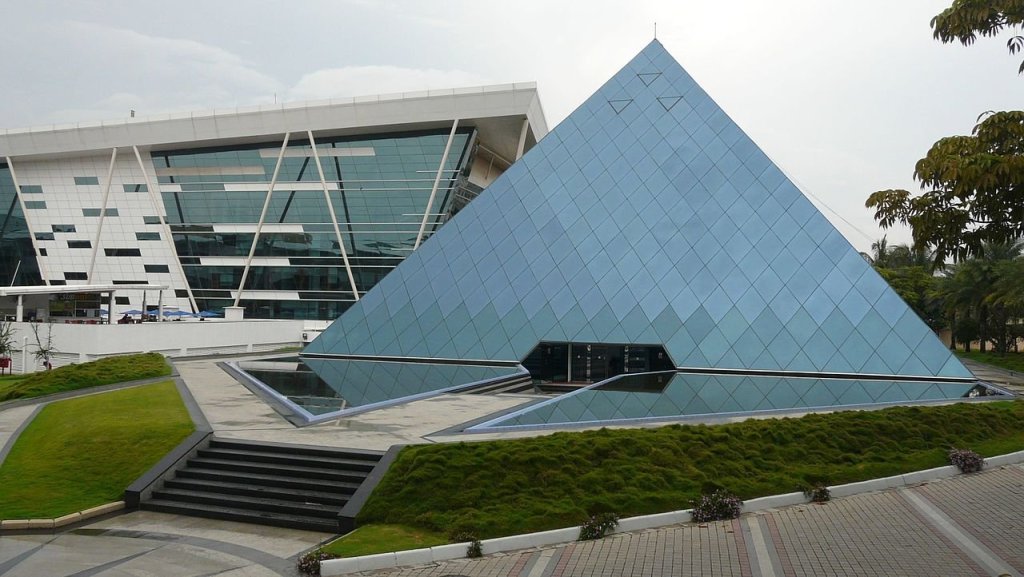
Infosys is a global leader in next-generation digital services and consulting.https://www.infosys.com/ Infosys was founded by seven engineers in Pune, Maharashtra, India with an initial capital of $250 in 1981. Infosys provides software development, maintenance and independent validation services to companies in finance, insurance, manufacturing and other domains.Infosys had a total of 259,619 employees as of 2021, out of which 38.6% were women. Out of its total workforce, 229,658 are software professionals and remaining 13,796 work for support and sales.https://en.wikipedia.org/wiki/Infosys In 2016, 89% of its employees were based in India. The revenue of this company is ₹102,673 crore in 2021. Website is https://www.infosys.com/

Infosys Pyramid in Bengaluru

4) TECH MAHINDRA

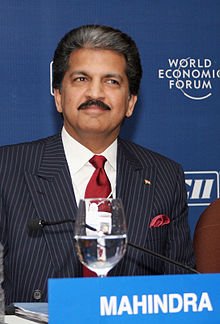
Tech Mahindra is an Indian multinational company that provides information technology and business process outsourcing services. A subsidiary of the Mahindra Group, the company is headquartered in Pune and has its registered office in Mumbai. It was founded by Anand Mahindra. https://en.m.wikipedia.org/wiki/Anand_Mahindra in 1986. This company has services in worldwide.

ANAND MAHINDRA

Tech Mahindra have 125,236 (2020) . The revenue of this company is ₹38,642 crore in 2021. Website is http://www.techmahindra.com/

5) HCL

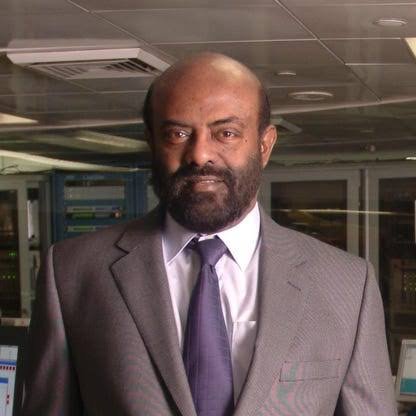
HCL was founded in 1976, HCL is one of India’s original IT garage startups. HCL stands for Hindustan Computers Limited. The company has offices in 50 countries. It was founded by Shiv Nadar https://en.wikipedia.org/wiki/Shiv_Nadar in 11 August 1976. It operates across sectors including aerospace and defense, automotive, banking, capital markets, chemical and process industries, energy and utilities, healthcare, hi-tech, industrial manufacturing, consumer goods, insurance, life sciences, manufacturing, media and entertainment, mining and natural resources, oil and gas, retail, telecom, and travel, transportation, logistics & hospitality. It aslo have services in consulting, outsourcing and software development. The revenue of this company is ₹76,306 crore in 2021. The website for this company is https://www.hcltech.com/.

Founder of HCL

The remarkable and incredible 80/20 principal

In business, many examples of the 80/20 Principle have been validated.
20 per cent of products usually account for about 80 per cent of dollar sales
value; so do 20 per cent of customers. 20 per cent of products or customers
usually also account for about 80 per cent of an organization’s profits.

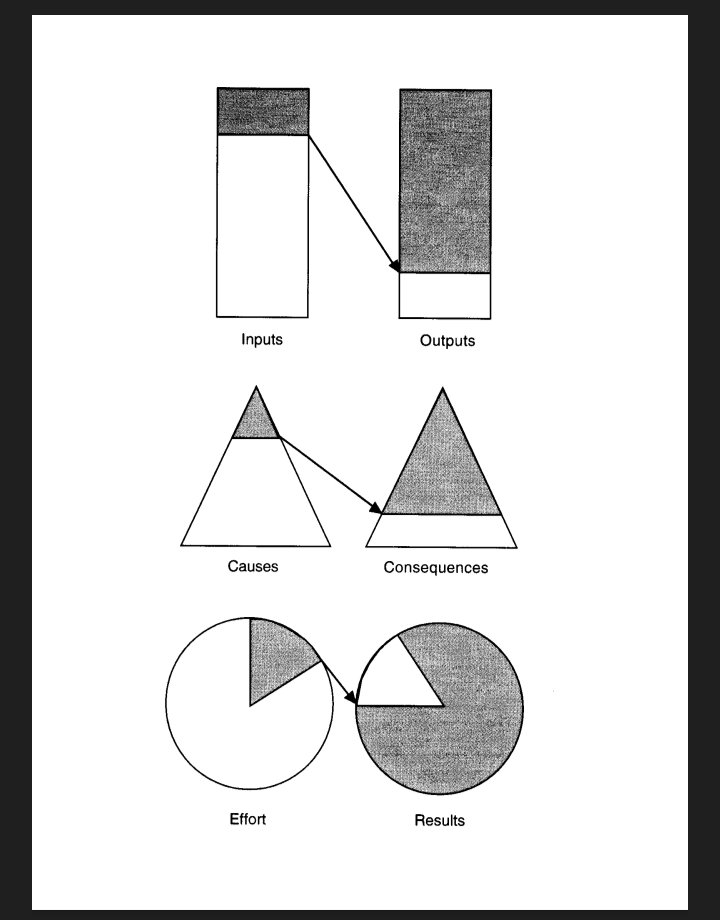
The 80/20 Principle asserts that a minority of causes, inputs or effort usually
lead to a majority of the results, outputs or rewards. Taken literally, this
means that, for example, 80 per cent of what you achieve in your job comes
from 20 per cent of the time spent. Thus for all practical purposes, four-
fifths of the effort—a dominant part of it—is largely irrelevant. This is
contrary to what people normally expect. So the 80/20 Principle states that
there is an inbuilt imbalance between causes and results, inputs and outputs,
and effort and reward.

The pattern underlying the 80/20 Principle was discovered in 1897, exactly
100 years ago, by Italian economist Vilfredo Pareto (1848–1923). His
discovery has since been called many names, including the Pareto Principle,
the Pareto Law, the 80/20 Rule, the Principle of Least Effort and the
Principle of Imbalance; throughout this book we will call it the 80/20
Principle.

By a subterranean process of influence on many important
achievers, especially business people, computer enthusiasts and quality
engineers, the 80/20 Principle has helped to shape the modern world. Yet it
has remained one of the great secrets of our time—and even the select band
of cognoscenti who know and use the 80/20 Principle only exploit a tiny
proportion of its power.

So what did Vilfredo Pareto discover? He happened to be looking at
patterns of wealth and income in nineteenth-century England. He found that
most income and wealth went to a minority of the people in his samples.
Perhaps there was nothing very surprising in this. But he also discovered
two other facts that he thought highly significant. One was that there was a
consistent mathematical relationship between the proportion of people (as a
percentage of the total relevant population) and the amount of income or
wealth that this group enjoyed.4 To simplify, if 20 per cent of the population
enjoyed 80 per cent of the wealth,5 then you could reliably predict that 10
per cent would have, say, 65 per cent of the wealth, and 5 per cent would
have 50 per cent. The key point is not the percentages, but the fact that the
distribution of wealth across the population was predictably unbalanced.

What do you about this principle

What beauty means to you

  • Beauty is power; a smile is its sword. …
  • Life is full of beauty. …
  • There is no definition of beauty, but when you can see someone’s spirit coming through, something unexplainable, that’s beautiful to me. …
  • Let us live for the beauty of our own reality.

One difficulty for understanding beauty is due to the fact that it has both objective and subjective aspects: it is seen as a property of things but also as depending on the emotional response of observers. Because of its subjective side, beauty is said to be “in the eye of the beholder”.

It has been argued that the ability on the side of the subject needed to perceive and judge beauty, sometimes referred to as the “sense of taste”, can be trained and that the verdicts of experts coincide in the long run.

This would suggest that the standards of validity of judgments of beauty are intersubjective, i.e. dependent on a group of judges, rather than fully subjective or fully objective.

Conceptions of beauty aim to capture what is essential to all beautiful things. Classical conceptions define beauty in terms of the relation between the beautiful object as a whole and its parts: the parts should stand in the right proportion to each other and thus compose an integrated harmonious whole. Hedonist conceptions see a necessary connection between pleasure and beauty, e.g. that for an object to be beautiful is for it to cause disinterested pleasure. Other conceptions include defining beautiful objects in terms of their value, of a loving attitude towards them or of their function.

What comes to your mind when you think of beauty?

Comment below 😇

Body parts that you can trade for money

It’s will amuse you to know that you can sell your body parts and People will pay hundreds, and sometimes thousands, of dollars for certain body parts.

Note that “selling” a body part isn’t the same as putting your futon up for sale on Craigslist. Except for selling ad space on your skin, most forms of giving body parts are technically donations, but it’s common practice to be compensated in cash. 

Being compensated for all of the parts listed below is legal, but we don’t necessarily recommend it. There are other — more conventional — ways to supplement your income.

1. Hair up to $1,000

Like blood, hair is easy enough to donate to a good cause (like Locks of Love). But it’s also entirely possible to sell it at a pretty sweet price point.

The trick is to keep it as long and “virginal” as possible. That means no harmful hair dyes or other chemical treatments that could damage the quality. Buyers are likely looking to make wigs, and they’re not going to be interested in your split ends.

According to Wisebread, one woman made as much as $1,000 on her locks in just a week by posting an ad on TheHairTrader.org.

2. Sperm: $ 125 per sample

The going rate: $125 for each acceptable sperm sample — which can add up to about $600 per month — according to the Sperm Bank of California.

You’ll have to meet some very specific qualifications first. Here’s the list of requirements for potential donors at SBC:

• Between ages 20 and 39

• At least 5’7″

• Can make a six to 12 month commitment

• Live within 25 miles of the office

• Can provide a family medical history

• Are able to work legally in the US

• Have completed or are pursuing a college degree

Look for sperm banks near you.

Child Marriage legalised on Rajsthan

Currently, Rajasthan govt released an amendment “Rajasthan compulsory Registration of Marriage Amendment Bill 2021” it allowed registration of child marriages, it’s 21 century and we all are aware of how heinous child marriage is, here are some of my views on this act

In my views law is not wrong
Those who commit or help in child marriage will still be punished, but those who already had marriage were not allowed to have registration and so they were not able to avail all govt schemes and benefits, those saying it will make it easier to do child marriage remember availing govt benefits are everyones fundamental rights.

Those saying it’s illegal look it like this rape is illegal but rape victim and culprit both have some rights that we can’t snatch, like culprit must be allowed to go court etc, ofcourse child marriage is as heinous as rape and here victims are both boy and girl but why they suffer whole life for it, they can’t get rashion, jobs, water, now as everything is more and more digitalizing and you can’t prove you’re married, it will become more hard to avail services like jacha bacha Suraksha and this are thee parents who most need it.

Also one negative point is it will make child marriage easier, but many people will not be able to avail fundamental rights isn’t it totally wrong also we can make child marriage hard by making strong rules. As we have data of child marriage we can ask govt employee who are posted there why they let it happen like police or magistrate, they will become more accountable this way.

If I’m missing some points or you want to share your views here’s my email soni362002@gmail.com

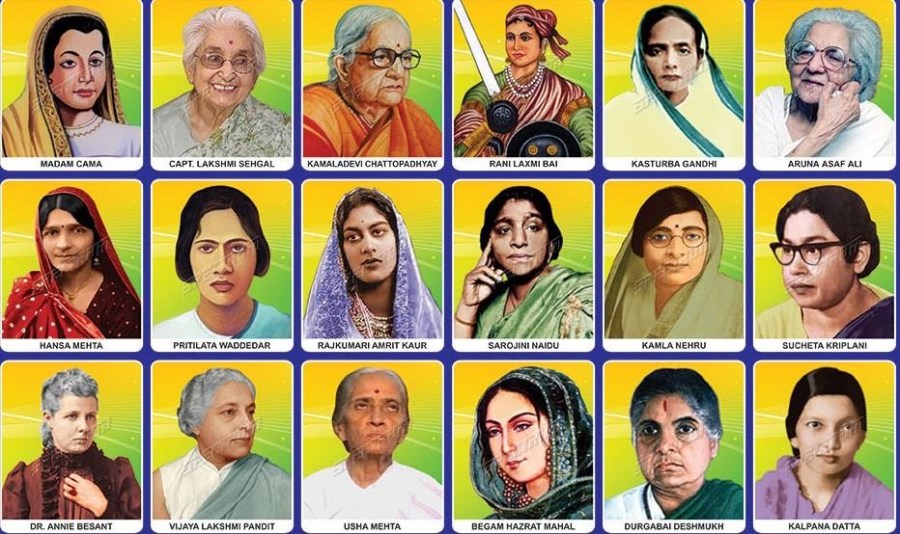
HAVE WE FORGOTTON OUR SHEROES ?

Women have made landmark contributions encompassing various fields.Its time we sing joys of celebration for our sheroes too like we do for men.They have suffered various setbacks in life but emerged powerful as pointed out by Swami Vivekanand ,“Woman has suffered for eons, and that has given her infinite patience and infinite perseverance”.

For celebration we need to know about the milestones they have crossed and the hinderances they’ve overcome.

Their benefactions can be categorized Two folds .First theEducational Sector.

Second the Political and the Social Sector.

In Education:-

When discussing about Economy we cannot rule out the role education.The first female graduates Kadimbini Ganguly and Chandramukhi Bose long broke the stereotypes of Male centric education system.There have been other historic Educationists of India like Ayyalasomayajula Lalitha who became the first Engineer of India back in 1943.

Anandibai Gopalrao Joshi was the first female doctor of India.

SavitriBai Phule along with Mahatma Jyotiba Phule led a movement for education of Girls.

They faced social ostracization and societal pressures but did not stop.In the end, SavitriBai Died while serving the victims of plague.In the field of law which was highly patriarchic Cornelia Sorabji broke all shakles and became India’s first female lawyer.                                                           Durgabai Deshmukh an early lawyer and political activist said-“I had then decided to take up the study of law so that I could give women free legal aid and assist them to defend themselves.”

These woman are not mere inspirations or role models,theybecame game changers and paved the way for education for the upcoming generation.

Polity:-

Politics despite being male dominated ,some Strong Female leaders have made immense contributions to freedom struggle. Going back to the the Delhi Sultanate,Razia Sultan became the first and last Female to ever became sultan in 1236.

After that there were different princely states in which women lead their dynasties. Rani Laxmibai became an epitome of strength along with JhalkariBai giving a strong fight to British.

Uda Devi a ‘Dalit Virangana’ fought the British Bravely in 1857 Battle.

Rani Gaidinliu of Manipur,was imprisoned at a young age of 13 because of her Anti-British Stand.During the 1857 Revolt the participation of Begum Hazrat Mahal of Lucknow is unmatched.AhalyaBai Holkar of Malwa Kingdom is still remembered as one of the Finest Leaders of India.In the modern era of freedom struggle Female Leaders like Sarojini Naidu,Annie Besant,Vijay Laxmi Pandit(First Female President of UNGA),Aruna Asif Ali(Grand Old Lady of Independence) etc fought against the British.        

Be it Anti partition movement of 1906 or Non Co-operation Movement or Civil Disobedient Movement, Women have added by large,the amplitude of struggle.

Revolutionaries like Capt.Laxmi Sehgal lead the Jhasi rani regiment of INA Army made by Subhash Chandra Bose.AlsoPritilata Waddedar,Kalpana Datta took up arms against the British.

Post-Independence Rajkumari Amrit Kaur became the first woman Health Minister of India.

Indira Gandhi not just became India’s First Prime Minister but also was the first female Finance Minister(1970-71),to present a budget.Sucheta Kriplani became the first female to become a Chief Minister of UP,also Sarojini Naidu became the first ever female Governor in UP.

The list of contributions made by our early Women is never ending. Such zeal and sacrifices, on par with those of Men, despite miniscule opportunities, simply motivates us.

It would be appropriate to agree with Mohammad Ali Jinnah when he quoted,

There are two powers in the world; one is the sword and the other is the pen. There is a great competition and rivalry between the two. There is a third power stronger than both, that of the women”.

Mohd Ali Jinnah

Why Do We Dream?

Dreams are hallucinations that occur during certain stages of sleep. They’re strongest during paradoxical sleep, or the rapid eye movement stage, once you could also be less likely to recall your dream. Much is understood about the role of sleep in regulating our metabolism, vital sign, brain function, and other aspects of health. But it’s been harder for researchers to elucidate the role of dreams.

When you’re awake, your thoughts have a particular logic to them. once you sleep, your brain remains active, but your thoughts or dreams often make little or no sense. this might be because the emotional centers of the brain trigger dreams, instead of the logical regions.

Though there’s no definitive proof, dreams are usually autobiographical thoughts that supported your recent activities, conversations, or other issues in your life. However, there are some popular theories on the role of dreams.

The role of dreams – Researchers still don’t entirely agree on the aim of dreams. There are, however, some widely held beliefs and theories.

Dreams as therapists – Your dreams could also be ways of confronting emotional dramas in your life. and since your brain is working at a way more emotional level than when you’re awake, your brain may make connections regarding your feelings that your conscious self wouldn’t make.

Dreams as fight-or-flight training – One of the areas of the brain that’s most active during dreaming is that the amygdala. The amygdala is that a part of the brain related to the survival instinct and therefore the fight-or-flight response.

One theory suggests that because the amygdala is more active during sleep than in your waking life, it’s going to be the brain’s way of getting you able to affect a threat.

Fortunately, the brainstem sends out nerve signals during paradoxical sleep that relax your muscles. That way you don’t attempt to run or clock in your sleep.

Dreams as your muse – One theory for why we dream is that it helps facilitate our creative tendencies. Artists of all types credit dreams with inspiring a number of their most creative works. you’ll have awakened sometimes in your life with an excellent idea for a movie or a song, too.

Without the logic filter, you would possibly normally use in your waking life which will restrict your creative flow, your thoughts and concepts haven’t any restrictions when you’re sleeping.

Dreams as memory aides – One widely held theory about the aim of dreams is that they assist you to store important memories and things you’ve learned, get obviate unimportant memories and type through complicated thoughts and feelings.

Research showsTrusted Source that sleep helps store memories. If you learn new information and sleep thereon, you’ll be ready to remember it better than if asked to recollect that information without the advantage of sleep.

How dreams affect memory storage and recall isn’t clearly understood yet. But dreams may help the brain more efficiently store important information while blocking out stimuli that would interfere with memory and learning.

Why can we have nightmares?

Dreams that assist you deal productively with emotions, memories, and other information could seem very helpful. The occasional nightmare is taken into account by a dream that’s simply more frightening or upsetting. Nightmares tend to be caused by stress, anxiety, or sometimes as a reaction to certain medications.

However, if you’ve got nightmares frequently, you’ll have a sleeping disorder. Regularly occurring scary dreams are often labeled a sleeping disorder if the nightmares:

  • cause you to worry about getting to sleep
  • lead to frequent disruptions of your sleep
  • bring about other sleeping or psychological problems
  • Many people experience occasional nightmares throughout their lives. However, the American Sleep Association estimates only about 5 percent of the population experiences persistent nightmares as a sleeping disorder.

What influences dreams?

Some factors that affect us when we’re awake also can influence our dreams.

Health conditions – One of the most important influences on dreams is what proportion or how little you’re sleeping. Being sleep-deprived for an evening or two (or more) can make parts of your brain far more active once you finally do slip into paradoxical sleep. You’re likely to possess more vivid dreams if you’ve had some restless nights. You’re also more likely to recall those dreams, too.

Being pregnant is additionally a catalyst for vivid dreaming. Increased hormone production affects the way your brain processes thoughts and emotions. This often results in some intense dreams.

Mental health disorders like depression and anxiety, also as manic depression and other mood-related conditions, can trigger intense and sometimes disturbing or negative dreams and nightmares. The medications for these conditions, including antidepressants and antipsychotics, also are related to a better risk of nightmares.

Foods – There isn’t indisputable evidence that certain foods cause wilder or better dreams. But it’s clear that some foods may set the stage for you to recollect your dreams better.

High-carb foods, for instance, can offer you quick energy. But after a short time, they will leave you feeling down. Anything that affects your waking mood is probably going to affect your unconscious mood, too. So, if a sugar crash has you moping around during the day, those feelings could carry over into your sleep.

Also, food that causes you to awaken throughout the night may end in you awakening more frequently within the REM stage. When that happens, you’ll probably remember more of your dreams.

Daily activities – Just as little or interrupted sleep often leads to more vivid dreaming, an honest night’s sleep will hamper the extreme dreams you’ll recall.

A small study trusted Source found that one great way to sleep more soundly is to exercise within the morning. an honest run or other cardio workouts before noon helps set your clock in order that you’re more inclined to nod off faster and spend longer in deep sleep than if you didn’t exercise or if you exercised late in the dark.

Runners and other serious fitness enthusiasts tend to spend less time in dreamy paradoxical sleep, which is one among the lightest stages of sleep. Also, the more effectively you’ll de-stress during the day, the less likely you’ll be to bring stress and anxiety to bed. Which ought to help hamper nightmares and interrupted sleep each night.

How to remember your dreams – One of the explanations dreams are often difficult to recollect is that the brain chemical related to memory — norepinephrine — and therefore the brain’s electrical activity that helps with recall are at their lowest levels when you’re dreaming. In fact, if you’ve got a dream but don’t awaken during the dream, you won’t be ready to commit it to memory. The dreams you remember are those that are ongoing once you awaken.

Two ways to assist recall your dreams is to inform yourself as you’re falling asleep that you simply want to recollect your dream. If that’s your last thought, you’ll be more likely to awaken with a dream still somewhat fresh in your memory.

Since dream recall is often easily interrupted by even the slightest distraction, you ought to attempt to remember the maximum amount of your dream as soon as you awaken. Don’t get out of bed or believe anything. attempt to grasp whatever images or memories you’ve got of your dream and write them down on a pad next to your bed or on your smartphone.


91 Nations vulnerable to new strain due to Indian vaccine export ban

91 Nations are vulnerable to the B1.617.2 strain after India has stopped export of vaccines claimed WHO: After being hit by the deadly and life taking second wave, New Delhi has banned all exports and started redirecting supplies for domestic use. India’s decision to ban exports and redirect supplies for domestic use has made a severe impact on those 91 Nations who were totally dependent on products of Serum Institute of India (SII), Covishield or AstraZeneca and the upcoming Novavax.

Without sufficient stocks these counties which are majorly African will remain Susceptible to the deadly B1.617.2 variant which was primarily found in India, said WHO . As per a chief scientist of World Health Organization, “91 countries are impacted by the shortage of supplies, particularly since the AstraZeneca parent company has not been able to compensate for the doses which have not come from Serum,” . The scientist stated that these nations are very vulnerable to new and more Transmissible strains including the B1.617.2 variant also.

The scientist added, “not just B.1.617.2, but other variants will emerge in other countries and spread around the world…We know that these variants spread very quickly. Even before they can be recognised, they are already spreading around the world. The same thing happened with the 117 [variant], now dominant“. As per an agreement signed between AstraZeneca and Serum Institute of India(SII) , SII was expected to supply a billion doses for low and middle income countries, with a commitment to provide 400 million doses by 2020 i.e. last year. All of this was to be delivered by Gavi, an international vaccine alliance.

The scientist also said that “most African countries, unfortunately, have vaccinated less than 0.5 per cent of their populations and haven’t even vaccinated all their healthcare workers,“.She also added that “if we continue having this inequitable distribution of available vaccines, we will see some countries going back to some degree of normalcy in their life, while other countries are hit very hard and continue to be hit hard by subsequent waves,“.

But after being hit heavily by the second wave, India stopped exports of it’s vaccines and redirected those for domestic use for vaccinating the natives. In this process, the nations which were dependent on Gavi and on Indian vaccines were left amid. As per some data, rich nations like US, UK, Israel, Canada and the European Union already ordered millions of vaccines from multiple vendors even before the vaccines were approved.

Now when there are no more options for the other countries, WHO has said that it hopes India will continue it’s exports again maybe somewhere at last of this year so that the other nations could also be vaccinated. The institution is “really going out with a plea to all countries to share their doses so that vulnerable groups can be protected before we start expanding to other groups such as children“. By the end of May, India has vaccinated about 3.5% of it’s total population. Indian government has also estimated that by the end of 2021 it will vaccinate every Indian.


WhatsApp Versus Indian Government

The whole nation is in turmoil due to the provisions of the new Information Technology Rules, 2021. To understand the situation better, we will see what the rules are and why they are causing conflicts with the Government. 

New IT rules that undermine the power of social media

The proposed new rules will cover social media companies like Facebook and Twitter, OTT platforms such as Netflix, Amazon Prime, Hotstar, and digital news publishers like The News Minute, Scroll, Quint, The Wire, Newslaundry, The Cue. 

Indian Government revealed the new social media rules on February 25, 2021. As per the new rules, social media intermediaries will now come under a three-tier regulatory regime. In this context, “social media intermediary” refers to an intermediary which primarily enables interaction between two or more users and allows them to create, upload, share, disseminate, modify or access information using its services. 

  • The First Tier

The first tier follows a self-regulating mechanism. The social media intermediary is required to appoint a resident Chief Compliant Officer, nodal contact person, and a resident Grievance Officer. The Chief Compliant Officer shall ensure compliance with the Act and the rules thereunder. The nodal officers shall coordinate with the law enforcement agencies to ensure compliance with their orders. The Grievance Officer shall acknowledge the complaint of a user within 24 hours and dispose of such complaint within a period of fifteen days from the date of its receipt. 

  • The Second Tier

The second tier is self-regulated by a self-regulating body. This body consists of a retired judge or an eminent person from the department of media, entertainment, or any relevant field. It has the power to censure, modify or delete any content it deems a cognizable offense.

  • The Third Tier

The third tier follows an oversight mechanism. It establishes an Inter-Departmental Committee that mainly performs the functions of the self-regulatory bodies. 

Some of the chief issues that worry the social media companies

  • Privacy concerns

One of the provisions of the new rules requires that the social media intermediaries disclose the identity of the “first originator” of the information that threatens the sovereignty and integrity of India, the security of the state, or public order.

  • Usage of AI

The Indian Government also requires the social media intermediaries to deploy technology-based measures to identify information that depicts any act or simulation in any form depicting rape, child sexual abuse, or conduct, whether explicit or implicit. 

Reactions to the imposed IT rules:

Obtaining the identification of the first originator would break the end-to-end encryption. By breaking the encryption, users cannot safely exchange chats, photos, or information on social media platforms without them being open to access not just by bureaucrats and government bodies but also by hackers.

While it is necessary to deploy Artificial Intelligence (AI) to monitor objectionable content, there are certain limitations to implementing it. With the number of users increasing, it is laborious to moderate the amount of content generated every day. 

WhatsApp’s stand against the Government

While Facebook has complied with the new rules and Twitter has remained a silent bystander, WhatsApp has filed a lawsuit in India which seeks to block the new digital ethics code from coming into force. For WhatsApp to identify the first originator of even one message, it has to restructure the entire platform. This feature compromises the privacy of billions of people who communicate digitally. The other concern is that freedom of speech and any form of expression of dissent would be hampered. 

IT Minister Ravi Shankar Prasad has stated, “It is WhatsApp’s responsibility to find a technical solution, whether through encryption or otherwise.” It will be interesting to witness how far India would go to press WhatsApp to comply with the new rule.

Covishield Gap reduced for Keralites going abroad

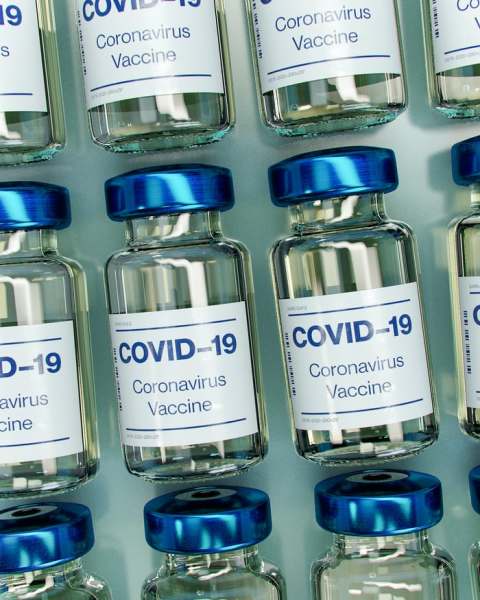
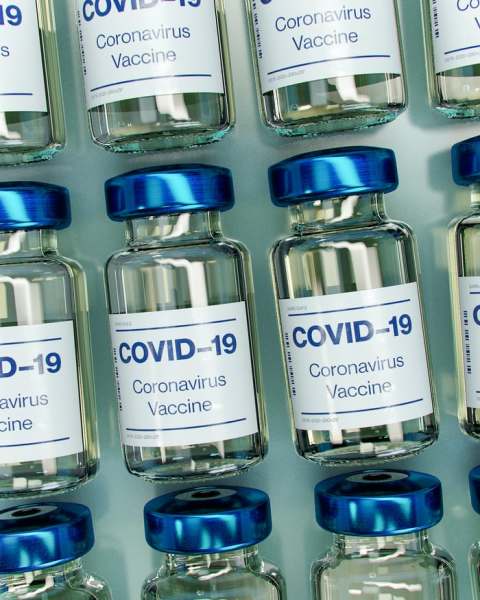
Kerala government had recently informed the Centre about the issues being faced by people who are travelling to foreign countries and later stated that they require certificates with passport numbers as many nations are only accepting the certificate of Oxford-AstraZeneca vaccine: Kerala government made a decision on Friday regarding those who need to travel abroad for some important purpose such as jobs, education etc. Kerala government decided to issue a covid 19 vaccination certificate with passports for such people. As per the order, person who took a jab of Covishield and wants to get travel clearance will be eligible for second dose after about four to six weeks.

Earlier the gap between the doses was about four to six weeks but later the government changed it. The central government increased the gap between two jabs and set it to twelve to sixteen weeks. The state government gave a statement related to it “A person who took Covishield jab and wants to get travel clearance will be eligible for second dose of Covishield after 4 to 6 weeks. Since currently Covid-19 portal does not permit to administer the second dose of Covishield within a period of less than 12 weeks, this is to be recorded separately by the districts,“.

The order declared the District Medical officer as an authorised person who would issue certificate of vaccination in a proper prescribed format. “Since the World Health Organisation (WHO) has already cleared Covishield vaccine, the same may be given as preference to people travelling abroad. Covishield vaccine will be provided from the vaccine procured by the State,” said the Kerala government. For ensuring that vaccines are being given to eligible person other documents could be used such as live visa, admission document for students, job confirmation letter/work permit for employees.

In a letter by the state government led by Pinarayi Vijayan to central government, they informed them about the situation Indians are facing while travelling abroad for education or job purposes. They stated that travelers are requiring proper certificate with their passport numbers as many nations are only accepting certificate by Oxford – AstraZeneca vaccine. And the Indian manufactured covishield vaccine is developed by Oxford University – AstraZeneca and is manufactured by Pune based – Serum Institute of India (SII) .

In the order, a statement was released by Kerala health department “All the issues were brought into the notice of Government of India to make provisions in CoWIN for permission to include passport details in CoWIN. It was also requested to give permission to the State Government to issue vaccination certificate with changes till provisions are made available in CoWIN. Further, it was requested to permit beneficiaries going abroad to take Covishield as per the previous schedule of 4–6 weeks and to make provisions in the CoWIN portal to document such vaccination given at 4 -6 weeks. However, no orders/letters are received from Government of India so far. In the above circumstances, Government has issued these directions.” Now the central government is expected to take any action on that.


Protest’s surfacing in Lakshadweep after new Govt.laws

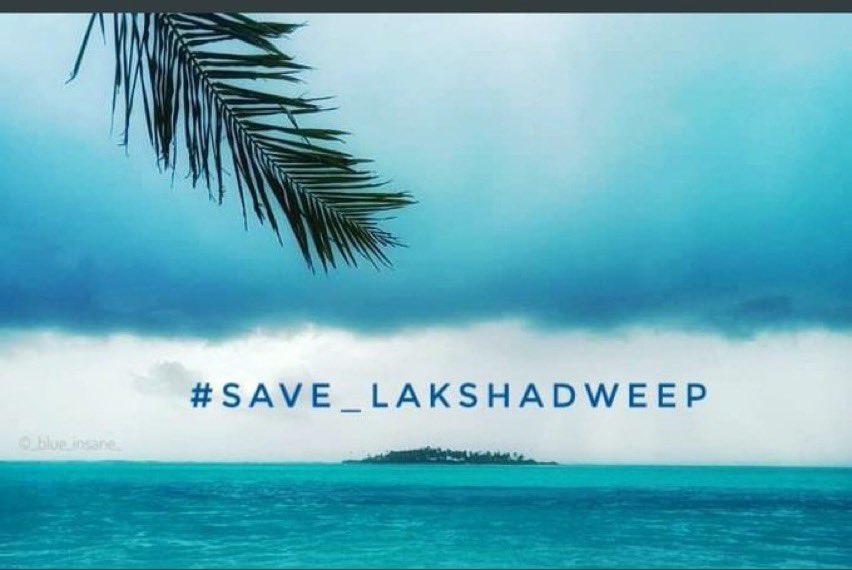
Located in the Arabian sea, Lakshadweep Island is the only part of India where nature has been existing in its purest form, with no traces of exploitation.
The archipelago is a collection of 36 islands, of which 10 are inhabited. Located on the southwestern coast of the Indian peninsula the island has just a population of 65,000 people, thus being the smallest among Union Territories(UT).

Amid the beautiful wilderness, harmony among the people, and well-balanced ecology, resentments among the people due to the introduction of new laws have been surfacing lately.
Protests of the hashtag “Save Lakshadweep” are echoing on social media.

A Brief Backdrop:


Lakshadweep politically has no Legislative Assembly or a Chief Minister. The entire administration of the island is divided into 3 levels-
* Lok Sabha has 1 Member of Parliament
* Local self-government: Panchayats
* The President of India appoints an Administrator for governance.

The administrators of Lakshadweep have always been bureaucrats. In 2020, it was Dineshwar Sharma, an IPS officer.
Unfortunately, on 4 December 2020, he passed away.
This was the time when entanglement started in the affairs.
After the death of Dineshwar Sharma, no bureaucrat was appointed as the administrator, rather the strings of the governance were passed to the hands of a politician. This person was Praful Khoda Patel, a right-wing politician of the running Bharatiya Janata Party (BJP) government.

The Resentment:


Since the new administrator came to the seat, Patel put forward a maverick set of laws without consulting the locally elected representatives of this Muslim-majority island. These laws have shattered the tranquility of the island and immersed it under protests and chaos.
The new algorithm of laws is being widely agitated upon. People claim that these laws endanger their livelihoods, land ownership, culture, and even the biodiversity of the tropical islands.

Typically the administrators of the island maintain their relationships with the local leaders for smooth governance. However, in the past few months, the people have raised voices against this new authoritarian administrator.

The Authoritarian approaches of Praful Khoda Patel:

Land Grab-


The administrator Praful Khoda Patel introduced the Lakshadweep Development Authority Regulation 2021, where the government is empowered to take over the lands from the residents for constructing highways, railways, or infrastructure.
The islanders view this as a land grab by giant corporates. This would also put a huge strain on the ecology and biodiversity of the area.

Weakened the democratic voting rights-


It is an old dream of the Lakshadweep inhabitants to have statehood and a Chief Minister like Goa.
They even do not have the right to elect their administrator.
keeping these besides, the poor islanders just have the shaky right to elect their MP and officials only at the Panchayat level.

Things do not stop here, the new administration under Praful Khoda Patel intruded in the local government and drained powers of the Panchayat from 5 different areas, namely- education, healthcare, agriculture, animal husbandry, and fisheries.

Further, Panchayat election regulation has been introduced declaring people having more than 2 children ineligible to contest elections.

Covid threat:


When the country was struggling hard from the Covid spell, Lakshadweep was the only Union Territory to be free of Covid. This was because until December Standard Operating Procedure to prevent COVID-19 was being strictly followed. Under this SOP, people coming from outside were mandated to have a negative RT-PCR test followed by a 14-day quarantine. People supported it and that is why Lakshadweep was Covid free.
Unfortunately, the first Covid case was reported on 18 January, 8 days after the SOP was removed by the new administrator.
The cases skyrocketed due to the island’s small area and dense population along with a not-so-modern healthcare system.

Unjustified laws:


Patel’s Anti-Social Activities Regulation Bill 2021 or Goonda Act further created discontentment among the inhabitants. This act empowers to detain anyone without public disclosure for up to a year.

This law would not be a fight against criminals because Lakshadweep already has the lowest crime rate in India. Rather it is the clear manifestation of authoritarian rule and sharply against the law of natural justice.
The application of this unjust law would be used to brand anyone who protested as a criminal.
The islanders allege that this law would be used by their administrator against those who criticize his decisions and protest his rule.

Liquor permit and beef ban:


Liquor and alcohol were banned in the inhabited resorts of Lakshadweep for a long time due to the Muslim majority and was allowed only at resorts on the uninhabited island. Praful K. Patel reversed the situation. He lifted the ban and permitted opening bars and shops, claiming this will boost tourism on the island.

Lakshadweep Animal Preservation and Regulation 2021 further aggravated people’s anger.
Praful K. Patel imposed a strict ban on the sale, or buy of beef or beef products in any form anywhere in the Muslim-majority islands. Anyone found violating the law would be imprisoned for up to 10 years.

The people of the island are Muslim majority and have a Malayali culture where beef consumption is followed traditionally and imposing something opposite of their culture is an intrusion.

Neighbouring Kerala state’s Chief Minister Pinarayi Vijayan and KC Venugopal, a Congress member of parliament, have also opposed Patel’s decisions. Vijayan says “Patel’s actions pose a grave threat to the life and culture of the people of Lakshadweep”.