Role of International Business and Sustainable Development!!

The shift in the perceived role of corporations as solely profit generators to agents for positive change has become clearer than ever before with the new UN Sustainable Development Goals (SDGs). The SDGs focus on the greatest challenges faced by humanity with the aim of ending poverty and hunger, misery and war, unfairness and inequality. Clearly, governments alone cannot achieve this big agenda, nor should they. Businesses have enormous power, resources and knowledge to assist. Corporate responsibility is no longer about doing less harm, or giving money to charity.

The SDGs include 17 global goals (and 169 related targets), replacing the Millennium Development Goals (MDGs). Adopted by the UN on September 25, they seek to encourage government, business and other players to focus simultaneously on the three dimensions of sustainable development: economic prosperity, social inclusion and environmental sustainability. According to the UN, the SDGs clearly define the better and more just world we want – applying to all nations and leaving no one behind.

Business, from micro-enterprises to multinationals, has a vital role to play in achieving each of the SDGs. The UN is very explicit about the expectations placed on the for-profit sector around the world.For business, this means fostering “a dynamic and well-functioning business sector, while protecting labour rights and environmental and health standards”.

Firstly, business can help by ceasing to create problems that governments have to fix. Some businesses create pollution and poverty, violate human and children’s rights and have supported war and conflict, all in the name of shareholder value. If we are to collectively achieve the SDGs, these practices must stop. Moreover, businesses can proactively collaborate with others to achieve each of the SDGs through sustainable business operations, responsible investment and innovation. International trade may be part of the solution, using supply chains as a powerful mechanism to also provide aid and resources to the developing world.

The SDGs do not only present business with duties, they can be seen as great opportunities. Successful implementation of the SDGs will strengthen the environment for doing business and building markets. Even the most responsible companies struggle to thrive in communities marked by instability and conflict, to find skilled labour where adequate education is lacking, or to withstand natural disasters stemming from climate change.

The UN and others are not naive. We all know profit will continue to be the main motive for many companies and some will still need to be monitored. While some call for more radical measures, such as taking out “economic prosperity” as one of the three underlying goals of the SDGs, others understand that working within the existing business environment could achieve a better commitment.

The SDGs present business with unprecedented duties and opportunities to change our world beyond recognition, but this time for the better. They offer a blueprint for what our society should look like 15 years from now. If achieved, the world would be better for all of us — including for businesses.

Refrences:-

Home

https://www.researchgate.net

Day to Day Sings & Symptons…DAY 1 to 22

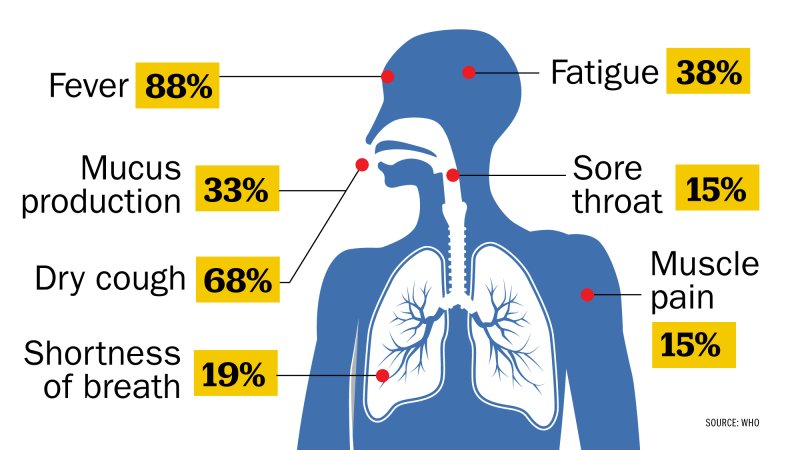
Day to Day Signs and Symptoms of Coronavirus DAY TO DAY SYMPTOMS OF COVID-19 Before proceeding, please note that this general overview is compiled for initial self-assessment only and should vary for each individual. If you are not feeling well, you ought to immediately consult a medical man to possess an accurate diagnosis and proper treatment of COVID-19. The typical daily symptoms are concluded from the study of 138 patients at Zhongnan Hospital of Wuhan University and another study involving 135 patients from Jinyintan Hospital and 56 patients from Wuhan Pulmonary Hospital.

Update: China reports 1,287 confirmed cases of new coronavirus ...

These symptoms are broken down into:

DAY 1 to DAY 2 the start symptoms are almost like the cold with a light pharyngitis and neither having a fever nor feeling tired. Patients can still consume food and drink as was common .

DAY 3 The patient’s throats start to feel a touch painful. Body temperature reads at around 36.5° celsius. Although it’s uncommon, other symptoms like mild nausea, vomiting or mild diarrhea are possible to set in.

DAY 4 Throat pain becomes more serious. Other symptoms like feeling weak and joint pain start to manifest. The patient may show a temperature reading between 36.5° to 37° celsius.

DAY 5 to DAY 6 Mild fever starts. The patients show a temperature reading above 37.2° celsius. The second most common symptom, dry cough, also appears. Dyspnea or breathing difficulty may occur occasionally. Most patients during this stage are easily feeling tired. Other symptoms remain about the same. These four symptoms are among the top five key indications of COVID-19 according to the final report of the initial outbreak conducted by the joint mission of China and WHO.

DAY 7 get more serious coughs and breathing difficulty. Fever can get higher up to 38° celsius. Patients may develop further headache and body pain or worsening diarrhea if there’s any. Many patients are admitted to the hospital at this stage.

DAY 8 to DAY 9 On the 8th day, the symptoms are likely to be worsened for the patient who has coexisting medical conditions. Severe shortness of breath becomes more frequent. Temperature reading goes well above 38°.

DAY 9 is that the average time when Sepsis starts to affect 40% of the patients.

DAY 10 to DAY 11 Doctors are ordering imaging tests like chest x-ray to capture the severity of respiratory distress in patients. Patients are having loss of appetite and should be facing abdominal pain. The condition also needs immediate treatment in ICU.

DAY 12 to DAY 14 For the survivors, the symptoms can be well-managed at this point. Fever tends to urge better and breathing difficulties may start to cease on day 13. But Some patients should be suffering from mild cough even after hospital discharge.

DAY 15 to DAY 16 Day 15 is the opposite condition for the rest of the minority patients. The fragile group must prepare for the possibility of acute cardiac injury or kidney injury.

DAY 17 to DAY 19 COVID-19 fatality cases happen at around day 18. Before the time, vulnerable patients may develop a secondary infection caused by a new pathogen in the lower respiratory tract. The severe condition may then lead to blood coagulation and ischemia.
DAY 20 to DAY 22 The surviving patients are recovered completely from the disease and are discharged from the hospital.

STAY HOME & STAY SAFE

Instagram Launches 'Stay Home' Story & Co-Watching Feature Amid ...

Another Silver Lining in COVID Fight: Scientists Discover Proteins Which May Reduce Acute Inflammatory Response…

New Delhi: In yet another discovery concerning Coronavirus infection, sientists have found a new drug which according to their claims could be useful in fighting aggravated immune response in respiratory illnesses such as COVID-19. The therapeutic is called TAT CARMIL1, and is actually a combination of two naturally occurring small proteins, or peptides, as per description in the journal Cell Reports.

As per scientists, when the two peptides are combined, they work together to penetrate a cell’s membrane in order to dampen an acute inflammatory response. In the current study, they said the peptide reduced degradation of the protein called collagen by up to 43 per cent.

If deployed early enough, the scientists said, the peptide could reduce some of the worst damage caused by acute inflammatory responses.

They said acute infections, such as those caused by the novel coronavirus, can cause inflammatory responses known as “cytokine storms,” — a term that has gained in popularity during the COVID-19 pandemic. The researchers explained that when the body becomes overwhelmed by infections, such as those caused by influenza, H1N1 or COVID-19, it can release an unregulated flood of molecules called cytokines into the body.

They said when the body becomes overwhelmed by infections such as those caused by influenza, H1N1 or COVID-19, it can lead to the unregulated release of a flood of cytokines into the body — a natural defense response to an acute infection.

Under such cases, the study noted that infection-busting cytokines can cause severe damage in the body — everything from holes in the lung tissue to vascular damage and blot clots, with the most acute cases causing death.

According to the scientists, the peptide combines a segment of a naturally occurring protein, CARMIL1, with a peptide “vehicle,” TAT, that brings the CARMIL1 directly into the cell. They said this enables the CARMIL1 to calm the inflammatory storm.

“The CARMIL peptide effectively blocks a family of cytokines, called interleukin1, from signalling and reproducing in vast quantities,” the researchers noted in a statement to the press. They said the study gives the first indication of how these CARMIL proteins are involved with this pathway.

The TAT CARMIL1 peptide, according to the scientists, targets two receptors, sticking to both the cell’s surface and its cell substrate, where it adheres to other cells.

“The two receptors necessary for it to work supplies an unusual level of specificity,” explained Chris McCulloch, a co-lead of the study from the University of Toronto.

“We think the unusual nature of this pathway might restrict its side effects,” McCulloch said. The scientists believe the therapeutic could be an unusually strong candidate as a potential drug. Since molecules designed to work in conjunction with this peptide would need to target cells at both receptors, they said it narrows the potential field of candidates from tens of thousands to hundreds.

The research team hopes to track the peptide’s effectiveness and working mechanism further in lab studies.

Coronavirus Symptoms in India: Diarrhea, Headache And Vomiting Could Also be Signs of Deadly COVID-19..

New Delhi: As the coronavirus has created havoc across the world, scientists at the Centre for Disease Control (CDC) and Prevention added three new triggers to the list of COVID-19 symptoms. Doctors at Chest and King Koti hospitals in Hyderabad have claimed that the new symptoms– Diarrhea, headache and vomiting are responsible for the delayed process of diagnosis and treatment.

“These cases are presented as caused due to food-poisoning and seasonal change leading to stomach upset. But it is the virus which is attacking gastro-intestinal track first instead of lungs.

It is presented in the form of severe diarrhoea and vomiting causing dehydration. This, in turn, leads to weakness, lower oxygen level, low BP, low sugar and sudden collapse”, leading portal Deccan Chronicle quoted a doctor as saying.

A few doctors underlined that the deadly virus is changing its genomic structure as per the season, in a bid to ensure its survival.

Earlier fever, cough and difficulty in breathing were said to be most common symptoms for the deadly virus. The list was updated in April and the CDC added chills, repeated shaking with chills, muscle pain, headache, sore throat and loss of taste or smell as the new symptoms.

Take a look at the coronavirus symptoms listed by the CDC so far:

Fever

Cough

Difficulty breathing

Fatigue

Muscle or body aches

Headache

New loss of taste or smell

Sore throat

Congestion or runny nose

Nausea or vomiting

Diarrhoea

Meanwhile, the World Health Organization (WHO) has reported a record hike in the number of global coronavirus cases, with the total rising by 212,326 in 24 hours in the highest single-day increase since COVID-19 broke out.

The biggest increase was reported in the Americas region with 129,772 new cases. Nearly half of the new cases were recorded in the US and Brazil, with 53,213 and 48,105 new infections, respectively.

After COVID19, China reports suspected bubonic plague case; alert sounded

At a time when the entire world is fighting against COVID19 pandemic, one suspected case of bubonic plague has been reported by a hospital in northern China’s Inner Mongolia.

The detection of the suspected case of bubonic plague has come to light in a statement issued by a local health commission on its website.

As per a media report, a third-level warning alert was issued on Sunday.

The warning period will reportedly be extended to the end of this year.

The report said Bayannaoer health commission warned that there are risks of human-to-human infection from the plague.

The health commission urged the people in the city to take precautions to avoid infection.

According to another report, the alert forbids the hunting and eating of animals that could carry plague and asks the public to report any suspected cases of plague or fever with no clear causes, and to report any sick or dead marmots.

Bubonic plague is a bacterial disease that is spread by fleas living on wild rodents such as marmots.

According to the World Health Organization (WHO), the plague can kill an adult in less than 24 hours if not treated in time

On July 1, state-run Xinhua news agency said two suspected cases of bubonic plague reported in Khovd province in western Mongolia.

Bubonic plague is one of three types of plague caused by bacterium Yersinia pestis.

If someone is affected by Bubonic plague, flu-like symptoms develop, within one to seven days after exposure to the bacteria.

Bubonic plague symptoms include headaches, fever, and vomiting.

Swollen and painful lymph nodes occur in the area closest to where the bacteria entered the skin.

Wuhan, the capital of China’s central Hubei province, was the epicenter of COVID19 epidemic.

Opacity in PM Cares Fund putting lives at risk: Rahul Gandhi….

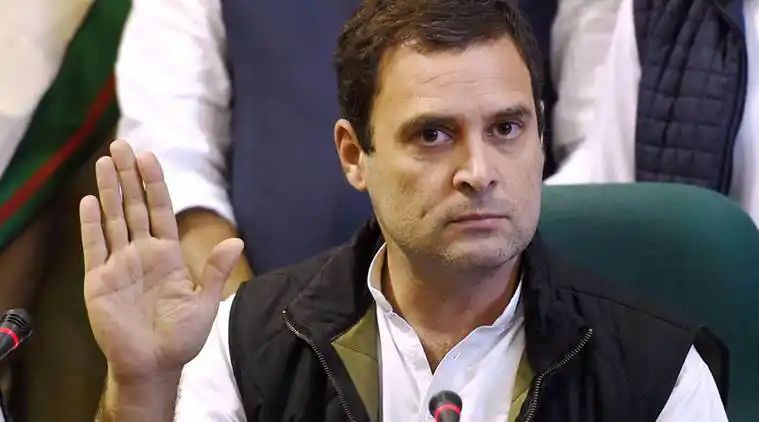
The Congress on Sunday accused the government of ‘wasting’ the lockdown by not ramping up health infrastructure and procuring ‘substandard’ ventilators that are crucial for critical COVID-19 patients, with Rahul Gandhi charging that ‘opacity’ in the PM Cares Fund is putting lives of Indians at risk.

Using the hashtag ‘BJPfailsCoronaFight’, Gandhi tweeted, ‘PMCares opacity is: 1. Putting Indian lives at risk. 2. Ensuring public money is used to buy sub-standard products.’

He also tagged a news report about a private firm providing substandard ventilators, procured using the PM Cares Fund.

The Prime Minister’s Citizen Assistance and Relief in Emergency Situations (PM CARES) Fund was set up in view of the COVID-19 pandemic.

Congress chief spokesperson Randeep Surjewala alleged a ‘scam’ in the purchase of ventilators.

‘The ‘Ventilators’ Scam! Out of Rs 2,000 crore allocated for 50,000 ventilators, only 1,340 ventilators delivered till 23rd June. No open tendering. Inferior Quality. Purchase Price of Rs 4 Lakh instead of quoted price of Rs 1.5 Lakh per ventilator,’ he said in a tweet.

Congress spokesperson Gaurav Vallabh questioned the government why only 1,340 ventilators could be procured till June 22 whereas it had placed order for 50,000 on March 31.

At a virtual press conference, he expressed concern over the rise in coronavirus infections in the country and accused the government of ‘wasting time’ by not utilising the lockdown period to ramp up the health infrastructure.

He said the actual procurement is against the claim made by BJP president J P Nadda that the country will have 60,000 ventilators by June-end.

Vallabh also alleged ‘confusion and delay’ in ordering ventilators, ‘financial impropriety’ and lack of transparency in spending PM Cares Fund, and supply of ‘substandard’ ventilators.

With a record single-day surge of 24,850 coronavirus infections and 613 fatalities, India’s COVID-19 case load zoomed to 6,73,165, while the death toll due to the disease climbed to 19,268 on Sunday, according to the Union health ministry.

With this, the country has recorded over 20,000 cases of the infection for the third consecutive day.

According to Johns Hopkins University, which has been compiling COVID-19 data from all over the world, India is the fourth worst-hit nation by the pandemic after the US, Brazil and Russia and at the eighth position in terms of the death toll due to the disease.

‘The way the corona cases in the country are rising, it is worrisome. I pray that the peak comes soon and this country is freed from the virus,’ the Congress spokesperson said.

‘Lockdown was a pause button and it should have been used to ramp up health infrastructure. But the government has wasted time and has indulged in mismanagement in procuring ventilators.

‘As per the government, only 1,340 ventilators have been procured till June 22, whereas the BJP chief claimed in a virtual rally that the country will have 60,000 ventilators by June-end. Why so few ventilators have been procured in more than 2.5 months. Who is responsible,’ he asked.

The Congress leader also said Rs 2,000 crore was allocated from the PM Cares Fund for procuring 50,000 ventilators with each costing around Rs 4 lakh, whereas a company is supplying ventilators to the government at Rs 1.5 lakh only.

‘Does the PM Cares order of 50,000 ventilators include 40,000 ordered by the government earlier. Where has the PM-CARES money gone and why is there an abnormal delay in procuring them…. Has PM Cares opted for open tendering to ensure transparency in government procurement. The PM Cares funds are also public funds,’ he said.

Alleging that substandard material and ventilators are being procured by the government from some private players, Vallabh asked, ‘Why the government is compromising with the health of people by bringing substandard material.’

He said in the interest of people of our country who are struggling to get out of these challenging and difficult times, the Congress would like to know the answers of questions which are directly related to the well being of citizens of our country.

The opposition leader said in the interest of people who are struggling for their health, the government should answer the questions raised by the Congress party.

He said neither is the government answering questions on the border tussle with China nor is it coming out with facts on the coronavirus pandemic.

‘The Prime Minister and the Health Minister should reply to these questions raised by us in the interest of the health of the people of the country,’ he said.

Vallabh hoped the government would look into the concerns raised by the party. ‘We can’t tolerate the iota of confusion, corruption and mistake at these critical times when the number of COVID-19 patients are every day breaking the record of the last day,’ he said.

COVID-19 vaccine: Britain nears deal for 60 million vaccine doses from Sanofi/GSK, says report…

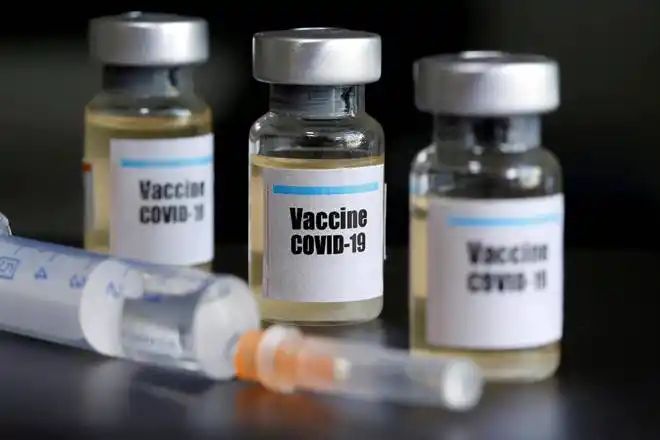
Britain is close to agreeing a 500 million pound ($624 million) supply deal with Sanofi and GlaxoSmithKline for 60 million doses of their potential COVID-19 vaccine, the Sunday Times reported.

The newspaper said that Britain was considering taking an option to buy the vaccine should it work in human trials, which are due to begin in September.

Sanofi was not immediately available to comment on the report, while a spokesman for GSK declined to comment.

A spokeswoman for Britain’s business ministry, which is handling Britain’s supply of potential COVID-19 vaccines, said talks were ongoing with different parties about access but did not confirm if the Sanofi/GSK project was among them.

‘The Government’s Vaccines Task Force is actively engaging with a wide range of companies both in the UK and abroad to negotiate access to vaccines,’ she said.

‘Appropriate announcements of these arrangements will be made as and when agreements with any of these companies are finalised and signed.’

Sanofi is working on two possible COVID-19 vaccines, one of which uses an adjuvant made by GSK to potentially boost its efficacy.

Its timeline for clinical trials is behind the likes of Moderna Inc, the University of Oxford in collaboration with AstraZeneca Plc, and an alliance of BioNTech and Pfizer Inc, whose projects all grabbed headlines by moving to human trials as early as March.

Sanofi and GSK have both said they are prioritising quality over speed in developing a vaccine.

The torture culture in India needs to end now

Just the individuals, including the Bar, the media, common society and understudy gatherings, can ascend against torment rehearses.

At this point, everybody has known about the deplorable passings of P. Jayaraj and J. Benicks, a dad child couple in a modest community in Thoothukudi. Jayaraj, 58, was captured by the police following a squabble with them on keeping his child’s cell phone shop open infringing upon lockdown rules. After Benicks was additionally arrested, the two were cruelly whipped to death.

Being seen as blameworthy of the ‘offense’ of keeping a shop open during the lockdown would have customarily conceded Jayaraj and Benicks a limit of just three months of detainment. The story, tragically, doesn’t end with the police alone. Before the two men kicked the bucket, the police looked for their remand, which an appointed authority sitting in a court complex precisely appears to have in truth, while never observing the two men, or appearing to scrutinize the reason for their remand. The arrangement of occasions, beginning with the barbarous lockdown requirement strategies and finishing up with the totally abhorrent and altogether avoidable passings, is an indication that we are living with a totally violated arrangement of law authorization.

Endemic to police culture

The Tamil Nadu Police has gained reputation throughout the decades for utilizing unbearable strategies for law implementation. During my residency as Chief Justice of the Madras High Court, a few cases in such manner were brought to the court. Be that as it may, this issue isn’t confined to Tamil Nadu alone. Torment is, truth be told, a vital piece of police culture everywhere throughout the nation. Without a doubt, it would not be out of order to contend that this culture in India today is suggestive of the mercilessness of the provincial police powers that we are so quick to overlook.

Official information additionally acknowledge that police torment is a reality, yet the nature of such information is consistently suspect. The inescapability of police torment is best comprehended in the convincing case found in reports made by NGOs and onlookers throughout the years, including by the Asian Center for Human Rights, Amnesty International and People’s Union for Democratic Rights.

The information on torment show that it isn’t just a fundamental piece of India’s policing society; in certain examinations, (for example, fear cases), it is treated as the focal point. The truth of the matter is that the current laws encourage such torment, for example, through the acceptability of admissions as proof under the Terrorist and Disruptive Activities (Prevention) Act and the Prevention of Terrorism Act, which proceeds repaired as the Maharashtra Control of Organized Crime Act. Shockingly, policing has additionally not mainstreamed the move up to more current innovations, similar to DNA examination, which can legitimately affect law authorization rehearses.

What some have named as India’s “open mystery” is tread lightly around in the worldwide field. The official situation on state-supported or state-embraced torment can be found in a 2017 statement by India’s then Attorney-General. In his initial discourse in Geneva at the nation’s all inclusive intermittent audit at the United Nations Human Rights Council, the Attorney-General summoned Gandhi and Buddha, expressing that “India… believe[s] in harmony, peacefulness and maintaining human nobility. In that capacity, the idea of torment is totally strange to our way of life and it has no spot in the administration of the country. ” This would be a typical case of bad faith, if at any point.

Without a doubt, the culpable officials in the Thoothukudi case are being indicted, and some pay will likewise be paid to the casualties’ families. Be that as it may, such piecemeal activity isn’t what is required. What we truly need is an acknowledgment that torment is endemic and a fundamental issue, and the main answer lies in severe legitimate structure that is lined up with and focused on the standards of worldwide law under the UN Convention Against Torture (UNCAT) to which India has been a signatory since 1997, and a watertight requirement instrument that dissuades such practices.

Indeed, even before India marked the UNCAT, our Supreme Court had achieved magnificent statute featuring the numerous issues with the nation’s torment culture. In Raghbir Singh v. Province of Haryana (1980), the Court was “profoundly upset by the wicked repeat of police torment bringing about a horrendous panic in the psyches of basic residents that their lives and freedom are under another danger when the watchmen of the law gore human rights to death. ” These assumptions were returned to in Francis Coralie Mullin v. Association Territory of Delhi (1981) and Sheela Barse v. Territory of Maharashtra (1987), where the Court denounced savagery and torment as violative of Article 21. This understanding of Article 21 is reliable with the standards contained in the UNCAT. The UNCAT intends to forestall torment and different demonstrations of savage, cruel, or corrupting treatment or discipline far and wide.

In spite of the fact that India marked the UNCAT in 1997, it is yet to confirm it. In 2010, a feeble Prevention of Torture Bill was passed by the Lok Sabha, and the Rajya Sabha later sent it to a Select Committee for audit in arrangement with the UNCAT. (I, as well, showed up before this council in 2010 after retirement from legal office). Be that as it may, the Committee’s suggested law, submitted in 2012, never fructified, as the then UPA government permitted the Bill to slip by. In 2016, Ashwani Kumar, a senior backer and previous Union Minister of Law, looked for the sanctioning of a torment law by means of a Supreme Court request. By 2017, the Law Commission had presented its 273rd report and a going with draft torment law. Be that as it may, the Supreme Court excused the request on grounds that the legislature can’t be constrained to make a law by mandamus; settlement sanction was a political choice; and that it was an approach matter. A second request on the issue documented by Mr. Kumar likewise met a similar destiny as the first.

This dismissal was an indication of the Supreme Court betraying its own sublime statute, and its endeavors to help law-production previously, regardless of whether in utilizing the Convention on the Elimination of all Forms of Discrimination Against Women to change the law around work environment inappropriate behavior; or standard global law in ecological cases; or the privilege to protection — this long and differed list is brilliant of a proactive Court that considers itself to be liable for pushing Parliament into authoritative activity.

EndTortureToday

Neither the Home Ministry nor this legislature is probably going to take up the torment law. To be sure, the way where the torment bill has been dealt with uncovers a double-crossing of the individuals of India by progressive governments. There have been open doors for a long time to sanction a law on torment, yet they have been contemplatively dodged. State conference likewise has no significance. It is clear that all legislatures appreciate the state of affairs, where the police are utilized as an apparatus for self-conservation. Any disequilibrium isn’t politically alluring.

As crippling as this may appear, everything isn’t lost. There is a lot of motivation around us. Days after George Floyd was killed in Minneapolis in the U. S. , when a cop held him in a 8-minute-46-second-strangle hold, the #BlackLivesMatter development rose, with numerous Indians joining in as well. The development, drove by the individuals, began a national discussion in the U. S. on policing, including radical changes, for example, defunding and incapacitating the police. Seemingly we need a people’s development at home too that will realize the important administrative changes that the Law Commission has proposed, and that urges organizations to #EndTortureToday. Just the individuals can ascend against these practices, similarly as they are doing in different pieces of the world. Furthermore, by individuals, I incorporate significant partners like the Bar, the media, common society and understudy gatherings. Each of these have significant tasks to carry out in realizing the change we need to see. It is simply a matter of who chooses to get the mantle first.


How to ensure Master Plan Implementation

 Implementation of plan proposals has direct implications on urban growth and development. For this, a vibrant, robust and coordinated network of institutions and information system is essential for full utilization of available financial and other resources judiciously. Besides, a set of tools are needed to implement plan properly. These tools include legal protection of plan, regulatory measures of land use controls, i.e., land and zoning regulations, building regulations etc., controls on development activities and capital enhancement programmes. Other subordinate tools like tax policy, township policy, land acquisition, institutional reorganization, incentives for public-private partnerships etc. must be attuned to the goals and objectives of the master plan. 

Further, the plan constantly need its translation into socio-economic and investment programmes. However, spatio-temporal variations in availability of planning tools and their limitations should be recognized during preparation of plan to ensure its successful implementation. For instance, land use zoning or compulsory purchase of land may well exist on paper or in legislation but are not effective in practice. Such exercise enhances effectiveness of master plans and their implementation on ground level. 

The execution of master plan is carried out either by municipality or corporation. For execution a team of experts in Engineering, Architecture, Public health, Sociology, Economics, Finance etc. headed by a Town Planner is required. After the master plan is accepted and approved by the concerned authority, the steps to be taken will be 

  1. To fix the broad policies in connection with various proposals. 
  2. To prepare the list of the urgent works according to their priorities. 
  3. To prepare the detailed estimates of work of top priority. 
  4. To prepare a financial programme. 

It takes many years to complete the works contemplated in the master plan. The cost is also very high amount. So the expenditure will have to be distributed over several years. Moreover, several modifications will have to be made as such no final estimate is made in the initial stage. The most important part of master plan is the reservation of land for road system, open spaces, and public amenities, which cannot be provided for at a later date. Once it is finalized, no building should be allowed to construct which will upset the street system. 

Following inputs from preceding stages and prevailing statutes, a seamless plan implementation schedule must be prepared for development plan. It should contain roles and responsibilities of all stakeholders, resource mobilization framework and phase‐wise implementation schedule for planned project activities. The key aspects to be covered in the Implementation framework should be in line with aims, objectives and prioritized projects and schemes. Implementation framework may include the following: 

  • Priorities of projects and research 
  • Phasing of developmental activities 
  • Proposal for land resource mobilization 
  • Investment strategy and promotion 
  • Institutional set‐up 

1) Priorities 

Classify various projects identified as a part of development proposals by priority as under 

  • Essentials (Top priority)
  • Necessary (2nd priority)
  • Acceptable and desirable (3rd priority) 
  • Deferrable (4th priority) 

Projects and research should be identified by phases and implementing agencies (including private and corporate sectors) to be given as per the institutional setup. 

2) Phasing 

Development plan should advisably be in phases of 5 years to coincide with the state five year plans. The targets set for each phase can be assessed as the mid‐term review against the achievements at the end of each phase. For greenfield area phasing could include a ‘zero’ period for approvals, institutional set‐up, initial land pooling and revisiting any strategy. 

3) Proposal for Land Resource Mobilization 

Implementation mechanism detailing approaches for land polling and development in lines with the suggested mechanism in the state perspective plan. 

4) Investment Strategy 

Proposals for fiscal resource mobilization including: 

  • Internal revenue 
  • Grants and aids 
  • Institutional finance 
  • Market borrowing 
  • Private sector finance 

5) Institutional Setup 

 To clearly provide Stakeholders’ role and responsibility and organisation chart.

“Agriculture” is the most healthful, most useful and most noble Employment of man.

Agriculture is the foundation of manufactures, since the productions of nature are the materials of art. -Edward Gibbon

Agriculture plays a critical role in the entire life of a given economy. Agriculture is the backbone of the economic system of a given country. In addition to providing food and raw material, agriculture also provides employment opportunities to very large percentage of the population. 

The main source livelihood of many people is agriculture. Approximately 70 % of the people directly rely on agriculture as a mean of living. This high percentage in agriculture is as a result of none development of non-agricultural activities to absorb the fast-growing population. However, most people in developed countries do not engage in agriculture.

Contribution to National revenue
Agriculture is the main source of national income for most developing countries. However, for the developed countries, agriculture contributes a smaller per cent age to their national income.

Agriculture was the first occupation of man, and as it embraces the whole earth, it is the foundation of all other industries.
–Edward W. Stewart

Significance to the International Trade Agricultural products like sugar, tea, rice, spices, tobacco, coffee etc. constitute the major items of exports of countries that rely on agriculture. If there is smooth development practice of agriculture, imports are reduced while export increases considerably. This helps to reduce countries unfavorable balance of payments as well as saving foreign exchange. This amount may be well used to import other essential inputs, machinery, raw-material, and other infrastructure that is helpful for the support of country’s economic development.

The agriculture we seek will act like an ecosystem, feature material recycling and run on the contemporary sunlight of our star.
-Wes Jackson


The growth of agricultural sector contributes to marketable surplus. Many people engage in manufacturing, mining as well as other non- agricultural sector as the nation develops. All these individuals rely on food production that they might meet from the nation’s marketable surplus. As agricultural sector development takes place, production increases and this leads to expansion of marketable surplus. This may be exported to other nations.
The main source of raw materials to major industries such as cotton and jute fabric, sugar, tobacco, edible as well as non-edible oils is agriculture. Moreover, many other industries such as processing of fruits as well as vegetables and rice husking get their raw material mainly from agriculture.

Agriculture is the great art of directing and aiding nature in the performance of those functions which were designed by Providence for the comfort and subsistence of man.
–Lewis Cass

Since agriculture employs many people it contributes to economic development. As a result, the national income level as well as people’s standard of living is improved. The fast rate of development in agriculture sector offers progressive outlook as well as increased motivation for development. Hence, it aids to create good atmosphere for overall economic development of a country. Therefore, economic development relies on the agricultural growth rate.

An agricultural life is one eminently calculated for human happiness and human virtue.
–C. L. ALLEN

From the twentieth century, intensive agriculture increased productivity. It substituted synthetic fertilizers and pesticides for labor, but caused increased water pollution, and often involved farm subsidies. In recent years there has been a backlash against the environmental effects of conventional agriculture, resulting in the organic, regenerative, and sustainable agriculture movements.

Agriculture for an honorable and high-minded man, is the best of all occupations or arts by which men procure the means of living.
-Xenophon

In spite of many commercial options coming up, many rely on agriculture for their income. Agriculture is a nature-friendly and most peaceful method of livelihood. It is a very reliable source of livelihood for mankind and also one of the honest sources of incomes. Many people from developing nations rely on agriculture for livelihood. Some people involved in other business or jobs still have agriculture as a side business. Agriculture does not limit to cultivation and farming alone. It also extends to dairy, poultry, fisheries, sericulture, beekeeping (honey insects), etc.

These are also dependent on agriculture cultivation in some or other way. Farming becomes more profitable when combined with these alternative methods.

Agriculture, manufactures, commerce and navigation, the four pillars of our prosperity, are the most thriving when left most free to individual enterprise.     

Thomas Jefferson

FAREWELL OF FOREIGN FANTASY: 59 CHINA APP BANNED

 “ASK NOT WHAT YOUR COUNTRY CAN DO FOR YOU , ASK WHAT YOU CAN DO FOR YOUR COUNTRY”

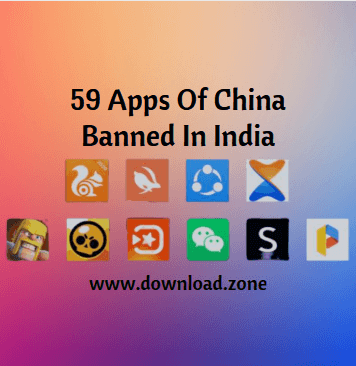
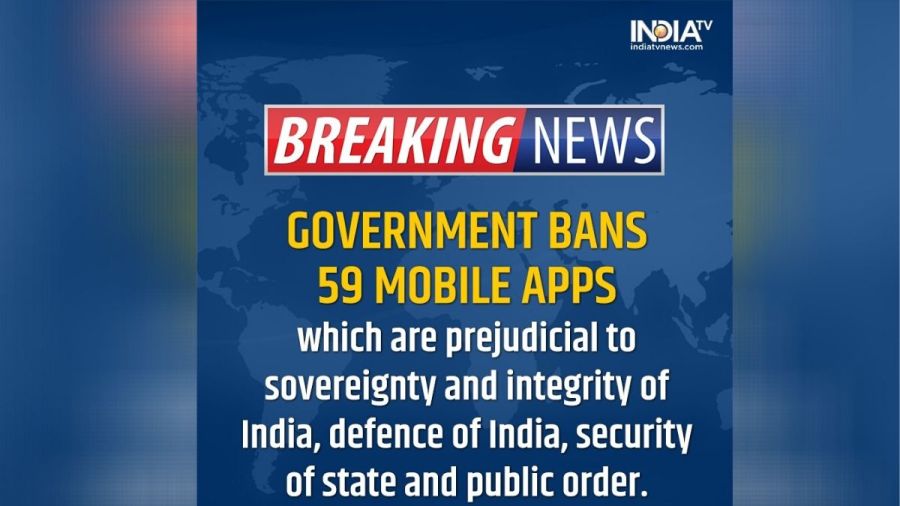
In the wake of the face-off with Chinese forces on the India-China border in Ladakh, and a violent clash on June 15 that left 20 Indian soldiers dead, the Indian government on June 29 banned 59 apps of Chinese origin, citing data security and national sovereignty concerns. These include popular ones such as TikTok, SHAREIt, UC Browser, CamScanner, Helo, Weibo, WeChat and Club Factory. And they are try to steal our details from their country originated app which we are using. Please don’t doubt on our patriotism. We can do everything or anything for our country. Do not dare to look at our country.

Why were the Chinese apps banned?

The Ministry of Electronics and Information Technology in a press release asserted that it had received “many complaints from various sources, including several reports about misuse of some mobile apps available on Android and iOS platforms for stealing and surreptitiously transmitting users’ data in an unauthorised manner to servers which have locations outside India”.

The Ministry said it had decided to block the 59 apps to safeguard the “sovereignty and integrity of India”, invoking powers under Section 69A of the Information Technology (IT) Act read with the relevant provisions of the Information Technology (Procedure and Safeguards for Blocking of Access of Information by Public) Rules 2009.

The government also said that several citizens had reportedly raised concerns in representations to the Indian Computer Emergency Response Team (CERT-In) regarding security of data and loss of privacy in using these apps. In addition, the Ministry said it had also received “exhaustive recommendations” from the Home Ministry’s Indian Cyber Crime Coordination Centre.

And while the government did not name China openly in its action against the apps, public comments by officials including Ravi Shankar Prasad, the Union Minister for Communications, Electronics and Information Technology and Law and Justice — he asserted that the ‘digital strike’ was done “for safety, security, defence, sovereignty & integrity of India and to protect data & privacy of people of India” — signalled that it was aimed at Chinese economic interests.

How large is the user base in India for these banned apps?

Estimates by Sensor Tower show the video-sharing social networking app, TikTok, for instance, has seen about 611 million downloads in India over the app’s lifetime, while estimates of active users vary with the highest pegged at 200 million. According to media reports, file-sharing tool SHAREIt has about 400 million users. Statcounter places the Alibaba-owned UC Browser second in India market share at 10.19%, after Google Chrome (78.2%). Other reports estimate its user base at 130 million.

How will users be affected?

Installed apps may continue to exist on mobile devices. But now that the latest versions of the apps have been removed from Google’s Play Store and Apple’s App Store, users will not be able to access updated versions in future. If a notice goes out to internet service providers asking that data flow from these apps be halted, that could impact the functioning of existing, installed apps.

How does the ban affect Chinese app providers?

The potential loss of advertising revenue impacts app-makers. Tik Tok’s parent ByteDance Ltd. recorded a doubling of global revenue to $17 billion in 2019, over the previous year, with $3 billion in profit.

Its India business may have yielded only $5.8 million in revenue for the year ended March 2019, but with quicker user adoption more recently, the stakes seem to be getting higher. When TikTok was banned briefly in India last year on the grounds that it reportedly promoted pornography, the company had told a local court that it was losing roughly $15 million a month due to the ban, according to a Reuters report. The app had subsequently been permitted to operate.

How children are being portrayed in media?

Media is the mirror of a society. It portrays the existing condition of a society. Media like movies, advertisements and news stories emphasize the lifestyle of people living in a particular area. Not only does it portray, but media can even manipulate the audience as it creates huge impact on people. It can lead the people to think in a structured way. It is true that “media tell us what to think about”. Thus, representation of all things in the media has to be taken into great consideration. People are likely to believe whatever the media want them to. At times, it gives a completely different and fake representation of everything. Representation of children in media can be taken as an example. The media has convinced the world that children are supposed to behave in a particular way, neglecting the fact that it cannot be true always.

Today, every child has been exposed to media in many ways. Advertisements, Movies, Magazines, Social media platforms etc. have been opened to anyone irrespective of their age. Children are now free to engage in the media world just like the adults. So, it can be said that media not only influence or affects adults but children also. It creates a huge impact in molding a child’s attitude as children can see how they have been represented in the media. It has been noticed that media is a powerful tool in creating and manipulating perceptions of audience towards anything that they represent. So, it is very much important to portray them in the right path.

Since, children belong to an inferior and minor community in the media world, they have been exploited in many ways. They are represented in more a negative way. It is a true fact that children are being under represented in the media more than being portrayed positively.  This negative tendency can be seen everywhere in the world irrespective of the cultural diversity. They have always been represented as inferiors or dependents. Children are always given the tag of ‘cuteness’. The whole purpose of being present in an ad or movie is to just to remain cute. Media under estimate the capabilities of children by considering them as a cute creature. Most of the advertisements and movies portray this type of stereotype, where children remain cute and inactive. They are always guided and controlled by elders. It gives a false assumption about kids to the society that children can’t do anything on their own.

It is hard to believe that, this negative portrayal are done on the basis of gender also. The representation of child in terms of gender is quite stereotypical. The portrayal of girl and boy child are very much different in the media. Boys are always presented as active, noisy and even wild whereas in the advertisements that features girl child, girls are quieter, their actions are slow paced and general atmosphere will be softer. The girls are more likely to present in stories about child abuse, ads about beauty products and household activities. On the other hand, boy child is being appeared in ads related to automobiles and sports. Ads are less likely to focus girls who are active in sports. Girl children are mostly associated to craft related items and boys are associated to games and sports. The representation of children influences the children themselves and their attitudes and views on their own roles in the society. It also creates a huge impact on adults and their opinions about the children. So, it is extremely important to represent the children in the right way.

The Italian marines case gets more interesting!

The Italian marines’ case meets with a frustrating end, as India loses right to preliminary.

The long journey for equity for the two Kerala anglers shot dead by Italian marines from the Enrica Lexie around 20. 5 nautical miles off India’s coast in February 2012 has finished in disillusionment. A worldwide discretion court has decided that India doesn’t have locale to attempt the marines, who, it held, were qualified for insusceptibility as they were following up for the benefit of a state. The Permanent Court of Arbitration (PCA) in The Hague conceded that the two India and Italy had simultaneous purview in the issue however presumed that the marines’ insusceptibility blocked India’s ward. In support of India, the PCA found that the Italian vessel had disregarded the privilege and opportunity of route of the Indian fishing vessel under UNCLOS, and that the activity, which caused loss of lives, property and mischief, justified remuneration. It requested that the gatherings counsel each other on the remuneration because of India subsequently. All the more altogether, the PCA dismissed a key contention by Italy that India, by driving the Italian vessel into its region and capturing the marines, abused its commitment to help out measures to stifle robbery under Article 100 of UNCLOS. This may imply that the intervention court didn’t see the episode as one identified with robbery by any stretch of the imagination. The episode had caused national shock as the open saw these as wanton killings, because the conditions demonstrated no endeavor by the fishing vessel at robbery. The fishing vessel was inside the nation’s Contiguous Zone and it was very certain that the offense justified capture and arraignment under local law.

With the theft point precluded, an ordinary preliminary was all together. The Union government ought to have assumed control over the arraignment and guaranteed a brisk preliminary. In any case, as legitimate knot were being sifted through, and India was managing the discretionary aftermath, the marines figured out how to get requests to leave the nation. The Supreme Court decided that solitary the Center, and not Kerala, can indict the marines. A greater legitimate issue, which caused more deferral, came later. The National Investigation Agency conjured the Suppression of Unlawful Acts against Safety of Maritime Navigation and Fixed Platforms on Continental Shelf Act, 2002. This caused a conciliatory furore as it accommodates capital punishment. The EU took steps to force exchange sanctions. Eventually, it took effort for these charges to be dropped. The PCA’s honor, which is conclusive and has been acknowledged by India, is a tremendous misfortune for the desire that the two marines would confront a criminal preliminary in India. At long last, Italy prevailing with regards to removing the issue from India’s hands. It should now follow through on its duty to have the marines attempted under its household laws. The takeaway for India ought to be the exercises, in the lawful and discretionary spaces, that can be drawn from the experience.

Super Long train “SheshNaag”

Recently, on 2 july, Indian Railways has created record starting the train “sheshnaag” in south east central zone of railways.

the train is 2.8 km long, longest ever in India. It consist of 251 wagons which are pulled by four electric locomotives, fitted in between.

This is a freight train. Indian Railways trying to move multiple freight rakes together as it helps in saving the transportation time and also help in the decongestion of the rail route.

Earlier, on 30 june the South East Central Railway zone operated ‘Super Anaconda’when it attached three rakes of freight train together.

Importantly, the Indian Railways reached this feat on a day when it achieved 100 percent punctuality for the first time ever.

The Indian Railways said in a release that on Thursday (July 2, 2020), it achieved 100 percent punctuality of trains for the first time in history as 201 trains that that run on this day reached the destination on time. 

Prior to this India Railways has achieved 99.54 percent punctuality of trains on June 23 with the delay of only one train making it the second-best rate after today.

The Indian Railway Ministry said, ”First time ever in the history of Indian Railways, 100% punctuality of trains achieved with all trains on time. Previous best was 99.54% on 23.06.2020 with one train getting delayed.”

COMPULSORY MILITARY TRAINING IN SCHOOLS?

Military training in schools.

Any training on a person adds various skills. Some people want the central government must consider this proposal seriously and implement it in educational institutions. Many children are unable to decide what to pursue in life, and when they experience the hardships on military turf, this idea will be clear. Minimum military training is essential and broadens the mindset and toughens it. In a way, it is vocational training. India may get potential officers while will strengthen the armed forces in future. The defence of the country is left alone in the able arms of troops, and with this compulsion, we can also participate in it. The education improves national morale, health, builds up character and even the ability to face hardships.

People who serve in the army stay away from family for a very long time. When the children of their country join them in the training arena, they will get a morale boost. It will be an incredible feeling when so many children come and are with you. At a place, so many children from different backgrounds will share common space and air. This will bring Indian closer, and the walls of difference will get lower. The children need patriotic reinforcement, and this idea will also foster discipline in them. They will be more team spirit, orderliness and respect for one another when exposed to the adventures of training. Once a student receives basic training and wishes to volunteer, the military will get a trained volunteer. Indian girls will develop defensive skills and become stronger physically.

However, the Indian military is not equipped with the necessary infrastructure and number of officers to take on a significant population of a school child. Even if training institutions and academics are established, it will take much time for them actually to take place. They will require much money for maintenance and upkeep. Even if a decision in favour of this is made, it should be done for students above the age of 18 years and not for school-going children. The rigours of training may be too much for a school going child to handle, and also the mind is better prepared for this at a decent age of 18 years. The government has checked the feasibility, affordability and practicality of it. This is practically impossible for now. We do not have resources which are adequate to fulfil wants of everyone, and now we are asking for a further hole in the pocket of the government. India is a democratic set-up; people are free to choose their professions. Compulsion is respect for military training; it is felt, will go against the democratic ethos.[1] The anticipated benefits of imparting military training to all the youth will not be commensurate with the expenditure involved in such an effort. This would translate into unmanageable figure and will also be a significant drain on the limited resources of a developing country.

We are not prepared for it at the moment, but we can always inculcate the knowledge on a curriculum or introduce it as a separate course.


[1] Pradip R Sagar, Centre may not be in favour of Military Training, availabe at: https://www.theweek.in/news/india/2018/03/17/centre-may-not-be-in-favour-of-compulsory-military-training.html.