The Art of Organizing Things

Some may think about why this is so relevant or what could possibly happen by organizing things around us. Actually, it does a lot. By organizing things around us we could save a lot of time saved instead of searching for something important while doing a job. It increases our productivity and efficiency. Just like keeping phones away from the work desk helps, this too helps in our day-to-day life. It is not a difficult and hectic process but neither easy. We must carefully choose what is necessary and what is not. It is indeed an art in organizing things around us.

Photo by Ken Tomita on Pexels.com

Tips to organize things :

  1. Make it minimum : The things at our desk must not be too much and must not be too low. Take a pen and a paper. Write down things which is necessary and which are not. Organize the desk according to that list. The things must not occupy all the places of the table and should not look messy. It will bring down our productivity and confidence.
  2. Must be spacious : When we look at our table , we must know what are the things in our table and in which place they are. That is the main purpose of organization of things in our table. To achieve that purpose, keep the things with enough space between them such that they look neat and arranged well. It must not be too , it will not look good.
  3. Around your hand : The things we listed as important and which are frequently used must be reachable to our hand without getting up from the place. If it was, then there is no purpose of arranging things.
  4. Use sticky notes : Sticky notes are one of the best ways to remember things we tend to forget and to create a easy to-do list of that day. It must be sticked to the wall and the daily tasks with timing must be noted down in that. It must be created during early morning or before the day before night. Whenever we finish that task, we must strike it down and take a small break. And then we can resume on other tasks.
  5. Similar things together : Grouping similar things together makes the table look neat and organized.
  6. Don’t rely on perfectness : This is the most important point than above all points. Nothing is perfect either be life or job. The thing which looks perfect may not looks like that tomorrow. Thinking about perfectness is a good habit. But over thinking on it, waste a lot of time and make us lose our interest in organizing things.

Conclusion

The task of organizing things around us is indeed an art. It increases our productivity, focus, efficiency, mental stability, and likelihood to sleep better. It reduces work pressure and stress. And most importantly, keep your table away from distractions like television, speaker etc.. Keep the phone a little bit far from hand. Keep it organized always !!

For every minute spend in organizing, an hour is earned.

Benjamin Franklin

Impact of Covid-19 on India’s economy

The impact of the coronavirus pandemic on India has been largely disruptive in terms of economic activity as well as a loss of human lives. Almost all the sectors have been adversely affected as domestic demand and exports sharply plummeted with some notable exceptions where high growth was observed. India’s growth in the fourth quarter of the fiscal year 2020 went down to 3.1% according to the Ministry of Statistics. The Chief Economic Adviser to the Government of India said that this drop is mainly due to the coronavirus pandemic effect on the Indian economy. Notably, India had also been witnessing a pre-pandemic slowdown, and according to the World Bank, the current pandemic has “magnified pre-existing risks to India’s economic outlook”.

From April to June 2020, India’s GDP dropped by a massive 24.4%. According to the latest national income estimates, in the second quarter of the 2020/21 financial year (July to September 2020), the economy contracted by a further 7.4%. The recovery in the third and fourth quarters (October 2020 to March 2021) was still weak, with GDP rising 0.5% and 1.6%, respectively. This means that the overall rate of contraction in India was (in real terms) 7.3% for the whole 2020/21 financial year.

In the post-independence period, India’s national income has declined only four times before 2020 – in 1958, 1966, 1973, and 1980 – with the largest drop being in 1980 (5.2%). This means that 2020/21 is the worst year in terms of economic contraction in the country’s history, and much worse than the overall contraction in the world.

The Indian Oil & Gas industry is quite significant in the global context – it is the third-largest energy consumer only behind USA and Chine and contributes to 5.2% of the global oil demand. The complete lockdown across the country slowed down the demand for transport fuels (accounting for 2/3rd of demand in the oil & gas sector) as auto & industrial manufacturing declined and goods & passenger movement (both bulk & personal) fell. Though the crude prices dipped in this period, the government increased the excise and special excise duty to make up for the revenue loss, additionally, road cess was raised too. As a policy recommendation, the government may think of passing on the benefits of decreased crude prices to end consumers at retail outlets to stimulate demand.

HELPING TO REDUCE TEACHER ABSENCES WITH ELECTRONIC HEALTH RECORDS

 In 2019, over 900,000 K-12 teachers were absent from their classes for the whole school year.

This equates to 28 percent of teachers across the country who are chronically absent.

With the increased number of instructors quitting as a result of COVID 19, this figure is likely to be considerably higher.

Every school year, teachers’ absences reach a tipping point of 10 days, when they cross the line from tolerable to problematic chronic. Teachers are currently absent for an average of 11.8 days each year.

According to the National Bureau of Economic Research, 10 days of teacher absence might result in a considerable drop in student results.

The detrimental impact extends beyond children to their peers and the whole school community.

Students are more likely to observe poor accomplishment levels without consistency in class and high-quality education, increasing their chances of not graduating. Furthermore, when instructors are frequently absent, colleagues are compelled to work harder and take up the slack.

What are the Most Common Causes of Teacher Absence?

Timing, sick days, maternity breaks, personal days, professional development, colleagues’ attendance norms, and caring for children/elderly parents are all factors that impact teachers’ absence decisions.

Others blame the problem on a hostile or permissive school atmosphere. When instructors are unmotivated to go to school, they choose to skip class.

Stress and infections caused by dealing with young children who are prone to sickness are also considered occupational risks.

Absences due to COVID 19

And, as a result of COVID 19, many instructors have decided not to return to work this year. Educators have been applying for retirement or taking leaves of absence in droves in many states.

Some instructors are concerned that schools are not sufficiently devoted to ensuring social separation and that there is insufficient safety equipment for children and teachers.

Others have stated that one of the reasons for their absence was due to technological constraints and the pressure to capture lessons on video.

Teacher absences can be reduced using electronic health records.

To a large degree, schools may use technological solutions such as electronic health records to tackle these issues.

In schools, electronic health records (EHR) can aid in the monitoring of staff health and absence. They are capable of managing healthcare data and assisting in the improvement of care delivery. EHRs are especially important for keeping kids healthy and in school. It’s also a fact that when children in schools are healthy, so are their instructors.

Another advantage is that electronic health data might assist school nurses in analyzing absence trends that may indicate stress or other issues that teachers confront in the classroom. Once the underlying causes of absences have been discovered, school administrators may take the necessary actions to ensure that teachers are working in a safe and happy atmosphere.

Another advantage is that electronic health data might assist school nurses in analyzing absence trends that may indicate stress or other issues that teachers confront in the classroom. Once the underlying causes of absences have been discovered, school administrators may take the necessary actions to ensure that teachers are working in a safe and happy atmosphere.

Students suffer as a result of high teacher absenteeism. In addition, teachers who are frequently absent might cause their courses to stagnate, forcing colleagues to come in as substitutes. EduHealth, an electronic health record software programme, might be a critical investment in turning things around. EHRs ensure the safety of our children and schools. Teachers are safe and present when schools are safe.

How might electronic health records (EHRs) assist in the creation of mandated school health reports?

EHRs are real-time patient-centered health records that make health and medical information available to authorized users promptly and securely. The system includes a broader perspective of a patient’s care than just a record of medical and treatment history. It:

Is a book that keeps track of a patient’s medical history, diagnosis, prescriptions, treatment plans, vaccination dates, allergies, radiological pictures, and laboratory and test results.

Provides physicians with access to evidence-based tools for making decisions regarding a patient’s treatment.

Provider workflows are automated and streamlined.

An EHR system may create a variety of reports, and most systems make it simple for authorized users to enter a requirement and generate a report with only the information they need.

Forms containing student health data are frequently gathered in a school setting around the beginning of the school year, when students can submit a form indicating their health statuses. And the necessary data is extracted and compiled into a report.

While this procedure was previously conducted manually, it has proven to be time-consuming due to the number of steps involved.

How EduHealth assists schools in meeting their reporting obligations

To ensure the safety of children and employees in the school environment, meticulous reporting on student health and collaboration between schools, school districts, local health authorities, and state health administrations are essential. Because the reports generated by EHR systems are standardized, they may be coordinated.

Most common reports are included into EduHealth’s comprehensive reporting module, allowing authorized school health staff to easily assemble this data and send it to the appropriate authorities in a uniform format.

The EduHealth EHR’s standardization of reporting ensures that no information is overlooked. Health officials have accurate and up-to-date health information on kids and staff, allowing them to make critical choices on crucial health-related issues for school systems.


History of Motorcars – Karl Benz

It is difficult, to imagine a world without the motorcar. When German engineer Karl Benz drove a motorcar tricycle I 1885 and fellow Germans Gottlieb Daimler and Wilhelm Maybach converted a horse down carriage into a four wheeled motorcar in august 1886, none of them could have imagined the effects of their invention. Benz recognized the great potential of petrol as a fuel. His three wheeled car had a top speed of just ten miles (16 km) per hour with its four-stroke, one cylinder engine. After receiving his patent in January 1886, he began selling the Benz velo, but the public doubted its reliability. Benz’s wife bertha had a brilliant idea to advertise the new car. In 1886 she took it on a 60mile (100) trip from Mannheim to near Stuttgart. Despite having to push the car up hills, the success of the journey proved to a skeptical public that this was a reliable mode of transport.

Daimler and Maybach did not produce commercially feasible cars until 1889. Initially the German inventions did not meet with much demand, and it was French companies like Panhard at Levassor that redesigned and popularized the automobile. In 1926 Benz’s company merged to form the Daimler Benz company. Benz had left his company in 906 and, remarkably, he and Daimler never met. Due to higher incomes and cheaper, mass produced cars, the United States led in terms of motorization for much of the twentieth century. This kind of movement has, however, come at a cost. Some 25 million people are estimation to have died in car accidents worldwide during the twentieth century. Climate changing exhaust gases and suburban sprawl are but two more of the consequences of a heavy reliance on the automobile.

Invention of the clutch

Almost all historians agree that clutch was developed in Germany in the 1880s. Daimler met Maybach while they were working for Nikolaus Otto, the inventor of the internal combustion engine. In 1882 the two set up their own company, and from 1885 to 1886 they built a four-wheeled vehicle with a petrol engine and multiple gears. The gears were external, however, and engaged by winding belts over pulleys to drive each selected gear. In 1889, they developed a closed four- speed gearbox and a friction clutch to powers the gears, this car was the first to be marketed by the Daimler motor campy in 1890. Without a clutch, if the car engine is running the wheels keep turning. For the car to stop without stalling, the wheels and engine must be separated by a clutch. A friction clutch consists of a flywheel mounted to engine side. The clutch originates from the drive shaft and is a large metal plate covered with a frictional material. When the flywheel and clutch make contract, power is then transmitted to the wheels.

Gears in Motorcars

Karl Benz was the first to add a second gear to his machine and also invented the gear shift to transfer between the two. The suggestion for this additional gear came from Benz’s wife, bertha, who drove the three-wheeled Motorwagen 65 miles from Mannheim to Pforzheim – the first long distance automobile trip. The gears allow the engine to the maintained at its most efficient rpm while altering the relative speed of the drive shaft to the wheels. Gears originally required double clutching, where the clutch had to be depressed to disengage the first gear from the drive shaft, and then released to allow the correct rpm for the new gear to be selected. The clutch was then pressed again to engage the drives shaft with the new gear. Modern cars use synchronized which use friction to match the speeds of the new gear and he shaft before the teeth of the gears engage, meaning that the clutch only needs to be presses once.

“One thing I fell most passionately about: love of invention will never die” – Karl Benz

Emotional Intelligence or Intelligence Quotient

Emotional Intelligence refers to the capacity of a person to manage and control emotions and possess the ability to control the emotions of others as well. In other words, they can influence the emotions of other people too. Emotional Intelligence is the capacity to understand and manage emotions. Skill like self-awareness, self-regulation, social skills, motivation is included in emotional intelligence. It is commonly defined by four attributes. Those are self-management, self-awareness, social awareness, and relationship management. Emotional intelligence has actually been a known fact for more than the last few decades. In fact, our perception of its importance predates the coining of the phrase in the 1964 paper by Michael Beldoch. It has different names from social intelligence to emotional strength but its importance has always been undeniable. According to some research, emotional intelligence is responsible for 58% of job performance, and 90% of top performers have high emotional intelligence.

Earlier studies like one from CareerBuilder found that 71% of employers (HR professionals and hiring managers) viewed emotional intelligence as more important than IQ. In 2017 study published in Human Performance Journal also found that emotional intelligence is a predictor of job performance in social jobs. Research also believed that emotional intelligence came naturally to some people but could also be enhanced in others with training and performance. Having an emotionally intelligent workforce promotes progress. Better teamwork is undeniable that employees are able to work better. Morale boosting is one of the many benefits in the workplace.

Importance of Self-Confidence

Self-Confidence is one of the important things needed in our life. It has the power to either push us up or pull us down. Most people lack self-confidence at some point in their life due to failures and disappointments. Self -Confidence can be increased due to the motivation of others, but it is not the only way to boost our inner confidence. The confidence that comes from inside is the one that resists for long and helps us achieve more and more in our life. Let us see some of the ways to boost our confidence and try to use them in our daily life.

Photo by Snapwire on Pexels.com

Ways to Boost Self Confidence

  1. Tell good words to yourself : It may feel silly on reading this. But actually it works during the time of crisis. Whenever we feel low, we can tell some good words to “We can do it”,”We are capable of doing it”,”Nothing is impossible”. These words lowers our stress as well as helps in boosting our confidence. We can even ask our friends and family to tell good words to us. Getting these words from those we trust , gives immense amount of confidence in our life.
  2. Take a deep breath : Before starting any task, taking a deep breath will definitely helps us. We should allot some two to three minutes before the beginning of the job and we should take a deep breath without thinking about anything else. During that time, we should not concentrate on the outside environment or thinking about how to do the job. Our only focus must be on taking a breath and relaxing both our mind and the body.
  3. Thinking on past success : When we are doing a difficult or stretchy job, we can think on our past success or achievement for some moments. Beware, it must only be for some moments. Sometimes it will lead to over -confidence and destroys both the time ,the effort and the task.
  4. Thinking on our good time : Everyone will definitely have such moments in our life that brings us instant laughter or instant happiness on our face. During our low time, we can think on these things for some moments to boost up our energy and confidence to do the job. These times can be with the family or friends or colleagues or anyone. Here too, over thinking may lead to procrastination , which is the dangerous one that won’t led us to finish the job.
  5. Hobbies : Hobbies can make an individual feel happy, calm ,satisfied and acts as a complete stress buster. Taking out some time for hobbies can help us to make our brain relaxed and peaceful. These hobbies can be done during breaks or free time.
  6. Talk to yourself : This task doesn’t need anyone to perform. During our low times or when we have no one with us, this is the best way to keep us away from negativity and low confidence. We can talk anything and everything to ourselves. Just imagine yourself as another human and tell everything that is going on our mind.

Believe you can and you’re Halfway there.

Theodore Roosevelt

Hard Work V/S Smart Work

Working towards success needs a lot of planning before executing. Deciding on the right way to perform a task is inevitable. Smart Workers are people who use the right strategy to reach the endpoint easily. Hard workers are people who get noticed by everyone. In reality, both Smart Work and Hard Work are important to gain popularity in any field. Any person who has proven to be smart would have started his or her career / performed in examinations because of Hard work in the beginning. Hard Work, in fact, gives people more sense of curiosity to taste victory.

There have been phrases like “Hard Work pays off”, “Hard Work beats talent when talent doesn’t work hard”. But how good these hold true with today’s working world. The hard-working concept has grown so much that people have embedded this quality in them and know everyone has to do it when joining. But, with the technology improving and needs changing so does the requirement of the industry today too. We need smart work now with their usual work. Other than the requirement, it is a matter of personality. Not everyone is smart or not all can work hard.

  Smart work doesn’t mean taking shortcuts, taking out a midway. it’s all about solving the problem and solving it better. Hard Work is putting in the efforts to do a job and if required give it more. If you only work harder you get a good end product, a better sense of accomplishment, significantly more confidence in what you have done, and you receive much more respect for the work put forth. If only working smart then you finish faster, you may use fewer resources, though the end product isn’t as gratifying, your efforts aren’t seen as something of great value from onlookers. But the good ideas of saving money or time will be respected by the ones wearing the cufflinks and working really smart because they’e having you do the work.

GET HEALTHY SKIN: DAILY ROUTINE

Skin is the largest organ of body. It covers all body suface area. Skin is made up of water, protein,fats, mineral etc. Skin protect body from germs and regulates body temparature. Skin also has sensitivity. Skin has 7 layers- stratum corneum, stratum lucidum, stratum granulosum, stratum spinosum,stratum basale, dermis,hypodermis etc. Skin contain sebaceous and sweat glands.

Our skin continuously comes in contact with environment. Environment has lots of dust,mist and dirt. So care of skin is most important. Let’s have some tips for healthy skin.

1.Protect skin from sun rays- Early morning sunlight is healthy for skin. But the rays from 10am to 4pm are harmful to skin.so avoid harmful rays. Use mild sunscreen to protect skin. And when going to outside wear protective clothing.

2.Treat skin gently- treat your skin gently and softly. Daily cleansing is important.bath with warm water not hot. Shave skin carefully with direction of hair not against. Gently tap skin to remove water so that some moisture stay in skin. Apply moisturizer if skin is dry.use soft cotton cloth. Avoid strong soaps use mild soaps and facewash.

3.Eat healthy diet- For the naturally glowing skin diet is most important because it provide internally nutrient. In diet there should be all type of food. Such as fruit, vegetables, grains and protein. The diet rich in fish oil and it’s supplements is good for skin because it gives vitamins. Less intake of unhealthy fats. Drinking plenty of water is the tool for fresh skin. Hydrated skin is healthy.

4.Manage stress- stress is most harmful to body and also to any organ. For fresh mind complete sleep is important. Daily exercise contribute little bit to glowing skin. But to manage stress meditation is important. If our mind is free then skin automatically glows.

Exercise for face

5.Facepack- It is essential for external nutrient of skin. Generally use home-based or homemade facepack. So it will not harm to skin as generally suitable to all skin types. The use of turmeric gives little bit skin lightening and it act as anti-inflammatory so used in acnes. Rose water act as tonar. Milk is the natural cleanser while honey is for long lasting glow.

Best Friend – Books

Books are indeed best friends for many book readers and book lovers. Some may feel like there is time wastage in reading books and thought of spending that time in something else. But only the book readers know the true value of the Book. Sometimes it gives happiness, sometimes sad, sometimes anger, and sometimes the combinations of all. A book cannot be categorized in any order unless the full depth and till the last page is read. This article will either involve you in the line of book readers or it will be a tribute to all the wonderful books read by book lovers.

Photo by rikka ameboshi on Pexels.com

Advantages of Reading Books

  1. Reduces Stress : Books are a great way of reducing stress because there are no such thing like happy books and sad books. Books fed readers with the plethora of emotions like Happiness, Sad, Anger, Excitement,Interesting and many more. Just like spices, each book has its individual flavor and content.
  2. Environment : Book reading sometimes seperates us from the real world and makes us wander in that virtual book world. It keeps our mind and body calm and stress free. There is no need of carrying the real world stress while going through the great books.
  3. Increases Vocabulary : Words used in books are not always common and same words. By reading books, we can learn many new words. It increases our vocabulary and knowledge.
  4. Motivational : Books of freedom fighters , scientists , doctors etc.. are motivational books that can give immense amount of happiness and motivations. People who are stressful and who are facing down time can use the books as a key to their life. It will inspire us and will instill creativity in our minds.
  5. Improves Memory : Daily habit of reading books improves and increases our mental ability to learn new things. The consistency will help us learn new skill in short span of time with greater memory power.
  6. Perspective of Life : Each book has a seperate content, seperate meaning and seperate emotions. Each will gives us a different perspective of life and it will gives us tricks and tips to lead our life. The more we learn, the easier we can lead our life.
  7. Improves Sleep : Reading books instruct our brain to calm down. Since it is a stress-buster , it will greatly helps us in getting good sleep with calmer brain.

Induce the habit of Book reading

  1. Daily goals : Schedule a short goal for everyday to read some pages daily.
  2. Eliminate Distractions : Keep your environment and room as clean as possible. Clean environment gives our brain the feeling of calmness. Keep the devices like Phone, laptop, tablet etc.. away from the place.
  3. Plan a time : Schedule a time for reading . Read the book either during sunrise or sunset to keep us fresh and as well as for having a good start for the day.
  4. Keep the book always with you : By doing it, we automatically want to read the book even during a ten minute break.

Books are a uniquely portable Magic.

Stephen King

THE MAGNIFICENT FOLK PAINTINGS OF ARUNACHAL PRADESH

The ART and CRAFT of Arunachal Pradesh take their inspiration from the diverse cultures and traditions of the state. One finds a plethora of ethical richness when looking into the deep space, that is “The Land of Dawnlit Mountains” i.e. the ancient culture of Arunachal Pradesh.

Tanaka paintings are religious scroll paintings that depict Buddha and his preaching. These paintings are also an important tool to teach Buddhism primarily displayed in monasteries. The display of Tangkha signifies a great dedication towards religion and self-reliance to achieve salvation. The painting is prevalent in the Buddhist-dominated regions of Tawang, West kameng, Upper Siang Districts of Arunachal Pradesh.’

The women of Arunachal Pradesh excel in weaving handlooms and making handcrafts.

Thangka serves as important teaching tools depicting the life of the Buddha, various influential lamas and other deities and bodhisattvas. One subject is The Wheel of Life (Bhavachakra), which is a visual representation of the Abhidharma teachings (Art of Enlightenment).

The paintings describe historic events related to Lamas. Devotional images act as the centerpiece during a ritual or ceremony and are often used as mediums through which one can offer prayers or make requests.

  • Because the art is explicitly traditional, all symbols and allusions must be in accordance with strict guidelines laid out in Buddhist scripture. The artist must be properly trained and have sufficient religious understanding, knowledge, and background to create an accurate and appropriate Thangka.
  • Some common symbols found in these paintings are :
  • Treasure Vase
  • Conch Shell
  • Victory Banner
  • Lotus Flower
  • Parasol
  • Varada Mudra
  • Vitarka Mudra

Mother of Orphans

Padma Shri winner an Indian social worker and social activist are known particularly for working for orphaned children Sindhutai Sapkal was born on 14 November 1948 in Wardha, Maharashtra. She is popularly known as Mai of Indian orphans. Being an unwanted child, her childhood name was Chindhi known as a “torn piece of cloth” (in Marathi). She got married at age of 12 to Shrihari Sapkal, who was 20 years elder than her. She bore three sons by the time she turned 20 years. She fought for herself on a collection of dried cow dung used as fuel in India, without paying anything to the village. Her agitation brought the district collector to her village and on realizing she was right, he passed an order that the strongman did not like. Stung by this insult, he managed to convince her husband to abandon her when she was beyond 9 months of her pregnancy. Her husband thrashed and kicked her on her full-term belly and threw her in the cowshed. She gave birth to a baby girl. Sindhutai cut her umbilical cord with the stone which was lying there. After she came back to her senses she went to her maternal village but everyone rejected her. Sindhutai was alone in the world with her little daughter.

Sindhutai was blessed with a natural flair for singing. She used to sing and beg and feed herself and her baby. She would visit temples, travel by train, begging and singing. Sindhutai would work wholeheartedly for orphans and destitute and other less fortunate. She had devoted her entire life to orphans. As a result, she is fondly called “Mai” known as mother. She has nurtured over 1050 orphaned children. As of today, she has a grand family of 207 sons-in-law. She has been honored with more than 700 awards for her work. She used the award money to buy land to make a home for orphaned children. Mother Global Foundation Pune, Sanmati Bal Niketan Bhelhekar Vasti Pune, Mamata Bal Sadan Purandar, and many more organizations are founded by Singhutai for orphan children. At age of 70, her husband came back to her apologetically. She accepted him as her child stating she is only a mother now! If anybody visits her ashram, she proudly and affectionately introduces him as her oldest child.

In 2010, a Marathi film “Mee Sindhutai Sapkal ” was released. It is a biopic inspired by the true story of Sindhutai Sapkal. The film was selected for world premiere at the 54th London Film Festival. She got Padma Shri Award in the social work category in 2021 by President Ram Nath Kovind.

Sindhutai receiving Padma Shri Award by President Ram Nath Kovind

She died on 4 January 2022, due to a heart attack in Pune at age of 73 years.

Online Vs Offline Education

This is one of the most common topics nowadays on all social media like Facebook, WhatsApp, Twitter, Instagram, and also in newspapers, articles, etc… While some opt for online education and others opt for offline education. There are certain advantages to both. Let’s see some of them.

Photo by Pixabay on Pexels.com

Online Education

Online education is not something that was established just after covid. It has existed before the coronavirus too, but the need for online education is not there. It was a highly considered method during this pandemic due to the inability due to spread the contagious virus. The classes which were conducted with board and chalk are replaced with PowerPoint presentations and mouse cursors. It was a bane to some, while it was a boon to others.

Advantages of Offline education

  1. Environment : May it be a school, college or work place the most important factor is the environment surrounding it. It is the environment that gives us the exposure and the needed opportunities and chances to fall and raise again. Even if we fall, we will definitely will have someone to pull up again and there are will be some who will share their experiences on the current field.
  2. Doubt Solving : In Offline, anyone can ask doubts to teachers and professors at any time. There is no need of waiting for the right place and the right time. Either as a school student or a college student , we can ask doubts at the period at that time itself.
  3. Guidance : We can always ask our doubts to our seniors who had experienced similar situations. There will be no barrier between them and us.
  4. Discipline : Discipline is one of the core principles of life and it will be taught only in offine education. Everyone will be regular to their respective places , maintaining obedience and discipline. The value of discipline is not realised until the 20’s. It will make us reach heights of life even we wouldn’t have dreamed about it.
  5. Consistency : Consistency comes together with people who are disciplined. Consistency is the way to learn any skill and be talented in that. It will not be a problem for disciplined people since they follow it everyday and keeps their day productive as possible.

Advantages of Online education

  1. Recorded Sessions : The main advantage of online education is the videos can be seen any number of times at any place. If some doubt sarises, we can refer the videos. Most of the online classes nowadays are recorded to provide the students this wonderful facility to clear doubts.
  2. Time Saving : Online classes saves a lot of time such as travelling time. Students can use this time to upskill themselves and to be productive.

Disadvantages of Online education

  1. Non-availability of Phone : Even though online education is a convenient,flexible and cost efective method of education, not everyone can afford smart devices like Phone, Laptop, Tablet etc… This disadvantages is mainly for people who face difficulty in even afford daily expenses. This was quite proven in many places during this pandemic.
  2. Network facilities : After Smart devices, internet facility is another important thing to see online classes.
  3. Lack of Discipline
  4. Lazyness
  5. Losing the ability to think
  6. Increased usage of devices

Conclusion

Each has its own advantages and disadvantages. If we think and follow online classes just like offline classes, the productivity will be maximum and there will be no issue .

Mollywood to Bollywood…

Indian stage, television, actor, entertainer, and comedian Sidharth Jadhav, born on 23 October 1981 in Ratnagiri, Maharashtra. Sidharth was born and brought up in a lower-middle-class family. Siddharth began his acting career at a young age and also received several awards including the Best Actor Award at the Ravikiran Balnatya Spardha in 1996 when he was just 15 at that time.

Aga Bai Arechha was his first film in Marathi released in 2004. Then he made several movies like Jatra, De dhakka, Changbhal, Jabardast, Huppa Huiya, and many more.

from Golmaal: fun unlimited from Simmba

In 2006 he entered Bollywood from Rohit Shetty’s film “Golmaal: fun unlimited”. Later in 2018, he made the role of sub-inspector Santosh Tawade in “Simmba” and the same role in “Sooryavanshi” in 2021.

He also made many roles in television. He was a contestant in Kahani Comedy Circus Ki, Comedy Circus Ke Ajoobe. He played the role of the judge in “Maharashtracha Dancing Superstar” in 2014. In 2017, he was participated as a contestant in Nach Baliye 8 with his wife Trupti. He was assistant host in “Big Boss Marathi” season 3 in 2021. Currently, he is the judge of the Marathi comedy show “He Tar Kahich Nay”.

In 2017, he received Filmfare Award.

Sidharth at Filmfare Marathi Awards in 2017

THE CURSE OF DEPRESSION

For some people, depression may mean showing a sad face all the time, not responding to anyone, sitting in a room all day, and more. Depression is not always a combination of all these symptoms, some people are depressed but still, show happy faces. We must clearly understand what it actually means and must get out of it before it is too late.

Photo by Fredrick Eankels on Pexels.com

Common Symptoms of Depression

  1. Trouble in Concentrating : People with depression may feel difficulty or trouble in concentrating on their jobs. They even feel extremely hard to even take simple decisions due to lack of concentration.
  2. Insomnia : Insomnia is one of the most common symptoms of depression. They either sleep for long number of hours or never sleep at all. It varies with person to person. Even sometimes they wake at early morning without knowing.
  3. Guilty Feeling : Depressed state can also happen due to inability or failure to do an important job. It starts with feeling guilty all the time thinking about the work and stressing themselves too much. It makes them feel helpless and alone all the time even they are always being surrounded by friends , family or relatives.
  4. Lose of Interest : People start to lose interest over things that are once their favourite one. It may be hobbies like drawing, dancing, singing or even visiting places that are their favourite ones initially.
  5. Restlessness : Inability to relax or inability to make your mind calm and peace is called Restlessness. It happens due to over stress, thinking about something all the time and excess usage of devices like Mobile Phones, Laptop and television etc.
  6. Overeating/ Appetite Loss : It happens in two ways , either feeling of hunger at all times or feeling full at all time. It is also a symptom of depression which most people fail to address it at early stages of their life.
  7. Unbalanced feelings : Sometimes they feel too happy, sometimes too sad, sometimes too anxious with no meaning, sometimes too angry without knowing. Their feelings become unpredictable and meaningless during their depressed state of mind.
  8. Digestive problems : Even stomach ache for a long period of time , without reacting to medicines is a symptom of depression.

Most of these symptoms are the common ones, the failure to address them for a long period may lead to suicidal thoughts or suicidal attempts.

Ways to overcome depression

  1. Surround yourself with motivation
  2. Do yoga and meditation
  3. Always ask for help without hesitation.
  4. Go out to new places for refreshment.
  5. Take breaks during job to avoid stress.
  6. Eat healthy food like fresh fruits and vegetables.
  7. Create new hobbies
  8. Do activities that keeps both our mind and body calm.
  9. Focus on people who will be there for you during both good and bad times.
  10. Always get minimum six hours of sleep daily.
  11. It’s okay to say ‘no’ to works which is either stressful or not possible.

“Don’t let life discourage you everyone who got where he is had to begin where he was.”

Richard L. Evans

The rising population of India as an asset

With the continuous rise in the young Indian population, India is growing younger. There is a “demographic dividend” that needs to be exploited. As per the findings of the ‘State of the Urban Youth, India 2012: Employment, Livelihoods, Skills,’ a report published by IRIS Knowledge Foundation in collaboration with UN-HABITAT, every third person in an Indian city today is a youth. In about seven years, the median individual age in India will be 29 years, very likely a city-dweller, making it the youngest country in the world.

No discussion in India about the environment, health, employment, and various other issues can be carried away by skipping the burning issue of the rising population. With a 1.2 Billion population (17% of the entire world population) India is the second most populated country after the People’s Republic of China. However, set to be utilized in a channelized manner Indian Population will prove to be a valuable asset rather than a liability.

Rising population and asset, how?

The youth segment of India’s population is growing rapidly and is projected to continue to do so for the next 30 years. This demographic dividend has the potential to inject new dynamism into the country’s flagging economy if the state acts quickly on health, education, and employment. Right now more than 50% of India’s population is below 25 which can be tapped for all-around socio-economic growth of the nation as the young workforce has more innovative minds.

Except for China, no country in the world has such big manpower as India has which is indeed a blessing for the country. Such a huge and skilled manpower coupled with resources needs to be regarded as an asset. The huge population offers a bigger pool of human resources and hence a bigger consumer market. Our population will remain our strength only when we have the power, strength, and will to feed the people, provide them clothing and shelter, good education, health care, and jobs. In the past decade, India has emerged as a major back office to the world with global firms outsourcing work to take advantage of the country’s less expensive, educated, young English-speaking workforce. India produces 2.5 million IT, engineering and life sciences graduates a year, besides about 650,000 postgraduates in science and IT-related subjects. The IT sector alone employs about 850,000 graduates and professionals while the pharmaceutical and biotechnology sectors are snapping up others.

Near about 402 million Indians are aged between 15 and 59 – the working-age – and this number is expected to grow to 820 million by 2020.

For the all-round progress of a large nation, its entire population must contribute significantly to diverse areas and sectors of the economy. A talented and hard-working population can easily emerge as a source of national development. A country like India can use vast natural resources coupled with huge manpower to make the country progress in the right direction. In India, there are more workers than dependents, which is good for the development of any economy.

How to channelize the continuously rising population?

No capital in the world can substitute human capital, the Indian state and the government need to properly utilize its skilled and talented population. There is a need for an increase in employment opportunities in the rural areas to make productive use of people’s skills. We cannot talk about the rising population without taking into account the problems of corruption, poverty, and illiteracy which go hand in hand and have been creating hurdles in the country’s progress as a whole. There is a need for the implementation of the government schemes like the National Rural Employment Guarantee Scheme in the rural areas at a massive scale so that more and more people can join the national mainstream. There is no doubt that India has one of the most highly skilled populations and these skills need to be used for employment generation.

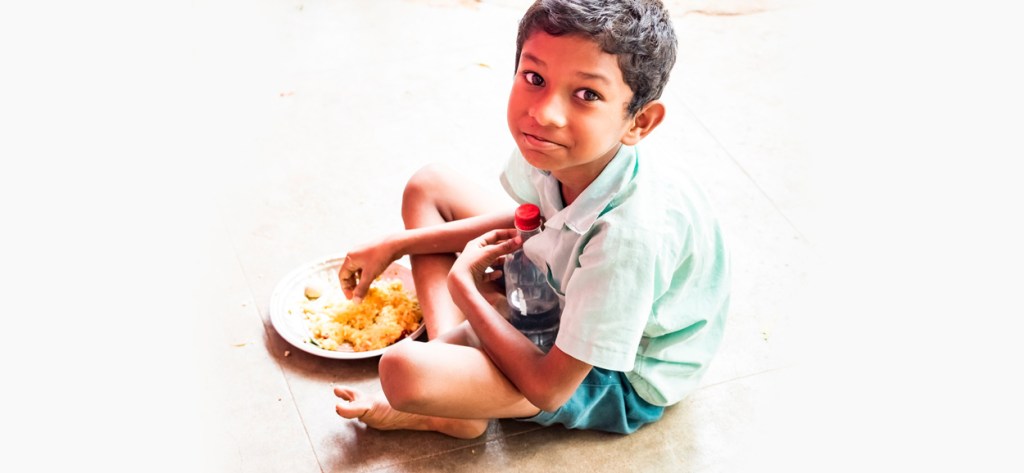
There is a need to make the rural population of the country more and more literate and bring them out of poverty. The schools in the villages need to be made more developed with the curriculum and education system matching with that of the schools in the cities. The schemes like Mid Day meal need to be implemented properly and honestly and the education system in the rural areas should be made more attractive so that the rural children are attracted towards studies.  The public schemes targeting the poor need to be implemented properly and honestly because after that it would be easy to bring a large chunk of the country’s population into the national mainstream so that they can play a decisive role in nation-building. There is a need for various job schemes in the interior regions where there is not much industrial activity.

Conclusion

The advantages of such a large population can be had for the making the country more developed and to achieve these goal policies must be made to harness the potential of country’s youth population, which will certainly help in galloping the economy ahead in the double digits.  A huge population creates demand which is also a major indicator of the economic growth of a country. The need is to provide the right share of employment opportunities, education, a proper meal, and a corruption-free environment.