Pollution-The Evil that walks the Earth

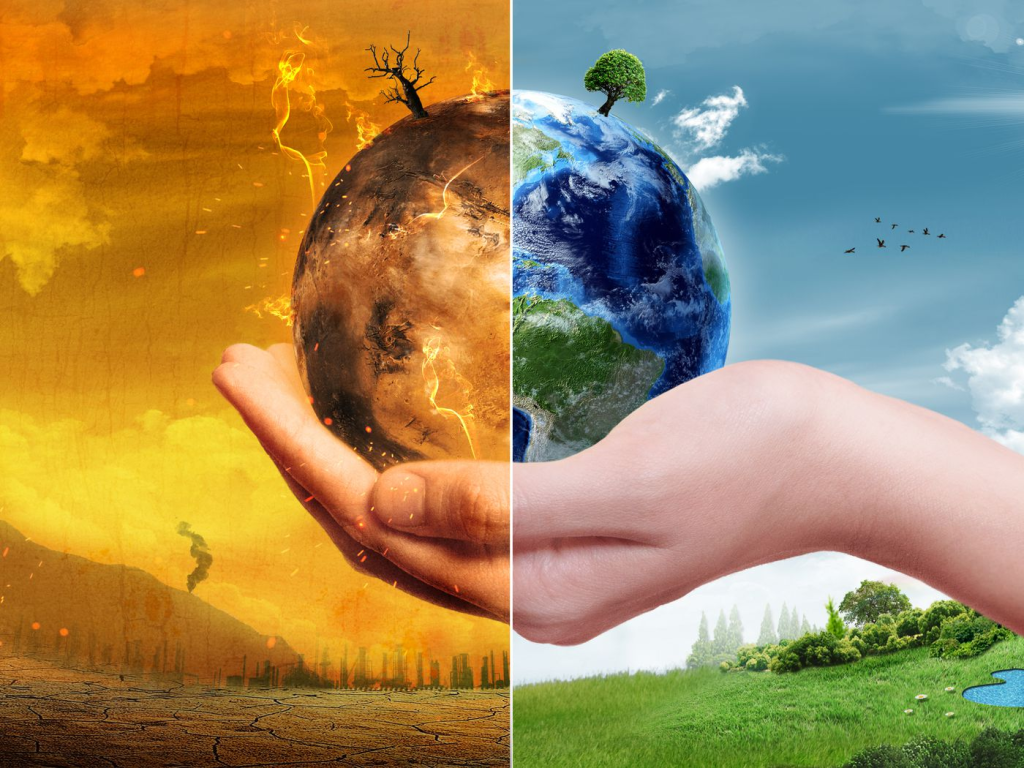
Pollution changes a medium such as air, water, or soil in a way that can make it harmful to people or nature. Different types of pollutants include chemicals, dust, noise, and radiation. The word pollution comes from the Latin ‘polluere’ that simply means contamination. Hence, in layman terms, pollution is something that contaminates the environment. The presence of harmful substances in the air, land, and water, which can harm living beings and the environment is pollution. Referring to harmful gases, fluid, or other pernicious matter that are released or introduced in the natural environment.

Pollution and its causes

Inhaling poisonous air is as hazardous as smoking. It is not only the humans who are affected by this polluted environment but also the animals. Air is filled with highly toxic gases. These dangerous gases in the environment are released by the power industries that burn fossil fuels, industries that dispose of waste in the water, farmers using pesticides, high usage of artificial lights and loud sounds, etc. Each of these leads to the generation of the life-threatening cause – pollution.
Any use of natural resources at a rate higher than nature’s capacity to restore itself can result in pollution of air, water, and land. Other than human activities, there are a few periodic natural cycles that also result in the release of dangerous stuff. Natural activities other than human ones like volcanic eruptions and dust wildfires, etc also result in the creation of pollution.

Globalization is another major cause of pollution. Globalization has become an effective facilitator of environmental degradation.

Types of pollution

Pollution can be categorized as follows-

•  Air Pollution: It is the contamination of the natural air by mixing it with different pollutants such as harmful fumes and chemicals. This type of contamination can be caused by burning material or by gases emitted by vehicles or harmful fumes emitted as a by-product of industries. Global warming is one of the biggest side effects of air pollution as per the experts.

• Water Pollution: It is the contamination of the water on the planet Earth. It includes water contamination by pollutants such as bacterial, chemical, and particulate that reduces the purity of the water. Oil seepage, as well as littering, is one of the most common forms of pollution. It mainly occurs in lakes, oceans, rivers, and even underground reservoirs. 

•  Soil Pollution: It is also known as land pollution. It is the contamination of the soil or the land that prevents the growth of natural life. It includes land usage for irrigation, wildlife as well as habitation. The very common causes of soil pollution include hazardous wastage, mining as well as littering, non-sustainable farming practice, seepage into the soil, etc.  

• Noise Pollution: It is the loud noises that are fashioned by human activities that disturb the standard of living in the affected area. It can shoot from things such as railroads, traffic, loud music, concerts, airplanes, fireworks, etc. This can even result in permanent or temporary loss of hearing as well as disturbances to wildlife.

• Radioactive Pollution:- This is one of the most dangerous forms of pollution. It is enormously harmful and can even result in death. Radioactive pollution results in the pollution of the air and land with radioactive poisoning. Leakages or accidents at nuclear power plants, as well as from improper disposal of nuclear waste are also reasons for this pollution. This pollution results in birth defects, cancer, deteriorating health, and even death.

Living a stress-free life

Stress can have a very negative impact on a very positive life. Stress has many forms and many different ways of hitting one’s life hard. Luckily, there are steps to leading a healthy, stress-free life. Some steps include exercising regularly, adopting hobbies, stopping smoking, reducing caffeine intake, eating healthy, getting enough rest, learning relaxation techniques.


We can overcome anxiety and insecurity by getting involved in some practical and beneficial activities. Cultivating hobbies, spending time with family, and going on friendly trips helps us love a balanced and healthy life. Reading good books is equivalent to having good friends with great insight. We can try meditation by devising ways to the welfare of mankind. Some other factors include being positive and maintaining positivity all around us, being calm and peaceful, avoiding ugly fights and negative people, etc, Some sort of sport, vacations, indoor games, and healthy eating all sum up to making life stress-free and healthy.


Stress is the feeling of being mentally tired or it refers to the mental tiredness of an individual. When we feel exhausted, we feel stressed. When we have so much in mind, we feel stressed. When we overthink situations and many many things, we feel stressed out.


Despite knowing that stress can have many negative effects on our life, people still prefer denying that this could be a mental disorder. A stressful life can be a hindrance to our efficiency and ability to live a healthy life. Being stressed may cause us to fall sick often, feel grumpy, and sometimes irritated too. We can eliminate stress and lead a stress-free lifestyle by waking up early, following a routine, creating a to-do list, meditating, exercising, avoiding procrastination, and taking good care of ourselves.

The Origin of Glass – Unknown facts

Archeological findings suggest that glass was first created during the Bronze Age in the Middle East. To the southeast, in Egypt, glass beads have seen found dating back to about 2500 B.C.E. Glass is made from a mixture of silica sand, calcium oxide, soda, and magnesium, which is melted in a furnace at 2,730°F (1,500°C). Most early furnaces produced insufficient heat to melt the glass properly, so glass was a luxury item that few people could afford. This situation changed in the first century B.C.E. when the blowpipe was discovered. Glass manufacturing spread throughout the Roman Empire in such quantities that glass was no longer a luxury. It flourished in Venice in the fifteenth century, where soda lime glass, known as ‘cristallo’, was developed. Venetian glass objects were said to be the most delicate and graceful in the world.
How glass was made?

It all begins in the earth’s crust, where the two most common elements are silicon and oxygen. These react together to form silicon dioxide, whose molecules arrange themselves into a regular crystalline form known as quartz. Quartz is commonly found in sand, where it often makes up most of the grains and is the main ingredient in most types of glass. You probably noticed that glass isn’t made of multiple tiny bits of quartz and for good reason. The edges of the rigidly formed grains and smaller defects within the crystal structure reflect and disperse light that hits them. But when the quartz is heated high enough, the extra energy makes the molecules vibrate until they break the bonds holding them together and become a flowing liquid, the same way that ice melts into water. Unlike water, though, liquid silicon dioxide does not reform into a crystal solid when it cools. Instead, as the molecules lose energy, they are less and less able to move into an ordered position, and the result is what is called an amorphous solid. A solid material with the chaotic structure of a liquid, which allows the molecules to freely fill in any gaps, this makes the surface of lass uniform on a microscopic level, allowing light to strike it without being scattered in different directions.

How glass is transparent?

Why light is able to pass through glass rather than being absorbed as with most solids? You may know that an atom consists of a nucleus with electrons orbiting around it, but you may not know that an atom has a lot of empty space. So, light passes through these atoms easily without hitting any of these particles. Then why aren’t all materials transparent? This is because, the different energy levels those electrons in an atom can have. Consider an atom of an iron, an electron in it initially assigned to move in a certain orbit. But if it had the enough energy; it could reach the exited state and jump to a closer orbit. So, one of the light photons passing through can provide the needed energy. But there is one thing; the energy from the photon has to be the right amount to get an electron to the next orbit. Otherwise, it will just let the photon pass by, and it just so happens that in glass, the electrons are placed so far from each other, that the photons of visible light can’t provide enough energy for an electron. Photons from ultra violet light give just the right amount of energy, and are absorbed. That’s why you can’t get a suntan through glass. This amazing property of being both solid and transparent has given glass many uses throughout the centuries.

 In the 1950s Sir Alastair Pilkington introduced ‘float glass production”, a revolutionary method still used to make glass. Other developments have included safety glass, heat resistant glass, and fiber optics, where light pulses are sent along thin fibers of glass. Fiber optic devices are used in telecommunications and in medicine for viewing inaccessible parts of the human body.

Foundation of Accounts: Accounting Standards

The use of the word ‘Standards‘ is generally known as ‘Principles‘ a few years ago. The British introduced the term ‘standards’ in place of ‘principles’ when they set up their Accounting Standards Steering Committee at the end of 1969, and then Americans adopted the same term in 1973, when the Financial Accounting Standards Board was established in place of Accounting Principles Board. In India this term mainly become popular since the formation of the Accounting Standards Board in April 1977 by the Institute of Chartered Accountants of India (ICAI).

An Accounting Standard is a selected set of accounting policies or board guidelines regarding the principles and methods to be chosen out of several alternatives. Accounting Standard is considered as written statements issued from time to time by institutions. Such accounting bodies are currently found in many countries of the world. e.g., Accounting Standards Board (India), Financial Accounting Standards Board (USA), Accounting Standards Board (UK), etc.

The main objective of Accounting Standards is to harmonize the diverse accounting policies and practices at present in the use of India. Harmonization of accounting standards does permit flexibility to make the necessary adjustments to suit their purpose. There are some other objectives of Accounting Standards like standardizing the diverse accounting policies and practices with a view to eliminating to extent the non-comparability of financial statements.

At present, Accounting Standards are regarded as a major component in the framework of accounting and reporting practices. Standards exist to help the accounting practices which are regarded as the most suitable for the circumstances covered. They help individual companies and their managements to justify whatever practices they adopt when producing their financial statements.

Auditors are duty-bound while discharging their function to ensure that the Accounting Standards issued and made mandatory by the ICAI are implemented. Section 227 (3) of the Companies Act, 1956 requires to report auditor to report his opinion on the Profit and Loss Accounting and Balance Sheet.

ARTIFICIAL INTELLIGENCE


Nowadays Artificial Intelligence is regularly and commonly used. and it is part of each and every industry.
It is the field of study. it has the ability of a computer or a robot controlled by a computer to do tasks that are usually done by humans because they require human intelligence and discrimination.
The most important technologies creating artificial intelligence are machine learning and natural language processing(NLP). On daily basis, we are using such a technique. here are some example

1) Facial detection= When we use a virtual filter (Snapchat) our face is detected by mobile phones and the filter is activated. This facial detection is also used as a password for mobiles. here it acts as a security.
2)Autocorrector= Artificial intelligence is deep learning in machine learning. so during type, if there are mistakes it is corrected automatically. there are some apps also available in the market. some times it also checks and corrected grammatical mistakes.
3)Search = We regularly search for something on mobile phones or on any electrical computer device. The data we get after searching is analyzed and stored. it is also a deep machine learning process. by this you can watch anything or order what you want
4)Social Media= Using social media Artificial intelligence support monitoring content, suggest a connection, and also shows relevant advertisement. social media is working on analyzing with deep learning.
5)E- payments= There are everyday transactions is done for such little transactions going to the bank is very complicated. the E payment solves this problem. working in Artificial intelligence. Algorithms in artificial intelligence are done various transactions, deposits, transfer money, etc.
6)Education = various daily learning is in animation. and this animation is also deep learning and analysis procedure. so education is easy now and also easy to understand for students.

thus each and every industry and field is using Artificial intelligence. and it is easy to use. it did deep learning, lots of analysis and give result which is to study about latest progress.

Food habits

Food habits refers to eating habits of people like why do people eat? what type of food they eat? and how often they eat? First of all why do we eat food? we eat food in order to gain energy and carry on with our everyday work. It is important to know what type of food is good for our heath, the amount of food we intake. Nowadays the life is so hectic that people need everything so fast which leads to relying on fast food, packed food which contains too much of additives and preservatives. These kind of food when taken for a long time period leads to a lethal effect on our body. At the same time it is really necessary to take vitamins and other needed stuff regularly, taking vitamins less than that needed by your body could lead to vitamin deficiency, at the same time taking vitamins more than that required by your body could lead to vitamin toxicity or hypervitaminosis.

Over eating

Over eating is a term used when some person eats more than required by his/her body. What happens when a person over eats? His body slows down the process of digestion of the food he consumed, which obviously leads to fat accumulation which leads to obesity, again obesity leads to various other health complications. over eating causes nausea, bloating, sleepiness and also leads to complications like diabetes, high blood pressure and also it runs the risk of causing heart diseases. All we need to do is, eat healthy food in moderation and exercise regularly and stay fit . It is not possible to eat healthy all the time, of course we all have cravings when we see junk food, even though we know its unhealthy, but still we can eat healthy most of the time and have some cheat days to eat those junks. Always remember that a healthy person is a happy person.

Traditional Dance Forms of Kerala

The state of Kerala is well known for its luscious landscapes and beautiful backwaters. It is also home to a treasure trove of art forms and literature. These art and dance forms symbolize the rich historical and cultural heritage of the state. Let us take a look at some of the classical dance forms of Kerala that will no doubt mesmerize anyone.

Kathakali

Kathakali is one of the most famous dance forms of Kerala, iconic for its elaborate costumes, colourful make-up, complex gestures and facial expressions. Formally systematized in the 17th century, this dance form has its roots in the temple and folk arts which are traceable to at least the 1st millennium CE. The term ‘Kathakali’ literally means ‘Story-play’. It has elements and aspects taken from Bharatamuni’s Natya Shastra as well as movements incorporated from ancient Indian martial arts and athletic traditions of South India.

A Kathakali performance perfectly blends musical instruments like Maddalam, Chenda, and Idakka, vocal performers, choreography, hand gestures and facial expressions to express ideas. The performances show folk stories, religious legends and spiritual ideas from the Puranas and Hindu epics. Traditionally, it was performed only by males, with female roles also being performed by men. Since the 1970s, women have also entered this field of classical dance. The performances used to be long and extended to many nights but have now been shortened. Taught in the past through the ancient Gurukula-based training system, students of Kathakali today are trained in professional schools like the Kerala Kalamandalam and Trivandrum Margi School.

Kathakali has 6 basic make-up types – Pachcha (green, typically for noble characters like Krishna, Rama, Nala), Kathi (Knife, for villain characters), Kari (Black, for she-demons), Thaadi (Beard, for characters like Hanuman), Minukku (Shining, for female characters), and Teppu (for special characters like Garuda, Jatayu, Hamsa).

Mohiniyattam

Source: wikimedia commons.org

The roots of Mohiniyattam are in the Natya Shastra, following the Lasya style of delicate, graceful and feminine movements, The name comes from Mohini – a divine avatar of Lord Vishnu. It was traditionally performed solo by women although men perform it now as well. A typical Mohiniyattam performance includes Carnatic music and singing, with the songs in a Malayalam-Sanskrit hybrid called Manipravalam. The performers wear a plain white, off-white, or cream coloured saree with gold-laced embroidery. This dance form was banned by the British during their rule, ridiculed as a dance form of the devdasi system. The reintroduction and revival of Mohiniyattam after the Colonial era was spearheaded by the poet Vallathol Narayana Menon, who established the Kerala Kalamandalam dance school, encouraging the training and practice of the dance form.

Mohiniyattam and Kathakali form a part of the 7 classical dance forms of India.

Chakyar Koothu

Chakyar Koothu is an art form performed in a place specifically designed inside Hindu temples called a Koothambalam. This dance form was traditionally performed by members of the Chakyar community in times of temple festivals. It is performed solo, with the performer narrating stories from Puranas and Hindu epics like Ramayana and Mahabharata. The performer wears a distinctive headgear and black mustache and has his torso covered in sandalwood paste and red dots. The performance is basically a monologue, oftentimes incorporating humor and wit to comment on current events and members of the audience. The performer is accompanied by musical instruments namely the pot drum Mizhavu and a pair of Ilathalam.

Nangiar Koothu

source: nangiarkoothu.com

Nangiar Koothu is a traditional dance form related to the art of Koodiyattam. Similar to Chakyar Koothu, it was presented only in Koothambalams, Performed solely by women, this dance form traditionally allowed only women of the Ambalavasi Nambiar community to learn it, but now is open to all. Nangiar koothu shows stories from Sree Krishna Charitam – a text depicting the life of Lord Krishna. The performer or Nangyaramma presents stories of Krishna using body movements, hand gestures and facial expressions and is accompanied by the Mizhavu.

Koodiyattam

souce: Keralatourism.org

Koodiyattam which literally translates to ‘Combined Act’ is an art form recognized by UNESCO as Masterpiece of the Oral and Intangible Heritage of Humanity. It is also performed in Koothambalams and combines Sanskrit theatre performances with elements of traditional Koothu, much like Chakyar Koothu. It is performed by Chakyars and Nangyarammas, who perform together on stage, unlike the solo performances of Chakyar Koothu and Nangiar Koothu.

In both Koodiyattam and Chakyar Koothu, Guru Mani Madhava Chakyar is considered the greatest master and artist. He introduced the art form to people outside the Chakyar community and outside Kerala.

Ottan Thullal

There are 3 varieties of Thullal – Ottan Thullal, Seekanthan Thullal and Parayan Thullal, of which Ottan Thullal is the most popular. It was introduced by the legendary poet Kunchan Nambiar in the 18th century, with its principles based on the Natya Shastra. It is said that Kunchan Nambiar developed this dance form to get back at a Chakyar who ridiculed him for falling asleep during a Chakyar Koothu performance. Ottan Thullal performances are often laced with humour, criticizing and commenting on society. The performer is accompanied by a Mridangam, Idakka and a pair of Ilathalam.

The performers wear green make-up much like a Pachcha character in Kathakali, with colourful costumes. They dance and recite while a chorus of 1 or more artists repeats the sentence that is recited. They perform in Malayalam, making it easily understandable for the local audience, and use old sayings and elements of folklore.

Budget 2022

A country’s financial budget is a systematic representation of how it operates and is a defining factor of its reputation. The Indian Constitution does not use the word budget, rather it is stated as the “Annual Financial Statement”. This first Union Budget of British India was presented on 7th April 1860 by Sir James Nilson, and that of independent India, on 26th November 1947 by R.K. Shanmukhan Chetty.

This year on 1st February, Finance Minister Nirmala Sitharaman delivered her 4th annual budget and the 10th under the Modi government. Before we get into the intrinsic details of this year’s budget, it is important to understand from where the Indian government attains most of its income.

35% of India’s reserves come from borrowing and other liabilities. GST, Income Tax, and Corporation Tax constitute 16%,15% and 15% respectively. 7% comes from Union excise duties and another 5% from Customs and Non-Tax Revenue. Thus a majority of India’s resources come from the taxpayers and loan lenders only.

One of the most important points mentioned was the prediction of the Indian economy’s estimated growth rate, set at 9.2%. This is the highest growth rate for any recovering economy, as confirmed by the International Monetary Fund(IMF). The backbone of this year’s budget was the auspiciousness of India entering Amrit Kaal, that is in 25 years, we will be celebrating 100 years of our Independence. With this in mind, the Finance Minister set out certain milestones we hope to achieve as a country before 2047.

The budget’s index is comprised of four important areas-PM GatisShakti, Inclusive Development, Productivity, and Financing of Investments.

On India’s 75th Independence Day, Prime Minister Narendra Modi announced that the Centre will launch ‘PM Gati Shakti Master Plan’, a Rs. 100 lakh-crore project for developing ‘holistic infrastructure’.PM Modi said that the Gati Shakti plan will help raise the global profile of local manufacturers and help them compete with their counterparts worldwide. It also raises possibilities of new future economic zones.

The prime minister also said that India needs to increase both manufacturing and exports. Every product that is sold globally from India is attached to India, which is why I am saying that every product of yours is a brand ambassador for India, he said.

A number of new schemes were also introduced, such as Kisan Drones, Ken Betwa Project, ECLGS, GTMSE, RAMP, DESH-Stake-Portal, DrAAS, “One Class One TV”, Saksham Anganwadi, Har Gar, Nal se Jal, etc.

But the most crucial part of a budget is its Fiscal Management. A few important pointers are as follows:

  • Proposed fiscal deficit of 4.5% of GDP by 2025/26.
  • Projected fiscal deficit of 6.4% of GDP in 2022/23.
  • Revised fiscal deficit for 2021/22 at 6.9% of GDP.
  • 50-year interest-free loans over and above normal borrowing allowed for states.

Overall, even though this year a lot of improvements were seen, including the exemplary step towards mental health advocation, the middle class was left unimpressed. With no reduction in taxes and an extra 30% tax on the new cryptocurrency policies, the average man was yet again disappointed.

Article 370

The sculptor and father of the Indian Constitution, Dr. Babasaheb Ambedkar wrote the Indian constitution by studying the constitutions of about 60 countries. There was special status to Jammu and Kashmir and the northern region of India given in Article 370 of the Indian constitution. The larger region of Kashmir has been the subject of dispute between India, Pakistan, and China since 1947.

British rules in India ends after the partition in 1947. Jammu and Kashmir ruler Hari Singh signed the instrument of accession of J & K following an attack by Pakistani armies for the fight between Pakistan and India. In 1948 the war ended with a resolution for the people of Jammu and Kashmir to decide whether the part of Pakistan or India. According to the signed document of Hari Singh, only defense, external affairs, and communications would be handed over to the Government of India. There was a separate flag and independence over all matters. Article 370 was therefore introduced in the constitution to preserve the specific terms under which
Kashmir had agreed to accede to India.

On 5 August 2019, the Parliament of India voted in favor of a resolution tabled by Home Minister Amit Shah to revoke the temporary special status, or autonomy, granted under Article 370 of the Indian Constitution to Jammu and Kashmir.

The most recent Chief Minister of Jammu and Kashmir, Mehbooba Mufti called it the “blackest day of Indian democracy”. She felt that the Indian Parliament snatched away everything from the people of Jammu and Kashmir. The Indian Government justified this action by saying that this will help end violence. The member of the Lok Sabha for Ladakh constituency praised the abrogation of Article 370 and proposed the formation of separate Ladakh union territory.

Education

Education is the process of learning, gaining knowledge, skills, morals, values, habits and helps us with our personality development. Education is a powerful tool for the development of a nation. It has the power to drive away poverty, when it is provided to each and every individual of the society.

Education Then and Now

What was education back then? place where education was taught back those days were called as gurukul, students used to stay there and learn and they had strict rules to follow , one more thing about gurukul is that, only a specific set of students were allowed to learn in gurukul. After some years education was developed a lot more and students who were denied to get education were also allowed to learn. Students used to sit on ground and used slate and chalk to write and learn. Now education has reached another level of growth, students use e-books, that is all their learning stuffs are available in mobiles, pcs, laptops or tablets. Even during COVID we managed to learn through online, but the question is, was it as effective as offline schooling? Majority of us felt that offline classes were lively and more interactive, rather than watching those screens sitting, surrounded by walls.

Education being a burden

Education was fine until it was limited, when we learnt things in moderation, when competition was less. The population plays an important role in education. Since the population increased a lot the competition for getting into a school, college and job has increased a lot. In order to cope up with the competition students learn a lot of stuff than needed, push themselves so hard to prove themselves in this society. There is this trend where all of us either want to be a doctor, engineer or collector, we just forget that there are thousands of fields to learn. If each one of us find what we really need and work on it, definitely there won’t be these many competitive exams to be either a doctor or a engineer. Once our population becomes steady and these toxic stereotypes comes to an end, the education won’t be a burden to students and all of us would get a quality education.

The story of Air India

On 15th October 1932 Jehangir Ratanji Dadabhoy Tata, a prominent figure in Indian commerce, completed one of the most historical flights of Indian aviation, from Karachi to Bombay thus laying the foundation stone for Tata Air Services. What would later become of this venture, couldn’t possibly be foreseen by the founder himself. From Tata Air Services to Tata Airlines up until Air India, the story of this majestic airline is a long road full of twists and turns.
Tata Airlines was regarded as one of the most prosperous airlines in the world, gaining recognition from the United States and London to being an inspiration for Singapore Airlines as well. The experience, as described by travelers was one to remember. From an exquisite ambiance and top-notch cuisine to decorations of artworks, this airline was coined the “Palace in the sky”.


So what went wrong? Things took an unsettling turn when in 1953, the Government of India decided to nationalize the corporation. J.R.D. Tata was disheartened. Being an avid aviator himself, he was being asked to give up his dream, the company he founded. But, be as it may, Tata continued to be the Chairman of the airlines with little or no say in important matters. With the politicians and less experienced managers sitting at the top, the company’s downfall could have been easily predicted.


Air India went on to incur huge amounts of debts. In 2007 alone, the company bore a massive Rs. 541 crore loss, almost double of what another airline, Indian Airlines suffered. Since both of these companies were under the control of the government, to compensate for these losses it was decided to merge them into one, which would be known as National Aviation Co. of India Ltd.Even so, the government suffered major drawbacks, and could not reimburse its investors. Before this merger, the downfall of the airlines was already imminent. The poor leadership was unable to make wise decisions, and with unnecessary expenses and incompetency to manage the situation, the company suffered a total loss of 770 billion dollars.
This situation was finally put to bed by the government when it decided to privatize Air India in 2017. Over a long process of bidding and legal processes, finally, on 8th October 2021, the airline was sold to its original owner, the Tata group for Rs. 180 billion. Now we wait, and let the airline unfurl its fate. Will it emerge once again on the top, or will it keep scraping the bottom of the barrel? Only time will tell.

THE INHUMAN SATI SYSTEM

INTRODUCTION

The ancient Hindu tradition called sati, wherein a widow would throw herself on her husband’s pyre and burn to death, was initially a voluntary act considered courageous and heroic, but it later became a forced practice. Although sati is now banned all over India, it has a dark history.

Photo by Vlad Bagacian on Pexels.com

MEANING OF SATI

“Sati” originally meant a woman who performed the act of immolating herself after her husband’s death. The word is derived from the Sanskrit word “asti’, which means “She is pure or true”.

In mythological terms, Sati was the name of the wife of Lord Shiva. Her father never respected Shiva and often despised him. To protest against the hatred that her father held for her husband, she burned herself. While she was burning, she prayed to be reborn as Shiva’s wife again. This did happen, and her new incarnation was called Parvati. People used to justify the practice based on this tale, but when Sati burned herself, she wasn’t a widow, and thus the practice is quite unrelated to this tale.

FROM VOLUNTARY TO FORCED

According to ancient Hindu customs, sati symbolised closure to a marriage. It was a voluntary act in which, as a sign of being a dutiful wife, a woman followed her husband to the afterlife. It was, therefore, considered to be the greatest form of devotion of a wife towards her dead husband.

With time, it became a forced practice. Women who did not wish to die like this were forced to do so in different ways. Traditionally, a widow had no role to play in society and was considered a burden. So, if a woman had no surviving children who could support her, she was pressurised to accept sati.

HISTORY OF SATI

Historical records tell us that sati first appeared between 320CE to 550CE, during the rule of Gupta Empire. Incidents of sati were first recorded in Nepal in 464CE, and later on in Madhya Pradesh in 510CE. The practice then spread to Rajasthan, where most number of sati cases happened over the centuries.

Initially, the practice of sati was confined to royal families of the Kshatriya caste and only later spread to the lower castes, becoming widely practised among all social classes.

Sati was at its peak between the 15th and 18th centuries. During this period, as many as 1000 widows were burned alive every year, most commonly in India and Nepal. However, records show that the practice was also popular in other traditions and in countries like Russia, Fiji and Vietnam.

Relevance of non-alignment movement (nam) in 21st century

In the contemporary international circumstances non-alignment or to put it more precisely its
role and usefulness in general has become a highly controversial issue, certainly more so than
earlier. Thus, the movement is passing through a critical period in its life. It finds itself today
at the crossroad and seems to be finding it difficult to comprehend the path it has to rake. It is
trying to find its identity, reorient its perception and endeavor to determine the role it has
to play in the changed context of international relations. This has resulted in a heated debate
about the validity and contemporary relevance of NAM and non-alignment as foreign policy
behavior in this post cold war “unipolar world”.
According to the critics, NAM is no longer relevant because of the changed international
environment. It is engaged that the policy of Non-alignment had some utility in the period of
cold war bipolarity, because it was child of cold war in the reaction of certain countries to the
cold war. The two main contenders for political ascendancy had almost reached the point of
extermination. It was the desire to preserve independence as distinct from merely formal
sovereignty, which led some nation to resist absorption into one or the other power blocks.
Presently the international system is no longer bipolar and the cold war is over, so what is its
relevance today is a great question.
In spite all the above statements regarding its irrelevance, the relevance of NAM in
international affairs is unquestionable. As a matter of fact, the policy of Non-Alignment was
not wholly related to a bipolar world and the cold war between the two super powers and the
block they lead. It just happened that the Non-Alignment flowered in the immediate post-world
war. Therefore, whatever the world is bi-polar or multipolar or unipolar, non-alignment as a
foreign policy choice option of the small Third World countries will remain valid. In other
words the policy will last as long as the sovereign nation system last.
The declaration of the Jakarta Summit conference 1992 assured, NAM has contributed to the
ending of bipolar in the world and to the elimination of the cold war. These new developments
have in fact fully vindicated the validity and relevance of Non-Alignment. They affirmed NAM’s
role is ensuring” its full participation in the building of the new world order”. No wonder,
then that the membership of the NAM has more than quadrupled from about 25 states in 1961 to
120 today.
The relevance of NAM continues as it looks after the interest of all Third World countries for
which the movement was created. The beginning of the Non-Alignment can be traced to
Afro-Asian resurgence as a reaction against European colonial systems and prior to that in the
struggle of underdeveloped countries against the hegemony of great European powers since the
birth of nation state system. Just when these countries begin to gain independence, they found
themselves in bipolar worlds. Seeking membership of either block meant compromised on
newly owned freedom by sovereign states, as well as an increased in international tensions,
which is turned threatened the prospects of development- socio-economic and political.
Although the term Third World has lost currency since the 1970s when other terms, such as
‘underdeveloped countries’, ‘developing countries’, and ‘South’ or ‘Global South’, became more
widely used, revisiting the term conveys a sense of the conceptual foundations on which non￾alignment rests.
As Nehru’s brainchild, in essence non-alignment means the pursuit of equality in world
affairs through pooling the diplomatic resources of Third World states in international
forums. Equality should here be understood in political-economic terms.NAM was a front of
political solidarity by supporting liberation struggles and making abstinence from military
pacts or alliances a criterion of membership.
Nevertheless, NAM together with the Group of 77 (G77–largely made up of NAM members)
succeeded to keep Third World issues on the agenda in most UN forums and agencies due to
their numerical strength. In the UN Educational, Scientific and Cultural Organisation
(UNESCO), NAM and the G77 promoted the New World Information and Communication
Order (NWICO) to rectify the perceived imbalances in information and communication
flows between the North and the South.
The end of the cold war has ended a period of strategic confrontations but an era of stable
global peace is yet to be created. In fact the cold war is dead but not the regional conflicts and
crises. The East-West conflict has dissolved but intense economic and technological
competition is emerging among several strong nations. The Non-Alignment countries have to
learn to maneuver among them and to successfully face the menace of new colonialism that is
sought to be imposed through various WTO rounds. Thus, the NAM continues to be
relevant so long as there is exploitation, war, hunger, poverty and disease on the earth.
The uniqueness of NAM lies in the fact that its goals do not merely serve the national interest of
member state but it stand to promote the cause humanity. They are universalistic in nature. It
would not be an exaggeration to say that recent positive developments on international scene
reflect the spirit of NAM.
NAM is progressively putting more emphasis on economic independence. The Non￾Alignment nations have been demanding for a legitimate share in world trades. The determination of the quality and quantity of foreign aid from developed to developing countries is also task for the Non-Alignment nation. Economic cooperation between developed and developing states forms part of the threefold strategy advocated by the NAM. These stands are:
reliance on their resources, promotion of cooperation among non-alignment states
themselves, fostering cooperation with the advanced states, with the subjects of promoting
self reliance as would restrict exploitation and contribute towards resolution of the problems of
world economy as a whole.
The fundamental concern of NAM has always been with global question of decolonization and
consolidation of freedom, disarmament and development of economies through mutual
cooperation as well as through a more equitable and just new international economic order. All
these are interrelated and to make the package of peace and prosperity for humanity.
Perhaps the most important role for NAM today lies in framing a concrete economic agenda
for a just and fair international economic order. The globalization and liberalization trends
worldwide have generated complex economic problems. The rich-poor divide has widened. The
WTO rules and procedures have failed to provide adequate economic gains to the Third World.
WTO summits have failed to reach a consensus on many issues. Its role in WTO negotiations to
advance and protect the trading rights and opportunities of developing countries and in muscling
up their negotiating position and skills would be the chief concerns. It should strive to reform
and reorient the globalization process through a strong developmental agenda. NAM has an
effective role to play in this regard provided member countries try to see the benefits from a
unified angle without any partisan considerations.
In 2007, Rejecting the US contention that Non-Aligned Movement has “lost its meaning”,
India quickly asserted that its relevance continues in promoting democratization of the
international system and New Delhi was committed to its ideals. External Affairs Ministry said
India’s “firm and abiding commitment” to non-alignment could not be questioned. “The Non￾Aligned Movement played a significant role in ending apartheid and colonialism. Today, itsrelevance continues in promoting South-South cooperation and democratization of the international system.
NAM must play the positive role in making the globalization inclusive and must strive to
achieve a faire, just international economic order.

Photo by Joseph Fuller on Pexels.com

On Easements and Essentials of a Valid Easement

The Indian Easements Act, 1882 defines the concept of easement under section 4. According to Section 4 of the Indian Easements Act, 1882, easement is a right of the owner or occupier of the land that enables the person to enjoy the land. The section 4 of the Easements At, 1882 provides the definition of easements as “ a right which the owner or occupier of certain land possesses as such for the beneficial enjoyment of that land, to do and to continue to do something or to prevent and continue to prevent something being done in upon or in respect of certain other land not is own”. In the case of an easement, there is absence of conveyance and this disqualifies it from being called a transfer of property. With easement rights the person gets to enjoy the benefits of the land. In the absence of this right, the owner is not in a position to enjoy the rights of the land.

Photo by RODNAE Productions on Pexels.com

 The interpretation of easement also includes the right or capacity to act or not refrain the activities or stop the activities or opting to stop the activities continually in a different land, which does not belong to him, so that he can continue to enjoy the land in his ownership. Here, the understanding of the word ‘land’ includes all the things fixed to the earth. The understanding of the term ‘beneficial enjoyment’ is that it means necessities, amenities, convenience and other advantages. 

The Easement Act in India can be dated back to 1882. This allowed all the citizens to exercise the right to an easement. This makes easement come under the bracket of the rights granted to the citizens. It tells that the right of easement allows the possessor of the land or citizens who occupy the land for enjoying the benefits of the land. This ownership allows the people who own or occupy to do the activities or continue to do or to not allow or to opt to continually forbid some activities done on the concerned land that does not belong to the person. Law requires the fulfilment of certain conditions for the qualification of a valid easement. In this context the possessor of the land or the person who is presently occupying the land, according to law, is called as the Dominant Owner. The concerned land for which there are easementary to protect the benefits is called Dominant Heritage.The person or the possessor on whom there is an imposition of the liability is called as the Serviant Owner. The land concerned in the above situation on which there is an imposition of liability is called as Servient Heritage.

Section 5 of the The Indian Easements Act, 1882 deals with the classification of easements. Easements can be classified as continuous and non continuous. Continuous easements can be defined as the ones that can be enjoyed without any human intervention and any action on the part of a human. This is seen as a special quality to the property. Whereas, in discontinuous easements human interventions is necessary to enjoy the right of easement. The right of easement which is discontinuous requires the owner to perform certain actions on the land of the other person. The right of easement can also be classified as apparent or non – apparent. An apparent easement has certain permanent signs to prove its existence. Reasonable foresightedness and thorough examination shows these signs. The other name for this type of easement is express easement. 

Essentials of Easement

Law requires fulfilment of certain conditions for a valid easement. One essential is that there has to be a dominant and a servient heritage. This is an important and mandatory condition. For a person to enjoy or have the right of easement there has to be two properties called dominant and servient heritage. There has to an owner who imposes the liability and another person on whom it is imposed. There has to be a property on which the liability is imposed and a property for the enjoyment of which the liability is imposed. The presence of dominant heritage and servient heritage is the first and a compulsory element of easement. The heritage or property which is vested with certain privileges is called dominant heritage, and the person who owns the property is called the dominant owner. The property being subjected to certain liabilities is called as servient heritage. According to the definition, the possessor for his own benefit exercises the right of easement over another person. These concepts of dominant and servient heritage are opposites and cannot be one. This makes it a must for two completely different properties to exist in order to claim a right of easement. This understanding makes us deduce the requirement of two different owners for the right of easement. The right of easement is not required if the owner is one person. There have to be two people, so that the owner gets to exercise the right of easement over another. 

The goal of right of easement is to benefit the dominant owner. It is to enable him to enjoy the land he owns. Expressed benefits and implied benefits are included in it. The right of easements can be either positive or negative or both. Positive easement right refers to an act through the performance of which the dominant owner gets to exercise over servient owner. Negative easement involves an act performed to prevent something or the act of preventing itself. This involves the restriction or forbidding the servient owner to do certain things. One important thing to be understood here is that the dominant owner does not have the right to ask or legally bind the other person to do something. Another mandatory condition is the adjacent existence of the concerned heritages. The right of easement is also a right in rem. The right of easement is claimable against the entire world. The right of easement is tied to the dominant tenement. The right of easement is also a right of re-aliena. It is a right that exists over a servient tenement and is not applicable to one’s own land. Another mandatory element is separate existence of both these properties. They have to be separate and owned by different people as an easement is not granted or vested on the happening of one property in two properties. 

Section 4 explains this concept using these words “Which is not his own”. In the casw case Radhika Narayan VS. Chandra Devi, the High Court of Delhi said that the beneficial enjoyment should be on the land of a person who is not the owner or possessor of the occupied property for an easement to exist. This is essential for an easement to exist. 

Another essential element is using easement as a status of power of land. It means that the person or dominant should exercise the right of easement as a status of power. It can be exercised only by the owner. As easement is attached to the property, without there is no easement. It is also necessary that the owner uses it for his own beneficial enjoyment. He has to utilise the right of easement to derive beneficial enjoyment from his property. Here the term ‘beneficial enjoyment’ can be interpreted as things like facilities, profits etc. In  the case of Ramchandra VS. Diwakar, the High Court of Madhya Pradesh declared that the easement can be awarded only to the actual owner and not others. 

The right of easement can be enjoyed only by the dominant owner and not by serivitude owner. It is not available to others.Another important essential of easement is that it is tied to the respective property. The right exists only if the property exists. It is related to the property and is not dependent on the person. It is transferred to another person after the transfer of property. Any act committed as a part of his right (owner of the property) is a positive easement. Any action or other things being forbidden by the owner is a negative easement. The right of easement is not only available against the owner of the adjacent land but against everyone. The dominant owner has the right to sue other if they interfere in the beneficial enjoyment of his land. Remedial action is available for such interferences. In the case of Mohammad VS. Anantehari, the High Court of Kerala gave out the essentials of an easement. According to the judgement dominant heritage and servient heritage is necessary, land has to be used for the beneficial enjoyment of the owner, it is necessary that the properties are owned by different people, the owner’s right of action and prevention, easement has to be definite and clear, and finally accommodation of easement along with the dominant property. In Laxman Patnayak VS. Cuttack Municipal Council, the court gave the three essentials of easements. They are: two different kinds of properties namely dominant heritage and serivient heritage have to exist, the properties to be owned by different people, and beneficial enjoyment as the motive to exercise the right of easement by the owner.

DIGITAL MARKETING

What Is DIGITAL MARKETING :Digital marketing is the component of marketing that utilizes internet and online based digital technologies such as desktop computers, mobile phones and other digital media and platforms to promote products and services.

It is the component of marketing that utilizes internet and online based digital technologies such as desktop computers, mobile phones and other digital media and platforms to promote products and services. Its development during the 1990s and 2000s, changed the way brands and businesses use technology for marketing. As digital platforms became increasingly incorporated into marketing plans and everyday life, and as people increasingly use digital devices instead of visiting physical shops, digital marketing campaigns have become prevalent, employing combinations of search engine optimization (SEO), search engine marketing (SEM), content marketing, influencer marketing, content automation, campaign marketing, data-driven marketing, e-commerce marketing, social media marketing, social media optimization, e-mail direct marketing, display advertising, e–books, and optical disks and games have become commonplace. Digital marketing extends to non-Internet channels that provide digital media, such as television, mobile phones (SMS and MMS), callback, and on-hold mobile ring tones.The extension to non-Internet channels differentiates digital marketing from online marketing.

Types of DIGITAL MARKETING :There are as many specializations within digital marketing as there are ways of interacting using digital media. Here are a few key examples. Search engine optimization Search engine optimization, or SEO, is technically a marketing tool rather than a form of marketing in itself. The Balance defines it as “the art and science of making web pages attractive to search engines.” The “art and science” part of SEO is what’s most important. SEO is a science because it requires you to research and weigh different contributing factors to achieve the highest possible ranking. Today, the most important elements to consider when optimizing a web page include: Quality of content Level of user engagement Mobile-friendliness Number and quality of inbound links The strategic use of these factors makes SEO a science, but the unpredictability involved makes it an art.Now a days through Digital Marketing student will earn a lot and  build knowledge also.

The Benefits of Digital Marketing :Digital marketing has become prominent largely because it reaches such a wide audience of people, but it offers a number of other advantages as well. These are a few of the benefits. A broad geographic reach Cost efficiency Quantifiable results Easier personalization More connection with customers Easy and convenient conversions.Digital marketing should be one of the primary focuses of almost any business’s overall marketing strategy. Never before has there been a way to stay in such consistent contact with your customers, and nothing else offers the level of personalization that digital data can provide. The more you embrace the possibilities of digital marketing, the more you’ll be able to realize your company’s growth potential.

Brand Awareness :One of the key objectives of modern digital marketing is to raise brand awareness, the extent to which customers and the general public are familiar with and recognize a particular brand.

Enhancing brand awareness is important in digital marketing, and marketing in general, because of its impact on brand perception and consumer decision-making. According to the 2015 essay, “Impact of Brand on Consumer Behavior”:

“Brand awareness, as one of the fundamental dimensions of brand equity, is often considered to be a prerequisite of consumers’ buying decision, as it represents the main factor for including a brand in the consideration set. Brand awareness can also influence consumers’ perceived risk assessment and their confidence in the purchase decision, due to familiarity with the brand and its characteristics.”

Recent trends show that businesses and digital marketers are prioritizing brand awareness, focusing more on their digital marketing efforts on cultivating brand recognition and recall than in previous years. This is evidenced by a 2019 Content Marketing Institute study, which found that 81% of digital marketers have worked on enhancing brand recognition over the past year.

Another Content Marketing Institute survey revealed 89% of B2B marketers now believe improving brand awareness to be more important than efforts directed at increasing sales.

     Increasing brand awareness is a focus of digital marketing strategy for a number of reasons:

1.The growth of online shopping

2.The role of digital interaction in customer behaviour

3.The growing influence and role of brand awareness in online consumer decision-making.

4. The use, convenience, and influence of social media