WIPRO

Wipro Limited is an Indian multinational corporation that provides information technology, consulting and business process services. The Fortune India 500 ranks it the 29th largest Indian company by total revenue. It is also ranked the 9th largest employer in India with nearly 195,000 employees.

The company was incorporated on 29 December 1945 in Amalner, Maharashtra by Mohamed Premji as “Western India Products”, later abbreviated to “Wipro”. It was initially set up as a manufacturer of vegetable and refined oils in Amalner, Maharashtra, British India, under the trade names of Kisan, Sunflower, and Camel. During the 1970s and 1980, the company shifted its focus to new opportunities in the IT and computing industry, which was at a nascent stage in India at the time.

Wipro continued to expand in the consumer products domain with the launch of “Ralak” a Tulsi based family soap and “Wipro Jasmine”, a toilet soap.

In 1988,Wipro added mobile hydraulic cylinders and heavy-duty industrial cylinders to its line of products. A joint venture company with the United States’

General Electric in the name of Wipro GE Medical Systems Pvt. Ltd. was set up in 1989 for the manufacture, sales, and service of diagnostic and imaging products. In February 2002,Wipro became the first software technology and services company in India to be ISO 14001 certified. Wipro Consumer Care and Lighting Group entered the market of compact fluorescent lamps, with the launch of a range of CFL, under the brand name of Wipro Smartlite. As the company grew, a study revealed that Wipro was the fastest wealth creator for 5 years (1997–2002). It set up a wholly owned subsidiary company (Wipro Consumer Care Limited) to manufacture consumer care and lighting products.

Indian IT services firm Wipro believes it is “very critical” today for all enterprises to move beyond traditional AI and looking at historical data. Instead, Wipro said, it’s time for companies to embrace advanced AI capabilities, which means ensuring an AI system can recognize emerging patterns. With AI permeating all aspects of technology, building an AI practice has become a logical step for channel partners. Over a year ago,Wipro developed what it calls the STRL — or sense, think, respond and learn – framework.

The STRL framework aims to help customers use AI across their entire data and analytics value chain to identify patterns, make predictions and shape the outcomes of what they’re looking at, as well as understand customer behavior, said Manoj Madhusudhanan, Wipro’s global head of cognitive technologies. The framework also seeks to help organizations understand the behavior of their end customer.

Wipro Consumer Care and Lighting is among the fastest growing FMCG businesses in its operating geographies of Asia the Middle East and Africa, with revenues of over Rs.7700 Crore. Its businesses include personal wash products, skincare products, male grooming products, toiletries, wellness products, household products, electrical wire devices, domestic and commercial Lighting and modular office furniture. It has a strong brand presence with significant market share across segments in India, South East Asia, East Asia, Africa and the Middle East.


 

MAGIC OF PILGRIMAGE ON PEOPLE

India is the land of culture and religion. Here religion has influenced living style, life as well as mentality.
Though India has a diverse culture also known as 'unity in diversity.’ People of diverse cultures and religions live with a single citizenship under one Constitution.
Majority of the population in India follows Hinduism. It is believed that in ancient times Hindu people used to live here. Later Mughals and other people arrived here and spread their religion.
Though constitutionally, India gives right to every religion, when one observes these things from a bird’s eye view, Indian people and their diversity seems to be so much united and hormonal but at the core every religion wants to be superior. People fight and kill each other in the name of religion.
In every religion whether it is Hinduism, Christianity, Muslim or Jainism, pilgrimage has its own importance. It is said that people travel to various places where their God lived, took birth and spent their life. By doing this they earn virtue and their souls get a place in the so-called heaven.
In India, there are around two million temples, and each year the number increases substantially. This data is just of Hinduism. There are many places of worship for different religions in India.
People here everyday visit a lot of temples to worship God. Some people travel as they have taken a vow in the name of a particular God.
Varanasi, Tirupati, Balaji, Dwarka, Puri, Badrinath, Kedarnath, Amaranth, Ujjain are such cities for Hindus. Mecca and Madina for Muslims. Jerusalem for Christians. Thousands of people visit these cities on a daily basis.
Of course there is nothing bad about visiting places, not even temples. When you visit any place, you explore it, you learn about it and can remember its importance very easily. Travelling makes you know about the world so easily.
But the problem here is with which feeling or by thinking you are travelling, or you are visiting a particular place.
It's worthless to travel to a place of worship with some motive, in the hope that the visit will fulfil your wish. You don't visit it for the love of God. You visit him for your own benefit. Your selfish nature makes you visit there and name it as admiration for God.
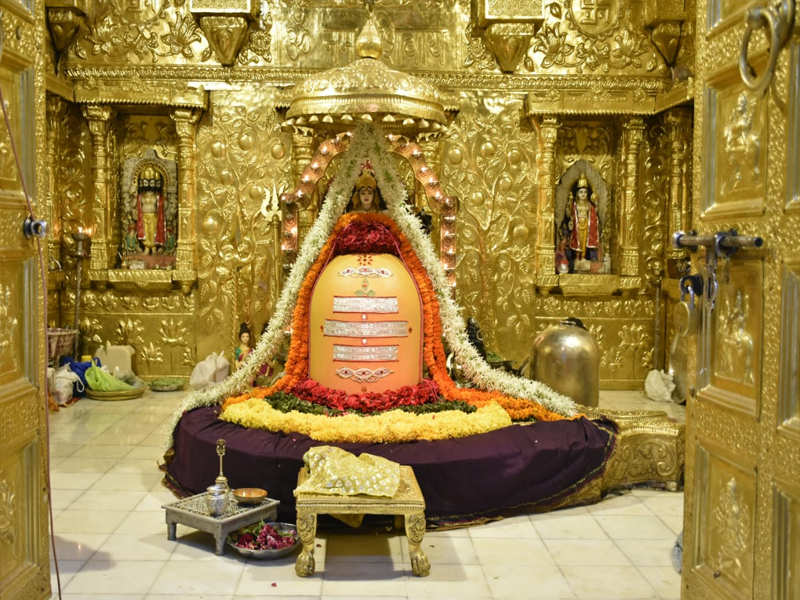
How illogical is pilgrimage? Whether God exists in any corner of this universe is uncertain. People don't have faith in God. They have blind faith in their statues. They believe that visiting and worshipping these statues will solve their problems, will make their lives happy. Whatever they want they will get.. Which never happens.
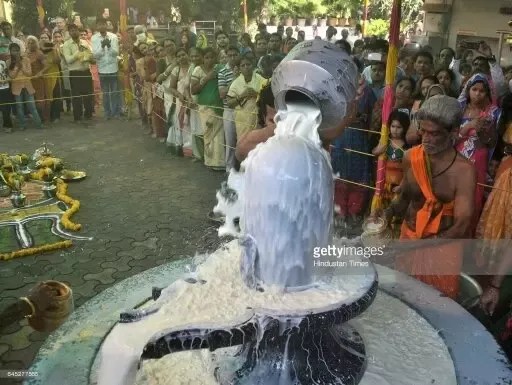
For once let's believe that God exists, and he loves its devotees. Does a loving person ask you to remain hungry? Does he become angry if you don't do what you said? Does he ask you to give him a bath with milk and other stuff? Does he ask to donate money for him? Does he ask to stand in the queue to meet him? Does he ask you to offer coconut? No, of course not.
When one visits a big temple, let's say Badrinath or Kedarnath. Huge number of people have to wait in long queues, where the assistant of a particular God i.e pandit, manages how long he/she can worship, from where to enter, whether to touch the statue or not. The irony is there is a VIP quota for visiting the statue. One who has a VIP pass can visit God soon.
I wonder how the same God can have different status? Kedarnath's Lord shiva is God of bigger status rather than the one in the temple near you. If one can find the same God nearby, what's the point of going to Kedarnath, just because it is said that visiting Kedarnath fulfills your wish.
People give their everything when they visit their God's place. In Mathura people crawl around the Govardhan Parvat. People donate their hair at Tirupati in the name of a vow they have taken.
It's hard to make people understand this is just a business practiced by owners or associations who built temples. A person will not give a penny extra to the one who sells vegetables day and night. They would bargain with him, but whenever they will visit the temple, especially one which is famous, they would give several rupees unnecessarily to the pandit or in the name of adonation.
People here donate money in thousands and lakhs for building temples. Today also in India not every class of people are allowed to enter temples. The time is fixed when God's statue will be visible and when it will not.
Visiting these places is good only when you don't have any expectation of return after visiting there. It's better to give money to one who earns by working hard rather than wasting it here and there. Every year people donate tonnes of gold and lakhs of money to these temples.
Even if one has faith in God he/she should know that giving bribe to God is injustice to their faith. If God exists he would never demand this.
No doubt temples are the shelter for many poors. These temples provide meals to the poor. Giving food to someone is the source of pleasure to so many but offering gold and huge money which goes in the pocket of wrong people is again injustice.
It's not like that only Hindu community has fake faith in pilgrimage. Each and every religion has the same condition in other countries too.

Things one must know before starting college


Excited about starting college but slightly nervous too? Well keeping that in mind I’ve written an article addressing the very topic.

Starting college is like entering a whole new world and there’s so much to think about:

  1. Will I make friends?
  2. What Major should I pick?
  3. How will I juggle everything?
  4. What should I bring?

And, lot’s more.

That’s why I’ve created this list of things you need to know before you (or your child ) start college. Let’s get started!

1. What to Take With You to College


(You can skip this if you are living off-campus – but it’s still good to read.)

For most students, going to college is the first time they live away from home. So, the question is, What do you take with you when moving into a dorm?

Before deciding…Get in touch with your college and ask for their approved and prohibited items checklist. Every college will have one and each college will have slightly different guidelines. Some colleges won’t even allow a power strip! So…make sure you contact them before spending money on things like mini-fridges. Another thing to consider is space. Freshmen tend to underestimate how much space they need, and dorm storage space is notoriously less than it seems at first(quick tip – find out the exact dorm room dimensions and measure any larger items you want to take figure out how much will fit –good to know before showing up in a U-Haul!).

A good rule of thumb is just only to take what’s necessary:

  • Comfortable clothing for class.
  • A formal outfit & shoes for special occasions and job hunting
  • Laptop & phone (obviously)
  • Bathroom supplies
  • Bedding (sheets, pillows, blanket)
  • School supplies i.e. pens, rulers, calculators, sticky notes, etc.
  • Eye mask, earplugs, and pain medication (just trust me)
  • Of course, there’s more, but these are the essentials.

Many students wonder if you can bring your car to campus. This is something you will need to check with your college. Some allow cars; others don’t.

Talking about transportation ….

2. Things to Do On And Off Campus


Think about what you would like to do with your spare time (and how you will get there). College campuses and their surrounding areas are packed with things to do. Almost every college has plenty of clubs, events, and activities on offer for students. So…when you’re on the phone with the college and asking about what things you can take with you, make sure to find out about things to do on and off-campus. You will also want to get off campus now and then. Do google maps search using the college’s address to find out what there is to do out and about the college.

For example, you could search for:

  • Starbucks near [college name]
  • Restaurants near [college name]
  • Movie theatres near [college name]
  • Comic Conventions near [college name]

And so on…These kinds of places know that students love their products and services. So chances are they will be located around the college.

Then…you need to know how to get there! Once you know where you want to go, make sure that you come up with an idea of how you can get there by bus, train or bicycle (if you have one). Knowing how much it costs to get where you want to go is also an important element in making your weekly budget.

3. What Classes You Will Take


Maybe you have already chosen your Major, maybe you haven’t. Either way: If you look around the room on the first day of college, statistically up to half of them haven’t chosen their major either. Even then…Two-thirds of all college students who have picked their major, change it at least once before graduation. Having said that: You should look into which classes you will be attending in your first semester. Because you will need to prepare beforehand. You will need to buy books for example. However, don’t order them just yet, we’ll give you a few tips about saving money on books later. More importantly…Did you know that you forget almost 82% of what you learn in a class within 28 days? And after graduating from high school, students often have three or four months before starting class again.

This is a great way for students to relax after the stress of their final year of high school but the problem is that because of a natural memory drain, getting back into the flow of studying again can be stressful and overwhelming. That’s why we suggest taking a few pre-college tutoring classes based on classes you will have during the first and second semesters. That way you can hit the ground running with one less thing to worry about when starting college.

4. How to Improve Your Memorization


College can be challenging. There is so much to learn and topics you have never studied before. And…Like I said in the last section: The average person loses 82% of what they learn within 3-4 weeks, while a typical college semester is fifteen weeks long. This means that by the end of the semester: When it’s time for exams, you will only remember 18% of what you learned in the first two-thirds of the semester! Frustrating, right? So, I’m going to share three memory tips that will help you retain much more of your course content and while having fun doing it:

Tip 1. Find Your Why

Think about why you want to study your subjects. If you are just learning to pass an exam, chances are you will forget everything the next day. When you want to learn, you need to have a strong (emotional) motivation. Just tapping into a desire to learn something will increase your memory retention and learning abilities. For example:

Those who want to be doctors are more likely to have an active interest in topics like biology or chemistry and therefore find it easier to remember key facts and information from those classes. What is your end goal? Find something you want to achieve and connect it with your academic success. Once you find your own key motivation for studying, everything becomes easier to learn and remember.

Tip 2. Learn Use Mnemonic Devices

Mnemonic devices are ageless proven tricks to help you remember almost anything more easily. And…Many of the techniques have been around for thousands of years. So what does a Mnemonic device look like? They are simply different methods to help you remember specific chunks of information. Here’s an example:

This mnemonic device helps you to memorize the first 10 elements and their position.

“Henry Hester Likes Beer But Can Not Obtain Food Now”

Just by remembering this line, you are able to remember each of the first 10 elements and their position in the list:

  • Henry – Hydrogen
  • Hester – Helium
  • Likes – Lithium
  • Beer – Beryllium
  • But – Boron
  • Can – Carbon
  • Not – Nitrogen
  • Obtain – Oxygen
  • Food – Fluorine
  • Now – Neon

See how each word represents an element in its position? This is a type of mnemonic device. Our brains find it easier to remember a storyline or a structured sentence rather than a list of random names of elements. You can use Mnemonic devices to memorize nearly anything. The more you practice the easier it gets, too. And…If you practice these tricks often, studying for any exam will become a breeze.

Lastly:

Tip 3. Use Regular review

The best way to move something from your short-term memory banks to your long-term memory banks is to repeat it a few times.

So, schedule some time every week to review your class notes from the semester. Don’t just review what you learned that week. Review what you learned 2,3,4 weeks ago as well. Another extra trick here is to practise recalling the information out of sequence. This cements the info even further into your brain.

5. How to Take Notes Like a Boss


Notetaking is one of the best ways to help you learn faster, as long as you read them – see the previous chapter.

Here are some of our top notetaking tips to become a note-taking pro.

  1. Be prepared. Look over the upcoming class’ outline and slides if available to get an initial picture of the lesson to come.
  2. Use your notetaking to summarize, not transcribe. Focus on recognizing key concepts (often indicated in the class slides).
  3. Practice your listening skills. Learn to Identify the most important snippets of information and forget the rest. Create a few notes on the big picture, then pinpoint “subheadings” underneath with brief, key information under each.
  4. If the lecturer is going too fast for you, take a photo of the slides or board notes with your phone for later review. (Check first whether your faculty allows this)

Recognizing Key Topics

Wondering how to identify key information in a lecture? Here are a few things to listen out for which suggest what your professor feels is key information:

  • Introductory comments outlining the class topic
  • Repeated phrases or information.
  • Auditory changes such as verbal emphasis or change in speech pattern.
  • Verbal cues indicating something to be important.
  • Final remarks in the form of a summary or review of the lecture’s main idea.


Pseudo Feminism

There are women’s activists and afterward pseudo-women’s activists go along. Pseudo-feminism recommends that ladies merit more regard, or individuals of other genders don’t merit regard. Living in a culture where ladies face numerous difficulties consistently is the most noticeably terrible thing is that a few group hurt the term feminism.Ladies via online media who recognize themselves as women’s activists need balance and acknowledgment for ladies they think to merit it. They will slam a lady in case he’s their lesser spouse or sister like a lawmaker yet they will uphold a lady slamming that equivalent political pioneer. Lip service and pseudo-feminism get a mixture here.

Feminism is basically about opportunity and isn’t about judgment. Individuals who perceive feminism don’t wear the women’s activist identification. These are individuals who need a well-rounded schooling for their girl, support their buddy assuming she needs to be working in the field. A few ladies need to give their spouses food; a few ladies need to take more consideration of their home and youngsters than work. That isn’t making them slaves; it is dependent upon them to choose what to do.

The world is gaining huge headway in the 21st century. People are putting innovation, innovation, and science at their place. Humankind’s very definition is going through a colossal change and this time it’s about correspondence, sexual orientation rights and equity for everybody. The well established discussion between the genders is as yet going on and we are as yet battling about predominance among people and a few occasions and episodes have as of late vitiated the climate. I’m interested by the new discussion and the subject of feminism. Each polite man knows the idea of feminism apparently, and he esteems it sincere and upholds it. This age knows about every one of the issues and is very unyielding about the way that ladies are as great if worse than men and we are seeing the change happening just before us. Ladies were presidents, head administrators, CEOs all around the world and the unreasonable impediment was broken and obliterated.

Individuals like Harvey Weinstein and US President Donald John Trump, who by being in power have acted like domineering jerks and are liable for killing a lady’s spirit in any event, when she’s alive, haven’t helped the strong men’s motivation. However, there are a large number of men all throughout the planet who are regarded, gazed upward to, and have faith in equity and balance for each Weinstein and Trump. Since men don’t shout and yell about the #MeToo lobby from the housetop doesn’t mean they’re distorted or malicious individuals. Humankind is as yet alive and many humble men will kick the bucket ensuring a lady’s honor and will consistently defend certified causes and testimonial for ladies. We live in occasions when male-slamming has become a standard, and we are summing up each man as some sort of creature that jumps and obliterates the pride of the lady. We as a whole realize our way of life isn’t great and equivalent, and it’s constantly been slanted for the other sex, so it’s an ideal opportunity to dive in and make the necessary enhancements.

A women’s activist may take care of business, lady, or any individual who accepts sex ought not be a factor in choosing what ladies’ privileges are. It is an idea that makes progress toward sex fairness; it tries to make it so that ladies are given a similar schooling, a similar stage, and the very chances that a man has in his day to day existence. Likewise, it targets dispensing with the generalizing of ladies who have been pervasive for a long time. Ladies ought not be driven away from school early and wed, or do housework, or fit in more customary jobs. I think a great deal of us are women’s activists without understanding that. Pseudo-feminism is a term some of the time relegated to a part of feminism with which some disagree. Much of the time, the meaning of feminism is wrong and pitiless. As they guarantee, a couple of rotten ones ruin the pot, and individuals will now and again utilize pseudo-women’s activist motivations to bring up non-existent irregularities in the general concept of feminism. Supporting a thought and proliferating it is a certain something yet spreading scorn and disunity inanely in its name would just obliterate all the decency that was done before for the sake of that thought.

Pseudo-women’s activists are likewise marked on the Internet as “feminazis” by console heroes, they are people who don’t totally get a handle on the meaning of feminism and who attempt to discover indications of unfairness and viciousness despite the fact that there is none. Pseudo-women’s activists have figured out how to damage the meaning of feminism from what it is to a brand of man-disdain, looking for any chance to look for retaliation instead of fairness. While they are one-sided in advancing their own motivation, local area, or sex, women’s activists look for balance instead of prevalence. While recognizing a pseudo-women’s activist or somebody who doesn’t completely comprehend the idea of feminism isn’t incredibly uncommon, it’s not normal. All things considered, we need to develop to the idea of sexual orientation balance and give ladies the chances they merit, however what we don’t require is individuals spreading disdain and agitation for the sake of feminism. Hence, we can say that Incomplete understanding of an idea is something hazardous and from multiple points of view, we have seen this, not simply feminism. Half-information is more risky than the very obliviousness. Only one out of every odd man out there is an attacker, following or gazing at a lady out there. Feminism is a type of equivalent treatment; pseudo-feminism is a type of hawkishness. There is no benchmarking and no challenge.

Corruption

Corruption not just has become an inescapable part of Indian governmental issues yet additionally has become an undeniably significant factor in Indian elections. The broad job of the Indian state in offering types of assistance and advancing monetary advancement has consistently set out the freedom for utilizing public assets for private advantage.

As unofficial law of business was stretched out during the 1960s and corporate gifts were prohibited in 1969, exchanging financial blessings for under-the-table commitments to ideological groups turned into an undeniably inescapable political practice. During the 1980s and 1990s, corruption became related with the inhabitants of the greatest echelons of India’s political framework.

Rajiv Gandhi’s administration was shaken by outrages, similar to the public authority of P.V. Narasimha Rao. Legislators have gotten so firmly related to corruption in the public eye that a Times of India survey of 1,554 grown-ups in six metropolitan urban communities tracked down that 98% of the general population is persuaded that lawmakers and priests are bad, with 85% seeing that corruption is on the expansion.

The conspicuousness of political corruption in India during the 1990s is not really extraordinary to India. Different nations additionally have encountered corruption that has shaken their political frameworks. What is amazing about India is the tireless enemy of occupant conclusion among its electorate. Since Indira’s triumph in her 1971 “garibi hatao” political decision, just one decision party has been reappointed to control in the Central Government. In a significant sense, the special case demonstrates the standard in light of the fact that the Congress (I) won re-appointment in 1984 in no little measure on the grounds that the electorate saw in Rajiv Gandhi a “Mr. Clean” who might lead another age of legislators in purifying the political framework. Hostile to occupant assumption is similarly as solid at the state level, where the decision gatherings of all political influences in India’s significant states lost eleven of thirteen authoritative get together races held from 1991 through spring 1995.

Corruption in straightforward terms might be depicted as ‘a demonstration of pay off’. Corruption is characterized as the utilization of public office for private gains in a manner that comprises a penetrate of law or a deviation from the standards of society. Sizes of corruption can be Grand, Middling or Petty and installment of pay-offs can be because of conspiracy between the pay off taker and the pay off supplier, because of pressure or even expectant.

This was the upheaval of Mahatma Gandhi against wild corruption in Congress services shaped under 1935 Act in six states in the year 1937. The pupils of Gandhi notwithstanding, disregarded his anxiety over corruption in post-Independence India, when they came to control.

More than sixty years of vote based guideline has made individuals so resistant to corruption that they have figured out how to live with the framework despite the fact that the harmful development of this disease may at long last kill it. The Tehelka scene overcharged the political air of the nation however it scarcely uncovered whatever was obscure to individuals of this greatest vote based country. Legislators are completely mindful of the corruption and nepotism as the principle explanations for the fall of Roman Empire, the French Revolution, October Revolution in Russia, fall of Chiang Kai-Shek Gov­ernment on the terrain of China-and surprisingly the loss of the powerful Congress party in India. Yet, they are not prepared to take any exercise from the pages of history.

Evidence: Noah’s Ark is Real

Evidence: Noah’s Ark is Real

Have you ever heard of the great flood that occurred in the time of Noah? It was the first time the world had seen rain let alone a Flood. Noah was the family chosen and instructed by God to build an Ark. He was to take along with his family every living creature on land in pairs so that they would be able to reproduce and fill the earth once again when the flood recedes.

I’m almost certain that it has always left us wondering however did Noah get all those animals inside? Did he have enough food to feed his family and the animals and much more?

Ark Encounter presents a theme park in Grant County, Kentucky. It represents Noah’s Ark based on Genesis in the Bible.

To answer all your doubts and questions, keep scrolling down and you might even be surprised.

Construction

It is 510 feet long, 85 feet wide and 51 feet high; yes it is massive. People who have gone to visit the architectural marvel have stated that going into the Ark had changed their whole perspective.

The first floor has cages for animals of every size. The builders and architects researched and built the structures, cages, the feeding system, the waste collection etc. based on how the things were made back then – right from the designing to the locking system.

Now if you might think that people of the olden age were not smart and could barely make a few huts and pots with stones and clay; you are wrong! They had much knowledge and techniques incorporated into their constructions. And the Ark is an example of that.

Most of the time we find in Bible stories for kids the Giraffe’s head popping out through the windows of the ark. The Ark Encounter proves that that never happened and everyone had enough room inside no matter how long or tall they were.

One could say that Noah put good thought into considering for the animals entrusted to him. He needed to keep them safe and secure through those tough times.

How did Noah manage to bring millions of species into the boat that we see today?

Now before we go into that, let us look at what the Bible says. In Genesis God commands Noah to take animals in pairs of each ‘kind’.

Species as we see now does not mean the kind that God was referring to. If you look at the classification : Division -> Class -> Order -> Family -> Genus -> Species, this category of species is what we witness now. But initially, when Noah took in the animals there wasn’t a category of species.

Instead ‘kind’ meant Family. This is the key point.

Like if you take the ‘dog kind’ you would have wolves, coyotes, dogs, etc. and the cat kind meaning cheetah, leopard, lion, tire etc.

And if you look at it, evolution only started after the flood. Hence the cat kind that Noah had given shelter to in the Ark gave rise to the tigers, lions, cheetahs that you see now.

So Noah had to only take in a pair of each kind which actually meant that there were just enough animals living at that time which could fit into Noah’s Ark.

The animals that were on the ark wouldn’t be the same as what we see today because they have evolved and you can find a plethora of species around you.

Does this change your perspective on the event that happened many years ago? This one model of the Ark has opened doors for understanding and believing.

Check out the video on Ark Encounter : https://www.youtube.com/watch?v=1MV0_P4vA4Y

Success of P & G

The Procter & Gamble Company (P&G) is an American multinational consumer goods corporation headquartered in Cincinnati, Ohio, founded in 1837 by William Procter and James Gamble.It specializes in a wide range of personal health/consumer health, and personal care and hygiene products; these products are organized into several segments including Beauty; Grooming; Health Care; Fabric & Home Care; and Baby, Feminine, & Family Care. Before the sale of Pringles to Kellogg’s, its product portfolio also included food, snacks, and beverages. P&G is incorporated in Ohio.

In 2014, P&G recorded $83.1 billion in sales. On August 1, 2014, P&G announced it was streamlining the company, dropping and selling off around 100 brands from its product portfolio in order to focus on the remaining 65 brands,which produced 95% of the company’s profits. A.G. Lafley—the company’s chairman, and CEO until October 31, 2015—said the future P&G would be “a much simpler, much less complex company of leading brands that’s easier to manage and operate”.

Companies typically don’t open their innovation centres and reveal their cutting-edge technology to outsiders, but P&G gave us a peek at theirs under an NTUC programme to help working people progress in their careers Called the Innovation Exchange (IEX).

1. Innovation Has Kept P&G Relevant For Decades

P&G has established itself in 1837, which means that it has been 180 years since the FMCG company gained a foothold in the industry. From their early years of making soap and candles, to creating shampoos, shavers, and even more today, P&G has been constantly innovating to make everyday life better for their consumers.

“Innovation has always been in our DNA. It’s how we drive growth, prevent the commoditisation of categories, reduce costs, and deliver value,” said James Kaw, Director of P&G’s Singapore Innovation Centre (SGIC).The company spends nearly US$2 billion annually on R&D. And each year, it invests at least another US$400 million in foundational consumer research to discover opportunities for innovation. Kaw strongly believes that innovation starts with the consumer itself and as such, P&G places a huge focus on gaining insights into consumers’ everyday lives so they can combine “what’s needed” and “what’s possible”.

As such, P&G ropes in consumers in their product development process. It invites a group of consumers to its Consumer Lab – housed in its Singapore Innovation Centre – so that P&G researchers can observe how they use the products in a regular, everyday setting.

Ultimately, their goal is to offer consumers product options at all pricing tiers to drive preference for their brands and provide meaningful value.

2. Customise For Your Customer 

At P&G, the innovation efforts are focused on the needs and demands of the customer, especially since customer needs tend to constantly evolve. Kaw also pointed out that businesses must also innovate their products according to customer habits. Citing Pampers – their first 10-billion-dollar brand – as an example, Kaw said the product is reinvented based on the target market.

“In the US, Pampers is a tape diaper because parents typically change diapers on a changing table. But in Japan, the babies’ diapers are changed on a ‘tatami’ (traditional Japanese mat),” said Kaw. “Since it’s done on the floor, babies tend to run around the room, which makes it harder for the parents to put on the diapers. And that’s why we’ve come up with pull-up diapers for this group of consumers.”

3. Diversity Is Strength

In Asia, P&G hires 10,000 staff from 70+ countries of origin, with three innovation centres spread across the region, including Singapore. With over 61 nationalities, their 7,000-strong R&D team (of which 1,000 are in Asia) adopts a very diverse thinking.

4. Protect Your Innovation

How does P&G work on preserving innovation? Patents.

So far, it has secured 55,000 patents globally.

“Novel ideas that are superior to existing solutions is the basis of a strong foundation; and patent is an important way for us to protect the novelty of this idea.”

Kaw emphasised that these novel ideas, or “inventions”, need to be consumer-centric to be considered of value.

He pointed out that “inventions are worthless if you cannot translate it into consumer need. You need to show why it’s important.”

5. P&G = Persistence And Grit Against The Odds

“As you innovate, you are bound to face challenges or experience failures. And usually when you have a new idea, people will shoot you down and say that it will not work. That’s why you need persistence and grit – that’s what P&G stands for,” said Kaw.

“How you deal with failure will determine your success. If you get disheartened by failure and you spiral down, that’s not going to be helpful. You need to have the ability to pull yourself up and keep going. That’s how you can continue to innovate,” he added.

But how does P&G assess this intangible trait of persistence and grit in interviews?

“What you do in the past will always be a reflection of your future. Our interview processes is very much focused on what you’ve done in specific areas, your learnings, and how you define the problems. These are the areas we look out for during interviews and it helps us frame the ‘fit’ of the people”.

“Some people may or may not fit with P&G. Ultimately, we look for people who have technical aptitude, ownership (to own the problem and look for solutions), confidence, and very engaging attitudes.”

6. Note To All Bosses: Invest In The Right People

For generations, P&G created most of its phenomenal growth by innovating from within – building global research facilities, and hiring the best talents.

“P&G is a culture that is very different from most organisations. We only promote from within so it is incredibly important for us to invest in people – to develop the best and to retain the best. If we don’t do that, it takes a long time to replace them.”

Organic Farming

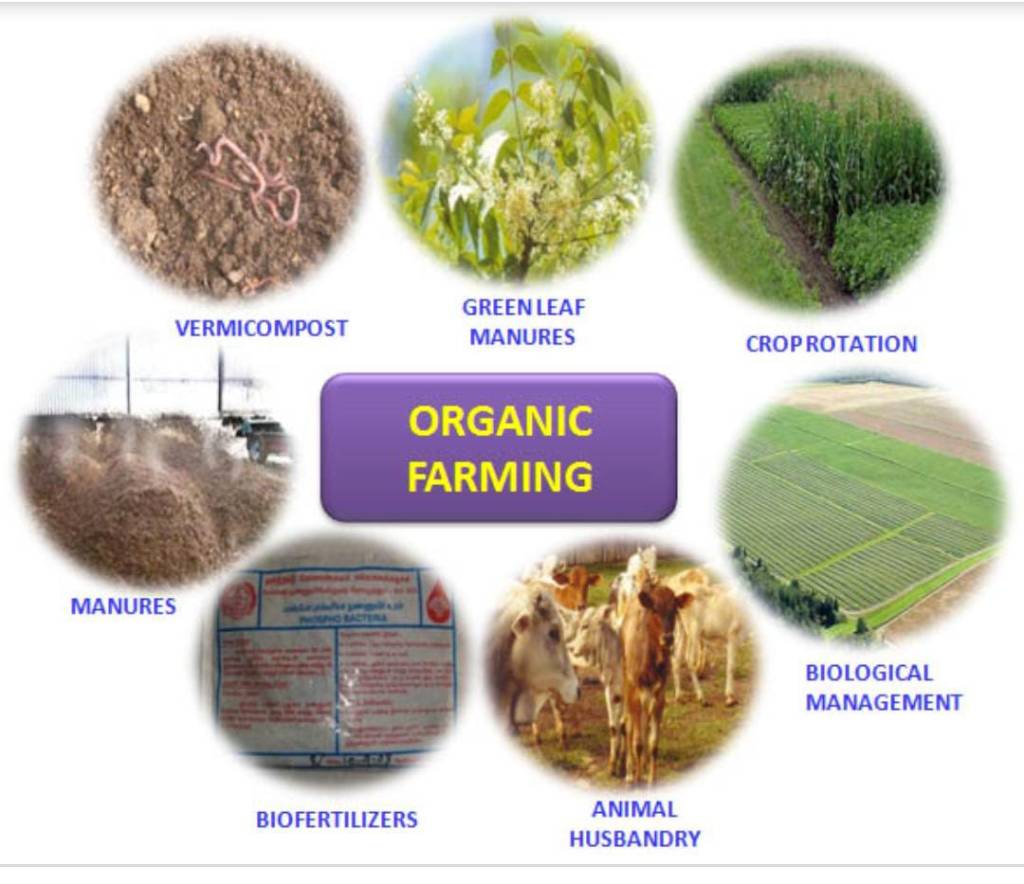
Organic farming is in a nascent stage in India.About 2.78 million hectare of farmland was under organic cultivation. Organic farming is a production system which avoids or largely excludes the use of synthetically compounded fertilizers, pesticides, growth regulators, genetically modified organisms and livestock food additives. To the maximum extent possible organic farming system rely upon crop rotations, use of crop residues, animal manures, legumes, green manures, off farm organic wastes, biofertilizers, mechanical cultivation, mineral bearing rocks and aspects of biological control to maintain soil productivity and tilth to supply plant nutrients and to control insect, weeds and other pests.

Organic methods can increase farm productivity, repair decades of environmental damage and knit small farm families into more sustainable distribution networks leading to improved food security if they organize themselves in production, certification and marketing. During last few years an increasing number of farmers have shown lack of interest in farming and the people who used to cultivate are migrating to other areas. Organic farming is one way to promote either self-sufficiency or food security. Use of massive inputs of chemical fertilizers and toxic pesticides poisons the land and water heavily. The after-effects of this are severe environmental consequences, including loss of topsoil, decrease in soil fertility, surface and ground water contamination and loss of genetic diversity.

Organic farming which is a holistic production management system that promotes and enhances agro-ecosystem health, including biodiversity, biological cycles, and soil biological activity is hence important. Many studies have shown that organic farming methods can produce even higher yields than conventional methods. Significant difference in soil health indicators such as nitrogen mineralization potential and microbial abundance and diversity, which were higher in the organic farms can also be seen. The increased soil health in organic farms also resulted in considerably lower insect and disease incidence. The emphasis on small-scale integrated farming systems has the potential to revitalize rural areas and their economies.

Advantages

  • Organic farming is environment friendly as there is no usage of chemicals.
  • Organic food is more nutritional, healthier and tastes better.
  • Organic farming reduces pollution.
  • Farmers will have a healthy working environment.
  • The demand of organic food is growing faster than supply and thus we can get a good return on investment.

Disadvantages

  • Organic food is more expensive.The production is less compared to inorganic farming.
  • Production costs are higher because farmers need more workers.
  • Organic farming cannot produce enough food that the world’s population needs to survive.
  • Lack of marketing for organic farming.
  • Organic food generally spoil faster.

Gregor Johann Mendel- Father of Genetics

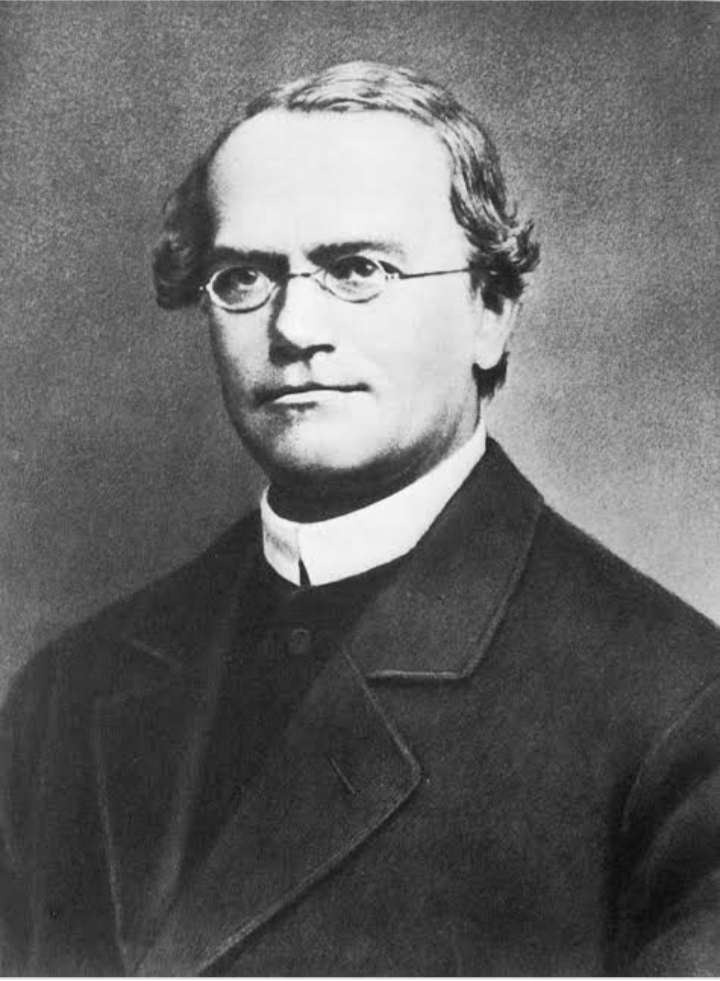
Mendel (1822-1884) was an Austrian monk who discovered the basic principles of heredity through his experiments. His experiments are the foundation for modern genetics. He was born in 1882 to a family of farmers in Silesian of Czechoslovakia. After finishing his high school at the age of 18, he entered the Augustinian Monastery at Brunn as a priest. From there he went to the University of Vienna for training in physics, mathematics and natural science. Mendel returned to the monastery in 1854 and continued to work as a priest and teach in high school. In his leisure time he started his famous experiments on the garden pea plant. He conducted his experiments in the monastery for about nine years from 1856 to 1865. He had worked on nearly 10000 pea plants of 34 different varieties. Mendel noted that they differ from one another in many ways. Thus Mendel had chosen 7 pairs of contrasting characters in many ways.

Reasons for Mendel’s Success

He chose the pea plant as it was advantageous for experimental work in many aspects

It is naturally self- pollinating and so is very easy to raise pure breeding individuals. It has a short life span as it is an annual and so it was possible to follow several generations. It is easy to cross- pollinate. It has deeply defined contrasting characters. The flowers are bisexual.

360 Wander Writer

Welcome to Historic Love World

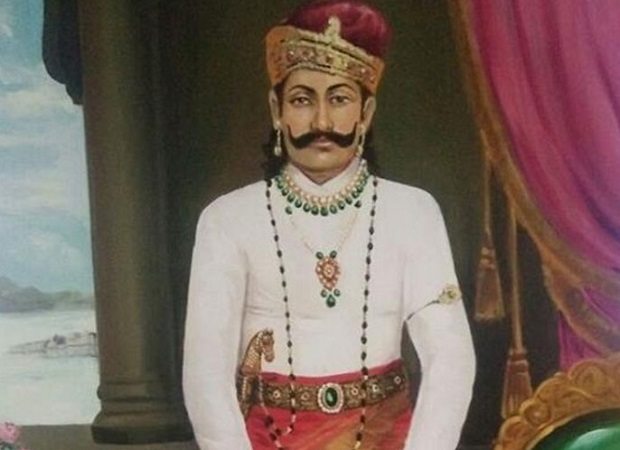
We all will be well aware of the Rajput’s and their ruling period over India. Today let us see about one of the love story that prevailed during the period of Rajput’s , which is considered as one of the epic love stories of India. This Love story is between Prithviraj Chauhan and Princess Sanyogita who is also known as Samyukta. This love story is a in which we will come across The Love Story of Prithviraj Chauhan And Princess Sanyogita is the mesmerizing saga of romance, courage, war, vengeance, tragedy.

Sanyogita father Jayachandra

Prithviraj Chauhan, was the King of the Chauhan dynasty who ruled Rajasthan, Delhi and some parts of Uttar Pradesh. He was also the last king of Rajput Kingdom to rule Delhi , after which Muslim rule started its reign in India. Samyukta was the daughter of Jaichand who was the king of Kannauj. She was known for her bravery and majestic beauty. As in the air the story and bravery of Prithviraj Chauhan reached the ears of Samyukta. She fell in love with him when a painter from his kingdom showed his painting to her. And simultaneously showed the paintings of Samyukta to Prithviraj and he also fell in love with her.

Prithviraj was very famous for his bravery , fearlessness and chivalry , which made Jaichand jealous . They both belonged to the rivalry clans of Rajput. As soon as Jaichand came to know about the affair he arranged Swayamvara and invited all eligible prince and king except for Prithviraj Chauhan.

Prithviraj was too in love with Sanyogita’s beauty and as soon as he came to know about Swayamvara , he decided to join it. In the Swayamvara , the princess rejected all the prince and placed the garland in her hand to the statue of Prithviraj, which was made as a representation of watch guard as an insult. As soon as this, Prithviraj came out of his hiding and along with Samyukta whisked away to Delhi.

Love Story of Prithviraj Chauhan and Princess Sanyogita

Jaichand was in anger and in the mood to take revenge. So, he alliance with Muhammad Ghori, who was against Prithviraj and was previously defeated 16 times, and extended his support to Ghori’s to attack Delhi. When Ghori attacked Prithviraj, Prithviraj lost the war and Ghori acquired him. Legend has it that Prithviraj had begun to ignore state affairs after his wedding to Sanyogita. It is said that Samyukta committed suicide .

The Farce

Introduction:

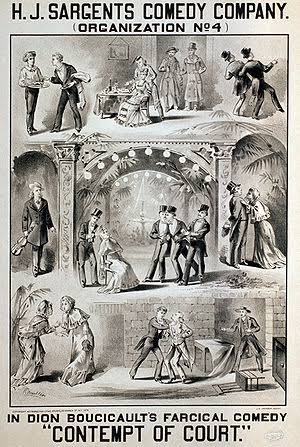
The Farce is a dramatic work designed solely to produce laughter. Originally a farce was an explanatory or additional matter introduced into the main play sometimes to increase its length. Slowly actors begin to use this as an occasion and thus it became a part of the play.

The Plot of the Farce:

In Farce no attempt is made at Fidelity to life. Its aim is merely to provide laughter. For this purpose, it employs funny incidents absurd characters, humorous situations, and witty dialogue. Farce does not aim at a realistic representation of things but provides caricature. The plot in a farce usually appears nonsensical, characters in the indulge in deception impersonations, and irrationalities. There are angry wives, helpless husbands, and funny old men indulged in the most unexpected activities. Serious and respectable people are drawn into the most undignified positions, grave and priggish persons are debunked. Most farce is centered around love affairs which themselves are caricatures. In the end, everybody comes out without any harm.

The elements of the Farce:

The elements of the farce can be seen even in the early English plays. Shakespeare’s ‘A midsummer night’s dream’ and ‘Twelfth Night’ are examples to show how farcical elements could be interspersed with comedy with great effect. Event tragedies had farcical scenes as we see in Marlowe’s Dr. Faustus.

Some Famous works of Farce:

As a separate form of entertainment, the farce came into vogue towards the close of the seventeenth century. The first popular farce was ‘The Rehearsal’ by the Duke of Buckingham. But The anti-sentimental comedy almost destroyed farce. But the anti-sentimental comedies of Sheridan and Goldsmith brought back farcical humor into English drama. Some of the scenes in Sheridan’s ‘The Rivals’ and most of the scenes in his “School for scandal” are enchantingly Farcical. Similarly in the play “She Stoops Conquer” by Goldsmith. In the Victorian period, the farce attained a sort of respectability. Farces such as ‘ The Private Secretary’ and ‘Charley’s Aunt’ were several times.

In modern times, the farce is an accepted form of dramatic entertainment. Most of the plays of Oscar Wilde and Bernard Shaw have farcical situations and dialogue. The farce requires unusual inventiveness, a craftsman, and a sense of humor on the part of the writer.

Most modern comic one-act plays tend to be farces. The purpose of such plays is only to give brief entertainment without malice and laughter without vulgarity. Modern one-act plays like ‘The Dear Departed’ are essentially farce designed to produce laughter.

Conclusion:

The Farce is a famous literary form in earlier literature. In this form, most of the scenes from the plays and characters from the novels will have some comical and entertaining content. Which boosts up the audience’s mindset. These literary forms are used to length the drama in earlier periods. But, most of the audience loved this method and they often started to use it regularly in stage dramas. Farce is used merely for the entertainment of the audience. Even now, most of the writers include some comical scenes in their works to make the plot entertaining.

Start your own business part 1

Start your own business part 2

India’s Vision 2020

The year 2000 was entrancing. There was a lot of energy around the start of another thousand years, with a large number of us imagining an innovation drove future and a state-of-the-art existence. The Millennium Bug was something other than the Y2K issue—it represented an energy to break the majority of the relentless issues that the twentieth century, with its huge headways in exchange and monetary development, had not had the option to settle. Prodded on by A.P.J. Abdul Kalam, who might proceed to become President, the Planning Commission thought of an omnibus record that characterized and verbalized India’s vision 2020.In 2000, India was being considered as a part of the then-well known BRIC economies. Brazil, Russia, India and China should quickly build their predominance over the worldwide economy. While Brazil and Russia baffled Jim O’Neill, the Goldman Sachs financial expert who authored this term, China and India have to be sure progressed nicely, potentially better via (GDP) development than was determined.

A significant portion of assembling went to China, and India wanted to take action accordingly by expanding assembling’s offer to 25% by 2022. This would add another 100 million positions, it was anticipated. In any case, producing stalled out at 16.1% of GDP, inside industry that records for 29% of GDP. Agribusiness contributes 17% and a predominant administrations area makes up the equilibrium.

In India, the agreement at the turn of century was that yearly GDP development rate would be somewhere in the range of 8.5% and 9% throughout the following 20 years. This would bring about quadrupling of the genuine per capita pay. Destitution would be totally dispensed with. It was anticipated that India would move from being a most un-created country (LDC) to an upper-center pay country. Also, that India’s position in the World Bank’s order of economies would go from eleventh in 2000 to fourth in 2020.

On this front, India moved extremely quick, freeing a large number of individuals once again from destitution. It was as of now not a LDC even before the finish of the main decade of the thousand years. In any case, this was adequately not to arrive at the upper-level of pay where China and Brazil sit. India stays a lower-center pay economy. On destitution, as per the United Nations’ 2019 Multidimensional Poverty Index (MPI), India lifted 271 million individuals out of neediness somewhere in the range of 2006 and 2016. This was the quickest decrease in the MPI esteems during the period, with solid upgrades in regions like resources, cooking fuel, disinfection and sustenance. Neediness could, notwithstanding, not be wiped out, as imagined 19 years prior. Appraisals on the quantity of poor change between 21% of populace according to the 2011 Census and 3% as Brookings Institution’s new computations suggest.In the year 2000, it was projected that India’s populace will proceed to develop and will cross 1.3 billion by 2020. It as of now has, and the populace division of the UN Department of Economic and Social Affairs appraises that India’s populace will outperform China’s by 2027. It is additionally a fact that richness rates have been declining quickly, especially in the south, and India’s populace ought to settle by 2050.

Future that was 64 years in 2000 developed to 69 years in 2019, precisely the figure anticipated. Be that as it may, it contrasts ineffectively and Brazil and China, both at somewhat more than 75. The number of inhabitants in 60 or more residents was relied upon to arrive at 120 million. It has reached 103 of every 2016, and the number will just go up. Public framework should improve to deal with the older at this point.

With 65% of the populace in the functioning age bunch, India in 2000 realized that giving work openings would be vital to supporting development. The information on positions is terrible for sure. The nation has been seeing jobless development for almost twenty years and presently the work information is foreboding. The pace of joblessness is at a 45-year high, with the informed joblessness rate increasing to over 23%. Almost 11 million youth lost their positions because of demonetization in 2016 and the rushed labor and products charge execution in 2017.

The vision of skilling 500 million individuals to take care of into a developing economy’s staffing needs was tragically not understood. The level of gifted youth climbed imperceptibly from 2% in 2000 to 4.4% by 2019. The terse and suggestive “Positions for All” motto explained in 2000 remaining parts a far off dream, retreating further as mechanization, sectoral movements and poor instructive results hamper any degree for development.

As indicated by the primary ever logical examination positioning nations by their degrees of human resources, we find that India positions 158th on the planet for its interests in training and medical services. Sudan (positioned 157th) is in front of India and Namibia (positioned 159th) is behind in the rundown. The US is positioned 27th, while China is at 44th. The straightforward reality which arises is that use on human advancement should rise generously. General medical care, simple admittance to quality instruction, end of appetite, arrangement of sterilization foundation, contamination control and stopping ailing health are basic to bring India into the following phase of development.One driving marker of development and advancement in any economy is urbanization. India’s populace remains industriously country, especially in the east. With today 35% metropolitan populace, India is way behind most created nations where the offer is as much as half.

Aggression towards travelers, log jam in highway development and the shrinkage of metropolitan positions has hampered work portability extensively. The $5 trillion economy that characterizes Prime Minister Narendra Modi’s vision for 2024 will require an undeniably more comprehensive plan, where sharp sexual orientation holes, absence of admittance to the advanced world and low quality foundation are handled right away.

5 RECREATIONAL ACTIVITIES – During COVID19

Yoga has got another level of importance during COVID19

COVID19 has made us locked in our own houses , & made us suffer boredom . People are finding recreational activities more interesting & trying many new recreational activities . RRecreation refers to all those activities that people choose to do to refresh their bodies and minds and make their leisure time more interesting and enjoyable. Examples of recreation activities are walking, swimming, meditation, reading, playing games and dancing

Ask any health expert and they will tell you that exercise is a cornerstone of a healthy lifestyle. According to the Centers for Disease Control and Prevention, getting enough physical activity could prevent one in 10 premature deaths. It can also reduce stress levels, improve sleep and leave us feeling happy.  

But when it comes to being more active, many of us don’t know where to start. While some people love lifting weights at the gym and training to run marathons, these strenuous activities aren’t for everyone. In fact, just spending time outdoors has been shown to improve overall health. 

FIVE RECREATIONAL ACTIVITIES THAT WILL HELP YOU TO SURVIVE THIS LOCKDOWN ARE :

  1. YOGA : Yoga is the basis of life .

It’s time to roll out your yoga mat and discover the combination of physical and mental exercises that for thousands of years have hooked yoga practitioners around the globe. The beauty of yoga is that you don’t have to be a yogi or yogini to reap the benefits. Whether you are young or old, overweight or fit, yoga has the power to calm the mind and strengthen the body. Don’t be intimidated by yoga terminology, fancy yoga studios and complicated poses. Yoga is for everyone . Its true , if you do regular yoga , you , your mind , your body will always remain in healthy state . It increases your flexibility , enhance your digestive system, improve you mood , keeps you relax & cheerful . For learning it , you need not to join expensive yoga classes as you can watch the videos on YouTube.

2. GARDENING : If you love planting saplings & plants around you , here is one one more enthusiastic activity for you all , that is gardening . Studies show that gardening can greatly reduce stress levels. What’s more, you can save money at the grocery store by growing your own herbs and vegetables. If you don’t have your own space to garden at home, see if your home town has a community garden. You can also spruce up a small space with window flower boxes. you cam even put saplings in bottles to reuse the , in this way you are protecting the environment in two ways , 1st by reusing plastic bottle & 2nd by planting trees .

3. ART & CRAFT : I know not every body knows how to dram but i feels everybody loves to color . it not only help you paint a beautiful painting but also teaches you patience , concentration . it fills your mind with cheerfulness , & your stress will fly in seconds Expressing creativity and emotions through the arts can be immensely satisfying. Painting and drawing can boost confidence and hand-eye coordination. Arts and crafts also have numerous health benefits: increasing memory and motor skills, stimulating the senses, boosting mood, and triggering positive memories, as well as positively contributing to overall health. Crafts such as quilting, sewing, and scrapbooking are all excellent indoor activities.

4. ONLINE CLASSES : Older adults have many opportunities to learn about almost any topic of interest. Courses are available online, on an audio disc, or DVD. Topics can range from history to music, philosophy, and anything in between. Harvard University and Stanford are offering free online courses to anyone who wishes to participate.

5. READING : A good book can transport readers to new places and create feelings of adventure. Reading provides quiet time, while also exercising the mind. Studies have proven that reading can enhance memory function, reduce stress, and promote better sleep.

Planning a book club with friends can make reading a great social activity. For those with visual impairments or those who prefer not to read, audiobooks are widely available as well.

Domestic Violence during Covid in India

The pervasiveness of aggressive behavior at home (DV) can be measured from the way that it has been archived in various societies and social orders everywhere. There is developing mindfulness that DV is a worldwide wonder and is a significant issue in agricultural nations as well. Nevertheless, DV shows specific structures and examples relying upon the nearby setting and perceived as a significant general medical issue. Notwithstanding the scope of misuse, it is the most well-known reason for nonfatal injury to ladies, who endure, fault themselves, and decide not to report it. Truth be told, frequently legitimize and disguised the maltreatment by accepting that the demonstration was incited by the ladies, consequently, legitimize and acknowledge it as their destiny, to keep living with it. The generous ramification for ladies’ physical, mental, and conceptive wellbeing and eventually the danger of death from DV is likewise answered to be high, which is submitted by a mate or partner.

The pervasiveness of DV in India goes from 6% to 60 for each cent, with significant variety across the states in various settings. However, the greatness, degree, and weight of the issue in the nation have not been accounted well, as the answering to the issue is as yet deficient. In India, not many local area based microlevel studies are accessible, which keep to actual savagery yet proof on mental brutality and sexual viciousness is limited. There is additionally extremely restricted experimental proof of its different determinants, result, and their relationships.

The pervasiveness of DV in India was impressively high persevering across all financial layers existing in every one of the networks. Exact outcomes have recommended that instruction of ladies have a relationship with DV, which mirrors a change in the reasoning example and prospering down the overall influence among a couple. In any case, the chances of DV were decreased distinctly for ladies who had accomplished advanced education, recommending that unobtrusive expansions in instructive achievement accessible to most of the ladies in India won’t significantly adjust their dangers. In any case, information mirror that the casualties were not just among unskilled and poor, who were attacked in customary legends and customs, it happens across every friendly class and social set-up. In any case, results revealed that ladies working and adding to the family financial plan were at expanded danger of savagery. The assumption communicated in the subjective information that ladies’ interest in financial action would prompt higher status, security, and as a defensive cradle against DV shows up less reasonable in the light of the quantitative outcomes.

One constraint of the examination was that the family pay was determined dependent on self-revealed things created in the rural land. We assume that the ladies may not answer accurately because of disgrace and shame. Past investigations recommend that exceptionally regulating support for viciousness against ladies exists in this setting and hence may prompt underreporting Stephenson et al. 2006.

Regardless of the impediments of revealing predisposition, the discoveries feature the complex and frequently conflicting nature of the connections among factors at various levels and the manners by which they impact ladies’ danger of enduring DV. In this setting of sex disparity and neediness, the act of male centric society seems to intensify ladies’ danger of DV. These causes reflect profound established sex disparities that persevere across India. The discoveries of the relationship between the above broke down factors recommend that there are more extensive and overall purposes for DV, whose ramifications go past individual and mental circumstances. This act of relational brutality might prompt influences the soundness of the ladies. Acknowledgment of arising medical problems is expected to address ladies confronting DV inside the social milieu to work on maternal wellbeing and prosperity.

The shocking cost won’t be backed out until family, government, establishments, and common society associations address the issue on the whole. These outcomes give indispensable data to evaluate the circumstance to foster intercessions just as arrangements and projects toward forestalling viciousness against the ladies. As India has effectively passed a bill against DV, the present outcomes on heartiness of the issue will be helpful to sharpen the concerned offices to rigorously execute the law.

ENGAGING CONTENT WRITING TIPS ON AFFILIATE MARKETING

People who are flourishing as an industrialist thinks of a way to grow their business. The best way is to look for an alternate income. An alternate income doesn’t mean starting a new business but, a way of finding customers and supporters.

The best way to earn money is affiliate marketing. If you don’t have an idea on affiliate marketing, have one now. With affiliate marketing, the customer buys the product, the company gets a new customer and the affiliate also gets a commission. Marketing products is an effective way to increase product sales.

So, the content you provide must be engaging that the readers can read and get clarified with their doubts. Here are some tips to write engaging content for affiliate marketing.

10 TIPS TO WRITE ENGAGING CONTENT FOR AFFILIATE MARKETING:

1. UNDERSTAND THE CONCEPT:

     Affiliate marketing is a marketing strategy that makes the product owner earn money by letting on third persons sell or promote their products. The third person is an affiliate. An affiliate promotes the products through blogs, articles, social media platforms, and other possible ways. An affiliate finds the product he likes, promoting it to others, and earns commission by selling it.

Here, this is the basic concept of affiliate marketing. Understanding the concept and using your own words to write the article. Understanding is the basic step in writing engaging content. Without understanding, you can’t write a reader-friendly article.

2. DO RESEARCH:

     For writing an article, you should do research and make notes of the key points you searched. Use advanced search options and avoid the sites with mistakes. The information you gather through research should be reliable.

     The quality of your content relies on the research make. You should do extensive research and follow the content path.

3. INVOLVE PUBLIC OPINION:

     One should know people’s feedback on a product and need to know what they feel about the product. Keep yourself in their shoes and note the pros and cons of a product. An affiliate should gain trust by making people satisfied with the product. By doing so, the people will feel the product you recommend will be trustworthy.

     A writer should include a public opinion on the product and write content based on those opinions. A reader should think the writer cleared all their doubts and queries about the product. The content you write should answer the questions which people search for.

4. ADD RELATED DATA:

     Adding data to content makes readers interested in your article and will read it. Add data and statistics related to the product. Data can be attracted more by people than a word or sentence. Data and statistics have a sight of attraction towards the people. Try to add data related to the product and make the content engaging and reader-friendly.

15 Best Affiliate Marketing Networks in India in 2021

5. USE SIMPLE KEYWORDS:

     Always remember  Search Engine Optimization (SEO) and keyword search play an important role in affiliate marketing. It is not enough just to publish your content on an affiliate website but should also increase web traffic.

You should know the basics of SEO and keyword search which help in increasing web traffic. One must know what keywords people would search for a related topic and use those keywords. Understand how the keyword you use intends the keyword search and analyze it.

For example, A person searches for “How to start a vlog” for content you want to create. A vlog means a video log or video blog where people post their short videos. What the person’s intent behind the search will induce the direction of your article. Whether the person wants to start an individual vlog? Or he wants to know the steps in the vlog? This will lead to a search accordingly.

One fine idea is to search for the keyword yourself in the search engine and get to know more about it. Use anchor phrases that are not wordy or spammy.

6. DRAFT QUALITY CONTENT:

     As we know, content marketing is one of the best ways to advertise a product. Write more simply so that people can understand your thoughts easily. The quality of the content lies in its originality. Try to use your own words to draft it. The content you provide must answer the question “how to” because people search for the sample or product review before buying it. So, your content must clear all the doubts and queries of the reader.

Focus on the main theme of the content. The content you provide must be trustworthy and should be reader-friendly. Writing the content with good English and using simple keywords can make the content engaging. The content you draft must be unique that express your company’s personality.

7. ADD PROPER AFFILIATE LINK:

     Affiliate links help in increasing the online performance of an industrialist. If you want to add some affiliate link, take some time and research it properly. Because affiliate marketing is based on the concept of sharing and publish online platforms.

The content you write must attract the target audience. Furnishing high-quality content will help you to attract the target audience which involves the adding of proper affiliate links. Provide some information about the affiliate link you provide.

For example. High ticket affiliate marketing will be the best one for a beginner affiliate. It is a program that provides commission per referral. This high ticket affiliate marketing will allow you to earn more without any effort from your side. Provide some information about the affiliate link you provide. Promoting high ticket affiliate products is one of the most profitable affiliate programs nowadays.

8. USE SIMPLE ENGLISH AND SHORT PARAGRAPH:

     The content you draft must not be too wordy.

  • Use simple English to draft the content and make it reader-friendly.
  • Avoid the use of passive voice, use active voice instead.
  • Avoid overuse of prepositions.
  • Use contradictable words or sentences.
  • Use a shorter paragraph than a longer one. Because people will like it when it’s simple and understandable. Using longer paragraphs may irritate the readers to finish it.

9. BE SINCERE:

     Be sincere while writing the content. Don’t make up a story that people will buy your product. When you are true, people will always buy the product you recommend. So, give your true research ideas and visual treat. If you find any fault in the product you recommend mention it in your article.

Give the positive as well as the negative feedback of the product. In this way, people will feel your article trustworthy. If the article only has positive views and no negative views, it will make people not trust your article. So, be true to the people and yourself.

10. PROOFREADING:

     Proofreading is a way to correct the errors in the article you drafted. The article may have grammatical errors, punctuation errors, etc. So, take proofreading seriously while writing an article. Proofreading is important because, if the article you drafted is published online and contains some errors, it will influence your career.

Proofread your content with the help of some error-checking tools such as Grammarly etc. Check your content before publishing it. It is important to produce an article without any errors in it.

These are some tips to write engaging content for affiliate marketing. However, affiliate marketing is the best way to earn money without any effort. Just follow the tips and make your content engaging. Then what are you waiting for? Start writing your content soon. Affiliate marketing is a money-making side in which its price will rise to $16 billion in 2021.

Read more;