UNDP Equator prize is counted among, one of the most prestigious international prizes, the winners for equator prize are chosen from different countries. The highlight of this years Equator prize are the two winners from India – Aadhimalai Pazhangudiyinar Producer Company and Snehakunja Trust.
Significance UNDP which stands for United Nations Development Program which is United Nations network that operates globally to recognise the efforts that contribute towards betterment of world, under this comes equator prize for which nominations are filed every year and then winners are selected.
Equator prize brings together society, its people, international bodies and other organisation, its main agenda of focus is sustainability and development of society. Indian winners
On 15th July UNDP made the announcement through there official twitter handle that this year two Indian communities are chosen as winner and other winners from other countries include- Bolivia, Costa Rica, Mexico etc. This is a proud moment for all the Indians.
Aadhimalai Pazhangudiyinar producer company The first organisation which belongs to the state of Tamil Nadu, which is entirely run by indigenous people of Nilgiris Biosphere Reserve and has over 1000 members. They have been working for past 8 years with crop and forest produce production and marketing and successfully helping 147 local villages to have better livelihood options. A wide range of produce is available in the reserve which is extracted in a sustainable way.
Snehakunj foundation The trust is working for restoration and conservation of wetlands and ghats in Karnataka for almost 45 years now, and additionally Snehakunj Trust is running blue carbon project for the first time in India. they are helping forest communities and self-help groups learn and earn through sustainable ways. People are taught about farming techniques, entrepreneurship etc. helping them lead a better life.
Equator prize is a great initiative that not only recognises people and organisation but, also great ideas, thoughtful efforts and hard work that are capable of bringing positive change in the world resulting in overall development.
When I was very little, I caught the travel bug. It started after my grandparents first brought me to their home in France and I have now been to twenty-nine different countries. Each has given me a unique learning experience.
At five, I marvelled at the Eiffel Tower in the City of Lights. When I was eight, I stood in the heart of Piazza San Marco feeding hordes of pigeons, then glided down Venetian waterways on sleek gondolas. At thirteen, I saw the ancient, megalithic structure of Stonehenge and walked along the Great Wall of China, amazed that the thousand-year-old stones were still in place. It was through exploring cultures around the world that I first became interested in language.
It began with French, which taught me the importance of pronunciation. I remember once asking a store owner in Paris where Rue des Pyramides was. But when I pronounced it PYR–a–mides instead of pyr–A–mides, she looked at me bewildered with more accent on the A.
In the eighth grade, I became fascinated with Spanish and aware of its similarities with English through cognates. Baseball in Spanish, for example, is béisbol, which looks different but sounds nearly the same. This was incredible to me as it made speech and comprehension more fluid, and even today I find that cognates come to the rescue when I forget how to say something in Spanish.
Then, in high school, I developed an enthusiasm for Chinese. As I studied Chinese at my school, I marvelled how if just one stroke was missing from a character, the meaning is lost. I loved how long words were formed by combining simpler characters, so Huǒ (火) meaning fire and Shān (山) meaning mountain can be joined to create Huǒshān (火山), which means volcano. I love spending hours at a time practising the characters and I can feel the beauty and rhythm as I form them.
Interestingly, after studying foreign languages, I was further intrigued by my native tongue. Through my love of books and fascination with developing a sesquipedalian lexicon (learning big words), I began to expand my English vocabulary. If you want your child to become prompt in English, visit the website. Studying the definitions prompted me to inquire about their origins, and suddenly I wanted to know all about etymology, the history of words. My freshman year I took a world history class and my love for history grew exponentially. To me, history is like a great novel, and it is especially fascinating because it took place in my own world.
But the best dimension that language brought to my life is interpersonal connection. When I speak with people in their native language, I find I can connect with them on a more intimate level. I’ve connected with people in the most unlikely places, finding a Bulgarian painter to use my few Bulgarian words within the streets of Paris, striking up a conversation in Spanish with an Indian woman who used to work at the Argentinian embassy in Mumbai, and surprising a library worker by asking her a question in her native Mandarin.
I want to study foreign language and linguistics in college because, in short, it is something that I know I will use and develop for the rest of my life. I will never stop travelling, so attaining fluency in foreign languages will only benefit me. In the future, I hope to use these skills as the foundation of my work, whether it is in international business, foreign diplomacy, or translation.
I think of my journey as best expressed through a Chinese proverb that my teacher taught me, “I am like a chicken eating at a mountain of rice.” Each grain is another word for me to learn as I strive to satisfy my unquenchable thirst for knowledge.
Today, I still have the travel bug, and now, it seems, I am addicted to language too.
No one ever knew that coronavirus would stay on this long, and a 21 days lockdown would extend to a year and half now. All the plans, the expectations of getting a normal grad-farewell, went nowhere but into an invisible bin in space. Day by day, breath by breath, I find it hard to live, to exist; sitting and wasting the last year of my graduation attending lectures online – what worse could happen. But no. The worse was yet to come an online farewell?! For real?
I get that this is not really as worse as the situation is out there. Millions of people have lost thier jobs and their only source of income. Many corners of the world has peoples starving to death. Here every passing second, I can hear the intensity of sirens increasing next street. My phone is buzzed with calls of my parents asking if I’m doing okay and also my relatives informing that they tested positive and we could do nothing but just be there emotionally, a thousand miles apart. Just like the cases, the number of deaths of knowns and unknowns are increasing and I’m so intimidated by the pain and anxiety this has left us with.
If we look back when everything was normal, when we could roam around with our friends and family, when we could have things we craved for at that instance, when we could watch skies changing colours while the sun setting down over chit chatting with our friends, when we could stay with them even if the sky turned dark. When there were no curfews, no restrictions, we could stay that way as long as we wished for. Only if we knew in March’20, maybe then, we could hold on to our closer ones a little longer, we would enjoy that last sunset together a little longer, we would enjoy that one last meal together a little longer. Only if we knew that time, we would appreciate those small little things more than we ever did. This pandemic taught us few lessons though; to reconnect with our loved ones; to appreciate and be grateful for every little joy of happinesses.
Ever since our births, we’re always taught to look at the brighter picture. This pandemic taught us few lessons though; to reconnect with our loved ones; to appreciate and be grateful for every little joy of happinesses. Even if we’re miles apart from our loved ones, we’re still connected to them by these screens; these megapixel screens act as a ray of hope to the darkness of despair around. In the end, all that I have now is just me and these megapixel screens. But, is it really an end if it’s not a happy one? Somewhere deep down in our hearts we still know we’re going to live that life before Covid again; where we would step out of our houses without masks & sanitizers. But this time hasn’t come yet. So, we still have to follow all the safety precautions as we know together we can get through this.
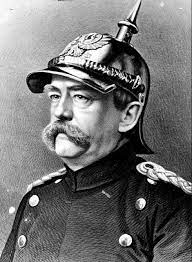
Otto Von Bismarck (1815-1898) was a Conservative Statesman from Prussia. He was appointed as the Prime Minister of Prussia by William II. He remained the first chancellor of German federation from 1871 to 1890.
After joining the office, his primary objective was Unification of Germany. For this he chose the path of diplomacy throughout the process.
He believed in Real Politik, an ideology of Machiavelli, i.e. the policy to be applied rather than have a handbook. In his famous Blood Iron Speech he said:
"Germany doesn't look to Prussia's Liberalism but to her power... not by speeches and majorities will the Great queestions of the day be decided but by Iron and Blood."
Role in Unification of Germany
Diplomacy
He won the support of Liberals and Socialists with following policies:
He banned Social Democratic Party but started Social Welfare Program which included health insurance, accident insurance and old age pensions.
For liberals he diminished church rights. Also made anti church and anti Catholic policies. The struggle between the church and Bismarck was called Kulturkamph.
Bismarck was also in favour of Industrialization which added points in favour of Liberals.
War strategies
i) Prussia + Austria againdst Denmark (1864)
(Diplomacy to gain Austrian support)
Denmark lost
Prussia and Austria took over Schelweig and Holstein respectively.
ii) Austria-Prussian War (1866)
(Prussia was supported by Italy)
prussia won in 7 weeks
Austria’s allies were annexed and Prussia became leader of German unification
iii) Franco Prussian War (1871)
(Planned to arouse Nationalism by France attack on Germany)
Aims of policy:
Wanted to isolate France thereby remaining in good terms with Austria and Russia
Driekaiserbund (League of Three Emperors) was Bismarck’s policy of isolating France
He hosted Congress of Berlin 1878. The result left Russia angry and signed out of Driekaiserbund.
To safeside Germany he made Reinsurance Treaty 1887, with Russia.
Dual Alliance 1879, with Austria became “the way to cornerstone of the foreign policy” says Caer.
Bismarck wanted to remain neutral and did not want to disturb Balance of Power. However pressure built during Scramble of Africa.
Bismarck enjoyed formidable reputation. His handling of Vongress of Berlin helped prevent war in Europe. Biggest criticism for him is his disregard for people of small nations. He ignored the wish of people of Ottoman Empire during Berlin Conference.
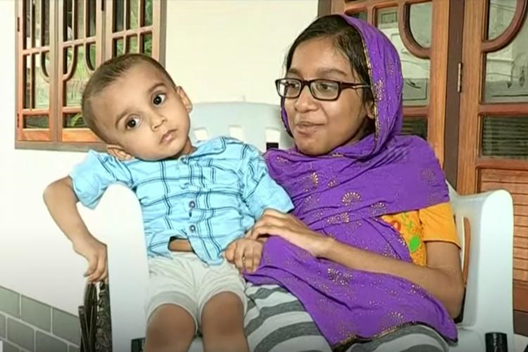
Mohammad, son of Rafeeq and Mariam from Kannur district in Kerala, has been diagnosed with Spinal Muscular Atrophy. A similar condition that his 15-year-old sister Afra is suffering. As a consequence of late diagnosis and treatment, she is paralyzed below the waist and can therefore move around only in a wheelchair.
Spinal Muscular Atrophy(SMA)
It is a genetic disease that affects the central nervous system, peripheral nervous system and voluntary muscle movement. Nerve cells controlling the muscles are located in the spinal cord. But SMA affects the muscles which do not receive signals from nerve cells.
Atrophy refers to ‘getting smaller’ which usually occurs when the muscles are not stimulated by nerve cells.
What Causes SMA?
Deficiency of a motor neuron protein called “survival of motor neuron” (SMN) in chromosome 5 results in SMA. The protein is necessary for normal motor neuron function. SMN plays a pivotal role in the expression of the genes of motor neurons.
Symptoms of SMA
Includes weakness of the voluntary muscles near the shoulders, hips, thighs, and upper back.
Lower limbs are more affected compared to the upper limbs.
Deep tendon reflexes are decreased.
Chances of spinal curvature.
If the muscles for swallowing and breathing are affected, chances of other complications.
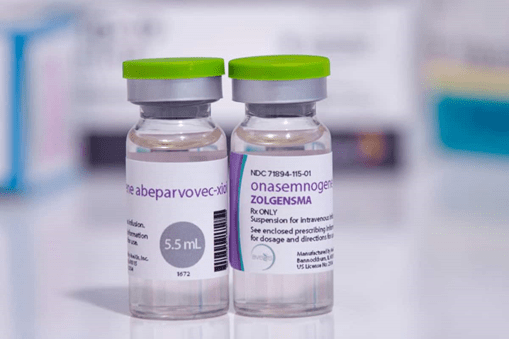
Zolgensma
A single dose of the medicine to treat the disorder costs around 18 crores. One of the most expensive medicines in the world had to be imported from the US for treatment. According to the hospital, if he is administered and treated with the medicine before the age of two, he can be helped.
Crowdfunding
A treatment committee led by MLA Vijin and a video posted by Afra seeking help from the public to raise the amount for the treatment proved to be successful. Contributions came in from all around the world and within the initial few days they were able to raise around Rs. 4 crores. And within the next few days the entire amount had reached their account.
People all over the world were like the Good Samaritan in Mohammad’s life.
Religion in India is very dominant over its people. People have blind trust and faith in the religion and it's practices. In India people can get killed, and people can kill for their religion.
From the day a person is born to the day he dies, he lives his entire life superstitiously. If he tries to make any progress, the fear of sin, God etc will stop him.
Indian society is a male dominated society. It doesn't matter what the standard of living of a particular person is, still his thinking and actions somewhere supports that pillar. I believe the rise in population of India is due to the desire for a baby boy instead of a girl. Here it is believed that if you keep a vow to any of the Gods and seek for a boy child, that couple would definitely get it. Sometimes by luck they get a boy and this increases the faith and belief in vows.
People make a deal with God that if I get this job I will give you this. If my son recovers soon, I will come and give you this. There are thousands of ways in which people bribe God for their own good. Even if God existed, he would never need anything as he is supreme.
It is believed that skipping one meal in a week is good for health, but here in the Hindu religion, keeping fast is to appease God, who doesn't exist. Keeping fast also doesn't mean to eat nothing, one could eat fruits and various other stuff which is not made up of wheat and all. How can a person be so selfish? Even if he is not eating, he is keeping a vow, he is doing this for his own benefit.
Before marriage it's not important to see whether a girl and boy love each other, like each other or understand each other. It's ok if thinking doesn't match, matching a horoscope is far more necessary and important. If something is going wrong between the couple after marriage it is because of the bad position and conditions of various planets in space. It's really hard to make people understand that the universe is one, the position of various planets is fixed in the orbits, how could it affect a man sitting on the earth? How can one relate to this craziness? It's really strange and shocking to see this behavior of a growing and developing society.
When a person dies and is taken for funeral, only boys can burn the dead body of his/her mother or father. Girls are not not allowed to go to the cremation grounds. This is not because they know the scientific reason, it's because they are girls.
Girls aren't allowed to enter the temple of Lord Hanuman because he never married. On one hand they worship him and on the other hand he wasn't married so girls cannot touch his statue.
People believe in the fact that ghosts exist in this world. Many claim that they have seen souls, only bad souls which eat a person at once or take him away. Where do those souls take them? No one knows. The level of Dumbness is hard to express in words. In this world no soul exists. The human body is like a machine with an additional feature of feelings, emotions and capability to think high. Heart is the engine, which pumps throughout life, the day that engine stops working, the machine is of no use. It's a kind of machine that if engine fails once it's impossible to repair it. With the body all emotions, all functions stop working. That's the end. Nobody can restart and can make it work in the form of ghosts or souls. All the evil and angels exist and live inside you and end with you.
When people worse than ghosts exist in front of your eyes openly, what's the need of bad souls which only comes in night and darkness? To trouble you? Vibes of people matter that can be evil or god.
Menstruation is one of the natural processes which every girl has to face after the age of 12 till 45-50. It's a very beautiful process created by the universe, for reproduction, and to create your young ones. In a girl’s body, eggs exist which she lays over the membrane of blood in her ovary duct. Every month that membrane of blood waits for the sperm to fuse which later becomes a foetus and becomes a child. When the egg doesn't receive any sperm that layer breaks down and blood comes out of the body every month, which causes pain and various other problems to a girl.
However, due to superstitions, a lot of stigma is attached to this beautiful process. Girl is forced to be singled out by barring her from entering temples and kitchens, to name a few places. It is so humiliating to know that everyone now knows you are having periods. This is a private thing, there is no reason to make it public, and a point of discussion.
India is one of the major emerging and growing countries of the world. On one hand it is going towards westernization in terms of technology, culture and standard of living and on the other hand at ground reality it is stuck to the same old mentality.There are infinite examples to give upon these superstitious behavior of the people . Majorly in Hindu religion. For real development and progress Indian society has to rise above all these, that only will lead to real development and progress.
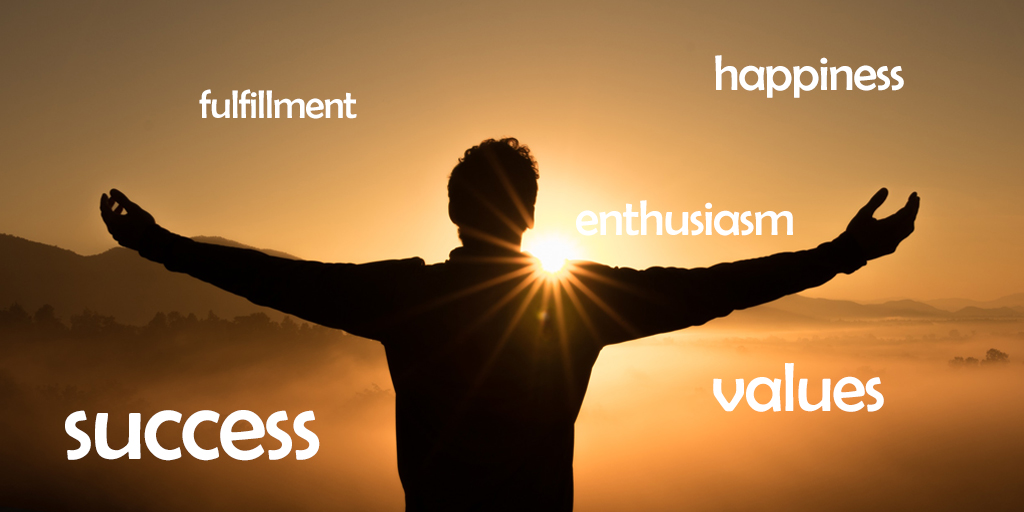
Success is something that makes our life meaningful. It is the highest point in the ladder that one wishes to climb upon. We all would have played the game of snake ladder. In this game, we are bitten by the snake many times especially when we reach easily towards target. The same is the story of success. The ladder for the success is full of challenges and we have to be ready to face and overcome these challenges to be successful in our life.
We need to work hard and value our time to make our dreams come true. Success is only granted to those who deserve it. They are the people who work accordingly to accomplish the goals of their life and make their dreams come true. Failure is a part of success. Despite being depressed with our failure we must try to learn from it. It helps us in knowing about our mistakes. The meaning of success is different for everyone. To someone, it is getting a good position, good wealth, etc. According to me, the real success lies in thing that you love and want to do. Success in that thing will make you happy and satisfied. For example dancing, singing, studies, sports, etc.
Steps For Success👇
Decide the Goal – We all must have a goal in our life. Life without aim is of no value. An aim in our life helps us to be focused and think about accomplishing the same.
Time Management – It is the most important factor that is required for getting success in life. Time lost can never be brought back. Everything in this world is meant to be done in a definite period of time. Therefore we must realize the importance of time and work accordingly to get rewarded with a happy and successful life.
Motivation – Everybody in this world needs an inspiration that helps us in pushing forward to accomplish our goals of life. It is something that instills a spark in us and gives us positive energy to work with dedication.
Hard Work – There is no substitute for the hard work in the process of becoming successful. There are people in this world provided with luck or genius minds but hard work is necessary for everyone. It is considered the key to success irrespective of the field.
How is Success Important in Our Life?👀
We all work to achieve something in our lives. The goals can vary but the final destination for everyone is getting successful. It is very important for us to become successful in our lives. It gives us a good name and recognition in our society. Success makes us more confident and happier in life. It also provides us great inner satisfaction as attaining success means getting the thing that we desire and love doing in our life.
It is most important for the survival of human beings. It opens up the doors of different opportunities for us. Success gives us the encouragement to move forward in our life. We can never live our life without encouragement or motivation. Success is something that makes our life meaningful and optimistic. It is something that gives a proper direction to our life. The successful people are an exemplar for other people in the society.
Conclusion💁
It is always said that in order to gain something in our life we have to sacrifice something. Success is also about the same. We need to leave our lazy behavior and luxuries of life far behind to become successful. This can be realized by you once you become successful in your life. And you feel proud of yourself that day.
Rate this:
360 Wander Writer
Welcome to Wealthy World
As per the 2021 report, it states that there are 2755 billionaires in the Earth. The total net worth of these people people is estimated to be of $13.1 trillion . Let us look at some of the top richest people in the world.
1. Jeff Bezos
Jeff Bezos founded Amazon in the year 1994 in a garage in Seattle. He is the Founder and Executive Chair of Amazon. His net worth is $177 billion. His Amazon Ownership stake is 14%,which is about $252.3 billion. His other Assets include Blue Origin, The Washington Post and about $10 billion in cash. It first started in selling the books. Later it became the shop for everything and thus it became the largest retailer. And as of the most advantage lockdown made the sales to skyrocket. Bezos’s other projects include aerospace company Blue Origin .
2. Elon Musk
Elon Musk is the Co-founder and CEO of Tesla Motors. He has had his hands in several different companies over the years. In 2004, Musk became a major funder of Tesla Motors (now Tesla), which led to him being retroactively declared a cofounder and his current position as CEO of the electric vehicle company. His Net Worth is about $151 billion. The tesla Ownership Stake is about 20%. His other Assets include Space Exploration Technologies and The Boring Company .
3. Bernard Arnault
Bernard Arnault is the chair and CEO of LVMH. It is the world’s largest luxury goods company. This business owns some of the biggest brands on Earth, including Louis Vuitton, Hennessey, Marc Jacobs, Sephora, and many more. His Net Worth is about $150 billion. His Ownership Stake is about 97.5% .His other assets include Moelis & Company equity, Hermès equity , Carrefour equity and $4.50 billion in cash. The majority of his wealth, however, actually comes from his massive stake in Christian Dior SE, the holding company that controls 41.2% of LVMH.
4. Bill Gates
Bill Gates is the co-founder of Microsoft Corp. He resides in Medina, Washington. His net worth is $124 Billion. His Microsoft Ownership Stake is about 1.3%. He worked along with his childhood friend Paul Allen to develop new software for microcomputers. Following this project’s success, Gates dropped out of Harvard in his junior year and went on to found Microsoft with Allen. Microsoft also produces its own line of personal computers, publishes books through Microsoft Press, provides email services through its Exchange server, and sells video game systems
5. Mark Zuckerberg
Mark Zuckerberg first developed Facebook alongside fellow students Eduardo Saverin, Dustin Moskovitz, and Chris Hughes while attending Harvard University in 2004. Zuckerberg is the CEO and chair of Facebook, which had more than 2.8 billion monthly active users . Facebook is the world’s largest social networking service, enabling its users to create a personal profile, connect with friends and family, join or create groups, and much more. As the website is free to use, most of the company’s revenue is generated through advertising. His net worth is $977 billion and his Ownership stake is 13%.
Augustine, it is “the love of one’s own excellence.”
Pride:
Pride is a double edged sword.
Pride is usually considered in 2 ways 1) The feeling of satisfaction that comes from one’s own achievement or those affiliated to us. 2) Having a high opinion of oneself which sometimes expresses itself in the form of arrogance or excessive belief over one’s abilities.
The opposite of pride is humility
Prejudice:
It is described as a stereotyped attitude towards a particular social group. There are many types of prejudices. There’s ageism, sexism, racism, those from different religions and ethnic groups, people who are overweight or underweight, people with sexual orientations and the list is endless. It varies according to environment who are more likely to become a target. -Prejudice does not need a base or proof. It is mostly based on an individual’s delusional theory regarded someone/something because of something they went through.
-Scientific postulates need proof, trial, and error, and goes through thorough objective examination to form a theory. It is deduced from natural occurrences to aid the growth of every being on Earth.
-Thus there is a clear boundary between prejudice and science. Thinking that a human born into an ethnicity they had no control over, is preposterous cannot be ever justified. Well, I mean have thought over this. You treat them like a monster, take away the room for growth, or won’t let them have an understanding of the world, force upon them their ancestors or someone’s act, treat their every mistake or an act of love as sin. You are letting them realize that no matter what they do, they will always be regarded as criminals. In order to live a normal life, in order to escape from Hell on Earth, they will have no option but to take actions that align with their prejudices to have a chance at life. Aren’t you giving birth to the one you are so wary about? How will assuming negative about someone you haven’t met going to remove the things you want?
It is humane to worry about wolves in sheep’s clothing, it is natural to protect someone you love. But hatred and pride blind not only you but also others from peace, from a true safe environment. The mutual understanding that prejudice exists but at the same time, trying to resolve those by complete honesty and understanding will protect you from external influences ( yes, I mean someone who wants conflicts to exist between the groups), and will give the groups a chance to make way for growth despite the differences. It is very easy for me to say and I realize how idealistic or dreamy it seems, but without interaction between conflicting groups, without a wish to make things better for innocent ones around you, the casualties, hatred, and stereotypes are bound to grow and create wars.
When prejudice causes a group to be treated differently than others in situations that call for equal treatment, it is called discrimination.
Arrogance:
It can simply be defined as aggressive evolution of pride, and manifested in form of extreme expression emotionally (within one’s mind or vocally). To exaggerate one’s own worth or importance often in a pompous manner.
Doesn’t believe they can mistakes or faults.
Tries to put blame on others.
Creates a fearful environment.
Always wants to be right.
We will talk about the thin line between pride and arrogance soon in following articles. 🙂
Ebooks are an affordable option for many avid readers. Ebooks are the travel-friendly, comfortable, cheapest option and you can read them anytime anywhere. But, there is a misconception about ebooks, some readers Don’t consider Ebooks as books. Indeed it’s not real books. We can’t feel ebooks as the real ones. It’s merely a device with copies. but, there is a lot of advantages in ebooks if we think of an optimistic person.
CHEAP AS CHIPS:
It’s highly affordable, there are a lot of books which can be bought as PDF, MOBI files, DOCX and many formats if we want. And kindle is one of the best options on my list. Once you get your hands on kindle it’s not easy to leave it aside. Because kindle is specially made for ebook readers and who feels that you can’t read real books due to some eye problems. You can give it a try to the kindle app and device. Kindle app is free of cost, but you have to purchase the books on amazon.in some times on amazon, free copies will be available for some limited books you can download if you like to… and mostly classics might be available there. So, if you never read in kindle. This might be a perfect time to try it. Kindle device is not free still it’s affordable. Otherwise, you can use PDF readers or kindle apps also.
CUSTOMIZATION:
There is a lot of customized features when it comes to ebooks. While we are reading real books like paperbacks we can’t change anything we have to read it as it has in the paper. But, when it comes to ebooks. We can change fonts, sizes, Dark mode, light mode, colors of the fonts, colors of the background, alignments, we can look at word counts, we can track our reading speed and we can even take notes without any worries. That the book would be damaged. If it is a real book some people don’t even use pencils. but In e-books, we can change even the highlighter’s colors. And these features are grateful for the readers.
ALL THE TIME:
We can’t read paperbacks at night times. It will damage our eyes. Even mobiles will damage our eyes. But, the kindle is specially made to reduce the effects of UV rays from screening lights. Thus, it is easy to use at night. And especially you need a light source to read paperbacks. But, you can read e-books even though the theme of the screen is in dark mode. So, you can read whenever you want without any necessary sources. All you need is a device with full battery charged and a required wifi connection proceed to download.
HANDY:
E-books are highly Travel-friendly devices. You can read anytime anywhere without real books. If we carry real books we need bags and other belongings. But when it comes to reading e-books, we can read them even on buses or banks. We carry our mobile all the time, wherever we go, thus, e-books can save our time While wasting our time somewhere else wasting like standing in a queue.
However, we can’t say Ebooks are better than paperbacks. E-books also have their disadvantages. but, the positive aspects are worth following upon.
Biomedical waste poses various health and environmental hazards. Hence, it should be handled with the utmost care and disposed-off safely. Several lacunas exist within the management of biomedical waste in India, and the pandemic posed by the corona virus has made it even tougher. The sudden outbreak of the corona virus led to an exponential rise in the quantity of biomedical waste. Furthermore, the poor infrastructure and lack of human resources have aggravated this example. To combat this serious problem in a timely manner, the government has formulated various standard operating procedures and has amended the existing rules and guidelines. Corona viruses have caused large-scale pandemics, namely, severe acute respiratory syndrome coronavirus-1 (SARS-Cov-1) and the Middle East respiratory syndrome (MERS). A new outbreak in this family was added in November-December of 2019 as the novel corona virus disease 2019 (COVID-19) caused by a large group of highly diverse, enveloped, positive sense, and single-stranded RNA viruses, namely, SARS-CoV-2. Mass sampling with rapid tests, isolation of suspects/patients, use of personal protective measures, social distancing, and life-supporting treatments are known countermeasures to prevent fighting this fatal pandemic. Personal protective equipment (PPE), surgical (and protective) face masks, aprons/gowns, and nitrile gloves are essentially used to protect individuals from exposure to pathogens and contaminants. Traditionally, these protective measures have been predominantly used against pathogens in hospitals. However, COVID-19 has necessitated their usage in domestic isolation and individual protection, leading to a rapid accumulation of potentially infectious waste streams. The entire world is, therefore, facing an unprecedented challenge to fighting COVID-19 together with the myriad COVID-waste.
The composition of waste is greatly influenced by disposable plastic-based personal protective equipment (PPE) and single-use plastics by online shopping for most basic necessities. The use of PPEs and single-use plastics during the pandemic not only increased the quantity of medical waste but also altered the average density of the medical waste. Waste generation amid COVID-19, especially discarded PPEs and single-use plastics, has been an environmental and public health crisis around the world, particularly in countries with developing economies and those in transition. Safe solid waste management is already a matter of major concern in these countries where safe and sustainable practice is scarce and healthcare waste has not been adequately regulated. India is generating tonnes of hospital waste in just a few months, in which Maharastra is the highest contributor because it has the highest number of COVID-19 cases and hence the waste produced. The bio waste is just dumped in the open at the airports. Perfect norms are not followed. This is leading to a serious increase in COVID-19 cases in India. The used PPE kits are dumped properly by following the norms or the rules and regulations given by the government, hence the increased cases of infection and deaths. These should be dumped after destroying them so that they can not be reused, which can also lead to the transmission of the infection. After that, these things should be perfectly dumped so that no further transmission can occur.
Generally, discarded healthcare waste and other forms of clinical waste are disposed of in a sanitary landfill or incinerated in the form of waste for energy recovery. However, in many developing countries, healthcare waste along with municipal solid waste is dumped in the open or in poorly managed landfills where the movements of waste pickers and livestock such as dogs, goats, and cows are often noticed. A few countries also apply advanced technology to treat their medical waste by steam sterilizing (autoclaving) or chemically disinfecting, but they are exceptional. We should make some changes in medical waste disposal technology, as in the case of COVID-19. It is important to come up with something new. We normally use decentralization to centralization, from irregular to regular management, and from mostly incineration to non-incineration disposal technologies such as autoclave steam, dry heat, chemical disinfection, or microwave. The treatment facilities for medical waste should be more automated and based on technology, with a minimum of workers involved. The goals of making automatic processes and the use of minimum workers for infectious waste are what we can do so that there are fewer risks and chances of transmission. Larger capacities of mobile facilities should be maintained, particularly during the pandemic, which may be vital for developing countries where medical waste disposal facilities are limited. The mobile facilities aren’t only convenient for emergency situations, but can also be used as a strategic backup capacity for a state in the future.
Awards And Honors: Grammy Award (1970) Nobel Prize (1964)Notable Works: “I Have A Dream”
Occupation – Baptist, minister,activist
Known for – Civil rights movement, Peace movement
Awards – Nobel Peace Prize (1964) Presidential Medal of Freedom (posthumously, 1977) Congressional Gold Medal (posthumously, 2004)
About his Life:
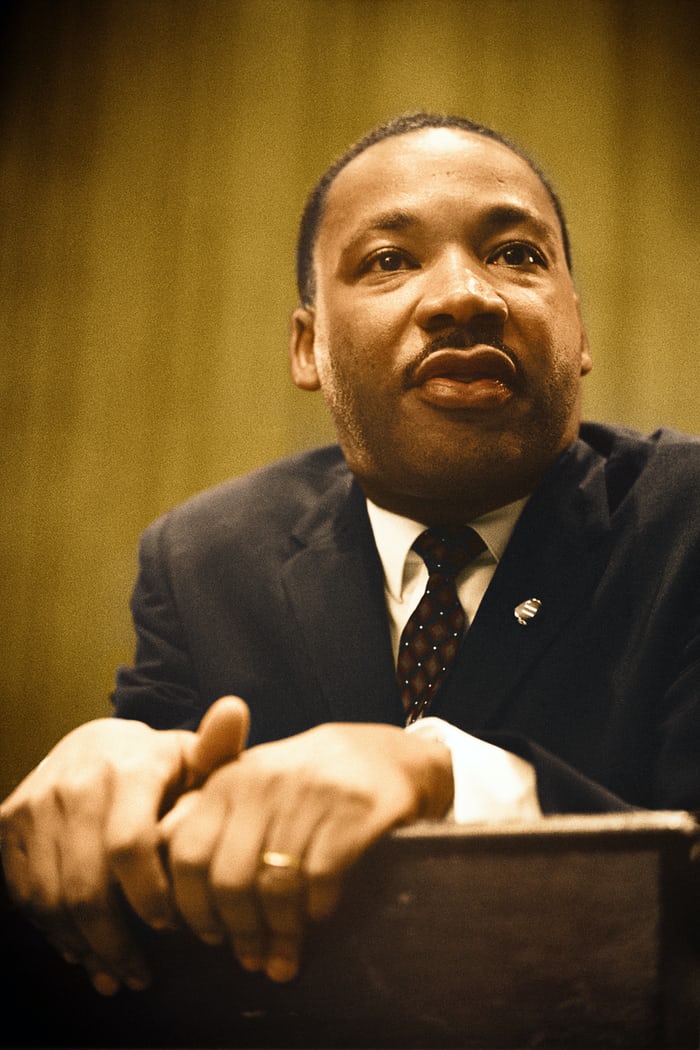
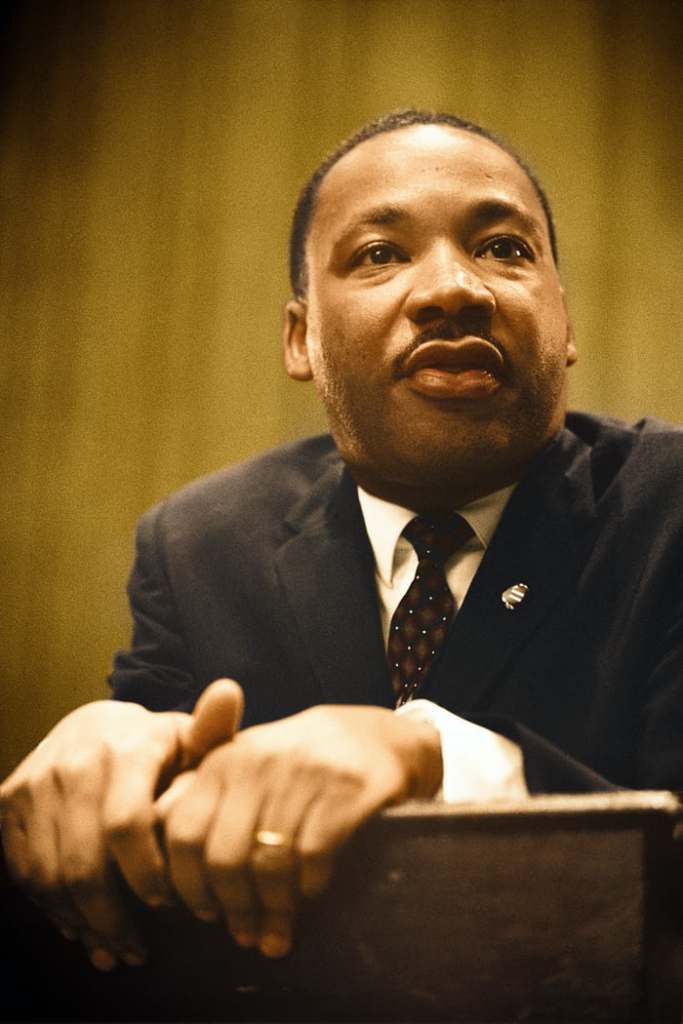
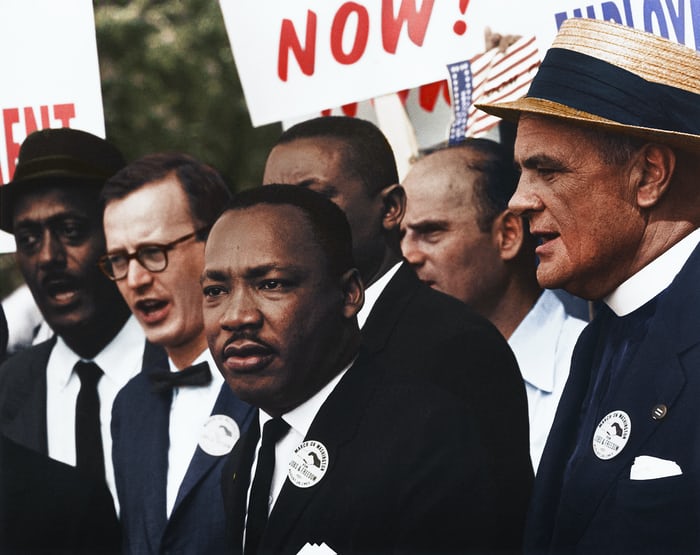
There are people who are able to defeat the ravages of the eternal enemy-time and continue to live on in the minds of men, There are a select few who challenge the limitations of a system that fails to deliver justice. Men like Martin Luther King Jr are soldiers of God who do not care for the consequences when it comes to fighting for the truth. King was born on 15 January 1929, at Atlanta and died on 4 April 1968, at Memphis. Not a very long life, but what he achieved during this time is enviable. Few men reach such dazzling heights of spiritual success even in several lives.
King was a US civil rights leader. The son and grandson of Baptist teachers, King was deeply influenced by the idea of non-violence while in college. The influence of Mahatma Gandhi was obvious. Ordained a Baptist minister himself in 1954, he became pastor of a church in Montgomery. University. He was elected to head the Montgomery Improvement Association whose boycott efforts eventually ended the city’s policies of racial discrimination on public transportation. 1955, he received a doctorate from Boston University. He was elected to head the Montgomery improvement association whose boycott efforts eventually ended the city’s policies of racial discrimination on public transportation.
History:
In 1957, he formed the Southern Christian Leadership Conference and began lecturing nationwide, urging active non-violence to achieve civil rights for African Americans. In 1960, he was back in Atlanta to become co-pastor of Ebenezer Baptist Church with his father.
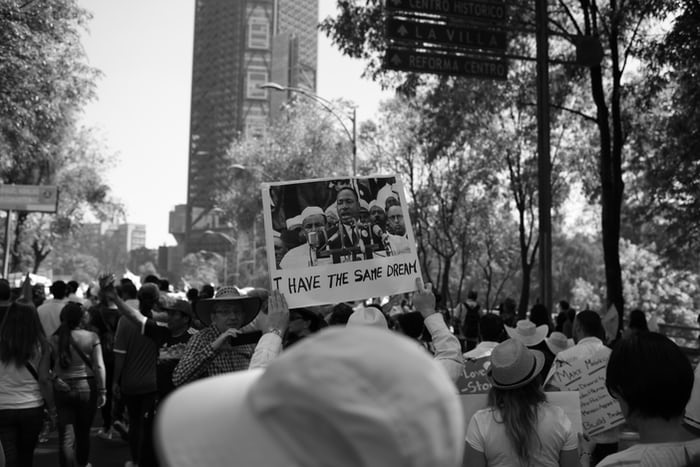
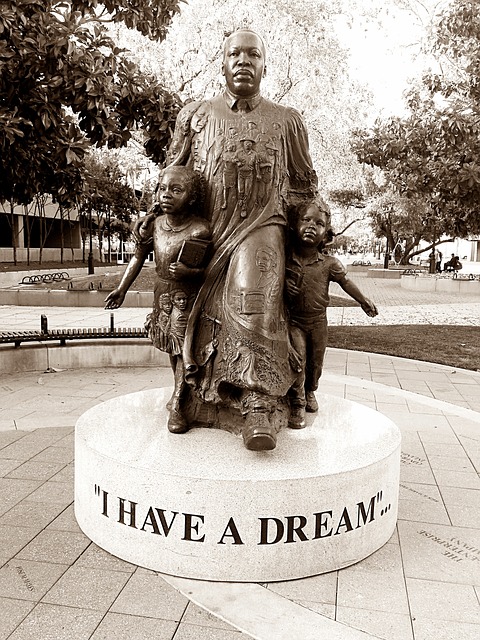
He was arrested and jailed for protesting segregation at a lunch counter. The case drew national attention and none other than the then presidential candidate, John F Kennedy, had to intercede to obtain his release. In 1963 King helped organise the March on Washington, an assembly of more than 200,000 protestors, at which he made his famous ‘I have a dream’ speech. This powerful and moving speech celebrates humanity as one big family where being human is more important than being black or white. The march influenced the passage of the Civil Rights Act of 1964. King was awarded the 1964 Nobel Prize for Peace.
In 1965, he was criticised from within the civil-rights movement for yielding to state troopers at a march in Selma and for failing in the effort to change Chicago’s housing segregation policies. Thereafter, he broadened his advocacy, addressing the plight of the poor of all races and opposing the Vietnam War. In 1968, he went to Memphis to support a strike by sanitation workers. There, on April 4, he was assassinated by James Earl Ray. A U.S. national holiday is celebrated in King’s honour on the third Monday of January in the USA. King, like Gandhi, was a gentle yet powerful prophet of a non- violent revolution who sacrificed his life for his principles. King lives through his work and words in the hearts of millions, and his untiring zeal to achieve justice motivates individuals to keep trying. The kind of following King has today undoubtedly makes us feel, ‘when one is willing, the Gods join in’. (Aeschylus).
MK day:After years of campaigning by activists, members of Congress and Coretta Scott King, among others, in 1983 President Ronald Reagan signed a bill creating a U.S. federal holiday in honor of King.Observed on the third Monday of January, Martin Luther King Day was first celebrated in 1986.
Assassination of Martin Luther King:
The events in Selma deepened a growing rift between Martin Luther King, Jr. and young radicals who repudiated his nonviolent methods and commitment to working within the established political framework.
As more militant Black leaders such as Stokely Carmichael rose to prominence, King broadened the scope of his activism to address issues such as the Vietnam War and poverty among Americans of all races. In 1967, King and the SCLC embarked on an ambitious program known as the Poor People’s Campaign, which was to include a massive march on the capital.
On the evening of April 4, 1968, Martin Luther King was assassinated. He was fatally shot while standing on the balcony of a motel in Memphis, where King had traveled to support a sanitation workers’ strike. In the wake of his death, a wave of riots swept major cities across the country, while President Johnson declared a national day of mourning.
James Earl Ray, an escaped convict and known racist, pleaded guilty to the murder and was sentenced to 99 years in prison. He later recanted his confession and gained some unlikely advocates, including members of the King family, before his death in 1998.
Martin Luther king Jr. Quotes:
“The ultimate measure of a man is not where he stands in moments of comfort and convenience, but where he stands at times of challenge and controversy.”
“Freedom is never voluntarily given by the oppressor; it must be demanded by the oppressed.”
“The time is always right to do what is right.”
“True peace is not merely the absence of tension; it is the presence of justice.”
“Our lives begin to end the day we become silent about things that matter.”
“Free at last, Free at last, Thank God almighty we are free at last.”
“Faith is taking the first step even when you don’t see the whole staircase.”
“In the end, we will remember not the words of our enemies, but the silence of our friends.”
“I believe that unarmed truth and unconditional love will have the final word in reality. This is why right, temporarily defeated, is stronger than evil triumphant.”
“I have decided to stick with love. Hate is too great a burden to bear.”
“Be a bush if you can’t be a tree. If you can’t be a highway, just be a trail. If you can’t be a sun, be a star. For it isn’t by size that you win or fail. Be the best of whatever you are.”
Career is one of most important aspect in our life. Choosing a right career is hard and confusing. Sometimes student often chooses wrong, due to lack of knowledge about streams. Only a few students are clear about what they want in there life. Sometimes a wrong decision can change our life completely. This blog is for them who are confused about there career, choose the stream which suits you the most because rest of your career is in that field only. In this blog, you can see all career options available after 10th class.
Career options after 10th class
Science, PCM(Physics, Chemistry, and Mathematics)
This is one of the most famous and popular stream every year lakhs of student join this stream. Students who are interested in engineering, architecture, bachelor of science, pharmacy, commercial pilot, banking, defense, mathematics can go with this stream. This stream includes Physics, Chemistry, and Mathematics. With this stream you can write top entrance examinations like JEE Main & Advance, Bit Sat, NDA, KVPY, etc. With this exams you can get admission into top institutions like IIT’s(Indian Institute of Technology), Bits(Birla Institute of Technology & Science), IISc Bangalore, NIT’s(National Institute of Technology). There are many career options after this stream.
2. Science, PCB(Physics, Chemistry, and Biology)
This is also one of the most popular stream. Students who are interested in medical profession can go up with this stream. This stream includes Physics, Chemistry, and Biology. With this stream you can write top entrance examinations like NEET, AIIMS, NEST, JIPMER, EAMCET, etc. With these exams you can get admission in top institutions like AIIMS, Madras medical college, Grant medical college, Stanley medical college, Christian medical college, etc. The career options after this stream are MBBS, BDS pharmacy, Bachelor of Science, agriculture, biotechnology, etc.
3. Commerce
It is the second popular course after science, If you are interested in economics, civics, finance, and mathematics then you should go with commerce. In commerce you have two options, commerce with maths and commerce without math’s. Commerce with maths is known MEC(Mathematics, Economics, and Commerce) and Commerce without maths is known as CEC(Commerce, Economics, and Civics). With commerce steam you can write top entrance examinations like CSEET, CMA, SET, Xavier’s Entrance exam, etc. The career options after commerce are Bachelor of Commerce, Chartered Accountant, Bachelor of Law, Business Administration, Bachelor of Economics, etc.
4. Arts/humanities
If you are interested in history, arts, designs then you should go with arts/humanities. Nowadays arts /humanities are in high demand and more students are opting it now. With this stream you can write entrance examinations like SAT, CLAT, MRNAT, NIFT, etc. The career options after arts are bachelor of arts, bachelor of journalism, bachelor of fine arts, business administration, bachelor of fashion design. Students who take up art stream develop critical thinking. It also helps you increase your leadership qualities.
5. Diploma
If you are interested in engineering then you can go with diploma. Diploma is a professional course that provides you the practical knowledge in a field of technology. Diploma generally large for 3 years. After the completion of diploma course, student can directly join second year in engineering course. After diploma you can write entrance exams like TS POLYCET, AP POLYCET, RRB, MP PPT, APJEE, etc.
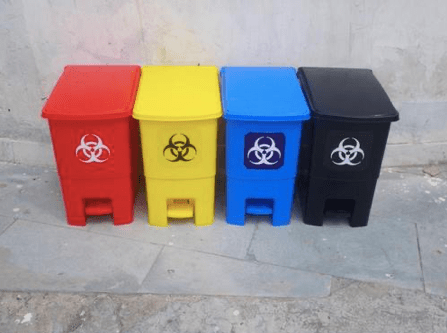
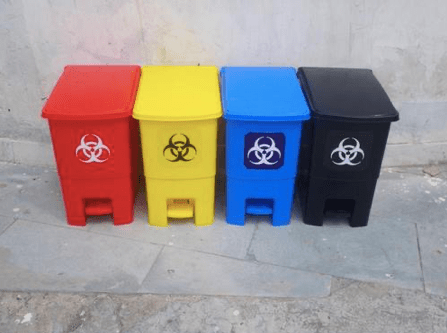
According to the latest guidelines for segregation and management of biomedical waste and its disposal is through colour coding:
Yellow Bag: it consists of the hospital wastes like the used dressings, bandages and cotton swabs with body fluids and blood, blood bags, human anatomical waste or the category 1 waste, body parts or organs.
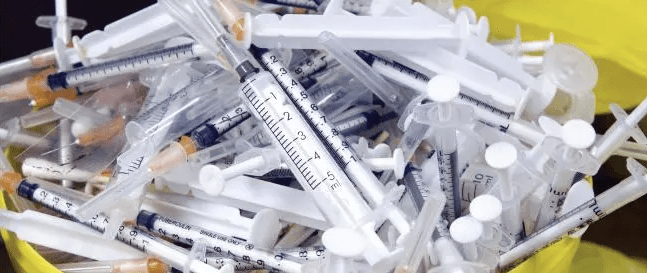
Red Bag: it costs of all category 4 wastes which the sharp things used like needles, syringes, also consists of used or soiled gloves, IV tubes and these are later incinerated.
Cardboard box with blue marking: This consists of ampules, glass vials and other glass ware are discarded in cardboard boxes.
White puncture proof container: These are consisting of needles, sharps, blades and these are disposed in white translucent puncture proof container.
Black Bags: These are to be used for non-bio-medical waste. In a hospital setup, this includes stationary, vegetable and fruit peels, leftovers, packaging including that from medicines, disposable caps, disposable masks, disposable shoe-covers, disposable tea cups, cartons, sweeping dust, kitchen waste etc.
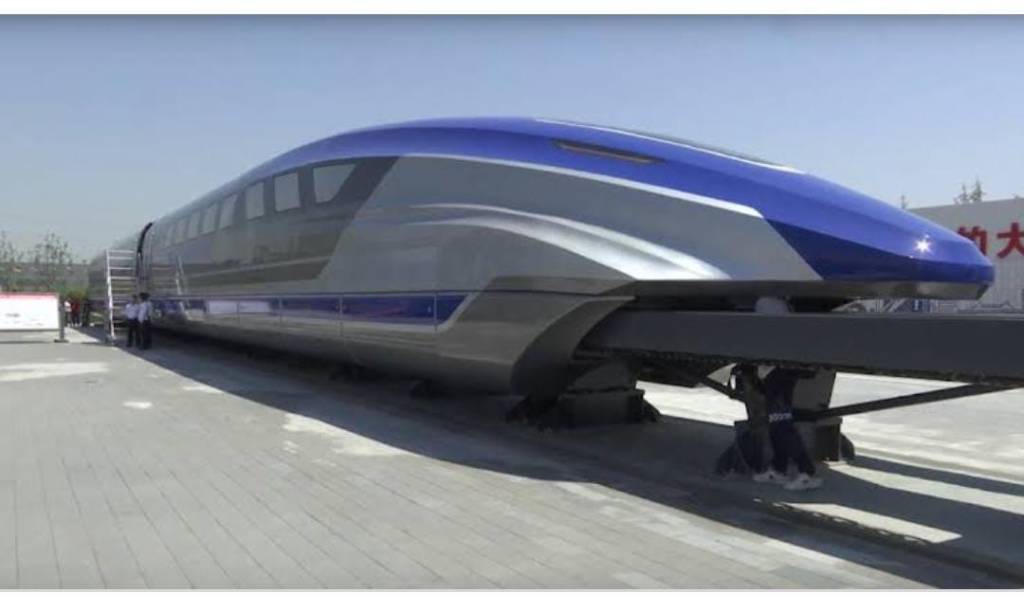
The Shanghai maglev train also known as Shanghai Transrapid,has a top speed of 430 km/h.Train use electromagnetic force so there is no contact between track and body.With maglev technology, the train travels along a guideway of magnets which control the train’s stability and speed. While the propulsion and levitation require no moving parts, the bogies can move in relation to the main body of the vehicle and some technologies require support by retractable wheels at speeds under 150 kph. This compares with electric multiple units that may have several dozen parts per bogie. Maglev trains can therefore in some cases be quieter and smoother than conventional trains and have the potential for much higher speeds.
Maglev vehicles have set several speed records, and maglev trains can accelerate and decelerate much faster than conventional trains; the only practical limitation is the safety and comfort of the passengers, although wind resistance at very high speeds can cause running costs that are four to five times that of conventional high-speed rail (such as the Tokaido Shinkansen). The power needed for levitation is typically not a large percentage of the overall energy consumption of a high-speed maglev system.Overcoming drag, which makes all land transport more energy intensive at higher speeds, takes the most energy. Vactrain technology has been proposed as a means to overcome this limitation. Maglev systems have been much more expensive to construct than conventional train systems, although the simpler construction of maglev vehicles makes them cheaper to manufacture and maintain.
Shanghai Maglev Train
Japan operates two independently developed maglev trains. One is HSST (and its descendant, the Linimo line) by Japan Airlines and the other, which is more well known, is SCMaglev by the Central Japan Railway Company.
The development of the latter started in 1969. Maglev trains on the Miyazaki test track regularly hit 517 km/h (321 mph) by 1979. After an accident which destroyed the train, a new design was selected. In Okazaki, Japan (1987), the SCMaglev was used for test rides at the Okazaki exhibition. Tests in Miyazaki continued throughout the 1980s, before transferring to a far longer test track, 20 km (12 mi) long, in Yamanashi in 1997. The track has since been extended to almost 43 km (27 mi). The current 603 km/h (375 mph) world speed record for manned trains was set there in 2015.
Records
The highest-recorded maglev speed is 603 km/h (375 mph), achieved in Japan by JR Central’s L0 superconducting maglev on 21 April 2015, 28 km/h (17 mph) faster than the conventional TGV wheel-rail speed record. However, the operational and performance differences between these two very different technologies is far greater. The TGV record was achieved accelerating down a 72.4 km (45 mi) slight decline, requiring 13 minutes. It then took another 77.25 km (48 mi) for the TGV to stop, requiring a total distance of 149.65 km (93 mi) for the test. The MLX01 record, however, was achieved on the 18.4 km (11.4 mi) Yamanashi test track – 1/8 the distance. No maglev or wheel-rail commercial operation has actually been attempted at speeds over 500 km/h (310 mph).





:max_bytes(150000):strip_icc():format(webp)/GettyImages-1036094130-cf8da629f9b44c81a0b1398311ac5787.jpg)
:max_bytes(150000):strip_icc():format(webp)/GettyImages-1215628293-c32a14bc41c34aa9adee9e41f6c7fb68.jpg)
:max_bytes(150000):strip_icc():format(webp)/GettyImages-696695914-895a5475a7f8412c9239900be0ea5179.jpg)
:max_bytes(150000):strip_icc():format(webp)/GettyImages-948065808-ba10e6df430c414fbc496dededf1db2b.jpg)
:max_bytes(150000):strip_icc():format(webp)/GettyImages-688402250-c3fd58b6a99a4729a821205bfac67168.jpg)



You must be logged in to post a comment.