Biography-Abraham Lincoln

” I walk slowly, but I never walk backward” -Abraham Lincoln

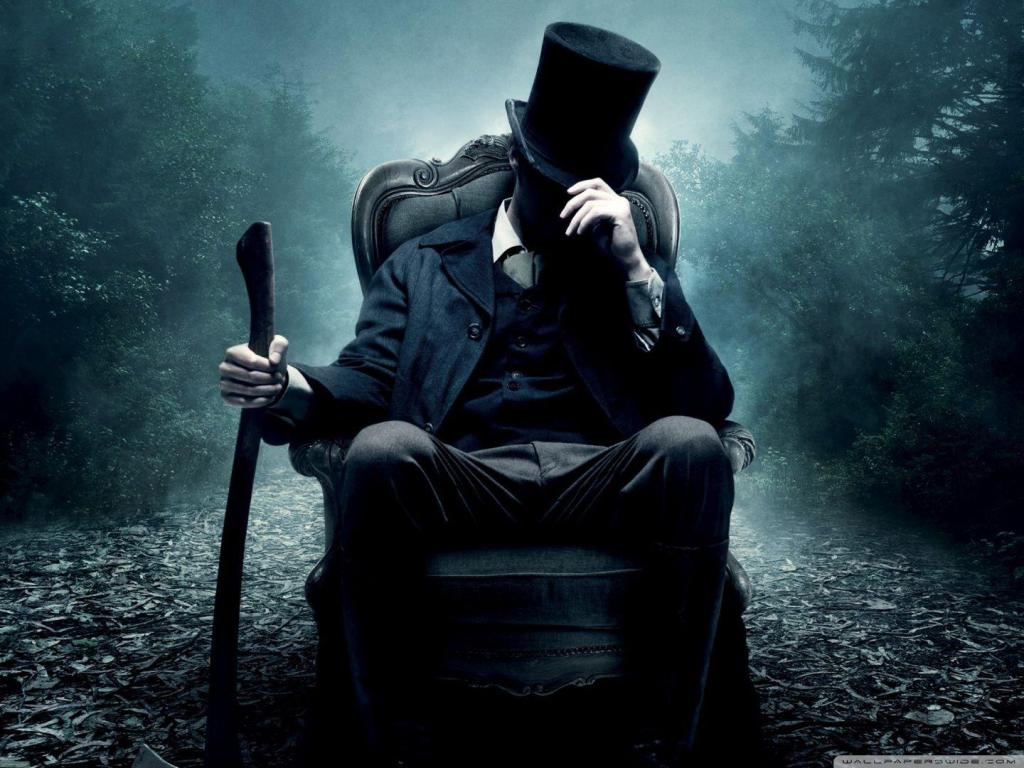
Abraham Lincoln, the 16th President of the United States, guided his country through the most devastating experience in its national history- Civil War. He is considered by many historians to have been the greatest American President. He was born on 12February,1809 in Hardin (now Laure) country in Kentucky. His father Thomas Lincoln was a skilled carpenter and his mother was Nancy Hanks. Lincolns left Kentucky and moved to Indiana in 1816. There little Lincoln attended some schools for less than a year altogether. Lincolns left Indiana for Illinois in 1830. In 1831 Lincoln left home for New Salem and served briefly in the black Hawk War (1831). The military interlude was uneventful except that he was elected Captain of his volunteer Company. In 1842 he married Mary Todd. He served one term (1847-49) as a member of the US House of Representatives where he opposed the Mexican War as unnecessary and unconstitutional. He had been indifferent about the annexation of Texas, already a slave territory, but he opposed any expansion that would allow slavery into new area, gained as a result of the Mexican war. He expressed his view that the nation would become “either all slave or all free”. He won the Presidential election as the 16th President of the US and his inauguration was held in March 1861. He was soon noted for taking vigorous measures in the Civil War sometimes at odds with the Constitution and often at odds with the ideas of his military commanders. He was naturally anti-slavery. He endorsed the 13th Amendment to the Constitution abolishing slavery and thus charged the racial future of the United States. But it agitated a section of the white people. John Wilkes Booth, a Negrophobe shot Lincoln while he attended a performance at Ford’s Theatre in Washington on 14th April, 1865. Lincoln’s achievements for saving the Union and freeing the slaves, and his martyrdom just at the War’s end assured his continuing fame forever.

Employee Recruitment and Selection

Recruitment or Hiring is the process of searching and attracting the right candidates for hiring them for vacant jobs in an organization. There are two sources of recruitment, internal sources and external sources. Recruitment refers to the process of searching for potential employees and influencing them to work for their organization.

The purpose of the recruitment process is to find talented and qualified individuals for the growth and development of their organization. It is part of the human resource management(HRM) department.

Recruitment is the development and maintenance of adequate manpower resources. It involves the creation of a pool of available labor upon whom the organization can draw when it needs additional employees.’ The recruitment process leads to a collection of candidates for any vacancies an organization might have.



There are many sources of recruiting potential employees but all of them can be grouped into two categories, namely.

Internal Sources of Recruitment

Internal sources of recruitment consist of employees who are already on the payroll of a firm. It also includes former employees who have returned to work for the organization. Recruitment from internal sources is done to fill up vacancies through promotion, re-hiring and transferring employees within the company.

Advantages of Internal Sources of Recruitment

  • Selecting and transferring existing employees is a simpler process.
  • The managers are aware of the talents and abilities of already existing employees.
  • Internal recruitment serves as a tool to boost the morale of employees as internal hiring creates job and promotion opportunities for existing employees.
  • Internal hiring promotes a feeling of loyalty amongst the employees.
  • Existing employees are already aware of the company’s working methods and don’t take a long time to adjust to new positions.

External Sources of Recruitment

External sources of recruitment refer to the sources that lie outside or exist external to the organization.

Sources of external recruitment include:

  1. People joining an organization, specifically through recommendations.
  2. Employment agencies( e.g. naukri.com) or employment exchanges.
  3. Advertising
  4. Institutes like colleges and vocational schools (e.g. campus selection)
  5. Contractors
  6. Hiring unskilled labor
  7. List of applications
  8. Temporary workers.

Encouraging existing employees to recommend suitable candidates can thus lead to the hiring of the right individuals for the right jobs. A higher level of teamwork and synchronization among employees would, therefore, be achieved.

However, it might also lead to employees picking their close friends and family members who are unfit for the jobs. Thus, talented individuals might lose out on good opportunities.

Whereas, external recruitment provides a wider collection of potential employees with the necessary skillset. It has proven to be a successful recruitment process when hiring for managerial and technical positions.

Characteristics of External Sources

  • Long and time-consuming process.
  • It is an expensive process.
  • When external people are given opportunities over them, then existing workers lose morale
  • Hiring new employees can lead to the introduction of new blood and thus the introduction of a new set of skills and ideas.

 

EMPLOYEE SELECTION

Employee Selection is the process of putting right men on right job. It is a procedure of matching organizational requirements with the skills and qualifications of people. Effective selection can be done only when there is effective matching. By selecting best candidate for the required job, the organization will get quality performance of employees. Moreover, organization will face less of absenteeism and employee turnover problems. By selecting right candidate for the required job, organization will also save time and money. Proper screening of candidates takes place during selection procedure. All the potential candidates who apply for the given job are tested.

But selection must be differentiated from recruitment, though these are two phases of employment process. Recruitment is considered to be a positive process as it motivates more of candidates to apply for the job. It creates a pool of applicants. It is just sourcing of data. While selection is a negative process as the inappropriate candidates are rejected here. Recruitment precedes selection in staffing process. Selection involves choosing the best candidate with best abilities, skills and knowledge for the required job.

EMPLOYEE SELECTION PROCESS

Employee selection Process takes place in following order-

Preliminary Interviews- It is used to eliminate those candidates who do not meet the minimum eligiblity criteria laid down by the organization. The skills, academic and family background, competencies and interests of the candidate are examined during preliminary interview. Preliminary interviews are less formalized and planned than the final interviews. The candidates are given a brief up about the company and the job profile; and it is also examined how much the candidate knows about the company. Preliminary interviews are also called screening interviews.

Application blanks- The candidates who clear the preliminary interview are required to fill application blank. It contains data record of the candidates such as details about age, qualifications, reason for leaving previous job, experience, etc.

Written Tests- Various written tests conducted during selection procedure are aptitude test, intelligence test, reasoning test, personality test, etc. These tests are used to objectively assess the potential candidate. They should not be biased.

Employment Interviews- It is a one to one interaction between the interviewer and the potential candidate. It is used to find whether the candidate is best suited for the required job or not. But such interviews consume time and money both. Moreover the competencies of the candidate cannot be judged. Such interviews may be biased at times. Such interviews should be conducted properly. No distractions should be there in room. There should be an honest communication between candidate and interviewer.

Medical examination- Medical tests are conducted to ensure physical fitness of the potential employee. It will decrease chances of employee absenteeism.

Appointment Letter- A reference check is made about the candidate selected and then finally he is appointed by giving a formal appointment letter.

IMPORTANCE OF SELECTION

Selection is an important process because hiring good resources can help increase the overall performance of the organization. In contrast, if there is bad hire with a bad selection process, then the work will be affected and the cost incurred for replacing that bad resource will be high.

The purpose of selection is to choose the most suitable candidate, who can meet the requirements of the jobs in an organization, who will be a successful applicant. For meeting the goals of the organization, it is important to evaluate various attributes of each candidate such as their qualifications, skills, experiences, overall attitude, etc. In this process, the most suitable candidate is picked after the elimination of the candidates, who are not suitable for the vacant job.

The organization has to follow a proper selection process or procedure, as a huge amount of money is spent for hiring a right candidate for a position. If a selection is wrong, then the cost incurred in induction and training the wrong candidate will be a huge loss to the employer in terms of money, effort, and also time. Hence, selection is very important and the process should be perfect for the betterment of the organization.




Students and social service.

Man is a social being and social service is a must in a system of man-making education, There are so many kinds of social service and students have a lot of work to do in this field. They have some duties to remove illiteracy. They can hold night schools for the illiterate adults and give them lessons on the three R’s. They can remove bad customs and inform the people of the rights and duties. They can clean dirty ponds and maintain hygiene around their area. In times of emergency such as flood, famine and earthquake, they can take an active part in bringing relief to the sufferers like giving them food, clothes, and finding them shelter. In times of normalcy they can organise cultural functions for the poor villagers as we know that poverty is depressing but drudgery is killing but most of the time students waste their time in idle gossip, in roaming and in fruitless work. It is better to utilise the power of youth in socially productive work than to squander our precious time in loitering at the market place or before theatre hall. It is true also that the studies of students will be affected somewhat if they turn their attention to social service. But, on the whole, they will be gainer as social service will promote their fellow-feeling, increase their love for the country and develop their organising capacity.

High schools can deliver social services on campus or refer students to outside agencies for assistance like various NGO’s.

If a student utilizes his time fruitfully and in socially useful work he gets contentment. Contentment is his satisfaction with his position. Students should remember that they are born for the improvement of the society by instilling the spirit of service in them. They can help the mankind in the best possible way.

The value of social service should be taught to students to create inspiration in them. They should be enthused to pay their utmost strength and service to the society to make their existence meaningful.

Students can co-operate with people on matters of public interest such as education, sanitation, trade and commerce and be a part of that so that they can help more and more people.

Students have a spirit to work but the guardians and teacher should guide them in the right way. Social service can be safely managed if they can be guided properly. Our leaders should guide them in the right way.

Sonagachi: Asia’s largest red light district in the heart of Kolkata

Situated in North Kolkata, in the oldest part of 300 year old city situated on the banks of River Hooghly, is Sonagachi, Asia’s largest red light district whose narrow , rat infested lanes houses around 11, 000 sex workers.

Click on the link to know what are the red light areas.

SONAGACHI in Bengali means TREE OF GOLD. There is a fascinating story behind the origin of its name.

SONAGACHI- a place of SAINT and SIN

Sonagachi is named after a Muslim saint turned dacoit, Sanaullah. The area in olden times was known as the den of notorious dacoit Sanaullah who lived with his mother. After his death, when his mother lamented the loss of her son she heard a voice which said ,” Mother don’t cry, I have now become a Gazi”. Gazi which means a “warrior who help in the spread of Islam” is the title given to the Muslim saints. Thereafter, a mosque was constructed in his rememberance and many people came there for cures and the mosque came to be know as the Dargah of Sanaullah and the area as Sonagachi. This fascinating tale was traced by PT Nair, Kolkata’s “barefoot historian” in his book ‘ A History of Calcutta’s streets’.

Though the transformation from a dacoit to warrior may seem strange but it is pretty normal as there were many Bengali Hindu dacoits who were the devotees of Goddess Kali and a robin hood figure for the people.

Though there is no direct documentary tracing the reasons responsible for the transformation of Sonagachi into a Red light district but some stories blame the neighborhood of the area which was a business one. Sonagachi is in the neighborhood of Chitpur which many centuries back was a business center even before the arrival of the Britishers. Any place with large number of travellers or pilgrims in the British area was bound to have a red light area which housed brothels enclosing many women who were seen as nothing but a toy.

Brothels in those times were known to be owned by the prominent Bengali families . The now decrepit mansions which has suggestive names like “Prem kutir” houses and provides livelihood to thousands of woman living there.

SONAGACHI- where bounts of make up hides the pain

Majority of the sex workers there like any other red light district are trafficked . They were dubbed by husbands , lovers or by the well wishers in the false hope of a better future and “sold” to this area which has painful stories behind every gesture. The 10 by 10 rooms in the brothels provides a perfect balance of the personal + professional lives of the workers. The single bed with condoms stacked beneath the mattress and household utensils underneath the bed is a reminder of the family life for which these places and this profession provides the money for. The glossy make up, flashy lights , scented rooms and loud music is a facade to drown the cries of the children of sex workers and also the horrors faced by the workers.

To us , as the third persons the place may seem like hell , but for some workers it is a place of refugee which accepted and provided shelter to them when nobody else did. A sex worker told her story to Indian Express mentioning how she dreamt to be a teacher in a rural conservative household but since the idea of woman in the professional zone is strictly prohibited in a rural conservative home, she had to give up on her home until she found a “well wisher” who on the pretext of helping her get education sold her to these narrow lanes of Sonagachi , which after all these years are her safe haven.

Women here are scared of love because all they got in the name of love from the men outside is just hurt. Another sex worker recalled her leaving the brothel with the man she loved only to come to know months after being pregnant with his child that he already had two wives and in order to escape the physical torture , she had no where else but the lanes of Sonagachi to return.

The children of these workers have a hard time coming i terms with their mother’s profession. They have only their mother in terms of family , identity of the fathers being unknown . While some children slips into depression and denounce their mothers, the others leave their mother forever when they are able to stand on their feet while some understand the sacrifices she gave in terms of her body, soul and peace to provide for them.

Health concerns of the workers

The local government , a few years back had started the “Sonagachi project” which educates women about the use of condoms necessary to prevent HIV diseases. The result is that today the area as compared to other red light districts has low rate of Hiv.

During the covid lockdown, when there were no customers, local authorities and NGO provided ration here and educated the women about measures to keep themselves save from Covid-19. Authorities also ensured the vaccination of the workers.

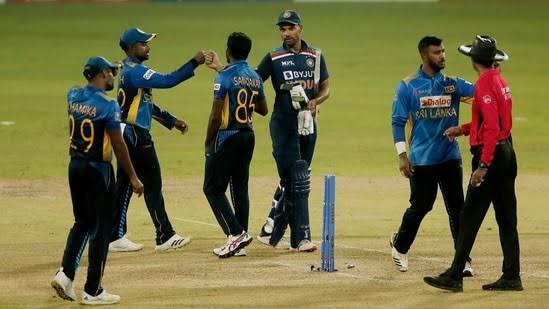
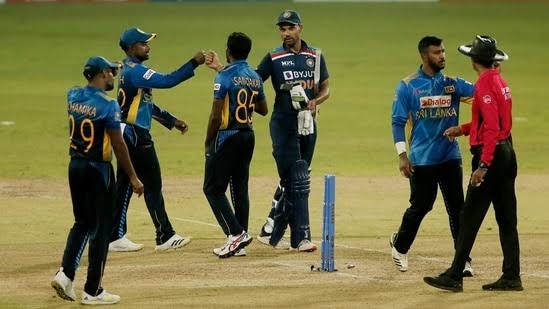
India beats Sri Lanka by 7 wickets in the 1st Odi : Dhawan, Shaw,Kishan steal the show.

India defeated sri lanka in their first match of the odi series played in Colombo. Indian outplayed the inexperienced Sri-lankan in every aspects of the game.

Sril Lanka won the toss and opted to bat first and things were going there way until chahal stricked and removed Fernando.
Contributions from bhanuka 27 of 44, rajpaksa 24 of 22, Dhananjay de Silva 14(27), assalanka 38(65), Shanaka 39 (50),
Chanika karunatana and chameera scored 40 runs in last 3 overs to get teams total to 263.

Bhubaneshwar kumar looked off colour today and went wicketless with figure 9-63-0,Deepak chahar took 2 wickets and looked in great touch. Spin duo of kulcha shared 4 wickets between them. While Pandya brothers shared 1 wickets each and   Kurnal Pandya was most economical with figure 10-1-26-1.

Chasing down the target of 263, P shaw and captain Dhawan came to crease. P shaw smacked the Lankans all over the ground and was progressing towards half century before falling to de selva at long-off at 43(24).


Then, debutant Ishan kishan came and smacked the lankans all over the ground and scored half century. And he edged one delivery to the wicketkeeper and scored 59(42).

Next,Manish Pandey came to crease and with captain he stitched a partnership of 74. Throughout his innings of 26(40),he looked uncomfortable and except few strokes,he was in a hurry to finish the innings.Then,another debutant surya Kumar Yadav joined captain in middle and finished the game. Dhawan carried his bat with an unbeaten 86*(95) and sky scored quickfire 31*(20).

Dhananjay de selva bagged 2 wickets and lakshan Sandakan took 1 wicket. india leads the series 1 -0 , Lankan side will be looking to bounce back while indian side will be looking to continue their winning streak.

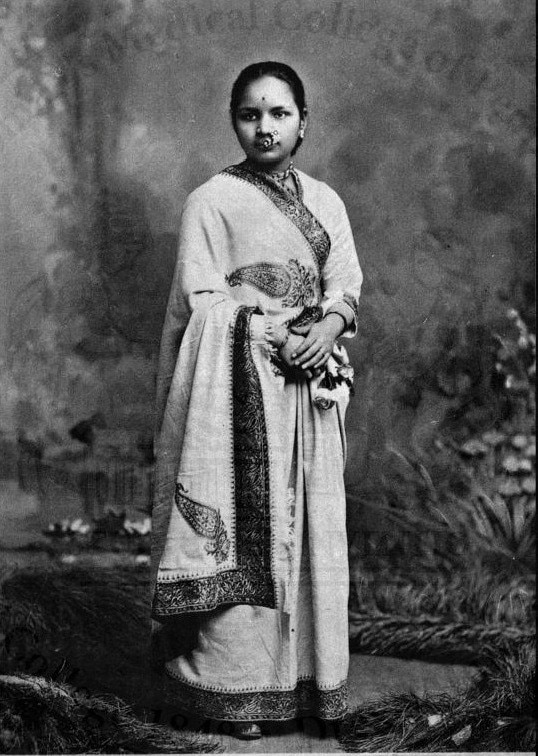
Kadambini Ganguly

Today’s google doodle is dedicated to Kadambini Ganguly, an inspiring lady who was born in Bhagalpur, Bihar and wrote history by achieving exceptional heights during her lifetime.


Google has already honoured her by dedicating the doodle on her 160th birth anniversary, born today in the year 1861. She belonged to an upper-class Bengali family and her father Braja Kishore Basu who was a Brahmo reformer and founder of Bhagalpur Mahila Samiti. She was born in an era when, educating a girl was far beyond imagination of people but, opposite to that her father encouraged her to pursue her education, after completing her schooling. she wanted to pursue her career in medicine and she cracked the entrance exam of University of Calcutta, she got admission in the university and became first women to do so but, after facing lot of struggles and denial from the society. At every stage of her life, she has to face a lot of obstacles mostly from society to fulfil her dreams and ambition. She later went abroad and received a triple diploma from training in Dublin, Glasgow and Edinburgh, adding another feather to the cap she became the first women to achieve such a qualification. On her return to India, she served great ladies like- Florene nightingale, Anne Beasant and other people. By this time, she got recognised for her work, a medical professional who was serving her nation. In the year 1890, she gave a lecture at INC which is again something exceptional that she did at that time


Later, she started working on improving the condition of the society, where educating a girl child and letting her pursue her dreams was considered unacceptable. She was always supported by her husband Dwarkanath Ganguliyand along with him she raised her voice against the discrimination between a male and female that she herself faced at the university, her voice turned out to be so impactful that in 1915 the University of Calcutta made the decision to open the university for female candidates as well.


As a woman medical practitioner, she was not only dedicated to her work but also had a vision to bring change in the society by setting an example since her schooling to her triple diploma, an inspirational and passionate women wo created history back then. Today, it’s her 160 th birth anniversary and her story makes us remember the contribution of all those women who worked really hard and stood up against the wrong opinion and criticism of society to become what they wanted to be. All the stories have one common learning that there is nothing that a women can not achieve just that she has to have that courage to step up herself and cross the boundaries that the society sets up by the narrow perspective they have in their mind. By proving all the critics wrong, and successfully reaching at a level that is beyond the imagination of an orthodox mentality.
Today, in many countries women are in a much better situation but, there is still so much that has to be changed.

How To Choose Dinnerware

Dinnerware is the allure of the dining table. It settles the right tone of the dinner. Whether it is an informal dinner with your friends or a formal with your boss and colleagues or maybe even your regular dinner at home with your family. Different types of dinnerware are used for different purposes of dinner gatherings. If you have doubts about how to choose dinnerware, you have come to the right place. This right here is the proper guide for choosing dinnerware for the perfect setting.

Dinnerware is not just for style, it should be useful as well. It is a daily use item and should be durable for a long time. Now, how do you choose the right type of dinnerware for all different purposes? Don’t know? Well, let us help you with that. Come on, let’s dive into the world of dinnerwares.

Photo by Polina Tankilevitch on Pexels.com

Types of Materials Used for Dinnerware

Before searching for anything else like the style, design, and colors, of the dinnerware set, look for something that will be durable and will not embarrass you in front of your guests. Some of the famous materials used for dinnerware sets are Bone China, Porcelain, Earthenware, Ceramic, and many more. Read on to have a detailed look at the types of materials.

Bone China

Bone China is the perfect type of dinnerware for both daily use and formal dinners. It is durable, stylish, comes in many designs and colors. It is generally thin,  lightweight, and chip-resistant. In addition to its qualities, it is microwave safe and can be easily washed in a dishwasher. It has an elegant appearance and is better than fine china.

Earthenware

One of the oldest types of dinnerware sets that gives a casual appeal. Earthenware gives slight durability and adds value to the dinner set. It also provides a significant weight to the dishes. But make sure you avoid high temperature changes that may damage the look of the material. Keep the microwave at low temperature settings while using earthenware. It is affordable but not as suitable for daily use as others.

Porcelain

Porcelain is the most common type of dinnerware material and the best for daily use purposes. This amazing type of material is dishwasher, microwave, and oven safe. It provides wonderful durability and appealing designs. Porcelain has a non-porous surface that gives an amazing texture. It is difficult to manufacture. But it is less expensive than Bone China and is easily affordable.

Ceramic

Ceramic is specifically not a type of material but it is considered as a class containing different types of china and porcelain. It is generally white in appearance but ranges in color from white to blue. White also has many different shades in ceramic, like off-white and others.

Photo by cottonbro on Pexels.com

Stoneware

Stoneware is made from the same materials as porcelain but in different ratios. This makes it more heavy weight and sometimes it has a texture. This material may have speckles on it which gives a beautiful look to the plates and dishes. It generally comes with an off-white body. It is durable and user friendly. It is good for regular use as well as dinner parties. But they need to be kept at normal temperatures and away from both freezing or very high temperatures.

Melamine

Melamine is used for outdoor purposes as it is unbreakable. It is hard to break or chip. It is dishwasher safe but unfortunately not microwave or oven safe.

Sizes of Dinnerware sets

Now after getting to know about the materials of dinnerwares, next important point is to decide what size you have in mind. Is it a proper dinner set or just some plates for regular use? Let’s have a look.

Formal Dinnerware

Formal dinnerware sets mostly contain all the required dishes for a person to have a great dinner easily. It may also contain soup bowls. It contains full plates, quarter plates with serving spoons, and small spoons for eating.

Open stock

Open stock is a piece by piece sold dinnerware set. It can include dishes of your own choice. You are free to add items of your requirement like plates, spoons, or some dishes. You can mix and match with your collection at home if you need some white plates to go with your set, you can easily find them. If you don’t want the whole dinner set with things you don’t require, then you can go for open stock and select the items as per your requirements.

You can collect single pieces of different sizes or designs and colors according to what you have in mind. Choose whether you want soup bowls or not. Which color will go with your existing collection at home? Which design matches the tone for your dinner party? With open stock, you can customize your cabinet of dinnerware set with beautiful designs, shapes, and colors of the dishes and bowls. If you don’t want the unnecessary saucers, you can remove them, or maybe you just need one serving bowl, it’s your wish. Pick your item and that’s it.

Other Points to Keep in Mind While Buying Dinnerware

  • Choose plates and bowls according to the size of your cupboards and dishwasher. It will cause a problem for you if the plates are too wide or big.
  • Dinnerware makes the dining table look presentable if it is glazed or white with a beautifully designed plate set. So choose your set of designs and colors according to your choice.
  • Don’t shy away when buying a good dinnerware set. It will be useful in the long run. Don’t hold back if the set is a bit expensive. Make sure to buy enough for hosting a huge gathering. You don’t know when you might have to celebrate!
  • Look for thinner rim plates as they offer a larger plate area for use as compared to the ones with broad rims. Or maybe you want plates with flat surfaces.
  • You can decide whether to buy large cereal bowls, that can be used for many purposes, or you want shallow soup bowls. Commonly round bottom bowls are preferred over flat ones.
  •  If you are planning for a formal meal, you may want cups and saucers. They give an old and classic look to the setting.

These were all the required things you need to keep in mind while choosing your set of dinnerware. Enjoy shopping! We have made sure you have the answer to your query that is, ‘how to choose dinnerware?’ Remember these things and you are ready to start your collection of perfect dinnerware sets.

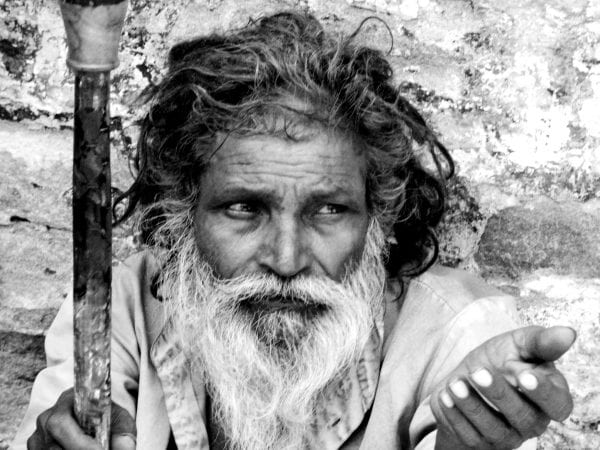
CAN WE ENCOURAGE BEGGING?

At a tender age when children should study in schools, play with toys and enjoy their leisure, many of them are seen on roads seeking alms to make both ends meet due to selfish motives of some miscreants that make them beg under extreme conditions. Masked perpetrators of such deeds are making it a huge business by remaining behind the scenes. The plight of such children is really heart-wrenching. Several initiatives are taken by various institutions and NGOs to check it, but to no avail. Not because they are not true to the work they are doing, but because people like us are not ready to accept that by giving them money we are encouraging begging. The situation is not better throughout the nation as these beggars can be seen begging at traffic intersections, market places, religious places and outside educational institutions. Many of them are mowed down by speeding vehicles. Such children sometimes take to stealing and snatchings. They also disrupt the traffic. There is a need to unmask those elements who are behind the menace. Don’t encourage begging, instead help them by instilling positive ideas and educating them. JASPREET SINGH, PATIALA, editorial@tribune.com

A Street Beggar Begging has been declared an offense in independent India, but it has really no real impact. On almost every red light’, there are number of beggars who beg in the name of mercy or religion. Initially, people used to beg only in desperate circumstances but now-a-days, it has become a profession. Those who can make easy money by begging. do not want to work. And at times, they can earn more than an honest worker. At every crossing, a woman carrying a child, a handicap person. young children asking for alms for food or in the name of God, IS a common sight. They can all work to earn their livelihood, even the handicapped, because all self-respecting people try to stand on their own feet. Of course, crippled people should be helped, but not by giving them alms. Begging cannot be justified at any cost. People use different innovative ideas for begging. Some form singing parties, some wear saffron clothes and carry a bowl, others beg in the name of charitable institutions. Some try to rouse sympathy by carrying small, crying, hungry infants but while giving aims to any beggar, one should always remember that one is not helping the beggar in any way by giving them money but is only satisfying his ego of being a kind and benevolent man. Begging is a stigma on the name of any nation and charity should be given only to charitable institution so that it reaches those who really need them.

Don’t encourage begging!

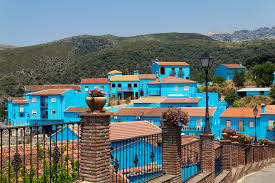
The REAL SMURF village

Hello guys! Have you ever watched the movie “smurfs”. If not definitely watch it it’s a fun film.

But this just an animated movie but there exists a real smurf village in this world!
This village is located in juzcar ,spain and can be easily located ,you want to know why? Because it's a blue-tiful village.
From tyla.com

Although the smurfs are not present in this village and is a normal village like any other then why do you think it is called a smurf village .

It is called because the whole village painted their houses in blue dedicating it to the film smurfs.

From ladbible.com

They even have statues located here and there and visiting this “blue-tiful” city you enter into a whole new world.

Like every other village everyone leads their daily lives normally but painting a whole village is something to talk about.

This painting of the whole village in blue colour was something that is intiated to promote the movie "Smurfs " which can captivate people by thinking out of the box .
From:veebrant.com

They chose this village juzcar because they are famous for mushrooms and Smurfs love and live in mushrooms so this place is perfect as this city not only promotes the movie but also can be related to the movie.

This started attracting tourists ,travellers,celebrities  to this city ,this place became a hub for all the smurf fandoms to gather .

Every wall has a smurf painting on it them and evey corner of the city is painted in blue and an astonishing amout of effort has been put in to this.

From hlc edu.in

Although the sponsors offered to paint back the village into white but the villagers liked as it is at present now and declined their offer .

This place gives off an relaxing vibe where one can visit it to just walk through the village and experience the refreshing atmosphere and appreciate the village for its simplicity.

Thankyou^^.

Advertisements

This is an age of advertisement, nay aggressive advertisement. There is virtually an advertisement invasion. It is all over the country influencing our ideas, lifestyles and decisions. There are more advertisements in the newspapers than the news and articles. On the small screen of television the programmes are heavily punctuated with advertisements. They are there on the silver screen of the cinema in large numbers. They can be seen on the walls, buildings, scaffolds, electric and telephone poles, trucks, buses airports and even in such places as cremation and burial grounds. Big, colourful and attractive advertisement balloons rise and float high in the sky. There are costly but very attractive laser advertisements. It has become a very big industry and there are huge profits and volumes. Corporate groups, business houses, film makers, shopkeepers, traders etc spend crores and crores on advertising. A great part of the annual budget of these people is spent on it.

Advertisements serve a great purpose. They promote sales, increase businesses and profits as nothing else can do. They catch the eyes, hearts and minds of the viewers and turn them into instant buyers. They appeal to their imagination, curiosity and purchasing urges. People are tempted to buy what they see advertised. Then there is pressure from ladies and children in the family. These pressures turn hesitation into immediate purchasing decisions even when the things are actually not needed. People buy on instalments, on credit or by borrowing money, such is the power of attractive advertisements. During festivals and social occasions their psychological appeal is at its best. They create a mood to buy and spend money. Then there are gift coupons, hampers, discounts, annual sales etc which the people find very hard to resist. Advertisements have ushered in a wave of consumerism in white, brown and other goods besides clothes and commodities.

Then there are big exhibitions in five star hotels, halls and sprawling grounds. Customers throng the exhibitions and enjoy themselves with their members of the family. When an environment of picnic prevails there, one can’t be easily on a spending spree. There is home delivery, buy now pay later offers. Such an onslaught can hardly be withstood. Advertisements also offer better products at reasonable rates. There is wider choice and vast range of things to choose from. People want value for their money and advertisements give them this opportunity. There is cheating as well but it soon exposed and cannot be repeated. In this age of global economy, international integration and fierce competition only the fittest can survive.

An advertisement to be successful, needs to be creative, novel, appealing and result oriented. Advertisements are prepared by experts by spending lakhs of rupees and keeping the target buyers in mind. Publicity aims at promoting sales by underlining certain unique qualities of a product and commodity. “Out of sight, out of mind” is a very old and time tested saying. It applies so well in the world of business, trade and commerce that nobody can ignore it. The more people see and listen about a product, the more they are sure to buy it.

Advertisements help in introducing new products as well as increasing the sales of established products. Advertisements create brand image and once a brand is established a commodity becomes a household word. Established brands have very strong appeal. And once one starts liking a particular brand, he or she sticks to it lifelong. It becomes a kind of addiction and hypnotism. Advertisements have revolutionized the business world.

But sometimes advertisements are really very dangerous and cause a lot of harm particularly to children and youngsters. They try to imitate dangerous advertisements seen on television, silver screen or in a magazine. Such visuals and advertisements should be banned and there should be heavy penalty on those advertisements which cause loss of life or injury among children.

How did the Earth come into being??

A whooping 7.9 billion people, 8.7 million discovered eukaryotic species and an estimated 1 trillion microbes- How did it all came into being? How did our Earth or even better, the solar system or the whole universe came into being?

Photo by Pixabay on Pexels.com

So, it all began about 13.8 billion years ago. There existed a single point, a minute, hot and really dense point which violently exploded-‘The Big Bang’, and it is how everything came into being- Matter, Energy space, universe, stars, solar system, me, you-everything. After the explosion took place, it expanded into what we today call the universe. And, what’s more interesting is the fact that it is still expanding, and this is how the scientists came to believe that it all began with a big bang.

Scientists divide the period after the big bang into 2 era-

  1. Radiation era
  2. Matter era

Radiation era

The period between 10^(-43) seconds (after the explosion took place)-the Planck era(here, the current laws of physics do not apply), to about 30,000 years after the big bang is referred to as the radiation era. During this period, the temperature of the atmosphere was soo high that there was no distinction between matter and radiation ,or even better, no matter existed.

It is divided into 7 era or epoch-

  1. Grand unification epoch- Named for the unification of 3 grand forces of nature- Electro-magnetic forces, Weak forces, Strong nuclear forces. With a temperature greater than 1029 K, it began 10−43 s after the big bang. At the end of this epoch, the strong nuclear force broke away from the other two.
  2. Inflationary epoch- With a temperature greater than 1032 K, it began 10−36 s after the big bang. As the name suggests, the universe rapidly expanded in this epoch. The universe, ta this time had electrons, quarks and antiquarks.
  3. Electroweak epoch- Here, now all the 4 forces of nature have split off. Temperature- 10^20 K and time after big bang- 10^(-32)s.
  4. Quark epoch- Temperature here is 10^16K and 10^-12 s have passed since the big bang. All of the ingredients required to form subatomic particles were present but the universe still was too hot and dense.
  5. Hadron Epoch- Temperature- 10^10 K and Temperature-10^-6 s. The universe has not finally cooled down enough for subatomic particles to form and hence, quarks bind to form protons and neutrons.
  6. Lepton epoch- Temperature- 10^ 12 K and finally, about1 sec have passed since the big bang.
  7. Nuclear epoch- Temperature-10^9 K and 100 s approximately have passed since the big bang.

In these last two epoch, when the universe has cooled down quite a lot, the protons and neutrons fuse together to form the very first chemical elements- Hydrogen and Helium. And now that our universe is capable of forming elements, it brings us to the end of radiation era and the matter era begins.

Matter Era

Matter era includes 3 epoch that spread over billions of years and include the formation of our galaxy, solar system and even the present day.

  1. Atomic epoch- With the temperature of 3000 K and time after big bang- 50,000 years, this epic marks the beginning of attachment of electrons to nuclei. This process is known as recombination.
  2. Galactic epoch- Now, 200 million years have passed since the formation of our universe. With the ability of universe to now form Hydrogen and Helium molecules, the universe is dotted with atomic clouds. Within the clouds, due to gravity, clusters were formed which later led to the formation of galaxies.
  3. Stellar epoch- 3 billion years have now passed. Within those clusters of clouds, now stars will be formed. Stars begin their lives as proto-stars. These are formed as a result of gravitational forces between particles of dust and gas and heat is generated due to friction and collision. When the proto-star becomes extremely hot, the process of thermonuclear fusion starts taking place. This is how stars generate heat and electricity. This heat within the clouds convert the already exiting elements into all others that are currently known to humankind. When stars burn themselves and are destroyed in explosion know as supernova, it destabilizes the heat cloud, which then begins to rearrange itself in the shape of a flattened disc. At the center a proto-star forms (eg.- our sun). The clumps of dust are flash heated and form chrondules that later from planetesimals by cohesion. These planetesimals then, later accrete to form what we call today as planets.

And this is how our solar system was formed about 4.5 billion years ago. It is located in the Milky Way galaxy’s Orion Star Cluster and has about 8 planets with a total of 63 moons. The inner 4 planets (also known as terrestrial planets) are separated form the outer 4(also known as jovian planets) by a belt of asteroids. Terrestrial planets are known as such because they are made of rocky material, have solid surface, do nor have rings and are relatively small. Earth, among these, is the only one to have a moon.

The jovian planets, on the other hand, have multiple moons, support ring system, have no solid surface and are immense in size. The Oort Cloud, a collection of icy debris, marks the edge of our solar system as the gravitational and physical influence of sun diminishes .

This is how our solar system and our Earth were formed. Now, can our solar system end? If yes, then how and by when? It’s a question for a later time.

Indian schools of philosophy a retaliation for the western school of thought?

The Hindu philosophy is categorized into six Orthodox and three Heterodox philosophies. The classification is based on the acceptance of the authority of the Vedas. The Orthodox school of philosophy also called the Aastika School believes in the authority of Vedas, while the Heterodox school of philosophy, popularly known as Nastika School rejects the principle of authority of Vedas. While the western schools of thoughts came up one after the other, with the only aim of destructing the existing thought process and establishing a new totally different way of thinking. In other words, the western schools were never complimentary to each other while the Indian schools sprouted and nurtured giving
each other a stand to hold on. Rasa is generally regarded as the corner stone of Indian Aesthetics. Rasa implies aesthetic emotion. The earliest work of Indian aesthetics is Bharatha’s ‘Natya Sastra’. It consists of a few instructions to the actors about present plays. In the course of discussion, Bharatha remarks that the aim of presenting a play is to evoke Rasa. Rasa, according to him, is the product of the combination of the Vibhavas, Anubhavas and the Vyabhicharibhavas. While the western philosophy concentrated on authors intention, structure, semantics, semiology and other highly technical aspects. Indian philosophy concentrates on the universalization of poetics. Universalization of poetic art is of two kinds. First of all, the aesthetic composition presents before our minds an aesthetic situation and an emotion, free from its local character. Secondly, the expression of this artistic enlightenment has a universal character in its manifestation in different minds. In the next stage this presented whole, becomes mingled with various types of subconscious and unconscious feelings which are lying dormant in the minds of various people. But we do not find any trace of any local character or colour with the real objective world around it. It is therefore, called transcendental, i.e., Alaukika or Camatkara. While the western philosophy school almost dissipates this possibility by ensuring such elements that make it connect to surroundings of the work is not done.
As per the Indian aesthetics, the beauty of literature is related to the synthesis of law and liberty. A literary work is presented in the medium of language. Hence it is certainly subjected to the rule of language. However, the beauty of a work of art is beyond these considerations. In fact, the laws are the wings of literature with which it soars high in the horizon of meaning. This synthesis of law and liberty is achieved by the judicious use of the elements of suggestion or Vyanjana. The concept of Vyanjana explains how meaning expands far beyond the literal sense. The language of poetry is different from the language of ordinary discourse. It is characterized by ‘suppression in expression’. Beauty in literature is best generated by the technique of Vyanjana or the suggested meaning. In the words of Kuntaka, Vakrokti or indirect expression generates beauty in poetry. According to Anandavardhana, the soul of poetry is suggestion. This concept is encapsulated in his maxim ‘Kavyasyatma Dhvani’. Words have different orders of signatory power. They have primary or literal meaning as well as contextual and suggested meaning. The primary meaning is referred to as ‘Abidha’ and the contextual meaning is called ‘Lakshnna’. Vyanjana is the suggested meaning. Concealment is the essence of Vyanjana. Poetry generates beauty by suppression in expression. Concealment arouses curiosity and the urge to unravel which leads to conquest. In poetry, only the implicit, indirect and suggested language is capable of producing beauty. This suggested language is called Vakrokti. Vakroti presents before the Sahridaya an indeterminate range of meaning to be explored. The greatness of poet lies in his mastery over the technique of suggestion.
A sentence may express something over and above the meaning of the words that constitute the sentence. The relation between the various words is unexpressed. This relation is referred to as Samsarga by the Naiyayikas of ancient India. Samsarga is Vakyartha. How Samsarga is expressed is not satisfactorily explained. In sentences, there is a juxtaposition of words. The element of the relation between words is conveyed by suppression. The essential part of every judgement is conveyed by suppression. This shows how the Indian schools of thought were already in an elevated state way before the introduction of western philosophical schools. The absence of manuscripts and the lack of ability to translate the ancient texts has truly hindered the growth of Indian philosophy into a universally recognized one.

FIBONACCI SEQUENCE! THE MAGIC!!!

Though mathematics is an interesting and beautiful subject, most of us find it difficult to learn. We often learn mathematics to do calculations and learn formulas to get good grades in the exams. Mathematics is a wonderful subject which we tend to apply in our day-to-day life. If you see maths through a different dimension, it will be as interesting as social media. We learn so many formulas and theorems, but where do we apply them? Think and come to a solution to make mathematics an interesting one. To prove mathematics an interesting subject, here come the Fibonacci numbers. Most of us have heard it once or twice in our classes when our teacher says about it. If you love to play with numbers, then Fibonacci numbers are the one. Let’s see how interesting these Fibonacci Numbers are!!

The Fibonacci Sequence in Nature

Fibonacci numbers are numbers, such that each number is the sum of the two preceding numbers starting from 0 and 1. The Fibonacci numbers or Fibonacci sequence are first used in the book, Liber Abaci, by Fibonacci which is used in the calculation of the growth of the rabbits. The Fibonacci numbers are closely related to the golden ratio. The ratio of the two consecutive Fibonacci numbers gives the golden ratio as n increases. {Golden Ratio: 1.61803398875}. Though, Liber Abaci contain the earliest description outside India, Indian mathematicians are the ones who described Fibonacci sequence as early as the sixth century.

Fibonacci Sequence

The Fibonacci day is celebrated on November 23rd every year. If we write it in mm/dd format, 11/23; it is also a Fibonacci number. The name Fibonacci is named after its inventor, Leonardo of Pisa, commonly known as Fibonacci was an Italian Mathematician, who was famous for his invention in the history of mathematics.

Leonardo of Pisa, commonly known as Fibonacci (1170 – 1250)

Let’s see the Fibonacci sequence with the example of rabbit, A farmer put a pair of rabbits on a closed surface. How many rabbits can be produced from the pair in a year, if it is that every month each pair produces a new pair which from the second month on becomes productive? The solution is the Fibonacci sequence. The sequence will go on like   1, 1, 2, 3, 5,….. and so on.

FIBONACCI SEQUENCE IN NATURE!!

  • In some flowers, the petals are arranged in the Fibonacci sequential arrangement which is enough to prove that Fibonacci sequences are available in nature too.
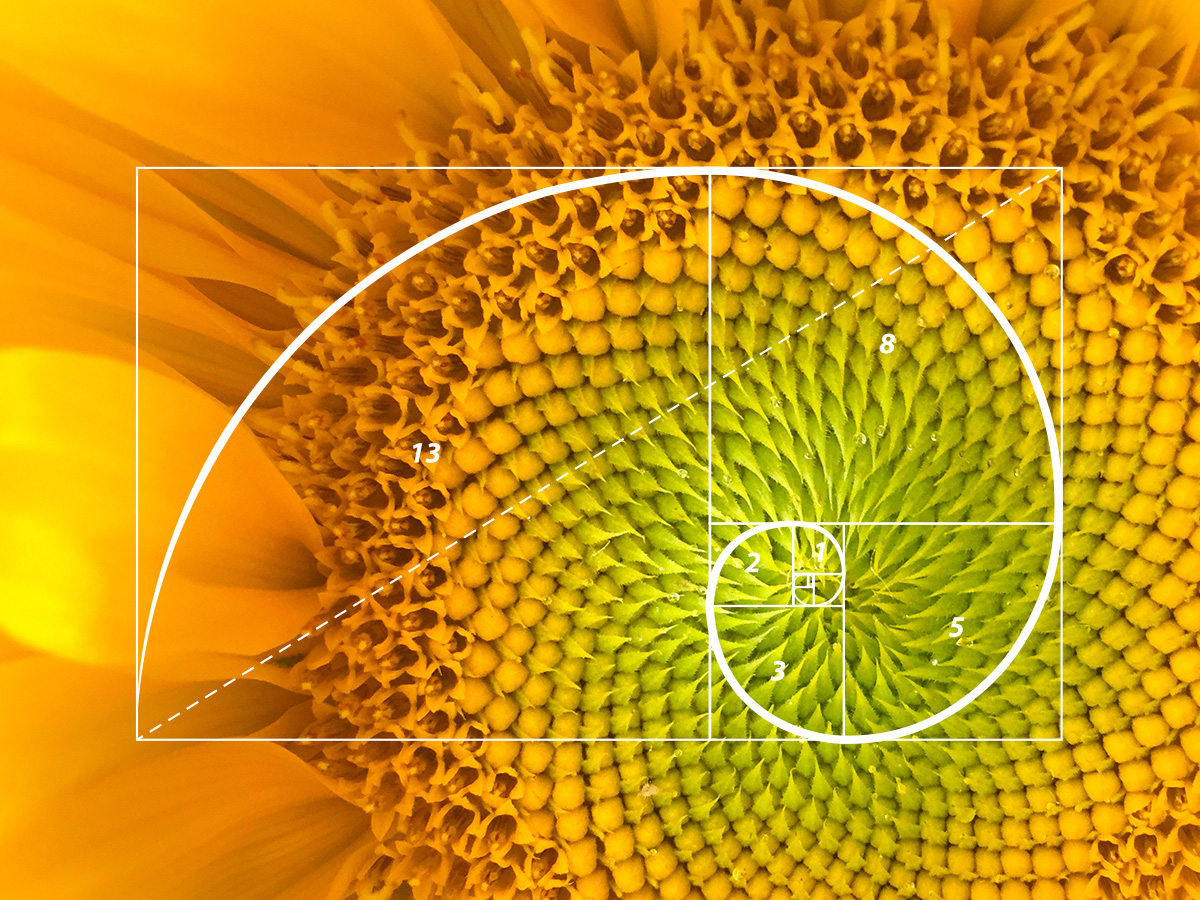
  • In the branches of plants, the leaves are spirally arranged in the Fibonacci sequence arrangement. In small plants, it will be 5 or 8. In larger ones, it will be 8 or 13 based on the growth of the plant.
  • The pattern of the seeds within the sunflower follows the Fibonacci sequence (1,1,2,3,5, …..).
The nature of design: the Fibonacci sequence and the Golden Ratio -  Cleveland Design

Fine! Till now, we saw what is a fibonacci sequence, and who is the inventor and where can we see this fibonacci series. Now, shall we see where these fibonacci sequence are used practically? Yeah! Come on!

IN MATHEMATICS,

  • The Fibonacci numbers occur in the sum of the shallow diagonals of Pascal’s triangle.
Fibonacci sequence and Pascal’s triangle
  • The Fibonacci sequence is also used in the Pythagoras theorem. The hypotenuse of the triangle can be a Fibonacci number.
  • The Fibonacci sequence is also used in the network topology for parallel computing.

IN COUMPUTER SCIENCE,

  • The Fibonacci numbers are important in the analysis of algorithms (computational run-time analysis) of Euclid’s algorithm.
  • Its also used in the common factor tree method that is called a binary tree method which is the Fibonacci number minus one.
  • This Fibonacci sequence also used in the game called poker, it is a step in the game development.

Fibonacci sequence are used not only in these two fields but also in many other fields. To put it simply, I have given these two fields. As we saw earlier, fibonacci sequence can also be seen in nature. While contructing tall buildings, climb up and see from the top, this is also an example of a fibonacci sequence.

Algorithms 101: Climbing stairs in JavaScript | by Joan Indiana Lyness |  JavaScript in Plain English

These are the various interesting facts in the Fibonacci sequence. It’s just a small part of mathematics. If we take an interest in various parts or topics in mathematics, we can make maths an interesting one. Mathematics is an ocean, where Fibonacci sequence is a small fish in it. Let’s try to catch various fishes like the Fibonacci sequence and make our lives a great one. If you find it interesting, just do some more research and excite by yourself like how I got excited!!

Reference links;

https://www.mathsisfun.com/numbers/fibonacci-sequence.html

http://www.eniscuola.net/en/2016/06/27/the-numbers-of-nature-the-fibonacci-sequence/

𝑯𝑰𝑺𝑻𝑶𝑹𝒀 𝑶𝑭 𝑮𝑫 𝑵𝑨𝑰𝑫𝑼

“ENGINEERS LIKE TO SOLVE PROBLEMS. THERE ARE NO PROBLEMS HANDILY AVALIABLE. THEY WILL CREATE THEIR OWN PROBLEMS”

G. D. Naidu (Gopalaswamy Doraiswamy Naidu) (23 March 1893 – 4 January 1974) was an Indian inventor and engineer who is referred to as the “EDISON OF INDIA” and “THE WEATHER CREATOR OF COIMBATORE” He is credited with the manufacture of the first electric motor in India. His contributions were primarily industrial but also spanned the fields of electrical, mechanical, agricultural (hybrid cultivation) and automobile engineering. Naidu developed an independently internal combustion four stroke engine. He had only primary education but excelled as a versatile genius.

PERSONAL LIFE :

G.D. Naidu was born at Kalangal, COIMBATORE on 23 March 1893 in Tamil Nadu, India. He was the son of a farmer. His childhood years were spent getting in trouble at school. He disliked attending classes.His son name is KaliyaSwamy he created the company.His wife name is pushpa Naidu.

EARLY LIFE :

Naidu obtained work as a 𝐬𝐞𝐫𝐯𝐞𝐫 in a hotel in Coimbatore with the intention of saving money to buy a motorcycle. After getting the vehicle he spent time dismantling and re-assembling it, and later became a mechanic. He began his transport business in 1920, with the purchase of an automobile coach. He drove it between 𝐩𝐨𝐥𝐥𝐚𝐜𝐡𝐢 and 𝐩𝐚𝐥𝐚𝐧𝐢 In a few years, his Universal Motor Service (UMS) owned the most efficient fleet of public transport vehicles in the country. In 1937, the first motor to be produced in India was brought out from G. D. Naidu’s factory – NEW (National Electric Works) at Peelamedu, Coimbatore.

𝐈𝐍𝐕𝐄𝐍𝐓𝐈𝐎𝐍 𝐀𝐍𝐃 𝐋𝐀𝐓𝐄𝐑 𝐋𝐈𝐅𝐄 :

G.D. Naidu developed India’s first indigenous motor in 1937 along with D. Balasundaram Naidu. The motor’s success resulted in the founding of textool by Balasundaram and, later, lakshmi machine works (LMW).Naidu’s ‘Rasant’ razor incorporated a small motor operated by dry cells, called HELIBRONN.

G.D. Naidu, Rathnasabapathy Mudaliar and India’s first finance minister R.K. SHANMUKHAM CHETTY conducted survey, for bringing Siruvani water to the Coimbatore city.Through Naidu’s efforts and donations India’s first polytechnic college, the Arthur Hope Polytechnic and the Arthur Hope College of Engineering were set up. Later the college moved to its present location and is now known as Government college of techonology. The college was named after the then Madras governor Aurthur hope In 1945, GD Naidu was the principal of the college. Naidu was not satisfied with the four-year programs and said that it was a waste of time for students. He suggested that two years was more than enough to teach the same courses, even with different concentrations. However, the British government did not accept his idea and Naidu resigned from his post. The name Hope College for the original site of the college remains in Coimbatore even.

Naidu died on 4 January 1974. Sir C V Raman said of Naidu: “A great educator, an entrepreneur in many fields of engineering and industry, a warm-hearted man filled with love for his fellows and a desire to help them in their troubles, Mr Naidu is truly a man in a million – perhaps this is an understatement!” He is survived by his son G.D. Gopal and grandchildren G.D. Rajkumar and Shantini. A permanent Industrial Exhibition in his memory is in Coimbatore. He provided employment in the engineering and manufacturing sectors to many individuals in the 1950s and 1960s.

360 Wander Writer

Welcome to the Disney world

Hong Kong Disneyland Says Closing Over China Virus Fears

The Hong Kong Disney land is still a dream land for many children. It is also know as the HK Disneyland or HKDL . It is situated in the Penny’s bay in the Lantau Island . It is located inside the Hong Kong Disneyland Resort. It is the largest theme park in Hong Kong. It was opened on 12th September on the year of 2005. The built the theme park by incorporating the Chinese culture and also many customs and tradition. They have built the Hong Kong Disneyland Resort entrance with a bend so that the good vital force energy would not flow into the the South China Sea. This park consists of seven themed areas .Languages such as English , Mandarin and Cantonese are spoken by the cast members of the Disney land. Guide maps are printed in both English and Chinese for the Tourist to refer easily.

Where to Get Discounts on Hong Kong Disneyland Ticket Prices

The Disney Land is owned by the Walt Disney Company Government of Hong Kong and it is operated by the Hong Kong International Theme Parks. Among all the Disney Lands this Disney Land’s park has the lowest capacity of 34,000 visitors daily. The target was fixed to a total visitors of 5.6 million but it attracted only 5.2 million people. On the next few years it had growth and received up to 5.2 million tourists in the year of 2010 . But it is fact to be accepted that the Hong Kong Disney land is under the consecutive years of loss. Yet it is trying to cope up with it and it is on the process of extension.